• Skip to primary navigation
  • Skip to main content

International Salsa Magazine

  • HOME
  • Previous editions
    • 2026
      • ISM / March 2026
      • ISM / February 2026
      • ISM / January 2026
    • 2025
      • ISM / December 2025
      • ISM / November 2025
      • ISM / October 2025
      • ISM / September 2025
      • ISM / August 2025
      • ISM / July 2025
      • ISM / June 2025
      • ISM / May2025
      • ISM / April 2025
      • ISM / March 2025
      • ISM / February 2025
      • ISM / January 2025
    • 2024
      • ISM / December 2024
      • ISM / November 2024
      • ISM / October 2024
      • ISM / September 2024
      • ISM / August 2024
      • ISM / July 2024
      • ISM / June 2024
      • ISM / May 2024
      • ISM / April 2024
      • ISM / March 2024
      • ISM / February 2024
      • ISM / January 2024
    • 2023
      • ISM / December 2023
      • ISM / November 2023
      • ISM / October 2023
      • ISM – September 2023
      • ISM – August 2023
      • ISM July 2023
      • ISM Edition June 2023
      • ISM – May 2023
      • ISM April 2023
      • ISM March 2023
      • ISM February 2023
      • ISM January 2023
    • 2022
      • ISM December 2022
      • ISM November 2022
      • ISM October 2022
      • ISM September 2022
      • ISM August 2022
      • ISM July 2022
      • ISM June 2022
      • ISM May 2022
      • ISM February 2022
      • ISM January 2022
    • 2021
      • ISM December 2021
      • ISM November 2021
      • ISM October – 2021
      • ISM September 2021
      • ISM August 2021
      • ISM July 2021
      • ISM May 2021
      • ISM April 2021
      • ISM June 2021
      • ISM March 2021
      • ISM February 2021
      • ISM January 2021
    • 2020
      • ISM December 2020
      • ISM November 2020
      • ISM October 2020
      • ISM September 2020
      • ISM August 2020
      • ISM July 2020
      • ISM June 2020
      • ISM May 2020
      • ISM April 2020
      • ISM March 2020
      • ISM February 2020
      • ISM January 2020
    • 2019
      • ISM December 2019
      • ISM November 2019
      • ISM October 2019
      • ISM Septembre 2019
      • ISM August 2019
      • ISM July 2019
      • ISM June 2019
  • Download Salsa App
    • Android
    • Apple
  • Spanish

Search Results for: Cuban

Wálter Rebatta from Peru is one of the most outstanding figures of Latin music

We are honored to present in this new delivery, one of the most outstanding figures of Latin music, representing the brother country of Peru; who has put very high the name of the musicians born in Inca lands to the world.

With you, directly from France, we have as a special guest Wálter Antonio Rebatta Hinostroza, a brand new and spectacular percussionist, who was born on September 14, 1973, in Bella Vista, Callao, Peru, being artistically known as “El Chato”.

Welcome Wálter to Salsa Escrita “La Columna Salsera de Barquisimeto, Venezuela”.

Wálter Rebatta desde Perú es una de las figuras más resaltantes de la música latinaWálter Rebatta desde Perú es una de las figuras

It is an immense pleasure to have you as a special guest in International Salsa Magazine through www.SalsaGoogle.com.

Thank you very much to you, my friend, Professor Carlos, for the invitation to your well read and recognized column and I take this opportunity to give a sincere greeting to all Venezuelans who are like my brothers.

How did you start in music? Well, teacher in my neighborhood called Ventanilla, in Peru, I grew up and since I was a child I breathed musical air, where at the age of 6 years old I was already playing “El Cajon”, traditional Peruvian Creole instrument, under the tutelage of my older brother Kike Rebatta, who took me later to learn other percussion instruments and prepare me with music theory, and then enter the music school of the renowned teacher Edelmi Chavez, and thus enter to form ranks in the most recognized orchestras in my country, such as: La Iniciativa, Orquesta la Grande, Banana Latin Jazz, among others. Wálter, which international orchestras and artists have you accompanied? I have accompanied and worked with “Los Hermanos Colón” from Puerto Rico and among many groups, I have had the honor of being on stage with my Venezuelan brothers, Hildemaro “El Sonero del Amor”, with whom I have a great friendship, as well as with the master timbalero Alfredo Villamizar, from whom I have learned a lot and from whom I must thank through his column Salsa Escrita.

Wálter Rebatta Multi-Percusionista Peruano

“Chato”, you are currently based in the French city of Grenoble and we would like to know how is the salsa movement, especially in Europe. In fact, professor, in 1995, I came to Europe with the “Orquesta Salsa Perú” and I met Mr. Rodolfo Guerra, with whom a great friendship was born and I became part of the “Orquesta Sincopa Latina”, directed by him, being present in his productions: Salsa que te pasa, Demasiado corazón, Mi bachata, Puerto Rico, Todo, Escándalo, Mi silencio, Mi toque, Habla conmigo and Azafata.

Wálter, I have heard that you have accompanied great salsa artists in their presentations, tell me who? I have had the honor of accompanying the late Tito Gómez, Willie González, Luisito Carrión and the great Venezuelan sonero Orlando José Castillo “Watussi”. Also, let me tell you professor, that I have worked in the Italian television Media Set, in the very popular program “Notte Vola”, also in 2002, I participated in the Tour of the Queen of Salsa, Celia Cruz, along with the orchestra of the prestigious world famous violinist Alfredo de La Fe.

Likewise, my friend Carlos, in 2004, I performed in numerous events with Latin jazz groups, among them “El Royal Cuba”, of the Cuban musician and singer Eduardo Céspedes.

In 2007, I participated in the prestigious and famous San Remo festival with the singer Daniele Silvestri, with whom I have recorded in his productions.

Wálter Antonio Rebatta Hinostroza

In 2009, I participated in the Italian tour “Terromotati Dil Abruzzo”, conducted by the famous singer Laura Pausini and later that same year I participated again in a tour in the United States for charity with Pausini again.

Excellent Wálter, and what can you tell us about the orchestra you are currently working with and what are your future projects? Professor Carlos, at present I am an official musician of the renowned orchestra “Mercadonegro” and in relation to my projects, is to form my own group and perhaps venture into the bachata, but without leaving aside the salsa, since living in Europe I have met many bachateros.

And something very important, my friend Colmenárez, I am also working on the project of my Venezuelan compadre, the musician Edwin Sanz, whom I would like you to interview at some point.

Very good Wálter, congratulations for your trajectory, what are your contacts in the digital platforms? My Facebook is: Wálter Antonio Rebatta Hinostroza and my whatsapp: +41 77 5122633.

Wálter Rebatta
Wálter Rebatta

Finally, we want to wish you the best on behalf of Salsa Escrita “La Columna Salsera de Barquisimeto” and that you continue to raise the name of Peru in all the stages of the world.

Thank you a thousand times, Professor Carlos Colmenárez, for taking me into account and thus making my career known and giving my greetings, thanks and respect to all the salseros of the world through International Salsa Magazine, www.SalsaGoogle.com and long live salsa, Peru and Venezuela, united forever.

Known artistically as Mahel, Singer, composer, percussionist and professional model

You can read: Walter Rebatta
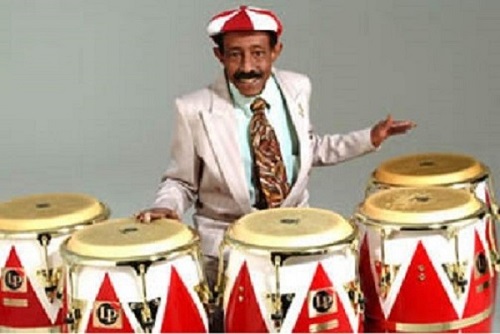
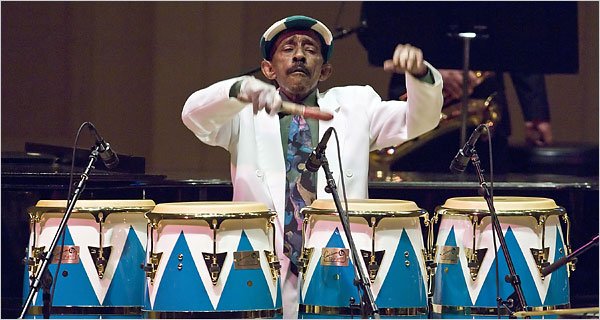
Carlos “Patato” Valdés one of the best percussionists in the history of Latin Jazz.

On November 4, 1926 in the Los Sitios neighborhood of Havana, Cuba, Carlos “Patato” Valdés was born. Known as Patato, he is, quite simply, one of the best percussionists in the history of music.

Patato was born into a very santera and very musical family, his father was a tres player of Los Apaches, the port germ of two illustrious sonera groups: the Sexteto Habanero and the Sexteto Nacional.

He learned to play the tres and the botijuela before turning to percussion, first on the cajones and finally on the congas.

He was an extraordinary percussionist of outstanding participation with the “Conjunto Kubavana”, “La Sonora Matancera”, “Conjunto Casino” and the “Orquesta de Tito Puente”, among other groups, both Son and Latin Jazz.

Formed in rumbero gatherings and carnival groups, Valdés became a professional in the early forties, after trying his luck as a boxer and dancer.

Carlos “Patato” Valdés uno de los mejores percusionistas en la historia del Jazz Latino

He played with Conjunto Kubavana, La Sonora Matancera and El Conjunto Casino. He accumulated nicknames: Zumbito (for his performances at the Zombie Club), Pingüino (for a dance he did on television) and Patato (for his small size), and in those days, dedicating oneself to music in Cuba guaranteed hardship. Besides, Patato wanted to experiment and that was not possible playing for dancers or tourists.

In 1954, he emigrated to New York, like his leather friends: Cándido Camero, Armando Peraza, Mongo Santamaría and the pioneer Chano Pozo (murdered there in 1948).

He immediately began working with Tito Puente. His first recording in the United States was the album Afro-cuban, by trumpeter Kenny Dorham, which opened with the intoxicating Afrodisia. Those were good times for tropical music.

He was the first percussionist to improvise “Solos” with 3 or more Congas at the same time. In addition, he was the creator of the “Congas Afinables”, instruments on which he would ride to dance making them sound rhythmically.

Patato Valdes was an excellent musician, an unforgettable person. Nervous and diminutive, he spoke with an impenetrable Cuban accent; he dressed elegantly, hiding the necklaces and bracelets of Changó and other “orishas”. He looked like a living caricature, but when he hit the percussions he became a divine creature: he had power, spectacularity, sense of melody.

Those skills made him an ambassador of Afro-Cuban rhythms in the jazz world, although he will also go down in history for his extraordinary rumba recordings.

In 1956, Patato appeared in the film Y Dios creó a la mujer, teaching the dances of his homeland to Brigitte Bardot. A great moment, although an implacable Guillermo Cabrera Infante criticized the actress’s movements: “she seems to commit suicide by dancing a cross between mambo and chachachá, a really toxic cross between mambo and chachachá”.

A flexible musician, Valdés sounded as comfortable playing with Machito’s big band as with Herbie Mann’s group. However, he felt indebted to the “rumba de solar” and in 1968 he recorded a revolutionary album with his friend Eugenio Arango, alias Totico.

The exuberant Patato & Totico had genuine Havana flavor, but enriched the basic percussion instrumentation with Cachao’s contrabass and Arsenio Rodriguez’s tres.Patato expanded the creative possibilities for percussionists by playing with three or more congas.

He also made their lives easier by developing a tunable conga: fed up with the traditional method (heating the leather over fire), he installed a metal hoop and keys for tensioning.

Carlos "Patato" Valdés
Carlos “Patato” Valdés

The LP company mass-produced his model, which was to become the standard for conga players. To promote it, he formed the Latin Percussion Jazz Ensemble with Tito Puente, Jorge Dalto and Alfredo de la Fé, among others, an orchestra that would end up becoming Puente’s big band in the early 80s.

It was during this period with Dalto that the album we have chosen for today began to take shape. It was titled “Patato, Master Piece” and it synthesizes all of Patato’s genius.

“Masterpiece” is an album that travels first class through tango, jazz, descarga, guaguancó and bolero, always in a masterful way and with a luxury crew made up of names like Jorge Dalto, Artie Webb, Michel Camilo, Jerry and Andy González, Nicky Marrero, Ignacio Berroa, Joe Santiago, Néstor Sánchez, Vicentino Valdés, and Sabú Martínez, among others.

The Art of Flavor.

Unfortunately Dalto had already passed away when in 1993 the project was released by the venerable German label Messidor, the same label that had already financed some impressive sessions of Patato with Mario Bauzá or Bebo Valdés, with whom he would later record the famous El Arte del Sabor.

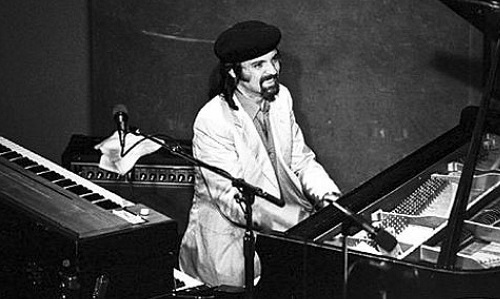
Jorge Dalton
Jorge Dalton

In fact, the great Argentine pianist had to be replaced for the last recording sessions that were made 6 years ago since his illness was too advanced, but he left us some incredible arrangements that were kept in the great majority of the themes.

Dalto left us in 1987 when he was only 39 years old. His replacement was nothing more and nothing less than a very young Michel Camilo.formed by 9 cuts among which we especially want to highlight the huge versions of Cute and Nica’s Dream, Masterpiece is an essential album for all lovers of Latin-jazz with capital letters and that is why we wanted to share it on a day as special as today.

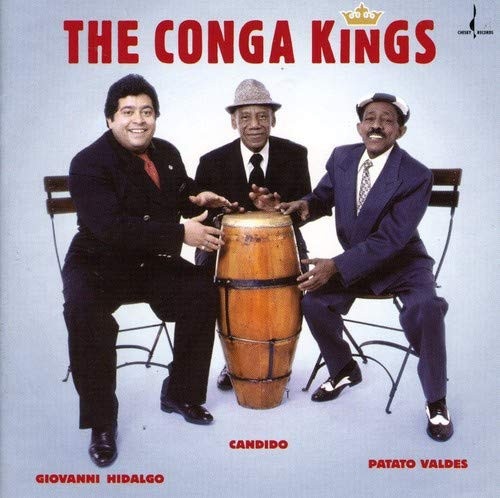
Already recognized as a legend, Patato became more visible in the last 25 years: he had his own band, Afrojazzia, although The Conga Kings, with Cándido and Giovanni Hidalgo, turned out to be more popular.

The Conga Kings Giovanni Hidalgo, Cándido Camero y Patato Valdez

He even made his way onto the modern dance floors, with a remix of San Francisco tiene su propio son. Just as he was returning from playing in California with the Conga Kings, his breathing began to fail.

The plane he was on had to make an emergency landing in Ohio to admit him to a hospital. The 81-year-old percussionist, a heavy smoker, was on his way to his beloved New York, but he would never get there. According to his relatives, he held out until December 4, the day of Santa Barbara, the Afro-Cuban equivalent of Changó, when the cables and tubes that kept him alive were removed.

Valdés died in Cleveland, USA, on December 4, 2007.

Fuentes: http://www.herencialatina.com/Patato/Patato_Valdes.htm

Imágenes: Martin Cohen de Congahead.com

Carlos “Patato” Valdés

You can read: Irakere was a Cuban group that developed an important work in Cuban popular music and Latin Jazz under the direction of Chucho Valdés

From Repression to Liberation through Salsa

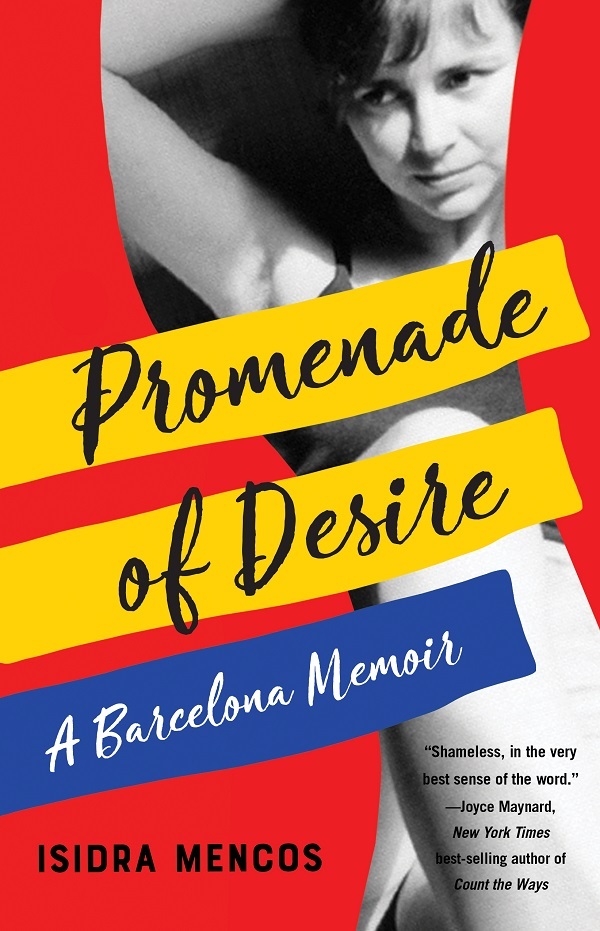
Interview with Isidra Mencos, Author of Promenade of Desire, A Barcelona Memoir

By Luis Medina

Isidra Mencos is the author of the engrossing, page-turning book, Promenade of Desire, A Barcelona Memoir. This book is a frank, honest and revealing coming of age story as a young woman in the transitional period marking the end of the Franco dictatorship to political freedom in Spain. It chronicles her formative experiences growing up with her family, embracing her sexuality, her relationships with men, discovering her liberation through Salsa music and finding herself.

Isidra Mencos, Author of Promenade of Desire, A Barcelona Memoir

LM: In your memoir Promenade of Desire, you describe your fascination with Salsa music as a liberating force during your coming of age as a young woman. Why Salsa music?

IM: I grew up in Spain under a dictatorship closely allied to the Catholic church. It was a very repressive atmosphere, not only politically but also culturally and sexually. From a very young age I learned to associate sensuality and pleasure with shame and guilt, so I felt disconnected with my body.

When the dictator died in 1975, I was 17 years old and in college. Spain transitioned to democracy and the culture went from repression to liberation and hedonism. That’s when I discovered Salsa music and dancing. From the moment I heard Salsa for the first time, I knew it was the music I had waited for my whole life. Although I didn’t know the steps, I was instinctively in sync with the beat.

Salsa allowed me to reconnect with my body and my sensuality in a guilt and shame-free way. It opened the door to a new me, a young woman aware and accepting of her body’s needs and desires. I fell in love with the great Salsa icons of the 70s, from the Fania All Stars to Rubén Blades, and Los Van Van. I went dancing three or four nights a week, until 5 a.m. I couldn’t get enough.

Salsa scene in the eighties

LM: What was the nascent Salsa scene like in Barcelona in the eighties?

IM: Salsa was not yet popular in Barcelona, where I grew up. Spain had been very isolated from other countries during the dictatorship and did not have significant immigration until the mid-70s so the exposure to this music had been limited. When I started dancing in 1977, there was only one dump of a club in the red light district, appropriately named Tabú, full of seedy characters. I was there all the time.

In the 80s Salsa started to gain traction and a few other places popped up. A very famous one at the time was Bikini, which was in a more bourgeois, safer area, and had two rooms, one for Salsa and one for Rock. Every single night the DJ would end the gig with “Todo tiene su final” with Hector Lavoe and Willie Colón. I loved it.

Promenade of Desire cover

By the time I left Spain in 1992 there were four or five clubs dedicated to Salsa, and live concerts with iconic figures had started to come to the city. There were also Catalan bands that played salsa standards, like Orquesta Platería and others.

LM: What was the popular music in Spain at that time?

IM: Rock and punk were the most popular. Punk represented the rebellious spirit of the youth, who had grown oppressed and now had the freedom, in the new democracy, to be outrageous and excessive without consequences. A very famous punk group was Alaska y the Pegamoides.

LM: Your ex-boyfriend Abili was a prominent pioneer in promoting Salsa Music in Barcelona during that era. Can you describe the triumphs and challenges that he had promoting Salsa music?

IM: Abili had fallen in love with Salsa before me. He was a journalist by profession and had come into some money due to a labor dispute. He decided that he would invest that money into making Salsa as popular as any other type of music in Barcelona. He produced concerts with Salsa greats like Rubén Blades, Eddie Palmieri, Ray Barreto, Luis Perico Ortiz and others, who came to Spain for the first time. Unfortunately, he was a bit ahead of his times. There wasn’t still a big enough audience to fill in the venues, and he lost a lot of money. That said, he was a major contributor to popularizing Salsa in Barcelona. For example, he ran a weekly Thursday salsa night for a few years at a club, with a live band (Catalan players) and a DJ, and you could see the club filling up more and more every week.

He later got involved with one of the major Salsa spaces in Barcelona, El Antilla, programming the live bands and promoting the scene.

Isidra Mencos during her book reading

LM: You have visited Barcelona throughout the years since you immigrated to the United States. What are the differences that you have seen in the Barcelona salsa scene?

IM: Salsa is now very well established in the city, in part due to the increasing numbers of Latin American immigrants who started coming in the 80s and the 90s. There was a big wave of Cuban immigration starting in the 90s which changed the direction of Salsa in the city, making timba and rueda very popular, for example.

Salsa was also taken on by several bands which mixed Catalans with Latina American immigrants, and produced great music, such as Lucrecia or, nowadays, Tromboranga.

That said, when I go back now I notice that there are less venues that offer live bands on a regular basis. It’s more of a DJ scene with dance instructors.

LM: In the book, you described Salsa music as a passionate force in your life as you dealt with your family, relationships with different men, sexuality, and the transition in Spain from Franco’s era of dictatorship and repression to freedom and democracy. What do you want the reader to take from reading your book?

IM: I think we all have repressed one or more parts of ourselves from childhood on, in order to be accepted by our parents, our teachers, our friends, our bosses…. My memoir is an inspirational tale about finding a way to reclaim the parts of yourself that have been hidden and becoming a whole person again.

Read also: The multifaceted artist Yamila Guerra and all her projects

Latin America – December 2022

Joe Arroyo was an excellent Colombian singer and composer of salsa and tropical music

On November 1st, 1955, Alvaro José Arroyo González, better known as “Joe Arroyo”, was born in Cartagena de Indias, Colombia.

He was an excellent Colombian singer and composer of salsa and tropical music, considered one of the greatest interpreters of music in his country.

His songs were national and international hits, he won multiple Gold records throughout his career, among them, 18 Gold Congos and Super Congos won in the Festival of Orchestras of the Carnival of Barranquilla.

Among his most relevant songs are “La rebelión”, “Tania”, “Mary”, “En Barranquilla me quedo”, “El Ausente”, “Tumbatecho”, “Centurión de la Noche”, “Manyoma”, “La noche”, “La rumbera”, “La guarapera”, “El trato”, “Con Gusto y Ganas”, among others.

In November 2011, Arroyo won the Latin Grammy award for best singer/songwriter at the 2011 Latin Grammy ceremony.

Born and raised in the Nariño neighborhood of Cartagena, Arroyo began his career at a very early age, when from the age of eight he sang in bars and brothels in Tesca, the tolerance zone of his hometown.

Joe Arroyo fue un excelente cantante y compositor colombiano de música salsa y tropical

In his early days he sang with groups such as Los Caporales del Magdalena, Manuel Villanueva y su Orquesta and the Supercombo Los Diamantes (the last two in 1970); in 1971 he recorded with La Protesta.

To look back, he started with the song “Manyoma”, which is Fruko’s, but has my arrangements. That’s where that hit was born, but it really came on strong when I had been with my band for four years. It is a sound that has soka, salsa, African sounds, cumbia, sea breeze and a 50% that comes from me but I have no fucking idea what it is.

Joe Arroyo commenting on the origins of joesón.

In 1973 he got his big break when he signed for Discos Fuentes after the producer, author and artistic director of Discos Fuentes, Isaac Villanueva, in the Suri Salcedo park in Barranquilla, was struck by a “pelao” who sang with the vibe of Cuban Celia Cruz. The announcer Mike Char had recommended him to Fruko and told him that he could see him in action at the El Escorpión stand, in the Pradomar (Atlántico) beach resort, as the voice of the house orchestra, La Protesta.

On Sunday Villanueva was there. And it caused him more impact. He spoke with Leandro Boiga, director of La Protesta, and obtained permission to take him to rehearse days later to Medellín. Thus Joe Arroyo joined Fruko y sus Tesos, an orchestra with which he achieved great fame and with which he recorded uninterruptedly until 1981.

Between 1974 and 1975 he performed with Los Líderes (Los barcos en la bahía), between 1976 and 1981 with The Latin Brothers (La guarapera), in 1976 with Los Bestiales, in 1978 with Pacho Galán (Volvió Juanita) and with La Sonora Guantanamera, and in 1980 with Los Titanes.13 He also sang in other groups such as Piano Negro, Afro Son, Los Rivales, Los Bestiales, Wanda Kenya, los Hermanos Zuleta, el Binomio de Oro, Juan Piña, Mario Gareña, Gabriel “Rumba” Romero, Claudia Osuna, Claudia de Colombia, Oscar Golden, Yolandita y los Carrangueros, among others.

In 1981 he founded his own orchestra, La Verdad, with which he dedicated himself to mixing diverse musical influences, mainly salsa with coastal music (cumbia, porro, chandé, among others) and with diverse Caribbean rhythms (socca, reggae) until he created his own rhythm, the “joesón”.

Joe Arroyo
Joe Arroyo

Some of the hits recorded with La Verdad are classics of the coastal music that earned him many awards and being considered the King of the Carnival of Barranquilla, where he won 10 Gold Congos and a Gold Supercongo (created especially for him) in the Festival of Orchestras.

One of his biggest hits was “La Rebelión” (1986), a song that tells the story of an African couple, slaves of a Spaniard, in Cartagena de Indias in the 17th century.

The piano solo, played by Chelito De Castro, and Arroyo’s soneos made “La Rebelión” an immediate hit that is still danced to at parties and discotheques throughout the continent.

In Mexico the same phenomenon happened since the song was first published in the LP “Tequendama de Oro Volumen 7” by Discos Peerless in 1987 and its LP “Joe Arroyo y su Orquesta La Verdad, Grandes éxitos”, still to this date the song is very popular in the sonidero movement.

Other of Joe Arroyo’s most successful songs were “El Caminante”, “Confundido”, “Manyoma”, “Tania” (dedicated to his daughter) and “El Ausente”, all recorded with Fruko.

Álvaro José Arroyo
Álvaro José Arroyo González

The album “Fuego en mi mente” (1988) contains songs with influences from African music and contemporary salsa. With “La guerra de los callados” (1990), he made his first Spanish tour. In 1993 he released “Fuego” and played again in Spain.

Joe Arroyo recorded with Discos Tropical (1970-1971), Discos Fuentes (1973-1990) and Discos Sony (1991-2002). After an 11-year stint with Discos Sony, he returned to Discos Fuentes in Medellín in 2003, where he recorded his latest works: “Se armó la moña en carnaval” (2004), “Mosaico de trabalenguas” (2006) and “El Super Joe” (2007).

Joe Arroyo is one of the five Colombians who have appeared on the cover of Rolling Stone magazine.

Since the early 1980s, Joe Arroyo suffered multiple health problems that prevented him from touring and for which he was considered dead several times.

On September 7, 1983, he was presumed dead after suffering from a retrospective thyroid condition that kept him away from the stage. In 2000, he nearly died in Barcelona due to a diabetic coma and pneumonia.9

His medical history recorded ischemia, renal and motor problems and difficulty singing. In some concerts he even had to be helped up on stage due to weakness and disorientation.

In 1997, despite his health problems, he made a special appearance in the soap opera Perro Amor.

The singer’s health was affected on April 26, 2011 and he was hospitalized since late June 2011 in the clinic La Asunción de Barranquilla in intensive care for a clinical picture of hypertensive crisis, ischemic heart disease and diabetes mellitus with simple decompensation.

He was connected to an artificial respirator, underwent dialysis and a tracheotomy. His condition caused him to be considered dead on social networks, which was denied by both his relatives and the hospital.

All this took place in the midst of a controversy between the singer’s former family (his ex-wife Mary Luz Alonso and his children) and his friends, who considered that Joe was being exploited by his wife Jacqueline Ramón and his musical representative, who claimed that Joe Arroyo was not suffering from major health problems and announced his early return to the stage.

He died on July 26, 2011, at 7:45 (UTC -5), at La Asunción clinic in Barranquilla due to a cardiorespiratory arrest, as a result of a multiorgan failure (high blood pressure, infections, kidney problems) that had kept him in intensive care since Monday, June 27 of the same year.

He was buried on July 27, 2011 at the Jardines de la Eternidad cemetery in Puerto Colombia.

On October 19, 2011, his body was transferred to a special area for illustrious characters in the Jardines de la Eternidad cemetery.

On December 17, 2011, the Mayor’s Office of Barranquilla unveiled a statue of Joe Arroyo in the Musicians’ Park.

Arroyo had signed with Cenpro TV to produce a miniseries about his life, once Alejo, la búsqueda del amor of Caracol Televisión was finished, but in 2000 Cenpro TV went bankrupt after the crisis of public TV in Colombia.

Between June and December 2011 RCN channel aired a telenovela based on the singer’s life called El Joe “La Leyenda”. Sadly the singer passed away during the broadcast of the series.

After his death, Jacqueline Ramón and Mary Luz Alonso (two of Arroyo’s ex-wives) decided to build two museums respectively. Jacqueline’s museum will exhibit various items that stood out during her musical career, such as the 18 Golden Congos won at the Barranquilla Carnival.

Álvaro José Arroyo
Álvaro José Arroyo

In the future, the museum is expected to be moved to a more appropriate location, once the approval of the Ministry of Culture has been obtained.

A wax statue designed by an American sculptor will also be exhibited there.

The other museum, located in the home of Mary Luz Alonso Llanos and her daughters Eykol and Nayalibe Arroyo, will also feature articles, photos and other Congos de Oro, in addition to a statue.

In July 2011, the Mayor’s Office of Barranquilla decided to name one of the stations of the city’s mass transit system, Transmetro, “Estación de Retorno Joe Arroyo”, in tribute to the singer’s musical legacy. According to the then Manager of Transmetro, Manuel Fernández Ariza, the Joe Arroyo station is the most important station of the integrated transportation system.

On March 1, 2012, a Colombian scientist discovered a new species of bee on the Colombian Caribbean Coast that was named in honor of the singer, the Geotrigona Joearroyoi.

On the same day of Joe Arroyo’s death, singer Checo Acosta composed “Adiós Centurión” while on a trip from Medellín to Barranquilla.

The video and song were released months later. Another song that paid tribute to him was titled El Rey Del Carnaval, with the participation of Juan Carlos Coronel, Petrona Martínez, Checo Acosta himself, the pianist and singer Chelito de Castro, Ricardo El Pin Ojeda, who was timbalero of the orchestra La Verdad and also with Eykol Tato Arroyo, daughter of the Maestro. This song was included in the commemorative album made by Cervecería Águila.

Joe Arroyo

You can read: November 22nd International Musician Day

  • « Go to Previous Page
  • Page 1
  • Interim pages omitted …
  • Page 74
  • Page 75
  • Page 76
  • Page 77
  • Page 78
  • Interim pages omitted …
  • Page 114
  • Go to Next Page »

International Salsa Magazine (ISM) is a monthly publication about Salsa activities around the world, that has been publishing since 2007. It is a world network of volunteers coordinated by ISM Magazine. We are working to strengthen all the events by working together.