• Skip to primary navigation
  • Skip to main content

International Salsa Magazine

  • HOME
  • Previous editions
    • 2026
      • ISM / April 2026
      • ISM / March 2026
      • ISM / February 2026
      • ISM / January 2026
    • 2025
      • ISM / December 2025
      • ISM / November 2025
      • ISM / October 2025
      • ISM / September 2025
      • ISM / August 2025
      • ISM / July 2025
      • ISM / June 2025
      • ISM / May2025
      • ISM / April 2025
      • ISM / March 2025
      • ISM / February 2025
      • ISM / January 2025
    • 2024
      • ISM / December 2024
      • ISM / November 2024
      • ISM / October 2024
      • ISM / September 2024
      • ISM / August 2024
      • ISM / July 2024
      • ISM / June 2024
      • ISM / May 2024
      • ISM / April 2024
      • ISM / March 2024
      • ISM / February 2024
      • ISM / January 2024
    • 2023
      • ISM / December 2023
      • ISM / November 2023
      • ISM / October 2023
      • ISM – September 2023
      • ISM – August 2023
      • ISM July 2023
      • ISM Edition June 2023
      • ISM – May 2023
      • ISM April 2023
      • ISM March 2023
      • ISM February 2023
      • ISM January 2023
    • 2022
      • ISM December 2022
      • ISM November 2022
      • ISM October 2022
      • ISM September 2022
      • ISM August 2022
      • ISM July 2022
      • ISM June 2022
      • ISM May 2022
      • ISM February 2022
      • ISM January 2022
    • 2021
      • ISM December 2021
      • ISM November 2021
      • ISM October – 2021
      • ISM September 2021
      • ISM August 2021
      • ISM July 2021
      • ISM May 2021
      • ISM April 2021
      • ISM June 2021
      • ISM March 2021
      • ISM February 2021
      • ISM January 2021
    • 2020
      • ISM December 2020
      • ISM November 2020
      • ISM October 2020
      • ISM September 2020
      • ISM August 2020
      • ISM July 2020
      • ISM June 2020
      • ISM May 2020
      • ISM April 2020
      • ISM March 2020
      • ISM February 2020
      • ISM January 2020
    • 2019
      • ISM December 2019
      • ISM November 2019
      • ISM October 2019
      • ISM Septembre 2019
      • ISM August 2019
      • ISM July 2019
      • ISM June 2019
    • 2016
      • ISM December 2016
  • Spanish
  • Download Salsa App
    • Android
    • Apple

Search Results for: Cuban

Pacifica Radio, history, shows and controversy

This is Pacifica Radio

Pacifica Radio has been one of the largest radio networks in the United States in recent decades and its importance remains enormous today despite the time elapsed. It has given voice to figures of all kinds of political and ideological trends and artists from all genres who sought a platform in order to be heard. However, such popularity does not make this organization to be free from controversy that, like its history and shows, we would also like to explore with the greatest possible respect.

Next, we will talk about the most outstanding to observe about this radio station since its beginnings from 1946 to this day, since talking about Pacifica Radio is also talking about communication in the United States and the role played played by Latino culture and music in all of this.

Logo of Pacifica Foundation

Beginnings of Pacifica Radio

Pacifica Foundation is a non-profit organization that owns five independent radio stations financed from listener contributions. It is widely known for its progressive and liberal tendencies and is located next to KPFK in Los Angeles, California.

This organization is also responsible for managing everything related to Pacifica Network, which, in turn, runs much more than a hundred affiliated stations with all kinds of shows and content, although it specializes on political and social issues to varying degrees. It is the oldest radio network in the country and the oldest non-profit network in the world, which speaks of Pacifica’s relevance compared to other media.

It was founded in 1946 by E. John Lewis and Lewis Hill after the Second World War. Both men were totally anti-war and refused to perform military service as conscientious objectors. They joined other pacifists to create Pacifica Foundation, whose first station started to air on April 15, 1949 in Berkeley, California.

Being true to the beliefs with which they started this project, the founders gave voice to all those who were against the Korean War the following year along with many other minorities who could not find means of communication to express their views contrary to the majority position of the time.

The station started operating in several cities over the years due to its enormous success and the following radio stations were created in several cities: KPFA/94.1 and KPFB/89.3 in Berkeley, California (San Francisco Bay Area), KPFK/90.7 in Los Angeles, WBAI/99.5 in New York, KPFT/90.1 in Houston and WPFW/89.3 in Washington, DC.

Lewis Hill, co-founder of KPFA and Pacifica Radio

Operation

Pacifica is governed by a board of directors that sets out the policies that determine the organization and oversees the network operations. The board is comprised of representatives from each of the stations that comprise the foundation, as well as directors elected by the Pacifica community.

The members of this board are elected and replaced every three years and have regular meetings to discuss issues related to the operation of the foundation and decision-making regarding the management of the network. It is from there that the use of resources donated by the audience is being decided.

The board members are as follows:

Lydia Brazon (Chair), representing KPFT in Houston, Texas

Sabrina Jacobs (Vice-Chair), representing KPFA in Berkeley, California

Alex Steinberg (Secretary), representing WBAI in New York City, New York

Donald Goldmacher (Treasurer), representing KPFA in Berkeley, California

Christina Huggins, representing WPFW in Washington, D.C.

T.M. Scruggs, representing WBAI in New York City, New York

Janet Coleman, representing WBAI in New York City, New York

Cerene Roberts, representing KPFA in Berkeley

Pacifica Foundation’s Latino shows

If there is something Pacifica Radio has stood out is for the enormous space provided to the Latino community to spread its music and culture in general. That is why there have been many shows entirely dedicated to these topics and whose hosts have been Latinos or children of Latinos.

KPFA has Luis Medina and Emiliano Echeverría, who are in charge of hosting the show ”Con Sabor”, which specializes in artists and news related to salsa, Latin jazz, Afro-Cuban and Afro-Caribbean music, among other genres. In addition, they also interview these artists, provide the audience with the musical calendar and offer concert tickets.

Broadcasters Luis Medina, Chata Rodríguez, and Emiliano Echeverria

In the case of KPFK, the Latin community has the well-known show ”Canto Tropical” hosted by Kathy Diaz and Hector Resendez, whose work is focused on promoting the main Latin music genres such as Latin jazz, Afro-Cuban music and salsa. They also focus on interviewing and giving space to both local and foreign artists to promote their talent and be made known to the widest possible audience.

Host of ''Canto Tropical'' Kathy Díaz and host of ''Alma Del Barrio'' Eddie López
Host of ”Canto Tropical” Kathy Díaz and host of ”Alma Del Barrio” Eddie López

On WBAI, ”Salsa Con Candela” is a weekly celebration of the rich history and diversity of the salsa music genre. The show hosted by DJ Candela includes a mix of classic and contemporary songs, as well as interesting and enlightening interviews with artists and important figures in Latin music culture.

Another noteworthy Latin program is ”Salsa y más” on KPFT, which explores in detail the world of salsa and other important Latin genres. The program hosted by DJ Leonard Trujillo, as well as ”Salsa Con Candela” also offers a mix of Latin and contemporary songs along with interviews with local and international artists.

And finally, WPFW has ”Latin Flavor”, a program dedicated to the most important Latin genres such as salsa, Latin jazz and many others. The show hosted by DJ Jim Byers explores the cultural and historical roots of Latin music and provides a platform to present new artists from around the world.

Locutor Jim Byers
Locutor Jim Byers

Controversy

Since the beginning of this foundation, its stations have been embroiled in a series of scandals that have not gone unnoticed by telecommunications and the community at large, especially political and ideological. Among the many events suffered by Pacifica, we cannot fail to mention the requests from the government to obtain the recordings of some shows, controversial interviews such as the one with Che Guevara, reports about embezzlement of funds, financial crisis, among many other things.

In 2020, it was learned that some Pacifica listeners, volunteers and donors have created an organization called Pacifica Safety Net with which they seek to expose mishandling and attitudes of Pacifica’s board members, whom they accuse of compromising the main mission of the station network. The members of this group have filed a lawsuit against this board for prevarication and mismanagement, assuring that the board’s lack of leadership resulted in the loss of many revenues in the station network and, therefore, caused a serious problem of solvency in the organization.

KPFA's building
KPFA’s building

A great example of this mismanagement is the reduction from 120,000 to 40,000 members the network has today, as was the case in just a few years. There are also many complaints about the type of programmes broadcast by the network in recent years due to their high content of hate, conspiracy theories, racism and a lot of things that did not represent the values upon which Pacifica Foundation was based.  

In that sense, the members of the aforementioned committee make an urgent call to all members of the radio network to recover these spaces to go back to the main mission of the foundation, which unfortunately has been taken by other interests completely unrelated to those of the donors, workers and listeners.

In 2019, the network was able to get a $3 million loan that would allow it to pay part of the debt accumulated up to that date, but the possibility of the foundation achieving long-term financial stability is not even close to being a fact. Due to mismanagement, the foundation is not able to pay this amount back, so it is forced to cut costs. This reduction in income is causing the board of directors to seek to sell the building where WBAI operates, which had been given by the Empire State Realty Trust (ESRT) in exchange for a rental agreement that is quite detrimental to the foundation from the point of view of current and former workers.

The Empire State Building, where WBAI FM is located now

Wit regard to this issue, Mexican broadcaster Jesse ”Chuy” Varela, who worked for several years at KPFA, told us a little about the irregularities presented both there and at other stations where he worked. The radio professional points out that there have always been serious communication problems between administrations and workers. ”The board always thinks they can do something better with the money raised and spend a lot of resources without notifying the audience about what they are doing. When you ask for money from the listeners, they have to trust that when they give it to you, you are going to put it to good use” declared Varela.

”I knew of many cases where executives who had meetings in different cities, stayed in expensive hotels and ate in exclusive restaurants. I consider this is an abuse and a lack of respect for those who donate their money. I have seen this in all the stations where I worked unfortunately. In this sense, trade unions play a fundamental role to avoid these kinds of problems” the broadcaster continued.

Announcer Jesse ''Chuy'' Varela at KCSM Jazz 91
Announcer Jesse ”Chuy” Varela at KCSM Jazz 91

As for other announcers and former Pacifica Radio employees or managers, they did not want to make comments in this respect. We presume that this could be because of possible reprisals due to the power accumulated by the largest radio network in the United States.

It should be noted that everything written here is based on testimonies of others that have not yet been confirmed, so we neither confirm nor deny any of the facts as presented here.

Read also: Two radio programs of the salsa movement in California

In front of adversity we grow with Johnny Cruz .

North America/ All USA

Johnny Cruz : This month I wanted to dedicate myself to good news, highlighting the work of those who, despite adversity, continue to strive to bring the best to the public. We keep working!

Gilberto Santa Rosa surprises us with his new album Colegas. His most recent phonogram. In this, Santa Rosa invested the last six years and presents 16 collaborations with Cuban artists -Isaac Delgado and Juan Jose Hernandez-Puerto Ricans -Tito Nieves, Tito Rojas, Luisito Carrion, Pirulo, Nino Segarra, Choco Orta among others-, as well as with a Dominican – Jose Alberto “El Canario” -.

Gilberto Santa Rosa - Colegas
Gilberto Santa Rosa – Colegas

The album is preceded by “40… y contando en vivo desde Puerto Rico”, an album recorded in 2018 live at the Coliseo de Puerto Rico in San Juan, to celebrate its 40 years of musical career. The majestic arrangements were the work of Dino Nugent (Apaga La Luz), Marty Sheller (Caminalo, Ban Ban Quere), Ramón Sánchez (Que Se Sepa), Javier Fernández (Tremendo Coco, Masacote), Louis García (Por La Calle Del Medio, Ocana Sordi, El Guateque De Chombo), Ricky González (Vamos a Bailar El Son, Eque Tumba), Manolito Rodríguez (Medley Boleros), José Madera (Bailadores), Rene González (Estoy como Nunca), Isidro Infante (Mario Ague, El Mejor Sonero, Sonerito), James Hernández (La Fonda De Bienvenido).

In good time Santa Rosa presents this production. He positions him on the GRAMMY platform and refreshes him in his role as sonero and incidentally, he extends a helping hand to some who had not recorded Salsa Brava again.

Tracks: La Familia; Caminalo; Que Se Sepa; Mazacote; Apaga La Luz; Sonerito; Por La Calle Del Medio; Nos Vamos A Bailar El Son; Medley Boleros; Ocana Sordi; Bailadores; El Mejor Sonero; Tremendo Coco; Estoy Como Nunca; Mario Ague; Eque Tumbao; La Fonda De Bienvenido; Ban Ban Quere; Guateque De Chombo.

Members: Angie Machado, Jan Duclerc, Jesús Alonso, turbidity Vilchez – trumpet; Charlie Sierra – maracas; Dino Nugent – violín; Johnny Torres, Pedro Perez – bass; Manolito Rodriguez – timbal; Rafy Torres, Toñito Vásquez, Víctor Vázquez, Reynaldo Jorge – trombones – trombone; Richie Bastar – bongo; Sammy García, Jimmie Morales – congas; Sammy Vélez, Josué Urbina; Pedro Méndez, Frankie Pérez, Janice Maysonet – saxophone; Luis Marín, Isidro Infante, Javi Fernández, Ricky González – piano; Orestes Vilató – timpani; Pablo “El Indio” Rosario – percussion; Meñique, Paquito Guzmán, Víctor Manuelle, Luisito Carrion, Justo Betancourt – backing vocals. Guests: Víctor Manuelle, Choco Orta, Juan José Hernández, Isaac Delgado, Yan Collazo, Luisito Carrion, Pirulo, Tito Nieves, Tito Rojas “El Gallo”, Ismael Rivera Jr., José Alberto “El Canario”, Carlitos Ramírez, Michelle Brava, Herman Olivera, Maelo Ruiz.

I take this opportunity to greet my good friend Johnny Rodríguez Jr., better known as Johnny “Dandy” Rodríguez, is an American bongo player. He was Tito Puente’s longtime bongo player, and also played with Tito Rodríguez, Ray Barretto, and Alfredo de la Fe. He belonged to various popular bands of the salsa era such as Tico All-Stars, Fania All-Stars, and Typica 73. He is a proud son of El Barrio (Spanish Harlem), New York, and stickball (street baseball) was more interested than music.

Marco Bermúdez - En mi voz
Marco Bermúdez – En mi voz

However, influenced by his father, Johnny, 17, earned the position of playing bongos in the Tito Puente Orchestra. Johnny spent more than 30 years with the orchestra, also working with Tito Rodríguez from 1965 to 1968 and with Ray Barretto from 1970 until the end of 1972. Johnny went on to form Tipica 73, of which he remained a member until 1979. He then returned to the band. Tito’s band, playing alongside him until the time of Tito’s death in May 2000.

Johnny “Dandy” Rodríguez Jr. continues to be a Latin jazz and salsa percussionist. Today he works as a percussionist in different Latin music ensembles, He is unstoppable and is very active with the Latin Jazz Giants (alongside his colleagues and Exclusive LP Artists Jose Madera and George Delgado) and that includes the stars from the original Tito Puente Orchestra. The band plays the famous music from the Palladium days of Tito Puente, Tito Rodríguez, and Machito, and also recorded The Giants Play the Music of the Palladium.

In 2008, Johhny entrusted LP’s Research and Development Department with the design of the John “Dandy” Rodríguez Jr. bongoes from the Legends series. John is proud that these drums, which bear his name, present such a sound and visual characteristics outstanding. Keep going, Johnny!

A few days ago, En Mi Voz, the solo debut of the Ecuadorian singer Marco Bermúdez, was officially launched on the market. This is a very good selection of ten songs, under the master hand of Oscar Hernández, the prestigious and renowned musician who is making his debut as a record producer with Ovation Records.

Pedro Bermudez - Arrasando
Pedro Bermudez – Arrasando

Marco has not saved anything for this premiere. He has met with his colleagues from the “Hispánica del Barrio” and the result could not be better: Jerry Madera, Máximo Rodríguez, Maneco Ruiz, Héctor Colón, Doug Beavers, Reynaldo Jorge, Jeremy Bosch, George Delgado, Luisito Quintero and Jorge González give solvency and flavor to En Mi Voz. The album opens with “Amanecer Contigo”, composed with four hands between Hernández and Bermúdez, where the trumpet solos by Maneco Ruiz and flute by Jeremy Bosch stand out.

Jeremy is also heard with his flute in his fine and heartfelt composition “Canto a mi Mamá” and in “Únicamente tú”, making Marco the second voice. The romantic spirit of the singer of the Spanish Harlem Orchestra and Mambo Legends Orchestra is confirmed in songs like “Solo Basta” and “Tu Regreso”. Oscar’s arrangements guarantee the key melody. Highly recommended this album, it has no waste!

I send my greetings and wishes for a reunion with this excellent salsa singer: Hermenegildo Olivera, or Herman Olivera. Born in Newark, New Jersey, the son of Puerto Rican parents and from an early age linked to Latin music. In the 70s, in the middle of the salsa boom, Herman began his love of singing by listening to the interpretations of Chamaco Ramírez, Héctor Lavoe, Cheo Feliciano and Marvin Santiago, among others. These vocalists were primarily his source of inspiration. When he was just 15 years old, Herman began his career as a salsa interpreter with an orchestra called La Justicia.

Johnny Rodríguez
Johnny Rodríguez

Later he was part of the band La Sónica, where he met his friend and trombonist Jimmy Bosch. After this he spent time with the Caramelo orchestra to later take the most important leap in his career by being part of the Conjunto Libre in 1978, where he left his voice reflected for the first time in the Incredible LP of 1981 under the direction of percussionist Manolo Oquendo and bassist Andy González, where he stands out with the theme Decídete.

In 1990, he was invited to record on the album Salsa Sudada, from the Valdesa Records label of Víctor Raúl Sánchez “Patillas” and with the musical direction of Isidro Infante, sharing vocalization with Mario Muñoz “Papaíto”, Adalberto Santiago, Eladio Peguero “Yayo El Indio” and Pablo Villanueva Branda “Melcochita”; in this work he interprets the songs La Aguja and a tribute to the city of Cali called Valle Plateado de Salsa. Later, it launched an independent project called Herman Olivera y La Exclusiva. Chequea la Mercancía.

Herman Olivera
Herman Olivera

Produced by Fernando Pastrana where the song Me Extraña Araña is one of the most outstanding. For 1997 he participates in the CD of the band Rikoson All Stars, called Evoluciones del Son, where he stands out very well in the romantic theme Aquella Noche. In 1998 he was requested by the piano teacher Eddie Palmieri and together with the vocalist Wichy Camacho they recorded the album El Rumbero del Piano, where he stands out as a singer on the songs Malagueña alerosa and Oiga mi Guaguancó.

That same year he was invited to the recording studios by the trombonist Jimmy Bosch and they released the album titled Soneando Trombón, which contains the hit Otra Oportunidad. Who plays a duet with Frankie Vázquez. On this CD also appears the song Descargarana. That same duo, Olivera and Bosch, meet the following year (1999) and produce Salsa Dura, where Herman shines performing the full Impacto Tendremos. The album also features the participation of singers Frankie “Nene” Morales and Frankie Vázquez. Parallel to this album, the RMM label launches a live CD and DVD titled Eddie Palmieri & Friend’s, where Herman looks excellent in the number Palo pa ’Rumba.

Felix Villalobos
Felix Villalobos

The invitation to tune in to the new Fm / Internet radio station on Live365.com continues: Salsagallery. Good music, interviews with the artists and much more… now with the participation of Felix Villalobos who joins Salsagallery Radio with a segment in which we will be talking about Music.

At the Spanish Harlem Salsa Gallery Museum we are happy to say that we are gradually returning to our activities and we will be opening the gallery sporadically. We do not stop, we continue to work for our music and we will always keep you informed through our social networks. We hope to have more news shortly and that we can return to normal soon.

Publicity
Raymond Stewart
Johnny Cruz
Correspondent
New York

“Mambo Night in Miami Beach” celebrates the 100th anniversary of the birth of “El Inolvidable”, our own Tito Rodriguez


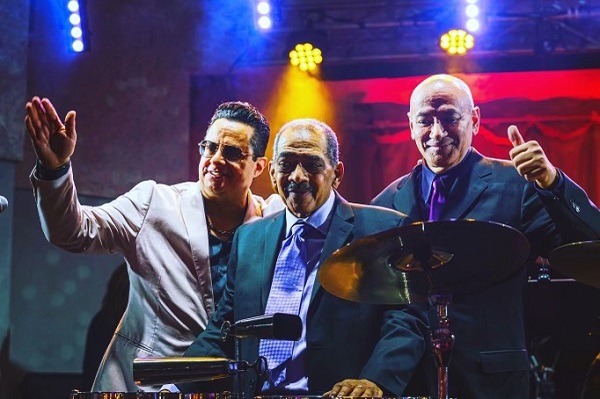
De izquierda a derecha, Tito Puente, Jr., Mario Grillo, Tito Rodríguez, Jr. Foto: sobejazzfestival.com

The initial idea of bringing together the three great orchestras of the Palladium in this innovative “three-in-one” orchestra concept came to Mario Grillo more than two decades ago.

As early as March 3, 2022, the mambo heirs celebrated the coming of age of The Big Three Palladium Orchestra in New York. Twenty-one years after the establishment of this remarkable big band, the concert entitled Palladium in the New Millennium took place in a packed Lehman Center for the Performing Arts.

The first presentation of 2023 of the “three-in-one” big band and coinciding with the 100th anniversary of the birth of “El Inolvidable”, Tito Rodriguez, the South Beach Jazz Festival’s line-up opened its musical offerings on Saturday, January 7, 2023 with the concert entitled Mambo Night in Miami Beach. At around 8:00 p.m. The Big Three Palladium Orchestra took over the Miami Beach Band Shell when Mario Grillo, known in the music scene as Machito, Jr. kicked off the musical feast that awaited us, to the sound of Cuban Fantasy.

Foto:  Miami Bandshell broadcast

As you can see, each of the “big three of the Palladium” and owners of the mambo in its golden age inherited a timbalero son. These three bandleaders have made it their mission to keep the Palladium legacy alive and well.  Although the mambo heirs have transcended the label of being the sons of the mambo owners, they do not forget that the Patriarchs are still a topic of conversation in musical circles around the world.

For the concert at the Miami Beach Band Shell, The Big Three Palladium Orchestra was joined by the veteran musicians: Carmen Laboy on baritone saxophone and musical direction; Jose Heredia on tenor saxophone, Mark Friedman on alto saxophone and flute, Julio Andrade on alto saxophone; Larry Moses, Seneca Black, Dante Vargas and Julio Diaz on trumpets; William Rodriguez on piano, Jerry Madera on bass, Daniel Peña on bongo and Diego Camacho on tumbadoras.  On the vocal front, Sammy González, Jr. was backed by the coros of Starlyn Benítez and Tatan Betancurt.

Carmen Laboy en el saxofón barítono y la dirección musical de The Big Three Palladium Orchestra Foto: Ethan Dangerwing of Masterwing Creative Agency

The upscale repertoire vibrated and rumbled at the Miami Beach Band Shell, an elegant venue steps from the beach, which was filled to capacity.

Mario GrilloFoto: sobejazzfestival.com
Mario Grillo Foto: sobejazzfestival.com

Mario Grillo’s highlights were: Cuban Fantasy, Oye la rumba (La rumba), Ahora sí, Piñero tenía razón (Piñero was right), Babarabatiri (Babarabatiri) and Rumbantela (Rumbantela). On the other hand, Tito Rodríguez, Jr. performed the following songs: El que se fue, Cheveré, Yambú, Avísale a mi contrario, Agua de Belén and Fagot’s world. In the performance of Avísale a mi contrario, the conga of Diego Camacho and the bongo of Daniel Peña, who “quinteando a lo bravo” and adjusting to the tuning of the timbal in charge of Rodríguez, Jr. opened the way for the winds. And the winds entered through the wide door to increase the tempo of the night, which was already heating up to the sound of mambo.

Tito Rodríguez, Jr.Foto: Migdalia Sánchez
Tito Rodríguez, Jr. Foto: Migdalia Sánchez

When it was Tito Puente, Jr.’s turn to play the timbal, he affirmed that Tito Puente was the pioneer in having a woman in the vocal front of an orchestra.

Then, preparing to close the first segment of the concert, he introduced Puerto Rican businesswoman and singer Melina Almodóvar, whom he backed for the performance of Mi socio.

Tito Puente, Jr. y Melina AlmodóvarFoto: sobejazzfestival.com
Tito Puente, Jr. y Melina Almodóvar Foto: sobejazzfestival.com

The grand finale of the event placed the three timbaleros heirs of mambo in front of the orchestra to delight us with a masterful performance in sync with the rhythmic base that Diego Camacho and Daniel Peña did not hesitate to maintain.

Last year such a show was promised in which the heirs of mambo honor the legacy of their fathers on Puerto Rican soil.  The show was to be entitled “Palladium in the new millennium” and was to be presented on Father’s Day at the Symphonic Hall of the Fine Arts Center in Santurce. However, it was cancelled.

I often say that the past is the past and the future is uncertain, so let’s hurry and wait for The Big Three Palladium Orchestra to perform in Puerto Rico.

I for one continue to live in salsa, which is still magic, fantasy and illusion.

Bella Martínez Writer, researcher of Afro-Caribbean music

You can read: Mike Arroyo the guitarist Using Jazz to praise God

Bella Martínez Writer, researcher of Afro-Caribbean music and author of Un conguero para la historia, Las memorias de Jimmie Morales.

787-424-8868

Tribute to Eddie López for his career

How were his beginnings?

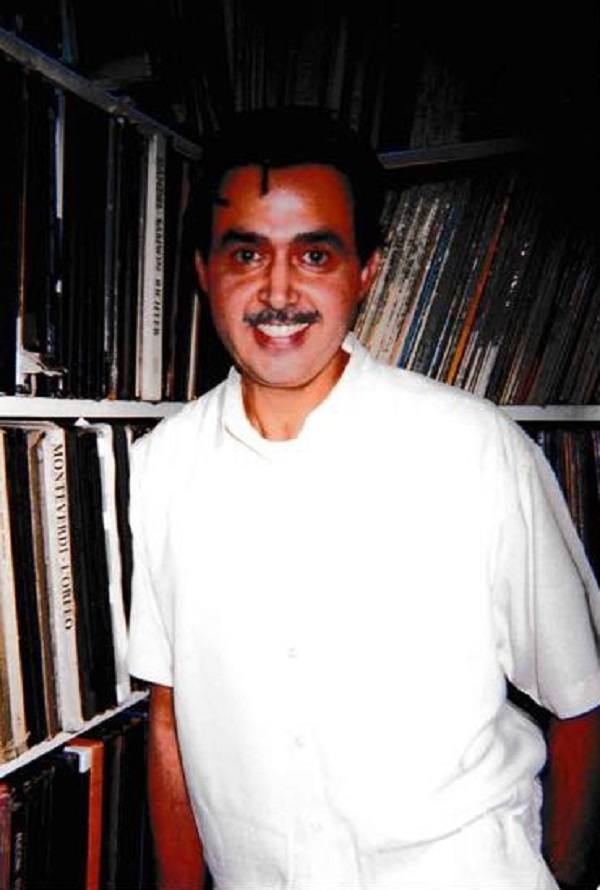
On January 10, 2023, the death of Eddie Lopez has been made known, who has been one of the greatest pillars of the radio station KXLU since 1976 when he started his career as a DJ. His arrival came during the third anniversary of the famous program ”Alma Del Barrio”, being a fundamental piece in the huge success the show had during several decades and making it remain part of the programming of the already mentioned radio station.

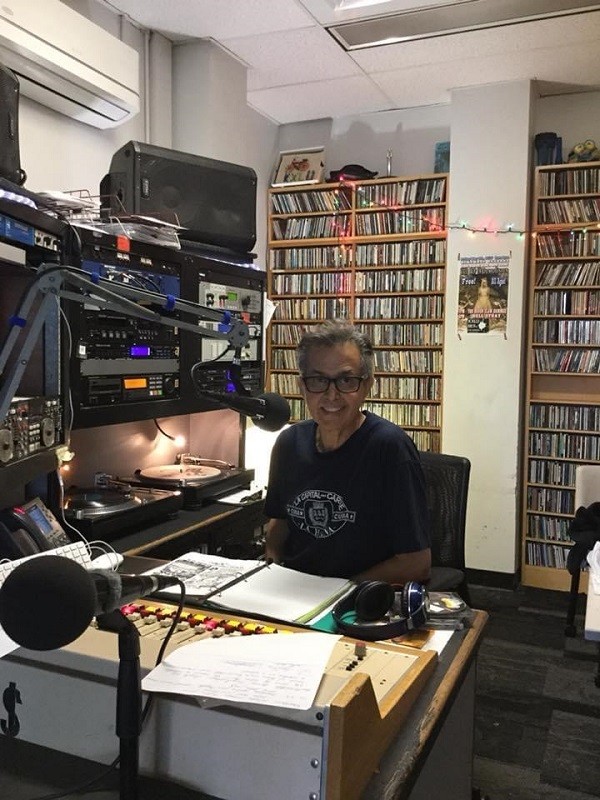
Host of the radio show ''Alma Del Barrio'' Eddie López
Host of the radio show ”Alma Del Barrio” Eddie López

A little bit of his life

Eddie Lopez was originally from Los Angeles and spent much of his childhood in his father’s photography studio, which may have been one of his greatest inspirations to dedicate his life to the arts in adulthood. After graduating from Cathedra High School, he was admitted to Pepperdine University, but switched to Loyola Marymount University, from where he finally graduated in 1978.

Although much of his professional career was spent at KVEA Channel 52 Telemundo, he spent 46 years working at ”Alma Del Barrio” and streaming the best Afro-Cuban music through the waves of KXLU from 2pm to 6pm. During all these years, Eddie always said that he wanted ”Alma Del Barrio” to be as professional as possible and encouraged all his colleagues to always be better every day to give their best to the audience. He also said that this show was not only a work team with common interests, but a family in which everyone supported each other to achieve their goals.

All those involved in his life who came to know him say that he was a man completely dedicated to his family who deeply loved his wife Vanessa and his daughter Nina, who were always his greatest motivation to get ahead day by day. He was loved by all his family and friends, who are very sorry for this sad loss in the Latino cultural world of Los Angeles and the United States in general.

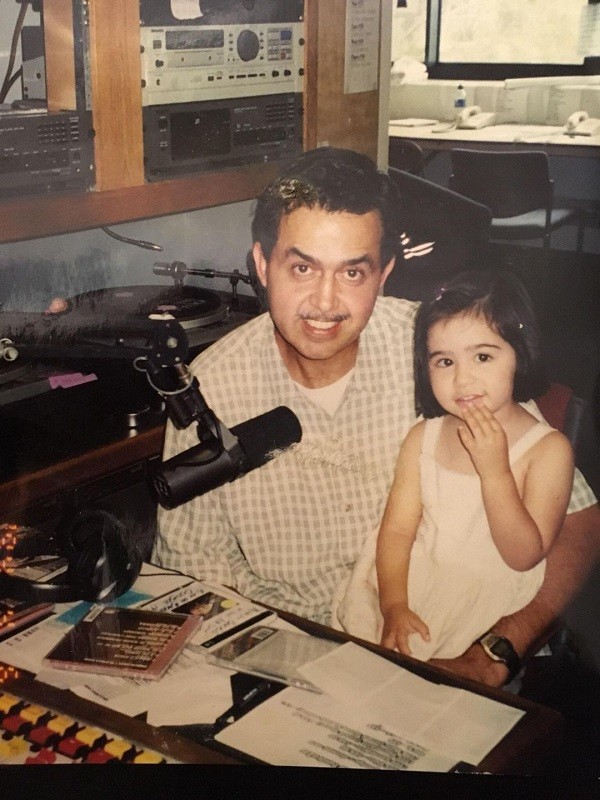
Eddie López with his daughter Nina

Reactions to his passing

In the social networks of ”Alma Del Barrio”, the sorrow of the team over the physical disappearance of the host can be clearly seen. On the Facebook account of the show, there are several messages referring to all that Eddie achieved during his professional life and all that he contributed to the show ”Alma Del Barrio” and to the radio station KXLU. These comments are accompanied by photographs in which Lopez can be seen carrying out his work with the enthusiasm that characterized him in those periods when he practiced the profession he so loved, which was communication.

One of those who mourned the loss of the broadcaster was the host of the program ADB, Alan Geik, who had been his personal friend for decades thanks to the passion for the media they both shared. It all started when Eddie hired Alan to host a evening show called ”Latin Dimensions” at a station that works in a small classroom.

Geik did not have any plans to become a broadcaster at the time, but Lopez convinced him by telling him it could be a great adventure and a learning experience for himself. When he accepted, he never thought that the programme presented by him would multiply the number of audience several times over thanks to the popularity he was gradually acquiring. Not to mention that the station where the program was aired moved to better facilities and became a radio power.

The host ends his note of mourning by expressing that he is proud to have been such a good friend of Eddie and all that they achieved together thanks to the professional team they formed during such a long time.

Eddie López working at the radio station

Read also: ”Salsa Con Sabor’’ and its contribution to salsa music

Two radio programs of the salsa movement in California

Introduction

After the entire journey, the cultural salsa movement in the state of California is well established, which includes a good number of media outlets that focus on this and other Latin music genres. In this article, we are going to talk a little about two very important radio shows in Los Angeles, which play a very important role in the spread of salsa and its greatest exponents today.

They are the radio shows ”Alma Del Barrio” and ”Canto Tropical”, whose work has provided an immense contribution to the world of music and gained a huge audience both in Los Angeles and in the rest of the world.

Five of the six Alma Del Barrio DJs Steve Lopez, founder Enrique Kiki Soto, Gustavo Aragon, Eddie Lopez, and Hector La Voz Resendez

Alma Del Barrio

In the autumn of 1973, what would become one of the most important Latin radio shows in Los Angeles started to go on the air, which is known as ”Alma Del Barrio” to this day and its main founders were Enrique Soto and Raul Villa, who were still university students at the time. What Raul and Enrique were looking for with this show was to educate the audience musically speaking and ensure that listeners to learn much more about their favorite artists.

A key part of this show is to interview the greatest exponents of the salsa genre and some of these have been Celia Cruz, Chucho Valdes, Manny Oquendo, Tito Puente, Roberto Roena and many more. Thanks to these conversations, fans of these artists have managed to learn more about their favorite artists and their future projects.

From the day of its founding, the show has been broadcast through the radio waves of KXLU, which is one of the largest radio stations in Los Angeles and offers all kinds of variety and musical genres in its programming.

Host Eddie López and Venezuelan Latin music bandleader Rudy Regalado

Canto Tropical

”Canto Tropical” is a radio show created with the firm intention of serving as a bridge to unite generations, cultures and countries that appear to not have anything to do with each other. The main musical genres on which the programming is based are salsa, Latin jazz, merengue, Afro-Cuban rhythms, among others. The music comes from all over the world, but most of the material comes from South and Central America and the Caribbean.

In addition to being always aware of the latest Latin music, hosts Kathy Diaz and Hector Resendez always make sure to get the best interviews with the most famous local and foreign artists so that their fans can get to know them better both personally and professionally. Likewise, listeners have the possibility to participate in contests and sweeptakes to win free tickets to concerts and events that are of their interest.

One of the requirements to be met by the show is to always invite local artists and singers to help them promote their music, new albums and concerts. In this way, the audience is aware of what local talent is currently doing. In fact, there are many figures who are still thankful for the exposure given the program, thanks to which they have achieved the popularity they were seeking.

Another detail that cannot be overlooked is that several social and community organizations have publicly thanked the show for its voluntary work and its hosts Kathy and Hector, who have even written for major publications such as Hispanic, Bilboard Magazine CASHBOX, among others.

Alma Del Barrio's logo
Alma Del Barrio’s logo

Read also: Son Del Monte’s musical director and timbalero Manuel Rivera

  • « Go to Previous Page
  • Page 1
  • Interim pages omitted …
  • Page 74
  • Page 75
  • Page 76
  • Page 77
  • Page 78
  • Interim pages omitted …
  • Page 116
  • Go to Next Page »

International Salsa Magazine (ISM) is a monthly publication about Salsa activities around the world, that has been publishing since 2007. It is a world network of volunteers coordinated by ISM Magazine. We are working to strengthen all the events by working together.