• Skip to primary navigation
  • Skip to main content

International Salsa Magazine

  • HOME
  • Previous editions
    • 2026
      • ISM / April 2026
      • ISM / March 2026
      • ISM / February 2026
      • ISM / January 2026
    • 2025
      • ISM / December 2025
      • ISM / November 2025
      • ISM / October 2025
      • ISM / September 2025
      • ISM / August 2025
      • ISM / July 2025
      • ISM / June 2025
      • ISM / May2025
      • ISM / April 2025
      • ISM / March 2025
      • ISM / February 2025
      • ISM / January 2025
    • 2024
      • ISM / December 2024
      • ISM / November 2024
      • ISM / October 2024
      • ISM / September 2024
      • ISM / August 2024
      • ISM / July 2024
      • ISM / June 2024
      • ISM / May 2024
      • ISM / April 2024
      • ISM / March 2024
      • ISM / February 2024
      • ISM / January 2024
    • 2023
      • ISM / December 2023
      • ISM / November 2023
      • ISM / October 2023
      • ISM – September 2023
      • ISM – August 2023
      • ISM July 2023
      • ISM Edition June 2023
      • ISM – May 2023
      • ISM April 2023
      • ISM March 2023
      • ISM February 2023
      • ISM January 2023
    • 2022
      • ISM December 2022
      • ISM November 2022
      • ISM October 2022
      • ISM September 2022
      • ISM August 2022
      • ISM July 2022
      • ISM June 2022
      • ISM May 2022
      • ISM February 2022
      • ISM January 2022
    • 2021
      • ISM December 2021
      • ISM November 2021
      • ISM October – 2021
      • ISM September 2021
      • ISM August 2021
      • ISM July 2021
      • ISM May 2021
      • ISM April 2021
      • ISM June 2021
      • ISM March 2021
      • ISM February 2021
      • ISM January 2021
    • 2020
      • ISM December 2020
      • ISM November 2020
      • ISM October 2020
      • ISM September 2020
      • ISM August 2020
      • ISM July 2020
      • ISM June 2020
      • ISM May 2020
      • ISM April 2020
      • ISM March 2020
      • ISM February 2020
      • ISM January 2020
    • 2019
      • ISM December 2019
      • ISM November 2019
      • ISM October 2019
      • ISM Septembre 2019
      • ISM August 2019
      • ISM July 2019
      • ISM June 2019
    • 2016
      • ISM December 2016
  • Spanish
  • Download Salsa App
    • Android
    • Apple

Search Results for: Dancing

Salsa trip – Where to dance Salsa in Europe?

Europe

Do you want to go to Europe but you don’t know where are the best places to dance? Do you want to enter in the passionate salsa world? Are you looking for adventures and meet new people? International Salsa Magazine wants to guide you to the best salsa and Latin places in Europe. In this edition we show you the dance life in three different countries: Ireland, Switzerland and England.

Ireland

Strictly Salsa

This academy/club offers a weekly Salsa Classes and a Salsa Club every Thursday in The National Stadium on the South Circular Road, Dublin. The classes are divided for categories:

Strictly Salsa Dublin
  • Ladies: Alexandra – Ladies Styling with Body movement. For those of you who know Alex, this will be one of the greatest most indebted workshop focused around not just footwork and styling but how to use your body and techniques and tips on how to practice and perfect what will be thought to you in class. It will not just be watch me then try it, Alex loves questions and wants to share her knowledge.
  • Men: Claudiu – This for you guys will really help you put more flavor and movement into your dancing skills, incorporating all this with steps that are very usable on the social dance floor, there will be elements of Rumba & Guaguanco and by the end it should all come together nicely. As with Alex, Claudius knowledge is very deep so ask as many questions as possible to maximize the time.

For more info: http://strictlysalsa.ie/


Salsa Dublin

A lot of our instructors are also performers and they have a huge amount of experience performing on stage /in competitions/ at weddings & parties. The academy has dancers from Ireland, Turkey, Poland, Spain, Romania, and each one brings their own individual strengths to our group.

The teacher’s team has two previous winners of the Irish Salsa Championships, and the current (2012) Champion of the Irish Bachata Open. We also have instructors with backgrounds in Ballroom, Hip Hop, Ballet, Contemporary etc. which gives the team a greater understanding of musicality and a deeper appreciation for what they teach.

Salsa Dublin
Salsa Dublin

Development of the dancers is a key focus in our structure. Through regular team meetings, teachers training and dance group practice, we are able to keep physically and mentally growing and improving. You never stop learning no matter how good you are, so we are always striving to better ourselves. This academy works with world class international teachers and champions, bringing them to Ireland so that they can share their knowledge and ideas with the academy and their students.

Workshops are crafted for all levels of Salsa and Bachata lovers. A day of workshop involves a total of 4 hours of learning from four local and international dance instructors!! You will be sharing this amazing experience with both your fellow learners and from people from outside the regular classes.


For more info: SalsaDublin.com


Switzerland

La Movida Laussane

La Movida/Poco Loco is a bar-restaurant known by its Latin-Mexican aesthetic and food, which also offers special nights and parties for Salsa and Latin music lovers. With the performances of Dj’s and live bands, this special club is bringing all the Latin flavor to Switzerland. Cocktails, food, music and more!

Poco Loco
Poco Loco

For more info and reservations: https://pocoloco-movida.ch/


Salsa Passion Company

Whether you are completely new to the art, or experienced dancer, Salsa Passion Company has the knowledge and the experience to bring you further with your dance skills.

The academy philosophy is understanding that dance is about social and fun, but while you are investing your time and money to learn, why not learn it properly.

They’ve develop a “step by step” method that is fun and efficient for everyone to learn. They teach the “know how”. You will learn the vocabulary and the techniques of how to put them together, so you can be.

To learn how to dance Salsa, you should first understand the rhythm of Salsa, the steps, the body movement, the TWO persons but only ONE system principle in order to dance together with harmony, then move on to the turns and figures, and that’s the focus of the academy.

For more info: http://www.salsapassion.ch/d_course.html


England

Caramelo Latin Dance

Looking for Salsa classes in London? You’ve come to the right place! At Caramelo Latin Dance you will find only the highest quality tuition in Crossbody Salsa On1 and On2, as well as in and many other Latin dances.
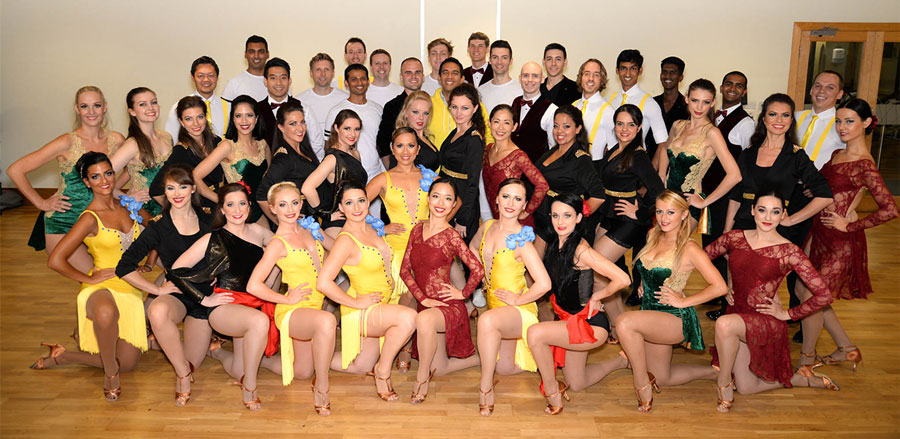
Caramelo Group - Salsa
Caramelo Group – Salsa

The 4-week Latin dance courses are perfect for a consistent and immersive approach that will help you see a marked progression in your dancing irrespective of your level.

Classes take place on Wednesdays and Thursdays. You can Combine your Salsa classes with Bachata, NY Mambo On2, Cha Cha Cha, Pachanga and Styling and enjoy Latin dancing to the fullest!

For more info: http://www.caramelolatindance.co.uk/


Incognito Dance

Incognito Dance Company (IDC) was established in 1999. It has some of the most experienced and qualified Latin Dance instructors and performers in Europe. All our Latin dance courses, workshops, holidays, events and clubs are run and taught by highly trained, friendly instructors who encourage dancers of all levels to enjoy the spirit of dance.

Try the award winning Gold, Silver & Bronze Salsa Courses, learn to dance, have fun, keep fit and meet new friends. Check out the private lessons, weekly classes, regular workshops, bootcamps, monthly parties, holidays, and special events.


Experienced dancers are given fun, technically challenging classes, and plenty of hours to social dance to the latest Latin music by our fabulous DJ’s. The academy teach many Latin dance styles of salsa from LA Style, NY Style, Cuban and Puerto Rican, as well as Bachata, Kizomba, Cha Cha, Reggaeton, Latin Hip Hop, Merengue etc.

For more info and classes: https://www.incognitodance.com/


Salsa Soho London

The best place to celebrate your Latin roots! Salsa classes every night of the week, amazing drinks menu with over 50 cocktails and of course non- stop Latin music.

This club/restaurant has menus to suit all occasions and tastes. For a bigger party or less formal occasion they Sharing Planks are perfect and includes Salsa favorites like tacos and Iberico ham croquettes. Special events, birthdays, parties and more, with the best atmosphere in London!

Salsa Soho
Salsa Soho

For more info and reservations: https://www.bar-salsa.com/soho

Chick Corea Pianist, composer, arranger, producer, teacher. Acoustic and Electric

Surrounded by music since childhood, Armando Anthony Corea walked a path in which he shone like few others, accompanied by musicians who make up an encyclopedia of jazz.

Pianist, composer, arranger, producer, teacher. Acoustic and electric. Chick Corea was one of the most influential musicians in the vast universe that is jazz and surely one of the most important figures in global music of this time. In addition to being artistically prolific, he was commercially successful. For this reason, it would also be impossible to explain the music of this time without the example of Chick Corea.

Chick Corea Pianist, composer, arranger, producer, teacher. Acoustic and Electric

Armando Anthony “Chick” Corea was born in Chelsea, Massachusetts, on June 12, 1941, to a family of Calabrian origin. At the age of four, he began to play the piano, encouraged by his father, a jazz trumpeter who led a Dixieland band in Boston in the 1930s and 1940s.

Surrounded by music, young Armando was soon introduced to the heroes of bebop. The music of Dizzy Gillespie, Charlie Parker, Bud Powell, Horace Silver, and Lester Young would leave a notable mark on his education. At the age of eight, he began studying classical piano with Salvatore Sullo, an Italian-born concert pianist who, in addition to his love of Mozart, opened up the world of composition to him.

Always tied to a confusing timeline, the first released recording of the original configuration of Return to Forever was actually its second session.

An initial ECM studio date made in February 1972 was not released until after the band had changed in 1975.

The Polydor/Verve recording from October 1972 is actually this 1973 release, which features the same band with Chick Corea, Stanley Clarke, Airto Moreira, Joe Farrell, and Flora Purim. There is no need to make distinctions, as both are five-star albums, showcasing many of the keyboardist’s enduring, instantly recognizable and highly melodic compositions.

Farrell’s joyous flute, Purim’s wordless vocals, Airto’s electrifying percussion and Clarke’s deft electric bass lines are wrapped up in a stew of Brazilian samba and Corea’s Fender Rhodes electric piano, and certainly set the tone and the highest bar for the music of the groups that will come after. “Captain Marvel,” the seed of the Farrell- and Purim-less band that expanded into a full concept album with Stan Getz, is here as a vaporous fusion samba with Corea dancing on the keys.

Chick Corea y Gary Borto

By now, the beautiful “500 Miles High” has become Purim’s signature song with Neville Potter lyrics and Corea’s stabbing chords, and unfortunately became a hippie anti-drug anthem.

Perhaps Corea’s definitive song of all time, and covered ad infinitum by professional and school bands, “Spain” retains the quirky melody, clapping interlude, up-and-down dynamics, exciting improvisational section and variation in time, tempo and colourations that always spark interest despite a length of close to ten minutes.

“You’re Everything” is a romantic classic that has surely been heard at many a wedding, with another Potter lyric sung to heaven by Purim, while the title track is Purim’s lyrics in a looser musical framework, with Clarke’s graphic merging with Corea and Farrell’s piercing flute work.

Chick Corea - John Patitucci - Dave Weckl
Chick Corea – John Patitucci – Dave Weckl

As much as the others have become icons, Farrell’s extraordinary sound on this date should never be trivialised or underestimated.

The final track, “Children’s Song,” was a springboard for several of Corea’s full-length album projects, and is heard here for the first time in trio format with a slow, Christmas motif.

The expanded version of this recording includes many alternate takes of four of these selections, but also includes “Matrix,” which was not on any RTF album, and there are four versions of “What Game Shall We Play Today?”, which was only available on the ECM release.

From a historical perspective, this is the most important work of Corea’s career, very different from his earlier progressive or improvisational efforts, and the pivotal beginning of his career as the most popular contemporary jazz keyboardist in history. Michael G. Nasto.

Chick Corea And Return To Forever – Light As A Feather (1973)

Tracks:

  1. You’re Everything
  2. Light As A Feather
  3. Captain Marvel
  4. 500 Miles High
  5. Children’s Song
  6. Spain

Musicians:

Chick Corea (Fender Rhodes, electric piano)

Stanley Clarke (Double bass)

Joe Farrell (Tenor sax, soprano sax, flute)

Flora Purim (Voice, percussion)

Airto Moreira (Drums)

Chick Corea And Return To Forever - Light As A Feather (1973)
Chick Corea And Return To Forever – Light As A Feather (1973)

Information provided (February 21, 2009)

Sources:

L’Òstia Latin Jazz

Santiago Giordano: He is a musician, teacher and music critic

Also Read: Yilian Cañizares, an excellent Cuban musician, studied in her hometown in the strictest tradition of the Russian school of violin

Get to know the Salsa & Company Dance School

Latin America / Uruguay / Montevideo

Salsa & Company Dance School

Did you know that dancing is currently considered a sport? The dance allows to improve flexibility, strength and resistance, but the most important thing about this practice in practitioners, especially in young people, is that it increases their intelligence, improves memory, develops self-esteem, eliminates depression and stress, being a very positive in his development both in his social and psychological life.

Class in Salsa & Company Dance School

However, for those who like and want to perform and/or develop this talent, they need to practice a lot in order to show their skills and abilities to the public, allowing them to have healthy competition with other dancers, and this is achieved thanks to dance academies.

Class in Salsa & Company Dance School - Photo
Class in Salsa & Company Dance School – Photo

On this occasion, in Uruguay, Montevideo in Constituent 1637 esq. Roxlo, is the Dance School, Salsa & Company, which emerged as a Salsero project in 1996 teaching “Salsa“, “Bachata” and “Kizomba” classes for more than 15 years in the most prestigious artistic centers of Uruguay; and from 2008 it opens its doors to the public under the guidance of William Adrián Merlo so that his students can achieve their goals in the field of dance and make dancing a way of life and find a relaxed and pleasant space where the warmth of the rhythm and unity make the effort of learning even more joyful.

Its objectives are to spread the musical culture of Latin rhythms worldwide, form unitary groups and show their successes to spectators at parties, congresses, dance workshops.

Salsa & Company Dance School - social
Salsa & Company Dance School – social

Currently the dance school has a staff of dance professionals with a long national and international trajectory, as well as a support team in the administrative and marketing areas, where William Adrián Merlo is the director, the instructor Sofía de los Santos and Deborah Chitnisky. , who give their classes as follows:

Lessons

Horas Lunes Martes Miércoles Jueves Viernes Sábado
17:00 18:00 Bachata Inicial Nivel 1
18:00 19:00 Salsa Principiantes Level 1

(18:30 – 19:30)

Salsa Principiantes Nivel 1

(18:30 – 19:30)

Salsa Principiantes Nivel 1

(18:30 – 19:30)

Salsa Principiantes Nivel 1

(18:30 – 19:30)

Salsa Principiantes Nivel 1
19:00 -20:00 Salsa Principiantes Nivel 1

(19:30 – 20:30)

20:00 -21:00 Clases de Kizomba Inicial 2018

Salsa

(20:30 – 21:30)

Bachata Inicial Nivel 1

Salsa

(20:30 – 21:30)

Clases de Kizomba Inicial 2018

(20:30 – 21:30)

Bachata Inicial Nivel 1

(20:30 – 21:30)

Clases de Kizomba Inicial 2018

(19:30 – 20:30)

21:00-22:00
Salsa Principiantes Av.

(21:30 – 22:30)

Salsa Principiantes Nivel 1

(21:30 – 22:30)

Salsa Principiantes Av.

(21:30 – 22:30)

Salsa Principiantes Nivel 1

(21:30 – 22:30)

22:00-23:00
Members of the Salsa & Company Dance School

Para mayor información:

  • WebSite: http://www.salsacompany.com.uy/
  • Phones: +598 099 574 314 / +598 094 284 899
  • Facebook: https://www.facebook.com/salsaycompany/
  • Instagram: https://www.instagram.com/salsaycompany/
  • Linkedin: https://www.linkedin.com/in/william-adrian-merlo-5004b080/
  • YouTube: https://www.youtube.com/results?search_query=william+merlo
  • Twitter: https://twitter.com/williammerlo1
  • Email: [email protected]

Robert Tellez is undoubtedly “El más que sabe de salsa” (The one who knows the most about Salsa)

Recently, the second edition of the authorized biography of Míster Afinque, entitled Willie Rosario, El Rey del ritmo, was released. This work is authored by journalist and music researcher Robert Tellez M. The publication of this second edition of Willie Rosario, El Rey del ritmo came just in time to add to the centennial celebration of the musical leader, who has managed to keep his orchestra active and alive for more than six decades.

Photo by Sandro Sanchez Robert Tellez
Robert Tellez (Photo by Sandro Sanchez )

With this second edition, in alliance with our publishing house, the author was pleased with the treatment of the content and in his appreciation tells us: “This is a documentary work that exposes the different facets of the maestro Willie Rosario: the human being, the family man, the radio broadcaster and of course the leader of the “Banda que deleita””.

Fortunately, during the five years that followed the publication of the original text, maestro Willie Rosario has remained extremely active. In addition, since 2019, the orchestra leader has received several awards; so it was quite easy to collect data and photos that allowed us to expand the text with unpublished content.

As a journalist and researcher, Tellez affirms the importance of the text while clarifying: “This book is also a contribution to the preservation of the memory of salsa, a task that requires a rigorous, precise and responsible approach, ensuring adequate documentation for present and future generations. In my opinion, the work of building this memory is an inherent duty for communicators who are dedicated to disseminating this musical expression.”

Robert Téllez con Willie Rosario
Robert Téllez and Willie Rosario

Who is the biographer of Mister Afinque?

Labeled as “the one who knows the most about salsa”, Robert Téllez Moreno is a journalist.  Within journalism, he has excelled in different media.  He says he prefers his facet as a radio broadcaster, a branch in which he decided to specialize since he was a child.  However, Robert has also made a name for himself in the press and has ventured into television. Specifically, his interest in salsa music led him to be the biographer of Willie Rosario, his third literary work entitled Willie Rosario, el Rey del Ritmo (Willie Rosario, the King of Rhythm). His first literary publication was Ray Barretto, Fuerza Gigante and his second was Frankie Ruiz, Volver a nacer (co-authored with Felix Fojo).

A passion for salsa, but first a passion for the radio

Robert says that his first encounter with salsa was inexplicable.  It happened when he was a child by way of the Martínez family, some Caleños who moved in across the street from the Téllez Moreno home, located in a popular neighborhood.  In the mid-1980s, the Martinez family came to live in a neighborhood that did not accept them as noisy, because the Bogotá of that time was very conservative. Bogota belonged to the Bogotanos, and those who came from other parts of the country were in the minority. Robert’s mother went further and said that the Martínez were marihuaneros, not because she saw them smoking marijuana, but because she thought it was too noisy for the tranquility of the neighborhood before the arrival of the Caliños.  Téllez adds: “I was struck by the fact that since they arrived they had parties every weekend; Thursday, Friday and Saturday. There was music all night and they would wake up there. In reality, they were family parties.”.

“Uncles, nephews, cousins and brothers shared that taste for music there. The only thing you could hear was salsa at a time when salsa was not the prevailing thing in Bogotá. That sound attracted me.  That’s where I identify that my passion for this music began. Of course, first came a greater passion, which was the passion for the radio. I connected them very early in my childhood. I was attracted to what I heard. However, my brothers listened to Anglo American music. They heard other kinds of sounds. Break dancing was coming in, American music was invading us. Ballads were what my sister liked; the romanticism of Juan Gabriel, Camilo Sesto and all that kind of music. Vallenato was also listened to a lot, but the only thing that made an impact on me was salsa. As my love for salsa was born without explanation, but it arrived, I romantically say that salsa touched the window of my room, and I fell in love with it. It’s just that the room in the living room where those parties were held faced my bedroom window.”

Robert Téllez con Ismael Miranda
Robert Téllez and Ismael Miranda

A potential programmer

At just 7 years old, Robert began to understand the workings of radio as a means of communication and entertainment intuitively. He recalls how for as long as he can remember, he imitated the announcers of the moment, knew to tell the time; maintaining awareness of the time in relation to the songs in the order of radio programming. Sometimes he reasoned and concluded: “that song played a while ago and so he tried to understand everything that was happening on the radio”. However, that station did not play salsa; it played ballads, vallenatos, American music, and other genres. Of course, within the musical environment available, since he was a child he began to understand the style of the whole radio world and there he drew a line of programming. Later, when the Martinez family arrived in the neighborhood, Robert was able to connect the radio with salsa. However, he says, “I didn’t even have a record in my house to be able to have a reference. The arrival of the new neighbors coincided with the arrival of a Caracol FM station called Bienvenida Estéreo, the director was Rodrigo Salazar. Today I understand that Salazar began to program salsa in a city that was not salsa. But he came from Cali and tried to program the first salsa station in Bogotá, on FM”.

Robert Téllez con Willie Rosario
Robert Téllez and Willie Rosario

At just 8 years old, the precocious programmer had already won a radio contest that consisted of going to the station that sponsored the contest and doing voice-over, presenting songs and having the listeners select the winner. Robert does not remember which song he presented, but he does remember that he knew the station’s slogan, told the time, said his name and went to commercials. With the memory vivid in his mind, Robert adds, “I won because of the confidence I had. The other kids were shy. Many were silent on the air.”

In spite of his young age, with discipline and precision he remained engrossed by the radio, listening to it as if it were a mandatory activity. He knew all the programming, made programming spreadsheets and began to understand how the songs rotated and to memorize the songs that were played in the morning and later played at noon and then at night.

I began to understand everything and to compare different stations. Already with his critical thinking polished in the prediction of musical themes within the programming lineup, he began to participate in radio competitions in which they gave away records on a weekly basis and, “as that was what I wanted, to have records, then I became quite tired”. He continues his story, stating: “I think they already knew me there and I always guessed what the number one song of the week was. Since I had the program listings, it was easy for me”.  That’s how he got his first album: Salsa Fever, (1988, Gunda Merced y su Salsa Fever). But, he had nowhere to listen to it. He put it in his room, looked at it and read that the record had the song ‘La familia’ on it.  He went to a friend’s house to listen to it. After listening to it several times, he returned home and put it away again. Later, that LP gave him entry to the Martinez house, and established him as the DJ of the family parties; at first programming what they told him so that people would dance. About that entry, Robert adds: “Later I learned and I was already programming according to what they liked”. Later, that experience led him to play music at youth parties of the time that were called “minitecas” and to earn his money programming.

At just 14 years old, he went to his first concert, to see Grupo Niche, during the time when Tito Gómez was part of the front. It was also in those days when, in addition to being the Martínez’s DJ, he had already convinced the parents’ association of the public school where he was studying that it was time to create a school radio station. First they gave him permission to animate the breaks that were half an hour. He used the school recorder and placed it in front of the microphones, which were the same ones used for protocol activities. From there, Robert would give the time and announce the songs. Later on, a messenger service was created to guarantee the permanence of his radio functions on campus.

When he finished high school, he went to do mandatory military service in the Colombian army. There he had already defined that he wanted to study Social Communication and Journalism, but he had to go to the army first. Going to the army was not his worst drawback; the real impediment was the lack of money to pay for a career.

Before applying for the army he sold everything, even his records. He later regretted it, although the money came in handy to survive in the army from 1992 to 1993. He served days after Pablo Escobar’s death. While in the army, he did not stop listening to the radio, nor did he stop listening to salsa. In order to have access to the radio, he was designated to carry and maintain the communications radio and to prepare the sergeants’ reports. As a reward, he was allowed a transistor radio to listen to commercial radio. That radio wave accompanied him in the army and that is how he learned of Hector Lavoe’s death on June 29, 1993.

Eventually, in January 1994, he began studying at the Colegio Superior de Telecomunicaciones in Bogotá, and was also employed full time at the Luis Ángel Arango Library.  On Fridays and Saturdays, after his shift at the library, he would go to El Canelazo to program music until 3:00 a.m.

Once graduated from the Superior College of Telecommunications, the recent graduate was disappointed at not being able to enter the media because he did not have a referral. Later on, a client of the men’s fashion store that Robert managed, more out of necessity than for pleasure, recommended him to Gilma Camelo de Tobón, who gave him his first opportunity in the radio. About this, the journalist says: “she gave me the opportunity to enter the radio without having a name, without being anyone, without having had any experience working in the booth”. This is how Téllez entered Radio Capital that first of three times, in 1999. In his first on-air program, hosted by Henry Segura, Téllez was in charge of programming and news reading. In his second contract, in 2001, he programmed the station, but this one was boleros. Eventually, Robert took over the station, turning it into a 100% salsa station, 24 hours a day.

Already with the maturity of one who can choose his functions, Robert has dedicated himself to interviewing salseros. “That’s what I started to like more than the programming itself and they say that what I do best is the music programming, but interviewing is where I think I add the most to salsa and the media (…) because I am original, because I already have a method that works well for me. Some people want me to share my interviews in order to plagiarize them”, says Téllez, who remembers having made his debut as an interviewer with Ismael Miranda in 1998.

In the editorial field, Téllez was founder and director of Sonfonía magazine.  Sonfonía was first a portal that was managed as a virtual magazine and then went to paper, to which Robert adds: “It was an economic failure, but we did it”.

From there it went to Superestación Salsa, which is an important brand within Colombian youth radio and was a milestone in the 80s. Under the brand, Superestación rock, Superestación ballada, super pop station and super vallenata station were created. Within that conglomerate, Robert came to be the founder of Superestación Salsa under the online radio system, as director of that salsa concept.

In 2012, he accepted to be the manager of singer Miles Peña, and successfully represented him for a year. However, in 2013, when he accepted a contract with Radio Nacional de Colombia, he had to terminate his representation agreement with Miles.  Of course, they are still linked by a great friendship that survived beyond that artistic representation agreement. And as for his imprint on Radio Nacional de Colombia, for nine years he directed and hosted the weekly program known as Conversando la salsa con Robert Téllez. In that space, in which more than 400 unpublished interviews were published, hundreds of key figures in the musical memory of salsa were made known. There at Radio Nacional de Colombia he also maintained a podcast, entitled Cronología de la salsa as well as La salsoteca, digital content produced specifically to interact with salsa fans during the COVID-19 pandemic.

Today he is an advisor to a Christian radio station, Ambiente Estéreo, of which he was director a few years ago. Before directing it, he had a program entitled Salsa de verdad. In that space, in which he listened to salsa dura, he even programmed non-Christian artists who have recorded songs with a biblical message.

According to Téllez, his greatest professional achievement has been to write the biography of the longest-serving salsero who remains active playing his instrument and directing the oldest salsa orchestra in the salsa scene. In addition, as a result of that work he achieved a close relationship with Dr. Willie Rosario, adding: “that has no comparison”. Robert is welcome in Willie’s home, and often shares phone calls in which he is free to talk about any subject, including politics and religion. These are privileges he is humbled to receive, which he insists have come about because of the publication of the literary work. Regarding this achievement, Tellez shares with us: “Having the privilege of being the biographer of maestro Willie Rosario represents the pinnacle of my work as a researcher and journalist. It is an honor that transcends into a deeply rewarding and enriching experience. The opportunity to delve into the life and work of such an emblematic figure in the world of Latin music as Maestro Rosario has been a fascinating journey, full of invaluable discoveries and learning. Robert was recently invited by the Senate of Puerto Rico to be t Robert Téllez M.’s musical knowledge has been requested and published in prominent media such as Revista Nómadas, – a scientific publication, with an interdisciplinary approach and monographic character. – of the Universidad Central de Colombia. He has also collaborated with Latin Beat Magazine, Agencia EFE, Semana Magazine, Caracol Televisión, El País de Cali Newspaper, El Heraldo de Barranquilla, El Tiempo Newspaper and El Espectador Newspaper, among others.

Robert Téllez en el Capitolio de Puerto Rico
Robert Téllez at the Capitolio de Puerto Rico

Full time and overtime -because his days are approximately 12 hours working for the responsible documentation of salsa- he is a repository of stories that nurture what he has aptly called the memory of salsa. Currently, he is building a comprehensive project and, as he says: “I believe that this will be published, but we will disclose it in due time”.

The second edition of Willie Rosario, El Rey del ritmo is the second work that author Robert Téllez M launches in collaboration with Be more. The first was the translation of Ray Barretto, Fuerza Gigante (Unos y Otros Editores, 2016) under the title: Ray Barretto, Giant Force (Be more, 2021), which won a silver medal for best translation from Spanish to English in the 23rd International Latino Book Awards.

For me as an editorial leader, the publication of this work is of utmost importance not only because my roots, like those of maestro Willie Rosario, come from the Center of the Universe, as Coamo is known, but also because I am passionate about the cultural and historical context in which salsa has developed as an artistic and sociological movement. For my work team, it is a priority to disseminate the memory of salsa with the responsibility and scientific precision with which history is written.

Bella Martinez Puerto Rico

Also Read: A party of dancers at the concert to celebrate Willie Rosario’s 100th birthday

My mother sang tango

One of the Latin genres that is currently on the rise is tango, so it is common to find more and more people linked to it. There are even many who have made tango one of the most important passions of their lives, as in the case of Carlos Álvarez Guevara, with whom we have had the fortune to talk exclusively about this and other interesting topics.   

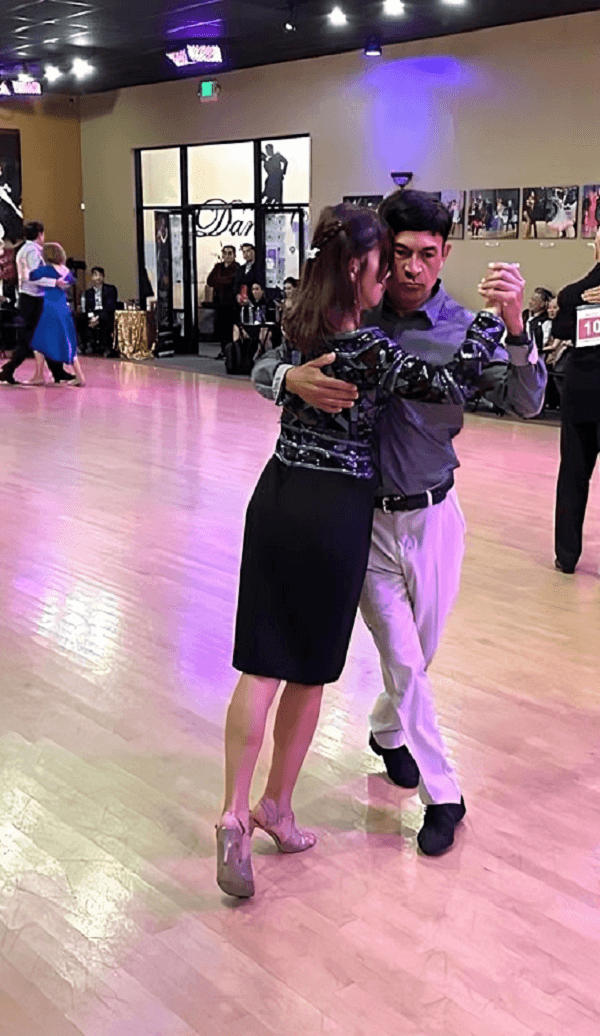
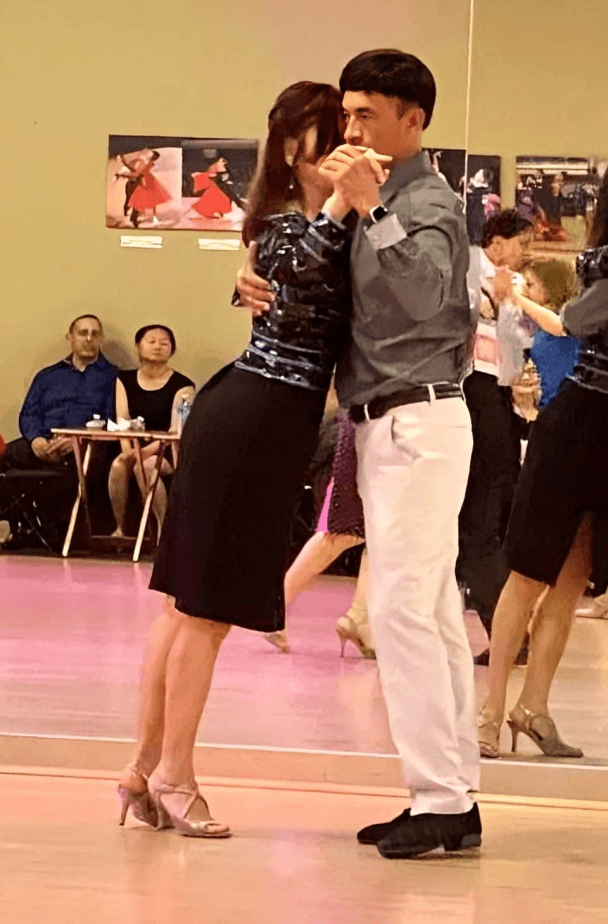
Carlos dancing tango
Carlos dancing with his dance partners in tango classes

Childhood with a tango singer mother   

Carlos’ contact with tango began during his early childhood thanks to his mother, who was a tango singer and dancer.   

Carlos describes his early live in El Salvador and points out that, back then, there were no cassettes or CD players with which to listen to music, so people had to make do with what they heard on the radio. His mother went to a well-known radio station to take part in singing competitions.   

It is then that the boy would listen to his mother rehearse for the competitions with old tango songs, which made him memorize them perfectly and be able to sing them in full. The rest is history.   

How Carlos sees tango today   

Today Carlos is a tango and salsa dancer, a genre that has also been important in his musical journey. However, he sings the songs he dances to at amateur level.   

For many years, he left aside music to devote himself to become a mechanic, a job from which he recently retired after more than 40 years of hard work. It was when he turned 45 that he fully resumed his love for tango and enrolled in dance classes to remember everything he had learned with his mother. 

This is why Carlos says that he is much more professional in dancing than in singing, since he dedicated much more time and effort to the former to become an expert in the field. Dancing, of course, is accompanied by singing, but it has less hierarchy in terms of the artist’s priorities.   

He has reached such a level of excellence in these disciplines that some friends of his put him in touch with Eduardo Guilarte, director of International Salsa Magazine, so that he could talk to us and his talents would become better known.    

Carlos was a mechanic
Carlos was a mechanic during a great part of his life, but tango is his biggest passion

Time dedicated to mechanics and dance   

Regarding the time dedicated to his formal work and dancing, Carlos claims he never had any problems, since he knew how to organize very well in this aspect. 

He always devotes his time to dance on weekends, days where he frequented, and still frequents, nightclubs with friends with whom he dances and spends very pleasant moments that clear his mind of everyday life.   

In addition to that, he also has a karaoke machine at home with which he also sings and practices his repertoire to delight anyone who wants to hear him on any nightclub stage.   

What Carlos has learned from tango   

Just as Carlos has been dedicated to singing and dancing tango, he has also invested time in learning about its history to give more depth to the knowledge he has about this genre and he wanted to share with us a little of what he has learned.  

He told us that one of the things he was most fascinated to learn is that tango has roots from many places and times around the world, although nowadays it is seen as an Argentine genre. Something that many do not know is that it has its origins in the arrival of Africans in the ”New World”, which played a fundamental role in the emergence of tango in Argentina and Uruguay, which were under Spanish rule.    

Both countries were transit ports for slave traffic, so the new inhabitants of these places brought with the their music and customs, which were mixed with the local music and customs to give rise to what is known today as tango. 

A very interesting detail he told us is that, when European sailors stopped in these countries and went to bars to look for drinks and some company, so the ladys in these places danced tango to seduce and provoke them. At that time, this kind of music was perceived as the lowest level of society to the point that the Catholic Church demanded its parishioners not to dance tango, but it turns out that the genre was pleasing to the people and nothing could be done about it.    

In the end, puritans had no choice but to embrace this wonderful dance and, today, people of all social classes, ages and races enjoy it without any complex.   

Carlos with his family
Carlos with his mothers, brothers and dog Mozote

The lyrics and references of tango    

Since Carlos has very extensive knowledge of everything about the genre and its lyrics, we wanted to know what he has studied about it.    

‘‘Tango can be many things at the same time. It can touch on issues related to the moral conduct of the individuals and, like many Latin genres, it also serves to mock and criticize politicians. It can also be an ode to love, spite and regret for having lost the loved one” Carlos shared with us on the subject.    

‘‘This genre can deal with many subjects at the same time, but one of the most recurrent is frustration with failed love and I don’t think that will change in a long time” said Carlos.   

Regarding the issue of the greatest artists who have inspired him to dance and sing tango, he mentioned Carlos di Sarli, Carlos Gardel, Oswaldo Pugliese and Enrique Rodríguez.   

What Carlos feels at singing and dancing tango   

Carlos describes listening to any tango song as ”listening to your own national anthem in a foreign country”. For him, listening to any piece sung by his parents in the past is a source of pride and takes him back to the most beautiful moments of his childhood. 

Carlos pointed out that ”when you are driven by loving emotions and some thoughts are trapped, you can express them through singing and dancing, which is what I always do”.    

The artist pointed out that he loves this world and it is one of the things that fills him the most in life, so he is grateful to be able to talk about it in International Salsa Magazine and express what it makes him feel to the world. 

Read also: Bolivian guitarist Gabriel Navia and his love for music 

  • « Go to Previous Page
  • Page 1
  • Interim pages omitted …
  • Page 22
  • Page 23
  • Page 24
  • Page 25
  • Page 26
  • Interim pages omitted …
  • Page 66
  • Go to Next Page »

International Salsa Magazine (ISM) is a monthly publication about Salsa activities around the world, that has been publishing since 2007. It is a world network of volunteers coordinated by ISM Magazine. We are working to strengthen all the events by working together.