• Skip to primary navigation
  • Skip to main content

International Salsa Magazine

  • HOME
  • Previous editions
    • 2026
      • ISM / April 2026
      • ISM / March 2026
      • ISM / February 2026
      • ISM / January 2026
    • 2025
      • ISM / December 2025
      • ISM / November 2025
      • ISM / October 2025
      • ISM / September 2025
      • ISM / August 2025
      • ISM / July 2025
      • ISM / June 2025
      • ISM / May2025
      • ISM / April 2025
      • ISM / March 2025
      • ISM / February 2025
      • ISM / January 2025
    • 2024
      • ISM / December 2024
      • ISM / November 2024
      • ISM / October 2024
      • ISM / September 2024
      • ISM / August 2024
      • ISM / July 2024
      • ISM / June 2024
      • ISM / May 2024
      • ISM / April 2024
      • ISM / March 2024
      • ISM / February 2024
      • ISM / January 2024
    • 2023
      • ISM / December 2023
      • ISM / November 2023
      • ISM / October 2023
      • ISM – September 2023
      • ISM – August 2023
      • ISM July 2023
      • ISM Edition June 2023
      • ISM – May 2023
      • ISM April 2023
      • ISM March 2023
      • ISM February 2023
      • ISM January 2023
    • 2022
      • ISM December 2022
      • ISM November 2022
      • ISM October 2022
      • ISM September 2022
      • ISM August 2022
      • ISM July 2022
      • ISM June 2022
      • ISM May 2022
      • ISM February 2022
      • ISM January 2022
    • 2021
      • ISM December 2021
      • ISM November 2021
      • ISM October – 2021
      • ISM September 2021
      • ISM August 2021
      • ISM July 2021
      • ISM May 2021
      • ISM April 2021
      • ISM June 2021
      • ISM March 2021
      • ISM February 2021
      • ISM January 2021
    • 2020
      • ISM December 2020
      • ISM November 2020
      • ISM October 2020
      • ISM September 2020
      • ISM August 2020
      • ISM July 2020
      • ISM June 2020
      • ISM May 2020
      • ISM April 2020
      • ISM March 2020
      • ISM February 2020
      • ISM January 2020
    • 2019
      • ISM December 2019
      • ISM November 2019
      • ISM October 2019
      • ISM Septembre 2019
      • ISM August 2019
      • ISM July 2019
      • ISM June 2019
    • 2016
      • ISM December 2016
  • Spanish
  • Download Salsa App
    • Android
    • Apple

Search Results for: Dancing

A party of dancers at the concert to celebrate Willie Rosario’s 100th birthday

The now Doctor of Music Willie Rosario managed to fill a Puerto Rico Coliseum, with a capacity of 18,000 people, for the celebration of his 100th birthday. The production of the concert ensured that the musical proposal kept the audience dancing and singing along.  It was no surprise that the “Choliseo” turned into a gigantic dance floor.
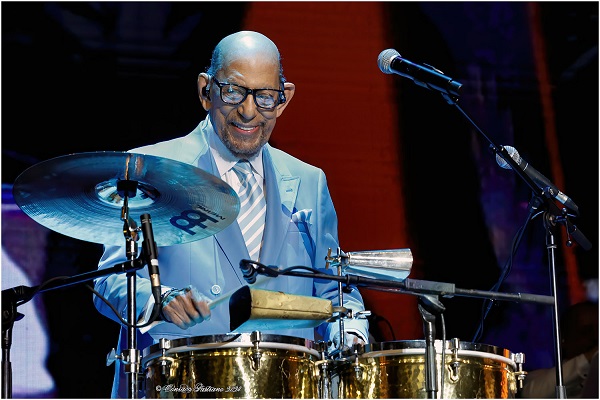
Fiesta de bailadores el concierto para celebrar los 100 años de Willie Rosario

Vocalist “Chamaco” Rivera was in charge of the performance of Willie Rosario’s orchestra’s first hit.  Chamaco”‘s announcements alluded to the parallel of the Barrio Obrero, between our “santurcino” neighborhood of Borinquen and its namesake, located in Cali, Colombia.

Then came the current front of “the band that delights” to perform a selection of the group’s countless hits.  The first turn went to José Luis De Jesús “Papa Chú” with the impeccable interpretation of ‘Ojalá que te vaya bonito’. At one point, when the song called for a duet performance, José “Machete” Díaz was the accompanist.

Smiling and with his voice cracking with emotion, Rosario greeted the audience, shortly before saying: “Thank you very much for coming this far” and giving entrance to “Manolito” Rodriguez, handing him the timbal. “Manolito” took the helm of Willie Rosario’s orchestra during several songs to which the young timbalero and musical director imparted his own tempo.

‘Anuncio Clasificado’ and ‘Cha-cha-ri-chá’ were heard in the voice of “Machete”, ‘Échame la culpa a mí’ and ‘El callejero’ in Erick Robles’ interpretation, and ‘Preparen candela’ with “Papa Chú” leading on vocals.  Juventud del presente’ was heard in the voice of Rodriguez himself, who showed off his skills as a timbalero, director and singer, while dancing in choreography with the members of the vocal front.

During the segment in which “Manolito” led, the child Gerardo Gabriel Rivas entered into an explosive duel of timbales, corresponding with who, at the time, was acting as director. Humberto Ramírez interpreted the song ‘Míster Afinque’, which he composed and arranged in 2023 in honor of Rosario and which is part of the production Better Days.
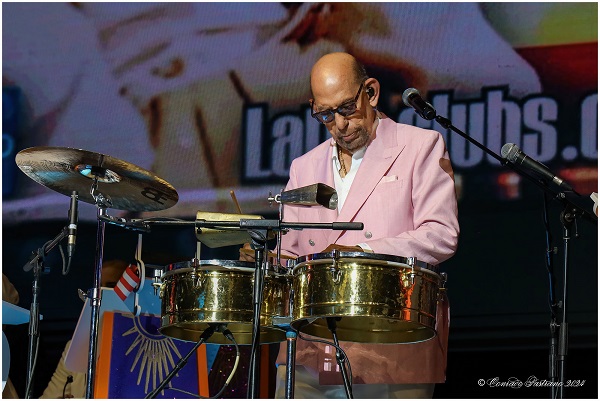
The 100 years of Willie Rosario

At about ten o’clock at night, the birthday boy took over the orchestra to “continue in afinque”. With the “afinque”, came the main course of the concert, for which “El Rey del ritmo” arrived on stage this time accompanied by the duo composed by Gilberto Santa Rosa and Tony Vega.

Gilberto looked impeccable both in his vocal role and in his staging as he performed ‘Babarabatiri’, ‘Obra sellada’, ‘La mitad’, ‘Me tendrán que aceptar’, ‘Botaron la pelota’ and ‘Changó ta’ bení’. During the delivery of this last song, Santa Rosa was accompanied by a corps of veteran dancers, among them the always remembered “Mike” Ramos, known within the Palladium Mambo Legends and within the Mambo Aces as “Mambo Mike”.

Tony Vega was in charge of the interpretation of ‘Mi amigo el payaso’, ‘Busca el ritmo’, ‘A toda Cuba le gusta’, ‘Arrepentíos pecadores’, ‘El flamboyán’ and ‘El timbal de Carlitos’. Gilberto and Tony were able to transport the audience back to the days when they shared the hits of maestro Rosario’s orchestra, singing ‘Gracias mundo’ and ‘Lluvia’ as a duet. The team that shaped the centennial celebration of the successful bandleader paid attention to every detail of the presentation to make it a historic, unforgettable and unrepeatable one.

Willie Rosario, Tony Vega y Gilberto Santarosa

The detail that “El Caballero de la salsa” imparts to each of his concerts, highlighting each of the artists in the audience also took place in this event. The list of colleagues invited to the concert included Choco Orta, Luisito Carrión, Domingo Quiñones, Moncho Rivera, Ismael Miranda, Bobby Valentín, Jerry Rivas and Chucho Avellanet.

Although it is known that it is impossible to include all the hits of such a great career in three hours of concert, the selection of the repertoire was accurate and forceful. At almost 100 years old, bandleader Willie Rosario proved once again that, with his usual affinque, he continues to lead the salsa dancer’s favorite orchestra.

Bella Martinez Puerto Rico

Also Read: Déjalo, the latest track by Pedro Conga y su Orquesta Internacional
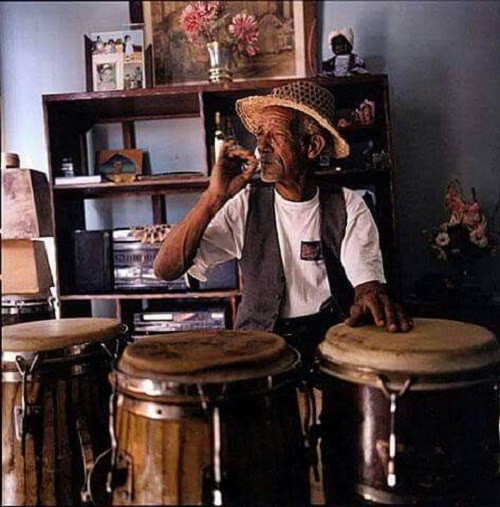
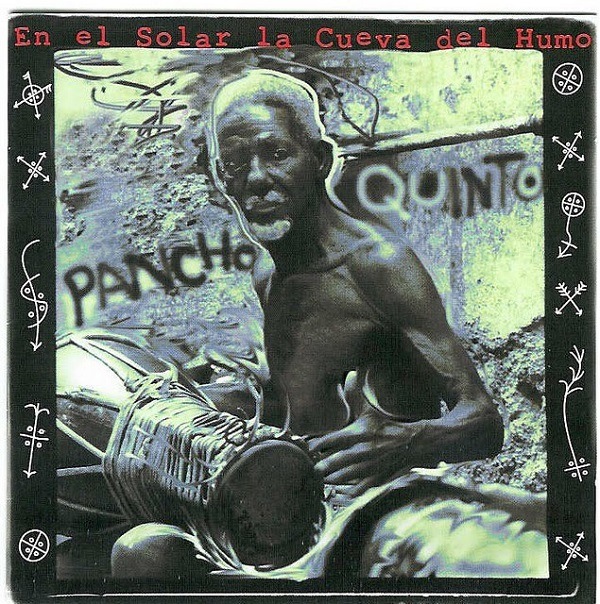
Pancho Quinto is considered one of Cuba’s great rumberos

On April 23, 1933, in the Havana neighborhood of Belen, Francisco Hernandez Mora, known as “Pancho Quinto”, was born.

Remembered man of the Cuban rumba to which he imprinted his own styles.

Pancho Quinto es considerado como uno de los grandes rumberos de Cuba

He accompanied for a long time with his percussion the Las D’Aida Quartet and the Canadian artist Jane Bunnett.

Considered as one of the great rumberos of Cuba by introducing new styles in the Cuban rumba whose artistic baptism was given in the famous comparsa of Los Dandys.

He performed in several groups such as Los Componentes de Batea, Los Guaracheros de Regla and other groups whose banner was the tambor bata, he had a brief stint with the Sonora Matancera and played in the orchestra that accompanied the Cuarteto Las D’Aida at the Tropicana Club.

Later he founded the Guaguancó Marítimo Portuario, a group that became the popular Yoruba group Andaba, which performed with the Canadian artist Jane Bunnett, with whom Pancho Quinto collaborated in other productions, and in the twilight of his career he had three productions as a soloist. This rumbero percussionist lived 71 years.

He was preceded by the sonorous echo of Pablo Roche’s bata lucumí juramentados. Such was the heritage that little Pancho gathered when he arrived in this world in the arms of his great-grandmother Camila, with no other identity than his African blood and his diagonal marks on his face, as was the ancestral custom of his family Ilé in the Gold Coast.

That night the conch shells spoke, and from that moment the child was consecrated to the deity of Shangó, god of music and drums.

He received on his right wrist a leather strap with fine bells, which, according to custom, would protect him and his drums from the bad influences of destiny.

Perhaps that is the reason why Pancho Kinto, when he played, knew that his music reached his ancestors in Oyó, beyond time, light and the Atlantic.

This man, a port man for most of his life, inherited the natural wisdom of those princes who came as slaves to Cuba.

In Pancho’s veins runs the blood of Añadí, a respectable warrior in his tribe who adopted the name of Año Juan in the Cuban sugar mills, that of Atandá, olú batá and drum sculptor in the Yoruba people. He was known here as ño Filomeno.

Both built and endowed with religious foundations the first set of bata drum that was born in the island, and from that remote time the sacred song of the orchestra consecrated to the lucumí altar was heard.

Un 23 de abril de 1933 en el habanero barrio de Belén, nació Francisco Hernández Mora, conocido como Pancho Quinto.

It could be said that they were the survivors of the total of slaves that arrived to America, there is an estimate of fifteen million according to data that I heard the Cuban investigator Leovigildo Lopez say when the first Yoruba congress, celebrated in the Palace of the Conventions in Havana.

But to that fantasy that leads men to the inspiration of that mysterious and mythical love towards life, to that renewed and novel way of singing, dancing, playing, turning the palpable into spiritual and the intangible into vital, men like Francisco Hernández Mora pay tribute, exponent of those traditions that merged in our continent and whose result is none other than the embrace between blacks and whites, although there are groups or castes that do not assimilate it as it is.

I learned a lot with Pablo,” said Pancho in this interview in 1994, when he was just beginning to play with flutist Janet Brunet, with whom he toured internationally, recorded and filmed in Canada.

Pablo was called Akilakua, powerful arm, he was a big black man, he goes on talking, with all gold teeth, ugly as his mother’s pussy, but with something special in his personality.

Of the historical drums he commented that they passed from the hands of the olú batá Andrés Roche to those of his son, later considered one of the greatest bataleros of these times.

Pablo’s father was called the Sublime, because of the way he played the original African bata, he did whatever he wanted with those hands. he added.

Paradoxically, the life of both has always been an unknown for those who try to unravel it or look for a chronological order, as it has almost always happened with many rumberos and composers, I am thinking now of Tío Tom or Chavalonga, but that is not the subject now, What I want to say is that these musicians have been teachers and inspiration for a pleiad of Cuban artists and of other nationalities that with luck have heard of the touches of those drums that officiated in the sacred ceremonies of the orisha pantheons.

From those drums, he commented, were born all the drum sets of secret foundation, because from one is born another, like children.

Among the batá there are two forms, the religious and the aberikula or Jewish, which can even be played by women. Of the old consecrated batá aña there are a few games left in Cuba, but many Jews have emerged, and have lost their orthodox character to serve in many cases for secular parties or to accompany orchestras in public.

Recordado hombre de la rumba cubana a la cuál le imprimió sus propios estilos

Pancho kinto played with those sworn drums when in the town council of Regla they took out the procession of the virgin, although it was Jesus Perez, another of Roche’s students, to whom it corresponded to offer the first public concert with a robe orchestra, a sacrilege for many at that time, and much more if it was an act in the Aula Magna of the University of Havana.

However, five decades after the writer and ethnologist Fernando Ortiz sponsored that concert, Pancho Kinto played the bata in the same university campus to pay homage to the memory of his ancestors with his sonority.

Pancho was a Cuban musician who learned to play quintiar from a very young age and along with this he made his drums and cajones in his own way, his own inventions, as he said, playing the tumbador with a spoon in his left hand, he was just a party of bata and cajon, I saw him do that many times in the fabulous rumbas that were celebrated in a lot in Campanario, where the group Yoruba Andabo used to meet in its beginnings.

There he became known for being a member of the Cayo Hueso group, but Pancho had been playing with them since they were Guaguancó Marítimo Portuario in the port of Havana.

Originally they were Geovani del Pino, Chang, el Chori, Palito, Fariñas, Callava, Marino, Pancho and others, many are gone forever like Pancho, whose unexpected death surprised everyone on February 11, 2005.

Of those anthological sarayeyeos remains the pleasure of the memory, the pleasant memory of the controversies of the quinto and the columbia dancer, the fraternal brawls between the guanguancó improvisers and the masterful recital of Pancho Kinto with the batá and the cajón.

Also Read: Yilian Cañizares, an excellent Cuban musician, studied in her hometown in the strictest tradition of the Russian school of violin

The Soul of Latin American culture – Salsa, Merengue y Lambada

Latin American / Venezuela / Caracas

Did you know that Salsa, Merengue and Lambada are rhythms that have been enjoyed in the last decade? Well, this link that unites them is the energy and passion for life, expressing itself in music, showing itself in the romance of couples dancing in harmony and with dance it unites them even more in a sentimental way as in fellowship.

These rhythms were born from a very urban environment, where each dancer can freely show their personality in the movement, however, following certain rules that each genre has, where one can follow each step and technique or do it spontaneously. For example:

✓ Never use the same foot twice, it must be alternated (right, left, right…).

✓ Dance with your partner as a mirror, that is, if you go to the right, your partner goes to the left.

✓ Transfer of weight from one foot to another as steps are performed.

Salsa is a rhythm that originates from the synthesis of Cuban son and other Caribbean music genres, with jazz and other American rhythms. One of the main contributors comes from the African rumbas along with the cumbia, the guaguancó, the guajira, the Cuban son, the mambo, the montuno son, the cha cha cha, among others.

It can be said that salsa is one of the most important rhythms in the music industry where it has many characteristics of its contributors, for example, “salsa” is close to “mambo” due to the steps executed in counts of eight, its movements and patterns are unique, however, it is a side-by-side dance with different turns.

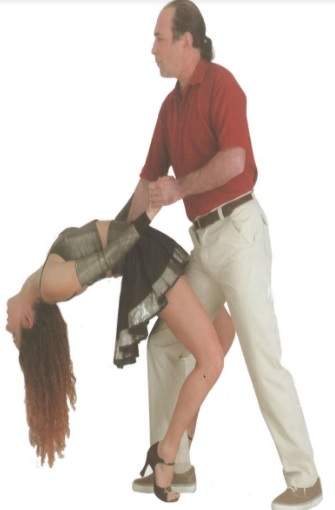
Couple dancing Salsa

The Merengue has its origin in the Dominican Republic and has a huge degree of popularity in the Caribbean area, it is a slow rhythm that increases its speed at the end of the dance, it is similar to the bolero but it is danced more than anything in groups than with a partner.

The secret of the dance is based on the transfer of weight from one foot to another, where each Latin genre has a characteristic that differentiates them, the best example is the similarity that everyone believes that “salsa” has with “merengue”, where Salsa has 4 beats, where the first beat touches the floor lightly with the tip of the foot quickly, which is known as “TAP” and this is repeated in four “4” and eight “8”, instead The merengue does not exist, this “TAP” is only 2 beats, it is a constant rhythm, very simple, whose speed of steps is marked by the musical rhythm.

But both genres have to have in the dance a movement of the hip, shoulders and position of the hands that characterizes them, marking the sensuality of Latin rhythms.

The “Lambada, a Brazilian genre that originated from the small cafes and bars that came from the garrafa dance, is believed to have been the product of rhythms such as the “Carimbo” and the “Merengue” with influences brought from the “Forro” and the “Samba” so it has a lot of Caribbean music influences, but the melody is the combination of Caribbean drums, brass and electric guitars with an added touch of Spanish elements and the flavor of the local indigenous people. It first spread to Bahia, Europe, Japan, the USA and the Middle East. It is currently danced in nightclubs and dance clubs, since its creation its jiv, merengue, rumba, even sevillanas and acrobatic maneuvers have evolved.

It is a 3-beat dance (fast – slow – fast) where the first step is taken with the first beat of the music, the second is the movement of one of the 2 senses and the third is the transfer of the weight back to the center moving the leg more slowly.

This dance is danced with the whole body, women dance pointe, flex the knees and the trunk moves in the opposite direction to the lower part of the body, if the hip rotates in one direction the rib cage rotates in the opposite direction. It can be danced alone or as a couple (they dance very close together giving the impression that it is one person), where the man molds his partner in the dance and the woman can embellish the dance with head movements or a controlled intentional fall producing a wave from the knee to the hips and shoulders.

If you want to know and learn some basic steps of the mentioned rhythms, look for the book in movement Latin Dance Dessi and Orod Ohanian and get passionate with these three “3” hot dances. Or follow us and watch the following videos to learn how to dance merengue, salsa and lambada.

Europe / April 2024

Calibrated maracasMartinez attorney


fRANCE FLAG
FRANCE
DIRECTORY OF NIGHTCLUBS

Salsabor
Salsabor Paris
31 rue Chapon 75003
Paris, France
+33 1 42 71 61 61

Selsero
Salseroparis
9 Rue du Petit Pont, 75005
Paris, France
+33 6 50 16 74 76

La Peña
La Peña Saint Germain
3 passage de la Petite Boucherie 75006
Paris, France
+33 1 46 33 19 89

Cubana
Cubana Café
47 rue Vavin 75006
Paris, France
+33 1 40 46 80 81

Canela
Canela Club Latino Paris
77 Rue du Faubourg du temple 75010
Paris, France
+33 6 46 78 28 35

Balajo
Le Balajo
9 rue de Lappe 75011
Paris, France
+33 01 47 00 07 87

La Pachanga
La Pachanga Officiel
8, rue vandamme 75014
Paris, France
+33 1 40 47 63 69

Pachamama
Pachamama PARIS
46 rue du Faubourg Saint Antoine 75012
Paris, France
+33 1 55 78 10 00

Cuba Compagnie
Cuba Compagnie Café
48 BD Beaumarchais 75011
Paris, France
+33 1 48 06 07 11

O'Sullivans By The Mil
O’Sullivans Backstage By The Mill
92 Boulevard de Clichy 75018
Paris, France
+33 1 53 09 08 49

Germany circular Flag
GERMANY
DIRECTORY OF NIGHTCLUBS

Clärchens
Clärchens Ballhaus
Auguststraße 24
10117 Berlin, Germany
+49 30 555785440

Havanna
Havanna Berlin
Hauptstr. 30
10827 Berlin-Schöneberg, Germany
+49 30 78899655

SODA
Soda Club Berlin
Schönhauser Allee 36
10435 Berlin, Germany
+49 30 44056071

Zapatissimo
Zapatissimo Dance School
Kolonnenstrasse 29
10829 Berlin, Germany
+49 176 20470772

Brotfabrik
Brotfabrik Frankfurt
Bachmannstr. 2-4
60488 Frankfurt, Germany
+49 69 24790800

Latin Palace Changó
Latin Palace Changó
Münchener Strasse 57
60329 Frankfurt, Germany
+49 69 27220807

Cascadas
Cascadas
Ferdinandstr. 12
20095 Hamburg-Mitte, Germany
+49 69 27220807

Spain Flag
SPAIN
DIRECTORY OF NIGHTCLUBS

ACM City
ACM CitY
Carrer Can Pallarès 2, Cerdanyola del Vallès
08290 Barcelona, Spain
+34 675 30 26 64

Antilla
Antilla Barcelona
C/ d’Aragó, 141
08015 Barcelona, Spain
+34 610 90 05 58

Mojito
Mojito Club
Rosselló, 217
08008 Barcelona, Spain
+34 654 20 10 06

Morena
Morena Barcelona
calle 11 num.29
08860 Castelldefels, Spain
+34 691 46 57 72

Que Chimba
¡Qué Chimba!
Av. del Vallès, 117
08223 Terrassa, Barcelona, Spain

Seven Dance
Seven Dance (Dio Club)
Carrer del Perill 10
08012 Barcelona, Spain
+34 934 51 61 18

Azucar
Azúcar SalsaDisco
Calle de Atocha, 107
28012 Madrid, Spain
+34 639 64 29 06

El Son
Discoteca El Son
C. de la Victoria, 6
28012 Madrid, Spain
+34 671 05 67 91

Prisma Discoteca
Discoteca Prisma
C. de Alcalá, 192
28028 Madrid, Spain
+34 638 92 16 98

Sala Olvido Madrid
Sala Olvido
C/ Olvido 15
28026 Madrid, Spain
+34 619 22 29 19

The Host Madrid
The Host
C/ Ferraz nº 38
28008 Madrid, Spain
+34 918 05 36 48

Disco Bar Cuba Live
Cuba Live
Ramón y cajal número 2
07011 Palma de Mallorca, Spain
+34 618 86 78 20

Discoteca El Edén Boliviano
El Edén Boliviano
Carrer Gremi de Tintorers, 49A
07009 Palma, Illes Balears, Spain
+34 676 64 68 26

United Kingdom circular flag
UNITED KINGDOM
DIRECTORY OF NIGHTCLUBS

Rosies
Rosies Birmingham
259-262 Broad St
B1 2HF Birmingham, UK
+44 121 632 4936

Revolucion de Cuba
Revolucion de Cuba Leeds
64-68 Call Lane
LS1 6DT Leeds, UK
+44 113 350 6556

All Stars Salsa
All Stars Salsa Fridays
122 Oakleigh Road North
N20 9EZ London, UK
+44 7956 941172

Salsa Soho
Bar Salsa Soho
96 Charing Cross Rd
WC2H 0JG London, UK
+44 20 7379 3277

Salsa Temple
Bar Salsa Temple
Victoria Embankment, Temple
WC2R 2PH London, UK
+44 20 7395 3690

Earl's Court
Earl’s Court Salsa & Bachata Club
St Philips Church, Upper Grand Hall, Earls Court Road
W86QH Earl’s Court, UK
+44 7831 715368

Juju's
JUJU’s Bar & Stage
Ely’s Yard 15 Hanbury Street
E1 6QR London, UK
+44 020 7770 6109

LightHouse
The LightHouse Bar & Club
62 Rivington Street
EC2A 3AY London, UK
+44 20 3325 9745

Wimbledon Salsa Bachata
Wimbledon Salsa & Bachata Club
Drake House, 44 ST George Road
EC2A 3AY London, UK
+44 7831 715368
APRIL 2024 FESTIVALS by Karina Bernales

Bulgaria JPG
BULGARIA
Salsa Festival 2024

World Stars Salsa Festival

Apr 26 / 30, 2024

Maritim Hotel Paradise Blue Albena
Main Street, Albena Resort
Dobrich, Bulgaria 9620

Belgium circular flag
BELGIUM
Bachamore 2024

Kizz Me BachAmore Congress

Apr 12 / 14, 2024

WCCM – Wallonia Conference Center
Av. Mélina Mercouri 9
Mons, Belgium 7000

fRANCE FLAG
FRANCE
PISC2024

Paris International Salsa Congress

Apr 02 / 08, 2024

Hotel Hyatt Regency Paris Etoiles
3, Place du Général Koenig
Paris, France 75017

Costa Pacific Cruiser 2024

L’immersion – Afro Latin Dance Cruise

Apr 20 / 24, 2024

Costa Pacific Cruise
Departing from
Marseille, France

Hungary circular flag
HUNGARY
PAW Spring 2024

PAW Dancing With The Pros

Apr 12 / 14, 2024

Hotel Annabella
Balatonfüred, Deák Ferenc u. 25
Balatonfured, Hungary 8230

Greece circular flag
GREECE
AloCubano Greece 2024

AloCubano Festival

Apr 25 / 28, 2024

Golden Coast Hotel & Bungalows
Marathon Beach
Marathonas, Greece 190 07

Luxembourg circular flag
LUXEMBOURG

KZL10 2024

Luxembourg International Kizomba Festival


Apr 25 / 29, 2024

LuxExpo
10 circuit de la Foire Internationale
Kirchberg, Luxembourg L-1347

Spain Flag
SPAIN
Rosas 2024

Rosas International Congress

April 4 / 7, 2024

Hotel Isla de la Garena
C. Galileo Galilei, 18, Alcala de Henares
Madrid, Spain 28806

Salsa Spain 2024

Salsa Spain World Congress

Apr 12 / 14, 2024

Hotel Occidental Aranjuez
Pl. de la Unesco, 2
Madrid, Spain 28300

Hot Tropical 2024

Hot Tropical Dance Málaga

Apr 12 / 15, 2024

Hotel IPV Palace & Spa
Autovía A7 Km. 207
Malaga, Spain 29640

Corazon y Mezclas 2024

Corazon y Mezcla Festival

Apr 15 / 21, 2024

Don Angel Hotels
Carrer del Pla de la Torre, 14
Santa Susanna, Spain, 08398

Zouk 2024

Barcelona ZOUK WORLD Congress

Apr 26 / 29, 2024

Hotel Don Angel
Carrer del pla de la torre 14, Santa Susanna
Barcelona, Spain 08398

United Kingdom circular flag
UNITED KINGDOM
Zouk 2024

The Zouk Lounge – London Edition

Apr 12 / 15, 2024

UKDC Dance Studio
24 Haverstock Hill, Chalk Farm NW3 2BQ
London, United Kingdom

Julio Vilchez and his orchestra conquer Miami

Peru continues to give us something to talk about thanks to all the salsa talent coming out that country in recent years and today we had the opportunity to talk with one of them, which is the producer, composer and singer Julio Vilchez. 

After we communicated with Vilchez via email and WhatsApp to schedule an interview, we have managed to have a great conversation in which we knew a little more about the artist’s beginnings in this fascinating world that is music.   

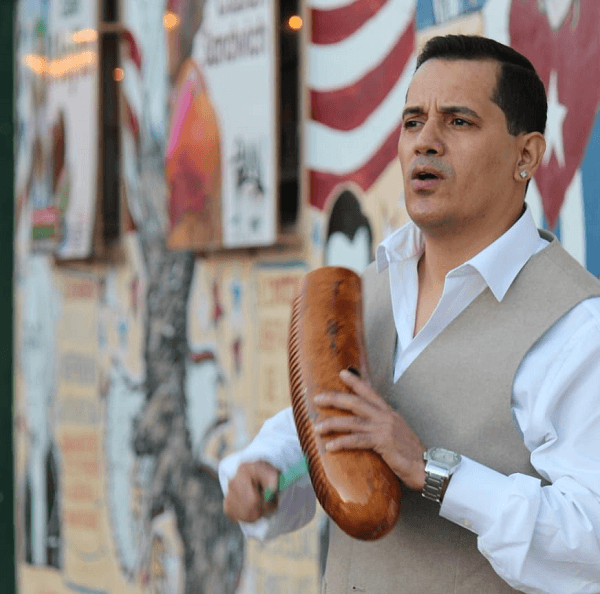
singer Julio Vilchez
This is Peruvian producer, composer and singer Julio Vilchez

Childhood and musical roots in the Vilchez family 

It is not surprising that Vilchez took that parth of life considering that his father, Juan José Vilchez Sanchez, was a talented actor, comedian and professional dancer who carried music in the blood and ran some of the most famous salsa clubs in the city of Lima, which served as a stage for important national and international groups and singers of all genres.   

Having referred with admiration to his father because of all that he achieved in life thanks to music, he assured that music definitely ran through the veins of his family and had always been a very important part of his childhood and youth. 

Seeing all this, the years were not many when Vilchez became interested in musical instruments such as maracas, the bongo bell and the güiro, which led him to participate in groups such as Raíces, La Fragua and Soy Calidad.   

Salsa and other genres 

A large majority of Peruvian artists whom we had the honor to interview have typically ventured in Peruvian Creole music before getting involved in salsa, but not Vilchez. In fact, he pointed out to us that his country was heavily influenced by Cuba musically speaking and there used to be a time when groups from the island visited Peru such as La Sonora Matancera and Los Compadres. Peru also received influence from Colombia, Venezuela and Puerto Rico, although to a lesser extent. 

The artist also remembers that, at home, he and his family always used to listen to Venezuelan singers and orchestras such as La Dimensión Latina, Oscar D’ León, Luisito Quintero, Nati Y Su Orquesta, among others. In the case of Puerto Rico, of course Vilchez and his family used to listen to La Fania All Stars.  

Vilchez was part of Raíces, La Fragua and Soy Calidad
Julio Vilchez was part of groups such as Raíces, La Fragua and Soy Calidad

Formal beginnings of Julio Vilchez in music 

In the neighborhood Vilchez and his family lived in, the singer made friends with other local boys and met up with them to sing in a completely amateur way. In addition to that, he liked to participate in school talent shows, in which he delighted the crowd performing songs from Oscar D’León, Rubén Blades and Willie Colón. 

After attaining the age of 17, he began working alongside his father in the business of running clubs, which gave him the opportunity to spend time with the members of the orchestra La Progresiva del Callao, who performed on Tuesdays, Wednesdays and Thursdays in one of those places.   

Since Vilchez loved to dance and the orchestra focused a lot on its choreographies, the young man identified himself a lot with the group and began to learn the steps the singers performed on stage. One day, the boys saw him dancing and invited him to sing with them in one of their shows, in which he danced very well, but he did not sing in the best way. For this reason, he got the opportunity to stay permanently in the orchestra, but only as a dancer for the moment.   

Over time, he was grabbing experience on stage and getting over stage fright until he managed to keep up with the rest of his orchestra fellows with the passing of days.  

Julio Vilchez with Cano Estremera
Julio Vilchez with Puerto Rican salsa singer Cano Estremera

Vilchez’s time in Venezuela 

Vilchez made friends with a group of Venezuelan musicians who accompanied Oscar D’ León in one of his concerts and invited him to travel with them to Venezuela because they wanted him to be part of the sextet they were going to create, which was meant to perform at a tavern in Caracas. 

Seeing that things were going well in Venezuela at that time, Vílchez decided to accept the invitation and immigrate to the South American country to try his luck. Once there, he spent a lot of time alone because the boys from the sextet traveled a lot, something which took advantage to get to know other groups, one of them being La Selecta de Cúa. One day, Vilchez was walking down the street and heard this orchestra rehearsing, but it needed a singer. That is when Vilchez proposed himself as an option, was admitted and worked for about two years in this orchestra. 

Although he did well in Venezuela, he ended up returning to his native country because he missed his homeland and his father could not get used to having him away, so he packed suitcases and decided to return.   

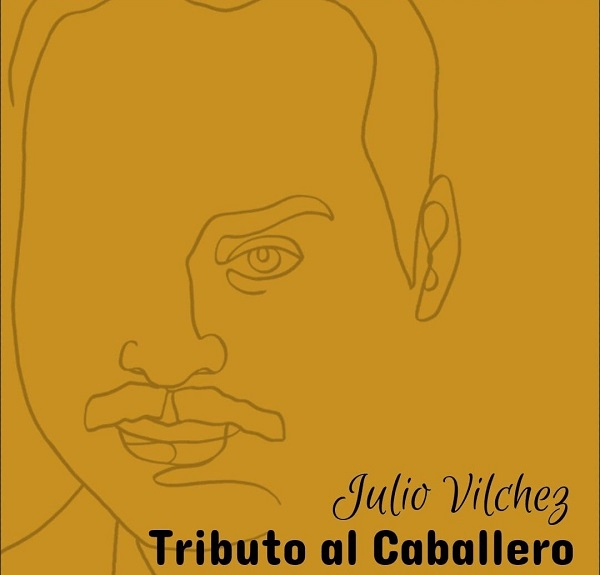
Tributo al Caballero by Julio Vilchez
Cover of the album Tributo al Caballero by Julio Vilchez

Life in the United States 

One of the songs he released in 1995 led him to make a video clip, which started to become very popular on music channels and shows, giving him the recognition Vilchez aimed for so long.  

Since things were not going as he expected on his solo career, he joined the Orquesta La Novel to continue working on music for the next two years. Although his name was not as well known as Vilchez needed it to be, his song was still sounding loud internationally for quite some time, which led him to receive a proposal to perform eight shows with his orchestra in the United States in 2000. 

When Vilchez and the rest of the musicians traveled to Miami, about nine members of the orchestra received proposals to stay in the country and decided to accept. It was there where the artist gathered his courage and says to himself ”I’m staying too”. That was over 24 years ago now.   

At that point, the Peruvian had to look for other musicians to replace the others in order to finish the concert tour they had scheduled. It was then when he contacted José Alberto ”El Canario” through a Peruvian colleague of his to use his band for the remainder of the tour and so he did. Vilchez did two or three shows with this band and stayed in Miami from 2001 to 2004.   

Given the lack of musical proposals, he spent a few years in New York, but returned to Miami some time later to work both with music and with a business sector linked to gastronomy, since living only from music is complicated. In addition to that, his children live in Miami and he wanted to spend more time with them, so this was also a powerful reason to return.   

Read also: Argentine-American composer and guitarrist Alejandro Meola kindly talked to us 

  • « Go to Previous Page
  • Page 1
  • Interim pages omitted …
  • Page 25
  • Page 26
  • Page 27
  • Page 28
  • Page 29
  • Interim pages omitted …
  • Page 66
  • Go to Next Page »

International Salsa Magazine (ISM) is a monthly publication about Salsa activities around the world, that has been publishing since 2007. It is a world network of volunteers coordinated by ISM Magazine. We are working to strengthen all the events by working together.