• Skip to primary navigation
  • Skip to main content

International Salsa Magazine

  • HOME
  • Previous editions
    • 2026
      • ISM / March 2026
      • ISM / February 2026
      • ISM / January 2026
    • 2025
      • ISM / December 2025
      • ISM / November 2025
      • ISM / October 2025
      • ISM / September 2025
      • ISM / August 2025
      • ISM / July 2025
      • ISM / June 2025
      • ISM / May2025
      • ISM / April 2025
      • ISM / March 2025
      • ISM / February 2025
      • ISM / January 2025
    • 2024
      • ISM / December 2024
      • ISM / November 2024
      • ISM / October 2024
      • ISM / September 2024
      • ISM / August 2024
      • ISM / July 2024
      • ISM / June 2024
      • ISM / May 2024
      • ISM / April 2024
      • ISM / March 2024
      • ISM / February 2024
      • ISM / January 2024
    • 2023
      • ISM / December 2023
      • ISM / November 2023
      • ISM / October 2023
      • ISM – September 2023
      • ISM – August 2023
      • ISM July 2023
      • ISM Edition June 2023
      • ISM – May 2023
      • ISM April 2023
      • ISM March 2023
      • ISM February 2023
      • ISM January 2023
    • 2022
      • ISM December 2022
      • ISM November 2022
      • ISM October 2022
      • ISM September 2022
      • ISM August 2022
      • ISM July 2022
      • ISM June 2022
      • ISM May 2022
      • ISM February 2022
      • ISM January 2022
    • 2021
      • ISM December 2021
      • ISM November 2021
      • ISM October – 2021
      • ISM September 2021
      • ISM August 2021
      • ISM July 2021
      • ISM May 2021
      • ISM April 2021
      • ISM June 2021
      • ISM March 2021
      • ISM February 2021
      • ISM January 2021
    • 2020
      • ISM December 2020
      • ISM November 2020
      • ISM October 2020
      • ISM September 2020
      • ISM August 2020
      • ISM July 2020
      • ISM June 2020
      • ISM May 2020
      • ISM April 2020
      • ISM March 2020
      • ISM February 2020
      • ISM January 2020
    • 2019
      • ISM December 2019
      • ISM November 2019
      • ISM October 2019
      • ISM Septembre 2019
      • ISM August 2019
      • ISM July 2019
      • ISM June 2019
  • Download Salsa App
    • Android
    • Apple
  • Spanish

Search Results for: Dancing

The Salsera Fiesta Returns To Rome

The wait is over and Fiesta opens its doors with a new season of Latin concerts during the summer

Festival Fiesta has been the point of reference in Italy for Latin American concerts and events for 27 years.

Since 1995 the Fiesta club has been the point of reference for Latin American culture in Italy during summer nights in Rome.

Fiesta is located in the Rosati Tourist Park (Parco Rosati -Eur) and has an area of ​​5,000 square meters with a capacity of 3,500 people. Its distribution consists of an outdoor music room equipped with a stage with a led wall for live music and two dance rooms for different musical styles (Salsa, Mambo, Cha Cha Cha, Bachata, Rumba, Merengue, Timba, reggae, and reggaeton).

“The objective of this festival is to build a permanent cultural bridge between Italy and Latin American citizens living in Rome, promoting the value of integration between peoples and respecting different identities.” Fragment extracted from the website. https://fiestafestival.it/

In this regard, the artistic director Mansur Naziri expressed the following: “Over the years I have witnessed several changes in the audience of Fiesta. Now, we have reached the new generations, those the children of immigrants who were born in Italy feel Italian but still keep their traditions alive, even through music. Next to them are the Italians who dancing and listening to Latin songs have also learned a little Spanish, giving life to a beautiful cultural fusion…”

The most representative Salsa artists who have come to this evocative stage of the Eternal City have been Celia Cruz, Los Van Van, Rubén Blades, Gilberto Santarosa, Tito Puente, Oscar D’ León, and Marc Anthony, among many others.

This year the club with its Fiesta festival will continue to offer the best of the Latin music scene from the traditional to the most current. Here are the Salsa artists who will be performing in the cool of Rome’s nights from June to August.

PUPY Y LOS QUE SON SON

Pupy was the pianist in the Revé Orchestra

The Cuban traditional music orchestra created and directed by the pianist, composer, and director César Pedroso Fernández better known as “Pupy” will be performing on Wednesday, June 1st, and tickets don’t exceed €17.

Pupy is recognized for being one of the most important figures in Timba and traditional Cuban music. He participated in two emblematic orchestras during his career: Orquesta Revé and Los Van Van. In this last-mentioned band, he was one of the founders along with his partner and friend Juan Formell.

After 32 years of artistic career, on October 4th, 2001, he formed his band Pupy y Los Que Son Son. Its name derives from the recognition of “Son” as a musical genre where his roots come from, and the style of the band is the fusion of the different instrumental formats with the “Tumbao”.

HAVANA D’PRIMERA

Alexander Abreu spent his childhood in Cienfuegos city (Cuba), where he began playing the trumpet at ten years old.

The band of more than ten musicians created in 2008 and founded by the Cuban trumpeter, singer, and composer Alexander Abreu will take the Fiesta stage on Friday, June 3rd, and you can get the ticket for €30.

Alexander Abreu has become one of the most versatile and acclaimed Cuban musicians in Afro-Cuban music. “I have always seen Havana D’Primera with 15 people on stage, and everyone said that it was impossible, that it would be too expensive, too difficult to move… It is how we started: 14 or 15 of us and a lot of positive energy, now we are stronger than ever.” Abreu commented.

Havana D’Primera’s first album is Haciendo Historia released in 2009, followed by Cantor del Pueblo (2018), A Romper el Coco (2019), and Será que se acabó (2021).

LOS VAN VAN

Los Van Van was the first Cuban group to replace a solo singer with a vocal quartet.

The musical orchestra founded by Juan Formell in Havana (Cuba) in December 1969 will arrive on Saturday, August 6th. They will present their fusion of Cuban Son, Jazz, and Rock with the incorporation of percussion, trombones, keyboards, electronic violins, flutes, bass, and drums for a rhythmic and harmonic sound that complements the quartet of voices, and you can get tickets for a value of €30.


In September: Latin Festival Madras In Their Ninth Edition

The Oldest Latino Festival In India Returns With More Salsa Immersion

Latin Festival Madras started in 2014 and is the only one of its style in Chennai

The largest and oldest ten-day Latin gathering in Chennai (India) will bring the Maestro Jimmy Bosch “El Trombonista Criollo” and one of the best timbaleros in Europe today, Joaquín Arteaga live at the five-star hotel, Vivanta Chennai It Expressway located at 309, Old Mahabalipuram Road, Shollinganallur Chennai, Tamil Nadu, India 600119.

In this ninth edition of the festival, you will also find carefully designed Salsa, Bachata, and Kizomba workshops, special training camps with instructors with more than a decade of teaching experience at festivals around the world, performances by national and international dancers (Korea, Japan, Malaysia, Canada, Vietnam, China, and Russia) acclaimed worldwide, also social dancing in the company of the seven best DJs from Asia, pool party, theme parties, surfing, buffet lunches, and dinners with a luxury stay that characterizes this event as the only one of its kind in Madras, currently known as the Chennai city, capital of the Tamil Nadu state.

Friday, September 2nd will be the opening of the Latin Festival Madras https://www.latinfestivalmadras.in/ at Surf Turf beach, where you can dance all day long with delicious local food, and if you prefer a little more excitement you can surf in the Bay of Bengal with your fellow dancers. But, if you don’t know this sports discipline, don’t worry because there will be instructors on-site to perform this water sport with the correct technique.

7 DJs will participate in this Latin event from Malaysia, Japan, Canada, Thailand, and India.

On Saturday, September 3rd, and Sunday, September 4th, all the activities (workshops, camps, shows, and parties) will take place at the Taj Vivanta hotel, a five-star venue to have a luxurious, memorable, and family experience.

Two of the peculiarities of this Festival are the parties before to the Latin event (August 29th – September 1st) and the getaway after the closing of the festival (September 5th – September 6th). The event’s organizers have planned to visit Pondicherry through Mahabalipuram for two days, the latter place a UNESCO World Heritage Site.

In Pondicherry they will be able to taste the typical dishes, dance, and do a guided exploration of the ruins and historical sites of the town.

On the second day, you will explore the old Franco-Tamil city. During the day they will visit the old Auroville community located 10 km from Pondicherry and during the night they will dance at the pool party at Anandha Inn Convention Center and Suites. And on Wednesday, September 7th, will be the big farewell to Chennai.

But, before leaving the city of Chennai, we must talk about the live music that will be present at this Latin event in India. The greatest exponents of the Trombone and the Timbal will say here, the maestro Jimmy Bosch and the creator of the hard Salsa orchestra Tromboranga, Joaquín Arteaga.

The objective of this festival is to provide a memorable experience and exposure to the educational value for future talents, artists, and instructors.

Jimmy Bosch is an exceptional Latin Music Trombonist acclaimed in more than 70 countries and has 11 Grammy Awards and more than 100 recordings in the Salsa and Latin Jazz genres. “El Trombonista Criollo” has worked with the FANIA All-stars, Eddie Palmieri, Ruben Blades, Ray Barretto, Machito, Cachao, and more. He has participated in Salsa conventions and Latin and Jazz music festivals around the world, as well as performed in clubs in Asia, Europe, America, and Oceania.

On the other hand, the second artist to perform on this special evening is the Leader, Director, and Timbalero of the Tromboranga salsa orchestra, Joaquín Arteaga. This Venezuelan timbalero based in Barcelona (Spain) has been part of the Gerardo Rosales Orchestra (2004) and has toured Europe accompanying international artists such as Andy Montañez, Andrés Cepeda, Jhon Lozano, Venezuelan Masters Orchestra, and Bloque 53, among many others.

Since 2009 he has been a sponsor of the prestigious Latin Percussion LP brand. Joaquín has produced and recorded nine albums for Tromboranga and has toured extensively throughout Latin America, North America, Europe, Australia, and Asia. This Venezuelan composer has also organized and taught salsa percussion workshops in Spain, Japan, Australia, Colombia, the USA, France, the UK, Morocco, Lebanon, Thailand, and South Africa, among many other countries.

The Full Passes for the event are USD 140 (travel to Pondicherry and Mahabalipuram is not included). The online sale ends on August 31st, and the prices of the passes increase every two months.

La Muñeca de La Salsa is here with us again

La Muñeca de La Salsa or La Chica del Bling

For the second time, we have here Puerto Rican artist Almodovar. She is a salsa singer and other genres, composer and dancer. Pleasure to meet you, Melina, how are you doing? Glad to have you here.

Thank you, Karina. Thank you for the time and I’m super pumped to be here with you for international salsa magazine (laughs).

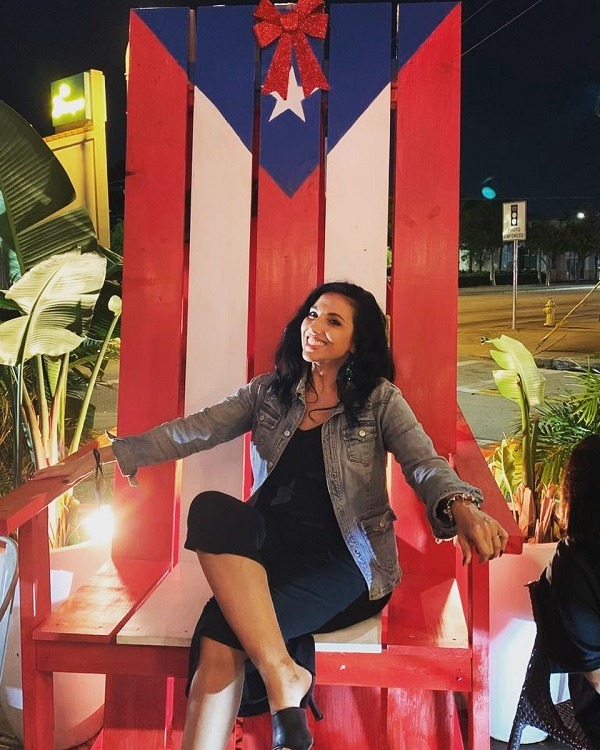
Melina Almodóvar is a salsa singer, composer, and dancer

Why do they call you La Muñeca de la Salsa or La Chica del Bling?

La Chica del Bling comes from maestro Bobby Cruz, who did a song with me in 2016. We made a recording that was called Salsa Factory Bunch. He wrote that song specifically for me, which was called El Bling. That’s how he starts calling me La Chica del Bling and, as there are so many people who know the trajectory of Mr. Bobby Cruz, those who know that he wrote the song for me identify me as La Chica del Bling. That is something very special for me, since he is one of my salsa icons from day one.

In the case of La Muñeca de La Salsa, when I moved here to Miami, I was looking for a nickname similar to El Caballero de La Salsa or El Niño Bonito de La Salsa. Seeing how my name is like that of another renowned singer in Puerto Rico Melina Leon, I wanted to find another name that would identify me and noticed that many Latino men called me muñeca (doll in English). That’s how I came up with the name La Muñeca de La Salsa.

Your family has always been closely related to arts. Your father was a singer, your mother was a dancer and your grandmother was an artisan. What did you get from each of them?

That’s an excellent question. I’m often asked that, but not that way. My dad was a bolero singer and like ballads and old music like Camilo Sesto, and it was thanks to one of his songs that I was named Melina. He also liked Marco Antonio Muñiz and all the singers from that era. He would go to bars to sing until five in the morning and he used to take me to these gatherings in Puerto Rico. He always had his guitar in his car and was invited to parties to sing because he did it for free.

My mom was a flamenco dancer, she studied dance all her life and wanted me to dance too. So, she put me in jazz ballet classes since I was little. I studied with a lady whose name was Sophy Sanfiorenzo, who was also Chayanne, Ricky Martin, and Los Menudo’s teacher of that time. She was very well known in the city of Bayamón, Puerto Rico. Dancing was something secondary for me, but my mom wanted me to take it more seriously. At the end, we made a deal and agreed that I would study salsa and Caribbean dancing.

My grandmother always wanted me to be an artist and pushed me to be what I am today. She does a lot of crafts such as sculptures and paintings. I didn’t inherit those skills (laughs). My aunt is an architect and also paints very well, while another aunt is also very good with crafts. My family is very artistic and I followed that road.

Melina Almodóvar is very proud to be boricua

Her referents

I understand that your grandmother gave you some cassettes with songs by Celia Cruz and Rubén Blades, did these artists influence you or were there others?

My grandmother gave me a Rubén Blades CD and my aunt was the one who introduced me to salsa music thanks to her taste for this genre. Most of the family liked bohemian songs made by Pedro Flores, Rafael Hernández, Bobby Capó, Sylvia Rexach, among others. My grandmother and the rest of my relatives liked bolero a lot. In my case, I like bolero very much and I have done concerts dedicated to this genre, but what moves and motivates me is salsa.

You always listened to tropical music as a kid in Puerto Rico, but I understood that I was cut out to sing salsa when started studying it and understand it deeply. In high school, I came to sing pop, jazz, country, merengue, bachata and many other genres. However, salsa is what I like the most.

You described your move from Puerto Rico to Memphis as a culture shock. What was the most shocking thing about that time?

It’s one thing to move from Puerto Rico to Los Angeles or New York or Florida where there are a lot of Latinos. When I moved, I was very young and went to live in the southern United States, where they listen to country and blues. For me, the most shocking thing was the culture. In Puerto Rico, everyone talks on the front doors and there was a lot of closeness. When we moved to Tennessee, we didn’t know anyone, so we had to start creating a new life and finding our way in this new city.

Melina Almodóvar performing at North Beach Bandshell

You were part of Orquesta Caliente. According to many, that was the first successful Latin salsa orchestra in Memphis. What do you think was the formula for success of this orchestra?

It was a combination of many things because I have been part of many groups and tried to organize orchestras in different places. After that experience, I tried to start an orchestra in Nashville, Tennessee, for a while and tried to start another one in Atlanta, Georgia.

When I was 17 years old, I was called and asked if I knew how to sing salsa, to which I replied yes. That’s when i was given a cassette tape with several songs made by Tito Puente, Ruben Blades, Celia Cruz, among others. I went home and started writing the songs down letter by letter to learn them by heart and audition for the orchestra. That day, I realized that all the musicians were American and extremely talented. I was 17 years old at the time and had no idea who I was playing with, which led me to look up their histories and they were really well trained and talented. Almost all of them were professors at the University of Memphis at the time, but they wanted to form a salsa orchestra.

So, we started playing in different places. Given that there was no internet and no social media, we had to create our own flyers by hand, make copies, go to the houses and put up them there. The first day we played, not a lot of people showed up, but it was a good start for us. After three months, not one more body fitted there.

For me, it was a beautiful experience because we started playing everywhere and were at plenty of festivals in South Florida. We were so into what we were doing and all the members wanted the music to work out spectacularly, so we were united in a common objective. I think that was the key to our success.

Tell me about the Hollywood Salsa Fest

We have been doing this festival for about seven years now and it was a dream come true because I never thought there would be more than 10,000 people there for throughout the day. It is a culmination of all the work we have done since I came to Miami. It was a great achievement.

This Hollywood Salsa Fest of this year included Maestro Charlie Aponte, Timba Live, Salsa Ballet de Cali, Maestro Bobby Cruz, Tito Puente Junior and many others.

Melina Almodóvar next to Oscar D’ León

How talented Puerto Rican singer Fernandito Rentas started his career

How his career started

We have here Fernandito Rentas, who is a Puerto Rican salsa singer. Good afternoon, Mr. Rentas, how do you do?

Good afternoon. Thank goodness, i’m doing just fine right in good health and working hard. We are doing what is done daily, which is my regular job, but on the other hand, we are making the music that I would be able to do up to the present time, or rshould I say, musical projects.

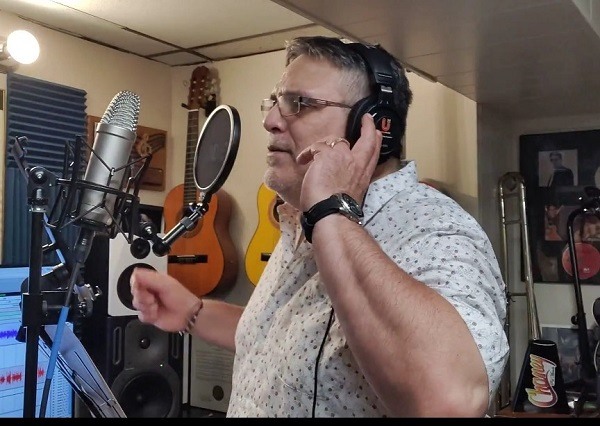
Fernandito Rentas recording one of his songs

You come from Ponce. This is a city from which many famous Puerto Rican artists come, especially in the salsa genre. Do you think that coming from that city had something to do with the road you would take later on?

Ar some point, yes because that influence was around me since I was a little boy. I have always been interested in music and sports, but I enjoyed more of music. I don’t come from a family of musicians as far as I know, but my biggest influences come from distant relatives like, for example, Mr. Esteban Tato Rico Ramírez, who was a singer in the orchestra La Solución.

Basically, what I remember most about my childhood is that it was from there that I became interested in music. At the same time, I would see my parents dancing at parties and there was all that excitement and feeling of celebration. The church and its chants were also important in that regard.

Those were earlier influences, but it was from the age of 7 that I began to understand tropical music. As time went by, I got more interested in it. I couldn’t take music lessons due to economic problems at that time, so I did everything by ear. I do remember that there was an instrument I liked a lot when I was in elementary school, which was marimba. I was strock by it, which led me to join a group of classmates at school who practiced in the school canteen in the afternoon. I also remember my music teacher, Mr. Fermín Torres, who was from the Adjuntas or Coamo area in Puerto Rico, but he was well known in the musical area of the school system.

I didn’t really jump right into music until a few years later because our family moved to Florida, where I began to look out for other interests such as the US Armed Forces. When I graduated from high school, I joined the army and there I met other colleagues from my homeland, which made me reconnect to Latin music. I was not only focused on music of Puerto Rico, but also from Colombia, Venezuela and other countries.

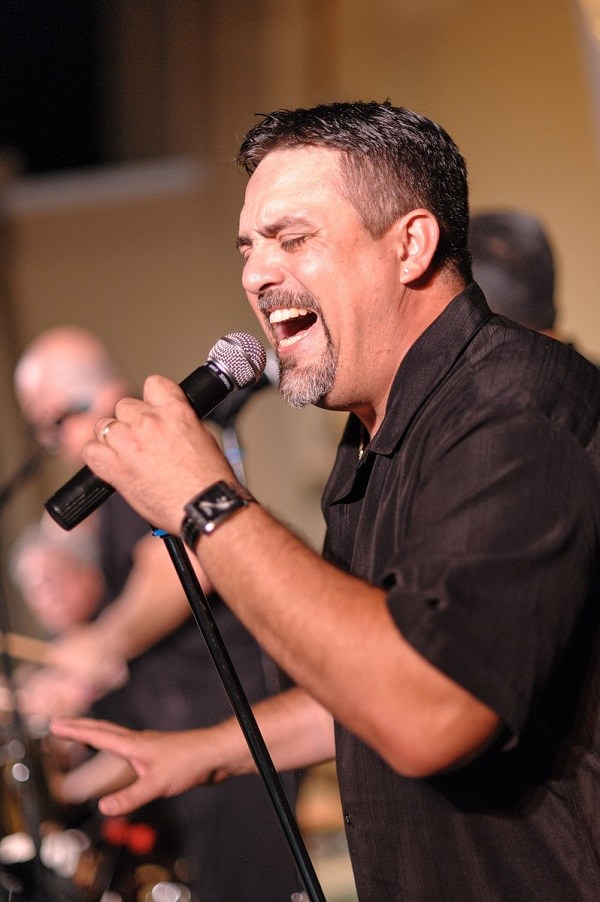
Fernandito Rentas singing on stage

My idol as an artist in the genre has always been Oscar D’ León since the first time I saw him when I was 7 or 8 years old during the patron festivities in my village. When I went into the army, many colleagues who were already veterans in this issue helped me to train me. The first person I met was bass player Héctor Cruz, who I say was my godfather in music. That was in Germany when I served on the force in 1989. When I returned to the United States, I went to North Carolina and began to succeed in music step by step.

I spent nine years serving in the South Korean peninsula, where I was blessed to pull together a group of musicians and perform live music with many fellow musicians, including Korean friends I made there. I returned to the United States in 2011 and thank goodness I stay on this. These days, I had the opportunity to connect or lift me up from where I were and do something different. What I was looking for was to create my own productions with the music that I like, so that’s what I’ve been doing these last two years.

His groups

You were part of various groups including Orquesta Mambo Son, Grupo Descarga, among others. When did you decide to go solo and create your own productions?

I decided to do it in 2020. I had already had this interest for many years and was always seeking the opportunity to break the ice through groups. I was looking to take part in the production of a group I was with and start from that point, but unfortunately none of my groups managed to get into production.

I finally got the chance with the pandemic, as I started to be able to be interacted with colleagues and friends through Facebook and connect with musicians from around the world. Then, other comrades who were also in the armed forces told me about Mr. Robert Requena, who is a Chilean who lives in Medellin, Colombia.

Fernandito Rentas in his military uniform

When I wanted to do things differently adapting myself to the new era, they put me in touch with Mr. Requena and I expressed my ideas. Then, he was the one who showed me the first composition for my first song, which we titled Bailando debajo del agua (Dancing under the water). The thing is that this song is based on an event that happened here in my house, which I told Requena about and we used it for the song. Then, we talked about its musical bases and what I was looking for in my future songs, so he came up with the formula. Today, we are working on my sixth record and thinking about releasing it in June, but there are seven others that are being created right now.

Seeing as your career practically started with Covid-19, do you think the pandemic precipitated what you had in mind?

Well, in a way, yes. My desire to make a solo album is very old, but the 20 years in which I was serving in the armed forces limited me, thing that also happened to other colleagues who are also launching their own albums today, such as Arnaldo LaFontaine, Edwin El Calvito Reyes, Josean Rivera, José Rivero, among others. Arnaldo La Fontaine, Jose Rivero and I were singers in the same orchestra in the southeastern United States during the 1990s.

My interest in being a soloist was present for a long time, but the opportunity to do so did not come until I made use of technology. I can tell you that all my albums are being made in Medellin, Colombia. All I do here in New Jersey is go to the studio and record the voice. That advantage that we have today really helped us and, at the same time, the arrival of the pandemic has prevented us from going to other places to bring our talent. I have accumulated unimterrupted 33 years of career, but the pandemic prevented us from going out and locked us up at home. It was there when many other artists began to take alternate measures to be able to continue reaching people.

In any way, I think we have turned this situation to our advantage in the best way that the Lord has not allowed.

Art of his last song Qué difícil es

An artist I interviewed told me that many musicians were preferring to release single songs instead of full recordings. Are you makings full recordings or single songs?

Based on advice that Mr. Requena gave me, I am releasing single songs. Nowadays, the matter of full albums has become complicated due to the lack of record labels and factories where these materials are produced. I would say that the idea of releasing singles was the best because you want to know if the public is going to accept or like the album. Instead of releasing all the songs at the same time, releasing one song at a time is more comfortable, less expensive and easier to work with. For the time beingt, I have no plans to release a CD.

How did you balance your musical and military activities?

I had to balance them because our obligations and priorities in the military service are focused on the mission and commitment to the defense of the country. During our free time, we liked to clear the mind and do different things. We went to parties.

We felt great making music for our fellow soldiers, their communities and families. We were able to bring our Latin culture to the countries we went to.

Music was our main hobby and the to entertain ourselves on the weekends.

Social networks and website

Facebook: Fernandito Rentas II

Instagram: Fernandito Rentas

YouTube: Fernandito Rentas

You will hallucinate with these 4 Salsa clubs in Spain

Barcelona is the second destination city with the major Salsero movement in the Iberian Peninsula

After the Spanish capital, Barcelona, ​​Galicia, and Alicante are the main cities with the greatest salsa identity.

During the 90s this tropical rhythm began to be adopted in the territory and the first cities to put aside the prejudice toward Latin music were Madrid, Murcia, Cádiz, and Galicia, although Salsa was always heard in the Canary Islands but that is a story that we will tell later.

Currently, Barcelona is the second city with the most salsa movement and there are many options where you can enjoy an amazing dance experience in combination with tropical music and amplified energy. So, we will give you a guide to four clubs that have left their mark in Spain with Latin rhythms and which we assure you that you will love a lot.

Mojito Club

Mojito Club is 100% Salsa & Bachata on Thursdays and Sundays

If there is a place where you can go dancing Salsa and enjoy an unforgettable night out, that place is Mojito Club. Indeed, this club is a reference for Salsa in one of the fascinating cities in Spain with architectural landmarks and where more people like this Caribbean rhythm, Barcelona. On its dance floor, you can have a great time until dawn. Thursdays are from 11 PM with the usual Salsa and the most current Latin sounds with local DJs. Does it surprise you? Wait, there is still more to celebrate. On Fridays and Saturdays, they play the most international Latin music and on Sundays, it’s student day from 8 PM.

Mojito Club also has a dance school where they teach classes of Salsa and Bachata to start or improve. These lessons are entertaining, educational, and fun. Each course is 10 hours long and the lessons are from Monday to Friday. It’s not necessary to attend as a couple. Registration is free and costs € 29 per month.

The charm of Mojito Club https://mojitobcn.com/ is located at Rosellón Street, 217. 08008 Barcelona.

Sabor Cubano Sarrià

Luis Alberto Díaz “El Negri” plays the big hits of traditional Cuban music on salsa nights

It’s true Barcelona is almost the cradle of Salsa in this European country. Sabor Cubano Sarrià is one of the town’s Salsa clubs. This Night Club offers live music with the virtuous Cuban pianist, Luis Alberto Díaz “El Negri” also you can dance to the melodies of Cuban Salsa, International Salsa, Bachata, and urban rhythms with DJs. Here, you will find Salsa and Bachata teachers who give free lessons for beginners at 8 PM every Sunday with minimum consumption. Sabor Cubano Sarrià https://www.facebook.com/saborcubanoclub is one of the clubs where you can have fun with the two most widespread Latin dances in the world. It opens its doors from 7 PM to 12:30 AM and you can find it at Calle Marià Cubí 4. 08006 Barcelona.

Baby’Oh

Baby’Oh is a meeting point for lovers of Salsa, Bachata, and Kizomba

Baby’Oh is another fantastic club to enjoy Salsa and is easy to locate in Alicante at Calle Sabadell, 16, 03203 Elx. It is characterized by having a large room to dance and slide with quick movements and turns. It has a terrace for smokers, V.I.P and Reserved areas, as well as Table Service. Additionally, Baby’Oh https://www.facebook.com/babyohelche/ offers monthly events, workshops (Saturdays), and live performances with stars and emerging Salsa and Bachata artists.

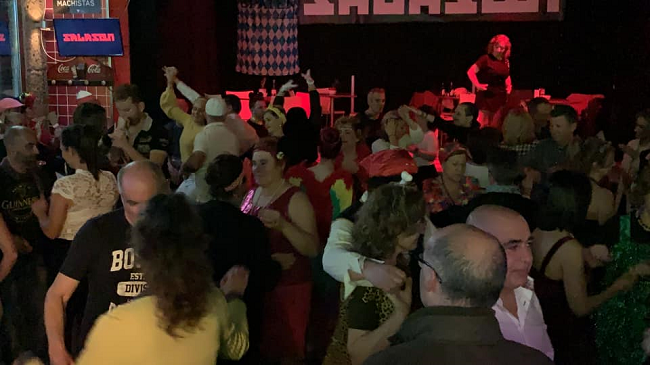
Salason

This cultural platform is designed with exceptional acoustics and cutting-edge technology.

The last stop in this guide with the four Salsa clubs in Spain with which we assure you that you will hallucinate is Salason. Of course, you will learn Cuban-style Salsa and Rueda Casino as well as traditional Bachata lessons with maximum fun, coordination of movements, and body language.

You can practice on Tuesdays in two groups: Students (intermediate level), the Salsa lessons start at 8 PM, and the Bachata group starts at 8:30 PM.

Thursdays are classes for beginners with two choice times: 8 PM and 9:30 PM.

Salason https://salason.es/ is a structured building with three independent rooms but complementary to each other and is located in the northwest of the country at Calle Lirio, 30 Cangas Do Morrazo, 36940, Galicia.

  • « Go to Previous Page
  • Page 1
  • Interim pages omitted …
  • Page 41
  • Page 42
  • Page 43
  • Page 44
  • Page 45
  • Interim pages omitted …
  • Page 65
  • Go to Next Page »

International Salsa Magazine (ISM) is a monthly publication about Salsa activities around the world, that has been publishing since 2007. It is a world network of volunteers coordinated by ISM Magazine. We are working to strengthen all the events by working together.