• Skip to primary navigation
  • Skip to main content

International Salsa Magazine

  • HOME
  • Previous editions
    • 2026
      • ISM / April 2026
      • ISM / March 2026
      • ISM / February 2026
      • ISM / January 2026
    • 2025
      • ISM / December 2025
      • ISM / November 2025
      • ISM / October 2025
      • ISM / September 2025
      • ISM / August 2025
      • ISM / July 2025
      • ISM / June 2025
      • ISM / May2025
      • ISM / April 2025
      • ISM / March 2025
      • ISM / February 2025
      • ISM / January 2025
    • 2024
      • ISM / December 2024
      • ISM / November 2024
      • ISM / October 2024
      • ISM / September 2024
      • ISM / August 2024
      • ISM / July 2024
      • ISM / June 2024
      • ISM / May 2024
      • ISM / April 2024
      • ISM / March 2024
      • ISM / February 2024
      • ISM / January 2024
    • 2023
      • ISM / December 2023
      • ISM / November 2023
      • ISM / October 2023
      • ISM – September 2023
      • ISM – August 2023
      • ISM July 2023
      • ISM Edition June 2023
      • ISM – May 2023
      • ISM April 2023
      • ISM March 2023
      • ISM February 2023
      • ISM January 2023
    • 2022
      • ISM December 2022
      • ISM November 2022
      • ISM October 2022
      • ISM September 2022
      • ISM August 2022
      • ISM July 2022
      • ISM June 2022
      • ISM May 2022
      • ISM February 2022
      • ISM January 2022
    • 2021
      • ISM December 2021
      • ISM November 2021
      • ISM October – 2021
      • ISM September 2021
      • ISM August 2021
      • ISM July 2021
      • ISM May 2021
      • ISM April 2021
      • ISM June 2021
      • ISM March 2021
      • ISM February 2021
      • ISM January 2021
    • 2020
      • ISM December 2020
      • ISM November 2020
      • ISM October 2020
      • ISM September 2020
      • ISM August 2020
      • ISM July 2020
      • ISM June 2020
      • ISM May 2020
      • ISM April 2020
      • ISM March 2020
      • ISM February 2020
      • ISM January 2020
    • 2019
      • ISM December 2019
      • ISM November 2019
      • ISM October 2019
      • ISM Septembre 2019
      • ISM August 2019
      • ISM July 2019
      • ISM June 2019
    • 2016
      • ISM December 2016
  • Spanish
  • Download Salsa App
    • Android
    • Apple

Search Results for: Dancing

How talented Puerto Rican singer Fernandito Rentas started his career

How his career started

We have here Fernandito Rentas, who is a Puerto Rican salsa singer. Good afternoon, Mr. Rentas, how do you do?

Good afternoon. Thank goodness, i’m doing just fine right in good health and working hard. We are doing what is done daily, which is my regular job, but on the other hand, we are making the music that I would be able to do up to the present time, or rshould I say, musical projects.
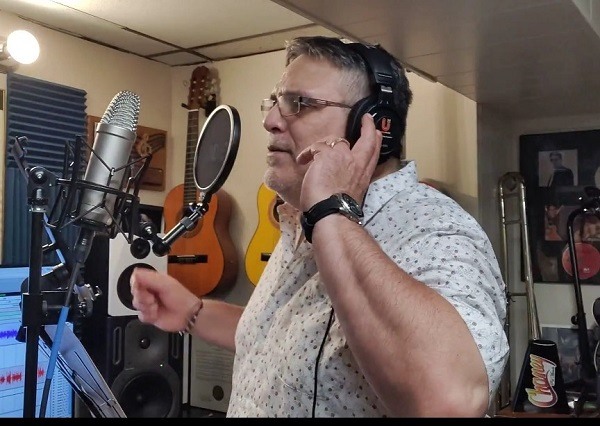
Fernandito Rentas recording one of his songs

You come from Ponce. This is a city from which many famous Puerto Rican artists come, especially in the salsa genre. Do you think that coming from that city had something to do with the road you would take later on?

Ar some point, yes because that influence was around me since I was a little boy. I have always been interested in music and sports, but I enjoyed more of music. I don’t come from a family of musicians as far as I know, but my biggest influences come from distant relatives like, for example, Mr. Esteban Tato Rico Ramírez, who was a singer in the orchestra La Solución.

Basically, what I remember most about my childhood is that it was from there that I became interested in music. At the same time, I would see my parents dancing at parties and there was all that excitement and feeling of celebration. The church and its chants were also important in that regard.

Those were earlier influences, but it was from the age of 7 that I began to understand tropical music. As time went by, I got more interested in it. I couldn’t take music lessons due to economic problems at that time, so I did everything by ear. I do remember that there was an instrument I liked a lot when I was in elementary school, which was marimba. I was strock by it, which led me to join a group of classmates at school who practiced in the school canteen in the afternoon. I also remember my music teacher, Mr. Fermín Torres, who was from the Adjuntas or Coamo area in Puerto Rico, but he was well known in the musical area of the school system.

I didn’t really jump right into music until a few years later because our family moved to Florida, where I began to look out for other interests such as the US Armed Forces. When I graduated from high school, I joined the army and there I met other colleagues from my homeland, which made me reconnect to Latin music. I was not only focused on music of Puerto Rico, but also from Colombia, Venezuela and other countries.
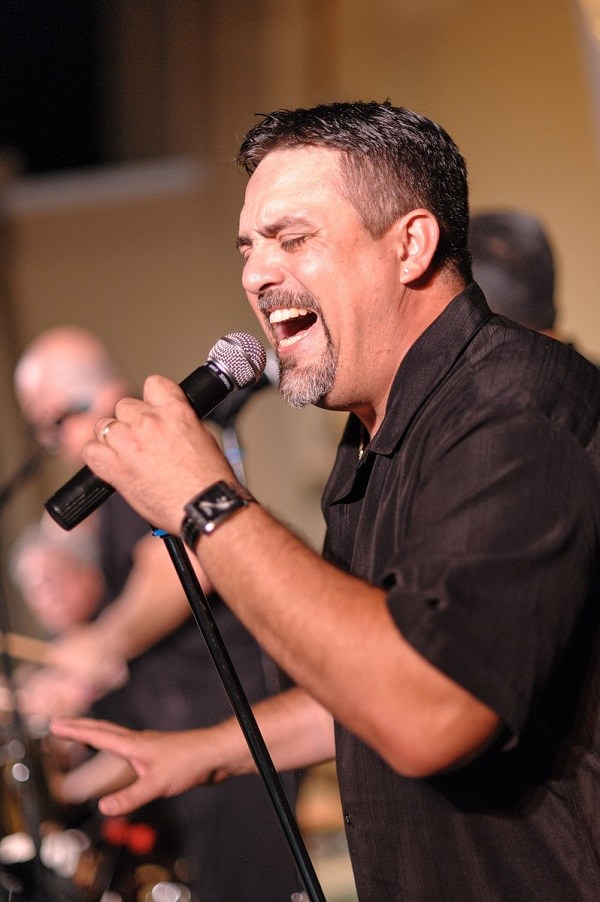
Fernandito Rentas singing on stage

My idol as an artist in the genre has always been Oscar D’ León since the first time I saw him when I was 7 or 8 years old during the patron festivities in my village. When I went into the army, many colleagues who were already veterans in this issue helped me to train me. The first person I met was bass player Héctor Cruz, who I say was my godfather in music. That was in Germany when I served on the force in 1989. When I returned to the United States, I went to North Carolina and began to succeed in music step by step.

I spent nine years serving in the South Korean peninsula, where I was blessed to pull together a group of musicians and perform live music with many fellow musicians, including Korean friends I made there. I returned to the United States in 2011 and thank goodness I stay on this. These days, I had the opportunity to connect or lift me up from where I were and do something different. What I was looking for was to create my own productions with the music that I like, so that’s what I’ve been doing these last two years.

His groups

You were part of various groups including Orquesta Mambo Son, Grupo Descarga, among others. When did you decide to go solo and create your own productions?

I decided to do it in 2020. I had already had this interest for many years and was always seeking the opportunity to break the ice through groups. I was looking to take part in the production of a group I was with and start from that point, but unfortunately none of my groups managed to get into production.

I finally got the chance with the pandemic, as I started to be able to be interacted with colleagues and friends through Facebook and connect with musicians from around the world. Then, other comrades who were also in the armed forces told me about Mr. Robert Requena, who is a Chilean who lives in Medellin, Colombia.

Fernandito Rentas in his military uniform

When I wanted to do things differently adapting myself to the new era, they put me in touch with Mr. Requena and I expressed my ideas. Then, he was the one who showed me the first composition for my first song, which we titled Bailando debajo del agua (Dancing under the water). The thing is that this song is based on an event that happened here in my house, which I told Requena about and we used it for the song. Then, we talked about its musical bases and what I was looking for in my future songs, so he came up with the formula. Today, we are working on my sixth record and thinking about releasing it in June, but there are seven others that are being created right now.

Seeing as your career practically started with Covid-19, do you think the pandemic precipitated what you had in mind?

Well, in a way, yes. My desire to make a solo album is very old, but the 20 years in which I was serving in the armed forces limited me, thing that also happened to other colleagues who are also launching their own albums today, such as Arnaldo LaFontaine, Edwin El Calvito Reyes, Josean Rivera, José Rivero, among others. Arnaldo La Fontaine, Jose Rivero and I were singers in the same orchestra in the southeastern United States during the 1990s.

My interest in being a soloist was present for a long time, but the opportunity to do so did not come until I made use of technology. I can tell you that all my albums are being made in Medellin, Colombia. All I do here in New Jersey is go to the studio and record the voice. That advantage that we have today really helped us and, at the same time, the arrival of the pandemic has prevented us from going to other places to bring our talent. I have accumulated unimterrupted 33 years of career, but the pandemic prevented us from going out and locked us up at home. It was there when many other artists began to take alternate measures to be able to continue reaching people.

In any way, I think we have turned this situation to our advantage in the best way that the Lord has not allowed.

Art of his last song Qué difícil es

An artist I interviewed told me that many musicians were preferring to release single songs instead of full recordings. Are you makings full recordings or single songs?

Based on advice that Mr. Requena gave me, I am releasing single songs. Nowadays, the matter of full albums has become complicated due to the lack of record labels and factories where these materials are produced. I would say that the idea of releasing singles was the best because you want to know if the public is going to accept or like the album. Instead of releasing all the songs at the same time, releasing one song at a time is more comfortable, less expensive and easier to work with. For the time beingt, I have no plans to release a CD.

How did you balance your musical and military activities?

I had to balance them because our obligations and priorities in the military service are focused on the mission and commitment to the defense of the country. During our free time, we liked to clear the mind and do different things. We went to parties.

We felt great making music for our fellow soldiers, their communities and families. We were able to bring our Latin culture to the countries we went to.

Music was our main hobby and the to entertain ourselves on the weekends.

Social networks and website

Facebook: Fernandito Rentas II

Instagram: Fernandito Rentas

YouTube: Fernandito Rentas

You will hallucinate with these 4 Salsa clubs in Spain

Barcelona is the second destination city with the major Salsero movement in the Iberian Peninsula

After the Spanish capital, Barcelona, ​​Galicia, and Alicante are the main cities with the greatest salsa identity.

During the 90s this tropical rhythm began to be adopted in the territory and the first cities to put aside the prejudice toward Latin music were Madrid, Murcia, Cádiz, and Galicia, although Salsa was always heard in the Canary Islands but that is a story that we will tell later.

Currently, Barcelona is the second city with the most salsa movement and there are many options where you can enjoy an amazing dance experience in combination with tropical music and amplified energy. So, we will give you a guide to four clubs that have left their mark in Spain with Latin rhythms and which we assure you that you will love a lot.

Mojito Club

Mojito Club is 100% Salsa & Bachata on Thursdays and Sundays

If there is a place where you can go dancing Salsa and enjoy an unforgettable night out, that place is Mojito Club. Indeed, this club is a reference for Salsa in one of the fascinating cities in Spain with architectural landmarks and where more people like this Caribbean rhythm, Barcelona. On its dance floor, you can have a great time until dawn. Thursdays are from 11 PM with the usual Salsa and the most current Latin sounds with local DJs. Does it surprise you? Wait, there is still more to celebrate. On Fridays and Saturdays, they play the most international Latin music and on Sundays, it’s student day from 8 PM.

Mojito Club also has a dance school where they teach classes of Salsa and Bachata to start or improve. These lessons are entertaining, educational, and fun. Each course is 10 hours long and the lessons are from Monday to Friday. It’s not necessary to attend as a couple. Registration is free and costs € 29 per month.

The charm of Mojito Club https://mojitobcn.com/ is located at Rosellón Street, 217. 08008 Barcelona.

Sabor Cubano Sarrià

Luis Alberto Díaz “El Negri” plays the big hits of traditional Cuban music on salsa nights

It’s true Barcelona is almost the cradle of Salsa in this European country. Sabor Cubano Sarrià is one of the town’s Salsa clubs. This Night Club offers live music with the virtuous Cuban pianist, Luis Alberto Díaz “El Negri” also you can dance to the melodies of Cuban Salsa, International Salsa, Bachata, and urban rhythms with DJs. Here, you will find Salsa and Bachata teachers who give free lessons for beginners at 8 PM every Sunday with minimum consumption. Sabor Cubano Sarrià https://www.facebook.com/saborcubanoclub is one of the clubs where you can have fun with the two most widespread Latin dances in the world. It opens its doors from 7 PM to 12:30 AM and you can find it at Calle Marià Cubí 4. 08006 Barcelona.

Baby’Oh

Baby’Oh is a meeting point for lovers of Salsa, Bachata, and Kizomba

Baby’Oh is another fantastic club to enjoy Salsa and is easy to locate in Alicante at Calle Sabadell, 16, 03203 Elx. It is characterized by having a large room to dance and slide with quick movements and turns. It has a terrace for smokers, V.I.P and Reserved areas, as well as Table Service. Additionally, Baby’Oh https://www.facebook.com/babyohelche/ offers monthly events, workshops (Saturdays), and live performances with stars and emerging Salsa and Bachata artists.

Salason

This cultural platform is designed with exceptional acoustics and cutting-edge technology.

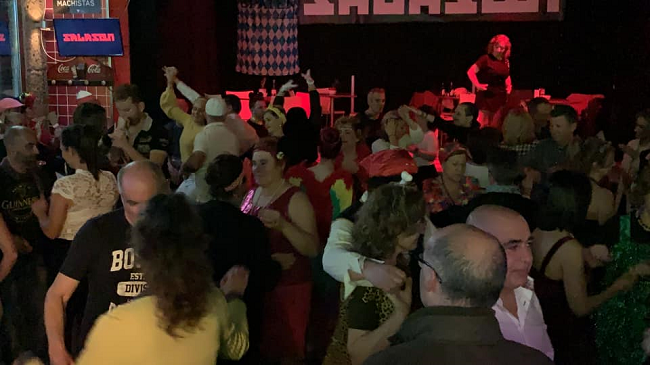
The last stop in this guide with the four Salsa clubs in Spain with which we assure you that you will hallucinate is Salason. Of course, you will learn Cuban-style Salsa and Rueda Casino as well as traditional Bachata lessons with maximum fun, coordination of movements, and body language.

You can practice on Tuesdays in two groups: Students (intermediate level), the Salsa lessons start at 8 PM, and the Bachata group starts at 8:30 PM.

Thursdays are classes for beginners with two choice times: 8 PM and 9:30 PM.

Salason https://salason.es/ is a structured building with three independent rooms but complementary to each other and is located in the northwest of the country at Calle Lirio, 30 Cangas Do Morrazo, 36940, Galicia.

Incredible conversation with Felipe Martínez about his career in the SF Bay Area

Here is the conversation 

We are here with Felipe Martínez. He is a dance instructor, broadcaster and event organizer. Good afternoon, Mr. Martinez, how are you today?

Very good afternoon. Thank you very much for the invitation.

How did you start your way in the world of music? Did you do it in your native Colombia or there in the United States?

It officially started officially here in the United States, but Colombia also played an important role in this process. In my country, I played soccer and many of my football buddies came from the coast or north of Colombia. I am from the center of the country in Bogotá. When it was our turn to meet in the bus that would take us to our place of practice, each one of them carried a cassette tape to listen to salsa or music from the Colombian Caribbean. That is how I was gradually introduced into the world of music and got interested in salsa and Caribbean music, but I grew up listening to rock and pop.

Felipe Martínez in his studio

So, we can say that your taste in music started in Colombia, but you developed professionally in the United States, is that right?

That is correct. When I came to the United States, I started dancing professionally.

You started working as a dance instructor and then as a DJ when you arrived in the United States. Meaning that you had no experience in these things from your country, but you gained it in your new country of residence.

That is right. In the case of locution, I worked as a radio host for about three years in Colombia. I hosted a show with my friends while attending high school, but we were dedicated to rock because it was the genre I listened to the most. When I came to the United States in 1998, I started dancing, working with several dance companies, and studying for a while before I started teaching, so it did not happen immediately. I studied for about four years, and after that, I decided to teach. As for my work as a DJ, that almost happened immediately. In 1999, I started making music in a little club called Café Caracas in Berkley. It was by pure chance because the hired DJ didn’t show up, so the owner of the club asked me to play for a while to cover that space. I replied yes, so I started playing music that night and it all worked out. They proposed me to keep doing it permanently, I accepted and that’s how my career as a DJ began.

Luis Medina told me in his interview that he is sometimes forced to play music he doesn’t really like, but it’s what the public wants. Apart from salsa, what other genres do you play or mix?

Salsa is just a general term for all these rhythms we have. I usually mix salsa with bachata, merengue or cha cha chá. However, I don’t usually include reggaeton in my repertoire despite its popularity.

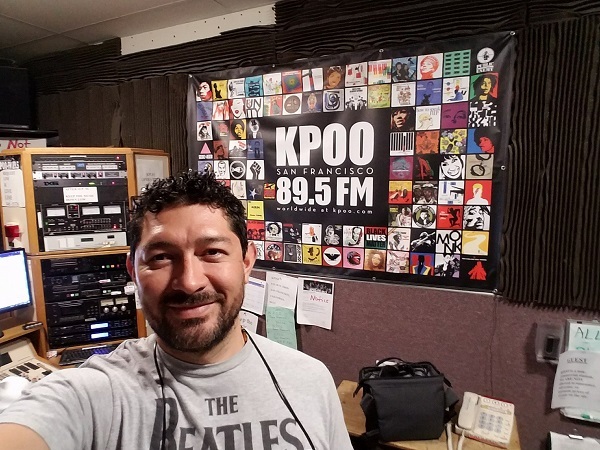
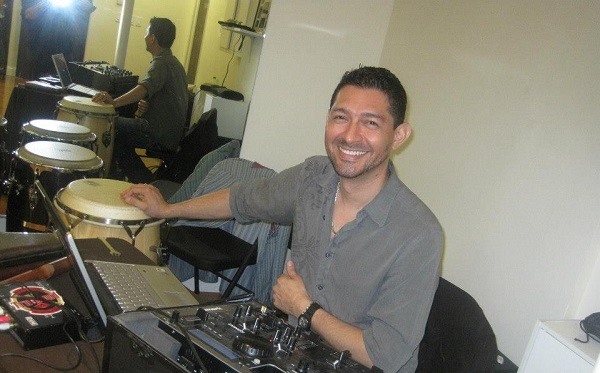
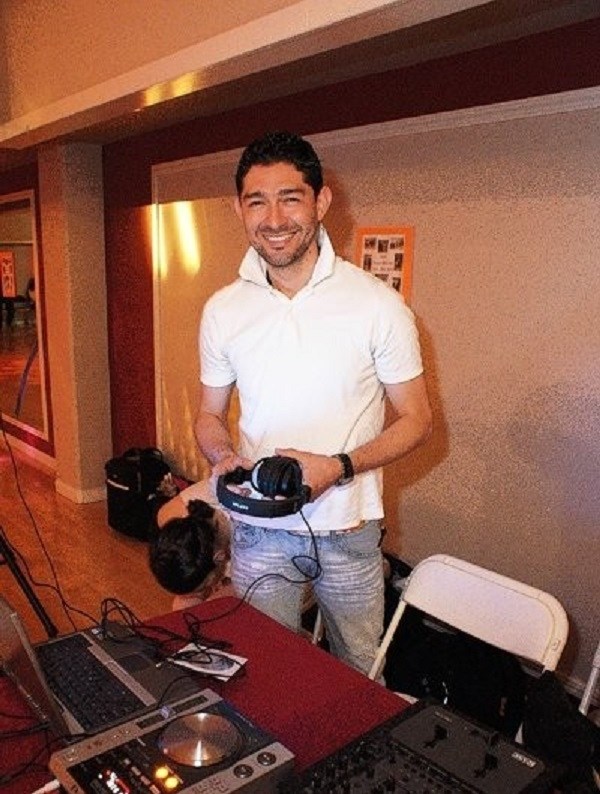
Felipe Martínez in his work as a DJ

How World Salsa Radio started

How did World Salsa Radio start? What drove you to found it?

Worldsalsaradio.com (www.worldsalsaradio.com) started as an adventure alongside a friend at another radio station. The main idea was to educate listeners about the history of records and what they include such as singers, artists, musicians, etcetera. These days, you buy an MP3, but all you can see is the name of the song and the picture, so you lose all the album information such as credits, recording place, among other details.

In my travels around the world, I have known many DJs, whom I contacted when this project started to get them to this station to do shows. Remember that the main objective was to educate the public, then, the guy with whom we started the station took a different path because we had artistic differences, so we decided to separate.

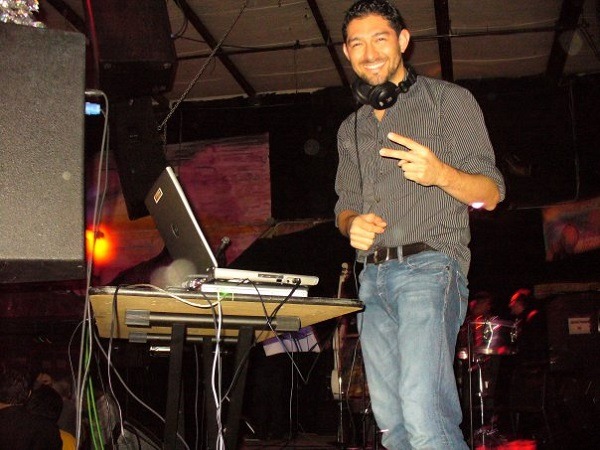
That’s how World Salsa Radio started. During the pandemic in 2020, I was here at home for about three or four months arranging everything. I invited two other friends from the Bay Area, one of them was DJ Orlando Felix, DJ Boricua, and Ivette Fuentes, DJ La Coqui. The three of us started shaping the idea of World Salsa Radio with the same goal of educating as in the beginning. I take care of all the technical part, invite DJs to play, teach them to use the software and tell them what to say. We are already 27 DJs from all over the world and, at the moment, DJ Boricua and I are the ones who run the station.

Indeed, you have DJs from the five continents. How did you manage to unite them all in the same project?

I think the idea that brings us together is the goal of educating the public that listens to us. We want to play great music, but we also want to educate people about what we play. This is something that attracks music collectors because all that information is being lost due to the digital age. I know many who are on World Salsa Radio in person, but I heard the rest of them by other means such as a Facebook Live or YouTube. I contact the ones I like, we exchange ideas and it is explained to them what they should do.

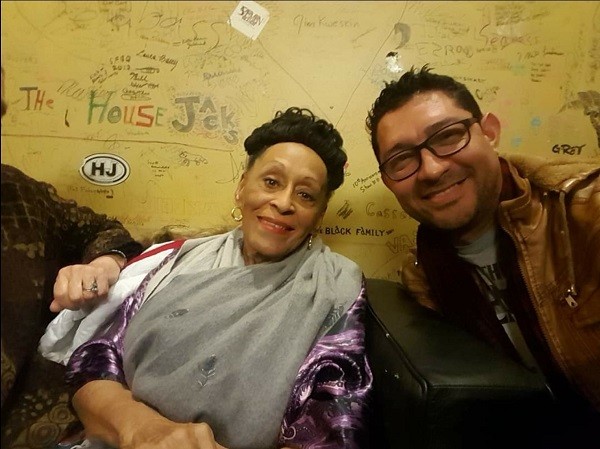
Cuban singer Omara Portuondo and Felipe Martínez

What have been the most noticeable differences in the team?

Each DJ has a different style. We all have a different style even though we are playing Afro-Latin music. Everything played here in California is very different from everything played in Lithuania. Although we all collect the same music, everyone plays it differently.

How dod the public receive World Salsa Radio?

At first, the audicence reception was very small. The first month, we had barely 300 listeners, but we have a very large group of listeners who stay tuned to us despite the time. There are about 100 listeners who are permanently connected with us. We started the project during the pandemic, which was very good for us because everyone was home. So, people who enjoy this music, dancers or musicians listened to our shows on a recurring basis. Two years later, there are already 16,000 people who tune us in every month.

There are many people supporting us without any profit motive because we do this for free. No one is paying us to move the project forward, so we are financed by donations. We also have great support on the advertising side, which has helped us grow.

World Salsa Radio is now ruled by Felipe Martínez

As a dancer and instructor, what do you think people are most passionate about in your classes? What rhythms do they enjoy the most?

As to how I teach, I use percussion much. Since I play the conga, I use this tool to give my classes. I try not to give so much importance to numbers. Many instructors use counting to teach their students, but I try to keep out of it and use percussion. For example, I use the clave and the tumbao.

I think this method works best. If you go to a club with an orchestra playing, the singer is not going to be counting on you to dance, he’s going to be focused on making his music and providing entertainment. For the same reason, you must learn to follow the music without counting.

What have you done to balance all your activities in music?

My activities are linked, but they are separated at the same time. My personal projects have nothing to do with World Salsa Radio. However, when an event invites several DJs from the station, the World Salsa Radio logo joins that production. However, I try to take things apart most of the time.

Your pages, social networks and links to financially support the station.

You can find all the information through worldsalsaeradio.com. In the main part, there is a button that says Donations, which takes you to the station’s PayPal account. People can donate whatever they want to help us, but nothing happens if they can’t. In that case, they can spread the word about the station. In that case, they can show what we do through their social networks and give us publicity.

Felipe Martínez does not combine his activities

Facebook: Eldelaclavesf (https://www.facebook.com/EldelaClaveSF)

Instagram: Eldelaclavesf

Latin America – May 2022

Latin America – March 2022

Banner with Blue background. At one end the image of a palm tree and two flamingos and at the other end the image of Pedro González and the Venezuelan flag


  • « Go to Previous Page
  • Page 1
  • Interim pages omitted …
  • Page 43
  • Page 44
  • Page 45
  • Page 46
  • Page 47
  • Interim pages omitted …
  • Page 66
  • Go to Next Page »

International Salsa Magazine (ISM) is a monthly publication about Salsa activities around the world, that has been publishing since 2007. It is a world network of volunteers coordinated by ISM Magazine. We are working to strengthen all the events by working together.