• Skip to primary navigation
  • Skip to main content

International Salsa Magazine

  • HOME
  • Previous editions
    • 2026
      • ISM / June 2026
      • ISM / May 2026
      • ISM / April 2026
      • ISM / March 2026
      • ISM / February 2026
      • ISM / January 2026
    • 2025
      • ISM / December 2025
      • ISM / November 2025
      • ISM / October 2025
      • ISM / September 2025
      • ISM / August 2025
      • ISM / July 2025
      • ISM / June 2025
      • ISM / May2025
      • ISM / April 2025
      • ISM / March 2025
      • ISM / February 2025
      • ISM / January 2025
    • 2024
      • ISM / December 2024
      • ISM / November 2024
      • ISM / October 2024
      • ISM / September 2024
      • ISM / August 2024
      • ISM / July 2024
      • ISM / June 2024
      • ISM / May 2024
      • ISM / April 2024
      • ISM / March 2024
      • ISM / February 2024
      • ISM / January 2024
    • 2023
      • ISM / December 2023
      • ISM / November 2023
      • ISM / October 2023
      • ISM – September 2023
      • ISM – August 2023
      • ISM July 2023
      • ISM Edition June 2023
      • ISM – May 2023
      • ISM April 2023
      • ISM March 2023
      • ISM February 2023
      • ISM January 2023
    • 2022
      • ISM December 2022
      • ISM November 2022
      • ISM October 2022
      • ISM September 2022
      • ISM August 2022
      • ISM July 2022
      • ISM June 2022
      • ISM May 2022
      • ISM February 2022
      • ISM January 2022
    • 2021
      • ISM December 2021
      • ISM November 2021
      • ISM October – 2021
      • ISM September 2021
      • ISM August 2021
      • ISM July 2021
      • ISM May 2021
      • ISM April 2021
      • ISM June 2021
      • ISM March 2021
      • ISM February 2021
      • ISM January 2021
    • 2020
      • ISM December 2020
      • ISM November 2020
      • ISM October 2020
      • ISM September 2020
      • ISM August 2020
      • ISM July 2020
      • ISM June 2020
      • ISM May 2020
      • ISM April 2020
      • ISM March 2020
      • ISM February 2020
      • ISM January 2020
    • 2019
      • ISM December 2019
      • ISM November 2019
      • ISM October 2019
      • ISM Septembre 2019
      • ISM August 2019
      • ISM July 2019
      • ISM June 2019
    • 2016
      • ISM December 2016
      • ISM November 2016
  • Spanish
  • Download Salsa App
    • Android
    • Apple

Search Results for: El+Gran+Combo+de+Puerto+Rico

‘‘El Griego Rumbero’’ visited the Salsa Museum and donated some objects

The artist we will talk about today is a very particular case, since he comes from a country which is not usually related to salsa or Latin music in general. However, the passion for these rhythms has captivated people from all over the world, so it is not surprising that our guest has experienced the same thing.

We’re talking about the Greek-born trombonist and composer Demetrios Kastaris, whom El Rubio Boris and I were fortunate to welcome at the Salsa Museum. Here’s a little of his fascinating story.
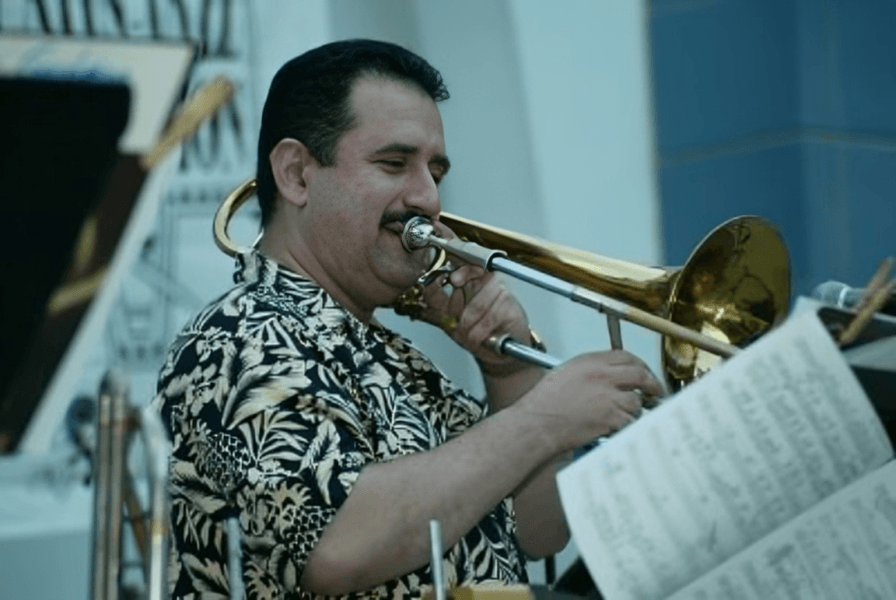
Demetrios Kastaris playing
Demetrios Kastaris playing the trombone

Demetrios’ early years

Demetrios was born in Thessaloniki, Greece, but moved with his family to the United States when he was just two years old. After living in Ohio for a few years, the family moved again, but this time to St. Louis, Missouri, a place that would be critical to the training of the Young man in the times to come.

The first contact of the boy with music was in elementary school during a live performance by a classical music quintet, but what really captivated him was a demonstration of a slide trombone by a member of the St. Louis Symphony Orchestra. It was at that instant the aforementioned instrument inspired Demetrios to take trombone lessons and join the school concert band.

More importantly, as Demetrios grew older, he spent countless hours practicing the trombone, especially in summer when he was free from school work. Finally, On reaching the age of 17, his perseverance began to bear fruit, and he got the opportunity to rehearse with the Stan Keaton Jazz Orchestra, which was the first great experience for the teenager. Just one year later, he sang as a soloist at the Classical Rimsky-Korsakov Concerto. 

Other than that, Demetrios received the John Philip Sousa Band Award just before graduating from high school. He then studied music education at the University of Missouri-St. Louis, when he played in the jazz band and won several awards with the group.
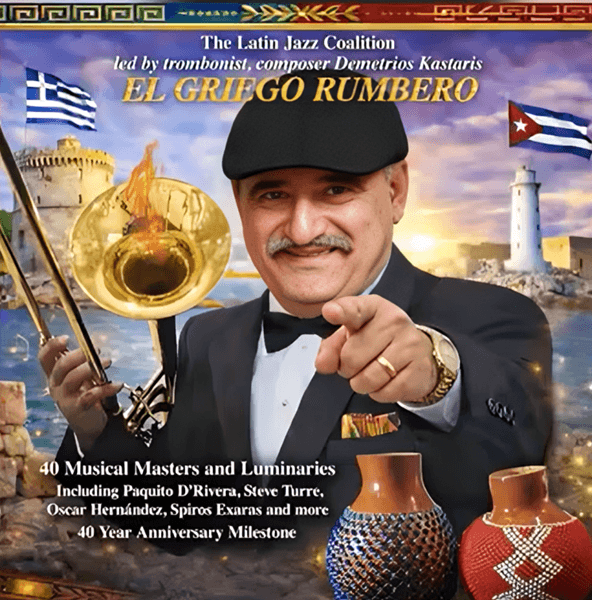
Cover of the album ''El Griego Rumbero''
Cover of the album ”El Griego Rumbero” by demetrios Kastaris

Moving to New York

Two years after having studied in Missouri, Demetrios moved to New York, where he received a scholarship that allowed him to attend New York University and take more steps in his musical career. While completing his studies, he met a bandleader on the subway and was invited to a rehearsal where he was given the opportunity to arrange Afro-Cuban jazz pieces for the first time in his life.

Latin music and its rhythmic features made such an impression on Demetrios that he began attending concerts by many of its great exponents, such as Willie Colón, Eddie Palmieri, Ray Barretto, Tito Puente, Mongo Santamaría, and many others. This led him to transcribe and conscientiously analyze these artists’ songs to satisfy his curiosity and learn more about these rhythms.

After graduating with honors, he earned a masters degree in jazz from the Manhattan School of Music. Soon after, he was already teaching in public schools while performing with one of the bands of the Concord Resort Hotel.

Other important details of his career

For over 50 years of artistic career, Demetrios has had the opportunity to perform with big Latin stars such as Tito Puente, Luisito Quintero, Alfredo De La Fé, Ray Barretto, Charlie Palmieri, Herencia Latina, Oscar Hernández from The Spanish Harlem Orchestra, and many others. 

Already in the decade of 1980, the artist founded the Latin-Jazz Coalition and recorded several of his original compositions in genres such as Brazilian and Afro-Cuban jazz. In certain Circles, his work has earned him the nickname of “El Griego Rumbero”, a moniker by which he is still known today.

Johnny Cruz, Demetrios Kastaris and El Rubio Boris

Much more recently, Demetrios was invited to play with Los Leales de Cuba at the Buena Vista Curry Club and also to rehearse with Los Muñequitos de Matanza, which was a very learning afternoon and a memorable experience for him. Thereafter, he traveled to Cuba on several occasions to learn much more about this music.

Visit to the Salsa Museum

Just two years ago, Demetrios visited the Spanish Harlem Salsa Museum directed by yours truly and spent an enjoyable time with our entire team but he did not come alone. He brought us his photograph and a poster of the Latin Jazz Coalition, which were mounted on a wall alongside many other photographs of stars such as The Fania All Stars, Hector Lavoe, Tito Puente, Celia Cruz, El Gran Combo de Puerto Rico, Larry Harlow, and many others. 

His childhood trombone was also added to our extensive display of objects donated by artists and their families. This took place on March 20, 2024, and the instrument remains at our institution to this day as a reminder of a Greek man’s love for our music and a thank you to his dedication over the years.

Johnny Cruz ISM

Read also: Rey Ruíz visits the Salsa Museum and talks about his prolific career

Timbalero Manolito Rodríguez Debuts a Fresh Sound as Musical Director of La Zónica

On Friday, March 27, 2026, Manolito Rodríguez and La Zónica performed at La Respuesta, a unique venue a hall where diverse musical genres blend, creating an atmosphere where a dance concert serves as the artists’ formal introduction to the public. The ensemble has been working together since August 2025, when the new orchestra was formed under the leadership of the virtuoso timbalero.

Timbalero Manolito Rodríguez arrives with a renewed energy as musical director of La Zónica

When Manolito began assembling the group, he sought out songs that resonated with him, such as “Gente Luminosa” and “A Mi Medida.” He has also been working with unreleased compositions by Anthony García and Leni Prieto. La Zónica marks a new chapter for the timbalero as the director of his own orchestra. Nevertheless, they continue to perform hits from Manolito’s previous era, now brought to life by the vocal front: Ángel Pomales, Joelis Crespo, and Gabriel Cotto. Manolito has promised to step back from singing to focus entirely on his instrument and musical direction.

The director of La Zónica hopes the dance concert at La Respuesta on March 27 marked a turning point for the band. “It’s an event we’ve been working on with great intensity,” Manolito says with enthusiasm. With energy and conviction, the timbalero adds: “I want to leave a legacy like El Gran Combo de Puerto Rico, like Sonora Ponceña, like Roberto Roena’s Apollo Sound, or Willie Rosario’s band. I want people to say in 25 years, ‘Look, that’s Manolito’s La Zónica.’ It’s a long road, but it’s possible.”

As if that weren’t enough, a new line of Meinl Percussion instruments, inspired by the young Puerto Rican timbalero, is now available.

The new line of instruments - from Meinl Percussion - inspired by Manolito
The new line of instruments – from Meinl Percussion – inspired by Manolito

A Prodigy’s Journey

The career of this salsa virtuoso began early. Manolito Rodríguez is a percussionist, musical director, singer, and dancer. While he was still in middle school, piano genius Papo Lucca invited him to record on the 45th-anniversary album, Homenaje a Tres Grandes del Teclado. “At that time, I was just entering the Escuela Libre de Música; I was in ninth grade,” the timbalero recalls. Four years later, upon graduating from the Ernesto Ramos Antonini ELM in San Juan, Manolito earned the timbalero chair with Sonora Ponceña on Papo Lucca’s recommendation. “Don Quique” accepted him, and the young musician remained with the group for four years.

Puerto Rico’s salsa stages watched Manolito Rodríguez grow up, flanked by musical institutions such as Sonora Ponceña, his now-colleague Willie Rosario, and Roberto Roena’s Apollo Sound.

His skill as a percussionist grew by leaps and bounds, and his versatility was tested on multiple fronts. In fact, his vocals were featured with the orchestra Del Sur al Norte, led by the renowned director, arranger, and producer, trumpet master Julito Alvarado. “Julito was the first one who gave me the opportunity to record as a singer,” Manolito acknowledged in an interview.

Manolito Rodríguez and La Zónica performed at La Respuesta, a different venue.

Thanks to his interactions with salsa veterans since childhood, Manolito served as musical director for various youth projects along the way. This included Revolución Juvenil in high school and Manolito y su Trabuco, an orchestra that performed every Wednesday at El Doble Seis in Caguas.

Legacy and Discipline

According to Manolito himself now a music professor—he owes much of his career to the support of his mother and grandmother, who nurtured his musical interests and encouraged him to pursue formal training. Today, the instrumentalist considers himself a “music worker” who approaches his craft with respect and maturity.

His new orchestra, La Zónica, finds him with a different mindset: he wants to concentrate on the timbales and direction. He considers Master Willie Rosario—who treats him as a protégé one of his greatest influences as a timbalero-bandleader. Rodríguez shares that when he read the authorized biography of “Mr. Afinque” (Willie Rosario, El Rey del Ritmo by researcher Robert Téllez) and saw himself mentioned, he was overcome with emotion. “My eyes welled up. I didn’t expect it,” he says. “Since I started taking things seriously, Willie has always mentored me.”

Despite his vast experience, the young musician felt deeply blessed to be chosen to fill in for the leader of “the band that delights” (la banda que deleita) on several occasions, and to perform at the Willie Rosario Centenary concert at the Coliseo de Puerto Rico. “I feel very fortunate because Willie is a very serious person, someone highly respected in the world of salsa with an impeccable career. He is a true role model.”

Following the passing of Roberto Roena, Rodríguez was also entrusted with the legacy of the Apollo Sound—a testament to the confidence and solidity he projects despite his youth. “Wow, yes. It was an honor,” he recalls nostalgically. “Roberto was the first person to give me a big break in Puerto Rico,” referring to his participation in the 1998 Día Nacional de la Zalsa at the Juan Ramón Loubriel Stadium in Bayamón.

The timbalero Manolito Rodríguez

On Sunday, March 22, 2026, Manolito Rodríguez returned to the Día Nacional de la Zalsa as the timbalero and director of La Zónica, a project that debuted last November during Sonora Ponceña’s 70th-anniversary concert. The current lineup includes: Airemyelisse Díaz (bass), Reinaldo Burgos (piano), Savier Díaz (congas), Manolito Rodríguez (timbales/director), Carlos Arroyo (bongo), Víctor “Yuca” Maldonado (baritone sax), Efraín Martínez (tenor sax), Rubén Díaz (trumpet), and Jan Santana (flugelhorn).

Manolito is well aware that “people pay to be entertained,” as he mentioned in a Zoom interview, and he views himself as a craftsman of music. He feels fortunate to be a full-time musician. “That’s what keeps me grounded. I get paid to make music. I am a music worker with great aspirations who trusts his talent and knows he must stay focused.”

Bella Martinez Puerto Rico

Also Read: Sessions from La Loma brings together salsa fans from all over the world in Puerto Rico

Dominican bandleader and musical director Orlando Santana talks about La Makina and his career in general

Orlando Santana, the bandleader and musical director of La Makina, has made room in his busy schedule filled with studio recordings to talk about the most interesting topics of his career and, of course, the group that has given him more fame.

The Dominican artist has built an interesting career that led to his aforementioned group, which was founded in Borinquén (the name given to Puerto Rico before the arrival of the Spanish). Naturally, the genre by which La Makina is best known is merengue, implying that the Dominican Republic is still present in mind and heart.

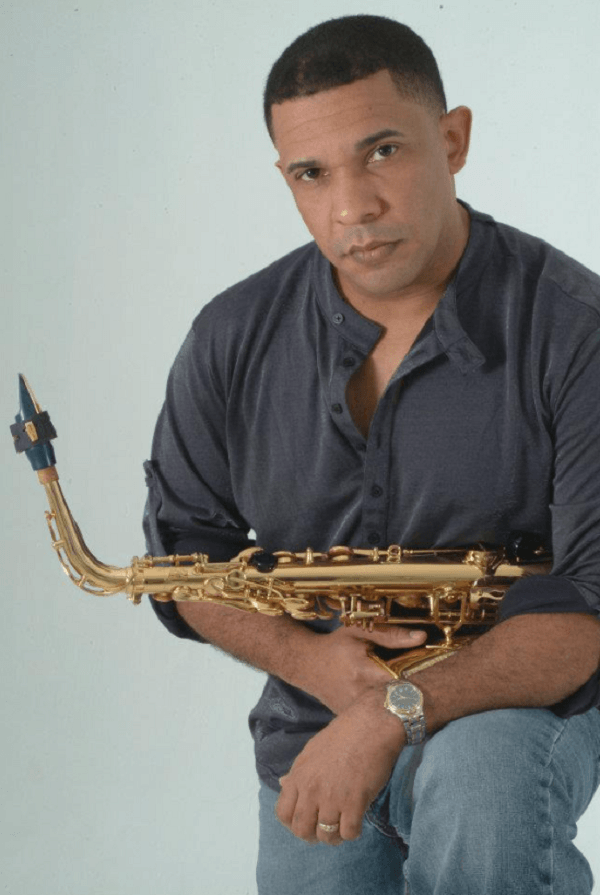
Orlando with his saxophone
Orlando Santana with his saxophone

Orlando’s Beginnings in Music

Orlando started his story by saying that music had a significant presence in his life because his father, Santiago Santana, was a music teacher who taught in their own home. He taught all types of instruments such as the saxophone, trumpet, flute, piano, bandoneon, clarinet, guitar, and many more. Additionally, he also knew about harmony, solfège (sung), and solfège (spoken).

This led to his son learning to play instruments at a very young age and being interested in this way of life. 

Orlando’s Music Education

When Orlando moved to Miami, he took private piano lessons for a while, just as his father did with his students, but it was from Richie Ray and Bobby Cruz whom he really learned. He attended their church and took advantage of his visits to receive some piano lessons from Richie, while his brother David Santana, who was already a veteran musician, bought him his first saxophone and taught him many other tricks of the trade.

Early experiences as a paid professional

As for the beginning of his professional practice, Orlando, as a 15-year-old boy, started with the orchestra Dioni Fernández y El Equipo, from which the great Sergio Vargas emerged. In fact, they entered together a television channel (Color Visión, Channel 9) on the same day in Santo Domingo. This group is still active today, and Sergio Vargas’s own brother, Caqui Vargas, is currently part of it.

Bobby and Orlando
Bobby Valentín and Orlando Santana

Some time later, he had the opportunity to perform along with Wilfrido Vargas, which he describes as an incredible experience, since Vargas’s orchestra had a very challenging repertoire and he had to prepare himself very well in order to play along with the merengue exponents and his musicians. Orlando came on as a substitute replacing his brother on some tours, where he showed he had the capacity to keep up with their pace and improvise just like Wilfrido did so with ease on stage.

Among the most important things this time taught him, the artist mentioned discipline, the importance of always practicing his instruments, and a permanent focus on what he wanted to achieve. Another thing he mentioned was the significant improvement in his ability to improvise and release new material constantly.

He also learned a lot from Toño Rosario, Peter Cruz, Cuco Valoy, Ramón Orlando, and Elías Santana (Orlando’s first cousin and trumpeter for Conjunto Quisqueya). With all of them, he also came to play both merengue and other genres. 

How La Makina Band was founded

Orlando met Fernando Colón in Toño Rosario’s orchestra, while he was a saxophonist, and Fernando entered as a bassist. At the same time, Orlando was writing some arrangements for Los Sabrosos del Merengue, and as it so happens that Fernando was also working with them, so they were always in constant contact.

When Orlando decided to found an orchestra, it was he who called him and accepted his proposal. That was when both artists founded La Makina in 1996, though the process started a year earlier when they set up a company for that purpose.

Orlando and Rafael
Orlano Santana and Rafael Ithier from El Gran Combo de Puerto Rico

His Role as producer and director

Regarding his role as producer and director of La Makina, he points out the importance of preparing and studying to exercise these areas of music. In his case, he had already spent many years working on important record productions, including those he did together with his cousin Cesar Cuesta, with whom he formed a small orchestra that covered songs by very famous bands. He created his own musical arrangements for these new versions to differentiate them from the original songs and wrote scores for other musicians.

In addition, he served as music producer for Grupomanía and wrote songs for artists such as Toño Rosario, Elvis Crespo, Oscarito, Manny Manuel, and many others.

Current Members of La Makina

Of the original members of La Makina, the only one left is Orlando himself, but he has been joined by other equally-talented musicians, including Carlitos Rivera and his own son, Anderson Santana.

Orlando and Johnny
Orlando Santana and Johnny Ventura in San Juan, Puerto Rico

Current projects

This conversation had been delayed a few times due to how busy Orlando was in the studio working on new music, so obviously we had to ask what it was all about.

He told us that he and the rest of the group were working on a remastering of La Makina’s greatest hits, but with other arrangements and a fresh color. They also plan to include songs recorded by other artists but written by Orlando for them. He did not want to say what these would be so they would be a surprise for the audience.

Read also: Don Perignon Y La Puertorriqueña releases his new album ‘‘Classique et Savoureux’’

Don Perignon Y La Puertorriqueña releases his new album ‘‘Classique et Savoureux’’

Today we welcome a friend of the house we have not spoken to in a long time, but who has a lot to tell. We are talking about bandleader and timbalero Pedro Luis Morales Cortijos, artistically known as Don Perignon, whom we have had the pleasure of interviewing after many years.

The artist and his orchestra La Puertorriqueña have released their latest album, ‘‘Classique et Savoureux,’’ which the Puerto Rican musician talks about in this conversation, among many other interesting topics regarding his personal life and career.

Don Perignon with a recognition
Don Perignon receiving recognition by the City of Los Angeles

A long-awaited reunion

When we were last in touch with Don Perignon, he was promoting his latest album, Demostrando A Tiempo, and, of course, much water has flowed under the bridge since then. After having released that album, the artist had many performances and quite emblematic events, such as the previous edition of El Crucero de La Salsa, which welcomed big names including El Gran Combo de Puerto Rico, La Sonora Ponceña, and many more. 

There were also some performances in Puerto Rico and travel to certain parts of the United States, such as Connecticut and New York. At the same time, they were already working on “Classique et Savoureux” and another production. With Christmas approaching, he and his team preferred to shove these projects aside for a while to leave center stage to Christmas music.

Arriving January, they finally got down to work to start the production without further delay. The premiere on digital platforms was held on January 23, and the physical release will be on February 13, but it does not end there, as they are also planning a second release on March 21, on the eve of Puerto Rico’s Día Nacional de La Zalsa. For the same date, vinyls are expected to be ready for collectors who want to buy them.

For the time of this interview, the music had already been recorded, and it was now the singers, including Alex D’Castro, Hermán Olivera, Josué Rosado, and Marcial Istúriz, who were in the studio recording their voices for the album.

Gilberto and Don Perignon
Gilberto Santa Rosa and Don Perignon

Why is the album called “Classique et Savoureux”?

With regard to the curious name he chose for his album, it was a whim of Don Perignon himself, who wanted to recognize and give thanks to the public of France and the French language, from which he adopted the name Don Perignon. The artist has been calling himself that for the last 40 years and has built his career on it. Although the name comes from a famous French champagne, he has never received any claims or lawsuits demanding that he stops using it, which is much appreciated. 

In fact, he got to talk to the person responsible for introducing that champagne in a beverage company in Puerto Rico and understood that Don Perignon’s career and fame in no way damages the brand’s name and reputation.

Authorized biography 

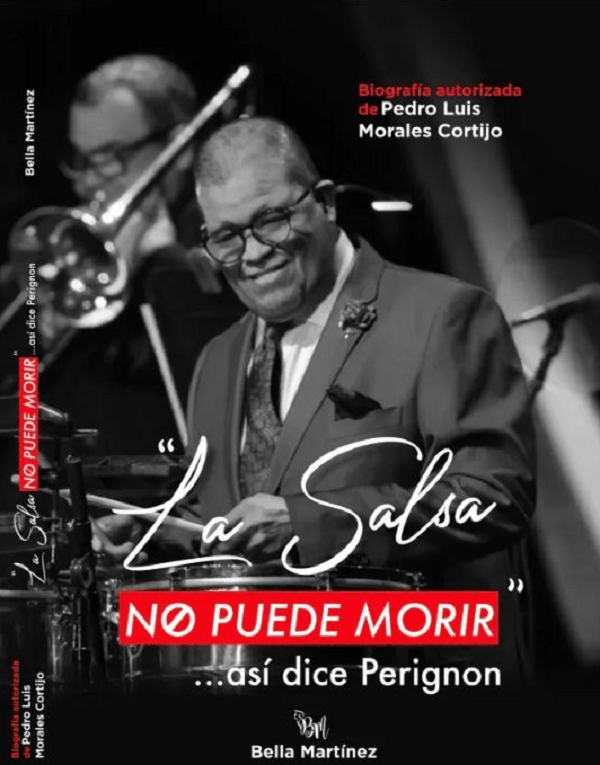
In addition to releasing his album, Don Perignon has also committed part of his time to engage in his authorized biography written by Puerto Rican author and International Salsa Magazine correspondent Bella Martínez. The book tells his story from his childhood to this day and includes the participation of the artist’s great friends and collaborators, including Andy Montañéz, Víctor Manuelle, and Gilberto Santa Rosa.

Some members of his family and other important people in his life also took part in the biography. 

Don Perignon and Victor
Don Perignon and Victor Manuelle

In each and every stage of his life described in the book, music plays a fundamental role given that, in his own words, it is an enjoyment that he has never been able to see as work.

It is titled “La Salsa No Puede Morir, así dice Perignon”, and is now available through platforms such as Amazon. In addition, the cover was designed by Félix Disla, the image is by Alina De Lourdes Luciano, the introduction is by Jaime Torres Torres, and the editorial care is by Robert Tellez M. 

Activities outside of music

Let us remember that Don Perignon was working as a bailiff at the Puerto Rico Department of Justice until April 2023, when he finally retired and was able to dedicate himself in full to music because he finally had time for it. He also pointed out that, should his health permit him, he will be involved in many other collaborations and projects with other singers who want to enter the Puerto Rican market, and he is happy to be able help them. 

Similarly, he assures us that he leaves it all in Our Lord Jesus Christ’s hands, who will let him know that he can achieve all this.

Cover of the book
Cover of ”La Salsa No Puede Morir, así dice Don Perignon”

Read also: Carlos Jimenez offers his talent and passion to charm the audience in universities, hotels, and restaurants all over New York

Ángel Luis Canales is a renowned Puerto Rican singer and composer known as “El Diferente” (The Different One) for his particular and irreverent style

Angel Canales was born on June 29, 1950, in Santurce, Puerto Rico.

During his childhood, around the age of 8 or 10, he moved with his family to New York City, where he lived in East Harlem (Upper Manhattan). Musical influences indicate that from a young age, he was strongly influenced by the music of Cortijo y su Combo and Ismael Rivera.

Before or concurrently with his musical career, he worked in the jewelry business; he was a messenger and later learned to cut and polish diamonds, a skill that allowed him to self-finance his musical career and pay high salaries to his musicians.

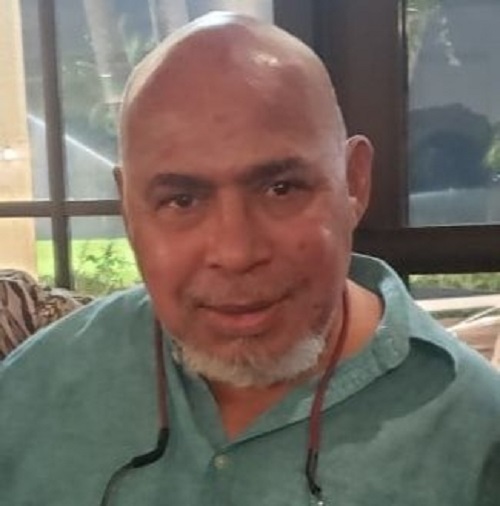
Ángel Luis Canales is a renowned Puerto Rican singer and songwriter known as El Diferente for his unique and irreverent style.

Musical Career

His Beginnings: He started as a timbalero in Ray Jay’s orchestra, where he debuted as a singer, replacing the lead vocalist.

His first album (1970), titled “Brujería,” was released in 1970 and recorded under the Alegre Records label, with musical direction by Mark Dimond. Hits from this production include “El Barrio,” “Yo No Tengo Pena,” and the title track.

Notable Hits: Among his most popular songs are: “Nostalgia,” “Sol de Mi Vida,” “Perico Macoña,” “Lejos de Ti,” “Hace Tiempo,” “El Cantante y la Orquesta,” “Sabor de los Rumberos Nuevos,” “Bomba Carambomba,” and his celebrated rendition of the bolero “Dos Gardenias.”

His Unique Style is recognized for its unorthodox approach and distinctive vocal timbre, which earned him the nickname “El Diferente” (The Different One).

He was a highly independent artist who self-financed his albums and founded his own record label, Celanac Records.

Tours and Retirement

International Tours: He toured internationally, visiting countries such as Panama (his first), Venezuela (where he performed at the Poliedro de Caracas in 1982), Colombia, and Peru. It is said that he never performed with his orchestra in his native Puerto Rico.

He retired in the late 1990s, deciding to leave the stage.

Currently, he is reportedly battling Parkinson’s disease, which has limited him and led him to choose silence and retirement, although he occasionally attends private events. He is currently 75 years old.

Àngel Luis Canales, y el pianista, compositor y arreglista Gilberto el pulpo Colòn

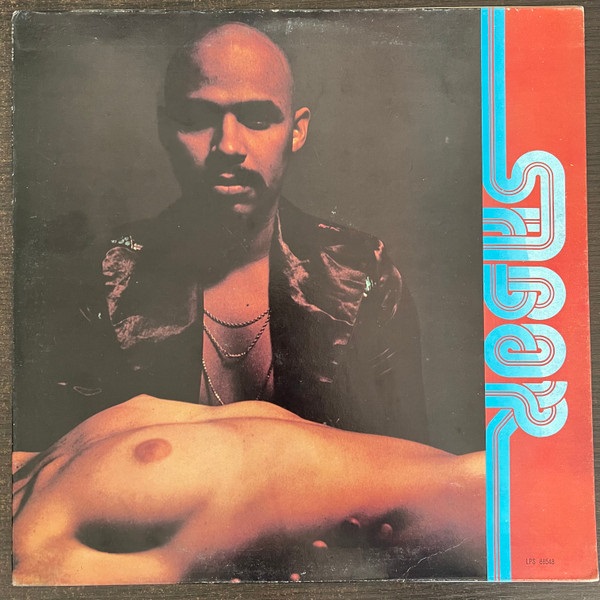
50 Years Since the Launch of “Sabor” (1975)

The Album: The album titled “Sabor” by Angel Canales was released under the Alegre Records label in 1975.

Only a boricua (Puerto Rican) who has been absent from their homeland knows what it’s like to be away from Puerto Rico when winter arrives in New York City. Or when you’re inside a taxi or walking the congested streets of the Bronx or the Latino barrio, and all you see around you are skyscrapers and more skyscrapers. The anxiety and sense of helplessness that overwhelm your spirit in the concrete jungle can only be calmed by memories.

50 years ago, on Monday, November 10, 1975, the unique voice of Puerto Rican singer Ángel Luis Canales consoled the thousands of boricuas oppressed by nostalgia with his composition “Lejos De Ti” (Far From You). It was a confession and affirmation of his Puerto Rican identity, in which he asserts that his love for his homeland will never die, even though he was raised in New York.

The song is a guaguancó with lyrics that evoke images of old San Juan, Villa Palmeras and its rich bomba heritage, Boca de Cangrejos, fried fritters on the grill, and the river that crosses through the old Ancón de Loíza Aldea, where his grandmother lived. “Lejos De Ti” remains the most remembered track from “Sabor,” an album produced by Joe Cain, recorded in late 1974, and released by Alegre Records on Monday, November 10, 1975.

Angle Canales Sabor 1975 Photography By Dominique

This album is considered one of the best salsa releases of the 1970s.

Canales’ Style: Canales favored a different style of interpreting Afro-Caribbean rhythms, combining elements from Héctor Lavoe, Ismael Rivera, Vicentico Valdés, and Paquito Pérez (the singer of the Orquesta Zodiac of Loíza). He extended the melodies with his nasal voice, challenging the poetry of the montunos, but going off-key and mispronouncing some words. His diction was far from perfect.

Production: The architect of Canales’ success was Colombian pianist Edy Martínez, who arranged seven of the eight tracks on this session, from cut #2 to #8. Due to a prior commitment with Mongo Santamaría’s band, he left his compatriot José Madrid in charge of the piano performance on this record.

Under Martínez’s direction, Canales embraced fame. “Sabor” was his second album between 1970 and 1971, he had recorded the “Brujería” session with pianist Mark Alexander “Markolino” Dimond, who founded Conjunto Sabor after spending several years with Willie Colón’s band.

Canales reappeared four years later with the Orquesta Sabor los Rumberos Nuevos with an arrangement by Louie Cruz. That same year, 1975, Larry Harlow produced Mark Dimond’s classic “Beethoven’s V” featuring vocalists Frankie Dante and Chivirico Dávila. “Sabor” was a huge hit.

Tours and Artistic Choices: The singer toured Europe, the United States, and South America, where Colombians, Panamanians, and Peruvians remember him fondly to this day, despite health issues forcing him to retire from the stage.

During the golden age of salsa, singers were expected to master all genres, and boleros were no exception. His vocalization on “La Hiedra” (a track written by Saverio Saratini and Vincenzo D’Acquisto) and “No Te Acostumbres” (a track belonging to Doris Aghian’s catalog) is notable for its theatricality, a trick Canales employed to mask the limitations of his voice.

Salsa dancers who thrive on piano, trombone, and percussion solos will be delighted with “Sabor Los Rumberos Nuevos,” “Sol De Mi Vida” (dedicated to his wife Brunilda), “El Cantante y La Orquesta,” and the hit “Hace Tiempo” (with its memorable chorus: ay, ay, ay, no me hagas padecer así – oh, oh, oh, don’t make me suffer like this).

Legacy: Before becoming a professional singer, Canales worked as a jeweler. A look at the covers of his first two albums is enough to conclude that he was a pioneer in the use of bling-bling in salsa. As a composer, Canales was a solid chronicler of barrio life. The story told in “Perico Macoña” is a good example: a man who smokes a joint and loses all self-control, insulting his own friends with his abrupt comments.

The re-issue of “Sabor” is a fitting tribute to the memory of the late Joe Cain.

Credits

  • Trombone: Juan Torres, Ricardo Montañez
  • Trumpet: Tom Malone
  • Baritone Saxophone, Flute: Emérito Benítez
  • Piano: José Madrid
  • Bass: Eddie Testo
  • Congas: Antonio Tapia
  • Timbales: Gadier Quiñones
  • Bongo: Aldemaro Luis Rivera
  • Producer: Joe Cain
  • Musical Director: Juan Torres
  • Recorded at: LE Studio NYC, December 1974
  • Engineer: Sandy Sina
  • Arrangements: Edy Martínez (except “Sabor Los Rumberos Nuevos” by Louie Cruz)

Torres, Montañez, Tapia, and Quiñones had previously collaborated with Canales on Markolino Dimond’s “Brujería” album.

Collaboration:

  • GonZalsa
  • L’Òstia Latin Jazz
  • Dj. Augusto Felibertt
  • Jaime Torres Torres
  • Fania Record
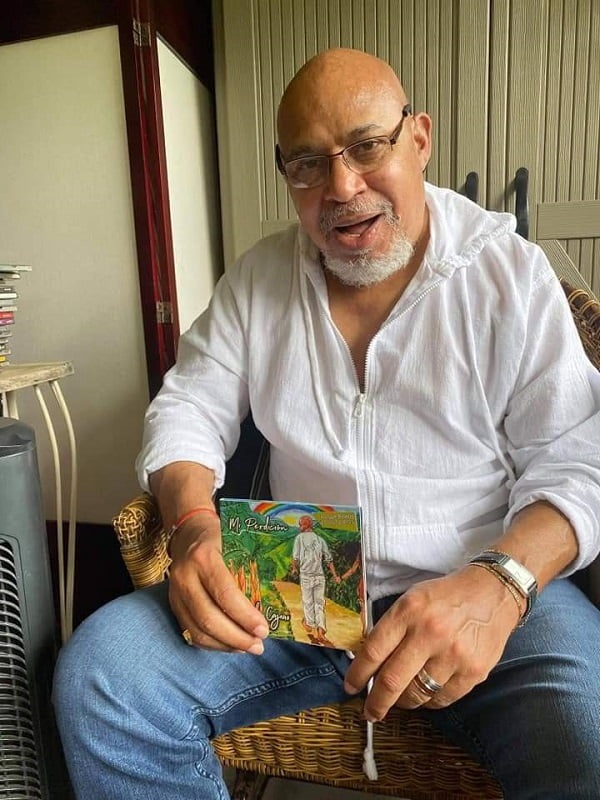
Angel Canales «El Diferente» recibiendo la produccion de Danilo Cajiao Titulada»Mi Perdicion» año 2020

Also Read: Angel Canales «El Diferente» receiving the production from Danilo Cajiao titled »Mi Perdicion» year 2020.

  • « Go to Previous Page
  • Page 1
  • Page 2
  • Page 3
  • Page 4
  • Interim pages omitted …
  • Page 24
  • Go to Next Page »

International Salsa Magazine (ISM) is a monthly publication covering salsa activities around the world and has been publishing since 2007. It is a worldwide network of volunteers coordinated by ISM Magazine. Together, we work to strengthen salsa events around the world.