• Skip to primary navigation
  • Skip to main content

International Salsa Magazine

  • HOME
  • Previous editions
    • 2026
      • ISM / April 2026
      • ISM / March 2026
      • ISM / February 2026
      • ISM / January 2026
    • 2025
      • ISM / December 2025
      • ISM / November 2025
      • ISM / October 2025
      • ISM / September 2025
      • ISM / August 2025
      • ISM / July 2025
      • ISM / June 2025
      • ISM / May2025
      • ISM / April 2025
      • ISM / March 2025
      • ISM / February 2025
      • ISM / January 2025
    • 2024
      • ISM / December 2024
      • ISM / November 2024
      • ISM / October 2024
      • ISM / September 2024
      • ISM / August 2024
      • ISM / July 2024
      • ISM / June 2024
      • ISM / May 2024
      • ISM / April 2024
      • ISM / March 2024
      • ISM / February 2024
      • ISM / January 2024
    • 2023
      • ISM / December 2023
      • ISM / November 2023
      • ISM / October 2023
      • ISM – September 2023
      • ISM – August 2023
      • ISM July 2023
      • ISM Edition June 2023
      • ISM – May 2023
      • ISM April 2023
      • ISM March 2023
      • ISM February 2023
      • ISM January 2023
    • 2022
      • ISM December 2022
      • ISM November 2022
      • ISM October 2022
      • ISM September 2022
      • ISM August 2022
      • ISM July 2022
      • ISM June 2022
      • ISM May 2022
      • ISM February 2022
      • ISM January 2022
    • 2021
      • ISM December 2021
      • ISM November 2021
      • ISM October – 2021
      • ISM September 2021
      • ISM August 2021
      • ISM July 2021
      • ISM May 2021
      • ISM April 2021
      • ISM June 2021
      • ISM March 2021
      • ISM February 2021
      • ISM January 2021
    • 2020
      • ISM December 2020
      • ISM November 2020
      • ISM October 2020
      • ISM September 2020
      • ISM August 2020
      • ISM July 2020
      • ISM June 2020
      • ISM May 2020
      • ISM April 2020
      • ISM March 2020
      • ISM February 2020
      • ISM January 2020
    • 2019
      • ISM December 2019
      • ISM November 2019
      • ISM October 2019
      • ISM Septembre 2019
      • ISM August 2019
      • ISM July 2019
      • ISM June 2019
    • 2016
      • ISM December 2016
  • Spanish
  • Download Salsa App
    • Android
    • Apple

Search Results for: El Gran Combo de Puerto Rico

Cajiao, says he always had a taste for good music: the tangos and ballads of the 50s and 60s

Danilo Cajiao was born on February 9, 1969 in Cali Colombia son of Marina Munevar and Antonio Cajiao family with three siblings Walter, Patricia and Raul.

From my father I inherited the musical taste for Afro Antillean rhythms, we listened at home to the Sonora Matancera, Benny More, Arsenio, Daniel Santos and many more.
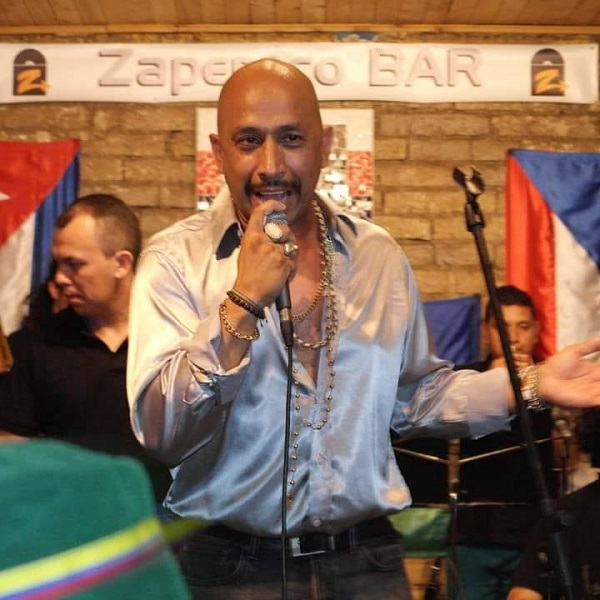
Danilo Cajiao was born on February 9, 1969 in Cali, Colombia.

There was always a taste for good music: the tangos and ballads of the 50s and 60s.

When I was a student I participated in several music festivals at school and I was part of several dance and Andean music groups.

I always liked salsa and my favorite artist of the genre will always be Angel Canales.

After the appearance of the program “YO ME LLAMO” in Colombia I was motivated to start the process to achieve the perfect imitation of Angel Canales.

I began my presentations in small salsa bars with a dance floor and I did about 4 songs of Diferente, as I went along the character was being perfected and the public and the owners of the bars were asking for something more.

I then created “the Orchestra SON DE LA 8″ in 2013 with the purpose of making the accompaniment and mount all the music of the different Angel Canales.
Orquesta SON DE LA 8

The market was opening and the support of the salseros was very large, We have had much acceptance in the salsero environment in Colombia.

Participating in major events locally, nationally and internationally:

Leyendas Vivas De la Salsa in Medellin Colombia,

Salsa al Parque Cali, Salsa al Parque Bogotá, Homenaje a la Salsa, Tributo a los salseros and Noche Blanca.

I have alternated and shared stages with several national and international artists and orchestras.

Orquesta Brodway, Orquesta Colon, Nelson y sus Estrellas, Gran Combo de Puerto Rico, Henry Fiol, Adalberto Santiago, Luisito Carrión, Papo Cocote, Cano Estremera, Moncho Santana, Orquesta Zodiac, Luigui Texidor, Frankie Vásquez, Tony Molina, Orlando Marín, Orquesta la Inmensidad and Orquesta la 33.

Danilo Cajiao, says there has always been a taste for good music, the tangos and ballads of the 50s and 60s.

International presentations:  

Guayaquil Ecuador and Caracas Venezuela.

Endorsed and supported by the family of ANGEL CANALES and by him I have taken my tribute to the most recognized places and salsa clubs in Colombia.

Apart from accompanying the Diferente Angel Canales with the orchestra Son de la 8 we have made our own music always keeping the line of heavy salsa and with good taste.

Angel Luis Canales “El Diferente”.

There were nine record productions by Angel Canales between 1975 and 1987, twelve productive years.

By 1970 Angel Luis Canales had put his voice on an album by African-American pianist Mark Dimond, and five years later Dimond’s orchestra was renamed “Angel Canales y Sabor”.

The immense musical freedom of Ángel Luis Canales Canales has much to do with the determining influence exerted on him by Rafael Cortijo, Ismael Rivera and the irreverence of the Combo de Cortijo as a whole.

The difference was that those two masons did not have enough money to support their ideas economically (discographically speaking) while Canales had enough because of the money he earned from his profession as a jeweler and diamond cutter.

That’s why he didn’t lower his head to anyone, that’s why he didn’t give in to any advantageous record contracts and made his own record label, that’s why he never paid or bribed radio producers, and he dressed the way he wanted.

That’s why the conservative salseros kept a CIA-like eye on him. And Canales revolutionized everything in his path: from his clothing to his vocal and orchestral arrangements, his presentations and his choice of repertoire.

By 1970 Angel Luis Canales had put his voice on a record by the Afro-American pianist Mark Dimond, and five years later Dimond’s orchestra was renamed “Angel Canales y Sabor”, and with it he would make a mark like few others in the world of salsa, from his total independence, to the freedom for the musicians, his revolutionary shaved head, and a wardrobe that had nothing to do with the salseros, in addition to his voice, repertoire and arrangements. Ángel Canales recorded in 1979 the album “El sentimiento del latino en Nueva York”, and an exquisite version of “Dos Gardenias”, by Cuban composer Isolina Carrillo.

“El sentimiento del latino en Nueva York” was a clarinada similar to “Imágenes Latinas”, the song by Argentine Bernardo Palombo presented a year earlier by Conjunto Libre, in terms of its contents of denunciation and clamor for justice. “Es el sonido que el americano oye/ y no entiende” (It’s the sound that the American hears/ and doesn’t understand).

Musical childhood

Ángel Luis Canales was born on June 29, 1950 in Santurce, Puerto Rico, son of Ángel Luis Canales and Ana Ilda Canales.

At the age of 8 he was already in New York with his parents, who liked to listen to romantic music and also to Cortijo y su Combo.

The Puerto Rican country song was also among his favorites; it was the jíbara song of his people. In time Canales would indicate that Cortijo and Ismael were determining influences in his musical and social journey.

Much has been said that his current retirement is due to Parkinson’s disease, but Ángel Luis Canales is there, he attends private invitations of his friends and remains in the battle line of salsa and life. He is currently 73 years old.

In those years and in school he was more inclined to practical workshops than books and that is why he went to work, recommended by one of his teachers in a jewelry store where from being a messenger he would learn all the secrets of the art of cutting, polishing and mounting diamonds. He became a professional, solvent, and with an extraordinary clinical eye that would serve him a lot later.

Vista larga, his new friends did not speak Spanish, his native language, but fortunately Angel Luis had peers of his generation, and Latinos like the Lebron brothers and Willie Colon himself.

He also took a long view of his internship in the U.S. Army and later assimilated the new trends that emerged in the music being made in New York.

He started out firmly, as we have already mentioned, with pianist Mark Dimond (Markolino), who had been linked to Willie Colón. With Mark he added his voice to some of the songs on the album “Brujería” and later, with the departure of the pianist, the orchestra was renamed “Ángel Canales y Sabor”.

With this band he would record “Sabor” in 1975 and other albums until “El Sentimiento del latino en Nueva York” in 1979.

Two years before the recording of this album, in 1977 Angel Canales made his first visit to a Latin American country, Panama, and the reception he received was such that he would later write a song dedicated to that country.

The same happened during his visit to Venezuela on November 13 and 14, 1981, which became a musical commotion of great proportions at the Poliedro de Caracas.

Likewise in Colombia and Peru he felt the devotion of the public of those nations. Perhaps he did not know the scope of his work and the projection he already had.
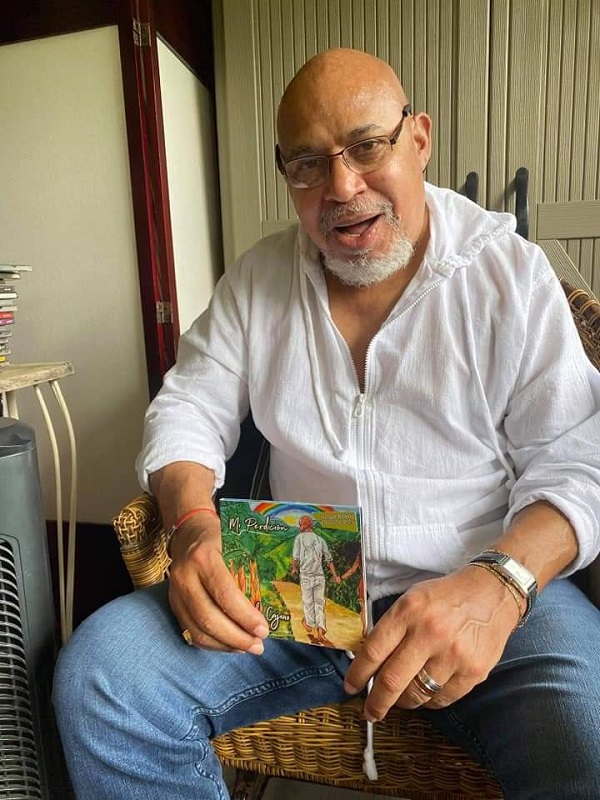
Angel Canales "El Diferente" receiving Danilo Cajiao's production "Mi Perdicion" year 2020.
Angel Canales “El Diferente” receiving Danilo Cajiao’s production “Mi Perdicion” year 2020.

Much has been said that his current retirement is due to Parkinson’s disease, but Angel Luis Canales is there, he attends private invitations of his friends and remains in the battle line of salsa and life. He is currently 73 years old.

Source: TeleSurTv
Also Read: Orquesta la Identidad is one of the most nationally and internationally recognized groups in the salsa genre

1 New artist Wito Rodriguez “I am distinct and different”

Norte America / Estados Unidos / Florida

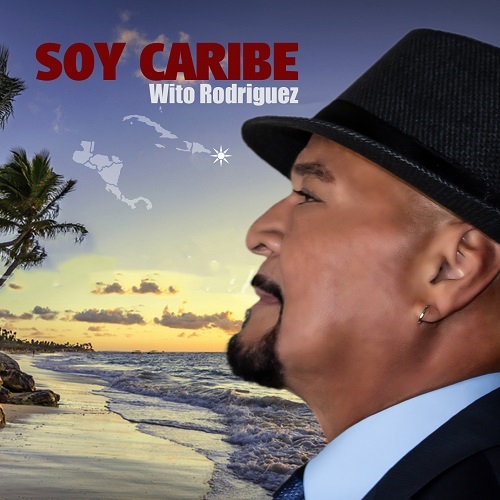
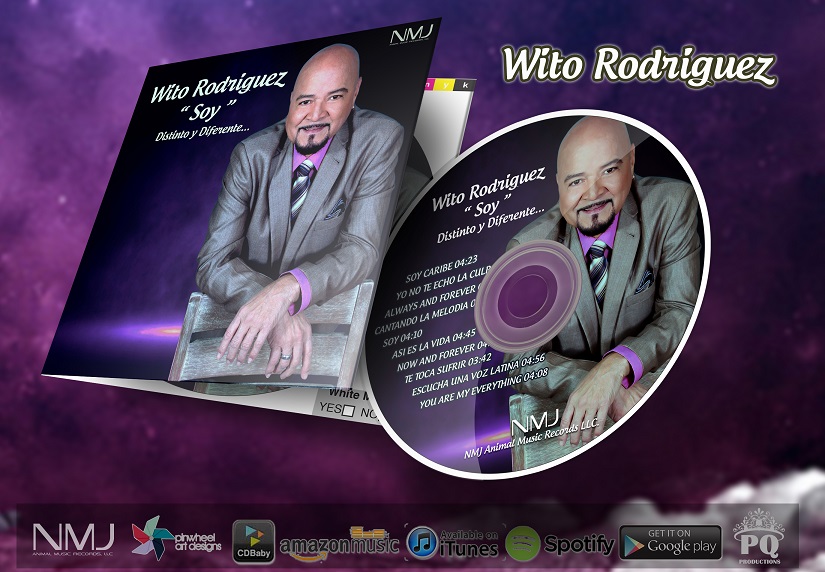
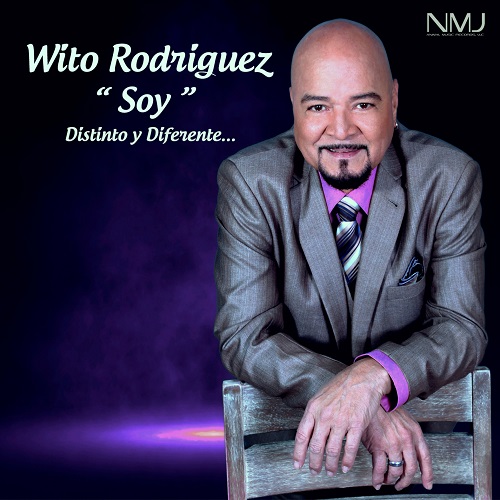
Wito Rodriguez. “I am distinct and different”

Irwin “Wito” Rodríguez was born in Chicago to Puerto Rican parents and got his start in the musical field as a singer and musician. During his teenage years, he performed with a Rock and Roll band as a guitarist.

In 1968 Wito Rodriguez decided to move to “La Isla Del Encanto”, Puerto Rico, in order to search for his musical roots and experience the spicy sounds of his beloved Latin Ritmo.

His first encounter in the Salsa genre was with a Puerto Rican percussionist from the 60’s called “Chacón y su Orquesta”, where Wito learned all the Latin rhythms such as Guaguancó, Boogaloo, Mozambique, etc.

Chacón was his coach in Latin percussion instruments and Wito also fell in love with maracas.

Wito Rodriguez returned to Chicago in 1971 to join “Orquesta La Justicia” a local band that opened shows for artists such as: Ismael Rivera, Ray Barreto, Willie Colón, El Gran Combo and the legendary “Fania All Stars”.

Like many young men of that time, in 1973 Wito Rodriguez decided to join the United States Army and was sent to Europe.

During his stay in Germany, Wito Rodriguez took singing lessons with the Opera singer Barbra Sutton, and at the same time he created two bands with the names of “El Conjunto Sabor” and “La Sonora Antillana”.

These orchestras accompanied artists of the Salsa genre such as: Adalberto Santiago, Ismael Miranda, Tito Allen, Santitos Colón, Pete “El Conde” Rodríguez and the queen of Salsa, Celia Cruz.

After his retirement from the army, Wito joined forces with German band leader Rudi Fuesers and created the European Salsa Orchestra “Conexion Latina”.

With Conexion Latina, Wito Rodriguez recorded two albums; “Calorcito” and “Un Poco Loco”.

He also had the great experience of recording two songs with the band of Director and Arranger Peter Herbolzheimer.

During the 80’s, Wito wanted to broaden his horizons by forming his own groups called “Wito Rodriguez y Orchestra” and “Wito Con Cache”.

Missing his family and friends, Wito “crossed the pond” to return to the United States to finish his Army career.

He never gave up his passion for music, a new big band sound was on his mind, and he returns to the spotlight with the Wito Rodriguez Salsa Jazz Orchestra under the musical direction of trumpeter and arranger, Gino Picart.

“What a wonderful world” or “What a Wonderful World” is his third album released in January 2015.

Although busy in 2016 with live performances, a new album had also been produced and recorded between South America Venezuela and Orlando, Florida.

The most recent production called “Como el Viento” will be released in 2017. This album contains a compilation of songs recorded over the years in Europe than ever for the Western Hemisphere. I hope you enjoy your first solo release… What a wonderful world!

In 2018 Wito released another CD called “The Best of Wito” which has a mix of all the songs that fans thought were the best and respected their preferences.

Wito also has four new singles that he has released from his new album, which will be available from February 2019.

Through the internet platforms you can find these releases.

Always and Forever, Soy Caribe, Yo No Te Echo La Culpa and Now and Forever are the ones that have been released so far.

“As a bilingual singer, I am blessed to contribute to the music industry in my songs, singing them in English and Spanish, unity through my music in a mix of salsa and R&B, etc.” Wito Rodriguez

In the year of 2018. Wito Rodriguez was blessed to be nominated at the Hollywood Music Media Awards (HMMA) in Los Angeles, CA in November 2018.

You can also see his certificate as an honoree at the Fox Music Awards USA, Miami in November 2018, who was nominated and honored for being the Army Veteran Salsero Singer.

The Chicago Salsa Congress was one of its great events in 2018.

In March 2019 his new bilingual production Soy Distinto Y Diferente came out with the song Soy Caribe already nominated at the Hollywood Media Music Awards on November 20, 2019 in Hollywood California.

NMJ Animal Music Records LLC. [email protected]

PQ Promotions/Management Jenny Morales [email protected]

(682-554-4851 or (813-785-3086))

National Zalsa Day 2020

North America / Puerto Rico

In April 2000, the third Sunday of March was instituted as the National Zalsa Day under Law #100 of the Senate of Puerto Rico

National Zalsa Day 2020 - Edicion Platino
National Zalsa Day 2020 – Edicion Platino

History

The National Zalsa Day was created in 1984 by Pedro Arroyo, Z-93 Programming Director, who always had the desire to celebrate an event where the talent of popular salsa music, its composers and performers would be recognized, to present it to the great public that loves this tropical genre.

Since its first year, the great event has seized a public eager to enjoy this live music.
The support was total and it immediately positioned itself as the annual concert of the people of Puerto Rico and visitors from other countries.

Since its inception, the National Day of the Zalsa was dedicated to some figure of this genre, as a recognition of their talent and their roots in the public.

  • 1984 – Dedicated in life to the Sonero Mayor, Ismael Rivera
  • 1985 – Rafael Ithier of the Great Combo of Puerto Rico
  • 1986 – Tito Puente and Santitos Colón
  • 1987 – Hector Lavoe
  • 1988 – Andy Montañez and Gilberto Santa Rosa
  • 1989 – Celia Cruz and the Sonora Ponceña
  • 1990 – Willie Colón and Tite Curet Alonso
  • 1991 – Bobby Valentín, Oscar D’ León and the composer Gloria González.
  • 1992 – For the Best 5 Trumpets of Puerto Rico: Elías Lopés, Charlie Sepúlveda, Juancito Torres, Mario Ortiz and Luis “Perico” Ortiz
  • 1993 – Celebration of the Tenth Anniversary of the National Day of the Zalsa, dedicated to the Salsero People 1994 – Ray Barreto and Adalberto Santiago
  • 1995 – “Sunset Duels”
  • 1996 – Dedicated to reunions: Classic Ensemble, Tito Nieves, Luis “Perico” Ortiz and Rafael De Jesús, El Gran Combo; Andy Montañez and Roberto Rohena; Sonora Ponceña with Luigi Texidor and Yolanda Rivera.
  • 1997 – To the salsa town
  • 1998 – Jerry Masucci
  • 1999 – Cheo Feliciano
  • 2000 – Richie Ray and Bobby Cruz
  • 2001 – Eddie Palmieri
  • 2002 – Ruben Blades
  • 2003 – Johnny Pacheco and Roberto Rohena
  • 2004 – Quique Lucca, Papo Lucca and Willie Rosario
  • 2005 – Tommy Olivencia and Roberto Angleró
  • 2006 – Los Hermanos Lebrón and posthumous tribute to Charlie Palmieri, Tito Rodríguez and Ray Barretto
  • 2007 – Ismael Miranda, Ramón Rodríguez, Raphy Leavitt and Sammy Marrero
  • 2008 – Larry Harlow and Manny Oquendo
  • 2009 – Celebration of the release of Tite Curet Alonso’s work on Puerto Rican radio. Dedicated to Louis Garcia.
  • 2010 – Johnny Ortiz. Special recognition to Héctor Maisonave and Ángel Luis Córdova García “Paleco”.
  • 2011 – Elvin Torres from Costa Brava, Luisito Ayala from Puerto Rican Power, Paquito Guzmán, Tito Allen and Luigi Texidor
  • 2012 – Posthumous tribute to Frankie Ruiz. Dedicated to the Zodiac Orchestra and the Latin Corporation.
  • 2013 – Posthumous tribute to Pedro Arroyo, former director of Z-93. Special recognition to Edwin Morales from La Mulenze, Pedro Brul, Pedro Conga from Orquesta Internacional and Cano Estremera.
  • 2014 – El Gran Combo, Joe Rodríguez de La Terríca, Justo Betancourt and Meñique
  • 2015 – Gilberto Santa Rosa receives the first National Zalsa Day Star Award. Dedicated to Sammy “Rolo” González, Mickey Cora, Nacho Sanabria.
  • 2016 – Eddie Palmieri receives the second National Zalsa Day Star Award. Dedicated to Lalo Rodríguez and Tito Rojas.

National Zalsa Day 2020

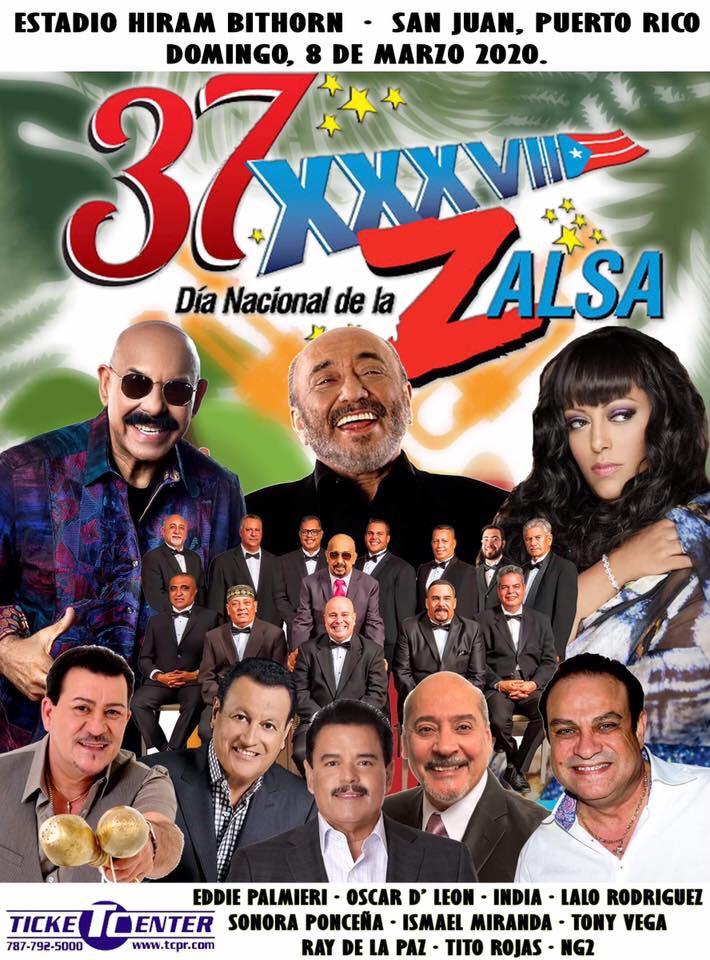
On March 8, the 37th edition of the National Salsa Day will be held at the Hiram Bithorn Stadium, in San Juan, Puerto Rico.

National Zalsa Day 2020 outside

We often hear that salsa in Puerto Rico is not having a good time or that the atmosphere is not what it used to be. However, each time before. However, every time National Salsa Day is announced, everything changes.

Those who live on the island rub their hands to wait for the big moment and those who arrive from abroad begin to check plane tickets and schedule a little vacation.

In 2020 it will not be the exception. The station Z93 announced a tremendous salsa billboard with Eddie Palmieri, Sonora Ponceña, Oscar D’ León, Ismael Miranda, Lalo Rodríguez and India.

In addition, Tony Vega, Ray de la Paz, Tito Rojas and NG2 have been confirmed as part of the great salsa party. This has caused fans on social networks to begin to express themselves with different opinions about the chosen artists.

Perhaps the balance tilts favorably towards the more classic salsa and not so much towards the proposals of the youngest (except NG2), but let’s see how this formula works for Zeta.

National Zalsa Day 2020 37 XXXVII

The Crazy Owl, a popular Puerto Rican radio host, announced that tickets can be purchased on the Ticket Center website (tcpr.com/). So you are already warned.

If you want to give yourself the pleasure of enjoying salsa on the Isla del Encanto itself, this may be your chance.

Flyer of National Zalsa Day 2020
  • V.I.P platinum $225.00
  • Area / V.I.P
  • Open bar / open bar
  • Quick access / Fast Pass
  • Private bathrooms / private bathrooms
  • Official T-shirt / official t-shirt
  • V.I.P arena $75.00
  • Numbered seat / reserved seating
  • Quick access / fast pass
  • Private bathrooms / private bathrooms
  • General admission $15.00
  • Christmas offer only 1000 tickets

For more information:

  • https://zeta93.lamusica.com/
  • https://www.facebook.com/zeta93fm/?ref=page_internal

Good initiatives must be shared!

North America - United States - New York

We were taking the Salsa exhibition to Puerto Rico for the I Encuentro de Coleccionistas de Salsa, we made an exhibition of the clothing, records and instruments used by the Fania All Star orchestra, Tito Puente, Héctor Lavoe, Adalberto Santiago, the Gran Combo and others. For the first time, the last “tuxedo” that Tito Puente used in his participation with the Orquesta Sinfónica de Puerto Rico was exhibited.

Spanish Harlem Salsa Music Gallery, offered an exhibition and Master Class on the history of Salsa at the Escuela Especializada en Música Jesús T. Piñero in Cidra, Puerto Rico. We transported ourselves to Puerto Rico in search of an opportunity to publicize the Salsa Museum-Gallery in New York.

This is part of the efforts being made for the participation and dedication that is made to the people of Cidra in the Desfile Nacional Puertorriqueño 2020 and that is locally coordinated by the Patronato Cidreño along with other civic and professional organizations.

We were able to benefit hundreds of students at this school who are precisely focused on music. The knowledge offered in the three conferences and being able to closely observe the exhibition helped to foster the enthusiasm of the students who make up the campus, unique in the mountains of Puerto Rico, dedicated to the creation of good musicians and knowledgeable in musical art.

We are dedicated to enhancing Latin music and offering spaces focused on arts education, accessible and friendly to the community as a strategic partner.

I thank valuable people such as Laura Torres, Silkia Vázquez, Wilson Nazario and Wilfrido Torres “Puruco” for all the attention and teamwork that we were able to develop during our visit. I cannot stop also thanking my assistant in Puerto Rico, Carmen Cruz; and to Joseph Cruz for his magnificent and beautiful work with me during this pleasant experience.

I also take advantage of this space in International Salsa Magazine because I want to tell you about an artist and a great friend who is doing his best for music and Salsa. Without a doubt, Yova Rodríguez is a long-standing professional who has developed countless projects and initiatives to support those who need it most. With his music, his work and his human quality, he has reached many hearts from New York.


Geovanni “Yova” Rodríguez Ruiz, born in Puerto Rico, had a musical inspiration since he was a child, his uncle Antonio “Toño” Ruiz – his mother’s uncle who played the cuatro – was his first music teacher (melody) and his uncle José Antonio “Pipo” Ruiz Crespo -mama’s younger brother- taught him how to sing aguinaldos (lyrics); and with this they formed the solid foundations that encouraged little Yova to prepare himself accordingly for his foray into the musical world.

The celebration of the Promesa de Reyes, a celebration in which he participated with his mother at his short seven years, leads him to worry about creating and recreating aguinaldos to be interpreted each year, which in some way becomes the seed of composer that we know today.

At the age of 14, he attended the Escuela Libre de Música Ernesto Ramos Antonini in Mayagüez, hand in hand with piano teacher César Toro, rising as vocal leader of the Orchestra after a year.

Years later he gave himself the task of forming his own musical concept, and thus Sakao Aká was born. This orchestra was in charge of accompanying singers such as Camilo Azuquita, Ray de la Paz, Pupy Cantor and Herman Olivera in their presentations in Puerto Rico; and the cover letter for some of these singers to integrate Yova as a chorus girl in their presentations in various countries in Central and South America.


At the end of the 90s, on a trip to Cuba, he was impacted by the music of Fernando Borrego Linares, better known as Polo Montañez, to the point that, some years later upon learning of his death, he had the idea of ​​paying tribute to him, his musical reference, thus giving birth to the idea for her debut feature Homenaje a Polo Montañez (2005), a production of 10 songs by Montañez, and covered by Yova Rodríguez with the participation of renowned musicians from the patio such as Herman Olivera, Héctor “Pichie ”Pérez, Papo Lucca, Edwin“ Caneca ”Rosas, Edwin Colón Zayas, among others.

In 2008, like many of her compatriots, Yova prepares her luggage and heads to the southern United States, where she stays for two years and then moves to New York, a city that has become her center of operations and from where He has extended his working ties as a composer and where he records his next two productions.

The album Letras, canciones y sueños, musical work of 8 songs all written by Yova, comes to light after some years of having published his first production and of having worked silently composing and waiting for his opportunity. This possibility is materialized in 2013.

Already in 2015, the album Mi musa en las voces de mis amigos is released.

Salsa with Yova Rodriguez

Recently, Yova Rodríguez has created more than 420 songs, and many of them have been duly registered with the American Society of Composers, Authors and Editors (ASCAP) under the registry “El Negrito De Delia Music” . “Exceso de amor” is the first composition he has interpreted and recorded; like the song “No me odies”, it is the first recording of a song by him made by a third party.

Now they are going to hear more from Yova, as some productions that will include her compositions are in the process of recording / publishing. Attentive to the upcoming releases of the young Puerto Rican percussionist José Jomar Marcano, the master trumpeter Luis González, the young trombonist, arranger musician and also singer Leo Morales; the renowned DJ Andy Rodríguez, better known as DJ ANDY and the Venezuelan sonero Marcial Isturiz .

As always, remember that Spanish Harlem Salsa Gallery is in 1708 Lexington ave New York N.Y. 10029. Open free to the public all Thursdays & Fridays from 4 to 7 pm and Saturdays from 1 to 8 pm. Check the updates in our website: spahasalsagallery.com.

Also, The Johnny Cruz Show, the # 1 Salsa Show on television on all 5 Boroughs of New York on CH67. Saturdays from 3:30 to 4:30 pm.

Contact: Johnny Cruz. 917-747-8505. [email protected]

By Johnny Cruz, ISM Correspondent, New York, New York


Great news from New York!

North America / USA / New York

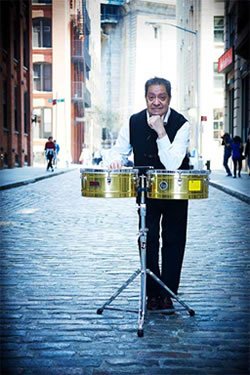
In this edition (Johnny Cruz) I would like to tell you about the memorable career of my good friend Nicky Marrero, whom I esteem and consider to be one of the best timbaleros in the world and who has been an inspiration to many artists of different generations, even today. Also, Nicky is about to turn years this month.

Johnny Cruz show in New York

Born in the New York Bronx, the great percussionist and timpani teacher Nicholas Marrero

Known to all as Nicky Marrero, of Puerto Rican roots, came to the world on June 17, 1950 and grew up among musical instruments such as the maracas, güiros, and the guitars through his family. His born talent led him to start studying the drums, but he was seduced by the sounds and influence of Tito Puente and Willie Bobo.

His musical debut was with Orquesta Caribe. There has been speculation about his first recording at age 15 with Willie Colón’s band, but that recording was not released. His first published recordings, in which he participated as timpani player, were the albums El Malo and The Hustler, by Willie Colón, recorded in 1968 for the Fania Records label in LP format. He was invited to participate in a single titled Descarga de Dos Pianos with Charlie Palmieri and Louie Ramírez.

Nicky Marrero
Nicky Marrero

In 1968, Nicky Marrero worked with Eddie Palmieri’s band; That same year, he took part in the recording of the Champagne album, released by the Tico Records label. He has participated with maestro Eduardo Palmieri in fifteen albums between 1968 and 2018, most of them very successful.

In fact, with albums The Sun of Latin Music and Unfinished Masterpiece, they won the Latin Grammy Award. Nicky Marrero is one of the best timbaleros in the history of Latin music; in 1973, he replaced Orestes Vilato in the Fania All Stars of Pacheco and Masucci, with which he made tours, presentations and concerts playing the timpani in many countries of the world.

Nicky Marrero’s gigantic musical career has allowed him to participate in the most important Fania recordings; there are around 25 musical productions in which the imprint of his timpani, his bongo and his bell with La Fania All Stars has been registered.

Not only Latin music and Latin Jazz have had the participation of the Bronx timbalero, other musical genres such as Jazz, Rock, Funk, Soul, World, Country, Stage & Screen; have also had the participation of the portentous timbalero. The most important groups of Latin music, as well as the greatest musicians and singers of Salsa, have had the participation of this prodigious musician.

Nicky Marrero
Nicky Marrero

With great emotion, I congratulate and greet my friend Richard Román for the 25th Anniversary of Radio Salsa Superior, I wish him and his team many successes to continue his work in the world of music. The celebration will be virtual, given the circumstances, but stay tuned because many surprises come. The marvelous Salsa Superior team transmits day by day from Miami at salsasuperior.com/radio.

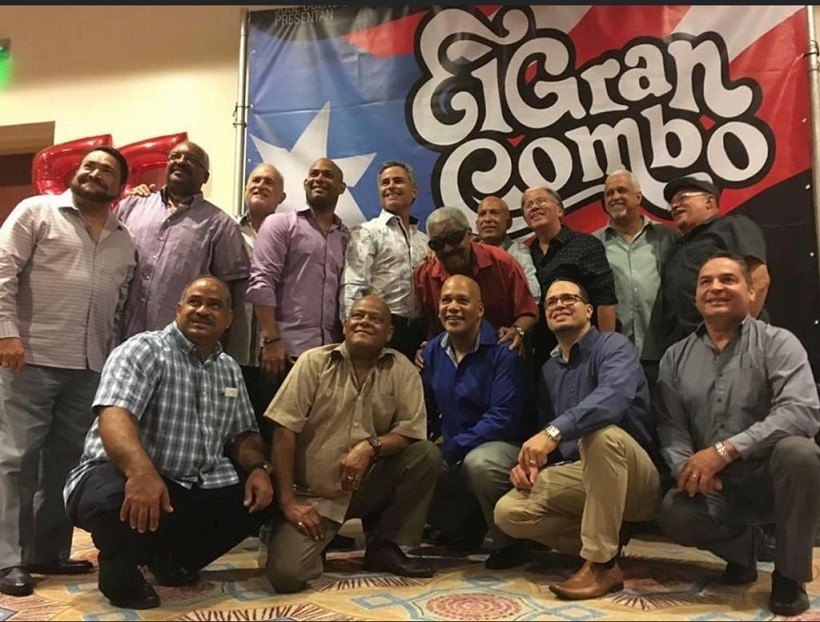
I want to congratulate my great friend Rafael Ithier and all the musicians of the Gran Combo on their 58th anniversary. Keep reaping successes and being part of the salsa tradition of those who love this genre. For many more years dancing to the rhythm of the Gran Combo of Puerto Rico.

Gran Combo Anniversary

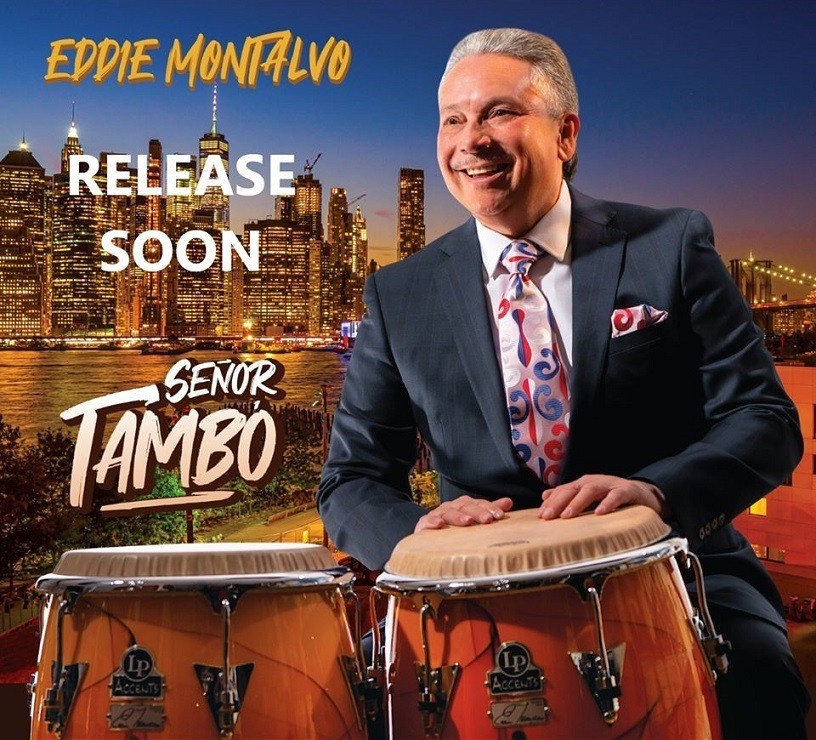
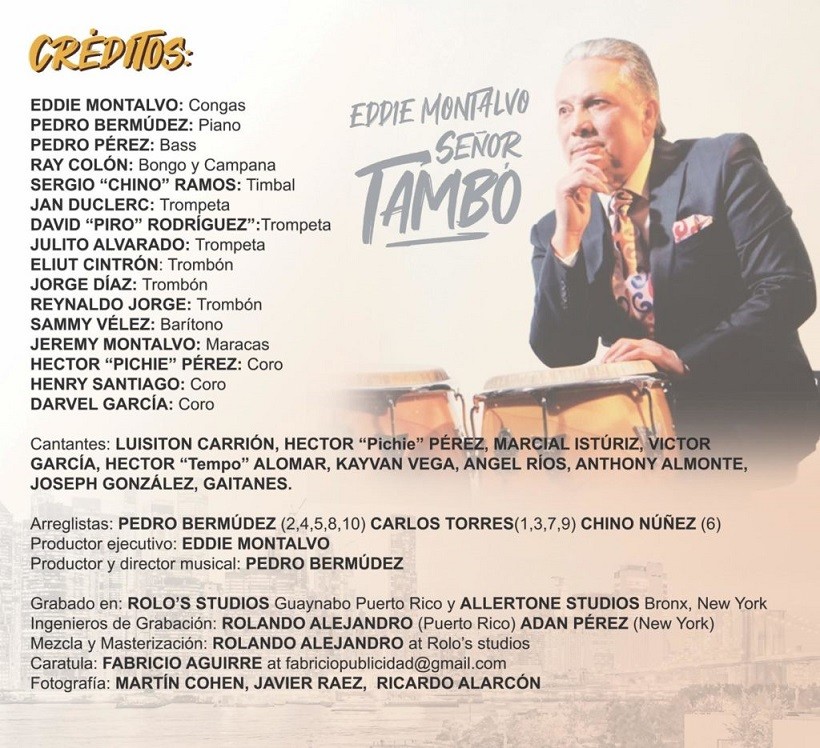
I also want to highly recommend Eddie Montalvo’s new CD: Señor Tambó. The great percussionist of the Stars of Fania and Six of the Solar delights us with a production that has ten songs in collaboration with prominent salsa exponents of the old and new school. A tribute to Rubén Blades with the participation of the Gaitanes. The musical production was in charge of Pedro Bermúdez and also has the musical arrangements of Carlos Torres and Chino Núñez. The production is available on all digital platforms and in traditional CD and Vinyl formats.

Eddie Montalvo's new CD: Señor Tambó.
Eddie Montalvo’s new CD: Señor Tambó.
Créditos señor tambó

Last but not least, It is an honor for me to invite you to tune in to my new Fm / Internet radio station on Live365.com: Salsagallery. Great music, artist interviews and much more made with love for you all. There is the link: https://live365.com/station/a77973

For now, it will not be possible to open to the public the Spanish Harlem Salsa Gallery in 1708 Lexington ave New York N.Y. 10029, but you can see the entire exhibition with more than 200 articles through our social media. Check the updates in our website: spahasalsagallery.com.

At the Spanish Harlem Salsa Gallery Museum we are happy to affirm that New York City is preparing to resume its activities little by little. We hope to have more news and soon as we can return to normality.

Remember not to leave your homes unless necessary, stay safe and stay home until the authorities tell us to. Health is first.

Johnny Cruz
Johnny Cruz

Contact: Johnny Cruz. 917-747-8505. [email protected].


By Johnny Cruz, ISM Correspondent, New York, New York City


  • « Go to Previous Page
  • Page 1
  • Interim pages omitted …
  • Page 18
  • Page 19
  • Page 20
  • Page 21
  • Page 22
  • Interim pages omitted …
  • Page 24
  • Go to Next Page »

International Salsa Magazine (ISM) is a monthly publication about Salsa activities around the world, that has been publishing since 2007. It is a world network of volunteers coordinated by ISM Magazine. We are working to strengthen all the events by working together.