• Skip to primary navigation
  • Skip to main content

International Salsa Magazine

  • HOME
  • Previous editions
    • 2026
      • ISM / May 2026
      • ISM / April 2026
      • ISM / March 2026
      • ISM / February 2026
      • ISM / January 2026
    • 2025
      • ISM / December 2025
      • ISM / November 2025
      • ISM / October 2025
      • ISM / September 2025
      • ISM / August 2025
      • ISM / July 2025
      • ISM / June 2025
      • ISM / May2025
      • ISM / April 2025
      • ISM / March 2025
      • ISM / February 2025
      • ISM / January 2025
    • 2024
      • ISM / December 2024
      • ISM / November 2024
      • ISM / October 2024
      • ISM / September 2024
      • ISM / August 2024
      • ISM / July 2024
      • ISM / June 2024
      • ISM / May 2024
      • ISM / April 2024
      • ISM / March 2024
      • ISM / February 2024
      • ISM / January 2024
    • 2023
      • ISM / December 2023
      • ISM / November 2023
      • ISM / October 2023
      • ISM – September 2023
      • ISM – August 2023
      • ISM July 2023
      • ISM Edition June 2023
      • ISM – May 2023
      • ISM April 2023
      • ISM March 2023
      • ISM February 2023
      • ISM January 2023
    • 2022
      • ISM December 2022
      • ISM November 2022
      • ISM October 2022
      • ISM September 2022
      • ISM August 2022
      • ISM July 2022
      • ISM June 2022
      • ISM May 2022
      • ISM February 2022
      • ISM January 2022
    • 2021
      • ISM December 2021
      • ISM November 2021
      • ISM October – 2021
      • ISM September 2021
      • ISM August 2021
      • ISM July 2021
      • ISM May 2021
      • ISM April 2021
      • ISM June 2021
      • ISM March 2021
      • ISM February 2021
      • ISM January 2021
    • 2020
      • ISM December 2020
      • ISM November 2020
      • ISM October 2020
      • ISM September 2020
      • ISM August 2020
      • ISM July 2020
      • ISM June 2020
      • ISM May 2020
      • ISM April 2020
      • ISM March 2020
      • ISM February 2020
      • ISM January 2020
    • 2019
      • ISM December 2019
      • ISM November 2019
      • ISM October 2019
      • ISM Septembre 2019
      • ISM August 2019
      • ISM July 2019
      • ISM June 2019
    • 2016
      • ISM December 2016
  • Spanish
  • Download Salsa App
    • Android
    • Apple

Search Results for: Europe clubs

Albert Torres The Ambassador Of Salsa

North America / USA / New York
Albert Torres
Albert Torres

Albert Torres, a sympathetic boy with blushing cheeks who born in Brooklyn – New York – never suspected what his destiny had prepared him, to be the father of the Congresses of Salsa worldwide. His name would resound from North to South and from East to West, by the continents: American, European and Asian; in the different important scenes of the Latin music movement and would be the inspiration for many dancers of this branch.

His legacy would belong to the astonishment and shelter of the artists and the public that would applaud his talent, vigor and semblance to the rhythm of the phrase “Una Bulla”. This cheerful infant, without a doubt, was going to be a legend of Afro-Caribbean music. I’m talking about Albert Torres, The Ambassador of Salsa!

Photo by Albert Torres

Albert began to listen to the salsa genre from the age of 5, staring in astonishment at the whole scene, sitting, of his first dance lessons … At the famous Palladium in New York, where his mother danced and liked the music of Mongo Santamaría and Tito Puente.

This child, future congressman of Salsa, grew up when the history of Latin popular music (salsa) was being written in the South Bronx, where Puerto Rican communities were having a great explosion of creativity and musical activity.

At the age of 12 years old his family decides to move to Puerto Rico, “By that time I did not want to speak Spanish, I did not want to be Puerto Rican. I did not want to be part of that environment”, said Torres. He only danced disco and Hustle. However, at the age of 15 his life took a dizzying turn when he heard:

“Oye que lio que lio se va a formar

cuando mi gatito sepa

y es tan simple la razón

El que a su gata le cuenta que el que a

su gata le cuenta

no es nada más que un ratón

un ratón…

…Échale semilla a la maraca pa que

suenen

chacucha cuchu cucha cucha

échale semilla a las maracas pa que

suenen

échale semilla a esas maracas oye

chacucha cucha cucha cucha

y hace rato está sonando sonando

chacucha cucha cucha cucha…”


Albert Torres simply fell in love with the Salsa thanks to this theme: “El Ratón” of Cheo Feliciano together to Fania All Stars. “The legends of salsa changed my life. When I heard these legends, that August 26th of 1971, in the Cheetah, something happened inside me. The music entered by the feet and came to my heart”. Thus, declared his beginnings in the Salsa, Albert Torres.

In 1991 his passion for Salsa took him to impress the girls of the neighborhood by his incredible steps to a Hollywood celebrity when he, first time, participated in the movie Mambo Kings in which he was chosen as one of the main dancers.

Hollywood - Albert Torres
Hollywood – Albert Torres

There he not only helped Antonio Banderas with the dance steps, but also with the English by that time for Banderas was very hard. In addition, during the filming of the movie Albert had the opportunity to share with big of Salsa like Celia Cruz, José Alberto “El Canario” and his great idol Tito Puente.

That film was the hit that catapulted Torres to world fame being chosen by Debbie Allen as one of the 4 dancers (of more than 400 couples) to participate in the Academy Awards (1993) and to dance “My beautiful Maria” whose Singer was Plácido Domingo and where he stood out as the first Puerto Rican to dance in the history of the ceremony.

Then, he returns to the cinema being the choreographer and dancer of Salsa scenes in the romantic film “Dance with Me” with Vanessa Williams and Chayanne during 5 months.

Later he worked on the movie “Out to See” (1998) with Jack Lemmon and Walter Matteau and in the same year he also made a guest starring appearance on the Keenan Wayan’s Show where he performed with Jennifer Lopez. Everywhere there was Salsa, Torres seemed to be there. At the time and with all this like trajectory Albert Torres in 1991 also began his stage as a producer.

He started promoting Salsa clubs in Los Angeles, “I lost a lot of money. Nobody wanted to know about Salsa”, said Albert. Nonetheless, he began to handle Johnny Polanco y Su Conjunto Amistad, which were the best-known salsa group in the Western United States.

In 1992 he founded his own company, Albert Torres Productions Inc. (ATP) and began to organize salsa parties in several places in Los Angeles. The most important were the Boathouse in Santa Monica, St. Marks in Venice and Sportsmen’s Lodge in Studio City.

3- Albert Torres
3- Albert Torres

At that moment the genre of salsa was losing popularity. However, Albert Torres with his wit, insight and a lot of intelligence pulled him forward on his own. He revived it in such a way that he became the most influential salsa promoter in the United States. He was who brought to Los Angeles some of the most important names in the Latin music such as: Fania All-Stars, El Gran Combo, Oscar D ‘León, José Alberto “El Canario” and the Spanish Harlem Orchestra, among many others.

In the late 1990s, after the I administration of President Clinton relaxed the laws restricting presentations by Cuban artists in the USA, Albert Torres was the first promoter, who brought to the famous and the notorious Van Van group to Los Angeles in January, 1997.

The show, which took place in a night club in downtown LA, was a success. Since then, Los Van Van has received major media awareness with prestigious publications such as Los Angeles Times, New York Times, among others and including the most coveted music honor, a Grammy and Latin Grammy nomination. Torres’s passion and promotional skills have played a key role in the U.S.A Latin Entertainment explosion. Ricardo Lemvo, musician and singer living in Los Angeles, founder and leader of the salsa band Makina Loka said:

“Personally, I have a great deal of gratitude to Albert. In 1996 when I released my first album, Tata Masamba, he was the one who presented my music to the Latin audience in Los Angeles. He also placed my band at Sportsmen’s Lodge, Grand Park and many other venues. Albert was also who recommended me to film director Randa Haines and as a result, my band, Makina Loca came out in the movie “Dance with Me” with Chayanne and Vanessa Williams. I will be eternally grateful to Albert Torres for giving me a hand at the beginning of my career”.

4- Albert Torres
4- Albert Torres

1997 was crucial for Albert and the world of Salsa in Los Angeles because began the dream of Mr. Eli Irizarri of Puerto Rico, the concept of the Salsa Congresses in San Juan. “I was not the first year, but I heard a lot of nice things even though it was a financial failure. I attended the event in 1998 and was the master of ceremonies. Then, I started the same concept in Los Angeles beginning in 1999 and in the next 8 years following the Los Angeles Congress stood out as the largest in the world. There attend more than 6000 people daily arriving from more than 42 countries”, said Albert for an Argentine media.

In 1998, at the head of ATP, organized the first edition of Los Angeles Salsa Congress and in May 1999 was carried out, with the presentation of Tito Puente in the opening. In this first congress Albert transformed the event into an exciting music and dance venue that attracted 20,000 Latin Music enthusiasts from all over the world and USA and with such great success that he immediately became co-producer Salsa Congresses in over 32 countries.

“My most important desire to be a promoter of the Congresses would be that this can be used for dancers, can realize their dream of dancing on a stage and also find a way to respect the dancers as they deserve it. This is extremely important”. Albert Torres.

In LA Salsa Congress the stars are born, many of the world renowned dancers have their start at this event. The mission of LA Salsa Fest is to pass on to the next generation through educational seminars, dance workshops and being able to perform on stage.

Since then, Albert Torres Productions has created and produced the World’s Largest Salsa Music event. In addition to this, ATP is the co-producer of the World Salsa, broadcast from Las Vegas every year by the ESPN TV network being watched by more than 20 million homes worldwide, where more than 1000 competing dancers will be known on the planet. “On ESPN told me that if I wanted to see it on TV I had to do competitions.

I do not like it, but for the dancers to get to know each other worldwide, I decided to make the World Salsa Championship, the biggest and most important salsa tournament in the world. Now, since April (2012) I decided to do it alone, without partners, and now it’s called World Latin Dance Cup. I added other categories like cumbia, bachata, casino, children and people over 45 years. We have about 20 categories”. Torres Said in an interview with a Peruvian media.

5- Albert Torres
5- Albert Torres

In the World Latin Dance Cup No requirements. You have to take stock and follow the world rules. These are of time, originality of the dressing rooms, of musicality. If you drop the wig, the earring (while dancing), points are removed; if you do not wear stockings, too. A wig will not give points, but if it falls it will take the points. In this championship there is not a world champion, so there is a champion in each category.

According to his friends, Albert was a “workaholic”. He was always on the road promoting salsa music through all the congresses he organized around the world. Always in transit, he spent one night in Istanbul, the next in Paris and the following week in Tokyo. For example, at the beginning of 2007 he had 48 weeks of travel and in one year he could travel to 48 exotic countries such as Dubai, United Arab Emirates, Japan, Hong Kong, Brazil, Bulgaria, Romania, China, Colombia, Venezuela, Spain, Mexico, Peru, Holland, Hamburg, Italy, Switzerland, Sweden, France, Ecuador, New Zealand, Australia and Puerto Rico.

Therefore, it is not surprising to see on your Facebook wall, the immense and felt messages of thanks from dancers from all corners of the earth. His latest project called “The Legacy Project” is an initiative to combine our music culture with the latest technology tendencies in order to reach and unite more people so future generations can appreciate, preserve and be part of the history of Latin dance and music around the world.

In 2011 Albert Torres was honored to be accepted as a Member of the Council for Dance of UNESCO (United Nations Educational Scientific and Cultural Organization) and Elected Grand Marshall at the National New York Puerto Rican Day Parade in front of 2 million spectators lined up on 5th Ave that past June 12 of the same year. This past May, 25th the world of Salsa and entertainment received a huge impact, the news of the death of Albert Torres, victim of a Stroke.

Family, friends, national and international press as well as web portals lamented and reviewed this regrettable fact. Rudy Mangual, creator of the famous magazine Latin Beat Magazine commented to an international media that before this terrible fatal outcome, Albert was very delicate of health in the last months; he had diabetes and had an infection in the pancreas. He also said that he regretted his gone because he and his wife Yvette Mangual had a very special affection to Albert.

Albert Torres’s family wishes to thank all of our Salsa Family for your thoughts, prayers and well wishes during this difficult time. Albert passed away today May 25th, 2017, peacefully, surrounded by family and loved ones. We all find comfort knowing that he is now promoting and dancing alongside his Idols, Celia Cruz, Tito Puente, Cheo Feliciano, Tito Rodriguez and Ray Barreto. As well as his close friends Johnny Polanco, Rudy Regalado, Alicia Gomez and many others. We would love nothing more than for you to help us continue keeping his legacy and DREAM OF UNITY alive by supporting the great event that he started 19 years ago:

The LA SALSA FEST.

Thank you again and may you all be blessed. UNA BULLAAAA!

Rest In Peace ALBERT TORRES

6/14/1956 – 5/25/2017

On the other hand, different personalities of the artistic world expressed their deep pain:

“Salsa and I lost a good friend. Like everyone else in the music world, I was in shock: Albert was an exuberant, vibrant person. It seems unfair that he left the planet in the prime of his life at only 60 years old.

2- Albert Torres
2- Albert Torres

I remember in one of our many conversations, he expressed his great desire to bring the famous African salsa group Africando to the United States. Africando had a song, “Yay Boy,” that was all the rage not only in New York but also in Latin America, but not many people had seen the group live. It was a huge undertaking to organize a concert with Africando since the lead vocalists lived in Senegal, Togo, and other parts of Africa. When Albert finally managed to bring Africando to Los Angeles in 2004, he was over the moon. That was one of his greatest triumphs.

Albert, your passing is a huge blow to all of us in the salsa world. We will miss you terribly. Thank you for everything you’ve done to promote our music. Salsa. We will never forget you.

Rest in peace, brother.” Ricardo Lemvo

1- Albert Torres
1- Albert Torres

“Creating Unity through Salsa”, words from my brother Albert Torres. That’s exactly what we are trying to do, will keep this in my heart forever… Your legacy lives. Thank you Albert! Thank you Edwin and the #LASalsaFest team for this”. Tony Succa

Famed Salsa legend, dancer and Hollywood choreographer turned mega event planner Albert Torres is already part of our history. His continuous efforts to globalize Salsa have made a major impact on the preservation and accessibility of both Salsa Music and Salsa Dance around the world. To achieve this, he was constantly traveling around the world, encouraging conferences and festivals, discovering talents for dancing.

No doubt, Albert Torres brought the music it in the blood. He had his own vibration and constantly he was being a role model. He played that key role in the confluence of people and places that created an environment for the growth of Latin music in America and the world.

Photo1: Albert Torres

For that reason, on the Facebook wall of Albert thousands of emotions multiply. And the messages coincide in the gratefulness and the claim of “una bulla”, una bulla salsera para Albert. Today on some side of the Salsa´s Big, sure, you’re dancing and singing!

Albert Torres in solidarity with charitable causes

“Before I was an event producer, I handled 50 beds in a hospital helping people with drug, alcohol, and mental problems… I have been sober since December 14, 1985. For that, I can live and help others to live their Dreams”. Albert Torres

Great dancer and Champion fell ill last year after the WLDC. With the support of dancers worldwide he was able to beat leukimia and will be back this year. What an inspiration and great story. Let’s all appreciate each day that we are blessed with. Welcome back Jeremy.

ATP continues with the Albert’s legacy and offering top-notch quality events with world-class performers. His bands are legendary and his events feature some of the finest musicians and dancers the world has ever known.

“Para mí la salsa no es latina sino mundial. No tiene barreras de colores ni de país. Es increíble ver niños chiquitos bailar como los de los 80 que bailan… Para mí la salsa es como si fuera una paella, una comida increíble: tiene tantos condimentos y tantas cositas.

Albert Torres and his records

La salsa es así: con un poquito de rumba, jazz, tango, y si le pones swing, ballet y se mezclan todos con una bella canción de Óscar de León, algo sucede que nos afecta desde los tobillos hasta el corazón… Los problemas siempre van a estar esperándonos en casa, pero qué cosa bonita llegar a un lugar donde todo el mundo se lleva. Cuando empieza esa música todos tenemos algo en común. Ojalá el mundo aprendiera de eso”. Albert Torres (June 14, 1956 – May 25, 2017)

To learn more about Albert Torres and his events, please visit: www.worldlatindancecup.com, www.mysalsacongress.com and www.alberttorresproductions.com

To read more about Albert Torres’ work with Baile de Los Niños, providing cultural outreach programs to at-risk youth and low-income families, visit: www.alberttorresevents.com/bailedelo sninos/mission.asp

Kizomba Conquering the World of Salsa

North America / USA /

These are some of the things I learned about Kizomba when my boss told me to write about it: Its official language is Portuguese; I bet you didn’t know that, either.

See, even when we thought we knew about this music genre, because we hear it at parties, get together or social events; as a Caribbean music, known by its movements that are alike the common Latin rhythms, it actually comes from Angola; a country in Southern Africa, near Namibia; and its official language is Portuguese.

Kizomba Conquering the World of Salsa

That is why the first and most popular Kizomba songs are in Portuguese.

Diogo Cão was that responsible Portuguese explorer to discover Angola and to determine its official language and culture. Who could possibly know that after the colonization era, MUSIC would be that one thing capable of combining cultures and mixing beats taste between humans? Kizomba is a clear example of that. Another fun fact is that its name comes from Kimbudo; which means ‘party’, maybe that’s why it’s so exciting to dance it.

It’s good to know that its characteristic for its slow and sensuous rhythm, came with a mixed touch of African rhythm and Haitian Kompa, until it became the one we know now a day. In the 1990s, when the actual Kizomba got more and more popular, Angolan semba dancers started to adapt their semba steps, according to the tempo and flavour of the Kizomba beats.

Dancers
Dancers

Back in the 60’s, the big parties were referred as: “Kizombadas”; since at that time, Kizomba wasn’t really “Kizomba”. Imagine calling your own parties like that, funning right? Many other dance styles from other continents were also enjoyed, since the rest of Africa received the influence of many other cultures; as a result of African rhythms and European styles.

As Angola did with Portugal. During the years, it has spread ALL AROUND THE WORLD; to countries like: England, France, Spain, Poland, Denmark, Belgium, Sweden, Belarus, Lithuania, Egypt, Switzerland, Serbia, Canada and the United States of America. And now, we hear it in South America, through all these famous artists like: Prince Royce, Romeo Santos and Juan Luis Guerra.

Not always was Kizomba defined, as we know it today. See, through the years, it has been confused with other genres like Cape Verdaen; which turned out to be the first similar rhythm before Kizomba was, what it is today. Many immigrants confused Cape Verdaen rhythm with Kizomba vibes, back in the 80’s. This genre comes from Cape Verde, in Africa; where the official language is Portuguese as well, and their movements are very similar.

Photo 2: Dancers
Photo 2: Dancers

Another interesting fact that I learned about the origin of Kizomba, was its first popular name, “Zouk”. It is good to know that this term represents the origin of Cape Verdaen and Kizomba, because people used to call every type of music by this name. Now with the other name, Kizomba, people can tell them apart. In the history of Kizomba, we will find the popular Brazilian Zouk dance, evolved from a dance called Lambada.

In this following video you could see how to dance Zouk and Lambada https://www.youtube.com/watch?v=BlK5oIjVNfM By HOWCAST

https://www.youtube.com/channel/UCSpV HeDGr9UbREhRca0qwsA

I know what you are thinking; How many dance types come from the same one? That in fact is the magic of Kizomba; it involves so many rhythms and cultures and that’s why it as special and popular, as it is today.

Photo 3: Dancers
Photo 3: Dancers

Lambada, was a dance that took over most night clubs in Brazil; especially, in Rio de Janeiro. In the mid 90’s, Brazilians discovered Zouk from the French Caribbean; which had many similarities with Lambada, because of its Caribbean rhythm influence.

Soon, Lambada started to adapt to Zouk. However; Zouk’s rhythm was slower than the Lambada, so it was necessary to make alterations to the dance, including to its basic steps.

All Zouk professionals then decided to call Lambada style, Brazilian Zouk (Zouk Brasileiro); with the objective to protect their culture and also with the objective, not to interfere with different culture’s interpretations of Zouk.

Ghetto Zouk Dance is one type of Zouk that a couple dances to, very closely with higher dynamics, fun, flow and precision, that follows the ghetto Zouk beat. It combines the basic Kizomba steps and techniques, with faster rhythm in footwork, requiring firm posture and higher level of power, pressure and movement control from both partners.

In the Ghetto Zouk Dance, both partners share the same amount of pressure, tension and impulse which makes, especially the ladies, be more involved in the dance. It also improves the communication between partners and helps them to maintain the flow. Ghetto Zouk Dance uses syncopated rhythm more often to better reflect the beat. In practice, it is demonstrated by faster footwork than the one of Kizomba and higher overall dynamics of the dance.

Unlike very soft movements of Kizomba, Ghetto Zouk Dance applies more energy and extension, while still emphasizing the precision of the movement.

In this link https://www.youtube.com/watch?v=7n9p DcSGwgg you will see how to dance Guetto Zouk step by step. By GHETTO ZOUK DANCE & KIZOMBA PRAGUE https://www.youtube.com/channel/UCA6q QHYwbcfaIQNL23tKk-A

Kaysha dancing
Kaysha dancing

Knowing its steps, in some places of the world, Kizomba is known as African Tango. The body position is very similar to the Argentine Tango, with the upper body leaning forward with head touching at times.

The lower body, particularly the hips, is very fluid using forward, backward and circular movements, in connection with the partner. Like salsa, dancers can break apart and perform ‘solo’ movements.

Everything we learned today about this music genre and its origin leaves us the knowledge that cultures were made to mix up, to blend with others and to spread their believes. Music is that one thing supposed to teach us, how to enjoy life and make dancing as special as it is. The different styles and movements make us feel part of their culture and origin.

Involving all tastes and rhythms, known by its slow, insistent, somewhat harsh, yet sensuous rhythm, as the result of electronic percussion, some of the most popular Kizomba and Zouk artists of all times are:

Kaysha, the Democratic Republic of the Congo (1974 – present):

Kaysha is a French-based musician originally from the Democratic Republic of Congo. His music is a blend of styles such as kizomba, rhumba, zouglou, zouk, zouk love, calypso, R&B, and hip hop. Kaysha is also a successful music producer, having produced songs for some of the bestknown artists on the Afro-Caribbean scene, including Passi, Solaar, Jacob Desvarieux, Soumia, Lynnsha, Elizio, and Ludo.

Kaysha
Kaysha

Elizio, aka Mister ODC (Original Di Cabo Verde):

He is a singer-songwriter, born in Angola in 1979; of Cape Verdean origin. Revealed with the title 10 fois, 100 fois featuring Perle Lama in 2003, Elizio quickly meets his first big solo success with Melodia which leads him to the top of the zouk scene. The artist then connects the tubes and expands his musical universe with more than 70 titles, ranging from general dancefloor with sounds like Bad Man on Kizomba with Angel or Make love on tempo in particular, through the kuduro as Sabi Di Mas.

Elizio - Kizomba
Elizio – Kizomba
  • Anselmo Ralph Andrade Lamb (born 1981 in Luanda, Angola):

Better known as Anselmo Ralph; is a singer of R&B, Soul and Kizomba. In January 2006 he released his first album titled “Love Stories”. That year he was nominated by the Channel O Music Video Awards in the “Best R&B” and “Best Director” categories, and by the MTV Europe Music Awards 2006 in the “Best African Artist” category.

Anselmo Ralph - Kizomba
Anselmo Ralph – Kizomba

In 2012, Coca-Cola announced a promotional campaign featuring Ralph, their first with an Angolan artist. As of January 2013, Ralph was touring the Benguela region of Angola to promote his album “Best of Anselmo Ralph”, which premiered the month before in the #5 position on the Portugal Albums Top 30 chart.

  • Nelson Freitas was born and raised in the Netherlands, with creativity and talent he constantly tries to refresh the world of Zouk music. In 1997 the compilation CD of “MOBASS Presents” was released featuring the track, “Hoje em Dia” (Now a Days), which officially launched Quatro Plus (formerly known as Quatro) in the market. As one of the lead singers of the group, Quatro Plus went on to release three successful albums “4-Voz” (Four Voices) in 1998, “Bem Conche” (Get to Know Us) in 2002 and “Ultima Viagem” (Last Voyage) in 2005.
Nelson Freitas - Kizomba
Nelson Freitas – Kizomba

In almost a decade, Freitas has earned what’s rightfully his as he is of the most admired and respected producers, singers and writers in the Cape Verdean as well as the Zouk music industry. With a blend of Cape Verdean Kriol and English lyrics, a twist of R&B and hip-hop incorporated with Zouk and traditional Cape Verdean music. With all these ingredients Nelson made his solo album called “Magic” In October 2006.The album sold over 25.000 copies worldwide.

  • Don Kikas, born Emílio Camilo de Carvalho, is an Angolan singer from the city of Sumbe in the southern Angolan province of Cuanza Sul. In 1997, Don Kikas released his second album, Pura Sedução which was silver in Portugal. That same year, the album’s Esperança Moribunda song received the “Music of the Year” award granted by the Rádio Nacional de Angola (national radio station). By this time, invitations were extended for Kikas to perform at international level. His third album, Xeque Mate, released in December 1999, produced a totally-renewed Don Kikas as it included songs recorded in three different countries and featured foreign musicians as well.
Don Kibas - Kizomba
Don Kibas – Kizomba
  • Soumia is of Moroccan origin and was born on August 27, 1977 in Saint Mandé in Paris. She made her appearance onto the music scene first in 1998 singing a duet with Talina on the RUBIZOUK compilation album. Since then, she has been featured in numerous compilations including ZOUK R&B VOLUMEs I, II & III; TROPICAL HIT MACHINE and SECTION ZOUK. She released her first album STILL IN LOVE in 2002 and her hits include Mes Sentiments; Trahison; and Avec des si ou Rendez moi.
Soumir - Kizomba
Soumi – Kizomba

Dance. The best of America United in a Single Project

Latin America / Cuba / La Habana

Since the 1950s, a very humorous genre called the casino dance was born in Cuba, a style based on dancing the Cuban music of the moment between couples. This lies in history since the fashion of Mambo and Cha Cha Cha in the most aristocratic clubs and in the fraternal halls of poor blacks of the beautiful island, they danced on Saturdays, Sundays or special parties on specific days, for the moment the rhythms sounded de la Aragon, Chapotin, Orquesta Casino, el Benni, among others, without leaving aside rhythms such as rock and roll, sounds of the time that fought for a space in the fans.

Social Photo
Social Photo

From the mixture and the dance relationship of those attending the clubs is born that change of couples in circular formation called the Rueda de Casino, a name that we will be developing in other editions of the magazine.

In America, especially in the south of this continent, Salsa Casino, as it is called in many places, has managed to lay firm foundations, much more than what is known in Europe or North America, in some countries becoming the reference number 1 of the Salsa dance modality. We have the best example in Venezuela, land of casinos par excellence, where we can add a great hundred dance schools nationwide, without leaving behind how strong it is in Colombia and Peru, among some countries that also use this discipline. as a strong influence on young and old.

It is incredible to see the great differences in styles and forms between the casinos in Europe and those in South America, but always the same concept, joining several couples to enjoy a good timba or a good son.

From the foregoing, the Cubashow Project arises, born with the primary objective of generating a training and development channel for the new generations that venture into the beautiful world of dance, mainly those linked to Cuban Salsa and its roots in popular music or traditional Cuban music, folklore and its Afro tendencies, all in relation to the strong wave of this discipline that is developing in the main capitals of many American countries.

they danced cha cha cha

BAILA QUE BAILA AMERICA a concept of union between southern countries to extend the dissemination of Salsa Casino in the continent brings together some of the best instructors from each country with the sole intention of conducting national and international training tours in all trends of the dances of Cuban culture, in this way we obtain from the best exponents classes, seminars, talks, forums, workshops and shows that can be viewed through the social networks of @BailaQueBailaAmerica the different schools, academies or instructors registered to the project.

Professional dance teams are structured based on their local projections, the work they do within each of their countries. An event of great proportions is expected for the month of June where we will be able to have the best instructors from all over South America together in a high caliber event, we just have to be attentive to social networks and future reports of this great magazine to join us. to this casual wave.

The best Salsa-Latin bands in London! Are you in London?

Europe / England / London

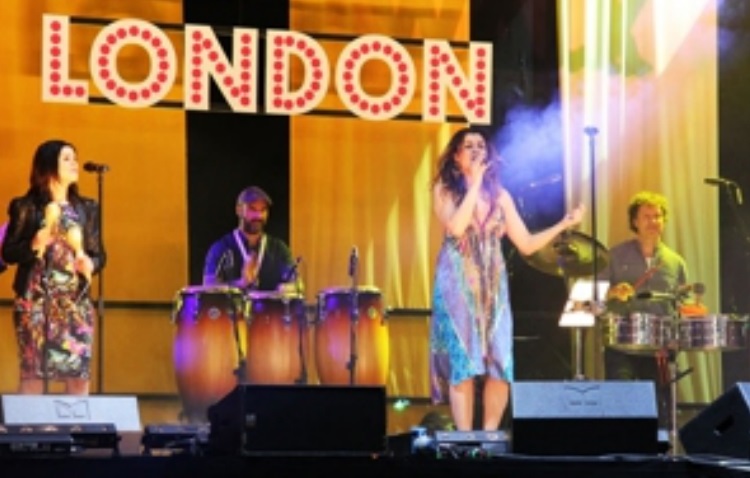
London: Here we bring you the best Latin bands you must check right now!

London - Photo
London – Photo

PALENKE, the Latin dance leader in London

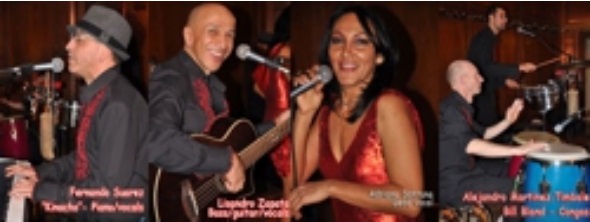
Palenke was born in 1990 to the collective talents of Fernando Suarez – “Kinacho” and Lisandro Zapata from Colombia. Both are highly professional performers and are widely experienced in the Latin and Jazz scene.

Photo 1 - The best Salsa-Latin bands in London
Photo 1 – The best Salsa-Latin bands in London

The Band’s eclectic repertoire is passionate, dynamic and eminently danceable: from the characteristically hot blooded tempos of Cuban Salsa and Brazilian Lambada, the traditional folk rhythms of Colombian cumbia and Dominican Merengue, to the latest Caribbean Reggae and universally popular Spanish style “Gypsy Kings”. This all singing band includes the traditional latin rhythm section, piano, guitar, bass, congas, bongos and timbale. It is fronted by Adriana Santana also Colombian, who has become the “Queen of Salsa” in London captivating the audience with her magnetic voice and sensual dancing.

Over the years Palenke has toured: Switzerland (Montreaux Festival), France, Italy, Spain, Tunisia, Morocco, Malaysia, Indonesia, Ireland and Turkey. The band has performed for dignitaries such as Prince Charles, the late King Hussein of Jordan, King Juan Carlos of Spain and has become a spicy ingredient at hotels, clubs and many pop stars parties.

In the UK, the band is well known from North to South as a leading Latin band spreading the Latin fever from small to big audiences. Palenke has been invited to the Barbican Centre, the South Bank, The Edinburgh Festival and several TV shows. Palenke over the years had worked with the collaboration of great Musicians such as: Oscar Ruiz, timbale; Bill Bland, congas; Alejandro Martinez, multi-percussionist and Luis Carlos Fuentes, Drummer.

Photo 3 - The best Salsa-Latin bands in London
Photo 3 – The best Salsa-Latin bands in London

SAMBOSSA, a band playing the sounds & rhythms of Brazil

With music ranging from sultry Bossa Nova & grooving Afro-funk to blistering samba, Sambossa have everything needed to delight both the listener & the dancer.

Featuring the unique vocal talents of ELISANGELA MAHOGANY, who brings originality to some classic Brazilian tunes.

Also from Rio is hugely talented multi-instrumentalist MARCELO ANDRADE who showcases his saxophone & flute styles.

Guitarist PAUL RUMBOL leads this band as well as being band leader of the celebrated group Viramundo. He also sings & plays the cavquinho (small Brazilian guitar) & has been working alongside the most talented Brazilian performers for more than 20 years.

Completing the quartet is XAVIER OSMIR from São Paulo, Brazil who brings his wonderful percussion & vocal talents. The band is also available as a trio and duo for smaller events/budgets. SAMBOSSA, a compact but very powerful Brazilian/Latin group.

Photo 4 - The best Salsa-Latin bands in London
Photo 4 – The best Salsa-Latin bands in London

RIAMBA: the professionals of rhythm!

With flair for performing, Riamba is one of the most sought after and lively Latin music bands on the London scene today. Its flexible 3 to 7 piece line-up is led by a superb female vocalist and backed by a strong rhythm section which includes: piano, trumpet, bass and typical Latin American percussion.

With their combined musical talents, the group is perfectly suited for the many different occasions and requests that Riamba receives; from a fully blown Salsa dance band with optional dance tuition, to a more relaxed event where lively background music in the Latin style is required.

Photo 5 - The best Salsa-Latin bands in London
Photo 5 – The best Salsa-Latin bands in London

Riamba’s musicians, who are from Latin America, Europe and the UK, have had an eclectic musical training with professional experiences to match, encompassing: Latin American, jazz, pop and classical music.

As individuals this has led them to perform on tours in the UK and around the world with artists such as: Björk, Jason Rebello, The Ghana Dance Ensemble, Stewart Copeland (The Police), and at venues which include: Pizza on the Park, The 606 Club, The Royal Festival Hall, Glastonbury Festival, The Sydney Festival (Australia) and The National Theatres (London and Ghana).

Photo 2 - The best Salsa-Latin bands in London
Photo 2 – The best Salsa-Latin bands in London

Riamba has performed for many private clients and at venues which include: The National Theatre (London), The National Portrait Gallery, The Dorchester Hotel, The Cultural Olympiad, Battersea Park and Regent’s Park Festival as well as travelling abroad for European performances.

North America / February 2025

Laura Bravo

Bronson Tennis

Dave VictorinoMolly Hagman

Adalberto Santiago

PBS

Thumbnail about the salsa museum

Las Maracas promo

Martinez attorney

Directory of North American nightclubs

Canada flag
CANADA

Ontario, Canada
ONTARIO

Canada, Vancouver
VANCOUVER

United States flag
UNITED STATES
California US circular flag

CALIFORNIA

Florida circle flag
FLORIDA
Illinois circle flag

ILLINOIS

Michigan Circle flag

MICHIGAN

NJ circle flag

NEW JERSEY

New York Cicle flaga

NEW YORK

Ohio State
OHIO

Pennsylvania Circle Flag
PENNSYLVANIA

tEXAS CIRCULAR FLAG
TEXAS

Virginia Cirular Flag
VIRGINIA

Washington DC circle flag
WASHINGTON DC


  • « Go to Previous Page
  • Page 1
  • Interim pages omitted …
  • Page 12
  • Page 13
  • Page 14
  • Page 15
  • Page 16
  • Interim pages omitted …
  • Page 24
  • Go to Next Page »

International Salsa Magazine (ISM) is a monthly publication about Salsa activities around the world, that has been publishing since 2007. It is a world network of volunteers coordinated by ISM Magazine. We are working to strengthen all the events by working together.