• Skip to primary navigation
  • Skip to main content

International Salsa Magazine

  • HOME
  • Previous editions
    • 2026
      • ISM / March 2026
      • ISM / February 2026
      • ISM / January 2026
    • 2025
      • ISM / December 2025
      • ISM / November 2025
      • ISM / October 2025
      • ISM / September 2025
      • ISM / August 2025
      • ISM / July 2025
      • ISM / June 2025
      • ISM / May2025
      • ISM / April 2025
      • ISM / March 2025
      • ISM / February 2025
      • ISM / January 2025
    • 2024
      • ISM / December 2024
      • ISM / November 2024
      • ISM / October 2024
      • ISM / September 2024
      • ISM / August 2024
      • ISM / July 2024
      • ISM / June 2024
      • ISM / May 2024
      • ISM / April 2024
      • ISM / March 2024
      • ISM / February 2024
      • ISM / January 2024
    • 2023
      • ISM / December 2023
      • ISM / November 2023
      • ISM / October 2023
      • ISM – September 2023
      • ISM – August 2023
      • ISM July 2023
      • ISM Edition June 2023
      • ISM – May 2023
      • ISM April 2023
      • ISM March 2023
      • ISM February 2023
      • ISM January 2023
    • 2022
      • ISM December 2022
      • ISM November 2022
      • ISM October 2022
      • ISM September 2022
      • ISM August 2022
      • ISM July 2022
      • ISM June 2022
      • ISM May 2022
      • ISM February 2022
      • ISM January 2022
    • 2021
      • ISM December 2021
      • ISM November 2021
      • ISM October – 2021
      • ISM September 2021
      • ISM August 2021
      • ISM July 2021
      • ISM May 2021
      • ISM April 2021
      • ISM June 2021
      • ISM March 2021
      • ISM February 2021
      • ISM January 2021
    • 2020
      • ISM December 2020
      • ISM November 2020
      • ISM October 2020
      • ISM September 2020
      • ISM August 2020
      • ISM July 2020
      • ISM June 2020
      • ISM May 2020
      • ISM April 2020
      • ISM March 2020
      • ISM February 2020
      • ISM January 2020
    • 2019
      • ISM December 2019
      • ISM November 2019
      • ISM October 2019
      • ISM Septembre 2019
      • ISM August 2019
      • ISM July 2019
      • ISM June 2019
  • Spanish
  • Download Salsa App
    • Android
    • Apple

Search Results for: GRAMMY

Young Puerto Rican singer Jeremy Bosch supports the Spanish Harlem Salsa Museum

There are many people who believe that salsa is a genre of past generations that does not have worthy youth representatives who stick up for this set of rhythms that has been keeping so many people dancing for so long, but fortunately they are wrong. Jeremy Bosch, whom we had the opportunity to interview at The Johnny Cruz Shw a few weeks ago is a god example of this.   

We are honored to know that one of the new sensations of Latin music, specifically salsa, supports one of the most important institutions dedicated to the genre such as the Spanish Harlem Salsa Museum, so we want to take advantage to talk a little about the career of this young singer and everything he has achieved so far.   

Jeremy playing the flute
Jeremy Bosch playing the flute live

Jeremy’s beginnings in this world 

Jeremy Bosch is a singer and flutist born in the city of Ponce, Puerto Rico, who began his journey in the world of music singing and playing percussion in the church on his block while growing up listening to a great variety of artists including Hector Lavoe to Chicago and Tonny Bennett, so he had influences of all kinds.   

Not much time would past before Jeremy took achevable steps towards the direction he was meant to take. At only 17 years old, he won a scholarship to study at Berklee College of Music in the city of Boston, United States, and graduated in 2023, specializing in jazz composition. From then on, what followed for the young artist have been successes and great proposals he could seize.   

One of thse things he is best known for is having been the vocalist and flutist of the acclaimed group Spanish Harlem Orchestra, but that has not stopped him from collaborating with great figures in the industry such as musical director and Grammy-winning percussionist Pete Perignon, with whom he recorded the social short called ”Sería Una Pena”.   

Johnny and Jeremy
Johnny Cruz and Jeremy Bosch posing for the camera

Jeremy’s professional career 

Sometime later, he would have the opportunity to realize one of the most important works of his career, which is the tribute to the late Cheo Feliciano, which was recorded live at the Dizzy Club in New York City and was titled ”The Music of Cheo Feliciano. In addition, the project included Nelson Gonzalez, Johnny ”Dandy” Rodriguez and Spanish Harlem Orchestra leader Oscar Hernandez.   

With regard to this great night for his career, Jeremy commented that since his debut both he and arranger and vibraphonist Felipe Fourniel had long time wanting to work on something about Cheo Feliciano and his legacy for a long time until they finally made it. This show was the sign that Jeremy has everything to become an icon of salsa and Afro-Caribbean music in general.   

As for his solo career, he has made a few remarkable recordings and one of them was ”Prologo Hoy”, which included the participation of Nicaraguan singer Luis Enrique and Cuban vocalist and guitarist Alain Perez. It is a five-song EP that focuses a lot on Afro-Colombian and tropical music, while including some covers in English such as ”Love Holiday”, which gives a distinct flavor to the material as a whole. 

Jeremy and Johnny on the set
Jeremy Bosch and Johnny Cruz on the set of The Johnny Cruz Show

Later on, Jeremy released ”Epilogo: la clave del tiempo”, which includes 11 tracks and is basically a mix of Afro-Cuban rhythms, soneo, urban genres, modern synthesizers, among other elements. The album starts with ”Locura” and continues with singles such as ”Try Again”, ”La Mala”, ”Autopsia” and a few more.   

Support for the Spanish Harlem Salsa Museum 

In the social networks of the director of the Spanish Harlem Salsa Museum, Johnny Cruz, there is a clip in which the The Johnny Cruz Show host introduces Jeremy as his special guest on that occasion, promotes the interview with him and describes him as the sensation of the moment. Then, the camera goes n Jeremy’s face, who thanks the invitation with a smile and assures that they both will have a good time talking about his life and career. 

We are honred to support young talents like Jeremy and, at the same time, to get the same support and love back because that is what salsa and the Latin music scene in general needs, that all those involved join together around it to keep it alive. 

Johnny Cru ISM corresponde in New York City


Read also: Paquito D’Rivera supports the salsa museum 

Bamboleo de Lázaro Valdés is another of those exquisite Cuban products, as well as sweet rum and mild cigars

Like the sweet rum and mild cigars, bamboleo is another one of those exquisite Cuban products that, once tasted, can’t get enough.

The 14-member timba group is a fiery number, from its music and choreography to its well-dressed singers and musicians.

Lazaro Valdes leads the group, plays piano, arranges, composes and writes songs. Born in Havana, he studied at the Alejandro García Caturla Academy in the 1970s.

Lazarito Valdés & Bamboleo

He created Bamboleo after spending time performing with artists such as Pachito Alonso, Bobby Carcasses and Héctor Téllez.

He selected the best musicians and incorporated into his new company many who had been trained at the Escuela Nacional de Arte de La Habana.

He added sparkle with vocalist Haila Mompie, who in turn recruited vocalist Vannia Borges. Another Havana native, Borges began studying music at the age of five, and first sang professionally with an all-female group known as D’capo in the early 1990s. Four years later, she became part of the band D’capo.

Four years later, she moved on to Pachito Alonso y su Kini Kini, which she left in 1997 to add her talents to Bamboleo.

Lazarito Valdés.
Lazarito Valdés.

Guantanamera Yordamis Megret joined the group in 1998, a year after Mompie’s departure. She began her musical training at the age of 10 and took up the guitar.

Like Borges, she is also a student at the Escuela Nacional de Arte. After graduating, she began singing professionally with Ricacha. Before joining

Bamboleo, Megret sang in José Luis Cortés’ salsa group PG. Bamboleo began touring outside Cuba in 1996, the same year the group debuted with Te Gusto o Te Caigo Bien.

The group has performed in major U.S. cities from Chicago to Miami, and from New York to Los Angeles. Following the release of Yo No Me Parezco A Nadie and Ya No Hace Falta, the group toured the world, with stops in Europe, the United States and Japan, as well as the Heineken 2000 World Music Festival in China.

Bamboleo also collaborated on the Temptations’ Grammy-winning album Ear-Resistable.

Lazarito Valdés
Lazarito Valdés

In addition, the group has appeared on MTV’s Road Rules and has worked with artists such as James Brown, Femi Kuti and George Benson.

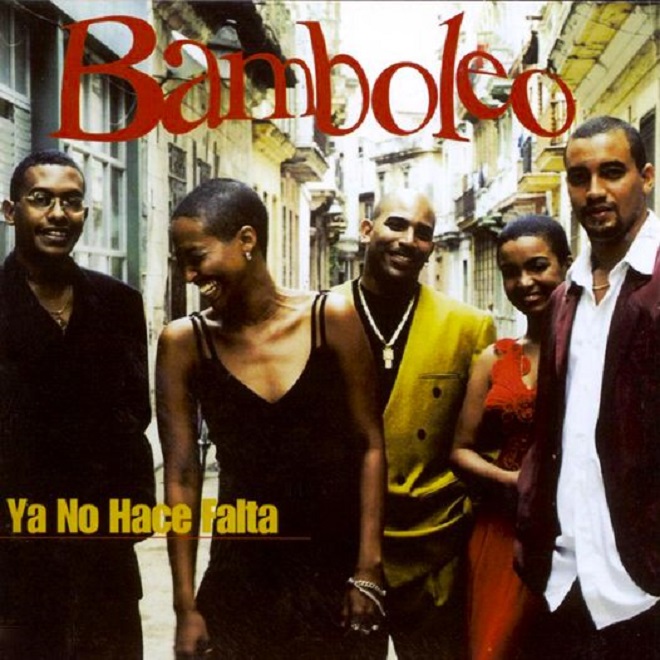
Bamboleo, one of the best-known groups on the crest of the timba wave, a new style that blends salsa with funk and jazz elements and emanates from the streets of Cuba, remains at the forefront with 1999’s Ya No Hace Falta.

After leaping to international notoriety with 1997’s Yo No Me Parezco a Nadie, the pressure was on to deliver for his newfound fan base.

With smooth arrangements and a band with a tight drum kit, Bamboleo had no trouble making good on their reputation and, if anything, raised the bar for the entire genre.

Both the horn section and the vocalists have a cool, smooth approach that contrasts with the energetic sound of similar groups like Charanga Habanera or NG la Banda.

This smoky, jazzy sensibility juxtaposed with the sharp corners of the superfunky rhythm section makes for easy and enjoyable listening.

The group doesn’t lack for warmth, with salty montunos from pianist/arranger Lazaro Valdes and plenty of time changes from a percussion section as good as any operating today.

Sonically, the ears rejoice in listening to a timba album that lacks neither fidelity nor modern production sensibilities.

With its balanced overall sound, unique approach and expert musicianship, Bamboleo will set trends and erase boundaries for decades to come.

Bamboleo - Ya No Hace Falta (1999)
Bamboleo – Ya No Hace Falta (1999)

Evan C. Gutierrez

Bamboleo – Ya No Hace Falta (1999).

Musicians:

Lázaro M. Valdés Rodríguez (Director, piano, composer).

Abel Fernández Arana (Alto Saxophone)

Carlos Valdés Machado (Tenor saxophone)

Anselmo “Carmelo” Torres (trumpet)

Dunesky Barreto Pozo (Congas)

Alberto Para (Maracas)

Herlon Sarior (Timbales)

Jorge David Rodríguez (Voice)

Yordamis M. Mergret Planes (Vocals)

  1. Frank Cintra Cruz (Trumpet)

Alejandro Borrero Ramírez (Vocals)

Vannia Borges Hernández (Vocals)

José Antonio Pérez Fuentes (Violin)

Maylin de la Caridad González Aldama (Cello)

Ludwig Nunez Pastoriza (Drums)

Rafael P. Pacerio Monzón (Banjo)

Ulises Texidor Pascual (Bongos)

Sources:

Información realizada ( 27 de enero de 2024)

L’Òstia Latin Jazz 

Also Read: Irakere was a Cuban group that developed an important work in Cuban popular music and Latin Jazz under the direction of Chucho Valdés

Career and interesting facts about Venezuelan singer and musician Omar Ledezma Jr.

Venezuelan singer, percussionist and music teacher Omar Ledezma Jr. has already talked to us in the past and has revealed important details regarding his life and career, but this time, our editor Eduardo Guilarte has been in charge of interviewing him and revealing some unknown details about his different facets professionally and personally.  

Is such a pleasure to have the chance to talk to one of the most talented Latin musicians who currently lives in the San Francisco Bay Area and know so many things that the artist had not previously revealed.   

Venezuelan percussionist Omar Ledezma
This is Omar Ledezma Jr., Venezuelan singer, percussionist and music teacher

Omar Ledezma’s beginnings in music and childhood 

Omar Ledezma Jr. was born on February 17, 1972 in Caracas, Venezuela, and was raised in a very close family that gave him a lot of love and care since he was a child. Both the Ledezma and López families were very important in his growth, but it was from the Ledezma’s that he got his musical vein.   

His mother and cousin José Vicente Rodríguez López decided to enroll him in the marching band at the Claret School, where he had his first contact with music by playing the snare drum, an instrument he was first assigned to play. It is also in the band where he started making friends with other teens who were already forming gaitas groups to compete in contests related to this traditional Venezuelan genre.   

When he turned 16, he began to participate in these gaitas inter-school competitions in 1987 and 1988. In 1989, he participated in his first big musical event at the nightclub Mata de Coco. Omar assures that this was the official start of his career in a more professional way. A few years later, going hand-in-hand with his father, he began to take a deeper interest in music as a profession and wanted to experiment with other genres such as Afro-Cuban music and Latin jazz.   

This path led him to join the orchestra La Charanga Clásica led by Mr. Frank Luzón. While playing there, he met several inspiration timbaleros such as Daniel Cádiz (from the Andy Durán Orchestra). 

In parallel with all of the above, Omar was admitted to study in law school at the Santa María University, so he shared his time between his university studies and his professional musical activities. In his spare time outside the university, he played Latin jazz and was formed as a percussionist with his orchestra.   

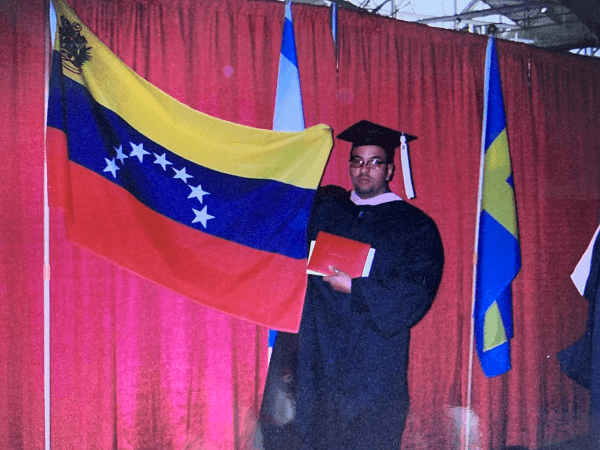
In 1995, Omar graduated as a lawyer as part of the class ”Honor a Venezuela” ranked in 12th place among his classmates. Although today he is not engage in law at all, he considers that having continued his studies was very important to him as a person because he would have a base on which to stand on in case his plans with music fell through.   

However, the artist never thought about practicing law, since he was very clear that it would be difficult to do so due to the legal situation in Venezuela, so he continued to focus on his great passion, which was music. Besides, after analyzing it, he decided that he did not have a natural talent for that career. 

In parallel, during those years as a law student, he made a trip to Cuba, which he claims changed his life completely. Some friends he made there, when seeing his skills as a musician, told him that he could be studying law, but that his life was and would be music forever.  

Omar graduating as a lawyer
Omar Ledezma Jr. graduating from Berkee College of Music

The United States and Berklee College of Music 

Just a few years after graduating, specifically in 1998, Omar made the decision to move to the United States looking for new opportunities and describes this trip as an exploring experience because many of his friends, orchestra fellows and acquaintances from the musical environment in general started taking new directions in the mid 90’s. The young man knew he wanted to do the same and chose the city of Boston to settle in at first.   

Although he finally moved to Boston in 1998, already in 1997, his mother gave him the idea of going to the United States with an open ticket so he could decide whether to stay permanently or return. In the end, he opted not to use the return ticket and stayed in Boston to try to enter any music school through a scholarship.   

After checking several options, he chose Berklee College of Music because it was the only college that allowed him to study composition and arranging as hand percussionist, so he auditioned to be admitted and was selected in the fall of 1999. He obtained a 70% scholarship, but he had to work hard to get the remaining 30%. In that sense, Omar assures that the same school helped him to obtain the corresponding permits to work legally in the country and thus be able to pay the percentage that is not covered by the scholarship. 

Omar also told us that it was his friend Gonzalo Grau who helped him do the demo with which he auditioned to enter Berklee and it was a song of his own titled ”Cacao”. Today, he assures that that recording gave him one of the greatest opportunities he has ever had in life, which was to study there. He spent a total of four years studying in that institution and graduated in 2003. 

During his undergraduate studies at Berklee, Omar had the option to study business and intellectual property and his lawyer’s training made it easier for him, but he defines himself as a ”natural born performer” and his life was the stage, so he did not see himself stuck in an office solving cases.   

One of the first jobs Omar had in Los Angeles was replacing the singer from Johnny Polanco’s prestigious orchestra and that one that helped him take that place was Ray Barreto’s flautist, the late Artie Webb. The concert was held at the Mayan.  

Omar playing the conga
Omar Ledezma Jr. playing the conga in a live performance

Family 

As to the family part, Omar told us that he had married his wife Jennifer Radakovich about seven or eight years ago, but they have no children for the moment. This is because they are still analyzing their opportunities to settle permanently in the state of California, so he assures us that they are still building their future as a couple and as a family. 

Jennifer’s family comes from Serbia and settled in Detroit, Michigan. They had to leave their country, which was then the former Yugoslavia because of the war that went on in the territory at the time. In fact, at a family reunion, his in-laws told him that his wife’s father arrived in the country on the boat anchored in Long Beach, California, The Queen Mary.  

Pacific Mambo Orchestra 

Omar Ledezma started his journey with Pacific Mambo Orquesta practically since its foundation in October 2010, when he started playing at Café Cocomo. Santana’s timbalero Karl Perazzo, who was already included in the lineup of the venue, proposed him to go to this place to play as a percussionist on Monday nights. The problem was that there was no money to pay him for the moment. 

That’s when the directors of Pacific Mambo, Christian Tumalan and Steffen Kuehn, proposed to the owners of Cafe Cocomo to give them some space to have band practice. These Monday meetings ended up being paid rehearsals open to the public in exchange for 10 dollars a night. This lasted some years in which the 20 members of the orchestra were in charge of developing much of the repertoire that has made them famous internationally. 

About this time, Omar said that, on several occasions, he and his orchestra fellows sat down to talk about the continuity of the band owing to the lack of money. The wonderful thing is that everyone always voted in favor of their stay in the group despite the adversities. According to the Venezuelan musician, it was this hunger and desire to succeed that made the orchestra what it is today.   

Omar, Eric, Karl, and Edgardo
Omar Ledezma Jr., percussionist Eric Rangel, music producer Karl Perazzo, and bandleader Edgardo Cambon

These efforts worked and Pacific Mambo Orquestra managed to win their first and only Grammy so far in 2014. That year began with the orchestra’s appearance in one of the main banners of the iTunes page for a little over a week, which gave them a lot of popularity at that time and was not common for Latin artists and groups. 

That same year, the group began touring with Tito Puente Jr. in August and were so successful that Omar and five other members of the group decided to begin campaigning for that year’s Grammys via e-mails to all the members of the jury promoting their latest album. Then, on tour, they received the news of their nomination (the second of Omar’s career), but they did not think they would win. 

Much to the surprise of Omar, in January 2014, he received word that Pacific Mambo Orquesta won its first Grammy in the category of Latin Tropical Album of the Year. This event changed the lives of everyone in the group to the extent that large media outlets started looking at them. One of them was world-famous Billboard magazine, which published a piece talking about the band and its talents. 

It is important to stress that, although it was an experience the musician will never forget in his life, he is aware that this is in the past and has to look ahead and focus on his future successes. At this moment, Omar and his companions are focused on making up for time lost during the pandemic and performing all the activities that confinement prevented them from doing. 

Read also: Arranger, composer and pianist Carlos Ordiano 

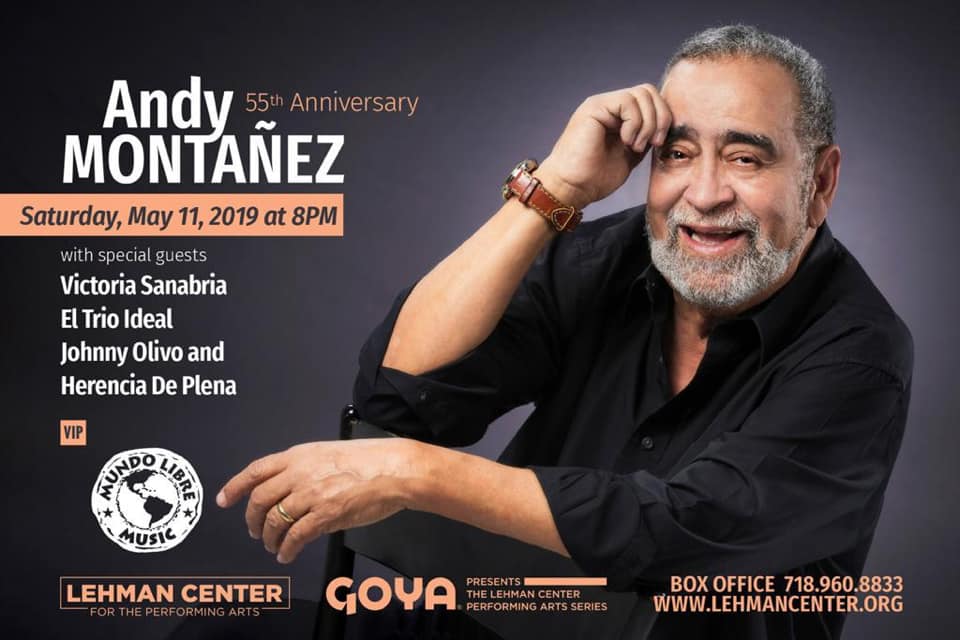
The Lehman Center Performing Arts Series Presents Andy Montañez’s 55TH Anniversary

North America / USA / New York

Lehman Center for the Performing Arts Presents Andy Montañez:

Enjoy this Puerto Rican star recognized as one of the best and most influential singer in Latin America in a Special Show with special guests: Victoria Sanabria, El Trio Ideal and Johnny Olivo & Herencia de Plena

Date: Saturday, May 11th

Show: 8:00PM

Cost: $65 – $100

Venue: 250 Bedford Park Boulevard West Bronx, New York 10468


Lehman Center for the Performing Arts is proud to present the Latin GRAMMY Lifetime Achievement Award winner, Andy Montañez as he celebrates his 55th Anniversary with special guest: Victoria Sanabria on Saturday, May 11th. In addition to this, enjoy EL TRIO IDEAL and the exciting dance rhythms of JOHNNY OLIVO Jr. & HERENCIA DE PLENA’s performance of their afro-rich folkloric musical traditions of Puerto Rican Bomba and Plena in a Salsero Show never before seen in New York City.


BIO: The Andy Montañez ’s beginnings go back to 1962 with the orchestra: El Gran Combo de Puerto Rico. It was 15 years of success. El Niño de Trastalleres recorded 37 LP’S with this great Latin orchestra. There he created and sealed the luggage that would accompany him always: “El Barbero Loco”, “Julia”, “Guaguanco del Gran Combo”, Un Verano en Nueva York”, “Vagabundo”, “Milonga Sentimental”, “Las Hojas Blancas”, “La Soledad” and the now classic “A mí manera”, a song that he recorded with Paquito Guzmán and with Pellín Rodríguez originally.


In 1977, Andy Montañez decided accepts the irresistible offer made by the popular Venezuelan orchestra “La Dimensión Latina” to replace Oscar D’ León. With this important orchestra, Andy Montañez recorded eight LPs that placed the Venezuelan band at the popularity top and sales. The first album with Dimension Latina marked big hits, such as: “El Eco Del Tambor”, “Mujer Impura”, “Ritmos Cubanos”.  Then, the triumphs continued with the themes: “Las Perlas de tu Boca”, “Como Canto Yo “, “Nuestra Tierra”, “Vuelve”, “Rumberos de Ayer”, “Son del Bohío”, “Ave María Lola”, “Mi Son Oriental”, “Cantante Errante”, and others.

Andy Montañez
Andy Montañez

For 1980, Andy Montañez recorded with the group “Puerto Rico All Stars” three LPs that were the prelude to his return to Puerto Rico. “Reunión en la Cima”, “Isla Bonita”, “Homenaje al Mesías” dedicated to Eddie Palmieri, outlined the growth process in which the Salsero still remains.

Returning Puerto Rico, Andy Montañez forms his own orchestra. By 1981, he recorded his first solo LP titled “Salsa con Caché” with record label LAD (TH Rodven’s subsidiary). His third LP “Simplemente Andy Montañez” rang with the hits: “Dulce Veneno” and “Payaso”. This album stayed 30 weeks in the magazine, Bilboard, inside its pages Tropical Music with five themes.

For 1998, he finally created his first independent production as a Salsero artist. Guided by his feelings, his proven experience and his artistic spontaneity was released the album: “Soy Como Soy”. This production is a tribute to his people to whom Andy Montañez responds with commitment of national pride wherever he goes.

In 2002, this worldwide multifaceted artist sees the support of his people materialized by filling the Centro de Bellas Artes’ Festival Hall for three consecutive days, where he captivated three generations with an unforgettable musical tour in which El Bolero, la Música de Tríos, La Salsa and La Plena harmonized that unparalleled Salsa experience. For more details, please, visit him through http://www.andymontanez.net

BIO: Victoria Sanabria was born on October 6, 1976 in Guayama (Puerto Rico). This woman with a sublime voice who carries in her throat all the essence of singing peasant, is one of the most impressive talents that has given the Trova Jíbara of the island of enchantment.

In 1992, she won the third prize in the category of singing in the competitions “Juventud Vibra”. The following year she won first place in the Troubadour Contest of the Institute of Puerto Rican Culture, becoming the national troubadour per excellence. Later, Victoria was part of the Choir of the University of Puerto Rico, Ponce Campus.

Continuing her ascending path in the arts, in December (1995) she made her debut in Bellas Artes with the Puerto Rico’s Symphonic Orchestra. That same year this talented artist managed to be crowned as the first female to win the Bacardí Troubadour Contest, proving to be the best improviser of Puerto Rico at the end of the century.

Andy Montañez
Victoria Sanabria

Her first album as a soloist, Cánticos de Serrania, was recorded in 1999, and in the next eight years she released three more in Puerto Rico including 2008’s Celebra Conmigo that featured Andy Montañez and Andrés Jiménez as guest artists. That same year, she joined the world-wide Tribute to Hector Lavoe concert tour.

In December 2009, Sanabria released her international breakthrough album Criollo Con Salsa, in which she had combined Puerto Rican folk music with salsa. The album contained several hits including “10 Dias”, “No Lavo, No Plancho, Ni Cocino”, “Jibara Natural” that featured Luis “Perico” Ortiz, and “No Te Quiero” sung with reggaeton star Ivy Queen. 2011 saw the release of the highly successful album Boleros which established Victoria as a major singer, and a year later she followed up with the release of Boleros II, which is now considered a classic.

The Sanabria’s most recent releases are her live concert album Trayectoria that was recorded in Santurce in 2012, and 2016’s Música Mía. In addition to her own recordings, Victoria has been featured as a guest on works by Domingo Quiñónez, Olga Tañon, Richie Ray, Bobby Cruz, Gilberto Santa Rosa, El Gran Combo, Danny Rivera, Charlie Aponte, and Willie Colon, among others.


Purchase your Tickets NOW at:

https://lehmancenter.org/ANDY-MONTANEZ-VICTORIA-SANABRIA/

LATIN AMERICA / March 2024

Flora Purim has earned her two Grammy nominations for Best Female Jazz PerformanceEva Cortés at present, her music reflects the influences received from her cultural mestizaje.Lazarito Valdés & BamboleoJerry Ferrao afirma en clave de salsa: “Mi vida es un tambor”Calibrated maracas

DIRECTORY OF NIGHTCLUBS

Argentina flag
ARGENTINA

Aruba circular flag
ARUBA

Belize circular flag
BELIZE

Bolivia circular flag
BOLIVIA

Brazil flag
BRAZIL

Chile circular flag
CHILE

Colombia
COLOMBIA

Costa Rica circular flag
COSTA RICA

Cuba circular flag
CUBA

Dominican Republic
DOMINICAN REPUBLIC

Ecuador circular flag
ECUADOR

Guatenala circular flag
GUATEMALA

Mexico Circular flag
MEXICO

Panama circular flag
PANAMA

Peru circular flag
PERU

Puerto Rico circular flag
PUERTO RICO

Venezuela circular flag
VENEZUELA
MARCH 2024 FESTIVALS

Mexico Circular flag
MEXICO
Oaxaca 2024

Oaxaca Salsa & Bachata Festival

Mar 13 / 17 2024

Hotel Misión Oaxaca
Avenida Jalisco 15 Fraccionamiento San Felipe del Agua
Oaxaca City, 68020, Mexico

Puerto Rico circular flag
PUERTO RICO
Zalsa

Día Nacional de la Zalsa 2024

Mar 17 2024

Estadio Hiram Bithorn
Avenida F.D. Roosevelt
San Juan, 00920, Puerto Rico


  • « Go to Previous Page
  • Page 1
  • Interim pages omitted …
  • Page 14
  • Page 15
  • Page 16
  • Page 17
  • Page 18
  • Interim pages omitted …
  • Page 52
  • Go to Next Page »

International Salsa Magazine (ISM) is a monthly publication about Salsa activities around the world, that has been publishing since 2007. It is a world network of volunteers coordinated by ISM Magazine. We are working to strengthen all the events by working together.