• Skip to primary navigation
  • Skip to main content

International Salsa Magazine

  • HOME
  • Previous editions
    • 2026
      • ISM / March 2026
      • ISM / February 2026
      • ISM / January 2026
    • 2025
      • ISM / December 2025
      • ISM / November 2025
      • ISM / October 2025
      • ISM / September 2025
      • ISM / August 2025
      • ISM / July 2025
      • ISM / June 2025
      • ISM / May2025
      • ISM / April 2025
      • ISM / March 2025
      • ISM / February 2025
      • ISM / January 2025
    • 2024
      • ISM / December 2024
      • ISM / November 2024
      • ISM / October 2024
      • ISM / September 2024
      • ISM / August 2024
      • ISM / July 2024
      • ISM / June 2024
      • ISM / May 2024
      • ISM / April 2024
      • ISM / March 2024
      • ISM / February 2024
      • ISM / January 2024
    • 2023
      • ISM / December 2023
      • ISM / November 2023
      • ISM / October 2023
      • ISM – September 2023
      • ISM – August 2023
      • ISM July 2023
      • ISM Edition June 2023
      • ISM – May 2023
      • ISM April 2023
      • ISM March 2023
      • ISM February 2023
      • ISM January 2023
    • 2022
      • ISM December 2022
      • ISM November 2022
      • ISM October 2022
      • ISM September 2022
      • ISM August 2022
      • ISM July 2022
      • ISM June 2022
      • ISM May 2022
      • ISM February 2022
      • ISM January 2022
    • 2021
      • ISM December 2021
      • ISM November 2021
      • ISM October – 2021
      • ISM September 2021
      • ISM August 2021
      • ISM July 2021
      • ISM May 2021
      • ISM April 2021
      • ISM June 2021
      • ISM March 2021
      • ISM February 2021
      • ISM January 2021
    • 2020
      • ISM December 2020
      • ISM November 2020
      • ISM October 2020
      • ISM September 2020
      • ISM August 2020
      • ISM July 2020
      • ISM June 2020
      • ISM May 2020
      • ISM April 2020
      • ISM March 2020
      • ISM February 2020
      • ISM January 2020
    • 2019
      • ISM December 2019
      • ISM November 2019
      • ISM October 2019
      • ISM Septembre 2019
      • ISM August 2019
      • ISM July 2019
      • ISM June 2019
  • Spanish
  • Download Salsa App
    • Android
    • Apple

Search Results for: GRAMMY

Daniel Santacruz wins a GRAMMY®

“Larimar” gave Daniel his first Latin Grammy®

The Dominican singer made history by winning his first Latin Grammy® for his album “Larimar”, in honor of a stone that it’s used in jewelry and can be found in his country. The album has eleven tracks, and it was released in the middle of the year.

After several nominations, 2020 was his year! Also as a historical event, he shared the first place with the merenguero singer Eddy Herrera, who was nominated in the same category. Both obtained the valued award filling the Dominican people with huge pride. In fact, on their Instagram profiles they uploaded a picture celebrating.

Two Dominican Winners
Both Dominicans won the Latin Grammy in the same category.

Santacruz was nominated with his brother Manny Cruz, but on this occasion, Daniel was the lucky one. However, he didn’t hesitate to dedicate this award to him, and the rest of their family; he thanked his wife, his mother, his fans, his manager, and each of his team members.

The Grammy winner for “Best Merengue or Bachata Album”, shared a video on his Instagram Profile where he looked happy and excited. The comments of his followers were immediate, it got more than forty thousand views, and a large number of congratulations.

I’m grateful to God, to the Recording Academy, and to all those responsible for participating in this important production, that represents the sacrifices of a career and efforts of many years”, said the artist.

Santacruz was one of the artists who performed in the show. He sang to the beat of his single “Larimar”, from Dominican Republic. A band of musicians accompanied him, as well as the stunning blue sea of his country.

Larimar was the production that made him a Latin Grammy® winner, and it’s his seven production. Santacruz was also the general producer, however he had a great team of professionals who adjusted all the details. The production was in charged of Ambiorix Francisco, Israel “Mayinbito” y Richy Rojas, mastering by Andrei Fossari, and mixing by Allan Leschorn, Esbin Ramírez y Richy Rojas.

A little bit about Daniel Santacruz

The singer was born in the United States but grew up in Dominican Republic, since childhood he felt a natural inclination for music. Although, he had said that he regrets not having taken piano classes with his grandmother Zulema Victoria.

She was always pushing me to the music ‘Come to teach you music theory'”, recuerda.

Daniel Santacruz
Daniel won her first Latin Grammy.

But nevertheless, this didn’t deprive him of his abilities in the music area. He acquired his first musical interests on the island. Since very young he was interested on the songs of Juan Luis Guerra, Wilfrido Vargas y Luis Miguel.

We won a Latin GRAMMY®!!! Thank you very much to all the Academy Members to take into consideration my album #LARIMAR, that was made with all the heart and feels. This year the #merengue and the #bachata win double as well I shared this triumph with my beloved and admired brother @eddy_herrera with his album #ahora. I shared this joy with my entire work team and with all the artists, musicians, engineers, and producers that participated with me! THANK YOUUUUUUU @latingrammys”, he expressed on his social media.

For the next year he is preparing surprises and new collaborations with colleagues of the industry. Santacruz’s career is just starting, his successes won’t stop since he is so talented and has so much energy. Congratulations, Daniel!

Home

That’s how the Latin Grammys were

The 21st edition of the Latin Grammy

As expected, due to the global pandemic situation that hit us this year, the awarding of the 21st edition of the Latin Grammy was held online. In this way, neither the public nor the red carpet had participation this year. Some creatives recreated them in their homes and took the opportunity to take their respective photography.

The gala was held in the city of Miami with headquarters in other cities in Latin America. Several of the artists’ participations were also carried out under this modality.

The musical presentations were opened by the J Balvin show, one of the great favorites of the night. Who also broke a Guinness record for more nominations, surpassing the title obtained by Calle 13 in 2011. To receive his gramophone, he was dressed in black and then appeared in white. He interpreted the song “Rojo” and dedicated it to those who have had to fight against the COVID-19 virus. Balvin has recognized that this situation has affected him seriously and he has been immersed in depressive pictures.

“My heart is crying,” Balvin commented.

To the surprise of many, his heart actually turned the color of blood. His suit was dyed through some internal mechanism but leaving a large red stain on Balvin’s suit. Really, it seemed like his chest was bleeding incessantly.

J Balvin bled in the stage of the Latin Grammys

“Music humanizes us” was the theme of this year’s meeting. With the singer’s presentation, many were stunned and very sensitive. What did you think of his form of expression?
Natalia Jiménez paid tribute to Julio Iglesias, while the great Hector Lavoe also received recognition. Ricardo Montaner, Ivy Queen and Rauw Alejandro led the tribute.

Jesús Navarro, Ricardo Montaner, Victor Manuelle, Ivy Queen and Rauw Alejandro gave life to the song ‘El Cantante”’ in homage to Héctor Lavoe. Each of the interpreters, from their respective rhythms, created a perfect harmony and joined in a very emotional show. They quickly went viral and comments on social media grew by leaps and bounds. The spectators were pleased by a presentation that moved fibers.

Winners of the night

Natalia Lafourcade, Alejandro Sanz, René Residente, Mike Bahía, Ricky Martín, Caminlo, Rosalía, Bad Bunny, J Balvin, Ozuna, Carlos Vives, Grupo Niche, Eddy Herrera and Daniel Santacruz were the winners of the night. The winners’ social networks were filled with videos of celebration and appreciation. A different night but full of many emotions!

In the Mejor Canción Tropical category, singer-songwriter Carlos Vives shone with his song “Canción para Rubén Blades”, in which Blades participated as a composer. Vives was excited, he did not hesitate to thank Rubén Blades for his support.
“This award with Rubén, congratulations to all the nominees, all the participants, Kany a very big kiss, thank you Sony, thank my entire team, our producers, the artists, Andrés Leal, thank you,” he said in the middle of happiness.

In his social networks he also wanted to dedicate his award to La Academia, his country, his people, each of his followers, his wife and his entire production team. He was also shown celebrating from home, together with family and friends.

In the Mejor Álbum de Salsa category, Grupo Niche shone. Album 40 is a tribute to the group’s musical trajectory. It is the first Latin Grammy that Colombian salseros receive, after having been nominated twice, in 2001 and in 2016.

“We have won the @LatinGRAMMYs for best salsa album for ’40’ our most recent musical production. With great emotion we say to you: Salseros and Nichistas of the world, infinite Thanks! Long live Latin music, salsa, long live the teacher # JairoVarela and long live Colombia!”, They expressed on their Twitter account.

The winning album was recorded for almost a year in studios in Miami, Cali and Puerto Rico. They wanted to maintain the musical guidelines of Jairo Varela and thus remember his roots, without losing his essence.

As Mejor álbum de Merengue/Bachata we have two winners, two Dominicans. A historical event that both celebrate with great fury. Eddy Herrera and Daniel Santacruz were the lucky ones. They tied in one of the closest categories!

Two Dominican Winners
Both Dominicans won the Latin Grammy in the same category

Eddy Herrera has a long history in the genre, known as “El Galán del Merengue”. The followers of his career also celebrated this achievement, being the singer’s first Latin Grammy. “Eddy Herrera Ahora” contains some of his most recent songs.

“It is an immense joy that I also want to share with all my followers and lovers of my performances. Thank you for supporting me throughout these years where you have been faithful to my musical productions ”, he expressed.

The Dominican did not hide his happiness and dedicated himself to thanking those who have supported him during so many years of journey.

“I am extremely grateful to the entire production team, as well as my fans, who are always the impetus to keep going. To achieve this magnificent product, we had, as in other opportunities, the dedication of one hundred percent of our great team, who gave themselves with the charisma, vocation and professionalism of always, an essential symbol of our artistic productions ”, said Eddy Herrera.

For his part, Daniel Santacruz will fondly remember the day that “Larimar” made him the recipient of his first Academy Award. After several nominations, his long-awaited moment finally arrived. In fact, his brother Manny Cruz was also among the nominees.

Even though he was born in the United States, he is of Dominican descent and grew up on its streets. He learned about its culture, its influences and is very proud of its roots.
“Grateful to God, to the Recording Academy and to all those responsible for participating in this important production that represents the sacrifice of many years of career and effort,” expressed the artist.

Santacruz was also part of the singers who entertained the meeting. He appeared from Boca Chica, Dominican Republic to the rhythm of “Larimar”, the promotional song for his album.
The young Dominican posted a video on his Instagram account where he is very happy. He thanked his family, wife, mother and his brother Manny Cruz. To its engineers, musicians, fans and manager. As well as his country, the people who listen and dance bachata, merengue and all his followers. Long live the Dominican Republic!

The event was one of total innovation and, surely, it will become a starting point for other awards. Of course, the dedication and effort on the part of the organization cannot be denied; as well as the artists involved, all left their hearts on stage and showed that better times are to come. So be it!

International Salsa Magazine Celebrates 2020 Latin Grammy Nominees

North America / United States

Latin Grammy Awards

The Latin Grammy Awards were created to honor Spanish-speaking artists. They are awarded by the Latin Academy of Recording Arts & Sciences, created from the National Academy of Recording Arts & Sciences, an American organization specializing in music and production in general. The Latin version was broadcast for the first time in 2000, through the CBS network.

The Academy was founded by Michael Greene and Mauricio Abaroa. The first Grammy ceremony was held in 1959. 41 years later the Latin version was inaugurated. They are not awarded by popularity but by the number of votes received by members of the academy.

The award for excellence in Latin recording achievements is a gramophone. Its base is red and the gramophone is gold. For its part, the statuette of “Awards for Musical Excellence” has a copper-colored gramophone. As you might imagine, its creation goes through a long process, it is composed of a zinc alloy and is plated in 24-karat gold.

Latin Grammy Nominees were announced recently
The Latin Grammy 2020 Edition will be soon

The ceremony is held annually in the United States, in the third week of November. The locations have varied through the years between Los Angeles, Miami, New York, Houston, Las Vegas for the last nine years and in 2020 is returning to Miami, at the American Airlines Arena.

The presenters have been a true parade of stars: Jennifer López, Gloria Estefan, Antonio Banderas, Lucero, Eugenio Derbez, Patricia Manterola and Ricky Martin, among others. In this opportunity, the honor will go to the Dominican Carlos de la Mota and the Polish, nationalized in Mexico, Ludwika Paleta.

On September 29, the names of the candidates for the awards were announced.

Among the nominees are:

Best Salsa Album

40 Años De Power
Luisito Ayala y La Puerto Rican Power
Record Label: Musical Productions, Inc.

Tentaciones Vol. 1
Charlie Cruz
Record Label: Get Crazy Note, LLC

40
Grupo Niche
Record Label: PPM USA

Memorias De Navidad
Víctor Manuelle
Record Label: Sony Music Entertainment US Latin LLC

Un Gallo Para La Historia
Tito Rojas
Record Label: J&N Records, LLC

Some of these nominees belong to JN Music Group, J&N Records and Musical Productions Disquera, a company that for more than thirty years has been in charge of producing Latin music for the whole world. Tito Rojas and Luisito Ayala and La Puerto Rican Power have received the support of the record company and their directors are very proud of their representatives.

The emblematic band Puerto Rican Power
Pure energy of Puerto Rican Power

Puerto Rican Power was born in the 70s by the hand of its founder Jesús Castro. Later Luis Ayala, assumed the role of director and trumpeter of the band. They became known quickly, thanks to the participation they had with greats of the show such as Ismael Miranda, Cheo Feliciano, Héctor Lavoe, among others. The group has mixed the roots of Puerto Rican folklore with its great performance on stage; becoming known in the United States and Latin America. This is his first Latin Grammy nomination.

Charlie Cruz, a Dominican salsa singer, also competes in this category. He has collaborated with greats of the genre such as Tito Nieves. Cruz is proud to be Latino and to work with his heart. He thanked his producer, work team and members of the academy for their support in reaching his nomination.

For its part, Grupo Niche is enjoying its third nomination for the Awards. They proudly represent their home country, Colombia. 40, his latest production, refers to the number of years since his birth. The album was recorded between Puerto Rico, Cali and Miami.

Victor Manuelle participates with his album “Memorias De Navidad”, he sought to rescue the traditions of the Christmas season and remember two loved ones. In early 2018, he lost his father Victor Manuel Ruiz and last year his younger brother, Héctor Gustavo.

To finish the round of nominees, we find Tito Rojas, known for his salsa songs. He began his artistic career in the early 70s. He has more than thirty record productions (one with La Puerto Rican Power). Rojas thanked through his social networks for the support of his career.

Best Merengue and / or Bachata Album

The Genetics Of Bachata
José Manuel Calderón
Record Label: Baile Records

Bailando Contigo
Manny Cruz
Record Label: Manny Cruz / La Oreja Media Group, Inc

Los Conquistadores
Grupo Manía
Record Label: Mania Music, Inc.

Ahora
Eddy Herrera
Record Label: Intermusic

Larimar
Daniel Santacruz
Record Label: Penluis Music

Thanks to Diario Libre, we could know that Latin Grammy Awards were evaluating the possibility of eliminating this category. This, due to the lack of submitted proposals. This warning activated the exponents of the genre. The academy received around 40 applications. The competition is very close between artists with a long history and young people who have come to give a new air to the genre.

José Manuel Calderón is considered the pioneer of bachata. Most of his hits are his own and he has also dabbled in merengue. The artist is very happy with this recognition for so many years of experience. He considers it “a great blessing.”

Manny Cruz receives his fourth Grammys nomination in two different categories. “Bailando Contigo” is the singer’s second album and it took him more than a year to produce. The Dominican was very happy and sent his thanks through his Instagram account. He became the Dominican with the most Latin Grammy nominations.

For its part, Grupo Manía celebrates its tenth nomination. The Puerto Rican singers released their album “Los Conquistadores” to celebrate their twenty-five years of artistic career.

Eddy Herrera, renowned merengue singer, has been nominated for the fifth time and, within the framework of his virtual concert, he expressed his happiness.
“Being nominated in normal times is wonderful, but being nominated within this world of the pandemic is doubly great. This has fallen from my soul, from heaven, “he said.

Daniel Santacruz, has his eighth Latin Grammy nomination for his album “Larimar”, his seventh musical production. The artist was in charge of all the elaboration of the disc that counts on eleven subjects.

Best Tropical Song

Among the 5 nominees are:
Imaginarme Sin Ti
Elvis Crespo & Maribel Vega, songwriters (Elvis Crespo y Manny Cruz)
Record Label: Flash Music

Quédate
Paula Arenas, Debi Nova & Juan Pablo Vega, songwriters (Debi Nova & Pedro Capó)
Record Label: Sony Music Entertainment US Latin LLC

Y Basta Ya
Pavel Nuñez, songwriter (Pavel Nuñez)
Reco Grrd Label: La Oreja Media Group, Inc

Tropical Music is present in the Latin Grammy
Manny Cruz and Elvis Crespo

Elvis Crespo by the hand of his wife and manager Maribel Vega and the composition of Manny Cruz, received a nomination for the album “Imaginarme Sin Ti”. The promotional theme was dedicated to Crespo’s daughter. The singer thanked through his social networks and made special mention of his label and the singer Manny Cruz.

Debi Nova, a Costa Rican singer-songwriter, bet on romantic bachata and had the collaboration of Paula Arenas and Juan Pablo Vega. The promotional theme of the album talks about taking advantage of time with our loved ones.

We finished the round with the Dominican Pavel Núñez, a young man who has surprised with the amount of Sovereign Awards obtained, a total of eleven; took advantage of the global pandemic to make music. With his album “Y Basta Ya” he adds his third nomination for Los Premios.

The 21st edition of the Latin Grammy will be held on November 19, in the city of Miami. Although it is an achievement to be on the coveted list, everyone wants to be recognized.

Who will be the winners?

Home

Paoli Mejías A Talent Forged in the Streets and Discipline with a New Sound in Latin Jazz

From legendary sideman to the leader of a limitless musical vanguard.

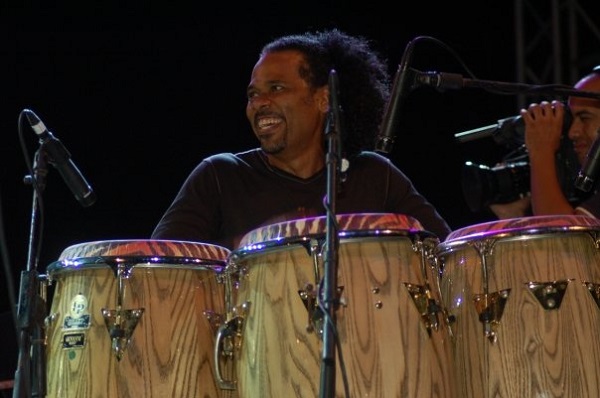
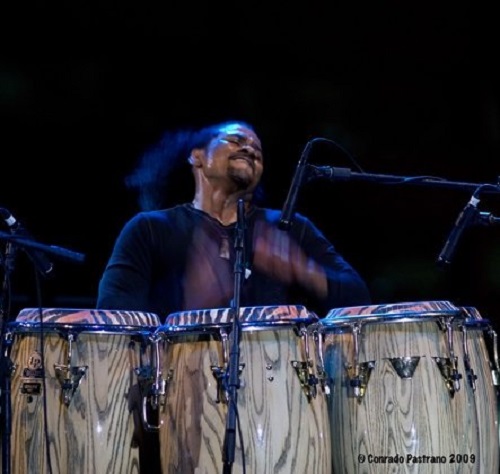
Paoli Mejías is a pivotal figure in the evolution of contemporary percussion, renowned for his seamless fusion of Latin jazz with masterful conga technique.

Paoli Mejias: From accompanying legends to leading a musical vanguard without borders

Paoli Mejias: From accompanying legends to leading a musical vanguard without borders

While he is an exceptional multi-percussionist, his command of the congas has established him as one of the most in-demand soloists in the world.

He is distinguished by a melodic style; he doesn’t just keep time he makes the drums “sing,” utilizing precise tuning and astonishing speed.

After touring the globe alongside icons such as Eddie Palmieri, Tito Puente, Seis del Solar, Chick Corea, and Marc Anthony, Mejías has solidified his status as an international benchmark. His vast musical, folkloric, and cultural knowledge positions him today not only as a percussion virtuoso but as a visionary leading his own quintet.

With a career marked by success, Mejías has produced three high-caliber independent albums: Mi Tambor (2004), which received a Latin Grammy nomination, Transcend (2006), and Jazzambia (2008).

Paoli Mejías, a talent forged in the streets and through discipline

Paoli Mejías, a talent forged in the streets and through discipline

These works have placed the Puerto Rican percussionist at the forefront of the genre, earning glowing reviews in the world’s most influential publications, including JazzTimes, DownBeat, Jazziz, and Modern Drummer.

A Talent Forged in the Streets and Discipline

Born in Río Piedras, Puerto Rico, on March 7, 1970, Paoli discovered his calling at the age of twelve. Inspired by the records of Carlos “Patato” Valdés and Ray Barretto, and the innovation of groups like Batacumbele and Irakere, he bought his first conga and began a self-taught journey.

Without formal teachers, he learned the language of percussion by mimicking the sounds emanating from his favorite vinyl records.

Paoli Mejía with Nuevo Sonido en el Jazz Latino

Paoli Mejía with Nuevo Sonido en el Jazz Latino

His true training took place in the effervescent musical atmosphere of San Juan, absorbing the styles of his mentors in street rumbas.

His professional debut came via Rafú Wagner (former vocalist for Bobby Valentín), and while still a teenager, he was already collaborating with renowned local artists such as José Nogueras, Glenn Monroig, and Charlie Sepúlveda.

The Leap to the Global Stage

His impeccable technique and melodic sensitivity quickly made him the preferred sideman for the greats. For over eight years, he was a key member of maestro Eddie Palmieri’s orchestra, recording on historic projects like Masterpiece/Obra Maestra (with Tito Puente), which won a Grammy Award.

Paoli Mejías is a fundamental figure when discussing the evolution of contemporary percussion

His discography now exceeds 20 commercial productions, including the nominated Acuarela de Tambores.

This exposure to world music enriched his creative fire. As Elmer González noted in Latin Beat: “Through Mi Tambor, Paoli achieves a watercolor of rhythms and textures that make this album one of the best Afro-Latin jazz productions released as a leader, and he aspires to continue a career forged on the stages of the world’s most important festivals.”

Beyond the Traditional Genre

Today, Paoli Mejías’ group offers a style that transcends labels. His proposal fuses the “Salsa Gorda” of the big orchestras with Puerto Rican bomba and plena, incorporating nuances of Greek, Flamenco, Indian, and African music. The result is a vibrant experience where the audience ceases to be spectators and becomes participants.

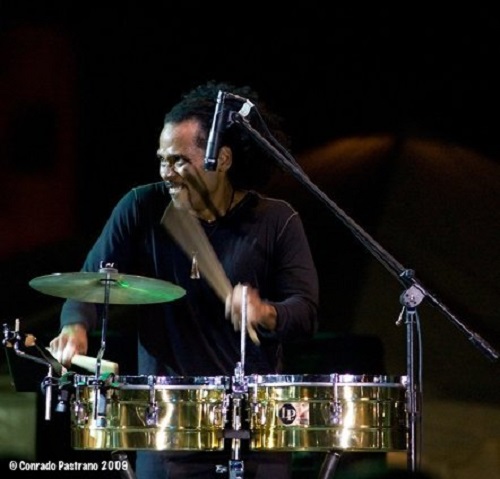
His versatility was cemented at the Heineken Jazz Festival, where critics highlighted his absolute mastery of minor percussion, timbales, bongos, and ethnic instruments like the Nigerian Udu, hailing him as one of the most complete percussionists of our time.

Paoli was there: Eddie Palmieri, Tito Puente, Seis del Solar, Chick Corea and Marc Anthony

Paoli was there: Eddie Palmieri, Tito Puente, Seis del Solar, Chick Corea and Marc Anthony

Beyond his role as a performer, the “Maestro” shares his knowledge by conducting clinics at prestigious institutions such as the University of Washington, the University of New Mexico, and the Puerto Rico Conservatory of Music.

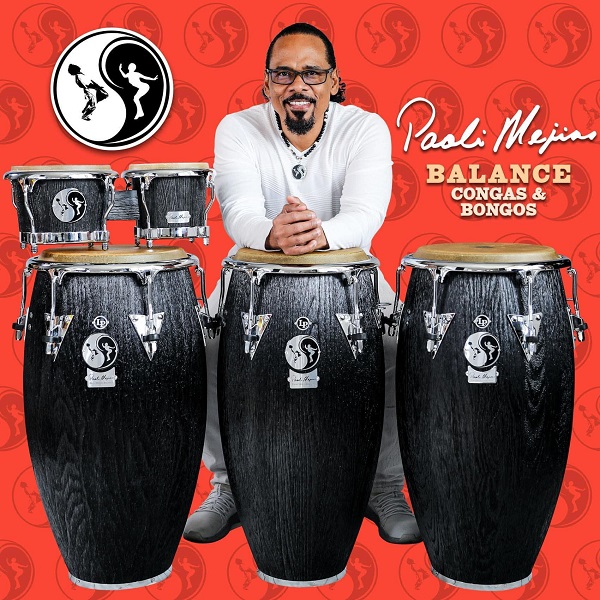
Sponsored by leading brands like Latin Percussion and Sabian, Paoli Mejías continues to elevate the legacy of Latin jazz into exciting new dimensions.

Member of Santana

Paoli Mejías is a world-renowned percussionist who was a member of the band Santana, led by Carlos Santana.

Joining Santana: Paoli joined the group in 2013, taking over the conga chair. His arrival brought an impressive technical energy and rhythmic depth, establishing him as a fundamental piece of the band’s world tours for several years.

Source: Paoli Mejías

Photos: Paoli Mejías Archives / © Martin Cohen

Also Read: Carlos “Patato” Valdés: One of the Greatest Percussionists in Latin Jazz History

Los Van Van Orchestra

European Union

Los Van Van Orchestra. The Flavor in Zurich

1960-1969

Vital to the success and peculiar sound of Van Van, was the career of its director Juan Formell. Before founding it on December 4, 1969, ventures as bassist in several groups, from the Orchestra of the Cuban Institute of Radio and Television, to several groups are and jazz, these multiple experiences conditioned their future.

Its passage by the Orquesta Reve marked a turning point in the search for the style I wanted to achieve. He tested his innovative spirit giving it some sound and format solutions.

It incorporates bass, organeta, electric guitar, violins and flute replaced the five by the system. The vocal work was replaced by mounting quartets own voices. This experiment served as a starting point for, once created the VAN VAN, their contagious rhythm patterns sit in popular dance music.

Los Van Van Orchestra

1970-1979

Earlier this decade important critics and connoisseurs of the subject could notice the successful future of the Van Van. Juan Formell maintaining the contributions made to the previous group (The Revé), enriched the set with other instruments such as percussion, that an exceptional and unique way, were weaving what would define as the SONGO.

This mode of address are elements taken from jazz and rock, it consists of a rhythmic design combined with a figurative percussion piano and bass. Then creating harmonic and melodic different timbres.

José Luis Quintana (Changuito), Raul Cardenas (the Yulo), Cesar Pedroso (Pupi), Fernando Leyva, Jesus Linares, Orlando Canto, José Luis Cortés (The rough), Julio Noronha, Gerardo Miró, William Sanchez, Jose Luis Martinez Miguel angel Rasalps (Lele), together with its director, explored all possible ways and then came to this rhythm that becomes the basis of its sound.

It is for these years that begin recording their first five albums and debuted on several international stages.

1980-1989

This represents an important period for the orchestra. They break their own style incorporating the bronco and cracking of the trombones sound. Turn introduced synthesizers, keyboards with multiple sound possibilities. The use of synthesized saxophone and electric violins draw much attention at the time. In addition to his recording material have new triumphs as: Báilalo eh! Ah! (1982), Come, see and move (1984), Havana itself (1985), Eso que anda (1986), We the Caribbean (1987), wanting (1988) is over, and finally Songo gives way to a new stage.

Van Van Orchestra collash 1980-1989

A hallmark of the group is the use of the picaresque, irony, manners in their songs. Becoming a sort of chronicle of the Cuban reality, his writings offer a social circumstance, themes that recreate the jocular of everyday life.

In these years his music transcends borders and Latin American venues like the Empire in London, England, Austria, Switzerland and Germany are witnessing a pace capable of passing the most skeptical of the dancers.

1990-1999

90 start with a tour around the country celebrating its 20 years, evolving into the contemporary timbre and go in search of more complex and preciosistas as the father expressions.

Their latest results leave no doubt that reach maturity. Pieces like “Give him cadela” and “That’s my problem” Disco Sugar (1993), “I am normal, natural” and “What a surprise” the latest in vivo (1994), “Let anger” and “De equals “Ay ampárame god (1995) and” This puts you bad head “and” Take her to your vacilón “Te puts the bad head (1997) are some of the records that predate came VAN VAN ( 1999) containing “Van Van arrived Permit”, “the black is cooking” and “Temba tomb timba”, works that have ravaged mercilessly in the context of salsa, for their contagious rhythm, joy and good taste. All retain the seal of the group even when using other orchestral resources.

Los Van Van Orchestra collash 1990-1999

2000

Thanks a work of more than thirty years with the Grammy award with Disco Van Van is here or Llego Van Van. Award for best salsa album recorded by soloists, duos and vocal and Instrumentalist groups. (It’s worth noting that the award received is not the Anglophone Grammy Latino) Such award is the result of its continued making magic for over thirty years.

Los Van Van Orchestra in concierto
  • « Go to Previous Page
  • Page 1
  • Page 2
  • Page 3
  • Page 4
  • Interim pages omitted …
  • Page 52
  • Go to Next Page »

International Salsa Magazine (ISM) is a monthly publication about Salsa activities around the world, that has been publishing since 2007. It is a world network of volunteers coordinated by ISM Magazine. We are working to strengthen all the events by working together.