• Skip to primary navigation
  • Skip to main content

International Salsa Magazine

  • HOME
  • Previous editions
    • 2026
      • ISM / March 2026
      • ISM / February 2026
      • ISM / January 2026
    • 2025
      • ISM / December 2025
      • ISM / November 2025
      • ISM / October 2025
      • ISM / September 2025
      • ISM / August 2025
      • ISM / July 2025
      • ISM / June 2025
      • ISM / May2025
      • ISM / April 2025
      • ISM / March 2025
      • ISM / February 2025
      • ISM / January 2025
    • 2024
      • ISM / December 2024
      • ISM / November 2024
      • ISM / October 2024
      • ISM / September 2024
      • ISM / August 2024
      • ISM / July 2024
      • ISM / June 2024
      • ISM / May 2024
      • ISM / April 2024
      • ISM / March 2024
      • ISM / February 2024
      • ISM / January 2024
    • 2023
      • ISM / December 2023
      • ISM / November 2023
      • ISM / October 2023
      • ISM – September 2023
      • ISM – August 2023
      • ISM July 2023
      • ISM Edition June 2023
      • ISM – May 2023
      • ISM April 2023
      • ISM March 2023
      • ISM February 2023
      • ISM January 2023
    • 2022
      • ISM December 2022
      • ISM November 2022
      • ISM October 2022
      • ISM September 2022
      • ISM August 2022
      • ISM July 2022
      • ISM June 2022
      • ISM May 2022
      • ISM February 2022
      • ISM January 2022
    • 2021
      • ISM December 2021
      • ISM November 2021
      • ISM October – 2021
      • ISM September 2021
      • ISM August 2021
      • ISM July 2021
      • ISM May 2021
      • ISM April 2021
      • ISM June 2021
      • ISM March 2021
      • ISM February 2021
      • ISM January 2021
    • 2020
      • ISM December 2020
      • ISM November 2020
      • ISM October 2020
      • ISM September 2020
      • ISM August 2020
      • ISM July 2020
      • ISM June 2020
      • ISM May 2020
      • ISM April 2020
      • ISM March 2020
      • ISM February 2020
      • ISM January 2020
    • 2019
      • ISM December 2019
      • ISM November 2019
      • ISM October 2019
      • ISM Septembre 2019
      • ISM August 2019
      • ISM July 2019
      • ISM June 2019
  • Spanish
  • Download Salsa App
    • Android
    • Apple

Search Results for: GRAMMY

Bandleader Arturo O’Farrill leaves behind Birdland to look for other opportunities

After making some room in his packed schedule, we finally managed to meet with bandleader, composer, and pianist Arturo O’Farrill, who after arriving in Richmond, Virginia, greeted us and talked about various interesting topics related to his long and successful career.

Of course, we did not miss the opportunity to ask if it is true that he and his orchestra will drop out of performing at Birdland as they had done over the past 29 years and what other projects in door they have from now on.

Arturo O'Farrill posing for the camera
Bandleader and pianist Arturo O’Farrill posing for the camera

What was his childhood like with two artist parents?

Arturo is the son of Cuban conductor, arranger, and musician Chico O’Farrill and Mexican singer Lupe Valero, so it is natural that he would show an interest in art like them. In addition, being the first male child in the family, there was lots of expectations on him and anything he could get, so he was enrolled in piano lessons and fortunately he had good aptitude for the instrument and was very present at his father’s parties and events with many other artists. 

So, he was for a time studying music on Saturdays until he discovered a Miles Davis album in his living room. He says that listening to it changed his life forever, and the song that most marked him was “Seven Steps to Heaven.” At that time, he knew he was going to become a professional musician by choice, not because his father had decided it for him.

He decided to become the best pianist he could be, and because of how busy Chico was with his own career, Arturo studied jazz alongside other young musicians. Some time later, he met bassist Andy González, who finally made him understand his Latin roots and encouraged him to study artists such as Charlie Palmieri and Eddie Palmieri.

“Precisely thanks to Andy, now I understand that our music is a treasure of the Afro-Latin diaspora, and the music my father and so many others of his generation made, for me, is the most incredible thing in the world,” said Arturo.

Arturo O'Farrill 02 2026
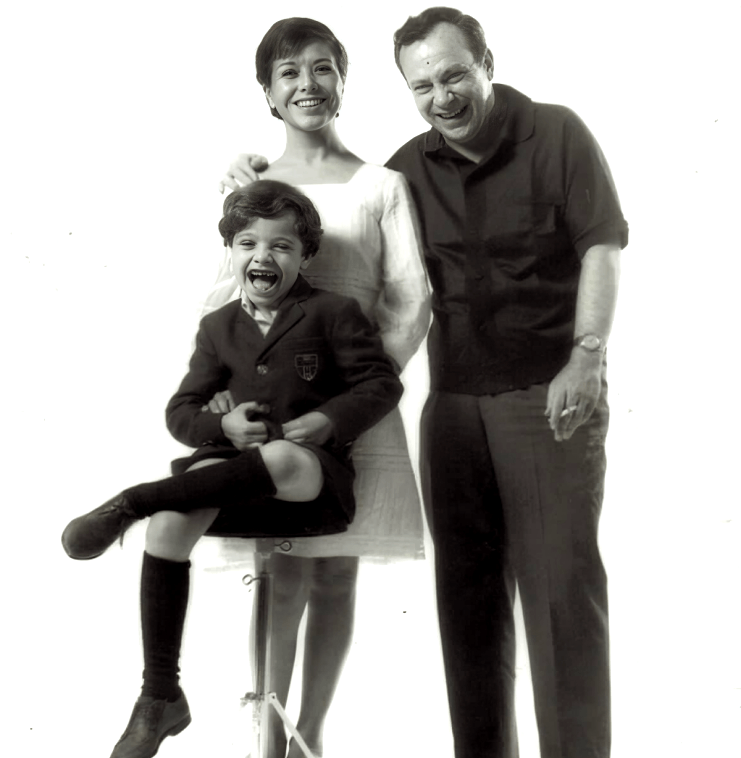
Arturo O’Farrill with his parents Lupe Valero and Chico O’Farrill

Arturo’s musical education

The artist studied at several top academic institutions, including LaGuardia High School of Music and Art, the Manhattan School of Music, the Brooklyn College Conservatory of Music, and the Aaron Copland School of Music. He clarified that he did not graduate from the Manhattan School of Music, but he does recognize that it was there that he began to truly understand music.

In the case of LaGuardia High School for Music and Art, his parents had to withdraw him because he never attended classes, as he was not interested in history and mathematics, but only in music. He was then enrolled in City As School and got his GED (General Educational Development). Later, at Brooklyn College, he met Professor Teófilo Ruiz, who taught him the importance of forging a social and political conscience, which had a profound impact on his development as a professional and a person. 

While working as a musician, Arturo earned his bachelor’s and master’s degrees at Queens College. He spent some time playing, studying, and teaching until Wynton Marsalis, artistic director of the jazz at Lincoln Center program, asked him to create an orchestra for the venue, which they called the Lincoln Center Jazz Orchestra. He worked there for five years until he knew he had to continue his career elsewhere.

Chico O’Farrill Afro-Cuban Jazz Orchestra

After playing along with the great jazz star Carla Bley and Machito, Arturo finally joined his father’s orchestra, the Chico O’Farrill Afro-Cuban Jazz Orchestra, at a time when they were creating many jingles for commercials. When the world was rediscovering Chico, his health was unfortunately in bad shape, so his son stood by his side to support him any way he could.

In the end, he had no other option than taking charge and, together with the rest of the musicians, recording the band’s last three albums. One thing that he had very clear when he took up this challenge was that he did not want to compete with his dad or be constantly compared to him, though he knew it was inevitable. In fact, after doing a concert with him, when he came home, he found a voicemail from someone saying: “You don’t have a fortieth of your father’s talent. In fact, I’ll see you picking through garbage.”

Arturo O'Farrill with the Grammy
Arturo O’Farrill posing with the Grammy he won in 2023

Despite the hurtful comments, it was liberating for him to hear it, since someone had the stupidity to compare him with his father when it did not make sense. That pushed him to use his own compositions in the orchestra, continue creating new music, and have a completely different path from Chico O’Farrill. Unknowingly, the man who insulted him had helped him throw off the mental and artistic chains that bound him by fear of being compared.

Afro Latin Jazz Orchestra

Although Arturo was sorry for leaving Chico’s orchestra, he knew he had to make many changes. One of them was that he wanted intergenerational musicians, more races and nationalities. This also led him to change the name of “Afro-Cuban Jazz Orchestra” to “Afro Latin Jazz Orchestra” because, from his point of view, Latin music must include not only Cuba, but also countries such as Puerto Rico, Colombia, Bolivia, Peru, Mexico, and many others.

Despite these changes, Arturo and his orchestra kept playing every Sunday at the prestigious Birdland jazz club, something they had been doing since 1997, before the death of Chico O’Farrill. However, 29 years after that important proposal, Arturo announced on social networks that he would not perform there anymore, but he was very grateful to the staff and management of Birdland for the opportunity they gave him over so many years.

When we wanted to know the reasons for this decision, the artist just told us that this was largely due to “creative and financial disagreements that were making the working environment very toxic,” so the best thing was to cut to the chase and seek pastures new. He assures us that his words do not want to disrespect anyone and that he wishes the best for both the club and its staff, who always treated him and his musicians the best. 

Eddie and Arturo
Eddie Palmieri and Arturo O’Farrill some years ago

Afro-Latin Jazz Alliance and Casa Belongó

The musician also wanted to talk about his foundation Afro Latin Jazz Alliance, which seeks to educate, play, and preserve. The project has grown so much that today it has 49 teachers, 21 public schools, and a preprofessional program known as “The Fat Cats,” which aims to help young musicians join an orchestra and exploit their talent as never before. 

After several formal requests, New York City finally agreed to construct a building with affordable apartments for residents of East Harlem and the first floors are destined to house Casa Belongó. These spaces will include a theater, a jazz club, a healthy restaurant, rehearsal rooms, classrooms, and much more. “Imagine that the power of our Latino community will physically change New York City history,” she concluded on this topic. 

Read also: Music reviewer and photojournalist Ricky Ricardo describes his work from the last 35 years

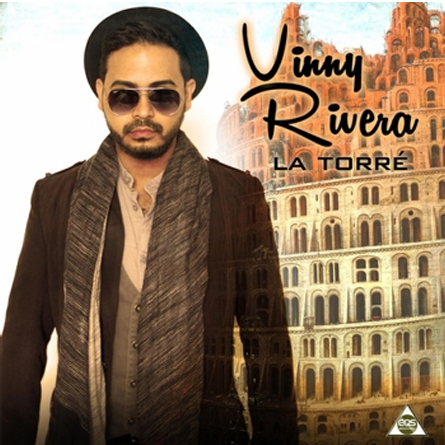
Vinny Rivera release his latest single “Mientes”

North America / USA / Boston

Vinny Rivera. The #1 Latin Kizomba Artist in the World

Vinny Rivera
Vinny Rivera

Vinny Rivera ‘s new single “Mientes” coming off of his album “La Torre” takes Kizomba to the next level. Good friend Guelo Star who is currently writing for the likes of Don Omar, Ivy Queen, Jowell y Randy, De La Ghetto just to name a few originally wrote this song with the spirit of Kizomba and Vinny Rivera was the perfect voice to compliment the writing. This love song is sure to bring The #1 Latin Kizomba singer and songwriter towards new heights of world music.

Sound off the bongos & kick in the bass, Vinny Rivera is ready to hit the stage. One of the hardest working singer/songwriters, Victor “Vinny” Rivera, continues to shine in the music entertainment scene. Surrounded by great mentors and industry leaders such as world renowned international producers M&N Pro, Jorgie Milliano, Grammy award winning producer Richy Peña (Niña Bonita), and Universal Latino’s recording artist Yunel Cruz, Vinny’s sound has captured audiences all around.

The music of Vinny Rivera is refreshing and lends a sweet tuned voice to the likes of urban bachata Superstar Prince Royce mixed in with Latin Pop Superstars Luis Fonsi & Enrique Iglesias. Genres of music are no different. His voice as well as being multilingual lends itself to Salsa, Bachata, Kizomba, Mambo, Pop, R&B and many more musical genres.

Vinny Rivera - Mientes
Vinny Rivera – Mientes

On the other hand and recognizing musical legend “Jerry Rivera”, Vinny Rivera alongside longtime friend and producer Jorgie Milliano pay tribute to a tropical classic “Amores Como El Nuestro” by giving it a tasteful Kizomba twist that audiences everywhere are sure to enjoy.

Vinny Rivera is currently working on a new Latin Kizomba album that will continue to capture the hearts and ears of all Kizomba lovers.

Besides, Vinny’s talent for capturing audiences has exponentially increased his passion for performing and entertaining. Performing in festivals and special events, the demand has been genuine and stage performances continue to impact his listeners.

Musical Trajectory 

Victor Rivera, known artistically as Vinny Rivera, was born in Boston, Massachusetts, United States. Of Puerto Rican parents under the tutelage of his Dominican stepfather, he is one of the most hard working singers / composers to shine in the musical entertainment scene. Being influenced by the Boston city melting pot, he was exposed to a variety of musical genres including Reggae, Jazz, Soca, R & B and pop and the sounds of his native island and the neighboring Dominican Republic sounds the Salsa, Merengue, Bachata.

2- Vinny Rivera
2- Vinny Rivera

Completely addicted and forced by music and the desire to share his energy and healing skills, at the age of 16 he bought his first DJ set with his best friend Okland López and began playing music of all kinds of events. In that period he realized that he wanted to take the next step, to make music. He then began to study all kinds of music and finally was able to be comfortable enough to sing.

His friends encouraged him to record music and were associated as a trio together Loco Jow to pursue a career within the music industry. Although not signed with any record label they achieved a network of relationships around the world that got them heard everywhere, which allowed them to rank No.3 in a company of radio and distribution of popular music in South America.

Vinny continued to work with the group opening shows for world-renowned acts such as Don Omar, Wisin & Yandel, Zion & Lennox, Ivy Queen, Rakim & Ken-Y, Tony Dize, Alexis & Fido.

The group split because of four years of Vinny’s enlistment in the United States Air Force. Now a veteran of the Air Force from June 2004 to December 2014 Vinny learned that “Life is too short and you have to give everything you have.”

He started working and learning with Grammy-winning Producers such as Richy Peña who produced the hit “Niña Bonita” by Chino & Nacho and Lenny Santos recognized by the Bachata group “Aventura”. To then sing and write with Universal Billboard and Cuban artist Yunel Cruz. He also wrote a final hit for Jowell and Randy “Lo Que Quiero”, which reached # 11 on the charts, being remixed with Reggaeton Super Stars Arcangel, Farruko and Divino produced by his great friend Jorgie Milliano.

Vinny Rivera collash

His work and vocal skills have captured the respect and attention of the public around the world. The formula for Vinny Rivera’s latest plan is to use his music as a tool to address problems in the world. Until then he will continue to work diligently on making good music to enjoy.

Buika. The Multicultural Sensation

European Union
Buika
Buika

“It takes a lot of guts to expose your true self to others, and acclaimed singer, songwriter, poet, composer and music producer, Buika (pronounced BWEE-ka), does that every night she goes on stage. As plain as the tattoos on her skin, Buika bears her soul to her fans across the world, which she affectionately calls her “tribe.””

This summer, Buika continues her journey of storytelling across Europe and South America in support of her latest album, fittingly named Vivir Sin Miedo (To Live Without Fear). Her eighth album and one with the most English lyrics, Vivir Sin Miedo, co-produced by Grammy Award-winning Swedish producer, Martin Terefe (Mary J. Blige, Mutya Buena, Coldplay) features Grammy-winning singer-songwriter Jason Mraz, German neo-soul artist Meshell Ndegeocello, and Spanish underground flamenco legend Potito.

2- Buika
2- Buika

Born María Concepción Balboa Buika in Palma de Mallorca, Spain, Buika grew up immersed in Spanish culture with her African-born parents. Surrounded by multiple cultures throughout her life, Buika had a variety of musical influences, from jazz and flamenco to pop, soul and African polyrhythm. This eclectic upbringing shaped Buika’s ability to make music without limitations. During her 15-year recording career, her albums flow seamlessly between pop, jazz, soul, reggae, afro beat, R&B and flamenco. Equally diverse are her collaborators, which include Pat Metheny, Anoushka Shankar, Chick Corea, Niño Josele, Bebo and Chucho Valdés, Seal and Nelly Furtado.

Photo 2 - Buika
Photo 2 – Buika

“Filmmaker and longtime fan, Pedro Almodóvar, remarked about Buika, ‘Seeing her draw from such different genres…mix them all together with such grace and spontaneity, one cannot help but think that there is a brighter future as long as one can witness the boundless evolution of this infinite performer.'”

A brighter future did arrive for Buika with each new album. Her 2006 album, Mi Niña Lola (My Little Girl Lola), won Buika high praise from the US media, including The New York Times, The New Yorker, Miami Herald and NPR. She received two Latin Grammys, one for her 2009 album, El Ultimo Trago (The Last Drink) and for her 2013 album, La Noche Más Larga (The Longest Night), which also won a Grammy nomination for Best Latin Jazz album.

Photo 3: Buika
Photo 3: Buika

Other Latin Grammy nominations included Best Album and Best Production for Niña de Fuego (Girl of Fire, special 2-CD Edition, which included her first collection of poems – 2008), Record of the Year for her albums, Se Me Hizo Facil (2010) and La Nave del Olvido (2013) as well as the new Record of the Year nomination for Vivir sin Miedo for the song “Si volveré” (2016)

Buika knows no boundaries when it comes to language or geography. She has collaborated with musicians and singers in Spanish, Catalan, English, French, Portuguese, Iranian and Armenian. Her touring has spanned the globe, covering Europe, Latin America, the Caribbean Islands, Asia, Africa and the US.

A great music ambassador, she reaches any small or large crowd..i.e performed at the US Embassy in Madrid, Spain, on a great 4th of July or a year ago at the Spanish Embassy in DC, for a larger audiences at different music festivals, such as “La Notte della Taranta” Italy over or “Jazz al parque” Bogotá just a month ago.

Photo - Buika
Photo – Buika

She has no barriers in terms of artistic expression and rejects any kind of self-limitation, a business owner, singer / songwriter, producer and poet, whom on her time off immerses herself in the world of photography, some of her best portraits and self-portraits can be seen on any of her books, Niña de fuego (Girl of fire) “special edition” and -A los que amaron a mujeres difíciles y acabaron por soltarse (To those who loved difficult women and ended up letting go)

Buika singing
Buika singing

For Buika, her music is more than a career. She says, “I am music (…)!”

  • [email protected]
  • [email protected]
  • [email protected] 
  • [email protected]

La Nota Band showcases the best of Venezuelan talent

We are proud to introduce the talented Venezuelans Rebeca Rodríguez and Armando Montiel, who are members of the group La Nota Band, which we will talk about in the following lines.

After thanking us and clarifying that they are both partners and share the direction of the band, they proceeded to tell us a bit about their origins, professions, band, and current careers.

Rebeca and Armando in 2018
Rebeca Rodriguez and Armando Montiel at the Latin Grammys 2018

Rebeca and Armando’s beginnings in music

Armando began his story by telling us that, in his case, he has always loved music and enjoyed listening to it live. In his native city of Maracaibo, there were many street concerts featuring national and international artists, which sparked his interest in joining his school’s marching band between the third and fourth grade. This, in turn, led him to participate in some intercollegiate gaita festivals, which are very popular in many cities of the South American country. 

This love for music took shape when the young man moved to Caracas and began his percussion lessons to finally have more formal training in this art. However, his parents made him promise to study a “real” career and then do whatever he wished for. He did so and studied civil engineering at Nueva Esparta University, but he has never practiced it, as music has always been his profession.

Rebeca also loved music, and from an early age, was always reciting poems, learning songs, and singing them at full blast. Then, as she grew up, she slowly built her career and made decisions based on that goal. Just as Armando, she participated in her school’s gaita festivals and took singing and dancing lessons, which led her to join bands in Caracas and become a backup singer for great artists.

Like Armando, she also studied a university degree, but in her case it was social communication at Andrés Bello Catholic University. She does not practice it either, although she does use her knowledge in favor of her artistic career.

Armando playing live
Venezuelan percussionist Armando Montiel playing live

Groups prior to La Nota Band

Armando said with a laugh that he could not mention all the bands and artists he has worked with because there are too many, but the most important ones were Ricardo Montaner, Chino y Nacho, Víctor Muñoz, Elvis Crespo, Guaco, Treo, Mermelada Bunch, and a few others. 

Meanwhile, Rebeca pointed out that they met playing for Son Bubalú in Caracas and continued to share experiences in a certain way. While Armando was Chino y Nacho’s percussionist, Rebeca was hired as their backup singer, so they continued to live together and grow as artists in the same environments.

Their professional relationship developed at such a level that they ended up moving to the United States together in 2014 to take advantage of some work opportunities that arose. Among the artists they were able to play with in the United States are Gloria Estefan, Wisin y Yandel, Daddy Yankee, Luis Enrique, José Alberto “El Canario,” and many more. 

Already in the year 2016, both realized that they loved collaborating with music greats, but also wanted to start their own business so they would not have to rely on what others wanted for them. That is when La Nota Band was born, with support from family and friends who were willing to help them on this new path.

Rebeca and Yandel
Puerto Rican singer Yandel and Rebeca Rodriguez at the Premios Lo Nuestro gala

The beginning of La Nota Band

In addition to being on their own, another thing Rebeca and Armando wanted to do was to offer employment to other musicians who were in the same situation as them years ago. This was the case of Armando’s twin brother, who was about to go to the United States and also devoted himself to music on percussion. Then, he bought a drum set so he could become the band’s drummer and his brother could take his place as a percussionist.

From the beginning, they have always focused on pleasing both Anglo-Saxon and Latin audiences, so they have been working to fill their repertoire with songs in both English and Spanish in order to enliven events where the two cultures come together.

What they have learned from the artists they have worked with

Of all the great artists Rebeca and Armando have been fortunate enough to work with, there are a number of things they have learned and applied to their own careers. One of these was the use of playback, as it is an extremely common and necessary resource in modern music. There are also other elements used to increase the sound quality of their performances.

Similarly, the discipline, professionalism, and perseverance necessary to manage this business are things they have seen in other artists and that have helped them get the place they want in the industry, which they also expect to achieve. 

The Venezuelan musicians always keep their eyes and ears open to capture what can work for them and apply it to their own project.

La Nota Band and Chino y Nacho
Part of La Nota Band with Chino y Nacho at the Premios Lo Nuestro gala 2016

Dreams fulfilled

Among the many dreams come true thanks to music, Rebeca and Armando appreciate being able to travel regularly to many countries, even if their professional activities prevent them from sightseeing as they would like. This is something they would not have accomplished with other kinds of work, which they are enormously grateful for.

In addition to that, they are pleased to have been able to perform on big and famous stages such as Crypto.com Arena, formerly known as Staples Center, and Madison Square Garden in New York, something they never would have thought possible in their early years in Venezuela.

And last but not least, their talent and hard work have also led them to perform in important award ceremonies such as the Latin Grammys, Premios Juventud, and Premios Lo Nuestro.

Read also: Colombian dancer and instructor Camila Cepeda takes salsa caleña to Canada

Brian Lynch is known for his versatility, excelling in Jazz (primarily post-bop and hard bop) and notably in Latin Jazz

Brian Lynch is a top-tier jazz trumpet, flugelhorn player, and arranger, highly respected for his work in both traditional jazz and his fusion with Afro-Cuban and Latin rhythms.

Lynch has been on the jazz scene for the better part of the last three decades. He is known primarily for his work as a sideman for many of the top musicians in jazz and as co-leader of a major Latin ensemble alongside Eddie Palmieri. For a long time, he has championed the music of the great trumpet players who preceded him.

Brian Lynch is a top-notch jazz trumpeter, flugelhorn player, and arranger

On this album, which is a natural follow-up to his 2000 album, Tribute to the Trumpet Masters, Lynch pays homage to the works of some of the most prominent, yet undeservedly unknown, jazz trumpeters, such as Joe Gordon, Claudio Roditi, Tommy Turrentine, Louis Smith, Idrees Sulieman, Charles Tolliver, and Kamal Adilifu (also known as Charles Sullivan).

Some of the tributes consist of performing compositions by these artists. In other cases, Lynch performs a tune he composed in the artist’s honor. In all cases, Lynch and his team, which includes Vincent Herring and Alex Hoffman on saxes and Rob Schneiderman on piano, are more than up to the task. They make each of the honorees proud.

Lynch ha estado en la escena del jazz durante la mayor parte de las últimas tres décadas

While there isn’t a single bad track on the album, standouts include Gordon’s “Terra Firma Irma,” which moves along to the potent beat of Pete Van Nostrand, along with excellent solos from all three horn players; Turrentine’s “Big Red” and Sulieman’s “Saturday Afternoon at Four,” both part of a treasure trove of unreleased compositions that were part of the Turrentine and Sulieman estates and that Lynch was able to tap into for these sessions; the hard bop of Tolliver’s “Household of Saud” (again, Van Nostrand’s drumming blew me away) and Lynch’s “RoditiSamba,” a tribute to the Brazilian master.

In short, Unsung Heroes is Brian Lynch’s best album as a leader in his long career. The musical mastery is top-notch, the compositions are always interesting, and the backstory of the whole project is a compelling history lesson for jazz trumpet fans who want to dig deeper than Miles, Diz, and Satchmo. The best news is that there’s more where that came from: this is only Volume 1 of the project; Volumes 2 and 3 are currently available online as downloads.

Paying tribute to the unsung masters of the jazz trumpet is a natural project for trumpeter and flugelhorn player Brian Lynch (the original text mentioned “Bryan Lynch” in this section, it is assumed to be a typo), who has been immersed in the hard-bop lineage since he was part of Horace Silver’s band in the 1980s.

He is accompanied by a mid-sized group that includes Vincent Herring on alto saxophone, Alex Hoffman on tenor saxophone, Rob Schneiderman on piano, David Wong on bass, Pete Van Nostrand on drums, and Vicente “Little Johnny” Rivero on congas.

Herman Olivera El Sonero del Siglo XXI voz líder de La Perfecta II de Eddie Palmieri, Dj. Augusto Felibertt y Brian Lynch un trompetista de jazz ganador de varios premios Grammy.

Moving through rhythms ranging from ballads to riffs and Latin jazz, the band masterfully navigates the material with solo and ensemble passages executed with great fluidity. The title suggests that there may be more installments in this series, and hard-bop fans will certainly hope so. Lynch has a wealth of material to draw inspiration from and a talented band with which to make an indelible mark.

Brian Lynch – Unsung Heroes Vol. 1 (2011)

Brian Lynch - Unsung Heroes Vol. 1 (2011)
Brian Lynch – Unsung Heroes Vol. 1 (2011)

Tracks:

  1. Terra Firma Irma
  2. I Could Never Forget You
  3. Further Arrivals
  4. Saturday Afternoon At Four
  5. Household Of Saud
  6. Roditisamba
  7. Big Red
  8. Unsung Blues
  9. Wetu

Musicians: Brian Lynch (Trumpet, Flugelhorn) Vincent Herring (Alto Sax) Alex Hoffman (Tenor Sax) Rob Schneiderman (Piano) David Wong (Bass) Pete Van Nostrand (Drums) Little Johnny Rivero (Congas 1-3, 1-6, 3-5)

Recorded October 12-13, 2008 and December 22, 2009 at Knoop.

Also Read: Oskar Cartaya “My Music, My Friends, My Time” Featured collaborations with illustrious friends such as Eddie Palmieri, Giovanni Hidalgo, Dave Valentin, and Justo Almario

  • « Go to Previous Page
  • Page 1
  • Page 2
  • Page 3
  • Page 4
  • Page 5
  • Page 6
  • Interim pages omitted …
  • Page 52
  • Go to Next Page »

International Salsa Magazine (ISM) is a monthly publication about Salsa activities around the world, that has been publishing since 2007. It is a world network of volunteers coordinated by ISM Magazine. We are working to strengthen all the events by working together.