• Skip to primary navigation
  • Skip to main content

International Salsa Magazine

  • HOME
  • Previous editions
    • 2026
      • ISM / May 2026
      • ISM / April 2026
      • ISM / March 2026
      • ISM / February 2026
      • ISM / January 2026
    • 2025
      • ISM / December 2025
      • ISM / November 2025
      • ISM / October 2025
      • ISM / September 2025
      • ISM / August 2025
      • ISM / July 2025
      • ISM / June 2025
      • ISM / May2025
      • ISM / April 2025
      • ISM / March 2025
      • ISM / February 2025
      • ISM / January 2025
    • 2024
      • ISM / December 2024
      • ISM / November 2024
      • ISM / October 2024
      • ISM / September 2024
      • ISM / August 2024
      • ISM / July 2024
      • ISM / June 2024
      • ISM / May 2024
      • ISM / April 2024
      • ISM / March 2024
      • ISM / February 2024
      • ISM / January 2024
    • 2023
      • ISM / December 2023
      • ISM / November 2023
      • ISM / October 2023
      • ISM – September 2023
      • ISM – August 2023
      • ISM July 2023
      • ISM Edition June 2023
      • ISM – May 2023
      • ISM April 2023
      • ISM March 2023
      • ISM February 2023
      • ISM January 2023
    • 2022
      • ISM December 2022
      • ISM November 2022
      • ISM October 2022
      • ISM September 2022
      • ISM August 2022
      • ISM July 2022
      • ISM June 2022
      • ISM May 2022
      • ISM February 2022
      • ISM January 2022
    • 2021
      • ISM December 2021
      • ISM November 2021
      • ISM October – 2021
      • ISM September 2021
      • ISM August 2021
      • ISM July 2021
      • ISM May 2021
      • ISM April 2021
      • ISM June 2021
      • ISM March 2021
      • ISM February 2021
      • ISM January 2021
    • 2020
      • ISM December 2020
      • ISM November 2020
      • ISM October 2020
      • ISM September 2020
      • ISM August 2020
      • ISM July 2020
      • ISM June 2020
      • ISM May 2020
      • ISM April 2020
      • ISM March 2020
      • ISM February 2020
      • ISM January 2020
    • 2019
      • ISM December 2019
      • ISM November 2019
      • ISM October 2019
      • ISM Septembre 2019
      • ISM August 2019
      • ISM July 2019
      • ISM June 2019
    • 2016
      • ISM December 2016
  • Spanish
  • Download Salsa App
    • Android
    • Apple

Search Results for: Grammy nomination

Founder and owner of Guapacha Productions Gil Tower

Talk with Gil Tower 

From this platform, we have had to interview many famous Latinos who have left their countries and Latin culture in general on high, but today is the turn of a very special one. We are talking about the talented Venezuelan musical director and multi-instrumentalist Gilberto Torres, better known as Gil Tower in the artistic environment.    

Thanks to a mutual friend, we have managed to make contact with Gil Tower, who from the beginning has been very accessible and willing to share everything related to his work in the music industry and his contribution to the Latin cultural scene, so we are very grateful to him for giving us the opportunity to hear his great story.   

Below, we share the topics covered in a conversation that was as enjoyable as it was enlightening.   

Gil talked with us
Talented musical director and multi-instrumentalist Gil Tower kindly talked with us

Musical beginnings in his home country   

Gil Tower always knew that he wanted to devote himself to the world of music. When he was about five years old, he began watching television programs related to classical music and zarzuela. Several of his aunts were zarzuela teachers and took him to see zarzuela orchestras, which was great for him. In fact, several of those musicians he got to see play on these occasions ended up teaching him when he began preparing to become an artist. 

One of the most important institutions in the training of Gil is the National System of Youth and Children’s Orchestras and Choirs of Venezuela (El Sistema), where he was trained directly by maestro José Antonio Abreu, a fundamental part in the path which this young musician would take later in his career.   

He joined the children’s orchestra, advanced all the way to the youth orchestra and finally reached a more professional level in the national orchestra. At about this time, Gil recalls that ”maestro Abreu always said that we were rich because we had an instrument in hand and could change the world through music. As a child, I didn’t understand what he was getting at. Now I do understand and I think he was absolutely right.   

”Abreu was a unique influence on me because he transformed me as a person and musician. He also made me become a leader, as he had always wanted me to be,” he continued.   

Learning from the groups he was in 

As to the learning acquired in the many groups he worked with, Gil singled out Carlos Rojas, who was a musician and jazz lover. Carlos took the initiative to give a workshop in La Pastora (a very important area of the city of Caracas, Venezuela). 

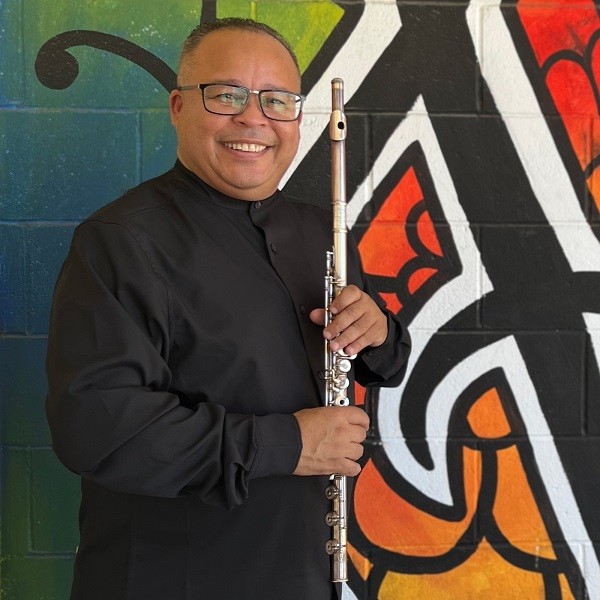
Gil with his flute
Gil Tower with his flute

As a teenager, Gil used to go to La Pastora to learn to improvise with Carlos in salsa, as he liked this genre so much ever since. This is how he started learning about harmonies and taking his first steps as a composer. 

When given the chance to play with the group Los Morrillos, he learned a lot about gaitas and other Venezuelan rhythms from the western region of the country. In the case of the group Madera, he learned (and keeps learning) a lot about Afro-Venezuelan music in general.   

After that, he met Jesús ”Chucho” García, who is an intellectual, activist and author of several books on Afro-Venezuelanity. Together they formed a group called Cimarrón, with which they represented Venezuela at the International Jazz Plaza Festival in 1989. To date, they are still very good friends and continue to learn about this great musical branch from one another. 

Why move to Germany? 

His initial plan was to move to the United States to continue his studies in Berkeley, but he was unable to obtain the required visa at the time. However, that would not be the end of his dream.   

It turns out that some friends of his from the group Madera went on a Germany tour and stayed to live there. Then, one of them, Felipe ”Mandingo” Rengifo offered him to join them to work in that country and try to be admitted in one of their conservatories. At the time, Gil only had a saving of $1,000, with which he took a gamble.    

Although he had to play in the streets and wash bathrooms at the beginning, he achieved his goal of entering a conservatory, an institution that gave him the opportunity to fix his papers to have a legal status in Germany. Having solved this inconvenience, he was able to focus his attention on his musical project Guapacha (name in honor of a great Cuban drummer who lived in the parish of San Agustin del Sur, Caracas).   

All this experience was preparing him for when he could finally achieve his goal of going to the United States.   


Gil and Guapacha
His project Guapacha was named after a great Cuban drummer who lives in Caracas

Arrival in the United States   

While still in Germany, Gil was invited to participate in a jazz festival in the United States, specifically in Montana. He did so well that he amazed many musicians with whom he shared the stage that day and exchanged contact information for future events.   

Later, he managed to play in San Diego and Boston, where he had the opportunity to share the stage with the Boston Power Orchestra and meet Danilo Pérez, Dizzy Gillespie’s pianist. The latter, in turn, recommended him to maestro Tito Puente, whom he met shortly thereafter. 

This was how the artist managed to build a very respectable reputation in the industry through his talent. This is how he ended up playing with ”half the world” and building a great prestige as a musician and composer.   

In addition to singing and playing multiple instruments, Gil has also taught low-income youth in order to spread the knowledge he has gained throughout his career. He even created an orchestra composed of children whose parents have no resources or documents in order to help them learn music and provide them with better work-study opportunities in the future. Some have even got into college and obtained scholarships thanks to this knowledge.    

Parallel to these activities, he began composing and making arrangements for other artists who began to require his services.    

Guapacha Productions   

On the subject of Guapacha Productions, Gil says that the idea came when he began researching on the music industry, licensing, distribution and other things. 

The musician saw an opportunity to achieve his dreams during the pandemic, which is when he noticed that many artists had no idea how to register a composition and how other necessary licenses to collect their royalties from their music works.   

Gil, Guapacha, and major labels
Guapacha was created for the purpose of becoming independent from major labels


Noticing the ignorance of many young talents about the industry, he created the company Guapacha Productions, which is responsible for the musical production and arrangements for artists signed to this label.    

When asked how the economic issue was handled for artists who do not have the resources to launch their career as it should be, he explained that there are three types of music distributors: major labels, labels created by the artists themselves and independent companies like Guapacha Productions. We are a group of independent artists who created our own label and we are trying to have our own distribution, so we would not be obliged to negotiate with any big distribution company” explained Gil. 

Along with that, it is Guapacha Productions that will make agreements with Spotify, iTunes and other digital platforms to distribute the music of its artists without intermediaries. 

The company has been so successful in these efforts that its name will soon be part of the Latin Grammys, which means that the talents signed to the label will have the chance to stand out and be finalists in the various categories.   

Cheo Valenzuela’s ”Salsa Buena” Tour   

With respect to the important issue of Cheo Valenzuela’s ”Salsa Buena” tour (artist signed to Guapacha Productions) in Europe, there are negotiations with some event producers in France, Spain and England so that Cheo Valenzuela can perform at various venues in those countries. There are also talks of taking the artist to Central America and the United States, specifically to San Francisco, where Gil lives.   

In addition to that, Valenzuela is working on an EP with five songs by other artists and another one with five compositions created by himself. Being already a singer with a long-standing career, this last work would also become him a consacrated composer before the world. Once all this material has been released, his name is going to be considered for a Grammy nomination, which Gil has a lot of faith that he will win due to his great talent.   

At the time of doing this interview, Valenzuela is taking a few days off due to the death of his mother, so we send our condolences and solidarity to him and his family at such a difficult time. 

Read also: Musical director of VibraSÓN Jake Jacobs is here 

Anderson Quintero

North America / United State / California

Anderson Quintero. The Multi Percussionist of relief generation in the Quintero Dynasty

Anderson Quintero began his musical career at the age of seven, when he joined Salserin, the only children’s Salsa orchestra visiting more than 10 countries.

Anderson Quintero
Anderson Quintero

Throughout his journey in this group, the young Anderson Quintero demonstrated the talent inherited from his father and the rest of his paternal family, who have been recognized as the greatest percussionists in Venezuela.

While in Salserin, Anderson Quintero became the official timbale player of the group, however he continued his developed on other percussion instruments.

This experience led him to visit about 20 countries, and record 5 musical productions.

Nevertheless, the talent that flowed through Quintero’s veins grew stronger with his studies in the Conservatory José Angel Lamas, along with lessons through which he discovered an interest for drumset.

Well-known musicians such as Vinnie Colaiuta, Tony Williams, Elvin Jones, Paul Wertico, Brian Blade, Robby Ameen, Jack Dejohnettee, and others, have influenced his musical career.

His talent on the drums eventually led him to join several rock bands in the city of Caracas, Venezuela.

During 2004 and 2005, Anderson Quintero was part of the band that accompanied Venezuelan singer/songwriter/Grammy Award Winner Franco de Vita on his tour “Mil y una Historias”, visiting more than 10 countries and garnering 2 Grammy nominations in 2006. That same year Quintero met up with two ex-band members of Salserin, Servando and Florentino, and joined their band “Enamorame”, playing drums and the timbales.

In mid-2006, Anderson Quintero moved to New York City, where he began to gain international recognition. Since then, he has performed with Jerry Rivera, Obie Bermudez, Louie Vega, Don Omar, Servando Y Florentino, Chino Y Nacho, Luisito Quintero Percussion Madness, Paloma San Basilio, Huascar Barradas , Aditus, Vanessa May, Kevin Jones, Tenth worlds, Sheila Charles (Ray Charles’ daughter), Emilly King, Taxi Amarillo, and Willie Colon’s bands, with whom he has traveled internationally.

Anderson worked on a musical about the life of the “Guarachera de América” Celia Cruz, in an Off-Broadway show.

He is a first-call session drummer in Venezuela and has recorded with the most important artist in that country in many different styles of music: pop, rock, folk, ethnic, latin, and jazz.

He’s also on tour with Venezuelan Trombon Ensamble, the best known trombone players in Venezuela. He recently joined the band of Spanish singer Paloma San Basilio, playing drums for their American tour.

In 2011 Quintero won a Grammy for Chino y Nacho’s album “mi nina bonita”.

He recently recorded drums on the album “punto ciego” by Venezuela’s progressive rock band LEXESTET and on “third element” by Luisito Quintero.

Anderson began 2014 touring with Frank Quintero and then joined the salsa orquestra “Los Adolescentes” for a tour around Mexico.

Currently he finds himself in the city of Los Angeles, California where he continues his musical career.


Eddie Montalvo

USA / New York / New York 

Eddie Montalvo, Was a personal friend of the singer and legend of Afro-Caribeña music Héctor Lavoe

Eddie Montalvo
Eddie Montalvo

Eddie Montalvo, two time Grammy award winner, born and raised in the South Bronx of New York City, descendent of Puerto Rican roots, found his passion for music at very early age.

His parents Leonardo and Carmen instilled in Eddie the richness of Latin music and the heritage of their Puerto Rican culture.

During his high school years, he ventured in the school band and decided to become a conga player.

In 1970 at the age of 17, Eddie’s first professional show was with Joey Pastrana which led to another show with Tony Pabon & La Protesta and Ernie Agosto y La Conspiracion.

Then immediately after studio recordings commenced with La Conquistadora de Martin Galagarza, Tony Pabon y La Protesta.

Then in 1976 Eddie joined the band Los Kimbos of Orestes Vilato as the band’ conga player.

Eddie Montalvo and his congas

Montalvo’s distinctive and unique conga playing was spreading like wild fire among his peers and in the music industry which consequently led his endorsement in 1976 by the instrument company Latin Percussion and recordings with Luis Perico Ortiz, Nicky Marrero, Jose Fajardo, Pupi Lagaretta, Luigui Texidor, Los Kimbos, Hector Casanova, Santiago Ceron and renown artists such as Celia Cruz, Hector Lavoe, Fania All Stars and Juan Luis Guerra and with Johnny Pacheco where Eddie was a member of his band for two years.

Eddie has had the privilege to record in over 200 productions for renown artists, as well as up and coming artists.

In 1977 Eddie had the honor of joining the band of one of salsa’ greatest artists, Hector Lavoe. Not only did Eddie successfully embraced the roll of conga player with Hector Lavoe’s band, but also did back up chorus for him as well.

While his time with Lavoe, Montalvo was hired to record on the album “Siembra” with renown artists, Willie Colon and Ruben Blades which sold over 25 million copies worldwide and became one of the most prestigious Salsa productions of all times.

In 1979 Eddie proceeded to audition and became the youngest member of the renown Salsa band, Fania All-Stars.

Eddie Montalvo on stage

After numerous accolades, worldwide notoriety and sold out concerts, today Fania continues bringing to the world the very best of Salsa of which Eddie continues being a member and is about to embark on Fania All Stars 2013-2014 World Tour.

During this time it’s when the opportunity of a lifetime presented itself. Ruben Blades approached Eddie in 1983 to join his world renown group, Seis del Solar.

After a series of successful tours around the world, Eddie recorded on the 1986 Grammy award winning album “Escenas” with Seis del Solar.

Then in June 2009, Ruben Blades reunited the Seis del Solar for the 25th Anniversary of Buscando America in an ambitious tour of the Americas.

Culminating  with the world tour of  Todos Vuelven in 2010 which earned Eddie a Latin Grammy win in 2011 for the live recording of Todos Vuelven Live Vol 1 & 2.

Eddie Montalvo also had the privilege of performing with Ruben Blades and Sting at the Amnesty International in Santiago, Chile.

Eddie Montalvo has achieved many goals and one of them was to record his first production titled On My Own in 1995.

He also had the privilege of participating in a supporting roll in the 2006 movie “El Cantante” based on the life of his personal friend and Salsa legend, Hector Lavoe, and also recorded in the sound track of the Broadway play The Capeman with Paul Simon.

In August 2012, Eddie Montalvo finally launches his new recording project titled “Desde Nueva York a Puerto Rico”.

Eddie Montalvo
Eddie Montalvo

This amazing production is a master piece in the making which was brilliantly produced by Eddie Montalvo and Jose Lugo, which has gathered some of Salsa’ greatest like: Ruben Blades, Cheo Feliciano, Willie Rosario, Papo Lucca, Domingo Quiñones, Rico Walker, Issac Delgado, Wichy Camacho, Pichie Perez and Tito Gonzalez.

Since Nueva York a Puerto Rico took the music industry by storm and earned Eddie an American Grammy nomination on February 2013 for Best Tropical Latin Album.

The first single of the album titled El Hijo del Ricachon featuring Ruben Blades received airplay in the Northeast and Puerto Rico.

The following singles Caonabo featuring Cheo Feliciano and Abicu featuring Tito Gonzalez are currently receiving airplay in Puerto Rico and throughout the Northeast of the U.S with much success.

This is one production all hardcore Salsa lovers cannot miss. Eddie is also presently showcasing and featuring his talent with Jazz artists like Lou Caputo, Dave Chamberlin, Joe Battaglia and Pucho & Latin Soul Brothers.

As one of the most sought after conga players, Eddie will continue to build his legend as a skilled clinician who shares his limitless knowledge of music to congueros and percussionists around the world.

Alex Acuña

USA / Los Angeles / California

Alex Acuña and 3 times Grammy nominated artist

Alex Acuña in concert
Alex Acuña

Born in Pativilca, Peru, 100 miles north of Lima, Alex Acuña was born into a musical family that inspired him and helped shape him as a musician. His father and five brothers were all musicians. Alex taught himself how to play

the drums from the age of four. By the time Alex turned ten, he was already playing in local bands. As a teenager, he moved to Lima and became one of Peru’s most accomplished session drummers, performing on many recording projects for artists, as well as film and television productions.

In Lima, Alex also earned a glowing reputation for his live performances. So much so, that at the age of eighteen, Alex was chosen in 1964 by the great Cuban band leader, Perez Prado, to join his big band. It was with the Prado band that Alex first traveled to the United States.

In 1965, Alex moved to Puerto Rico to work as a studio musician and play locally. During this period, he also studied for three years at the Puerto Rico Conservatory of Music, playing as a classical percussionist with the Symphony Orchestra under the direction of the famed Spanish cellist master Pablo Casals.

Alex Acuña with the Congas

Alex moved to Las Vegas in 1974, where he played with such greats as Elvis Presley Diana Ross, Paul Anka, Frank Sinatra, Olivia Newton John. Between 1975 and 1977, he made part of jazz history when he became both drummer and percussionist for one of the most innovative and pioneering jazz groups of our time, Weather Report.

He first performed as percussionist (October 1975 to April 1976), and later as drummer (April 1976 to October 1977). He recorded two albums with the group: “Black Market” (1976) and the highly successful “Heavy Weather” (1977), which included the famous tracks “Birdland” and “Havona.” “Heavy Weather” became the first jazz-fusion album to sell a million copies.

Alex next moved to Los Angeles, California, in 1978 where he quickly earned the position of a valued session drummer and percussionist for recordings, television and motion pictures.

His countless album credits include such diverse artist as U2, Paul McCartney, Blondy, Joni Mitchell, Jay Z, Ella Fitzgerald, Whitney Houston, Annie Lennox, Sergio Mendes, Yellow , Joe Cocker, Jennifer Nettles, Jackets, Chic Corea, Herbie Hancock, Paco de Lucia, Ron Carter, Gonzalo Rubalcaba, Julio Iglesias, Koinonia, Chris Botti, Chano Dominguez, Tom Jones, Seals, Juan Gabriel, Luis Miguel, Placido Domingo, Ron Kenoly, Sam Phillips, The Winnans, Phil Keagy, Lee Ritenour, Larry Carlton,Wayne Shorter, Joe Zawinul and also has performed with the London Symphony Orchestra, Metropole Orchestra, WDR big band.

Alex has also performed live with the likes of Al Jarreau, Bobby McFerrin Roberta Flack, Antonio Carlos Jobim, The Gipsy Kings, Paco de Lucia, Celia Cruz, Carlos Santana, Herbie Hancock, Christina Aguilera, James Taylor, Michael Mc Donald, Tito Puente, Roy Orbison, Bruce Springsteen, Eddie Palmieri, to name a few. Additionally, Alex has recorded film scores under the direction of Great Composers:

Gustavo Dudamel, Dave Grusin, Alan Silvestri, Michele Legrand, Bill Conti, Michele Colombier, Marvin Hamlish, Maurice Jarre, Mark Isham, Michael, Giacchino, John Dabney, John Powell, James Newton Howard, Hans Zimmer, Randy Newman, John Williams, Harry Gerson Williams, Lalo Schiffrin, Steve Jablonski, Christophe Becker and many others.  He became the recipient of many awards and honors including the Emeritus MVP award from NARAS

(National  Academy of Recording for the Arts and Sciences) and winner of the “Best Latin/Brazilian Percussionist” of Modern Drummer’s Readers Poll for fifteen consecutive years.

Alex’s South American and Caribbean roots and understanding of contemporary and classical music make him a complete and skilled master musician. In 2000, Alex Acuña y Su Acuarela De Tambores received a Grammy nomination for “Best Traditional Tropical Latin Album” for “Rhythms for a New Millennium”. This solo album included varying styles of Latin, South American and African percussion. The nomination confirmed Alex’s vast knowledge and expertise of percussion rhythms. Zan Stewart of the Los Angeles Times wrote, “Alex Acuña is the epitome of the world music percussionist, to whom no style is a stranger”.

Alex also received two Latin Grammy nominations in 2003. Los Hijos del Sol “To My Country”, which was released by his independent record label – NIDO Entertainment. The second Latin Grammy nomination came for Tolu’s

“Bongo de Van Gogh” released by Tonga Productions. In 2004, Alex released his follow up album by Alex Acuña and the Unknowns titled “No Accent”. New Cd called Barxeta by Losen records 2013. In addition, Alex has composed music for various artists and produced “Thinking of You” by Alex Acuña and the Unknowns, “Rumberos Poetry” by Tolú and “Aliyah” by Kay Silberling. This year will see the release of some new DVD projects for Drum Channel.

Alex is widely known as an educator, gifted teacher and clinician of drums and percussion. He has recorded four solo instructional videos and provides seminars at universities such as UC Los Angeles, Berklee School of Music in

Boston. USC  and other top international schools of music. HYPERLINK “http://www.DWDrums.com”

www.DWDrums.com;

HYPERLINK “http://www.sabian.com” www.sabian.com;

HYPERLINK “http://www.GonBopsPercussion.com”

www.GonBopsPercussion.com;

HYPERLINK “http://www.VicFirth.com” www.VicFirth.com;

HYPERLINK “http://www.Evans.com” www.Evans.com;

Alex Acuña with the music instruments

Zoom and Shure microphones all sponsor Alex. He is also credited with the design of Zildjian’s “Azuka” line of cymbals, signature Vic Firth sticks and the caddy stick bag, the Alex Acuña line of Signature percussion instruments with GonBops – 4 Special Edition Congas, 5 Cow Bells, Timbales, Bongos and his own Especial Edition Peruvian Cajon.

Innovation, energy and pure heart characterize Alex’s playing. It is easy to see why Alex Acuña is one of the most sought after musicians of our time. Alex recognizes his music as a gift from the Lord Jesus and gives all the glory to God!

HYPERLINK “http://www.myspace.com/acunahoffmathisen”http://www.myspace.com/acunahoffmathisen

HYPERLINK “http://www.youtube.com/watch?v=35KT2leNa30″http://www.youtube.com/watch?v=35KT2leNa30

HYPERLINK “http://www.facebook.com/event.php?eid=148441735197932″http://www.facebook.com/event.php?

eid=148441735197932

Alex Acuña
Alex Acuña

Famous Movies where Alex Acuña is playing since 2000

Drum Line

The Incredible

Hancock

Mr. and Mrs. Smith

Mission Impossible 3 & 4 Star Trek Into the Darkness Star Trek

Ratatouille

UP

Hop

Super 8

Italian Job

Beverly Hills Chihuahua Happy Feet

Transformers

Speed Racer

RED

The Kite Runner

X-Men Origin- Wolverine Burlesque

Entangled

Bourn Legacy

Bucket List

Toy Story 3

Cars 2

Monte Carlo

Happy Feet

Hansel & Gretel

Jupiter Ascending

Monsters University

John Carter

Cars

Smurf

Frozen

Tangle

Bourne Legacy

Monte Carlo

Down Of the Planets of the Apes Tomorrowland

Jupiter Ascending

Inside Out

Minions

Jurassic World

Sisters

The Big Short

Alvin and the Chipmunks: Road Chip Zootopia

Movies that Alex recorded and won the OSCARS 2016 – 2017

1 – la la land

2 – Moana

3 – Star wars – Rogue one

4 – Moana

5 – Zootopia

6 – Jungle Book.

Movies that Alex recorded during 2017

1 – COCO

2 – Star Wars – The Last JEDI

3 – Pitch Perfect – 3

4 – Despicable – 3

5 – Spider Man – Home Coming

6 – Birth Of A Nation

7 – Minions

8 – War For The Planets of The Apes

“Tito Puente: When the drums are dreaming” A biography of the King of Latin Percussion by Josephine Powell

North America – USA –CaliTifornia

This month we are sure that you will have time to enjoy an excellent reading at home. So we recommend this book by Josephine Powell. An interesting biography about the legendary Tito Puente, that takes us on a journey through the more than 60 years in which he performed.

Further the life of Tito Puente, you can know his insight into the Latin music industry. With many anecdotes of his encounters, racial discrimination while touring and how that impacted his relationship with other band members. There are also numerous insights into his personality, his temperament, and the many obstacles he had to overcome to achieve legendary status.

Josephine Powell’s book on Tito Puente and his contributions to Latin music and dance is a treasure trove of people, places, facts and history. Because of the author’s place in the history of Latin dance, she takes the reader with her through that fascinating maze of how artists like Puente changed the exposure and tastes of the American public and the world.

The Latin Ballroom world today reflects how we adore – and then neglect and forgets – the people who made us who we are. She mentioned many fascinating dance-related characters in this story that takes place in New York, Los Angeles, Miami, the Catskills and Havana.

It is also a much-needed history of great nightclubs and ballrooms, which are only dim memories for the young – but in their time, were the breeding grounds of Latin music and dance. Tito Puente’s percussion and passion are finally brought to life in a fascinating book.

To remember Tito Puente’s career as accurately as Josephine Powell has done makes this biography a worthwhile read. Tito Puente the man and Tito Puente the musician are blended into the tempo of the times during which the musical man lived. For young musicians seeking success Josephine Powell’s well-written commentary provides a glimpse of what can lie ahead in one’s career; so do read Powell’s take on Tito Puente’s life and perhaps capture a taste of how you too can climb the charts with a dash of spice in your style.

With over 100 albums, several Grammy nominations, 7 Grammys and posthumously awarded The Grammy Lifetime Achievement Award in 2003, his footprint in the world of music will forever be the standard of excellence that others will look to emulate.

Josephine Powell took on the monumental task of writing about his life, the forward was written by Tito Puente 2 months before he died.

Because of their lifelong friendship of many decades, Josephine was the one person who could create this book. Her talent and passion will pulled this off to perfection. He was a man who brought his music to the world, and put the Mambo on the map.

This book never could have been written without her dedication and perseverance and the personal moments she shares. From the very first chapter, the quality of her writing can be seen as she starts with the moments leading up to his death and continues for 16 more, giving you the history of Latin music from its inception to the music of today. Throughout her many archives of pictures from her private collection, your eyes will wide with wonder.

Josie Powell traces the evolution of Afro-Cuban, Puerto Rican and jazz forms from their generally recognized origins through the end of the twentieth century, focusing on Puente’s interactions with professional allies and constant rivals.

Powell documents musical events as an aficionado of the Latin genres, almost religiously avoiding disclosure of Puente’s family life. Those not yet born during the Big Band decades or Mambo mania can imagine the atmosphere from descriptive passages of Manhattan ballrooms, Havana dance halls, LA nightclubs.

About Tito Puente

Ernesto “Tito” Puente was born in 1923 in Spanish Harlem and grew up with the advent of radio and American swing bands. At 10 years old he aspired to be a dancer, like Fred Astaire. An ankle injury gave him the opportunity to explore his talent as a musician. At fourteen he won the coveted Benny Goodman, Gene Krupa drum contest. Tito became a master percussionist. His instrument was the timbales, a pair of cylindrical drums beat upon with sticks. When he joined the dynamic Machito Orchestra at seventeen he saw a promising future, but the Japanese attack on Pearl Harbor December 7, 1941 took him off to war.

He led a makeshift orchestra delivering lovable American wartime tunes when he was not fighting. He returned home wounded, weary and jobless. Puente’s tale should have been the story of every returning American GI, who went off to war, came home to his sweetheart, attended college, raised a family and settled down in an adorable house. Things were not that way.

After the war his obsession for Cuban music drove him to Havana. He attended secret meetings of Santería, an Afro-Cuban religious cult with its roots steeped in mysticism often referred to as black magic. With the lure of the sacred batá drum he discovered a world of rhythms never heard by a white man’s ear. He found himself inside the beat, and thoroughly possessed. Soon Tito became a devotee of Santería and used those drum patterns and calls, which were the mainstay and backbone of his music. Today this hot hypnotic music is known worldwide as Salsa.

About Josephine Powell

Author Josephine Powell – a music historian, lecturer, and consultant on ballroom music and dancing and Latin American music – was a consultant (music, history, and dance) on the motion pictures Salsa, Havana, and The Mambo Kings, and their soundtracks; The Mambo Kings track received a Grammy Nomination. She also consulted on two Golden Eagle television shows; two television documentaries, one Presidential Inaugural Ball, and two Grammy-winning record albums by her mentor Tito Puente.

In 1990, she obtained a star for her mentor on Hollywood’s Walk of Fame, orchestrated his associated live concert on the Boulevard, and organized a gala event at the Hollywood Roosevelt Hotel, with music industry executives, film producers, and celebrities.

Powell’s dance career took her to the South Pacific, the Philippines, Guam, Hong Kong, Thailand – where she performed for the Royal Family – and Vietnam, where she introduced mambo to the troops in a revue she wrote herself. A Gold Medal ballroom dancer, Powell was Tito Puente’s West coast mambo dance partner, and a cast member of the Broadway show Sketchbook in Las Vegas.

Through touring the country for over a decade with stage and lounge shows, along with work in the recording, television, and movie industries, Powell learned wardrobe design, writing, comedy, and choreography. Appeared at the Tropicana, El Rancho Vegas, Flamingo, and Nevada Club in Las Vegas; The Golden Hotel and Mapes Hotel in Reno; The Wagon Wheel in Lake Tahoe, and The President Hotel in Atlantic City, among others.

After an injury forced her to retire from dance, Powell became a real estate agent in Beverly Hills, where she became actively involved in political work with celebrities and later joined Connie Stevens’s organization Les Girls. Powell’s work and charitable activities afforded many opportunities to work with Hollywood producers, directors, writers, and luminaries.

Powell studied the history of ballroom music and dance, ethnomusicology, journalism, and Spanish at UCLA. A regularly featured musicologist on radio stations KXLU and KPFK, Powell receives many requests for lectures and consultations. She has been a presenter and judge at numerous dance competitions, including the Feather Awards and the U.S. Open National Swing Dance Competition. The Mormon Temple Genealogical Library in Los Angeles has made her its expert lecturer on French Colonial Maritime records. Since 1986, she has conducted ten research and study trips to Havana, where she is a curatorial consultant for El Museo Nacional de la Música Cubana.

With information from: https://josephinepowell.com
You can buy this wonderful book in Amazon: https://www.amazon.com/Tito-Puente-When-Drums-Dreaming/dp/1425981585

  • « Go to Previous Page
  • Page 1
  • Interim pages omitted …
  • Page 3
  • Page 4
  • Page 5
  • Page 6
  • Page 7
  • Interim pages omitted …
  • Page 15
  • Go to Next Page »

International Salsa Magazine (ISM) is a monthly publication about Salsa activities around the world, that has been publishing since 2007. It is a world network of volunteers coordinated by ISM Magazine. We are working to strengthen all the events by working together.