• Skip to primary navigation
  • Skip to main content

International Salsa Magazine

  • HOME
  • Previous editions
    • 2026
      • ISM / April 2026
      • ISM / March 2026
      • ISM / February 2026
      • ISM / January 2026
    • 2025
      • ISM / December 2025
      • ISM / November 2025
      • ISM / October 2025
      • ISM / September 2025
      • ISM / August 2025
      • ISM / July 2025
      • ISM / June 2025
      • ISM / May2025
      • ISM / April 2025
      • ISM / March 2025
      • ISM / February 2025
      • ISM / January 2025
    • 2024
      • ISM / December 2024
      • ISM / November 2024
      • ISM / October 2024
      • ISM / September 2024
      • ISM / August 2024
      • ISM / July 2024
      • ISM / June 2024
      • ISM / May 2024
      • ISM / April 2024
      • ISM / March 2024
      • ISM / February 2024
      • ISM / January 2024
    • 2023
      • ISM / December 2023
      • ISM / November 2023
      • ISM / October 2023
      • ISM – September 2023
      • ISM – August 2023
      • ISM July 2023
      • ISM Edition June 2023
      • ISM – May 2023
      • ISM April 2023
      • ISM March 2023
      • ISM February 2023
      • ISM January 2023
    • 2022
      • ISM December 2022
      • ISM November 2022
      • ISM October 2022
      • ISM September 2022
      • ISM August 2022
      • ISM July 2022
      • ISM June 2022
      • ISM May 2022
      • ISM February 2022
      • ISM January 2022
    • 2021
      • ISM December 2021
      • ISM November 2021
      • ISM October – 2021
      • ISM September 2021
      • ISM August 2021
      • ISM July 2021
      • ISM May 2021
      • ISM April 2021
      • ISM June 2021
      • ISM March 2021
      • ISM February 2021
      • ISM January 2021
    • 2020
      • ISM December 2020
      • ISM November 2020
      • ISM October 2020
      • ISM September 2020
      • ISM August 2020
      • ISM July 2020
      • ISM June 2020
      • ISM May 2020
      • ISM April 2020
      • ISM March 2020
      • ISM February 2020
      • ISM January 2020
    • 2019
      • ISM December 2019
      • ISM November 2019
      • ISM October 2019
      • ISM Septembre 2019
      • ISM August 2019
      • ISM July 2019
      • ISM June 2019
    • 2016
      • ISM December 2016
  • Spanish
  • Download Salsa App
    • Android
    • Apple

Search Results for: Gran Combo of Puerto Rico

Fidel Antillano “The greatest satisfaction of a musician is to finish a quality product and see the acceptance of the public” 

Latin America/ Venezuela / Caracas

Salsa is an expression of life within the caraqueño and Latin American neighborhoods. This fusion of rhythms has known how to slip in and no one escapes its magic and enchantment. Such is the case of pianist, composer and arranger Fidel Gregorio Antillano, born in the city of Caracas on June 10, 1962 and raised in one of the city’s sound districts, Los Frailes de Catia, where he lived surrounded by salsa groups, street performers, carnival and Christmas parties, enjoying the golden age of the salsa boom.
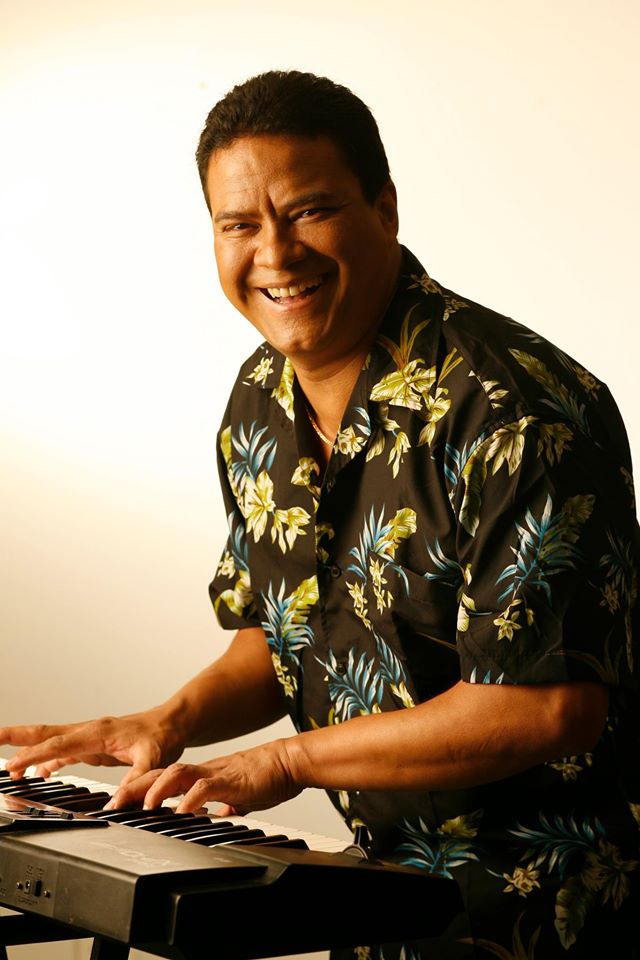
Fidel Antillano - Photo
Fidel Antillano – Photo

This genre influenced his destiny and allowed him to make it his way of life. Salsa is a cultural condiment with the flavor of many countries, which has managed to transcend borders.

Almost always at home the musical vein is lit. Was this your case? 

“There was influence from my relatives, in my house there was always music, it was like a big jukebox, La Billos, Los Antaños del Stadium, la Sonora Matancera, Barbarito Diez, Casino de la Playa, among others, my grandmother lived in El Retiro, in La Pastora, she had a piano, when I went to visit her with my dad, I sat at the piano and I liked what I felt, music was part of my family, my dad was a great music lover, he bought all kinds of records, classical music, Creole music, tango”.

Did your grandmother or your father play the piano?

“No, my grandmother Gregoria “Tata” -we called her that because of our affection-, she was an amateur but she did not play it, she had it as a reference, she played cuatro, my uncle also played cuatro and guitar, my father did not play anything, he bought many Lps, given the house we had -the piano was a kind of furniture that embellished and gave cache to the house-“.
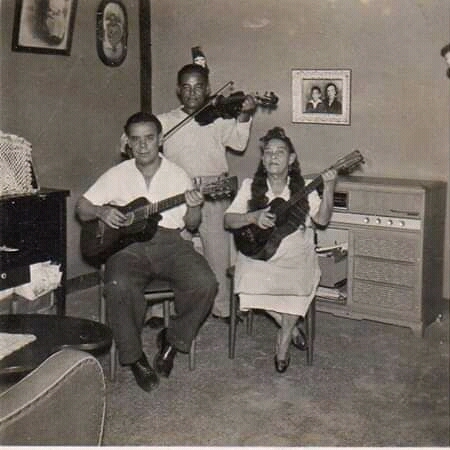
Family photo of Fidel Antillano's uncles Isaías, Pablo and his grandmother Tata
Family photo of Fidel Antillano’s uncles Isaías, Pablo and his grandmother Tata

“My older brother -on my father’s side- he did have some knowledge, he was the most educated, in that house there were harps, cuatro, maracas, records, my family on my father’s side were very fond of music, from our musical family tree we have four musicians -Julito Antillano, Denis Antillano, José “Kikin” Fernández and me”.

What anecdotes or memories do you have of the piano?

“At the time of the construction of La Cota Mil, my grandmother’s piano was taken to my father’s house, at that time I began to kill a fever, I was about 10 years old, it was the time of the gazebos to choose the queens of the neighborhoods, the Sexteto Juventud was in fashion with its theme Caramel and Chocolate; at Christmas and Carnival we did not peel a rehearsal of the groups that lived in Catia”.

That would be the first impulse to awaken the gift within 

“Yes, that was my first impulse, I inherited that musical vein from my grandmother and my father, they were close to salsa and folk musicians, besides, my father and my uncle bought a lot of Long Play (elepé), I started working with my

brother in a shoe store and started buying records.

Fidel, I understand that you are a self-taught musician. How was that learning process and deciding that the piano would be the instrument to play?

“Yes, I am a self-taught musician, back in the 70s we used to hear Nico Monterola’s Orquesta Renovación, La Banda y Su Salsa Joven on the radio. To my surprise, we used to meet with those musicians and we used to go and hang around their rehearsals, this had a big impact on me, there were many shows, it was a coming and going of groups of the moment”.
Orquesta Renovacion
Orquesta Renovacion

When I was 18 or 19 years old, seeing Salsa Mayor, Pacheco, Carlos “El Grande”, all those great musicians, I made the decision to learn to play an instrument, I looked for a teacher or someone who would teach me to play the piano -Salsa was underestimated and that’s why they thought it shouldn’t be studied”.

He got a teacher

“No, because of what I’ve told you, salsa was seen with bad eyes, the scholars did not see it as music would be, look, at that time I was exchanging the Lp with my friends, in one of those exchanges a friend lent me the album “Musical Conquest” by Sonora Ponceña, when I heard the song ‘Ñañara’ I fell and the entrance of the piano played by Papo Luca, that simple montuno, I was hooked – I said; this will be my thing!

That was the leap you’re hoping for 

“Yes, that was the big jump, I went uphill because I didn’t know what a chord was, I didn’t know anything, I mounted 4 songs with simple chords, taking the first steps I fell in love, then I joined people with more knowledge”.

“As there was no one to teach me, I saw books, I had chords of the songs and I was guided by a music theory book, I learned to decipher the codes, music is a code, I read the Swing Latino magazine -from my friend Angel Mendez-, without stepping on a school, I was fed up; one must know about harmony, contra punto, I bought the Berklee harmony book and many more, -I rubbed shoulders with other musicians -some records came as a clinic, all this was feeding me”.

He was his own teacher and a very disciplined student

“I was my own teacher and I took on a discipline because that’s what I wanted, if you went to an institution where they gave music lessons and you said you wanted to play salsa, the musician was fined or thrown out, they were treated in a derogatory way”.

It was worth the effort, from being an empirical musician to playing with the best orchestras.

“I started with Grupo Fósforo, back in 81, we only wanted to play, it was a sextet, Mr. Manuel Ibarra passed me the notes and I didn’t know much about playing, then Jesús “Mandinga” Torres, took me to see different groups, That’s when I decided to introduce brass into the sextet and it became an orchestra, -all the arrangements were done by me-, I had any number of records and many songs from those Lp were not played or played by other orchestras -Gran Combo, Sonora Ponceña, among others-“.

He is a collector

“Not a collector as such, but I do like it, not with the eagerness that any collector has to obtain all the production, as La Sonora Ponceña says, but I have my Lp”.

What happened with the group Fósforo?

“It dissolved because they each started playing for different orchestras.”

And then the Grupo Fósforo   

“Mandinga tells me that Carlos “Tabaco” Quintana needs a pianist, I clarify to him that I do not know how to read the scores, that he gives me the papers that I have the album, I began to listen to the album and I saw the papers, with that I completed the study, and I was increasing the experience, I recorded in the production of Tabaco and his Group Futuro”.

“Then with Dimas and his Orchestra Alegria, it was the first album I recorded professionally in the year 85, through those works I was doing with Dimas, I know Mauricio Silva, I felt afraid because Mauricio already had experience, he was the producer of Dimas’ album, but everything flowed, on the way I know many other professionals”.

“In the year 87 Roberto Blades came to Venezuela to the famous events Consul, Alberto Vergara recommended me Manuel Guerra and we made several tours by some regions of the country, then Julito – my nephew – told me that Naty Martinez needed a pianist”.
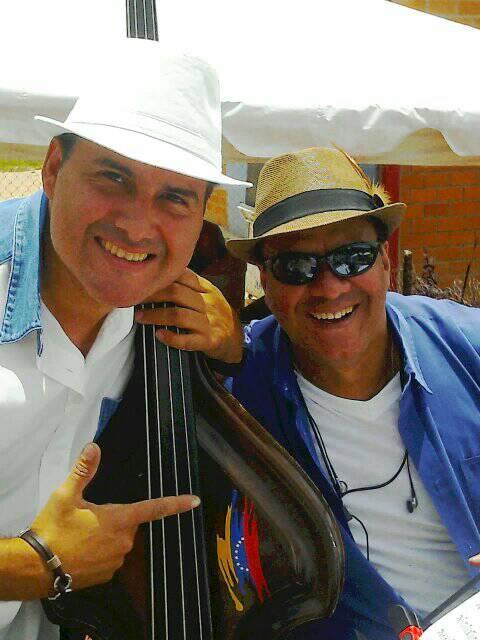
Fidel Antillano
Fidel Antillano

How was your time with Naty’s orchestra and your separation?

“Thanks to the album I made with Dimas, many doors opened for me, he believed in me and I will always be grateful for that. Through this album, Naty hired me, he already had references from me, and I recorded 4 of his productions with him -Naty, El Legendario, returned, In Dos tiempos and Proyecto Maelo-, with Naty I made my debut at the Poliedro de Caracas, I met Ray Barreto and the pianist Ricky González -he passed me some tricks-, we also went to Colombia and alternated with Grupo Niche and Joe Arroyo, a great growth and learning”.

“I left the Orchestra with a good relationship with Naty, so much so that he called me later to record in the productions, En dos Tiempos and Proyecto Maelo”.

It was a very fast growth 

“Yes, I’ve even recorded jingles, I was with the Orquesta Café de Caricuao, I was with Erick Franchesky in the production where he pays tribute to Billos”.

From Salsa orchestras to working with one of the greatest exponents of Caribbean popular music, maestro Porfi Jimenez 

“At the time that erotic salsa was introduced, I started to play with Porfi, merengue and snail soup were in fashion, all that music was in great demand, it was a boom, weekly there were 3 or 4 dances, this dragged a great group of followers, with it I go to Tenerife to some carnivals, I have great respect and admiration for the master”.

His time with the group of Porfi opened the doors to work with the group “Los Roques” of Tenerife

“Of course, however, I had left my resume there and one day they called me and told me that they were going to send me the ticket, I was with them for about 7 months, I played in the carnivals of Tenerife, it was something apotheosis, dances and dances did not let me come – laughs – they played merengue, I was blessed to visit Africa”.

All this accumulation of experience allows him to decide to create his own orchestra

“When Porfi was in the merengue boom, however, most of us musicians were salsa musicians, and because of that need to play our rhythm I decided to create my orchestra, but before doing the Combo Antillano we had an orchestra called La Gran Fuga, the singer was Edgar dolor, we killed fever with that orchestra and eventually I played with Naty and Porfi, because of so much activity I played with my orchestra on the days I had free, it was a good time for the groups”.

What happened with La Gran Fuga?

“We made it to occupy the days we had free with Porfi’s orchestra, at that time it had suffered a drop in the number of performances, but when it came back up, we didn’t have time or space to play, – well – it didn’t really dissolve, in fact they always give us caps to reassemble”.

From being the musician of the Orchestra Dé, to being the owner of El Combo Antillano and taking responsibility for a team
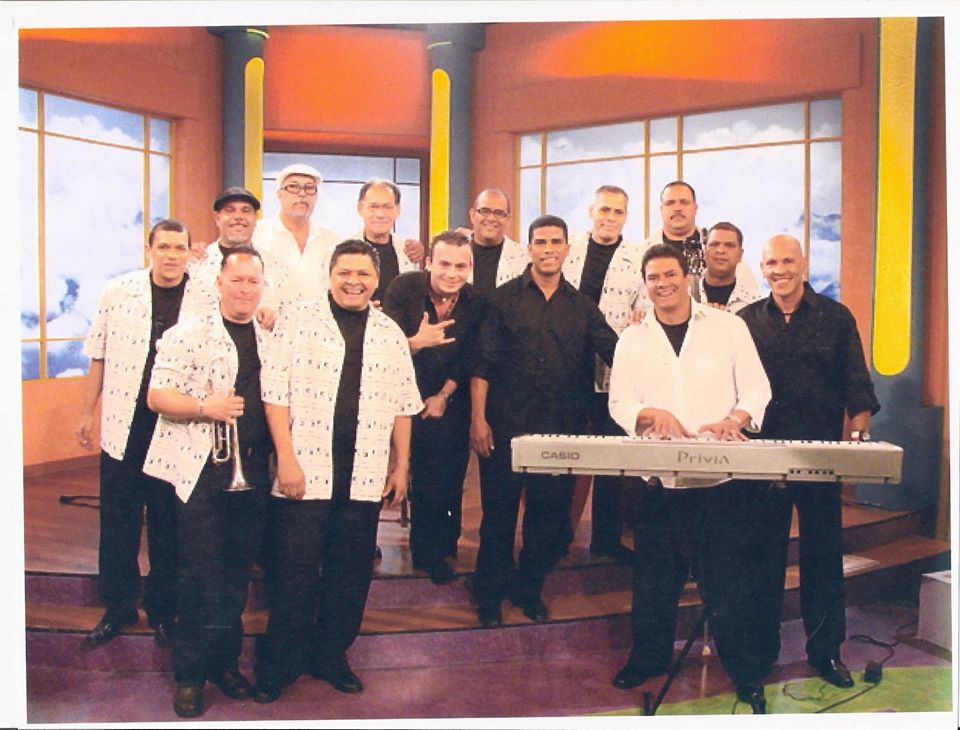
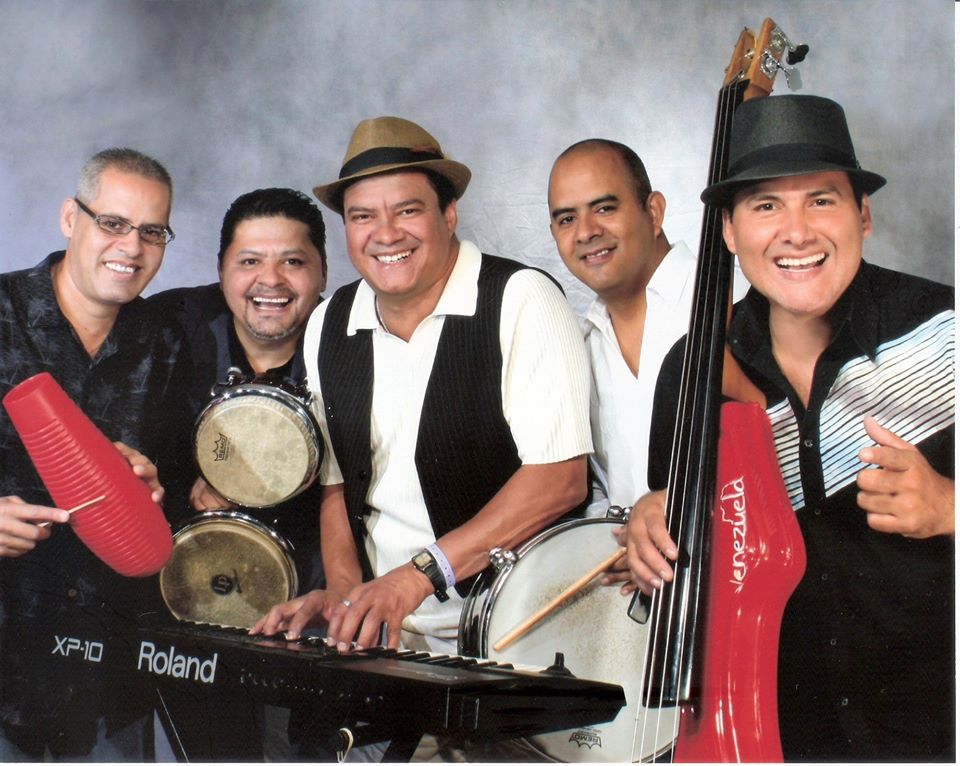
Combo Antillano
Combo Antillano

“A great responsibility and commitment, but it was time to do the same, we opened the compas playing music from the Gran Combo of Puerto Rico, that was the end, we played the greatest hits of the moment, no other band did, on Tuesdays that was full of people in the different places where we worked, this served as a bridge and accompanied other artists, Andy Montañez and other groups, this made me think about making original songs to record.

What was your first composition?

“The “Afro-Caribbean Music Festival” took place at the New Circus in Caracas, with 30 orchestras participating. Lil Rodríguez asked the orchestras to play original songs, and my first composition was a tribute to Caracas”.

At that moment they take a prize as the most applauded group of the night 

“Yes, that was impressive, with Leah’s song, a Mongo Santamaría song, it was something new for the moment, an instrumental discharge”.

Tell us about your record productions

“My first production is called Háblame de Melao (2010), in most of the songs I do the lyrics and arrangements, was something new, the black Mendoza puts me to record and tells me to do theme by theme, we made 21 track, but in the album only put 19, this production was made to recognize the singers, Dimas Pedroza, Teo Hernandez, Angel Flores, Larry Tovar, Luis del Valle “Don Wicho”, Rodrigo Mendoza, Eloy Rios, a tribute to them and highlight our people.

“The second, Fidel and the descarga de los Frailes (2013), here we handle the Salsa, Latin Jazz, Danzón, has a lot of instrumental music before starting the rumba, I had the desire to work and create with a sense of belonging, I made an innovation in the melody with the electric guitar and flute, I did not want to continue recording on wet”.

“and, Caracas en su Salsa (2018), is a tribute to the Salsa of Caracas, in this production we have 14 songs”.

Through this production you made a documentary with the same name, which begins with a beautiful phrase of Cabrujas “Caracas Suena. The city was made to be heard, not to be seen”. How would your interpretation of this hidden city be?

“There is a city that cannot be seen, but it is there, and although the media does not show it to us, we can notice it, through, for example, the musical groups that exist in our neighborhoods and that become visible when there are events, like the one organized by Héctor Castillo (+) in 1983, where we could realize that there was a whole cultural movement hidden in each of our neighborhoods”.

“So I urge this type of inter-neighborhood events, which allow the visibility of the hidden Caracas.

Another of his passions is composition. At what point does the muse come to him?

“At first sight I fell in love -laughs-, -Bella Cubana-, to compose you must have a little bit of each thing, love, dislike, joy, sadness, they are not always experiences of the composer, sometimes if, in the variety is the taste, in my case I work with the rhythmic part and I put lyrics, and more than muse is a mixture”.

He makes songs with meaning that captivate the audience

“You like your audience to identify with your songs, the lyrics are thought-provoking.”

Does the song I don’t want to live in the dark have to do with any experience?

“That one was written by Carlos Navarro and I arranged it for him, it was a personal experience of his. I was in a treatment centre and he talked to me about it, I decided to do the arrangement”.

In the music industry we have many issues of strip and shrinkage, is the case of Domina tu lengua

“Sometimes people think that a song can be a strip and shrink, because of the content of the lyrics, in this case it is not, this was written by the Cuban producer Luis Llamo”.

What gives you the most pleasure as a musician?

“Finishing the product with quality and seeing the acceptance of the public, when you are in the studio and you realize that it looks better, then it sounds on the radio, seeing that the public sings it, dances it, that’s priceless, that’s the greatest satisfaction”.

Which of your productions has given you the most satisfaction?

“Tell me about Melao.”

Why?

“There is a great variety of rhythms in it, I had the opportunity and the satisfaction of exchanging with a large number of people from outside, in it is the theme Pa’ Barlovento, in it exported what is ours, our native rhythm, Venezuelan Sangueo, the Culo e’ Puya, the San Millán”.

What have been your musical influences?

“I wouldn’t be a musician if it wasn’t for Papo Lucas, trying to emulate what he did, as a musician, arranger and person, I admire him a lot, from here comes my influence, -in what time he learned everything he knows-, that makes him incredible, apart from the master Tony Monserrat, an independence with his left hand, he was a virtuoso”.

Many begin by imitating a style, versioning lyrics from other groups. What do you think of the copies, has creativity been lost?

“It’s a resource that is used, at a certain moment, it’s a hook, I barely had the opportunity to do my work, one must have the ability to discern where to play each song, maybe many are afraid of not liking it, or not being accepted”.

What do you think this fear is about? 

“Perhaps not to be broadcast on the radio stations.”

He believes that more support is needed from the various media

“Yes, the lack of support sometimes makes one fear, it’s worrying to touch on a subject and the track gets empty.”

That’s when the artist turns to the hated payola

“I don’t agree with the payola, but it is a necessary evil, all the work that an orchestra owner does generates expenses, and after making an investment you need a retribution; previously live performances were a springboard, they projected a lot to the groups, that has declined a lot”.

What has happened to the Bolero in productions, you don’t listen to them anymore?

“The record companies are more determined to sell, that’s why I think they stopped recording, the new generation should identify with that rhythm, there are many beautiful boleros and if they stop recording they might be forgotten”.

Fidel, what new projects are on the way?

“Right now I’m recording with Angel Flores -record pocket- the song is called Callejon 107, is dedicated to the experiences of Latin American neighborhoods, is a son montuno very tasty, lyrics by Flores and with arrangements by this server”.

At this time when humanity is going through a hard test for its survival, what message would you leave behind?

“There is advice to live a life attached to good habits, one must live under these guidelines, the book of proverbs is wisdom… The man who walks in integrity walks confidently”.

By Eling Blanco, ISM Jounalist Correspondents, Caracas, Venezuela

Professor MSc. Carlos Colmenárez and his “WRITTEN SALSA”

By: Professor MSc. Carlos Colmenárez (Venezuela)

Greetings, dear and consistent readers of Salsa Escrita, from this server, your longtime friend, Professor MSc. Carlos Colmenárez. It is a great satisfaction for me to be able to reach all of you through International Salsa Magazine, to whom I am very grateful for your trust and thus be able to make known the Venezuelan salsa talent and also from other countries, where Afro-Latin music continues and will continue to be projected and promoted with much professionalism in its prestigious pages.

Salsa Escrita, in charge of this server, your friend of always, professor MSc. Carlos Colmenárez
Professor MSc. Carlos Colmenárez (Venezuela)

In this issue of Salsa Escrita, we bring you four exponents of Afro-Caribbean music, born in Venezuela, who exalt the genre with great class and success, earning the respect and admiration of all its followers. So, ladies and gentlemen, we present to you in special reviews Hildemaro “El Sonero del Amor”, Mariana “La Sonera de Venezuela”, Édgar “Dolor” Quijada and Héctor “Malecón”. We hope you enjoy the written interaction between you and International Salsa Magazine.

Hildemaro “The Sonero of Love”

The Venezuelan singer-songwriter, born in Caripito, Monagas state, on November 10, 1957
Hildemaro The Sonero of Love

On this occasion we will mention a vocalist who has stood out for his excellent interpretive quality and professionalism during his long and successful career, both in Venezuela and abroad; we refer to José Hildemaro Hugas Amarista, better known as Hildemaro “El Sonero del Amor”.

The Venezuelan singer-songwriter, born in Caripito, Monagas state, on November 10, 1957, told us that his musical interests came from a very young age, participating in festivals in his home state and musical groups in that locality, until he was presented with the opportunity to go to Caracas in 1976 and join the orchestra “Los Satélites”; Then in 1979 he joined the “Orquesta Ideal”; later he worked with the “Súper Combo los Tropicales”, “Noche Caliente” and the “Orquesta de Porfi Jiménez”; and finally in 1985 he joined Renato Capriles’ orchestra “Los Melódicos”, which gave him the greatest and best experience.

The following year,” Hildemaro continued, “he decided to definitely make his way as a salsa performer, recording his first LP under the TH label, thanks to his music producer, José “El Flaco” Bermúdez, and since then he has remained in his project of a fruitful singing career.

In 1988 he recorded his album “Amanecí contigo”, propelling it into the international market, hitting his songs with great acceptance, both in Venezuela and abroad, showing his face in the country as a salsa performer before the world.

Peru was his first point of attack, as well as the United States, and with that goal he was always renewing his repertoire.

In 1989 he recorded the production “Sin Tabú”, winning a gold record and triumphing on stages in Panama, Mexico, Colombia and New York; In 1990 he recorded the acetate “Romántico y sensual”, with which he demonstrated once again that he has one of the best voices in Latin American and Caribbean salsa, qualities that were also captured in his 4th album entitled “Lo mejor de mi” in 1991, later in 1993 he released his 5th LP “Al natural”, two years later the long play “Lo que siento” in 1995 and in 1996 the album “La mejor salsa con Hildemaro”.

In 2002 and 2003, he burst again into the radio stations nationally and internationally with 2 singles: “Corazón loco” and “El celular”, with which he once again demonstrated his great vocal capacity.

Among his best known hits are: The first time, Hola, Amanecí contigo, Desde el fondo de mi corazón, Negra, Agua caliente, Sin tabú, Al natural, Apago la luz, Como nadie, Cabalgaremos, Lucero and many more.

At the present time it comes from succeeding in Peru, Colombia, Spain, Italy and Sweden. In Venezuela she works with her own orchestra “Caripito all Stars”.

Finally she told us “El Sonero del Amor” that she registered her foundation “Hildemaro Hugas”, a non-profit organization to help children, elderly and people who deserve it.

By 2020, with God’s favor, he returns to the United States, where he is acclaimed by romantic dancers, just like in Peru, his second homeland. Hildemaro’s social networks are: Instagram @sonerodelamor, Facebook: José Hildemaro Hugas, phone: +58 412 2934606 and +58 416 0580079 for bookings.

Edgar “Dolor” Quijada

Édgar José Quijada, from January 23, Caracas. The man of "Pain", a name given to him by his brothers
Edgar “Dolor” Quijada

Sonero from A to Z, it’s that simple. Not everyone can be graded that way and not everyone has the privilege of being so. It is a title that must be achieved “on the go”, working very hard day and night. The “Masters” in sounding were Benny Moré and Ismael Rivera, to name the most significant.

In this regard, we must mention other vocalists of the stature of Cheo Feliciano, Gilberto Santa Rosa, Pete “El Conde” Rodriguez, Chamaco Ramirez and others of renown who took the baton; in the courtyard, Oscar D’Leon, Orlando Watussi, Mariana Guevara, Marcial Isturiz, Charlie Guzman, Ronald Gomez, among others, each with his own style and particularity. The one we will talk about today, has already occupied that place for years, I am referring to Edgar José Quijada, from January 23rd, Caracas. The man of “Pain”, an appellation given to him by his brothers.

In all his life he has not stopped singing and that comes from his mother. The trajectory of Édgar “Dolor” Quijada, born on March 21, 1954, dates from more than 40 years ago, since he began with the Yacambú Orchestra and later he was called to accompany national and international singers and to integrate orchestras such as: Década, Federico y su Combo, Los Incorregibles, Repicao, Soledad Bravo, Naty y su Orquesta, Guajeo, Cheo Feliciano, Celia Cruz, Johnny Pacheco, Pete “El Conde” Rodríguez, Adalberto Santiago, Ismael Miranda, Ismael Rivera, Larry Harlow, Héctor Lavoe and Justo Betancourt.

Since the founding of Cheo Navarro’s Orquesta Bailatino 23 years ago, he has been one of its performers along with Rónald Gómez and Francisco Rojas. His hits include: Mi vecina, Tengo la piel cansada de la tarde, A donde está Margot, Loco en la vía and many more. He is also the vocalist of El Guajeo de Alfredo Naranjo, Orquesta Tributo, Los 12 Apóstoles; as well as his solo performances in shows at the national and international level.

Finally, Edgar “Dolor” Quijada told us that he is currently based in Bogota, Colombia, with new musical projects. Social networks: Instagram @edgardolor; Facebook: Édgar Quijada, telephone for bookings: +57 301 6593904.

Hector “Malecon”

Héctor Luis Montes González, artistically known as “Héctor Malecón”, born on April 3, 1988
Hector “Malecon”
of Barquisimeto

In Barquisimeto, a city known as the “Musical Capital of Venezuela”, there are musicians and vocalists of extraordinary quality, and on this occasion we will mention the singer, sonero and composer, Héctor Luis Montes González, known artistically as “Héctor Malecón”, born on April 3, 1988 and since his childhood he has lived in the El Malecón neighborhood of our twilight city; His musical beginnings were inspired by the composition of songs and by the mythical-religious influence, they motivated him to write and to interpret his first single titled “A la Reina”, in honor to María Lionza.

In April 2012, he decided to gather a group of young musicians from his neighborhood and formed a salsa group, calling it “Orquesta Malecón”, thus beginning his successful career with musical director César Salas and arranger Rubén Levy.

Some songs from their first recording production and authorship are A la Reina, Acepto mi error, Flor de mayo, Qué es lo que te pasa, Mejor plato, Castillo de arena y el Despojo; which you can enjoy on Youtube.

Likewise, he has shared the stage with the Lebrón Brothers, the Dimensión Latina, Bailatino, Orquesta La Salsa Mayor, Grupo Mango, Porfi Baloa y sus Adolescentes, Mariana La Sonera, Édgar “Dolor” Quijada, Hildemaro, Rónald Gómez, among others.

In 2016, he obtains the 1st place in the contest “Dile no a la Payola” of the PDVSA La Estancia Salsa Festival in Caracas and is later applauded by the Caracas salsa sovereign in the Diego Ibarra Square and El Poliedro.

Currently, Héctor Luis, becomes known with his project “Héctor Malecón” and from his own inspiration is promoted with his song “Quieres volver”, through @hectormalecon.

Finally, he declares that he was temporarily based in the city of El Callao, Peru, demonstrating his talent and affinity as lead vocalist of the orchestra “Son D’ Kalibre”, performing group songs and great salsa hits, under the direction of Rubén Medina and integrated by Venezuelan and Peruvian musicians.

At present, already in Barquisimeto, Venezuela, he has planned to structure his new orchestra, with new themes of his own inspiration, to put all salsa lovers to dance. His social networks are: Instagram @hectormalecon; Facebook: Héctor Malecón, for bookings by phone +58 412 7720290.

Mariana “La Sonera de Venezuela”

One of the most emblematic characters of Venezuelan salsa is Janett Guevara García, artistically known as Mariana "La Sonera de Venezuela" Born in Caracas and currently resides in La Guaira
Mariana “The Sonera of Venezuela”

One of the most emblematic characters of Venezuelan salsa is Janett Guevara García, known artistically as Mariana “La Sonera de Venezuela”; she was born in Caracas and currently lives in La Guaira. Since she was a child she showed her taste for music; activity that has been her eternal passion and has led her to make 12 record productions.

Mariana started with Naty Martínez’s Orchestra and has been supported by the Fania Stars, José Alberto “El Canario”, the Gran Combo of Puerto Rico and her great friend Oscar D’León, who has advised and helped her so that, throughout her career, the responsibility of being the sonera of Venezuela falls on her.

Mariana has had the opportunity to alternate with groups of the stature of the Orquesta de La Luz, Grupo Niche, Guayacán, El Canario, Gran Combo de Puerto Rico and la Sonora Ponceña. Among her songs are: Frases hechas and Eres más fuerte que yo.

It is worth mentioning that, among the numerous recognitions received, he was awarded directly from Miami and presented in Caracas by Richard Roman and Nohemy Chavez, the “Salsa Superior” prize, which among those who have it, are Luigi Texidor, Roberto Roena, La Dimensión Latina and Rubén Blades, among other salsa figures. The sonera is worthy of this plaque thanks to God and her public who have supported her during her 30 year artistic career.

The “Sonera” is part of the orchestra “Rumberos del Callejón”, “Los 12 Apóstoles” and also has its own group. Incidentally, she was honored in the city of Barquisimeto in 2018 with the unveiling of a mural in her honor on Oscar D’Leon Boulevard.

She will soon be making musical tours throughout the country and abroad. Among his latest works, he recorded the song “Mulata guerrera”, by Puerto Rican composer Eduardo Zayas, included in the production “Entre Titanes”, which featured the participation of figures such as Marcial Istúriz, Rodrigo Mendoza, Édgar “Dolor” Quijada, Efrén Avellaneda, Noel Machado, Choco Orta, Yomar Méndez “Caballo”, Leo Pacheco Jr.

For hiring Mariana “La Sonera de Venezuela”, you can do it by: +58 414 2921521 y +58 416 0580079. Her social networks are: Instagram @sonsonera1, Facebook: Mariana La Soner

Profesor MSc. Carlos Colmenárez

‘‘El Griego Rumbero’’ visited the Salsa Museum and donated some objects

The artist we will talk about today is a very particular case, since he comes from a country which is not usually related to salsa or Latin music in general. However, the passion for these rhythms has captivated people from all over the world, so it is not surprising that our guest has experienced the same thing.

We’re talking about the Greek-born trombonist and composer Demetrios Kastaris, whom El Rubio Boris and I were fortunate to welcome at the Salsa Museum. Here’s a little of his fascinating story.

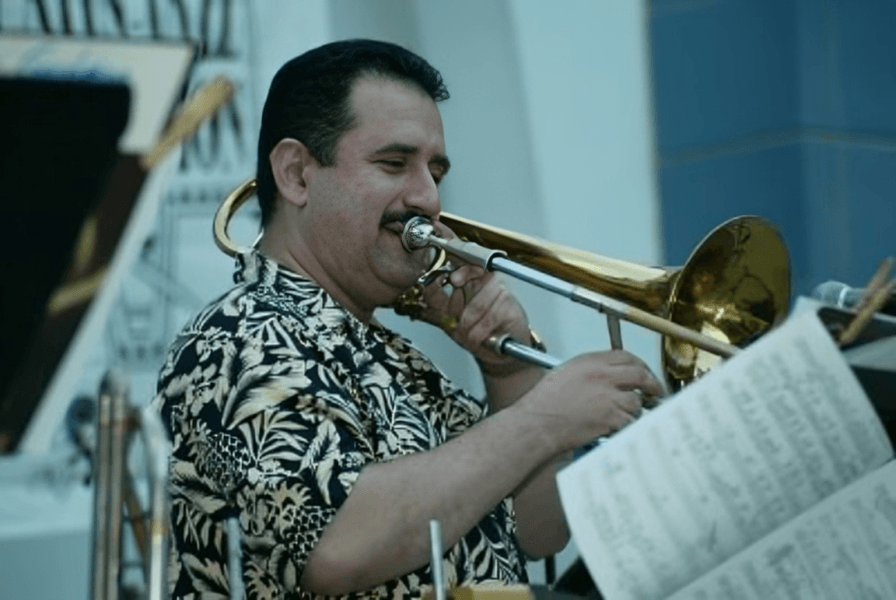
Demetrios Kastaris playing
Demetrios Kastaris playing the trombone

Demetrios’ early years

Demetrios was born in Thessaloniki, Greece, but moved with his family to the United States when he was just two years old. After living in Ohio for a few years, the family moved again, but this time to St. Louis, Missouri, a place that would be critical to the training of the Young man in the times to come.

The first contact of the boy with music was in elementary school during a live performance by a classical music quintet, but what really captivated him was a demonstration of a slide trombone by a member of the St. Louis Symphony Orchestra. It was at that instant the aforementioned instrument inspired Demetrios to take trombone lessons and join the school concert band.

More importantly, as Demetrios grew older, he spent countless hours practicing the trombone, especially in summer when he was free from school work. Finally, On reaching the age of 17, his perseverance began to bear fruit, and he got the opportunity to rehearse with the Stan Keaton Jazz Orchestra, which was the first great experience for the teenager. Just one year later, he sang as a soloist at the Classical Rimsky-Korsakov Concerto. 

Other than that, Demetrios received the John Philip Sousa Band Award just before graduating from high school. He then studied music education at the University of Missouri-St. Louis, when he played in the jazz band and won several awards with the group.

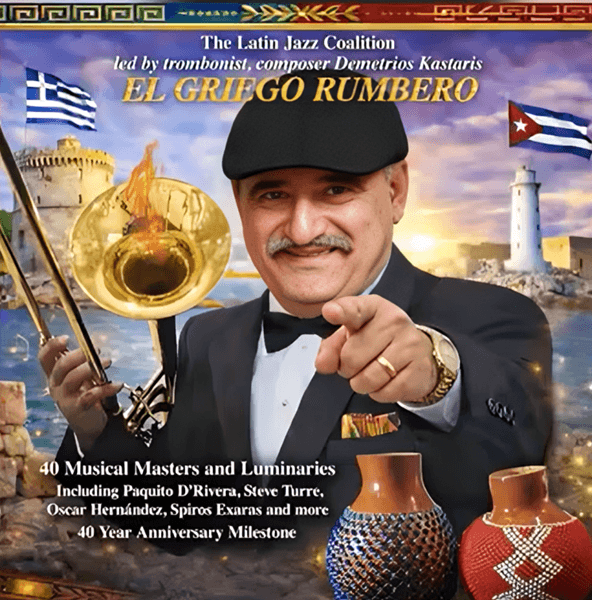
Cover of the album ''El Griego Rumbero''
Cover of the album ”El Griego Rumbero” by demetrios Kastaris

Moving to New York

Two years after having studied in Missouri, Demetrios moved to New York, where he received a scholarship that allowed him to attend New York University and take more steps in his musical career. While completing his studies, he met a bandleader on the subway and was invited to a rehearsal where he was given the opportunity to arrange Afro-Cuban jazz pieces for the first time in his life.

Latin music and its rhythmic features made such an impression on Demetrios that he began attending concerts by many of its great exponents, such as Willie Colón, Eddie Palmieri, Ray Barretto, Tito Puente, Mongo Santamaría, and many others. This led him to transcribe and conscientiously analyze these artists’ songs to satisfy his curiosity and learn more about these rhythms.

After graduating with honors, he earned a masters degree in jazz from the Manhattan School of Music. Soon after, he was already teaching in public schools while performing with one of the bands of the Concord Resort Hotel.

Other important details of his career

For over 50 years of artistic career, Demetrios has had the opportunity to perform with big Latin stars such as Tito Puente, Luisito Quintero, Alfredo De La Fé, Ray Barretto, Charlie Palmieri, Herencia Latina, Oscar Hernández from The Spanish Harlem Orchestra, and many others. 

Already in the decade of 1980, the artist founded the Latin-Jazz Coalition and recorded several of his original compositions in genres such as Brazilian and Afro-Cuban jazz. In certain Circles, his work has earned him the nickname of “El Griego Rumbero”, a moniker by which he is still known today.

Johnny Cruz, Demetrios Kastaris and El Rubio Boris

Much more recently, Demetrios was invited to play with Los Leales de Cuba at the Buena Vista Curry Club and also to rehearse with Los Muñequitos de Matanza, which was a very learning afternoon and a memorable experience for him. Thereafter, he traveled to Cuba on several occasions to learn much more about this music.

Visit to the Salsa Museum

Just two years ago, Demetrios visited the Spanish Harlem Salsa Museum directed by yours truly and spent an enjoyable time with our entire team but he did not come alone. He brought us his photograph and a poster of the Latin Jazz Coalition, which were mounted on a wall alongside many other photographs of stars such as The Fania All Stars, Hector Lavoe, Tito Puente, Celia Cruz, El Gran Combo de Puerto Rico, Larry Harlow, and many others. 

His childhood trombone was also added to our extensive display of objects donated by artists and their families. This took place on March 20, 2024, and the instrument remains at our institution to this day as a reminder of a Greek man’s love for our music and a thank you to his dedication over the years.

Johnny Cruz ISM

Read also: Rey Ruíz visits the Salsa Museum and talks about his prolific career

Timbalero Manolito Rodríguez Debuts a Fresh Sound as Musical Director of La Zónica

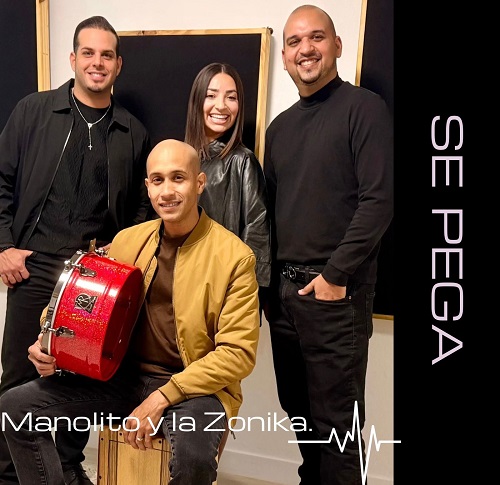
On Friday, March 27, 2026, Manolito Rodríguez and La Zónica performed at La Respuesta, a unique venue a hall where diverse musical genres blend, creating an atmosphere where a dance concert serves as the artists’ formal introduction to the public. The ensemble has been working together since August 2025, when the new orchestra was formed under the leadership of the virtuoso timbalero.

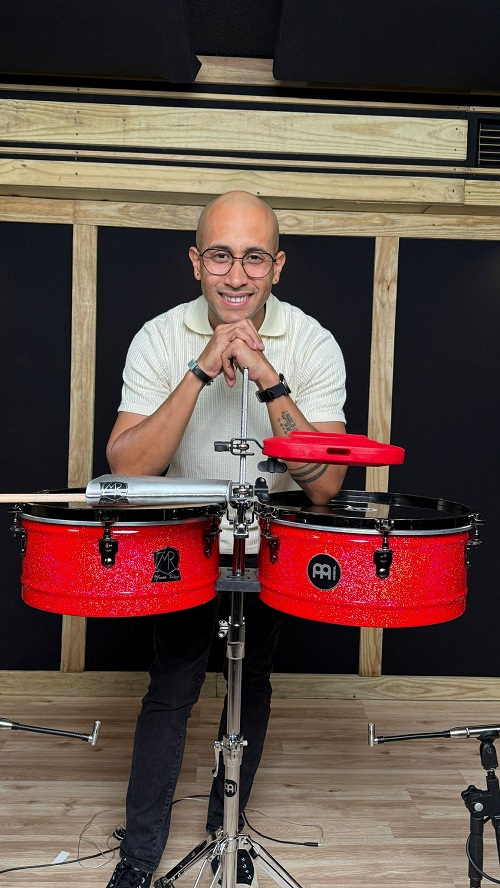
Timbalero Manolito Rodríguez arrives with a renewed energy as musical director of La Zónica

When Manolito began assembling the group, he sought out songs that resonated with him, such as “Gente Luminosa” and “A Mi Medida.” He has also been working with unreleased compositions by Anthony García and Leni Prieto. La Zónica marks a new chapter for the timbalero as the director of his own orchestra. Nevertheless, they continue to perform hits from Manolito’s previous era, now brought to life by the vocal front: Ángel Pomales, Joelis Crespo, and Gabriel Cotto. Manolito has promised to step back from singing to focus entirely on his instrument and musical direction.

The director of La Zónica hopes the dance concert at La Respuesta on March 27 marked a turning point for the band. “It’s an event we’ve been working on with great intensity,” Manolito says with enthusiasm. With energy and conviction, the timbalero adds: “I want to leave a legacy like El Gran Combo de Puerto Rico, like Sonora Ponceña, like Roberto Roena’s Apollo Sound, or Willie Rosario’s band. I want people to say in 25 years, ‘Look, that’s Manolito’s La Zónica.’ It’s a long road, but it’s possible.”

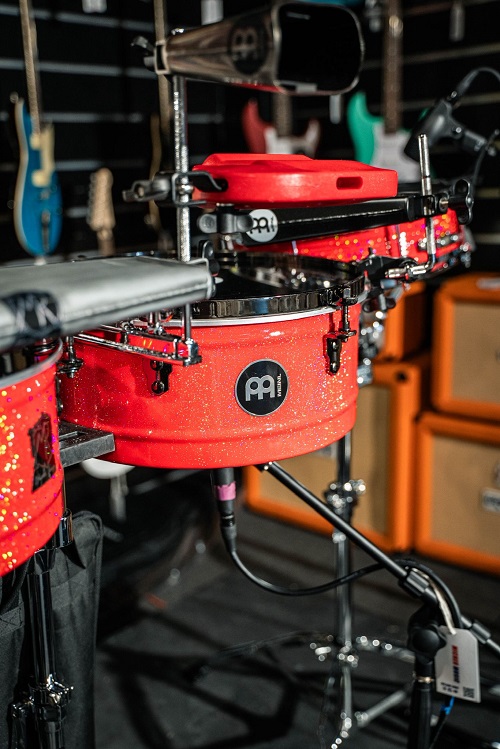
As if that weren’t enough, a new line of Meinl Percussion instruments, inspired by the young Puerto Rican timbalero, is now available.

The new line of instruments - from Meinl Percussion - inspired by Manolito
The new line of instruments – from Meinl Percussion – inspired by Manolito

A Prodigy’s Journey

The career of this salsa virtuoso began early. Manolito Rodríguez is a percussionist, musical director, singer, and dancer. While he was still in middle school, piano genius Papo Lucca invited him to record on the 45th-anniversary album, Homenaje a Tres Grandes del Teclado. “At that time, I was just entering the Escuela Libre de Música; I was in ninth grade,” the timbalero recalls. Four years later, upon graduating from the Ernesto Ramos Antonini ELM in San Juan, Manolito earned the timbalero chair with Sonora Ponceña on Papo Lucca’s recommendation. “Don Quique” accepted him, and the young musician remained with the group for four years.

Puerto Rico’s salsa stages watched Manolito Rodríguez grow up, flanked by musical institutions such as Sonora Ponceña, his now-colleague Willie Rosario, and Roberto Roena’s Apollo Sound.

His skill as a percussionist grew by leaps and bounds, and his versatility was tested on multiple fronts. In fact, his vocals were featured with the orchestra Del Sur al Norte, led by the renowned director, arranger, and producer, trumpet master Julito Alvarado. “Julito was the first one who gave me the opportunity to record as a singer,” Manolito acknowledged in an interview.

Manolito Rodríguez and La Zónica performed at La Respuesta, a different venue.

Thanks to his interactions with salsa veterans since childhood, Manolito served as musical director for various youth projects along the way. This included Revolución Juvenil in high school and Manolito y su Trabuco, an orchestra that performed every Wednesday at El Doble Seis in Caguas.

Legacy and Discipline

According to Manolito himself now a music professor—he owes much of his career to the support of his mother and grandmother, who nurtured his musical interests and encouraged him to pursue formal training. Today, the instrumentalist considers himself a “music worker” who approaches his craft with respect and maturity.

His new orchestra, La Zónica, finds him with a different mindset: he wants to concentrate on the timbales and direction. He considers Master Willie Rosario—who treats him as a protégé one of his greatest influences as a timbalero-bandleader. Rodríguez shares that when he read the authorized biography of “Mr. Afinque” (Willie Rosario, El Rey del Ritmo by researcher Robert Téllez) and saw himself mentioned, he was overcome with emotion. “My eyes welled up. I didn’t expect it,” he says. “Since I started taking things seriously, Willie has always mentored me.”

Despite his vast experience, the young musician felt deeply blessed to be chosen to fill in for the leader of “the band that delights” (la banda que deleita) on several occasions, and to perform at the Willie Rosario Centenary concert at the Coliseo de Puerto Rico. “I feel very fortunate because Willie is a very serious person, someone highly respected in the world of salsa with an impeccable career. He is a true role model.”

Following the passing of Roberto Roena, Rodríguez was also entrusted with the legacy of the Apollo Sound—a testament to the confidence and solidity he projects despite his youth. “Wow, yes. It was an honor,” he recalls nostalgically. “Roberto was the first person to give me a big break in Puerto Rico,” referring to his participation in the 1998 Día Nacional de la Zalsa at the Juan Ramón Loubriel Stadium in Bayamón.

The timbalero Manolito Rodríguez

On Sunday, March 22, 2026, Manolito Rodríguez returned to the Día Nacional de la Zalsa as the timbalero and director of La Zónica, a project that debuted last November during Sonora Ponceña’s 70th-anniversary concert. The current lineup includes: Airemyelisse Díaz (bass), Reinaldo Burgos (piano), Savier Díaz (congas), Manolito Rodríguez (timbales/director), Carlos Arroyo (bongo), Víctor “Yuca” Maldonado (baritone sax), Efraín Martínez (tenor sax), Rubén Díaz (trumpet), and Jan Santana (flugelhorn).

Manolito is well aware that “people pay to be entertained,” as he mentioned in a Zoom interview, and he views himself as a craftsman of music. He feels fortunate to be a full-time musician. “That’s what keeps me grounded. I get paid to make music. I am a music worker with great aspirations who trusts his talent and knows he must stay focused.”

Bella Martinez Puerto Rico

Also Read: Sessions from La Loma brings together salsa fans from all over the world in Puerto Rico

Dominican bandleader and musical director Orlando Santana talks about La Makina and his career in general

Orlando Santana, the bandleader and musical director of La Makina, has made room in his busy schedule filled with studio recordings to talk about the most interesting topics of his career and, of course, the group that has given him more fame.

The Dominican artist has built an interesting career that led to his aforementioned group, which was founded in Borinquén (the name given to Puerto Rico before the arrival of the Spanish). Naturally, the genre by which La Makina is best known is merengue, implying that the Dominican Republic is still present in mind and heart.

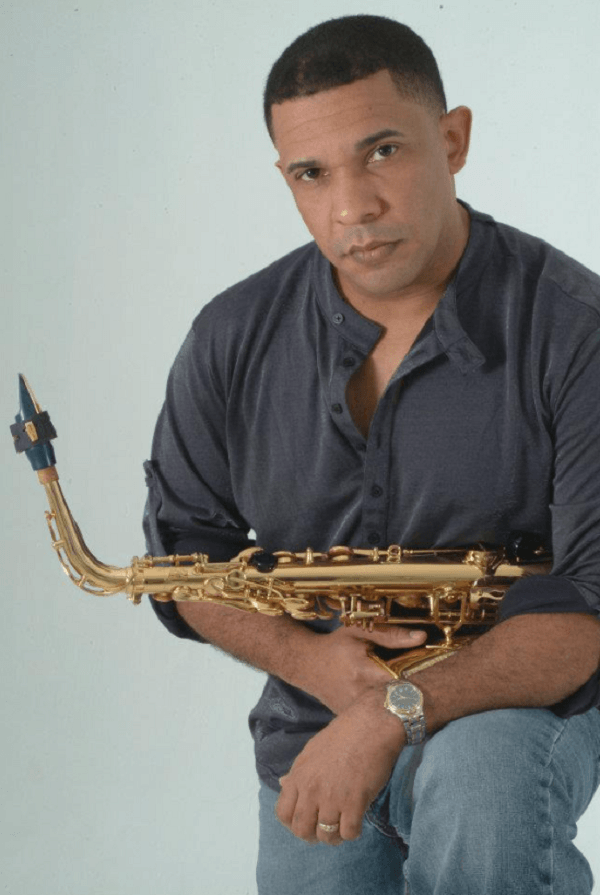
Orlando with his saxophone
Orlando Santana with his saxophone

Orlando’s Beginnings in Music

Orlando started his story by saying that music had a significant presence in his life because his father, Santiago Santana, was a music teacher who taught in their own home. He taught all types of instruments such as the saxophone, trumpet, flute, piano, bandoneon, clarinet, guitar, and many more. Additionally, he also knew about harmony, solfège (sung), and solfège (spoken).

This led to his son learning to play instruments at a very young age and being interested in this way of life. 

Orlando’s Music Education

When Orlando moved to Miami, he took private piano lessons for a while, just as his father did with his students, but it was from Richie Ray and Bobby Cruz whom he really learned. He attended their church and took advantage of his visits to receive some piano lessons from Richie, while his brother David Santana, who was already a veteran musician, bought him his first saxophone and taught him many other tricks of the trade.

Early experiences as a paid professional

As for the beginning of his professional practice, Orlando, as a 15-year-old boy, started with the orchestra Dioni Fernández y El Equipo, from which the great Sergio Vargas emerged. In fact, they entered together a television channel (Color Visión, Channel 9) on the same day in Santo Domingo. This group is still active today, and Sergio Vargas’s own brother, Caqui Vargas, is currently part of it.

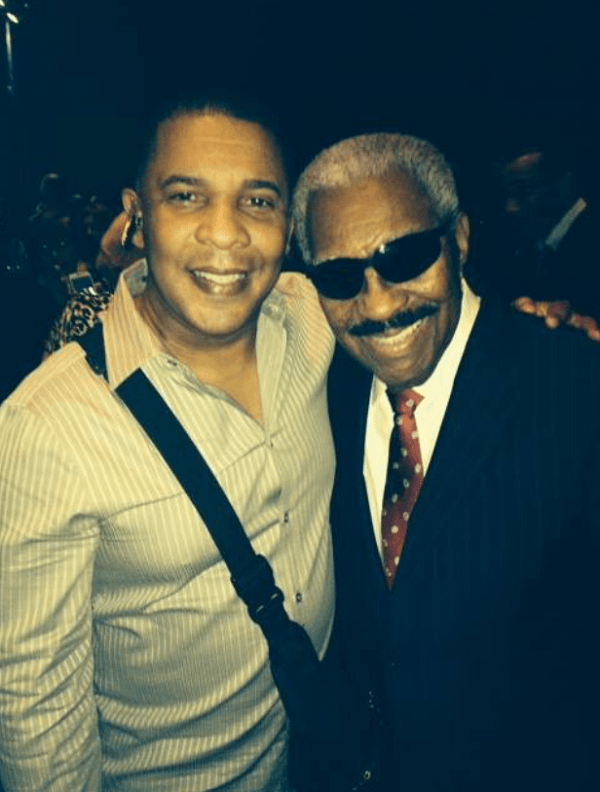
Bobby and Orlando
Bobby Valentín and Orlando Santana

Some time later, he had the opportunity to perform along with Wilfrido Vargas, which he describes as an incredible experience, since Vargas’s orchestra had a very challenging repertoire and he had to prepare himself very well in order to play along with the merengue exponents and his musicians. Orlando came on as a substitute replacing his brother on some tours, where he showed he had the capacity to keep up with their pace and improvise just like Wilfrido did so with ease on stage.

Among the most important things this time taught him, the artist mentioned discipline, the importance of always practicing his instruments, and a permanent focus on what he wanted to achieve. Another thing he mentioned was the significant improvement in his ability to improvise and release new material constantly.

He also learned a lot from Toño Rosario, Peter Cruz, Cuco Valoy, Ramón Orlando, and Elías Santana (Orlando’s first cousin and trumpeter for Conjunto Quisqueya). With all of them, he also came to play both merengue and other genres. 

How La Makina Band was founded

Orlando met Fernando Colón in Toño Rosario’s orchestra, while he was a saxophonist, and Fernando entered as a bassist. At the same time, Orlando was writing some arrangements for Los Sabrosos del Merengue, and as it so happens that Fernando was also working with them, so they were always in constant contact.

When Orlando decided to found an orchestra, it was he who called him and accepted his proposal. That was when both artists founded La Makina in 1996, though the process started a year earlier when they set up a company for that purpose.

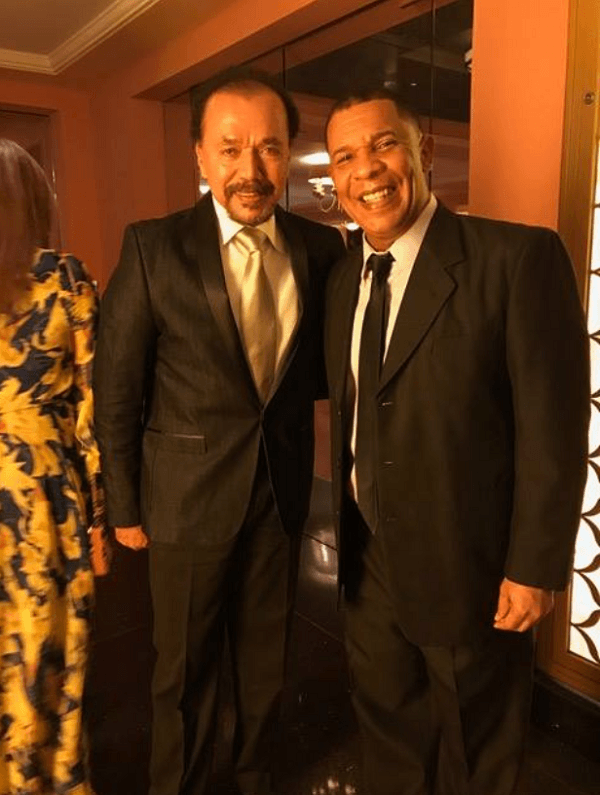
Orlando and Rafael
Orlano Santana and Rafael Ithier from El Gran Combo de Puerto Rico

His Role as producer and director

Regarding his role as producer and director of La Makina, he points out the importance of preparing and studying to exercise these areas of music. In his case, he had already spent many years working on important record productions, including those he did together with his cousin Cesar Cuesta, with whom he formed a small orchestra that covered songs by very famous bands. He created his own musical arrangements for these new versions to differentiate them from the original songs and wrote scores for other musicians.

In addition, he served as music producer for Grupomanía and wrote songs for artists such as Toño Rosario, Elvis Crespo, Oscarito, Manny Manuel, and many others.

Current Members of La Makina

Of the original members of La Makina, the only one left is Orlando himself, but he has been joined by other equally-talented musicians, including Carlitos Rivera and his own son, Anderson Santana.

Orlando and Johnny
Orlando Santana and Johnny Ventura in San Juan, Puerto Rico

Current projects

This conversation had been delayed a few times due to how busy Orlando was in the studio working on new music, so obviously we had to ask what it was all about.

He told us that he and the rest of the group were working on a remastering of La Makina’s greatest hits, but with other arrangements and a fresh color. They also plan to include songs recorded by other artists but written by Orlando for them. He did not want to say what these would be so they would be a surprise for the audience.

Read also: Don Perignon Y La Puertorriqueña releases his new album ‘‘Classique et Savoureux’’

  • « Go to Previous Page
  • Page 1
  • Interim pages omitted …
  • Page 3
  • Page 4
  • Page 5
  • Page 6
  • Page 7
  • Interim pages omitted …
  • Page 24
  • Go to Next Page »

International Salsa Magazine (ISM) is a monthly publication about Salsa activities around the world, that has been publishing since 2007. It is a world network of volunteers coordinated by ISM Magazine. We are working to strengthen all the events by working together.