• Skip to primary navigation
  • Skip to main content

International Salsa Magazine

  • HOME
  • Previous editions
    • 2026
      • ISM / April 2026
      • ISM / March 2026
      • ISM / February 2026
      • ISM / January 2026
    • 2025
      • ISM / December 2025
      • ISM / November 2025
      • ISM / October 2025
      • ISM / September 2025
      • ISM / August 2025
      • ISM / July 2025
      • ISM / June 2025
      • ISM / May2025
      • ISM / April 2025
      • ISM / March 2025
      • ISM / February 2025
      • ISM / January 2025
    • 2024
      • ISM / December 2024
      • ISM / November 2024
      • ISM / October 2024
      • ISM / September 2024
      • ISM / August 2024
      • ISM / July 2024
      • ISM / June 2024
      • ISM / May 2024
      • ISM / April 2024
      • ISM / March 2024
      • ISM / February 2024
      • ISM / January 2024
    • 2023
      • ISM / December 2023
      • ISM / November 2023
      • ISM / October 2023
      • ISM – September 2023
      • ISM – August 2023
      • ISM July 2023
      • ISM Edition June 2023
      • ISM – May 2023
      • ISM April 2023
      • ISM March 2023
      • ISM February 2023
      • ISM January 2023
    • 2022
      • ISM December 2022
      • ISM November 2022
      • ISM October 2022
      • ISM September 2022
      • ISM August 2022
      • ISM July 2022
      • ISM June 2022
      • ISM May 2022
      • ISM February 2022
      • ISM January 2022
    • 2021
      • ISM December 2021
      • ISM November 2021
      • ISM October – 2021
      • ISM September 2021
      • ISM August 2021
      • ISM July 2021
      • ISM May 2021
      • ISM April 2021
      • ISM June 2021
      • ISM March 2021
      • ISM February 2021
      • ISM January 2021
    • 2020
      • ISM December 2020
      • ISM November 2020
      • ISM October 2020
      • ISM September 2020
      • ISM August 2020
      • ISM July 2020
      • ISM June 2020
      • ISM May 2020
      • ISM April 2020
      • ISM March 2020
      • ISM February 2020
      • ISM January 2020
    • 2019
      • ISM December 2019
      • ISM November 2019
      • ISM October 2019
      • ISM Septembre 2019
      • ISM August 2019
      • ISM July 2019
      • ISM June 2019
    • 2016
      • ISM December 2016
  • Spanish
  • Download Salsa App
    • Android
    • Apple

Search Results for: Héctor Lavoe

National Zalsa Day 2020

North America / Puerto Rico

In April 2000, the third Sunday of March was instituted as the National Zalsa Day under Law #100 of the Senate of Puerto Rico

National Zalsa Day 2020 - Edicion Platino
National Zalsa Day 2020 – Edicion Platino

History

The National Zalsa Day was created in 1984 by Pedro Arroyo, Z-93 Programming Director, who always had the desire to celebrate an event where the talent of popular salsa music, its composers and performers would be recognized, to present it to the great public that loves this tropical genre.

Since its first year, the great event has seized a public eager to enjoy this live music.
The support was total and it immediately positioned itself as the annual concert of the people of Puerto Rico and visitors from other countries.

Since its inception, the National Day of the Zalsa was dedicated to some figure of this genre, as a recognition of their talent and their roots in the public.

  • 1984 – Dedicated in life to the Sonero Mayor, Ismael Rivera
  • 1985 – Rafael Ithier of the Great Combo of Puerto Rico
  • 1986 – Tito Puente and Santitos Colón
  • 1987 – Hector Lavoe
  • 1988 – Andy Montañez and Gilberto Santa Rosa
  • 1989 – Celia Cruz and the Sonora Ponceña
  • 1990 – Willie Colón and Tite Curet Alonso
  • 1991 – Bobby Valentín, Oscar D’ León and the composer Gloria González.
  • 1992 – For the Best 5 Trumpets of Puerto Rico: Elías Lopés, Charlie Sepúlveda, Juancito Torres, Mario Ortiz and Luis “Perico” Ortiz
  • 1993 – Celebration of the Tenth Anniversary of the National Day of the Zalsa, dedicated to the Salsero People 1994 – Ray Barreto and Adalberto Santiago
  • 1995 – “Sunset Duels”
  • 1996 – Dedicated to reunions: Classic Ensemble, Tito Nieves, Luis “Perico” Ortiz and Rafael De Jesús, El Gran Combo; Andy Montañez and Roberto Rohena; Sonora Ponceña with Luigi Texidor and Yolanda Rivera.
  • 1997 – To the salsa town
  • 1998 – Jerry Masucci
  • 1999 – Cheo Feliciano
  • 2000 – Richie Ray and Bobby Cruz
  • 2001 – Eddie Palmieri
  • 2002 – Ruben Blades
  • 2003 – Johnny Pacheco and Roberto Rohena
  • 2004 – Quique Lucca, Papo Lucca and Willie Rosario
  • 2005 – Tommy Olivencia and Roberto Angleró
  • 2006 – Los Hermanos Lebrón and posthumous tribute to Charlie Palmieri, Tito Rodríguez and Ray Barretto
  • 2007 – Ismael Miranda, Ramón Rodríguez, Raphy Leavitt and Sammy Marrero
  • 2008 – Larry Harlow and Manny Oquendo
  • 2009 – Celebration of the release of Tite Curet Alonso’s work on Puerto Rican radio. Dedicated to Louis Garcia.
  • 2010 – Johnny Ortiz. Special recognition to Héctor Maisonave and Ángel Luis Córdova García “Paleco”.
  • 2011 – Elvin Torres from Costa Brava, Luisito Ayala from Puerto Rican Power, Paquito Guzmán, Tito Allen and Luigi Texidor
  • 2012 – Posthumous tribute to Frankie Ruiz. Dedicated to the Zodiac Orchestra and the Latin Corporation.
  • 2013 – Posthumous tribute to Pedro Arroyo, former director of Z-93. Special recognition to Edwin Morales from La Mulenze, Pedro Brul, Pedro Conga from Orquesta Internacional and Cano Estremera.
  • 2014 – El Gran Combo, Joe Rodríguez de La Terríca, Justo Betancourt and Meñique
  • 2015 – Gilberto Santa Rosa receives the first National Zalsa Day Star Award. Dedicated to Sammy “Rolo” González, Mickey Cora, Nacho Sanabria.
  • 2016 – Eddie Palmieri receives the second National Zalsa Day Star Award. Dedicated to Lalo Rodríguez and Tito Rojas.

National Zalsa Day 2020

On March 8, the 37th edition of the National Salsa Day will be held at the Hiram Bithorn Stadium, in San Juan, Puerto Rico.

National Zalsa Day 2020 outside

We often hear that salsa in Puerto Rico is not having a good time or that the atmosphere is not what it used to be. However, each time before. However, every time National Salsa Day is announced, everything changes.

Those who live on the island rub their hands to wait for the big moment and those who arrive from abroad begin to check plane tickets and schedule a little vacation.

In 2020 it will not be the exception. The station Z93 announced a tremendous salsa billboard with Eddie Palmieri, Sonora Ponceña, Oscar D’ León, Ismael Miranda, Lalo Rodríguez and India.

In addition, Tony Vega, Ray de la Paz, Tito Rojas and NG2 have been confirmed as part of the great salsa party. This has caused fans on social networks to begin to express themselves with different opinions about the chosen artists.

Perhaps the balance tilts favorably towards the more classic salsa and not so much towards the proposals of the youngest (except NG2), but let’s see how this formula works for Zeta.

National Zalsa Day 2020 37 XXXVII

The Crazy Owl, a popular Puerto Rican radio host, announced that tickets can be purchased on the Ticket Center website (tcpr.com/). So you are already warned.

If you want to give yourself the pleasure of enjoying salsa on the Isla del Encanto itself, this may be your chance.
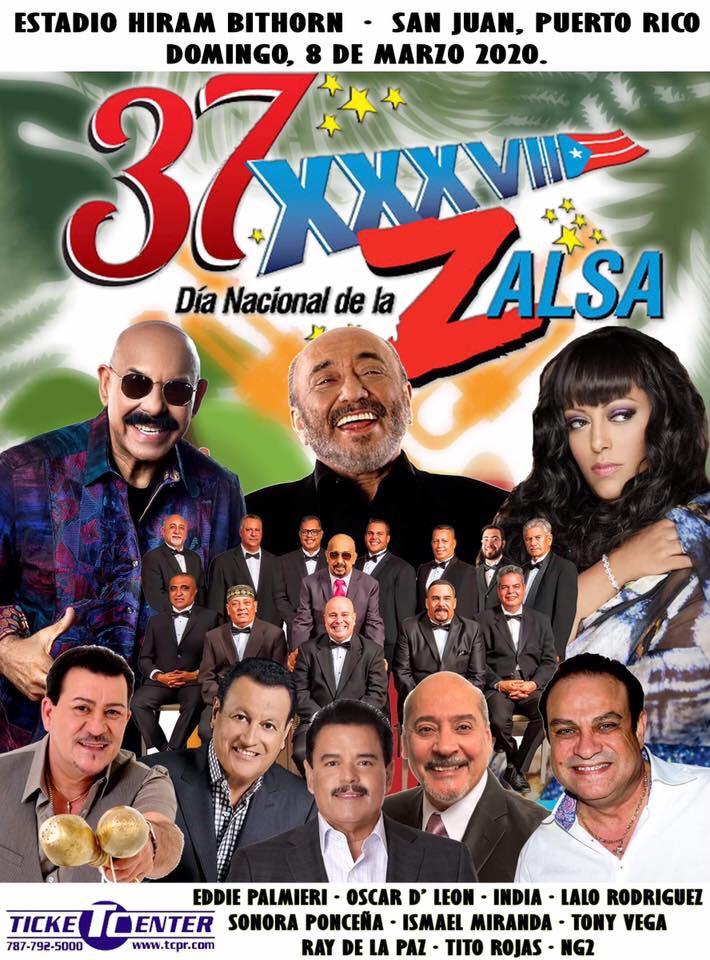
Flyer of National Zalsa Day 2020
  • V.I.P platinum $225.00
  • Area / V.I.P
  • Open bar / open bar
  • Quick access / Fast Pass
  • Private bathrooms / private bathrooms
  • Official T-shirt / official t-shirt
  • V.I.P arena $75.00
  • Numbered seat / reserved seating
  • Quick access / fast pass
  • Private bathrooms / private bathrooms
  • General admission $15.00
  • Christmas offer only 1000 tickets

For more information:

  • https://zeta93.lamusica.com/
  • https://www.facebook.com/zeta93fm/?ref=page_internal

Salsa: From New York to the world!

North America – United States – New York

Last February we actively participated in different activities in New York, promoted by different instances and always supported from the Spanish Harlem Salsa Gallery Museum and The Johnny Cruz Show.

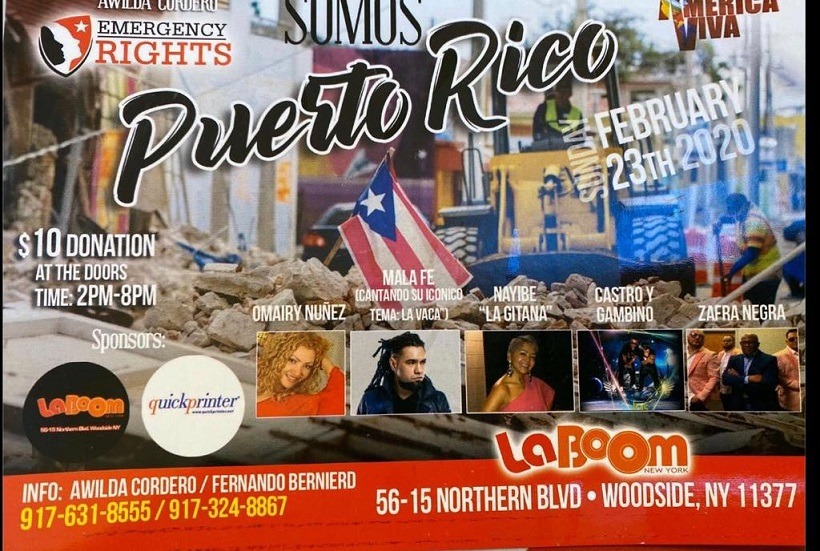
Johnny Cruz: We were part of the Somos Puerto Rico event, together with more than 25 artists and with the collaboration of La Boom, which allowed thousands of people to work for our island: Puerto Rico. There was a lot of music, and we were accompanied by artists such as Jova Rodríguez, Arlene, Roberto Vásquez, Anissa Gatners, Fernando Berniero, Alex Bautista, Jen Carrasco and Kevin Tapia, among others.

We also had typical food for sale and many initiatives aimed at saving so many lives in need. From this event we want to continue bringing families to the United States and they can be calm until they stop shaking in the south west of Puerto Rico. You are not alone!

In addition, we are working hard on a documentary about Frank Ferrer, always thinking of immortalizing figures that have consolidated Salsa in the world as a Latin genre of world projection.

Salsa, as you know, is a typically New York musical genre, the result of the influence of great Latin jazz musicians, and the existence of a youth of Latin origin born, or resident in New York, in slums where Salsa is the best expression, spiced up by the exile produced by the Cuban Revolution and the awareness of American racial minorities.

In 1964, Johnny Pacheco, a flutist of Dominican origin, and Jerry Masucci, a young businessman, founded the Fania label, which gave the old Latin labels, a more modern sense of Caribbean music. Musicians and singers of the previous generation were reinvented, but others were incorporated as a young Willie Colon, the Palmieri brothers, Eddy and Charlie; Papo Luca, Ray Barreto, Larry Harlow. And, there were also singers who put their voice to Salsa to tell stories of the street, daily or reflexive, that were the mirror of the life of the neighborhoods: Cheo Feliciano, Adalberto de Santiago, Andy Montáñez, the Ismaeles -Miranda and Ribera-, Justo Betancourt, Héctor Lavoe or Rubén Blades.

Johnny Cruz Salsa: From New York to the world!

The influence of the Cuban revolution had led composers and salsa musicians to become aware that it was necessary to compose songs that talked about what was happening in the streets from a critical perspective, giving way to a new salsa and foot reality for characters as Frank Ferrer started from folklore and protest to arrive at salsa mixing both concepts in an exemplary album: Yerbabuena. All this and much more can be enjoyed very soon.

For this month of March, Puerto Rico will organize the 1st World Salsa Collectors Meeting and of course we will be there representing New York with the Salsa Museum (SPAHA Salsa Gallery Museum). From March 7th, at least 15 organizations of this type of collector from seven countries will exhibit their collections of the Caribbean genre.

The collectors meeting will take place at the Sheraton Hotel, in Miramar, under the theme “La Salsa se baila así” and will be free admission. It will be attended by collectors from Puerto Rico, Colombia, Panama, Peru, Ecuador, Mexico and several cities in the United States.

That day will be the official release in LP format of the album “Mario Ortiz, 55 Aniversario”, nominated for the last edition of the Latin Grammys.

The event includes memorabilia exhibitors of legendary salsa artists such as Willie Rosario, Bobby Valentín, Roberto Roena o la Sonora Ponceña, as well as the Museo de la Salsa de Puerto Rico or the Fundación Nacional para la Cultura Popular.

Pieces from the Jairo Varela Museum, renowned deceased Colombian musician, whose orchestra Grupo Niche is still active and triumphing around the world will be presented. The writer Daniel Nina, will give a lecture about Salsa, and Puerto Rican dancer Tito Ortos will talk about the history of salsa dancing. We can enjoy live music with the group Cubaneo 54, and a great closing with the several times awarded Big Band of the Free School of Music of San Juan, directed by Professor Manuel García. See you there!

As always, remember that Spanish Harlem Salsa Gallery is in 1708 Lexington ave New York N.Y. 10029. Open free to the public all Thursdays & Fridays from 4 to 7 pm and Saturdays from 1 to 8 pm. Check the updates in our website: spahasalsagallery.com.

Johnny Cruz - Spaha Salsa Gallery
Johnny Cruz – Spaha Salsa Gallery

Also, The Johnny Cruz Show, the #1 Salsa Show on television on all 5 Boroughs of New York on CH67.  Saturdays from 3:30 to 4:30 pm.

Contact: Johnny Cruz. 917-747-8505.  [email protected].


By Johnny Cruz Correspondent, New York City, New York

Good initiatives must be shared!

North America - United States - New York

We were taking the Salsa exhibition to Puerto Rico for the I Encuentro de Coleccionistas de Salsa, we made an exhibition of the clothing, records and instruments used by the Fania All Star orchestra, Tito Puente, Héctor Lavoe, Adalberto Santiago, the Gran Combo and others. For the first time, the last “tuxedo” that Tito Puente used in his participation with the Orquesta Sinfónica de Puerto Rico was exhibited.

Spanish Harlem Salsa Music Gallery, offered an exhibition and Master Class on the history of Salsa at the Escuela Especializada en Música Jesús T. Piñero in Cidra, Puerto Rico. We transported ourselves to Puerto Rico in search of an opportunity to publicize the Salsa Museum-Gallery in New York.

This is part of the efforts being made for the participation and dedication that is made to the people of Cidra in the Desfile Nacional Puertorriqueño 2020 and that is locally coordinated by the Patronato Cidreño along with other civic and professional organizations.

We were able to benefit hundreds of students at this school who are precisely focused on music. The knowledge offered in the three conferences and being able to closely observe the exhibition helped to foster the enthusiasm of the students who make up the campus, unique in the mountains of Puerto Rico, dedicated to the creation of good musicians and knowledgeable in musical art.

We are dedicated to enhancing Latin music and offering spaces focused on arts education, accessible and friendly to the community as a strategic partner.

I thank valuable people such as Laura Torres, Silkia Vázquez, Wilson Nazario and Wilfrido Torres “Puruco” for all the attention and teamwork that we were able to develop during our visit. I cannot stop also thanking my assistant in Puerto Rico, Carmen Cruz; and to Joseph Cruz for his magnificent and beautiful work with me during this pleasant experience.

I also take advantage of this space in International Salsa Magazine because I want to tell you about an artist and a great friend who is doing his best for music and Salsa. Without a doubt, Yova Rodríguez is a long-standing professional who has developed countless projects and initiatives to support those who need it most. With his music, his work and his human quality, he has reached many hearts from New York.


Geovanni “Yova” Rodríguez Ruiz, born in Puerto Rico, had a musical inspiration since he was a child, his uncle Antonio “Toño” Ruiz – his mother’s uncle who played the cuatro – was his first music teacher (melody) and his uncle José Antonio “Pipo” Ruiz Crespo -mama’s younger brother- taught him how to sing aguinaldos (lyrics); and with this they formed the solid foundations that encouraged little Yova to prepare himself accordingly for his foray into the musical world.

The celebration of the Promesa de Reyes, a celebration in which he participated with his mother at his short seven years, leads him to worry about creating and recreating aguinaldos to be interpreted each year, which in some way becomes the seed of composer that we know today.

At the age of 14, he attended the Escuela Libre de Música Ernesto Ramos Antonini in Mayagüez, hand in hand with piano teacher César Toro, rising as vocal leader of the Orchestra after a year.

Years later he gave himself the task of forming his own musical concept, and thus Sakao Aká was born. This orchestra was in charge of accompanying singers such as Camilo Azuquita, Ray de la Paz, Pupy Cantor and Herman Olivera in their presentations in Puerto Rico; and the cover letter for some of these singers to integrate Yova as a chorus girl in their presentations in various countries in Central and South America.


At the end of the 90s, on a trip to Cuba, he was impacted by the music of Fernando Borrego Linares, better known as Polo Montañez, to the point that, some years later upon learning of his death, he had the idea of ​​paying tribute to him, his musical reference, thus giving birth to the idea for her debut feature Homenaje a Polo Montañez (2005), a production of 10 songs by Montañez, and covered by Yova Rodríguez with the participation of renowned musicians from the patio such as Herman Olivera, Héctor “Pichie ”Pérez, Papo Lucca, Edwin“ Caneca ”Rosas, Edwin Colón Zayas, among others.

In 2008, like many of her compatriots, Yova prepares her luggage and heads to the southern United States, where she stays for two years and then moves to New York, a city that has become her center of operations and from where He has extended his working ties as a composer and where he records his next two productions.

The album Letras, canciones y sueños, musical work of 8 songs all written by Yova, comes to light after some years of having published his first production and of having worked silently composing and waiting for his opportunity. This possibility is materialized in 2013.

Already in 2015, the album Mi musa en las voces de mis amigos is released.

Salsa with Yova Rodriguez

Recently, Yova Rodríguez has created more than 420 songs, and many of them have been duly registered with the American Society of Composers, Authors and Editors (ASCAP) under the registry “El Negrito De Delia Music” . “Exceso de amor” is the first composition he has interpreted and recorded; like the song “No me odies”, it is the first recording of a song by him made by a third party.

Now they are going to hear more from Yova, as some productions that will include her compositions are in the process of recording / publishing. Attentive to the upcoming releases of the young Puerto Rican percussionist José Jomar Marcano, the master trumpeter Luis González, the young trombonist, arranger musician and also singer Leo Morales; the renowned DJ Andy Rodríguez, better known as DJ ANDY and the Venezuelan sonero Marcial Isturiz .

As always, remember that Spanish Harlem Salsa Gallery is in 1708 Lexington ave New York N.Y. 10029. Open free to the public all Thursdays & Fridays from 4 to 7 pm and Saturdays from 1 to 8 pm. Check the updates in our website: spahasalsagallery.com.

Also, The Johnny Cruz Show, the # 1 Salsa Show on television on all 5 Boroughs of New York on CH67. Saturdays from 3:30 to 4:30 pm.

Contact: Johnny Cruz. 917-747-8505. [email protected]

By Johnny Cruz, ISM Correspondent, New York, New York


Phil Robinson: An artist with a brilliant career and a positive outlook on the future.

North America - USA - California - Los Angeles

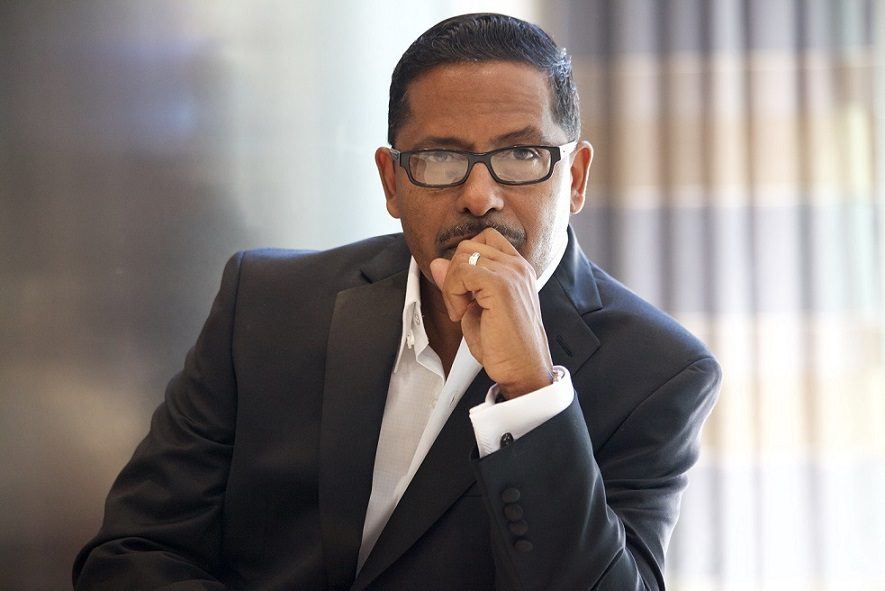
Phil Robinson, Sonero, composer, performer and leader of his own orchestra.

His charisma and his entrepreneurial, creative and positive attitude make everyone who has the opportunity to talk with him enter his world, his love for music, and his passion for improving, learning and being better every day. Phil Robinson has loved art from a young age.

The artistic influences that he had from his mother and his aunts, directed him to a gratifying world full of unforgettable experiences. A complete artist, with many stories to tell and whom it is definitely worth learning from.

Phil Robinson with Producer and Director Salim Samouh

Born in the Bronx, New York, to Dominican and Puerto Rican parents, he grew up and had his first approaches to music in the Dominican Republic, surrounded by close family members who sang, recited poetry, and performed. When he was just 5 years old, he listened and was inspired by the Spanish singer, Joselito, considered a child prodigy for the time.

With the passing of the years, and as a teenager, he returned to the Bronx that saw him born, just in the days of Fania. He admits that at that time his voice was not yet fully developed, but thanks to his sister he was always in contact and learning about Latin music, especially Salsa.

Phil Robinson
Phil Robinson

“I had a lot of interesting exhibitions. At the time when I returned from the Dominican Republic, I lived for a long time in the South Bronx, where I was born. And I had the opportunities to see all those artists like Larry Harlow and Ismael Miranda (who worked together), Héctor Lavoe, Willie Colón… And I looked at these Latino artists and said to my sister: One day I am going to be on that stage! ”

Beginnings full of learning

 By the 1960s and 1970s, Latin music was booming in the United States. In addition to radio, orchestras had become mainstream and performed in American venues. All of this was very enriching and motivating for a young Phil Robinson.

Phil Robinson and Orquesta Yaré

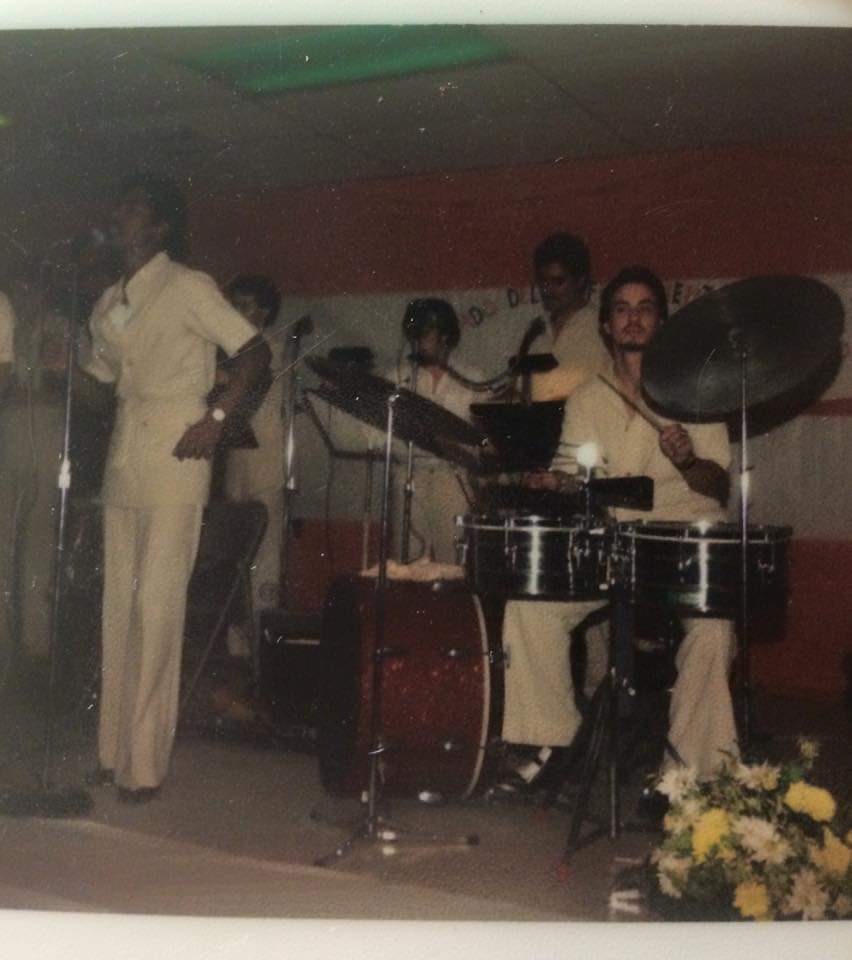
The Orquesta Yaré of southern New Jersey was the first group in which Phil Robinson had the opportunity to participate, develop his voice and work to improve his native talent. With this participation, it was time to explore more, focus on the music, and let it all flow down to the path Phil wanted to lead.

“Music is an art. It is a profession that takes a lot of sacrifice, which requires being very consistent, and never letting yourself be carried away by negative thoughts that you are not going to achieve it, but rather thinking that God knows what He does and how far He wants to take you ”

The Orquesta Yaré was a dream of a young man who, like Phil, wanted to succeed in the world of Latin music. Founded and directed by Leroy Gutiérrez (conguero, timbalero and bongo player) with original themes; and his brothers Johnny (bongosero) and Loui (trumpeter).

At that time, Leroy was a percussionist, but he also learned to play the piano by himself, without having a teacher. Gutiérrez invited Phil to participate, to make him a star. Yaré was an orchestra of 12 musicians, all the music was original.

“Our first performance was in 1973, on San Juan Day, at a celebration of el Día de Puerto Rico, in Vineland, New Jersey. I began to develop my voice, I did not have so much control over it, nor did I know how far it could go; but I had the enthusiasm that I was seeing something that I had been dreaming about for a long time, and it was coming true. ”

Celia Cruz and Phil Robinson

They played at Landis Park in Vineland, NJ. That night Larry Harlow and Néstor Sánchez has invited, and Orquesta Yaré accompanied them. It was a dream to be able to play alongside artists he admired. After years of that presentation happened, Phil Robinson reunited in Los Angeles with Néstor Sánchez and was able to share a photograph of that first presentation.

It’s fascinating how Phil recounts all these unforgettable experiences:

“…They had taken me a photo with him, and I had that photo here for years. Someone invited me to a show where he was going to be here in Los Angeles, and I grabbed my photo and took it for the meeting. That day he signed me the photo of more than twenty years ago… and he did remember me! ”

Everything that has happened in all these years since that first presentation in 1973, have been experiences to remember for a lifetime, and have given him the push to keep going.

“No one has to instill in me what it is to be in music, because that is already in me, it is in my blood, it is in my feet. No one has to ask me to continue in the music ”

Those encounters with certain characters who already had names, who was famous; and he found himself next to them, was enough to keep Phil’s energy high forever, continuing with the work to make dreams come true, and trying to be as original as possible.

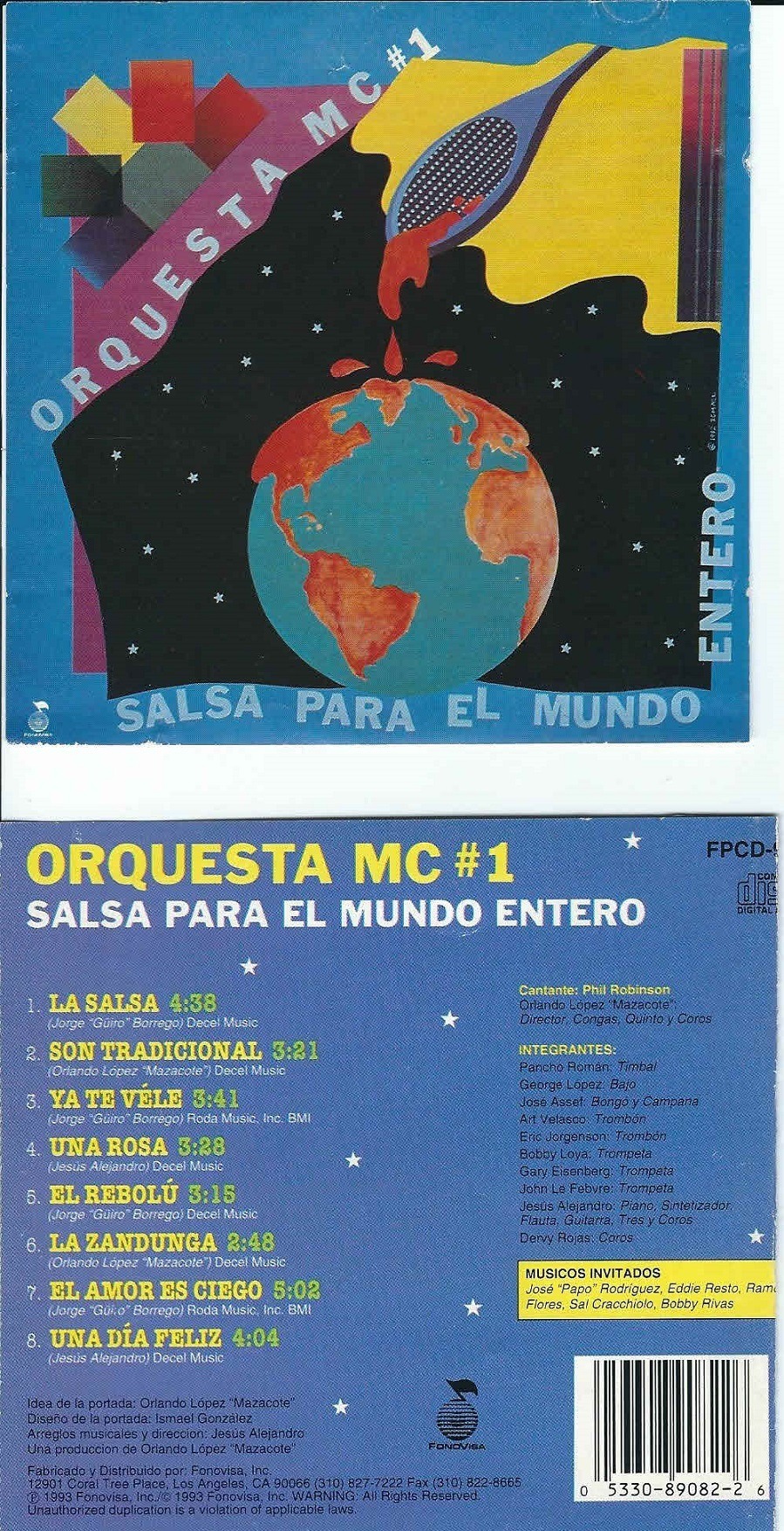
Discography Salsa Para El Mundo Entero

Each experience has allowed him to gain knowledge of how music works. Times have changed and it is no longer so necessary to have a “sponsor” who invests in you and helps you finance an album, or who promotes you. You can do it yourself.

The key to reinvention

Although he confesses that it’s not something that he has planned, every day Phil thanks God for a new awakening and in his mind there is always that spark of imagining what he can do to take that daily opportunity to improve himself and always be active.

When referring to the current situation, generated by the Covid-19 pandemic, he thinks that the inconvenience that has affected everyone the most, especially for be unexpected, is the possibility of working freely.

But he remains positive towards the future, thinking that everything will pass. Applaud the initiatives of his colleagues in Los Angeles, where he currently lives, to use social media to sing their original songs and keep in touch so that people stay aware of what they are doing.

Regarding his activity on social networks, Phil tells us:

“For my part, I have not prepared to make that kind of approach to social media. But sometimes I put my songs on, or send a positive message to the salsa community, to my friends, to my colleagues, to people who like my music. And I stay present, not daily, because people forget about you when they don’t see you, but when they hear a lot about you, the magic goes away … I like that people don’t get so tired of seeing you or hearing your name, but suddenly you show up and people realize that you are in contact. “

 Don’t be sad, very soon you can expect a couple of performances by Phil Robinson on his social media, with the tracks of his original music, to keep in touch and accompany him at this moment in which it is so important to stay at home.

The charismatic artist thinks that what is happening now is going to completely change the normality to which we are accustomed. Although he does not know what the end result will be, because everything is very uncertain, he knows that the salsa community is looking forward to the moment of returning to the clubs, and reflects on the need to be 100% sure of maintaining our safety and individual care. , and that of those around us.

For now, all that we don’t know about the new virus affects many professions, including that of singers, artists and musicians who live by being in contact with the public and constantly exposed. Still, Phil trusts God and thinks that this is part of a natural evolution like other situations that humanity has faced before, and the key is to adapt and have patience, because, luckily, we have technologies and tools available that in other times did not exist.

“Here in Los Angeles there is a lot of talent, there is a lot of preparation with many musicians, and even if you are not on a stage, you can create. We can use technology to do certain things that we don’t normally do because we are on stage all the time and people are physically seeing us. This has evolved technology much more, because we are all turning to social media to keep in touch and continue sending the message, so that this message does not die”

Affirm with total conviction that there is nothing impossible in life, the important thing is to take your time and plan to carry it out. Consistency has kept him focused on his goals under the premise that while an artist knows who he is and on what feet he stands, the only thing that will happen is that he will evolve and improve.

Plans with your Sonora Pa’ Gozá’

The group has had several names, the first name emerged when Phil arrived to Los Angeles in the late 80’s. He had always wanted the freedom to sing what he wanted; something that he felt completely comfortable with, identified with, and made easy for him. Under this premise, and after everything learned, Manhattan West emerges (alluding to the place where Phil grew up), a small group with two trumpets, a saxophone, full percussion, piano and bass. When he was not busy with his commitments to other orchestras, he dedicated time to his personal project and in which he chose the music he wanted to sing.

Phil and Orquesta Papo Rodriguez y La Sorpresa

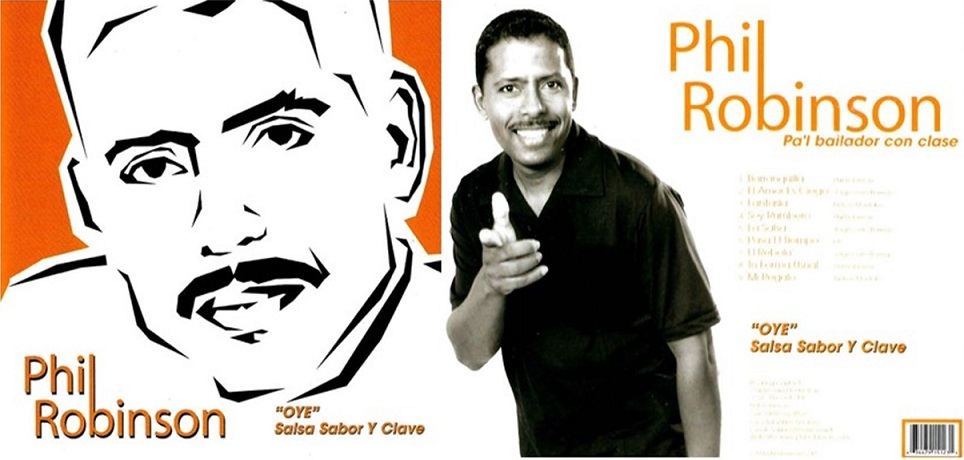
While evolving, he became the leader of Henry Mora and the All Star Salsa Orchestra of Los Angeles, collaborating with many of the local groups, from there he became the lead vocal for Eric Matos and La Caliente Orchestra, Papo Rodríguez and La Sorpresa, and recorded two original songs composed by the title of Nelson Montalvo Fantasía and Mi Regalo included on his 2005 CD, Oye Salsa Sabor y Clave.

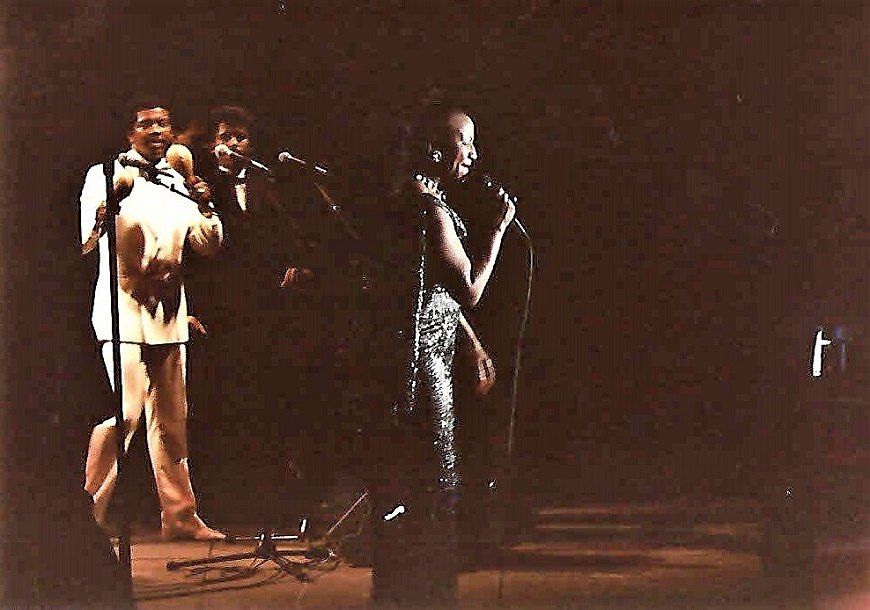
During the time that Phil was with Papo Rodríguez, the Panamanian singer Camilo Azuquita arrived in the city and La Sorpresa became Azuquita y su Melao, Phil became Azuquitas for several years, performing in many places known as the Hollywood Palladium and with many renowned artists. Thanks to these collaborations, Robinson finished polishing his style.


“Much of the style that I have, my way of perform, how I sing, how I dance, everything, we can say that I caught it from him. Azuquita has a very special swing… He is a dynamic singer, even at his age… ”

Some time later, Manhattan West became Sonora Borinqueña, and finally obtained the name with which we know it today: Sonora Pa’ Gozá’.

With this name the essence of what Phil transmits with each presentation is maintained:

“Many people could not, or had difficulty pronouncing Borinqueña… so I said, wow, nobody is going to remember us!… Then there was Sonora Pa’ Gozá’ … I always have that energy … because I not only sing, I also like dancing, I like interacting with the public, I get off the stage. I consider myself very dynamic. ”

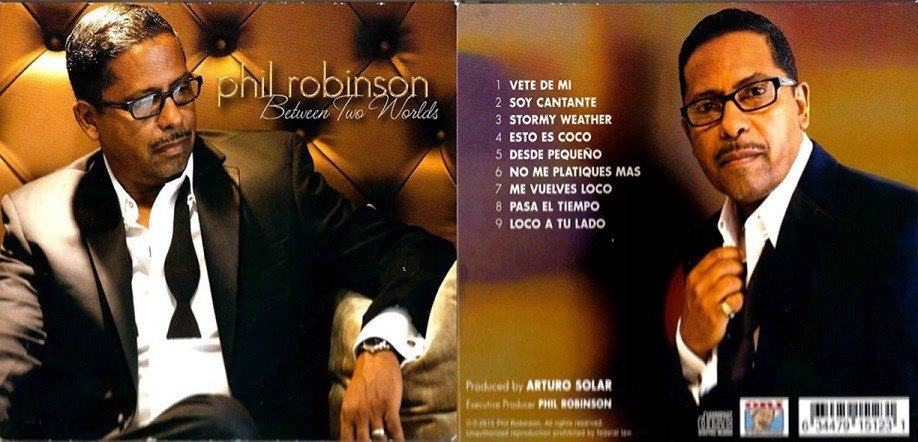
Between Two Worlds

Phil Robinson considers his most recent production Between Two Worlds, a master recording, because the songs that were chosen for that CD are not all tropical, but not entirely Americanized either. The arrangements are Big Band, songs like No me platiques más or Esto es Coco, were made in Big Band.

Discography Between Two Worlds

This project took seven years to complete, some of the songs were meticulously selected by Arturo Solar Fernández, who produced the project with compositions by Ted Koehler and Harold Arlen, Homero and Virgilio Expósito, Enrique Benítez, Vicente Garrido Calderón, Armando Manzanero, Jesús Alejandro (El Niño) and of course, Phil Robinson.

February 2020 on location filming the short movie Darling Boy

Robinson also had the opportunity to venture into the cinema and include two of his original songs (Soy Rumbero, from his CD Salsa Sabor y Clave; and Loco a tu lado, from his latest production Between Two Worlds), in the cast of a short movie titled Darling Boy, by Syrian producer and director Salim Samouh.

Discography Oye Salsa Sabor y Clave

Future plans

In the not too distant future, Phil Robinson hopes to compile all his recorded songs with other orchestras, the solo songs (both in English and Spanish); and others in which he ventures into rhythms such as Bossanova (Night and Day). There are also other American songs that Phil wants to record with more danceable adaptations and with his original touch.

It will also resume the organization of the Puerto Rican Festival in Los Angeles, whose twenty-fifth anniversary will be celebrated next year, after being postponed by the Covid-19 pandemic. We will see Robinson and his Sonora Pa’ Gozá’ at this festival, accompanied by Puerto Rican artists, orchestras from Los Angeles, San Francisco and from all around the world.

Many presentations are coming, Phil Robinson will tell us as soon as the new dates are confirmed so that they can enjoy, dance … and gozá’!

Valuing what is really important

When asking Phil Robinson what he would say to those young people who are just beginning and who have a desire to achieve their dreams, he answered:

“My advice is to believe in yourself, take the examples of those who have experience, respect our genre … The salsa genre is very positive, but many people mistreat it too … Being original is important, developing your own style, being accessible with people, be professional from the beginning. Having in your mind that you are a professional, no matter what level you are on, is going to take you to the top, because that’s clear. Choose the music that identifies you as an individual, don’t imitate, be consistent and keep in mind that there are going to be sacrifices… you are going to fall, and you are going to get up. ”

Phil Robinson
Phil Robinson

Many, like Phil Robinson, have natural talents, but his advice is that you also have to polish yourself, learn from those who have succeeded, and find out who you are as an artist. Fight, improve and give your best at all times, in all places and no matter how much they are paying you. If a commitment is made, do it. People will value you for what you do.

Of all the accomplishments throughout his career, Phil Robinson believes that what makes him most proud are all his career years. The reception and recognition of the public that knows him and knows how long he has been in music; who continue to support him, who respect him. From musicians to the people who go to see him when he performs. All this is very valuable for him.

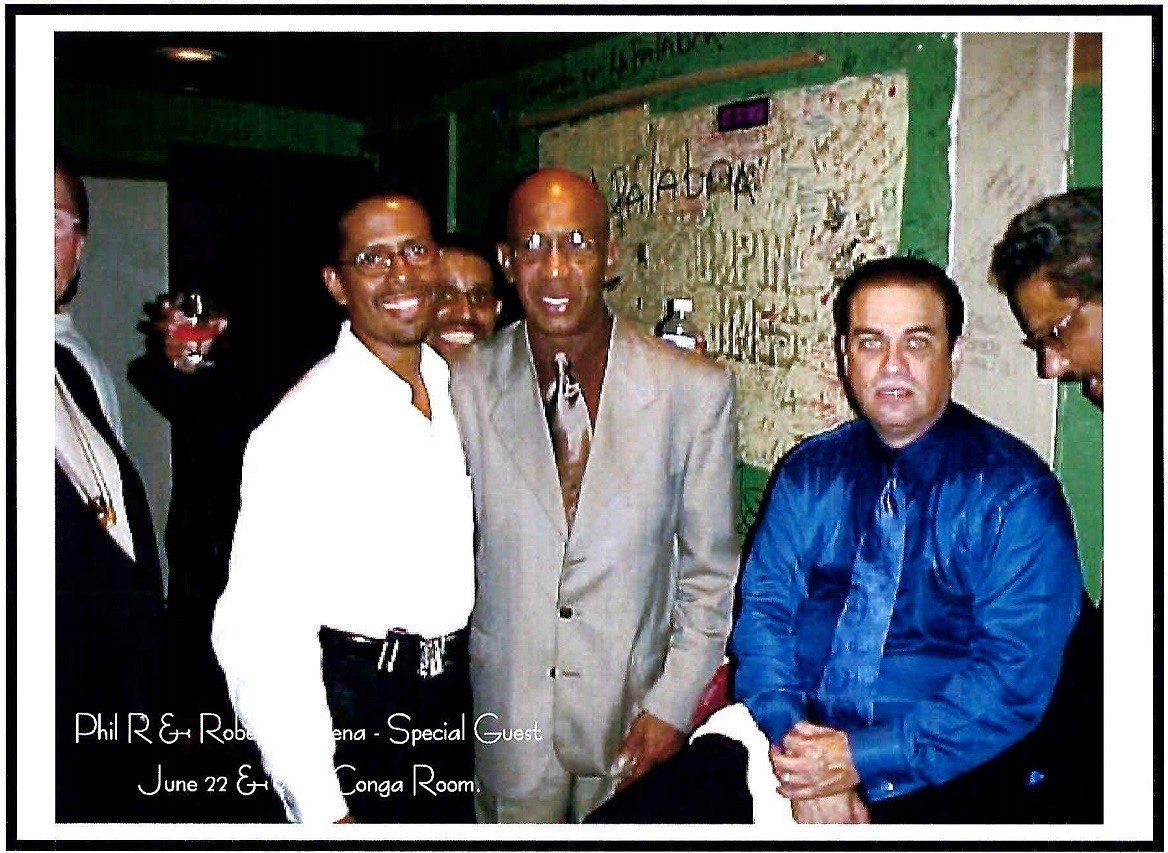
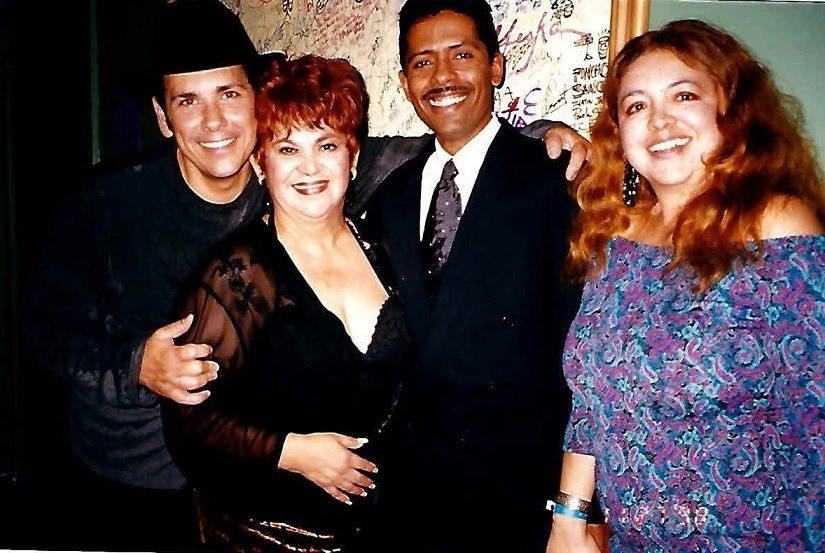
Cuban Singer Franco, Phil Robinson and Actress Lupe Ontioveros at the Conga Room

“… And the steps that I have been climb, and that I am still climbing, because this does not end. And also the opportunities to be, even briefly, with those who have already gone beyond what I have done … I am totally proud of what I have done, where I am … and I continue in the fight . Anything can happen. Always looking positively into the future.”

Phil Robinson is a quiet man, he has a beautiful family that is his most precious treasure, a beautiful family that supports him, accompanies him, and cares for him all the time.

His family is the most important thing, because will come a day when he will decide to retire from the stage, and although he does not expect it to be soon, one day he will do and his family will always be there to continue adding beautiful experiences together.

Phil Robinson thinks he’s been lucky. Today he continues working to improve himself, grow, and learn something new every day, because it is never too late.

“As long as there is skill and desire, I will continue in the same: making music, and being the most original. That is the only thing that separates you from the rest, because we try to honor our music, but it is always important to keep a percentage that says: Ok, this is Phil Robinson. All of this continues to be a dream that will never end. This will end the day that I close my eyes forever, and it will be so. ”

We continue working to enhance Salsa

This month I want to continue sharing good news for everyone in NY and in the Salsa world. On this occasion, Oscar Hernández and Spanish Harlem Orquesta join Spaha Salsa Gallery Museum. Oscar has donated an incredible piece that we will be exhibiting immediately.

Four times Grammy Award Winner, Oscar Hernández, has long been considered one of the most gifted and prominent pianist / arrangers on the contemporary Latin, Latin-jazz and salsa music scene. He has achieved legendary status for his prolific career spanning now over 40 years.

Hernández is the leader of the world renowned Spanish Harlem Orchestra. Won the Grammy for their second CD release, “Across 110th Street” and winning yet another Grammy with their 4th CD “Viva La Tradition” and won their 3rd Grammy with “Anniversary” in 2019. Oscar was the music producer as well as pianist / arranger on all CD’s.

Since the band’s inception in the year 2001, SHO has garnered numerous awards and world acclaim as one of the finest exponents of Salsa and Latin / Jazz music. Spanish Harlem Orchestra is generally considered one of the best Salsa & Latin Jazz Orchestras today and one of the finest music ensembles in the world.

The Bronx native has produced such artists as Ruben Blades, Paul Simon, Willie Colón “Carabali”, Daniel Ponce, Rafael Dejesus, Eddie Torres, Phil Hernandez, Steve Kroon, Juan Luis Guerra, etc.

In addition to being Rubén Blades pianist, arranger and musical director, Oscar Hernández has enjoyed a prolific musical career recording and performing with such world renown artists as Latin music king Tito Puente, Queen of Salsa Music Celia Cruz, Latin Pop Star Julio Iglesias, Juan Luis Guerra, Ray Barreto, Earl Klugh, Dave Valentin, Johnny Pacheco, Ismael Miranda, Pete “Conde” Rodríquez, Oscar De’ Leon, Luis “Perico” Ortiz, “Libre” “Grupo Folkorico Experimental “, Willie Colón, Kirsty MacColl, etc. Oscar’s musical exploits include working as Musical Director / Conductor, arranging and producing the music for “The Capeman,” pop-rock icon Paul Simon’s Broadway musical.

Oscar is also the music producer of “The Capeman” cast recording. Oscar was Musical Director / Arranger for the hit shows “Quén Mató a Hector Lavoe” and “La Lupe” at the 47th Street Theater. He was also, Music Supervisor / Arranger for the show “Four Guys named Jose & Una Mujer named María” Oscar also has released 2 CD’s as a solo artist, Oscar Hernández & Alma Libre, titled “The Art of Latin Jazz” and “Love The Moment ”on Origin Records. It is a true honor to have the donation of an incomparable musician like him in our museum. Thanks, Oscar!

Another of the great figures of the Spanish Salsa Harlem Orchestra is Luisito Quintero, the timbalero from Venezuela. Luisito Quintero was born in Caracas, Venezuela where he had his first contact with music. Cultural influences of Afro-Venezuelan rhythms were always present at home. His father, a highly respected percussionist, taught and encouraged Luisito to play the timpani in his teens.

Luisito Quintero
Luisito Quintero

Quintero continued to refine his playing level with the Venezuela Symphony Orchestra, where his technique for playing the timpani soon caught the attention of his colleagues. Subsequently, he joined the popular music groups Guaco and the Trabuco Venezolano and traveled with Oscar D ‘León with whom he achievedan important international projection. The live performances, recordings and projects in which he has participated are countless.

He has made his mark as a percussionist with figures such as Tito Puente, Eddie Palmieri, Marc Anthony, Gloria Estefan, Richard Bona, Jack Dejonette, Willie Colón, George Benson, Natalie Cole, Herbie Hancock, Nuyorican Soul, Masters at Work, and of course, The Spanish Harlem Orchestra. Luisito is part of the group Elements of life, with whom he has toured for the last years.

The band has shared stages with major artists in the market such as Robert Plant, Lauryn Hill and Alicia Keys, performing at festivals such as Montreux Jazz Festival in Switzerland, North Sea Jazz Festival in Holland, Roskilde in Denmark, Blue Note in Japan, Jazz Cafe in London, England and the legendary New Morning Cafe in Paris, France. Without a doubt, an impressive and worth mentioning career.

And if we are talking about incredible careers in this edition, I can’t stop talking about Adalberto Santiago and the new projects of the 60th anniversary with great artists of the genre. This his time I can tell you about Cuco Peña’s string arrangements, the participation of Nelson Jaimes and, of course, the help of my friend Freddy Miranda. At 83 years old, he is still in the rumba. There is less and less to show the world this historical piece for the world of salsa.

Johnny Cruz and Adalberto Santiago - Salsa
Johnny Cruz and Adalberto Santiago – Salsa

I also want to remember Raphy Leavitt, on the fifth anniversary of her death on August 5. In 1970 Leavitt organized an orchestra that should have a different sound and style. He wanted to select the repertoire of songs of the orchestra with a particular, positive, social and even philosophical message; and founded “La Selecta”. Since its inception, La Selecta has featured Coamo-born Sammy Marrero as one of its singers.

Marrero, who has always been strongly influenced by the music of the Puerto Rican jíbaro, had an opportunity to teach his dramatic singing style in his first hits as the almost hymn “Jíbaro Soy”, a very patriotic and unusual Puerto Rican song, “Payaso”, and “The Good Shepherd”. However, it is in the band’s signature song, “La Cuna Blanca,” that Marrero’s voice is for the most part associated.

Raphy Leavitt
Raphy Leavitt

In 1978, Leavitt discovered a young singer named Tony Vega, who became a legend among salsa singers on his own merit. Raphy Leavitt and La Selecta were responsible for the introduction of salsa in many countries. In the 1980s, Leavitt became an independent producer and produced two albums for Bobby Valentine.

In the 1990s, he established his record recording company, R.L. Records. The company’s first production was the album titled “Provocame,” which became a hit in Puerto Rico, the United States, and South America.

In 1978, Leavitt discovered a young singer named Tony Vega, who became a legend among salsa singers on his own merit. Raphy Leavitt and La Selecta were responsible for the introduction of salsa in many countries. Raphy passed away in Miami as a result of an operation of the hip prosthesis that had been installed due to an accident in 1972, and that he had become infected. Leavitt passed away in his sleep. Raphy will always be endorsers of the Salsa Museum with the clown suit of its 25th anniversary.

I also want to thank the constant and significant support for the Museum, from my friend Sully Díaz, who as endorser of the museum, is always working to promote and make our work reach more people. Sully was born in New York, the daughter of Sephardic parents from Puerto Rico. She began her career as a model, and at the age of 17 she began acting in Spanish soap operas, making herself a well-known figure on television in Puerto Rico.

In 1983 she became popular throughout Latin America with the role of Coralito, in the telenovela of the same name. From that moment on, Sully was known as “the queen of Puerto Rican soap operas.” In the early 1990s, Sully moved to Hollywood and appeared on various television shows as a guest star and worked on a few movies.

Johnny Cruz and Sully Diaz

In the mid-1990s, Sully joined four other Latina women (Dyana Ortelli, Marilyn, Ludo Vika, and Lydia Nicole) in a comedy group called “The Hot & Spicey Mamitas”. They sold out at several Los Angeles comedy clubs. They recorded a CD live called simply The Hot & Spicey Mamitas.

In 2002 Sully appeared in the play La Lupe: My Life, My Destiny, in which she played the Cuban singer La Lupe. Shortly after the execution of this work, Sully made her own production of La Reina, La Lupe. This work toured all of Puerto Rico and was a great success in Florida. That same year, she starred in the Puerto Rican thriller “Cuéntame tu pena”, in which she plays Isadora, a radio host who receives a call from a woman who is killed while on the air.

In 2004 Sully toured with Gilberto Santa Rosa in a play called “The True Story of Pedro Navaja.” In 2009 Sully appeared in the movie Princess Protection Program as Reina Sofía, along with Selena Gómez and Demi Lovato.

Papo Rosario and Isidro Infante - Photo
Papo Rosario and Isidro Infante

Recently, Papo Rosario released his new single “Gracias” produced by arranger and musician Isidro Infante. Rosario appreciates being alive and being able to walk after being bedridden as a result of a car accident. Papo Rosario is a world-class artist who has put the name of Puerto Rico on high. Rosario, who retired in 2019 from the group considered the “University of Salsa”, El Gran combo de Puerto Rico, after having an accident and presenting health problems, affirms that he already feels ready to resume his musical career with the Launch of his first solo production by producer Isidro Infante. I wish you success in this new beginning.

The invitation to tune in to the new Fm / Internet radio station on Live365.com: Salsagallery continues. Great music, artist interviews and much more.

Oscar Hernandez
Oscar Hernandez

At the Spanish Harlem Salsa Gallery Museum we are happy to affirm that New York City is preparing to resume its activities little by little. We hope to have more news soon and that we can return to normal soon.

By Johnny Cruz, ISM Correspondent, New York, New York City

  • « Go to Previous Page
  • Page 1
  • Interim pages omitted …
  • Page 11
  • Page 12
  • Page 13
  • Page 14
  • Page 15
  • Interim pages omitted …
  • Page 28
  • Go to Next Page »

International Salsa Magazine (ISM) is a monthly publication about Salsa activities around the world, that has been publishing since 2007. It is a world network of volunteers coordinated by ISM Magazine. We are working to strengthen all the events by working together.