• Skip to primary navigation
  • Skip to main content

International Salsa Magazine

  • HOME
  • Previous editions
    • 2026
      • ISM / April 2026
      • ISM / March 2026
      • ISM / February 2026
      • ISM / January 2026
    • 2025
      • ISM / December 2025
      • ISM / November 2025
      • ISM / October 2025
      • ISM / September 2025
      • ISM / August 2025
      • ISM / July 2025
      • ISM / June 2025
      • ISM / May2025
      • ISM / April 2025
      • ISM / March 2025
      • ISM / February 2025
      • ISM / January 2025
    • 2024
      • ISM / December 2024
      • ISM / November 2024
      • ISM / October 2024
      • ISM / September 2024
      • ISM / August 2024
      • ISM / July 2024
      • ISM / June 2024
      • ISM / May 2024
      • ISM / April 2024
      • ISM / March 2024
      • ISM / February 2024
      • ISM / January 2024
    • 2023
      • ISM / December 2023
      • ISM / November 2023
      • ISM / October 2023
      • ISM – September 2023
      • ISM – August 2023
      • ISM July 2023
      • ISM Edition June 2023
      • ISM – May 2023
      • ISM April 2023
      • ISM March 2023
      • ISM February 2023
      • ISM January 2023
    • 2022
      • ISM December 2022
      • ISM November 2022
      • ISM October 2022
      • ISM September 2022
      • ISM August 2022
      • ISM July 2022
      • ISM June 2022
      • ISM May 2022
      • ISM February 2022
      • ISM January 2022
    • 2021
      • ISM December 2021
      • ISM November 2021
      • ISM October – 2021
      • ISM September 2021
      • ISM August 2021
      • ISM July 2021
      • ISM May 2021
      • ISM April 2021
      • ISM June 2021
      • ISM March 2021
      • ISM February 2021
      • ISM January 2021
    • 2020
      • ISM December 2020
      • ISM November 2020
      • ISM October 2020
      • ISM September 2020
      • ISM August 2020
      • ISM July 2020
      • ISM June 2020
      • ISM May 2020
      • ISM April 2020
      • ISM March 2020
      • ISM February 2020
      • ISM January 2020
    • 2019
      • ISM December 2019
      • ISM November 2019
      • ISM October 2019
      • ISM Septembre 2019
      • ISM August 2019
      • ISM July 2019
      • ISM June 2019
    • 2016
      • ISM December 2016
  • Spanish
  • Download Salsa App
    • Android
    • Apple

Search Results for: Héctor Lavoe

The 5 most famous Latin music DJs in USA

Latin music is characterized by its incomparable rhythm. Those who have Latin blood vibrate when listening to songs that remind them of their roots. However, Latinos are not the only ones who enjoy them, audiences of all ages and nationalities end up trying to dance to the tune of salsa, merengue or bossa nova.

Its growth has been increasing over the years and more and more Latino artists are performing on large stages; Important events in the United States and become the favorites of non-Hispanic people.

For this reason, it is very common to listen to these types of songs in different bars and clubs. Some DJs based in the US have wanted to enhance their roots and, even when they dabble in other genres, they are still famous for their Latin mixes .

Famous DJs of Latin music

DJ Deorro

Erick Orrosquieta, is a DJ and music producer, born in California but to Mexican parents. It is characterized by its inclination towards electro house. However, it does not neglect the Latin music sets. To his credit he has pieces such as “Bailar” with Elvis Crespo, where he did not hesitate to place his personal stamp.

Dj Deorro
Dj Deorro

He is working on a new album where he plans to gather more Latin songs and songs in Spanish. Even when he tours different countries, he always plays in his native USA again.

“I want to grab the sounds we used to hear when we were little, cumbia, merengue, mariachi, everything, in order to give them new music”

DJ Louie Vega

Luis Ferdinand Vega Jr. is an American with Puerto Rican roots. His uncle was nothing more and nothing less than the famous singer Héctor Lavoe. Little Louie Vega, as he is also known, grew up surrounded by Latin music. For this reason, his training and his passion for music of this style have always been noticed.

Dj Louie Vega
Dj Louie Vega

He is one of those artists who enjoy each show and immerse themselves in what they do. Dj Louie had his beginnings at parties in the Bronx and has not neglected his Hispanic side. Making different Latin mixes that he does not stop taking advantage of in many of his presentations. One of his most requested songs is “My people by Héctor Lavoe”. He has also participated in songs with a tropical rhythm like “Starring” with Roberto Roena and performed live with the accompaniment of different percussionists.

“Music comes from our hearts and we try to express it. We don’t look at the others, we just follow what we think is our path, ”  he told ­estaybullshit.com.

DJ Buddha

Dj Buddha
Dj Buddha

Urals Vargas, born in the United States, is a renowned DJ, songwriter, producer and music publisher who has earned a good place in the industry. Recognized for including Latin music and dancehall among his mixes. He is one of the critics’ favorites and remains in constant innovation. DJ Buddha has an album called “Ultra Latino” that contains some of his most requested Latin tracks. In addition, it has countless tracks produced, remixed or written that today belong to renowned Latino artists.

“For me, success has been not putting myself alone in a genre because I make electronic music, … and yet, I have also made songs in the Latin market,” he said in an interview with Deyanira Martínez.

DJ Alex Sensation

Dj Alex Sensation
Dj Alex Sensation

He is a Colombian who grew up in the United States and from an early age began mixing at nightclubs. He also worked at the station La Mega 97.9 Fm, walking through different musical genres but not forgetting where he came from.

“I grew up listening to salsa and cumbia because of my roots. One of the fi­rst clubs where he played on the weekends was a Dominican club. There, I learned about the Dominican culture Bachata, Merengue, typical merengue when I was still very young. I made many Dominican friends and fell in love with their culture. I mix everything under that genre,” he commented for an interview.

He is considered a very valuable artist for music. In fact, he has participated in different festivals, parades in the Dominican Republic and Puerto Rico and has been awarded the ACE, an award from the Association of American Entertainment Critics.

DJ Cristhian Terán

Dj Cristhian Terán
Dj Cristhian Terán

This is a Venezuelan who has positioned herself in the city of the sun. Its proposal is based on Latin rhythms and is the favorite of most nightclubs. He has a history that has accompanied her since its inception in Venezuela. Caramelos de Cianuro, Chyno, Nacho and Guaco are some of the artists from her country with whom she has shared the stage. However, he has also managed to rub shoulders with singers such as Maluma, Alexis and Fido and Arcangel. Cristhian is one of the DJs who has managed to get the most out of the Latin genres and keep them present in the United States. His music is usually heard in the different clubs in Miami.

” Latin music “, a legacy that does not go out

Musical genres have been part of the citizen’s common life for more than fifty years. In principle, it originated to differentiate religious music from other styles. Starting the great variety of musical genres that we know today. The term “Latin music” was born in the United States to refer to the rhythms from Latin America.

This is due to the large number of groups that emerged in the 1950s. It sought to differentiate African American music from Latin American ones. From now on, different rhythms belonging to this category have come off, such as: salsa, merengue, bachata, cumbia, bossa nova, among others.

Long live Latin music!

Salsa, merengue and bachata, to name just a few, have become the flag of most Latinos; inside and outside their borders they dance, sing and teach others to move with that particular “son”. It is a rhythm that prints passion and a lot of dedication. The music industry is part of the history of this genre. Those who have managed to belong to their ranks have been immortalized through their songs. This movement has been on the rise, making those who were born in Latin American lands proud and accommodating documentaries and movies. Everyone wants to tell a story around Latin music!

5 movies you can’t miss

Films have become a window into the past and what we do not live but would like to recreate. In the case of music, there have been many themes that have been exposed. For this reason, we wanted to compile some of the best ones. You will love their content and you will want to see them immediately. Make your notes!

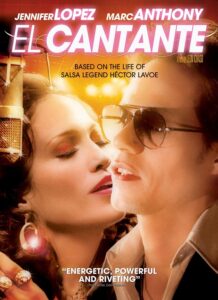
El Cantante, 2006

Movie - The Singer, 2006

The Singer, 2006

Héctor Lavoe is a Puerto Rican legend. A singer, composer and musical producer with a voice and talent what catapulted him as the greatest salsa performer in history. The film starring the also Puerto Rican Marc Anthony describes Lavoe’s life from his teenage years. The singer, as he is fondly remembered, traveled to New York City at just 16 years old.

Against his father’s will, he decided to go after his dreams. In the scenes we can see how he is part of a musical group and perform in a bar, he meets Eddie (Manny Pérez), Willie Colón (John Ortiz) and gets his first contract with a record label.

However, you will also get to know the darker side of Héctor Lavoe who went through drug and alcohol problems. Héctor meets and falls in love with Puchi (Jennifer López), mother of his son and a very important character in the film. Puchi accompanies him on this path of constant ups and downs until little by little his life begins to change.

They lose their son Tito, as a result of an accident with Héctor’s weapon, and he is definitely not the same again. A story that shows us the success of an artist, his talent and dedication, without neglecting his bad habits that led to his death.

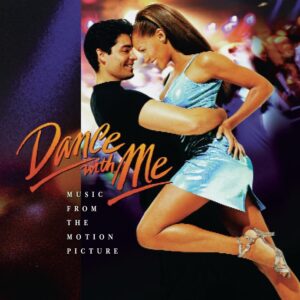
Dance with Me, 1998

Dance With me - Img

Dance With me – 1998

A film in which rhythm and romance will run through your veins. Chayanne and Vanessa Williams play a dance couple who meet in the middle of a great coincidence. Rafael Infante (Chayanne) loses his mother and decides to travel from Cuba to Texas to meet his father, the owner of a dance school.

When she gets to see him, she doesn’t know how to tell him the truth and prefers to apply for a job as a cleaning assistant. However, they realize how great a dancer he is and he begins to have participation in the academy. In the scenes we will be able to see how they get together through dance and enjoy the Latin rhythms. A fun film that should be among your weekend selection. Enjoy it!

Cuban Fury, 2014

Image of Cuban Fury 2014

Cuban Fury 2014

It tells us a story of love, self-improvement, improvement of self-esteem and, of course, salsa. Bruce Garrett (Nick Frost) is attracted to his boss Julia (Rashida Jones) and wants to conquer her through dancing. Garret had qualities for salsa but during his teens he was intimidated and put it aside.

Today, he wants to regain that rhythm, overcoming self-esteem issues and personal fears. For the character it is not easy to leave behind those events that marked his life. However, you must put aside self-pity and allow the dance to define everything. Will it have good results? Find out for yourself!

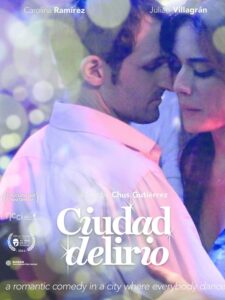
Ciudad Delirio, 2014

4- City of Delirium 2014

City of Delirium 2014

Cali, Colombia becomes the setting for an adventure full of dance and new experiences. Javier (Julian Villagrán) is a Spaniard who travels to Colombia for work and cannot help but fall in love with its people, customs and women. He meets Angie (Carolina Ramírez) a Colombian who owns a dance school. Their encounters are marked by the music and dancers that characterize this city. Javier ends up learning to dance salsa and guess what? Become an expert!

If you want to know more, find it now!

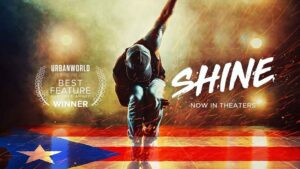
Shine, 2017

Shine 2017 - Latin music
Shine 2017 – Latin music

Shine tells us about two Puerto Rican brothers Ralphi Matas (Jorge Burgos) and Junior (Gilbert Saldivar) who have separated due to bad experiences and after a few years, they meet again. Between them, an even greater distance is created when they are on opposite sides of the fight for the gentrification of the area where they grew up.

The dance and cultural roots are present throughout the film, with Uncle Julio (Nelson Gonzales) trying to unite them again. Drama, dance and romance take sides in Shine, a very common story among Latinos in the United States who struggle not to let their principles die.

Latin music is life, it gives color, improves mood and is part of a cultural legacy that will continue to be maintained through the years. Every day new exponents of the genre appear and this will continue to happen over the years. So be it!

You always can count with friends

Latin America / Puerto Rico

I want to congratulate Gilberto Santa Rosa for a great job done with his first Virtual concert “Canta Mundo” to inaugurate the Coca-Cola Music Hall in El Distrito, located near the Puerto Rico Convention Center, in Miramar.

Gilberto offered a magnificent a virtual live concert with his band of Puerto Rican musicians. This is the first time, since the emergency began in Puerto Rico due to the pandemic created by COVID-19, that this modern room was activated to present a live concert recorded live, especially for Rums of Puerto Rico, and that they have chosen such an extraordinary artist for the inauguration was without a doubt a great success.

After much expectation, the Coca Cola Music Hall had its opening in a totally different way than imagined, with a concert that did not have the presence of the public or applause between songs, due to the limitations imposed by the COVID pandemic- 19. Gilberto Santa Rosa was entrusted to offer the first recital in the space. Both the singer and his musicians took all possible security measures to prevent the spread of the disease, but obviously, without the use of masks that would prevent them from playing their instruments or singing.

The concert “Canta Mundo” continues online so that the millions of Gilberto fans throughout the world become intimate audiences in their favorite spaces, you will surely enjoy it. The event was exclusively presented by Rums of Puerto Rico, and can be seen through the social networks of Gilberto Santa Rosa, as well as those of Coca-Cola Music Hall and Rums of Puerto Rico.

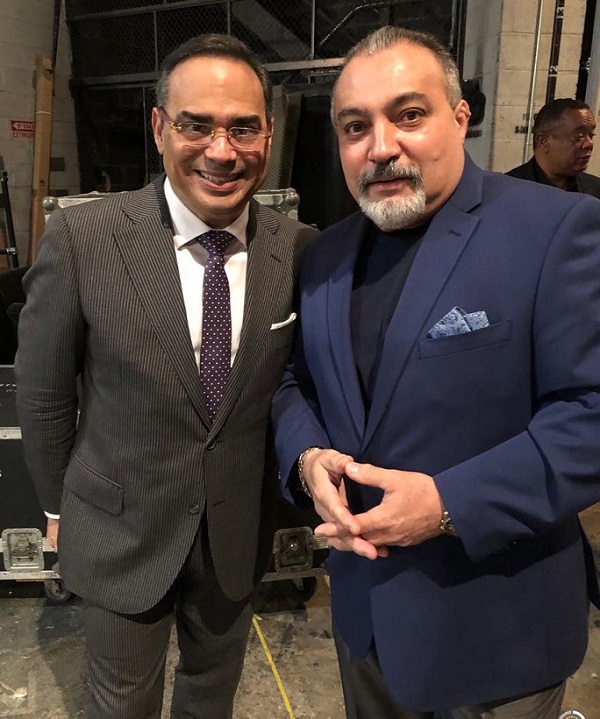
Gilberto Santa Rosa and Johnny Cruz - friends
Gilberto Santa Rosa and Johnny Cruz

I send a warm greeting to my good friend Jerry Rivas, singer of “El Gran Combo de Puerto Rico” since April 19, 1977, who now shares hits and music with his son Gerardo Rivas. In 1977 Andy Montañez, the lead vocal of the Gran Combo de Puerto Rico, announced his departure from the orchestra. Many saw the group debacle coming. When everyone expected to see an experienced singer, the always-wise director Rafael Ithier found a young singer to suit his group’s style.

The chosen one was a young man of just 21 years: Jerry Rivas. A shy Jerry Rivas presented himself with a cassette recorded with the music of the first groups that he joined for a short time, the musicians of the Gran Combo, looked at him suspiciously. Ithier, with his traditional good humor, contained his musicians with these words: “you rest easy, it is a black painted white”.

On April 19, 1977, Jerry began singing with El Gran Combo de Puerto Rico. Jerry Rivas’ first performance was “Buscando Ambiente” at El Club Caborrojeño de Guaynabo and his first international success was “La Clave y el Bongó”. Rivas, self-taught and who in addition to singing plays guitar, cuatro and cuban tres guitar, remembers that as a young man he was a rocker, but he was struck by the joy that the members of the Gran Combo projected in their dances and choreography.

In his long career with El Gran Combo, Jerry Rivas, has become a renowned sonero and one of the oldest members of the Universidad de la Salsa, has recorded 30 albums with the group and many of the greats were recorded in his voice. hits from the orchestra, such as “Y No Hago Más Na”, “El Menú”, “Azuquita pa’l Café”, “Que me lo Den en Vida”, “Ojitos Chinos”, “Me Liberé”, among many others. The Gran Combo was the key to success for Jerry, who thanks Quique Lucca, founder of Sonora Ponceña, for his recommendation that Ithier give him the opportunity to audition. His talent was passed on to his sons, who became Los Rockolos as children.

Gilberto Santa Rosa Concert Without Public

Today, Gerardo begins his solo career, and Jerry Junior together with Samuel conducts the Los Rivas Orchestra organized more than a decade ago. Gerardo always affirms that no matter how many differences they may have, music unites them. He revealed on some occasion that his father did not want him to dedicate his life to popular music due to the strong and unstable environment, the risks and swings of the artistic world.

However, when Jerry looks at them during rehearsals and on stage, he is proud and always advises them to be responsible, avoid the negative and assimilate the positive. Recently, the vocalist of El Gran Combo joined with his son, also singer Gerardo Rivas, and his grandson Gerardo Gabriel to carry a musical message to his followers in the midst of the coronavirus pandemic (Covid-19).

The trio came together to perform a classic by the legendary salsa orchestra, Mente Positiva. “In difficult times, the best we can do is carry a positive message,” wrote Gerardo, also a member of NG2, in his social media. Rivas father was in charge of the Cuban tres guitar, Gerardo Gabriel of the key and the maracas and Rivas son interpreted the theme. It is not the first time that they have joined this quarantine to delight their followers with a musical number.

Photo by Jerry Rivas and his family

I applaud the initiative of Pedro Oggie García as CEO of Salsa Artist Booking Entertainment Group (SAB), who with his daily work supports all the salseros in the world at SalsaArtistBooking.com. SAB is the company specialized in the digital coding of music, administration, promotion and representation of Artists of the Salsa genre, With an experience of more than 30 years in the media and with relationships worldwide, always characterized by our responsibility, seriousness and compliance.

Using their experience, international relations and positioning, they will make your musical work a success. Always taking care of their interests and rights, trying to take the artists and their music where their public requires it. Contact them +1 956-442-0099

José Mangual Jr
José Mangual Jr

I would like to share with you my admiration for José Mangual Jr. “El Campanero Mayor”, who is an American percussionist, of Puerto Rican origin, son of also percussionist José Mangual Sr. He was born in New York on January 11, 1948 and has a trajectory of almost half a century in Salsa.

His contribution to this genre began in the mid-sixties in his native city, when he joined the group of Monguito Santamaría, son of the great percussionist Ramón “Mongo” Santamaría. He also played with La Conspiración. He was part of Tony Pabón’s band, which marked the beginning of his role as a singer. On the LP “La protesta”, recorded in 1972 for the Rico Records label, José Mangual Jr. sang the song “San Miguel”.

In 1971 he joined the Willie Colón band, and since the singer was Héctor Lavoe, José participated in the best and biggest albums recorded by that great duo. Mangual Jr. also recorded with Rubén Blades on some of the most representative albums in the Panamanian singer’s musical career. His talent has allowed him to be making simultaneous recordings with other groups, musicians and singers, such as Ismael Miranda, Mon Rivera, Frankie Dante, Ismael Quintana, Celia Cruz and the Willard Orchestra, conducted by Willie Pastrana.

In 1977 he launched as a soloist, recording with his own group the album titled Tribute To Chano Pozo, and so far, he has around twenty of his own albums. These are added to almost thirty recordings with Willie Colón, Rubén Blades and Héctor Lavoe. But they are only part of the huge list of his recordings with other orchestras, musicians and singers. His meritorious career has allowed him to travel to many countries of the world alongside countless great musicians and singers, and become an example of dedication and love for music.

This has also allowed him to make friends around the world who admire, love, respect; and be with him in important moments, triumphs, defeats and also in goodbyes … José Mangual Jr. lost his grandson Tyrell Bryant a few weeks ago to the covid-19. I extend my heartfelt words of condolence for such an irreparable loss, and reiterate my unconditional support for the entire family at this difficult time. You are not alone! I dedicate special tribute to his grandson Tyrell Bryant who always be present in our hearts. RIP 04/04/1992 – 04/18/2020.

My friends, I need you know that we continue working hand in hand with prominent artists from New York and Puerto Rico on the CD dedicated to maestro Adalberto Santiago on his 60th Anniversary. I promise to have more details about this fantastic musical production very soon.

Johnny Cruz and Adalberto Santiago

I appreciate the support of Carl Cristiano, L&S Custom Tailors and cKc for my TV Show outfits and my public performances. Tailored suits with total care and confidence. Contact them, I recommend them with pleasure. www.LSTailors.com. Address: 138 E 61st Street Suite 201. New York, NY 10065. Phone: +1 212 752 16 38.

Don’t forget tune in to my new Fm / Internet radio station on Live365.com: Salsagallery. Great music, artist interviews and much more made with love for you all. There is the link: https://live365.com/station/a77973

Although yet It will not be possible to open to the public the Spanish Harlem Salsa Gallery in 1708 Lexington ave New York N.Y. 10029, you can see the entire exhibition with more than 200 articles through our social media. Check the updates in our website: spahasalsagallery.com.

Salsa Artist Bokking logo

New York City is slowly returning to normal. We hope to be sharing with you physically again, but now we follow the instructions of the authorities to keep us safe and healthy.

Contact: Johnny Cruz. 917-747-8505. [email protected].

By Johnny Cruz, ISM Correspondent, New York, New York City

A walk through the history of Latin music in the United States

Latin music has been of great in­fluence for singers in training and, without a doubt, marked the lives of its pioneers. Some born in Spanish-speaking countries and others with descent from these lands have not been able to put aside the ­flavor that has been inherited to them. There are those who affirm that these tropical and Caribbean rhythms are carried in the veins and it is very difficult to get rid of these roots.

The arrival of Latinos in the United States also implied the arrival of their customs and culture. Latin music is considered to be a large number of genres, including: salsa, merengue, bachata, bolero, bossa nova, reggaeton, rumba, ranchera, cumbia, tango, among others.

Photo of Latinamerican Festival at Nagoya in Golden Week

Latinamerican Festival at Nagoya in Golden Week

How did Latin music begin to enter the United States?

Latin American music has in­fluenced American music, starting from jazz to country music. Many bands added congas, percussion, or maracas to their instruments as they were drawn to the result these elements brought.

Starting in 1940, the music of Latin America, which still did not have a specific term, covered a greater number of audiences in the United States; international radio networks broadcast different themes of the time. In addition, they featured different Mexican bolero musicians such as Alfredo Antonini, Néstor Mesta Chayres, Eva Garza and Juan Arvizu. In the 1940s the US also heard the “Calypso” with great acceptance.

It was not until the 1950s that the term “Latin music” became popular, seeking to establish a difference between Afro-American and Afro-Latin American rhythms. Some artists marked this musical fusion to a greater extent, making the best of Latin music known on American soil. During the 1950s, music brought to the north from the island of Cuba, such as mambo, cha-cha, and rumba, was very popular. As well as the famous Mexican songs: rancheras and mariachis.

Some Latino artists who marked the history of Latin music in the United States Tito Puente was an American percussionist with Dominican origins remembered for his participation in worldwide jazz, Cuban music and salsa. In 1950 he helped promote the genre of mambo and cha-cha. His album “Dance Manía” was considered the most famous by the artist, it was one of the most heard among the Latino community in the US The album also set a precedent by being recorded in Spanish, generally, Latin albums were in English or with instrumental songs. It was Tito Puente who broke with this tradition.

At the beginning of the 20th century, tango touched American soil. Then, in the 70s, the Argentine Astor Piazzolla gave something to talk about by demonstrating his passion for the genre and revolutionizing what was known until that moment. Piazzolla was born in Mar de Plata but lived in New York from a very young age. It definitely changed the way of looking at music that was long marginalized, it was considered the music of the working class. The singer made mixtures between tango, jazz and contemporary classical music. His songs were a great success and were famous in bars of the time.

It was not until the late 1960s and early 1970s that the term “salsa” began to become known. Afro-Caribbean musicians mixed Cuban dance with infl­uences from jazz, Caribbean music, and American rhythms. Although in previous decades it had already had its beginnings, it was in the streets of New York where it was consolidated as a commercial success.

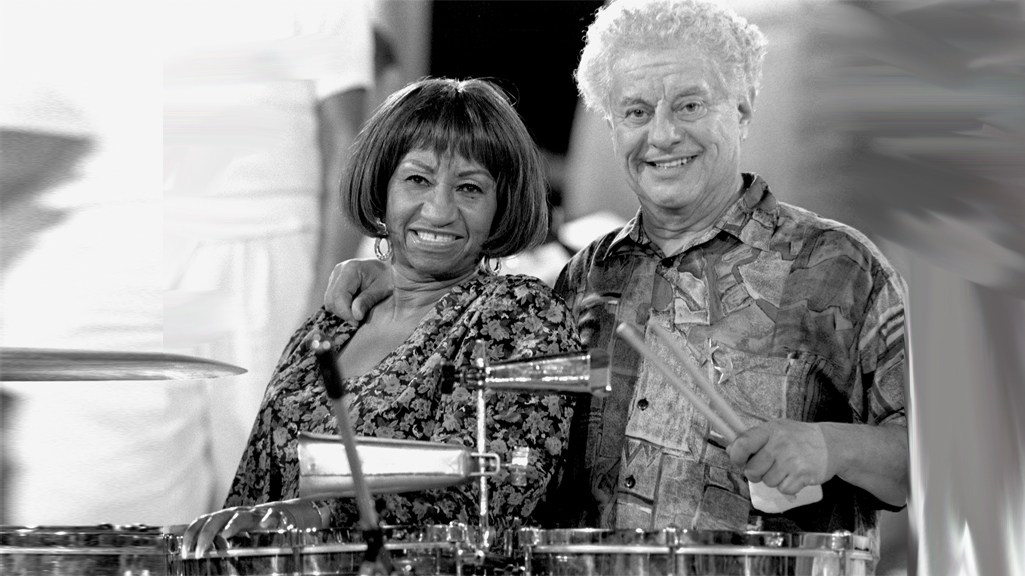
Photo by Celia Cruz and Tito Puente

Celia Cruz and Tito Puente – Latin music

Salsa launched artists who are now legends to stardom, such as: Celia Cruz, Willie Colón, Héctor Lavoe, Rubén Blades, Johnny Pacheco, among others.

Between the 1970s and 1990s, Dominican immigrants to the United States continued, especially to New York City, and promoted genres such as merengue and bachata. Juan Luis Guerra was one of the great exponents of both styles.

In the 90s, Selena mixed the Texan aesthetic with pop, giving her the title of the highest representative of the genre.

Entering the 2000s

In this decade, Latin rhythms continued to set the trend. Singers like Rubén Blades returned with songs that promised to be hits in the country.

At the end of 1999 Marc Anthony surprised his followers with an album of the same name. Although he was already known in the salsa genre, he decided to try other styles. With the intention of reaching the Anglo market, he is encouraged to sing in English. “I Need To Know” is a cha-cha song that quickly became popular in the United States. For eleven weeks it remained in the top North American positions, ranking in the Top 10 on the Billboard. The Spanish version won the Grammy for the best Latin song of the year 2000.

Marc Anthony was one of the artists who marked this decade in the US That same year a compilation of his best salsa songs went on sale, which he called: “Desde el principio”. With these successes to his credit within this country, he set out to make an important tour of the United States. Canada and Central America. Madison Square Garden in New York was over­flowing with fans who wanted to hear this American singer but who positioned himself as the leader of a Latin genre.

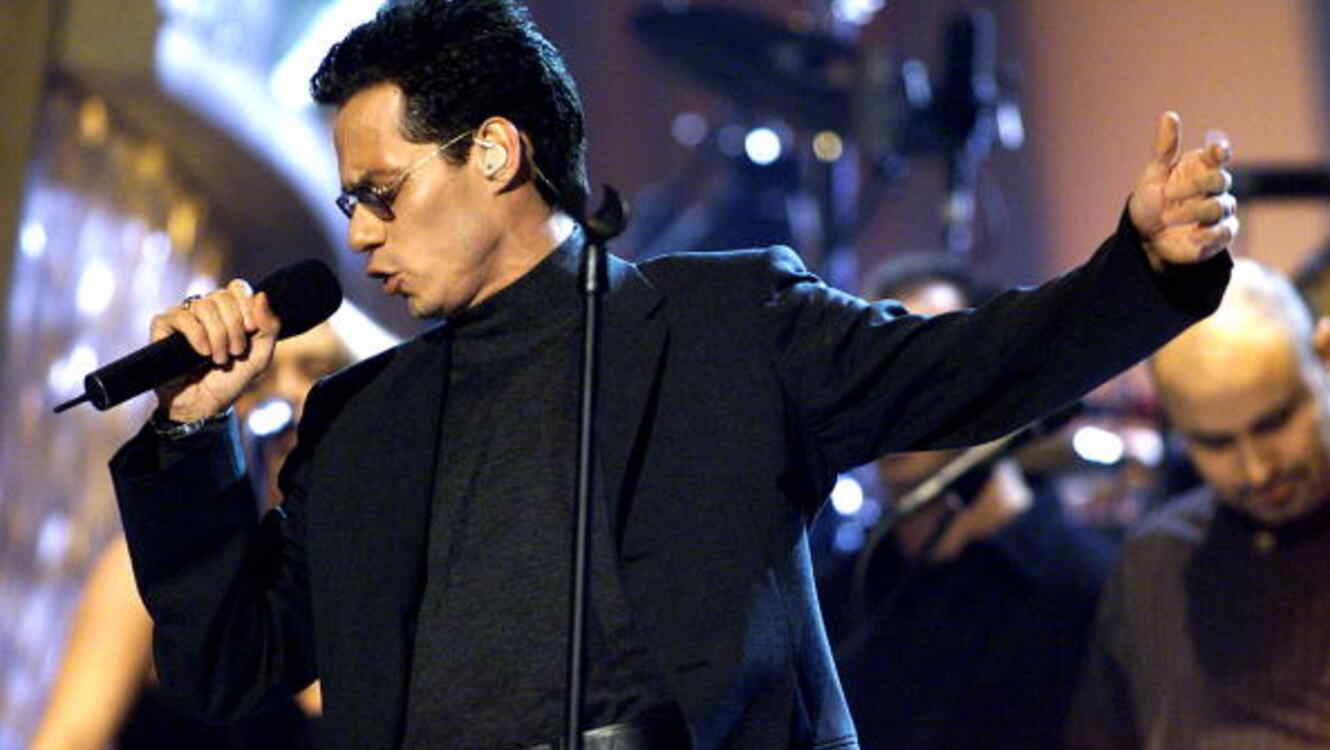
Photo by Marc Anthony

Marc Anthony

The opening of “I Need To Know” appeared in the Nissan Versa commercial in the United States and in 2009 it also featured in an American Dad chapter, an American television series; thus giving greater projection to this genre throughout the North American territory.

During this decade, salsa and Latin music in general ended up positioning themselves in the United States.

In 2002 Blades launched his album “Mundo”, becoming one of the most popular in the United States. In fact, it won a Grammy. The album contained a mix of various rhythms and instruments. The artist wanted to create a fusion of cultures and musicians from different countries. “Estampa” was a subject with great acceptance as it evoked the Afro-Cuban infl­uence in New York music.

By the year 2000, there were already music channels and with them the projection of emerging talents who in many cases did not speak the English language. The dynamics of these channels focused on the public, who chose which songs and videos were to be played, giving the opportunity to many young, little-known artists. They were also considered a springboard for the singers of the season and the Latin movement in general.

A movement that is here to stay

Latin music had come to continue making history and it was time to give it greater merit within the American spectacle.

Today, Latin singers, songwriters, and bands are innumerable. Latin music continues to gain space in the United States and more and more artists are achieving success within its borders. In addition, the endless awards that enhance their work in the industry.

Ruben Blades - Mundo

Ruben Blades – Mundo

The consumption of these musical rhythms has increased throughout the American territory. Latinos and followers of this genre have gained space over the years; they can enjoy nightspots, live music, festivals, concerts and much more. Long live Latin America and its people! Long live the United States and the countries that have opened their doors to Latin music

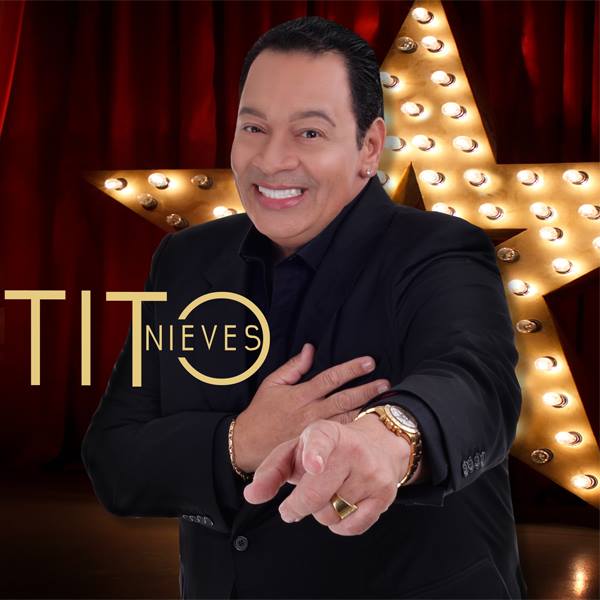
Tito Nieves The Pavarotti of The Salsa

Humberto Nieves, (Río Piedras, Puerto Rico, June 4, 1959), better known as Tito Nieves, is a Puerto Rican salsa singer of American origin, known by the nickname of The Pavarotti Salsa.

Tito Nieves

Tito Nieves

Tito Nieves began his career while participating in Orquesta Cimarrón, a group that originated in New York.

In 1977, he teamed up with singer Héctor Lavoe and his Orchestra and joined the Conjunto Clásico.

In 1979 in New York he recorded the production with the outstanding boricua composer Jhonny Ortiz for the Fania Records label that same year in Puerto Rico under the support of the New Generation label. Tito Nieves recorded with the also boricua percussionist Julio Castro and the Massacre the production of El Pregonero.

Later, Nieves decided to start his solo career in 1987, apart from singing salsa in English.

He is known for his hits such as El Amor Más Bonito, Sonámbulo, and the English-language salsa hit, I Like It Like That.

In 1988 he was presented with the opportunity to record for the RMM label. His first big hit for the company was the song “Sonámbulo”, a composition by Leo Casino, which appears on his first album for RMM, entitled “The Classic” which reached a gold record.

With this album, Tito Nieves definitely imposed his interpretive style, launching himself to conquer international markets, setting the tone for other artists who later form the nucleus of what is known as “The Sound of New York”, championed by RMM.

“Yo quiero cantar”, the second album for RMM in 1989, brought a pleasant surprise. The English-language song “I’ll Always Love You”, taken in the style of salsa, became a hit on English-language radio stations.

Thanks to this and other songs, the album reached the numbers to be credited as a Gold Record. With this production Tito Nieves expanded horizons making the famous “crossover” to the Anglo-Saxon market.

His third production “Déjame vivir” in 1991 reached a platinum record, including the hits “De mí enamórate”, “Te amo”, “Déjame vivir”, “Almohada” and “How To Keep The Music Playing”. His fourth recording was released in June 1993 under the title “Rompecabeza (The Puzzle)”.

Inspired by the success of his songs in English, Tito decided to include two songs in this language “Can You Stop The Rain” and “You Bring Me Joy”.

In 1995 his fifth album, “Un tipo común”, was released, produced in Puerto Rico by Cuto Soto and had arrangements by Ramón Sánchez, Julito Alvarado, Louis García and Cuto himself. The production included the song “No me vuelvo a enamorar” by the Mexican singer-songwriter Juan Gabriel and with arrangements by Sergio George.

Another surprise on the album was Tito’s version of Selena’s classic song “No me queda más”.

Tito Nieves definitely had a strong impact on the Anglo-Saxon market with his sixth production recorded all in English “I Like It Like That”. This song took him to great stages such as the UPN TV show VIBE.

Hits from the album Fabricando Fantasías (2004) include Fabricando Fantasías and Ya No Queda Nada with La India, Nicky Jam, and K-Mil.

In 2005, he released Hoy, Mañana and Siempre which contains the hits Esa Boquita, Si No Fuera Él and Tu Belleza.

In 2007, he released Canciones Clásicas de Marco Antonio Solís, a tribute to Mexican singer-songwriter Marco Antonio Solís

  • « Go to Previous Page
  • Page 1
  • Interim pages omitted …
  • Page 12
  • Page 13
  • Page 14
  • Page 15
  • Page 16
  • Interim pages omitted …
  • Page 28
  • Go to Next Page »

International Salsa Magazine (ISM) is a monthly publication about Salsa activities around the world, that has been publishing since 2007. It is a world network of volunteers coordinated by ISM Magazine. We are working to strengthen all the events by working together.