• Skip to primary navigation
  • Skip to main content

International Salsa Magazine

  • HOME
  • Previous editions
    • 2026
      • ISM / March 2026
      • ISM / February 2026
      • ISM / January 2026
    • 2025
      • ISM / December 2025
      • ISM / November 2025
      • ISM / October 2025
      • ISM / September 2025
      • ISM / August 2025
      • ISM / July 2025
      • ISM / June 2025
      • ISM / May2025
      • ISM / April 2025
      • ISM / March 2025
      • ISM / February 2025
      • ISM / January 2025
    • 2024
      • ISM / December 2024
      • ISM / November 2024
      • ISM / October 2024
      • ISM / September 2024
      • ISM / August 2024
      • ISM / July 2024
      • ISM / June 2024
      • ISM / May 2024
      • ISM / April 2024
      • ISM / March 2024
      • ISM / February 2024
      • ISM / January 2024
    • 2023
      • ISM / December 2023
      • ISM / November 2023
      • ISM / October 2023
      • ISM – September 2023
      • ISM – August 2023
      • ISM July 2023
      • ISM Edition June 2023
      • ISM – May 2023
      • ISM April 2023
      • ISM March 2023
      • ISM February 2023
      • ISM January 2023
    • 2022
      • ISM December 2022
      • ISM November 2022
      • ISM October 2022
      • ISM September 2022
      • ISM August 2022
      • ISM July 2022
      • ISM June 2022
      • ISM May 2022
      • ISM February 2022
      • ISM January 2022
    • 2021
      • ISM December 2021
      • ISM November 2021
      • ISM October – 2021
      • ISM September 2021
      • ISM August 2021
      • ISM July 2021
      • ISM May 2021
      • ISM April 2021
      • ISM June 2021
      • ISM March 2021
      • ISM February 2021
      • ISM January 2021
    • 2020
      • ISM December 2020
      • ISM November 2020
      • ISM October 2020
      • ISM September 2020
      • ISM August 2020
      • ISM July 2020
      • ISM June 2020
      • ISM May 2020
      • ISM April 2020
      • ISM March 2020
      • ISM February 2020
      • ISM January 2020
    • 2019
      • ISM December 2019
      • ISM November 2019
      • ISM October 2019
      • ISM Septembre 2019
      • ISM August 2019
      • ISM July 2019
      • ISM June 2019
  • Download Salsa App
    • Android
    • Apple
  • Spanish

Search Results for: Héctor Lavoe

Leo Mendoza and “El Sonero Natural”

Latin America / Venezuela / Caracas

Get to know the new song “El Sonero Natural” by Leo Mendoza

Did you know that great international musical talents have emerged in Venezuela? This is due to the fact that in this Latin land, the seasoning is experienced, the joy is experienced, the desire to excel is seen, they demonstrate their talent to all those who see and listen to them. In this opportunity, we have a new talent to present; Meet the Caracas musician Leonardo Mendoza, also known as “Leo Mendoza”.

He tells us that since he was a child he felt a deep inclination for music, specifically salsa, this was because his father Héctor Mendoza, a record collector, was always putting on music, from salsa bands such as: Johnny Pacheco, Héctor Lavoe, Oscar D León, Rubén Blades, Willie Colon, among others.
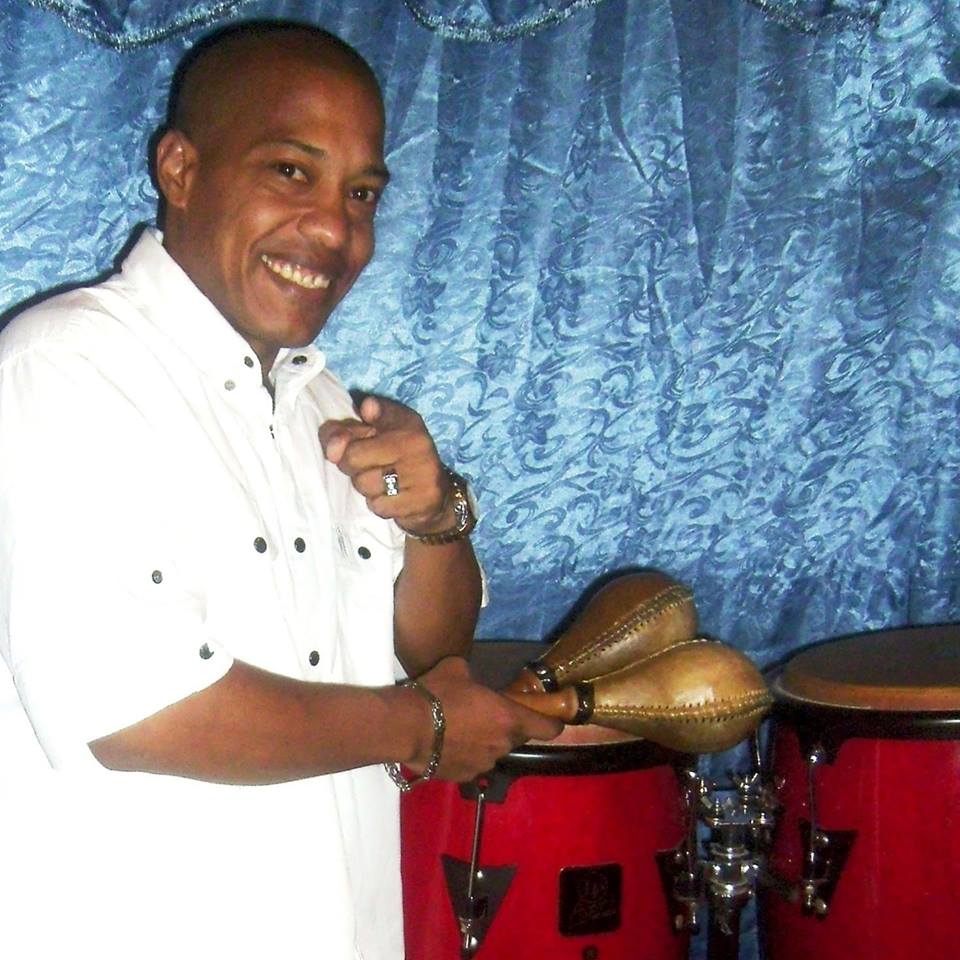
Leo Mendoza and “El Sonero Natural”

This was only the first indication of his inclination and dedication to music, especially to singing in the salsa genre, practicing his favorite artists even within his family gatherings; Starting in 2008, he joined the group “Salsa Son y Fuego”, where he worked for 2 years, and thus continued his path of musical training until in 2016, participating in a festival organized by the Mayor’s Office of Caracas, he competed with a theme of his authorship entitled “Sonero al Natural” receiving the ovation and acceptance of the viewing public.
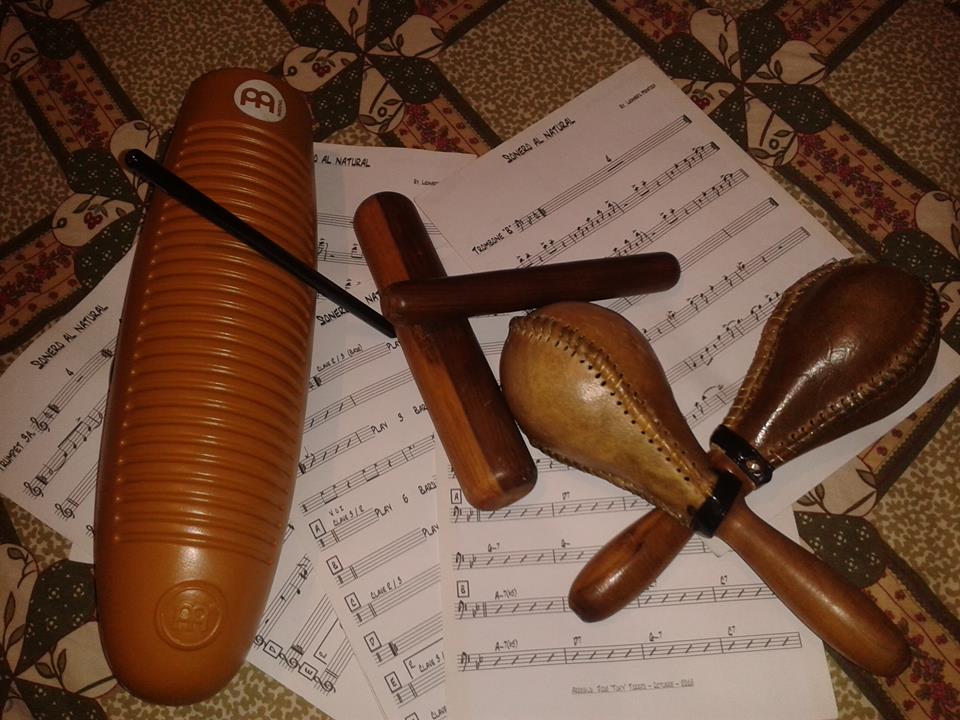
Intruments of Leo Mendoza and “El Sonero Natural”

The qualifying jury was made up of Mariana Guevara the “Sonera de Venezuela”, Cheo Valenzuela “El Sonero de la Dulzura”, Juan José “el Indio” Hernández and the teacher Andy Durán, with their participation he managed to achieve 3 mentions, best unpublished song, 2nd place as interpreter and best arrangement of the song “Sonero al Natural” by Maestro José “Tuky” Torres, on this occasion he presents his first single “Sonero al Natural”, which is an invitation to good rumba and feeling sonero… If you want to know more about Leo Mendoza or his new musical theme, find out through:

  • Instagram: @lendozab
  • Twitter: @lendozab
  • Facebook: Leo Mendoza
  • Email: [email protected]
  • Phone: +58 424-1420962
  • YouTube of “Sonero Natural” https://www.youtube.com/watch?v=83cXHeQXO0E&feature=share
 

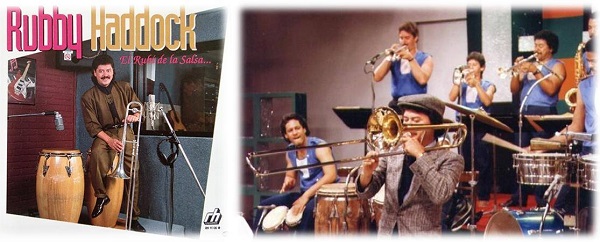
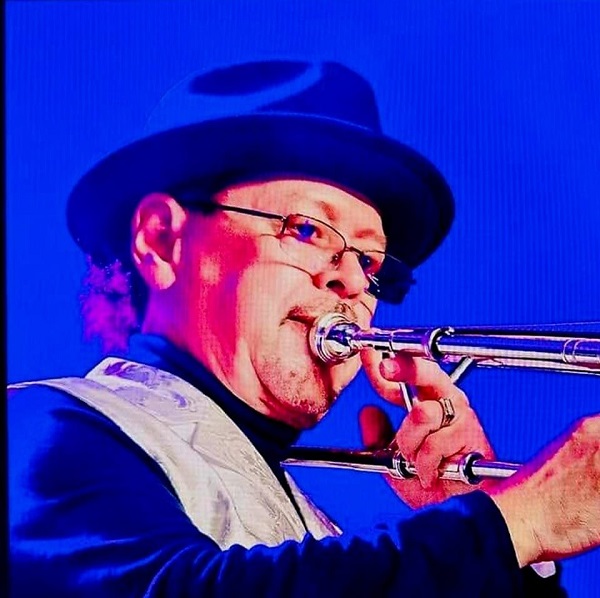
Rubby Haddock is one of the greatest exponents of our most danceable Latin Music in the Island of Enchantment

Our orchestra was born at the end of 1969, year in which we also began to record the 1st production “Presenting” which was released at the end of 1970.

Many talented musicians have passed through our orchestra such as Juancito Torres, Mario Ortiz, Rey Santos, Frank Morell, Hugo Dumont and many more that we will mention later.

Rubby Haddock is one of the greatest exponents of our most danceable Latin Music in the Island of Enchantment

Singers such as Sergio Cariño, Juan Acosta, Raul Carbonell Jr., Tony Rivas, Cucho Caro, Andres Reyes, Pedro Arroyo, Ricky Ramos, Tito Gomez, Yolanda Rivera, Eddie Rosario and Johnny Maldonado.

Rubby Haddock is one of the greatest exponents of good Latin music. His orchestra is known as one of the most danceable “Big Bands” on the Island.

He is called “El Maestro” by his followers and fellow artists. Because of his long artistic career, exposed to the world of show business, Rubby has become one of the best connoisseurs in the history of Latin music.

Born in Manhattan, New York on February 6th to Puerto Rican parents. His mother lived in Miami most of her life and in the late 60’s his father, Ruben Haddock who was a musician in New York, founded the most famous Dance Club in Puerto Rico, MIRAMAR CENTER when he owned El Club Coameño in Rio Piedras and El Club Caborrojeño in Bayamon.

A glorious time where his Producer Father brought to the Island of Puerto Rico the biggest stars of Latin music such as: TITO RODRIGUEZ, TITO PUENTE, LA LUPE, EDDIE PALMIERI, RICKY RAY, JOEY PASTRANA, JOE CUBA, WILLY COLON, HECTOR LAVOE, LARRY HARLOW, ISMAEL MIRANDA, CHIVIRICO DAVILA, TNT BAND among others, besides being manager and producer of ROBERTO Y SU NUEVO MONTUNO.

Rubby Haddock grew up with his father as a teenager in Puerto Rico within the entire business operation of Don Ruben, knowing these top stars of our music and hence the vein of musician and producer during his artistic career and experience in show business.

Celebrating the Rubi of Salsa Rubby Haddock. One of the greatest exponents of good Latin music

Rubby Haddock studied piano but showed that his passion was playing trombone.

For the years 1972 under the label UNIART, Rubby Haddock launches his first record production, “PRESENTING ORCH HADDOCK” becoming a powerful hit on the Island with the musical cut MONACILLO Y CORREA COTTO as some of the hits of this production.

In this first stage of Rubby’s musical career are among the different recordings: “PRESENTING”, “ASI ME LLAMAN”, “LA LEYENDA”, “DE REGRESO”, “UNLIMITED”, “2ND CONCIERTO FAMILIA TH”, “THE ENTERTAINER”, “THE ENTERTINER 2”, “OTRA VEZ”, “SALSA TROPICAL”, “EL RUBI DE LA SALSA”, “PASAPORTE MUSICAL”, “EL RUBI DE LA SALSA” and “PASAPORTE MUSICAL”.

In the second stage of his career, in 1978, when Rubby was the most popular in Puerto Rico with the song “Son Los Nervios”, one of the songs that propelled merengue on the island, Rubby surprised everyone by joining the U.S. Armed Forces in San Antonio Texas and Washington State, where in addition to completing medical courses, he also completed his Bachelor of Music Education at the Universities of Puget Sound and Pacific Lutheran.

In the 9th Infantry Div. Rubby became a member of the 9th Infantry Division Band where in addition to the Division Military Orchestra, Rubby most enjoyed the experience of being a member of the JAZZ ENSEMBLE BAND and the Big Band Jazz.

It didn’t take long for some of these great musicians to come and join Rubby’s Orchestra… At the request of a great Puerto Rican friend, and high ranking Army officer Eddie Velez, Rubby agreed to form his Orchestra back in Tacoma Washington State.

Remembering beautiful moments lived outside of his homeland until 1980, when he returned to Puerto Rico for a recording contract with the firm TH RECORDS, In this “come-back” in his return to Puerto Rico for the 80’s Rubby produces one of his most successful works: “De Regreso” with songs like: A Mi Jibarita, El Amor, Maria Teresa, Sra. Temptation with singers Raul Carbonell and Tony Rivas.

At the end of the 80’s Rubby Haddock ventured into Puerto Rican television, Wapa TV and Telemundo Channel 2, as producer of shows such as “Un puertorriqueño para la Historia (José Feliciano)”, New Year’s Eve Specials, etc.

Rubby Haddock y Sus Amigos, where the most prestigious artists such as: José José, José Feliciano, Mongo Santamaría, Barry Rogers, Eddie Palmieri, Julio Angel, and many more paraded in this section produced within the Midday Show. …. This show remained on the air for five and a half years.

Rubby Haddock
Rubby Haddock

By 1992 Rubby Haddock y su Orquesta represented Puerto Rico in the Puerto Rican Pavilion at Expo 1992 in Seville, Spain.

In the mid 90’s, although Rubby still continued as the Director of his Orchestra, he also ventured as an Entrepreneur with his own commercial Advertising Agency, where in addition to directing the entire operation of the agency Haddock & Haddock Adv, he was also the Creative, being in charge of all the production of Radio, Press and Television commercials for all the clients of the Agency.

By that time Rubby had already founded his own Recording Studio (Pentagrama Round), where he produced his three most recent productions of this decade in addition to sharing recordings for artist friends such as: Omar Alfano with Son By 4, it was from this studio that hits such as “A puro Dolor” were released.

His recording engineer was the outstanding engineer Sonny Hernandez. With him he shared works with artists such as: Danny Rivera, Andrés Jiménez, Ismael Miranda, Elvis Crespo, Melina León, Edwin Colon Sayas, Trió Borinquén, and others.

In 2000 Rubby moved to the United States where he currently lives. His fans constantly ask him to re-form his Orchestra because they miss his music and they also ask him for a compilation of his hits and a “Historia DVD” exposing the History of his Salsa, which seems to be Rubby Haddock’s next endeavor as an Artist.

Rubby has 3 sons, the first 2 Reuben Haddock and Rubby Haddock Jr, dedicated their careers to the business world and his youngest son Randy Haddock, who currently lives in New York, is a musician, singer and composer, already demonstrating great talent and the vein that comes from Don Ruben (grandfather) and Rubby (his father).

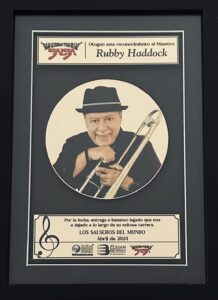
A very special thanks to Edgar Berrio and all the staff of Las Leyendas Vivas De La Salsa #8 for this great recognition, on behalf of Rubby Haddock and his family

Sources:

https://www.rubbyhaddock.com/news

pequi34 via Musica.com

Also Read: Jerry Ferrao says in salsa key: “My life is a drum”.

Pedro ”Pocholo” Segundo supports the Spaha Harlem Salsa Museum

At the Spanish Harlem Spaha Museum we always welcome the best of Latin music and, on this occasion, we could not stay behind, so we are glad to have had the opportunity to share with one of the best percussionists of the moment, Pedro Pocholo, who has a very interesting career that we will review below.   

Pocholo signing his album
Pedro ”Pocholo” Segundo signing a copy of his album ”A Guapetear” in 2022

Who is Pedro ”Pocholo” Segundo? How were his beginnings in music like?   

Pedro ”Pocholo” Segundo is an important producer and percussionist who has made a recognizable name in the Latin music industry thanks to his participation in some of the most critically acclaimed salsa and jazz orchestras.   

In music, it all started for him at the young age of 13, which is when he began playing with Ismael Miranda, representing the formal beginning of his professional career as a teenager. His efforts fortunately paid off, since a few years later, he was playing with Andy Montañez.   

In 1988, he joined Johnny and Ray’s group, causing him move to New York City, a place that gave him the greatest opportunities he would ever have in the artistic area. He became so well known for his skills as a percussionist that he was sought after by many artists to play with them such as Celia Cruz, Héctor Lavoe, Andy Montañez, Tito Rojas, Tito Nieves, José Alberto ”El Canario”, David Pabón, among many others.  

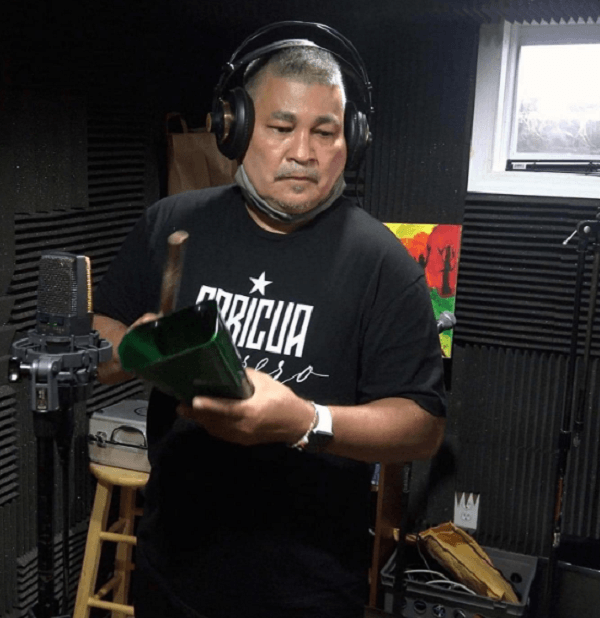
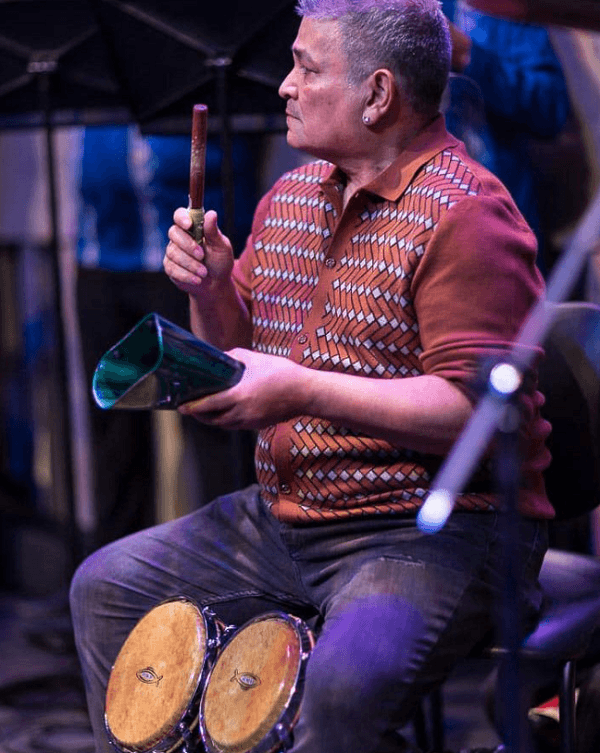
Pocholo playing the cowbell
Pedro ”Pocholo” Segundo playing the cowbell in his studio

Important things Pedro ”Pocholo” Segundo has done in his career 

Pedro ”Pocholo” lived many peak moments in the musical aspect, but without a doubt, the possibility to play to former presidents Bill Clinton and Al Gore with Celia Cruz and ”El Rey de Los Timbales” Tito Puente has been extremely important to his prestige as an artist, so he just went for more and more.    

This performance would not be the only collaboration he would have with Puente, as he also joined his talent to that of the timbalero in the DVD entitled ”Live at Manhattan Center” and traveled with him, The Big 3 Orchestra and Jimmy Bosch’s group to several countries in South America, Central America and Europe.   

Sometime later, in partnership with vocalists Carlos Santos and José Peña, Pocholo formed the group Madera Fina, with which he and his two fellow musicians managed to place some hits such as ”Guarimbo”, ”Palo de Son”, ”Desde Que Te Casaste”in very good places on the charts. They also went to Puerto Rico to promote the group and seek the support of local media such as La Mega 97.9 FM, being this radio station very important in the dissemination of these musicians’ work.   

Thanks to the experience gained from belonging to Madera Fina, Pocholo was more than ready to face bigger musical challenges, which led him to take on the creation, production and percussion of Boricua Legends, which has become one of the most popular New York orchestras of the moment.   

One of the best years of Boricua Legends was undoubtedly 2015, which was when it released its own version of ”Si Por Mi Llueve”, a song that was part of the world-renowned Cheo Feliciano’s repertory.  He also took second place in the GenGenSalsa Top 70 chart and eighth in the LatinosUnidosOnline chart.   

Pocholo performing live
Pedro ”Pocholo” Segundo during a live performance

Pocholo supports the Salsa Museum   

As many other Latin artists, Pocholo also supported the Spaha Harlem Salsa Museum and was a special guest on The Johnny Cruz Show to talk with the host and director of the museum, who was very pleased to welcome him on his show.   

In a video uploaded to Johnny Cruz’s social networks, the host can be seen introducing his guest and saying that they would talk about a number of very interesting topics, such as the beginning of his career, the founding of Boricua Legends and much more. Then, Cruz asks Pocholo to greet the audience and the musician, who was decked in a grayish suit and pink shirt, invites people to tune in to the show and assures them that they will talk about important things such as Latin music in New York and Puerto Rico.   

Finally, Johnny closes by saying that viewers can enjoy the show from 3:30pm to 4:30 every Saturday on channel 67 and says goodbye with the song ”La Fama” by Héctor Lavoe playing in the background. 

Johnny Cru ISM corresponde in New York City

Read also: Here we have Brazilian bandleader and composer Paula Maya 

Oskar Cartaya “My Music, My Friends, My Time” He counted with the collaboration of illustrious friends such as Eddie Palmieri, Giovanni Hidalgo, Dave Valentín and Justo Almario.

Friendship and personal relationships seem to have always played a key role in Oskar Cartaya‘s recording career.

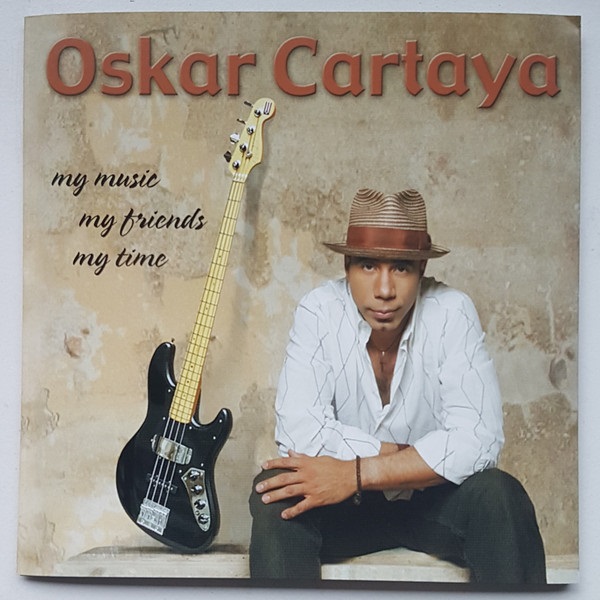
This was demonstrated Cartaya in his first recording, “My Music, My Friends, My Time” (2004) in which he had the collaboration of illustrious friends such as Eddie Palmieri, Giovanni Hidalgo, Dave Valentín and Justo Almario.

Bajista, arreglista, compositor y productor neoyorquino de nacimiento y bayamonés

This is also demonstrated by the second one, “Lifetime Friends”, which he co-led with trumpeter Humberto Ramírez and which was chosen as one of the best Puerto Rican productions of 2015.

For the bassist, arranger, composer and producer – born in New York and raised in Bayamon – connections with other people are a vital element for the development of any musician.

Those connections coupled with the tenacity Cartaya has always shown to continually improve himself as a musician allowed him to be part of the legendary progressive jazz-rock group Spyro Gyra for five years, produce albums for Willie Colón or Herb Alpert, and play with a long list of stars including Jennifer López, Christina Aguilera, Rubén Blades, Héctor Lavoe, Tito Nieves, Tania María, Arturo Sandoval, Steve Winwood and Randy Brecker, among others.

To all of them he has lent the sound of his electric bass, able to insert itself with total naturalness in modern jazz, Cuban rumba, Spanish flamenco or Brazilian cadences, but without ever losing its funky essence, which gives rhythmic impulse to the musical genre before him. For Cartaya, music is not a profession, but a passion of life.

That passion manifested itself at a very early age, when he told his Cuban-born father that he wanted to be a musician when he was just 10 years old. He completed his initial studies at the Escuela Libre de Música de San Juan, which he remembers with pride and affection.

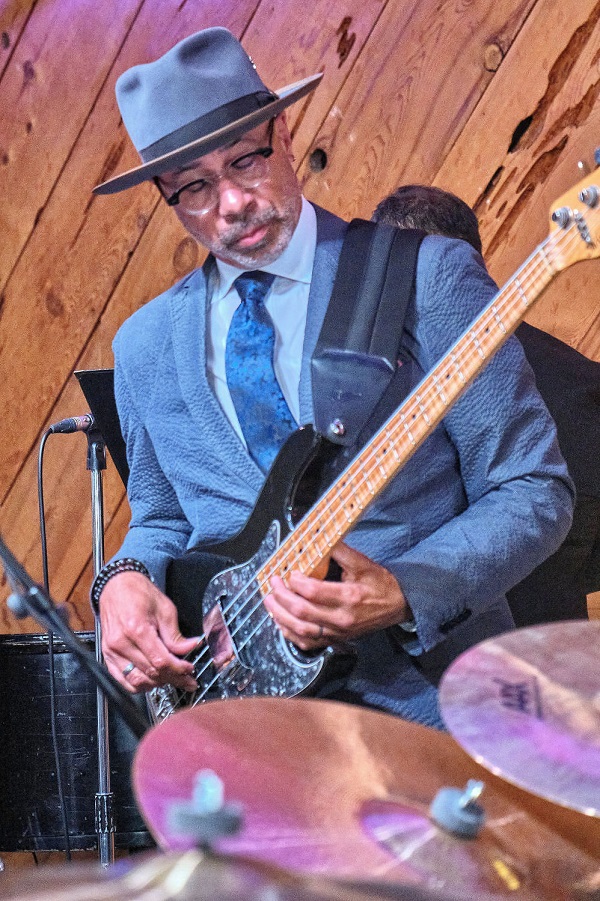
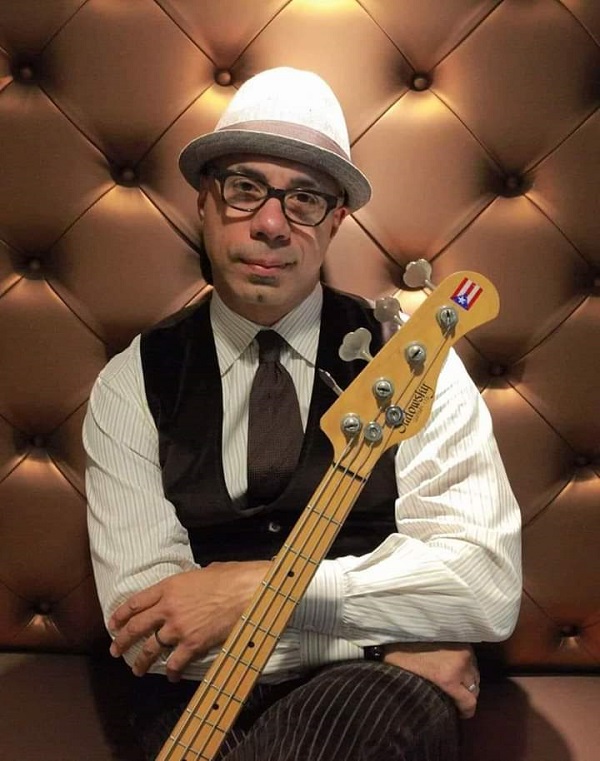
Oskar Cartaya
Oskar Cartaya

However, he has affirmed that his first real musical school were the records of Willie Colón and Héctor Lavoe, which he listened to at full volume in his room.

At the Escuela Libre de Música he was able to meet teachers and classmates who today are great masters of Latin music and colleagues of his, such as Humberto Ramírez himself. He also studied at the Conservatorio de Música de Puerto Rico.

Cartaya recalls that, although he studied chamber music in school, his real passion was Latin music…until he discovered jazz, thanks to an album by the great bassist Stanley Clarke. A new world opened up to his ears.

“I found a freedom in jazz that I didn’t find in Latin styles,” the musician said in an interview. “In salsa, for example, the maximum is when you are playing as part of a unit. Unlike jazz, whose pinnacle is when all the musicians improvise and go crazy playing, but everyone knows what they are doing.”

At 18, Cartaya moved to Los Angeles, where he began studying at the Musicians Institute of Technology. There he practiced for 15 hours a day, a devotion that brought him his first recognition: being accepted as a professor at the prestigious institution, two years after graduating from it.

However, his restless spirit and continuous desire to improve led him to make what he has described as the best decision of his life, moving to New York City. In the Big Apple – the place many consider the jazz capital of the world – he had the privilege of playing and recording with the late Argentine pianist Jorge Dalto; with Willie Colón and Rubén Blades; Celia Cruz, Tito Puente and Dave Valentín.

“I learned a lot, matured and saw firsthand what it was like to be on my own,” the bassist said in an interview about this period of his life. “If the opportunity was going to be given to me, it wasn’t going to come to my house. I would have to look for it.” And so he did.

At that time he also had the opportunity to meet the late rock icon Prince, at his Paisley Park, Minneapolis studios, and to become a member of Spyro Gyra. By being accepted into that group over 10 other bass players auditioning for the position, Cartaya realized that success belongs to those who work hard and have faith in themselves.

“I was able to show a lot of people that there’s nothing worse than feeling bad about yourself if you don’t try,” he said in an interview. “All the nights I played for free or for five bucks to earn a chance were well worth it.”

In 1997, the bassist produced the “Passion Dance” recording project for veteran trumpeter Herb Alpert, an experience he has described as a new learning experience in his career, as well as a chance to expose himself to a wider audience.

“My Music, My Friends, My Time,” released in 2004, is a fusion of Latin, Brazilian, American and Flamenco rhythms that was very well received by critics.

“My Music, My Friends, My Time”

“I wanted to do a project that would fill that gap that exists between Latin music and the world. I truly believe that the world needs to know that Latin musicians can do countless things within music, without throwing away their roots,” Cartaya said of the recording.

“Lifetime Friends,” produced alongside Ramirez, was described upon its release in 2015 as “an album of a cohesive and jubilant band,” in which all participating musicians – representatives of the new jazz generation in Puerto Rico – have a chance to stand out. “It’s the album we always wanted to make… to describe almost 40 years of friendship,” Cartaya and Ramírez indicated.

Cartaya
Cartaya

In 2017, Oskar presented the production “Bajo mundo” in tribute to the great Cuban bassist Israel “Cachao” López. This intense, exuberant album, with a multiplicity of rhythms, colors and guest musicians was distinguished as one of the most outstanding productions of the year by the National Foundation for Popular Culture.

It also won a Latin Grammy Award nomination in the category of Best Latin Jazz Album.

Source: Rafae Vega Curry

National Foundation for Popular Culture

“This biography is part of the archives of the National Foundation for Popular Culture. In our interest to disseminate knowledge about our great figures, it may be cited as a basis for research studies or as an assignment for pedagogical purposes, as long as credit is given to the Foundation and its author, if indicated. All rights reserved. The reproduction of the same in any printed, technical or mass media, with or without commercial purposes, is not authorized without prior written request to the Foundation and its consequent approval”.

Also Read: “The Sun of Latin Music” the first Grammy Award for Salsa Eddie Palmieri’s historic album

Young Puerto Rican singer Jeremy Bosch supports the Spanish Harlem Salsa Museum

There are many people who believe that salsa is a genre of past generations that does not have worthy youth representatives who stick up for this set of rhythms that has been keeping so many people dancing for so long, but fortunately they are wrong. Jeremy Bosch, whom we had the opportunity to interview at The Johnny Cruz Shw a few weeks ago is a god example of this.   

We are honored to know that one of the new sensations of Latin music, specifically salsa, supports one of the most important institutions dedicated to the genre such as the Spanish Harlem Salsa Museum, so we want to take advantage to talk a little about the career of this young singer and everything he has achieved so far.   

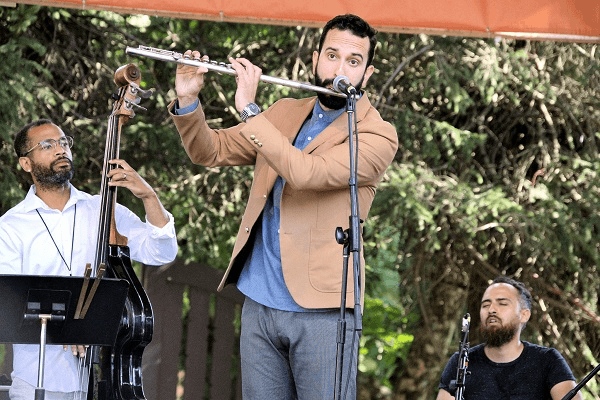
Jeremy playing the flute
Jeremy Bosch playing the flute live

Jeremy’s beginnings in this world 

Jeremy Bosch is a singer and flutist born in the city of Ponce, Puerto Rico, who began his journey in the world of music singing and playing percussion in the church on his block while growing up listening to a great variety of artists including Hector Lavoe to Chicago and Tonny Bennett, so he had influences of all kinds.   

Not much time would past before Jeremy took achevable steps towards the direction he was meant to take. At only 17 years old, he won a scholarship to study at Berklee College of Music in the city of Boston, United States, and graduated in 2023, specializing in jazz composition. From then on, what followed for the young artist have been successes and great proposals he could seize.   

One of thse things he is best known for is having been the vocalist and flutist of the acclaimed group Spanish Harlem Orchestra, but that has not stopped him from collaborating with great figures in the industry such as musical director and Grammy-winning percussionist Pete Perignon, with whom he recorded the social short called ”Sería Una Pena”.   

Johnny and Jeremy
Johnny Cruz and Jeremy Bosch posing for the camera

Jeremy’s professional career 

Sometime later, he would have the opportunity to realize one of the most important works of his career, which is the tribute to the late Cheo Feliciano, which was recorded live at the Dizzy Club in New York City and was titled ”The Music of Cheo Feliciano. In addition, the project included Nelson Gonzalez, Johnny ”Dandy” Rodriguez and Spanish Harlem Orchestra leader Oscar Hernandez.   

With regard to this great night for his career, Jeremy commented that since his debut both he and arranger and vibraphonist Felipe Fourniel had long time wanting to work on something about Cheo Feliciano and his legacy for a long time until they finally made it. This show was the sign that Jeremy has everything to become an icon of salsa and Afro-Caribbean music in general.   

As for his solo career, he has made a few remarkable recordings and one of them was ”Prologo Hoy”, which included the participation of Nicaraguan singer Luis Enrique and Cuban vocalist and guitarist Alain Perez. It is a five-song EP that focuses a lot on Afro-Colombian and tropical music, while including some covers in English such as ”Love Holiday”, which gives a distinct flavor to the material as a whole. 

Jeremy and Johnny on the set
Jeremy Bosch and Johnny Cruz on the set of The Johnny Cruz Show

Later on, Jeremy released ”Epilogo: la clave del tiempo”, which includes 11 tracks and is basically a mix of Afro-Cuban rhythms, soneo, urban genres, modern synthesizers, among other elements. The album starts with ”Locura” and continues with singles such as ”Try Again”, ”La Mala”, ”Autopsia” and a few more.   

Support for the Spanish Harlem Salsa Museum 

In the social networks of the director of the Spanish Harlem Salsa Museum, Johnny Cruz, there is a clip in which the The Johnny Cruz Show host introduces Jeremy as his special guest on that occasion, promotes the interview with him and describes him as the sensation of the moment. Then, the camera goes n Jeremy’s face, who thanks the invitation with a smile and assures that they both will have a good time talking about his life and career. 

We are honred to support young talents like Jeremy and, at the same time, to get the same support and love back because that is what salsa and the Latin music scene in general needs, that all those involved join together around it to keep it alive. 

Johnny Cru ISM corresponde in New York City


Read also: Paquito D’Rivera supports the salsa museum 

  • « Go to Previous Page
  • Page 1
  • Interim pages omitted …
  • Page 6
  • Page 7
  • Page 8
  • Page 9
  • Page 10
  • Interim pages omitted …
  • Page 27
  • Go to Next Page »

International Salsa Magazine (ISM) is a monthly publication about Salsa activities around the world, that has been publishing since 2007. It is a world network of volunteers coordinated by ISM Magazine. We are working to strengthen all the events by working together.