• Skip to primary navigation
  • Skip to main content

International Salsa Magazine

  • HOME
  • Previous editions
    • 2026
      • ISM / April 2026
      • ISM / March 2026
      • ISM / February 2026
      • ISM / January 2026
    • 2025
      • ISM / December 2025
      • ISM / November 2025
      • ISM / October 2025
      • ISM / September 2025
      • ISM / August 2025
      • ISM / July 2025
      • ISM / June 2025
      • ISM / May2025
      • ISM / April 2025
      • ISM / March 2025
      • ISM / February 2025
      • ISM / January 2025
    • 2024
      • ISM / December 2024
      • ISM / November 2024
      • ISM / October 2024
      • ISM / September 2024
      • ISM / August 2024
      • ISM / July 2024
      • ISM / June 2024
      • ISM / May 2024
      • ISM / April 2024
      • ISM / March 2024
      • ISM / February 2024
      • ISM / January 2024
    • 2023
      • ISM / December 2023
      • ISM / November 2023
      • ISM / October 2023
      • ISM – September 2023
      • ISM – August 2023
      • ISM July 2023
      • ISM Edition June 2023
      • ISM – May 2023
      • ISM April 2023
      • ISM March 2023
      • ISM February 2023
      • ISM January 2023
    • 2022
      • ISM December 2022
      • ISM November 2022
      • ISM October 2022
      • ISM September 2022
      • ISM August 2022
      • ISM July 2022
      • ISM June 2022
      • ISM May 2022
      • ISM February 2022
      • ISM January 2022
    • 2021
      • ISM December 2021
      • ISM November 2021
      • ISM October – 2021
      • ISM September 2021
      • ISM August 2021
      • ISM July 2021
      • ISM May 2021
      • ISM April 2021
      • ISM June 2021
      • ISM March 2021
      • ISM February 2021
      • ISM January 2021
    • 2020
      • ISM December 2020
      • ISM November 2020
      • ISM October 2020
      • ISM September 2020
      • ISM August 2020
      • ISM July 2020
      • ISM June 2020
      • ISM May 2020
      • ISM April 2020
      • ISM March 2020
      • ISM February 2020
      • ISM January 2020
    • 2019
      • ISM December 2019
      • ISM November 2019
      • ISM October 2019
      • ISM Septembre 2019
      • ISM August 2019
      • ISM July 2019
      • ISM June 2019
    • 2016
      • ISM December 2016
  • Spanish
  • Download Salsa App
    • Android
    • Apple

Search Results for: Héctor Lavoe

Great Christmas salsa songs and their stories

Christmas is a time of joy where one of the most important elements is music, so we believe this is the best opportunity to feature some of the best Christmas salsa songs that we can remember. Here are the most cheerful songs in Latin music to listen to during the most beautiful time of the year.

Aires de Navidad by Héctor Lavoe and Willie Colón

”Aires de Navidad” is a great song which is part of the Christmas album ”Asalto Navideño Vol. I” from 1971. In the same year, Lavoe and Colón were already making preparations to record an album entirely dedicated to the festivities, indeed, they already had some songs recorded, but they knew that there were still details to finish. 

Then, Héctor asked musician Roberto García to join the project that was underway, as they needed a guitarist to accompany them. Garcia accepted the proposal almost immediately and got excited about the project that he even proposed Yomo Toro to join them, to which Hector and Willie agreed with no problems.

The day they agreed to record the material, Toro came in first and began playing a Puerto Rican cuatro when he was scheduled to play the electric guitar. However, Johnny Pacheco, upon hearing the sounds, liked the arrangement and approved it without question. 

That is how the four artists set out and recorded what would soon become one of the greatest Christmas hymns in recent times, and it will surely be in thousands of homes around the world this month.

Aires de Navidad
One of the photos taken during the recording of ”Aires de Navidad”

La Fiesta de Pilito by El Gran Combo de Puerto Rico

”La Fiesta de Pilito” is included in the album ”Nuestra Música” by El Gran Combo de Puerto Rico, which was recorded in 1985 as a tribute to the most beautiful and endearing of the Island of Enchantment during the Christmas holidays. Back then, any musical work created by El Gran Combo always became a resounding success once it was released and its members were sure that this would be no exception.  

It is then when the composer of one of the main songs of ”Nuestra Música” came on the scene, and we are talking about Luis ”Pilito” Cruz, who would become part of the internationally acclaimed salsa group that same year.

What is known in the first instance about the song is that it did not have a specific name, so it was baptized as ”La Fiesta de Pilito” honoring the composer of its first two verses. Subsequently, the piece was completed with pregones and soneos created by the rest of the orchestra members.

Additionally, they received the support and collaboration from ‘‘El Caballero de La Salsa” Gilberto Santa Rosa, who served as a guest artist for the legendary recording.

Nuestra música at Christmas
Cover of the Christmas album ”Nuestra Música”

Bembé en Casa de Pinki by Richie Ray and Bobby Cruz

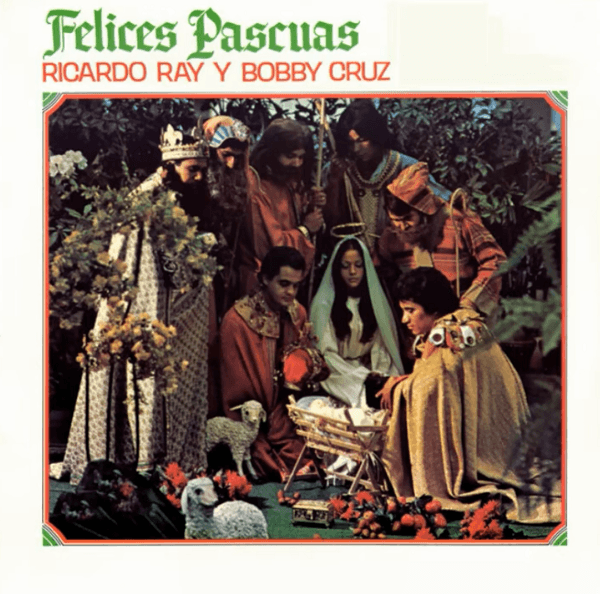
”Bembé En Casa de Pinki” is a Christmas song written by the famous duo Richie Ray and Bobby Cruz, which was released in 1971 and is the first single from the Christmas album ”Felices Pascuas”.

The song’s title comes from someone who would be very important in the career of the two aforementioned artists and that was the Panamanian-born diplomat named José Rogelio ”Pinki” Arias. The gentleman was a close friend of Richie and Bobby and, at the same time, director of the Panamanian Institute of Tourism. He used his friendship with the vocalists to invite them to various events in his country, knowing that they would be a complete success with the presence of the duo.

Such was the affection both exponents had for ”Pinki” that they dedicated to him two songs from their extensive repertoire, which were ”Bembé en Casa de Pinki” and one belonging to the album ”El Diferente”. 

Among other songs, ”Felices Pascuas” also includes tracks such as ”Bomba en Navidad”, ”Mi Niñez”, ”San José”, and ”Aguinaldo Navideño”.
Felices fiestas at Christmas
Cover of the Christmas album ”Felices Fiestas”

Estelita by La Sonora Ponceña

Another group that never misses a chance to offer their talent to please their fans and make them enter the Christmas atmosphere during the holiday season, leaving great classics that can not be missing every year in our homes and one of them is ”Estelita”.

Something that can never be missed in a Christmas album is that colorful character who always brings playfulness and good humor to the atmosphere. In this case, it is Estelita, who is a party neighbor who always sneaks into the Christmas parrandas in her neighborhood, something that many people will surely feel identified with in various parts of Latin America.

The song was written by the late maestro Joe Torres and was part of the album ”Otra Navidad Criolla!” along with ”Opera Gandinga”, ”Vamonos Pa’l Campo”, ”La Vengo Siguiendo”. 

Read also: Luis Guillermo Rangel the great friend of everyone

Edgardo ‘‘El Bambino’’ and his extensive and interesting musical career

Edgardo ”El Bambino” Otero Lugo is the one to whom we want to dedicate some of the lines of this edition in International Salsa Magazine. The talented Puerto Rican vocalist has given us a few minutes of his time to talk exclusively about his beginnings, his career and other unpublished details that are not read in other media.   

dgardo ‘’El Bambino’’
This is Puerto Rican singer Edgardo ”El Bambino” Otero Lugo

Edgardo’s childhood and music   

As Edgardo’s childhood took place in his hometown of Vega Baja, Puerto Rico, the artist recalls that he would sit on the balcony of his house and play with buckets and sticks to pretend to play music. His mother, fed up with the noise he made, decided to enroll him in the school choir so that he could explore his curiosity about music in a more professional way. That was when he was in the fifth grade of the elementary school.   

As the years went by, the boy’s love for music just kept growing, until he got his first big opportunity thanks to singer-songwriter Edwin Crespo, who had already written for famous groups such as La Sonora Ponceña at the time. Back then, Edgardo was only 14 or 15 years old, so he still needed a lot of guidance on these issues, so maestro Crespo was the ideal person for that. 

It just so happenes that Pedro Crespo, Edwin’s father, was the founder of his own orchestra and grandfather of some of Edgardo’s cousins. Since they all lived nearby, Edwin heard him singing one day and liked his voice, so he offered to teach him how to sing professionally and invited him to join his Orquesta Ética, which is where it all began.   

By being part of the Orquesta Ética, Edwin decided to spend two or three days a week explaining to Edgardo what to do and how to do it so that everything would go wonderfully for the young vocalist, and that is exactly what happened. So much so that Edgardo spent about three years singing for the group, in which he claims to have learned much of what he knows today.   

Edgardo ‘’El Bambino’’ next to Frankie
Edgardo ”El Bambino” next to ”El Sonero del Barrio” Frankie Vazquez

The Rukanos   

After having left Orquesta La Ética, Edgardo was also part of Orquesta Los Rukanos, which was much bigger, had more instruments and more musicians. Therefore, it represented a bigger and more complex challenge. 

In 1981, he was invited to join the group by a Guyanese friend and colleague named Ferniand Pudia, who asked Edgardo to join him in a musical project he was working on, which he would name Los Rukanos, paying homage to the term used to refer to peasants and working class men in the South American country.    

Alongside with this orchestra, of which Edgardo was also one of the founders, he managed to perform in completely new stages and to follow his path in the learning of this complex and rich world that is music.   

Conjunto Quisqueya   

During a concert in his hometown, the members of Conjunto Quisqueya heard Edgardo singing and liked his voice so much that they invited him to play with them in a project for Nelson García, who at that time was the second trumpet of the orchestra.   

Having accepted the offer, the group recorded a whole LP called ”Nelson García y Merengue ’86”, which was a very nice experience for Edgardo since he had never had the opportunity to record in a studio before and finally he was able to do so. And it was not just any studio, but one of the most important in Puerto Rico, which was Tele-Sound Recording Studios.   

”Playing with the members of Conjunto Quisqueya was a spectacular experience. Their musicians are wonderful human beings with whom I still have very strong friendship bonds” said Edgardo about his experience in the ensemble.   

Edgardo ‘’El Bambino’’ in the army
Edgardo ”El Bambino” singing during his time in the army

Orquesta La Nueva Época de Ángel Rivera 

There were some years that merengue was gaining a lot of popularity in Puerto Rico, so the artists and groups of the moment had to adapt to fulfill the musical taste of the audience. Such was the case of saxophonist Angel Rivera, also originally from Vega Baja, who created an orchestra and invited several musicians to play with him, including Edgardo.    

The result was good acceptance from the public to the extent that the orchestra participated in competitions and won some awards thanks to the work done.    

This was very useful for Edgardo’s career, since he succeeded in diversifying his rhythms and learning to play new things and genres, which made him acquire a lot of knowledge. Until such time as he played with Conjunto Quisqueya, he had only done salsa, so trying merengue was really enriching for the musician.   

Service time in the army   

Edgardo was in the Puerto Rico National Guard for about 24 years in total and he remembers a time when he was mobilized to the Iraq War in 2006, the year in which he met Edwin ”El Calvito” Reyes, who was part of the 3rd Infantry. El Calvito” had a group whose lead singer could not speak Spanish, so he learned the lyrics phonetically in order to perform them.   

The chemistry between all the members was so great that they even played a few times at the U.S. base in Baghdad, where he stayed until 2008. It was then that he returned to Puerto Rico to adapt gradually to civilian life again, during which time he met Raphy Santana and joined his Tribute Orchestra, which made music to pay homage to maestro Héctor Lavoe.   

Permanent move to the United States   

In 2019, both Edgardo and his wife were retired from their jobs, so they thought it was a good time for a change of scenery, as they felt that nothing interesting was going on musically. This led them to move to the United States to settle permanently there, although he continued to travel to Puerto Rico to meet some commitments with La Corporación Latina, of which he was still part at that time. 

Read also: Momotombo SF with former members of Malo and Santana 

Juan Sebastian Bar “The Temple of Jazz and Salsa in Caracas”

In the heart of the city, there is a refuge of sophistication and art: Juan Sebastián Bar.

Delight your palate with our cocktails, each a fusion of classic flavors and contemporary notes, while live jazz and salsa create the most special melodies.

In the heart of the city, lies a refuge of sophistication and art, Juan Sebastián Bar.

Aldemaro Romero, Alfredo Sadel, Billo Frómeta, Dámaso Pérez Prado, Tito Puente, Bobby Capó, Pedro Vargas, Leo Marini, Libertad Lamarque, Ray Barreto, Lucho Gatica, Olga Guillot, Marco Antonio Muñiz, Julio Gutiérrez, Vicky Carr, Armando Manzanero, Sergio Mendes.

They all passed through Juan Sebastián Bar, the so-called temple of jazz, but which is actually a brotherhood of music lovers. For 43 years it has been a reference in Caracas’ nightlife, even with its ups and downs. Every night, from Tuesday to Saturday, it offers a space for disconnection.

That brick cave, with its cork walls and the bar illuminated with bottle bottoms, has its anecdotes, the first one sinceevery night the famous saxophonist Victor Cuica threatened them and the second one. It stars the maestro Aldemaro Romero in a taxi heading to the place, one of his usual places to eat and drink.

The taxi driver who is already approaching the place located in El Rosal, comments: “poor those people who could not complete the facade and left it in bricks.” The scene speaks of that ostentatious and cosmopolitan Caracas of the seventies and eighties. The truth is that over the years the area was transformed into a financial district of large glass towers and the two-story brick house became the after office on Venezuela Avenue.

The name of the establishment, founded by Eleazar López Contreras -yes, the grandson of the former president of Venezuela- is a play on words with the name of the composer Juan Sebastián Bach, who holding a pair of cutlery serves as the logo for the business, under the design of Jorge Blanco, the famous illustrator who created the character of the Castaway.

In choosing the place, they considered other equally humorous options such as Bar Thoven.

The musical repertoire ranges from jazz to salsa. In the place you can listen to virtuosos of these genres such as Frank Sinatra, Ella Fitzgerald, Tonny Bennet, Héctor Lavoe and Willie Colón, among others.

Alfredo Naranjo, a percussion virtuoso who has left his mark on the international music scene, will delight us once again with his incomparable talent.

Alfredo Naranjo, a percussion virtuoso who has left his mark on the international music scene, will delight us once again with his incomparable talent

He recently participated in the Chicago International Festival and has received a Latin Grammy nomination for his unparalleled percussion performance on the album: Soy Puro Teatro: Tributo a La Lupe by Mariaca Semprún and with her, he also recorded a version of the gaita María la bollera.

Considered one of the greatest exponents of salsa and Latin jazz, Alfredo Naranjo has a long career that began at an early age at the Conservatory of Music of the National Youth Orchestra.

In 1986 he joined the Gran Mariscal de Ayacucho Orchestra, and then continued his training at the University of Long Island, New York.

He has played with artists such as Dave Samuels, Tito Puente, Ray Charles, Alex Acuña and Carlos “Nené” Quintero, and groups such as Guaco and Ensamble Gurrufío. Cheo Feliciano referred to him as “the best vibraphonist in salsa.”

He has been the leader of El Guajeo, a fundamental piece of contemporary Caracas. He has recorded albums such as Cosechando (1993), A través del tiempo (1997), Vibraciones de mi tierra (1999), Alfredo Naranjo y El Guajeo I y II (2001 y 2006), México Music Fest (2011), Lado A Lado B (2015) and Be Jazz Sessions (2018), an album that was awarded at thePepsi Music Awards in the Jazz Album category.

Enjoy a unique evening in a sophisticated atmosphere, where the passion for music is breathed in every corner.
Let yourself be seduced by the enveloping rhythms of Latin music in a sophisticated atmosphere.

Every Wednesday, Dj. Augusto Felibertt transports us through a unique musical journey.

Every Wednesday, DJ Augusto Felibertt takes us on a unique musical journey.

We look forward to seeing you at @Juansebastianbar to enjoy an unforgettable evening!

Wednesday to Saturday from 5:00pm on Venezuela Avenue and Mohedano Street, El Rosal.
Reservations at 0414-3080587

Also Read: Gato Barbieri was an excellent and virtuoso Argentine saxophonist par excellence

José Ernesto Parra is ready to embark on his solo journey in Salsa

Throughout his career, José Ernesto Parra has consolidated his place in the history of salsa. Each project in which he has participated reflects his great talent.

José Ernesto Parra was born in Santurce and grew up in Bayamón, Puerto Rico. From a very early age, he was an admirer of the music of La Sonora Ponceña and El Gran Combo de Puerto Rico. Later, Héctor Lavoe, Frankie Ruiz and Luisito Carrión became his references.

José Ernesto Parra to embark on his solo journey in salsa Photos Miguel Mitchel..

Before deciding on singing, he was captivated by percussion, focusing on the conga and drums.

Eventually, he began to explore his vocal ability, with the help of composer and music teacher Rafy Monclova. This training led him to become a singer, while helping him develop his distinctive interpretive style.

In 1989, José Ernesto Parra joined the orchestra of singer Viti Ruiz, just at the time when the latter was beginning to enjoy success with the hit ‘Caricias Prohibidas’. For two years, José Ernesto was part of Viti’s orchestra, which allowed him to perform his first shows outside of Puerto Rico, marking the beginning of his career in the international music scene.

Having been part of Viti Ruiz’s orchestra, later opened doors for him with Pupy Santiago’s orchestra and with Anthony Cruz’s orchestra, where he remained for four years. José Ernesto considers his time in Anthony Cruz’s orchestra as a key phase in which he consolidated his artistic training.

José Ernesto Parra Fotos Miguel Mitchel

Later, the renowned musician and producer Julio “Gunda” Merced identified José Ernesto Parra’s talent, selecting him as a backing vocalist for a series of recordings of artists belonging to the Musical Production M.P. label. During that period, José Ernesto’s voice was recorded in important projects for artists such as Anthony Cruz, Giro, Los Hijos de los Célebres, Luisito Carrión, Pedro Conga, Tito Gómez and Tito Rojas, among others. Thus, he was able to hone his skills as a vocalist while collaborating with the production team in the creative process behind some of the greatest salsa hits.

In addition, José Ernesto Parra stood out as the lead singer in the short-lived but innovative group Salsa 2000, expanding his experience in the salsa field, demonstrating his versatility and interpretive abilities. He also played an important part in the album Con el golpe de siempre, with which Pedro Conga’s La Internacional orchestra celebrated its 35th anniversary. For the latter, José Ernesto sang the songs ‘Contigo estaré’, ‘Si me vuelvo loco’, ‘No quiero, no puedo’, ‘El ritmo que pica’ and ‘Parece’.

In 2001, José Ernesto Parra joined Luisito Carrión’s orchestra as a chorister. In 2002, he participated in the First Soneros Festival in Orlando, Florida, USA, sharing the stage with veteran vocalists such as Chamaco Rivera, Héctor Tricoche, Junior González, Luigi Texidor, Yolanda Rivera and Tito Allen, among others.

That stage laid the groundwork for the creation of his record production Así es la vida, published under the M.P. label. The album included songs by renowned composers such as Harry Suárez, Mimi Ibarra, Pedro Jesús and Rando Tamasta. In addition, it featured arrangements by the talented Julio “Gunda” Merced, Ramón Sánchez and Rafael “Bodo” Torres. Among the songs on the album are ‘Morir por amar’, ‘Solo por ti’, ‘Un amor así’ and ‘Cosas bonitas’.

Throughout his career, José Ernesto Parra has consolidated his place in the history of salsa. Each project he has participated in reflects his great talent. Photos Miguel Mitchel.

Later, and for a brief but significant period, José Ernesto further expanded his professional horizon by collaborating with the Don Perignon orchestra and with Tommy Olivencia’s La Primerísima. These interventions offered him the possibility of interacting with different musical styles and approaches, strengthening his versatility within salsa.

Since 2011 and for twelve years, José Ernesto Parra stood out as a singer in the orchestra of “Míster Afinque”, Willie Rosario. His presence in the music industry was reinforced through the recording of his voice in the song ‘Ya no eres nada’, which is part of the production Evidencia (2016).

Social Networks

José Ernesto Parra (Singer)

jose.ernesto.parra

To book José Ernesto Parra you can contact him at (787) 309-2958 or write to the email: [email protected]

Bella Martinez Puerto Rico

Also Read: Robert Tellez is undoubtedly “El más que sabe de salsa” (The one who knows the most about Salsa)

Robert Tellez is undoubtedly “El más que sabe de salsa” (The one who knows the most about Salsa)

Recently, the second edition of the authorized biography of Míster Afinque, entitled Willie Rosario, El Rey del ritmo, was released. This work is authored by journalist and music researcher Robert Tellez M. The publication of this second edition of Willie Rosario, El Rey del ritmo came just in time to add to the centennial celebration of the musical leader, who has managed to keep his orchestra active and alive for more than six decades.

Photo by Sandro Sanchez Robert Tellez
Robert Tellez (Photo by Sandro Sanchez )

With this second edition, in alliance with our publishing house, the author was pleased with the treatment of the content and in his appreciation tells us: “This is a documentary work that exposes the different facets of the maestro Willie Rosario: the human being, the family man, the radio broadcaster and of course the leader of the “Banda que deleita””.

Fortunately, during the five years that followed the publication of the original text, maestro Willie Rosario has remained extremely active. In addition, since 2019, the orchestra leader has received several awards; so it was quite easy to collect data and photos that allowed us to expand the text with unpublished content.

As a journalist and researcher, Tellez affirms the importance of the text while clarifying: “This book is also a contribution to the preservation of the memory of salsa, a task that requires a rigorous, precise and responsible approach, ensuring adequate documentation for present and future generations. In my opinion, the work of building this memory is an inherent duty for communicators who are dedicated to disseminating this musical expression.”

Robert Téllez con Willie Rosario
Robert Téllez and Willie Rosario

Who is the biographer of Mister Afinque?

Labeled as “the one who knows the most about salsa”, Robert Téllez Moreno is a journalist.  Within journalism, he has excelled in different media.  He says he prefers his facet as a radio broadcaster, a branch in which he decided to specialize since he was a child.  However, Robert has also made a name for himself in the press and has ventured into television. Specifically, his interest in salsa music led him to be the biographer of Willie Rosario, his third literary work entitled Willie Rosario, el Rey del Ritmo (Willie Rosario, the King of Rhythm). His first literary publication was Ray Barretto, Fuerza Gigante and his second was Frankie Ruiz, Volver a nacer (co-authored with Felix Fojo).

A passion for salsa, but first a passion for the radio

Robert says that his first encounter with salsa was inexplicable.  It happened when he was a child by way of the Martínez family, some Caleños who moved in across the street from the Téllez Moreno home, located in a popular neighborhood.  In the mid-1980s, the Martinez family came to live in a neighborhood that did not accept them as noisy, because the Bogotá of that time was very conservative. Bogota belonged to the Bogotanos, and those who came from other parts of the country were in the minority. Robert’s mother went further and said that the Martínez were marihuaneros, not because she saw them smoking marijuana, but because she thought it was too noisy for the tranquility of the neighborhood before the arrival of the Caliños.  Téllez adds: “I was struck by the fact that since they arrived they had parties every weekend; Thursday, Friday and Saturday. There was music all night and they would wake up there. In reality, they were family parties.”.

“Uncles, nephews, cousins and brothers shared that taste for music there. The only thing you could hear was salsa at a time when salsa was not the prevailing thing in Bogotá. That sound attracted me.  That’s where I identify that my passion for this music began. Of course, first came a greater passion, which was the passion for the radio. I connected them very early in my childhood. I was attracted to what I heard. However, my brothers listened to Anglo American music. They heard other kinds of sounds. Break dancing was coming in, American music was invading us. Ballads were what my sister liked; the romanticism of Juan Gabriel, Camilo Sesto and all that kind of music. Vallenato was also listened to a lot, but the only thing that made an impact on me was salsa. As my love for salsa was born without explanation, but it arrived, I romantically say that salsa touched the window of my room, and I fell in love with it. It’s just that the room in the living room where those parties were held faced my bedroom window.”

Robert Téllez con Ismael Miranda
Robert Téllez and Ismael Miranda

A potential programmer

At just 7 years old, Robert began to understand the workings of radio as a means of communication and entertainment intuitively. He recalls how for as long as he can remember, he imitated the announcers of the moment, knew to tell the time; maintaining awareness of the time in relation to the songs in the order of radio programming. Sometimes he reasoned and concluded: “that song played a while ago and so he tried to understand everything that was happening on the radio”. However, that station did not play salsa; it played ballads, vallenatos, American music, and other genres. Of course, within the musical environment available, since he was a child he began to understand the style of the whole radio world and there he drew a line of programming. Later, when the Martinez family arrived in the neighborhood, Robert was able to connect the radio with salsa. However, he says, “I didn’t even have a record in my house to be able to have a reference. The arrival of the new neighbors coincided with the arrival of a Caracol FM station called Bienvenida Estéreo, the director was Rodrigo Salazar. Today I understand that Salazar began to program salsa in a city that was not salsa. But he came from Cali and tried to program the first salsa station in Bogotá, on FM”.

Robert Téllez con Willie Rosario
Robert Téllez and Willie Rosario

At just 8 years old, the precocious programmer had already won a radio contest that consisted of going to the station that sponsored the contest and doing voice-over, presenting songs and having the listeners select the winner. Robert does not remember which song he presented, but he does remember that he knew the station’s slogan, told the time, said his name and went to commercials. With the memory vivid in his mind, Robert adds, “I won because of the confidence I had. The other kids were shy. Many were silent on the air.”

In spite of his young age, with discipline and precision he remained engrossed by the radio, listening to it as if it were a mandatory activity. He knew all the programming, made programming spreadsheets and began to understand how the songs rotated and to memorize the songs that were played in the morning and later played at noon and then at night.

I began to understand everything and to compare different stations. Already with his critical thinking polished in the prediction of musical themes within the programming lineup, he began to participate in radio competitions in which they gave away records on a weekly basis and, “as that was what I wanted, to have records, then I became quite tired”. He continues his story, stating: “I think they already knew me there and I always guessed what the number one song of the week was. Since I had the program listings, it was easy for me”.  That’s how he got his first album: Salsa Fever, (1988, Gunda Merced y su Salsa Fever). But, he had nowhere to listen to it. He put it in his room, looked at it and read that the record had the song ‘La familia’ on it.  He went to a friend’s house to listen to it. After listening to it several times, he returned home and put it away again. Later, that LP gave him entry to the Martinez house, and established him as the DJ of the family parties; at first programming what they told him so that people would dance. About that entry, Robert adds: “Later I learned and I was already programming according to what they liked”. Later, that experience led him to play music at youth parties of the time that were called “minitecas” and to earn his money programming.

At just 14 years old, he went to his first concert, to see Grupo Niche, during the time when Tito Gómez was part of the front. It was also in those days when, in addition to being the Martínez’s DJ, he had already convinced the parents’ association of the public school where he was studying that it was time to create a school radio station. First they gave him permission to animate the breaks that were half an hour. He used the school recorder and placed it in front of the microphones, which were the same ones used for protocol activities. From there, Robert would give the time and announce the songs. Later on, a messenger service was created to guarantee the permanence of his radio functions on campus.

When he finished high school, he went to do mandatory military service in the Colombian army. There he had already defined that he wanted to study Social Communication and Journalism, but he had to go to the army first. Going to the army was not his worst drawback; the real impediment was the lack of money to pay for a career.

Before applying for the army he sold everything, even his records. He later regretted it, although the money came in handy to survive in the army from 1992 to 1993. He served days after Pablo Escobar’s death. While in the army, he did not stop listening to the radio, nor did he stop listening to salsa. In order to have access to the radio, he was designated to carry and maintain the communications radio and to prepare the sergeants’ reports. As a reward, he was allowed a transistor radio to listen to commercial radio. That radio wave accompanied him in the army and that is how he learned of Hector Lavoe’s death on June 29, 1993.

Eventually, in January 1994, he began studying at the Colegio Superior de Telecomunicaciones in Bogotá, and was also employed full time at the Luis Ángel Arango Library.  On Fridays and Saturdays, after his shift at the library, he would go to El Canelazo to program music until 3:00 a.m.

Once graduated from the Superior College of Telecommunications, the recent graduate was disappointed at not being able to enter the media because he did not have a referral. Later on, a client of the men’s fashion store that Robert managed, more out of necessity than for pleasure, recommended him to Gilma Camelo de Tobón, who gave him his first opportunity in the radio. About this, the journalist says: “she gave me the opportunity to enter the radio without having a name, without being anyone, without having had any experience working in the booth”. This is how Téllez entered Radio Capital that first of three times, in 1999. In his first on-air program, hosted by Henry Segura, Téllez was in charge of programming and news reading. In his second contract, in 2001, he programmed the station, but this one was boleros. Eventually, Robert took over the station, turning it into a 100% salsa station, 24 hours a day.

Already with the maturity of one who can choose his functions, Robert has dedicated himself to interviewing salseros. “That’s what I started to like more than the programming itself and they say that what I do best is the music programming, but interviewing is where I think I add the most to salsa and the media (…) because I am original, because I already have a method that works well for me. Some people want me to share my interviews in order to plagiarize them”, says Téllez, who remembers having made his debut as an interviewer with Ismael Miranda in 1998.

In the editorial field, Téllez was founder and director of Sonfonía magazine.  Sonfonía was first a portal that was managed as a virtual magazine and then went to paper, to which Robert adds: “It was an economic failure, but we did it”.

From there it went to Superestación Salsa, which is an important brand within Colombian youth radio and was a milestone in the 80s. Under the brand, Superestación rock, Superestación ballada, super pop station and super vallenata station were created. Within that conglomerate, Robert came to be the founder of Superestación Salsa under the online radio system, as director of that salsa concept.

In 2012, he accepted to be the manager of singer Miles Peña, and successfully represented him for a year. However, in 2013, when he accepted a contract with Radio Nacional de Colombia, he had to terminate his representation agreement with Miles.  Of course, they are still linked by a great friendship that survived beyond that artistic representation agreement. And as for his imprint on Radio Nacional de Colombia, for nine years he directed and hosted the weekly program known as Conversando la salsa con Robert Téllez. In that space, in which more than 400 unpublished interviews were published, hundreds of key figures in the musical memory of salsa were made known. There at Radio Nacional de Colombia he also maintained a podcast, entitled Cronología de la salsa as well as La salsoteca, digital content produced specifically to interact with salsa fans during the COVID-19 pandemic.

Today he is an advisor to a Christian radio station, Ambiente Estéreo, of which he was director a few years ago. Before directing it, he had a program entitled Salsa de verdad. In that space, in which he listened to salsa dura, he even programmed non-Christian artists who have recorded songs with a biblical message.

According to Téllez, his greatest professional achievement has been to write the biography of the longest-serving salsero who remains active playing his instrument and directing the oldest salsa orchestra in the salsa scene. In addition, as a result of that work he achieved a close relationship with Dr. Willie Rosario, adding: “that has no comparison”. Robert is welcome in Willie’s home, and often shares phone calls in which he is free to talk about any subject, including politics and religion. These are privileges he is humbled to receive, which he insists have come about because of the publication of the literary work. Regarding this achievement, Tellez shares with us: “Having the privilege of being the biographer of maestro Willie Rosario represents the pinnacle of my work as a researcher and journalist. It is an honor that transcends into a deeply rewarding and enriching experience. The opportunity to delve into the life and work of such an emblematic figure in the world of Latin music as Maestro Rosario has been a fascinating journey, full of invaluable discoveries and learning. Robert was recently invited by the Senate of Puerto Rico to be t Robert Téllez M.’s musical knowledge has been requested and published in prominent media such as Revista Nómadas, – a scientific publication, with an interdisciplinary approach and monographic character. – of the Universidad Central de Colombia. He has also collaborated with Latin Beat Magazine, Agencia EFE, Semana Magazine, Caracol Televisión, El País de Cali Newspaper, El Heraldo de Barranquilla, El Tiempo Newspaper and El Espectador Newspaper, among others.

Robert Téllez en el Capitolio de Puerto Rico
Robert Téllez at the Capitolio de Puerto Rico

Full time and overtime -because his days are approximately 12 hours working for the responsible documentation of salsa- he is a repository of stories that nurture what he has aptly called the memory of salsa. Currently, he is building a comprehensive project and, as he says: “I believe that this will be published, but we will disclose it in due time”.

The second edition of Willie Rosario, El Rey del ritmo is the second work that author Robert Téllez M launches in collaboration with Be more. The first was the translation of Ray Barretto, Fuerza Gigante (Unos y Otros Editores, 2016) under the title: Ray Barretto, Giant Force (Be more, 2021), which won a silver medal for best translation from Spanish to English in the 23rd International Latino Book Awards.

For me as an editorial leader, the publication of this work is of utmost importance not only because my roots, like those of maestro Willie Rosario, come from the Center of the Universe, as Coamo is known, but also because I am passionate about the cultural and historical context in which salsa has developed as an artistic and sociological movement. For my work team, it is a priority to disseminate the memory of salsa with the responsibility and scientific precision with which history is written.

Bella Martinez Puerto Rico

Also Read: A party of dancers at the concert to celebrate Willie Rosario’s 100th birthday

  • « Go to Previous Page
  • Page 1
  • Interim pages omitted …
  • Page 5
  • Page 6
  • Page 7
  • Page 8
  • Page 9
  • Interim pages omitted …
  • Page 28
  • Go to Next Page »

International Salsa Magazine (ISM) is a monthly publication about Salsa activities around the world, that has been publishing since 2007. It is a world network of volunteers coordinated by ISM Magazine. We are working to strengthen all the events by working together.
