• Skip to primary navigation
  • Skip to main content

International Salsa Magazine

  • Home
  • Previous editions
    • 2025
      • ISM / November 2025
      • ISM / October 2025
      • ISM / September 2025
      • ISM / August 2025
      • ISM / July 2025
      • ISM / June 2025
      • ISM / May2025
      • ISM / April 2025
      • ISM / March 2025
      • ISM / February 2025
      • ISM / January 2025
    • 2024
      • ISM / December 2024
      • ISM / November 2024
      • ISM / October 2024
      • ISM / September 2024
      • ISM / August 2024
      • ISM / July 2024
      • ISM / June 2024
      • ISM / May 2024
      • ISM / April 2024
      • ISM / March 2024
      • ISM / February 2024
      • ISM / January 2024
    • 2023
      • ISM / December 2023
      • ISM / November 2023
      • ISM / October 2023
      • ISM – September 2023
      • ISM – August 2023
      • ISM July 2023
      • ISM Edition June 2023
      • ISM – May 2023
      • ISM April 2023
      • ISM March 2023
      • ISM February 2023
      • ISM January 2023
    • 2022
      • ISM December 2022
      • ISM November 2022
      • ISM October 2022
      • ISM September 2022
      • ISM August 2022
      • ISM July 2022
      • ISM June 2022
      • ISM May 2022
      • ISM February 2022
      • ISM January 2022
    • 2021
      • ISM December 2021
      • ISM November 2021
      • ISM October – 2021
      • ISM September 2021
      • ISM August 2021
      • ISM July 2021
      • ISM May 2021
      • ISM April 2021
      • ISM June 2021
      • ISM March 2021
      • ISM February 2021
      • ISM January 2021
    • 2020
      • ISM December 2020
      • ISM November 2020
      • ISM October 2020
      • ISM September 2020
      • ISM August 2020
      • ISM July 2020
      • ISM June 2020
      • ISM May 2020
      • ISM April 2020
      • ISM March 2020
      • ISM February 2020
      • ISM January 2020
    • 2019
      • ISM December 2019
      • ISM November 2019
      • ISM October 2019
      • ISM Septembre 2019
      • ISM August 2019
      • ISM July 2019
      • ISM June 2019
      • ISM May 2019
      • ISM April 2019
      • ISM March 2019
      • ISM February 2019
      • ISM January 2019
    • 2018
      • ISM December 2018
      • ISM November 2018
      • ISM October 2018
      • ISM September 2018
      • ISM August 2018
      • ISM July 2018
      • ISM June 2018
      • ISM May 2018
      • ISM April 2018
      • ISM March 2018
      • ISM February 2018
      • ISM January 2018
    • 2017
      • ISM December 2017
      • ISM November 2017
      • ISM October 2017
      • ISM September 2017
      • ISM August 2017
      • ISM July 2017
      • ISM June 2017
      • ISM May 2017
      • ISM April 2017
  • Download Salsa App
    • Android
    • Apple
  • Spanish

Search Results for: La Sonora Matancera

Vocalist of La Moderna Tradición Eduardo Herrera and his fascinating story

This time, we are very pleased to have been able to talk with a talented Venezuelan who has left the name of his country well off thanks to his talent and professionalism. We are talking about bandleader and singer Eduardo Herrera, who was kind enough to speak exclusively to us and give us details on his personal and professional life so that we can get to know a little more about him.    

Venezuelan singer Eduardo Herrera
This is vocalist of La Moderna Tradición and Venezuelan singer Eduardo Herrera

How did Eduardo Herrera become interested in music?   

Eduardo comments that his parents always spent their time singing in a very cheerful way since he was a child, so his best childhood memories are with music. 

He grew up in Caracas, so he always had close contact with all kinds of music and listened to a great variety of artists starting with Celia Cruz, La Sonora Matancera, La Billo Caracas Boys, Los Melódicos, Benny Moré, Oscar D’ León, Daniel Santos, Los Adolescentes La Dimensión Latina, La Fania, among others. These artists strongly encouraged him to lean towards salsa in the 1970s.   

In his hometown, he began playing with the Teresa Carreño Chamber Choir, which was his first professional contact with music and, in his own words, was a great school for him during his time there. 

In 1987, being already in the state of California, United States, there was an orchestra called Radiante that played Puerto Rican salsa. Eduardo worked with them for a year until he joined Orquesta Sensual, whose strength was romantic salsa that was fashionable at the time.   

After that, he also worked with Orquesta Charanzón, which at that time was led by Anthony Blea, a famous violinist from the Bay Area. It was with this band that he began to fully discover Cuban music and develop a great passion for it, which would lead him to continue along this path in the following years.    

In those years, he played with an unlimited number of orchestras with which he gained a lot of experience and learned to perform properly on stage. However, his big break came with the Orquesta La Moderna Tradición in 2021, when he was offered to participate with the group in some projects.   

Even so, the latter did not prevent him from working with other groups of this style throughout the San Francisco Bay Area, as he has no problem with playing with anyone who wants to invite him.   

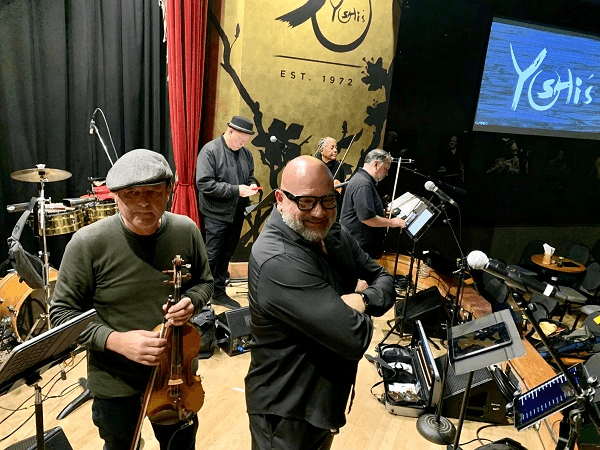
Eduardo Herrera and Tregar Otton
Eduardo Herrera next to director, arranger, composer and violinist Tregar Otton at Yoshi’s

Reasons to leave Venezuela and go to the United States   

Like any other immigrant, Eduardo’s primary reason for leaving his country was the search for new opportunities. Eduardo goes on to explain that he was awarded a scholarship by the famous Gran Mariscal de Ayacucho fellowship programme and managed to obtain his degree in biology in the United States, but unfortunately with the change of government, the things that were promised to him and other fellows such as jobs and revalidations were not kept. As a result, the young man was left in a limbo that made it nearly impossible for him to practice biology.    

With his options reduced to almost zero in Venezuela, Eduardo had no choice but to return to the United States, where he started working as a high school teacher until 2023, when he finally retired from his basic profession. In total, he taught for more than 40 years at the secondary level. During most of this time, he combined his school activities with his second profession, which was music.   

Other areas of music explored by Eduardo 

The singer explained to us that his voice has always been his most important instrument when he gets on stage, but he also confesses to having experimented with hand percussion instruments such as the maracas and the güiro. He pointed out that both are very easy to learn at first glance, but they have their level of complexity once you try them. 

At present, he only uses his voice in the orchestras in which he currently plays.  

Orquesta La Moderna Tradición   

”La Moderna Tradición reached out to me at the beginning to record one of their CDs and I started singing backup and the harmonies, which is how you should always get you started in any group. When you master those areas and have the talent, you may think about being a soloist and that’s exactly what happened with me” Eduardo started saying about the issue. 

La Moderna Tradición’s music was mostly instrumental at that time and they wanted Eduardo for their second album, which would include choirs for the first time, but the group had no singer at that time. In view of the good results offered by the vocalist, he found himself in frequent demand to give voice to other old numbers, but now with a singer.   

Years later, he finally received the proposal to be part of the orchestra as such, together with Ramón ”Monchi” Estévez on vocal. Already for the third album, all the songs had a singer, who was Eduardo most of the time. 

From then on, the artist has continued to be part of La Moderna Tradición with some interruptions because he moved from the Bay Area to the Central Valley in Manteca, which made it more complex for him to play with the orchestra on weekday evenings. 

At the same time, he worked with the group Vissión Latina, Carlos Caro’s orchestra or any other that invited him to play on weekends, which were on his days off. 

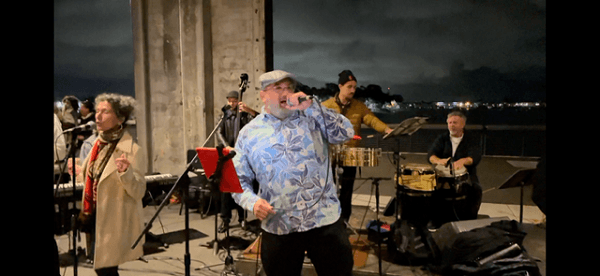
Eduardo Herrera performing
Eduardo Herrera performing live

What Eduardo has learned from La Moderna Tradición and other artists he has played with 

The most important things Eduardo says he has learned from the great artists he has played with are the study, humility, knowing your limits and the development of the love of music. He says the latter is fundamental, because if you do not love music, you will not do the job right.   

”With music, you sacrifice your time and the pay you receive in return does not always go according to what you do, but it is something you’re supposed to do for the love you have for the craft. If you do not love what you do, you will hardly do it well and use your skills in it” said Eduardo. He added that ”you are an eternal student and you never know everything about everything. There is always something to learn from other singers and seeing any of them on stage is an opportunity to emulate what they do as long as it is useful for your career. 

He also said that ”the ego of many artists is a really depressing thing because it prevents them from moving forward and takes their focus away from what is really important, which is the love of the genre and the opportunity to learn as much as you can”.  

Complex moments for Eduardo personally and professionally  

Eduardo mentioned to us that one of the hardest moments for him personally and professionally was his move outside of the Bay Area, which we had already talked about. Being so far away from the area where he did most of his performances was a blow to him, as he had to be near his wife and children.   

Eduardo was very late from work and his wife had a job which made her to leave home for several days, so it was up to him to stay with the children during all that time. For the artist, his family comes first every time and no job or hobby goes above that. 

His responsibilities with his children let him to distance himself from music little by little, since not being always available to play, orchestras would look for other singers to replace him. This made his opportunities to sing to be reduced, but Eduardo assures that the sacrifice has been worth it, as quality time with his children is the most main thing for him. 

Eduardo’s plans to create his own orchestra  

Eduardo was able to conduct an orchestra for a few months, which allowed him to see what the work of a director would be like and the truth is that he did not like it. ”During the time that I was conducting an orchestra, I could see I don’t have the right personality for it. I’m not good for working with adults who are irresponsible and many musicians tend to be late for the engagements and not to take this profession very seriously. I’m a very perfectionist person who has very high standards and I don’t expect anyone to work less than me, so I know it would be torturous for me to have a responsibility of that magnitude,” Eduardo said. 

He says that being a bandleader is far beyond what he wants to do with music and that he wanted to keep developing as a singer. In addition to this, going back to the family issue, such a position would have forced him to be away from his family again and that was something he was not willing to do. 

He also took into account the little stability offered by music as a profession. His work as a biology teacher was much more stable and allowed him to have secure income without having to worry about the bad times of orchestras. He loves music to a fault, but does not like uncertainty and insecurity.  

Eduardo Herrera and Maru
Eduardo Herrera performing with Maru Pérez-Viana, La oderna Tradición manager and chorister

Other groups  

In addition to playing with La Moderna Tradición, he also works with a Cuban group called Pellejo Seco, with which he recorded an album that is currently being remastered in Cuba. The material was recorded just before September in California, but will soon be released to the public. 

Eduardo works directly with Ivan Camblor, director of the orchestra and professional tres player. In this part of the conversation, the artist was very complimentary about Camblor and highlighted his great potential as a bandleader and musician. 

Something he likes about Pellejo Seco is that his main genre is Cuban son and it focuses a lot on very rural and traditional Cuban rhythms, so he can explore other elements different from what he does with La Moderna Tradición. They are very different groups with different genres and different characteristics. 

Read also: Nicaraguan singer and guitarist Yelba Heaton in an exclusive interview 

Cajiao, says he always had a taste for good music: the tangos and ballads of the 50s and 60s

Danilo Cajiao was born on February 9, 1969 in Cali Colombia son of Marina Munevar and Antonio Cajiao family with three siblings Walter, Patricia and Raul.

From my father I inherited the musical taste for Afro Antillean rhythms, we listened at home to the Sonora Matancera, Benny More, Arsenio, Daniel Santos and many more.

Danilo Cajiao was born on February 9, 1969 in Cali, Colombia.

There was always a taste for good music: the tangos and ballads of the 50s and 60s.

When I was a student I participated in several music festivals at school and I was part of several dance and Andean music groups.

I always liked salsa and my favorite artist of the genre will always be Angel Canales.

After the appearance of the program “YO ME LLAMO” in Colombia I was motivated to start the process to achieve the perfect imitation of Angel Canales.

I began my presentations in small salsa bars with a dance floor and I did about 4 songs of Diferente, as I went along the character was being perfected and the public and the owners of the bars were asking for something more.

I then created “the Orchestra SON DE LA 8″ in 2013 with the purpose of making the accompaniment and mount all the music of the different Angel Canales.

Orquesta SON DE LA 8

The market was opening and the support of the salseros was very large, We have had much acceptance in the salsero environment in Colombia.

Participating in major events locally, nationally and internationally:

Leyendas Vivas De la Salsa in Medellin Colombia,

Salsa al Parque Cali, Salsa al Parque Bogotá, Homenaje a la Salsa, Tributo a los salseros and Noche Blanca.

I have alternated and shared stages with several national and international artists and orchestras.

Orquesta Brodway, Orquesta Colon, Nelson y sus Estrellas, Gran Combo de Puerto Rico, Henry Fiol, Adalberto Santiago, Luisito Carrión, Papo Cocote, Cano Estremera, Moncho Santana, Orquesta Zodiac, Luigui Texidor, Frankie Vásquez, Tony Molina, Orlando Marín, Orquesta la Inmensidad and Orquesta la 33.

Danilo Cajiao, says there has always been a taste for good music, the tangos and ballads of the 50s and 60s.

International presentations:  

Guayaquil Ecuador and Caracas Venezuela.

Endorsed and supported by the family of ANGEL CANALES and by him I have taken my tribute to the most recognized places and salsa clubs in Colombia.

Apart from accompanying the Diferente Angel Canales with the orchestra Son de la 8 we have made our own music always keeping the line of heavy salsa and with good taste.

Angel Luis Canales “El Diferente”.

There were nine record productions by Angel Canales between 1975 and 1987, twelve productive years.

By 1970 Angel Luis Canales had put his voice on an album by African-American pianist Mark Dimond, and five years later Dimond’s orchestra was renamed “Angel Canales y Sabor”.

The immense musical freedom of Ángel Luis Canales Canales has much to do with the determining influence exerted on him by Rafael Cortijo, Ismael Rivera and the irreverence of the Combo de Cortijo as a whole.

The difference was that those two masons did not have enough money to support their ideas economically (discographically speaking) while Canales had enough because of the money he earned from his profession as a jeweler and diamond cutter.

That’s why he didn’t lower his head to anyone, that’s why he didn’t give in to any advantageous record contracts and made his own record label, that’s why he never paid or bribed radio producers, and he dressed the way he wanted.

That’s why the conservative salseros kept a CIA-like eye on him. And Canales revolutionized everything in his path: from his clothing to his vocal and orchestral arrangements, his presentations and his choice of repertoire.

By 1970 Angel Luis Canales had put his voice on a record by the Afro-American pianist Mark Dimond, and five years later Dimond’s orchestra was renamed “Angel Canales y Sabor”, and with it he would make a mark like few others in the world of salsa, from his total independence, to the freedom for the musicians, his revolutionary shaved head, and a wardrobe that had nothing to do with the salseros, in addition to his voice, repertoire and arrangements. Ángel Canales recorded in 1979 the album “El sentimiento del latino en Nueva York”, and an exquisite version of “Dos Gardenias”, by Cuban composer Isolina Carrillo.

“El sentimiento del latino en Nueva York” was a clarinada similar to “Imágenes Latinas”, the song by Argentine Bernardo Palombo presented a year earlier by Conjunto Libre, in terms of its contents of denunciation and clamor for justice. “Es el sonido que el americano oye/ y no entiende” (It’s the sound that the American hears/ and doesn’t understand).

Musical childhood

Ángel Luis Canales was born on June 29, 1950 in Santurce, Puerto Rico, son of Ángel Luis Canales and Ana Ilda Canales.

At the age of 8 he was already in New York with his parents, who liked to listen to romantic music and also to Cortijo y su Combo.

The Puerto Rican country song was also among his favorites; it was the jíbara song of his people. In time Canales would indicate that Cortijo and Ismael were determining influences in his musical and social journey.

Much has been said that his current retirement is due to Parkinson’s disease, but Ángel Luis Canales is there, he attends private invitations of his friends and remains in the battle line of salsa and life. He is currently 73 years old.

In those years and in school he was more inclined to practical workshops than books and that is why he went to work, recommended by one of his teachers in a jewelry store where from being a messenger he would learn all the secrets of the art of cutting, polishing and mounting diamonds. He became a professional, solvent, and with an extraordinary clinical eye that would serve him a lot later.

Vista larga, his new friends did not speak Spanish, his native language, but fortunately Angel Luis had peers of his generation, and Latinos like the Lebron brothers and Willie Colon himself.

He also took a long view of his internship in the U.S. Army and later assimilated the new trends that emerged in the music being made in New York.

He started out firmly, as we have already mentioned, with pianist Mark Dimond (Markolino), who had been linked to Willie Colón. With Mark he added his voice to some of the songs on the album “Brujería” and later, with the departure of the pianist, the orchestra was renamed “Ángel Canales y Sabor”.

With this band he would record “Sabor” in 1975 and other albums until “El Sentimiento del latino en Nueva York” in 1979.

Two years before the recording of this album, in 1977 Angel Canales made his first visit to a Latin American country, Panama, and the reception he received was such that he would later write a song dedicated to that country.

The same happened during his visit to Venezuela on November 13 and 14, 1981, which became a musical commotion of great proportions at the Poliedro de Caracas.

Likewise in Colombia and Peru he felt the devotion of the public of those nations. Perhaps he did not know the scope of his work and the projection he already had.

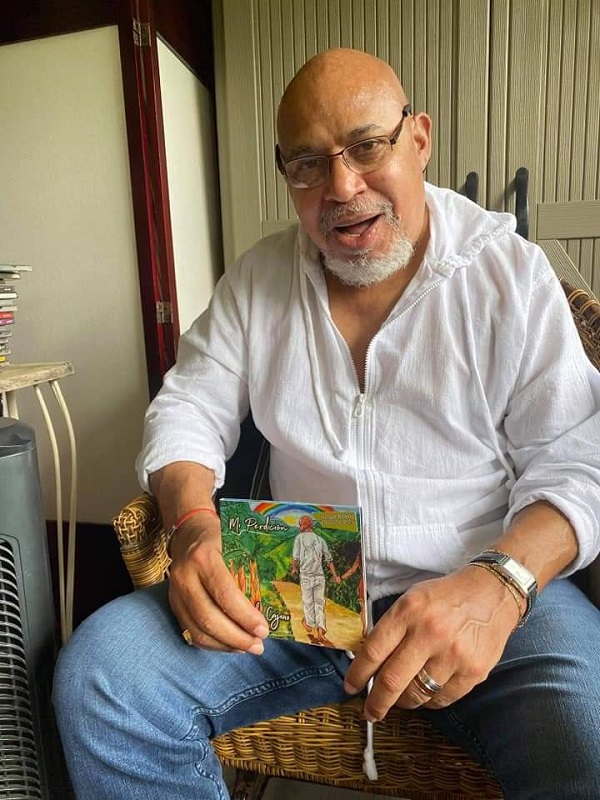
Angel Canales "El Diferente" receiving Danilo Cajiao's production "Mi Perdicion" year 2020.
Angel Canales “El Diferente” receiving Danilo Cajiao’s production “Mi Perdicion” year 2020.

Much has been said that his current retirement is due to Parkinson’s disease, but Angel Luis Canales is there, he attends private invitations of his friends and remains in the battle line of salsa and life. He is currently 73 years old.

Source: TeleSurTv

Also Read: Orquesta la Identidad is one of the most nationally and internationally recognized groups in the salsa genre

Antonio Laya a traditional artist

Latinoamerica / Mexico / Cancun

Antonio Laya  “He tells us a little about his new single Abre que voy”

Today we are pleased to learn a little about the life of Antonio Jose Laya Gonzalez (Antonio Laya), a Venezuelan who with his voice and his particular way of dancing has managed to climb and carve his way to success, this Taurean with a great career as a singer of good salsa and especially son, he presents us his new single, abre que voy, a success that has gradually positioned itself on the best musical platforms from his current hometown, the beautiful city of Mexico.

Antonio Laya
Antonio Laya

Good afternoon friend Antonio, thank you in advance for the time you give us to learn a little about your life and give our great readers a little about your son, but in letters, we know from your artistic review that you come from a cultural world. the dance? Why the singing?

I come from a family of musicians, teachers and athletes, in 1995/96 I started in the popular culture workshops of the “Fundación Bigott” (cultural house of great social impact in Venezuela) in the Afro-Venezuelan percussion workshops with Professor Jesús Raúl Paiva, where he gave me the opportunity to enter this world of culture…

Years later this would bear fruit, when I joined the Vasallos del Sol group, a representative entity of Venezuelan folklore, on one of their tours in Europe “Germany” to be exact, one of its dancers stayed, leaving an open vacancy, it was then that I received the invitation to audition, at a festival of San Juan of the foundation, where I was able to win a spot. From then on I became a vassal of the sun.

All this experience in the middle of the show made me lean towards dance, where I got to venture as direct from my own dance school destined to spread the Cuban casino. With Vasallos del Sol I had the opportunity to travel the world, Colombia, Cuba, Ecuador, Spain, Mexico, Korea, Japan, the United States,

How many years has it been since the idea of ​​entering the cultural world of your country?

22 years since I formally started at the Bigott Foundation.

How did the idea of ​​giving life to singing come about?

On the tour of the United States, I began to sing with the vassals accompanied by the guitar of Luis Gonzalez, assuring me later that it was there that he heard me and knew that I could sing, quickly and a few months later he called me and invited me to participate in a project that neither It didn’t even have a name, which would quickly begin to take shape and to date is known as the seventh bohemian.

I began to sing very badly, I lost my voice because I didn’t know how to use the phonator, I began to take classes with several teachers, the first of them Ronald Gonzalez, fundamental pillar to start singing, placing and improving my vocal technique, successively Fabby Olano, Gladys Salazar, Maigualida Ocaña, Dayan Montiel, Marcial, Gustavo Gerardo. We recorded 3 albums on national tours, the second of which is entitled “She takes me” a song that I believe made the Seventh Bohemia popular. Singing was not in the plans but it ended up being one of my great passions.

Antonio Laya
Antonio Laya

A song that marks you?

She sings: The earrings that the moon lacks, I have them saved to make you a necklace I found them this morning in the mist when I was walking next to the immense sea. Since I was a child I woke up very early listening to music by La Sonora Matancera, Felipe Pírela, Damiron and Danzón de Acerina, it fascinated me.

Let’s talk about the seventh bohemia. How do you join this septet?

I am a founder, just in the second rehearsal when only Luis Freites, Cesar “Chagu” Bolívar and Luis Gonzalez were there I was summoned along with Krlos Gonzalez to be part of the group, from then on I started singing “Bilongo” to be exact, hahaha I’m so in love with the black tomasa……….., El Jamaiquino, Me que, among others.

What is the greatest thing you have experienced so far with music? -You could perhaps refer to a concert or moment to share with an artist-

I think the greatest thing I have experienced in music is having shared the stage with great figures both Venezuelan and foreign, Francisco Pacheco, Canelita Medina, Trina Medina, among, Jose Alberto “el canario”, Cheo Feliciano, Alexander Abreu and his Habana de First, Manolito Simonet and his Trabuco, Tiburón Morales, El Septeto Santiaguero, among others. On the other hand, being at the 2014 and 2015 Pepsi Music Awards, the biggest thing, achieving 4 nominations for the 2015 Latin Grammys, a great privilege.

What has given you and what has taken away the artistic life you lead?

It has given me the satisfaction of feeling and receiving the applause of an audience, feeling the magic of a stage, dancing on the most important stages of Venezuela and the countries I visit, I don’t know if there is another artist who performed in the same weekend in two different facets and groups in the most important venue in Venezuela

The Teresa Carreño Theater where on Saturday I danced in my last Vasallos de Venezuela concert in the concert “Guiados por la Luz” occasion to baptize the latest production, with guests from the cultural movement and the next day singing with La Séptima Bohemia alternating with Francisco Pacheco, El Septeto Santiaguero, Jose Alberto “El Canario” Canelita Medina and El Tiburón Morales and as special guests all the best dance academies in Caracas.

Antonio Laya
Antonio Laya

Antonio let’s laugh a little. Tell us about the funniest thing that has happened to you at a concert and the most painful.

WUUAOOO, too many, Well, a concert with Los Vasallos where I went out to dance and my pants began to drop, at a concert at the Yerba Buena Garden Festival 2008 in San Francisco we got the foot burn of the century since the stage was al pure sun and linoleum floor and at the baptism of the album “She takes me” in the main hall of the Central University of Venezuela after the great presentation of the renowned Ramón Castro We went on stage and I couldn’t see anything through my glasses hahaha and I I put in the place of my partner Miguel Guanchez colliding spectacularly ahaha to start singing. What a laugh.

We know of the great success that you have had in Venezuela with the successes that you have sung and have marked the public, they have gone from a sound to a necessity for the dancer. What do you consider this great impact?

Definitely because I come from the world of dance, I’m a dancer and a dancer and I understood perfectly that I needed the same audience that the casineros came from, those of us who at some point went to the Goiticoa school or the Monagas house. By the way, as a curious fact, I was the one who organized one of the first casino parties in a place called Beisboland, a party where I dare say it was the second presentation of one of the most important dance groups in the Venezuelan casino Son Rumbero, where they danced “Cuentas Verdes y Amarillas de Adalberto Álvarez.

How has your foray into Latin music in Mexico been?

Since my arrival in Mexico I have participated in several musical projects, Los Panas.com, La Formula Perfecta, Swing Latino to mention a few, it has not been easy since musically Cancun has a particularity and that is that the music that is danced is still that of the 80s when they talk about salsa, of course with its exceptions, but it has cost me to adapt but in the end it is what is consumed here. Here the forte is the hotel industry, so the Latin genres that marked an era are what is worked on, that’s why as a salsero it has been difficult for me to adapt, although I have worked anyway.

Antonio Laya and his Orchestra

The Salsa or the Son? Which one do you lean towards?

Definitely La Salsa, I grew up in the middle of the Salsa de La Sonora Ponceña, Willie Rosario and the great Ray Barretto to name a few. Son also became my passion but I have to be realistic! came into my life thanks to the Seventh.

Open, I’m coming. Tell us a little about this great topic?

When I got on the plane to leave my country, in addition to nostalgia, I only had one thought, to make my album as a soloist first, I knocked on many doors, I looked for a lot of help, until I finally reached what today is called “Abre que I’m going” in that search the day came when I remembered that I had a buddy who was Omo Aña (Drummer) Maurice Melo and that after conversations, long conversations we would take a first step, start aggravating a theme, my first promotional single.

What surprise do we have to see from Antonio Laya during this 2019?

With God’s favor, to continue recording my album, including my first music video, if money allows me, hahaha For this 2019 I’m going to release my second single, it’s called… (Thinks) Not yet, let’s leave it as a surprise , do a launch concert and seek my respective nomination for the 2019 Pepsi Music Awards and the 2019 Latin Grammys.

Antonio Laya February 2019

Where can our followers find you?

My social networks Facebook and Instagram through @ToñitoLaya, on twitter as @Negrolaya and through my YouTube channel, Toñito Laya


Orquesta la Identidad is one of the most nationally and internationally recognized groups in the salsa genre

Winner Identidad Orchestra on several occasions of the Cali fair disc with songs such as MUJERES in 1987, QUIÉREME in 1991 and COMO YO TE AME, the most played song at a historical level in the different Latin FM stereo stations in 2003.

ORQUESTA LA IDENTIDAD

Among other works of recognition such as: LAS COSAS SON COMO SON, TU DESDÉN, GOLPE DE GRACIA, SI ELLA VOLVIERA, DESENGAÑOS, among others.

This group was founded by the Colombian composer and musician Carlos Enrique Navia in 1981 in the capital of salsa in the city of Cali – Colombia, which came to fame in 1987.

Following the release of his first album entitled LA IDENTIDAD, under the Codiscos label, musical production that includes the works, LAS COSAS SON COMO SON, Y ME QUIERES, PARA QUERERTE, CADA CUAL, POR SU LADO, LA FUMA, GENTE CORRIENTE, BRABAJE and MUJERES.

Work that was awarded as the official album of the Cali Fair and gave him the opportunity to make his first international tour of the United States, visiting the states of Florida, New York, California, Texas, Illinois, among others.

This group had a very important boom in Colombia and the whole world for being elected revelation orchestra of the year and gave him the participation in the most important events and fairs throughout the Colombian territory.

Thanks to the success and recognition, the orchestra recorded its second album called LA MÚSICA in 1989, album that expanded its audience in other countries such as: Mexico, Venezuela and Ecuador with the works TU DESDÉN, AMOR ETERNO, TE QUIERO TANTO, LA MÚSICA, SON SABORIONDO, SENTIMIENTOS POR TI and BOMBA NAVIDEÑA, work that occupied the first places in the FM radio stations, preselected as Cali’s fair disc and elected the second most important song of the fair.

Orquesta la Identidad is one of the most nationally and internationally recognized groups in the salsa genre

Identidad Orchestra in 1990 the orchestra recorded its third album entitled UN TOQUE DE MISTERIO, album produced by the renowned Venezuelan musician Cesar Monges “Albondiga” who has participated in countless productions of artists and orchestras of international recognition in the salsa genre.

After a long tour in the United States, the orchestra arrives in Colombia to record their fourth album entitled SALSA CON ENERGÍA, a product produced in the studios of Grupo Niche.

This production included songs such as: LA RETIRADA, ESE SOY YO, BOROJO, AGITACIÓN, SI ELLA VOLVIERA, LLEGASTE A MI VIDA, DESENGAÑOS and COMO YO TE AMÉ, one of the hits of preference of our listeners, occupying the first places and beating the record of the most played song in all salsa genre stations in Colombia, United States, Mexico, Venezuela, Ecuador, Peru, Spain, Italy and many more countries.

ORQUESTA LA IDENTIDAD is an orchestra that has been characterized by its perseverance.

Identidad Orchestra in 1992 they recorded their fifth album titled PROFESIÓN SALSA and ended their relationship with the record label Codiscos to start their independence as a brand under the direction of composer, singer and founder Carlos Enrique Navia to produce their works as an independent record label.

Orquesta la Identidad is one of the most nationally

This album included songs such as: GOLPE DE GRACIA, PECADORA, COCTEL DE AMOR, SI YO PUDIERA, SEÑORA CALI, MUJER AMADA, TE PILLÉ, NO IMPORTA, among others. This product was widely distributed in countries such as Ecuador, Venezuela, Mexico, Peru, United States, among others.

As a record label Identidad Producciones, ORQUESTA LA IDENTIDAD has recorded albums such as A TIEMPO, a production that has captivated the salsa public with songs like: CUANDO EL AMOR SE ACABA, MI NIÑA, LA ESQUINA DEL MOVIMIENTO, LE CANTO AL PACÍFICO, TE QUIERO Y TE AMO, TU DESDÉN, LA FUMA and singles such as: POR SIEMPRE ELLA, FRACASO, DICIEMBRE EN CALI, SON PA EL BAILADOR, COLOMBIA REAL, A MI PADRE, BENDICIÓN DE MADRE, MI GUAGUANCÓ, HOMENAJE A LA SONORA MATANCERA, GUAYAQUIL among others.

Works that are played on Latin radio stations and massively on digital platforms. Orquesta LA IDENTIDAD is a group that has participated in important Latin music events such as: SEBASTIÁN DE BELALCÁZAR awards on two occasions and nominated for best salsa genre orchestra, event organized by FALCON MANAGEMENT BOOKING & ENTERTAINMENT, INDEPENDENCE FESTIVAL OF GUAYAQUIL – ECUADOR, INDEPENDENCE FESTIVALS OF COLOMBIA IN THE UNITED STATES, WORLD SALSA FESTIVAL, BILLBOARD LATIN MUSIC, FESTIVAL OF ORCHESTRAS IN COLOMBIA AND FAIRS THROUGHOUT THE COLOMBIAN TERRITORY.

ORQUESTA LA IDENTIDAD is currently preparing the celebration of 40 years of artistic career, an album that will include the greatest hits such as MUJERES, QUIÉREME, GOLPE DE GRACIA, MUJER AMADA, LAS COSAS SON COMO COMO SON, TU DESDÉN, UN TOQUE DE MISTERIO, COMO YO TE AMÉ and DESENGAÑOS, which will have collaborations with national and international artists of recognition in the salsa genre and is preparing to make its next international tour of the United States year 2024.

CONTACT Carlos Enrique Navia General Manager Contact: 310 822 8068 – 317 642 1031 Email: [email protected]

ORQUESTA LA IDENTIDAD

Also Read: Colombia’s legendary Grupo Niche and its founder Jairo Varela

Juan Antón ”El Blanco” from La Clave Del Blanco

Everything started in Peru for Juan

There is always a pool of new talents to be known and analyzed, since our Latin countries are the cradle of great artists of all kinds, especially in the area of music. Today it was the turn of the talented Peruvian Juan Antón.  

We have taken the audacity to contact the leader of the orchestra La Clave Del Blanco, Juan Antón, to know the most important details of his professional life and his current group. We are very pleased to present to our readers the most important details of this pleasant and enlightening conversation, which lasted for almost half an hour.   

Peruvian singer Juan Antón
Peruvian singer Juan Antón, Leader of La Clave Del Blanco

First contacts with music 

Juan Antón was born in Peru, specifically in El Callao, a port city near Lima which is well known to all salsa lovers. Like most of the salseros who have passed through International Salsa Magazine, Juan started getting interested in music since he was a child and enjoyed La Sonora Matancera and, later on, the salsa music that came from New York. 

However, although he was always a lover of the aforementioned musical genre, his career began with Peruvian Creole music, which is composed of waltzes, jarana, black music, among other variants. 

When he leaned towards this kind of music, he sang with guitar, cajón and bass at parties in a bohemian way. He had some proposals to work with Creole music in a more professional way, but he accepted due to the pile of responsibilities he had with his work and studies. He was doing well at the time, but admits that he regrets that decision today because it would have been a good start.  

United States 

While it is true that his first steps in the world of music were taken in Peru, it was in the United States that he finally began to be part of more professional groups. 

Juan’s first opportunity in that respect came when he was at a Peruvian party where his compadre was given a Creole music ensemble. Knowing those present that he sang, they invited him to accompany the ensemble and perform with them, which Juan accepted and did. 

The musicians of the group liked his work so much that they asked him for his number and later called him to sing with them. At that time, he met Jorge Del Castillo, a well-known guitarist from the San Francisco Bay Area, who invited him to join a group he was forming and gave him a CD, asking him to learn those songs. The group would be called Kokos Band.   

When Juan was listening to the CD in his car, he found out that it was salsa and not Creole music. When he went to tell Jorge that he gave me the wrong CD, he said it was the correct one and the future group would be singing salsa. 

Since Creole music and salsa are very different, Juan had to learn a number of details such as the clave, the signals to the musicians, the way of singing, among other things. 

Some time later, the story repeated itself. The conguero of Kokos Band proposed him to join the orchestra he was creating, with which he became much more successful and went to more renowned events such as the inauguration of a museum for Puerto Rican and Cuban baseball players. Its name was Orquesta Liberazión. 

Being Peruvian, Juan was really proud that attendees mostly from Puerto Rico and Cuba complimented his work the way they did. Considering that both countries have been the cradles of the main exponents of salsa, the congratulations from this group were very important to him.   

The third and last orchestra he played with was Saboriche. His time with this group made him realize that he had what it took to become independent and create his own project.   

Juan Antón at The Cigar Bar
Juan Antón and La Clave del Blanco performing at The Cigar Bar & Grill

La Clave Del Blanco 

One of Juan’s greatest inspirations to devote himself to music was La Clave Del Callao, since the music of this band influenced him and he liked it very much. In addition to that, the name by which many began to know Juan in the San Francisco Bay Area was ”El Blanco”.  

Both of these things led him to name his own orchestra ”La Clave Del Blanco”. 

Salsa Con Caché  

In addition to his facet as a singer, Juan also had a radio show at La Grande 1010 AM and its name was ”Salsa Con Caché”, which was on the air for only one year. Its cancellation was due precisely to the professional commitments the artist had with his music.   

He decided to call ”Salsa Con Caché” to this space because ”caché” in many countries means ”elegant” and ”refined”. This is precisely the salsa style he has always liked. 

One of the things that set this program apart from others of their kind in the San Francisco Bay Area is that Juan always talked about the history of the artists and the orchestras playing on the air so that listeners would know all this information. Other programs only played background music and did not add more elements to the programming. 

Juan was so successful that he received hundreds of phone calls daily and was even appeared in the now defunct San Francisco Chronicles as one of the best salsa shows at the time. 

This success was due to the enormous constancy and important information the announcer had. Although Juan does not regard himself as a scholar in the matter, he assures us that he had what it took to keep listeners hooked to his knowledge. He even commented that he had a private collection of more than 600 original CDs in all languages, which he bought gradually.   

This extensive music collection helped him a lot to offer a varied repertoire during the time when ”Salsa Con Caché” was on the air.   

Juan Antón as an announcer
Juan Antón was also an announcer and his show was called ”Salsa Con Caché”

Recruiting talent for La Clave del Blanco 

During his journey through the orchestras where he played, Juan got to know a lot of musicians, especially during his time with Orquesta Liberazión. He became friends with many of them and, when he started forming his own orchestra, he asked them to be part of it. 

Since he managed to establish his group, the singer has always made sure to deliver what he promises. This means that, if he makes an offer for the work done, he always honors the full amount. For Juan, ”The most important thing in this business is the given word”, so you always have to deliver what you promise at the beginning. 

With respect to the above, Juan has lived this same situation with orchestras he has worked with, so he does not want to have debts with the musicians he hires. This is how he has gained their trust and, whenever he needs them, they are there for him. 

Read also: Guantanamo music director, arranger and composer Julio Avila 

  • « Go to Previous Page
  • Page 1
  • Page 2
  • Page 3
  • Page 4
  • Interim pages omitted …
  • Page 9
  • Go to Next Page »

International Salsa Magazine (ISM) is a monthly publication about Salsa activities around the world, that has been publishing since 2007. It is a world network of volunteers coordinated by ISM Magazine. We are working to strengthen all the events by working together.