• Skip to primary navigation
  • Skip to main content

International Salsa Magazine

  • HOME
  • Previous editions
    • 2026
      • ISM / April 2026
      • ISM / March 2026
      • ISM / February 2026
      • ISM / January 2026
    • 2025
      • ISM / December 2025
      • ISM / November 2025
      • ISM / October 2025
      • ISM / September 2025
      • ISM / August 2025
      • ISM / July 2025
      • ISM / June 2025
      • ISM / May2025
      • ISM / April 2025
      • ISM / March 2025
      • ISM / February 2025
      • ISM / January 2025
    • 2024
      • ISM / December 2024
      • ISM / November 2024
      • ISM / October 2024
      • ISM / September 2024
      • ISM / August 2024
      • ISM / July 2024
      • ISM / June 2024
      • ISM / May 2024
      • ISM / April 2024
      • ISM / March 2024
      • ISM / February 2024
      • ISM / January 2024
    • 2023
      • ISM / December 2023
      • ISM / November 2023
      • ISM / October 2023
      • ISM – September 2023
      • ISM – August 2023
      • ISM July 2023
      • ISM Edition June 2023
      • ISM – May 2023
      • ISM April 2023
      • ISM March 2023
      • ISM February 2023
      • ISM January 2023
    • 2022
      • ISM December 2022
      • ISM November 2022
      • ISM October 2022
      • ISM September 2022
      • ISM August 2022
      • ISM July 2022
      • ISM June 2022
      • ISM May 2022
      • ISM February 2022
      • ISM January 2022
    • 2021
      • ISM December 2021
      • ISM November 2021
      • ISM October – 2021
      • ISM September 2021
      • ISM August 2021
      • ISM July 2021
      • ISM May 2021
      • ISM April 2021
      • ISM June 2021
      • ISM March 2021
      • ISM February 2021
      • ISM January 2021
    • 2020
      • ISM December 2020
      • ISM November 2020
      • ISM October 2020
      • ISM September 2020
      • ISM August 2020
      • ISM July 2020
      • ISM June 2020
      • ISM May 2020
      • ISM April 2020
      • ISM March 2020
      • ISM February 2020
      • ISM January 2020
    • 2019
      • ISM December 2019
      • ISM November 2019
      • ISM October 2019
      • ISM Septembre 2019
      • ISM August 2019
      • ISM July 2019
      • ISM June 2019
  • Spanish
  • Download Salsa App
    • Android
    • Apple

Search Results for: Latin Jazz

Bandleader Arturo O’Farrill leaves behind Birdland to look for other opportunities

After making some room in his packed schedule, we finally managed to meet with bandleader, composer, and pianist Arturo O’Farrill, who after arriving in Richmond, Virginia, greeted us and talked about various interesting topics related to his long and successful career.

Of course, we did not miss the opportunity to ask if it is true that he and his orchestra will drop out of performing at Birdland as they had done over the past 29 years and what other projects in door they have from now on.

Arturo O'Farrill posing for the camera
Bandleader and pianist Arturo O’Farrill posing for the camera

What was his childhood like with two artist parents?

Arturo is the son of Cuban conductor, arranger, and musician Chico O’Farrill and Mexican singer Lupe Valero, so it is natural that he would show an interest in art like them. In addition, being the first male child in the family, there was lots of expectations on him and anything he could get, so he was enrolled in piano lessons and fortunately he had good aptitude for the instrument and was very present at his father’s parties and events with many other artists. 

So, he was for a time studying music on Saturdays until he discovered a Miles Davis album in his living room. He says that listening to it changed his life forever, and the song that most marked him was “Seven Steps to Heaven.” At that time, he knew he was going to become a professional musician by choice, not because his father had decided it for him.

He decided to become the best pianist he could be, and because of how busy Chico was with his own career, Arturo studied jazz alongside other young musicians. Some time later, he met bassist Andy González, who finally made him understand his Latin roots and encouraged him to study artists such as Charlie Palmieri and Eddie Palmieri.

“Precisely thanks to Andy, now I understand that our music is a treasure of the Afro-Latin diaspora, and the music my father and so many others of his generation made, for me, is the most incredible thing in the world,” said Arturo.
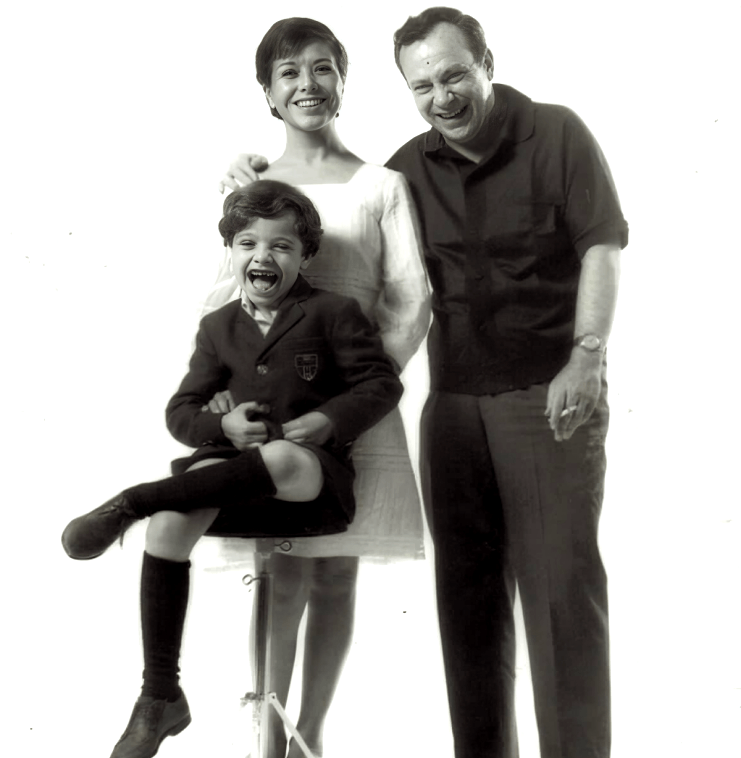
Arturo O'Farrill 02 2026
Arturo O’Farrill with his parents Lupe Valero and Chico O’Farrill

Arturo’s musical education

The artist studied at several top academic institutions, including LaGuardia High School of Music and Art, the Manhattan School of Music, the Brooklyn College Conservatory of Music, and the Aaron Copland School of Music. He clarified that he did not graduate from the Manhattan School of Music, but he does recognize that it was there that he began to truly understand music.

In the case of LaGuardia High School for Music and Art, his parents had to withdraw him because he never attended classes, as he was not interested in history and mathematics, but only in music. He was then enrolled in City As School and got his GED (General Educational Development). Later, at Brooklyn College, he met Professor Teófilo Ruiz, who taught him the importance of forging a social and political conscience, which had a profound impact on his development as a professional and a person. 

While working as a musician, Arturo earned his bachelor’s and master’s degrees at Queens College. He spent some time playing, studying, and teaching until Wynton Marsalis, artistic director of the jazz at Lincoln Center program, asked him to create an orchestra for the venue, which they called the Lincoln Center Jazz Orchestra. He worked there for five years until he knew he had to continue his career elsewhere.

Chico O’Farrill Afro-Cuban Jazz Orchestra

After playing along with the great jazz star Carla Bley and Machito, Arturo finally joined his father’s orchestra, the Chico O’Farrill Afro-Cuban Jazz Orchestra, at a time when they were creating many jingles for commercials. When the world was rediscovering Chico, his health was unfortunately in bad shape, so his son stood by his side to support him any way he could.

In the end, he had no other option than taking charge and, together with the rest of the musicians, recording the band’s last three albums. One thing that he had very clear when he took up this challenge was that he did not want to compete with his dad or be constantly compared to him, though he knew it was inevitable. In fact, after doing a concert with him, when he came home, he found a voicemail from someone saying: “You don’t have a fortieth of your father’s talent. In fact, I’ll see you picking through garbage.”

Arturo O'Farrill with the Grammy
Arturo O’Farrill posing with the Grammy he won in 2023

Despite the hurtful comments, it was liberating for him to hear it, since someone had the stupidity to compare him with his father when it did not make sense. That pushed him to use his own compositions in the orchestra, continue creating new music, and have a completely different path from Chico O’Farrill. Unknowingly, the man who insulted him had helped him throw off the mental and artistic chains that bound him by fear of being compared.

Afro Latin Jazz Orchestra

Although Arturo was sorry for leaving Chico’s orchestra, he knew he had to make many changes. One of them was that he wanted intergenerational musicians, more races and nationalities. This also led him to change the name of “Afro-Cuban Jazz Orchestra” to “Afro Latin Jazz Orchestra” because, from his point of view, Latin music must include not only Cuba, but also countries such as Puerto Rico, Colombia, Bolivia, Peru, Mexico, and many others.

Despite these changes, Arturo and his orchestra kept playing every Sunday at the prestigious Birdland jazz club, something they had been doing since 1997, before the death of Chico O’Farrill. However, 29 years after that important proposal, Arturo announced on social networks that he would not perform there anymore, but he was very grateful to the staff and management of Birdland for the opportunity they gave him over so many years.

When we wanted to know the reasons for this decision, the artist just told us that this was largely due to “creative and financial disagreements that were making the working environment very toxic,” so the best thing was to cut to the chase and seek pastures new. He assures us that his words do not want to disrespect anyone and that he wishes the best for both the club and its staff, who always treated him and his musicians the best. 

Eddie and Arturo
Eddie Palmieri and Arturo O’Farrill some years ago

Afro-Latin Jazz Alliance and Casa Belongó

The musician also wanted to talk about his foundation Afro Latin Jazz Alliance, which seeks to educate, play, and preserve. The project has grown so much that today it has 49 teachers, 21 public schools, and a preprofessional program known as “The Fat Cats,” which aims to help young musicians join an orchestra and exploit their talent as never before. 

After several formal requests, New York City finally agreed to construct a building with affordable apartments for residents of East Harlem and the first floors are destined to house Casa Belongó. These spaces will include a theater, a jazz club, a healthy restaurant, rehearsal rooms, classrooms, and much more. “Imagine that the power of our Latino community will physically change New York City history,” she concluded on this topic. 

Read also: Music reviewer and photojournalist Ricky Ricardo describes his work from the last 35 years


Jorge Duran

Europe / Germany

Interview to Jorge Duran & his Jalea de Mambo

Now settled in Europe, venezuelan vibraphonist Jorge Duran is leading Jalea de Mambo band which mix musicians from different nationalities recovering the swing and mambo of the 50s with the smart flavor of the New York Palladium, the famous Broadway dance-hall, and the color of the best Latin Jazz that can be heard in Europe right now. Its characteristic vibraphone sound makes this band a unique and raw example in the current music panorama.

Recently documentary “We Like It Like That” has been released worldwide http://latinboogaloo.com/ emphasizing that cultural revolution where boogaloo, mambo, among other genres, were considered the so-called “Latin Soul” creating that cultural movement which day by day takes more strength everywhere.

Jorge Duran
Jorge Duran

1) Jorge, tell us a little bit about your background, your roots, and your musical influences.

Well, I started playing Latin American percussion in Venezuela (Caracas) having the chance to share with great musicians beside studying with amazing percussion players but my degree was focus in composition. Then I begun to play jazz vibraphone and it took me a few years to play again Latin American Music although here I am ready to give my very best.

2) How did you come to the idea of Jalea de Mambo?

The idea of Jalea de Mambo came to me long time ago (10 years ago or more) when I first heard the album Cal Tjader Modern Mambo Quintet, quite old album indeed (1955). That record change everything for me and blew my mind up focus then on mambo, latin jazz and what so called “Latin Soul”.

3) Mambo, Boogaloo, what many people called “Latin Soul” was a revolution during the 50s. Do you think that nowadays these genres could reach something similar?

I really think everything is possible if you work hard, I’m not trying to make a revolution my idea is that every single person come to see us playing, enjoying magic music, having a great time. Obviously that “revolution” happened once but its essence has come along the years in all musicians who play caribbean rhythms. Nowadays, this genre is getting popular again but honestly I believe it has never lost validation.

Photo of Jorge Durán and his band members in the music world

4) What are your feelings coming from Venezuela performing in Europe and worldwide? Is the musical movement opened and active enough over there?

My feeling is that in Europe we, musicians, have more opportunities to show our culture and most of the people here are opened enough to hear or see our projects.

Beyond Europe is quite the same because I have Heard about concerts with more tan 100.000 audiences in Arab Countries, for instance. It simply means that latin and caribbean music “hook” people hearts so they enjoy it full.

5) Now that you are settled in Europe tell us a bit more about your projects and expectations.

I’m living in Germany now and it is a huge challenge for me as it is a real different culture and language but my idea is to spread the Latin American culture and music not only in Europe but worldwide. We are living very tough moments at this very moment and firmly believe that músic and culture are more needed than ever because music tame the beasts, as people usually say, and that’s what we need now, I mean, peace, calm and mainly love.

Photo of Jorge Durán and his team at the live concert

6) Looking for these goals, are you working on your own or you are supported by a company, agency or similar.

Now I have the great pleasure to say that I’m not alone in this business because Cat 7 Production is my new family and they are really focused in spreading my music to reach more people. I think this is the idea, music is a language we need to be heard as I said before.

7) Finally Jorge, let’s share a message for all your fans beside colleagues who work hard to achieve similar goals you are looking for.

Well, I’m always very grateful when some one takes time to send emails or messages after watching us in a concert, I love it and love fans who give me strenght to keep doing what my heart says. My humbly advice to all musicians who have an idea or project is that never stop making music because everything is possible in life and the real power is inside us. This is one of more beautiful and hard profession but sure worth it!

Jorge Duran in concert

Buika. The Multicultural Sensation

European Union
Buika
Buika

“It takes a lot of guts to expose your true self to others, and acclaimed singer, songwriter, poet, composer and music producer, Buika (pronounced BWEE-ka), does that every night she goes on stage. As plain as the tattoos on her skin, Buika bears her soul to her fans across the world, which she affectionately calls her “tribe.””

This summer, Buika continues her journey of storytelling across Europe and South America in support of her latest album, fittingly named Vivir Sin Miedo (To Live Without Fear). Her eighth album and one with the most English lyrics, Vivir Sin Miedo, co-produced by Grammy Award-winning Swedish producer, Martin Terefe (Mary J. Blige, Mutya Buena, Coldplay) features Grammy-winning singer-songwriter Jason Mraz, German neo-soul artist Meshell Ndegeocello, and Spanish underground flamenco legend Potito.

2- Buika
2- Buika

Born María Concepción Balboa Buika in Palma de Mallorca, Spain, Buika grew up immersed in Spanish culture with her African-born parents. Surrounded by multiple cultures throughout her life, Buika had a variety of musical influences, from jazz and flamenco to pop, soul and African polyrhythm. This eclectic upbringing shaped Buika’s ability to make music without limitations. During her 15-year recording career, her albums flow seamlessly between pop, jazz, soul, reggae, afro beat, R&B and flamenco. Equally diverse are her collaborators, which include Pat Metheny, Anoushka Shankar, Chick Corea, Niño Josele, Bebo and Chucho Valdés, Seal and Nelly Furtado.

Photo 2 - Buika
Photo 2 – Buika

“Filmmaker and longtime fan, Pedro Almodóvar, remarked about Buika, ‘Seeing her draw from such different genres…mix them all together with such grace and spontaneity, one cannot help but think that there is a brighter future as long as one can witness the boundless evolution of this infinite performer.'”

A brighter future did arrive for Buika with each new album. Her 2006 album, Mi Niña Lola (My Little Girl Lola), won Buika high praise from the US media, including The New York Times, The New Yorker, Miami Herald and NPR. She received two Latin Grammys, one for her 2009 album, El Ultimo Trago (The Last Drink) and for her 2013 album, La Noche Más Larga (The Longest Night), which also won a Grammy nomination for Best Latin Jazz album.

Photo 3: Buika
Photo 3: Buika

Other Latin Grammy nominations included Best Album and Best Production for Niña de Fuego (Girl of Fire, special 2-CD Edition, which included her first collection of poems – 2008), Record of the Year for her albums, Se Me Hizo Facil (2010) and La Nave del Olvido (2013) as well as the new Record of the Year nomination for Vivir sin Miedo for the song “Si volveré” (2016)

Buika knows no boundaries when it comes to language or geography. She has collaborated with musicians and singers in Spanish, Catalan, English, French, Portuguese, Iranian and Armenian. Her touring has spanned the globe, covering Europe, Latin America, the Caribbean Islands, Asia, Africa and the US.

A great music ambassador, she reaches any small or large crowd..i.e performed at the US Embassy in Madrid, Spain, on a great 4th of July or a year ago at the Spanish Embassy in DC, for a larger audiences at different music festivals, such as “La Notte della Taranta” Italy over or “Jazz al parque” Bogotá just a month ago.

Photo - Buika
Photo – Buika

She has no barriers in terms of artistic expression and rejects any kind of self-limitation, a business owner, singer / songwriter, producer and poet, whom on her time off immerses herself in the world of photography, some of her best portraits and self-portraits can be seen on any of her books, Niña de fuego (Girl of fire) “special edition” and -A los que amaron a mujeres difíciles y acabaron por soltarse (To those who loved difficult women and ended up letting go)

Buika singing
Buika singing

For Buika, her music is more than a career. She says, “I am music (…)!”

  • [email protected]
  • [email protected]
  • [email protected] 
  • [email protected]

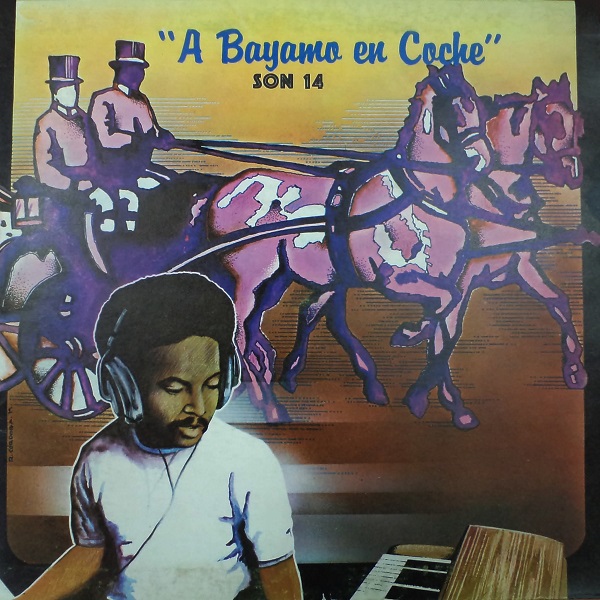
Son 14 The History of the Orchestra and the Success of “A Bayamo en Coche”

The Son 14 orchestra was founded in Santiago de Cuba in 1977 by vocalist Eduardo “El Tiburón” Morales (born in Cuba in 1935) and pianist and musical director Adalberto Álvarez.

As the name suggests, it is a 14-member ensemble dedicated to performing son, the national musical genre of Cuba. In 1978, Lázaro Rosabal (born in Santiago de Cuba in 1953) joined the group.

They quickly recorded several albums for the local EGREM label, many of which became bestsellers throughout Latin America, allowing them to undertake extensive tours across the Americas and Europe.

In 1992, co-founder Álvarez left the band to form his own group. Nevertheless, Son 14 continued its journey under the musical direction of Rosabal.

In addition to their continued success in the Latin market, the band began to gain international recognition, first with the song “El Son De La Madrugada,” included on the compilation Cuba – Fully Charged (Earthworks Records, 1993), and later with the release of Son – The BIG SOUND (Tumi Records, 1995), a compilation of their material from the Álvarez era.

Son 14 de «A Bayamo en Coche»

After introducing a modern, vibrant version of son and its variations (son montuno, bolero son, etc.) to non-Latin audiences, Tumi Records commissioned a new recording at Cuba’s EGREM studios. Released in 1996 as part of the Cuba Explosion series, the album Cubanía proved that the band had not lost an ounce of its musical talent and energy under Rosabal’s direction. Three years later, the group released La Máquina Musical, which incorporated Colombian tropical rhythms into their sound, promoting the album with a European tour that included a performance at the Cuba Presente Festival at the Barbican Centre in London. (Source: AllMusic)

Eduardo Morales Orozco Tiburón

 The Milestone of “A Bayamo en Coche”

The album A Bayamo en Coche (A Bayamo by Carriage) was released in 1979, with its biggest hit being the title track itself. The album’s opening song, composed and arranged by Adalberto Álvarez from Camagüey, instantly transformed him into one of the leading figures in popular Cuban dance music from that year on.

The song “A Bayamo en coche” not only revives traditional son and enriches it with new sounds but also artistically recreates a cherished tradition rooted in Bayamo, the cradle of Cuban nationality. In this city, coches (horse-drawn carriages) are used for pleasure rides and recreation, and the song’s lyrics narrate these moments.

The album contained other tracks that were hugely popular in Cuba between 1978 and 1980, such as “Calle Enramada” (a son elegy to that main Santiago street), “El Son De La Madrugada” (with a beautiful later version by Omara Portuondo), “Se quema la trocha,” and “Elena la cumbanchera,” which turned the record into a landmark within this genre of Cuban music. Most of the tracks were performed by Tiburón Morales, the group’s lead vocalist.

Tribute to The Gentleman of Son

Recently, Son 14 founder Adalberto Álvarez, known as “El Caballero del Son” (The Gentleman of Son), was honored with a concert at the Karl Marx Theatre. This event celebrated his 46 years in music and the 35th anniversary of his later orchestra, Adalberto Álvarez y su Son.

The concert was a memorable tribute to the work of the composer of “A Bayamo en coche.” Some of his best songs were performed by notable Cuban musicians:

  • Septeto Santiaguero (Son para un sonero)
  • Pancho Amat and Alain Pérez (Tu fiel trovador)
  • Alexander Abreu (Pura imagen)
  • Paulo F. G. (Fin de semana)

At other points, Frank Fernández performed a duet accompaniment with the voices of Adalberto Álvarez and Jorge Luis Rojas, “Rojitas,” on Santa Cecilia.

Additionally, Rojitas sang with Tania Pantoja (Vivir lo nuestro) and solo (Y qué tú quieres que te den). Robertón and Lele, vocalists from Van Van, performed Agua que cae del cielo, while the orchestra Adalberto Álvarez y su Son took on De Cuba pa’l mundo entero, Son de la madrugada, and Los caminos de Ifá.

En La Sala Show “El Saraito” Adalberto Álvarez (R.I.P) Fundador, Director. Arreglista y Pianista del Son 14 de Cuba, Dj. Augusto Felibertt y Vicente López

That night, Maestro José Luis Cortés highlighted Álvarez’s musical quality, focusing specifically on “A Bayamo en coche,” the song that, in 1979, announced the existence of a great artist to the public. Álvarez was capable of bringing son to Cuban art schools and has defended Cuban son with grace and artistry, all while staying true to the essence of one of the dance music genres that best represents Cuban identity. (Source: Joel del Río, Cibercuba)

“A Bayamo En Coche” Album Details (1980)

No. Track Genre Composer
01. A Bayamo En Coche Son Adalberto Álvarez
02. El Son De La Madrugada Son guaguancó Adalberto Álvarez
03. Se Fue Mi Amor Y No Lo Vi Partir Bolero son Adalberto Álvarez
04. Calle Enramada Son Pedro Gómez
05. Elena La Cumbanchera Son Gerardo Martínez
06. Se Quema La Trocha Bachata-Son Adalberto Álvarez
07. Tal Vez Vuelvas A Llamarme Son montuno Adalberto Álvarez
08. Gimen Las Rosas Por Una Triste Ilusión Bolero Adalberto Álvarez
09. Vamos, Háblame Ahora Bachata-son Adalberto Álvarez

Musicians who participated in the recording (1979):

  • Director, Acoustic Piano, Keyboards: Adalberto Álvarez
  • Vocals, Minor Percussion: Eduardo “El Tiburón” Morales, Héctor Wedderbron, Daniel Carmenates
  • Bass: Jorge Machado
  • Guitar: Efisio Barroso
  • Trumpet: Eduardo Sánchez, Guillermo Femández, José Fernández, Dagoberto Rodríguez
  • Trombone: Lázaro Rosabal
  • Tumbadora (Conga Drum): Ubaldo Canes
  • Bongó, Cowbell: Guillermo Viera

Recorded at: EGREM Studios (1979)

Collaborators:

L’Òstia Latin Jazz

Dj. Augusto Felibertt

Also Read: Luis Conte: The Cuban-American percussionist who fuses Cuban son with global music

Ángel Luis Canales is a renowned Puerto Rican singer and composer known as “El Diferente” (The Different One) for his particular and irreverent style

Angel Canales was born on June 29, 1950, in Santurce, Puerto Rico.

During his childhood, around the age of 8 or 10, he moved with his family to New York City, where he lived in East Harlem (Upper Manhattan). Musical influences indicate that from a young age, he was strongly influenced by the music of Cortijo y su Combo and Ismael Rivera.

Before or concurrently with his musical career, he worked in the jewelry business; he was a messenger and later learned to cut and polish diamonds, a skill that allowed him to self-finance his musical career and pay high salaries to his musicians.

Ángel Luis Canales is a renowned Puerto Rican singer and songwriter known as El Diferente for his unique and irreverent style.

Musical Career

His Beginnings: He started as a timbalero in Ray Jay’s orchestra, where he debuted as a singer, replacing the lead vocalist.

His first album (1970), titled “Brujería,” was released in 1970 and recorded under the Alegre Records label, with musical direction by Mark Dimond. Hits from this production include “El Barrio,” “Yo No Tengo Pena,” and the title track.

Notable Hits: Among his most popular songs are: “Nostalgia,” “Sol de Mi Vida,” “Perico Macoña,” “Lejos de Ti,” “Hace Tiempo,” “El Cantante y la Orquesta,” “Sabor de los Rumberos Nuevos,” “Bomba Carambomba,” and his celebrated rendition of the bolero “Dos Gardenias.”

His Unique Style is recognized for its unorthodox approach and distinctive vocal timbre, which earned him the nickname “El Diferente” (The Different One).

He was a highly independent artist who self-financed his albums and founded his own record label, Celanac Records.

Tours and Retirement

International Tours: He toured internationally, visiting countries such as Panama (his first), Venezuela (where he performed at the Poliedro de Caracas in 1982), Colombia, and Peru. It is said that he never performed with his orchestra in his native Puerto Rico.

He retired in the late 1990s, deciding to leave the stage.

Currently, he is reportedly battling Parkinson’s disease, which has limited him and led him to choose silence and retirement, although he occasionally attends private events. He is currently 75 years old.

Àngel Luis Canales, y el pianista, compositor y arreglista Gilberto el pulpo Colòn

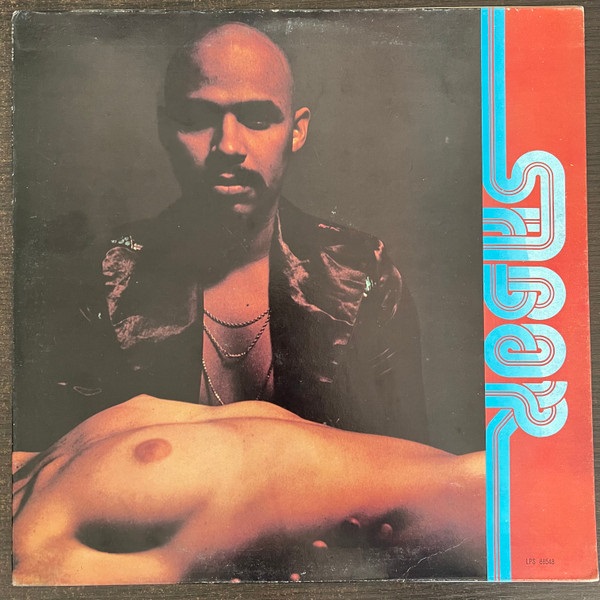
50 Years Since the Launch of “Sabor” (1975)

The Album: The album titled “Sabor” by Angel Canales was released under the Alegre Records label in 1975.

Only a boricua (Puerto Rican) who has been absent from their homeland knows what it’s like to be away from Puerto Rico when winter arrives in New York City. Or when you’re inside a taxi or walking the congested streets of the Bronx or the Latino barrio, and all you see around you are skyscrapers and more skyscrapers. The anxiety and sense of helplessness that overwhelm your spirit in the concrete jungle can only be calmed by memories.

50 years ago, on Monday, November 10, 1975, the unique voice of Puerto Rican singer Ángel Luis Canales consoled the thousands of boricuas oppressed by nostalgia with his composition “Lejos De Ti” (Far From You). It was a confession and affirmation of his Puerto Rican identity, in which he asserts that his love for his homeland will never die, even though he was raised in New York.

The song is a guaguancó with lyrics that evoke images of old San Juan, Villa Palmeras and its rich bomba heritage, Boca de Cangrejos, fried fritters on the grill, and the river that crosses through the old Ancón de Loíza Aldea, where his grandmother lived. “Lejos De Ti” remains the most remembered track from “Sabor,” an album produced by Joe Cain, recorded in late 1974, and released by Alegre Records on Monday, November 10, 1975.

Angle Canales Sabor 1975 Photography By Dominique

This album is considered one of the best salsa releases of the 1970s.

Canales’ Style: Canales favored a different style of interpreting Afro-Caribbean rhythms, combining elements from Héctor Lavoe, Ismael Rivera, Vicentico Valdés, and Paquito Pérez (the singer of the Orquesta Zodiac of Loíza). He extended the melodies with his nasal voice, challenging the poetry of the montunos, but going off-key and mispronouncing some words. His diction was far from perfect.

Production: The architect of Canales’ success was Colombian pianist Edy Martínez, who arranged seven of the eight tracks on this session, from cut #2 to #8. Due to a prior commitment with Mongo Santamaría’s band, he left his compatriot José Madrid in charge of the piano performance on this record.

Under Martínez’s direction, Canales embraced fame. “Sabor” was his second album between 1970 and 1971, he had recorded the “Brujería” session with pianist Mark Alexander “Markolino” Dimond, who founded Conjunto Sabor after spending several years with Willie Colón’s band.

Canales reappeared four years later with the Orquesta Sabor los Rumberos Nuevos with an arrangement by Louie Cruz. That same year, 1975, Larry Harlow produced Mark Dimond’s classic “Beethoven’s V” featuring vocalists Frankie Dante and Chivirico Dávila. “Sabor” was a huge hit.

Tours and Artistic Choices: The singer toured Europe, the United States, and South America, where Colombians, Panamanians, and Peruvians remember him fondly to this day, despite health issues forcing him to retire from the stage.

During the golden age of salsa, singers were expected to master all genres, and boleros were no exception. His vocalization on “La Hiedra” (a track written by Saverio Saratini and Vincenzo D’Acquisto) and “No Te Acostumbres” (a track belonging to Doris Aghian’s catalog) is notable for its theatricality, a trick Canales employed to mask the limitations of his voice.

Salsa dancers who thrive on piano, trombone, and percussion solos will be delighted with “Sabor Los Rumberos Nuevos,” “Sol De Mi Vida” (dedicated to his wife Brunilda), “El Cantante y La Orquesta,” and the hit “Hace Tiempo” (with its memorable chorus: ay, ay, ay, no me hagas padecer así – oh, oh, oh, don’t make me suffer like this).

Legacy: Before becoming a professional singer, Canales worked as a jeweler. A look at the covers of his first two albums is enough to conclude that he was a pioneer in the use of bling-bling in salsa. As a composer, Canales was a solid chronicler of barrio life. The story told in “Perico Macoña” is a good example: a man who smokes a joint and loses all self-control, insulting his own friends with his abrupt comments.

The re-issue of “Sabor” is a fitting tribute to the memory of the late Joe Cain.

Credits

  • Trombone: Juan Torres, Ricardo Montañez
  • Trumpet: Tom Malone
  • Baritone Saxophone, Flute: Emérito Benítez
  • Piano: José Madrid
  • Bass: Eddie Testo
  • Congas: Antonio Tapia
  • Timbales: Gadier Quiñones
  • Bongo: Aldemaro Luis Rivera
  • Producer: Joe Cain
  • Musical Director: Juan Torres
  • Recorded at: LE Studio NYC, December 1974
  • Engineer: Sandy Sina
  • Arrangements: Edy Martínez (except “Sabor Los Rumberos Nuevos” by Louie Cruz)

Torres, Montañez, Tapia, and Quiñones had previously collaborated with Canales on Markolino Dimond’s “Brujería” album.

Collaboration:

  • GonZalsa
  • L’Òstia Latin Jazz
  • Dj. Augusto Felibertt
  • Jaime Torres Torres
  • Fania Record
Angel Canales «El Diferente» recibiendo la produccion de Danilo Cajiao Titulada»Mi Perdicion» año 2020

Also Read: Angel Canales «El Diferente» receiving the production from Danilo Cajiao titled »Mi Perdicion» year 2020.

  • « Go to Previous Page
  • Page 1
  • Interim pages omitted …
  • Page 21
  • Page 22
  • Page 23
  • Page 24
  • Page 25
  • Interim pages omitted …
  • Page 95
  • Go to Next Page »

International Salsa Magazine (ISM) is a monthly publication about Salsa activities around the world, that has been publishing since 2007. It is a world network of volunteers coordinated by ISM Magazine. We are working to strengthen all the events by working together.