• Skip to primary navigation
  • Skip to main content

International Salsa Magazine

  • HOME
  • Previous editions
    • 2026
      • ISM / April 2026
      • ISM / March 2026
      • ISM / February 2026
      • ISM / January 2026
    • 2025
      • ISM / December 2025
      • ISM / November 2025
      • ISM / October 2025
      • ISM / September 2025
      • ISM / August 2025
      • ISM / July 2025
      • ISM / June 2025
      • ISM / May2025
      • ISM / April 2025
      • ISM / March 2025
      • ISM / February 2025
      • ISM / January 2025
    • 2024
      • ISM / December 2024
      • ISM / November 2024
      • ISM / October 2024
      • ISM / September 2024
      • ISM / August 2024
      • ISM / July 2024
      • ISM / June 2024
      • ISM / May 2024
      • ISM / April 2024
      • ISM / March 2024
      • ISM / February 2024
      • ISM / January 2024
    • 2023
      • ISM / December 2023
      • ISM / November 2023
      • ISM / October 2023
      • ISM – September 2023
      • ISM – August 2023
      • ISM July 2023
      • ISM Edition June 2023
      • ISM – May 2023
      • ISM April 2023
      • ISM March 2023
      • ISM February 2023
      • ISM January 2023
    • 2022
      • ISM December 2022
      • ISM November 2022
      • ISM October 2022
      • ISM September 2022
      • ISM August 2022
      • ISM July 2022
      • ISM June 2022
      • ISM May 2022
      • ISM February 2022
      • ISM January 2022
    • 2021
      • ISM December 2021
      • ISM November 2021
      • ISM October – 2021
      • ISM September 2021
      • ISM August 2021
      • ISM July 2021
      • ISM May 2021
      • ISM April 2021
      • ISM June 2021
      • ISM March 2021
      • ISM February 2021
      • ISM January 2021
    • 2020
      • ISM December 2020
      • ISM November 2020
      • ISM October 2020
      • ISM September 2020
      • ISM August 2020
      • ISM July 2020
      • ISM June 2020
      • ISM May 2020
      • ISM April 2020
      • ISM March 2020
      • ISM February 2020
      • ISM January 2020
    • 2019
      • ISM December 2019
      • ISM November 2019
      • ISM October 2019
      • ISM Septembre 2019
      • ISM August 2019
      • ISM July 2019
      • ISM June 2019
    • 2016
      • ISM December 2016
  • Spanish
  • Download Salsa App
    • Android
    • Apple

Search Results for: Latin Jazz

Vicentico Valdés “The elastic voice” of Bolero in Cuba and the Caribbean

“The earrings that the moon lacks I have kept to make you a necklace”.

Vicente Valdés was born in the neighborhood of Cayo Hueso, Havana, on January 10, 1921. He was the younger brother of Alfredito Valdés (1908-1988), a versatile singer who performed with numerous sones groups, ensembles and orchestras in Cuba until, around 1940, he settled outside Cuba, mainly in New York and Mexico, where he continued his artistic career.

Vicente Valdés Una Vez

Two of Vicente’s other brothers, Marcelino and Oscar, stood out as percussionists, and the latter also as a singer in the Irakere group.

Also known as “La voz elástica” Vicentico is one of the most celebrated interpreters of the bolero with a great interpretative strength and dramatization in his performance for the benefit of couples in love who enjoy his songs to this day.

Valdés was part of “El Septeto Nacional”, the orchestra of Cheo Belén Puig, “La Cosmopolita”, the orchestras of Noro Morales, Arturo Núñez and Tito Puente,

In 1937, recommended by Alfredo, Vicentico sang for a short time with the Segundo Septeto Nacional, a group that had been founded to share the multiple artistic commitments that the renowned Septeto Nacional of Ignacio Piñeiro received at that time. He was also a member of the sones sextet Jabón Candado.

Vicentico Valdés La voz elástica del Bolero en Cuba

Later, he replaced Alfredo as a singer in the orchestra of Cheo Belén Puig, one of the most famous Cuban groups of the charanga format. Later, he joined the jazz band Cosmopolita, led by Vicente Viana and later by pianist and composer Humberto Suárez.

Together with Marcelino Guerra Rapindey and Cristóbal Dobal, among others, he was part of the sextet Los Leones.

In the mid-1940s, due to the difficult economic situation in Cuba after World War II, Vicentico, like many other Cuban artists of the time, went to Mexico to explore new horizons for his work in music.

In the Mexican capital he performed with Humberto Cané’s conjunto Tropical, and the orchestras of Arturo Núñez, Rafael de Paz and Chucho Rodríguez, with whom he later recorded with Benny Moré. In those years he received his first ovations on the stage of the Follies.

In Mexico, between 1946 and 1947, he made recordings for the Peerless label, backed by the orchestras of the Mexican Rafael de Paz and the Cuban Absalón Pérez.

The repertoire chosen for these records consisted almost entirely of guarachas, afros and sones montunos, which had been popularized in Cuba by Orlando Guerra Cascarita with the Orquesta Casino de la Playa.

Vicente Valdés
Vicente Valdés

Vicentico was hired as a singer of the musical group of the Puerto Rican pianist Noro Morales in New York at the end of 1947. In that city he had a successful season at the Hispanic Theater which, according to the chronicles of the time, “consecrated him in the taste of the Latin community”. He also performed at the Million Dollars, Park Plaza and Puerto Rico theaters.

In 1948 he joined Tito Puente’s orchestra as a singer, along with his brother Alfredo. With Puente he recorded his first boleros (among them “Quiéreme y verás”, by José Antonio Méndez) for the Seeco label. Until then he had been used mainly as an interpreter of upbeat numbers. With Tito Puente he made numerous recordings throughout his career.

In 1953, the Seeco record company promoted a group of recordings with the Sonora Matancera, which had great repercussion in Cuba, where he was hardly known, and in other Caribbean countries.

Among the pieces recorded in Havana in November of that year were two boleros (“Una aventura”, by Elisa Chiquitica Méndez and “Decídete mi amor”, by José Antonio Méndez), a genre in which he achieved the greatest triumphs of his career.

From then on, in New York, with great studio orchestras conducted by René Hernández, Joe Cain, and later Charlie and Eddie Palmieri, he made new recordings that were quickly distributed throughout Latin America.

Their repertoire during this stage (early 1960s) included boleros and songs by authors of different tendencies and styles; the Cubans René Touzet, Javier Vázquez, José Antonio Méndez, Piloto y Vera, Pepé Delgado, Juan Pablo Miranda, Marta Valdés and the Rigual brothers; the Puerto Ricans Silvia Rexach, Myrta Silva and Rafael Hernández; the Dominicans Rafael Solano and Manuel Troncoso; and the Mexicans Manuel Prado, Luis Demetrio and Armando Manzanero.

Vicente Valdés y La Oquesta de Bobby Valentin

La Sonora Matancera among others no less important. He also excelled in other genres such as Mambo, Guaguancó, Son and Guaracha.

He was an exceptional singer with a particular style that set the standard and also spread the best Latin American bolero composers, particularly those of the Cuban Feeling, of which he was a valuable promoter at an international level. His career as a soloist was impeccable.

He died in a New York hospital on the morning of June 26, 1995, according to a heart attack.

Source: En Caribe

Sonora Matancera

Read also: La Sonora Matancera musical congregation of long trajectory and its sound quality, is one of the most popular in the Caribbean island “Cuba”

Steffen Kuehn and Christian Tumalan talk about their musical roots and orchestra

Preamble

This time, we are going to talk with German producer, arranger, composer and trumpet player Steffen Kuehn and Mexican bandleader, composer and musician Christian Tumalan. Both are at the head of the Pacific Mambo Orchestra and share the role of co-executive director of Pacific Mambo LLC and Pacific Mambo Records. Also, each has his own record label and separate musical achievements, but unify their skills to make the group they have in common one of the best in the United States.

Both expressed their points view about the orchestra, the work they do in it and what each one has done in music in general. These views reveal that quality, professionalism and adaptability are the main values on which the orchestra they lead is based.

Steffen Kuehn at the Tempo Latino Festival in France

A bit of Steffen’s story

The start of the conversation focused on the beginnings of Steffen Kuehn, who ackowledges having been a musician all his life, since he started playing the trumpet when he was just eight years old. He attended the University of North Texas to start his formal music education and learned to arrange music, compose and specialize more in the trumpet. He now focuses on is teaching trumpet, playing for the orchestra, arranging, selling music for television and movies, among other activities (all  have to do with music).

When we talk about his written publications, he mentioned a instruction book to help beginners to play the trumpet some years ago. Today, He is working on a second book and a new record production. What he has planned for Pacific Mambo is to make about 10 songs for its new album, of which two have already been made.

Christian’s musical background

Christian told us a bit about his musical training and confirmed that he studied piano for more than 10 years. He has also played piano since the age of 14 when he was in high school and started much more formal musical training at the age of 15. It can be said that he was already an expert at playing both instruments after a decade of much dedication and practice.

When asked about his roots in jazz, he commented to us that almost all jazz musicians have some training in classical music and direct access to technical elements with the instruments. His goal in learning about classical music was not to become a performer dedicated only to that style, but to gain as much knowledge as possible about music in general and to improve his piano skills.

Christian Tumalan plating the piano

How do you apply German and Mexican heritage to the music of the orchestra?

As for this interesting subject, both artists pointed out that polka music and Mexican banda music were very similar in terms of sounds and instrumentation used for both. In Steffen’s case, he was always very interested in going to the United States to learn and study about jazz, how and where it originated. He comments that, if he had wanted to study classical music, the best places would have been Germany, France and Italy, as many of its greatest exponents come from there.

Both Christian and I went to the root of how the jazz movement started, how it originated and developed over the years. However, I studied Latin music here in the United States and my Colombian roommate at the time explained to me a lot of things and introduced me to a lot of Latin rhythms I have ever heard before,” said Kuehn.

They both started to introduce jazz and this knowledge to the music of the orchestra. About this, Christian said that the mixture of rhythms was like ”a battle of entities” in which they were looking for what works and what does not work, since not everything can be mixed. ”What I usually do is combine my knowledge in classical music with my own Big Band arrangements,” Christian said.

”The fact that we have musicians from various countries in Europe and Latin America has helped us a lot to see different perspectives. Also, due to the number of musicians we are, we can play in different styles that other groups cannot” added Steffen.

Christian Tumalan and Steffen Kuehn during an interview with Jesse Chuy Varela

Skills they look for in their musicians

Steffen pointed out that the first thing they look for in their musicians is the chemistry we can have with them. In this sense, he mentioned that he has met excellent musicians with whom he does not get along with at all, which makes the work environment very heavy. Therefore, he does not take them into consideration for the orchestra because, if there is no chemistry and an atmosphere of respect, everything else does not work.

Another thing that the performer considers important is the spirituality of music, which many times is not attained by all musicians. When a musician opens up to the spirituality of the music, that’s when the magic happens and the chemistry hits us. We are very fortunate to have so many musicians who share this feeling and have reached that point as we have,” he added.

How do you share roles in the orchestra?

Christian commented that both he and Steffen were very good in different areas separately. Steffen has a quite charismatic way of communicating with people and knows how to earn the respect of others very quickly, while I focus more on the technical and musical aspects of the group. I think that complements us very well”. He also said that the German was very good with information and details such as tours, hotels, flights, names, taxes, among other things.

When Steffen’s came to talk about his partner, he said that he knew a lot about everything to do with music technology, stage direction, tempos, editing, mixing, video, audio and many other things. He confesses that he is unable to do many of these things, so they are left to Christian.

Read also: Multi-Percussionist Carlos Navarro and his Son Y Clave Orchestra

Son Del Monte’s musical director and timbalero Manuel Rivera

Who is ”Manny”

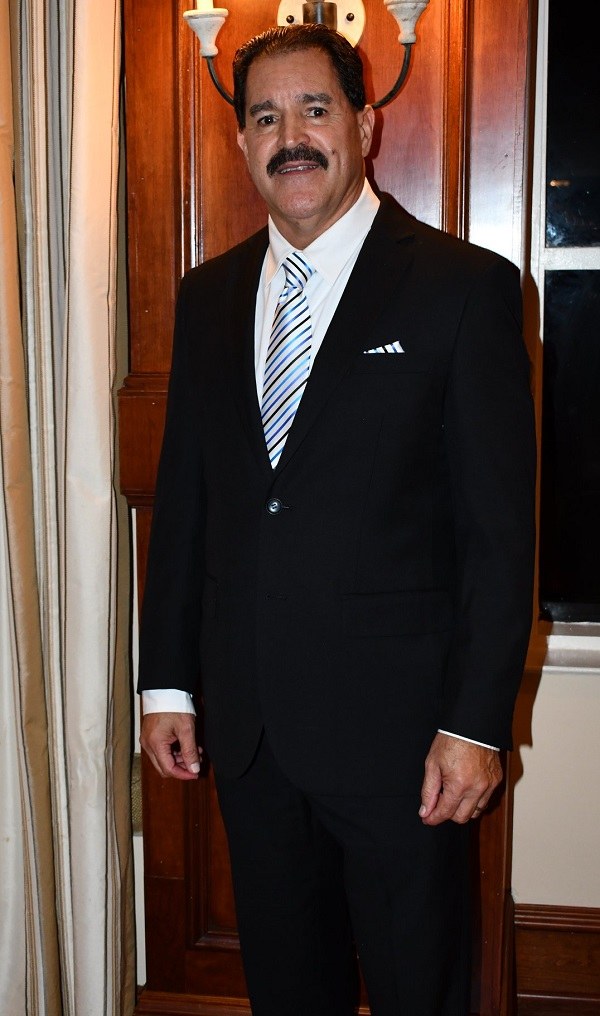
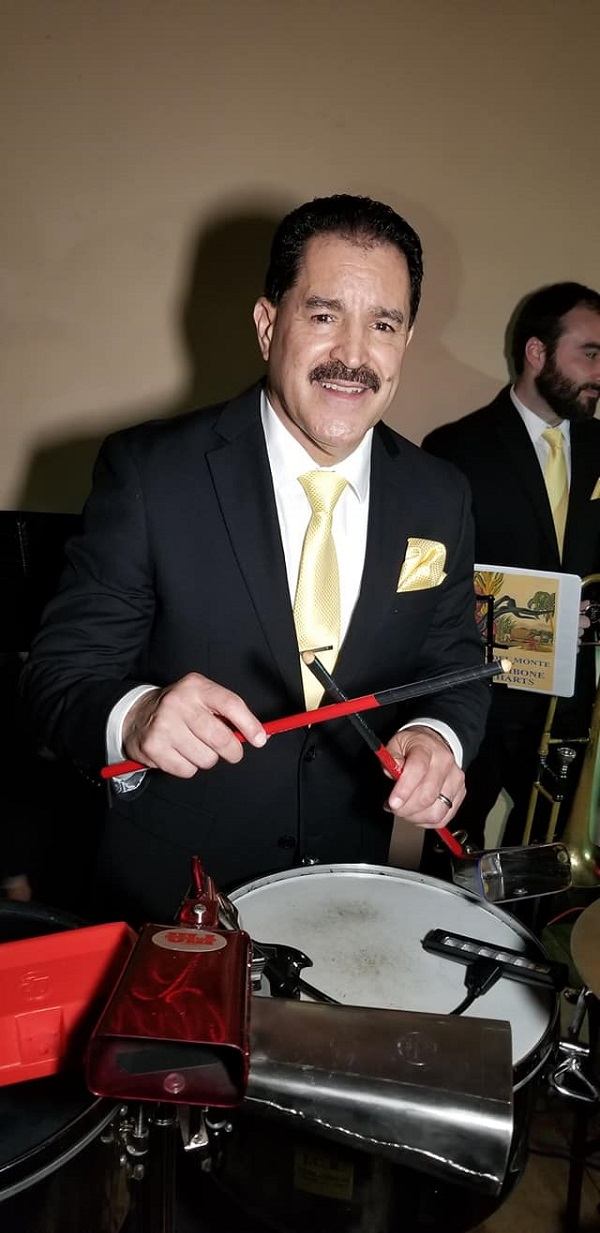
Manuel ”Manny” Rivera is the musical director and timbalero of the Son Del Monte Orchestra. We had the great opportunity to have a friendly conversation with him to know in detail his beginnings, career, groups, role as musical director, among other things.

Manuel ''Manny'' Rivera tells us his interesting story
Manuel ”Manny” Rivera tells us his interesting story

Time in the Yambú Orchestra

After apologizing for his deficits in the Spanish language, he continued by thanking us for the opportunity to tell his story and describe his time in the Yambú Orchestra, which was the first group in which he could start developing his talents in the 70’s. ”what we wanted to do at that time was make a mix between jazz with typical music because the pianist, who was of African descent, was who wrote the music with musical director and bassist Ramón Rodríguez”. It is presumed that the pianist focused a lot on these genres because of his roots, but his colleagues were fine with it.

Although he loved jazz, Manuel began to notice that it was not very danceable for the audience, which is what caused him to become interested in charanga, a genre that was already very famous in New York City in those years. That’s how he decided to immerse himself in this set of rhythms because he liked to see people go to the dance floor and enjoy themselves.

He also liked Yambú’s style a lot, but felt he had to take a more accurate path for what he was feeling at the time.

Manuel Rivera performing on stage

Similarities of Son Del Monte with other jazz big bands and members

I was a bongo player, but I started playing timbales because they are widely used in charanga. What I was looking for was to do a similar thing to what Eddie Palmieri did with La Perfecta, who used trombones and a flute mixed with timbales to achieve a charanga sound” said Rivera on this subject. He also added that ”I also wanted to avoid monotony of charanga so I also started using trombones, violin and a flute. This is what I have baptized as chajunto, a mixture of charanga with the characteristics of an ensemble (conjunto in Spanish) ”.

He also pointed out that New York does not have an orchestra like his because he did not want to do the same thing that all groups of this kind do, but something different and novel. ”Son Del Monte is charanga with something more for the people, not only violin and flutes,” said the artist. ”I have three singers with three different styles and they are Puerto Rican Luis Ayala, Colombian Armando Son Giménez and Puerto Rican-Dominican Luisito Soto Junior,” he added.

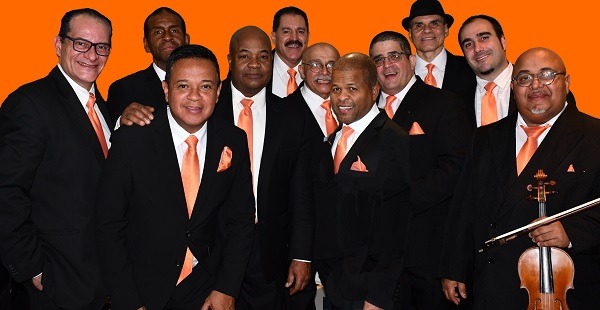
The Son Del Monte Orchestra also features from the talent of flutist Mauricio Smith Junior, violinist Erick Salazar, trombonist Juanga Lakunza, trombonist Charlie García, bassist Bert Castro, conguero Joe González, pianist Andy Colón, among others. This is the group that has stuck by his side for more than six years in spite of the storms and they always perform together.

All members of the Son Del Monte Orchestra

Opinion on the academic training of musicians

Rivera was one of the best students at Harbor’s Conservatory of Music in Manhattan, New York and he thinks that institution had done so mucho good for folk music because of all the talent that graduated there. After studying there, he began to read percussion music and learned to play batá, tumbadora, Colombian rumba, guaguancó, yambú, and so on.

The musician stresses the importance of studying, as this knowledge helps to understand the clave, the moment to start playing an instrument, the chime, the reading of music, discipline and many more. Before this, Manuel played led by the spirit and sensations, but his teachers at the conservatory taught him to have the technical tools necessary for being even more professional.

What is more important, experience or studies?

”Definitely experience. I have seen many great artists learn to read music without going to a conservatory and a great example of that is Roberto Roena, who did not need that learning to be who he was. However, that is something that not everyone can do” said Manuel. I can also mention the case of Tito Rodriguez who was not a musician guided by the lyrics, but he knew very well what he wanted. These are some of the many examples of privileged artists who only needed accumulated experience to achieve wonders with their work”.

However, this does not mean studies are not important, as they can teach things that can be useful later on and under some circumstances.

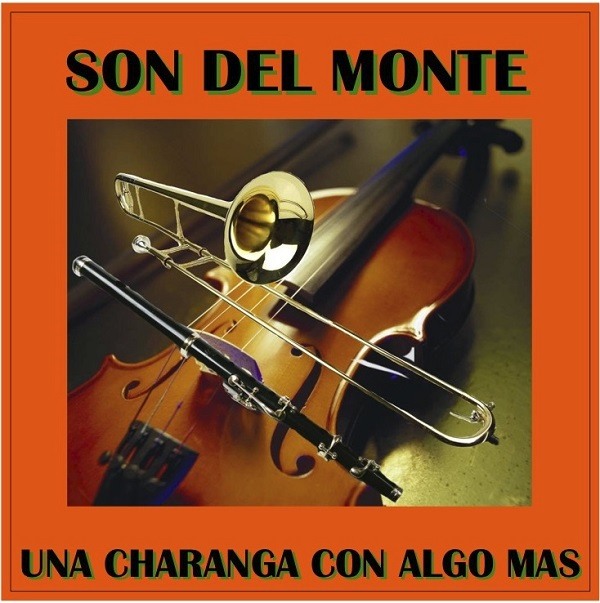
Front cover of the Son Del Monte Orchestra's album ''Una Charanga Con Algo Más''
Front cover of the Son Del Monte Orchestra’s album ”Una Charanga Con Algo Más”

Covid-19

”The pandemic did not let us do anything on stage. The guys went to the studio from time to time or we met virtually, as we do now. It was so sad because there are many venues that have failed to open their doors again. Since the pandemic started, we have not seen as much activity in New York as it used to be before” expressed the artist sadly.

Also of concern to the musical director of the Son Del Monte Orchestra is that this situation has put many musicians out of work, at least in the industry. Active musical groups have very few members in the vast majority of the cases, contrary to his and the orchestra he conducts. He hopes that it will improve with time.

Read also: Founder of the Son Latino de Orlando Orchestra Carlos Rodríguez

Directory of Salsa Clubs in North America

Here you will find the directories of Clubs with Salsa events in North America.

CALIFORNIA

Alameda

Yoshi’s Trilliant Studios LLC Salsa With Juan
Just Dance Ballroom Zanzi Oakland La Peña Cultural Center
The UC Theatre Taube Family Music Hall

Contra Costa

Vinnie’s Bar & Grill Sizzling Latin Dance Studio Rhythm and Flo
Allegro Ballroom and club Gaucho Brazilian Steakhouse & Nightclub Retro Junkie
Tip Top Ballroom

Los Angeles

The Granada LA  Steven’s Steak House   Room 2 Dance
ArtBox Studio By CrystalArts En Pointe Dance & Fitness PCH Club
The Mayan El Floridita Restaurant ViBE – dance studio & creative space
Ballet Hollywood MNR Dance Factory Soho Dance LA
VLounge Bar And Night Club La Clave Salsa Club Quiet Cannon
Black ‘N Blue The Victorian Ocean Towers
State Social House
Marin Salinas Seaside
Sausalito Seahorse Dance Arts Jeanne Robinson Deja Blue Soul Food Restaurant & Club

Orange

Sevilla Nightclub of Costa Mesa Club One Studio OC Salsa with Esteban Conde
Spectrum Dance Center LINE-X of South Coast

Riverside Craft Brewing Company

Sacramento Cantina Azteca Eagles Hall Aerie 9FOE

San Bernardino

The Canyon Salsa Cumbia & Bachata RhythmAddict Dance Studio Cosmos Taverna

San Diego

McCann Dance Sevilla Nightclub of San Diego
Tango Del Rey Queen Bee’s Art and Cultural Center

San Francisco

El Valenciano The Cigar Bar & Grill Space 550
Roccapulco Verdi Club Rockwell
DecoDance Bar Kimbara 1015 Folsom
Skylark Bar Bar Fluxus

San Mateo Motion Arts Center

Santa Barbara Leslie Sack Dance Studio

Santa Clara

Charley’s Bar LG Alberto’s Night Club Cascal Restaurant
Stone Stew 1 San Jose Center for the Performing Arts Aura Kitchen + Bar
Dance Boulevard Starlite Ballroom Studio M Ballroom Club

Ventura Studio M Ballroom Club

New York

The Bronx Havana Café

New York

Copacabana Nightclub Gonzalez y Gonzalez Birdland Jazz Club

Queens Nieves Latin Dance Studio

Chicago Vintage Bar

Las Vegas, Nevada Hard Rock Café

Worcester County Palladium

Fairfield County La Vista Bistro

Pinellas County Acropolis Greek Taverna – St. Petersburg

Houston Texas Sable Gate Winery

The Caribbean joined the party with Billo Frómeta

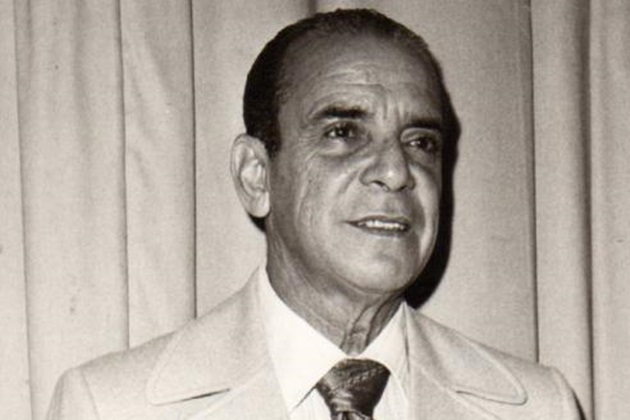
Luis María Frómeta Pereira, better known as Billo Frómeta, was born on November 15, 1915 in Santo Domingo, the capital of the Dominican Republic. However, this Caribbean man has more of a Venezuelan feeling than other compatriots, since he was very grateful to Caracas, that is where he made his life, both professionally and personally.

Despite his love for the Venezuelan lands, he never lost his Cibao smile, specifically from Quisqueya. But his gestures, his affection and tenderness, the details with which he acted, and his musical stamp are very Venezuelan. Perhaps we say goodbye to Billo very soon and he could not see his tribute in his lifetime, that only adds more strength to his career. Read all about his life with the following lines .

The beginnings of Billo Frómeta as Luis María

Although he was born in Santo Domingo, the Frómeta family moved to San Francisco de Macorís, where Billo spent his childhood and met the friends with whom he would embark on the musical adventure of his life: Rafael Minaya and Francisco Simó Damirón. As Billo recounted in his last interview before losing him to a brain stroke in 1988:

“There couldn’t be a birthday that we knew about because the three of us from San Francisco de Macorís were there playing and brightening up the evening. I always keep that in mind when I go to a special event”.

It can never be denied that Luis María was born with an innate talent for music, which he polished during his basic education, since rhythms and sounds were a compulsory subject in the Dominican Republic. As he already said, it was something he continued to do during his adolescence, although this was already in Santo Domingo where he moved back in 1933. There he is part of the firefighters, where with the rank of captain he founded and became director of the Band of the Fire Department of the capital.

Here he also gives guitar lessons, which leads him to meet the young saxophonist and violinist Freddy Coronado, through him Billo enters the world of dance orchestras, forming a group and working on the radio. Some time later, when they are already university students, Billo meets up with his childhood friends and introduces them to Freddy. They form the Santo Domingo Jazz Band, whose activities and presentations are carried out along with their studies.

However, Damirón moved to Puerto Rico, leaving Billo in charge of the management, but his medical studies were interrupted since at first it was difficult for him to comply with both things, then in his third year he began an internship at the military hospital but his ideas collide with those of the regime of Rafael Leonidas Trujillo, so he abandons his studies and decides to devote himself entirely to music.

Arrival in Venezuela and its success in Caracas

The Santo Domingo Jazz Band received the opportunity to play on December 31, 1937, at the Roof Garden, an important local in Caracas. The journey to reach those Venezuelan lands was an adventure full of many sacrifices. However, on the day of the presentation, without the teacher Billo being consulted, the name of the band was changed to Billo’s Happy Boys, which generated discontent in the Dominican Republic, especially from Trujillo’s regime.

Due to this discontent and the growing popularity of the band in Caracas, the boys were forced to stay in the capital of Venezuela. This was the point that would change Billo’s life forever, since this city is the one that sees him grow as a person and as a professional. As he himself relates:

“My forever girlfriend, the city with which I owe a debt of gratitude and affection…”

This is shown in the number of songs by the band that speak in one way or another of the city. Despite the great affection he has for Caracas and Venezuela as a whole, Billo never renounced his Dominican nationality:

“It is the least I can do for the land where I was born. Venezuela is my life. Here I have planted. So as a feeling of gratitude to the Dominican Republic, I keep that nationalist umbilical cord. It is like the case of two mothers, one brings you into the world but the other raises and educates you. You will not stop loving the first and you will show your affection in something even if all your tenderness arrives at the second…”

Two years later in 1939, Billo faces a tough stage, he falls ill with typhus and the doctors give him no hope, but the teacher shows them that his time had not yet come. He returns to the stage ready to consolidate the popularity of the band more than ever, to which he gives a new name: Billo’s Caracas Boys, which the band maintains to this day.

From that moment the career of Billo and the band goes through ups and downs, from having a radio program where he can even produce and edit his own records, to spending days in jail for marriage demands. Speaking of love, Billo got married 3 times, being Morella Peraza his last wife and the greatest love of his life:

“… the one that Morella inspires me and I don’t know what is the miracle by which I see her prettier every day… I think it is the miracle of love, of that feeling that creates the need for one with the other, that transforms what is impossible into possible, that gives life to life… Sometimes it scares me… I am getting old and when one is old one no longer inspires appetites or desires, but Morella loves me and that is the triumph of love over the years. Isn’t it wonderful?”

Billo Frómeta dark days

By 1957 Billo’s career was on the ground, in addition to jail he also faced vetoes due to having contacts with important figures of Marcos Perez Jimenez’s regime, which caused him to be banned “for life” from performing in Venezuela. However, this did not prevent him from continuing to work as an arranger and producer, not only in Caracas but also in other countries such as Mexico and the United States.

In 1958 he met and befriended Renato Capriles, who was a businessman at the time, but wanted to replicate the success of dance bands like Billo’s. The unusual thing about this friendship is that it began precisely with Renato asking Billo to help him in the composition and production of various works for his band “Los Melodicos”. The friendship was maintained over the years but always with a touch of enmity.

A phrase that sums up these fateful years is: “What hurts me the most in life is ingratitude, and I have cried for it.”

Last years of Billo and his mark in the musical history of Venezuela

Between the 1960s and 1980s, Billo focused on his career and his band, brought Billo’s Caracas Boys together again, thanks to the lifting of the veto, and from that moment embarked on the search for those little-known talents who by passing through the band would be taken to stardom, as is the case of Felipe Pirela, José Luís “El Puma” Rodríguez, Guillermo “Memo” Morales, among others.

In addition to presenting new and unpublished works, they also continue to present the old ones. Also, Billo embarks on the business adventure of founding his own record label called Fonograma, although this does not last long and after several problems he decides to close the record company, and sell the catalog to his son-in-law.

For the 80s, the band continued with a success that rose like foam, not only in Venezuela but in the rest of the continent, they even performed alongside great artists like Celia Cruz. For 1988 a tribute to the master in life was planned, which he himself was going to direct, and had him very moved and excited. How well the words of Lil Rodríguez portray him, to whom he granted his last interview:

“The Master would arrive with the minutes, loaded with thoughts and concerns which he had no qualms about spilling on his way home, as if he thought out loud and with affection. Here I have, finally, more or less the order of the concert. Almost everything is ready and only the last rehearsal is missing. It would not be the first time that Billo would conduct a Symphony, but he was excited as in a debut.”

But this tribute never happened and in his place a slow procession was held to say goodbye to the master. Billo Frómeta, out of emotion, nerves and his perfectionist mania, suffered a brain accident that led him to fall into a coma, just one day before his concert and tribute. He died on May 5, 1988, that day Caracas lost an adoptive son, that it made its own and it saw his development as a musician.

Many people said goodbye to the master at the Caracas Municipal Council, while others accompanied the coffin to the Eastern Cemetery. This way, a great chapter in the history of dance music in Venezuela and the Caribbean was closed, but leaving an incredible legacy that continues to this day, since who has not danced with the Billo’s Caracas Boys?

  • « Go to Previous Page
  • Page 1
  • Interim pages omitted …
  • Page 80
  • Page 81
  • Page 82
  • Page 83
  • Page 84
  • Interim pages omitted …
  • Page 95
  • Go to Next Page »

International Salsa Magazine (ISM) is a monthly publication about Salsa activities around the world, that has been publishing since 2007. It is a world network of volunteers coordinated by ISM Magazine. We are working to strengthen all the events by working together.