• Skip to primary navigation
  • Skip to main content

International Salsa Magazine

  • HOME
  • Previous editions
    • 2026
      • ISM / April 2026
      • ISM / March 2026
      • ISM / February 2026
      • ISM / January 2026
    • 2025
      • ISM / December 2025
      • ISM / November 2025
      • ISM / October 2025
      • ISM / September 2025
      • ISM / August 2025
      • ISM / July 2025
      • ISM / June 2025
      • ISM / May2025
      • ISM / April 2025
      • ISM / March 2025
      • ISM / February 2025
      • ISM / January 2025
    • 2024
      • ISM / December 2024
      • ISM / November 2024
      • ISM / October 2024
      • ISM / September 2024
      • ISM / August 2024
      • ISM / July 2024
      • ISM / June 2024
      • ISM / May 2024
      • ISM / April 2024
      • ISM / March 2024
      • ISM / February 2024
      • ISM / January 2024
    • 2023
      • ISM / December 2023
      • ISM / November 2023
      • ISM / October 2023
      • ISM – September 2023
      • ISM – August 2023
      • ISM July 2023
      • ISM Edition June 2023
      • ISM – May 2023
      • ISM April 2023
      • ISM March 2023
      • ISM February 2023
      • ISM January 2023
    • 2022
      • ISM December 2022
      • ISM November 2022
      • ISM October 2022
      • ISM September 2022
      • ISM August 2022
      • ISM July 2022
      • ISM June 2022
      • ISM May 2022
      • ISM February 2022
      • ISM January 2022
    • 2021
      • ISM December 2021
      • ISM November 2021
      • ISM October – 2021
      • ISM September 2021
      • ISM August 2021
      • ISM July 2021
      • ISM May 2021
      • ISM April 2021
      • ISM June 2021
      • ISM March 2021
      • ISM February 2021
      • ISM January 2021
    • 2020
      • ISM December 2020
      • ISM November 2020
      • ISM October 2020
      • ISM September 2020
      • ISM August 2020
      • ISM July 2020
      • ISM June 2020
      • ISM May 2020
      • ISM April 2020
      • ISM March 2020
      • ISM February 2020
      • ISM January 2020
    • 2019
      • ISM December 2019
      • ISM November 2019
      • ISM October 2019
      • ISM Septembre 2019
      • ISM August 2019
      • ISM July 2019
      • ISM June 2019
  • Spanish
  • Download Salsa App
    • Android
    • Apple

Search Results for: Latin Tribute

Great Christmas salsa songs and their stories

Christmas is a time of joy where one of the most important elements is music, so we believe this is the best opportunity to feature some of the best Christmas salsa songs that we can remember. Here are the most cheerful songs in Latin music to listen to during the most beautiful time of the year.

Aires de Navidad by Héctor Lavoe and Willie Colón

”Aires de Navidad” is a great song which is part of the Christmas album ”Asalto Navideño Vol. I” from 1971. In the same year, Lavoe and Colón were already making preparations to record an album entirely dedicated to the festivities, indeed, they already had some songs recorded, but they knew that there were still details to finish. 

Then, Héctor asked musician Roberto García to join the project that was underway, as they needed a guitarist to accompany them. Garcia accepted the proposal almost immediately and got excited about the project that he even proposed Yomo Toro to join them, to which Hector and Willie agreed with no problems.

The day they agreed to record the material, Toro came in first and began playing a Puerto Rican cuatro when he was scheduled to play the electric guitar. However, Johnny Pacheco, upon hearing the sounds, liked the arrangement and approved it without question. 

That is how the four artists set out and recorded what would soon become one of the greatest Christmas hymns in recent times, and it will surely be in thousands of homes around the world this month.

Aires de Navidad
One of the photos taken during the recording of ”Aires de Navidad”

La Fiesta de Pilito by El Gran Combo de Puerto Rico

”La Fiesta de Pilito” is included in the album ”Nuestra Música” by El Gran Combo de Puerto Rico, which was recorded in 1985 as a tribute to the most beautiful and endearing of the Island of Enchantment during the Christmas holidays. Back then, any musical work created by El Gran Combo always became a resounding success once it was released and its members were sure that this would be no exception.  

It is then when the composer of one of the main songs of ”Nuestra Música” came on the scene, and we are talking about Luis ”Pilito” Cruz, who would become part of the internationally acclaimed salsa group that same year.

What is known in the first instance about the song is that it did not have a specific name, so it was baptized as ”La Fiesta de Pilito” honoring the composer of its first two verses. Subsequently, the piece was completed with pregones and soneos created by the rest of the orchestra members.

Additionally, they received the support and collaboration from ‘‘El Caballero de La Salsa” Gilberto Santa Rosa, who served as a guest artist for the legendary recording.

Nuestra música at Christmas
Cover of the Christmas album ”Nuestra Música”

Bembé en Casa de Pinki by Richie Ray and Bobby Cruz

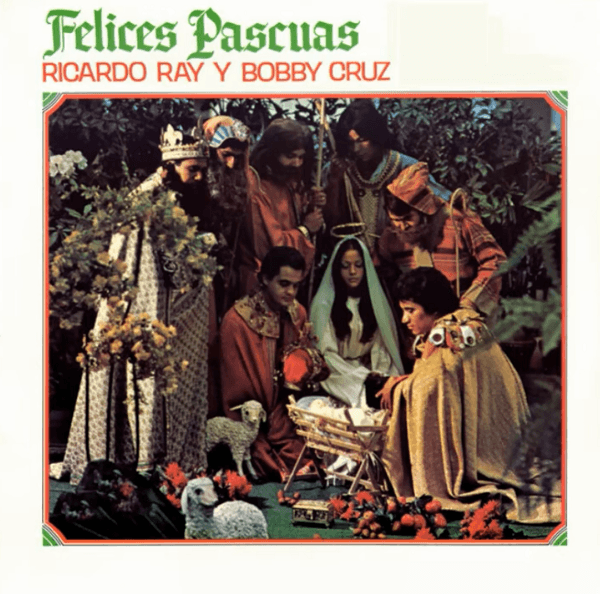
”Bembé En Casa de Pinki” is a Christmas song written by the famous duo Richie Ray and Bobby Cruz, which was released in 1971 and is the first single from the Christmas album ”Felices Pascuas”.

The song’s title comes from someone who would be very important in the career of the two aforementioned artists and that was the Panamanian-born diplomat named José Rogelio ”Pinki” Arias. The gentleman was a close friend of Richie and Bobby and, at the same time, director of the Panamanian Institute of Tourism. He used his friendship with the vocalists to invite them to various events in his country, knowing that they would be a complete success with the presence of the duo.

Such was the affection both exponents had for ”Pinki” that they dedicated to him two songs from their extensive repertoire, which were ”Bembé en Casa de Pinki” and one belonging to the album ”El Diferente”. 

Among other songs, ”Felices Pascuas” also includes tracks such as ”Bomba en Navidad”, ”Mi Niñez”, ”San José”, and ”Aguinaldo Navideño”.
Felices fiestas at Christmas
Cover of the Christmas album ”Felices Fiestas”

Estelita by La Sonora Ponceña

Another group that never misses a chance to offer their talent to please their fans and make them enter the Christmas atmosphere during the holiday season, leaving great classics that can not be missing every year in our homes and one of them is ”Estelita”.

Something that can never be missed in a Christmas album is that colorful character who always brings playfulness and good humor to the atmosphere. In this case, it is Estelita, who is a party neighbor who always sneaks into the Christmas parrandas in her neighborhood, something that many people will surely feel identified with in various parts of Latin America.

The song was written by the late maestro Joe Torres and was part of the album ”Otra Navidad Criolla!” along with ”Opera Gandinga”, ”Vamonos Pa’l Campo”, ”La Vengo Siguiendo”. 

Read also: Luis Guillermo Rangel the great friend of everyone

Luis Medina

Norte America / USA / San Francisco

Luis Medina, Con Sabor

During his tenure as the KPFA 94.1 FM Music Director, Luis Medina was a staunch advocate for the station music programs. His vast knowledge of different genres of music kept the music programming strong and relevant.

Through his direction, the station was recognized as a leader in innovative World Music programs that bolstered the genre’s popularity in the market. He also expanded the diversity of voices on-air by placing more women, Latinos and people of color as program hosts and producers.

Luis raised the visibility of the radio station through successful event sponsorships, including contract negotiation, live event marketing and promotion with the following partners: Live Nation, Another Planet Entertainment, SF Jazz, San Francisco Jazz Festival, Yoshi’s Jazz Clubs, Cal Performances, Monterey Jazz Festival, Stern Grove Festival, SF Flamenco Society, La Bohemia Productions,  Slims/Great American Music Hall, Bimbos 365 Club and others.

Luis has tirelessly contributed to the station’s on-air fundraising campaigns as well as voice overs for public service announcements and in-house station promotions. He currently continues to work behind the scenes as music consultant for the station.

DJ Luis Medina
DJ Luis Medina

In his radio program Con Sabor, he has interviewed hundreds of renowned artists and musicians. His interview with the legendary Israel Lopez “Cachao” is featured in the PBS documentary film “Cachao, Uno Mas” produced by actor/producer/director Andy Garcia.

Luis was Entertainment Director for MECA  (Mission Economic and Cultural Association) from 1986-1998.  He managed the Cinco De Mayo, Carnaval San Francisco and the 24th Street Festival De Las Americas events during his tenure, coordinating programming for up to 3 simultaneous stages.  He featured varied music from Rock to Brazilian to Salsa, as well as DJs and entertainment.

He was also an Entertainment Consultant and Director for SFCAT (San Francisco Cultural Arts and Traditions) from 2011 to 2012, which was organizing the SF Carnaval.

Other events and clients he has worked with include The San Francisco Giants, the Oakland Museum, the NFL Super Bowl Party, U.S. Navy Fleet Week Events, Cultural Music Productions, A.S.R.P. Productions, Terry Pimsleur & Associates, Salsa Dulce Productions, ARAM Productions and San Francisco State University.

Awards

  • The Armando Peraza Award for community service to the Latin and Music community, Voices Of Latin Rock Autism Awareness Benefit, 2012
  • Certificate Of Honor, City & County Of San Francisco for many contributions to Latin Music in radio and media as Music Director and Radio Producer/Host 2010.
  • Certificate Of Recognition, California Legislature Assembly for contributions to Latin Music through his work as radio host, producer and DJ 2010.
  • Achievement in Outstanding Lifetime Service in Radio – Western Region Puerto Rican Council 2008
  • Achievement In Latin Music Promotion-Lifetime Award-San Francisco Salsa Congress 2001
  • Espíritu De La Música Latina Award of the Marta Martinez Fund for Radio Programming excellence and positive contribution to the Northern California Latino Community, Marin County Foundation 1999

All this information was provided from Luis Medina official website http://luisemedina.com/

The “Patio de Tula”

Latin America / Venezuela / Yaracuy

In the Yaracuy state of Venezuela, where nature reigns, salsa is also danced

Meeting point: El Patio de Tula in the city of San Felipe

In the patio of a house in an urbanization in the city of San Felipe, since 2013, there has been a salsa scene that is worthy of recognition. The Patio de Tula is the name of the place, named after the Buena Vista Social Club song: El Cuarto de Tula. It is a space created by music lover and cultural promoter Yony Padilla, inspired by some night spots in Caracas where salsa was danced, such as the emblematic “El Maní es Así en Sabana Grande.”

El Patio de Tula
El Patio de Tula

Apart from having become a point of reference in the Yaracuy state and a meeting place for musicians and passionate salsa lovers, or simply a place to de-stress or have a delicious soup on Sundays, in El Patio de Tula We work diligently to rescue the salsa genre and become an engine of dissemination and a teaching center for the musical education of children, young people and adolescents.

The aim is to create an African-American percussion and dance school, where rhythm and dance are connected in a vital and artistic encounter, through Afro-Caribbean, Afro-Venezuelan percussion workshops and Caribbean dance (salsa) and traditional Venezuelan dance classes. It is important to highlight that this training proposal will be called the Juan Carlos Marín Percussion School, as a living tribute to this musician from Yaracuya, who throughout his career has dedicated himself to the study and research of Latin music and the Yaracuyan drum. It would be well worth it for this project to be taken into account by the region’s cultural organizations to support it.

There are various personalities and groups linked to the salsa and urban music scene that have visited El Patio de Tula, among them we can mention: Edgar “Dolor” Quijada, Orlando “Watussi” Castillo along with Mandinga Star Band, Rodrigo Mendoza, Carlos Hurtado , Jóvito Eduardo, Wilmer Lozano, Edgar “El Abuelo” Rodríguez, Alejandro Mayora, Ray Herrera, David González Jr., Ronald Gómez, Cheo Linares, Aquamarina “La Sirena de la Salsa”, DJ. Augusto Felibertt, Sonora Yambú, Orquesta Salsa Cinco 25, Orquesta Salsa Libre, Orquesta Malecón, the Mango Group, Dame Pa Mátala, Y de Cuba, Sixto Llorente and the Yoruba Andabo Folkloric Group.

Yony ​​Padilla tells us that the salsa scene in the Yaracuy state is on the rise. To do this, they have the Hermandad Salsera de Yaracuy Foundation, which goes hand in hand with El Patio de Tula and at the same time is linked to the radio program Expresion Latina, produced and hosted by Hermes Mejías, and broadcast on the 102.9 FM dial from the central area of ​​San Felipe. Another location that is leading the scene in the area, as Yony tells us, is El Rincón de La Salsa. The large number of musicians and orchestras in Yaracuy are proof of what was said above. Among the musicians the following stand out:

  • Domingo Bracho – piston trombone
  • Jorge Yujere – trombone
  • Harry Ramos –piano
  • Luis Reyes –percussion
  • Kendri Siso –percussion
  • Asael Hernández – piano
  • Darwin González – Cuban three
  • Domingo Suárez – percussion
  • Jimmie Graterol – percussion
  • Jesús Mieres – percussion
  • Manuel Mieres –trombone
  • among others.

The salsa orchestras are: Sonora Yambu, Elegua Son, Yaracuy es Salsa, Orquesta Los Gullet de Marín, where Sonero Orlando “Watussi” Castillo, residing in Milan, Italy, participated as a special guest, Orquesta Trombosis and Escala 78. Among the DJs are: Diego Music, Jesús (Drupy) and Robert Villalobos.

Flyer de Patio de Tula

Further, investigating the salsa scene in the states surrounding Yaracuy, we were able to verify with the promoter Padilla that salsa is picking up in Aragua, this, if we measure it by the number of orchestras that he mentioned to us: Orquesta Mangue, Orquesta Primera Clase, La Foca and his Caribbean Sextet, Enmanuel Orchestra, Latinos Orchestra, Mondys Band, Fascination Orchestra (Recognition from the Universidad Bicentenario de Aragua –UBA–), Sono-Star Orchestra and Roberto Monasterios and his Orchestra.

Likewise, in other nearby states there are orchestras such as Malecón, Sazón Latino, Soneros Latinos, Líder, La Nor-Star in Lara; Osaona, Juramento, Sorongo, Batakum, Son Colón, Adrenalina Latina Puerto Cabello in Carabobo; and the Piri Salsa Orchestra in Falcón.

We invite you, therefore, to attend one of the tremendous rumbas that take place in El Patio de Tula, in a family and calm atmosphere, and in the process visit the greenest and most vibrant state of Venezuela. The Exotic Tropical Flora Park, the San Felipe El Fuerte Archaeological Historical Park and the Cumaripa Reservoir Recreational Park are an exemplary example of how, in Yaracuy, nature reigns.

ADDRESS: El Patio de Tula is located on 3rd street, San Rafael, Independencia, Yaracuy state, Venezuela.

Note: We highly appreciate the collaboration received from Yony Padilla and Augusto Felibertt in the preparation of this text.

Gabriela Anders studied classical guitar privately, and music and piano at a conservatory in Buenos Aires

Gabriela Anders was born to music amidst the grace, paradox and tradition of  Argentina.

Gabriela studied classical guitar privately, and music and piano at a  Conservatory in Buenos Aires.

Adding to the musical medley was her father’s influence (a noted jazz saxophonist and arranger) which became even stronger than her classical studies. After finishing high school, Gabriela decided to move to New York.

Gabriela’s Los Dukes after a NYC show

There she studied orchestration for brass and strings in a class conducted by Don Sebesky and composition at Hunter College. Gabriela started to write her own material. Her studio and club work took off leading to a record deal with major label Warner Brothers Jazz.

Gabriela Anders’ debut album on Warner Bros. Records, (1999) “Wanting” is brimming  with vocal subtlety; although smooth, it is anything but simple. It features arrangements and production by Paul Brown, George Duke, Allain Mallet and Anders herself.

The album elicited much praise for Anders’ vision and impassioned vocal style.

Recording with Questlove and Christian Mc Bride

Her unique marriage of Brazilian, Latin and Jazz led to Vogue and People Magazine describing Anders and her music as “exotic and bold”, “wonderfully soulful”, and “one of the most distinctive new voices to hit the music scene in years”.

Her second record for Warner Bros Records was a European release entitled “Gabriela” which featured an array of world-class sidemen, including Christian McBride, Amir “Questlove” Thompson and Kirk Whalum. Again, she contributed ten of the album’s twelve tracks.

Her next CD “Last Tango in Rio” was released in 2005 by major label EMI. “Last Tango in Rio” is a collection of songs closely associated with Billie holiday that have been uniquely transformed by Gabriela’s interpretation and orchestration.

Hailed by critics (Los Angeles Times, Billboard magazine and People magazine)) as highly -original and creative presentation of standards, “Last Tango in Rio” represents a fresh and effervescent take on a classic song book that has previously defied reinvention.

In October of 2009, JVC Japan released her CD “Bossa Beleza“. “Bossa Beleza” blends her own immediately recognizable sound with that of her first musical love, classic Bossa Nova.

Singing with Rihanna for the NYC Bone Marrow foundation

Gabriela Anders‘ 2015 album, “Cool Again”, beautifully displays the significant gifts as singer, vocal orchestrator, songwriter and bandleader she has steadily developed through her previous releases. The mix of original and cover songs on “Cool Again” finds Gabriela at her best.

The soulful funk of the original title track is a classic example. Its message of empowerment can be considered a core theme in Gabriela’s lyrics and a source of her resonating appeal as a performer, entertainer and artist.

2020 CD ‘The Ring‘: While facing the fear and uncertainty of the virus in New York City, Gabriela recorded a piano/voices collection of songs at her home studio, creating intimate portraits of inner struggle and redemption against the bizarre backdrop of the pandemic.

The project’s three pianists – Jim Ridl, Jean-Michel Pilc and Jon Cowherd – are radically different stylists from different corners of the world, here each offering their unique sensibilities to Gabriela’s voice and music.

2021 CD release Gabriela Anders’ ‘Los Dukes’! Los Dukes is a new 9 piece band arranged and directed by Gabriela Anders, featuring songs from the Duke Ellington’s catalog done in wildly distinctive Latin American styles. A Latina’s tribute to the music of Duke Ellington.

With the great George Duke

Los Dukes, pays loving tribute to the elegant GENIUS of Duke Ellington and includes some of the best Latin Jazz players on the New York scene.

Hailed by critics (Los Angeles Times, Billboard magazine and People magazine) as ‘highly original and creative artist’, a ‘multi-talented artist who is destined to leave her mark on the jazz world’ and the ‘most promising jazz influenced artists today’.

Gabriela Anders – Último Tango En Rio (2004)

Gabriela Anders
Gabriela Anders

Temas:

  1. Te Subes A Mi Cabeza
  2. Abracadabra
  3. El Amor Llegó Para Quedarse
  4. Dios Bendiga Al Niño
  5. Abrázame
  6. Buenos Aires Mix, El
  7. Cuerpo y Soul
  8. All Your Love
  9. Meant To Be
  10. ‘Til The End of Time

Músicos:

Gabriela Anders (Voz, teclados)

Romero Lubambo (Guitarra)

John Benitez (Bajo)

Wayne Krantz (Guitarra)

Portinho (Batería, percusión)

Gabriel Rivano (Bandoneón)

H. Martignon (Teclados)

Tito Castro (Bandoneón)

Donald Edwards (Batería)

Jorge Anders (Saxo)

Jorge Alfano (Flauta, flauta andina, charango)

Información realizada (22 de abril de 2009)

Also Read: Samuel Quinto Feitosa is a Brazilian virtuoso jazz and classical pianist

Mulatu Astatke, the first African to earn a PhD from Berklee College of Music

Mulatu Astatke (or Astatqé) (Jimma, Ethiopia, December 19, 1943) is an Ethiopian musician, composer and arranger. He is considered the father of Ethio-Jazz.

His musical training took place at the Trinity Laban Conservatoire of Music and Dance in London, where he studied clarinet, piano and harmony, New York and Boston, where he was the first African student and also the first African to earn a PhD from Berklee College of Music; there he was trained in vibraphone and percussion.

Mulatu Astatke, the first African to earn a PhD from Berklee College of Music

Later he combined the influence of jazz and Latin music with traditional Ethiopian music.

My desire to start making Ethio-jazz began in London while I was studying there in the 1950s; then I knew I wanted to be different with my music. I looked for musicians from different African backgrounds and saw that they were successful and promoted the culture of their country.

However, there was very little from East Africa and Ethiopia, so I decided at that point that I would create something unique based on the rich heritage of our music and show how much we have contributed to the world of music in general.

That journey began to take shape at Berklee College in Bastan. I was the first African musician to study there and that period was very important for me.

I learned the technical aspects of many different musical forms and my teachers gave me the confidence to move in my own direction, teaching me that it was okay to be different in my music and try something completely new.

Mulatu Astatke.
Mulatu Astatke.

Ethiopian cultural music is based on four modes  tezeta, bati, anchihoy and Ambassel  and within my music, I knew that those modes could not be played.

They had to remain at the center of my music or the whole character of the sound would change and become distorted. I began to add beautiful colors with chords, voicings, bass lines and rhythm sections, writing progressions that fit together well. It’s very difficult to write 12-note music around the Ethiopian modes without destroying them.

In the mid-’60s I returned to Addis, but I kept going back and forth to the United States.

At that time, no one was fusing Ethiopian music with jazz.

In my country there was the First National Theater Orchestra, and both the police and the army had their own orchestras.

There were also bands like the Echoes and the Ras Band.

Musicians at that time based their melodies strictly on the four Ethiopian modes, using techniques like the “canon,” with melodic lines echoing each other.

With Ethiopian jazz, I consciously wanted to expand and explore the modes in different ways.

Mulatu Astatke (or Astatqé) (Jimma, Ethiopia, December 19, 1943) is an Ethiopian musician, composer and arranger. He is considered the father of Ethio-Jazz.

I formed a group called The Ethiopian Quintet in New York, made up of a mix of Ethiopian, Latino, and African-American musicians (there weren’t many Ethiopian musicians in the United States at that time).

The band included trumpeter and pianist Rudy Houston, who later played with Yambu, and Felix Torres, who played with Sonora Ponceña.

I have always felt a deep connection between Latin and African music; I traveled to Cuba to find out where the first American landed, I heard their musicians play and dance and although they sang in Spanish, the tempo, rhythm and feeling were very similar to aspects of African music.

So, with the Ethiopian Quintet, I wanted to show the African contribution to Latin music and it was my first opportunity to experiment and start developing my vision of Ethio-Jazz with this band.

With the American and Puerto Rican musicians in the group we created a different atmosphere and arrangements.

It was a great opportunity for me and they loved what I was writing and the direction I was trying to take.

We did quite a few concerts, some Spanish weddings, events upstate New York and in Manhattan.

We played at the Village Gate with Dave Pike, a great friend of mine at the time, one of the world’s greatest vibraphone players. He played a lot with Herbie Mann and I remember sitting in to watch one of his recording sessions.

I saw a lot of other great musicians in concert, from Coltrane to Bud Powell and Bill Evans. On the New York live circuit I met a producer called Gil Snapper.

His musical training was at the Trinity Laban Conservatoire of Music and Dance in London,

Gil was a very nice and interesting guy and worked with musicians of many different styles.

He picked up on my music very quickly; we got on well and he invited me to record with The Ethiopian Quintet, so our first albums with him were ‘Afro Latin Soul’ Volumes 1 and 2, both recorded during 1966.

On the first volume, I performed an adaptation of an old Ethiopian warrior song, ‘I Faram Gami I Faram’.

I would have liked to have an Ethiopian singer for the song, but it was sung in Latin and the lyrics were translated to the singer so he could sing it in Spanish.

Nevertheless, it turned out to be a nice combination. The album included other compositions that were important steps for me: ‘Mascaram Setaba’ (Summer is Coming), ‘Shagu’ and ‘Almaz’. On the second volume, Rudy Houston suggested a piece of music that we called ‘The Panther’, in reference to the animal, but also in recognition of the Black Panthers, who were very active in the civil rights struggle in the United States at that time.

On this album, one of my favorites is my composition ‘Girl From Addis Ababa’, which worked very well as a fusion of Ethiopian modes and R&R rhythms, an indicator of the more refined Ethiopian jazz sound of my later album for Worthy, ‘Mulatu Of Ethiopia’ (1972). It also included my new arrangement of the 1950s tune ‘Lover’s Mambo’.

Both albums include nice arrangements also by Oscar Garcia, Rudy Houston and Gil Snapper as well.

I feel proud of the recording when I listen to it again. It was an important moment in my career and it was a very interesting and progressive time to be in New York in the mid-60s.

I was there at the same time as Hugh Masekela, Miriam Makeba and Fela Kuti and, each in their own way, we tried to do our part to put Africa on the map of contemporary jazz.

Mulatu Astatke & His Ethiopian Quintet - Afro-Latin Soul (1966, R-2018)
Mulatu Astatke & His Ethiopian Quintet – Afro-Latin Soul (1966, R-2018)

Mulatu Astatke, April 2018

Mulatu Astatke & His Ethiopian Quintet – Afro-Latin Soul (1966, R-2018)

Tracks: Afro Latin Soul: 01. I Faram Gami I Faram (Mulatu Astatke)

02. Mascaram Setaba (Mulatu Astatke)

03. Shagu (Mulatu Astatke)

04. One For Buzayhew (Mulatu Astatke) ke)

05. Alone In The Crowd (Gil Snapper)

06. Almaz (Mulatu Astatke)

07. Mulatu’s Hideaway (Mulatu Astatke)

08. Askum (Rudy Houston)

09. A Kiss Before Dawn (Gil Snapper & Weiss)

10. Playboy Cha Cha (Oscar Garcia) Afro Latin Soul Vol. 2:

11. The Panther (Boogaloo) (Rudy Houston)

Konjit (Pretty) (Oscar Garcia)

Soul Power (Rudy Houston)

Lover’s Mambo (Traditional, Arr. Mulatu Astatke)

Love Mood For Two (Rudy Houston)

Jijiger (Rudy Houston)

Girl From Addis Ababa (Mulatu Astatke)

Karayu (Oscar Garcia)

Raina (Rudy Houston)

Musicians:

Mulatu Astatke (Vibraphone, Piano, Drums)

Rudy Houston (Piano, Trumpet)

Robert Cuadrado (Bass)

Felix Torres / John Perez (Congas / Bongos on Vol. 1)

Pete Iglesias (Congas on Vol. 2)

Tony Pearson (Timbales)

Information provided (October 5, 2024)

Also Read: Flora Purim has earned her two Grammy nominations for Best Female Jazz Performance

  • « Go to Previous Page
  • Page 1
  • Interim pages omitted …
  • Page 20
  • Page 21
  • Page 22
  • Page 23
  • Page 24
  • Interim pages omitted …
  • Page 64
  • Go to Next Page »

International Salsa Magazine (ISM) is a monthly publication about Salsa activities around the world, that has been publishing since 2007. It is a world network of volunteers coordinated by ISM Magazine. We are working to strengthen all the events by working together.