• Skip to primary navigation
  • Skip to main content

International Salsa Magazine

  • HOME
  • Previous editions
    • 2026
      • ISM / April 2026
      • ISM / March 2026
      • ISM / February 2026
      • ISM / January 2026
    • 2025
      • ISM / December 2025
      • ISM / November 2025
      • ISM / October 2025
      • ISM / September 2025
      • ISM / August 2025
      • ISM / July 2025
      • ISM / June 2025
      • ISM / May2025
      • ISM / April 2025
      • ISM / March 2025
      • ISM / February 2025
      • ISM / January 2025
    • 2024
      • ISM / December 2024
      • ISM / November 2024
      • ISM / October 2024
      • ISM / September 2024
      • ISM / August 2024
      • ISM / July 2024
      • ISM / June 2024
      • ISM / May 2024
      • ISM / April 2024
      • ISM / March 2024
      • ISM / February 2024
      • ISM / January 2024
    • 2023
      • ISM / December 2023
      • ISM / November 2023
      • ISM / October 2023
      • ISM – September 2023
      • ISM – August 2023
      • ISM July 2023
      • ISM Edition June 2023
      • ISM – May 2023
      • ISM April 2023
      • ISM March 2023
      • ISM February 2023
      • ISM January 2023
    • 2022
      • ISM December 2022
      • ISM November 2022
      • ISM October 2022
      • ISM September 2022
      • ISM August 2022
      • ISM July 2022
      • ISM June 2022
      • ISM May 2022
      • ISM February 2022
      • ISM January 2022
    • 2021
      • ISM December 2021
      • ISM November 2021
      • ISM October – 2021
      • ISM September 2021
      • ISM August 2021
      • ISM July 2021
      • ISM May 2021
      • ISM April 2021
      • ISM June 2021
      • ISM March 2021
      • ISM February 2021
      • ISM January 2021
    • 2020
      • ISM December 2020
      • ISM November 2020
      • ISM October 2020
      • ISM September 2020
      • ISM August 2020
      • ISM July 2020
      • ISM June 2020
      • ISM May 2020
      • ISM April 2020
      • ISM March 2020
      • ISM February 2020
      • ISM January 2020
    • 2019
      • ISM December 2019
      • ISM November 2019
      • ISM October 2019
      • ISM Septembre 2019
      • ISM August 2019
      • ISM July 2019
      • ISM June 2019
  • Spanish
  • Download Salsa App
    • Android
    • Apple

Search Results for: Latin Tribute

The beautiful story of dancer, actor and singer Pancho Martinez Pey

Dance has been always important for Pancho

Pancho Martinez Pey is an Argentine dance teacher, choreographer, actor, singer and dancer who has had a large participation in various shows and theatre plays in which he has demonstrated his skills in those disciplines where he has become an expert in recent years, among which we can mention ”Casa Blanca”, ”Café Tortoni”, ”Michelangelo”, ”Esquina Carlos Gardel”, ”Sabor a Tango” and many more.

Pancho Martinez Pey
Dance teacher, choreographer, actor, singer Pancho Martínez Pey posing for the camera

His father was a musician and second guitar player for Oscar Alemán in the 1970s, so he was always involved in the world of dance since he was eight years old and started learning to dance in a more professional way at the age of 12. However, the first time he had contact with tango was at 16, when he began to take his first steps in this particular genre. Three years later, he moved to Spain for a while to work as a drummer and singer in a musical group, with which he would tour the entire European country to offer his talent to the local public.

When they were not playing, they danced tango and Argentine folklore, which inspired him enough to devote himself entirely to tango in his country of origin, something that happened when a very young Pancho was just 22 years old. Once he was in his homeland, he worked as a ticket-taker at a train station for a few years while taking dancing lessons in the evenings, which trained and prepared him for his big break.

His big moment came when he was offered to participate in the piece ”Miguelangelo” together with Gloria and Eduardo Arquimbau, who formed one of the most emblematic couples of Argentine tango. He did not think twice about it and quit his job at the train station to go to dance professionally just as he does to the date.

In view of the fact that he was always used to listening to all kinds of music from a very young age, he had no trouble adapting to all the rhythms that he found in the way, such as folklore, tango, forró, swing, Argentine rock, among others.

He also enjoys singing very much and ensures he can sing all kinds of genres ”from K-Pop to tango”.

Pancho Martínez Pey dancing tango with María Nieves. Photo courtesy of Yumba Rojas

Combining dancing and singing with acting

When asked how he mixes dancing and singing with acting and all that histrionic part that makes his performances so particular, he says that his taste for this branch of the arts was also born in his childhood, since he always watched Argentine films in which dancing was very present and it goes without saying that they were always his favorites. Then, little by little, destiny led him to combine all these elements until he starred in his first important musical called ”Tanguera”. In this piece, participants did not talk or act too much, but they had to focus on putting on a good show at the level of dancing.

Another important musical in his career was ”Tita: Una Vida en Tiempo de Tango” with Nacha Guevara, which focused on the life and career of tango dancer and actress Tita Merello. This piece did require vocal talents between dialogues, so Pancho was finally able to show what he was made of as a singer.

All these facets have their degree of complexity, but the Argentinean performer thinks that the hardest part of his work is trying to combine all these areas, something a friend and colleague of his acted as a coach and helped him to train in the linking between singing, dancing and acting. He pointed out that this is a very strong training in which you have to control certain elements such as breathing, the air when dancing, concentration, among other details.

Role of man and woman in tango

According to Pancho, given that it is a dance of two, it is very important that both understand each other’s role in the dance. ”The leader leads and the other follows. In most cases, the leader is the man of the couple, who at the same time is the one who provides support and leads at the same time, while the follower has to follow the leader, but must also be an active member of the situation. Let’s remember that we are two people dancing and not one, so we are both active subjects in the dance. The woman expresses all her own beauty and sensuality, while the gentleman has that strength and guidance that, at the same time, seduces and makes his partner feel safe” said the artist.

Pancho with his father Oscar Cacho Martinez, and his uncle Raúl Martinez

How history and social changes have affected tango

Martínez explains that the World Tango championship gave a huge boost to this musical genre. It was always very popular in Argentina, but it did not have the importance it now has in most of the world. Tango came from a mixture of cultures in Buenos Aires, where the first lyrics of its social protest songs began to emerge. Tango has that popular and rebellious element coming from the people” explains the performer.

The golden age of tango was in the 1940s, when musicians and poets at the highest level began to emerge until foreign musical groups such as The Beatles or Elvis Presley appeared, who won over audiences of the time, which caused a temporary decline of tango. That is how matters stood until the early 1990s when the film Tango Argentino was released, which contributed significantly to the worldwide explosion of tango in those years and to improvement of techniques used for that dance”, he continued.

Finally, the dancer expressed his joy for the moment that tango is living nowadays, since he had never seen so many people interested in learning to dance it, both as entertainment and profession. He thinks that this current popularity is due to the need of people to connect with others after the pandemic and the multiple benefits that it brings at a mental level.

Read also: Major Latin radio stations in New York

Interesting conversation with vocal coach and YouTuber Ceci Dover

Who is Ceci Dover and what she has done

Ceci Dover is a professional vocal coach and singer of Argentinean origin residing in Spain, where she has been dedicated to voice, music and technological advances that have emerged out in this world over the past few years. All this accumulated experience has made her worthy of sharing the stage with several of the most important Spanish-speaking artists such as Coro Kennedy and Alejandro Lerner.

Ceci Dover working in her studio

In her talent and knowledge, we can notice that she has received a very solid training in the issues she always touches and two very important teaching centers in her academic life were the Manuel de Falla Conservatory and the singing academy Valeria Lynch, both of which contributed greatly to make Ceci the professional voice teacher she is today. Another important detail to highlight from her route is the Still Voice Training academy in the United States in 2020, which would complete her studies as a coach and professional singer.

Currently, Ceci is dedicated to perform vocal diagnosis for those who request it and she works as a content creator through YouTube, a platform on which she offers her analysis to well-known voices in the entertainment world so that the public can know a professional opinion on their quality or the absence of it.

In view of Ceci’s great career in the world of music, we wanted to talk to her and learn a little more about her career and experience from her own mouth.

How did your interest in music and vocal technique begin?

After thanking us for the space we gave her, Ceci went on to explain that it all started when she was in high school, which she combined with singing studies at a particular level since she turned 13 years old. Once she finished school, she enrolled in a conservatory and began studying lyrical singing full time for about 12 year until she chose to specialize in folk singing in order to achieve a change of range.

Throughout this process, she discovered that she enjoyed singing and teaching, although she would be dedicated exclusively to the latter.   

Major references and inspirations

Her most significant influences are Whitney Houston, Aretha Franklin, Mariah Carrey, Celine Dion, Barbra Streisand, Freddy Marcury, Michael Jackson, among others. Ceci said to belong to old school because of her tastes, but it took a few years for her to start paying more attention to music in Spanish. It was in 2020 that she started paying attention to Latin voices such as Juan Gabriel, who has gone on to become one of her favorite artists worldwide. Although she has discovered a lot of talent in music in Spanish, she has been really fascinated by Mexican culture, which has given birth to several of the songs that did not have faces during her childhood.

Italian singer Laura Pausini and Ceci Dover

One of the things that has caught her attention the most about rancheras and boleros is that they allow artists to show all their talent and vocal ability. In addition, he says that these genres come from times when singers ”sang for real, excellence was demanded of them and had to be good in order to succeed”.

The industry dies not require artists to offer quality because it only focuses on creating characters and products carefully designed to make shows,” said the professional singer on this subject.

Importance of lyrics in culture

Ceci has been highly critical of everything related to the kind of lyrics that have been used in modern genres such as reggaeton and considers that so much vulgarity is not necessary to express what is wanted. In fact, he considers that these lyrical resources are an involution and a total reversal in music. Ensures that trap and reggaeton do not bother her, but she believes that explicitness, offenses and vexations used by many of its exponents do not send any positive message to the youth.

For the artist, this issue becomes even more serious and delicate when talking about young children as well, who are the primary audience of this musical content. She comments that her own son learns these lyrics at school and comes home singing them, something that makes her very angry and leads her to do everything possible to reverse the negative effects that this may have on his upbringing.

Peruvian composer and singer Eva Ayllón with Ceci Dover

It is possible to talk about heartbreak without being vulgar and degrading. I understand that this is what many young people like nowadays, but I think it is not a generational thing, but a matter of education. I have very young students who also disagree with that way of expressing music”, she added.

In that sense, he also points out that parents should instill other musical references and listen to other music so that their children get to know other voices and styles. Few people know Freddy Mercury or Michael Jackson, but everyone knows Bizarrap, Rosalia and Quevedo. That has to change” said the performer.

Vocal diagnosis and training

When Ceci was asked if a person without natural vocal talent could develop it, her answer was yes, although with several points to consider. A person without natural singing talent can develop his full potential and educate his voice. I know singers who don’t have good voice, but they strive to make good songs, write good lyrics and convey the listening audience special things” Ceci replied.

”I encourage everyone to educate their voice, even if they weren’t born with the natural talent that can make that process a little easier. I think we all can work on our voice and offer quality singing, but within our means. You can’t promise people that they are going to sing like Celine Dion in a year if they don’t have the conditions to do that. There are borders we simply cannot cross, but we can look for the best version of ourselves” she added.

Ceci working in one of her videos

Scenography and details unrelated to voice

Just as voice is a very important part of the analysis, there are other aspects that can distract Ceci from her analysis, such as lyrics, costumes and choreography. In that sense, she mentions the recent case of Shakira, whose story of heartbreak attracts much more attention than the technical details involved.

He also mentioned the case of K-Pop groups, whose choreographies, pirouettes and costumes stand out much more than their members’ voices. ”Before, the technical aspects related to voice were what stood out on stage, but now the visual part of the show is much more important than before,” said the artist. ”I was very much against backing tracks, but I have realized that K-Pop groups cannot achieve a perfect voice with such demanding dances and aerobics,” she concluded on this issue.

Salsa exponents

Although Ceci has focused on analyzing rancheras, boleros, pop and reggaeton, she thinks it is time to dedicate some of her material to analyze other more tropical genres such as salsa or merengue. In this part of the conversation, she expressed her admiration for stars such as Juan Luis Guerra, Marc Anthony, Celia Cruz and many more. There have been many followers who have asked her to react to voices of this genre, so she is considering making an exclusive special for tropical rhythms such as these and thereby appeasing the part of her audience that enjoys these styles.

Read also: Mexican announcer Jesse ‘‘Chuy’’ Varela and the radio today

Henry Benavides surprises with “Por Cuenta Propia,” his new project

Henry Benavides, arranger, composer, pianist and producer of tropical music with emphasis on Salsa, was born in Barrancabermeja, Santander, Colombia.

In York, NY March 31, 2023 ‘Por Cuenta Propia’ is the name of Henry Benavides’ new project, with which he wishes to elevate his musical career. The Colombian composer, pianist, arranger, and producer of tropical music pays homage to great artists of the industry with his new album.

“The production is inspired by the great salseros who influenced my musical beginnings, such as Richie Ray and Papo Lucca.

The songs I chose marked my childhood, and in my new album I seek to give it a modern and different touch with my arrangements,” shares Benavides.

Henry Benavides sorprende con “Por Cuenta Propia,” su nuevo proyecto

It is worth noting that the album is musically diverse. Despite being known for revolutionizing the tropical industry, Benavides shows us that even playing boleros, he is capable of transforming and creating new stories.

‘Por Cuenta Propia’ will be available through all digital platforms starting April 21, 2023, and you can already pre-order it through Spotify.

This project symbolizes the convergence of past stories and new rhythms. At the same time, Benavides is preparing for his upcoming Latin American tour this summer.

About Henry Benavides

“Henry Benavides is a Colombian tropical music composer, pianist, arranger and producer whose focus is on modernizing great salsa songs and giving them a new style. Benavides has had the opportunity to work with the ‘Discos Fuentes’ record label in Medellin, Colombia, where he collaborated with internationally recognized artists. As a member of the new generation, his mission is to modernize the salsa genre and share with his style, a new way of making salsa”.

Henry Benavides, arreglista, compositor, pianista y productor

Henry Benavides, arranger, composer, pianist and producer of tropical music with emphasis on Salsa, was born in Barrancabermeja, Santander.

He inherited from his grandparents the taste for music, at the age of 12 he began to play the drums induced by his father.

He graduated as a high school graduate from the industrial technical institute in the year 2000, and by then he already had clear what would be his life project, to live for music.

He decided to travel in 2002 to Pamplona, Norte de Santander, where he settled and enrolled in the university of this same city in the Faculty of Music to formalize his musical studies.

Shortly after entering the school he stood out among his classmates for his great talent. He was a member of the Big Band Oriol Rangel of this institution, being in his seventh semester, his teachers tell him that the knowledge he has acquired so far is the necessary, and that he really has nothing to do there, with the great talent he has, and they suggest him to go out to the arena! What prompted this Barranqueño to undertake his audacity in 2005 and decided to seek opportunities in the city of Medellin.

There he began working with Jhon Jairo Betancur making tracks and karaokes of salsa, merengues, ballads and vallenato, for Discos Fuentes recording pianos and then produced them, being in charge of everything for 2 and a half years, time that was enough to make known his talent which gave him the opportunity to work with the master Alberto Barros in the musical direction of the tribute to the Colombian salsa, and zone three, and to make a production for Panamanian singer Gabi Gabi Gabi.

production for the Panamanian singer Gabino Pampini, Sonora Carruseles, among others.

In 2009, he was invited to record in the city of Cali, an opportunity that he did not miss to seek new alternatives in his career and decided to seek the maestro Alexis Lozano, director of the orchestra Guayacán, to show him his work done during all these years.

He was lucky enough to meet him, and show his talent, which led to an exchange of knowledge and great musical connection between the two and immediately Alexis made it concrete and proposed him to produce music immediately.

Henry Benavides
Henry Benavides

In 2012 he directs and produces for Sony music in Mexico, the DVD “La Salsa de los Grandes”, a tribute to the Fania All Stars, with the participation of the best singers and musicians of the world salsa. Considered this work as the most representative of his career for having obtained GOLD and PLATINUM DISC, becoming the only Santandereano to obtain historically this recognition.

In addition to this, he was the author, composer and producer of songs such as YO SOY BARRANQUEÑO, where he pays tribute to his hometown, and EL HINCHA NÚMERO UNO, a song dedicated to his alma team, Alianza Petrolera.

She currently has a music production company, where she makes local, national and international productions, and at the same time has formed her orchestra, with musicians representative of her city, with which she has had the honor of being the only one to accompany an international artist, this being another historic achievement.

In this year 2020 he will launch his new production, entitled “Mi Vida”, which contains 10 unpublished songs of composition, arrangement and production, a dream that began 10 years ago and will close a very important cycle in the life of this young and talented artist.

Among other projects, he is the Musical Director of #salsagang, a project to promote new talents that is currently focused on the Mexican market, as it is one of the most important places for tropical music.

Henry Benavides through his extensive experience and professionalism, has positioned himself as one of the best salsa musicians and producers in the country.

All the productions mentioned above, can be found on the web and social networks.

Contact us:

Yoly Terán

610.348.9700

[email protected]

Henry Benavides

Read also: Salsa at Hacienda El Paraíso with Los Lebron Brothers Orchestra

You always can count with friends

Latin America / Puerto Rico

I want to congratulate Gilberto Santa Rosa for a great job done with his first Virtual concert “Canta Mundo” to inaugurate the Coca-Cola Music Hall in El Distrito, located near the Puerto Rico Convention Center, in Miramar.

Gilberto offered a magnificent a virtual live concert with his band of Puerto Rican musicians. This is the first time, since the emergency began in Puerto Rico due to the pandemic created by COVID-19, that this modern room was activated to present a live concert recorded live, especially for Rums of Puerto Rico, and that they have chosen such an extraordinary artist for the inauguration was without a doubt a great success.

After much expectation, the Coca Cola Music Hall had its opening in a totally different way than imagined, with a concert that did not have the presence of the public or applause between songs, due to the limitations imposed by the COVID pandemic- 19. Gilberto Santa Rosa was entrusted to offer the first recital in the space. Both the singer and his musicians took all possible security measures to prevent the spread of the disease, but obviously, without the use of masks that would prevent them from playing their instruments or singing.

The concert “Canta Mundo” continues online so that the millions of Gilberto fans throughout the world become intimate audiences in their favorite spaces, you will surely enjoy it. The event was exclusively presented by Rums of Puerto Rico, and can be seen through the social networks of Gilberto Santa Rosa, as well as those of Coca-Cola Music Hall and Rums of Puerto Rico.

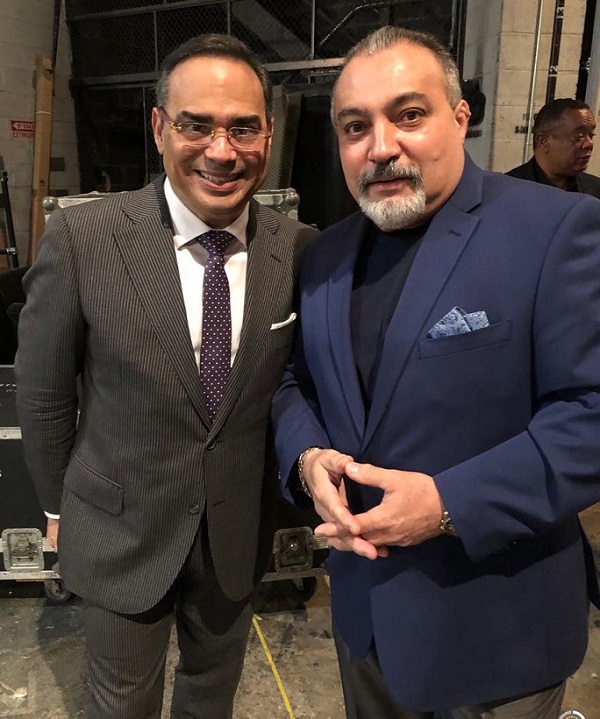
Gilberto Santa Rosa and Johnny Cruz - friends
Gilberto Santa Rosa and Johnny Cruz

I send a warm greeting to my good friend Jerry Rivas, singer of “El Gran Combo de Puerto Rico” since April 19, 1977, who now shares hits and music with his son Gerardo Rivas. In 1977 Andy Montañez, the lead vocal of the Gran Combo de Puerto Rico, announced his departure from the orchestra. Many saw the group debacle coming. When everyone expected to see an experienced singer, the always-wise director Rafael Ithier found a young singer to suit his group’s style.

The chosen one was a young man of just 21 years: Jerry Rivas. A shy Jerry Rivas presented himself with a cassette recorded with the music of the first groups that he joined for a short time, the musicians of the Gran Combo, looked at him suspiciously. Ithier, with his traditional good humor, contained his musicians with these words: “you rest easy, it is a black painted white”.

On April 19, 1977, Jerry began singing with El Gran Combo de Puerto Rico. Jerry Rivas’ first performance was “Buscando Ambiente” at El Club Caborrojeño de Guaynabo and his first international success was “La Clave y el Bongó”. Rivas, self-taught and who in addition to singing plays guitar, cuatro and cuban tres guitar, remembers that as a young man he was a rocker, but he was struck by the joy that the members of the Gran Combo projected in their dances and choreography.

In his long career with El Gran Combo, Jerry Rivas, has become a renowned sonero and one of the oldest members of the Universidad de la Salsa, has recorded 30 albums with the group and many of the greats were recorded in his voice. hits from the orchestra, such as “Y No Hago Más Na”, “El Menú”, “Azuquita pa’l Café”, “Que me lo Den en Vida”, “Ojitos Chinos”, “Me Liberé”, among many others. The Gran Combo was the key to success for Jerry, who thanks Quique Lucca, founder of Sonora Ponceña, for his recommendation that Ithier give him the opportunity to audition. His talent was passed on to his sons, who became Los Rockolos as children.

Gilberto Santa Rosa Concert Without Public

Today, Gerardo begins his solo career, and Jerry Junior together with Samuel conducts the Los Rivas Orchestra organized more than a decade ago. Gerardo always affirms that no matter how many differences they may have, music unites them. He revealed on some occasion that his father did not want him to dedicate his life to popular music due to the strong and unstable environment, the risks and swings of the artistic world.

However, when Jerry looks at them during rehearsals and on stage, he is proud and always advises them to be responsible, avoid the negative and assimilate the positive. Recently, the vocalist of El Gran Combo joined with his son, also singer Gerardo Rivas, and his grandson Gerardo Gabriel to carry a musical message to his followers in the midst of the coronavirus pandemic (Covid-19).

The trio came together to perform a classic by the legendary salsa orchestra, Mente Positiva. “In difficult times, the best we can do is carry a positive message,” wrote Gerardo, also a member of NG2, in his social media. Rivas father was in charge of the Cuban tres guitar, Gerardo Gabriel of the key and the maracas and Rivas son interpreted the theme. It is not the first time that they have joined this quarantine to delight their followers with a musical number.

Photo by Jerry Rivas and his family

I applaud the initiative of Pedro Oggie García as CEO of Salsa Artist Booking Entertainment Group (SAB), who with his daily work supports all the salseros in the world at SalsaArtistBooking.com. SAB is the company specialized in the digital coding of music, administration, promotion and representation of Artists of the Salsa genre, With an experience of more than 30 years in the media and with relationships worldwide, always characterized by our responsibility, seriousness and compliance.

Using their experience, international relations and positioning, they will make your musical work a success. Always taking care of their interests and rights, trying to take the artists and their music where their public requires it. Contact them +1 956-442-0099

José Mangual Jr
José Mangual Jr

I would like to share with you my admiration for José Mangual Jr. “El Campanero Mayor”, who is an American percussionist, of Puerto Rican origin, son of also percussionist José Mangual Sr. He was born in New York on January 11, 1948 and has a trajectory of almost half a century in Salsa.

His contribution to this genre began in the mid-sixties in his native city, when he joined the group of Monguito Santamaría, son of the great percussionist Ramón “Mongo” Santamaría. He also played with La Conspiración. He was part of Tony Pabón’s band, which marked the beginning of his role as a singer. On the LP “La protesta”, recorded in 1972 for the Rico Records label, José Mangual Jr. sang the song “San Miguel”.

In 1971 he joined the Willie Colón band, and since the singer was Héctor Lavoe, José participated in the best and biggest albums recorded by that great duo. Mangual Jr. also recorded with Rubén Blades on some of the most representative albums in the Panamanian singer’s musical career. His talent has allowed him to be making simultaneous recordings with other groups, musicians and singers, such as Ismael Miranda, Mon Rivera, Frankie Dante, Ismael Quintana, Celia Cruz and the Willard Orchestra, conducted by Willie Pastrana.

In 1977 he launched as a soloist, recording with his own group the album titled Tribute To Chano Pozo, and so far, he has around twenty of his own albums. These are added to almost thirty recordings with Willie Colón, Rubén Blades and Héctor Lavoe. But they are only part of the huge list of his recordings with other orchestras, musicians and singers. His meritorious career has allowed him to travel to many countries of the world alongside countless great musicians and singers, and become an example of dedication and love for music.

This has also allowed him to make friends around the world who admire, love, respect; and be with him in important moments, triumphs, defeats and also in goodbyes … José Mangual Jr. lost his grandson Tyrell Bryant a few weeks ago to the covid-19. I extend my heartfelt words of condolence for such an irreparable loss, and reiterate my unconditional support for the entire family at this difficult time. You are not alone! I dedicate special tribute to his grandson Tyrell Bryant who always be present in our hearts. RIP 04/04/1992 – 04/18/2020.

My friends, I need you know that we continue working hand in hand with prominent artists from New York and Puerto Rico on the CD dedicated to maestro Adalberto Santiago on his 60th Anniversary. I promise to have more details about this fantastic musical production very soon.

Johnny Cruz and Adalberto Santiago

I appreciate the support of Carl Cristiano, L&S Custom Tailors and cKc for my TV Show outfits and my public performances. Tailored suits with total care and confidence. Contact them, I recommend them with pleasure. www.LSTailors.com. Address: 138 E 61st Street Suite 201. New York, NY 10065. Phone: +1 212 752 16 38.

Don’t forget tune in to my new Fm / Internet radio station on Live365.com: Salsagallery. Great music, artist interviews and much more made with love for you all. There is the link: https://live365.com/station/a77973

Although yet It will not be possible to open to the public the Spanish Harlem Salsa Gallery in 1708 Lexington ave New York N.Y. 10029, you can see the entire exhibition with more than 200 articles through our social media. Check the updates in our website: spahasalsagallery.com.

Salsa Artist Bokking logo

New York City is slowly returning to normal. We hope to be sharing with you physically again, but now we follow the instructions of the authorities to keep us safe and healthy.

Contact: Johnny Cruz. 917-747-8505. [email protected].

By Johnny Cruz, ISM Correspondent, New York, New York City

Fidel Antillano “The greatest satisfaction of a musician is to finish a quality product and see the acceptance of the public” 

Latin America/ Venezuela / Caracas

Salsa is an expression of life within the caraqueño and Latin American neighborhoods. This fusion of rhythms has known how to slip in and no one escapes its magic and enchantment. Such is the case of pianist, composer and arranger Fidel Gregorio Antillano, born in the city of Caracas on June 10, 1962 and raised in one of the city’s sound districts, Los Frailes de Catia, where he lived surrounded by salsa groups, street performers, carnival and Christmas parties, enjoying the golden age of the salsa boom.

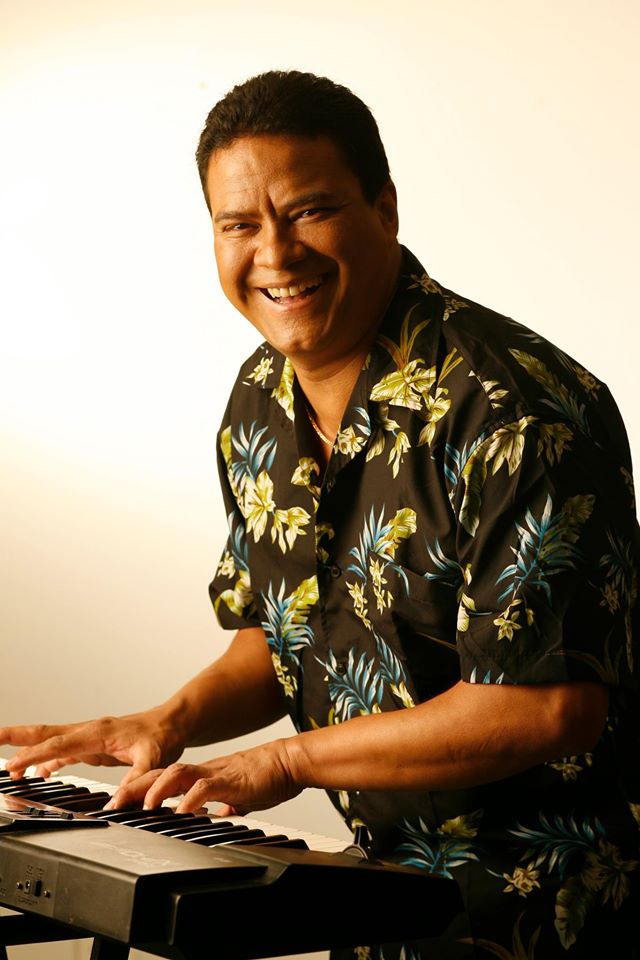
Fidel Antillano - Photo
Fidel Antillano – Photo

This genre influenced his destiny and allowed him to make it his way of life. Salsa is a cultural condiment with the flavor of many countries, which has managed to transcend borders.

Almost always at home the musical vein is lit. Was this your case? 

“There was influence from my relatives, in my house there was always music, it was like a big jukebox, La Billos, Los Antaños del Stadium, la Sonora Matancera, Barbarito Diez, Casino de la Playa, among others, my grandmother lived in El Retiro, in La Pastora, she had a piano, when I went to visit her with my dad, I sat at the piano and I liked what I felt, music was part of my family, my dad was a great music lover, he bought all kinds of records, classical music, Creole music, tango”.

Did your grandmother or your father play the piano?

“No, my grandmother Gregoria “Tata” -we called her that because of our affection-, she was an amateur but she did not play it, she had it as a reference, she played cuatro, my uncle also played cuatro and guitar, my father did not play anything, he bought many Lps, given the house we had -the piano was a kind of furniture that embellished and gave cache to the house-“.

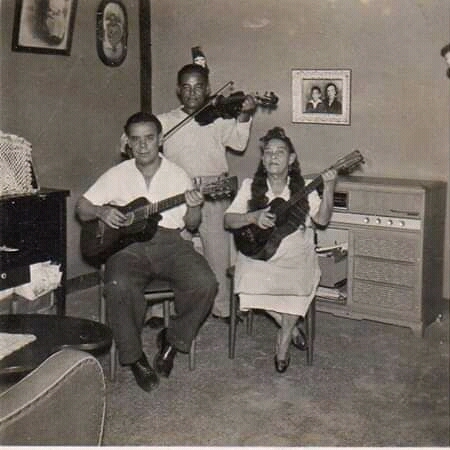
Family photo of Fidel Antillano's uncles Isaías, Pablo and his grandmother Tata
Family photo of Fidel Antillano’s uncles Isaías, Pablo and his grandmother Tata

“My older brother -on my father’s side- he did have some knowledge, he was the most educated, in that house there were harps, cuatro, maracas, records, my family on my father’s side were very fond of music, from our musical family tree we have four musicians -Julito Antillano, Denis Antillano, José “Kikin” Fernández and me”.

What anecdotes or memories do you have of the piano?

“At the time of the construction of La Cota Mil, my grandmother’s piano was taken to my father’s house, at that time I began to kill a fever, I was about 10 years old, it was the time of the gazebos to choose the queens of the neighborhoods, the Sexteto Juventud was in fashion with its theme Caramel and Chocolate; at Christmas and Carnival we did not peel a rehearsal of the groups that lived in Catia”.

That would be the first impulse to awaken the gift within 

“Yes, that was my first impulse, I inherited that musical vein from my grandmother and my father, they were close to salsa and folk musicians, besides, my father and my uncle bought a lot of Long Play (elepé), I started working with my

brother in a shoe store and started buying records.

Fidel, I understand that you are a self-taught musician. How was that learning process and deciding that the piano would be the instrument to play?

“Yes, I am a self-taught musician, back in the 70s we used to hear Nico Monterola’s Orquesta Renovación, La Banda y Su Salsa Joven on the radio. To my surprise, we used to meet with those musicians and we used to go and hang around their rehearsals, this had a big impact on me, there were many shows, it was a coming and going of groups of the moment”.

Orquesta Renovacion
Orquesta Renovacion

When I was 18 or 19 years old, seeing Salsa Mayor, Pacheco, Carlos “El Grande”, all those great musicians, I made the decision to learn to play an instrument, I looked for a teacher or someone who would teach me to play the piano -Salsa was underestimated and that’s why they thought it shouldn’t be studied”.

He got a teacher

“No, because of what I’ve told you, salsa was seen with bad eyes, the scholars did not see it as music would be, look, at that time I was exchanging the Lp with my friends, in one of those exchanges a friend lent me the album “Musical Conquest” by Sonora Ponceña, when I heard the song ‘Ñañara’ I fell and the entrance of the piano played by Papo Luca, that simple montuno, I was hooked – I said; this will be my thing!

That was the leap you’re hoping for 

“Yes, that was the big jump, I went uphill because I didn’t know what a chord was, I didn’t know anything, I mounted 4 songs with simple chords, taking the first steps I fell in love, then I joined people with more knowledge”.

“As there was no one to teach me, I saw books, I had chords of the songs and I was guided by a music theory book, I learned to decipher the codes, music is a code, I read the Swing Latino magazine -from my friend Angel Mendez-, without stepping on a school, I was fed up; one must know about harmony, contra punto, I bought the Berklee harmony book and many more, -I rubbed shoulders with other musicians -some records came as a clinic, all this was feeding me”.

He was his own teacher and a very disciplined student

“I was my own teacher and I took on a discipline because that’s what I wanted, if you went to an institution where they gave music lessons and you said you wanted to play salsa, the musician was fined or thrown out, they were treated in a derogatory way”.

It was worth the effort, from being an empirical musician to playing with the best orchestras.

“I started with Grupo Fósforo, back in 81, we only wanted to play, it was a sextet, Mr. Manuel Ibarra passed me the notes and I didn’t know much about playing, then Jesús “Mandinga” Torres, took me to see different groups, That’s when I decided to introduce brass into the sextet and it became an orchestra, -all the arrangements were done by me-, I had any number of records and many songs from those Lp were not played or played by other orchestras -Gran Combo, Sonora Ponceña, among others-“.

He is a collector

“Not a collector as such, but I do like it, not with the eagerness that any collector has to obtain all the production, as La Sonora Ponceña says, but I have my Lp”.

What happened with the group Fósforo?

“It dissolved because they each started playing for different orchestras.”

And then the Grupo Fósforo   

“Mandinga tells me that Carlos “Tabaco” Quintana needs a pianist, I clarify to him that I do not know how to read the scores, that he gives me the papers that I have the album, I began to listen to the album and I saw the papers, with that I completed the study, and I was increasing the experience, I recorded in the production of Tabaco and his Group Futuro”.

“Then with Dimas and his Orchestra Alegria, it was the first album I recorded professionally in the year 85, through those works I was doing with Dimas, I know Mauricio Silva, I felt afraid because Mauricio already had experience, he was the producer of Dimas’ album, but everything flowed, on the way I know many other professionals”.

“In the year 87 Roberto Blades came to Venezuela to the famous events Consul, Alberto Vergara recommended me Manuel Guerra and we made several tours by some regions of the country, then Julito – my nephew – told me that Naty Martinez needed a pianist”.

Fidel Antillano
Fidel Antillano

How was your time with Naty’s orchestra and your separation?

“Thanks to the album I made with Dimas, many doors opened for me, he believed in me and I will always be grateful for that. Through this album, Naty hired me, he already had references from me, and I recorded 4 of his productions with him -Naty, El Legendario, returned, In Dos tiempos and Proyecto Maelo-, with Naty I made my debut at the Poliedro de Caracas, I met Ray Barreto and the pianist Ricky González -he passed me some tricks-, we also went to Colombia and alternated with Grupo Niche and Joe Arroyo, a great growth and learning”.

“I left the Orchestra with a good relationship with Naty, so much so that he called me later to record in the productions, En dos Tiempos and Proyecto Maelo”.

It was a very fast growth 

“Yes, I’ve even recorded jingles, I was with the Orquesta Café de Caricuao, I was with Erick Franchesky in the production where he pays tribute to Billos”.

From Salsa orchestras to working with one of the greatest exponents of Caribbean popular music, maestro Porfi Jimenez 

“At the time that erotic salsa was introduced, I started to play with Porfi, merengue and snail soup were in fashion, all that music was in great demand, it was a boom, weekly there were 3 or 4 dances, this dragged a great group of followers, with it I go to Tenerife to some carnivals, I have great respect and admiration for the master”.

His time with the group of Porfi opened the doors to work with the group “Los Roques” of Tenerife

“Of course, however, I had left my resume there and one day they called me and told me that they were going to send me the ticket, I was with them for about 7 months, I played in the carnivals of Tenerife, it was something apotheosis, dances and dances did not let me come – laughs – they played merengue, I was blessed to visit Africa”.

All this accumulation of experience allows him to decide to create his own orchestra

“When Porfi was in the merengue boom, however, most of us musicians were salsa musicians, and because of that need to play our rhythm I decided to create my orchestra, but before doing the Combo Antillano we had an orchestra called La Gran Fuga, the singer was Edgar dolor, we killed fever with that orchestra and eventually I played with Naty and Porfi, because of so much activity I played with my orchestra on the days I had free, it was a good time for the groups”.

What happened with La Gran Fuga?

“We made it to occupy the days we had free with Porfi’s orchestra, at that time it had suffered a drop in the number of performances, but when it came back up, we didn’t have time or space to play, – well – it didn’t really dissolve, in fact they always give us caps to reassemble”.

From being the musician of the Orchestra Dé, to being the owner of El Combo Antillano and taking responsibility for a team

Combo Antillano
Combo Antillano

“A great responsibility and commitment, but it was time to do the same, we opened the compas playing music from the Gran Combo of Puerto Rico, that was the end, we played the greatest hits of the moment, no other band did, on Tuesdays that was full of people in the different places where we worked, this served as a bridge and accompanied other artists, Andy Montañez and other groups, this made me think about making original songs to record.

What was your first composition?

“The “Afro-Caribbean Music Festival” took place at the New Circus in Caracas, with 30 orchestras participating. Lil Rodríguez asked the orchestras to play original songs, and my first composition was a tribute to Caracas”.

At that moment they take a prize as the most applauded group of the night 

“Yes, that was impressive, with Leah’s song, a Mongo Santamaría song, it was something new for the moment, an instrumental discharge”.

Tell us about your record productions

“My first production is called Háblame de Melao (2010), in most of the songs I do the lyrics and arrangements, was something new, the black Mendoza puts me to record and tells me to do theme by theme, we made 21 track, but in the album only put 19, this production was made to recognize the singers, Dimas Pedroza, Teo Hernandez, Angel Flores, Larry Tovar, Luis del Valle “Don Wicho”, Rodrigo Mendoza, Eloy Rios, a tribute to them and highlight our people.

“The second, Fidel and the descarga de los Frailes (2013), here we handle the Salsa, Latin Jazz, Danzón, has a lot of instrumental music before starting the rumba, I had the desire to work and create with a sense of belonging, I made an innovation in the melody with the electric guitar and flute, I did not want to continue recording on wet”.

“and, Caracas en su Salsa (2018), is a tribute to the Salsa of Caracas, in this production we have 14 songs”.

Through this production you made a documentary with the same name, which begins with a beautiful phrase of Cabrujas “Caracas Suena. The city was made to be heard, not to be seen”. How would your interpretation of this hidden city be?

“There is a city that cannot be seen, but it is there, and although the media does not show it to us, we can notice it, through, for example, the musical groups that exist in our neighborhoods and that become visible when there are events, like the one organized by Héctor Castillo (+) in 1983, where we could realize that there was a whole cultural movement hidden in each of our neighborhoods”.

“So I urge this type of inter-neighborhood events, which allow the visibility of the hidden Caracas.

Another of his passions is composition. At what point does the muse come to him?

“At first sight I fell in love -laughs-, -Bella Cubana-, to compose you must have a little bit of each thing, love, dislike, joy, sadness, they are not always experiences of the composer, sometimes if, in the variety is the taste, in my case I work with the rhythmic part and I put lyrics, and more than muse is a mixture”.

He makes songs with meaning that captivate the audience

“You like your audience to identify with your songs, the lyrics are thought-provoking.”

Does the song I don’t want to live in the dark have to do with any experience?

“That one was written by Carlos Navarro and I arranged it for him, it was a personal experience of his. I was in a treatment centre and he talked to me about it, I decided to do the arrangement”.

In the music industry we have many issues of strip and shrinkage, is the case of Domina tu lengua

“Sometimes people think that a song can be a strip and shrink, because of the content of the lyrics, in this case it is not, this was written by the Cuban producer Luis Llamo”.

What gives you the most pleasure as a musician?

“Finishing the product with quality and seeing the acceptance of the public, when you are in the studio and you realize that it looks better, then it sounds on the radio, seeing that the public sings it, dances it, that’s priceless, that’s the greatest satisfaction”.

Which of your productions has given you the most satisfaction?

“Tell me about Melao.”

Why?

“There is a great variety of rhythms in it, I had the opportunity and the satisfaction of exchanging with a large number of people from outside, in it is the theme Pa’ Barlovento, in it exported what is ours, our native rhythm, Venezuelan Sangueo, the Culo e’ Puya, the San Millán”.

What have been your musical influences?

“I wouldn’t be a musician if it wasn’t for Papo Lucas, trying to emulate what he did, as a musician, arranger and person, I admire him a lot, from here comes my influence, -in what time he learned everything he knows-, that makes him incredible, apart from the master Tony Monserrat, an independence with his left hand, he was a virtuoso”.

Many begin by imitating a style, versioning lyrics from other groups. What do you think of the copies, has creativity been lost?

“It’s a resource that is used, at a certain moment, it’s a hook, I barely had the opportunity to do my work, one must have the ability to discern where to play each song, maybe many are afraid of not liking it, or not being accepted”.

What do you think this fear is about? 

“Perhaps not to be broadcast on the radio stations.”

He believes that more support is needed from the various media

“Yes, the lack of support sometimes makes one fear, it’s worrying to touch on a subject and the track gets empty.”

That’s when the artist turns to the hated payola

“I don’t agree with the payola, but it is a necessary evil, all the work that an orchestra owner does generates expenses, and after making an investment you need a retribution; previously live performances were a springboard, they projected a lot to the groups, that has declined a lot”.

What has happened to the Bolero in productions, you don’t listen to them anymore?

“The record companies are more determined to sell, that’s why I think they stopped recording, the new generation should identify with that rhythm, there are many beautiful boleros and if they stop recording they might be forgotten”.

Fidel, what new projects are on the way?

“Right now I’m recording with Angel Flores -record pocket- the song is called Callejon 107, is dedicated to the experiences of Latin American neighborhoods, is a son montuno very tasty, lyrics by Flores and with arrangements by this server”.

At this time when humanity is going through a hard test for its survival, what message would you leave behind?

“There is advice to live a life attached to good habits, one must live under these guidelines, the book of proverbs is wisdom… The man who walks in integrity walks confidently”.

By Eling Blanco, ISM Jounalist Correspondents, Caracas, Venezuela

  • « Go to Previous Page
  • Page 1
  • Interim pages omitted …
  • Page 38
  • Page 39
  • Page 40
  • Page 41
  • Page 42
  • Interim pages omitted …
  • Page 64
  • Go to Next Page »

International Salsa Magazine (ISM) is a monthly publication about Salsa activities around the world, that has been publishing since 2007. It is a world network of volunteers coordinated by ISM Magazine. We are working to strengthen all the events by working together.