• Skip to primary navigation
  • Skip to main content

International Salsa Magazine

  • HOME
  • Previous editions
    • 2026
      • ISM / April 2026
      • ISM / March 2026
      • ISM / February 2026
      • ISM / January 2026
    • 2025
      • ISM / December 2025
      • ISM / November 2025
      • ISM / October 2025
      • ISM / September 2025
      • ISM / August 2025
      • ISM / July 2025
      • ISM / June 2025
      • ISM / May2025
      • ISM / April 2025
      • ISM / March 2025
      • ISM / February 2025
      • ISM / January 2025
    • 2024
      • ISM / December 2024
      • ISM / November 2024
      • ISM / October 2024
      • ISM / September 2024
      • ISM / August 2024
      • ISM / July 2024
      • ISM / June 2024
      • ISM / May 2024
      • ISM / April 2024
      • ISM / March 2024
      • ISM / February 2024
      • ISM / January 2024
    • 2023
      • ISM / December 2023
      • ISM / November 2023
      • ISM / October 2023
      • ISM – September 2023
      • ISM – August 2023
      • ISM July 2023
      • ISM Edition June 2023
      • ISM – May 2023
      • ISM April 2023
      • ISM March 2023
      • ISM February 2023
      • ISM January 2023
    • 2022
      • ISM December 2022
      • ISM November 2022
      • ISM October 2022
      • ISM September 2022
      • ISM August 2022
      • ISM July 2022
      • ISM June 2022
      • ISM May 2022
      • ISM February 2022
      • ISM January 2022
    • 2021
      • ISM December 2021
      • ISM November 2021
      • ISM October – 2021
      • ISM September 2021
      • ISM August 2021
      • ISM July 2021
      • ISM May 2021
      • ISM April 2021
      • ISM June 2021
      • ISM March 2021
      • ISM February 2021
      • ISM January 2021
    • 2020
      • ISM December 2020
      • ISM November 2020
      • ISM October 2020
      • ISM September 2020
      • ISM August 2020
      • ISM July 2020
      • ISM June 2020
      • ISM May 2020
      • ISM April 2020
      • ISM March 2020
      • ISM February 2020
      • ISM January 2020
    • 2019
      • ISM December 2019
      • ISM November 2019
      • ISM October 2019
      • ISM Septembre 2019
      • ISM August 2019
      • ISM July 2019
      • ISM June 2019
  • Spanish
  • Download Salsa App
    • Android
    • Apple

Search Results for: Latin Tribute

Producer, film director and actor Jess Thomas

From actor to director

Jess Thomas is a producer, film director and actor whose academic background is centered at San Francisco State University and work speaks for itself as to his talent. Once he made the decision to move to Los Angeles, he started making occasional appearances as an actor and stuntman in some television series. As a director, he has written about seven scripts and plunged into the world of broadcast engineering for various television networks such as FOX and ABC. 

Producer, film director and actor Jess Thomas

We had the opportunity to talk to Mr. Thomas to know many more details about his career and we were pleasantly surprised with the receptivity of the talented filmmaker and his wife and producing partner Anayancy Thomas. Below, we’ll talk a bit about his beginnings, recognitions and his most recent film ”God & Salsa”.

How his interest in film began

Thomas tells us that she had a fascination for the world of entertainment since she was very young, as both his parents were always related to the arts one way or another. His father Jess Thomas Senior was an opera singer, while his mother Bettye Wright was a dancer and model. This family background led him to venture into all this at a very early age and the best example is the creation of super-eight films (film format in which eight-millimeter wide film is used) in high school.

He recalls that he had to produce a 60-page assignment for his history class, but his teacher allowed him to produce a short film instead. The grade was an A on that assignment and the teacher was so delighted that he showed the tape to the rest of his classmates and put him as a great example of creativity in cases like this. This is how a very young Jess already felt that his destiny would follow this same path for the rest of his life.

Anayancy Thomas, Jess Thomas' wife and producing partner
Anayancy Thomas, Jess Thomas’ wife and producing partner

Beginnings as an actor

He took his first steps in this profession as an actor and thought that this was the branch to which he wanted to dedicate himself definitively, but over time he discovered that writing, directing and producing were much more appealing to him. Jess found that he enjoyed joining the pieces together to take a film from a script to a screen much more than simply acting on it.

However, the filmmaker acknowledges that having acted allows him to communicate much more effectively and empathetically with the actors in his productions, as he understands the language of acting perfectly.

The Seeker

His first work as a director was the documentary ”The Seeker”, which tells the story of a quadriplegic who embarks on a journey on a motorcycle adapted to his disability and won in the category of Best American Documentary at the Rome International Film Festival. On this subject, Jess told us that the plot of the film was not his idea, but that of his friend Evan Somers, who stated his intentions to create a material that would raise awareness about this type of disability.

The idea of following him around the country on a motorcycle (designed by Somers himself) so much that he put all his efforts into learning all about the struggles of his friend, which led Somers to hire him as producer and director for a film about his story. They spent a month shoting the scenes and always something special and unexpected happened as the days went on.

Poster advertising ''The Seeker''
Poster advertising ”The Seeker”

Although they cannot be sure that everything would go as they planned, the result of the recordings spoke for themselves. In reviewing the tapes, they realized that they were getting something truly beautiful and completely spontaneous, as there was absolutely unscripted or unprepared by the team in charge of making the material.

In the end, they simply had to honor it in the editing room and sew all the pieces come together in a single masterpiece.

God & Salsa

Her most recent film work ”God & Salsa” has given much to talk about since its release in 2022. It all started when Jess met his now wife and producing partner Anayancy Thomas at an Entertainment Ministry event hosted by the church where they both attended. She told him she had plans to make a documentary about the negative impact that divorce can have on both children and parents in the long run, which Jess loved because his parents divorced when he was a child.

This event represented a before and after in his life during his adolescence, which made him develop certain behaviors and conducts that were destroying him, such as anger, lethargy, drug addiction, alcoholism, among others. In view of their shared the taste for this subject, they came together to make a feature film in which they would develop this point through characters who had these same experiences in the most natural way possible.

Javier Luna, who plays Shane in ''God & Salsa''
Javier Luna, who plays Shane in ”God & Salsa”

Although it is fiction, Thomas made it clear that there were several elements that had much to do with him and Anayancy herself, who began taking salsa classes to distract herself from various negative aspects of her life in those years through the use of the body and the mind required by the dance discipline. In fact, her teachers, Enio and Terryl, appear in the film and are part of the cast.

During all this time, there was a very special feeling between the two, so they ended up falling in love and got married shortly thereafter. 10 years later, they have a finished feature film, which premiered in October 11, 2022 in the United States and will soon be distributed in Latin America and the rest of the world. ”Our greatest inspiration for this project is the duty to use our pain to help others overcome theirs” said the director.

How the cast and soundtrack were chosen

When we wanted to know how the cast of ”God & Salsa” was chosen, he revealed that they shot a short film with the purpose of knowing how the movie would look like. It was also intended to serve as a proof of concept and a means to raise funds so we could create the feature film the way they wanted to.

Jovanna Vidal, who plays Raquel in ''God & Salsa''
Jovanna Vidal, who plays Raquel in ”God & Salsa”

”We put out a casting call through the Backstage platform, since our search was not focused on well-known actors, but on emerging talents avid of opportunities to shine. That is how we managed to find Javier Luna and Jovanna Vital, who did such a wonderful job that we decided to use them for the feature film. The other roles were assigned to people we already knew or had worked with previously, even if they didn’t have a lot of acting experience,” he continued.

As for the film’s soundtrack, the director told us that they focused their attention on local salsa bands and composers. Enio, Anayancy’s aforementioned dance teacher, recommended Carlos Navarro and his orchestra Son Y Clave, which has played in many of the best local and foreign clubs. Once we listening to them, we loved the sound, so we involved him in the project from the beginning of the proof of concept. Both Carlos and his musicians appear in some scenes showing all their talent.

They also used some of the music composed by Stephen Giraldo and Voodoo Tracks Music Publishing.

Jess Thomas, Anayancy Thomas, and Carlos Navarro

facebook.com/Godandsalsathefilm/

Read also: GOD & SALSA

Origins of Kizomba

Kizomba is a very catchy musical genre that has its origin in Angola, Africa. It can be said that its birth was in the 1980s; but if we want to understand its history, we must look further back to the 50s and 60s.

Kizomba class photo
Kizomba class photo

It was then that certain traditional dances of the African country and one of them was semba, began mixing with other rhythms both from its country of origin and other cultures after Africa was colonized by Europe in the 14th century. It is from there that a fusion of rhythms begins in which partner dancing takes center stage.

However, the old continent did not do all the work. Argentina and Cuba also played an essential role in the form in which semba must be danced.

In Portugal, the word Kizomba has its origin in all musical rhythms that derive from zouk, with which it is often constantly confused. It is a type of dancing laden with great sensuality and highly contagious that has become very popular with the passage of time, particularly in countries such as the United States, Canada, France, Spain, Poland, Belgium, Denmark, among others. Many Latin Americans consider that this is a breath of fresh air because it does not seem like anything they previously knew in terms of dance.

One of the reasons that it became so famous around the world is that this dance is very easy to learn due to its softness and simple dance steps. If you want to learn to dance, kizomba is a very good option to begin with.

Kizomba lets the couple play the music they dance. The more intimate the members of the couple, the more likely that the dance will be much more sensual and there will be much more complicity between men and women who enjoy this pleasure.

How kizomba originated

As we have said previously, kizomba has its origin in Angola, which was a colony of Portugal in the mid-1970s. With the arrival of Cuban military personnel, certain rhythms came from the Caribbean island that started to be used by various Angolan artists for their musical projects. The result was a fabulous mix of fast local rhythms with much slower, romantic and partially synthetic sounds.

The resulting genre was danced with semba and merenque, which made it known as kizombadas and, subsequently, kizomba.

By the 90’s, the word kizomba started to be used in Portugal to refer to all African rhythms danced in the nightspots of the most important cities in the European country. With the passage of time, the term would be used to refer to the musical genre and many other sub-genres with which it shares history.

Once this type of dance began to take hold in the rest of Europe, it was in France where all these rhythms that resemble one another started to be called kizomba, leading to the controversy over whether it and soft zouk are the same. Given that on certain islands belonging to France they were the cradle of zouk, it can be assumed that this has kindled heated debate even further still.

At the beginning, kizomba was only able to spread throughout the African continent, but migration allowed it to reach Europe and America respectively where a lot of passionate dance groups of this genre began to appear. The number of followers accumulated by this genre in countries such as Portugal, France or Spain was very huge.

Currently, there are a number of exponents of this kind of music that became famous worldwide such as Nelson Freitas, Djodje, Anselmo Ralph, Matias Damasio, among many others.

Kizomba dancer in Europe
Kizomba dancer in Europe – Origins

Kizomba in Europe

It is incredible the number of places where you can enjoy this spectacular dance. One of them is the world famous Eiffel Tower, where there are many options to learn or improve the dance steps. In France, the genre has been very popular, so much so that many places for dancing celebrate exclusive kizomba nights known as kizomba soirées by the locals. Considering the major African influence on this dance, those wishing to find out more will be able to enjoy a wonderful mix of dance styles and cultures that will leave no one indifferent.

In these places, you can share with a very impressive amount of tourists and foreigners from around the world. This contributes enormously to linkages and friendships between people of other cultures and other ways of seeing the world, which may be very rewarding from all points of view.

In the case of Lisbon, Portugal, it can be said that this is another place that every lover of kizomba in Europe should visit. Besides being a city that receives all its visitors with genuine hospitality, the dancing and music are ever-present. Among the many places you can go to enjoy the dance, it is important to mention the Estudio Sabor & Dança dance studio, the Academy World Dance and the Kizomba Power Dance School.

Kizomba class in Europe

Regarding Barcelona, Spain, what can be said is that this is one of the best European cities for dancing as there is a gigantic variety of musical styles that can be found there. There are always parties and events worth attending. One of those dances that can be found in the city’s nightlife is kizomba that has gained popularity in recent years.

Latin music events and festivals were based on salsa and bachata, but kizomba has completely changed that reality. Today, it is very common to find festivals and congresses dedicated exclusively to this dance and its most loyal lovers. If you want to learn to dance this genre, there are a number of schools and workshops that could be very useful such as Así se Baila, Seven Dance and Baila Barcelona.

Kizomba in Latin America

Many people who do not know the origin of the kizomba think that it originated in Latin America due to its type of dancing, but the fact is that this dance was not even known in most countries of the continent. In fact, its main boom started relatively recently in some places such as Colombia, where it began to be known not long ago. In that country, there are currently academies and teachers who are dedicated exclusively to this musical style, which has started to happen in other Latin nations.

In Venezuela, it is said that it has been danced for more than 10 years, but it began to be known a short while ago thanks to some videos on the major social networks after it became famous in Europe. The pioneers of this practice were a certain number of instructors born in the Caribbean country after being trained in Brazil. Following this, kizomba was the subject of a great deal of interest in many young Venezuelans who want to learn to dance it. There are not many records on places to dance where this genre may be found, but there is no doubt that soon it will be like this.

Kizomba dancer in Europe

Kizomba in Asia

There are many events and congresses linked to kizomba in Asia, which have a great influx of visitors, even when it is commonly believed that Asians are not fans of this type of rhythm. Experience with congresses of the last years has given the impression that this is not true. In fact, there are many fans of this rhythm from the continent who want to know all events and competitions details that are carried out in their countries for the coming months.

Japan is one of the nations where this type of event can be found the most. Such is the case of the Japan Kizomba Festival that has been going on in the country for many years due to the high level of attendance of visitors.

Video: https://www.youtube.com/watch?v=6WOVBNULkYc


Good initiatives must be shared!

North America - United States - New York

We were taking the Salsa exhibition to Puerto Rico for the I Encuentro de Coleccionistas de Salsa, we made an exhibition of the clothing, records and instruments used by the Fania All Star orchestra, Tito Puente, Héctor Lavoe, Adalberto Santiago, the Gran Combo and others. For the first time, the last “tuxedo” that Tito Puente used in his participation with the Orquesta Sinfónica de Puerto Rico was exhibited.

Spanish Harlem Salsa Music Gallery, offered an exhibition and Master Class on the history of Salsa at the Escuela Especializada en Música Jesús T. Piñero in Cidra, Puerto Rico. We transported ourselves to Puerto Rico in search of an opportunity to publicize the Salsa Museum-Gallery in New York.

This is part of the efforts being made for the participation and dedication that is made to the people of Cidra in the Desfile Nacional Puertorriqueño 2020 and that is locally coordinated by the Patronato Cidreño along with other civic and professional organizations.

We were able to benefit hundreds of students at this school who are precisely focused on music. The knowledge offered in the three conferences and being able to closely observe the exhibition helped to foster the enthusiasm of the students who make up the campus, unique in the mountains of Puerto Rico, dedicated to the creation of good musicians and knowledgeable in musical art.

We are dedicated to enhancing Latin music and offering spaces focused on arts education, accessible and friendly to the community as a strategic partner.

I thank valuable people such as Laura Torres, Silkia Vázquez, Wilson Nazario and Wilfrido Torres “Puruco” for all the attention and teamwork that we were able to develop during our visit. I cannot stop also thanking my assistant in Puerto Rico, Carmen Cruz; and to Joseph Cruz for his magnificent and beautiful work with me during this pleasant experience.

I also take advantage of this space in International Salsa Magazine because I want to tell you about an artist and a great friend who is doing his best for music and Salsa. Without a doubt, Yova Rodríguez is a long-standing professional who has developed countless projects and initiatives to support those who need it most. With his music, his work and his human quality, he has reached many hearts from New York.


Geovanni “Yova” Rodríguez Ruiz, born in Puerto Rico, had a musical inspiration since he was a child, his uncle Antonio “Toño” Ruiz – his mother’s uncle who played the cuatro – was his first music teacher (melody) and his uncle José Antonio “Pipo” Ruiz Crespo -mama’s younger brother- taught him how to sing aguinaldos (lyrics); and with this they formed the solid foundations that encouraged little Yova to prepare himself accordingly for his foray into the musical world.

The celebration of the Promesa de Reyes, a celebration in which he participated with his mother at his short seven years, leads him to worry about creating and recreating aguinaldos to be interpreted each year, which in some way becomes the seed of composer that we know today.

At the age of 14, he attended the Escuela Libre de Música Ernesto Ramos Antonini in Mayagüez, hand in hand with piano teacher César Toro, rising as vocal leader of the Orchestra after a year.

Years later he gave himself the task of forming his own musical concept, and thus Sakao Aká was born. This orchestra was in charge of accompanying singers such as Camilo Azuquita, Ray de la Paz, Pupy Cantor and Herman Olivera in their presentations in Puerto Rico; and the cover letter for some of these singers to integrate Yova as a chorus girl in their presentations in various countries in Central and South America.


At the end of the 90s, on a trip to Cuba, he was impacted by the music of Fernando Borrego Linares, better known as Polo Montañez, to the point that, some years later upon learning of his death, he had the idea of ​​paying tribute to him, his musical reference, thus giving birth to the idea for her debut feature Homenaje a Polo Montañez (2005), a production of 10 songs by Montañez, and covered by Yova Rodríguez with the participation of renowned musicians from the patio such as Herman Olivera, Héctor “Pichie ”Pérez, Papo Lucca, Edwin“ Caneca ”Rosas, Edwin Colón Zayas, among others.

In 2008, like many of her compatriots, Yova prepares her luggage and heads to the southern United States, where she stays for two years and then moves to New York, a city that has become her center of operations and from where He has extended his working ties as a composer and where he records his next two productions.

The album Letras, canciones y sueños, musical work of 8 songs all written by Yova, comes to light after some years of having published his first production and of having worked silently composing and waiting for his opportunity. This possibility is materialized in 2013.

Already in 2015, the album Mi musa en las voces de mis amigos is released.

Salsa with Yova Rodriguez

Recently, Yova Rodríguez has created more than 420 songs, and many of them have been duly registered with the American Society of Composers, Authors and Editors (ASCAP) under the registry “El Negrito De Delia Music” . “Exceso de amor” is the first composition he has interpreted and recorded; like the song “No me odies”, it is the first recording of a song by him made by a third party.

Now they are going to hear more from Yova, as some productions that will include her compositions are in the process of recording / publishing. Attentive to the upcoming releases of the young Puerto Rican percussionist José Jomar Marcano, the master trumpeter Luis González, the young trombonist, arranger musician and also singer Leo Morales; the renowned DJ Andy Rodríguez, better known as DJ ANDY and the Venezuelan sonero Marcial Isturiz .

As always, remember that Spanish Harlem Salsa Gallery is in 1708 Lexington ave New York N.Y. 10029. Open free to the public all Thursdays & Fridays from 4 to 7 pm and Saturdays from 1 to 8 pm. Check the updates in our website: spahasalsagallery.com.

Also, The Johnny Cruz Show, the # 1 Salsa Show on television on all 5 Boroughs of New York on CH67. Saturdays from 3:30 to 4:30 pm.

Contact: Johnny Cruz. 917-747-8505. [email protected]

By Johnny Cruz, ISM Correspondent, New York, New York


Adelaide Tropical: Salsa reaches a wide audience at Disney California Adventure

North America – California – Anaheim

Adelaide Benavides is an artist, a businesswoman and the band leader of Adelaide Tropical.

Born in Texas, Adelaide is based in California with her different projects and putting a lot of creativity and innovation in each one of them.

Adelaide Tropica
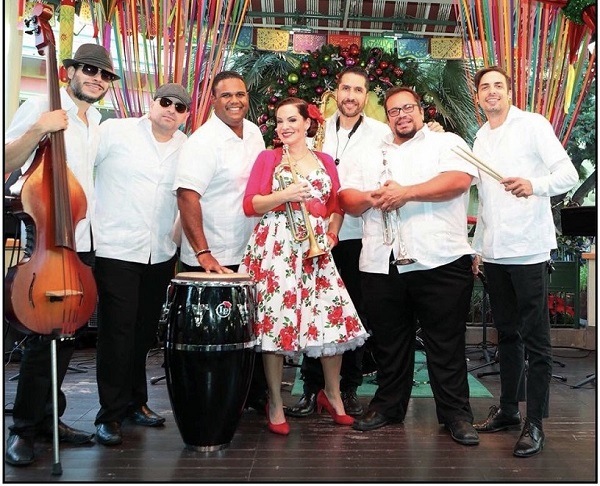
Adelaide Tropical; a band that has become the official Salsa set of Disney California Adventure.

One of the projects that have brought her the most gratifying moments is Adelaide Tropical; a band that has become the official Salsa set of Disney California Adventure.

They are being featured on their largest stage for their Food and Wine Festival. As Adelaide expresses, this band differs from many other Salsa bands because she has achieved bring together a show of which she calls “Salsa Americana“.

Perform classics from Celia Cruz and Tito Puente, but also incorporate a lot of Latin pop that people of all cultures will recognize. Salsa arrangements of popular hits like “Havana”, “Despacito“, Cardi B, Selena and even some original Salsa arrangements of popular Disney songs. This presentation of Salsa has been very successful at Disney and many festivals because of its ability to reach such a wide spanned audience.

Currently, Adelaide Tropical is recording a salsa version and video of “Me voy a enamorar” which will be released this summer. While that moment arrives, you can see Adelaide Tropical perform at Disney California Food and Wine Festival. The Adelaide band is also continuing to perform at Downtown Disney and will be all over the west coast through the end of the summer at various festivals, city concerts, popular venues and every Sunday at Knott’s Berry Farm where they will also be doing a special tribute performance to Selena.

Adelaide Benavides
Adelaide Benavides

Adelaide Benavides has created different successful formats with great musical quality ando performances that have led her to a variety of venues ranging from Disneyland and Knotts Berry Farm, popular music festivals, grand casinos, and even the Staples Center. She was also a contestant on La Voz México 2018-2019 edition, and recently released her 2nd and all original album “Reflexiones De Mi Mente“, which can be found on all major streaming applications.

Adelaide Tropical
Adelaide Tropical Photo

You can also listen the new Adelaide’s album and presentations of Adelaide Tropical on her social media:

Website: Adelaidetheband.com

Email: [email protected]

Instagram: @adelaidepilarmusic

Facebook: Facebook.com/adelaidepilar

Twitter: AdelaidePilar

Gon Bops

USA / Los Ángeles / California

Gon Bops, Remains one of the oldest and most respected manufacturers of Latin instruments in the world

Gon Bops
Gon-Bops Logo

The Gon Bops legend began in 1954 California when Mexican-American Mariano Bobadilla (born in Guadalajara) – who would go on to become one of the most highly-regarded conga builders in the percussion industry – started designing and building Conga and Bongo drums.

A band instrument repairman and professional trumpet player, Bobadilla launched Gon Bops in his father’s old wooden garage in a downtown Los Angeles neighborhood.

He chose the name Gon Bops because “Gon” was one of the colloquial expressions of the time, as in, “everything is gone, man” – and “Bops” because his friends nicknamed him Bob, which sounded like “Bop” in the Latino dialect.

While Bobadilla’s drums remained true to the classic Cuban shape, he was a genuine innovator in the development of drum hardware. He designed the first teardrop crown with rounded counter hoops, developed to protect players’ hands – a concept that is now universally accepted.

He also gave birth to the first tunable hardware for congas and bongos in the United States. Having witnessed Cuban conga players heating up drums in their kitchens prior to performing, Bobadilla decided there had to be a simpler more reliable method to tension these instruments.

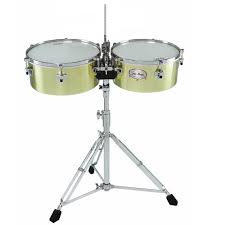
Other innovations from the young company were Taroles (wooden timbales), the first pre-mounted replacement heads for congas, chromatic tuned cowbells and numerous stands, adapters and other hardware.

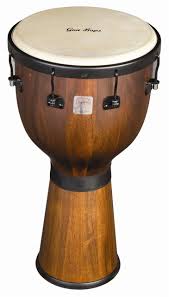
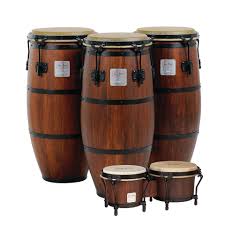
Congas
Congas
Drums
Drums
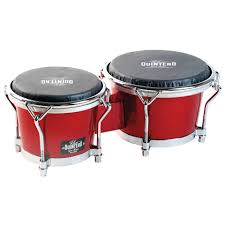
Bongoes
Bongoes
Drums
Drums
Gon Bops instruments

Gon Bops enjoyed great early success. The instruments were highly sought after by the top players of the era – giants like Alex Acuna, Mongo Santamaria, Francisco Aguabella, Armando Peraza, Poncho Sanchez, Jose Hernandez and Rich Barrientos – all of whom contributed invaluable R&D input. Gon Bops quickly became the undisputed leader in Latin percussion instruments and remained so throughout the 1950’s, 60’s and 70’s.

Mariano remained deeply committed to a hands-on role in production and retained complete control of the design and fabrication of all his products. As a result, Gon Bops instruments were mainstays on the biggest stages around the world, including the massive Woodstock festival in 1969.

But the winds of change were sweeping through the American percussion industry. By the time the 1980’s rolled around, all of the major US percussion manufacturers had moved offshore to manufacture their instruments.

Cheap Asian labor costs meant greater profits. But as manufacturing costs decreased, so did quality, and for that reason Bobadilla refused to mover his production outside of the US. As a result, Gon Bops began to struggle financially. Unable to compete against his larger competitors, Bobadilla had no choice but to close the doors of his highly regarded company.Thankfully, that was not to be the end of the Gon Bops brand.

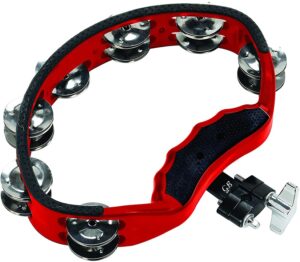
Pandereta
Pandereta

In 2001 Don Lombardi of US drum manufacturer DW bought the company along with all of its patents and trademarks. Lombardi had met Bobadilla in 1978 when he used Gon Bops Timbale shells to build DW brass snare drums, and subsequently had continued to seek R&D advice from Bobadilla.

It was a great fit, and it was no coincidence that the quality of DW drums and hardware continued to grow after the Gon Bops acquisition.

To run his newly acquired Gon Bops brand Lombardi hired the best drum craftsmen in the US. He even bought San Francisco-based Sol Percussion in order to conscript its founder – drum builder Akbar Moghaddam – to the Gon Bops cause.

instrument
instrument

Moghaddam brought along fellow drum craftsman Octavio Ruiz, and Lombardi teamed them up with Alejandro Perez, a drum builder who had worked with Mariano Bobadilla in the original Gon Bops factory.

In 2010 cymbal-maker SABIAN Inc. announced that it had purchased the inventory, intellectual property, patents and manufacturing equipment of Gon Bops from DW.

The deep commitment to innovation that SABIAN applied to its own instruments had inspired founder Robert Zildjian and his son, SABIAN President Andy Zildjian, to a search for like-minded instrument companies available for acquisition. And it was a happy circumstance had Lombardi had begun to seek a buyer for Gon Bops.


“We’re excited to begin this new chapter in SABIAN and Gon Bops history”, notes Andy Zildjian. “Gon Bops instruments are a perfect blend of vintage craftsmanship and innovative thinking. Since its founding in 1954, the company has pioneered several features and improvements that have forever changed Latin instruments.

We are excited about not only expanding distribution, but also continuing to focus on groundbreaking designs that represent clear improvements in meeting the needs of musicians. The pursuit of the best sound is what our craftsmen work for every day. We know the fit is perfect, above all, because sound matters.”

Today, Gon Bops remains one of the oldest and most respected manufacturers of Latin instruments in the world.

  • « Go to Previous Page
  • Page 1
  • Interim pages omitted …
  • Page 36
  • Page 37
  • Page 38
  • Page 39
  • Page 40
  • Interim pages omitted …
  • Page 64
  • Go to Next Page »

International Salsa Magazine (ISM) is a monthly publication about Salsa activities around the world, that has been publishing since 2007. It is a world network of volunteers coordinated by ISM Magazine. We are working to strengthen all the events by working together.