• Skip to primary navigation
  • Skip to main content

International Salsa Magazine

  • HOME
  • Previous editions
    • 2026
      • ISM / April 2026
      • ISM / March 2026
      • ISM / February 2026
      • ISM / January 2026
    • 2025
      • ISM / December 2025
      • ISM / November 2025
      • ISM / October 2025
      • ISM / September 2025
      • ISM / August 2025
      • ISM / July 2025
      • ISM / June 2025
      • ISM / May2025
      • ISM / April 2025
      • ISM / March 2025
      • ISM / February 2025
      • ISM / January 2025
    • 2024
      • ISM / December 2024
      • ISM / November 2024
      • ISM / October 2024
      • ISM / September 2024
      • ISM / August 2024
      • ISM / July 2024
      • ISM / June 2024
      • ISM / May 2024
      • ISM / April 2024
      • ISM / March 2024
      • ISM / February 2024
      • ISM / January 2024
    • 2023
      • ISM / December 2023
      • ISM / November 2023
      • ISM / October 2023
      • ISM – September 2023
      • ISM – August 2023
      • ISM July 2023
      • ISM Edition June 2023
      • ISM – May 2023
      • ISM April 2023
      • ISM March 2023
      • ISM February 2023
      • ISM January 2023
    • 2022
      • ISM December 2022
      • ISM November 2022
      • ISM October 2022
      • ISM September 2022
      • ISM August 2022
      • ISM July 2022
      • ISM June 2022
      • ISM May 2022
      • ISM February 2022
      • ISM January 2022
    • 2021
      • ISM December 2021
      • ISM November 2021
      • ISM October – 2021
      • ISM September 2021
      • ISM August 2021
      • ISM July 2021
      • ISM May 2021
      • ISM April 2021
      • ISM June 2021
      • ISM March 2021
      • ISM February 2021
      • ISM January 2021
    • 2020
      • ISM December 2020
      • ISM November 2020
      • ISM October 2020
      • ISM September 2020
      • ISM August 2020
      • ISM July 2020
      • ISM June 2020
      • ISM May 2020
      • ISM April 2020
      • ISM March 2020
      • ISM February 2020
      • ISM January 2020
    • 2019
      • ISM December 2019
      • ISM November 2019
      • ISM October 2019
      • ISM Septembre 2019
      • ISM August 2019
      • ISM July 2019
      • ISM June 2019
    • 2016
      • ISM December 2016
  • Spanish
  • Download Salsa App
    • Android
    • Apple

Search Results for: Latin dance world

Tromboranga, the Latin soul in Europe.

Europe

A band formed in Spain to share rhythm, music and soul around the world. As a part of the new generation of independent Latin orchestras around the world, Tromboranga is the pure essence of “Salsa Dura”. Tromboranga´s spicy ingredients are the trombones sound, solid and strong percussion, and they recover the essence of “soneos” (voice improvisation among the chorus). With influences from the salsa music from the 60s and 70s, maintaining a raw, strong and a very danceable sound.

Their original songs like “Humildad”, “Palo pa la campana”, “Ah Caraj”, “Mi China Colombiana”, talks about stories that can describe the life of any of us, and they have become number one in Latin radios and dance floors worldwide.

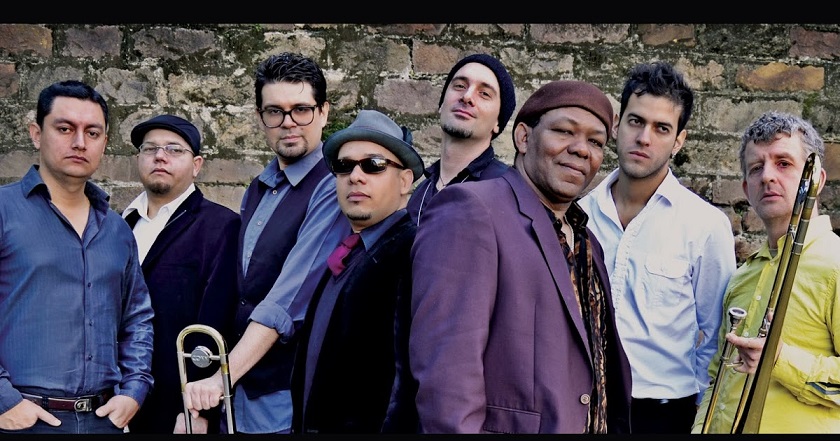
Tromboranga is made up of musicians from the Caribbean and Europe, all residents of Barcelona, Spain.

Its members are:

Joaquín Arteaga, Band leader, Timbal and composer from Venezuela, known for his long career as a percussionist and also as band leader of the orchestra “Bloque 53”.

Diego Coppinger, traditional “Sonero”, with an extensive carrer that includes “Tropicana” in Cuba, gives color and Cuban flavor, with great force and experience in his amazing soneos.

Freddy Ramos, young singer from Venezuela, also arranger with a wide impresive musical career.

Rafael “Madagascar” Arciniegas adds Colombian flavor with his piano and arrangements.

Lorenzo “El diablo” Barriendos, Venezuelan musician on bass, with tastefull tumbaos, known for his interventions with orchestras such as Trabuco Venezolano, Mango group Guaco among others.

The strong and colorful trombone section, which offers a distinctive mark on the band: Vladimir Peña (Venezuela), Josep Blanes (Spain) and Albert Costa (Catalunya), all supported by the taste and the conga afinque Oriol Martinez and the spicy bongo of Climent Campa.
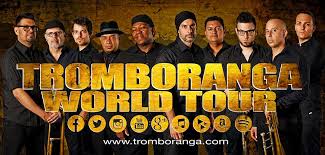
Tromboranga
Tromboranga

Their first EP “Agua que va caer” hits the market in November 2011 in anticipation for the first official cd “Salsa Dura” (April 2012), considered by Latin music lovers, DJs, dancers and specialize salsa bloggers among the 10 best CDs of 2012. Also recorded a CD together with Bloque 53 “Tumba Puchunga” where the song “Me alborotas” and also “Tumba Puchunga” reached number one in many Latin radios listings.


In April 2013 the new cd “Al mal tiempo buena salsa”, take them to do their first world tour in Spain, France, Belgium, Switzerland, Netherlands, Tunisia, Germany and Colombia.

In November 2013 they release a L.P. Vinyl Special Limited Edition (only 300 copies) called “Solo para coleccionistas Vol. 1”. They are invited to do 4 concerts at one of the biggest salsa festivals in the world “La Feria de Cali” and Pereira, Colombia. The 4 concerts were filled in its entirety. Since then the followers and fans of the band call themselves “Salseros Tromborangueros”.


In 2014 visit Mexico on a tour of four dates, all concerts were sold out and the public had the opportunity to hear some songs from the 4th Album called “Salsa pa’ rato”, with 10 new original tracks.

From “Salsa pa´rato” album the track “Palo pa la campana” is already a hit among salsa dancers, been between top 10 salsa dancing songs of 2014. Also “Sentimiento Caleño”, a song dedicated to the city of Cali. Songs with social messages like “Esclavo de tu apariencia”, “No tengo pa pagar” and “Como la marea” also known for their catchy tune.


2015 arrives with new album “Golpe con Melodía” , with 8 new hard and raw salsa tunes, and great swing for dancers, with songs like “Golpe con Melodía”, son montuno “Carretera” and a cover of “La mafia”. And a extensive tour in Colombia, Ecuador and in USA for the first time in cities like New York, Miami, Los Angeles, Las Vegas and many more.


In 2016 the songs “Ah Caraj, aquí que pasó”, “Cambumbo”, “El rey sin corona”, “No me vuelvo a enamorar”and “Mi China Colombiana” from new album “Sangre Sudor y Salsa” are already on every salsa Dj set. Also they release amazing new videos from this songs. In 2016 they have long tour from Japan to Russia, from USA to United Kingdom and all Europe.


Other songs like “Agua que va caer”, “Humildad”, “Te provoca”, “Adios que te vaya bien”, “Mama Calunga”, “amigo el raton”, “Boogaloo Marilu”, “Rompe colchon” are danced currently on the dance floor of salsotecas, dance schools, salsa parties and salsa festivals worldwide.
Tromboranga CD cover

THE 2018 TOUR

JANUARY

  1. • 19 Lille, FRANCE..

FEBRUARY

  1. • 14 @The Gov Hindmarsh, Adelaide, AUSTRALIA.
  2. • 16 @The Track, Toorak, Melbourne AUSTRALIA.
  3. • 17 @Cloudland, Fortitude Valley, Brisbane, AUSTRALIA.
  4. •18 @The Studio venue, Auckland NEW ZEALAND.
  5. • 24 @Big Top, Luna Park, Sydney AUSTRALIA.
  6. • ALL TICKETS FOR AUSTRALIA at:

APRIL

  1. • 7 Afrolatin Festival, Madrid SPAIN.


MAY

  1. • 11 Bern, SWITZERLAND.
  2. • 13 Barceloneta, Barcelona, SPAIN.


JUNE

  1. • 8 Bangkok THAILAND.
  2. • 9 Bangkok THAILAND.
  3. • 23 Ourense SPAIN.
  4. • 30 Saint Tropez, FRANCE.


AUGUST

  1. • 25 Pirineos salsa Festival, Huesca, SPAIN.


OCTOBER

  1. • 11 Aventura Dance Cruise Los Angeles U.S.A.
Tromboranga cover
Tromboranga cover

Discography:

-Tromboranga EP “Agua que va caer” (2011)

-Bloque 53 & Tromboranga “Tumba Puchunga” (2012)

-Tromboranga “Salsa dura” (2012)

-Tromboranga “Al mal tiempo buena salsa” (2013)

-Tromboranga “Solo para coleccionistas” (2013)

-Tromboranga “Salsa Pa´Rato” (2014)

-Tromboranga “Golpe con Melodía” (2015)

-Tromboranga “Sangre Sudor y Salsa” (2016)


Web & Social Network:

www.tromboranga.com

www.facebook.com/tromboranga

www.youtube.com/tromboranga

www.twitter.com/tromboranga

www.instagram.com/tromboranga


Music available at:

@cdbaby: http://www.cdbaby.com/Artist/Tromboranga

@iTunes:  https://itunes.apple.com/es/artist/tromboranga/id484381251

Production and Bandleader: Joaquin Arteaga

Musicians:

Joaquin Arteaga: Director and Timbal.

Diego Coppinger : Voice

Freddy Ramos: Voice

Oriol Martinez: Congas

Climent Campa: Bongo

Lorenzo Barriendos: Bass

Rafa Madagascar : Piano

Vladimir Peña: Trombone

Josep Blanes: Trombone

Albert Costa: Trombone

Swedish dancer Molly Hagman made it in Europe and now in New York

Undoubtedly, Latin music continues to enslave hearts around the world and the protagonist of this story is a reliable proof of it. It has been such a great honor for us to have known the story of Swedish professional dancer Molly Hagman, who has shared with us the most important facts about her career and how she has reached the point she is at today.

Dancer Molly
This is beautiful Swedish dancer Molly Hagman

How Molly became interested in dancing in her home country

Nice and jovial Molly was describing in detail everything she has done in her career, thus answering most questions we had for her. She began by telling us that her dance studies began when she was still very young. Being only 15 years old, her best friend at the time convinced her to enroll in the Malmoe Dance Academy in the Swedish city of Malmö, to learn from instructors who introduced her to genres such as jazz, hip hop, contemporary music and ballet.

Two years later, when she was sufficiently prepared, she began experimenting with salsa and auditioning for women’s dance teams, one of them being the group Bellasitas, Molly and Maddy being the first two original members. Once the team was complete, they began to perform in congresses throughout Europe such as the Berlin Salsa Festival, the Hamburg Salsa Festival, the Copenhagen Salsa Festival, the Stockholm Salsa Weekend at the Capitol Stockholm in Sweden, the Scandinavian Salsa Congress, the Love Dance Festival, among many others.

Activity outside Europe

By the year 2014, the young woman studied a year of commercial dance at the International Dance Academy in Copenhagen, Denmark. As part of her education, she was able to travel to Los Angeles to train at the Millenium Dance Complex studio, where she remained for about three months and shared with some of its choreographers such as Gustavo Vargas, Jojo Gomez, Yanis Marshall, Tricia Miranda and many more. That time was enough for her to know that her destiny was the United States and that eventually she would like to live there. And she did.

Molly at the Malmoe Dance Academy
Molly when she was studying at the Malmoe Dance Academy during her teenage years

Some time later, more specifically in 2016, Molly moved to New York to study dance at Broadway Dance Center and the possibility to meet the best salsa instructors, many of whom were in that city. It is there where she made contact with Franklin Diaz, with whom she was dancing for a few months in a number of events, until joining the Yamulee Dance Company in the Bronx. She danced for that dance company for about six years, that is, until the year 2022.

During her time with Yamulee, she was able to participate in all kinds of events all over New York, Florida, Trinidad and Tobago and other places.

It is during this time that her passion for Latin music developed even more, since practically those whom she interacted with listened to salsa, merengue, bachata and reggaeton and the great majority of Yamulee’s members were Dominicans who gave much importance to their heritage. As mentioned before, Molly had already had contact with these genres, but this constant exposure only reinforced her decision to continue along this path.

Solo career

In 2022, Molly felt ready to start her career as an independent dancer thanks to all the training previously received. Since then, she has worked with her current dance partner ”Vittico La Magia” with whom she has performed in numerous festivals such as the New York International Salsa Festival in 2023 and 2024, the BIG Salsa Festival in the same years and the New York SBKZ Congress last year. 

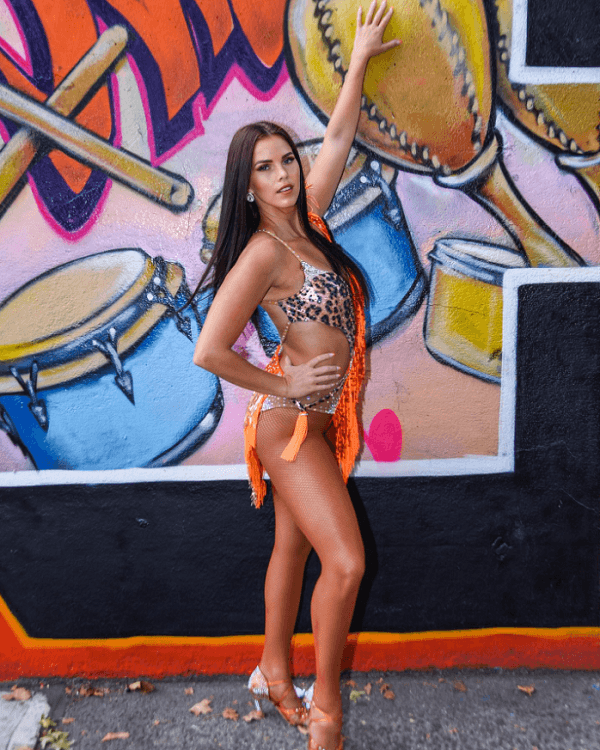
Molly in Harlem
Molly posing for the camera in the Graffiti Hall Of Fame, Harlem

She also told us that she was starring in the official music video for the latest song my Thalia and Los Angeles Azules – “Yo Me Lo Busque” that already has over 1.2 million views after being out for only 5 days! What was an incredible experience and dancing for such big artists. Similarly, she has participated as a dancer for several concerts by Dominican artist Yiyo Sarante in New York and New Jersey before thousands of people who enjoyed her great talent. She also danced with Grupo Niche and La India in some of their shows.

Additionally, she has been interviewed by important shows such as The Art Of Fashion TV, which was broadcast through the Manhattan Neighborhood Network and exposed to millions of viewers, giving Molly the opportunity to make herself known to a much larger and diverse audience.

Her role as a dance teacher

Molly has been teaching dance since she was in Sweden on some occasions, but where she further gained experience was in New York, which is when she has developed all her skills through the private lessons she today offers. She says that this is an area of her work that she really enjoys very much because it gives her the opportunity to teach other young people what she herself learned at the time and this satisfies her enormously. The need to create a new choreography for each class invites her to be more creative and to keep the interest of her students with new dances in each session.

Ms. Hagman has also completed with Malmoe Dance Academy’s professional dance teams on the Swedish national talent competition “TALANG”, (“This is Talent”) where she and her team won First Place. Talang is the Swedish reiteration of the Got Talent series. Talang features singers, dancers, comedians, variety acts and other performers competing against each other for audience votes and prize money. It’s a nationally recognized dance competition which was broadcasted on Swedish national television and to viewers around the world.

Molly at the fashion week
Molly modeling at the New York Fashion Week

Read also: Nicaraguan composer and pianist Donald Vega’s hard-luck story

Damian Ballester and the transformations of Cuban Folk Dance

Latin America / Cuba
Photo 3- Damian Ballester on stage

The relationship of Africa within the musical and dance culture in Latin America is notorious when we see the cultural expressions of the peoples of this continent, it is easy to see how similar they are, the use of percussion is one of the most relevant topics, in itself a mixture of cultural customs, religion, musicality, dance, in itself all the elements of the black race.

America, one of the main destinations of the ships with black slaves from many areas of Africa, caused our culture to be armed with a bit of each custom, therefore, we can say that in America there is a bit of each African people, this relationship of variety of slaves focused on dividing the forces of the race so as not to make it powerful, divided languages, customs, words and religions only left the marginalized population to communicate through percussion, an element that made the system improve at times of understanding within the fences where they lived.

Due to the above, African religions and customs are born in Cuba but, adopted by those already existing on the island, this combination gives us a rich variant of movements from three continents, Europe through Spain and Africa in all its splendor.

To clarify some topics of the folklore of the Caribbean island and its current dance transformations, we had to contact a great teacher, Damian Ballester, director of Iya Aye, one of the best folklore groups on the island of Cuba, to speak with this professional of the dance is necessary if we want to obtain real information about Cuban traditions, a great teacher who has left his teachings in many Spanish-speaking countries, among which Venezuela, Colombia, Ecuador, Mexico and now in the United States stand out…

we begin by greeting him and opening a pleasant conversation, to which we got an original response “Greetings acere, what was it”, calling him opens up a range of questions on the subject in question, here is an extract of the most common doubts generated around the relationship with salsa, its festivals and diffusion in the world.

Greetings Prof. Damian, grateful for your receptivity, we want to give information to our readers about the relationship of Cuban folklore within our world, Salsa, to begin with, what is defined as Cuban Folkloric dances?

Grateful for the opportunity and sure, that if we report on the case, folk dances are nothing more than the set of cultural goods or phenomena that constitute a cultural complex with manifestations of all aspects of popular life. It is the sum of the manifestations acquired by experience, by inheritance, by tradition, by the satisfaction of biological or sociological needs, among other things. This lasts through several generations and almost always undergoes transformations.

They will get compound terms in the word folklore, which speaks of people or people, popular knowledge, together with the popular knowledge of the people. It is a very long topic, because I should talk about so many things about my culture, better let’s leave the definition until here and thus add flavor to the interview.

Much better, we continue then, do African dances have any impact on Cuban folk dances?

Yes, of course, it is the root, the exercise of dance has always characterized my land and has suffered the same processes of contagion and transculturation between the ways of dancing of the colonizer and the styles introduced by African ethnic groups since the 16th century, in fact, the colonizers brought romance, active in the Cuban countryside for several centuries, with its couplets and their ways of singing and founding alegrías, while the black slaves included their ancestral rites, their drums, and their particular sense of rhythm and movement. bodily.

Given this brief explanation, we can say that not only dances of African origin contributed or influenced Cuban folklore, we can say that there is also an incidence from Spain, France and the Caribbean, but its main axis was born from the Spanish and the African.

We know the extent of Cuban folklore, for how long should a person prepare to be called a professor in this branch?

First of all, to carry the name, whether it is a teacher or instructor of Cuban folklore genres, there are two factors that are very important, the first is study, since Cuban folklore is made up of a very wide range of genres divided into different styles, I could mention some examples: Peasant, popular, Afro-Cuban and Franco-Haitian folklore.

Within the styles of peasant folklore, examples could be given of the Cuban zapateo, the ripiado parakeet, the chidonga, the hawk, the caringa, the son montuno, among others.

Within the styles of popular folklore, the Complex of the rumba, the mambo, the chachachá, the danzón, the dance, the pilón, the congas and the comparsas, the casino can be mentioned, within the Afro-Cuban folklore the Bantú cycle can be mentioned, the Yorubas, the Arara, the Abakua, within Franco-Haitian folklore we can mention the French tomb, the Haitian merengue, the gaga, the vodu among others, if I continue we will not finish today. (laughs to close)

Of the folkloric dances, which are the most outstanding or spread worldwide?

It could be said that there are several, examples are the popular folkloric ones, one could say the casino, the mambo, the chachachá, the son, the rumba complex, that the latter people tend to say are African or Afro-Cuban dances, that have African influence does not mean that they are classified within Afro-Cuban dances because this genre emerged in Cuba, was used as an object of protest against the government of that time and was eradicated in the essence of Cuban. In the same way, the one that has had the most impact and remained in the whole world are the Yoruba dances or dances of the orishas.

Should we open another interview to just talk about the many genres that the island embraces, what institutions correctly form the folkloric traditions in Cuba?

There are many institutions in Cuba, from the community point of view what is named in Cuba as amateur dancer are the community projects and actions that are nothing more than groups created in the communities, all of these supervised technically and methodologically by specialists from the houses of culture of each area by provincial and national methodologists governed by the Ministry of Culture.

From a professional point of view, there are art schools such as the ENA (NATIONAL SCHOOL OF ART) and the ISA (SUPERIOR INSTITUTE OF ART) all governed by a logical curriculum organized by specialists and connoisseurs of the genres.

Photo 2- Damian Ballester on stage

Other institutions that could be mentioned, is the little school of the national folkloric group of Cuba with 56 years of creation in charge of rescuing and safeguarding the traditional Cuban musical and dance traditions.

Wao, Enough, Do you know if there is any similar institution in the world?

In the world there are countless schools that are training dancers with the Cuban style and technique, whether they are Cuban or foreign teachers, but nothing like the preparation of art schools in Cuba that work with a logical and well-prepared program, in some schools around the world it could be said that they do not work under a logical methodological program for the teaching of these genres due to the commercial and monetary part, unfortunately there are many dedicated to commerce, to money and not to the necessary dedication.

This dissemination has been achieved while respecting the roots and traditions of the farmers? The root? The original essence?

Unfortunately, it could be said that a good diffusion of Cuban genres worldwide has not been respected or achieved, of 100% of the performers, it could be said that only 10% are protecting Cuban traditions, it is sad to say, but trade and populism it is destroying the folklore of an entire country.

Have these changes in traditions positively or negatively impacted Cuban culture?

First of all, traditions do not change if they are not passed down from generation to generation. In terms of their impact, I see it negatively because the dissemination that is taking place is incorrect and worst of all, there is no organization, which was of Cuba, can follow up on the program that is being given to Cuban genres, in itself, many see the commercial and hence they do not care about the poor distribution of what is taught.

What is the reason that so many dancers seek to perform Cuban dances? It is notorious to see it at festivals and congresses.

There are two very important factors: 1 Cuban music, which has been evolving in an incredible way, fusing Cuban rhythms within its repertoire, and the other factor is not because I am from Cuba, Cuban folklore could be said to be the most complete genre available. world level from the point of view of dance, is that it has a history, virtuosity is varied, it could be said that it is well complemented, due to its complexity and interpretive difficulty, it is what attracts attention, additionally, salsa comes from us, from these roots is born what now wants to be denied.

Teacher and the Cubans? Have Cubans spread their dance correctly?

It could be said that the vast majority of Cubans have disseminated the genres well, why do I say that the vast majority?

Because there is another small group that deforms it, money changes everything, foreigners think that all Cubans They dance, it has happened that they say Cuban and quickly you think he is a dancer, he knows everything, he is good, and no, that is not reality, one thing must be clear about being an opportunist, not a dancer, being a dancer by hobby and another is being one by profession or for being a teacher.

There are Cuban teachers who are hurt by the deformation that is happening with what has been studied so much, but there are others who only care about getting paid and do not care if their students do it well or badly.

How has the interpretation of Cuban roots impacted the so-called Salsa Casino in the world? Has the original and real spread of traditions been respected?

Look, since Cuban music began to evolve inside the casino, it began to undergo a series of transformations from movements to choreography due to the musical style that Cuban orchestras began to spread, known as TIMBA, which was well accepted by the public, If we talk about the impact from the traditional point of view, it could be said that there is no original interpretation of the Cuban roots because they are not executing a specific traditional genre, but rather what they are using different styles of the traditional folk dances that all this could be called Variety.

Have Cuban music and dance festivals or congresses devoted time and effort to improving these transformations? Have they worried about minimizing the damage?

In most cases, very few, first of all, if it is a competitive event, the organizers make the mistake of hiring unqualified personnel to evaluate genres of Cuban origin, and that is where the serious faults come from. There have been cases where there are groups , couples or soloists who perform a good technique within normal limits and the jury evaluates for a taste problem if they see it as beautiful and give it less points, or disqualify it, it is not about beauty, it is about correctness, the organizers should be more careful about these things.

What recommendations would you give to our dancer readers on this controversial topic?

The dancer must be clear about four aspects that are fundamental to his artistic life and entire career: dedication, love of dance and, most importantly, study.

Do only what you love and you will be happy, the one who does what he loves is blessedly condemned to success, which will come when it should come, because everything that should be, will be, and will come naturally.

Photo 1- Damian Ballester on stage

Let’s spend time respecting the roots and cultures of peoples, and above all, let’s take a good look at who we entrust our desire to learn, there are thousands of ways to learn correctly, everything is in the research, knowing who we contact and why There are hundreds of excellent instructors in the world, not to mention the many means of learning today.

I invite you to learn a little about this and other topics, I have a virtual classroom where I teach a lot of the theoretical and practical content online, I do it through the son rumbero academy and its virtual classroom format, follow the @sonrumbero accounts on Instagram and Facebook.

The Son Rumbero Academy: E-Learning in virtual classrooms reached the world of dance

Latin America / Venezuela / Caracas

The Son Rumbero Academy, in step with technological advances, now opens a virtual classroom that will allow you to access an interesting range of online courses open to all through distance education processes with invited international instructors.

The teaching and learning processes are led hand in hand by education professionals, people who handle various tools and techniques that allow reaching the objectives of generalized instruction, now, the means and the contexts that affect this process are in the same way. of great importance to meet the aforementioned goals, hence the institutions invest so much time in physical improvements for the setting of the spaces destined to unite these processes.

It is not new to speak that technological means have invaded all areas of knowledge, there is no longer an area or content that is not already in process or in the process of being taught through the internet, hence the term distance learning. It is not something that escapes from the normality of our day to day.

Professor José Manuel Pérez, director of the Son Rumbero Academy with a great career in the field of salsa and education professional in the area of ​​computer science, is carrying out a process of teaching dance through virtual means, in this case, using the so famous virtual classrooms, where it focuses on asynchronous and asynchronous communication processes by which, the didactic interaction with the students predominates as the elementary basis of teaching, the student becomes the main center of self-information managing their learning through tutors and classmates from the open classroom for the specific dance specialty, is learning to dance by learning, it is doing it between appropriate means and environments.

Aula Virtual - Son Rumbero Academy
Aula Virtual – Son Rumbero Academy

The ways and methods of how to educate in the world of dance have always been maintained, in fact many people look for different alternatives given the circumstances of their tasks, work, home, occupations, in itself, an endless number of causes motivate the desertion when it comes to complying with schedules and routines in dance halls or gyms…

How many do not avoid entering this face-to-face modality due to little free time or the long time it takes to travel to a location, hence new ideas arise that facilitate access to world of dance from any corner of the world and at the time you want, and who would not like to adjust their classes to the hours and days they prefer, even more so if they can change them weekly according to their availability.

The Son Rumbero Academy project is not an original project, E-Learning and virtual classrooms have been in the educational world for several years, only that for the context of dance it was present in tutorial videos, a positive element but more of the same circle for some:

With a virtual classroom, the teaching process is extended, it not only depends on what the student has seen and practiced, in this we obtain constant supervision of the process, teachers dedicated to nourishing theoretical information and practicing something extremely important when understanding music and shaping it in dance it is about taking evaluations, participating in forums or conversations with several students in the same classroom, surveys, tutorial videos, correction process by videos sent to the teacher, easy access to multimedia elements…

from songs to explanatory audios, a world full of of elements that support to a greater degree the fact of learning from any dance discipline, not to mention seminars or professional courses, certifications of improvements in methodological processes in teaching for teachers and instructors, going from evaluation processes for dance competitions to complete percussion courses, a whole world of knowledge and elements given to the me You work in dance and now in music.

Son Rumbero Academy
Son Rumbero Academy

For this month of April, the project will begin with 3 high-impact courses, one on Cuban folklore dictated by Mr. Damian Ballester, a certification for instructors based on planning, evaluation and methodological processes of teaching by Professor José Manuel Pérez , closing with a theoretical-practical seminar on the complex of the rumba soon dictated by a professional in this area, director of one of the largest Cuban groups and participate in endless documentaries oriented to the complex of the rumba, a surprise that They will give us soon.

In the same way, they are betting on a new teaching method for beginners, those who perhaps want more privacy when starting steps in the world of salsa or another genre, new media that can contribute to the development of the diffusion of salsa in the world.

The invitation is now open for you to follow the accounts of the son rumbero academy on Instagram and Facebook at @sonrumbero, by the numbers of its offices in Colombia +573022582306, Venezuela +584122110104, Chile and soon in Peru and Argentina.

Milonga’s contribution to Latin music in general

There are many Latin genres that have managed to find a place in the USA music scene thanks to the constancy of many of its great exponents, salsa being the genre we talk about the most. However, today we want to change the subject a little bit and analyze what is milonga and how popular it has become in recent years.

Malevo y su dama
Recreation of ”Malevo y Su Dama” in Buenos Aires, 1970

Definition of milonga

The milonga can be defined as a folkloric musical genre coming from the Rio de la Plata region, which is usually performed with a guitar accompaniment in 6/8 time. Usually, it is divided in two modalities that are the milonga campera (the genre in its purest form) and the city milonga (style subsequent to the milonga campera).

Etymology of ”milonga’’

Although the musical genre is known for being originally from Argentina, Uruguay and certain parts of Brazil, ”milonga” means ”word” in the Quimbundu language (a language of Angolan origin that corresponds in several expressions with Portuguese). It is important to mention that this is the language used by some tribes from Angola, which was a colony of Portugal, and that many of the slave population of those lands was transported to Brazil, Uruguay and Argentina.

According to information received from some scholars, after the defeat suffered by the Argentine founding father Juan Manuel de Rosas in Caseros at the hands of Entre Rios Governor Justo José de Urquiza, the Brazilian soldiers caught the porteños off guard while singing guajiras in mockery, at the same time that the porteños sang milongas.

In the ears of Brazilians, these songs sounded like gibberish they could not understand. In the end, as a result, the term had such an impact that locals began referring to their own creolized guajiras as milongas.

La milonga de buenos aires
Yanina Quiñones and Neri Piliu dancing “La milonga de Buenos Aires” at the 4th TangoLovers Festival 2018 in Athens, Greece

A little history of milonga

Milonga is known for its joy, speed and sensuality at the time of being performed by its dancers. Its binary rhythm is of great simplicity, so it is in stark contrast to the four beats of the guitar that gives the melody to the dance and is usually accompanied by lyrics occasionally.

It has always been closely related to paya and tango. In the case of paya, milonga used some of its elements specifically for the dance, while tango uses some details of the rhythm and the melody in milonga for its own dance. Today, the three genres are considered a very important part of the Rio de La Plata music scene and each of them has their own characteristics that distinguish one from another.

Milonga had much to do with the birth of tango, but at the same time, it evolved and maintained its independence. In fact, there is some sort of mix of the two called tango milonga that is almost extinct, although it is known that many musicians wanted to use it to give the rhythm of the tango more strength and sustainability. 

As for the places where milonga could be danced, the genre used to be found in neighborhood clubs, dance halls, tearooms and boites. The music used was usually recorded, although the venue owners hired small bands occasionally to change the modality. The popularity of these groups was so great that several of their musicians managed to join highly recognized orchestras at the time. 

Couples who went to milonga clubs to dance ballroom tango and outskirts tango. The first only consisted of beat and elegance, while the second had beat, elegance and figure. Among the most famous places to dance milonga that remain active to this today, we can mention El Barracas Central, Unidos en Pompeya, El Sunderland and many others.

Se dice de mi in milonga
Theddy Lizama and Pamela Ramos Aracena dancing ”Se dice de mí” in Santiago de Chile, November 2022. Source Fuente General de la Nación Argentina

Milonga at present

Today, milonga has become a genre of big importance for people eager to learn to dance things other than salsa, bachata or merengue. This genre offers them the opportunity to try something completely different thanks to which they can connect with others in ways they would not have imagined due to its peculiar rhythm and overflowing sensuality.

In addition to that, every day there are more and more events also called milongas, which consist of massive dances where couples show their best moves to the rhythm of various genres, such as milonga, tango, and vals criollo. In general, the scheduling of a milonga is divided into blocks of three, four or five dances that are separated by short pieces of light music. Apart from that, each block contains a sort of rhythm that is grouped by orchestra, singer or composer.

These events were very typical in Argentina, but have been gradually spreading throughout various parts of the world, including the United States. Nowadays, it is fairly common to find restaurants, night clubs and academies that offer this kind of entertainment to their attendees such as Alberto’s Night Club (San Francisco), The Tango Room (Los Angeles), Milonga La Paz Tango Club (San Francisco), Tango De Rey (San Diego), Tango La Nacional (New York), Fairmont Tango Club (Philadelphia), Dance Fire Studio (New York), and many more.

Read also: The best marimba band found in Los Angeles

  • « Go to Previous Page
  • Page 1
  • Interim pages omitted …
  • Page 4
  • Page 5
  • Page 6
  • Page 7
  • Page 8
  • Interim pages omitted …
  • Page 85
  • Go to Next Page »

International Salsa Magazine (ISM) is a monthly publication about Salsa activities around the world, that has been publishing since 2007. It is a world network of volunteers coordinated by ISM Magazine. We are working to strengthen all the events by working together.