• Skip to primary navigation
  • Skip to main content

International Salsa Magazine

  • HOME
  • Previous editions
    • 2026
      • ISM / June 2026
      • ISM / May 2026
      • ISM / April 2026
      • ISM / March 2026
      • ISM / February 2026
      • ISM / January 2026
    • 2025
      • ISM / December 2025
      • ISM / November 2025
      • ISM / October 2025
      • ISM / September 2025
      • ISM / August 2025
      • ISM / July 2025
      • ISM / June 2025
      • ISM / May2025
      • ISM / April 2025
      • ISM / March 2025
      • ISM / February 2025
      • ISM / January 2025
    • 2024
      • ISM / December 2024
      • ISM / November 2024
      • ISM / October 2024
      • ISM / September 2024
      • ISM / August 2024
      • ISM / July 2024
      • ISM / June 2024
      • ISM / May 2024
      • ISM / April 2024
      • ISM / March 2024
      • ISM / February 2024
      • ISM / January 2024
    • 2023
      • ISM / December 2023
      • ISM / November 2023
      • ISM / October 2023
      • ISM – September 2023
      • ISM – August 2023
      • ISM July 2023
      • ISM Edition June 2023
      • ISM – May 2023
      • ISM April 2023
      • ISM March 2023
      • ISM February 2023
      • ISM January 2023
    • 2022
      • ISM December 2022
      • ISM November 2022
      • ISM October 2022
      • ISM September 2022
      • ISM August 2022
      • ISM July 2022
      • ISM June 2022
      • ISM May 2022
      • ISM February 2022
      • ISM January 2022
    • 2021
      • ISM December 2021
      • ISM November 2021
      • ISM October – 2021
      • ISM September 2021
      • ISM August 2021
      • ISM July 2021
      • ISM May 2021
      • ISM April 2021
      • ISM June 2021
      • ISM March 2021
      • ISM February 2021
      • ISM January 2021
    • 2020
      • ISM December 2020
      • ISM November 2020
      • ISM October 2020
      • ISM September 2020
      • ISM August 2020
      • ISM July 2020
      • ISM June 2020
      • ISM May 2020
      • ISM April 2020
      • ISM March 2020
      • ISM February 2020
      • ISM January 2020
    • 2019
      • ISM December 2019
      • ISM November 2019
      • ISM October 2019
      • ISM Septembre 2019
      • ISM August 2019
      • ISM July 2019
      • ISM June 2019
    • 2016
      • ISM December 2016
      • ISM November 2016
      • ISM October 2016
  • Spanish
  • Download Salsa App
    • Android
    • Apple

Search Results for: Latin dance

La Nota Band showcases the best of Venezuelan talent

We are proud to introduce the talented Venezuelans Rebeca Rodríguez and Armando Montiel, who are members of the group La Nota Band, which we will talk about in the following lines.

After thanking us and clarifying that they are both partners and share the direction of the band, they proceeded to tell us a bit about their origins, professions, band, and current careers.

Rebeca and Armando in 2018
Rebeca Rodriguez and Armando Montiel at the Latin Grammys 2018

Rebeca and Armando’s beginnings in music

Armando began his story by telling us that, in his case, he has always loved music and enjoyed listening to it live. In his native city of Maracaibo, there were many street concerts featuring national and international artists, which sparked his interest in joining his school’s marching band between the third and fourth grade. This, in turn, led him to participate in some intercollegiate gaita festivals, which are very popular in many cities of the South American country. 

This love for music took shape when the young man moved to Caracas and began his percussion lessons to finally have more formal training in this art. However, his parents made him promise to study a “real” career and then do whatever he wished for. He did so and studied civil engineering at Nueva Esparta University, but he has never practiced it, as music has always been his profession.

Rebeca also loved music, and from an early age, was always reciting poems, learning songs, and singing them at full blast. Then, as she grew up, she slowly built her career and made decisions based on that goal. Just as Armando, she participated in her school’s gaita festivals and took singing and dancing lessons, which led her to join bands in Caracas and become a backup singer for great artists.

Like Armando, she also studied a university degree, but in her case it was social communication at Andrés Bello Catholic University. She does not practice it either, although she does use her knowledge in favor of her artistic career.

Armando playing live
Venezuelan percussionist Armando Montiel playing live

Groups prior to La Nota Band

Armando said with a laugh that he could not mention all the bands and artists he has worked with because there are too many, but the most important ones were Ricardo Montaner, Chino y Nacho, Víctor Muñoz, Elvis Crespo, Guaco, Treo, Mermelada Bunch, and a few others. 

Meanwhile, Rebeca pointed out that they met playing for Son Bubalú in Caracas and continued to share experiences in a certain way. While Armando was Chino y Nacho’s percussionist, Rebeca was hired as their backup singer, so they continued to live together and grow as artists in the same environments.

Their professional relationship developed at such a level that they ended up moving to the United States together in 2014 to take advantage of some work opportunities that arose. Among the artists they were able to play with in the United States are Gloria Estefan, Wisin y Yandel, Daddy Yankee, Luis Enrique, José Alberto “El Canario,” and many more. 

Already in the year 2016, both realized that they loved collaborating with music greats, but also wanted to start their own business so they would not have to rely on what others wanted for them. That is when La Nota Band was born, with support from family and friends who were willing to help them on this new path.

Rebeca and Yandel
Puerto Rican singer Yandel and Rebeca Rodriguez at the Premios Lo Nuestro gala

The beginning of La Nota Band

In addition to being on their own, another thing Rebeca and Armando wanted to do was to offer employment to other musicians who were in the same situation as them years ago. This was the case of Armando’s twin brother, who was about to go to the United States and also devoted himself to music on percussion. Then, he bought a drum set so he could become the band’s drummer and his brother could take his place as a percussionist.

From the beginning, they have always focused on pleasing both Anglo-Saxon and Latin audiences, so they have been working to fill their repertoire with songs in both English and Spanish in order to enliven events where the two cultures come together.

What they have learned from the artists they have worked with

Of all the great artists Rebeca and Armando have been fortunate enough to work with, there are a number of things they have learned and applied to their own careers. One of these was the use of playback, as it is an extremely common and necessary resource in modern music. There are also other elements used to increase the sound quality of their performances.

Similarly, the discipline, professionalism, and perseverance necessary to manage this business are things they have seen in other artists and that have helped them get the place they want in the industry, which they also expect to achieve. 

The Venezuelan musicians always keep their eyes and ears open to capture what can work for them and apply it to their own project.

La Nota Band and Chino y Nacho
Part of La Nota Band with Chino y Nacho at the Premios Lo Nuestro gala 2016

Dreams fulfilled

Among the many dreams come true thanks to music, Rebeca and Armando appreciate being able to travel regularly to many countries, even if their professional activities prevent them from sightseeing as they would like. This is something they would not have accomplished with other kinds of work, which they are enormously grateful for.

In addition to that, they are pleased to have been able to perform on big and famous stages such as Crypto.com Arena, formerly known as Staples Center, and Madison Square Garden in New York, something they never would have thought possible in their early years in Venezuela.

And last but not least, their talent and hard work have also led them to perform in important award ceremonies such as the Latin Grammys, Premios Juventud, and Premios Lo Nuestro.

Read also: Colombian dancer and instructor Camila Cepeda takes salsa caleña to Canada

Salsa and Casino Ecuador Festival 2017

Latinoamerica / Ecuador / Quito

“Ecuador is a country located in South America, bordered to the north by Colombia, to the south by Peru, and to the west by the Pacific Ocean. Here, we can appreciate a rich cultural and natural heritage, boasting numerous rivers of unparalleled beauty.”

“‘Hecho Salsa’ is a dance community founded on April 21, 2013. In 2015, it began operating as a dance academy, and starting March 20, 2016, it expanded as an ‘event organizer,’ organizing the 1st International Flashmob for ‘World Rueda de Casino Day,’ which took place on a single day in ‘La Carolina’ park in Quito, Ecuador. As of this year (2017), it became the official organizer of the Salsa y Casino Ecuador Festival, which was the 2nd International Giant Rueda de Casino Flashmob in Ecuador.”


Salsa and Casino Ecuador Festival 2017

“It’s worth mentioning that there was a demand from those in the world of Salsa and dance in general for a dance competition, which led to the start of the 1st Ecuador Dance Contest. This was an open dance competition in the Salsa, Bachata, and Casino categories across two divisions: couples and groups.”

“The Salsa y Casino Ecuador Festival 2017 took place on March 24, 25, and 26, 2017. Its objective and intention were to promote Salsa in general, as well as dance culture, and to strengthen the bond that unites salseros within the community.”

“This interesting event was held first and primarily at the Best Western CPlaza Hotel (located at Av. De Los Shyris N37-53 and Av. Naciones Unidas) and secondarily at the same location where the event took place last year (the aerobics track in ‘La Carolina’ park).”

“We will soon be providing more details about the now-concluded event.”

For more information:

  • Website: www.festivalsalsaycasino.com
  • Facebook: festivalsalsaycasino
  • Instagram: hechosalsa
  • Twitter: hechosalsa
  • YouTube: https://www.youtube.com/channel/UC2x76mai4gCfa7QoYiF979A

Europe / December 2025

Cafe Berlin 2025Radio Gladys Palmera 2025

Karina Bernales present December 2025 FESTIVALS

France December flag
FRANCE
Rainbow Fest Nancy

Rainbow Festival Nancy

Dec 11 / 14 2025

Salle Des Fêtes de Gentilly
710 rue du Capitaine Guynemer
Nancy, France 54100

From € 125

Slovenia circle flag
SLOVENIA
Afro Latin Village 2025

Afro Latin Village Winter Edition

Dec 05 / 08 2025

Hotel & Wellness LifeClass
Obala 33
Portoroz, Slovenia

From € 160

New Year’s Eve celebration

Austria 12 2025
AUSTRIA
NYE PARTY 2025

NYE PARTY

Dec 31, 2025 / Jan 1, 2026

JO & JOE
Europaplatz 1/6 1150
Fünfhaus, Austria

€ 129

Italy December
ITALY
CAPODANNO 2026

CAPODANNO 2026

Dec 31, 2025 / Jan 1, 2026

Arca Social Club
Via Degli Angeli 146, 175
Roma, Italy

€ 80

Calibrated maracasMartinez attorney

Directory of European nightclubs

CZECHIA 12 2025
CZECHIA

La Macumba 2024
La Macumba
Štefánikova 230/7 150 00
Prague, Czech Republic

France December flag
FRANCE

Canela
Canela Club Latino Paris
77 Rue du Faubourg du temple 75010
Paris, France

Cuba Compagnie
Cuba Compagnie Café
48 BD Beaumarchais 75011
Paris, France

Cubana
Cubana Café
47 rue Vavin 75006
Paris, France

La Pachanga
La Pachanga Officiel
8, rue vandamme 75014
Paris, France

La Peña
La Peña Saint Germain
3 passage de la Petite Boucherie 75006
Paris, France

Balajo
Le Balajo
9 rue de Lappe 75011
Paris, France

Pachamama
Pachamama PARIS
46 rue du Faubourg Saint Antoine 75012
Paris, France

Selsero
Salseroparis
9 Rue du Petit Pont, 75005
Paris, France

Germany December flag
GERMANY

Cascadas
Cascadas
Ferdinandstr. 12
20095 Hamburg-Mitte, Germany

Havanna
Havanna Berlin
Hauptstr. 30
10827 Berlin-Schöneberg, Germany
La Macumba - The Real Latin Club in Hamburgs
La Macumba – The Real Latin Club in Hamburgs
Adenauerallee 3 20097
Hamburg, Germany

Latin Palace Changó
Latin Palace Changó
Münchener Strasse 57
60329 Frankfurt, Germany

SODA
Soda Club Berlin
Schönhauser Allee 36
10435 Berlin, Germany

Malta 12 2025
MALTA

Bario Latino Malta venue
Barrio Latino Malta
Ghar il Lembi Street SLM1562 Sliema
Central Region, Malta

Poland 12 2025
POLAND

Teatro Cubano
Teatro Cubano Warsaw
ul. Aleksandra Fredry 6 00-097 /> Warsaw, Poland

Spain December 2023
SPAIN

ACM City
ACM CitY
Carrer Can Pallarès 2, Cerdanyola del Vallès
08290 Barcelona, Spain

Antilla
Antilla Barcelona
C/ d’Aragó, 141
08015 Barcelona, Spain

Azucar
Azúcar SalsaDisco
Calle de Atocha, 107
28012 Madrid, Spain

Disco Bar Cuba Live
Cuba Live
Ramón y cajal número 2
07011 Palma de Mallorca, Spain

El Son
Discoteca El Son
C. de la Victoria, 6
28012 Madrid, Spain

Prisma Discoteca
Discoteca Prisma
C. de Alcalá, 192
28028 Madrid, Spain

Discoteca El Edén Boliviano
El Edén Boliviano
Carrer Gremi de Tintorers, 49A
07009 Palma, Illes Balears, Spain

Mojito
Mojito Club
Rosselló, 217
08008 Barcelona, Spain

Morena
Morena Barcelona
calle 11 num.29
08860 Castelldefels, Spain
Que Chimba
Qué Chimba
Av. del Vallès, 117
08223 Terrassa, Barcelona, Spain
Sala Olvido Madrid
Sala Olvido
C/ Olvido 15
28026 Madrid, Spain
Seven Dance
Seven Dance (Dio Club)
Carrer del Perill 10
08012 Barcelona, Spain

The Host Madrid
The Host
C/ Ferraz nº 38
28008 Madrid, Spain
+34 918 05 36 48

UK December flag
UNITED KINGDOM

Salsa Soho
Bar Salsa Soho
96 Charing Cross Rd
WC2H 0JG London, UK

Salsa Temple
Bar Salsa Temple
Victoria Embankment, Temple
WC2R 2PH London, UK

Juju's
JUJU’s Bar & Stage
Ely’s Yard 15 Hanbury Street
E1 6QR London, UK

Revolucion de Cuba
Revolucion de Cuba Leeds
64-68 Call Lane
LS1 6DT Leeds, UK

LightHouse
The LightHouse Bar & Club
62 Rivington Street
EC2A 3AY London, UK


Creator of Salsa Vida Takeshi Young graced us with his presence in International Salsa Magazine

In International Salsa Magazine, we have always tried to cover all types of Latin music artists, including producers, arrangers, composers, singers, musicians, dancers, and club owners. However, it is also important to talk to other platforms that promote Latin music as we do, so we contacted the creator of the website Salsa Vida, Takeshi Young, to learn a little more about this online media site and everything it has to offer the public.

Takeshi with a painting
Takeshi Young with a painting of Hector Lavoe

Takeshi’s relationship with Latin music

In view of the trouble digital marketing specialist, dance teacher, and competitor Takeshi Young went to create a site like Salsa Vida, we obviously had to ask what relationship he had with Latin music. He replied that he loves to dance and has been doing so for about 19 years. His attendance at various salsa events led him to create a calendar for the San Francisco Bay Area, where he currently resides.

The acceptance he had led him to include much more content like articles, events, guides, and much more. The main goal was to show salsa lovers all the places they could go to enjoy this genre, but over time, Salsa Vida was turning into a sort of online newspaper that provided information on many other things related to the same topic, especially dance academies. For its operation, it uses tools like WordPress, iTools, and Chat GPT as an information bank to his writings, most of which are of his authorship.

He used the name “Salsa Vida” because of the lifestyle that he associated with salsa, which he considered to be unifying, nourishing, and joyful.

Greatest challenges in creating Salsa Vida

One of the most annoying parts about creating Salsa Vida was the calendar, as Takeshi always had to keep an eye on updates, date changes, and event cancellations. Fortunately, he always received information from many of the organizers, who told him when there were any changes in their schedules.

Takeshi at the San Francisco SBK Congress
Takeshi Young dancing with the San Jose State Salsa Team at the San Francisco SBK Congress

Salsa Vida’s most important goal today

Takeshi pointed out that, at present, Salsa Vida’s most important goal is to teach and promote salsa around the world, which has led him to write all kinds of articles in which he seeks to educate his community on all kinds of topics related to Latin music, such as “what is pachanga” or “what is cha cha chá.” With this, he wants those interested in learning about dancing or knowing more about this rich world to have a starting point from the theoretical part.

In addition to that, the website still maintains the calendar to help salsa lovers find events related to their passion near their homes. 

Contacts obtained to date

Takeshi claims to have so many contacts with a lot of bands, especially in the Bay Area, which has helped him keep on growing his website. However, the people he interacts with most in this environment are dancers and instructors who give him a lot of information about their work with their academies and students.

Moreover, his work has also helped him gain invites and press passes to all kinds of events and concerts in both San Francisco and the rest of California, allowing him to cover them and bring the latest updates to his loyal readers.

Takeshi and Alyssa
Takeshi Young and dancer Alyssa Aguilar

Goals with Salsa Vida for the coming months

As for Takeshi and Salsa Vida’s goals for the coming months, the creative young man keeps searching for and publishing events from around the world for his readers to see, as well as highlighting the importance of expanding and publishing even more countries in his calendar so that many more salsa fans from other latitudes can use Salsa Vida to find what they want.

Today, the Salsa Vida calendar has events in about 80 countries, but Takeshi says it is not enough and wants to expand much more to other locations. He also wants to add more languages to make visitors to his page feel more comfortable, and new sections such as “Dancepedia” that would come to be a kind of Wikipedia, but focused on dance.

And if that were not enough, he wants to design an app through which those interested can use the same functions of the site in a much more comfortable and interactive way from any mobile device.

Takeshi’s other occupations

As well as handling Salsa Vida, Takeshi is also a digital marketing specialist and teaches salsa at San Jose State University twice a week.

Importantly, he has a BA in philosophy and a BS in software engineering, both from the aforementioned university. During those years, he was also a member of his class’s salsa and mambo clubs. 

Read also: Haitian bandleader and musician Mac Gregore Brunis fulfills his dream in Montreal

Ángel Luis Canales is a renowned Puerto Rican singer and composer known as “El Diferente” (The Different One) for his particular and irreverent style

Angel Canales was born on June 29, 1950, in Santurce, Puerto Rico.

During his childhood, around the age of 8 or 10, he moved with his family to New York City, where he lived in East Harlem (Upper Manhattan). Musical influences indicate that from a young age, he was strongly influenced by the music of Cortijo y su Combo and Ismael Rivera.

Before or concurrently with his musical career, he worked in the jewelry business; he was a messenger and later learned to cut and polish diamonds, a skill that allowed him to self-finance his musical career and pay high salaries to his musicians.

Ángel Luis Canales is a renowned Puerto Rican singer and songwriter known as El Diferente for his unique and irreverent style.

Musical Career

His Beginnings: He started as a timbalero in Ray Jay’s orchestra, where he debuted as a singer, replacing the lead vocalist.

His first album (1970), titled “Brujería,” was released in 1970 and recorded under the Alegre Records label, with musical direction by Mark Dimond. Hits from this production include “El Barrio,” “Yo No Tengo Pena,” and the title track.

Notable Hits: Among his most popular songs are: “Nostalgia,” “Sol de Mi Vida,” “Perico Macoña,” “Lejos de Ti,” “Hace Tiempo,” “El Cantante y la Orquesta,” “Sabor de los Rumberos Nuevos,” “Bomba Carambomba,” and his celebrated rendition of the bolero “Dos Gardenias.”

His Unique Style is recognized for its unorthodox approach and distinctive vocal timbre, which earned him the nickname “El Diferente” (The Different One).

He was a highly independent artist who self-financed his albums and founded his own record label, Celanac Records.

Tours and Retirement

International Tours: He toured internationally, visiting countries such as Panama (his first), Venezuela (where he performed at the Poliedro de Caracas in 1982), Colombia, and Peru. It is said that he never performed with his orchestra in his native Puerto Rico.

He retired in the late 1990s, deciding to leave the stage.

Currently, he is reportedly battling Parkinson’s disease, which has limited him and led him to choose silence and retirement, although he occasionally attends private events. He is currently 75 years old.

Àngel Luis Canales, y el pianista, compositor y arreglista Gilberto el pulpo Colòn

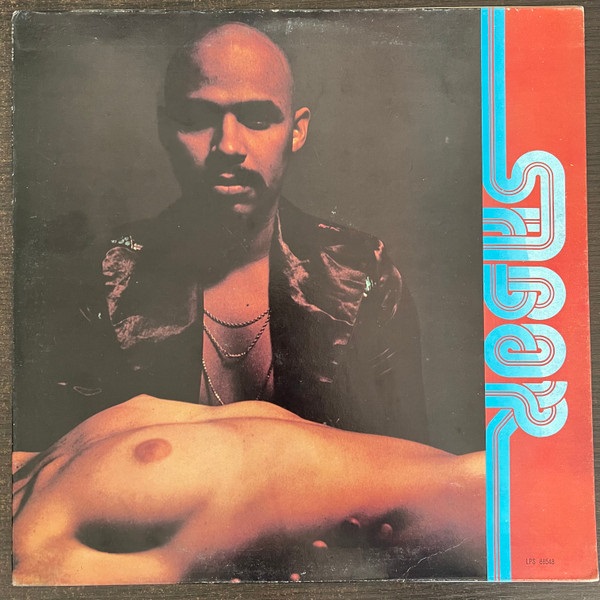
50 Years Since the Launch of “Sabor” (1975)

The Album: The album titled “Sabor” by Angel Canales was released under the Alegre Records label in 1975.

Only a boricua (Puerto Rican) who has been absent from their homeland knows what it’s like to be away from Puerto Rico when winter arrives in New York City. Or when you’re inside a taxi or walking the congested streets of the Bronx or the Latino barrio, and all you see around you are skyscrapers and more skyscrapers. The anxiety and sense of helplessness that overwhelm your spirit in the concrete jungle can only be calmed by memories.

50 years ago, on Monday, November 10, 1975, the unique voice of Puerto Rican singer Ángel Luis Canales consoled the thousands of boricuas oppressed by nostalgia with his composition “Lejos De Ti” (Far From You). It was a confession and affirmation of his Puerto Rican identity, in which he asserts that his love for his homeland will never die, even though he was raised in New York.

The song is a guaguancó with lyrics that evoke images of old San Juan, Villa Palmeras and its rich bomba heritage, Boca de Cangrejos, fried fritters on the grill, and the river that crosses through the old Ancón de Loíza Aldea, where his grandmother lived. “Lejos De Ti” remains the most remembered track from “Sabor,” an album produced by Joe Cain, recorded in late 1974, and released by Alegre Records on Monday, November 10, 1975.

Angle Canales Sabor 1975 Photography By Dominique

This album is considered one of the best salsa releases of the 1970s.

Canales’ Style: Canales favored a different style of interpreting Afro-Caribbean rhythms, combining elements from Héctor Lavoe, Ismael Rivera, Vicentico Valdés, and Paquito Pérez (the singer of the Orquesta Zodiac of Loíza). He extended the melodies with his nasal voice, challenging the poetry of the montunos, but going off-key and mispronouncing some words. His diction was far from perfect.

Production: The architect of Canales’ success was Colombian pianist Edy Martínez, who arranged seven of the eight tracks on this session, from cut #2 to #8. Due to a prior commitment with Mongo Santamaría’s band, he left his compatriot José Madrid in charge of the piano performance on this record.

Under Martínez’s direction, Canales embraced fame. “Sabor” was his second album between 1970 and 1971, he had recorded the “Brujería” session with pianist Mark Alexander “Markolino” Dimond, who founded Conjunto Sabor after spending several years with Willie Colón’s band.

Canales reappeared four years later with the Orquesta Sabor los Rumberos Nuevos with an arrangement by Louie Cruz. That same year, 1975, Larry Harlow produced Mark Dimond’s classic “Beethoven’s V” featuring vocalists Frankie Dante and Chivirico Dávila. “Sabor” was a huge hit.

Tours and Artistic Choices: The singer toured Europe, the United States, and South America, where Colombians, Panamanians, and Peruvians remember him fondly to this day, despite health issues forcing him to retire from the stage.

During the golden age of salsa, singers were expected to master all genres, and boleros were no exception. His vocalization on “La Hiedra” (a track written by Saverio Saratini and Vincenzo D’Acquisto) and “No Te Acostumbres” (a track belonging to Doris Aghian’s catalog) is notable for its theatricality, a trick Canales employed to mask the limitations of his voice.

Salsa dancers who thrive on piano, trombone, and percussion solos will be delighted with “Sabor Los Rumberos Nuevos,” “Sol De Mi Vida” (dedicated to his wife Brunilda), “El Cantante y La Orquesta,” and the hit “Hace Tiempo” (with its memorable chorus: ay, ay, ay, no me hagas padecer así – oh, oh, oh, don’t make me suffer like this).

Legacy: Before becoming a professional singer, Canales worked as a jeweler. A look at the covers of his first two albums is enough to conclude that he was a pioneer in the use of bling-bling in salsa. As a composer, Canales was a solid chronicler of barrio life. The story told in “Perico Macoña” is a good example: a man who smokes a joint and loses all self-control, insulting his own friends with his abrupt comments.

The re-issue of “Sabor” is a fitting tribute to the memory of the late Joe Cain.

Credits

  • Trombone: Juan Torres, Ricardo Montañez
  • Trumpet: Tom Malone
  • Baritone Saxophone, Flute: Emérito Benítez
  • Piano: José Madrid
  • Bass: Eddie Testo
  • Congas: Antonio Tapia
  • Timbales: Gadier Quiñones
  • Bongo: Aldemaro Luis Rivera
  • Producer: Joe Cain
  • Musical Director: Juan Torres
  • Recorded at: LE Studio NYC, December 1974
  • Engineer: Sandy Sina
  • Arrangements: Edy Martínez (except “Sabor Los Rumberos Nuevos” by Louie Cruz)

Torres, Montañez, Tapia, and Quiñones had previously collaborated with Canales on Markolino Dimond’s “Brujería” album.

Collaboration:

  • GonZalsa
  • L’Òstia Latin Jazz
  • Dj. Augusto Felibertt
  • Jaime Torres Torres
  • Fania Record
Angel Canales «El Diferente» recibiendo la produccion de Danilo Cajiao Titulada»Mi Perdicion» año 2020

Also Read: Angel Canales «El Diferente» receiving the production from Danilo Cajiao titled »Mi Perdicion» year 2020.

  • « Go to Previous Page
  • Page 1
  • Interim pages omitted …
  • Page 53
  • Page 54
  • Page 55
  • Page 56
  • Page 57
  • Interim pages omitted …
  • Page 143
  • Go to Next Page »

International Salsa Magazine (ISM) is a monthly publication covering salsa activities around the world and has been publishing since 2007. It is a worldwide network of volunteers coordinated by ISM Magazine. Together, we work to strengthen salsa events around the world.