• Skip to primary navigation
  • Skip to main content

International Salsa Magazine

  • HOME
  • Previous editions
    • 2026
      • ISM / June 2026
      • ISM / May 2026
      • ISM / April 2026
      • ISM / March 2026
      • ISM / February 2026
      • ISM / January 2026
    • 2025
      • ISM / December 2025
      • ISM / November 2025
      • ISM / October 2025
      • ISM / September 2025
      • ISM / August 2025
      • ISM / July 2025
      • ISM / June 2025
      • ISM / May2025
      • ISM / April 2025
      • ISM / March 2025
      • ISM / February 2025
      • ISM / January 2025
    • 2024
      • ISM / December 2024
      • ISM / November 2024
      • ISM / October 2024
      • ISM / September 2024
      • ISM / August 2024
      • ISM / July 2024
      • ISM / June 2024
      • ISM / May 2024
      • ISM / April 2024
      • ISM / March 2024
      • ISM / February 2024
      • ISM / January 2024
    • 2023
      • ISM / December 2023
      • ISM / November 2023
      • ISM / October 2023
      • ISM – September 2023
      • ISM – August 2023
      • ISM July 2023
      • ISM Edition June 2023
      • ISM – May 2023
      • ISM April 2023
      • ISM March 2023
      • ISM February 2023
      • ISM January 2023
    • 2022
      • ISM December 2022
      • ISM November 2022
      • ISM October 2022
      • ISM September 2022
      • ISM August 2022
      • ISM July 2022
      • ISM June 2022
      • ISM May 2022
      • ISM February 2022
      • ISM January 2022
    • 2021
      • ISM December 2021
      • ISM November 2021
      • ISM October – 2021
      • ISM September 2021
      • ISM August 2021
      • ISM July 2021
      • ISM May 2021
      • ISM April 2021
      • ISM June 2021
      • ISM March 2021
      • ISM February 2021
      • ISM January 2021
    • 2020
      • ISM December 2020
      • ISM November 2020
      • ISM October 2020
      • ISM September 2020
      • ISM August 2020
      • ISM July 2020
      • ISM June 2020
      • ISM May 2020
      • ISM April 2020
      • ISM March 2020
      • ISM February 2020
      • ISM January 2020
    • 2019
      • ISM December 2019
      • ISM November 2019
      • ISM October 2019
      • ISM Septembre 2019
      • ISM August 2019
      • ISM July 2019
      • ISM June 2019
    • 2016
      • ISM December 2016
      • ISM November 2016
      • ISM October 2016
  • Spanish
  • Download Salsa App
    • Android
    • Apple

Search Results for: Latin dance

Anthony Carrillo The Legendary and Virtuoso Bongocero for Batacumbele and

Anthony Carrillo was born in New York City on 117th Street and Lexington Avenue, a neighborhood marked by significant complexities in terms of violence and drugs. This is why his father decided to move the family back to Puerto Rico in 1972.
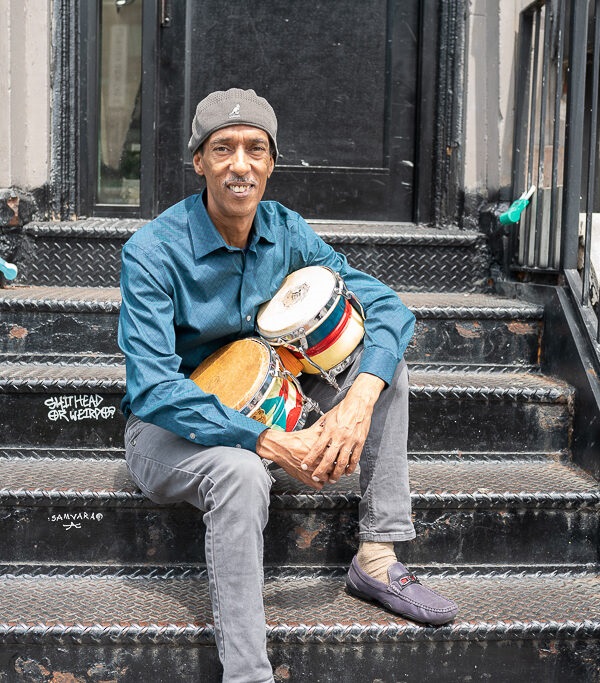
Anthony Carrillo el Virtuoso del Bongo

“I remember that when I opened my eyes the second day, I heard the music of Willie Colón and Héctor Lavoe”.

Me opening my eyes, and the smell of the earth. It’s a scene I’ll never forget in my life.”

Once in Puerto Rico, his father continued to play music and was connected with musicians such as David “La Mole” Ortiz, who would later become a great mentor and collaborator for Anthony.

In the mid-1970s, Anthony and his brother began collaborating with the Areito Folkloric Ballet.

Anthony Carrillo: Master Percussionist

Master percussionist Anthony Carrillo comes from a proud Puerto Rican musical heritage. Although perhaps best known for his performances alongside his childhood friend and famous LP artist, Giovanni Hidalgo, Carrillo has performed with numerous renowned musicians throughout his career, including Eddie Palmieri, Gonzalo Rubalcaba, Paul Simon, and Harry Belafonte.
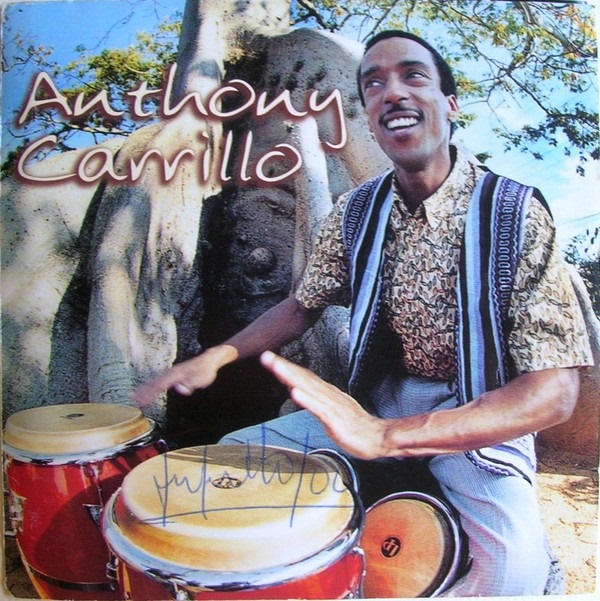
Anthony Carrillo Mis Raíces 1997

He was also an integral member of the outstanding percussion ensemble, Batacumbele, and, in contrast, the Puerto Rican metal band, PUYA. Piano legend Eddie Palmieri has referred to Carrillo as “the best bongocero in the universe.”

Under his own name, Anthony Carrillo has released three CDs, which include the historic first rumba recordings from Puerto Rico. His most recent performances include the off-Broadway musical “I Like it Like That” in 2017, and recording bongos with Puerto Rican artist Residente on his recent track “Hijos del Cañaveral.”

In April 2018, his Latin jazz group, AA team, released two original singles featuring Carrillo on bongos, drums, and vocals.

In August 2018, his dance orchestra, YÁMBAWA, released a four-track EP with originals and English-language pop standards infused with Spanish rap. He has stated that these two productions form his most prolific and inspired body of work in his career so far.

AA Team YÁMBAWA
AA Team YÁMBAWA

Musical Origins

Anthony Carrillo was born in New York City of Puerto Rican ancestry. From childhood, he expressed a special interest in music. His father, Mr. Roman “Don Nan” Carrillo, was his first teacher.

Through his father, Anthony Carrillo was exposed to the music of “Ramito” (one of the greatest exponents of folkloric music in Puerto Rico) and Rafael Cortijo.

Anthony’s earliest influences were “Papi Andino” (Ramito’s bongocero) and Roberto Roena (Cortijo’s bongocero).

When he was only nine years old, Anthony Carrillo’s family returned to Puerto Rico.

It was then that his father asked David Ortiz “La Mole” who was considered one of the best Rumberos in Puerto Rico to teach his son the techniques and patterns of Rumba. By age 13, Anthony was already part of the touring National folkloric group Areito, directed by Mrs. Irene Mcleane.
Anthony Carrillo Y Yova Rodriguez

In the early 1980s, Anthony Carrillo became a member of the famous folkloric group, La Familia Cepeda, the foremost exponents and keepers of the traditional “Bomba” and “Plena” styles.

Collaborators:

Yova Rodriguez

Planet Drum

Also Read:  Papo Vázquez the Pirate & Troubadour of Our Latin Music

Europe / November 2025

Cafe Berlin 2025Radio Gladys Palmera 2025

Karina Bernales present November 2025 FESTIVALS

Spain Flag
SPAIN
Malaga Festival

Malaga Temptation Festival

Nov 24 – Dec 01 2025

Hotel Ipv Palace Spa
Km 207 A-7
Fuengirola, Spain 29640

From € 129,98

Poland flag
POLAND

el Sol Festival Fall Edition

Nov 06 / 10 2025

Sound Garden Hotel
ulica Żwirki i Wigury 18
Warsaw, Poland 02-134

From € 125

Calibrated maracasMartinez attorney

Directory of European nightclubs

Czech Republic circular flag
CZECHIA

La Macumba 2024
La Macumba
Štefánikova 230/7 150 00
Prague, Czech Republic

fRANCE FLAG
FRANCE

Canela
Canela Club Latino Paris
77 Rue du Faubourg du temple 75010
Paris, France

Cuba Compagnie
Cuba Compagnie Café
48 BD Beaumarchais 75011
Paris, France

Cubana
Cubana Café
47 rue Vavin 75006
Paris, France

La Pachanga
La Pachanga Officiel
8, rue vandamme 75014
Paris, France

La Peña
La Peña Saint Germain
3 passage de la Petite Boucherie 75006
Paris, France

Balajo
Le Balajo
9 rue de Lappe 75011
Paris, France

Pachamama
Pachamama PARIS
46 rue du Faubourg Saint Antoine 75012
Paris, France

Selsero
Salseroparis
9 Rue du Petit Pont, 75005
Paris, France

Germany circular Flag
GERMANY

Cascadas
Cascadas
Ferdinandstr. 12
20095 Hamburg-Mitte, Germany

Havanna
Havanna Berlin
Hauptstr. 30
10827 Berlin-Schöneberg, Germany
La Macumba - The Real Latin Club in Hamburgs
La Macumba – The Real Latin Club in Hamburgs
Adenauerallee 3 20097
Hamburg, Germany

Latin Palace Changó
Latin Palace Changó
Münchener Strasse 57
60329 Frankfurt, Germany

SODA
Soda Club Berlin
Schönhauser Allee 36
10435 Berlin, Germany

Malta Circle flag
MALTA

Bario Latino Malta venue
Barrio Latino Malta
Ghar il Lembi Street SLM1562 Sliema
Central Region, Malta

Poland flag
POLAND

Teatro Cubano
Teatro Cubano Warsaw
ul. Aleksandra Fredry 6 00-097 /> Warsaw, Poland

Spain Flag
SPAIN

ACM City
ACM CitY
Carrer Can Pallarès 2, Cerdanyola del Vallès
08290 Barcelona, Spain

Antilla
Antilla Barcelona
C/ d’Aragó, 141
08015 Barcelona, Spain

Azucar
Azúcar SalsaDisco
Calle de Atocha, 107
28012 Madrid, Spain

Disco Bar Cuba Live
Cuba Live
Ramón y cajal número 2
07011 Palma de Mallorca, Spain

El Son
Discoteca El Son
C. de la Victoria, 6
28012 Madrid, Spain

Prisma Discoteca
Discoteca Prisma
C. de Alcalá, 192
28028 Madrid, Spain

Discoteca El Edén Boliviano
El Edén Boliviano
Carrer Gremi de Tintorers, 49A
07009 Palma, Illes Balears, Spain

Mojito
Mojito Club
Rosselló, 217
08008 Barcelona, Spain

Morena
Morena Barcelona
calle 11 num.29
08860 Castelldefels, Spain
Que Chimba
Qué Chimba
Av. del Vallès, 117
08223 Terrassa, Barcelona, Spain
Sala Olvido Madrid
Sala Olvido
C/ Olvido 15
28026 Madrid, Spain
Seven Dance
Seven Dance (Dio Club)
Carrer del Perill 10
08012 Barcelona, Spain

The Host Madrid
The Host
C/ Ferraz nº 38
28008 Madrid, Spain
+34 918 05 36 48

United Kingdom circular flag
UNITED KINGDOM

Salsa Soho
Bar Salsa Soho
96 Charing Cross Rd
WC2H 0JG London, UK

Salsa Temple
Bar Salsa Temple
Victoria Embankment, Temple
WC2R 2PH London, UK

Juju's
JUJU’s Bar & Stage
Ely’s Yard 15 Hanbury Street
E1 6QR London, UK

Revolucion de Cuba
Revolucion de Cuba Leeds
64-68 Call Lane
LS1 6DT Leeds, UK

LightHouse
The LightHouse Bar & Club
62 Rivington Street
EC2A 3AY London, UK


Haitian bandleader and musician Mac Gregore Brunis fulfills his dream in Montreal

We do not often write a lot about Latin music artists in Canada, so we want to remedy that situation and provide coverage to a very talented Haitian based in Montreal. We are talking about bandleader, composer, and musician Mac Gregore Brunis, an artist with whom we have been able to talk about his interesting story and career with the musical group he currently directs, Sabor 19.

Mac posing for the camera
Mac Gregore Brunis posing for the camera at an event

Young Mac’s beginnings in music

In perfect Spanish, Mac thanked International Salsa Magazine for the invitation and started by telling that music had always been more than a simple hobby for him. His first contact with this world was in his native Haiti when he was on his way to school by public transport and there were always musicians playing, so music was always part of his life. 


He also played instruments with some of his classmates who formed musical groups in the classroom.

However, his professional career would not begin until his move to Canada, where he decided to go at age 21 to study electrical engineering and where he remains to this day. Some staff members of the University of Moncton, New Brunswick, where Mac would end up studying, visited some Haitian schools to promote their educational program among young students. The fact that French was spoken in Haiti, as in Canada, also helped Mac make the decision to try his luck in North America, since Haiti did not offer him the opportunities he was looking for.

It was in this country, more specifically in the city of Montreal, that he met other music lovers who introduced him to salsa and other Latin genres. Although he had already heard salsa and bachata in Haiti because of its proximity to the Dominican Republic, some Colombian friends he made in his new place of residence introduced him much more to all this culture, especially the music.

Mac and the rest of Sabor 19
Mac Gregore Brunis and the rest of Sabor 19 at La Salsa Rossa

Sabor 19

When Mac graduated and left the province of New Brunswick to move to Montreal, he began attending salsa and bachata socials to dance on Monday nights, and it was there that he met Eduardo Ramírez. They became friends and played together some of the instruments Eduardo carried, such as maracas, güira, and bongo. When Mac told his new friend that he wanted to learn to play the piano and other instruments, he and Eduardo began meeting to practice and develop the idea of creating a musical group, which they called Sabor 19 in homage to the year it was created, 2019. 

Once they had finally decided to do something more formal in music, they invited other musician friends with whom they met weekly to rehearse. They ended up being a group of about 10 people, including Diego, who would be the band’s lead vocalist. For better or worse, the original members are no longer there, but the current ones from countries such as Haiti, Colombia, Mexico, Canada, Morocco, and Turkey, have kept the ship afloat for the past seven years.

Despite coming from such diverse countries and backgrounds, this has not hindered communication between the musicians in the least. In fact, all of them speak or understand Spanish very well, so they have managed to understand each other almost perfectly. 

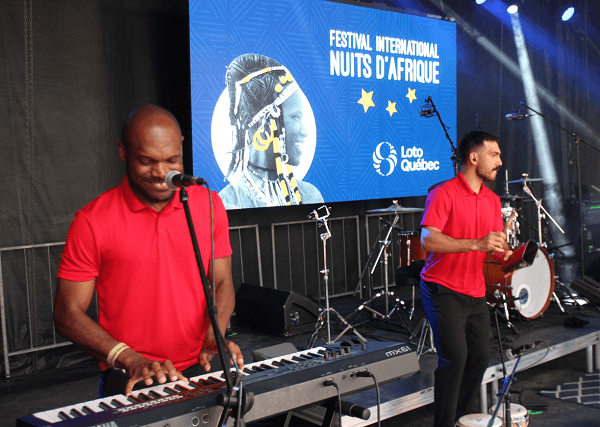
Mac playing at the festival
Mac Gregore Brunis and Sabor 19 playing at the Nuits d’Afrique Festival

Original music and genres

Since the foundation of the group, they have focused on covering the most popular hits such as “El Preso,” “Canoa Rancha,” “Un Verano en Nueva York,” and many others. Their repertoire consists of a total of about 70 covers, which are divided depending on the requirements of the concert or show.

However, over the past three years, Mac and the rest of the team have felt the urge to offer something of their own to the public, so they set to work to create their own music in regards to lyrics, arrangements, melodies, and everything else. 

Silly D’Or Festival 

Sabor 19 is well known for having reached the semifinals at the Silly d’Or Festival as part of the Nuits d’Afrique Festival, which is one of Montreal’s most popular music competitions. Although they did not win first place, Mac describes their participation as a very good experience, as this gave them the opportunity to make themselves known to a much wider audience. In addition, being evaluated gave them a good sense of which aspects to improve for the future.

Read also: Alberto Gonzalez talks about his book on Hector Lavoe and his experience with ‘‘El Jibarito de Ponce’’

Ania Bartelmus from La Candela Flamenco talks about her performance at the Hispanic Heritage Celebration

For some time, Hispanic genres have attracted people from all over the world, who have been captivated by the rhythms and colors of our music and traditions. Such was the case of professional dancer and director of La Candela Flamenco Company, Ania Bartelmus, who despite her Polish roots, could not help but fall in love with these artistic expressions, prompting her to become one of the leading figures of flamenco in Atlanta, Georgia.

Ania was kind enough to take a few minutes out of her busy schedule to talk exclusively with International Salsa Magazine and treat some issues related to her beginnings and current career. 

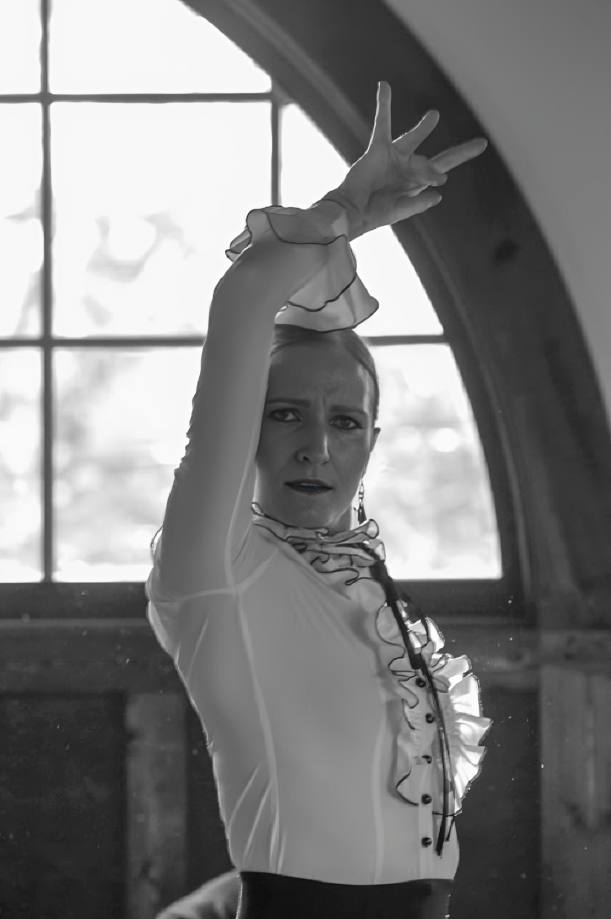
Dancer Ania Bartelmus performing live
Dancer Ania Bartelmus ”La Candela” performing live with Dave Holland and Juan Solas Machado in the background

How Ania’s interest in flamenco and Latin jazz was born

Although Ania was not born into a family of musicians or dancers, she has always been drawn to art and wanted to pursue one of its many branches as an adult. She started taking dance classes in different styles, including ballet, ballroom dancing, contemporary dance, and a little flamenco. 

At that time, at 18 years old, the young woman recalls attending a flamenco show by Spanish composer and guitarist Paco Peña in her hometown. She was so fascinated by the musician’s performance that she wanted to focus a little more on that genre and, if possible, manage to professionalize.

Then, her dance classes began to fully focus on flamenco and at much more advanced levels than before. This appeared insufficient to her, so she decided to live in Seville, Spain, for a few years to learn directly from the source.

La Rubia de La Candela

Ania was fortunate enough to have great teachers who turned her into the professional she is today and one of them was Curro Fernández, who affectionately nicknamed her “La Rubia de La Candela” when she was his student. During her first year in Seville, the dancer enrolled in the school of Esperanza Fernández and Miguel Vargas, the first being her singing teacher. 

Esperanza was originally Ania’s teacher, but she was constantly touring and could not always attend the scheduled classes. Therefore, it was her father, Curro Fernández, who took her place and taught the classes instead of her, which made him some kind of father and mentor for Ania and the rest of her classmates. His knowledge and good humor made him one of the best references for the girl on the way she had to go.

Ania posing
Dancer Ania Bartelmus posing for the camera

Creation of La Candela Flamenco

In 2014, Ania officially started her company, which initially received the name Ania Flamenco, but she later renamed it La Candela Flamenco in order to give more importance to Ania’s stage name. 

At the beginning, the company was seeking to present Spain’s traditional flamenco, but this became a tough task to pull off in the United States, as many of the best flamenco singers are not based there. So Ania decided to change her strategy and opted for a more Latinized flamenco, since most of her musicians come from Latin countries and a large part of the public feels a much stronger connection to Latin genres than to traditional flamenco.

On this subject, he also said: “We continue to respect the main rules of traditional flamenco, but we do not include flamenco singers because of the difficulty in finding them in the city. Our shows focus on other flamenco elements where we can best showcase the tradition’s richness.”

Current members of La Candela Flamenco Latin Band

La Candela Flamenco Latin Band is the company’s main group and is made up of a wide variety of famous musicians, one of them being Venezuelan guitarist José Chirinos, who joined the band in 2018 and contributed greatly to expanding the company’s horizons thanks to his background and the rhythms he brought from his homeland.

Thanks to Jose, Ania met Cuban percussionist Juan Pablo Solas Machado, who brought a lot of experience in flamenco, having been part of a company that toured the world with a Cuba’s flamencoised repertoire. The other percussionist who more recently joined is American Dave Holland, providing great knowledge about rhythms from around the world and serving as a connection between the Latin and the Anglo-Saxon souls for the rest of his bandmates.

We also cannot fail to mention Venezuelan pianist José Manuel García, one of last year’s great additions to the team along with fellow pianist Tony Castillo.

Finally, we also have Bulgarian flutist Teodora Stoyanova, whom Ania met through Jerry Fields, the percussionist with whom she started the company in 2014.

Ania and the rest of the musicians
From left to right: Cuban percussionist Juan Solas Machado, Bulgarian flutist Teodora Stoyanova, Mexican guitarist Ricardo Sánchez “Ricardito”, dancer Ania Bartelmus, American multi-percussionist Dave Holland, and pianist Tony Castillo

Hispanic Heritage Celebration

One of the major events in which La Candela Flamenco Latin Band usually participates annually is the Hispanic Heritage Celebration, to be held on October 25 at the Emory Performing Arts Studio in New York. This will be the third time they have presented this show in Atlanta, although in previous years, the concerts were held at the Roswell Cultural Arts Center.

Ania was first contacted to participate in the event in 2023, as its organizers wanted a show that reflected flamenco in the context of Hispanic heritage. On that occasion, Jose Chirinos played a leading role in the concert, while for the second edition, La Candela Flamenco Band featured the great talent of Mexican composer and guitarist Ricardito Sánchez and the aforementioned Tony Castillo. All of these musicians helped La Candela Flamenco to become more diverse and expand much more into Latin jazz and other rhythms of this type.

Thanks to the great job done by the team, for the second edition of the Hispanic Heritage Celebration, Ania noticed much more interest in the band’s performance than the previous year, and thanks to past experience, the next show worked best. 

For the third edition, in which the talented dancer and her group will perform once again, International Salsa Magazine wishes them all the best and we have no doubt that everything will turn out in the best possible way. 

Read also: Cuban singer-songwriter Osmay Calvo shows his versatility in the New Jersey music scene

Alberto Gonzalez talks about his book on Hector Lavoe and his experience with ‘‘El Jibarito de Ponce’’

As an artist, one of the most noble actions to be taken is to honor the great artists whose legacy inspired later generations, including those who pay homage to them today. Proof of this is the talented bandleader, composer, singer, and now author, Alberto González, whom we thank for sharing his story and various facets of his life with us, including his role as the author of a new book about “the singer of all singers,” Hector Lavoe. 

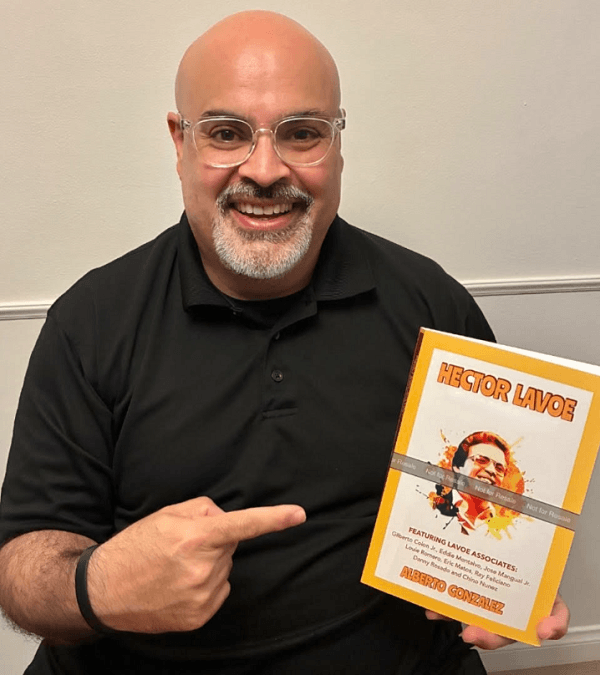
Alberto and his book on Hector
Author Alberto Gonzalez with a version of his book ”Hector Lavoe and Associates”

Alberto’s initial interest in music

Alberto’s initial interest in music began with an aunt from Puerto Rico who went to live with him and his parents in Chicago. She loved the music of Raphael and Sandro, so her nephew listened to them practically every day and ended up falling in love with their music and how they sang.

Little by little, Alberto began to learn their songs and was unknowingly taking his first steps toward becoming a professional singer. However, it did not stop there; he also listened to the trio music that his parents enjoyed and eventually to the salsa albums that his older brother began bringing to the house. Those salsa albums really caught Alberto’s attention.

Among the artists his brother listened to were Eddie Palmieri, La Sonora Ponceña, El Gran Combo de Puerto Rico, Willie Colón, and the one who would become his greatest inspiration, Héctor Lavoe.

Eventually, his brother became a professional trumpet player and played with various salsa orchestras in Chicago. Since he always heard Alberto singing songs at home, in 1979, he suggested that he audition for a new band of young salsa musicians his manager was putting together. For the audition, Alberto was tasked with learning and singing the popular Willie Colón and Héctor Lavoe song “Voso.”

Fortunately, his audition was a great success, and Alberto was asked to join La Típica Leal 79. The story behind the band’s name is interesting: Carlos Caribe Ruíz, the manager of the group, decided on the name Típica Leal because most of the members of his previous band, La Juventud Típica, decided one day to quit; they left him. For that reason, he decided to create a new band, and he made sure to add the word “Leal” (loyal in English) to the band’s name. His hope was that the new band, made up mostly of teenagers, would be loyal and not leave, just like the previous band did.

Sometime later, Alberto would go on to sing with a band called La Inspiración Latina, and he also worked briefly with Orquesta Yambo. In 2001, he moved to Los Angeles, where he began working with Johnny Polanco y Su Conjunto Amistad, becoming one of their main vocalists and traveling the world with them and the band.

Alberto and Johnny Polanco
Alberto Gonzalez playing with Johnny Polanco Y Su Conjunto Amistad

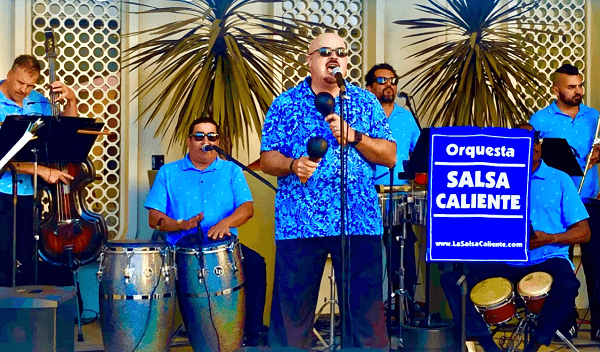
Orquesta Salsa Caliente

When he left Johnny Polanco’s group, Alberto finally felt ready to form his own group, and that is how Orquesta Salsa Caliente was born. He has been leading the band for many years now and has even traveled with the band to Africa and Bermuda.

Over the past few years, Alberto has concentrated mainly on his work as an author. While he continues to perform, his primary focus has been on his debut book ‘‘Hector Lavoe and Associates.’’

Alberto’s Hector Lavoe Experience

In 1979, after auditioning and doing well with the song “Voso,” 15 year old Alberto officially became a member of La Tipica Leal 79.Caribe, the band’s manager, then asked him to learn a few more Hector Lavoe (and Willie Colon) songs. Since Hector was his favorite singer, he gladly learned the songs. Since his voice was somewhat similar to Hector’s, his bandmates began to affectionately call him “Baby Lavoe.”

In the fall of that same year, Alberto learned that Héctor and his orchestra were going to be performing in Chicago. Once he found that out, he asked Caribe to please take him to see Héctor, and, if at all possible, to introduce him to Héctor. Thankfully, he did get to go to that show, and he did meet Héctor. It was during that show, and during one of Héctor’s breaks, that he was able to take a photo with his favorite singer. Alberto still cherishes that photo to this very day. That night, he realized that Héctor was a “man of the people” due to his humility and how he treated others. The photo and his experience with Héctor were some of the main reasons why he decided to write a book about Lavoe. Over the years, many have criticized Héctor and have focused primarily on the negative aspects of his life. Sadly, many people are not familiar with the other side of Héctor, the humble, generous, and kind side of Lavoe. They will learn more about that side of Héctor in the new book.

Well, about a year and a half after first meeting Héctor, La Típica Leal 79 was booked to open for Celia Cruz and Héctor Lavoe. That show would take place at one of the most acclaimed dance halls in the city, where many of the greatest salsa artists performed over the years. That night, Alberto was able to share another conversation with Héctor, and he also took another photo with him. Héctor was generous with his time; he was kind and very accommodating. That’s something that Alberto never forgot.

This and other experiences are documented by the author in the book. Alberto actually interviewed about sixteen of Héctor’s former musicians, and eight of them are featured in the book. You’ll learn about their musical experiences, and you’ll be able to read about their experiences with “El Jibarito de Ponce,” Héctor Lavoe. These are the musicians that are featured: Gilberto Colon Jr., Eddie Montalvo, Jose Mangual Jr., Louie Romero, Eric Matos, Ray Feliciano, Danny Rosado, and Chino Núñez.

Alberto called the book “Héctor Lavoe and Associates,” and that title was somewhat inspired by Willie Colón’s 1978 compilation album “Willie Colón and Associates.”

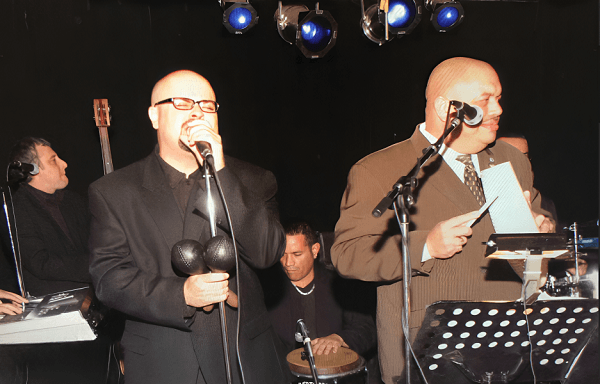
Alberto and Salsa Caliente
Alberto Gonzalez and his orchestra Salsa Caliente

A few Lavoe stories from the book

Among the many anecdotes that can be read in the book, Alberto told us one in which, on one occasion, a couple of Héctor Lavoe’s musicians had their vehicle broken into, and all of their instruments were stolen. When Héctor found out what had happened, he bought them new instruments and told them not to worry about paying him back. He did not charge them a penny.

Here’s another story. During a show, one of Héctor’s trumpet players accidentally dropped his trumpet on the floor and damaged it beyond repair; the instrument was unplayable. What did Héctor do? Héctor gave him $1,000 to go buy a new trumpet and, once again, didn’t charge him a penny.

These are just a few of the many stories regarding Héctor Lavoe that you’ll be able to read in the more than 400 pages of the book. The book will be officially launched in the coming months. For more information, please visit: www.hectorlavoebook.com.

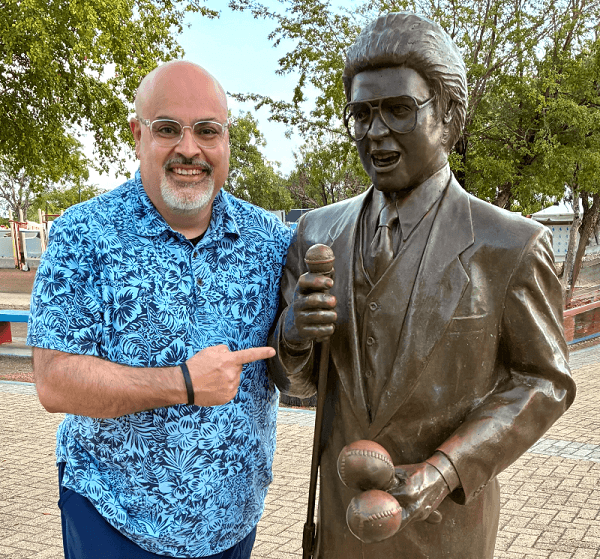
Alberto and Hector in Ponce
Alberto Gonzalez next to the statue of Hector Lavoe in Ponce, Puerto Rico

Read also: Puerto Rican American bandleader and singer Elle Jay is proud of her roots

  • « Go to Previous Page
  • Page 1
  • Interim pages omitted …
  • Page 55
  • Page 56
  • Page 57
  • Page 58
  • Page 59
  • Interim pages omitted …
  • Page 143
  • Go to Next Page »

International Salsa Magazine (ISM) is a monthly publication covering salsa activities around the world and has been publishing since 2007. It is a worldwide network of volunteers coordinated by ISM Magazine. Together, we work to strengthen salsa events around the world.