• Skip to primary navigation
  • Skip to main content

International Salsa Magazine

  • HOME
  • Previous editions
    • 2026
      • ISM / April 2026
      • ISM / March 2026
      • ISM / February 2026
      • ISM / January 2026
    • 2025
      • ISM / December 2025
      • ISM / November 2025
      • ISM / October 2025
      • ISM / September 2025
      • ISM / August 2025
      • ISM / July 2025
      • ISM / June 2025
      • ISM / May2025
      • ISM / April 2025
      • ISM / March 2025
      • ISM / February 2025
      • ISM / January 2025
    • 2024
      • ISM / December 2024
      • ISM / November 2024
      • ISM / October 2024
      • ISM / September 2024
      • ISM / August 2024
      • ISM / July 2024
      • ISM / June 2024
      • ISM / May 2024
      • ISM / April 2024
      • ISM / March 2024
      • ISM / February 2024
      • ISM / January 2024
    • 2023
      • ISM / December 2023
      • ISM / November 2023
      • ISM / October 2023
      • ISM – September 2023
      • ISM – August 2023
      • ISM July 2023
      • ISM Edition June 2023
      • ISM – May 2023
      • ISM April 2023
      • ISM March 2023
      • ISM February 2023
      • ISM January 2023
    • 2022
      • ISM December 2022
      • ISM November 2022
      • ISM October 2022
      • ISM September 2022
      • ISM August 2022
      • ISM July 2022
      • ISM June 2022
      • ISM May 2022
      • ISM February 2022
      • ISM January 2022
    • 2021
      • ISM December 2021
      • ISM November 2021
      • ISM October – 2021
      • ISM September 2021
      • ISM August 2021
      • ISM July 2021
      • ISM May 2021
      • ISM April 2021
      • ISM June 2021
      • ISM March 2021
      • ISM February 2021
      • ISM January 2021
    • 2020
      • ISM December 2020
      • ISM November 2020
      • ISM October 2020
      • ISM September 2020
      • ISM August 2020
      • ISM July 2020
      • ISM June 2020
      • ISM May 2020
      • ISM April 2020
      • ISM March 2020
      • ISM February 2020
      • ISM January 2020
    • 2019
      • ISM December 2019
      • ISM November 2019
      • ISM October 2019
      • ISM Septembre 2019
      • ISM August 2019
      • ISM July 2019
      • ISM June 2019
  • Spanish
  • Download Salsa App
    • Android
    • Apple

Search Results for: Latin genres

Maelo y su Klan want to bring tropical rhythms to the whole world

Maelo y su Klan is the latest project, and one of the dreams, of the producer with more than twenty years of experience, Johnny Ysmael Salaverria Dicurú. The popular “Maelo” as his dearest friends call him, continues his career by working and pouring his heart into this project. With them the first genre fusion between Son and Kizomba is known. In the following lines we will talk about Maelo and his most beloved project.

Who is Maelo?

Johnny Ysmael Salaverria Dicurú was born in San Juan parish, in Caracas, capital city of Venezuela, where he spent his childhood surrounded by the joy of the Caribbean “soneros and salseros”. He was a child when he first expressed his interest in one of the most popular tropical Caribbean rhythms, salsa. Part of his influences came from his uncle, Héctor Bruno Dicurú.

Ysmael D´La O, is his artistic name on stage and producing, but his closest friends call him “El Tiburón de la Salsa”. He left with $80, and a luggage full of dreams, to look out for adventures abroad. His destiny was Tenerife, where he quickly earned the love and respect of the natives, and was embraced as an adopted son.

Maelo as a producer has worked with renowned soloists and groups, from all over the world. To name a few: Nicky Jam, El Binomio de Oro, Tito Rojas, Oscar D’León, Porfi Baloa, Tony Vega, La Dimensión Latina, Ray Sepúlveda, Guayacán, El Grupo Niche. As a promoter and producer of events, one of his greatest achievements was El Gran Combo De Puerto Rico who celebrated their 50th anniversary, and visited Europe hand in hand with him.

We can call Maelo, the cultural ambassador of Caribbean rhythms, making more than 30 countries listen and enjoy them. He was the first Latin American to have 100 continuous virtual conversations during the pandemic, a time when creativity was the escape of many artists.

Among his awards and recognitions is being nominated as International Producer of the Year in 2020, Producer and Promoter of the Virtual Euro Festival in the 20/21 edition. But soon more will come, since Maelo’s talent is infinite.

Defining Maelo and his Klan

The band stands out in danceable rhythms such as: Son, Charanga, Guaguancó, Salsa, Tropical, Latin Jazz and a lot of fusion with an original sound, which is inspired by African rhythms. Of course, with the influences of great masters of the old tropical school. In this way, a combination is created that generates a modern sound, worthy of the new generation. But what most characterizes this Klan is the creation of the fusion of the genres between Son and Kizomba.

The works of Maelo y su Klan have the collaboration of the renowned arranger and director of Billo’s Caracas Boys, the Venezuelan Julio Cesar Estrada. Also by Paquito Barón, ex-member of the Orquesta Bronco of Venezuela, in the musical production.

The Klan has all the merits and the support of the Anglo-Saxon and Asian public. One of his productions entitled ¡Cultura viva! Fusion is positioned as the new sound in Afro-Caribbean music. Maelo not only puts his talent for the band, but also puts all his knowledge of the tropical rhythms of Latin America, as well as its movements through Europe and Asia. Let’s hope that the journey of Maelo y su Klan will be a very long one, full of great successes, so that they can continue to please the public that loves these tropical rhythms.

Multi-Percussionist Carlos Navarro and his Son Y Clave Orchestra

Who is Carlos Navarro?

There have been many celebrities, orchestras, groups of all genres who played their part in the salsa cultural movement in the United States, but we cannot deny that bandleader Carlos Navarro and his Son Y Clave Orchestra played a very important role, since they achieved many goals in the Latin music scene in California, specifically in Los Angeles.

Carlos Navarro was a child of the couple formed by Rafael Navarro and Maria De Jesus Velasquez de Navarro, being at the same time the brother of Alexis Enrique (the famous singer Cherry Navarro), Manuel, Rene, Lelys and Audy. The whole family decided to move to Caracas, the parish of El Valle, where all the children continued their studies.

The first one to start an artistic career at a very young age was his older brother Alexis, who would later be known as Cherry Navarro in the artistic field. Carlos followed the same steps and also dedicates himself to music, but focused on salsa, mambo, merengue, and Latin jazz.

Producer, bandleader, percussionist and singer Carlos Navarro

Las Versalles

In the early 80’s, specifically in 1983, the artist served as co-founder and percussionist in one of the first and most important orchestras in Los Angeles, California, with styles of Salsa, Guaguancó, Merengue, cha cha chá, and Latin Jazz.

This group was called Las Versalles and hired many musicians based in the same city. Here you can see some of the main members and their instruments, Güiro: Carlos Navarro and Jorge Luis Balmaseda, Vocalist, Piano, Arranger: Fito Foster, Vocalist, Guitar, Flute, and Arrangements: Niño Jesús, Bass: Geraldo Zuldo and Luis López, Trumpets: Carleton Smith and Robert Hernández, Trombo: Arturo Velazco, Violin: Gene Hugo, Congas: Humberto Hernández and José “Papo” Rodríguez, Timbales: Héctor Andrade and Edwin Rolland, Backing Vocals: Fitto Foster, Niño Jesús, Bobby Rivas, Jorge Luis Balmaseda and Bass in ‘’Cama Y Mesa’’: Cuco.

Famous singer Cherry Navarro, Carlos Navarro's brother
Famous singer Cherry Navarro, Carlos Navarro’s brother

Son Y Clave

In 1999, the producer, percussionist and singer founded the Son Y Clave Orchestra and became a very important group in the nightlife of Los Angeles and surrounding areas.

One of the most attractive things for spectators of the places where they perform is the ease with which they dance and execute choreography, which are highly contagious, fast and elegant at the same time.

This diversity of performance styles is another one of the many things that has led this orchestra to the summit. In the same way, they have participated in all kinds of festivals, congresses, concerts and much more. They also had an important participation in salsa nights at venues in Los Angeles and the Bay Area such as El Floridita, where they played with Son Y Clave every Monday, until Carlos had to leave for a while and left talented musician Johnny Polanco in charge.

They have been so popular in the last few years that they have managed to open for world famous bands such as the Rolling Stones, who counted on the talent of the orchestra to grace their performances in one of their most important tours.

All members of the Son Y Clave Orchestra

God & Salsa and more

They have also been involved in major film projects such as ”Almost A Woman”, whose director has a long-standing friendship with Navarro. They participated in both the promotional trailer and various parts of the film, especially where there are parties and dancing.

Kaplan was so pleased with Carlos’ work in ”Almost A Woman” that she decided to contact him again to work hand in hand on a project titled ”UNO” which is based on one of the most famous Latin American TV hosts, the famous Renny Ottolina. Once again, Son Y Clave will join forces with the renowned filmmaker to put music to ”UNO”.

”Almost A Woman” had a lot of repercussion at the time, but the film for which they became known in recent years was ”God & Salsa”. Carlos Navarro himself was the main responsible for composing much of the original music that was part of the soundtrack of the film. In addition, they were also present at the filming, displaying their great talent and dedication to the audience.

Currently, Navarro has a lot of contacts, friendships and dealings with other figures and producers of the stature of classical guitarist Yalil Guerra, with whom he has participated in multiple musical projects both with his orchestra and at the production level.

He has also shared the stage with important talents in Los Angeles such as Tito Nieves, Luis Barbarán, Guillermo Canales, Ernie Valenzuela, Melissa Campos, Roosevelt Córdova, among many others.

Carlos Navarro, Luis Conte, Jorge Valmaceda, and the rest of the Siva Orchestra

The world congress you were waiting for is in Spain

Salsa returns to Spain in April, after the successful Congress in 2022, this year it was decided to hold the Salsa Spain World Congress in a new city, Valencia. The entire event will take place very close to the sea, and will be full of great artists in different fields of this tropical genre, along with demonstrations of other genres. Know all the details in the following lines.

Valencia receives the Salsa Spain World Congress

Valencia is a charming and welcoming city with a beautiful Mediterranean climate. Modern architecture mixes with ancient art, the city’s history and culture, to offer visitors a unique destination. The beaches, museums, parks, and festivals contribute to its vibrant cultural scene.

The City of Arts and Sciences is the pride of Valencia. Here, you can explore historic temples or ultra-modern buildings, surrounded by gardens paved with colorful mosaics. This Spanish city also offers numerous culinary options, from traditional tapas to excellent restaurants serving modern Spanish and international cuisine.

And it is precisely this destination that has been chosen to host the Salsa Spain World Congress 2023. The Salsa Spain World Congress is an annual salsa dance festival that is expected to take place every year in Spain. The event highlights the main styles and trends of salsa dedicated to professional dancers, dance enthusiasts, musicians and followers of the genre.

Last year the festival attracted hundreds of attendees who enjoyed spectacular dance shows, master classes, hands-on workshops, musical showcases, and some well-organized competitions. This colorful event will have a program dedicated to salsa and other tropical rhythms.

From April 14 to 16, Valencia will open its doors to all those professionals, and lovers of Latin dance to enjoy everything that the Salsa Spain World Congress will offer. All the events will take place at the Hotel Versus Gandía Palace, a beautiful brand new hotel, whose facilities are only 100 meters from Playa Gandía.

Great artists will highlight each activity

There are many artists confirmed for this great congress and there are still many who are confirming their participation. There will also be incredible performances by the following DJs, who will further elevate the party mood.

Regarding programming, the following information is handled, but is subject to change:

THURSDAY (a pre-party is not included):

  • 23h – 24h Workshop
  • 00h – 04h Part

FRIDAY:

  • 15h – 20h Workshops
  • 11:30h Doors Open
  • 24h – 1:30h Shows
  • 01h – 06h Party

SATURDAY:

  • 11 – 14h Workshops
  • 14h – 20h Workshops
  • Doors Opening 11pm
  • 23:30h – 1h Shows
  • 1:30 – 06h Party

SUNDAY:

  • 11 – 14h Workshops
  • 17h – 20h Pool Party
  • 22h – 23:30h Night workshop
  • 23:30h. – 04h Party

To know the price of the tickets, which will depend on what kind of ticket you are looking for, and in what condition you go, you can check the prices on the LaSalsaDelBaile portal. They also make available a WhatsApp number, and an email for any questions or doubts: [email protected].

Two radio programs of the salsa movement in California

Introduction

After the entire journey, the cultural salsa movement in the state of California is well established, which includes a good number of media outlets that focus on this and other Latin music genres. In this article, we are going to talk a little about two very important radio shows in Los Angeles, which play a very important role in the spread of salsa and its greatest exponents today.

They are the radio shows ”Alma Del Barrio” and ”Canto Tropical”, whose work has provided an immense contribution to the world of music and gained a huge audience both in Los Angeles and in the rest of the world.

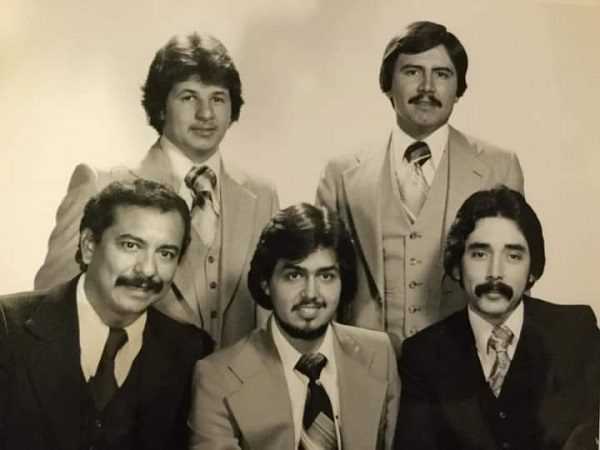
Five of the six Alma Del Barrio DJs Steve Lopez, founder Enrique Kiki Soto, Gustavo Aragon, Eddie Lopez, and Hector La Voz Resendez

Alma Del Barrio

In the autumn of 1973, what would become one of the most important Latin radio shows in Los Angeles started to go on the air, which is known as ”Alma Del Barrio” to this day and its main founders were Enrique Soto and Raul Villa, who were still university students at the time. What Raul and Enrique were looking for with this show was to educate the audience musically speaking and ensure that listeners to learn much more about their favorite artists.

A key part of this show is to interview the greatest exponents of the salsa genre and some of these have been Celia Cruz, Chucho Valdes, Manny Oquendo, Tito Puente, Roberto Roena and many more. Thanks to these conversations, fans of these artists have managed to learn more about their favorite artists and their future projects.

From the day of its founding, the show has been broadcast through the radio waves of KXLU, which is one of the largest radio stations in Los Angeles and offers all kinds of variety and musical genres in its programming.

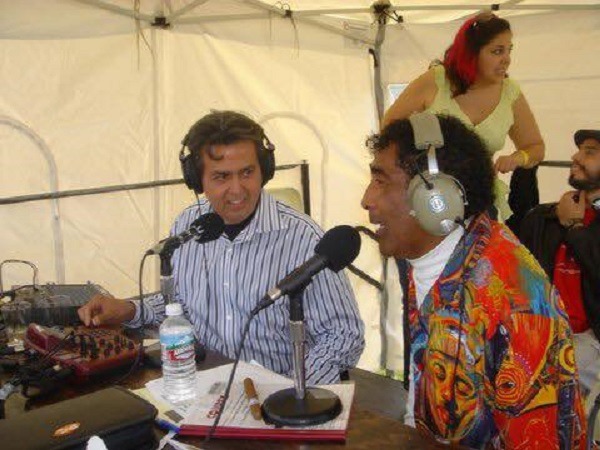
Host Eddie López and Venezuelan Latin music bandleader Rudy Regalado

Canto Tropical

”Canto Tropical” is a radio show created with the firm intention of serving as a bridge to unite generations, cultures and countries that appear to not have anything to do with each other. The main musical genres on which the programming is based are salsa, Latin jazz, merengue, Afro-Cuban rhythms, among others. The music comes from all over the world, but most of the material comes from South and Central America and the Caribbean.

In addition to being always aware of the latest Latin music, hosts Kathy Diaz and Hector Resendez always make sure to get the best interviews with the most famous local and foreign artists so that their fans can get to know them better both personally and professionally. Likewise, listeners have the possibility to participate in contests and sweeptakes to win free tickets to concerts and events that are of their interest.

One of the requirements to be met by the show is to always invite local artists and singers to help them promote their music, new albums and concerts. In this way, the audience is aware of what local talent is currently doing. In fact, there are many figures who are still thankful for the exposure given the program, thanks to which they have achieved the popularity they were seeking.

Another detail that cannot be overlooked is that several social and community organizations have publicly thanked the show for its voluntary work and its hosts Kathy and Hector, who have even written for major publications such as Hispanic, Bilboard Magazine CASHBOX, among others.

Alma Del Barrio's logo
Alma Del Barrio’s logo

Read also: Son Del Monte’s musical director and timbalero Manuel Rivera

International Salsa Magazine showcases important facts about Héctor Lavoe

(Héctor Juan Pérez Martínez; Ponce, 1946 – New York, 1993) Puerto Rican singer and composer, considered one of the best interpreters of Caribbean music of all time and a pioneer in the introduction of New York salsa in the early 1970s.

He was part of the legendary orchestra of trombonist Willie Colón and was known by the nickname of El Cantante de los Cantantes.

-.Héctor Juan Pérez Martínez was born on September 30, 1946 in Ponce, Puerto Rico. His parents Luis and Francisca are musicians who, from song to song, manage to support a large family of several children.

-. In the year of Hector’s birth, the singers who would influence him are much older: Daniel Santos is 30 years old; Ismael Rivera, better known as “Maelo”, is 15; and Jose “Cheo” Feliciano is eleven.

-. At the age of three, he suffers his first loss: the death of Francisca Martínez, his mother.

-. Juan Morel Campos is a music academy where his father enrolls him. Héctor begins to learn classical music, but he quickly decides to learn what is played in the streets. Jesús Sánchez Erazo, better known as “Chuito el de Bayamón”, is his first idol.

-. Sings the song Campanitas de cristal, a bolero composed by Rafael Hernández Marín, at a school party.

-. In the early sixties, he forms with friends, including Papo Luca, a group that performs boleros and salsas. He earns 18 dollars a night and his talent seduces the people of Ponce. He is invited to sing on television programs. Musicians Felipe Rodríguez and Tito Lara give him a promising future.

-. At the age of 17, being recognized in his native Ponce, he travels to New York. His family does not agree with his departure. In the city he is greeted by the ghost of the death of a brother, who was supposedly a drug addict. He stays in the apartment of Priscila, one of his older sisters.

Héctor Juan Pérez Martínez

Before joining the Fania All Stars for the first time, a group directed by the Dominican Johnny Pacheco, he was part of bands such as Orquesta Nueva York and Alegre All Stars.

-. In 1966, at the age of 21, he sings alongside Pete Rodríguez, Adalberto Santiago, Tito Puente, Richie Ray, among other artists, in the incipient Fania All Stars. He meets Willie Colón, an American musician with Puerto Rican parents. “We both knew the world in the Bronx neighborhood. I learned to speak Spanish with Hector, although at first I understood what he was saying. I remember he had a brilliant sense of humor and was a great imitator of singers,” said Colón in an interview.

-. In 1967, he achieved fame with his first album with Willie Colón. It is a mixture of genres such as guaracha, plena and guaguancó, and is entitled El Malo. The album is a tribute to the slum culture of the United States and Latin America.

-. He tries to work as a painter, but his sister won’t allow it. After two weeks, he attends a musical rehearsal with his backing vocalist friend Roberto Garcia. Hector takes the microphone and makes the orchestra directors fall in love with him.

-. At the beginning of 1968 he meets Carmen, a follower he meets at a concert. On October 30 of that year Jose Alberto, his first son, is born.

-. After the birth of Jose Alberto, he has his second son with Nilda Román, another follower. With her, who is nicknamed “La Puchi”, he finally marries and stays in an apartment in Queens. Héctor Junior is the name of his second son.

-. At the end of the sixties he becomes addicted to drugs. In more than one stage he leaves the audience in a daze.

-. In 1971 he is called again to record, together with other stars, Fania All Stars at the Cheetah. This combo featured Cheo Feliciano, Richie Ray, Ismael Miranda, Celia Cruz and the young Rubén Blades. In 1973, the group filled the Yankee Stadium bleachers. Anacaona, Quítate tú and Ahora vengo yo are some of their hits.

-. With Willie Colón, he recorded more than 18 albums between 1967 and 1973. Thousands of reissues of Asalto navideño, El Juicio and Lo Mato were made. Che che colé, Ausencia, Calle luna calle sol, Todo tiene su final are the most requested songs by the Latin American public.

(H3) -. Willie Colón dissolves the duet in 1974. However, both continue to work. Lavoe’s talent continues despite his excesses and the author of Talento de televisión knows it well.

-. In 1975 he releases La voz, his first solo album. This incursion is interpreted as a second wind in his career. So much is his energy to continue that he releases eight more albums. De ti depende (1976) is a collection of boleros and Comedia (1978) breaks sales with the song El cantante, written by Rubén Blades. This work was also produced by Willie Colón, who that year teamed up with Blades to record Siembra, the best-selling salsa album.

-. His interpretation of El cantante helps to build the nickname “El cantante de los cantantes” (The singer of the singers).

-. He performs at the Coliseo Evangelista Mora in Cali in 1977. This concert was attended by the writer Andrés Caicedo, who managed to take a picture with Lavoe in the dressing room. Months later, the author of ¡Qué viva la música! committed suicide with an overdose of barbiturates.

-. As a result of a strong depression, Lavoe is interned in a mental sanatorium in the United States in 1977. His heroin addiction, which he had begun to suffer at the end of the sixties, is not only known by those close to him but also by his fans. “He paid a lot of attention to me and, when he was in trouble, he would call me”, confessed singer Ismael Miranda in an interview.

-. Lives in Cali between November 1982 and March 1983 at the Hotel Aristi. He is a regular singer at the Juan Pachanga discotheque, owned by Larry Landa, a concert organizer. In the capital of the Valley it is said that Lavoe takes drugs during the day and tries to sing at night.

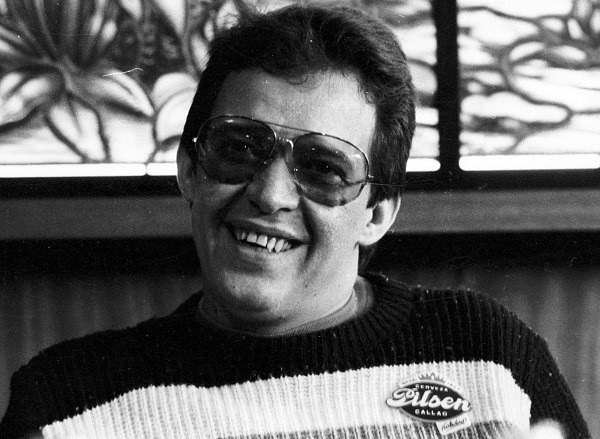
Hector Lavoe el Cantante de los Cantantes

In February 1987, due to a fire, he jumps out of his apartment in Queens. At the same time, in Puerto Rico, his mother-in-law is stabbed to death.

-. On May 7, 1987, his son Hector is hit by a stray bullet. “That death broke his heart,” said Tito Nieves in an interview. “At that moment Héctor Lavoe’s soul dies”.

-. He is diagnosed with AIDS in 1988. Those who visit him in the hospital maintain that he does not lose his sense of humor nor his desire to return to the stage.

-. In Bayamón, Puerto Rico, he sings Mi Gente in a patron saint festival. But his presentation is sabotaged by one of the organizers who supposedly owes him money; in the middle of the song the lights are turned off and Lavoe is left without sound to continue.

-. In 1988, he throws himself from the ninth floor of a hotel in San Juan. He survives to continue fighting the battle. He sings on a Bronx street in 1989. His physical deterioration is a reflection of his state of mind. Lavoe is a ghost of his former self.

Héctor Lavoe
Héctor Lavoe

-. Tito Nieves is one of his friends who accompanies him in his difficult days. Lavoe depended on other people to live. A thrombosis paralyzes part of his body.

-. In March 1993, pushed by his record company, he makes his last presentation in New Jersey. He sings with Roberto Roena’s orchestra. Maestro Roena is not able to play in front of the “Singer of singers”. “It was too much to put him on stage”, he said indignantly.

-. At the age of 46 he dies of a cardiac arrest, on June 29, 1993, in New York. “He came into the world to enjoy it and suffer it. Although he was not happy, he made many people happy,” said his sister Priscila.

-. He is buried in Puerto Rico. He is accompanied by a horde of followers. The presence of his friend Ismael Miranda stands out, who bids him farewell saying: “He is not here with us, but his music continues”.

-. In 2007, El cantante, a movie inspired by his life, was released. It stars Marc Anthony and Jennifer Lopez.

-. Currently there are two monuments in his honor. One in his native Ponce, Puerto Rico, and another in Callao, Peru.

Héctor Lavoe

You can read: Génesis of Salsa, its essence, characteristics, rhythm, history and expansión

  • « Go to Previous Page
  • Page 1
  • Interim pages omitted …
  • Page 41
  • Page 42
  • Page 43
  • Page 44
  • Page 45
  • Interim pages omitted …
  • Page 62
  • Go to Next Page »

International Salsa Magazine (ISM) is a monthly publication about Salsa activities around the world, that has been publishing since 2007. It is a world network of volunteers coordinated by ISM Magazine. We are working to strengthen all the events by working together.