• Skip to primary navigation
  • Skip to main content

International Salsa Magazine

  • HOME
  • Previous editions
    • 2026
      • ISM / April 2026
      • ISM / March 2026
      • ISM / February 2026
      • ISM / January 2026
    • 2025
      • ISM / December 2025
      • ISM / November 2025
      • ISM / October 2025
      • ISM / September 2025
      • ISM / August 2025
      • ISM / July 2025
      • ISM / June 2025
      • ISM / May2025
      • ISM / April 2025
      • ISM / March 2025
      • ISM / February 2025
      • ISM / January 2025
    • 2024
      • ISM / December 2024
      • ISM / November 2024
      • ISM / October 2024
      • ISM / September 2024
      • ISM / August 2024
      • ISM / July 2024
      • ISM / June 2024
      • ISM / May 2024
      • ISM / April 2024
      • ISM / March 2024
      • ISM / February 2024
      • ISM / January 2024
    • 2023
      • ISM / December 2023
      • ISM / November 2023
      • ISM / October 2023
      • ISM – September 2023
      • ISM – August 2023
      • ISM July 2023
      • ISM Edition June 2023
      • ISM – May 2023
      • ISM April 2023
      • ISM March 2023
      • ISM February 2023
      • ISM January 2023
    • 2022
      • ISM December 2022
      • ISM November 2022
      • ISM October 2022
      • ISM September 2022
      • ISM August 2022
      • ISM July 2022
      • ISM June 2022
      • ISM May 2022
      • ISM February 2022
      • ISM January 2022
    • 2021
      • ISM December 2021
      • ISM November 2021
      • ISM October – 2021
      • ISM September 2021
      • ISM August 2021
      • ISM July 2021
      • ISM May 2021
      • ISM April 2021
      • ISM June 2021
      • ISM March 2021
      • ISM February 2021
      • ISM January 2021
    • 2020
      • ISM December 2020
      • ISM November 2020
      • ISM October 2020
      • ISM September 2020
      • ISM August 2020
      • ISM July 2020
      • ISM June 2020
      • ISM May 2020
      • ISM April 2020
      • ISM March 2020
      • ISM February 2020
      • ISM January 2020
    • 2019
      • ISM December 2019
      • ISM November 2019
      • ISM October 2019
      • ISM Septembre 2019
      • ISM August 2019
      • ISM July 2019
      • ISM June 2019
  • Spanish
  • Download Salsa App
    • Android
    • Apple

Search Results for: Latin genres

Broadcaster and host of Con Sabor Y Amor Latino Tatiana Mezarina

We talked with announcer Tatiena Mezarina

The world of broadcasting is of utmost importance to the promotion of Latin music and today we are talking to one of its greatest exponents. We are talking about Peruvian broadcaster and host of the show ”Con Sabor Y Amor Latino” Tatiana Mezarina, who very kindly agreed to talk to us about her career and current projects.
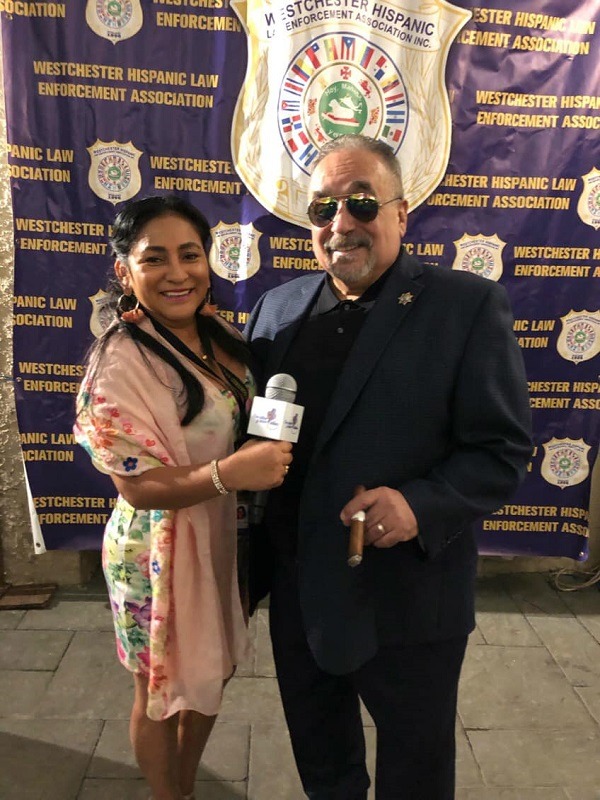
Tatiana Mezarina next to Willie Colón

Tatiana began by thanking us for inviting her and telling us how she became interested in the world of radio. All this enthusiasm for this interesting world of communication began since she was very little in her native Peru, at which time she worked as a school correspondent for one of the most famous newspapers in Latin America, ‘‘El Comercio”. On the radio, she began on the radio station Radio Libertad, specifically in a program show ”Viva Juventud”.

Since a very early age, Mezarina was very involved on all types of media, both print and audiovisual. Then, she had the opportunity to work in television with a show dedicated to music called ”El Mañanero”, which was in charge of broadcasting all kinds of artists and rhythms in her country.

When he started working for ”Canal Global”, he received a scholarship to study Communication Sciences in Germany and worked in German media such as Deutsche Welle and Berlin Channel. Both there and in the United States, she has had many shows linked to social causes and dedicated to informing her listeners about important issues.
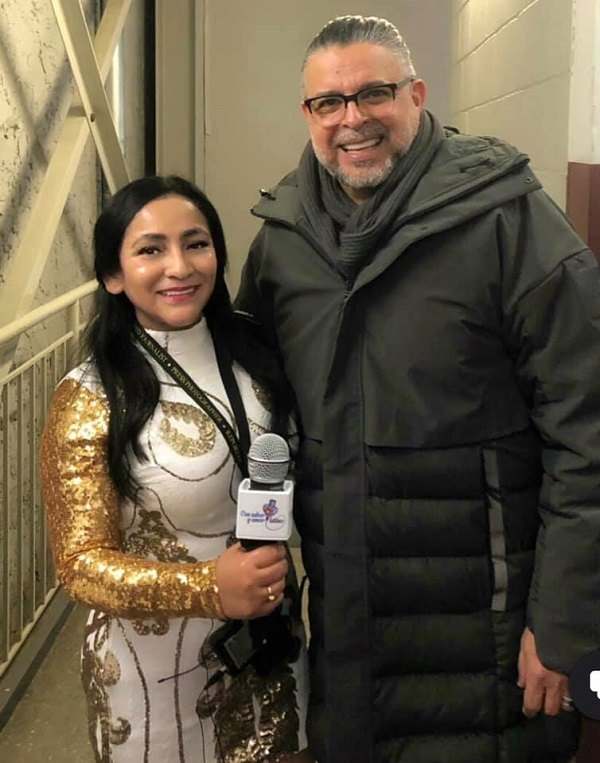
Tatiana Mezarina talking to Luis Enrique

How ”Con Sabor Y Amor Latino” started

In the case of her most recent project ”Con Sabor Y Amor Latino”, Tatiana wanted to work on all these issues and give a friendly voice to help Latinos living in the United States so that they know that we are the largest ethnic minority in this country, so we should not be harassed by anyone. At the beginning, this show sought to keep the Latino community informed, but as time went by, it also wanted to offer good music. This is how Tatiana began inviting Latin artists from all over the world and of all musical genres, but she always had a special tendency to salsa because it is her favorite type of music.

In September 2019, the announcer decided to create ”Con Sabor Y Amor Latino”, a name inspired by how delicious Latin food is and how loving much of us Latinos are. This was her first project of this type since arriving in New York and arose from the need for Latinos to have a window through which they could communicate in their native language and feel comfortable to express themselves.

Music has been very important as dancing and joy are part of our identity. Music is part of our DNA and salsa has always identified with the Latino.

Is academic training important for communication?

Mezarina states that she has no problem with communicators without any training long as they do this job responsibly. However, she also argues that a person with training tends to offer a higher quality work, but this is not always the norm.

The communicator confesses that she herself took a radio and television course there in New York, which was aimed at people who had never done radio before, but wanted to learn about this profession. This is how she became interested in this branch of communication and is the one she currently works in.

”There can be all kinds of communicators, but it’s up to to everyone to decide who to follow and what to listen to,” says the announcer.
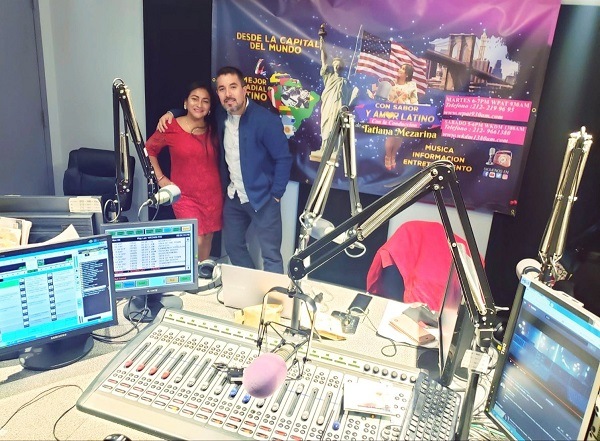
Tatiana Mezarina with Grammy-nominated Colombian percussionist Samuel Torres

Non-recommendable behaviors in communicators

When asked what behaviors which no communicator should have, Tatiana says that ”unverified information should never be disseminated. When we stand at a microphone, we have the responsibility to be careful with what we say because we reach thousands of people in a matter of seconds. If things are not done right, we confuse people and do not honor the truth.”

Future projects

As for her future projects, the communicator has said that she would never want Con Sabor Y Amor Latino to be cancelled, as she considers that much remains to be done from that platform. Unfortunately, she has been unable to dedicate 100% of her time to the radio show, but she hopes to be able to do so in the future. Similarly, he also hopes his content will be broadcast on one of the major television networks in the United States.

Meanwhile, the goal of Mezarina and her team is to keep the community informed on everything a Latino in the United States need to know to avoid inconveniences and to give publicity to artists from all genres who are unable to make their talent public through traditional radio stations and channels.
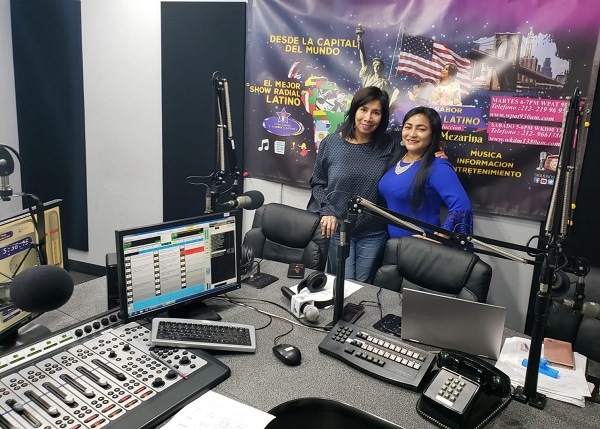
Tatiana Mezarina with commissioner of the NYC Department of Consumer and Worker Protection Lorelei Salas

Read also: The multifaceted artist Yamila Guerra and all her projects
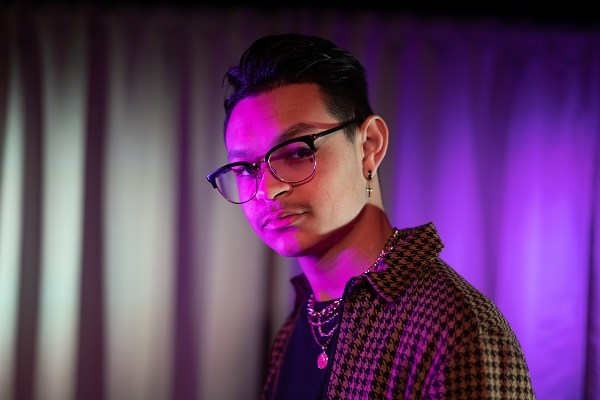
A new salsa talent with Latin parents and born in Boston

Why romantic salsa?

So here we have Sebastian Medina or better known as SBM. He is a promising young talent born and based in the city of Boston. How are you, Sebastián? It’s ice to meet you.

Thank you very much for the opportunity, Karina. I’m super happy and pleased to be here with you.

Salsa singer Sebastian Medina, better known as SBM

Why use the acronym SBM as your stage name?

SBM refers to my full name, which is Sebastián Medina. In the genre, there are few artists who use a short, cool and different name. So, I wanted a short and quick name by which people could identify me.

In passing, I wanted to differentiate myself from other artists with an unusual name.

Many young people like you choose urban genres to start their artistic careers. Why did you choose romantic salsa as your main genre?

As a musician I really identify with salsa because of its instruments, its harmony and everything to do with them. Although I really like romantic salsa, I also like hard dura. I like all types of salsa. I have this impulse to play the piano, get into the genre and enjoy it.

As a singer, the situation is different because I have always wanted to be on stage like the greatest artists. Being also a composer, when someone sings my music, I feel very grateful and supported by those who do it. I want to bring that music to all the young people of the world.

Reading a bit about your history, it is clear that you have always liked this genre.

Yes, I am a romantic. I always have been.

Sebastian Medina performing on stage

How was Sebastian selected for his scholarship?

You were selected for a scholarship at the Berkeley College of Music. How was the selection process and the audition? What was your reaction to being selected?

I was a little nervous during the audition. I sang a song in Spanish and very few people sing Latin music here in Boston. So, I went in and sang a beautiful song by Marc Anthony to compete for that scholarship.

Here in the city there is a program called City Music Boston, whose directors saw my talent and followed my progress in high school. I got a message from them, took some classes they had offered me about music, theory and other things and, meet the people in there. When December came, I received an email congratulating me and informing that I had been accepted to the Berkeley College of Music. That’s when I started to wonder how I was going to pay for college, but I was called from the City Music Boston program to inform me that they would offer me the scholarship that would cover my studies.

What do you think are the selection criteria of the Berkeley College of Music for choosing young talents like you? What do you think made you stand out from the rest?

I studied at the Boston Arts Academy, which is the only arts school here in Boston. I am always very dedicated to my music, my learning and what teachers do. I like to learn a lot and absorb all the energy that the music scene has. I think that the judges saw that in me. They saw my hunger and passion for music and composition.

Now that I’m at the Berkeley College of Music, I’m studying to be an arranger because I want to devote myself to arranging my own music and that of others, but always focusing on salsa.

Sebastian Medina with Colombian record producer Diego Galé

I read that you like Marc Anthony and Los Adolescentes, but you also like urban artists such as Nacho and Nicky Jam. How do you reconcile these very different tastes?

As you know, young people don’t identify strongly with salsa today. For that reason, I’m trying to combine salsa with the urban genre to create new sounds. I’m aware that people really like trap and reggaeton, so I want to use those genres to combine them with my music. My goal is to appeal to the very young.

It may happen that I ask a friend of mine if he likes salsa and he replied that his parents and grandparents were the ones who listen to it. It makes me wonder why he can’t enjoy that music too. That has led me to use other sounds and melodies that young people can identify with.

Would you dive into urban genres?

If a recognized artist gives me the opportunity to do so, I would like to try, but now I want to focus on salsa because that is my priority.

What are the age ranges of the people who listen to your music?

According to Spotify, most of the people who listen to my music are between 18 to 30 years old.

Sebastian Medina with Peruvian-American bandleader, and producer Tony Succar

Do you feel there is little unity in salsa?

I think great artists have a legacy built and now it’s up to young artists to create theirs because that’s how music should be. There are not many collaborations at the moment and that must change.

In the case of the urban genre, artists release collaborations almost every week and I don’t understand why salsa singers can’t do the same. I think that a salsa song can have a different arrangement so that it becomes a remix, but unfortunately that is not being done. There is also a part of the public that is a bit narrow-minded, which is why they don’t support new salsa talents, but rather those who already have a consolidated career.

Do you think that this union is what differentiates salsa from urban music?

I think so because there are cases such as Bad Bunny, who when he does a collaboration with a lesser known artist, the latter will automatically get all those streams, views, followers, among other things. That means that he is indirectly lending his support to that artist and his followers are going to support him as well.

You compose and play the piano. What other areas are you developing?

Right now, I’m in my third year of college and I’m learning as much as I can. At this point in my career, I’m taking a lot of music arranging classes. I’m learning how to arrange my music, how to keep two tunes going at the same time and other things. I’m also taking production classes and all kinds of programs that help me shape my ideas.

Sebastian is in his third year of college at present

Read also: Puerto Rican salsa singer Jai Ramos spoke to us of his life and projects

Salsa En La Web also promotes Latin music around the world

Salsa En La Web

As our dear readers know, International Salsa Magazine is dedicated to promoting Latin music artists, especially those who sing salsa, but we also believe that it is of extremely importance to promote platforms that, like us, seek to spread this wonderful and colorful music everywhere.

Salsa En La Web is a salsa community on the internet, so there are members from all over the world. This site is devoted to promoting and spreading everything related to salsa and Latin music so that the new generations get to know the musical idols of their parents and grandparents. They also want this musical genre to keep growing and never go out.

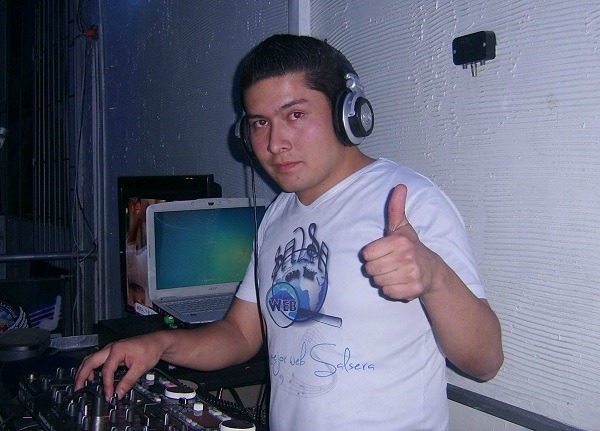
DJ Danny Salsa, director and programmer of Salsa En La Web

Interview

Today, we talked to the administrators of the website Salsa En La Web, which is devoted to promoting salsa worldwide, and our questions were as follows:

Who are we talking to? Please provide your name, occupation and direct or indirect relashionship with salsa.

You’re talking to DANNY SALSA, director and programmer of SALSAENLAWEB. I am also a chemist and DJ by profession. – Collector of romantic salsa.

According to what I read on your Facebook page, you have spread salsa culture at the global level for 11 years. How did everything start?

In 2011 we started sharing music on a blog where we spread LP, CD, ARTISTS, GROUPS, ORCHESTRAS. After that, we also shared gatherings of collectors and salsa events in Bogota.

To date, we have not failed to spread salsa culture that through this beautiful music, we want to make a better culture.

DJ Danny Salsa loves salsa and wants to promote it

What has motivated you to create a website of this style? Why are salsa and Latin music so important to you?

First of all, the taste for salsa music started from I was 13 years. From a very young age, I had contact with computers after school. In my spare time, I created my first blog and, after knowing the world of the internet, I created this website of salsa.

Salsa has brought me great friends, moments, live artists since I programme salsa at bars. I saw the happiness dancing and sharing after entering the world of collecting your albums for your own taste brings.

What part of the world is the largest part of your audience from?

Colombia is our biggest audience with listeners who always listen to our programming at any time of the day and from any time of the day and from any part of the planet where there is an Internet connection.

According to the map on your website, many members of your audience are in Europe and the southern United States. Where are you located? Are you in different countries?

The website is free on the platform www.salsaenlaweb.com.co and from the APP without any cost, listeners in these countries can listen to us from these countries send us their good comments and this motivates us to programme the best salsa music through our . We are in Bogota, Colombia but we have listeners all over the world.

In addition to salsa, what other musical genres do you promote?

We don’t do dissemination of other genres because we are select in salsa.

What goals have you set in the long run?

We want to be the salsa website of reference for its good content in the whole world and have great sponsors that allow us to keep working in favor of salsa.

Logo of Salsa En La Web


Home

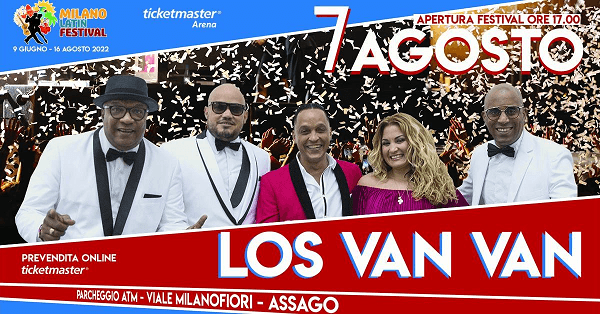
Milano Latin Festival Will Have Great Salsa Stars

The Lombardy Metropolis will continue impregnated with Latin American Culture until August

Milano Latin Festival opens its doors at 5:30 PM, and concerts start at 9:30 PM

The most important annual festival of the summer in northern Italy dedicated to celebrating Latin American culture will continue bringing Salsera fun to the 190,000 visitors of the Foro Mediolanum in the town of Assago located in ASSAGO Viale Milano Fiori parking Metropolitan 20100 Assago, Lombardy, Italy.

Milano Latin Festival founded almost a decade ago (2013), maintains the format of its beginnings with concerts by artists with a trajectory in tropical genres, urban rhythms, and traditional music, tasting of Latin American cuisine, art exhibition, and sale of crafts with a wide variety of Natural ethnic products for health and nutrition with organic and fair trade. Likewise, you can find the Salone Delle Nazioni (Nations Hall), especially for Diplomatic Missions of Latin America, organizations, and institutions.

This reopening that began on June 9th and will end on August 16th puts the magnifying glass on the public that loves Latin dances, residents, tourists, experts, connoisseurs, or simply curious about Latin rhythms after two years of cessation due to the Covid-19 pandemic.

This edition has featured presentations by artists from the Tropical genre such as Marc Anthony (June 10th), Frank Reyes (June 11th), and Habana D’ Primera (June 12th).

The Van Van derives their name from the jargon of the cane collectors to say Come on, Come on.

This month brings Prince Royce (July 1st) and continues with the presentation in a single evening of Maelo Ruíz, Alex Magan, and David Pabón with Salsenato Vol. 2 (July 2nd). Oscar D’ León (July 14th), Tony Vega (July 23rd), Tony Succar (July 30th), and ends on August 7th with the performance of the most prolific group in Cuba, Los Van Van.

This prolific Cuban orchestra is still in force with its peculiar sound. “Their texts are considered by many to be true chronicles of Cuban society. They have an extensive recording career with more than 40 albums, many of them nominated and awarded. They obtained a Grammy (2000) with the production “Permiso que llegó Van Van” and were nominated with the album “Fantasia”, a tribute to Juan Formell in 2017”. Fragment extracted from the Milano Latin Festival website. https://www.milanolatinfestival.it/

For the Salone Delle Nazioni program, there will be a rich calendar of cultural events on the occasion of paying tribute to the various countries with the celebration of their national holidays. This tribute begins with the Day dedicated to the second generation: A challenge for everyone! (July 1st). During this celebration, there will be reflections and testimonies of the “New Italians” with themes inspired by the encyclicals of Pope Francisco, Laudato Si, and Fratelli Tutti. In the same way, this tribute to each country will continue with Los Kunas de Panamá (July 4th), the national day of the Bolivarian Republic of Venezuela (July 5th), and then there will be the pictographic exhibition of the Environment in tribute to the Holy Father Pope Francis from July 6th to 8th. The celebration of the national days of Argentina, Peru, Colombia, Cuba, El Salvador, and Bolivia will continue.

So, July is the best month to vacation in Milan thanks to the most complete Festival that celebrates Latin American culture with more than five honored countries, concerts by internationally renowned artists, dance schools with great instructors, performances by folk groups and DJs, exhibitions photo booths, ethnic restaurants, and a street food area, musical plazas, cocktail bars, and a concert area. Milano Latin Festival is the largest three-month event celebrating Latin American culture in Italy.

Cabaret Sauvage’s 25th Anniversary with Latin Essence

This atypical room located in the Parisian capital will offer Latin music for a month

Originally, Cabaret Sauvage was a Magic Mirror installed for only a few weeks in 1994.

A quarter of a century is the occasion for Cabaret Sauvage will celebrate its anniversary month with a Latin music festival. From July 1st to August 6th enjoy a colorful summer at Parc de la Villette – 59 boulevards Macdonald 75019 Paris, France.

This mythical place was created by Méziane Azaïche in December 1997. This first urban cultural park located in the heart of Parc de la Villette is surrounded by nature, has a terrace overlooking the Canal de l’Ourcq, has a circular dance floor, tables, benches, lights, and beveled mirrors. In the summer of 2019, they modernized this place with a new tent making it the first soundproof Magic Mirror in the world.

At Cabaret Sauvage you can eat, drink, dance, meet your neighbor from the next table, or even lounge on the terrace. Through its diversified program, you will be surprised by the quality of circus shows, dances, and night concerts with artists from all over the world.

During this anniversary month, Cabaret Sauvage https://www.cabaretsauvage.com/agenda welcomes attendees in a spirit of unity and acceptance with mixes of rhythmic genres for their knowledge and enjoyment, starting with Yuri Buenaventura on Saturday, July 9th. Doors open at 7:30 PM and the price is €35.

Yuri’s Salsa is marked by the lyricism of Europe and the drums of Africa. During his childhood, he listened to Gregorian chants, French songs, and classical music (melodies admired by his father) just as he enjoyed moving to the rhythm of percussion, marimba, and songs from the African continent that still sounds on the Buenaventura’s beaches (Colombia), his native island.

Máximo Francisco Repilado Muñoz “Compay Segundo” was the leader of the Compay Segundo y Sus Muchachos band.

The Latin music festival continues with Grupo Compay Segundo – Buena Vista Social Club on Friday, July 15th, and tickets are €25.99 (pre-sale price). Doors open from 8 PM on this day.

This group revives Cuban music before the revolution and expresses its distinguished stamp with a warm and unique sound.

This ecliptic music venue will bring Los Van Van in August, specifically on Friday, August 5th, and the doors open at 7:30 PM, and the ticket price is €35. On this occasion, César “Pupy” Pedroso will join this orchestra.

Los Van Van or better known by many in Latin America as “the Rolling Stones of Salsa” are a band created by Juan Formell in 1969 and has been a school for many current Salsa artists.

Cabaret Sauvage’s anniversary month ends with Chico Trujillo + Sidi Wacho on Saturday, August 6th. Doors open at 7:30 PM and the price of admission is €27.

Chico Trujillo began his musical career in Valparaíso (Colombia) in 1999. His project combines traditional Colombian Cumbia with Punk and has become today the standard-bearer of this new wave of traditional Colombian music accepted by many fans and exported for a long time to the European and American stages.

Likewise, the Sidi Wacho group is nomads born on the island of Valparaíso (Colombia), Roubaix (France), Lima (Peru), and Barbès (France). Their band is made up of two MCs (Rap vocalists), a trumpeter, an accordionist, and a percussionist who mix sounds and dialects accompanied by their war cry “La Lucha Sigue” (the fight continues) in an environment of Cumbia, Balkans, and Hip Hop.

  • « Go to Previous Page
  • Page 1
  • Interim pages omitted …
  • Page 5
  • Page 6
  • Page 7
  • Page 8
  • Page 9
  • Interim pages omitted …
  • Page 62
  • Go to Next Page »

International Salsa Magazine (ISM) is a monthly publication about Salsa activities around the world, that has been publishing since 2007. It is a world network of volunteers coordinated by ISM Magazine. We are working to strengthen all the events by working together.