


Northeast – Middle Atlantic- New Jersey
In 2006, Cubanoson released their debut album “Recordando a Cuba” which contain 10 tracks. Four years after, this NY’s Cuban orchestra presented their second album “Rumba Nueva” with 13 singles including 7 originals in Spanish, English and French. Likewise, Cubanoson has the purpose to unite the talent and dedication of excellent contemporary musicians, (true exponents of Latin roots), to offer and express the traditional Cuban music to all cultural venues! Please, visit them in https://www.facebook.com/cubanoson

Next Event: Tuesday, August 7th
Time: 7:00 PM
Venue: National Night Out Festival. Bergenline Ave and 43rd St, Union City, 07087.
Come and dance with Cubanoson for the 13th straight year LIVE!
This is a great festival free to all over a span of 3blocks.
Support of the Police.
Europe / España
Salsa y Punto has more than 15 years of experience teaching Caribbean rhythms. We cordially invite you to meet them so you can experience the heat and the guaguancó.
Here you will find teachers with great international experience who will teach you and help you improve your dance style. Starting in September, they will be launching new facilities: 2 open-plan rooms with air conditioning, showers and toilets, as well as free parking.
Just 8 minutes from the center of Valencia, in the Alfafar Business Center, surrounded by restaurants and entertainment areas and enjoy between the MN4 Shopping Center and Carrefour.
Without a doubt, it will be your best choice!
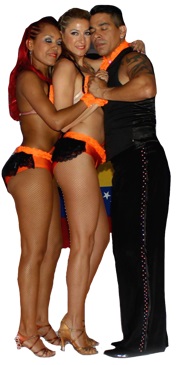
Salsa y Punto was born in Caracas Venezuela in 2001, directed by the musician and dancer Jhonny Sánchez and the dancer and choreographer Carmen González.
They are the first dancers to present the Salsa L.A Dance (online) with acrobatics in Venezuela, since at that time the existing dance groups ventured into other dance styles.
Starting in 2001, Jhonny & Carmen show their first Choreographies as a couple to the Venezuelan Salsero public. In previous years they had the opportunity to work in Venezuela and visit Puerto Rico with the Latin Image Group in 2000 and 2001.
Jhonny and Carmen are the pioneers in this style of dance and this is demonstrated by the significant number of presentations and videos for more than 15 years, in which they have managed to forge their own original style over time, “Salsa A3” (3 dancers), since 2003.
They have walked through the best stages in Venezuela, in addition to participating in the most important concerts in Caracas.
They toured their country of origin with the Orquesta Dimensión Latina “2001-2002” and participated in television programs such as: Sabado Sensacional, the Carolina Gómez Show, De Todo Un Poco and De Par en Par.
They were the exclusive couple to represent Venezuela at the World Salsa Congress in Puerto Rico 2002, and in turn managed to be finalists among the best 8 couples in the world at the 1st World Dance Championship “Salsa Open”, Puerto Rico 2002.
In 2003 they visited Spain, as guests at the World Salsa Congress in Valencia, where they were “a revelation as a dance company.”
Due to the great success, and the number of presentations offered by promoters from different festivals, they decided to stay in Valencia, the city that received them for the first time in Europe.

Currently, they direct the Salsa y Punto academy, through which a large number of students from the Valencian Community have passed, and have trained dancers who today work as dancers and teachers.
Since 2002, they have performed at the most important dance festivals in the world and have been the forerunners of Kizomba in Valencia since 2011. In 2013 they managed to be World Runners-up in the Kizomba Open, and Kizomba Champions in Switzerland 2015.
They were finalists of the television program “Tú si que vales 2011”.
To date, they run their dance companies Salsaypunto Dance Company, Salsaypunto Amateur, Kizombaypunto and Bachataypunto.
Proud to carry the flag of Venezuela and Spain around the world.
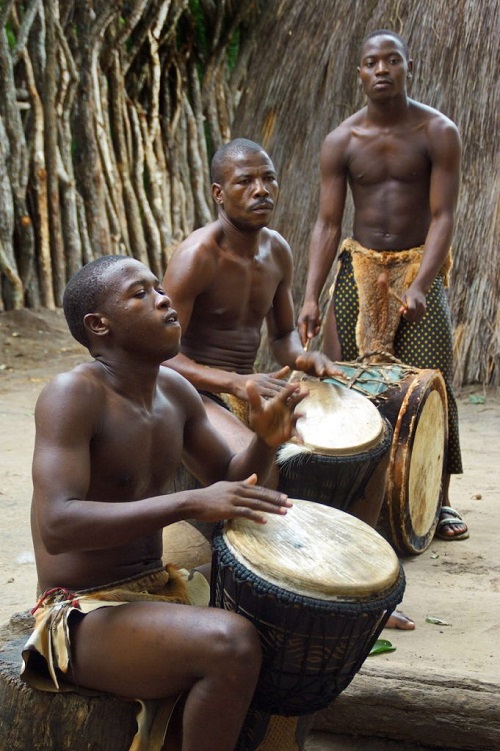
It is believed that this migration was due to the Numu, who were (and still are) blacksmiths [[professionals considered guardians of certain powers.
They were in charge of making the Komo masks, performing circumcision and ablation of adolescents to mark their passage to adulthood, as well as sculpting and playing the yembes.
As a result of differences in shape, wood density, internal engravings and skin, there is a wide range of tones that can be emitted by the yembe.
Striking the skin near the center produces lower notes, striking it near the edge.
It is struck with the fingers together and stretched, but without leaving them glued to the drumhead, so that the sound comes out.
On the other hand, to produce the highest pitched sound, the slap is used.
The palm of the hand is slightly curved and the membrane is hit with the fingertips.
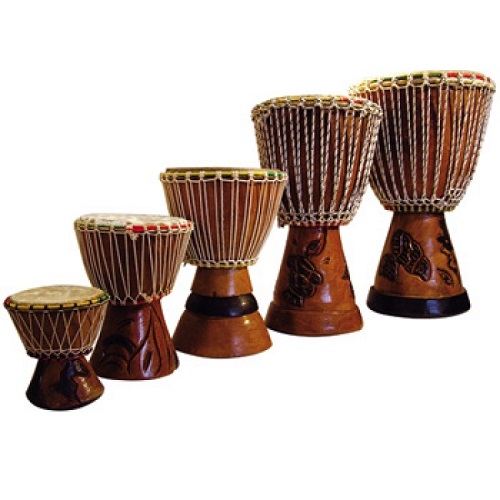
The word yembé comes from the Bambara language and means together in peace.
Membranophones are musical instruments that produce sound through the vibration of a taut membrane or drumhead.
The membranes can be made of animal skin or synthetic material and the instruments can be mounted on wooden cylinders, ceramic vessels or gourds.
Membranophones can be played by percussion or rubbing and can have one or two membranes, closed or open bottoms.
Some examples of membranophones are:
– Bombo: A direct hit membranophone whose sound is extracted by striking it with a wooden striker.
– Snare: A membranophone instrument
– Drum: A percussion instrument with a resonance box, which is usually cylindrical, and a membrane called a drumhead that covers the opening of the box.
– Zambomba: A friction drum.
– Cuica: A friction drum
– Juque: A Costa Rican instrument that is a friction drum
– Mirlitón: A blown membranophone instrument.
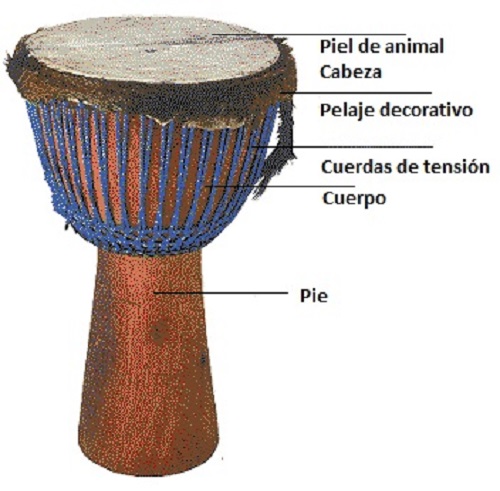
Membranophones. The membranophones produce the sound by means of the vibration of a tensed membrane. The vibration of this membrane can be provoked by hitting it, rubbing it or by voice (humming).
The castanets or “palillos” are a percussion instrument created by the Phoenicians three thousand years ago.
The oldest instrument is the flute, invented by Homo habilis in the Paleolithic and made of bird bone and mammoth ivory, this instrument is about 42 000 years old.
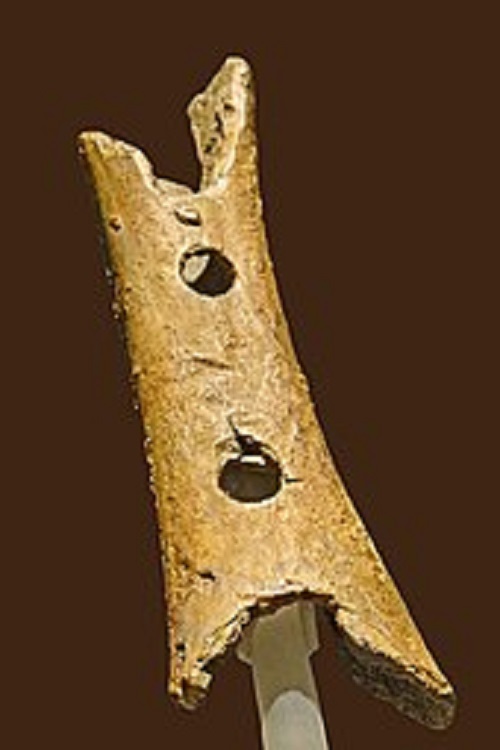
The Divje Babe flute is the oldest instrument in the world and is currently in the National Museum of Slovenia.
The combination of Asian Oak shell, Remo Skyndeep Natural head and premium Gon Bops hardware produces massive bass and impressive volume on Alex Acuna’s Signature 14″ Djembe.
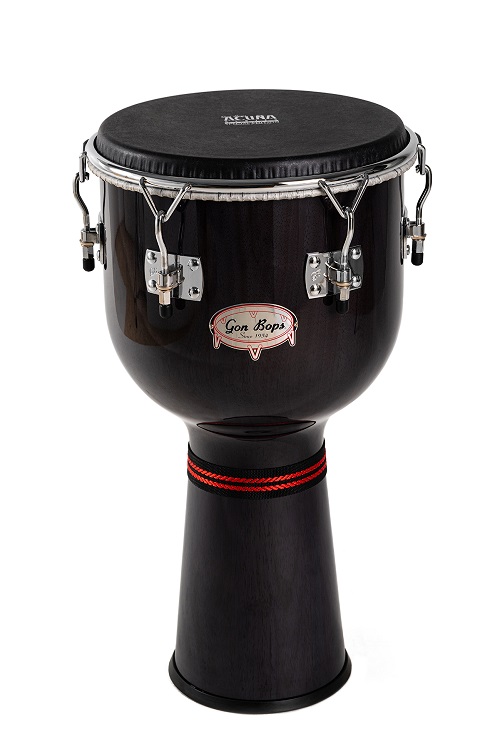
Source: Gon Bops
Also Read: Orestes Vilató es una de las figuras más influyentes en el mundo de la percusión Latina
We know that the most of our Latin countries have historically become known for genres such as salsa, merengue, bachata and more recently reggaeton and trap. However, the popularity of the aforementioned genres made us leave aside other more local rhythms that also deserve exposure.
On this occasion, we wanted to talk about the bomba and plena, so we resolved to interview Nanette Hernandez, who is one of its main proponents here in the United States, more specifically in New Jersey.

Nanette began by telling us that her interest in music was born thanks to her parents, who are Puerto Rican and moved to the United States, Pennsylvania, during the 1950s to continue their life in this new country. However, his home was built based on Puerto Rican culture and, of course, that included language and music. Her father had an ensemble that played jibaro music and Nanette grew up watching this, so this musical environment was always very familiar to her.
As she grew up, Nanette also became very interested in dancing and discovered that she really liked salsa when she was just a teenager. She remembers listening to Celia Cruz, Johnny Pacheco, El Combo de Puerto Rico and many of the most popular groups and musicians of the time, who also inspired her to keep dancing. She felt that she was encouraged just by dancing, so she continued to do so over the years, but not professionally.
After marrying Juan Cartagena and seeing that she and her husband shared a taste for Latin music, they began to frequent places where Puerto Rican music groups performed. That is how they were in a show of the dance and drum ensemble ”Los Pleneros de la 21”. They were so fascinated by what they saw and heard that both Nanette and Juan began to study the plena and bomba because they wanted to know everything about these rhythms. Their interest was such that they were even in contact and consistently et with the Cepeda family, which is a cultural institution with many years of experience in everything to do with the bomba and plena.
She also mentions that Roberto Cepeda, part of the aforementioned family, was very important in her decision to devote herself to promoting the bomba and plena and feels that he saw something in her that even herself was not able to see, so she decided to search for expert teachers in these genres to become more professional in the dancing and instrumental part in order to be able to teach them to others.

When we asked Nanette about the differences between the bomba and plena, she made it very clear that people often think that they are almost the same, but they are not. They are extremely different and have many differences from each other.
In the case of the bomba, it has re than 400 years of existence and originated in Africa. The genre arrived in America along with the slaves who were brought to the New Continent and the new inhabitants of these lands brought their improvised instruments with them such as the so-called ”barrels”, which have a great resemblance to drums. They are often accompanied by maracas.
In the case of the plena, this rhythm uses the pandero, the güiro and other smaller hand instruments with which they make a completely different sound from the bomba. To complement what Nanette told us, we can also say that the plena is believed to originate in Ponce, Puerto Rico, and its lyrics are very focused on comedy, activism and denunciation. In addition, it is also seen as a very peculiar mix between African and European music.
Another difference between the bomba and plena is that, in the bomba, it is the dancer who leads and guides the musicians, while in plena the opposite happens. These genres are very different from each other, but that does not change the fact that both complement each other perfectly well in any show or class.

Segunda Quimbamba is a project initiated in 1989 by Juan Cartagena, Nanette’s husband, which was born as a result of the couple’s interest in promoting two of the most important ancestral rhythms from Puerto Rico and preserving the most important musical traditions on the Island of Enchantent, such as the ”parrandas”. A few years later, they began introducing the bomba and plena until they became the center of the project.
In 1997, Nanette and Juan founded the Segunda Quimbamba Folkloric Center, which is a non-profit arts organization that seeks to promote the bomba and plena in New Jersey and the rest of the United States so that those interested can learn more about Puerto Rican music and culture in general. The organization also seeks to offer music and dance workshops at solidarity prices and even for free at times.
Nanette and Juan have been invited to participate in numerous events and have been recognized for the role they have played in promoting Latin music, especially that of Puerto Rico. For example, in 2023, The New Jersey State Council of The Arts recognized the couple with the New Jersey Heritage Fellowship Award in honor of what they have accomplished with this wonderful and ambitious musical project.
Read also: Edwin Ortiz y La Mafía del Guaguancó is present in ISM