• Skip to primary navigation
  • Skip to main content

International Salsa Magazine

  • HOME
  • Previous editions
    • 2026
      • ISM / March 2026
      • ISM / February 2026
      • ISM / January 2026
    • 2025
      • ISM / December 2025
      • ISM / November 2025
      • ISM / October 2025
      • ISM / September 2025
      • ISM / August 2025
      • ISM / July 2025
      • ISM / June 2025
      • ISM / May2025
      • ISM / April 2025
      • ISM / March 2025
      • ISM / February 2025
      • ISM / January 2025
    • 2024
      • ISM / December 2024
      • ISM / November 2024
      • ISM / October 2024
      • ISM / September 2024
      • ISM / August 2024
      • ISM / July 2024
      • ISM / June 2024
      • ISM / May 2024
      • ISM / April 2024
      • ISM / March 2024
      • ISM / February 2024
      • ISM / January 2024
    • 2023
      • ISM / December 2023
      • ISM / November 2023
      • ISM / October 2023
      • ISM – September 2023
      • ISM – August 2023
      • ISM July 2023
      • ISM Edition June 2023
      • ISM – May 2023
      • ISM April 2023
      • ISM March 2023
      • ISM February 2023
      • ISM January 2023
    • 2022
      • ISM December 2022
      • ISM November 2022
      • ISM October 2022
      • ISM September 2022
      • ISM August 2022
      • ISM July 2022
      • ISM June 2022
      • ISM May 2022
      • ISM February 2022
      • ISM January 2022
    • 2021
      • ISM December 2021
      • ISM November 2021
      • ISM October – 2021
      • ISM September 2021
      • ISM August 2021
      • ISM July 2021
      • ISM May 2021
      • ISM April 2021
      • ISM June 2021
      • ISM March 2021
      • ISM February 2021
      • ISM January 2021
    • 2020
      • ISM December 2020
      • ISM November 2020
      • ISM October 2020
      • ISM September 2020
      • ISM August 2020
      • ISM July 2020
      • ISM June 2020
      • ISM May 2020
      • ISM April 2020
      • ISM March 2020
      • ISM February 2020
      • ISM January 2020
    • 2019
      • ISM December 2019
      • ISM November 2019
      • ISM October 2019
      • ISM Septembre 2019
      • ISM August 2019
      • ISM July 2019
      • ISM June 2019
  • Download Salsa App
    • Android
    • Apple
  • Spanish

Search Results for: Latin

Gon Bops

USA / Los Ángeles / California

Gon Bops, Remains one of the oldest and most respected manufacturers of Latin instruments in the world

Gon Bops
Gon-Bops Logo

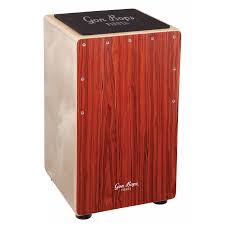
The Gon Bops legend began in 1954 California when Mexican-American Mariano Bobadilla (born in Guadalajara) – who would go on to become one of the most highly-regarded conga builders in the percussion industry – started designing and building Conga and Bongo drums.

A band instrument repairman and professional trumpet player, Bobadilla launched Gon Bops in his father’s old wooden garage in a downtown Los Angeles neighborhood.

He chose the name Gon Bops because “Gon” was one of the colloquial expressions of the time, as in, “everything is gone, man” – and “Bops” because his friends nicknamed him Bob, which sounded like “Bop” in the Latino dialect.

While Bobadilla’s drums remained true to the classic Cuban shape, he was a genuine innovator in the development of drum hardware. He designed the first teardrop crown with rounded counter hoops, developed to protect players’ hands – a concept that is now universally accepted.

He also gave birth to the first tunable hardware for congas and bongos in the United States. Having witnessed Cuban conga players heating up drums in their kitchens prior to performing, Bobadilla decided there had to be a simpler more reliable method to tension these instruments.

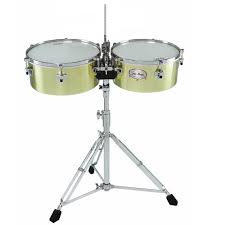
Other innovations from the young company were Taroles (wooden timbales), the first pre-mounted replacement heads for congas, chromatic tuned cowbells and numerous stands, adapters and other hardware.


Congas
Congas
Drums
Drums
Bongoes
Bongoes
Drums
Drums
Gon Bops instruments

Gon Bops enjoyed great early success. The instruments were highly sought after by the top players of the era – giants like Alex Acuna, Mongo Santamaria, Francisco Aguabella, Armando Peraza, Poncho Sanchez, Jose Hernandez and Rich Barrientos – all of whom contributed invaluable R&D input. Gon Bops quickly became the undisputed leader in Latin percussion instruments and remained so throughout the 1950’s, 60’s and 70’s.

Mariano remained deeply committed to a hands-on role in production and retained complete control of the design and fabrication of all his products. As a result, Gon Bops instruments were mainstays on the biggest stages around the world, including the massive Woodstock festival in 1969.

But the winds of change were sweeping through the American percussion industry. By the time the 1980’s rolled around, all of the major US percussion manufacturers had moved offshore to manufacture their instruments.

Cheap Asian labor costs meant greater profits. But as manufacturing costs decreased, so did quality, and for that reason Bobadilla refused to mover his production outside of the US. As a result, Gon Bops began to struggle financially. Unable to compete against his larger competitors, Bobadilla had no choice but to close the doors of his highly regarded company.Thankfully, that was not to be the end of the Gon Bops brand.
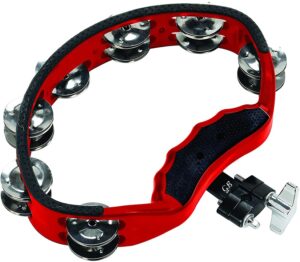
Pandereta
Pandereta

In 2001 Don Lombardi of US drum manufacturer DW bought the company along with all of its patents and trademarks. Lombardi had met Bobadilla in 1978 when he used Gon Bops Timbale shells to build DW brass snare drums, and subsequently had continued to seek R&D advice from Bobadilla.

It was a great fit, and it was no coincidence that the quality of DW drums and hardware continued to grow after the Gon Bops acquisition.

To run his newly acquired Gon Bops brand Lombardi hired the best drum craftsmen in the US. He even bought San Francisco-based Sol Percussion in order to conscript its founder – drum builder Akbar Moghaddam – to the Gon Bops cause.

instrument
instrument

Moghaddam brought along fellow drum craftsman Octavio Ruiz, and Lombardi teamed them up with Alejandro Perez, a drum builder who had worked with Mariano Bobadilla in the original Gon Bops factory.

In 2010 cymbal-maker SABIAN Inc. announced that it had purchased the inventory, intellectual property, patents and manufacturing equipment of Gon Bops from DW.

The deep commitment to innovation that SABIAN applied to its own instruments had inspired founder Robert Zildjian and his son, SABIAN President Andy Zildjian, to a search for like-minded instrument companies available for acquisition. And it was a happy circumstance had Lombardi had begun to seek a buyer for Gon Bops.


“We’re excited to begin this new chapter in SABIAN and Gon Bops history”, notes Andy Zildjian. “Gon Bops instruments are a perfect blend of vintage craftsmanship and innovative thinking. Since its founding in 1954, the company has pioneered several features and improvements that have forever changed Latin instruments.

We are excited about not only expanding distribution, but also continuing to focus on groundbreaking designs that represent clear improvements in meeting the needs of musicians. The pursuit of the best sound is what our craftsmen work for every day. We know the fit is perfect, above all, because sound matters.”

Today, Gon Bops remains one of the oldest and most respected manufacturers of Latin instruments in the world.


ISM June 2020

ISM June 2020

Hicham Billouch, Nour Morocco Arabic music in Mexico

Latin America / Mexico / Ciudad de Mexico

Hicham Billouch, a Moroccan musician, seeks to explore new musical avenues and possibilities.

Billouch studied music at the Royal Conservatory of Marrakech and graduated as a pianist. He also plays violin, lute, guitar and feel.

As a teenager he began working in cabarets in Marrakech such as Hotel Sahara Inn, Rotana and VIP Club and Hotel Semiramis in Casa Blanca.

Nour Marruecos - Hicham Billouch
Nour Marruecos – Hicham Billouch

In Morocco he played for singers such as Ahmed Adawiyya from Egypt, Fares Karam from Lebanon and Mohamed Reda, Pinhas and Badr Sultan from Morocco.

He also participated in the Mawazin Festival organized by the Government of Morocco and worked in the organization of musical events such as the Green March Festival.

In France he played with Maqam al Ushaq, a Moorish music group, at the Corsican Mediterranean Music Festival and the International University Music Festival in Ville de Belfort, France.

Hicham Billouch Mexico flyer

In Mexico, he created Nour Morocco, an Arabic music ensemble, with local musicians. Nour Morocco has participated in international festivals such as Lerdantino (Durango), Festiva Toluca and Calimaya (State of Mexico) and the International Book Fair of Córdoba (Veracruz). He also played at the Lebanese restaurant Adonis de Polanco.

In Mexico City, he organized a belly dance contest and also published a book with the Spanish translation of 40 Arabic songs.

Hicham Billouch
Hicham Billouch

His record production includes 3 CDS: Salam, Qamar and Kalimat, with covers of Arabic songs and his own compositions.

“Music for me is like oxygen and I will never give up my passion”

https://www.hichambillouch.com/

https://www.facebook.com/NourMarruecosOrquesta/

Jay Ruiz, singer-songwriter, From the Sultana del Oeste, Mayagüez – Puerto Rico

North American / Puerto Rico / Puerto Rico 

Jay Ruiz is the stage name of Jonathan Camacho Ruiz, a singer-songwriter born in La Sultana del Oeste, Mayagüez, but raised in the Pueblo de Rincón neighborhood, the westernmost municipality of La Isla Del Encanto.

Jay Ruiz Photo
Jay Ruiz Photo

Among his ancestors, Jay Ruiz, highlights his paternal grandfather Antonio Camacho who was a musician and troubadour, in his native Rincón.

Jay Ruiz’s musical beginnings date back to his short 5 years, when he sang in the choir of the Presbyterian church he attended. However, he would later become involved in sports, which would keep him away from music until he was 11 years old, when at the middle school where he was studying, the teacher promoted him as a soloist in a 24-member choir group.

Jay Ruiz and his team

He also stands out as a percussionist, performing skillfully on the bongo, the congas and the drums; instruments that he would learn to play by ear when he was 8 years old.

When he turned 12, the guitar and the bass would be the instruments that would captivate him and to which he would dedicate his time.

When he turned 15, he decided to form his own Christian music group: this is how the New Creation group was born, in which he developed as a drummer and singer.

A year later, while he was a member of the baseball team that represented Puerto Rico, he was about to be signed by the University of Cleveland, but in the process he was diagnosed with neck and throat cancer.

Jay Ruiz photo
Jay Ruiz photo

He traveled to Maryland to undergo exhaustive examinations at the John Hopkins Hospital, the same ones that would determine that he would undergo six months of chemotherapy and subsequent radiotherapy, treatments that he would receive at the San Jorge Children’s Hospital (Santurce, Puerto Rico).

Before the radiation treatment he was warned that he would lose 85% of his vocal abilities, however, the story was different: August 12, 2001, he would finish the treatment for his illness and five days later, for his birthday, he meets in his town -Rincón- to the entire community in a musical activity in which he would play, sing and give testimony of his case.

Jay Ruiz
Jay Ruiz

Thinking about his future, he studies at the Interamerican University, San Germán Campus, where he obtains a bachelor’s degree as a Physical Education teacher for children with disabilities.

The illness of his father, who lived in New York, forces him to cross the pond to take care of him, until his death, five years later.

In 2011 he returned to Puerto Rico, and enrolled in the Ponce Paramedical College at the Mayagüez Medical Center, to continue studying Physiotherapy, however, he became involved again in music participating in the famous franchise IDOL PUERTO RICO, ranking among the 32 last finalists. He continues his academic life and at the same time, works as a chef in a restaurant, a situation that would lead him to serve a musical entrepreneur based in New Jersey (United States) who was visiting the island, and with whom he would start a friendly relationship first, that would turn into work a few months later, when the businessman invited him for an audition in the neighboring municipality of Cabo Rojo.

Jay Ruiz boards the flight

After that meeting, in 2014, Jay Ruiz would pack his bags again to settle in Newark (New Jersey, USA) from where he would launch his career as a performer of the bachata genre, and that he would have on the songs “Ven A Mí , Girl” and “Culpables” two singles of wide diffusion and consideration in the international radio circuits, to the point of having disputed with the last mentioned cut, the category of Favorite Tropical Song of the Latin American Music Awards between great personalities of the music like Víctor Manuelle, Prince Royce and Gente de Zona (feat. Marc Anthony).

Jay Ruiz
Jay Ruiz

In 2017 he becomes independent, returns to Puerto Rico and decides to promote his career, but this time as a salsero, recording the single “Lo Sé”, of his own, under the production of maestro Nino Segarra.

Two years later, he brings us this new single, of which he is also the author, both of the lyrics and the melody.

Jay Ruiz
Jay Ruiz

The following staff participate in this single:

Lyrics, Melody & Interpretation: Jay Ruiz

Arrangement: Ceferino Caban

Complete Percussion: Rafael “Tito” de Gracia

Bass: Alexis Perez

Trumpets: Luis Aquino

Trombones: Jorge Dobal

Choirs: Norberto Vélez Curbelo, David Carrero & Ceferino Caban

Piano & Keyboards: Ceferino Caban

Mastering: Esteban Piñero

Jay Ruiz
Jay Ruiz

Domi Dance, A New Brand for Dance Comes to New York

North America / United States / New York

Domi Dance a brand of dance products, designed by ex-dancers for dancers.

Domi Dance; the city of New York saw the birth in 2019 of a new brand of products for the dance world, a brand that seeks to reach all corners where music, rhythm and dance can be presented.

From the hand of Dorelys Rodriguez, a former dancer who Since she was 7 years old, she has evidenced the world of dance, going from ballet, flamenco, salsa among other genres, I always dream of achieving many things in the world of dance, hence it will never be possible to separate from this beautiful discipline.

In her professional studies and work experience in the world of Marketing, she was able to devise a proposal that would marry her great passions, her line of work in the world of sales and her passion for dance, from which DomiDance emerged.

In the United States, Dorelys saw the opportunity to exploit her abilities to create a brand, a product, an object that would give her a new entrepreneurial and business life, without forgetting the main point of her idea, to be what the dancer needs, to reach your punctual needs with a range of high quality products at affordable prices for everyone, from the professional to the beginner who ventures into any discipline of this art.

Domi Dance since 2019 managed to position itself in many of the corners of the dance, starting with its first product presented the openwork stockings, little by little it developed innovative strategies to enter the commercial game, facing large established brands in the American market, it was able to enter through of online sales, a channel that allowed it to reach many people due to the boom in purchases through the web.

The brand claims to present its products under a line of first-class raw materials, quality is the main object in its line, they seek to offer quality above any point, customers can be sure of acquiring an object that will not be easy to beat.

When it comes to bringing it to life on the stage and in the dance halls, Dorelys tells us ¨we do not want a dancer to be under pressure not to sit on the floor for fear of breaking the stocking or shoes on difficult floors, we do not sell products Unbreakable but difficult to beat¨.

Logo Domi Dance
Logo Domi Dance

Domi dance is not a sales space for other products, they are manufacturers, they are exclusive when designing products for their brand, they generate new ideas based on the direct experience of the dancer, they are concerned with investigating the experiences lived with the use of clothing and footwear in the scene, an element that drives them as a brand concerned with giving the artist what he needs.

To date, it has a top-level range of textiles, ballet shoes, urban clothing and much more, all aimed at meeting needs in many disciplines. They continue betting on their sales framework through digital platforms such as Amazon, Ebay, social networks such as Instagram, Facebook, among others.

They have already developed a point of sale for Latin America, established trade in Panama, Colombia, Argentina, Venezuela and heading to other latitudes.

For this 2020, the projects are focused on designing footwear for flamenco, tap, expanding its textile line in leotards and garments of greater demand, working with masculine elements and continuing to advance in its expansion project throughout America and Europe. Follow them on their social networks through @domi.dance.


By Jose Perez, ISM Correspondent, Caracas, Venezuela


  • « Go to Previous Page
  • Page 1
  • Interim pages omitted …
  • Page 194
  • Page 195
  • Page 196
  • Page 197
  • Page 198
  • Interim pages omitted …
  • Page 301
  • Go to Next Page »

International Salsa Magazine (ISM) is a monthly publication about Salsa activities around the world, that has been publishing since 2007. It is a world network of volunteers coordinated by ISM Magazine. We are working to strengthen all the events by working together.