• Skip to primary navigation
  • Skip to main content

International Salsa Magazine

  • HOME
  • Previous editions
    • 2026
      • ISM / April 2026
      • ISM / March 2026
      • ISM / February 2026
      • ISM / January 2026
    • 2025
      • ISM / December 2025
      • ISM / November 2025
      • ISM / October 2025
      • ISM / September 2025
      • ISM / August 2025
      • ISM / July 2025
      • ISM / June 2025
      • ISM / May2025
      • ISM / April 2025
      • ISM / March 2025
      • ISM / February 2025
      • ISM / January 2025
    • 2024
      • ISM / December 2024
      • ISM / November 2024
      • ISM / October 2024
      • ISM / September 2024
      • ISM / August 2024
      • ISM / July 2024
      • ISM / June 2024
      • ISM / May 2024
      • ISM / April 2024
      • ISM / March 2024
      • ISM / February 2024
      • ISM / January 2024
    • 2023
      • ISM / December 2023
      • ISM / November 2023
      • ISM / October 2023
      • ISM – September 2023
      • ISM – August 2023
      • ISM July 2023
      • ISM Edition June 2023
      • ISM – May 2023
      • ISM April 2023
      • ISM March 2023
      • ISM February 2023
      • ISM January 2023
    • 2022
      • ISM December 2022
      • ISM November 2022
      • ISM October 2022
      • ISM September 2022
      • ISM August 2022
      • ISM July 2022
      • ISM June 2022
      • ISM May 2022
      • ISM February 2022
      • ISM January 2022
    • 2021
      • ISM December 2021
      • ISM November 2021
      • ISM October – 2021
      • ISM September 2021
      • ISM August 2021
      • ISM July 2021
      • ISM May 2021
      • ISM April 2021
      • ISM June 2021
      • ISM March 2021
      • ISM February 2021
      • ISM January 2021
    • 2020
      • ISM December 2020
      • ISM November 2020
      • ISM October 2020
      • ISM September 2020
      • ISM August 2020
      • ISM July 2020
      • ISM June 2020
      • ISM May 2020
      • ISM April 2020
      • ISM March 2020
      • ISM February 2020
      • ISM January 2020
    • 2019
      • ISM December 2019
      • ISM November 2019
      • ISM October 2019
      • ISM Septembre 2019
      • ISM August 2019
      • ISM July 2019
      • ISM June 2019
  • Spanish
  • Download Salsa App
    • Android
    • Apple

Search Results for: Los Angeles

Chantel Collado: a Canadian star of Latin descent

La Princesa de La Bachata

I am talking today with La Princesa de La Bachata Chantel Collado (https://www.facebook.com/chantelcolladoficial), who is an immensely talented artist. I understand she is a resident of Canada and is of Dominican descent. Thank you so much for accepting our invitation, Chantel. We learned that you are in Italy at the moment, what are you doing there?

First of all, thank you for the invitation. The pleasure is mine. Certainly, I grew up in Canada, but I’m on tour around Italy and pleased to bring my music to this beautiful country.

Chantel Collado was born in Canada, but her parents are Latino

Wonderful! How has reception towards your music in Italy?

It was amazing! Actually,I’m proud to see how both Italians and foreigners dance to bachata and enjoy it. Bringing this music to a country like Italy makes me very proud. It is a blessing to be able to travel, come, sing my lyrics and see how the audience loves them.

The nickname people you are given caught my attention. Where does La Princesa de La Bachata come from?

People give me that name when I went to London to give a concert. In view of the lack of women in the genre, I think it was easy for the public to call me that. For me, it’s a great honour for me to represent the genre, being a woman and a Dominican, since there aren’t many women who sing bachata.

Precisely because there weren’t a lot of women in the genre, did you feel a strong competition? Did you feel like you weren’t taken seriously?

Being a woman can complicate a few things. Thank goddness, men in the genre have also given me the opportunity and supported me, such as my musical godfather Frank Reyes, who is someone I admire. He is a bachata icon in the Dominican Republic and an example of a man who has supported me in my career. I had the opportunity to record a song and a music video with him.

I have received a lot of support from my colleagues and I am very happy to receive that support.

Who have been your musical references in and out of bachata?

I really like Romeo Santo, The King of Bachata. I grew up listening to exponents of Dominican bachata like Frank Reyes, Luis Vargas, Hector Acosta and Juan Luis Guerra. Outside of bachata, I have always liked Beyonce because of her stage presence. Regarding artists in this generation, I also really like Karol G.

Chantel Collado on stage

Have you experimented with urban or more modern rhythms?

Of course! I love to experiment and change from time to time. From a very early age, when I started singing in a competition in Los Angeles, I sang a cumbia by Selena titled Como La Flor. I have an urban song called Así. I’ve also sung salsa and I have merengues. What I like most is bachata, but for my generation, I listen to much urban music.

According to your biography, you decided to pursue a career in music after a talk you with your father, who also supported you very much in this regard. Can you describe that moment?

I grew up watching my father on stage as a director, musician and singer. From a very early age, I went on stage and sang with him. My brother is also a musician, so I think it just was natural for me. I didn’t know it’d like it or take it seriously as a career, but it was when I turned 15 that we decided to focus on music.

I was also performing and participating in musical theater, so I was singing, performing and dancing at the same time. When I turned 15, we decided as a family to focus on only one thing, which would be music. That’s how I started writing songs with my brother and we’ve been going at it for the last 14 years.

Latin descent

Your father is Dominican and your mother is Uruguayan. Do you think that coming from a Latin family has pigeonholed you or on the contrary?

Quite the opposite! It expanded my horizons. I grew up in Canada, speak English and, try to incorporate this language into my music. I’m of Uruguayan stock and even if people don’t listen to bachata in that country, I chose that genre because I listened to it all the time and I love it. I think that all this mix of countries expanded my horizons and I don’t feel that singing bachata is an obligation for me because I love doing it.

Her father and brother supported her a lot during her career

What did you do during the pandemic?

The pandemic was very difficult for me and all the artists in general, but I tried to focus on writing new music. I don’t know where I got the inspiration, but I recorded a music video with my mobile, which was made for my song Contigo o sin ti that you can find on YouTube. I did my own makeup and my own hairstyle for that day, put my IPhone on a tripod and got it all. I had to find thae encouragement to move regardless the situation.

Fortunately, I returned to the stage to sing for the public after two years.

In which countries are you touring now?

I am touring only in Italy. We’ve already been to two cities and we have two more to go to complete the tour. Then I will return to Canada, rest for a week and travel to the United States to continue touring.

Do you plan to tour Latin America?

I’ll be happy to do so. In fact, we already have some tentative dates in countries such as Colombia and Mexico. Let’s just hope that everything will happen because it would be the first time I brought my music to those corners.

How is urban bachata different from traditional bachata?

I think urban bachata is a movement that is starting to develop. My generation listens to a lot of urban music and an example of this is Bad Bunny, who is killin’ it right now. If we want bachata to evolve a little bit, we have to add a little urban touch and that’s what we’re doing. I think traditional music will never die because it is our main genre in the Dominican Republic, but it can also be made enjoyable for present generations, adding a little urban touch.

Speaking of urban artists, who do you want to collaborate with someday?

At the moment, I would love to collaborate with Bad Bunny. I love Bad Bunny and his new album. I had the great honor of opening for him in Toronto, Montreal, a few years ago. I also had the honor of meeting him, but I haven’t had the chance to collaborate with him yet, though I would love to.

As for traditional genres, I would like to collaborate with Anthony Santos on a more traditional song in my genre, bachata.

A message for young girls who want to dedicate themselves to the same as you.

I’d advise them to follow their dreams. I started in the music industry at a very young age I have achieved many things in the last 10 years. As a woman, I’d tell them to keep going because we are living in a time when women have more attention than ever before. We’re strong, independent and we can do anything we want.

Chantel at a photo shoot
NOTICIAS CON SABOR on June 2022

The latest of salsa in the Bay Area of San Francisco

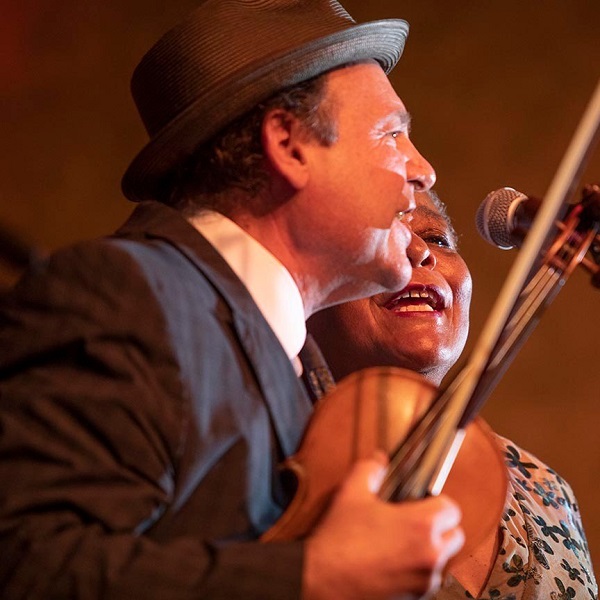
Someone to look out for is percussionist/bandleader/catalyst Javier Navarette who has been creating a serious buzz with his new group Javier Navarette and His Socially Distant Friends which features a “who’s who” of stellar Bay Area talent including esteemed violinist Anthony Blea, vocalist/percussionist Hector Lugo, rising star on the guitar, Kai Lyons, bassist Ayla Davila, percussionist Jesse Weber and charter members such as tresero/guitarist Camilo Landau, NY based trombonist and Javier’s brother Raul Navarette and PMO vocalist Chriselle Durandy.  Navarette and friends play an intoxicating brew of danceable Salsa, Cuban descarga, Rumba, Afro-Cuban folklore, Bomba, Timba and Latin Jazz played superbly by this all-star ensemble that have impressed large audiences at Carnaval San Francisco, the UC Theatre, Rocky’s Market and other festivals and hot spots.

Navarette is also currently a member of the hot Bobi Cespedes Band and was formerly a member of renowned bands such as Charanson, La Mixta Criolla, Linda Tillery and the Cultural Heritage Choir among others.  He has established himself as one of the SF Bay’s rising stars….a rumbero with excellent chops, taste and well versed both in the Cuban and Puerto Rican culture and heritage.  Navarette also has taught in the classroom spreading the knowledge to younger grade school children in the Bay Area.  Navarette is also booking the popular Modupue Sundays series at Rocky’s Market in Oakland.  Go Javier!! 

Javier Navarrette from Javier Navarrette and His Socially Distant Friends

The Western Region Puerto Rican Council will once again present their “El Dia De San Juan” Salsa Festival on Saturday, June 18, 11 am to 7 pm at Swiss Park, 5811 Mowry Avenue in Newark.  Headlining the show will be Frankie Vasquez “El Sonero Del Barrio”.  Vasquez is considered one of the finest soneros in the business today.  With a star studded career that includes working with Manny Oquendo and Libre, Spanish Harlem Orchestra, Los Soneros Del Barrio, Pedro Bermudez, Doug Beavers and many others, Vasquez displays his art of the soneo, his distinctive vocal tone always backed up by a swinging band on record and live.  Also appearing for the first time will be Izis La Enfermera De La Salsa from Puerto Rico, Gambizi & Dos Four hot from Carnaval SF, Hip Hop Jibarito, Orquesta Saboricua and Rinkinkaya playing Bomba, Plena and Jibaro music and DJ Santos Lopez.  For more information, go to wrprc.org!

SF JAZZ and the San Francisco Jazz Festival are featuring an impressive array of Salsa, Cuban and Latin Jazz starting Wednesday June 8 with Pacific Mambo Orchestra.  Followed by Gonzalo Rubalcaba and Grammy nominee Aymee Nuviola 6/9; Chucho Valdes with Dianne Reeves and Joe Lovano 6/12; Changui Majadero 6/13, Danilo Perez Global Messengers 6/14; Issac Delgado’s Con Tumbao Project w/Miguel Zenon, Oscar Hernandez, Pedrito Martinez, Alain Perez, Tony Succar and more 6/18.  SF JAZZ and Stanford University also co-presents two legends: Piano master Eddie Palmieri and trumpet phenom Arturo Sandoval at Stanford’s Frost Amphiteater on July 23.  Info: www.sfjazz.org.

The new hot spot for live music on Thursday’s is Charley’s LG, 15 N Santa Cruz Avenue in Los Gatos featuring the following for June: Orquesta La Moderna Tradición on 6/2; Carlos Xavier and his band 6/9; Edgardo Cambon and Candela 6/16; Son Y Clave from Los Angeles on 6/23 and Julio Bravo and Salsabor on 6/30.  Presented by your friends at International Salsa Magazine and World Salsa Radio.  Yours truly, Luis Medina from KPFA/WorldSalsaRadio.com will be your MC and DJ for the evening.  WSR’s El De La Clave SF-Felipe Martinez will give dance lessons starting at 8 PM.  Get a discount on your advance tickets by visiting charleyslosgatos.com.

Tregar Otton from Orquesta La Moderna Tradición

More clubs and events

La Peña Cultural Center, 3105 Shattuck Avenue in Berkeley has been gaining a lot of notoriety with their monthly Baila events.  The June edition will also celebrate the cultural center’s 47th Anniversary on Friday, June 17th starting at 7 pm.  Corey Raynor, the venue’s production manager who organizes the event will also be celebrating his birthday.  The show will feature the explosive sounds of veteran timbalero Eric Rangel and his Orquesta America as well as KPOO/KPFA DJ Jose Ruiz in the main theater and DJ Ron Palma in the Bachata lounge. Salsa and Bachata dance lessons start at 7:30 pm.  For tickets and information, please visit lapena.org.

It’s Summertime and outdoor venues have opened back up for Salsa, Timba and Latin Jazz!  Modupue Sundays at Rocky’s Market at Oakland’s Brooklyn Basin is featuring the exciting band La Mixta Criolla on Sunday, June 5 under the direction of percussionist/vocalist Hector Lugo and a special Bomba dance performance by Shefali Shah. The festivities start at 5:30 pm.  Another great band Orquesta La Moderna Tradición will be at Rocky’s on Friday night, June 10th from 6 to 9 pm.   Rocky’s Market events are all outdoors and located at 288 Ninth Avenue in Oakland.  For more information, visit rockysmarket.com.

The Office on 1796 Willow Pass Road in downtown Concord is now offering Rumba Sundays every Sunday from 5 to 10 pm in a large, covered outdoor patio with a huge dance floor featuring Salsa bands such as Orquesta Taino on Sunday, June 5th.  The Office features live salsa monthly with SF Salsa Congress staple DJ Super Chino spinning Salsa, Bachata and more in-between the breaks!  Check out their Facebook page for more info!

Orquesta Taino posing for the camera

The Cigar Bar continues with their mission to bring you exciting danceable bands in their unique venue that combines great food, fine drinks, a parlor for cigar enthusiasts and a hot dance spot for weekend patrons.  The June Latin music offerings are the following: Pacho y Orchesta Evolution 6/3; Orquesta La Original w/Alexis 6/4; Orquesta Borinquen 6/10; Josh Jones Latin Jazz Ensemble 6/11; N’Rumba 6/17 ; Manteca 6/18; Orquesta Taino 6/24 and La Clave Del Blanco on 6/25.

The Ramp is heating things up for the Summer at their fine outdoor venue with their huge dance floor at 855 Terry Francois Blvd in San Francisco.  Their calendar includes great acts on Saturday afternoons starting at 4 pm with DJ Mendy with live music starting at 5 pm featuring N’Rumba on 6/4; Julio Bravo y Salsabor on 6/11; Somos El Son with Braulio Barrera 6/18 and Orquesta Borinquen on 6/25.

The Seahorse in Sausalito features fine Italian cuisine, beer and wine and a fine space for dancing on Saturday and Sundays starting at 6 pm with KPOO/KPFA DJ Jose Ruiz.  Featured acts for the month of June include La Clave Del Blanco on 6/4; Julio Bravo y Salsabor 6/5; Ricardo Lemvo and Makina Loca from Los Angeles on 6/11 and 6/12; Edgardo Cambon y Candela 6/18; Louie Romero and Mazacote 6/19; The Latin Rhythm Boys 6/20 and Eric Rangel and Orquesta America on 6/26.

Be sure to check out my radio programs Con Sabor on Saturday evenings from 9 to 11 PM PST on KPFA 94.1 FM and www.kpfa.org and Sabiduria Con Tumbao every Wednesday evening from 5 to 7 PM PST on worldsalsaradio.com. Enjoy your Summer!  Ciao 4 now!!

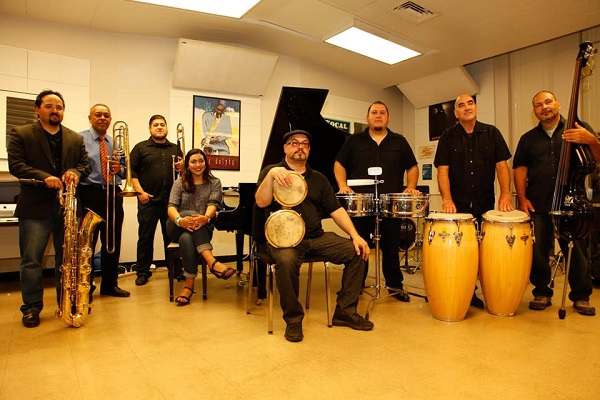
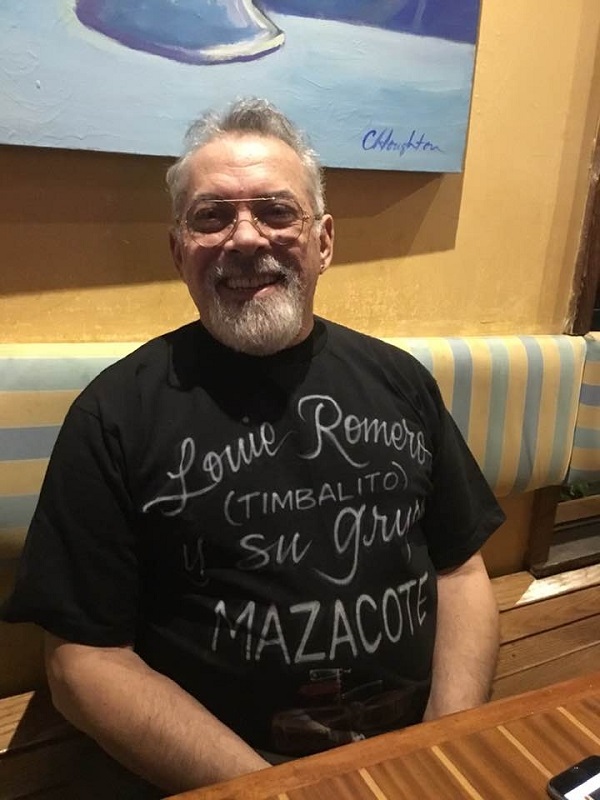
Louie Romero from Louie Romero Y Su Orquesta Mazacote

By Luis Medina, ISM Correspondents, San Francisco, California


By Luis Medina, ISM Correspondents, San Francisco, California


NOTICIAS CON SABOR on June 2022

The latest of salsa in the Bay Area of San Francisco

Someone to look out for is percussionist/bandleader/catalyst Javier Navarette who has been creating a serious buzz with his new group Javier Navarette and His Socially Distant Friends which features a “who’s who” of stellar Bay Area talent including esteemed violinist Anthony Blea, vocalist/percussionist Hector Lugo, rising star on the guitar, Kai Lyons, bassist Ayla Davila, percussionist Jesse Weber and charter members such as tresero/guitarist Camilo Landau, NY based trombonist and Javier’s brother Raul Navarette and PMO vocalist Chriselle Durandy.  Navarette and friends play an intoxicating brew of danceable Salsa, Cuban descarga, Rumba, Afro-Cuban folklore, Bomba, Timba and Latin Jazz played superbly by this all-star ensemble that have impressed large audiences at Carnaval San Francisco, the UC Theatre, Rocky’s Market and other festivals and hot spots.

Navarette is also currently a member of the hot Bobi Cespedes Band and was formerly a member of renowned bands such as Charanson, La Mixta Criolla, Linda Tillery and the Cultural Heritage Choir among others.  He has established himself as one of the SF Bay’s rising stars….a rumbero with excellent chops, taste and well versed both in the Cuban and Puerto Rican culture and heritage.  Navarette also has taught in the classroom spreading the knowledge to younger grade school children in the Bay Area.  Navarette is also booking the popular Modupue Sundays series at Rocky’s Market in Oakland.  Go Javier!! 

Javier Navarrette from Javier Navarrette and His Socially Distant Friends

The Western Region Puerto Rican Council will once again present their “El Dia De San Juan” Salsa Festival on Saturday, June 18, 11 am to 7 pm at Swiss Park, 5811 Mowry Avenue in Newark.  Headlining the show will be Frankie Vasquez “El Sonero Del Barrio”.  Vasquez is considered one of the finest soneros in the business today.  With a star studded career that includes working with Manny Oquendo and Libre, Spanish Harlem Orchestra, Los Soneros Del Barrio, Pedro Bermudez, Doug Beavers and many others, Vasquez displays his art of the soneo, his distinctive vocal tone always backed up by a swinging band on record and live.  Also appearing for the first time will be Izis La Enfermera De La Salsa from Puerto Rico, Gambizi & Dos Four hot from Carnaval SF, Hip Hop Jibarito, Orquesta Saboricua and Rinkinkaya playing Bomba, Plena and Jibaro music and DJ Santos Lopez.  For more information, go to wrprc.org!

SF JAZZ and the San Francisco Jazz Festival are featuring an impressive array of Salsa, Cuban and Latin Jazz starting Wednesday June 8 with Pacific Mambo Orchestra.  Followed by Gonzalo Rubalcaba and Grammy nominee Aymee Nuviola 6/9; Chucho Valdes with Dianne Reeves and Joe Lovano 6/12; Changui Majadero 6/13, Danilo Perez Global Messengers 6/14; Issac Delgado’s Con Tumbao Project w/Miguel Zenon, Oscar Hernandez, Pedrito Martinez, Alain Perez, Tony Succar and more 6/18.  SF JAZZ and Stanford University also co-presents two legends: Piano master Eddie Palmieri and trumpet phenom Arturo Sandoval at Stanford’s Frost Amphiteater on July 23.  Info: www.sfjazz.org.

The new hot spot for live music on Thursday’s is Charley’s LG, 15 N Santa Cruz Avenue in Los Gatos featuring the following for June: Orquesta La Moderna Tradición on 6/2; Carlos Xavier and his band 6/9; Edgardo Cambon and Candela 6/16; Son Y Clave from Los Angeles on 6/23 and Julio Bravo and Salsabor on 6/30.  Presented by your friends at International Salsa Magazine and World Salsa Radio.  Yours truly, Luis Medina from KPFA/WorldSalsaRadio.com will be your MC and DJ for the evening.  WSR’s El De La Clave SF-Felipe Martinez will give dance lessons starting at 8 PM.  Get a discount on your advance tickets by visiting charleyslosgatos.com.

Tregar Otton from Orquesta La Moderna Tradición

More clubs and events (título 3)

La Peña Cultural Center, 3105 Shattuck Avenue in Berkeley has been gaining a lot of notoriety with their monthly Baila events.  The June edition will also celebrate the cultural center’s 47th Anniversary on Friday, June 17th starting at 7 pm.  Corey Raynor, the venue’s production manager who organizes the event will also be celebrating his birthday.  The show will feature the explosive sounds of veteran timbalero Eric Rangel and his Orquesta America as well as KPOO/KPFA DJ Jose Ruiz in the main theater and DJ Ron Palma in the Bachata lounge. Salsa and Bachata dance lessons start at 7:30 pm.  For tickets and information, please visit lapena.org.

It’s Summertime and outdoor venues have opened back up for Salsa, Timba and Latin Jazz!  Modupue Sundays at Rocky’s Market at Oakland’s Brooklyn Basin is featuring the exciting band La Mixta Criolla on Sunday, June 5 under the direction of percussionist/vocalist Hector Lugo and a special Bomba dance performance by Shefali Shah. The festivities start at 5:30 pm.  Another great band Orquesta La Moderna Tradición will be at Rocky’s on Friday night, June 10th from 6 to 9 pm.   Rocky’s Market events are all outdoors and located at 288 Ninth Avenue in Oakland.  For more information, visit rockysmarket.com.

The Office on 1796 Willow Pass Road in downtown Concord is now offering Rumba Sundays every Sunday from 5 to 10 pm in a large, covered outdoor patio with a huge dance floor featuring Salsa bands such as Orquesta Taino on Sunday, June 5th.  The Office features live salsa monthly with SF Salsa Congress staple DJ Super Chino spinning Salsa, Bachata and more in-between the breaks!  Check out their Facebook page for more info!

Orquesta Taino posing for the camera

The Cigar Bar continues with their mission to bring you exciting danceable bands in their unique venue that combines great food, fine drinks, a parlor for cigar enthusiasts and a hot dance spot for weekend patrons.  The June Latin music offerings are the following: Pacho y Orchesta Evolution 6/3; Orquesta La Original w/Alexis 6/4; Orquesta Borinquen 6/10; Josh Jones Latin Jazz Ensemble 6/11; N’Rumba 6/17 ; Manteca 6/18; Orquesta Taino 6/24 and La Clave Del Blanco on 6/25.

The Ramp is heating things up for the Summer at their fine outdoor venue with their huge dance floor at 855 Terry Francois Blvd in San Francisco.  Their calendar includes great acts on Saturday afternoons starting at 4 pm with DJ Mendy with live music starting at 5 pm featuring N’Rumba on 6/4; Julio Bravo y Salsabor on 6/11; Somos El Son with Braulio Barrera 6/18 and Orquesta Borinquen on 6/25.

The Seahorse in Sausalito features fine Italian cuisine, beer and wine and a fine space for dancing on Saturday and Sundays starting at 6 pm with KPOO/KPFA DJ Jose Ruiz.  Featured acts for the month of June include La Clave Del Blanco on 6/4; Julio Bravo y Salsabor 6/5; Ricardo Lemvo and Makina Loca from Los Angeles on 6/11 and 6/12; Edgardo Cambon y Candela 6/18; Louie Romero and Mazacote 6/19; The Latin Rhythm Boys 6/20 and Eric Rangel and Orquesta America on 6/26.

Be sure to check out my radio programs Con Sabor on Saturday evenings from 9 to 11 PM PST on KPFA 94.1 FM and www.kpfa.org and Sabiduria Con Tumbao every Wednesday evening from 5 to 7 PM PST on worldsalsaradio.com. Enjoy your Summer!  Ciao 4 now!!

Louie Romero from Louie Romero Y Su Orquesta Mazacote


By Luis Medina, ISM Correspondents, San Francisco, California By Luis Medina, ISM Correspondents, San Francisco, California

La Muñeca de La Salsa is here with us again

La Muñeca de La Salsa or La Chica del Bling

For the second time, we have here Puerto Rican artist Almodovar. She is a salsa singer and other genres, composer and dancer. Pleasure to meet you, Melina, how are you doing? Glad to have you here.

Thank you, Karina. Thank you for the time and I’m super pumped to be here with you for international salsa magazine (laughs).

Melina Almodóvar is a salsa singer, composer, and dancer

Why do they call you La Muñeca de la Salsa or La Chica del Bling?

La Chica del Bling comes from maestro Bobby Cruz, who did a song with me in 2016. We made a recording that was called Salsa Factory Bunch. He wrote that song specifically for me, which was called El Bling. That’s how he starts calling me La Chica del Bling and, as there are so many people who know the trajectory of Mr. Bobby Cruz, those who know that he wrote the song for me identify me as La Chica del Bling. That is something very special for me, since he is one of my salsa icons from day one.

In the case of La Muñeca de La Salsa, when I moved here to Miami, I was looking for a nickname similar to El Caballero de La Salsa or El Niño Bonito de La Salsa. Seeing how my name is like that of another renowned singer in Puerto Rico Melina Leon, I wanted to find another name that would identify me and noticed that many Latino men called me muñeca (doll in English). That’s how I came up with the name La Muñeca de La Salsa.

Your family has always been closely related to arts. Your father was a singer, your mother was a dancer and your grandmother was an artisan. What did you get from each of them?

That’s an excellent question. I’m often asked that, but not that way. My dad was a bolero singer and like ballads and old music like Camilo Sesto, and it was thanks to one of his songs that I was named Melina. He also liked Marco Antonio Muñiz and all the singers from that era. He would go to bars to sing until five in the morning and he used to take me to these gatherings in Puerto Rico. He always had his guitar in his car and was invited to parties to sing because he did it for free.

My mom was a flamenco dancer, she studied dance all her life and wanted me to dance too. So, she put me in jazz ballet classes since I was little. I studied with a lady whose name was Sophy Sanfiorenzo, who was also Chayanne, Ricky Martin, and Los Menudo’s teacher of that time. She was very well known in the city of Bayamón, Puerto Rico. Dancing was something secondary for me, but my mom wanted me to take it more seriously. At the end, we made a deal and agreed that I would study salsa and Caribbean dancing.

My grandmother always wanted me to be an artist and pushed me to be what I am today. She does a lot of crafts such as sculptures and paintings. I didn’t inherit those skills (laughs). My aunt is an architect and also paints very well, while another aunt is also very good with crafts. My family is very artistic and I followed that road.

Melina Almodóvar is very proud to be boricua

Her referents

I understand that your grandmother gave you some cassettes with songs by Celia Cruz and Rubén Blades, did these artists influence you or were there others?

My grandmother gave me a Rubén Blades CD and my aunt was the one who introduced me to salsa music thanks to her taste for this genre. Most of the family liked bohemian songs made by Pedro Flores, Rafael Hernández, Bobby Capó, Sylvia Rexach, among others. My grandmother and the rest of my relatives liked bolero a lot. In my case, I like bolero very much and I have done concerts dedicated to this genre, but what moves and motivates me is salsa.

You always listened to tropical music as a kid in Puerto Rico, but I understood that I was cut out to sing salsa when started studying it and understand it deeply. In high school, I came to sing pop, jazz, country, merengue, bachata and many other genres. However, salsa is what I like the most.

You described your move from Puerto Rico to Memphis as a culture shock. What was the most shocking thing about that time?

It’s one thing to move from Puerto Rico to Los Angeles or New York or Florida where there are a lot of Latinos. When I moved, I was very young and went to live in the southern United States, where they listen to country and blues. For me, the most shocking thing was the culture. In Puerto Rico, everyone talks on the front doors and there was a lot of closeness. When we moved to Tennessee, we didn’t know anyone, so we had to start creating a new life and finding our way in this new city.

Melina Almodóvar performing at North Beach Bandshell

You were part of Orquesta Caliente. According to many, that was the first successful Latin salsa orchestra in Memphis. What do you think was the formula for success of this orchestra?

It was a combination of many things because I have been part of many groups and tried to organize orchestras in different places. After that experience, I tried to start an orchestra in Nashville, Tennessee, for a while and tried to start another one in Atlanta, Georgia.

When I was 17 years old, I was called and asked if I knew how to sing salsa, to which I replied yes. That’s when i was given a cassette tape with several songs made by Tito Puente, Ruben Blades, Celia Cruz, among others. I went home and started writing the songs down letter by letter to learn them by heart and audition for the orchestra. That day, I realized that all the musicians were American and extremely talented. I was 17 years old at the time and had no idea who I was playing with, which led me to look up their histories and they were really well trained and talented. Almost all of them were professors at the University of Memphis at the time, but they wanted to form a salsa orchestra.

So, we started playing in different places. Given that there was no internet and no social media, we had to create our own flyers by hand, make copies, go to the houses and put up them there. The first day we played, not a lot of people showed up, but it was a good start for us. After three months, not one more body fitted there.

For me, it was a beautiful experience because we started playing everywhere and were at plenty of festivals in South Florida. We were so into what we were doing and all the members wanted the music to work out spectacularly, so we were united in a common objective. I think that was the key to our success.

Tell me about the Hollywood Salsa Fest

We have been doing this festival for about seven years now and it was a dream come true because I never thought there would be more than 10,000 people there for throughout the day. It is a culmination of all the work we have done since I came to Miami. It was a great achievement.

This Hollywood Salsa Fest of this year included Maestro Charlie Aponte, Timba Live, Salsa Ballet de Cali, Maestro Bobby Cruz, Tito Puente Junior and many others.

Melina Almodóvar next to Oscar D’ León

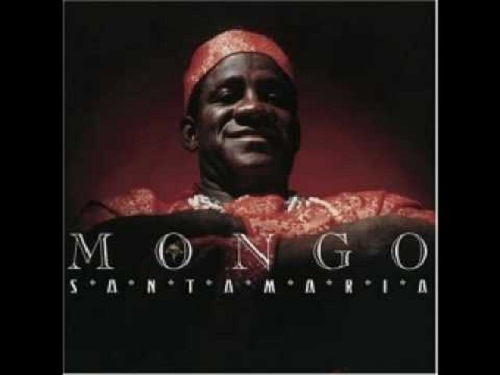
Ramón “Mongo” Santamaría “I wanted to do something that sounded like home”.

April 7, 1917, Mongo Santamaría was born in the Jesús María neighborhood of Havana, Cuba.

Exceptional percussionist of Latin Jazz and related rhythms, whose first name was Ramón Santamaría.

Mongo left to continue playing his Congas hard in the sky on February 1st, 2003.

“I wanted to do something that sounded like home”. With these simple words, Ramón Santamaría Rodríguez “Mongo Santamaría” spoke of his essence.

The purpose of his music pursued a sonority and a memory, possibly located in Cuba, in Jesús María, a marginal neighborhood where he grew up and enjoyed a tradition attached to the drum, to religion, to the street and from where this great Cuban percussionist drank infinitely.

But surely those drums also came to him from far away, from the Congo, where his grandfather came from to be a slave on the island and who also filled his head with sounds full of meanings and colors, which he later masterfully spread around the world.

The name of Mongo Santamaría (Havana, April 7/1917 – Miami, Feb. 1/2003) is, for the glory of all music, an inevitable reference of Cuban percussion.

Since he was a child he knew that his thing was to play the drum and he was lucky enough to belong to a family of empirical musicians, singers and drummers who supported him in the learning and mastery of these instruments.

During his time in Cuba, already a professional musician, he participated in numerous groups that little by little gave him a place among the most outstanding percussionists of the time. Some names of these groups are El Conjunto Boloña, Lecuona Cuban Boys, with whom he was able to participate in the recording of his first album, Conjunto Matamoros, Segundo Grupo de Arsenio Rodríguez, among others.

Each group had its own style and stamp, but in each of them Santamaría put his personal “touch”.

At the prestigious Tropicana cabaret he played with Chano Pozo as a member of Armando Romeu’s orchestra.

From that moment on, his career would not stop. Conjuntos, Septetos de Son were the perfect selection to complete the sap from which he would draw all his style and technique.

Later, from carnival to carnival, he would gather with other percussionists to play in the comparsas and experience the festive musical atmosphere par excellence of those years.

Alongside him played other friends who soon became a Cuban reference in the United States: Patato Valdés and Armando Peraza.

As part of the Tropicana orchestra and located in a show in Mexico, he decided to settle there as did many musicians of his time and came to play with Pérez Prado and Benny Moré.

It was precisely in the latter orchestra where he met Clemente Piquero “Chicho”, another Cuban percussionist whose style made him rethink the role of percussion in Cuban popular orchestras.

Mongo Santamaría belongs to the second wave of Cuban percussionists who arrived in New York in 1950.

His new idea of restructuring and designing his own style in the use of Cuban percussion was perfectly in tune with the reality that a few years earlier was being experienced in the music produced and sold in New York, after the arrival of the Cuban rumbero Chano Pozo.

“The rhythm produced by the conga organizes all the percussion of a band, from which melodies and counter-melodies can be experimented with.”

“I think percussion is the base from which things come out.”

Already in the United States, Mongo plays with Gilberto Valdés, again he is part of Pérez Prado’s orchestra and finally with Tito Puente’s, where he stayed for 7 years. Once in the line of Afro-Cuban jazz, so popular at the time, he joined George Shearing’s group and later the vibraphonist Cal Tjader.

With his own orchestra, he accompanied La Lupe, one of his favorite singers, and undertook projects of novel formats for the time, such as small formations of brass trio, piano, bass, percussion and drums, at a time when jazz bands predominated.

Mongo Santamaría, perhaps without the theatricality to which Chano had accustomed the New York public, focused all his strength on achieving his own sonority, with a fusion of Cuban styles and genres, perfected and deepened in the introduction of Afro-Cuban rhythms with a naturalness and using colorful timbre elements by using several tumbadoras in his set.

His creativity is highly demonstrated in the great amount of music that is part of his catalog of works and the quality becomes indisputable when seeing the amount of outstanding jazz interpreters that version and recreate his work.

In 1959 he recorded Tambores y cantos, which contains the song Afro blue, which over the years became “a jazz anthem of all times”, according to Nat Chediak, author of the Latin Jazz Dictionary.

His long recording career (50 albums), testifies to the musical activity that this great percussionist carried out throughout his professional career. He worked with American jazz legends such as Chick Corea, Herbie Hancock, flutist Hubert Maws, Dizzy Gillespie, trumpeter Marty Seller, among other musicians who today still pay tribute to this Cuban conguero who was the architect of the fusion of rhythm & blues rhythms and Afro-Cuban music, recognized the connection of Cuban music to African roots and placed the congas in an indispensable instrument for the determination of Latin jazz.

In 1977 Mongo Santamaría received the American Grammy Award for “Best Latin Recording” for the work Dawn.

In 1999, Rhyno Record Company, based in Los Angeles, California, recognizing his contribution to Latin Jazz, released the “box set” (CD) Skin On Skin: The Mongo Santamaría Anthology (1958-1995), which includes 34 of his most successful pieces (from his rumba albums, his LP with La Lupe and his projects in the fusion of Jazz and Latin) and an extraordinary literature about his career written by actor Andy García, musician Poncho Sánchez and other connoisseurs of the Latin Jazz genre such as José Rizo, Luis Tamargo, Joel Dorn and Miles Pelich.

The legendary musician was extremely honored and grateful for the distinction Rhyno gave him by introducing this historic anthology to the world. As stated in the conversation with Jaime Torres, Mongo said:

“This is the fruit of many years of work, music made with taste and love.”

May he rest in peace and eternal glory to him.

  • « Go to Previous Page
  • Page 1
  • Interim pages omitted …
  • Page 23
  • Page 24
  • Page 25
  • Page 26
  • Page 27
  • Interim pages omitted …
  • Page 33
  • Go to Next Page »

International Salsa Magazine (ISM) is a monthly publication about Salsa activities around the world, that has been publishing since 2007. It is a world network of volunteers coordinated by ISM Magazine. We are working to strengthen all the events by working together.