• Skip to primary navigation
  • Skip to main content

International Salsa Magazine

  • HOME
  • Previous editions
    • 2026
      • ISM / April 2026
      • ISM / March 2026
      • ISM / February 2026
      • ISM / January 2026
    • 2025
      • ISM / December 2025
      • ISM / November 2025
      • ISM / October 2025
      • ISM / September 2025
      • ISM / August 2025
      • ISM / July 2025
      • ISM / June 2025
      • ISM / May2025
      • ISM / April 2025
      • ISM / March 2025
      • ISM / February 2025
      • ISM / January 2025
    • 2024
      • ISM / December 2024
      • ISM / November 2024
      • ISM / October 2024
      • ISM / September 2024
      • ISM / August 2024
      • ISM / July 2024
      • ISM / June 2024
      • ISM / May 2024
      • ISM / April 2024
      • ISM / March 2024
      • ISM / February 2024
      • ISM / January 2024
    • 2023
      • ISM / December 2023
      • ISM / November 2023
      • ISM / October 2023
      • ISM – September 2023
      • ISM – August 2023
      • ISM July 2023
      • ISM Edition June 2023
      • ISM – May 2023
      • ISM April 2023
      • ISM March 2023
      • ISM February 2023
      • ISM January 2023
    • 2022
      • ISM December 2022
      • ISM November 2022
      • ISM October 2022
      • ISM September 2022
      • ISM August 2022
      • ISM July 2022
      • ISM June 2022
      • ISM May 2022
      • ISM February 2022
      • ISM January 2022
    • 2021
      • ISM December 2021
      • ISM November 2021
      • ISM October – 2021
      • ISM September 2021
      • ISM August 2021
      • ISM July 2021
      • ISM May 2021
      • ISM April 2021
      • ISM June 2021
      • ISM March 2021
      • ISM February 2021
      • ISM January 2021
    • 2020
      • ISM December 2020
      • ISM November 2020
      • ISM October 2020
      • ISM September 2020
      • ISM August 2020
      • ISM July 2020
      • ISM June 2020
      • ISM May 2020
      • ISM April 2020
      • ISM March 2020
      • ISM February 2020
      • ISM January 2020
    • 2019
      • ISM December 2019
      • ISM November 2019
      • ISM October 2019
      • ISM Septembre 2019
      • ISM August 2019
      • ISM July 2019
      • ISM June 2019
  • Spanish
  • Download Salsa App
    • Android
    • Apple

Search Results for: Los Angeles

How to make money today as a recording artist with record labels and digital platforms

Israel Tenenbaum Interview: The Changing Music Industry

The music industry has evolved, and artists’ income streams are no longer limited to album sales. Today, an artist can monetize their work in multiple ways, with or without the support of a record label and digital platforms.

Israel Tenenbaum (Los Angeles, California) is an American pianist, arranger, and music producer with a notable career in salsa and Latin jazz. He has worked with renowned artists and has lived in several countries, including Puerto Rico and Colombia.
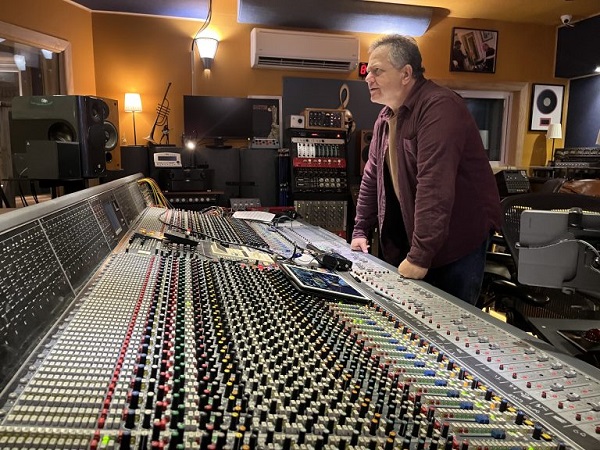
Israel Tenenbaum (Los Angeles, California) is a pianist, arranger, and music producer.

1) What is the current process for recording, music production, and royalty distribution for Mr. Tenenbaum?

Well, let’s see. You’re talking about the current recording process, which is essentially the same, but it’s now generally done remotely. We grew up with recording environments where we would gather everyone (the musicians) in one place and record everything there.

But with remote recording capabilities, many musicians are now very well-equipped and they record at home. You can also take advantage of this because it gives you access to other talents, beyond the local environment you’re in. They don’t compare to what a musician or band leader might have locally, or for finding other guests, and so on.

So, remote recording is definitely in operation. I’ve been working with remote production for a while. In fact, it was pure chance that about six or eight months before the pandemic hit, I had just moved to California and I started to solidify and organize my global network of musicians, recording studios, producers, and a bunch of arrangers, and so on.

And when the pandemic hit, I was ready because I had already organized everything. Everyone thought it was a 90-day vacation. After 90 days, they thought, “Well, it’ll take a little longer.” And by the time they realized it was going to be a long haul, six months had already passed. It took them almost six more months to get organized themselves.

It was advanced, pure chance. And so that served me a great deal. And currently, I have that very solidified. I work with a dozen cities in seven countries. Thank you, thank you.

How does royalty distribution work? Does that still exist?

Yes, royalties still exist. What has changed dramatically is the way royalties are generated.

Let me explain it very simply. When we lived in the era of the physical product—which was what sold the most, whether it was the LP or the CD—you might earn 7, 8 cents per song on each copy in the U.S. If you wrote all your compositions and recorded all your compositions and recorded 10 songs on your album, you would automatically get 8 cents for each song on every album sold. So if you sold, say, 10,000 copies, that’s 10 songs at 8 cents, which is 80 cents per album. Then you have about $8,000, more or less. And on top of that, you have royalties because you’re selling the album. The album has two sources of copyright: the recording itself.

The owner of the recording has one royalty, and the composer has a completely separate royalty. So, these are the royalties you earn money from through sales, usually.

So, the record label would give a piece to the artist, say, 10%. That’s a huge royalty. And has that changed today? Nowadays, that hasn’t changed. It’s still between 7 and 15%, maybe 20% if you’re a superstar, but it’s more or less the same, somewhere between 7 and 12%. The difference is that now, that’s not what’s selling.

So this hasn’t completely changed because it was one thing to earn 8 cents every time your song was sold. Those were very easy numbers. If I earned a dollar for the compositions and then I earned another dollar or two more from the album sales, that’s three dollars per album. And if it was 10,000 albums, it was thirty thousand dollars. Simple as that. Now, it’s not like that. Now you’ll be paid thirty thousand dollars at a rate of approximately a third of a cent.

2) What is the impact of digital platforms that artists use to place their music?

Of course, for Israel, the use of digital platforms is almost inevitable because that’s how music is being distributed.

So, there’s a certain “democratization” in a sense—there’s easier access to that distribution—but the thing is, thousands and thousands of songs are uploaded to platforms every day. So, you’re competing with hundreds of thousands and millions of people, artists, and songs that are being uploaded all the time. And you have to compete with that to be found among those millions of people who are all competing for the public’s attention.

So, there are some interesting impacts. For example, it forces those who are really looking to build a career to think of themselves as a business from a promotional standpoint. “What do I do to promote my music? How do I get afloat? How do I show myself? How do I stand out from the crowd to get noticed?”

So that’s one thing that happens with artists. The artist really just wants to create, so part of the impact is an additional burden that takes artists away from their creative space. They have to spend a lot of time worrying about whether they’re getting plays, whether the numbers are moving, whether they’re being heard, how they can promote, whether to invest money in promotion. I mean, there are a lot of scattered impacts. It’s a loaded question with many answers, depending on the act you’re listening to and what you’re looking at.

The impact is certainly very strong… there’s access, and as an artist, I can reach and distribute my music so that it’s accessible to a large number of people that I didn’t have access to before.

Of course, it forces me to make a much bigger effort to try to stand out in that environment, among so many others who are competing for listeners’ attention. The royalties don’t really justify all the effort; they don’t pay for the effort.

The album, the music, and the recording have always been a promotional tool for the artist itself. It has never been a major source of income, but at least before, there was a system where the possibility of a real income existed. Now it’s practically nil.

So, there are a number of things behind that loaded question.

3) How is income distributed once the product is finished? How is the distribution? You already explained it in the first question, but a little more in detail.

It depends on the arrangements, the agreements the artist has. If it’s a solo artist, they’re hiring other people to come to the studio to record their album. So, those people are working on a commission basis, and they don’t have any other benefits beyond the payment they receive for coming to do the recording.

But it could be a group, a band, and in that group, they divide what the group generates, what the recording generates, into equal parts, let’s say.

It depends if you’re with a record label or a performing rights organization. I don’t remember what it’s called in Venezuela. In Colombia, it’s called SAYCO. In the United States, it’s called ASCAP or BMI (here in Venezuela, it’s SACVEN). Correct, SACVEN.

So, how that distribution is made depends on many factors. But in general, let’s say that the distribution platforms, which are the most widely used means today for artists who are 90 to 95% independent, use these distribution platforms that are aggregators. They put your music and distribute it to Spotify, iTunes, etc., etc., all the others. They collect money and pay you normally between 80 and 100% of what it generates. That also generates other income; it generates author’s rights that are paid directly from the platform. That is, Spotify pays for author’s rights. So it pays two types of royalties: one is for the composition and the other is for the recording. So for the composition, it pays one amount of money, and for the recording, the performance, it pays another amount depending on how that platform is organized.

For the copyright, they pay for the performance of the album because it’s considered a sale.

At the moment, what’s the difference between platforms and radio? You’re listening to the radio, and you can’t choose what’s going to play. You’re at the mercy of the DJ or the programmer or the radio station and the playlist that person has made, and you’re bound to what they chose to play.

On platforms like Spotify, you can listen to a playlist, but if you want to skip a song, you skip it, and if you want to repeat it, you repeat it, or you can make your own playlist.

So, if you have control of the recording and you can arrange it, when that happens, it’s considered that they have to pay a royalty as if it were a sale. A different royalty is generated, which is different from what happened, for example, with Pandora. Pandora was basically sitting and listening, and you could give Pandora information, telling it, “I like this music more,” or you’re listening to a playlist. Perfect. Besides that, well, that’s basically it, and obviously, anything that sells physically, because it’s still selling, and vinyl and LP sales are increasing. That’s back in style and is growing.

CDs are still being made. There is still a CD market, depending on the music you make, but there is a market, for example, for Latin music, for jazz. Something moves in Japan and China, but in Japan and some European countries, the CD still moves in a real way.

4) Name some current business models. You as a producer.

Let’s say there are several possibilities of what can happen. I can work as a producer, I can work with an artist strictly on the production—a business model where the artist is completely the owner of their own work.

As the owner of the LatinBaum Records label, I have to manage and participate directly with the artist. We cover costs and make investments alongside the artist to produce and promote the music in exchange for an equitable distribution of the profits.

The big record labels, the multinationals, are working with artists on what are essentially called “360-degree contracts” in which the record label is involved and has a piece of all professional activity, including merchandise such as hats, t-shirts, mugs, pens, whatever. As a record label, I get a piece of what’s sold in souvenirs; that’s marketing. Also, the work you do physically, meaning your events and presentations.

So, they control your book, they control your schedule, they control the artist’s schedule. They earn between 20 and 50% from the artist’s presentations, depending on the artist, their popularity, etc. And they also earn from composition royalties, they earn from album royalties, they earn from every angle.

Now, that business model depends on the investment that each party is willing to make. As they say in Colombia, “you eat rarer.” In other words, it depends on the circumstances of the moment, the artist, a number of factors. There isn’t just one business model that works now. You can also consider the artist doing everything themselves.

That’s another possibility; the artist has to set up their entire production infrastructure, etc. That’s another matter. It’s more complicated because the artist has to understand that their career and their art are now part of a company’s assets. They have to think of themselves as a business and develop their own business model that works for them within their capabilities and what they’re willing to do and their knowledge, right? Above all, “How much can I do?” I’m a single person, so I can compose the songs, I can do the arrangements, I can make the sheet music, I can hire the musicians, hire the recording studio, do the promotion, design the ads, I can do the marketing, I can also sell myself as an artist for presentations. I also sweep the floor, I also make the coffee, and I also serve. Do you get me? I mean, there’s a point of being multi-talented.

Yes, but there’s a very important point where one, or the artist, feels this obligation or has the obligation to have to do so many things that they don’t do any of them well. This is where record labels still play an important role in helping to guide the artist and providing them with services at a moderate price or within the artist’s reach according to their sales, their popularity, the things they can do. And also, these independent labels play the role of guiding and helping the artist and making certain things easier for them because they have some infrastructure that makes the artists’ work a little easier. So, the record label hasn’t disappeared. What has disappeared is what never really existed, which is money. The musician is always fighting for a few bucks to be able to do things, and if they’re lucky, they find an independent label that’s willing to help and invest time, effort, and money in advancing and promoting their career.

But the matter of the dream of being “discovered,” that no longer happens. It no longer exists. The only one who discovers themselves is you, and it’s up to you to show yourself to the world and look for connections, look for opportunities, and for business.

5) What strategies do artists use to monetize their work in the digital environment?

The work that the artist has to do on platforms is definitely a matter of persistence. It’s about regularly posting and telling their story, showing their art, and sharing their art and the reason for their art with the public. We are trafficking in emotions. That’s what the artist does; that’s the currency. It’s about making those emotions known and moving them and telling your story so that people identify with your story, with your music, with your art, and become a support for your career.

The most important thing here is consistency, persistence, always being on top of it. It’s not about “I’m eating a fried egg, let me take a picture of the fried egg.” No. If that’s what moves you and that’s what moves your audience, then go for it, but that’s not what it’s about.

People sometimes confuse being regularly present with having to take selfies all the time, and pictures of their food, and a picture of the neighbor’s dog, and “I’m laughing, and I already put on some crazy pants,” and so on. It’s not that. It’s about sharing your personality with the public, and to the extent that you, as an artist, define it, you should do it regularly. That’s on one hand. On the other hand, advertising is key. You have to invest in advertising.

Someone once spent about $30,000 on a production and went to several record labels, and none of them wanted to buy it. They didn’t want to take the product. Finally, they told one record label, “I’ll give you the album for free. You don’t have to give me a dime in royalties. I’ll sign the contract, but please release it.” The obligation and the commitment here are for you to release the album. And they didn’t take the money. Why? Because a production that costs $30,000 still has a cost of $60,000 or $80,000 that needs to be put into promotion for it to be heard, for it to sell. That’s what it is; that’s what they say.

That’s why it’s so hard for the small musician or artist to compete with the big stars, because they have enormous budgets with which they can produce their work, and the small one can’t compete. That’s why consistency is important, because it’s a way to promote and advertise yourself in a way that is, shall we say, theoretically free, right? It’s at your fingertips or has a very low cost, and if you do it constantly, you gain a space.

But you definitely have to invest money in advertising and promotion. There’s nothing like running an ad and telling everyone on a massive scale, “Here I am, here’s my product, this is my music.” At the end of the day, it’s like selling a can of beans; it’s the same thing. You have to put a good label on it; you have to run an ad on television, in the newspaper, on the radio, whatever it takes to sell your brand of beans. It’s that simple.

When you’re in the recording studio, 90% of what you do is art, and 10% is profit, plotting the commercial side, the hook. The moment the product leaves the studio, that’s inverted 180 degrees. It becomes 10% art and 90% commerce, 90% business, and what you have to do is take advantage of the tools.

Bonus Track.

6) What do you think about us Latinos creating a campaign to create a platform like Spotify, on a global level, so that musicians receive their royalties and money directly without going through other hands?

What do you think? Latin music, all Latin artists.

I think it’s a good idea, but what would be the purpose of… for musicians to have all the royalties directly without having to go through all that advertising, but to do their productions directly.

“Here’s the public, they stream it, and the money goes directly to the musicians, to you.”

Well, advertising cannot be avoided. How is the public going to find out that the music is there and that your music is available?

First of all, there has to be promotion, which can’t be avoided. One or two, you’re going to have to deal with all the Latin artists. The circumstances and conditions of your platform are no different from Spotify’s, or iTunes’, or any other. Why? Because you have to deal with different conditions that already pre-exist. That is, there’s a system that already pre-exists. All the music that is created and distributed, they have to deal with those predispositions. You have to deal with the SACVENs of the world, ASCAP, SAYCO, or whatever. You have to deal with the distribution chains; you have to pay either the author or you have to pay SoundExchange. You have to go through that whole procedure anyway. It’s exactly the same.

The idea is nice, but it’s utopian because there are systems in place globally, and you have to find that other formula to try to achieve what you’re proposing behind your question.

Thanks, Augusto. Likewise, I’m at your service for whatever I can help with. Blessings and greetings to the family.

Ralph Riley (Hong Kong)

Music Producer
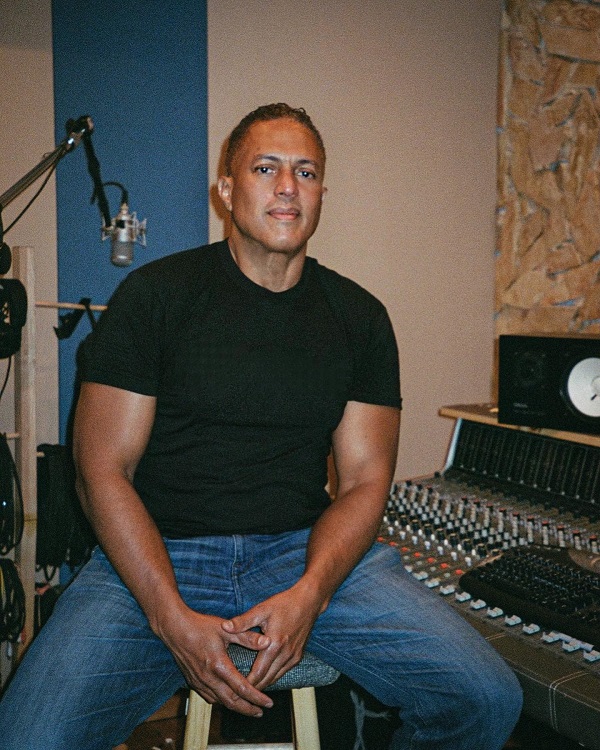
Ralph Riley en Rolo Estudio. Puerto Rico

1. The Recording and Production Process

When it comes to recording and production, the proper process involves capturing tracks for multitrack recording on tape or disk, followed by mixing and mastering. The technical complexity of the process is directly proportional to the number of tracks and artists involved in the production. Production costs and logistics also affect the final quality of the music produced.

Regarding copyright, it involves several key players: composers, publishers, record labels, and Performing Rights Organizations (PROs). Copyright royalties are generated from different uses of the song, such as streaming, physical sales, public performances, and synchronization in other media. It can be a complicated process that a lot can be written about and one that is constantly changing. The best advice is to do a lot of research or enlist the help of professionals who offer this consultation and/or full service for a fee.

2. The Impact of Digital Music Platforms

Digital music distribution platforms have significantly impacted how artists create, share, and monetize their music. They have democratized access to audiences around the world, providing opportunities for independent artists to bypass traditional gatekeepers and reach global listeners directly. However, this shift has also created challenges related to revenue generation and competition for visibility.

Here are some of the key challenges:

  • Revenue Inequity: Streaming royalties are often perceived as low, making it difficult for artists to generate substantial income from streaming alone.
  • Market Saturation: The ease of access to digital distribution has led to a highly saturated market, making it challenging for artists to stand out and get noticed.
  • Competition for Visibility: Artists need to actively promote their music and engage with their audience to compete with the sheer volume of content available on these platforms.
  • Dependence on Algorithms: Success isn’t solely dependent on the quality of the music, but is also influenced by the platform’s algorithmic recommendations, which can be unpredictable and require a strategic approach to navigate.

In conclusion, digital platforms have revolutionized the music industry, offering unprecedented opportunities for artists to connect with global audiences and build their careers. However, navigating the complexities of these platforms and finding sustainable income models remains a key challenge for artists in the digital age. This revolution, especially in the age of AI, continues to evolve rapidly.

3. Final Thoughts on Fairness

In summary, it seems to be always a little unfair to the vast majority of artists. It’s a complicated topic and I’d recommend a resource such as, for example, https://www.indiemusicacademy.com/blog/music-royalties-explained for better insights.

4. Popular Business Models

Some popular business models used in the music industry for record production include traditional record label deals, revenue-sharing models, and direct-to-fan approaches. Sometimes, it’s a combination of these. Streaming services and digital distribution also play a significant role in the current landscape.

For example, the direct-to-fan approach can include:

  • Direct Sales: Artists can sell their music directly to fans through their own websites, online stores (like Bandcamp), and social media platforms.
  • Crowdfunding: Platforms like Patreon allow artists to connect with fans and receive direct financial support through subscriptions or one-time donations.
  • Streaming Platforms: Artists can directly upload their music to platforms like SoundCloud, Bandcamp, and even Spotify and Apple Music.

5. How Artists Get Paid in the Digital Realm

Artists can typically monetize their music in the digital environment through streaming platforms, digital downloads, merchandise, fan subscriptions, live streaming, and licensing. Additionally, artists can explore opportunities in social media monetization, crowdfunding, and brand partnerships.

Here’s how the payment system works and the factors that influence an artist’s earnings:

The “Pro-Rata” Payment Model

Spotify doesn’t pay artists directly for each play. Instead, it uses a “pro-rata” model:

  1. The company pools all its revenue (from Premium users and advertising) into a common fund for a set period, typically a month.
  2. Spotify keeps a portion (about 30%), and the rest (around 70%) goes into a “royalty pool” for rights holders.
  3. An artist’s share of this pool is determined by their “stream share,” which is the percentage of their streams compared to the total streams on the platform during that period.

Average Per-Stream Rate

While there’s no fixed rate, many sources estimate the average payout to artists on Spotify is between $0.003 and $0.005 per stream. This means an artist would need approximately 1 million streams to earn between $3,000 and $5,000.

Factors Affecting the Payout Rate

The actual amount an artist receives can vary significantly based on these factors:

  • Listener’s Location: Subscription prices and ad revenue vary by country. A stream from a user in a country with a higher subscription fee (like the US or UK) will generate more revenue than a stream from a country with a lower fee.
  • Listener’s Subscription Type: A stream from a Premium subscriber is worth much more than a stream from a free user (with ads).
  • Artist’s Deal: Spotify pays the rights holders (record labels, distributors, publishers), not the artists directly. The artist’s contract with their label or distributor determines what percentage of the royalties they receive. Independent artists who use a distribution service typically keep a larger percentage.
  • Minimum Threshold: As of early 2024, Spotify requires a song to have at least 1,000 streams in the previous 12 months to be eligible to generate royalties.

In short, an artist’s earnings on Spotify aren’t a simple calculation. They are the result of a complex revenue-sharing system that is influenced by a global audience, different subscription types, and each artist’s specific contracts.

I also manage music production through cassiorecords.com

How to make money today as a recording artist with record labels and digital platforms

Also Read: Understanding the music business
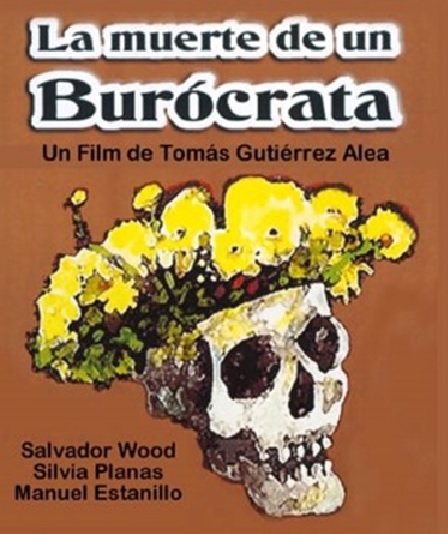
“La Muerte de un Burocrata” At the Palace Theatre in Downtown L.A.

North America / USA / Los Angeles
La Muerte de un Burocrata

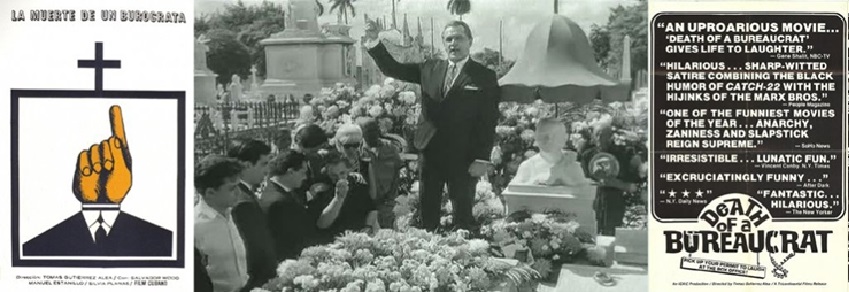
Latin American Cinemateca of Los Angeles (lacla) in collaboration with the Los Angeles Conservancy’s Last Remaining Seats film series, proudly present the Cuban film La muerte de un Burocrata (1966, Tomas Gutierrez Alea).

On June 14th at the Palace Theatre in Downtown Los Angeles’ historic theatre district at 8:00 PM. Satire of the Cuban bureaucracy of the post-revolution era which shows how convoluted it can be to get things seemingly simple.

La muerte de un burocrata is centered on the predicament of a hapless nephew (Salvador Wood) to retrieve the ID of his recently deceased uncle, a model worker and inventor. His widow (Silvia Planas) placed it in the coffin, but now need it, admonished by a bureaucrat that she will not get a pension without this piece of identification. But the bureaucrat in the cemetery tells him no exhumation is possible without a court order.

La Muerte de un Burocrata - Flyer
La Muerte de un Burocrata – Flyer

A clandestine operation yields the coffin but the nephew has to wheel it back to their home when the police unexpectedly show up. (Imagine the depredations of the Caribbean heat on an unrefrigerated cadaver). The farce escalates, the lampooning of recognizable government employees gets more ridiculous, and some sacred cows are turned upside down – like socialist realistart, and the fact that everybody is equal but some are more equal than others.

  • Director and Screenplay: Tomas Gutierrez alea.
  • Stars: Salvador Wood, Silvia Planas, Manuel Estanillo.
  • Music: Leo Brouwer
  • Cinematography: Ramon F. Suarez
  • Edited: Mario Gonzalez
  • Production Co: Instituto Cubano del Arte e Industrias Cinematograficos
  • Release Date: July 24, 1966 I Runtime: 85 minutes
  • Country: Cuba I Language: Spanish.

Tickets can be purchased through the L.A. Conservancy at the following link

http://www.laconservancy.org/event/la-muerte-de-un-burocrata-palace-theatre

For more information, please contact: Mariluz Gonzales, 818-667-6403, [email protected]

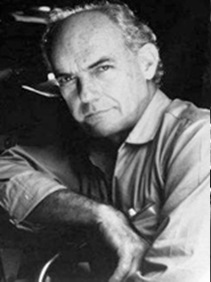
About Tomas Gutierrez Alea

Tomas Gutierrez Alea was a fervent supporter of the Cuban revolution, but good director that he was, his pictures never toe an overt propaganda line. They are aligned with the tenets of the regime but at the level of form, they are an artist’s creative take on the medium. “La muerte de un Burocrata” is a case in point, both in content and style. Fifty years after it was made, “La muerte” is still a refreshing, almost post-modern, satire on the plague of bureaucrazy… under any type of government and organization.

Tomás Gutiérrez Alea

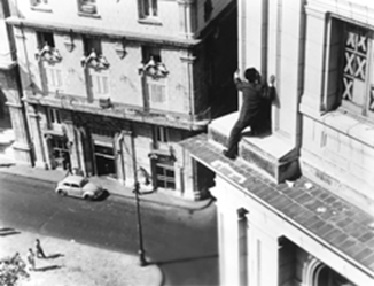
Gutierrez Alea uses the conventions of satire to blast the bureaucratic mindset that reduces life to a succession of absurdities, with witty homages to films and directors, in the guise of scenes filmed a variety of comedic styles: the assembly line of Chaplin’s Modern Times, the clock  from which Harold Lloyd hangs in Safety Last, Dracula’s fangs, the pie fights of Laurel and Hardy, a scattered and curvaceous Cuban Marilyn Monroe, and surrealist dreams like those of Buñuel.

The potpourri works very well, and gets hearty laughs from the audience. By Maria Elena de las Carreras, Ph.D. Noteworthy to mention, the film features music by the legendary composer, Leo Brouwer, who currently resides in Cuba.

About LACLA

Latin American Cinemateca of Los Angeles (LACLA) is a California non-profit organization dedicated to promoting cultural exchange through film by screening classic and contemporary films from Latin America and by USA Latinas and Latinos.

LACLA also supports the film and media efforts of Los Angeles inner-city middle and high school students with its annual student film festival.

About Last Remaining Seats

Last Remaining Seats is the Los Angeles Conservancy’s annual series of classic films in historic theatres. The series began in 1987 as a way to draw attention to the spectacular yet overlooked and underused historic theatre of Los Angeles. The film series has since become a summer tradition, drawing thousands of people from the region, the nation, and outside the U.S.

Photo of Los Angeles

About the Los Angeles Conservancy

The Los Angeles Conservancy is a nonprofit membership organization that works through education and advocacy to recognize, preserve, and revitalize the historic architectural and cultural resources of Los Angeles County. What began as a volunteer group in 1978 now has more than 6,000 member households, making the Conservancy the largest local organization of its kind in the U.S.

Miguel Zenón is widely regarded as one of the most innovative and influential saxophonists and composers of his generation

“Miguel Zenón, this young musician and composer, is simultaneously re-establishing the artistic, cultural, and social tradition of jazz while creating an entirely new jazz language for the 21st century.”

Miguel Zenón is widely considered one of the most innovative and influential saxophonists and composers of his generation.

Born and raised in San Juan, Puerto Rico, Zenón has released seventeen recordings as a leader, including his most recent, the Grammy-nominated Golden City (2024), and the Grammy-winning album El Arte Del Bolero Vol. 2 (2023).

He has collaborated with luminaries such as The SFJAZZ Collective, Charlie Haden, Fred Hersch, Kenny Werner, David Sánchez, Danilo Pérez, The Village Vanguard Orchestra, Kurt Elling, Joey Calderazzo, Steve Coleman, Ray Barreto, Andy Montañez, Jerry Gonzalez & The Fort Apache Band, The Mingus Big Band, and Bobby Hutcherson.

Zenón is a Grammy Award winner, a Guggenheim Fellow, a MacArthur Fellow, and a recipient of the Doris Duke Artist Award.

He also holds an honorary Doctorate of Arts from the Universidad del Sagrado Corazón.

Widely considered one of the most innovative and influential saxophonists and composers of his generation, he has also developed a unique voice as a conceptualist, focusing his efforts on perfecting an excellent blend of jazz and its many musical influences.

enón ha lanzado diecisiete grabaciones como líder

Zenón has released numerous albums as a bandleader and has appeared on over 100 recordings as a sideman.

Música de las Américas: A Masterpiece

With Música de las Américas, Puerto Rican saxophonist Miguel Zenón has created his finest album to date since his professional debut twenty-two years ago.

On this album, Zenón is accompanied by the same combo he has worked with on his recent projects, notably Venezuelan pianist Luis Perdomo, with the addition of some high-caliber percussion reinforcements from his native Puerto Rico.

He has worked with luminaries such as The SFJAZZ Collective, Charlie Haden, Fred Hersch, Kenny Werner, David Sánchez, Danilo Pérez, The Village Vanguard Orchestra, Kurt Elling, Joey Calderazz

Música de las Américas presents a very appealing balance across its eight tracks, weaving classic Latin jazz with more modern jazz forms, venturing into the turbulent waters of free jazz when necessary (as heard in ‘Venas Abiertas’), and incorporating traditional music from his homeland.

Zenón’s compositions aim to reflect the dynamism and complexity of indigenous American cultures (‘Taínos y Caribes,’ which opens the album), as well as their encounters with Europeans and the resulting historical implications, exemplified by tracks like ‘Imperios.’

As Miguel Zenón himself has stated, “the music on the new album is inspired by the history of the American continent, not only before European colonization but also by what has happened since.”

Música de las Américas serves as a kind of manifesto for Zenón’s concept of America as a continent.

This new musical offering from the alto saxophonist, born in San Juan, Puerto Rico, in 1976, was conceived during the pandemic (does anyone remember that there was a pandemic in 2020 and 2021 originating in the People’s Republic of China that caused thousands of deaths?). The book ‘Venas Abiertas’ by Uruguayan writer Eduardo Galeano, who passed away in 2015 and was a prominent figure of the Latin American left, played a significant role in its development.

Zenon Nacido y criado en San Juan, Puerto Rico

Zenón has been featured in publications such as The New York Times, The Wall Street Journal, The Los Angeles Times, The Boston Globe, and The Chicago Tribune. He also topped the Jazz Artist of the Year and Alto Saxophonist of the Year categories in the 2014 JazzTimes Critics’ Poll and was selected as Alto Saxophonist of the Year by the Jazz Journalists Association in 2015, 2018, 2019, and 2020 (when he was also recognized as Arranger of the Year). In 2023, he was recognized by the same organization as Composer of the Year.

As a composer, he has received commissions from SFJAZZ, NYO Jazz, The New York State Council on the Arts, Chamber Music America, Logan Center for The Arts, The Hyde Park Jazz Festival, The John Simon Guggenheim Foundation, MIT, Spektral Quartet, Miller Theater, The Hewlett Foundation, Peak Performances, PRISM Quartet, and many of his colleagues. Zenón has given hundreds of lectures and masterclasses at institutions worldwide and is a faculty member of MIT’s Music and Theater Arts Department, as well as the current Visiting Scholar for the Jazz Harmony and Composition Department at Berklee College of Music.

Ultimately, Música de Las Américas is the product of Zenón’s intellectual curiosity to learn more about the history of America (the continent) and translate that history into music (distritojazz).

Miguel Zenón – Música De Las Américas (2022)

Tracks:

  1. Tainos y Caribes
  2. Navegando (Las Estrellas Nos Guían)
  3. Opresión y Revolución
  4. Imperios
  5. Venas Abiertas
  6. Bámbula
  7. América, El Continente
  8. Antillano

Musicians:

  • Miguel Zenón (Alto Saxophone)
  • Luis Perdomo (Piano)
  • Hans Glawischnig (Bass)
  • Henry Cole (Drums)

Guest Musicians:

  • Los Pleneros de La Cresta (Emil Martinez, Edwin “Wechin” Aviles, Joshuan Ocasio, Joseph Ocasio, and Jeyluix Ocasio) (Panderos, percussion, and vocals on #2)
  • Paoli Mejías (Percussion #3)
  • Víctor Emmanuelli (Barril de bomba #6)
  • Daniel Díaz (Congas #8)

Recorded at Big Orange Sheep, Brooklyn, New York, March 21-22, 2022.

Miguel Zenón - Música De Las Américas (2022)
Miguel Zenón – Música De Las Américas (2022)

Zenón lives in New York City with his wife, Elga, and their daughter.

By:

Miguel Zenón

Dj. Augusto Felibertt

L’Òstia Latin Jazz

Also Read: Luis Perdomo, one of the most diligent jazz pianists in New York

Bachata Festival 2017 in San Francisco, California

North America / USA / California
Bachata Festival 2017 in San Francisco, California

The Ultimate Bachata, Salsa, Kizomba and Zouk Experience… A Dance Convention for Beginners, Intermediate & for all levels of dancing! The 9th Annual SF International  Bachata Festival

  • Date: JULY 21st – 24th, 2017
  • Bachata | Kizomba | Zouk | Salsa (4-Party Rooms)
  • 3 days and  3 nights of dancing
  • Friday, Saturday & Sunday from 10am until 6am!
Photos from the 2017 Bachata Festival in San Francisco

Transform your dance skills in one weekend with these world renowned dance instructors plus a dance experience of a lifetime!

  • Live Band
  • Dance Workshops from 10am to 5pm
  • Performances Every Night Ÿ Social Dancing until 6am
  • Jack and Jill Contest prize Giveaways

SFIBF, (San Francisco International Bachata Festival) is the largest and hottest Bachata festival in the world, located in one of the greatest city in the world – San Francisco. Created by Rodney Rodchata Aquino, along with its sister event Reno Bachata Festival, they are the first Bachata festivals in the USA. It celebrates the music and dance of Bachata, preserving its roots and accepting its evolution, as well as Salsa, Zouk and Kizomba.

Marriot Flyer
Marriot Flyer

Festival Line-Up

More than 20 instructors, DJs and Live Band for this year’s festival!

Adam Taub (Colorado)/ Bachata:

Adam Taub is one of the few ones who have seriously studied authentic bachata (the way Dominicans dance). SFIBF is extremely proud to present him with his special music, history and dance workshops at the San Francisco International Bachata Festival – July 21-23, 2017.

Adam Taub
Adam Taub

Adam Taub is a documentary film director from Colorado whose films include La Quinceañera, Don Angelo, and El Duque de la Bachata. His film La Quinceañera won the 2007 award for Best Documentary at the Angelus Student Film Festival in Hollywood, California and Best Documentary at the San Diego Latino Film Festival.

Alberto & Nola (Australia) / Bachata:

Nola Komis is the Founder, Director and Principal Instructor of A Touch of Salsa Latin Dance Studios in Sydney, Australia. A Touch of Salsa runs classes in Salsa, Bachata, Zouk and Kizomba. They also offer competition courses, workshops, performance courses and more and will this year will be celebrating 11 years.

Alberto and Nola
Alberto and Nola

Nola Komis and Alberto Torres-Perez have been teaching together for the past five years and they are both passionate and love sharing their passion for dance. Nola and Alberto have both travelled to Athens, Geneva, New Zealand, Hawaii and all over Australia where they have taught workshops at Festivals/Congresses to packed participants and have received many great reviews for their classes.

Nola and Alberto are looking forward to being part of the San Francisco Bachata Festival in July 2017.

Emelie Andagan (Sacramento) / Salsa:

The Yemaya Salsa Dance Company was founded by Emelie Andagan & Heather Wong-Xoquic in October, 2000. Emelie learned to dance salsa after only a few years due to her extensive dance background of over 20 years and many years of experience as a ballet and jazz student, and later a teacher at the Ballet Theatre of Dover Dance Conservatory.

Emelie Andagan
Emelie Andagan

The troupe started as a small group of only four couples that rehearsed twice a week in various garages and practically anywhere with a smooth surface. She owns and manages Yemaya Dance Studio in Sacramento, and is the main director of Yemaya dance Company.

Emelie Andagan
Emelie Andagan

Luis Aguilar (San Francisco) / Salsa:

Luis Aguilar debuted in 2000 with the Salsa Mania Dance Company in San Francisco. Since then, he performed with such giants in the Latin music industry as El Gran Combo de Puerto Rico, the Tito Puente Orquestra, Celia Cruz, Ray Barretto, Jose “El Canario” Alberto, Oscar de Leon, Eddie Palmieri, the Spanish Harlem Orquestra and Sonora Carruseles. In addition to his impressive performance credits, Luis has taken 1st place in many Latin dance competitions and Congresses such as The San Francisco International Salsa Congress and the Bay Area Salsa Dance Competition.

Luis Aguilar
Luis Aguilar

Since joining forces in 2007, Luis and Anya have become the ON 2 WORLD SALSA CHAMPIONS for the second year in a row, along with having become two time undefeated San Francisco Congress Salsa champions in ’09 and ’10, undefeated two time New York Congress champions in ’09, ’10, Puerto Rico Hustle and Salsa champions ’09, and are currently the North American Salsa Champions and two time winners of the NY/NJ salsa open. With their combined backgrounds, Luis and Anya make a dynamic duo that brings a fresh new element to the salsa dance floor.

Benga Da Beatz (Ohio) / Kizomba:

Benga is a Nigeria born international dancing sensation, with backgrounds in several African dances, ballroom dances, American dances, and latin dances. From Waltz to Tango, Makoussa to Kizomba, hip hop to west coast swing, and Irish dance to Bollywood. Benga has intensive dancing experiences all across the globe.

Benga Da Beatz
Benga Da Beatz

An Afro Beats and Afro-cuban solo performer, and a latin dance instructor well known to many now as the Da Beatz. With 26 years of African Dancing and 6 years of professional latin dancing, Benga is teaching and promoting at every Latin events possible with his own vibrant style of Fun Swagness.

Cymeone Mopao (France) / Kizomba:

Cymeone Mopao
Cymeone Mopao

Cymeone Mopao is a well-known kizomba instructor based in Paris. He is one of the first instructors to have taught kizomba in France beginning in 2009. Born into a family of musicians, he was accustomed to lots of music and quickly adapted to the dance lifestyle. As he immersed himself into dance, he became proficient in African style dances such as ndombolo and coupé décalé.

Cymeone Mopao
Cymeone Mopao

When he was 18, he joined a group of dancers called “les coeurs brisés “. From there he became interested in other Afro style dances like Zouk, Kompa and Kizomba. He gave his first Kizomba class in 2009 and became one of the most wanted instructors in international festivals. In 2010, he was the first French instructor to teach Kizomba in the United States (New York).

Bruno & Olga (Los Angeles) / Zouk:

Bruno and Olga started dancing together in November 2015 and have since taught and performed at numerous events around the country from local workshops to large international congresses.}

Bruno & Olga
Bruno & Olga

In 2016 they took second place in the semi-pro division of the Zouk US Open with their now well-known choreography piece “Worth It” and shortly after got featured in the “Fences” movie, that’s currently in production stage. Olga has a rich dance background in classical ballet, modern, contemporary and commercial jazz, as well as hip hop and heels choreographies. She is also an All-Star west coast swing dancer. Bruno is trained in hip hop, salsa, kizomba, tarraxinha, semba, and of course brazilian zouk.

He has been on the social dance scene of his hometown Braga, Portugal since he was 14 years old. Since his move to the US he’s been mainly focusing on zouk and kizomba, training and teaching around the country with his partner, performing in ISDC dance company for a while, and currently codirecting the Zouk team at Ivo Vieira’s Dance company and learning from the best dance professionals in the world.

Sandro (Brazil) / Zouk:

Sandro Soncini is a dancer, choreographer and dance instructor from Florianopolis, Brazil. He has studied and trained in dance for over 10 years. Sandro is experienced in many partner dance styles, and has intensively studied the concepts of body movement driven by his training in tango.

Sandro
Sandro

In 2010 Sandro moved to Argentina to continue to develop his dance skills and education at DNI tango school. Sandro has participated in various congresses and competitions, including BAILA FLORIPA DUO, where in 2012 together with his partner he placed 3rd.

Sandro has taught in zouk throughout Canada, United States and Brazil. Currently Sandro is living in Vancouver, Canada with a focus on promoting zouk in the Pacific North West.

Bachata Festival 2017, Tickets / Passes:

  • Tickets: Full Passes $200.00 Unlimited. (EXP July 15th)
  • Tickets at Doors: $250 Buy Your Passes in mybachatafestival.com

Location: The SF Marriott Hotel 1800 Old Bayshore Hwy, Burlingame, CA 94010 Discounted Nightly rate of $141 a night (you must use the site – www.sfibf.com) Free Shuttle 24 hours a day.

Bachata Festival 2017

Trombone player Lindsey McMurray from the women’s orchestra Las Chikas

Lindsey McMurray, bandleader of the group Las Chikas, has graciously accepted our invitation to talk about the women’s orchestra she is leading, which makes us very happy and pleased, so we invite our readers to enjoy this interview from beginning to end and learn about the musical journey of this young artist.

Lindsay from Las Chikas singing
Lindsey McMurray singing during a concert with Las Chikas

How Lindsey got started in music

Lindsey’s journey to become an artist began very soon at school, when she was just 10 years old and started learning to play the trombone. Prior to this, she had already studied other instruments such as the keyboard and the recorder, but she ended up trying the trombone.

Soon after, at the age of 11, she joined the school jazz band, but it was not until college that she began experimenting with salsa in orchestras that played this genre. Until then, Lindsey had had virtually no contact with Latin music, as she had only listened to typical U.S. rhythms. However, once she discovered Latin American music, she could not escape her love for it and continues to play it to this very day.

It should be noted that the musician does not have any family member who is too. So she would be the first one to make music her profession and, of course, one of the most important areas of her life.

Professional experiences prior to Las Chikas

Before even getting to know of the existence of Las Chikas, Lindsey was on a TV show called ‘’Noches Con Platanito’’ in the musical side, but she did not really lead anything until the bandleaders of the groups who were there left. Her big break came in 2017, when she finally managed to become a bandleader herself and, in turn, started two groups at the same time. 

This is because Lindsey did not want to depend on anyone be called whenever she was required, but, on the contrary, she wanted to go on developing her autonomy to the point of being the one to create jobs for others instead of looking for them somewhere else.

Whitney and Gabby from Las Chikas
Singers Whitney Hernández and Gabby Tamez from Las Chikas in Carson City

Las Chikas

It is important to clarify that Lindsey is not the founder of Las Chikas, but that the group already existed before she joined during the pandemic. The idea of Las Chikas was born during “Noches Con Platanito” as part of the show, but Lindsey and the other members wanted to have activities outside of the show and what the production asked them to do. At that time, the leader and founder of the group was Eliana Rose who during the pandemic wanted to settle in Southern California, so she asked the artist to take her place, which she accepted.

This posed a significant challenge for her, as she had never led a Latin music orchestra in her life. However, the novelty did not make him get cold feet, but on the contrary, it was an experience she wanted to live in order to learn from it.

The current members joined the group thanks to recommendations from friends and other people in the industry. Already at this point, it can be said that they all are her friends, to the extent that they have shared all kinds of special occasions such as birthdays, trips, and much more. 

Why only women in the orchestra

What catches the attention about Las Chikas is that, as its name suggests, it is only composed of women. One of the reasons is that the industry, despite of the recent social changes, continues to be dominated by men, so these young female talents find support between themselves.

What the original founder wanted was to promote the idea that a group of girls could play Latin music without it being perceived as strange. Lindsey shares this vision with hundred percent and hopes new generations of women never think for a moment that their gender is a limitation to achieve what they want in music.

Las Chikas with its certificate
Marina Panzetta, Shirly Ace, Lindsey Murray, Whitney Hernadez, Gabby Tamez, Maria Vega, Mayelin Vazquez, Alisha Ard Vazquez, Dolores Duran-Cefalu, and Anitta Garay from Las Chikas posing for the camera with its certificate from the City of Los Angeles. Photo taken by Craig Cochrane

While acknowledging that there have been positive changes in recent decades, she thinks there are areas that do not have enough female representation such as percussion, bass, production, arranging, among others. It is very common for women to be vocalists in a band, but it is still unusual to see them in other areas of the project.

Las Chikas as a mix of cultures and ethnicities

On the band’s website, it can be read that the group is a mix of diverse cultures and ethnicities. In this regard, Lindsey pointed out that, while it is true that she is not a Latina, she has always sought to create something as authentic as possible that is rooted in Latin culture, of course with great respect. “Latin music is so joyful, intelligent, and capable of being beautiful to the eyes of any human being who hears it. I also want in a certain way to make non-Latinos enjoy this beautiful music as much as I do,” Lindsey added on the subject.

She also said that diversity plays a very important role, as non-Latino audiences tend to feel that they have permission to be part of the joy emanating from this music. In addition to that, the fact that the members have diverse backgrounds helps the band have different perspectives on what they want to do.

Today, Las Chikas is composed of Cuban singer Mayelin Vázquez, Cuban singer Whitney Hernández, American pianist Dolores Duran-Cefalu, bassist María Vega, Mexican timbalera Anita Garay, Mexican conga player Diana Teixeira, American trumpet player Anne King, Mexican saxophonist Marina Panzetta, and Lindsay herself on trombone.

Read also: The best of Cuban music in Tampa with Cuband Son Band

  • « Go to Previous Page
  • Page 1
  • Interim pages omitted …
  • Page 4
  • Page 5
  • Page 6
  • Page 7
  • Page 8
  • Interim pages omitted …
  • Page 33
  • Go to Next Page »

International Salsa Magazine (ISM) is a monthly publication about Salsa activities around the world, that has been publishing since 2007. It is a world network of volunteers coordinated by ISM Magazine. We are working to strengthen all the events by working together.