• Skip to primary navigation
  • Skip to main content

International Salsa Magazine

  • HOME
  • Previous editions
    • 2026
      • ISM / April 2026
      • ISM / March 2026
      • ISM / February 2026
      • ISM / January 2026
    • 2025
      • ISM / December 2025
      • ISM / November 2025
      • ISM / October 2025
      • ISM / September 2025
      • ISM / August 2025
      • ISM / July 2025
      • ISM / June 2025
      • ISM / May2025
      • ISM / April 2025
      • ISM / March 2025
      • ISM / February 2025
      • ISM / January 2025
    • 2024
      • ISM / December 2024
      • ISM / November 2024
      • ISM / October 2024
      • ISM / September 2024
      • ISM / August 2024
      • ISM / July 2024
      • ISM / June 2024
      • ISM / May 2024
      • ISM / April 2024
      • ISM / March 2024
      • ISM / February 2024
      • ISM / January 2024
    • 2023
      • ISM / December 2023
      • ISM / November 2023
      • ISM / October 2023
      • ISM – September 2023
      • ISM – August 2023
      • ISM July 2023
      • ISM Edition June 2023
      • ISM – May 2023
      • ISM April 2023
      • ISM March 2023
      • ISM February 2023
      • ISM January 2023
    • 2022
      • ISM December 2022
      • ISM November 2022
      • ISM October 2022
      • ISM September 2022
      • ISM August 2022
      • ISM July 2022
      • ISM June 2022
      • ISM May 2022
      • ISM February 2022
      • ISM January 2022
    • 2021
      • ISM December 2021
      • ISM November 2021
      • ISM October – 2021
      • ISM September 2021
      • ISM August 2021
      • ISM July 2021
      • ISM May 2021
      • ISM April 2021
      • ISM June 2021
      • ISM March 2021
      • ISM February 2021
      • ISM January 2021
    • 2020
      • ISM December 2020
      • ISM November 2020
      • ISM October 2020
      • ISM September 2020
      • ISM August 2020
      • ISM July 2020
      • ISM June 2020
      • ISM May 2020
      • ISM April 2020
      • ISM March 2020
      • ISM February 2020
      • ISM January 2020
    • 2019
      • ISM December 2019
      • ISM November 2019
      • ISM October 2019
      • ISM Septembre 2019
      • ISM August 2019
      • ISM July 2019
      • ISM June 2019
  • Spanish
  • Download Salsa App
    • Android
    • Apple

Search Results for: Los Angeles

Tito Planas talked to us about his Orquesta Afinke and its members

If there is something that we have seen in recent times is that Los Angeles, New York and Miami are not the only places Latin music has had great boom due to the huge number of Latinos in those areas, as our culture has permeated many other places in the United States. A great example of that is the Orquesta Afinke, based in the state of Connecticut, and its director Herminio ‘‘Tito’’ Planas, with whom we were able to talk about his career and band.

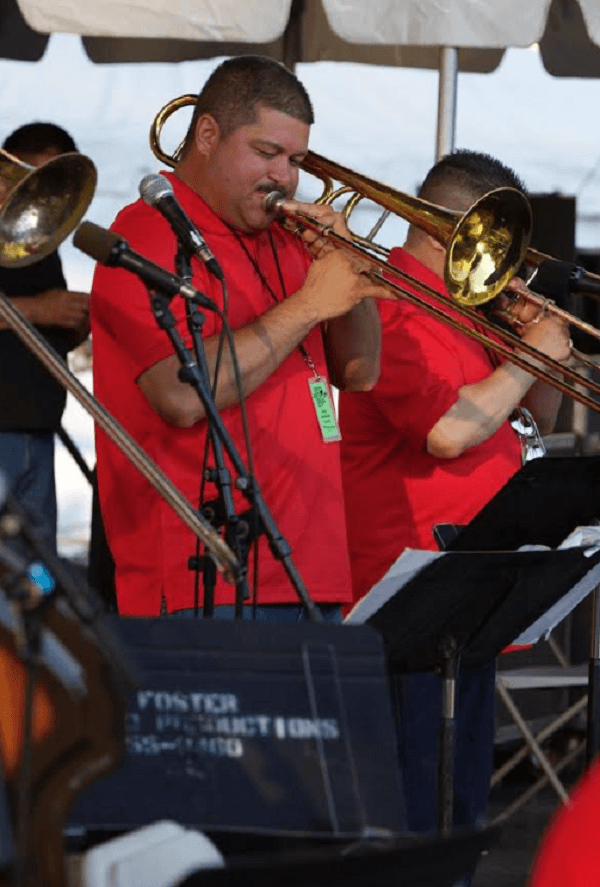
Tito playing the trombone
Orquesta Afinke director Tito Planas playing the trombone live

How Tito fell in love with music

Tito was born in Puerto Rico and raised in the town of Ponce, the home of great luminaries of salsa such as Hector Lavoe, Pete ‘’El Conde’’ Rodriguez, Papo Luca, Jose ‘‘Cheo’’ Feliciano, Ismael Quintana, Yolanda Rivera, among many others. He even attended school with Keila Lucca, the daughter of one of the Luccas of La Sonora Ponceña, and is still in contact with her through social networks.

He studied at the Free School of Music in Ponce where he sang in a children’s choir and they traveled around the town to delight a variety of audiences with his voice. Building on the success of this program run by the school, there were many children from third through eighth grades who began taking lessons of solfeggio or any instrument they wanted. 

In Tito’s case, he moved with his parents to the United States at age 13 in the eighth grade of the secondary education. His father had lost his job in Puerto Rico and the economic situation of the family was very precarious, so he made the decision to go first to find work and, in so doing, taking his children and his wife to live there.

In college, he started getting involved with salsa and had Jerry Perez as a trombone teacher, who taught him in this instrument for several years and offered him to form an orchestra together. They eventually did and toured with it in various parts of the United States.
Tito moved to the United States
Tito Planas moved to the United States at age 13, but never left his Latino heritage behind

Professional start

After being played the trombone for some time, many other musicians saw him and offered him to play with them in their orchestras. Many of these job opportunities came from New York, which was very close to him, which benefited him greatly because the clubs in that city closed much later, so they could play even till five in the morning. He combined all these activities with university and his private lessons in order to further improve his musical skills.

Orquesta Afinke

After the foundation of the orchestra, Tito and his musicians accompanied many great artists such as Hector Tricoche, El Grupo Guayacán, Viti Ruíz, Van Lester, Frankie Vázquez and many others.

Thanks to all these shows they were doing with other groups, Sammy Diaz, co-director of the orchestra, and Tito decided it was time to create a much more formal project that grouped together all the original members of the band. What brought them closer together was the fact that both Tito and Sammy had teenage children, whom they included in the group to keep them playing and in constant contact with music.

Tito and the rest of the group
From left to right: Junior Travieso, Victor Planas, Jerry Perez, Daniel Planas, Tito Planas, Samuel Diaz Jr., Samuel Diaz III, Louis Carrasquillo, and Rafael Rosado

Today, Tito’s youngest son is 18 years old and is about to enter the University of Connecticut to study music in order to follow the same path as his father, with whom he has been working in the orchestra since he was about 11 years old singing backup and playing the saxophone.

They started with about three scores with which they managed to put on a show for as long as half an hour. Today, 16 years later, they have more than 80 scores and about 12 original songs, of which one was recently released and another is being recorded at the time of writing this article. 

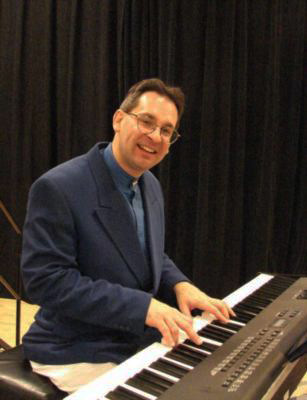
On the other hand, the core of the orchestra has been the same since its foundation and includes pianist Rafael Rosado, bassist Victor Planas, bongo player Sammy Diaz Jr. (co-director of the orchestra Sammy Diaz’s son), timbalero Sammy Tercero (another son of Sammy Diaz), conguero Luis Carrasquillo, singer Junior Travieso, singer Raquel Ramirez, Peruvian singer Jano Arroyo, trombonist Jerry Perez (the teacher who taught Tito to play the trombone) and Daniel Planas (Tito’s son).
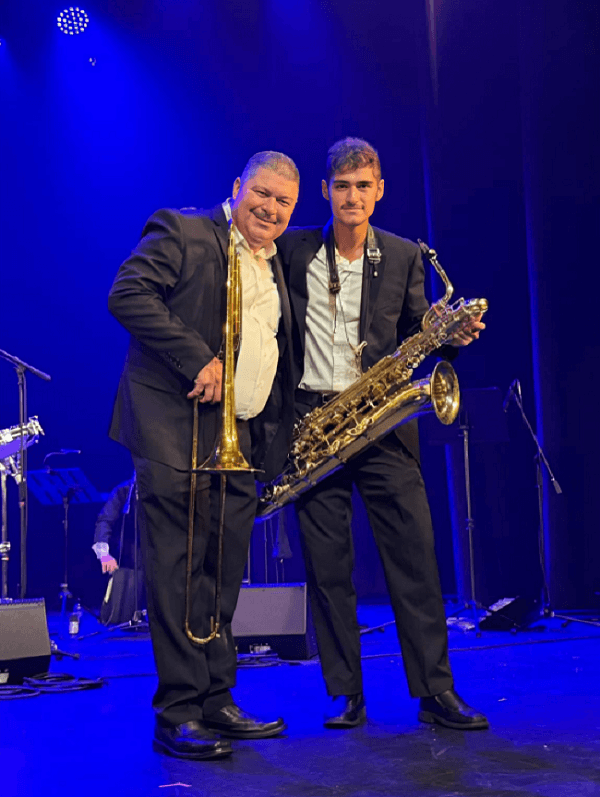
Tito and his son
Tito Planas with his younger son Daniel Planas

Read also: Eduardo Ron and his Fondo Blanco Band liven up great events in Miami

Burju Pérez

North America / USA / Boston

Burju Pérez. From Dance to the Fashion Industry

Turkey is considered one of the countries with the most successful traders in the world and with a big musical influence of the Islamic and Western culture, well, from this country come the wonderful professional salsa dancer Burju Pérez, an entrepreneur who fused the tempo with the comfort and fashion of footwear.

Burju Pérez Shoes - Photo
Burju Pérez Shoes – Photo

Born in Turkey but arrived from 2 years old to Boston, Massachusetts. From very young, Burju began in the world of rhythmic gymnastics and dance. “My parents say I danced before I walked, or at least I started them both at the same time. I always had a wiggle and a bop”, said Burju for an American media.

Over the years, she learned other rhythms such as: Hip hop, Jazz and classical. Once at the university, she really dabbled in Latin dance, there a dance group was formed and she met her current husband Víctor, whose roots from Puerto Rico and who by that time was already an expert in Salsa dancing.

Dancers in workshop
Dancers in workshop

Once associated both personally and professionally, Burju and Víctor embarked on their way to conquer the most important congresses and festivals in the country as qualified Salsa dancers, starting with the nation’s largest annual convention, LA SALSA FEST, which for that time was only made in two cities of the world: one in San Juan (Puerto Rico – original headquarters) and the other in Los Angeles, (US).

Russia, China, Japan, Turkey, Lithuania, Germany and all Western Europe were also witnesses to the rage of the audience that generated this duo on the dance floor, who stepped on the best stages, generating great respect in the salsa community for being a couple of high competitive range.

Burju Pérez on the show - Photo 2
Burju Pérez on the show – Photo 2

Burju during the decade of the 90s began to add her identity to the attire, painting his shoes and creating her own style. By 2003, this regular salsa girl from the stages of Boston and New York had the opportunity to belong to Juan Matos’ Fogarate Dance Project, which was held every weekend in New York. For the same period, Matos came up with another project, this time in Italy and Turkey and for which he had no partner dance so Burju was the ideal candidate to make this tour with him for a month, working full time.

Burju Shoes

Burju Shoes
Burju Shoes

Once in Milan, this choreographer and professional dancer began to create her own project, an idea that would satisfy the needs of the dancers, simply a hybrid between dance and fashion, was the creation of Burju Shoes. In Milan, where I was based for the project, there is this very high fashion and lots of people not wearing dance shoes when they dance.

I was like, “Oh, I’m not trying to be left out.” So when I was social dancing I was rocking these hot fashion shoes I bought there, but every night I was nearly crying because I was in so much pain. That’s when I was like, OH MAN! I want to combine fashion with comfort for dance shoes. She explained in an interview.

Burju Shoes (created in December 2010) are the perfect combination between the avant-garden design, contrast of colors, versatility and comfort, made to highlight the distinctive beauty in each dress and coziness when dancing.

Burju decided to create this company in his home, Boston, a very welcoming place where the scenes and the Latino community has grown exponentially.

Burju Shoes Types
Burju Shoes Types

When I first started my business, I asked a lot of ladies that were well known (in the dance and salsa world) to help me with a collective push with the brand. These girls not only endorsed it, but became part of the brand and helped with the designs. I even named shoes after them!, said she. I had my own following, but it was so wonderful to have all these girls supporting me and spreading the word.

When I felt weak, I had people to lean on who were not just friends but collaborators in the scene… I’m so grateful for the love and support here. She added. The Burju Shoes business was the change in the footwear industry’s perception for the ladies. The belief for years that the beauty of the shoe was synonymous with pain and tiredness of the feet was in the past.

Burju Pérez on the show - Photo 4
Burju Pérez on the show – Photo 4

Burju Shoes offer you elegant shoes that you can use to do your dailies and go to work, they are also perfect for a dinner, cocktail and especially for a night of total fun and a lot of Latin dance.

Burju also cared about brides, and created a wide selection for them for that special day.

Burju thanks to his experience as a professional dancer with 14 years of career, travel and in addition to her creative intuition, she has created great innovative designs in each shoe, which are flexible for the comfort of the user and functional for each occasion.

Burju Pérez on the show - Photo 3
Burju Pérez on the show – Photo 3

The construction of each pair of shoes is derived from custom made patterns, high-end manufacturing and high quality materials: satins, leathers, sparkle, faux animal prints and other synthetic or man-made materials.

For the outer soles, the options of suede (more traditional for dance shoes) to the street sole which is great for indoor and outdoor use. I think people appreciate that we put a higher standard on presentation… At the end of the day, selling is not my main mission. But I will educate you and help you find what’s right for you, and help you feel good about yourself. I think this draws people in, said

Even though I don’t dance as much as I used to (since I got pregnant four years ago), and went the fashion and entrepreneur route, I’m still connected to this dance scene through my work and like giving back to the community… I want to show people that arts and business can function together. Burju Perez

Burju Pérez on the show - Photo
Burju Pérez on the show – Photo

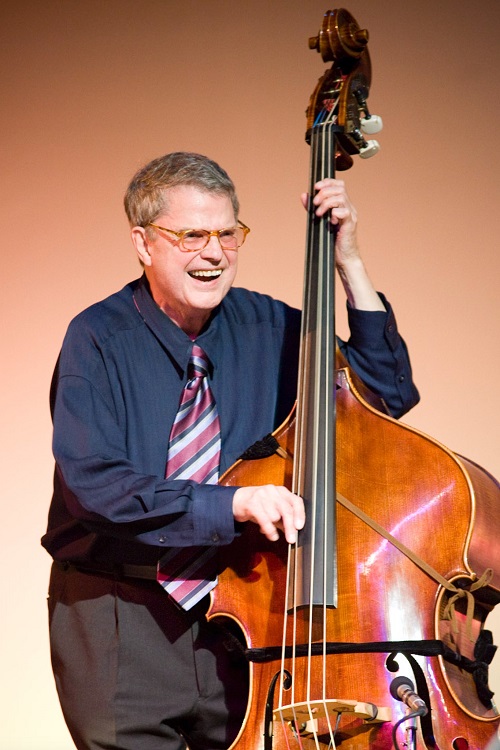
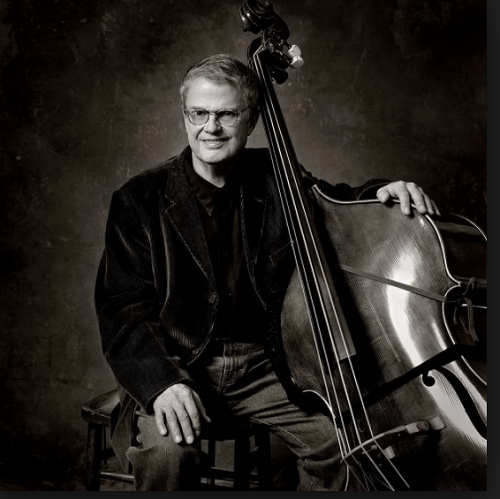
Charlie Haden was an extraordinary double bassist and composer who was a key figure in the history of modern jazz.

Double bassist and composer extraordinaire, Charlie Haden (Shenandoah, Iowa, August 6, 1937 – Los Angeles, California, July 11, 2014).

Charlie Haden began his professional activity in 1959 with Ornette Coleman’s quartet, a key figure in the history of modern jazz, and very soon began to investigate in that direction that Coleman initiated known as free jazz.

In that context, Charlie Haden participated in the recording baptism of that movement with the album recorded on May 22, 1959 for the Atlantic label and entitled: “The Shape of Jazz to Come” with the invaluable collaboration of Don Cherry, another incomparable musician and leader together with Coleman of that revolutionary musical movement that still lasts today.

Charlie Haden (August 6, 1937- July 11, 2014)

Charlie Haden in 1960 participated with another double bass player, Scott LaFaro in an operatic manifesto entitled: “Free Jazz” of whom both were distinguished representatives in their instrument.

In 1964 he worked with Denny Zeitin’s trio and in 1966 he returned with Ornette Coleman while expanding his performance area with collaborations left and right.

In these areas he stood out for his participation in the work, studio and recording meetings of the “Jazz Composer’s Orchestra” and in 1969 he was finally able to realize a wish he had been pursuing for years: to record his first album under his own name with the Liberation Music Orchestra.

With original arrangements by Carla Bley, the music of the Liberation also stood out for the political character of the songs, being the first time that, in that context, a jazz group echoed the popular songs alluding to the Republican side of the Spanish Civil War.

After the album recorded by Impulse in 1976 entitled: “Song for Che” in homage to Ernesto Che Guevara, Charlie Haden formed with Don Cherry, the quartet “Old and New Dreams” with which he toured throughout Europe, Asia and North America. At the end of the eighties, Charlie Haden elaborates a new musical discourse within the framework of his new formation entitled “Quartet West”.

The founding album of this new discourse was an extraordinary album generically entitled “Quartet West”, a musical manifesto of great beauty and one of the essential albums of contemporary jazz. From 1990 onwards, Charlie Haden explores more intimate jazz universes, introducing the duo format into his discourse.

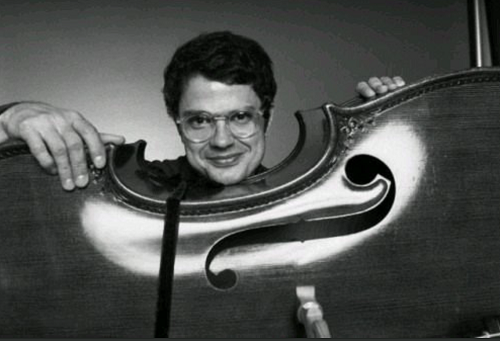
Charlie Haden
Charlie Haden

In this context, the musician explores himself in the composition and his relaxation together with the other protagonist discovers us a music of great inventiveness, clean in the execution and approached from a purely instrumental point of view.

This is how on Thursday, November 14, 2002, Charlie Haden appears in Seville at the Central Theater with the master of the guitar, Jim Hall to offer a portentous concert, full of sensitivity, art and talent.

Fortunately Apoloybaco was present that magical night in Seville and Charlie Haden is still making music of the highest level. ~ (apoloybaco)

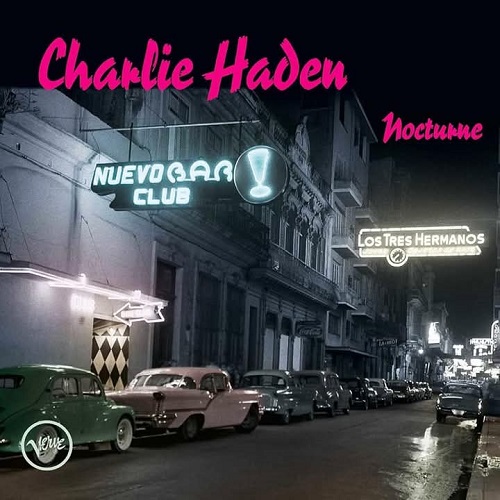
Charlie Haden teams up again with the young Cuban pianist Gonzalo Rubalcaba in this melancholic and relaxing album. Ignacio Berroa on drums and percussion completes the main trio.

Special guests include tenor saxophonists Joe Lovano and David Sánchez, violinist Federico Britos Ruiz and guitarist Pat Metheny (one track only).

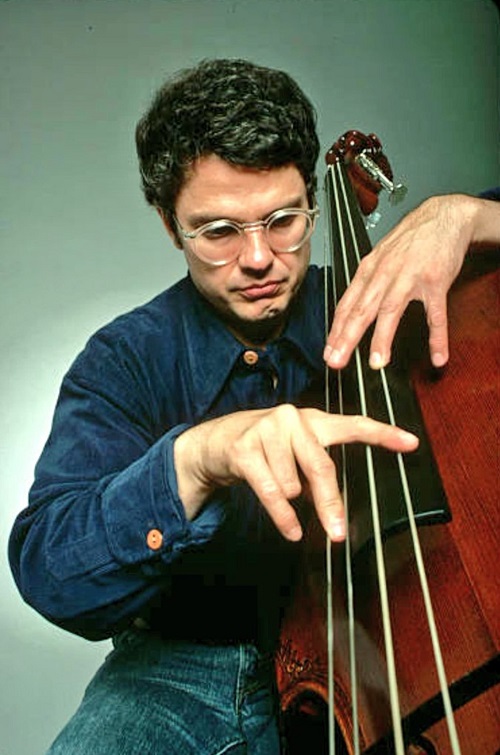
Charlie Haden photo 1978 Roger Ressmeyer

Rubalcaba contributes orchestrations on two tracks, both of which omit drums and percussion. Haden’s intention is to explore the bolero, a distinctive Latin dance rhythm that Ignacio Berroa accentuates with a soft, subtle snare drum roll, played with brushes, that begins on the “y” of the first beat of the measure and ends on the second.

This rhythm is perfect for a slow dance and, in fact, the whole album is very romantic, with bittersweet melodies and lilting cadences.

The only problem is that Berroa’s bolero figure is present on almost every track, perhaps what you would expect from a bolero album, but there is no getting around the fact that the music sounds pretty much the same on every track.

 (To be fair, Berroa is not the only one guilty of uniformity.) Most of the songs, except for two Haden originals and one by Rubalcaba, are Cuban and Mexican standards, and they are beauties. Haden’s reluctance to mess with them is understandable.

Charlie Haden fue un gran padre.

But the arrangements, always straightforward, fade too easily into the background.

Nocturne may be the best music for a candlelit dinner party, but Haden and his guests are capable of much more.  David R. Adler.

Charlie Haden – Nocturne (2001)
Temas:
01. En La Orilla Del Mundo (At The Edge Of The World) (Martin Rojas)
02. Noche De Ronda (Night Of Wandering) (Maria Teresa Lara)
03. Nocturnal (Sabre Marroquin/José Mojica)
04. Moonlight (Claro De Luna) (Charlie Haden)
05. Yo Sin Ti (Me Without You) (Arturo Castro)
06. No Te Empeñes Mas (Don’t Try Anymore) (Marta Valdès)
07. Transparence (Gonzalo Rubalcaba)
08. El Ciego (The Blind) (Armando Manzanero)
09. Nightfall (Charlie Haden)
10. Tres Palabras (Three Words) (Osvaldo Farrès)
11. Contigo En La Distancia·En Nosotros (With You In The Distance·In Us) (Cèsar Portillo De La Luz/Tania Castellanos)

Músicos:
Charlie Haden (Bajo)
Gonzalo Rubalcaba (Piano, Orquestación)
Ignacio Berroa (Percusión, Batería)
Joe Lovano (Saxo tenor en temas #1, #4, #7, #11)
David Sánchez (Saxo tenor en temas #6, #10)
Pat Metheny (Guitarra acústica en tema #2)
Federico Ruiz (Violín en temas #1, #5, #8)

Grabado del 27 al 31 de agosto de 2000 en Criteria / The Hit Factory Studios, Miami, FL.

Charlie Haden - Nocturne (2001)
Charlie Haden – Nocturne (2001)

Research Sources:

L’Òstia Latin Jazz

Dj, Augusto Felibertt

Also Read: Andy Gonzalez started as a musician at the age of 13 in the Latin Jazz Quintet in New York

Rick Arroyo

North America / USA / Las Vegas

Meet the 2008 Las Vegas Latin Music Awards Winner in two categories Best Latin Jazz Band and Best Latin Jazz Performer, Rick Arroyo. Him and the Latin Percussion Ensemble provides the very best in Steel Drums, Jazz, Latin Jazz ( Afro-Cuban and Brazilian ), Salsa for Dancing and contemporary Jazz.

Rick Arroyo
Rick Arroyo

Born in the Bronx, New York, Rick started playing professionally music when he was 15 years old. Began playing piano at the age of 9, drums at age 11, congas and vibraphone at the age of 14.

Composer, Arranger and Las Vegas Latin Awards Winner in 2 categories, Rick Arroyo appeared in The Coral Reef Lounge at Mandalay Bay every Monday night for four years with his 10 piece Latin dance band, The Latin Percussion Ensemble.

He has played at The Blue Note, The House Of Blues, The Rio, Aladdin, Wynn, Tropicana, Bally’s, Venetian, Stardust, Sahara, Circus Circus, Harrah’s, Imperial Palace, Monte Carlo, Gordon Biersch Brewery, The MGM Grand & MGM Grand Garden Arena, Bellagio’s, Caesar’s Palace, Mirage, Treasure Island, Orleans, Flamingo Hilton, Las Vegas Hilton, Paris Hotel, Rancho Santa Fe Station, The Stardust, New York, N.Y. ( in the George Hamilton Cigar Lounge) Green Valley Station, Boulder Station, Sam’s Town, Alexis Park Resort, Stratosphere, Fremont Street, Riviera, Primadonna, Lady Luck, Avi Casino, Red Rock Casino, Renaissance Hotel, Suncoast Casino, Furnace Creek Inn, Four Seasons and many other locations in Los Angeles, Denver and in Las Vegas.

Rick has performed at several of The City Of Lights Jazz Festivals, The Clark County Amphitheatre, The Reed Whipple Community Center and other venues including radio and television Simulcast.

Rick has recorded and played with Esteban, Tito Puente Jr. Poncho Sanchez, Steve Rossi, Luis Conte, Bill Laster, Karen Briggs, Dick Mitchell, Dan St. Marsais, Artie Webb, Francisco Aguabella, Papo Conga, Dan Weinstein, David Romero, Joe Torres, Poncho Roman, Johnny Conga, Papo Rodriguez, Tata Palau, Johnny “Dandy” Rodriguez, Ghalib Ghallab, Luis Miranda, Bobby Matos, Johnny Polanco, Pachito Alonso, Eddie Resto, Larry White, Hector Casanova, Dick Berk, Ramon Flores, Art Velasco… Shared the stage with The Yellow Jackets, Fatburger, The Rippingtons, Gerald Albright, Richard Elliot, Carl Fontana Everrett Harp, Gilberto Santa Rosa and many others.

Rick Arroyo - Collash
Rick Arroyo – Collash

He has opened for Tito Puente, Willie Chirino, Gilberto Santa Rosa, Jesus Alemany, Cubanismo, President Barack Obama, David Benoit, Richard Elliott, Michael McDonald, Donna Summers, The Beach Boys, Sammy Hagar and many others.

Rick Has performed for Jenny Jones, Maurie Povich, Oscar Goodman, Shelly Berkley, Chip Maxfield, Senator Harry Reid, Barack Obama, Monte Rock, Joe Cortez, Robin Leach, Oscar De La hoya and many other celebrities.

Sitara Son Cuban – Latin Band

North America / USA / Angeles
Sitara Son - Integrants
Sitara Son – Integrants

Master percussionist and singer, Maestro Lázaro Galarraga is a native of Havana, Cuba, now living in Los Angeles. He was a founding member of the premier Cuban music troupe, Conjunto Folklorico Nacional de Cuba (1961-62, 1977-82) A world-renowned teacher, performing artist, choreographer and writer of Afro-Cuban music, culture and folklore, he has recorded, performed and taught across the U.S. and worldwide. He is also regarded as one of the great ‘Akpons’ or lead singers in the Afro-Cuban religious traditions and a master of the bata drums.

Guitarist/Vocalist, Jon-Oliver Knight is an accomplished classical guitarist who has toured extensively throughout the US, Central America, Mexico and Europe. He has played countless wedding ceremonies, cocktail hours and receptions and epitomizes the flexibility required to be a wedding guitarist. Jon-O is also in demand for his Vocals and plays sitar (Indian) and cuatro (Puerto Rican) in the band as well.

Sitara Son - Photo
Sitara Son – Photo

Bobby Wilmore’s is an incredibly well seasoned percussionist. From drum set to congas, bongos, or anything that Bobby can find that will make a noise, he is sure to captivate with his precision and creativity behind the drum. Bobby is one of the busiest percussionists in California with his unique “good vibes” personality and his astounding rhythmic ability and passion.

Pianist extraordinaire, Matt Amper is not only one of the most sought after Latin pianists on the west coast, but is also an accomplished Jazz and Classical pianist. Matt’s musicality is preceded by his need to dive deeper and deeper into exploring and perfecting his craft which many would say has already reached perfection!

Josiel Perez has performed and toured all over the world with some of the best bands out there. He currently plays Trumpet with SitaraSon among other La based bands. A wizard with his countless percussion instruments, Josiel brings that same skill and creativity to the Latin side.

Together these accomplished musicians form a Band that will astound and captivate you, leaving you wanting more.

Sitara Son Collash
Sitara Son Collash
  • « Go to Previous Page
  • Page 1
  • Interim pages omitted …
  • Page 6
  • Page 7
  • Page 8
  • Page 9
  • Page 10
  • Interim pages omitted …
  • Page 33
  • Go to Next Page »

International Salsa Magazine (ISM) is a monthly publication about Salsa activities around the world, that has been publishing since 2007. It is a world network of volunteers coordinated by ISM Magazine. We are working to strengthen all the events by working together.