• Skip to primary navigation
  • Skip to main content

International Salsa Magazine

  • HOME
  • Previous editions
    • 2026
      • ISM / March 2026
      • ISM / February 2026
      • ISM / January 2026
    • 2025
      • ISM / December 2025
      • ISM / November 2025
      • ISM / October 2025
      • ISM / September 2025
      • ISM / August 2025
      • ISM / July 2025
      • ISM / June 2025
      • ISM / May2025
      • ISM / April 2025
      • ISM / March 2025
      • ISM / February 2025
      • ISM / January 2025
    • 2024
      • ISM / December 2024
      • ISM / November 2024
      • ISM / October 2024
      • ISM / September 2024
      • ISM / August 2024
      • ISM / July 2024
      • ISM / June 2024
      • ISM / May 2024
      • ISM / April 2024
      • ISM / March 2024
      • ISM / February 2024
      • ISM / January 2024
    • 2023
      • ISM / December 2023
      • ISM / November 2023
      • ISM / October 2023
      • ISM – September 2023
      • ISM – August 2023
      • ISM July 2023
      • ISM Edition June 2023
      • ISM – May 2023
      • ISM April 2023
      • ISM March 2023
      • ISM February 2023
      • ISM January 2023
    • 2022
      • ISM December 2022
      • ISM November 2022
      • ISM October 2022
      • ISM September 2022
      • ISM August 2022
      • ISM July 2022
      • ISM June 2022
      • ISM May 2022
      • ISM February 2022
      • ISM January 2022
    • 2021
      • ISM December 2021
      • ISM November 2021
      • ISM October – 2021
      • ISM September 2021
      • ISM August 2021
      • ISM July 2021
      • ISM May 2021
      • ISM April 2021
      • ISM June 2021
      • ISM March 2021
      • ISM February 2021
      • ISM January 2021
    • 2020
      • ISM December 2020
      • ISM November 2020
      • ISM October 2020
      • ISM September 2020
      • ISM August 2020
      • ISM July 2020
      • ISM June 2020
      • ISM May 2020
      • ISM April 2020
      • ISM March 2020
      • ISM February 2020
      • ISM January 2020
    • 2019
      • ISM December 2019
      • ISM November 2019
      • ISM October 2019
      • ISM Septembre 2019
      • ISM August 2019
      • ISM July 2019
      • ISM June 2019
  • Download Salsa App
    • Android
    • Apple
  • Spanish

Search Results for: Merengue

Ignacio Piñero Septeto Nacional has played an important role in Cuba’s music for more than seven decades

Founded by Havana-born bassist and vocalist Ignacio Piñero in 1927, the Septeto Nacional De Ignacio Piñero has played an important role in Cuba’s music for more than seven decades.
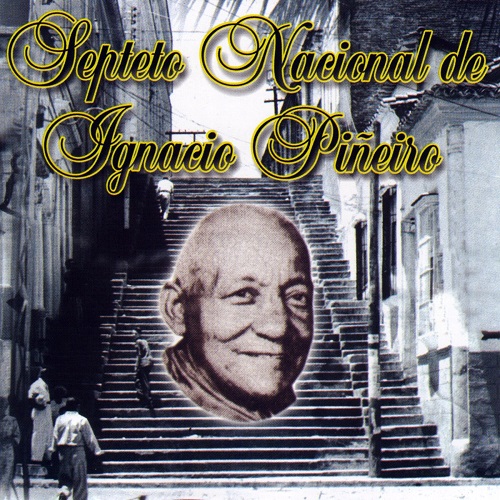
Fundado por el bajista y vocalista nacido en La Habana Ignacio Piñero en 1927

Pioneers of son, a rhythmic blend of African and Cuban music that evolved into salsa, mambo and Latin jazz, the group was the first son band to incorporate the trumpet as the main instrument.

Ignacio Piñero’s Septeto Nacional gained worldwide recognition with its performance at the 1928 Universal Exposition in Seville, and was reportedly the first group to mention “Salsa” in a song “Echale Salsita” recorded in 1933. The song composed by Piñero, was adapted by George Gershwin for the opening theme of his “Cuban Overture”.

Since Piñero’s death in 1968, after 41 years at the helm of the band, the Septeto Nacional De Ignacio Piñero has been led by a series of leaders.

Guitarist and composer Rafael Ortiz, who took over after Piñero’s death, bequeathed the position to vocalist Carlos Embale in 1982.

After leaving the group due to illness in 1998 Embale’s leadership was inherited by guitarist Richard Aymee Castro. True to their original musical roots, Ignacio Piñero’s Septeto Nacional continues to offer a danceable blend of montano, merengue, bolero, rumba and cha cha cha. Craig Harris.

Ignacio Pineiro
Ignacio Pineiro

Ignacio Piñero was one of the Pioneers of Son Cubano

In 1906 he already knew and had assimilated the different toques of the African cabildos that existed in the neighborhood of Pueblo Nuevo, which he later incorporated into some of his creations.

He began his artistic career with the group claves and guaguancó El Timbre de Oro, later he directed Los Roncos de Pueblo Nuevo, in which he developed as a decimist and director, at the same time he took his first steps as a composer.

From this stage are: Cuando tú, tu desengaño veas, Dónde estabas anoche, El Edén de Los Roncos, Mañana te espero, niña. Later he joined the group Renacimiento de Pueblo Nuevo.

To the folkloric values that Piñeiro cultivated in these groups, he contributed a wider melodic-harmonic development and a greater depth and poetic flight.

In 1926 he was one of the founders, together with María Teresa Vera, of the Sexteto Occidente, with which he made his first tour to the United States in order to record an album with this group.

In 1927 he founded the Sexteto Nacional, formed by Ignacio Piñeiro, director and double bass; Alberto Villalón, guitar; Francisco González Solares, tres; Abelardo Barroso, lead vocals; Juan de la Cruz, tenor; Bienvenido León, baritone and maracas, and José Manuel Carrera Incharte (El Chino), bongo; that same year trumpeter Lázaro Herrera joined the group. With this septet he traveled to New York, where he recorded his first works.

In 1929 he participated with the Septeto Nacional in the Fair-Exposition of Seville, Spain; in that country they were hired as exclusive artists by the company SEDECA, and toured other cities of that country: Vigo, La Coruña, Santander, Madrid and Valladolid; in addition, they performed in the theaters Torero, Jovellanos, the Cine-Teatro Grado, and the cabaret Maicú, all in Madrid. In 1930 he was one of the founders of the National Association of Cuban Soneros.

Pioneros del son, una mezcla rítmica de música africana y cubana

They performed at the Sans-Souci cabaret (1930); in 1931 they performed at the Lavín and CMCG radio stations; in 1932, at the Dos Hermanos Hotel, he premiered Buey viejo; that same year the American composer George Gershwin came to Havana, at the CMCJ radio station he listened to Piñeiro’s son Échale salsita, from which he later used the theme played on the trumpet in his Cuban Overture.

In 1933 he performed at the Fair-Exhibition A Century of Progress, held in Chicago, United States.

In 1934 Piñeiro retired from the septet, which from 1935 was directed by trumpeter Lázaro Herrera. In 1954, Piñeiro reappeared as leader of the septet, with which he appeared on the television program Música de Ayer y de Hoy.

As a composer, Ignacio Piñeiro broke, although he took elements from the form of the oriental son, in which its creators used the quatrain and the tenth; an example of this break is his son Buey viejo, from 1932:

Carretero no maltrates a ese pobre buey tan viejo, que ya doblbla la cabeza por el peso de los tarros, y por senda de guijarros va tirando la carreta, y nunca llega a la meta, término de su dolor.

Piñeiro was one of those synthesis cases that managed to capture, develop and express the full richness of the son.

The structural modifications, the cadence, the rhythm and the use of refined melodies and lyrics, achieved by this creator and interpreted by the Septeto Nacional, make it possible to say that the work of this singular artist, although he did not mark the boundaries of son (which corresponded to the Sexteto Habanero), he did turn it into a son that today we can call classic, which became a model for its further development.

When Ignacio Piñeiro founded the Septeto Nacional, his purpose was to be a high exponent of the Cuban son and its various variants, he himself made use of those variants, composing guajira-son, canción-son, afro-son, so he worked with the elements offered by the oriental son, to which he gave a broader treatment, both musically and literary.

According to Miriam Villa: “If we analyze the organization of the literary text, we observe in his work the formal use of metrically heterogeneous links subjected to rhythm, characterized by the presence of accented and unaccented elements within the system of units that are repeated at intervals between them.

Piñeiro must not have been concerned about the meter in the text as a pattern, since through the rhythm of the composition he achieves the contrast relations, making the change of meter express a change in the thematic movement, either from intermittences or accentuations or sometimes both, which give it different semantic nuances and alternations of tensions and distensions.

And elsewhere Villa states: “Another aspect that in relation to the literary text is reflected in Piñeiro’s creative work is that of the thematic contents; these are shown from a diversification with greater scope in relation to his contemporaries.

His work can be divided into multiple themes among which are love, homeland, philosophical reflection, politics, the bucolic, the infantile, expressed in a variety of forms: satirical, apologetic, humorous and with greater depth than in the sonorous production that preceded him and even with which he shared.

With the Septeto Nacional, Piñeiro appears in the musical short El frutero, and in the film Nosotros la música, by director Rogelio París.

Ignacio Piñeiro Septeto Nacional
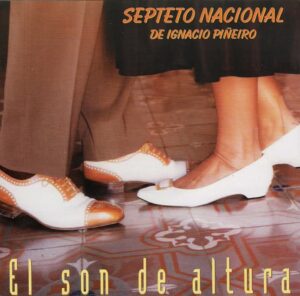
Septeto Nacional de Ignacio Piñero El Son de Altura

El Son de Altura (1998)

Tracks:

  1. Mayeya – No Juegues Con Los Santos (Son) (I. Piñeiro)
  2. Bardo (Bolero-son) (I. Piñeiro)
  3. Lejana Campiña (Guajira-son) (I. Piñeiro)
  4. Canta La Vueltabajera (Guajira-son) (I. Piñeiro)
  5. Guanajo Relleno (Guaracha-son) (I. Piñeiro)
  6. Esas No Son Cubanas (Son) (I. Piñeiro)
  7. Suavecito (Son) (I. Piñeiro)
  8. Alma Guajira (Guajira-son) (I. Piñeiro)
  9. Castigador (Son) (I. Piñeiro)
  10. Échale Salsita (Son-pregón) (I. Piñeiro)
  11. EI Viandero (Son-pregón) (Ernesto Muñoz)
  12. Son De La Loma (Son) (Miguel MGllamoros)
  13. Trompeta Querida (Boleró-son) (Lózoro Herrera)
  14. La Mujer De Antonio (Son) (Miguel Matamoros)
  15. La Cachimba De San Juan (Son) (l. Plñeiro)
  16. EI Alfiler (Son) (l. Plñeiro)
  17. Noche De Conga (Son) (l. Plñeiro)
  18. EI Paralitico (Son) (Miguel Matamoros)

By:

EcuRed

Dj. Augusto Felibertt

L’Òstia Latin Jazz

Also Read: From Cuba El Septeto Son de Nipe vienen Abriendo Caminos

ISM / May2025

ISM May 2025 L ISM May 2025 R
SalsaApp Left SalsaApp Right
NA May 2025
LA May 2025
EU May 2025
Africa May 2025
Asia May 2025
Oceania May 2025
Backcover May 2025
Artist May 2025
Letter to the edtor

“We are the Latin music world network”

Do you enjoy Latin music? Would you like to get more involved in this genre and share your passion for Salsa, Bachata, Kizomba, Merengue and more. Why not joint our Global Team of volunteers as a correspondent?
You can ask for more details with no obligation and we’ll be happy to talk to you about the benefits that come with the role [Read more…] about ISM / May2025

Gira Tango

Latin America / Venezuela / Caracas

For lovers of Tango, what better way to learn or practice it than at the “Gira Tango” Dance Academy that offers tango classes in Caracas, Venezuela. They also organize dinners, shows and tastings, not to mention that they work with the Embassies of Argentina and Uruguay.

The Vision and objective of the Academy is to promote national tango talent, where they seek meeting places to share knowledge, entertain the public in order to connect everyone through this style of dance.

Photo by Siulhy Santander and Leonel Colina - Gira Tango
Photo by Siulhy Santander and Leonel Colina – Gira Tango

Starting in 2015, the “National Tango Encounter” was organized, an artistic production that for a week offered the 5 municipalities of Caracas opportunities to enjoy classes, concerts, live shows and milongas in plazas, shopping centers and restaurants; and from that moment it was held annually, being for this month of November 2017 its 3rd edition in conjunction with the embassies of Uruguay and Argentina.

The workshops will be held on the 4th, 11th, 18th and 25th. If you wish to attend the classes at CELARG, look for information through 0412-9507209 or 0414-3206975 and register through the email [email protected]. Wear comfortable clothes and choose shoes that slide. In the case of women, Gira Tango recommends wearing heels without a platform that support the ankle.

Dancers and Teachers

The dancers and teachers that make up the academy are Siulhy Santander and Leonel Colina, founders of the Academy, who are dedicated to teaching tango and cultural management, not to mention that both were trained by internationally recognized teachers John Erban and Clarissa Sanchez. , Sofiani Figueroa, Daniel Martinez, Mario Morales, Daniel Naccuchio, Cristina Sosa, Fernando Galera and Vilma Vegas, among other exponents of tango with a great career.

Siulhy Santander and Leonel Colina

Siulhy Santander

She began his Tango studies in 2008 at the Centro Uruguayo Venezolano with the Academia Tango Caracas, directed by professors Frank Zambrano and Yore Rivas, without mentioning that he worked as a member of the dance corps of the Tango Caracas group until 2014, where He participated in various stagings and shows such as “Misterio Tango” and “10 Años de Tango Caracas”, where he met Leonel Colina. I also carry out workshops in Buenos Aires, Argentina, with professors Mario Morales, Fernando Galera and Vilma Vega in 2009 and 2012.

Siulhy Santander
Siulhy Santander

Leonel Colina

He was a student of Nationalist Dances from 1994 to 2001 in the Los Cocuyos Dance Group. He learned different types of dance such as Joropo, Calypso, Gaita, Drums, Bagpipes, Drums and Venezuelan Merengue. However, he decided to start studying again in 2007 at Academia Tango Caracas with professors Frank Zambrano, Yore Rivas, Frank Obregon and Sofiani Figueroa.

Leonel Colina
Leonel Colina

Starting in 2008, she worked as a member of the dance corps of the Tango Caracas group, participating in shows such as “Misterio Tango” and “10 years of Tango Caracas”, meeting Siulhy Santander Since 2011, the pair of dancers participated in the staging of the show “Misterio Tango”, which ran for two seasons at the Celarg theater and this couple has participated in cultural festivals such as:

  • IV International Meeting and III National Tango Championship, Caracas 2009.
  • V International Meeting and IV National Tango Championship, Tango 2010.
  • VI International Meeting and V National Tango Championship, Caracas 2011.
  • XVI International Dance Festival – Maracaibo (2011).
  • XVIII International Dance Festival – Maracaibo (2013).
  • Second Edition of the Ucab Dance Festival (2013).
  • Caracas International Theater Festival (2015).
  • World Tango Championship Medellin (2015).
Photo by Siulhy Santander and Leonel Colina

For more information:

  • WebSite: http://giratango.net/
  • Facebook: https://www.facebook.com/giratango/
  • Instagram: https://www.instagram.com/giratango/
  • Twitter: https://twitter.com/giratango
  • Email: [email protected]
  • Phones: +58 4129507209 / +58 4143206975


Cheo Linares is a Singer, Composer, Sonero, Poet and Caraqueño

National Culture Award 2023-24 and the Artistic Glories of Venezuela Award.

José Gregorio Linares Carrasco is one of the great singers, composers and defenders of Venezuelan Salsa,

Cheo Linares born in the city of Caracas-Venezuela, he has been part of groups such as La Salsa Mayor, Salsa Mágica, el Trabuco Venezolano and Saxomanía.

José Gregorio Linares Carrasco es uno de los grandes cantantes compositor y defensor de la Salsa Venezolana

He is one of the most important composers of Venezuela.Linares has just been distinguished with the National Culture Award 2023-24 in the music category, so it is his first musical release since this important recognition, which surely is an encouragement to continue his work.

Last Saturday, January 11, 2024, Venezuela’s Minister of Culture, Ernesto Villegas, announced the winners of the National Culture Award 2023-24 and the Artistic Glories of Venezuela Award 2024.

The names of the artists, teachers and researchers favored by the jury as winners of the 2023-24 National Culture Award were announced by Venezuelan Minister of Culture Ernesto Villegas.

In the Music Mention, the flute master Antonio Toñito Naranjo stood out “for his career as a performer and trainer of generations of Venezuelan flutists and for his contribution to Venezuelan culture”, according to Villegas.

Antonio Naranjo is an extraordinary musician, composer and musical director, as well as a member of the group El Cuarteto, which he formed together with his brother Telésforo Naranjo and brothers Miguel and Raúl Delgado Estévez (+).

Also linked to music, but in the Popular Culture category, the National Culture Award was granted to Rafael Salazar “for his long and uninterrupted career as researcher, musicologist, composer and cultural promoter”.

It is worth mentioning that Rafael Salazar has been one of the most outstanding researchers, compilers and disseminators of Venezuelan popular culture, in addition to being the author of books dedicated to folklore.

Cheo Linares es un Cantante, Compositor, Caraqueño, Sonero y Poeta

Several extraordinary musicians received honorary mentions in the National Culture Award, such as cuatrista Daniel Enrique Gil Rosado, llanero singer Cristóbal Jiménez, master composer Henry Martínez, oriental singer Hernán Marín, and members of Los Guaraguao, Eduardo Martínez, José Gerardo Cordero and José Manuel Chachata Guerra.

Artistic Glories of Venezuela

The Artistic Glories of Venezuela award deserved a special mention, which was given to great singers such as Cecilia Todd, Lilia Vera and Biella da Costa. The first two are part of the living history of Venezuelan folklore and their voices are part of the national heritage. Biella da Costa is one of the leading figures of jazz in Venezuela.

The award was also presented to Jesús Sevillano, a singer who was part of the historic Quinteto Contrapunto. It was also received by the stupendous composer and salsa singer Cheo Linares and the popular singer José Montecano, brother of Alí Primera.

Orlando Watussi, Jose G. Acero, Cheo Linares y Dj, Augusto Felibertt

Mario Díaz, an enormous exponent of the central joropo, was also recognized as an Artistic Glory of Venezuela, as was the great composer and oriental singer Perucho Aguirre.

The same award went to the Simón Bolívar System of Children’s and Youth Choirs and Orchestras, and groups such as the parranda La Flor de Cojedes, the Teatro Negro de Barlovento or Los Cañoneros, excellent representatives of merengue rucaneao, were not left behind.

In the world of rock ‘n’ roll, the group Los Tres Tristes Tigres, the mythical Ivo, and more recently, the singer Colina, famous for his pop hits in the 80’s, shone.

Tags: Antonio Toñito Naranjo, Biella da Costa, Cecilia Todd, Chachata cultura, Eduardo Martínez, Ernesto Villegas, Glorias Artísticas de Venezuela Hernán Marín Jesús Sevillano, José Gerardo Cordero, José Montecano, lilia Vera, Los Guaraguao, Mario Díaz, Perucho Aguirre. National Culture Award and Rafael Salazar.

Cheo Linares was not even 20 years old when something unexpected happened to him. Another young man, Gonzalo Martinez, came to his house looking for him to invite him to sing with La Salsa Mayor. It was perhaps 1983.

Cheo says that his aunt was the one who opened the door and then told him: “Hey, Cheo, they are looking for you. They are asking if you want to sing in La Salsa Mayor…”. Cheo, shirtless, came out. He couldn’t believe it.

Cheo Linares y Dj, Augusto Felibertt

“Venezoa is a term I created to name the Venezuelan salsa music lover, to whom I dedicate this production, which in turn I extend to the salsa brothers of the planet, this CD was made with all the love, mysticism and professionalism of the musicians, technicians and designers who participated in it, to them I present my most sincere and expressive thanks for the support provided. Grateful to all the people who have supported my career, especially journalists, announcers, DJs, collectors and promoters, for all, blessings, love and light …”.

Cheo Linares.

Source: Radio Café Atlántico

Also Read: Marcial Isturiz from Capaya with soneos and melodic phrases and his popular “Agua pa’ los Gallos “Puerto Rico

The best Salsa-Latin bands in London! Are you in London?

Europe / England / London

London: Here we bring you the best Latin bands you must check right now!

London - Photo
London – Photo

PALENKE, the Latin dance leader in London

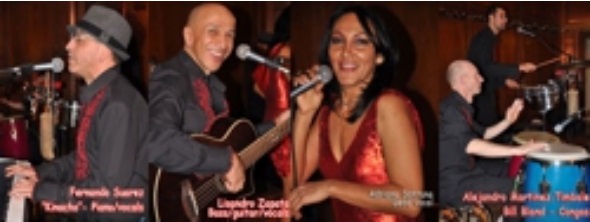
Palenke was born in 1990 to the collective talents of Fernando Suarez – “Kinacho” and Lisandro Zapata from Colombia. Both are highly professional performers and are widely experienced in the Latin and Jazz scene.

Photo 1 - The best Salsa-Latin bands in London
Photo 1 – The best Salsa-Latin bands in London

The Band’s eclectic repertoire is passionate, dynamic and eminently danceable: from the characteristically hot blooded tempos of Cuban Salsa and Brazilian Lambada, the traditional folk rhythms of Colombian cumbia and Dominican Merengue, to the latest Caribbean Reggae and universally popular Spanish style “Gypsy Kings”. This all singing band includes the traditional latin rhythm section, piano, guitar, bass, congas, bongos and timbale. It is fronted by Adriana Santana also Colombian, who has become the “Queen of Salsa” in London captivating the audience with her magnetic voice and sensual dancing.

Over the years Palenke has toured: Switzerland (Montreaux Festival), France, Italy, Spain, Tunisia, Morocco, Malaysia, Indonesia, Ireland and Turkey. The band has performed for dignitaries such as Prince Charles, the late King Hussein of Jordan, King Juan Carlos of Spain and has become a spicy ingredient at hotels, clubs and many pop stars parties.

In the UK, the band is well known from North to South as a leading Latin band spreading the Latin fever from small to big audiences. Palenke has been invited to the Barbican Centre, the South Bank, The Edinburgh Festival and several TV shows. Palenke over the years had worked with the collaboration of great Musicians such as: Oscar Ruiz, timbale; Bill Bland, congas; Alejandro Martinez, multi-percussionist and Luis Carlos Fuentes, Drummer.

Photo 3 - The best Salsa-Latin bands in London
Photo 3 – The best Salsa-Latin bands in London

SAMBOSSA, a band playing the sounds & rhythms of Brazil

With music ranging from sultry Bossa Nova & grooving Afro-funk to blistering samba, Sambossa have everything needed to delight both the listener & the dancer.

Featuring the unique vocal talents of ELISANGELA MAHOGANY, who brings originality to some classic Brazilian tunes.

Also from Rio is hugely talented multi-instrumentalist MARCELO ANDRADE who showcases his saxophone & flute styles.

Guitarist PAUL RUMBOL leads this band as well as being band leader of the celebrated group Viramundo. He also sings & plays the cavquinho (small Brazilian guitar) & has been working alongside the most talented Brazilian performers for more than 20 years.

Completing the quartet is XAVIER OSMIR from São Paulo, Brazil who brings his wonderful percussion & vocal talents. The band is also available as a trio and duo for smaller events/budgets. SAMBOSSA, a compact but very powerful Brazilian/Latin group.

Photo 4 - The best Salsa-Latin bands in London
Photo 4 – The best Salsa-Latin bands in London

RIAMBA: the professionals of rhythm!

With flair for performing, Riamba is one of the most sought after and lively Latin music bands on the London scene today. Its flexible 3 to 7 piece line-up is led by a superb female vocalist and backed by a strong rhythm section which includes: piano, trumpet, bass and typical Latin American percussion.

With their combined musical talents, the group is perfectly suited for the many different occasions and requests that Riamba receives; from a fully blown Salsa dance band with optional dance tuition, to a more relaxed event where lively background music in the Latin style is required.

Photo 5 - The best Salsa-Latin bands in London
Photo 5 – The best Salsa-Latin bands in London

Riamba’s musicians, who are from Latin America, Europe and the UK, have had an eclectic musical training with professional experiences to match, encompassing: Latin American, jazz, pop and classical music.

As individuals this has led them to perform on tours in the UK and around the world with artists such as: Björk, Jason Rebello, The Ghana Dance Ensemble, Stewart Copeland (The Police), and at venues which include: Pizza on the Park, The 606 Club, The Royal Festival Hall, Glastonbury Festival, The Sydney Festival (Australia) and The National Theatres (London and Ghana).

Photo 2 - The best Salsa-Latin bands in London
Photo 2 – The best Salsa-Latin bands in London

Riamba has performed for many private clients and at venues which include: The National Theatre (London), The National Portrait Gallery, The Dorchester Hotel, The Cultural Olympiad, Battersea Park and Regent’s Park Festival as well as travelling abroad for European performances.

  • « Go to Previous Page
  • Page 1
  • Interim pages omitted …
  • Page 5
  • Page 6
  • Page 7
  • Page 8
  • Page 9
  • Interim pages omitted …
  • Page 44
  • Go to Next Page »

International Salsa Magazine (ISM) is a monthly publication about Salsa activities around the world, that has been publishing since 2007. It is a world network of volunteers coordinated by ISM Magazine. We are working to strengthen all the events by working together.