• Skip to primary navigation
  • Skip to main content

International Salsa Magazine

  • HOME
  • Previous editions
    • 2026
      • ISM / April 2026
      • ISM / March 2026
      • ISM / February 2026
      • ISM / January 2026
    • 2025
      • ISM / December 2025
      • ISM / November 2025
      • ISM / October 2025
      • ISM / September 2025
      • ISM / August 2025
      • ISM / July 2025
      • ISM / June 2025
      • ISM / May2025
      • ISM / April 2025
      • ISM / March 2025
      • ISM / February 2025
      • ISM / January 2025
    • 2024
      • ISM / December 2024
      • ISM / November 2024
      • ISM / October 2024
      • ISM / September 2024
      • ISM / August 2024
      • ISM / July 2024
      • ISM / June 2024
      • ISM / May 2024
      • ISM / April 2024
      • ISM / March 2024
      • ISM / February 2024
      • ISM / January 2024
    • 2023
      • ISM / December 2023
      • ISM / November 2023
      • ISM / October 2023
      • ISM – September 2023
      • ISM – August 2023
      • ISM July 2023
      • ISM Edition June 2023
      • ISM – May 2023
      • ISM April 2023
      • ISM March 2023
      • ISM February 2023
      • ISM January 2023
    • 2022
      • ISM December 2022
      • ISM November 2022
      • ISM October 2022
      • ISM September 2022
      • ISM August 2022
      • ISM July 2022
      • ISM June 2022
      • ISM May 2022
      • ISM February 2022
      • ISM January 2022
    • 2021
      • ISM December 2021
      • ISM November 2021
      • ISM October – 2021
      • ISM September 2021
      • ISM August 2021
      • ISM July 2021
      • ISM May 2021
      • ISM April 2021
      • ISM June 2021
      • ISM March 2021
      • ISM February 2021
      • ISM January 2021
    • 2020
      • ISM December 2020
      • ISM November 2020
      • ISM October 2020
      • ISM September 2020
      • ISM August 2020
      • ISM July 2020
      • ISM June 2020
      • ISM May 2020
      • ISM April 2020
      • ISM March 2020
      • ISM February 2020
      • ISM January 2020
    • 2019
      • ISM December 2019
      • ISM November 2019
      • ISM October 2019
      • ISM Septembre 2019
      • ISM August 2019
      • ISM July 2019
      • ISM June 2019
  • Spanish
  • Download Salsa App
    • Android
    • Apple

Search Results for: Music Awards

Albert Torres The Ambassador Of Salsa

North America / USA / New York
Albert Torres
Albert Torres

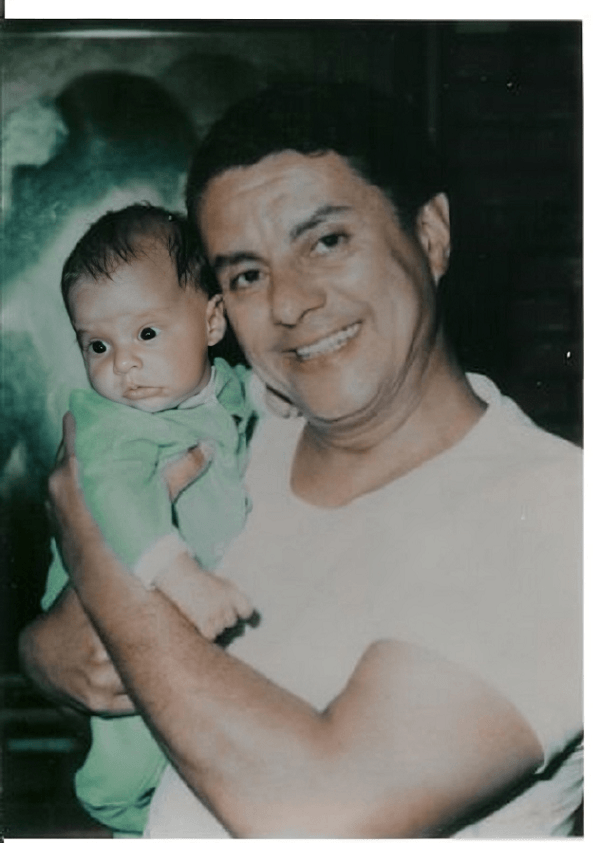
Albert Torres, a sympathetic boy with blushing cheeks who born in Brooklyn – New York – never suspected what his destiny had prepared him, to be the father of the Congresses of Salsa worldwide. His name would resound from North to South and from East to West, by the continents: American, European and Asian; in the different important scenes of the Latin music movement and would be the inspiration for many dancers of this branch.

His legacy would belong to the astonishment and shelter of the artists and the public that would applaud his talent, vigor and semblance to the rhythm of the phrase “Una Bulla”. This cheerful infant, without a doubt, was going to be a legend of Afro-Caribbean music. I’m talking about Albert Torres, The Ambassador of Salsa!

Photo by Albert Torres

Albert began to listen to the salsa genre from the age of 5, staring in astonishment at the whole scene, sitting, of his first dance lessons … At the famous Palladium in New York, where his mother danced and liked the music of Mongo Santamaría and Tito Puente.

This child, future congressman of Salsa, grew up when the history of Latin popular music (salsa) was being written in the South Bronx, where Puerto Rican communities were having a great explosion of creativity and musical activity.

At the age of 12 years old his family decides to move to Puerto Rico, “By that time I did not want to speak Spanish, I did not want to be Puerto Rican. I did not want to be part of that environment”, said Torres. He only danced disco and Hustle. However, at the age of 15 his life took a dizzying turn when he heard:

“Oye que lio que lio se va a formar

cuando mi gatito sepa

y es tan simple la razón

El que a su gata le cuenta que el que a

su gata le cuenta

no es nada más que un ratón

un ratón…

…Échale semilla a la maraca pa que

suenen

chacucha cuchu cucha cucha

échale semilla a las maracas pa que

suenen

échale semilla a esas maracas oye

chacucha cucha cucha cucha

y hace rato está sonando sonando

chacucha cucha cucha cucha…”


Albert Torres simply fell in love with the Salsa thanks to this theme: “El Ratón” of Cheo Feliciano together to Fania All Stars. “The legends of salsa changed my life. When I heard these legends, that August 26th of 1971, in the Cheetah, something happened inside me. The music entered by the feet and came to my heart”. Thus, declared his beginnings in the Salsa, Albert Torres.

In 1991 his passion for Salsa took him to impress the girls of the neighborhood by his incredible steps to a Hollywood celebrity when he, first time, participated in the movie Mambo Kings in which he was chosen as one of the main dancers.

Hollywood - Albert Torres
Hollywood – Albert Torres

There he not only helped Antonio Banderas with the dance steps, but also with the English by that time for Banderas was very hard. In addition, during the filming of the movie Albert had the opportunity to share with big of Salsa like Celia Cruz, José Alberto “El Canario” and his great idol Tito Puente.

That film was the hit that catapulted Torres to world fame being chosen by Debbie Allen as one of the 4 dancers (of more than 400 couples) to participate in the Academy Awards (1993) and to dance “My beautiful Maria” whose Singer was Plácido Domingo and where he stood out as the first Puerto Rican to dance in the history of the ceremony.

Then, he returns to the cinema being the choreographer and dancer of Salsa scenes in the romantic film “Dance with Me” with Vanessa Williams and Chayanne during 5 months.

Later he worked on the movie “Out to See” (1998) with Jack Lemmon and Walter Matteau and in the same year he also made a guest starring appearance on the Keenan Wayan’s Show where he performed with Jennifer Lopez. Everywhere there was Salsa, Torres seemed to be there. At the time and with all this like trajectory Albert Torres in 1991 also began his stage as a producer.

He started promoting Salsa clubs in Los Angeles, “I lost a lot of money. Nobody wanted to know about Salsa”, said Albert. Nonetheless, he began to handle Johnny Polanco y Su Conjunto Amistad, which were the best-known salsa group in the Western United States.

In 1992 he founded his own company, Albert Torres Productions Inc. (ATP) and began to organize salsa parties in several places in Los Angeles. The most important were the Boathouse in Santa Monica, St. Marks in Venice and Sportsmen’s Lodge in Studio City.

3- Albert Torres
3- Albert Torres

At that moment the genre of salsa was losing popularity. However, Albert Torres with his wit, insight and a lot of intelligence pulled him forward on his own. He revived it in such a way that he became the most influential salsa promoter in the United States. He was who brought to Los Angeles some of the most important names in the Latin music such as: Fania All-Stars, El Gran Combo, Oscar D ‘León, José Alberto “El Canario” and the Spanish Harlem Orchestra, among many others.

In the late 1990s, after the I administration of President Clinton relaxed the laws restricting presentations by Cuban artists in the USA, Albert Torres was the first promoter, who brought to the famous and the notorious Van Van group to Los Angeles in January, 1997.

The show, which took place in a night club in downtown LA, was a success. Since then, Los Van Van has received major media awareness with prestigious publications such as Los Angeles Times, New York Times, among others and including the most coveted music honor, a Grammy and Latin Grammy nomination. Torres’s passion and promotional skills have played a key role in the U.S.A Latin Entertainment explosion. Ricardo Lemvo, musician and singer living in Los Angeles, founder and leader of the salsa band Makina Loka said:

“Personally, I have a great deal of gratitude to Albert. In 1996 when I released my first album, Tata Masamba, he was the one who presented my music to the Latin audience in Los Angeles. He also placed my band at Sportsmen’s Lodge, Grand Park and many other venues. Albert was also who recommended me to film director Randa Haines and as a result, my band, Makina Loca came out in the movie “Dance with Me” with Chayanne and Vanessa Williams. I will be eternally grateful to Albert Torres for giving me a hand at the beginning of my career”.

4- Albert Torres
4- Albert Torres

1997 was crucial for Albert and the world of Salsa in Los Angeles because began the dream of Mr. Eli Irizarri of Puerto Rico, the concept of the Salsa Congresses in San Juan. “I was not the first year, but I heard a lot of nice things even though it was a financial failure. I attended the event in 1998 and was the master of ceremonies. Then, I started the same concept in Los Angeles beginning in 1999 and in the next 8 years following the Los Angeles Congress stood out as the largest in the world. There attend more than 6000 people daily arriving from more than 42 countries”, said Albert for an Argentine media.

In 1998, at the head of ATP, organized the first edition of Los Angeles Salsa Congress and in May 1999 was carried out, with the presentation of Tito Puente in the opening. In this first congress Albert transformed the event into an exciting music and dance venue that attracted 20,000 Latin Music enthusiasts from all over the world and USA and with such great success that he immediately became co-producer Salsa Congresses in over 32 countries.

“My most important desire to be a promoter of the Congresses would be that this can be used for dancers, can realize their dream of dancing on a stage and also find a way to respect the dancers as they deserve it. This is extremely important”. Albert Torres.

In LA Salsa Congress the stars are born, many of the world renowned dancers have their start at this event. The mission of LA Salsa Fest is to pass on to the next generation through educational seminars, dance workshops and being able to perform on stage.

Since then, Albert Torres Productions has created and produced the World’s Largest Salsa Music event. In addition to this, ATP is the co-producer of the World Salsa, broadcast from Las Vegas every year by the ESPN TV network being watched by more than 20 million homes worldwide, where more than 1000 competing dancers will be known on the planet. “On ESPN told me that if I wanted to see it on TV I had to do competitions.

I do not like it, but for the dancers to get to know each other worldwide, I decided to make the World Salsa Championship, the biggest and most important salsa tournament in the world. Now, since April (2012) I decided to do it alone, without partners, and now it’s called World Latin Dance Cup. I added other categories like cumbia, bachata, casino, children and people over 45 years. We have about 20 categories”. Torres Said in an interview with a Peruvian media.

5- Albert Torres
5- Albert Torres

In the World Latin Dance Cup No requirements. You have to take stock and follow the world rules. These are of time, originality of the dressing rooms, of musicality. If you drop the wig, the earring (while dancing), points are removed; if you do not wear stockings, too. A wig will not give points, but if it falls it will take the points. In this championship there is not a world champion, so there is a champion in each category.

According to his friends, Albert was a “workaholic”. He was always on the road promoting salsa music through all the congresses he organized around the world. Always in transit, he spent one night in Istanbul, the next in Paris and the following week in Tokyo. For example, at the beginning of 2007 he had 48 weeks of travel and in one year he could travel to 48 exotic countries such as Dubai, United Arab Emirates, Japan, Hong Kong, Brazil, Bulgaria, Romania, China, Colombia, Venezuela, Spain, Mexico, Peru, Holland, Hamburg, Italy, Switzerland, Sweden, France, Ecuador, New Zealand, Australia and Puerto Rico.

Therefore, it is not surprising to see on your Facebook wall, the immense and felt messages of thanks from dancers from all corners of the earth. His latest project called “The Legacy Project” is an initiative to combine our music culture with the latest technology tendencies in order to reach and unite more people so future generations can appreciate, preserve and be part of the history of Latin dance and music around the world.

In 2011 Albert Torres was honored to be accepted as a Member of the Council for Dance of UNESCO (United Nations Educational Scientific and Cultural Organization) and Elected Grand Marshall at the National New York Puerto Rican Day Parade in front of 2 million spectators lined up on 5th Ave that past June 12 of the same year. This past May, 25th the world of Salsa and entertainment received a huge impact, the news of the death of Albert Torres, victim of a Stroke.

Family, friends, national and international press as well as web portals lamented and reviewed this regrettable fact. Rudy Mangual, creator of the famous magazine Latin Beat Magazine commented to an international media that before this terrible fatal outcome, Albert was very delicate of health in the last months; he had diabetes and had an infection in the pancreas. He also said that he regretted his gone because he and his wife Yvette Mangual had a very special affection to Albert.

Albert Torres’s family wishes to thank all of our Salsa Family for your thoughts, prayers and well wishes during this difficult time. Albert passed away today May 25th, 2017, peacefully, surrounded by family and loved ones. We all find comfort knowing that he is now promoting and dancing alongside his Idols, Celia Cruz, Tito Puente, Cheo Feliciano, Tito Rodriguez and Ray Barreto. As well as his close friends Johnny Polanco, Rudy Regalado, Alicia Gomez and many others. We would love nothing more than for you to help us continue keeping his legacy and DREAM OF UNITY alive by supporting the great event that he started 19 years ago:

The LA SALSA FEST.

Thank you again and may you all be blessed. UNA BULLAAAA!

Rest In Peace ALBERT TORRES

6/14/1956 – 5/25/2017

On the other hand, different personalities of the artistic world expressed their deep pain:

“Salsa and I lost a good friend. Like everyone else in the music world, I was in shock: Albert was an exuberant, vibrant person. It seems unfair that he left the planet in the prime of his life at only 60 years old.

2- Albert Torres
2- Albert Torres

I remember in one of our many conversations, he expressed his great desire to bring the famous African salsa group Africando to the United States. Africando had a song, “Yay Boy,” that was all the rage not only in New York but also in Latin America, but not many people had seen the group live. It was a huge undertaking to organize a concert with Africando since the lead vocalists lived in Senegal, Togo, and other parts of Africa. When Albert finally managed to bring Africando to Los Angeles in 2004, he was over the moon. That was one of his greatest triumphs.

Albert, your passing is a huge blow to all of us in the salsa world. We will miss you terribly. Thank you for everything you’ve done to promote our music. Salsa. We will never forget you.

Rest in peace, brother.” Ricardo Lemvo

1- Albert Torres
1- Albert Torres

“Creating Unity through Salsa”, words from my brother Albert Torres. That’s exactly what we are trying to do, will keep this in my heart forever… Your legacy lives. Thank you Albert! Thank you Edwin and the #LASalsaFest team for this”. Tony Succa

Famed Salsa legend, dancer and Hollywood choreographer turned mega event planner Albert Torres is already part of our history. His continuous efforts to globalize Salsa have made a major impact on the preservation and accessibility of both Salsa Music and Salsa Dance around the world. To achieve this, he was constantly traveling around the world, encouraging conferences and festivals, discovering talents for dancing.

No doubt, Albert Torres brought the music it in the blood. He had his own vibration and constantly he was being a role model. He played that key role in the confluence of people and places that created an environment for the growth of Latin music in America and the world.

Photo1: Albert Torres

For that reason, on the Facebook wall of Albert thousands of emotions multiply. And the messages coincide in the gratefulness and the claim of “una bulla”, una bulla salsera para Albert. Today on some side of the Salsa´s Big, sure, you’re dancing and singing!

Albert Torres in solidarity with charitable causes

“Before I was an event producer, I handled 50 beds in a hospital helping people with drug, alcohol, and mental problems… I have been sober since December 14, 1985. For that, I can live and help others to live their Dreams”. Albert Torres

Great dancer and Champion fell ill last year after the WLDC. With the support of dancers worldwide he was able to beat leukimia and will be back this year. What an inspiration and great story. Let’s all appreciate each day that we are blessed with. Welcome back Jeremy.

ATP continues with the Albert’s legacy and offering top-notch quality events with world-class performers. His bands are legendary and his events feature some of the finest musicians and dancers the world has ever known.

“Para mí la salsa no es latina sino mundial. No tiene barreras de colores ni de país. Es increíble ver niños chiquitos bailar como los de los 80 que bailan… Para mí la salsa es como si fuera una paella, una comida increíble: tiene tantos condimentos y tantas cositas.

Albert Torres and his records

La salsa es así: con un poquito de rumba, jazz, tango, y si le pones swing, ballet y se mezclan todos con una bella canción de Óscar de León, algo sucede que nos afecta desde los tobillos hasta el corazón… Los problemas siempre van a estar esperándonos en casa, pero qué cosa bonita llegar a un lugar donde todo el mundo se lleva. Cuando empieza esa música todos tenemos algo en común. Ojalá el mundo aprendiera de eso”. Albert Torres (June 14, 1956 – May 25, 2017)

To learn more about Albert Torres and his events, please visit: www.worldlatindancecup.com, www.mysalsacongress.com and www.alberttorresproductions.com

To read more about Albert Torres’ work with Baile de Los Niños, providing cultural outreach programs to at-risk youth and low-income families, visit: www.alberttorresevents.com/bailedelo sninos/mission.asp

Claudia Acuña She is mainly known for singing jazz standards, ballads, and bossa nova

Claudia Acuña (Santiago de Chile, July 31, 1971) is a Chilean jazz singer considered the most successful Chilean jazz artist of all time. Since 1995 she has lived in New York, USA.

Photo by Hollis King dress by Anthony Manfredonia back stage at Carnegie Hall

She is known mainly for singing jazz standards, ballads, and bossa nova, as well as for developing and promoting Chilean folklore in the United States and the jazz world.

Abandoning the traditional jazz standards she covered in her two works for Verve, Chilean vocalist Claudia Acuña reveals a more contemporary Latin sound, with R&B influences, in her Maxjazz debut.

Undoubtedly Acuña’s most personal work to date, Luna once again displays her immense gift for delicately passionate vocals and interesting arrangements. While still using the smooth, sensitive Fender Rhodes keyboards of longtime collaborator Jason Lindner, Acuña sings more in Spanish on his third disc only Lindner’s “Yesterday You and I” is sung in English and eschews any straight-ahead jazz style for an almost fusion approach.

This is not to say it is jazz-pop, but the delicate melodies are reminiscent of 1970s Airto Moreira and the best Al Jarreau.

Claudia Acuña Se destaca principalmente por cantar jazz standards, baladas, y bossa nova

Although there are few jazz improvisations (most tracks are less than five minutes long), the music remains complex, cultured and sophisticated, with deep harmonies that should please jazz lovers and Latin music enthusiasts alike.  Matt Collar.

Claudia Acuña, born in 1971 in Santiago, Chile, is one of the most representative voices of contemporary Latin American singing.

Her music, which fuses elements of jazz and Chilean folk music, has captured the attention of audiences both nationally and internationally.

Claudia has managed to position herself as a key figure in the diffusion of Chilean culture through her art.

Regina Carter y Claudia Acuña

Early years and formation

From a very young age, Acuña showed interest in music. She grew up in an environment where Chilean musical traditions were part of everyday life. In her childhood, she began to learn about the guitar and piano, which led her to develop her vocal talent. Claudia Acuña trained in the musical field in various institutions, where she cultivated her love for jazz, a genre that would profoundly influence her throughout her career.

Successes and trajectory

Claudia Acuña’s debut in the music world was well received, which opened the doors to a series of presentations in festivals and concerts in Chile and other Latin American countries.

Her debut album, which includes a fusion of traditional Chilean rhythms and rhythms from other cultures, was acclaimed by critics and audiences alike, propelling her career to new heights.

Throughout her career, Claudia has collaborated with leading musicians and participated in important international festivals. Her ability to perform not only Latin American music, but also jazz standards, has made her versatility recognized by her peers and followers.

The albums she has released throughout her career reflect her love for music and her commitment to creating a unique sound that represents her cultural identity.

Cultural Impact

Claudia Acuña is not only a talented singer, but also a fervent advocate of Chilean culture. Through her music, she seeks to preserve and promote the traditions of her country, and often incorporates elements of folklore in her interpretations.

Her presence on international stages has allowed many people to discover and appreciate the richness of Chilean music.

In addition, she is known for her charisma and energy on stage, which makes her a memorable performer in each of her presentations.

Claudia has inspired generations of young musicians in Chile and abroad, encouraging others to explore their cultural roots and express themselves through music.

Recognitions and awards

Throughout her career, Claudia Acuña has been honored with several awards and recognitions, both nationally and internationally. These awards not only highlight her artistic ability, but also her impact on the music community. Claudia continues to work actively in the industry, collaborating with new artists and participating in musical projects that promote Chilean talent abroad.

Conclusions

Claudia Acuña is a Chilean singer who has left an indelible mark on Latin American music. Her music and her commitment to her country’s culture have established her as a unique artist in the contemporary music scene. As she continues her career, her influence is likely to continue to grow, bringing Chile’s rich musical heritage to new audiences around the world.

Claudia Acuna - Luna 2004
Claudia Acuna – Luna 2004

Claudia Acuna – Luna (2004)

Temas:

  1. Esta Tarde Vi Llover (Armando Manzanero)
  2. Yesterday You and I (Jason Lindner)
  3. Tu, Mi Delirio (Cesar Portillo de la Luz)
  4. Arrimate Mi Amor (Pedro Green & Jorge Diaz)
  5. Historias (Claudia Acuña & Jason Lindner)
  6. Chorado (Guinga)
  7. A Meditation On Two Chords (Jason Lindner)
  8. Oceano (Djavan)
  9. Yo No Llevo La Razon (Antonio Restucci)
  10. Lilas (Djavan)
  11. Carita De Luna (Claudia Acuña & Jason Lindner)

Musicians:

Claudia Acuña (Vocals)

Jason Lindner (Acoustic Piano and Fender Rhodes)

John Benítez (Double Bass and Electric Bass)

Gene Jackson (Drums)

Luisito Quintero (Percussion)

Jimmy Greene (Soprano Sax)

By:

Dayhist

Dj. Augusto Felibertt

L’Òstia Latin Jazz

Also Read:  From Chile Nairoby and La Casa del Ritmo with their project “Vinyl Plater Productions”


Fidelis Studio

Latin America / Venezuela / Caracas

The Fidelis studio is located in Caracas Venezuela, Urb. El Cafetal, El Morao street, Qta. Tere, is an excellent recording studio, where national and international artists and groups created their records; An example of this, Maracaibo 15, Billo’s, Los Melodicos, Salserin, Los Adolentes, Oscar D’ León…, the Latin Dimension recorded 8 of its 20 albums.

Fidelis Studio - Photo 1
Fidelis Studio – Photo 1

Currently those in charge of the study are Javier and Francisco González, who succeed their father Antonio José González “Gonzalito” founder of the Study in 1952 with great professionalism; who, despite being a professional photographer, had the inspiration and musical taste that led him and his friend “Toro” to go to the United States where he studied audio, upon arriving in Venezuela he was recognized as the pioneer of Recording Engineering since he did not This race exists to date in Venezuela.

Fidelis Studio - Photo 2
Fidelis Studio – Photo 2

Javier and Francisco González narrate how the recording of music was at that time, where it was recorded on a “Reel” tape where the channels were previously mixed in the matrix and then passed to the “Stamper” which is a metal disc where it was kept. the information to the factory and later this information was transferred to the acetate disc through electromagnetism.

Fidelis Studio - Photo 3 of Reel Tape
Fidelis Studio – Photo 3 of Reel Tape

As the years went by, recording equipment was modernized, going from “vinyl” to analog cassettes, and now it is digitized to CD’s, and digital formats such as FLAC, mp3… to send over the internet through a computer and with this new technology the artist has higher quality and content capacity than the 33 ½ rpm LP disc to record their songs.

Fidelis Studio - Photo 4 sound program
Fidelis Studio – Photo 4 sound program

Now if the artist wishes to transfer an acetate disc or tape that he had, to a current digital format, the studio is able to make the transition without losing the quality of the music recorded on it.

The current recording equipment has 72 channels, usually 24 are used. With each channel the instrument or voice of the artist(s) is recorded, and with the program they are unified, adjusting the appropriate volume levels where the artist or group listens to it and sees if it is to their liking or not, having the ability to modify it.

Fidelis Studio - Photo 5 - instruments and sound program
Fidelis Studio – Photo 5 – instruments and sound program

The studio and especially the room where the singers or members of a band or orchestra are placed has been designed in such a way that the sound that is produced has no alterations such as echo, making the sound that is generated the most pure possible.

They also make recordings both inside and outside the studio, since they have the right equipment (portable studio, headphones, microphones, amplifiers, recorder, among others), so that there would be no difference in the recording either inside the Fidelis Studio or in the outside.

Fidelis Studio - Photo 6
Fidelis Studio – Photo 6
Fidelis Studio - Photo 7
Fidelis Studio – Photo 7

And they tell us that their experiences over the years have been very lively, fun and interesting at the time of making the recordings since each singer or band has their own personality when playing and producing their music, whatever the genre they play, that in the studio all types of music are recorded today.

Fidelis Studio - Photo 8
Fidelis Studio – Photo 8
Fidelis Studio - Photo 9
Fidelis Studio – Photo 9

The most significant artist for the studio and especially for “Gonzalito” according to his children was Alfredo Sadel whose voice ranged from opera to the popular rhythm of Venezuela, later it was Simón Díaz, Mauricio Torrealba… although they are all very important.

Fidelis Studio - Photo 10
Fidelis Studio – Photo 10
Fidelis Studio - Photo 11
Fidelis Studio – Photo 11

The Grammy Awards are a distinction given by the National Academy of Recording Arts and Sciences to recognize an especially outstanding achievement of the music industry to a specific artist, obtaining this award is a great honor since an extensive study is carried out to the CD where sound engineers, producers and other specialists participate to determine the physical and sound quality of the CD created and to participate in this award you must register in the academy to participate.

Fidelis Studio - Photo 12
Fidelis Studio – Photo 12

The Studio currently has 2 Latin Grammy Awards:

1st Recording “Treasures of Venezuelan Music” with Ilan Chester (2010).

2nd Recording “Maria Teresa Chacin Canta Cuentos” with María Teresa Chacín (2012).

Fidelis Studio - Photo 13
Fidelis Studio – Photo 13
Fidelis Studio - Photo 14
Fidelis Studio – Photo 14

Where the team that makes up this renowned recording studio feels proud and happy for the work they are doing.

It should be noted that despite the situation in the country, they continue to provide the best service to singers and musical groups, whether national or international, being a strong competition for other recording studios in other countries, in relation to cost / quality. .

Fidelis Studio - Photo 15
Fidelis Studio – Photo 15

My person who had the opportunity to visit and interview its members, see, know and appreciate the type of study that is Fidelis I can say that the following:

“There are many recording studios in Caracas, Venezuela, but if you want your songs to be recorded with excellent audio quality in a recognized center, don’t think twice and choose them, they are the best”

Fidelis Studio - Photo 16
Fidelis Studio – Photo 16

For more information:

  • WebSite: http://fidelis.com.ve/
  • Teléfono: +58-212-9860722
Fidelis Studio Flyers

John Leguizamo Returns to Broadway

North America / USA / New York

John Leguizamo returns to Broadway with the super production LATIN HISTORY FOR MORONS for only 16 weeks, a comedy theater that will teach the audience the story of Latino immigrants in North America that you won’t find either in books or in the education provided in the schools of the country.

John Leguizamo returns to Broadway with the super production LATIN HISTORY FOR MORONS

This sympathetic actor, comedian, and Colombian – American producer created this monologue due to the situation he faced a long time ago with his son. The child was being bullied in the private school that he attended in NYC for being one of the few children of Hispanic origin there. For that reason, and using homework of heroes assigned to his son, John began to teach him some Latino leaders who played big roles in American history. “Things were getting kind of rough out there…

And then, all of a sudden, we were in this dark episode where Latin people are being maligned and we’ve become the whipping post for the president. They even tried to pass the – show me your papers- law in Texas, basically profiling Latin people”, said Leguizamo to an American media.

After 4 years of research, this Emmy Award-winner actor, very happy, created this dramaturgy in which he reveals the struggle of 10,000 Latinos in the American Revolutionary War, the brave AfroCaribbean women in Virginia who sold their jewels to feed the patriots in the wars. The shocking truth of the Cuban woman, Loreta Velasquez, who joined the army in New Orleans and fought the front in three battles of the Civil War disguised as a man. And not in accordance with it, John will continue walking for 3000 years of history, he will make us cross three continents and tell us about different empires, Mayas, Aztecs and Incas.

John Leguizamo - Latin History for Morons - 3
John Leguizamo – Latin History for Morons – 3

He will speak of Montezuma and Menudo, Yes! You read well, “Menudo” and he will close the acts with traditional dances like the Cumbia and indigenous rituals without censorship. “I was so ignorant of my own history because it is not taught in schools. It was a huge hole in my education and it shouldn’t have been, because without us Latinos, America wouldn’t be the country that it is”, Leguizamo explained to an American media.

John, who acted in series such ER (Dr. Victor Clemente), films such as: Super Mario Bros (Luigi) and more recently Wick 2 (Aurelio), besides, the voice of Sid (the laziness) in Ice Age, he in Latin History for Morons has a very unique style, a mixture between a stand up and a traditional dramaturgy. “There are other characters on stage, which I play; I do scenes with them and there is a narrative moving forward… I like to take people there with mime, dance, and music – it is very physical… It’s amazing what the audience will allow you to do.

John Leguizamo - Latin History for Morons - 4
John Leguizamo – Latin History for Morons – 4

They will go with you anywhere as long as you stick to the rules that you set up at the beginning. That’s the beauty of theater. And that’s what makes me keep coming back. Anything is possible on stage. It seems to be the most democratic and egalitarian place in America for entertainment. Where else would Hamilton have happened? It couldn’t have happened in Hollywood, or on cable or the networks”, said Jhon Leguizamo in an interview.

John Leguizamo - Latin History for Morons - 2
John Leguizamo – Latin History for Morons – 2

For his solo work of 45min of duration and which began since the third week of October he had to prepare himself in boxing as well as in dance. Hard work he had to do every day. “I’ve learned to consolidate my storytelling and be more of myself. To not just be an entertainer, but allow my anger, my edgier sides – and allow people to be even more uncomfortable. I never wanted my shows to be just Pollyanna shows,” he also said, “Latin comedy is a full emotional experience.”

Latin History for Morons (a satirical History Class) back to John Leguizamo to Broadway, under the direction of the famous theater director Tony Taccone, who owns 36 years of Career and who currently is the artistic director of Berkeley Repertory Theater in Berkeley, California. Moreover, John made his first Broadway presentation in 1991 with “Mambo Mouth” winning an Obie and he was nominated several times for Tony Awards for “Freak” in 1998.

“Broadway is just a culmination of a lot of work, and it always feels so celebratory. It’s the gaining of the highest prize.” John Leguizamo.

John Leguizamo - Latin History for Morons - 1
John Leguizamo – Latin History for Morons – 1

Venue: STUDIO 54. 254 W. 54TH ST., NEW YORK, NY. Tickets: $79 – $139 To get more information like them on Facebook https://www.facebook.com/LatinHistory101/ or buy the tickets online through https://www.latinhistorybroadway.com/

Kiki Valera and his talented and special family’s great legacy

Cuba has an extensive list of talented musicians and a great musical and artistic tradition that are truly the envy of many countries, so it is impossible to cover all the exponents of this land of talents. However, in this opportunity, we talked to one who sets the bar very high among them all, the incredible arranger, composer, sound engineer and multi-instrumentalist Kiki Valera, whom we have been able to interview for the March edition.

Kiki playing the tres
Kiki Valera playing the Cuban tres live at Town Hall Seattle

How Kiki fell in love with music

The first thing to point out about Kiki is that he was born into a very musical family in the easternmost part of the island of Cuba, specifically in Santiago de Cuba, which is an area well known for the presence of the now world famous Cuban son. In addition to that, his father, Don Felix Valera, inherited from his family and ancestors those musical genes that came from his grandparents, great-grandparents and further back.

So much so that Don Felix was a music teacher in the small town of San Luis, which was 30 kilometers from Santiago de Cuba, while his mother was a dance teacher. Both were recent graduates of the first national school of art instructors that was founded in the country in the early 1960s, while Kiki was just being born. 

Growing up surrounded by all this environment, music was the first thing he heard and lived, not to mention that the artist already had the necessary conditions and abilities to dedicate himself to this world professionally. When he was six years old, his father gave him a Cuban tres, one of the most iconic instruments of the son, and taught him his first songs, melodic motifs, tumbaos, among other things.

One thing to mention is that the Valera Miranda family does not consist of professional musicians as such, but rather empiric musicians who frequently get together at family events such as birthdays, Christmas, New Year holidays and vacations to play the tres, the bongo, the maracas, the guitar, among many other instruments. 

As a child, this was all very normal for him until he realized that his interest in music was genuine and he entered the Conservatorio Esteban Salas in Santiago de Cuba to study classical guitar. It was thanks to his studies that he realized that his family’s thing with music was something really authentic that had been developing a very long time ago, more precisely since the 19th century.

Kiki and his family
Carmen Rosa Alarcón on the maracas, Antonio Rondón on vocals and clave, Félix Valera on lead vocals and guitar, Raúl Félix Valera on bass, and Kiki Valera on Cuban tres

It turns out that a now deceased musicologist named Danilo Orozco was conducting a sociological survey in the eastern part of the country and happened to be a good friend of his father. In one of their many talks, Don Felix told him much about the family history with music for several generations, which caused Orozco’s curiosity and he got to the rural area where the family had lived. These visits determined that the oldest ancestors were true carriers of the roots of son in the eastern region, to the point that this researcher even made a documentary and the Valeras of that time recorded two albums with a didactic approach to show the cultural phenomenon that happened in that family nucleus.

After all this, Kiki felt even more destined to continue the legacy of his ancestors in music, but with a little more academic training and more modern touches in keeping with the times. That was more than 40 years ago.

Fashion artists paying homage to old genres

There is a whole resurgence of genres, already thought forgotten, by the passage of time, but thanks to tributes by certain fashion artists, they have risen from the ashes to occupy the place that should never have been taken away from them. We have the example of Bad Bunny with his album ”DeBÍ TiRAR MáS FOToS”, which focuses on the cultural and musical heritage of Puerto Rico and makes use of salsa, plena, and boleros to show the musical richness of the Island of Enchantment. We can also mention Desorden Público’s upcoming album ”Salsa All-Ska” which pays homage to salsa as part of the celebration of its 40 years of musical trajectory. Not to mention the 2024 Latin Grammy Awards which paid tribute to salsa and counted with the presence of Oscar D’ Léon, Tito Nieves, Marc Anthony and La India among its guests.

Kiki and Coco
Kiki Valera and Cuban singer Coco Freeman close to the Don Miguel Matamoros’s sculpture in Santiago de Cuba

On this phenomenon, Kiki considers that artists in general are the reflection of their time and the manifestation of the environment in which they develop. For the same reason, he believes it is inevitable wanting to look back to understand where we come from, no matter how many years pass. ”After you study a genre such as reggaeton, you can tell that it has been nourished by other musical manifestations that preceded it. Moreover, when musicians are given the task of acquiring technical and theoretical knowledge of music, they always try to innovate by recreating the foundations of the genres in which they work” said Kiki on this interesting and important subject. 

”There is a saying that if we don’t know where we come from, it’s hard for us to know where we are going and this is the case. Contemporary musicians generally provide their vision of music and create new concepts, fusions and rhythmic patterns, but all this always comes from the past to a certain extent. To build something new, you need a base” he continued.

When Kiki decides to settle in the United States

Changing the subject radically, we wanted to know when Kiki decided to leave his country to settle in the United States, specifically in Seattle, to which he replied that he arrived here on April 2, 2013. The main reason why he left was due to his partner Naomi Bierman, who convinced him to move to start a life together in another place. 

With that decision, the musician had to make a total shift in mindset, since he had lived in Cuba all his life and came from a very close-knit family. He had to give up the closeness he had with his loved ones, culture, values and climate to adapt to a completely different way of life in a territory that was nothing like his own.

Kiki and his wife
Kiki Valera and his wife Naomi Bierman at the 2024 Latin Grammys

Read also: His father’s love for music rocketed him to stardom

  • « Go to Previous Page
  • Page 1
  • Interim pages omitted …
  • Page 12
  • Page 13
  • Page 14
  • Page 15
  • Page 16
  • Interim pages omitted …
  • Page 37
  • Go to Next Page »

International Salsa Magazine (ISM) is a monthly publication about Salsa activities around the world, that has been publishing since 2007. It is a world network of volunteers coordinated by ISM Magazine. We are working to strengthen all the events by working together.