• Skip to primary navigation
  • Skip to main content

International Salsa Magazine

  • HOME
  • Previous editions
    • 2026
      • ISM / March 2026
      • ISM / February 2026
      • ISM / January 2026
    • 2025
      • ISM / December 2025
      • ISM / November 2025
      • ISM / October 2025
      • ISM / September 2025
      • ISM / August 2025
      • ISM / July 2025
      • ISM / June 2025
      • ISM / May2025
      • ISM / April 2025
      • ISM / March 2025
      • ISM / February 2025
      • ISM / January 2025
    • 2024
      • ISM / December 2024
      • ISM / November 2024
      • ISM / October 2024
      • ISM / September 2024
      • ISM / August 2024
      • ISM / July 2024
      • ISM / June 2024
      • ISM / May 2024
      • ISM / April 2024
      • ISM / March 2024
      • ISM / February 2024
      • ISM / January 2024
    • 2023
      • ISM / December 2023
      • ISM / November 2023
      • ISM / October 2023
      • ISM – September 2023
      • ISM – August 2023
      • ISM July 2023
      • ISM Edition June 2023
      • ISM – May 2023
      • ISM April 2023
      • ISM March 2023
      • ISM February 2023
      • ISM January 2023
    • 2022
      • ISM December 2022
      • ISM November 2022
      • ISM October 2022
      • ISM September 2022
      • ISM August 2022
      • ISM July 2022
      • ISM June 2022
      • ISM May 2022
      • ISM February 2022
      • ISM January 2022
    • 2021
      • ISM December 2021
      • ISM November 2021
      • ISM October – 2021
      • ISM September 2021
      • ISM August 2021
      • ISM July 2021
      • ISM May 2021
      • ISM April 2021
      • ISM June 2021
      • ISM March 2021
      • ISM February 2021
      • ISM January 2021
    • 2020
      • ISM December 2020
      • ISM November 2020
      • ISM October 2020
      • ISM September 2020
      • ISM August 2020
      • ISM July 2020
      • ISM June 2020
      • ISM May 2020
      • ISM April 2020
      • ISM March 2020
      • ISM February 2020
      • ISM January 2020
    • 2019
      • ISM December 2019
      • ISM November 2019
      • ISM October 2019
      • ISM Septembre 2019
      • ISM August 2019
      • ISM July 2019
      • ISM June 2019
  • Download Salsa App
    • Android
    • Apple
  • Spanish

Search Results for: New York

Luis Perdomo one of the most avid pianists of the Jazz in New York

Luis is one of the most active jazz pianists in New York.

Originally from Venezuela, he began playing piano at the age of 10, and by the age of 12 was playing professionally on radio and television, as well as in concerts and clubs. Luis later moved to the United States.

To attend the Manhattan School of Music on scholarship, he graduated in 1997 and went on to earn a master’s degree at Queens College, where he was a student of the great pianist Sir Roland Hanna.

Shortly after moving to New York, he quickly established himself as an in-demand pianist amassing an impressive resume.

Some of the artists Luis has recorded and/or performed include Ravi Coltrane, David Sanchez, Tom Harrell, John Patitucci, Ray Barretto, Brian Lynch, Miguel Zenon, Dave Douglas, David Weiss and The Cookers, David Gilmore, Ralph Irizarry and Timbalaye, Henry Threadgill and Steve Turre, among others; a list that is as remarkable for its high level as it is for its diversity.

To attend the Manhattan School of Music on scholarship, he graduated in 1997 and went on to earn a master's degree at Queens College.
Luis Perdomo One of the most avid pianists of the Jazz in New York

Luis is also recognized as a member of several bands, especially the groups led by Ravi Coltrane, with whom he spent 10 years and Miguel Zenon, with whom he has had a collaboration that is currently in its 18th year.

Luis has also made a mark as a performer. Composer and arranger on recordings by Ray Barretto, Ignacio Berroa, John Benitez and Ralph Irizarry. He has also been commissioned as a composer by the Jazz Gallery, The Afro Bop Alliance and Arturo O’Farrill’s Afro Latin Jazz Orchestra.

He can be heard most recently on Ravi Coltrane’s Grammy nominated “Spirit Fiction” and Miguel Zenón’s “Típico”. In 2002 he won the 2nd Grand Prize at the “3rd Martial Solal Jazz Piano Competition” in Paris, among a group of 66 international pianists.

He can be heard more recently in Ravi Coltrane’s Grammy nominated “Spirit Fiction” and Miguel Zenón’s “Tipico”. In 2002 he won the 2nd Grand Prize at the “3rd Martial Solal Jazz Piano Competition” in Paris, among a group of 66 international pianists.

As a sideman, Luis has performed at most of the major music festivals and venues in over 50 countries, and as a leader, he has toured Europe, Japan, South America and the United States.

Luis has also been very active around the world in recent years as a teacher, soloist and as leader of his own trio: The Controlling Ear Unit and various other projects, and has released nine highly praised recordings as a leader: “…Focus Point “.

Luis has performed at most major music festivals and venues in more than 50 countries.
Luis Perdomo has also participated in more than 200 recordings as a sideman.

Focus Point “. (2005),” Awareness ” (2006), and the highly acclaimed ” Universal Mind ” with Drew Gress and Jack Dejohnette (2012) for Ravi Coltrane’s RKM Music label. ” Pathways ” in 2008, the ” Childhood ” project in 2012 and ” Links ” in 2013 were recorded for Criss Cross Jazz.

His ” Twenty – Two ” project, with ” Controlling Ear Unit “, was released in 2015 on the Hot Tone Music label.

This high octane CD unites Luis with bassist / vocalist Mimi Jones and drummer Rudy Royston. The two most recent CD’s:” Montage “; Luis’ first piano outing and” Spirits and Warriors “; a quintet release for the Criss Cross Jazz label featuring drumming legend Billy Hart, was released in May 2016.

Luis Perdomo has also participated in over 200 recordings as a sideman.

As an educator, Luis has taught master classes at conservatories in Amsterdam and Paris, Princeton University, Hochschule Fur Musik und Theatre (Munich, Germany), Berklee (Valencia, Spain), IUDEM (Caracas, Venezuela), Esmuva (Madrid, Spain) ; and the School of Jazz in Berkeley, California, among others.

He has taught summer jazz camps, including “Jazz in July” at the University of Massachusetts, Langnau Jazz Nights in Switzerland; The Banff International Workshop and the University of Manitoba in Canada, Badajoz Jazz Worshop in Spain; Universidad EAFIT in Medellin; Tonica Jazz Festival in Guadalajara, Mexico and Guimaraes Jazz Workshops in Portugal, among others.

In 2016, Mr. Perdomo served as artistic director of the Langnau Jazz Workshops in Switzerland. Luis has also taught at the New School for Social Research, and currently serves as an adjunct professor of piano at Queens College in New York City.

In 2016, Mr. Perdomo served as artistic director of the Langnau Jazz Workshops in Switzerland.
Luis is one of the most active jazz pianists in New York.

For more information, visit www.luisperdomojazz.com
Home

Orlando José Castillo: The Venezuelan sonero graduated in New York

Orlando José Castillo “Siempre Pa’lante”

He (Orlando José Castillo) is catalogued as one of the most important soneros that Venezuela has given to the world and considered a living legend of Afro-Caribbean music for his extensive, successful and extraordinary career during many years; for “International Salsa Magazine”, it is a great honor to have as a special guest on this occasion Orlando José Castillo “Watussi”, born in Marín, Yaracuy state, on March 23, 1949, who, since he was a child, moved with his parents to live in the parish of La Pastora in the city of Caracas.

Welcome Master Watussi and we hope that all salsa lovers through International Salsa Magazine, www.salsamundi.com, will know part of his life.

Thanks to all the staff for giving me the opportunity to read your magazine, which is already observed in Latin America, USA and Europe.

Orlando José Castillo "Watussi" The Venezuelan Sonero graduated in New York
Orlando José Castillo “Watussi”

And well, I am currently living in the city of Milan, Italy and let me tell you that I have beautiful and unforgettable memories of Barquisimeto, so for me it is a pleasure and an honor at the same time, to be sharing with all those people and my country.

To begin with, Maestro Watussi, which were the first groups and orchestras you were part of? Let me tell you that I started with Los Satélites, Federico y su Combo Latino, Porfi Jiménez, Príncipe y su Sexteto and that was super important, since they were the Venezuelan orchestras with which I began to form my career, especially with Los Satélites, Porfi, Federico; I sincerely owe the present of my life to all of them and that is why I do not want to leave them out of the picture.

"Watussi" The Venezuelan Sonero graduated in New York
Orlando José Castillo “Watussi”

Very good teacher, we would like to talk about your career in Puerto Rico and in the United States, with the various groups with which you were part.

Well, I tell you that I left Venezuela in 1979 definitely because I traveled for the first time in 1971, musically speaking, and it was my first international tour to the island of Santo Domingo with Los Satélites and then we returned in 72 and in 1974 we were the first Venezuelan orchestra to set foot on American soil in New York City.

NY being on the most important stage in the world at that time as it was Madison Square Garden and the importance of imposing a hit of musical salsa in the Big Apple, with a song I recorded called “Traicionera”, by the master Carlos Guerra and recorded with “Los Satélites”, after that experience I was founder of the “Renovación”, from there I went to be part of “Federico y su Combo Latino”; Then I worked with Rafael Cortijo and his Combo in Puerto Rico in 1977.

Later, in 1979, I went to the island of Borinquén, Cortijo was already traveling to New York and because I could not accompany him, I was lucky enough to be asked by the maestro Bobby Valentín to be part of his band. I stayed with him for three months and at one point I went to New York, The strike of Puerto Rican musicians, as many Dominican musicians were entering the island, led to Bobby being criticized for having a Venezuelan singer instead of a Puerto Rican one.

Later, in New York, I joined Cortijo and Kako Bastar again, who was another teacher in my career and with him I learned to know that great city and at that time almost all the singers of the orquestas bravas, were beginning to do their own work as soloists and I began to work with Joe Cuba and his Sextet, Eddie Palmieri, Larry Harlow, La Típica 73, until I arrived at the “Conjunto Libre”, I was there for about a year and a half, I recorded with them “El changó de María”.

After I had signed with the Fania label, which was a mistake I made, because Cortijo and Kako were telling me not to do it, since I had Fania in my brain, I rushed and was with them for a year practically inactive in the discography and that cost me not to have recorded the last album with Rafael Cortijo and others.

I recorded with Fania “Mi rumba y yo” and told them to leave me alone, they let me go and I joined the orchestra of “Bobby Rodríguez y su Compañía” for three years, I recorded a very good album, including the songs “María Cristina”, “El Pintor”, “Homenaje a Cortijo”.

In fact Carlos, then I continued with Palmieri in 1987, when I had already recorded the album “Las Calaveras” with José Mangual Jr. and there I began my career as a soloist.

Later on I set up my orchestra in New York, but unfortunately work began to decline due to the closure of venues such as El Corso, Casablanca, Copacabana, El Palladium and that brought as a consequence much less work, but thank God, in 1988 I had the opportunity to go to Paris, invited by my compadre Alfredo Cutuflá, in the place of Cheo Feliciano, to do the dance of December 31st at the New Morning.

Excellent, master Watussi, and it must have been a great commitment to replace Cheo at that time, tell us about this experience. Yes, I was fortunate to take his place because he did not travel at that time without his orchestra and Alfredito Cutuflá told me to get Cheo, I had his telephone number, I gave it to him and he told me that if Cheo did not go, I would go, and well it was a tremendous success with Cutuflá and that opened the doors for me in Europe and specifically in Italy, where my friend Carlos Ugueto was based, who brought salsa to that country.

Orlando José Castillo "Watussi"
Orlando José Castillo “Watussi”

Ugueto played the first album of this genre on his radio program, in his club and after he found out that I was in France, he sent for me and facilitated a tour in Milan in 1990, since in 1989 I was in Panama, singing to my compadre’s daughter Roberto “Mano ‘e Piedra” Durán, his 15 year old party, together with Camilo Azuquita, exactly on December 16, 1989,

but on December 19 the invasion of Panama began and I had to stay there until January 5 and well Carlos, I go to Europe and start my tour in Holland, then London, where I did a show with the master Tito Puente, on December 30, 1990, there I was 2 months in the old continent; I returned to New York, where I was residing, and in 1991 I returned to Europe and that’s when I stayed here for good with my family in Milan.

Orlando José Castillo, when you come to Venezuela, we imagine you will feel very well because you are visiting your homeland?

Of course I do, professor, when I go to my country I recharge my batteries, because there is no place like Venezuela, no matter what happens and I tell you honestly, I hope one day to be able to be in Barquisimeto with you, especially to personally show my appreciation for this gesture of having given my name to that “Peña Salsera Orlando Watussi”, in the middle of 2019, being the first time in Venezuela, to give me an honor of that size; especially my thanks to Dany Castillo and my family there, precursors of that idea, and to all the musicians of the musical capital to whom I send a cordial greeting.

Master Watussi, I am remembering that you were integrating the “Clan of Salsa” here in our city, do you remember that too?

Obviously, my friend Carlos, I was there with one of the bravest singers that Venezuela has given, my little brother Willy Rodriguez, who unfortunately is no longer with us.

Willy “El Guaro”, took care of me in his house for a few days, until I got my house in Barquisimeto; I am going to take advantage of this interview professor, to thank the family of Aldemar Barrera, the family of Honorio, tremendous bass player, Coromoto, who was the engine of that movement; greetings equally to Egidio and to all those panas.

Carlos, I want to greet especially the people of the Orquesta Malecón, I hope that one day we can meet on a stage and make a little effort, or perhaps in the Peña itself.

Orlando José Castillo, what can you tell us about Maestro Baquedano? Santiago Baquedano is one of the best musicians Venezuela has ever given and with him I worked on Margarita Island for a few months and from there I went to “La Salsa Mayor” and then I went to Puerto Rico, but I feel proud to have shared with so many valuable people from my country in my 50 year artistic career.

And let me tell you Carlos, just to finish, I reiterate my congratulations and good wishes for you to continue always with the work you do with this salsa column and your radio program, which aims to support and encourage musical talent in salsa.

Thank you Carlos and God bless you, take care all of you in my country and don’t leave the house! Cool…!.


Home

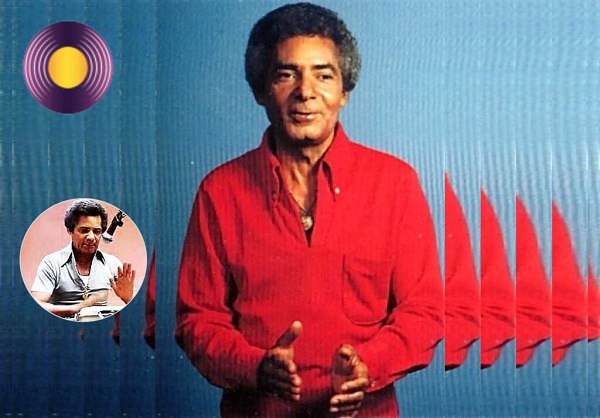
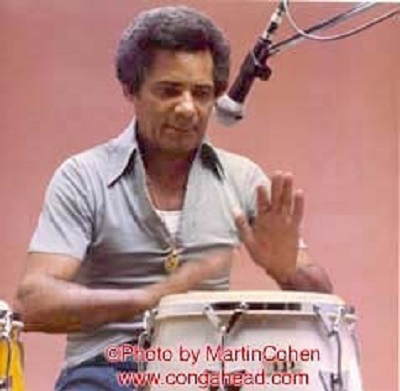
Virgilio Martí was an excellent rumbero and composer of the classic “Cuba Linda” where he was vocalist and percussionist in Grupo Folklorico Experimental Newyorkino

Virgilio Martí, born in 1919 in Havana, Cuba.

Virgilio Marti
Virgilio Marti

Fine Rumbero, Singer, Composer, Arranger, Percussionist, Actor and Orchestra Director well known since the late 40’s, especially as a guaguancó singer.

He began touring the world in 1949 and met his later wife in 1960 in Peru.

That same year, he settled in New York, participating in the local scene. He participated in the LP “Patato y Totico” in 1967, he also participated with his brother Eloy Martí in a Quintet accompanied by Gene Golden for the year 1979.

Israel López (Cachao), Arsenio Rodríguez, Héctor Cadavieco, Francisco Valdés, Papaíto, Tony Mayari and Mario Cadavieco also worked on that album.

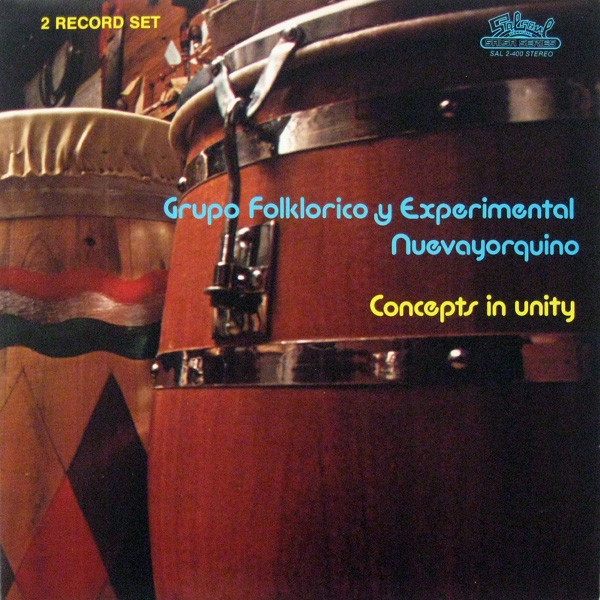
He participated in the “Grupo Folklórico Experimental Newyorkino” where he was their vocalist and percussionist in 1975. During his stay with them, he composed the song “Cuba Linda”.

Another work of Martí of great remembrance is the album titled: “Saludando A Los Rumberos” published by the Caimán label in the early 80’s and in which the Cuban acts as vocalist and main star.

Grupo Folklórico Experimental Newyorkino

In it Martí is involved with talents such as: Tony Cofresí, Andy and Jerry González, Yomo Toro, Paquito Pastor, Ray Romero, Claudio Roditti and Ignacio Berroa, among others.

“Iya Modapue” is in itself a guaguancó with open rumba, being at the same time the favorite number of the ‘Grupo Folklórico’, and even the first groove to be recorded.

The levels of experimentation and the freedom to unload several rhythms in a single musical performance are the factors producing the attraction of the musicians for “Iya Modupue” (which means Thank You Mother).

The vocal part is in the hands of Virgilio Martí. The trumpet of “Chocolate” Armenteros, the trombones of José Rodríguez and Reinaldo Jorge, the flute of Gonzalo Fernández and the percussion of Frankie Rodríguez stand out.

“Se Me Olvidó” a bolero by Lolita de la Colina but adapted in guaguancó to the style of the Grupo Folklórico, which, by the way, turned out to be the piece of greatest radio diffusion in the tropical environment and therefore, the one that would open the doors to the group.

The song was interpreted by Virgilio Martí, who also plays the congas. In “Se Me Olvidó”, the violin of Cuban Alfredo de la Fe, the quinto of Julito Collazo, the street redoblante of Jerry González and a Mexican marimba played by Andy González in counterpoint to the notes of the double bass, also played by Andy, stand out. Here it is worth mentioning that Alfredo de la Fe is a virtuoso violinist and among his many performances, I remember his work with Eddie Palmieri, Larry Harlow (the wonderful Jew), the Fania All-Stars and the avant-garde Típica 73.

In the early 80’s he formed a band with brothers Andy and Jerry González, and percussionist Ignacio Berroa.

It is worth mentioning Virgilio Martí’s 1985 performance in the film by Cuban filmmaker León Ichaso entitled “Crossover Dreams” (Sueños truncados).

In it, the Havana native plays the role of “Cheo Babalú” and vocalizes the song “Llora Timbero”.

In that film production made in New York City, he also participates with actor Rubén Blades, who plays the role of “Rudy Veloz”, where they sing the song “Todos Vuelven”.

In 1990, he contributed to the “Soundtrack” of the movie Azucar Amarga.

He maintained a great skill in converting songs from other genres into rumba arrangements.

We can mention the adaptation of the theme of the Brazilian composer Jorge Ben, “Más Que Nada” in which he appears on the LP with Patato and Totico.

Martí died on October 17, 1995.

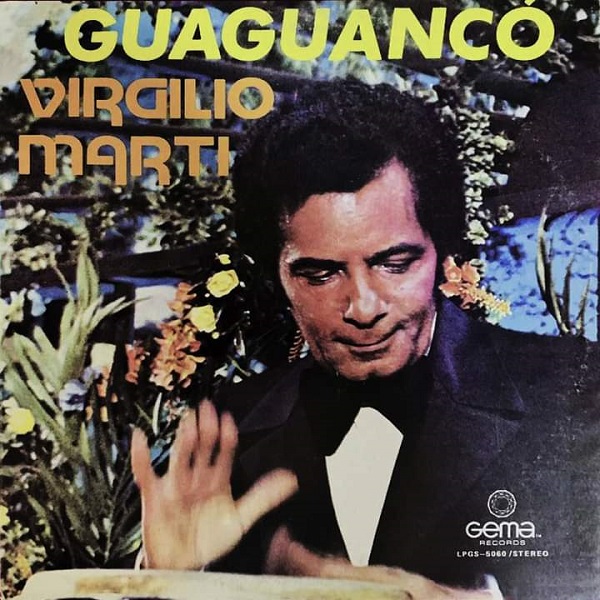
Virgilio Marti – Guaguanco (1979)

Tracks:

  1. Amanecer (Armando Manzanero)
  2. Todos vuelven (Rafael Otero)
  3. A tus pies (D.R.) (Agustin Lara)
  4. My childhood (Laureano Martinez)
  5. Saluting the rumberos (Manolo Albo)
  6. I’m going to divide it (R. Livi)
  7. Acanapon (D.R.)
  8. The little handkerchief (D.R.)
  9. Que susto (Virgilio Marti)
  10. Odiame (Rafael Otero)
Virgilio Marti - Guaguanco (1979)
Virgilio Marti – Guaguanco (1979)

Information realized (June 1, 2024)

Also Read: Carlos “Nene” Quintero comes from a family of musical prodigies

Contributor: Dj. Augusto Felibertt (International Salsa Magazine)

Virgilio Martí participated as aVirgilio Martí participated as a vocalist in the Grupo Folklórico Experimental Newyorkino in which he composed the song “Cuba Linda”

Virgilio Martí, born in the year 1919 Havana, Cuba, Rino Rumbero, Singer, Composer, Arranger, Percussionist, Actor and Orchestra Director, well known since the late 40’s, especially as a guaguancó singer.

He began touring the world in 1949 and met his later wife in 1960 in Peru.

Virgilio Martí participated as a vocalist in the Grupo Folklórico Experimental Newyorkino in which he composed the song "Cuba Linda".
Virgilio Martí participated as a vocalist in the Grupo Folklórico Experimental Newyorkino in which he composed the song “Cuba Linda”.

That same year, he settled in New York, participating in the local scene.

He participated in the LP “Patato y Totico” in 1967, he also participated with his brother Eloy Martí, in a Quintet accompanied by Gene Golden, for the year 1979.

Israel López (Cachao), Arsenio Rodríguez, Héctor Cadavieco, Francisco Valdés, Papaíto, Tony Mayari and Mario Cadavieco also worked on that album.

He participated in the “Grupo Folklórico Experimental Newyorkino”, where he was their vocalist and percussionist, in 1975. During his stay with them, he composed the song “Cuba Linda”.

"Grupo Folklórico Experimental Newyorkino, donde fue vocalista y percusionista del mismo, en 1975
“Grupo Folklórico Experimental Newyorkino, donde fue vocalista y percusionista del mismo, en 1975

Another work of Martí of great remembrance is the album entitled: “Saludando A Los Rumberos”, published by the Caimán label in the early 80’s and in which the Cuban acts as vocalist and main star. In it, Martí is involved with talents such as: Tony Cofresí, Andy and Jerry González, Yomo Toro, Paquito Pastor, Ray Romero, Claudio Roditti and Ignacio Berroa, among others.

Virgilio Martí, born 1919 Havana, Cuba.

“Iya Modapue”, constitutes in itself, a guaguancó with open rumba being at the same time the favorite number of the “Grupo Folklórico”, and even the first groove that was recorded.

The levels of experimentation and the freedom to unload several rhythms in a single musical performance are the factors producing the attraction of the musicians for “Iya Modupue” (which means Thank You Mother).

The vocal part is in the hands of Virgilio Martí. The trumpet of “Chocolate” Armenteros, the trombones of José Rodríguez and Reinaldo Jorge, the flute of Gonzalo Fernández and the percussion of Frankie Rodríguez stand out.

“Se Me Olvidó” – a bolero by Lolita de la Colina – but adapted in guaguancó to the style of the Grupo Folklórico, which, by the way, turned out to be the piece with the greatest radio airplay in the tropical environment and, therefore, the one that would open the doors to the group. The song was performed by Virgilio Martí, who also plays the congas. In “Se Me Olvidó”, the violin of Cuban Alfredo de la Fe, the quinto of Julito Collazo, the street redoblante of Jerry González and a Mexican marimba played by Andy González in counterpoint to the notes of the double bass, also played by Andy, stand out.

Here it is worth mentioning that Alfredo de la Fe is a virtuoso violinist and among his many performances, I remember his work with Eddie Palmieri, Larry Harlow (the wonderful Jew), the Fania All-Stars and the avant-garde Típica 73.

In the early 80’s he formed a band with brothers Andy and Jerry González, and percussionist Ignacio Berroa.

It is worth mentioning Virgilio Martí’s 1985 performance in the film by Cuban filmmaker León Ichaso entitled: “Crossover Dreams” (Sueños truncados). In it, the Havana native plays the role of “Cheo Babalú” and sings the song “Llora Timbero”.

In this film production made in New York City, the actor Rubén Blades, who plays the role of “Rudy Veloz”, also participates. There they sing the song “Todos Vuelven”.

In 1990, he contributed to the “Soundtrack” of the movie Azúcar Amarga.

He maintained a great skill in converting songs from other genres into rumba arrangements. We can mention the adaptation of the song by Brazilian composer Jorge Ben, “Más Que Nada”, which appears on the LP with Patato y Totico. Martí died on October 17, 1995. (Tom Data “Facebook”)

Virgilio Marti - Guaguanco (1979)
Virgilio Marti – Guaguanco (1979)

Virgilio Marti – Guaguanco (1979)

Tracks:

  1. Amanecer (Armando Manzanero)
  2. Todos vuelven (Rafael Otero)
  3. A tus pies (D.R.) (Agustin Lara)
  4. My childhood (Laureano Martinez)
  5. Saluting the rumberos (Manolo Albo)
  6. I’m going to divide it (R. Livi)
  7. Acanapon (D.R.)
  8. The little handkerchief (D.R.)
  9. Que susto (Virgilio Marti)
  10. Odiame (Rafael Otero)

Information realized (June 1, 2024)

Sources:

DiscoGS

Spotify Virgilio Marti

Virgilio Marti Youtube

Also Read: Justo Betancourt Querol Cuban sonero and singer famous for his interpretation of the song “Pa’ bravo yo”

“Boricuas En Nueva York” the new from Marlow Rosado and Frankie Negrón

Meet Marlow Rosado, a Talented Pianist

Marlow Rosado is a versatile artist with a born talent, a pianist, arranger, writer and orchestra director. His genres are quite diverse, and they have given him a great career path within music. Among his genres we can find merengue, jazz, bachata, salsa, reggaeton, rock and cumbia. His amazing abilities have taken him to participate in some big and high profile productions. He has collaborated with renown artists such as Alejandra Guzmán, Ricardo Montaner, Elvis Crespo, Marc Anthony, Celia Cruz, Selena, Olga Tañón, El Gran Combo de Puerto Rico and Ricky Martin.

Rosado was born in Puerto Rico, but from a young age he moved to Florida. In the USA he had the opportunity to study music, and he specialized in jazz. He started to participate as a teacher in his area, while sharing his knowledge. Also, he was part of some groups as director, musician and composer.

I was formed in orchestras in which the architect was the director, the musician, not just the singer like La Fania, and so many others. I loved mine “La Riqueña” with the best musicians that I’ve met along these years. Then, I made an album my way. An album that you can make when you don’t have any kind of limitations”, he expressed.

His New Adventure is “Boricuas en Nueva York”

The artist has obtained on two occasions the coveted Latin Grammy. Now, he presents “Boricuas en Nueva York” with another Puerto Rican Frankie Negrón, and hand in hand with the record company JN Music Group.

Marlow Rosado
Marlow Rosado is releasing “Boricuas en Nueva York” junto a Frankie Negrón.

Since a couple of weeks the single has been on different digital platforms, and on YouTube the numbers keep rising. It has lyrics, production, and arrangements by Marlow himself, but it doesn’t have a music video, just a flyer with the name and Rosado’s picture.

Está botao el boricua en New York (está botao), está botao el boricua en New York (el boricua de Nueva York, está botao el boricua en New York (el jibarito está botao), está botao el boricua en New York”, it’s the song’s chorus.

As it was expected, the production is full of caribbean rhythms, especially Puerto Rican salsa where it feels his pride for his country. It lasts around two minutes, and has a catchy melody. “Boricuas en New York” is the first single of Marlow’s new musical production named “Los Colores de la Salsa” which is expected shortly, because there have been some last minute adjustments.

Rosado announced the single’s release through his Instagram profile, and stated that it will be an incredible album. He also thanked Negrón participation.

Here is Boricuas en New York. Marlow Rosado and Franklin Negrón. ENJOY IT MY PEOPLE”, he posted with a lyrics video.

Rosado performs in different latin establishments in Miami city. He is known as the music’s Dalí, because the magic that he produces when playing piano, can be compared to the famous painter’s brushes. Definitely, he is a highly talented jazz pianist, and his name will continue to be heard within the industry.

Home

  • « Go to Previous Page
  • Page 1
  • Interim pages omitted …
  • Page 5
  • Page 6
  • Page 7
  • Page 8
  • Page 9
  • Interim pages omitted …
  • Page 116
  • Go to Next Page »

International Salsa Magazine (ISM) is a monthly publication about Salsa activities around the world, that has been publishing since 2007. It is a world network of volunteers coordinated by ISM Magazine. We are working to strengthen all the events by working together.