• Skip to primary navigation
  • Skip to main content

International Salsa Magazine

  • HOME
  • Previous editions
    • 2026
      • ISM / May 2026
      • ISM / April 2026
      • ISM / March 2026
      • ISM / February 2026
      • ISM / January 2026
    • 2025
      • ISM / December 2025
      • ISM / November 2025
      • ISM / October 2025
      • ISM / September 2025
      • ISM / August 2025
      • ISM / July 2025
      • ISM / June 2025
      • ISM / May2025
      • ISM / April 2025
      • ISM / March 2025
      • ISM / February 2025
      • ISM / January 2025
    • 2024
      • ISM / December 2024
      • ISM / November 2024
      • ISM / October 2024
      • ISM / September 2024
      • ISM / August 2024
      • ISM / July 2024
      • ISM / June 2024
      • ISM / May 2024
      • ISM / April 2024
      • ISM / March 2024
      • ISM / February 2024
      • ISM / January 2024
    • 2023
      • ISM / December 2023
      • ISM / November 2023
      • ISM / October 2023
      • ISM – September 2023
      • ISM – August 2023
      • ISM July 2023
      • ISM Edition June 2023
      • ISM – May 2023
      • ISM April 2023
      • ISM March 2023
      • ISM February 2023
      • ISM January 2023
    • 2022
      • ISM December 2022
      • ISM November 2022
      • ISM October 2022
      • ISM September 2022
      • ISM August 2022
      • ISM July 2022
      • ISM June 2022
      • ISM May 2022
      • ISM February 2022
      • ISM January 2022
    • 2021
      • ISM December 2021
      • ISM November 2021
      • ISM October – 2021
      • ISM September 2021
      • ISM August 2021
      • ISM July 2021
      • ISM May 2021
      • ISM April 2021
      • ISM June 2021
      • ISM March 2021
      • ISM February 2021
      • ISM January 2021
    • 2020
      • ISM December 2020
      • ISM November 2020
      • ISM October 2020
      • ISM September 2020
      • ISM August 2020
      • ISM July 2020
      • ISM June 2020
      • ISM May 2020
      • ISM April 2020
      • ISM March 2020
      • ISM February 2020
      • ISM January 2020
    • 2019
      • ISM December 2019
      • ISM November 2019
      • ISM October 2019
      • ISM Septembre 2019
      • ISM August 2019
      • ISM July 2019
      • ISM June 2019
    • 2016
      • ISM December 2016
  • Spanish
  • Download Salsa App
    • Android
    • Apple

Search Results for: New York

Virgilio Martí participated as aVirgilio Martí participated as a vocalist in the Grupo Folklórico Experimental Newyorkino in which he composed the song “Cuba Linda”

Virgilio Martí, born in the year 1919 Havana, Cuba, Rino Rumbero, Singer, Composer, Arranger, Percussionist, Actor and Orchestra Director, well known since the late 40’s, especially as a guaguancó singer.

He began touring the world in 1949 and met his later wife in 1960 in Peru.
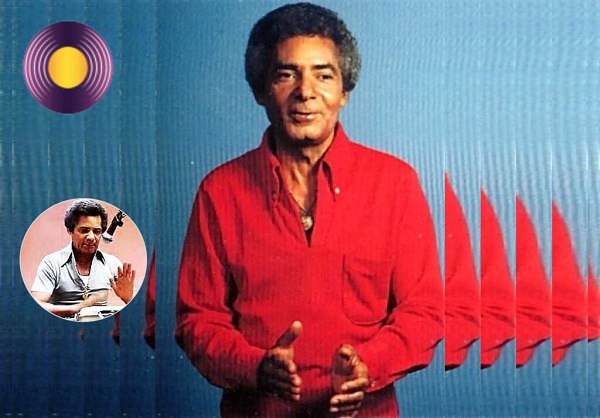
Virgilio Martí participated as a vocalist in the Grupo Folklórico Experimental Newyorkino in which he composed the song "Cuba Linda".
Virgilio Martí participated as a vocalist in the Grupo Folklórico Experimental Newyorkino in which he composed the song “Cuba Linda”.

That same year, he settled in New York, participating in the local scene.

He participated in the LP “Patato y Totico” in 1967, he also participated with his brother Eloy Martí, in a Quintet accompanied by Gene Golden, for the year 1979.

Israel López (Cachao), Arsenio Rodríguez, Héctor Cadavieco, Francisco Valdés, Papaíto, Tony Mayari and Mario Cadavieco also worked on that album.

He participated in the “Grupo Folklórico Experimental Newyorkino”, where he was their vocalist and percussionist, in 1975. During his stay with them, he composed the song “Cuba Linda”.
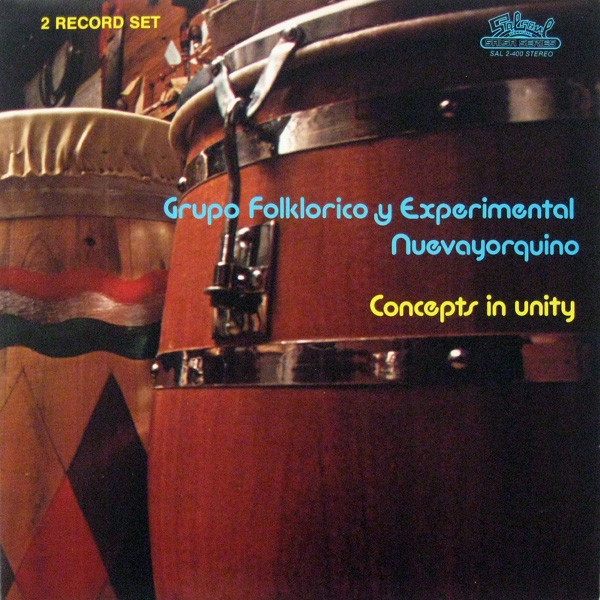
"Grupo Folklórico Experimental Newyorkino, donde fue vocalista y percusionista del mismo, en 1975
“Grupo Folklórico Experimental Newyorkino, donde fue vocalista y percusionista del mismo, en 1975

Another work of Martí of great remembrance is the album entitled: “Saludando A Los Rumberos”, published by the Caimán label in the early 80’s and in which the Cuban acts as vocalist and main star. In it, Martí is involved with talents such as: Tony Cofresí, Andy and Jerry González, Yomo Toro, Paquito Pastor, Ray Romero, Claudio Roditti and Ignacio Berroa, among others.
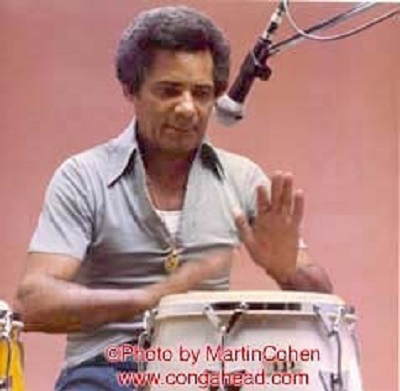
Virgilio Martí, born 1919 Havana, Cuba.

“Iya Modapue”, constitutes in itself, a guaguancó with open rumba being at the same time the favorite number of the “Grupo Folklórico”, and even the first groove that was recorded.

The levels of experimentation and the freedom to unload several rhythms in a single musical performance are the factors producing the attraction of the musicians for “Iya Modupue” (which means Thank You Mother).

The vocal part is in the hands of Virgilio Martí. The trumpet of “Chocolate” Armenteros, the trombones of José Rodríguez and Reinaldo Jorge, the flute of Gonzalo Fernández and the percussion of Frankie Rodríguez stand out.

“Se Me Olvidó” – a bolero by Lolita de la Colina – but adapted in guaguancó to the style of the Grupo Folklórico, which, by the way, turned out to be the piece with the greatest radio airplay in the tropical environment and, therefore, the one that would open the doors to the group. The song was performed by Virgilio Martí, who also plays the congas. In “Se Me Olvidó”, the violin of Cuban Alfredo de la Fe, the quinto of Julito Collazo, the street redoblante of Jerry González and a Mexican marimba played by Andy González in counterpoint to the notes of the double bass, also played by Andy, stand out.

Here it is worth mentioning that Alfredo de la Fe is a virtuoso violinist and among his many performances, I remember his work with Eddie Palmieri, Larry Harlow (the wonderful Jew), the Fania All-Stars and the avant-garde Típica 73.

In the early 80’s he formed a band with brothers Andy and Jerry González, and percussionist Ignacio Berroa.

It is worth mentioning Virgilio Martí’s 1985 performance in the film by Cuban filmmaker León Ichaso entitled: “Crossover Dreams” (Sueños truncados). In it, the Havana native plays the role of “Cheo Babalú” and sings the song “Llora Timbero”.

In this film production made in New York City, the actor Rubén Blades, who plays the role of “Rudy Veloz”, also participates. There they sing the song “Todos Vuelven”.

In 1990, he contributed to the “Soundtrack” of the movie Azúcar Amarga.

He maintained a great skill in converting songs from other genres into rumba arrangements. We can mention the adaptation of the song by Brazilian composer Jorge Ben, “Más Que Nada”, which appears on the LP with Patato y Totico. Martí died on October 17, 1995. (Tom Data “Facebook”)
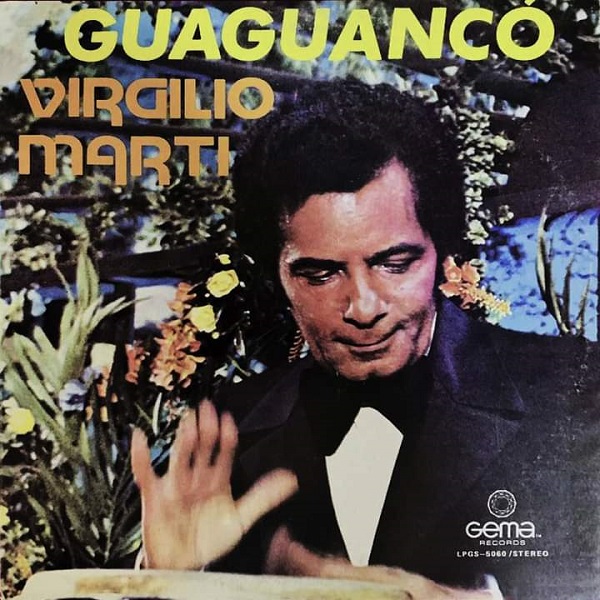
Virgilio Marti - Guaguanco (1979)
Virgilio Marti – Guaguanco (1979)

Virgilio Marti – Guaguanco (1979)

Tracks:

  1. Amanecer (Armando Manzanero)
  2. Todos vuelven (Rafael Otero)
  3. A tus pies (D.R.) (Agustin Lara)
  4. My childhood (Laureano Martinez)
  5. Saluting the rumberos (Manolo Albo)
  6. I’m going to divide it (R. Livi)
  7. Acanapon (D.R.)
  8. The little handkerchief (D.R.)
  9. Que susto (Virgilio Marti)
  10. Odiame (Rafael Otero)

Information realized (June 1, 2024)

Sources:

DiscoGS

Spotify Virgilio Marti

Virgilio Marti Youtube

Also Read: Justo Betancourt Querol Cuban sonero and singer famous for his interpretation of the song “Pa’ bravo yo”

“Boricuas En Nueva York” the new from Marlow Rosado and Frankie Negrón

Meet Marlow Rosado, a Talented Pianist

Marlow Rosado is a versatile artist with a born talent, a pianist, arranger, writer and orchestra director. His genres are quite diverse, and they have given him a great career path within music. Among his genres we can find merengue, jazz, bachata, salsa, reggaeton, rock and cumbia. His amazing abilities have taken him to participate in some big and high profile productions. He has collaborated with renown artists such as Alejandra Guzmán, Ricardo Montaner, Elvis Crespo, Marc Anthony, Celia Cruz, Selena, Olga Tañón, El Gran Combo de Puerto Rico and Ricky Martin.

Rosado was born in Puerto Rico, but from a young age he moved to Florida. In the USA he had the opportunity to study music, and he specialized in jazz. He started to participate as a teacher in his area, while sharing his knowledge. Also, he was part of some groups as director, musician and composer.

I was formed in orchestras in which the architect was the director, the musician, not just the singer like La Fania, and so many others. I loved mine “La Riqueña” with the best musicians that I’ve met along these years. Then, I made an album my way. An album that you can make when you don’t have any kind of limitations”, he expressed.

His New Adventure is “Boricuas en Nueva York”

The artist has obtained on two occasions the coveted Latin Grammy. Now, he presents “Boricuas en Nueva York” with another Puerto Rican Frankie Negrón, and hand in hand with the record company JN Music Group.

Marlow Rosado
Marlow Rosado is releasing “Boricuas en Nueva York” junto a Frankie Negrón.

Since a couple of weeks the single has been on different digital platforms, and on YouTube the numbers keep rising. It has lyrics, production, and arrangements by Marlow himself, but it doesn’t have a music video, just a flyer with the name and Rosado’s picture.

Está botao el boricua en New York (está botao), está botao el boricua en New York (el boricua de Nueva York, está botao el boricua en New York (el jibarito está botao), está botao el boricua en New York”, it’s the song’s chorus.

As it was expected, the production is full of caribbean rhythms, especially Puerto Rican salsa where it feels his pride for his country. It lasts around two minutes, and has a catchy melody. “Boricuas en New York” is the first single of Marlow’s new musical production named “Los Colores de la Salsa” which is expected shortly, because there have been some last minute adjustments.

Rosado announced the single’s release through his Instagram profile, and stated that it will be an incredible album. He also thanked Negrón participation.

Here is Boricuas en New York. Marlow Rosado and Franklin Negrón. ENJOY IT MY PEOPLE”, he posted with a lyrics video.

Rosado performs in different latin establishments in Miami city. He is known as the music’s Dalí, because the magic that he produces when playing piano, can be compared to the famous painter’s brushes. Definitely, he is a highly talented jazz pianist, and his name will continue to be heard within the industry.

Home

Don Perignon Y La Puertorriqueña releases his new album ‘‘Classique et Savoureux’’

Today we welcome a friend of the house we have not spoken to in a long time, but who has a lot to tell. We are talking about bandleader and timbalero Pedro Luis Morales Cortijos, artistically known as Don Perignon, whom we have had the pleasure of interviewing after many years.

The artist and his orchestra La Puertorriqueña have released their latest album, ‘‘Classique et Savoureux,’’ which the Puerto Rican musician talks about in this conversation, among many other interesting topics regarding his personal life and career.

Don Perignon with a recognition
Don Perignon receiving recognition by the City of Los Angeles

A long-awaited reunion

When we were last in touch with Don Perignon, he was promoting his latest album, Demostrando A Tiempo, and, of course, much water has flowed under the bridge since then. After having released that album, the artist had many performances and quite emblematic events, such as the previous edition of El Crucero de La Salsa, which welcomed big names including El Gran Combo de Puerto Rico, La Sonora Ponceña, and many more. 

There were also some performances in Puerto Rico and travel to certain parts of the United States, such as Connecticut and New York. At the same time, they were already working on “Classique et Savoureux” and another production. With Christmas approaching, he and his team preferred to shove these projects aside for a while to leave center stage to Christmas music.

Arriving January, they finally got down to work to start the production without further delay. The premiere on digital platforms was held on January 23, and the physical release will be on February 13, but it does not end there, as they are also planning a second release on March 21, on the eve of Puerto Rico’s Día Nacional de La Zalsa. For the same date, vinyls are expected to be ready for collectors who want to buy them.

For the time of this interview, the music had already been recorded, and it was now the singers, including Alex D’Castro, Hermán Olivera, Josué Rosado, and Marcial Istúriz, who were in the studio recording their voices for the album.

Gilberto and Don Perignon
Gilberto Santa Rosa and Don Perignon

Why is the album called “Classique et Savoureux”?

With regard to the curious name he chose for his album, it was a whim of Don Perignon himself, who wanted to recognize and give thanks to the public of France and the French language, from which he adopted the name Don Perignon. The artist has been calling himself that for the last 40 years and has built his career on it. Although the name comes from a famous French champagne, he has never received any claims or lawsuits demanding that he stops using it, which is much appreciated. 

In fact, he got to talk to the person responsible for introducing that champagne in a beverage company in Puerto Rico and understood that Don Perignon’s career and fame in no way damages the brand’s name and reputation.

Authorized biography 

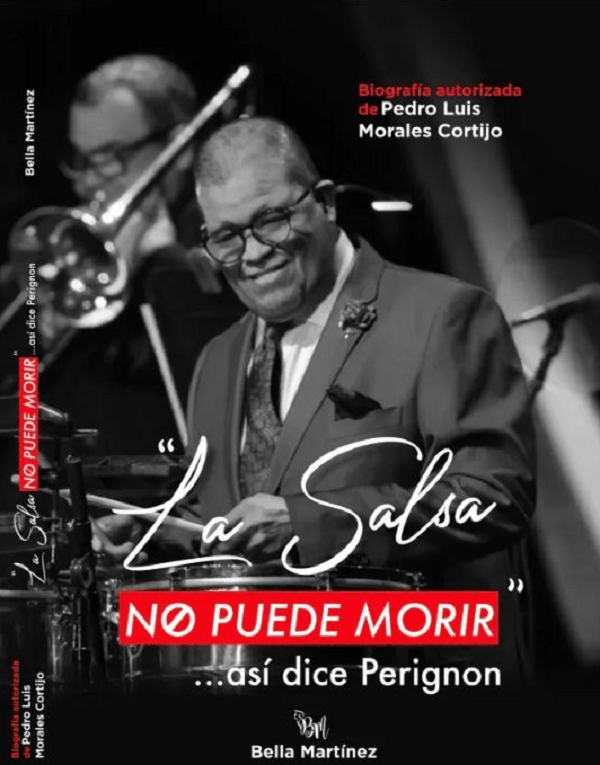
In addition to releasing his album, Don Perignon has also committed part of his time to engage in his authorized biography written by Puerto Rican author and International Salsa Magazine correspondent Bella Martínez. The book tells his story from his childhood to this day and includes the participation of the artist’s great friends and collaborators, including Andy Montañéz, Víctor Manuelle, and Gilberto Santa Rosa.

Some members of his family and other important people in his life also took part in the biography. 

Don Perignon and Victor
Don Perignon and Victor Manuelle

In each and every stage of his life described in the book, music plays a fundamental role given that, in his own words, it is an enjoyment that he has never been able to see as work.

It is titled “La Salsa No Puede Morir, así dice Perignon”, and is now available through platforms such as Amazon. In addition, the cover was designed by Félix Disla, the image is by Alina De Lourdes Luciano, the introduction is by Jaime Torres Torres, and the editorial care is by Robert Tellez M. 

Activities outside of music

Let us remember that Don Perignon was working as a bailiff at the Puerto Rico Department of Justice until April 2023, when he finally retired and was able to dedicate himself in full to music because he finally had time for it. He also pointed out that, should his health permit him, he will be involved in many other collaborations and projects with other singers who want to enter the Puerto Rican market, and he is happy to be able help them. 

Similarly, he assures us that he leaves it all in Our Lord Jesus Christ’s hands, who will let him know that he can achieve all this.

Cover of the book
Cover of ”La Salsa No Puede Morir, así dice Don Perignon”

Read also: Carlos Jimenez offers his talent and passion to charm the audience in universities, hotels, and restaurants all over New York

Jeremy Bosch Releases New Single “¿A dónde iré?”

The renowned musician, vocalist, composer, and arranger, Jeremy Bosch, has announced the release of his new single, “¿A dónde iré?” (Where Will I Go?). The song is the first promotional cut from his upcoming album, scheduled for release in October of this year.

“¿A dónde iré?” was written by Bosch, who is also a virtuoso flutist. For the lyrics, he drew inspiration from Psalm 139. In a press release, Jeremy commented on his inspiration, “This song was born from a moment of introspection and gratitude. I wanted to capture how God finds and accompanies us everywhere, even when we don’t perceive Him. I hope that those who listen can feel that closeness and trust in Him.”

The lyrics “combine biblical verses with Jeremy’s personal experience, intertwining his life’s testimony with the spiritual richness of scripture,” according to the artist’s team.

With this composition, the talented salsa artist whose work spans various musical genres seeks to invite listeners “to reflect on the presence of God (…) and the intimacy of a relationship with Him, through an authentic and moving musical expression.”

Jeremy Bosch lanza su nuevo sencillo “¿A dónde iré

Jeremy Bosch’s commitment to this production is evident. He is the composer of both the lyrics and melody, as well as the arranger, producer, vocalist, and background vocalist, in addition to playing the flute. The song features Álex “Apolo” Ayala on bass, interacting with Gabriel Chakarji on piano. Marcos Torres is on congas and minor percussion, and Marcos López is on timbales and bongos. The trumpets were handled by “Maneco” Ruiz and Jesús Ricardo. Doug Beavers played the trombone and Mario Castro the tenor saxophone. Edmar Castañeda is on harp, Roman Lajara on guitars and banjo, while Ali Bello played the violins, Samuel Marchan the violas, and Mara Navas the cellos.

About the Artist

Jeremy Bosch is a proud Puerto Rican. He was born in Ponce and raised in Las Piedras. He is a 2013 graduate of Berklee College of Music, with a degree in Jazz Composition.

Jeremy was the singer and flutist for the Spanish Harlem Orchestra from 2015, when director Óscar Hernández recruited him to replace Ray De La Paz, until early 2025, when he left SHO to focus on his solo career. In 2016, his compositions earned him recognition as a great writer, with the album Hecho a mano by Buena Vibra Sextet, released through Salsaneo Records. In 2020, while reviewing Pequeño Johnny Rivero’s album Golpe duro, I came across Jeremy’s credit as a background vocalist on the record. At that point, we already identified him as one of the new, promising salsa artists to watch. In Puerto Rico, in addition to his solo career, he is associated with the contemporary percussionist and orchestra director Pete Perignon, with whom he collaborated on the single ‘Sería una pena’ (2020).

Previously, Jeremy had the good sense to venture into a tribute to another notable Ponce native: Cheo Feliciano. The work, published under the title Prefacio, was recorded live at the Dizzy Club in New York. For this feat, he shared the stage with special guests such as Óscar Hernández, Johnny “Dandy” Rodríguez, and Nelson González. On that occasion, he stood out among compositions by Tite Curet Alonso, such as ‘Si por mí llueve,’ ‘Pa’ que afinquen,’ and ‘Los entierros’—to name a few—with arrangements by vibraphonist Felipe Fournier.

JB con flauta El reconocido músico, vocalista, compositor y arreglista Jeremy Bosch

Another notable production from his distinguished career allowed him to share the studio with Luis Enrique and Alain Pérez for the production of Prólogo hoy. This was followed by Epílogo, an Afro-Caribbean music album. Jeremy doesn’t want to be associated solely with salsa. In fact, his musical journey has been bold and varied, experimenting with “salsa mixed, produced, and arranged from a more synthesized and minimalist perspective,” as he described in an interview for the National Foundation for Popular Culture of Puerto Rico.

From his corner, this artist who has chosen to get to work—overcoming the temptation to complain—invites “a reconciliation between generations” for a healthy coexistence to enrich and diversify the contemporary musical talent pool.

Bella Martinez Puerto Rico


Also Read: Long live music! Repeat after me: “Long live the musicians so they can keep making it”. And I add: “Long live SALSA”.

Cuban singer-songwriter Osmay Calvo shows his versatility in the New Jersey music scene

Osmay Calvo is just one of many examples of why Cubans have triumphed so many times in the United States, which is why his story and that of many of his compatriots always serve as inspiration for those seeking a career in the music industry but who do not dare to do it because of the misfortune of being born in a place that did not offer them the necessary opportunities for this.

Calvo was kind enough to take a few minutes of his time to talk about all that had happened to his career to date, so it is an honor for us to describe what was discussed in the following lines.

Osmay performing
Singer Osmay Calvo performing during a birthday

How Osmay became interested in music

Osmay tells us that, from an early age, he loved popular music, so he began to participate in school music events when he was just six years old in Tarará, east of the city of Havana. At the same time, his mother enrolled him in singing lessons and he spent much time with his family musicians, including his uncle, singer Pedrito Calvo, who was a member of Los Van Van.

A few years later, he began to attend various types of contests and joined the Mariana de Gonitch Singing Academy, directed at the time by maestro Hugo Oslé, thanks to which he met Pacho Alonso, Ela Calvo, Mundito González, and many other important figures of Cuban popular music.

Official beginning of his professional life

Osmay’s professional start was in Cuba when he joined the Adolfo Guzmán company in 1995, which is when he had his first paid job in music. Although it is true that the Cuban government got a huge percentage of the money earned by the artists, Osmay appreciates the experience and the chance to know other countries through his activities with the company.

Some time later, he had the opportunity to travel to Spain and then to Mexico, where he participated in a music competition and won first prize with the song “La Bamba.” He then spent another month in Spain for an event until returning to Havana and winning the Mariana de Gonitch Singing Contest, obtaining the prize for the great popular generation of national music award, which led him to travel through the 14 provinces of Cuba to offer his services and make himself better known.

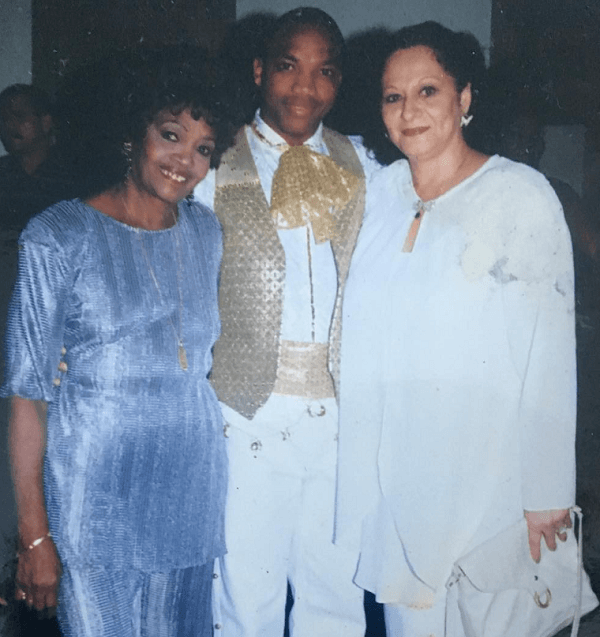
Osmay, Ela, and Beatriz
Singer Ela Calvo, Osmay Calvo, and ”La Musicalísima” Beatriz Marquez

Moving to the United States

It was in 2002 that Osmay finally decided it was time to look for other roads and leave Cuba to no longer return. He was going to sign a contract with Mambo Records in Miami, but things did not go according to plan, so he started recording his own music and went to New Jersey, where he began to organise his own orchestra with which he has 16 original songs written by himself, but also numerous covers of hits by other artists.

He has not been back to his native country for about 24 or 25 years. In fact, most of his family also lives in the United States and Canada, except for his uncle Pedro Calvo, some cousins, friends, and his music teachers.

However, after all the time he has been gone, things have not been entirely easy for Osmay, especially in the beginning. The hardest thing for him was language learning and how little he knew about his new place of residence, but the artist quickly learned and was gradually integrated into this new music scene, thanks to which he was able to play with many orchestras and meet great figures such as Oscar D’León at the Coco Bongo Club in Elizabeth, New Jersey, and Fernandito Villalona, for whom he opened one of his shows.

In New York, he played with many bands and learned a lot of music that was played locally. Osmay brought an academic background in lyrical and symphonic singing from Cuba, but New York has mostly restaurants, nightclubs, and fairs, so he had to adapt to a completely new format and audience. 

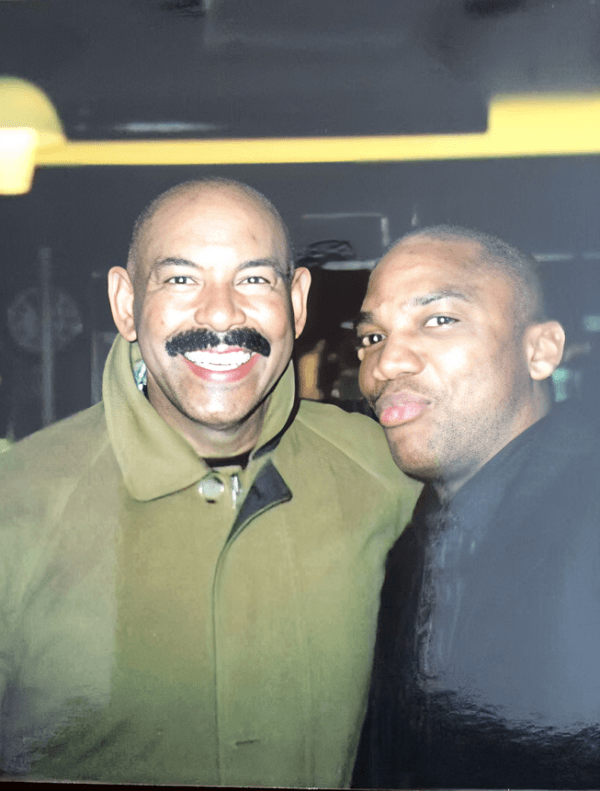
Osmay, and Oscar
”El Sonero del Mundo” Oscar D’ León and Osmay Calvo

Fortunately, he got it and was recommended by other musicians to play in many places until one night he was asked to play at Don Coqui and was told that Tito Nieves would be there. Then, when it was time for Osmay and nine other musicians to perform on stage, Jimmy Rodríguez, the owner of Don Coqui, approached them to say that Nieves might come and play with them later. A little while later, the Puerto Rican actually did approach with a microphone in his hand, and both he and Osmay began to improvise, and the show lasted until two o’clock in the morning. For the Cuban, it was an exceptional experience and an unforgettable moment in his career.

Haberte Conocido

After all the progress made, in 2021, Osmay felt ready to release his first independent album, which he titled “Haberte Conocido”. This was a goal to fulfill since Hugo Oslé, who was also his singing teacher, told him and the rest of his students that it was very important to be an independent artist who wrote and recorded his own songs. 

In addition to that, he remembers that everyone in the class was a bolero singer, so he wanted to do something that would set him apart from the rest, and that is how he began to turn to salsa and other genres. This made him a much more versatile artist who could sing almost any genre coming his way. From then on, he stopped learning the original soneos of the songs and started to improvise on many occasions, which eventually led him to compose. Finally, in 2021, he wrote “Haberte Conocido,” which he put together from ideas that came to his mind and that he saved on his mobile phone during rehearsals. Then, stanza by stanza, he created the first song of his own. 

Osmay and Tito
Osmay Calvo singing with Tito Nieves at Don Coqui

Read also: Multi-instrumentalist Ian Dobson talks about his trips and academic background

  • « Go to Previous Page
  • Page 1
  • Interim pages omitted …
  • Page 6
  • Page 7
  • Page 8
  • Page 9
  • Page 10
  • Interim pages omitted …
  • Page 119
  • Go to Next Page »

International Salsa Magazine (ISM) is a monthly publication about Salsa activities around the world, that has been publishing since 2007. It is a world network of volunteers coordinated by ISM Magazine. We are working to strengthen all the events by working together.