• Skip to primary navigation
  • Skip to main content

International Salsa Magazine

  • HOME
  • Previous editions
    • 2026
      • ISM / April 2026
      • ISM / March 2026
      • ISM / February 2026
      • ISM / January 2026
    • 2025
      • ISM / December 2025
      • ISM / November 2025
      • ISM / October 2025
      • ISM / September 2025
      • ISM / August 2025
      • ISM / July 2025
      • ISM / June 2025
      • ISM / May2025
      • ISM / April 2025
      • ISM / March 2025
      • ISM / February 2025
      • ISM / January 2025
    • 2024
      • ISM / December 2024
      • ISM / November 2024
      • ISM / October 2024
      • ISM / September 2024
      • ISM / August 2024
      • ISM / July 2024
      • ISM / June 2024
      • ISM / May 2024
      • ISM / April 2024
      • ISM / March 2024
      • ISM / February 2024
      • ISM / January 2024
    • 2023
      • ISM / December 2023
      • ISM / November 2023
      • ISM / October 2023
      • ISM – September 2023
      • ISM – August 2023
      • ISM July 2023
      • ISM Edition June 2023
      • ISM – May 2023
      • ISM April 2023
      • ISM March 2023
      • ISM February 2023
      • ISM January 2023
    • 2022
      • ISM December 2022
      • ISM November 2022
      • ISM October 2022
      • ISM September 2022
      • ISM August 2022
      • ISM July 2022
      • ISM June 2022
      • ISM May 2022
      • ISM February 2022
      • ISM January 2022
    • 2021
      • ISM December 2021
      • ISM November 2021
      • ISM October – 2021
      • ISM September 2021
      • ISM August 2021
      • ISM July 2021
      • ISM May 2021
      • ISM April 2021
      • ISM June 2021
      • ISM March 2021
      • ISM February 2021
      • ISM January 2021
    • 2020
      • ISM December 2020
      • ISM November 2020
      • ISM October 2020
      • ISM September 2020
      • ISM August 2020
      • ISM July 2020
      • ISM June 2020
      • ISM May 2020
      • ISM April 2020
      • ISM March 2020
      • ISM February 2020
      • ISM January 2020
    • 2019
      • ISM December 2019
      • ISM November 2019
      • ISM October 2019
      • ISM Septembre 2019
      • ISM August 2019
      • ISM July 2019
      • ISM June 2019
    • 2016
      • ISM December 2016
  • Spanish
  • Download Salsa App
    • Android
    • Apple

Search Results for: Nightclub

Oscar D’León celebrates 50 years of career in Caracas “International Salsa Magazine says present”

In September, the greatest exponent of Venezuelan salsa in the world will celebrate five decades of brilliant artistic career with an international tour that will have as its main event, an impressive and awaited symphonic gala at the Teresa Carreño Theater. And for september 22 at the Forum in Valencia.
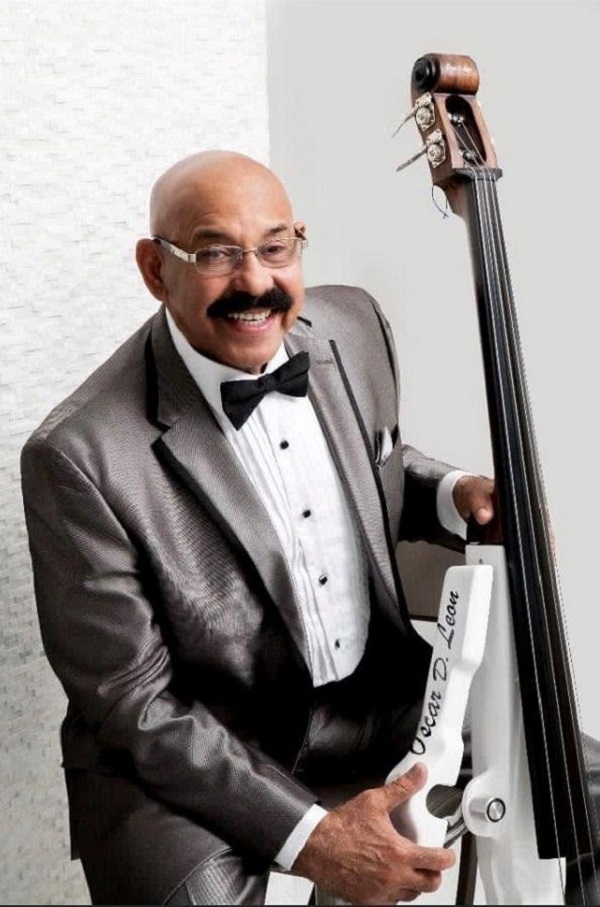
Miami, May 19, 2022. Undisputed legend of Caribbean music, Oscar D’León, the Sonero of the World, celebrates 50 years of successful artistic career with an international tour that will take him to different locations in the Americas and Europe this summer.

This tour, which will begin on June 20 in Mexico City, will continue in July with the “50th Anniversary Europa Tour 2022”, culminating in a spectacular symphonic gala at the iconic Teresa Carreño Theater, which, during two performances on September 16 and 17, will give his audience the opportunity to sing and dance to the music that has made him the most recognized and admired Venezuelan artist in the world over the course of five decades.

Acapulco, Arequipa, Santiago de Chile, Miami, Frankfurt, Munich, Berlin, Paris, Amsterdam, Madrid, Tenerife, London, Istanbul are some of the cities that will live the energizing experience of seeing him on stage, a real party for music lovers.

Deserving of hundreds of awards and recognitions, including five Latin Grammys, D’León has been nominated nine times for the U.S. Grammy, being the first Venezuelan to obtain such a statuette. He did it in 2001 thanks to the song “Cielito Lindo, La Negra Mariachi Medley” Featuring-Oscar D’Leon, included in a collection album: “Masterpiece/Obra Maestra de Tito Puente y Eddie Palmieri”.

In 2013, he received the Award for Musical Excellence, a special recognition granted by vote of the Board of Trustees of the Latin Recording Academy to artists who have made creative contributions of exceptional artistic importance in the field of recording during their careers.

A true prophet in his own land, this global artist who began writing his formidable musical history in 1972, at the age of 28, when he formed the Dimensión Latina Orchestra, promises to celebrate his half-century of career with an unforgettable show at the Teresa Carreño Theater, the most important in Caracas, organized by the Venezuelan companies Imagen Producciones and Oz Show, in alliance with the National Orchestra System of that country.

Important Notes

Venezuelan musician who is among the most outstanding authors and performers of salsa and Caribbean music in general. Oscar D’León’s professional career began late: legend has it that one night, while visiting a nightclub in 1973, he heard that the band playing there had been fired. Oscar seized the opportunity and offered his own band to replace the one that had left.

The owner accepted and hired him to start playing a few days later. There was only one problem: the band at that time consisted only of D’León himself. He quickly got in touch with trombonist César Monge, told him what had happened and both got down to work to put together a line-up.

The band was finally formed by Oscar (vocals and bass, an instrument he had taught himself to play), César Monge (trombone), José Rodríguez (percussion), Enrique Iriarte (piano) and José Antonio Rojas (trombone).

Thus was formed La Dimensión Latina, Oscar D’León’s first orchestra. “Pensando en ti” was the first of the orchestra’s long list of hits. Four years later, Óscar left the band and was replaced by Puerto Rican Andy Montáñez, a vocalist who sang with the Gran Combo de Puerto Rico. Óscar returned with his own orchestra, La Salsa Mayor, with which he recorded his first album, titled after the group’s name: La Salsa Mayor (1977). The work was a great success in his country, and little by little his name began to be heard on an international scale. The following year he recorded the album El Más Grande, which contained the songs “El baile del suavecito” and “Mi bajo y yo”, and shortly afterwards he made his first visit to New York to offer live performances.

Aside from being a great sonero, Oscar D’León is also an extraordinary showman. Almost always accompanied by his bass, with which he plays and dances as if they were a couple, Óscar moves around the stage with great skill. In Venezuela, Óscar D’León is an idol, not only as a singer and musician, but also as a model of a self-made man who, from a very humble position, achieves fame and success on an international scale.

He is considered one of the best interpreters of Afro-Latin music of all times and is undoubtedly among the Venezuelan artists with more projection abroad.

Despite having gone through several stages in the development of Latin music, Oscar D’León’s style, always unmistakable, has maintained some constants that have allowed him to ensure the loyalty of his wide audience. D’León has recorded with the most outstanding salsa stars; among his collaborations, which can be traced in more than fifty albums, stands out his participation in The Mambo King, the hundredth full-length album by the legendary Tito Puente.

Corresponsal: Lida. María Fernanda León

www.Sanjuanproducciones24.blogspot.com
Where To Go Dancing Salsa In Africa During September

Latest news from the Salsero movement in Morocco, Ghana, and Ivory Coast

In September, we came with more force and recharged. In this edition, we offer you the compilation of the best Salsa and Bachata events so that you don’t stay without being part of the Latin scene of the African continent during the last month of summer.

World Salsa Congress Marrakech 2022

Leyenda: James Torres (Organizer and DJ of World Salsa Congress Marrakech)

After the cessation of the event for a year due to the pandemic in Morocco, the World Salsa Congress Marrakech 2022 returns from Wednesday, August 31st to Tuesday, September 6th with four dance floors for the enjoyment of Salsa in the NY and LA style, Cuban Salsa, Bachata, and Kizomba.

A six-day event of Salsa parties, total relaxation, entertainment, workshops, and international live shows with the participation of 2,000 people from 48 countries around the world at the Palmeraie Resorts hotel located in Circuit de la Palmeraie 40000 Marrakesh, Morocco.

In this eighth edition, every day in the Atlas Room will be a pool party with special guests and international DJs. On Friday, September 2nd, the shows will begin (10 PM – 11:30 PM), on Saturday, September 3rd, five hours of lessons will be held at different levels simultaneously in five rooms (10:30 AM – 3:50 PM), and On Sunday, September 4th, classes will begin at 11 AM and will end this day with the closing party at Nikki Beach with international DJs (Dress code: White).

The DJs that will be entertaining the World Salsa Congress Marrakech 2022 https://www.salsacongress-marrakech.com/programme.php?lang=en are DJ Tronky (Rome), DJ Mascalzone (Rome), DJ Mauri (Amsterdam), DJ Kamal “Salsa Dura” (NRW/Germany), DJ Juan (New York), DJ Babacar (Porto/London), DJ Marco Polo (Helsinki/Finland), DJ Miguel (Miami), DJ “El Loco” Hicham (Nantes/ France), DJ Giorgio Rod (Paris), DJ Ale “El Cubano” (Cuba), DJ Kito Et Jal’s (Rabat/Morocco), and DJ Myster’Youss (Montreal).

The secret party 1001 Night with international DJs will be on Monday, September 5th starting at 9 PM. €10 must be paid for the cost of the transport service. The price of tickets for the six days of Salsa Immersion, Pool Parties, and 33° Sun is €260.

Salsa Dance Night 

Leyenda: Salsa Dance Night (Wednesday 7th, 14th, 21st, and 28th September)

The entertainment company Vienna City Limited offers Salsa every Wednesday night from 6 PM to 11:30 PM at the Vienna City Hotel located on Emmanuel Quist Rd, Tema, Ghana (West African country).

This business chain with more than 20 years of experience maintains the quality standard in Salsa dance nights with regular training.

This nightclub in the Vienna City Hotel https://viennacity.com.gh/ has established itself as one of the most influential in the seaside city of Tema over the years. Here, you can enjoy a variety of drinks and exotic cocktails, as well as resident and guest DJs that will keep you dancing the night away.

The Meridian Lounge Bar is the soul of the hotel. It has an elegant style and a beautiful panoramic view of the neighborhood. The lounge bar lounge is also dedicated to game nights, comedy, and live Jazz on the weekends. So, don’t miss the opportunity to enjoy Salsa in Ghana every Wednesday in September.

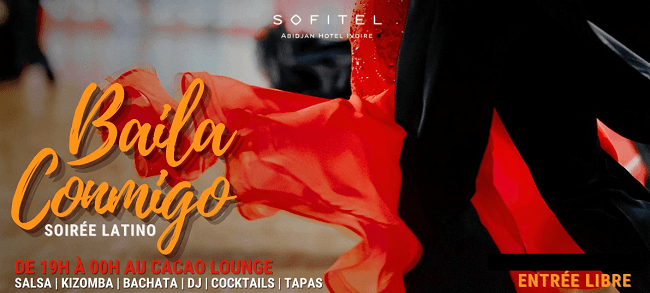
Baila Conmigo – Soirée Latino

Leyenda: Salsa, Kizomba, Bachata – (Free Entry) 

On Friday, September 16th, you can attend the 100% Latin evening (Salsa, Kizomba, and Bachata) with resident DJs at the Cacao Lounge located inside the Sofitel Abidjan Hôtel Ivoire https://www.facebook.com/SofitelAbidjan (5 stars) located at Boulevard Hassan II 08 Bp 01, Abidjan, Ivory Coast (country in West Africa) starting at 7 PM.

Admission is free, you must use the Mask at all times, and there will be a Hydroalcoholic Gel available.

And if you are a beginner, it does not matter because the professionals of Social Dance Abidjan will be there to support you in your immersion in the dance of Latin rhythms.

Unique Latin atmosphere, Tapas, DJ, and a majestic environment of water and vegetation you will find at the Sofitel Abidjan Hotel Ivoire, a combination of French luxury and African charm on the Ivory Coast.

Two Latin Events Will Blow Europe Away In August

A Salsero Festival and Tour will be the stars of the summer in the main cities of Europe

Europe welcomes Latin music events in the last month of summer this year with two impressive Salseras parties. During these events, the safety of the attendees will be guaranteed, will be an unbeatable festive atmosphere and lots of fun. So, don’t miss the opportunity to attend the Salsa Latina Istriana Festival in Croatia and the Cuban artist Maykel Blanco y Su Salsa Mayor’s European Tour, and enjoy the heat of August with your favorite Latin music.

Salsa Latina Istriana Festival 2022

DJ Sergio, DJ Marc “El Mágico” and DJ Julián Duke will be in charge of mixing the greatest Salsa hits during the Festival

Salsa Latina Istrian Festival began in 2004 as a free dance workshop with 100 dancers who love and dance enthusiasts to promote Salsa and other Caribbean dances.

This year the eighteenth edition of this festival with tradition and support for the community of European dancers arrives from August 26th to August 29th with four Bootcamps, workshops (Salsa, Bachata, Kizomba, Semba, and Urban Kiz), international instructors, Masterclasses, night parties, boat and beach parties (the farewell party on Monday will be free), 12 famous DJs, two free social dances on four floors, and much more.

Salsa Latina Istriana Festival 2022 http://www.salsalatinaistriana.com will be held under the precautionary measures agreed for events and dance academies.

The workshops, as well as the night parties, will take place over three days at Dom Hrvatskih Branitelja, Leharova 9, in the center of the coastal city of Pula, Croatia, and the cost of the gold pass is €150.

Maykel Blanco y su Salsa Mayor

The singles Qué Hace Que Te Mueve and Ya Tú No Coronas belong to the “Qué Hace Que Te Mueve” album released in 2019

Cuban artist Maykel Blanco and his orchestra will continue their tour of Europe (Part 2) on Saturday, August 27th, at London’s iconic auditorium Electric Brixton with a special six-hour Cuban Salsa show. Javier La Rosa and Dr. Jim will be the evening’s Cuban DJs, while Osbanis and Anneta (Cuban Salsa Dancers and UK and World Champions) will lead a Cuban Salsa class for all levels.

On Sunday, August 28th, they will visit Glasgow (United Kingdom) at The Garage (nightclub) and will end their tour on September 9th at the Transformatorhuis event venue located in Amsterdam (Netherlands).

Maykel Blanco y Su Salsa Mayor made their way into the Havanera capital’s music scene more than a decade ago. This popular band in Cuba combines catchy lyrics with irresistible arrangements that get dancers, fans, and onlookers moving on the dance floor.

They currently have two great hits playing on the popularity charts of the most important radio stations on the Afro-Caribbean Island, Ya Tú No Coronas (2019) and Qué Hace Que Te Mueve (2019).

“Maykel was born in San Leopoldo, a neighborhood of the Centro Habana municipality in the Cuban capital, on January 21st, 1981, the year that began a decade of splendor for Cuban popular music. With academic training at the Guillermo Tomás Music Schools and the Amadeo Roldán Conservatory, at the age of 17, he joined the orchestra “Abel y la Seducción” and a year later created, “Suprema Ley”, thus starting his outstanding career professional.

At this stage, he arouses the interest of the Spanish record label Envidia Record with which he signed his first international contract. With this record company, he managed to produce more than ten phonograms for his group and various other artists, including Tirso Duarte. He also participated in the recording of 40 albums as a percussionist in various productions and created music for various “Latin Jazz” groups, such as “Havana Express”.

Maykel decides on October 10th, 2004 to make his big debut with his new orchestra “Maykel Blanco y Su Salsa Mayor”, made up of talented musicians, who graduated from various art schools in the nation.

Since then and up to the present, he has devoted his energy, creation, and musical talent to this interesting project. Thus, allowing his professional career to continue on the rise, as a pianist, percussionist, composer, music producer, arranger, and cultural promoter reaching a high level of popularity and prestige, in Cuba and the world”. Fragments extracted from Maykel Blanco biography. http://www.maykelblanco.com/

Home

Where To Go Dancing Salsa In Paris?

We bring you the 5 best Salsa clubs and events so you don’t miss any opportunity to continue dancing in the city of lights

Every year is a unique opportunity to make Salsa resound throughout the city of freedom and lights. Here, several prestigious places monthly immerse attendees in a Latin atmosphere. It is why in this August edition, we will take you on a journey into Latin American culture with a dream destination of Salsera fun in Paris.

La Pachanga

La Pachanga derives its name from the Cuban rhythm of the 60s

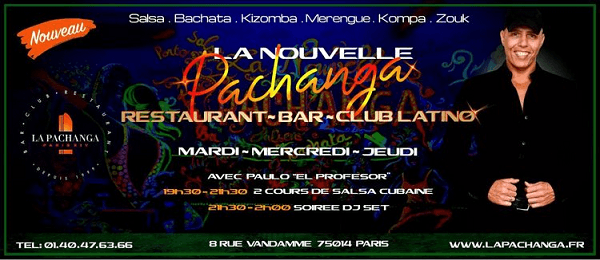
The Bar/Restaurant/Club La Pachanga https://www.lapachanga.fr/ is a place of reference for Salsa lovers, and is located near the Eiffel Tower at 8, rue Vandamme 75014. This club is designed in a cozy and Caribbean style. At the bar, you can enjoy various types of cocktails, Mojitos, Caipirinha, or Cuba Libre as well as a Latin American menu at the restaurant.

At the Pachanga, you can attend classes for beginner and intermediate levels with different instructors who will make you live two hours of Salsa Cubana and Salsa Puertorriqueña dance from Tuesday to Thursday from 7:30 PM to 9:30 PM continuing with social dancing and DJ set until 2 AM. On Saturdays, there are also two-hour Salsa lessons at the same time, and La Pachanga closes its doors on this day at 5 AM. The cost of entry is 12 euros.

Le Balajo

You must present a Vaccination Certificate and an identity document to access the club.

Le Balajo nightclub https://www.balajo.fr/ open since 1936 brings Salsa and Bachata classes every Tuesday from 7:30 PM to 2 AM for beginners and intermediate-level dancers. Amateur Salsa lessons start at 7:30 PM, while Intermediate Salsa lessons begin at 8:30 PM, followed by a Latin party hosted by DJ Karim until 2 AM.

The fees to attend this weekly event of joy and good humor are €8 and include non-alcoholic drinks and €12 if the beverage is alcoholic, but if you want to enjoy the bar and its atmosphere, the entrance fee is €5. The address is 9 Rue de Lappe, 75011 Paris, France.

Cubana Café

It is a restaurant, bar, and smokehouse for cigar enthusiasts with a quiet atmosphere in the evening.

The Cubana Café Bar/Restaurant https://www.cubanacafe.com/ is a cozy, exotic place with a 100% Cuban atmosphere. Every weekend they organize Latin Nights until dawn. Starting on Fridays and Saturdays with a DJ set from 9 PM to 5 AM and ending on Sundays from 12:30 PM to 3 AM, if you consume one of the three traditional Cuban dishes with a cocktail with or without alcohol, you will only pay €17.90. Cubana Café opened its doors 22 years ago and is located at 47 Rue vavin in the 6th district. Decoration made in Cuba, warm colors, Salsa, and a dynamic atmosphere at night await you at Cubana Café.

Pachamama

The decoration is influenced by the regions of South America with glamorous and bohemian touches that converge.

Pachamama Parisian Restaurant/ Bar/ Nightclub https://www.pachamama-paris.com/index.php/en/home-alt-2/ is located at 46-48 rue du Faubourg Saint Antoine, 75012, Paris, in a historic building from the 19th century designed by Gustave Eiffel in the neo-vintage colonial style. It has three levels inspired by the myths and sacred symbols of the pre-Columbian peoples influenced by the Latin traditions of the New World. It is open from Thursday to Saturday from 8 PM to 5 AM, with resident DJs on stage lighting up the dance floor (Lower Floor) with harmonious mixes between Latin Music, Soul, Pop, and Deep House.

La Terrasse Latino

Around 1,000 lovers from the Latin American continent enjoy gathering at the Terrasse every Friday in the summer.

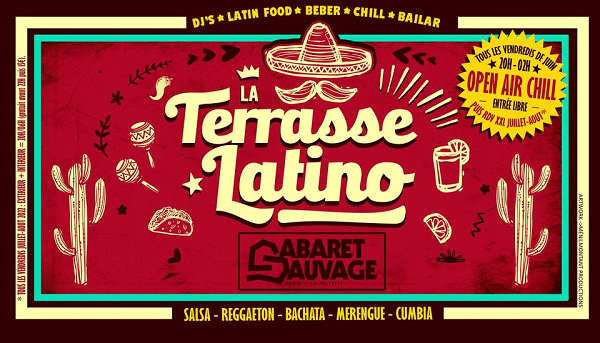
The largest open-air Latino gathering in Paris continues on the terrace of Cabaret Sauvage this summer in August. La Terrasse Latino https://www.cabaretsauvage.com/work/la-terrasse-latino-du-cabaret-sauvage-3  located at Parc de la Villette 59 Boulevard Macdonald, 75019 will offer Salsa Caleña lessons every Friday with instructor Francy Barahona de Calisabor (8:45 PM – 9:30 PM). It will also have Latin American cuisine, and DJ El Dany, DJ Nybra, DJ Barbas and DJ Capitán Cumbia will be present until 5 AM. Admission is free from 8 PM to 10 PM and after that it will cost €15 per box office.

Paris Salsa Weekend 

Paris Salsa Weekend is organized by passionate DJs and followed by a large Salsera community.

The capital of France is a dream destination for Salsa dancers. Here, magic happens, that’s why in this edition, we bring you three regular Salsa parties in a row that will take place during Paris Salsa Weekend 2022, https://www.lesalsaclub.com/psw from September 9th to September 11th. So, don’t miss the opportunity to attend because they are rarely held.

Sal’Sounds 70’S Party in Paris. You will hear Salsa only on Vinyl by DJ Mulato on Friday, September 9th from 9 PM to 2 AM. The address is Salle Colonne, 94 Bd Auguste Blanqui, 75013, Paris, and admission is €13. Party strictly on vinyl is the sound that dictates the law!

LeSalsa’Club Party. You will dance at the biggest monthly Salsa social party on September 10th from 3 PM to 8 PM. You can meet national and international instructors specializing in On1 and On2 styles here. LeSalsa’Club will take place in the 13th arrondissement, at the Maison des Associations de Solidarité (MAS), 10-18 rue des Terres-au-Cure, 75013 Paris. The cost of admission is €13.

Sunday Night – O’Sulli Sauce. The Paris Salsa Weekend culminates with the party on the night of Sunday, September 12th at O’Sullivans By The Mill located at 92 Bd de Clichy from 9 PM to 2 AM, and the ticket will have the same value as the previous ones.

Home

Puerto Rican singer Wito Rodríguez talks about his success and career

How his career starts

We are here with the very talented Irwin Wito Rodriguez (https://www.facebook.com/nmjrecords). Pleased to meet you, Mr. Rodriguez, such a pleasure to have you here. How are you?

Thank you very much, Karina. Thank you for the invitation. Quite well, thanks to God. I am in Florida at the moment, where the temperature is very pleasant.

Talented Puerto Rican singer Wito Rodríguez

Your beginnings in the musical world occured in a rock band, which is very common in many of your colleagues. Many of them start as boleristas and rockers. How did you go from a rock band to singing salsa and other genres like this?

I was born in Chicago and my parents are Puerto Rican, so I was raised American and tended to speak more English than Spanish. I listened only to music in English, but I also listened to Daniel Santos, Los Panchos and Tito Rodriguez at hore since I was a little boy. However, they were my parents’ favorite artists, not mine. As the years went by, my dad bought me my first guitar, so I joined a rock band of four or five kids and we started playing very cool songs. This lasted until I was 14 years old, when my father decided to send us to Puerto Rico and it was a very drastic change for me because now I was going to be in a school where Spanish is spoken and my Spanish was very bad. When I arrived in Puerto Rico, it was very nice to see the island in person because I only knew it from what my dad told me.

Five or six months after I arrived in Puerto Rico, I started singing with another rock band until I turned 16, which was when a very famous percussionist named Chacón (he had a band called Chacón Y Sus Batirítmicos) heard me sing and told me that he would like me to sing with them. He lived near me, so I could go to his place. I started going about twice a week to learn to play the conga and the clave. Around that time, I started learning everything related to salsa and typical Puerto Rican rhythms.

So I started playing in a nightclub, but I wasn’t supposed to do that because I was still 16 years old. So, they got me a jacket, hid me and I started singing there. When I turned 17, I moved to Chicago to finish school and speak English again. Three months later, I started singing salsa with the first orchestra in Chicago whose name was La Orquesta La Justicia from 1971.

So, you didn’t like salsa, but you developed a taste for it.

That’s correct. I didn’t have the joy of attending music school, so I just tried to learn as much as I could from what I saw. If I saw someone playing on a stage, I would approach the musicians, ask questions and clear my doubts. I learned a lot of things on my own.

Image taken from his video clip You’ll Never Find Another Love Like Mine

Military service and his first orchestra

You were part of the German orchestra Conexión Latina while serving in the army. How did the idea of starting a Latin music group in such a country arise?

When I was in the Orquesta La Justicia, I met many salsa stars like La Lupe, Ismael Rivera, Larry Harlow, Ray Barreto, El Gran Combo de Puerto Rico, La Sonora Ponceña and many others. All these artists helped me and taught me many things.

When I joined the U.S. Army, I had the opportunity to sing with an orchestra in Puerto Rico, but I was in Chicago. I accepted and prepared everything to return to the island, but the orchestra had already gone on tour when I arrived and they didn’t take me. It was very sad for me because I left everything in Chicago, since I wasn’t thinking of returning.

From there, I decided to join the U.S. Army and wanted to be sent as far away as possible. A week later, I reveived word that I passed the test and that I would be sent to Germany. That’s when I started a band called Wito Y Su Conjunto Sabor in 1977 along with other Puerto Ricans who also sang or played instruments. We were the only salsa band in Germany at that time. In 1981, I already had an orchestra called La Sonora Antillana and we played for the German audience, which was very tough.

In 1983, I left the army. Then, Luis García, an excellent tres player, and Cano Robles from Conjunto Canayon, Puerto Rico, made my first album called Calorcito. The following year, I released my first album and it was awesome because it led me to release another record production that took me to tour all around Europe.

In 1992, I went back to Tampa, where my dad lived. I came back to be in need because nobody knew who I am there. It was very difficult, so I had to start working until I returned to the Army and was sent to Pennsylvania. In 2007, I finally retired with 30 years of service.

In 2013, I started making my first solo album whose name was Qué Mundo Maravilloso. In 2016, I moved to Orlando, where I finished my other three albums I released later.

Art for the song Qué Mundo Maravilloso

You took opera classes. How did this help you in salsa?

Those classes taught me how to stabilize my voice, know how to modulate, know how to breathe, know how to feel the tone in one part of the body (under your nose), know what tone comes after the previous one and all kinds of things. I also learned some very good exercises to warm up my voice.

Another thing these classes taught me was resistance. Spending an hour singing on stage is not easy.

A lot of singers have a good voice, but they don’t have the necessary training to get to the right tone for them and avoid singing off-key.

I read that you have been nominated for the Hollywood Media Music Awards and the Miami Fox Music Awards for both English and Spanish songs. Which songs are the most successful? English or Spanish?

I try to include even a salsa song in English in all my albums. My last song focuses more on the American audience than the Latin audience. It was a good choice because the video has about 42,000 views on YouTube, which means it attracks more attention than my other work.

One of the things that has done musicians in general most harm has been Covid-19. Many are recovering, but others had to get a job because they could no longer make a living from music.

Many of his songs are related to his Puerto Rican roots

  • « Go to Previous Page
  • Page 1
  • Interim pages omitted …
  • Page 54
  • Page 55
  • Page 56
  • Page 57
  • Page 58
  • Interim pages omitted …
  • Page 63
  • Go to Next Page »

International Salsa Magazine (ISM) is a monthly publication about Salsa activities around the world, that has been publishing since 2007. It is a world network of volunteers coordinated by ISM Magazine. We are working to strengthen all the events by working together.