• Skip to primary navigation
  • Skip to main content

International Salsa Magazine

  • HOME
  • Previous editions
    • 2026
      • ISM / April 2026
      • ISM / March 2026
      • ISM / February 2026
      • ISM / January 2026
    • 2025
      • ISM / December 2025
      • ISM / November 2025
      • ISM / October 2025
      • ISM / September 2025
      • ISM / August 2025
      • ISM / July 2025
      • ISM / June 2025
      • ISM / May2025
      • ISM / April 2025
      • ISM / March 2025
      • ISM / February 2025
      • ISM / January 2025
    • 2024
      • ISM / December 2024
      • ISM / November 2024
      • ISM / October 2024
      • ISM / September 2024
      • ISM / August 2024
      • ISM / July 2024
      • ISM / June 2024
      • ISM / May 2024
      • ISM / April 2024
      • ISM / March 2024
      • ISM / February 2024
      • ISM / January 2024
    • 2023
      • ISM / December 2023
      • ISM / November 2023
      • ISM / October 2023
      • ISM – September 2023
      • ISM – August 2023
      • ISM July 2023
      • ISM Edition June 2023
      • ISM – May 2023
      • ISM April 2023
      • ISM March 2023
      • ISM February 2023
      • ISM January 2023
    • 2022
      • ISM December 2022
      • ISM November 2022
      • ISM October 2022
      • ISM September 2022
      • ISM August 2022
      • ISM July 2022
      • ISM June 2022
      • ISM May 2022
      • ISM February 2022
      • ISM January 2022
    • 2021
      • ISM December 2021
      • ISM November 2021
      • ISM October – 2021
      • ISM September 2021
      • ISM August 2021
      • ISM July 2021
      • ISM May 2021
      • ISM April 2021
      • ISM June 2021
      • ISM March 2021
      • ISM February 2021
      • ISM January 2021
    • 2020
      • ISM December 2020
      • ISM November 2020
      • ISM October 2020
      • ISM September 2020
      • ISM August 2020
      • ISM July 2020
      • ISM June 2020
      • ISM May 2020
      • ISM April 2020
      • ISM March 2020
      • ISM February 2020
      • ISM January 2020
    • 2019
      • ISM December 2019
      • ISM November 2019
      • ISM October 2019
      • ISM Septembre 2019
      • ISM August 2019
      • ISM July 2019
      • ISM June 2019
    • 2016
      • ISM December 2016
  • Spanish
  • Download Salsa App
    • Android
    • Apple

Search Results for: Nightclub

José Mosquera from Barquisimeto for the World “The bodybuilder and elegant”


Barquisimeto, is well known as the musical capital of Venezuela and in this opportunity we will make special mention to the musician José Jesús Mosquera Cañizales, born in our city in the Antonio María Pineda Hospital, on May 23, 1969, son of Rafael Mosquera and Juana Cañizales, married to Yolanda García and from this union were born their children Yolanda José and Luis José.

Mosquera was always inclined to music since he was a child, participating in the musical activities of his school “Ciudad Bolivar”, located on Carrera 13 and 48th Street, in Barquisimeto, singing and playing the cuatro in a self-taught way and with the help of his father who taught him to improve his playing.

At the age of 8 he studied at Pablo Canela’s academy, at the age of 10 he learned to play guitar, also with the support of his father and his cousin Carlos Romero.
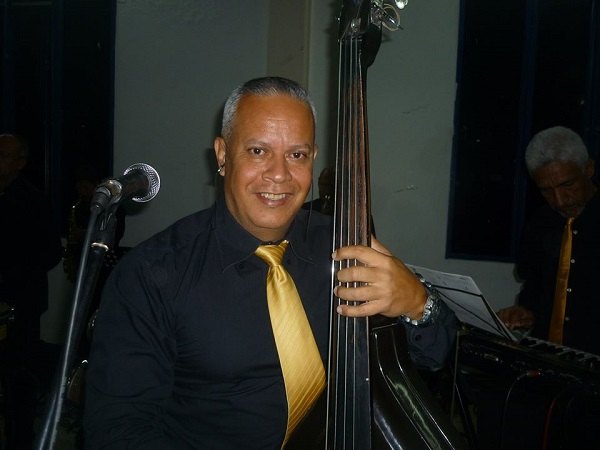
At the age of 11 he participates in the musical groups of the Christian church, standing out as a guitarist, drummer and timbalero. When he turned 15, he became interested in playing the bass guitar and during his high school studies at the Ezequiel Bujanda Combined Cycle, he met Jesús Rincón, also a musician, and joined the ranks of the “Obeligaitas” bagpipe group, where he began his career as a bass player.

When he turned 18 years old, he was part of the staff of the group “Tecnogaitas” of the Tecnológico Antonio José de Sucre and simultaneously he was bassist of the band “La Salle”. Afterwards, he is recommended to Alí Rojas and auditions to be the bassist of the “Sonora de Alí”, where he remains for 3 years.

Alí Rojas gave him the responsibility of being the bassist of the dance orchestra “Sensación”, where he remained for 15 years. In 1992, he began working as a music instructor for the Fundación del Niño until 1996.

Mosquera, besides being an excellent bass player, plays string instruments such as the cuatro, guitar and requinto
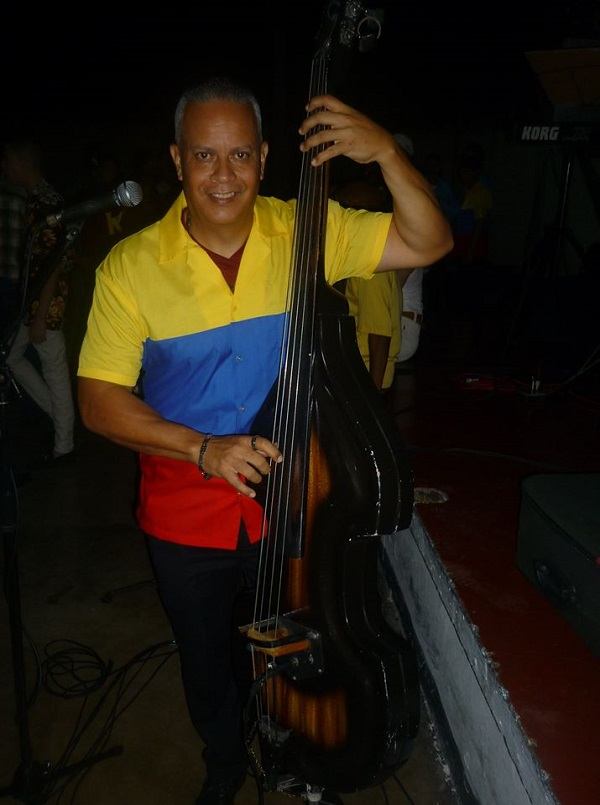
In 1993, Mosquera turned to romantic music and created the duet “Génesis” with his friend and compadre Carlos Enrique Prince, performing in nightclubs and private parties. In 1997, he joined the Poliboys Orchestra of the General Command of the Lara State Police as a bass player, where he currently works. In 2004 he began his musical studies at the Vicente Emilio Sojo Conservatory and graduated as an academic musician in 2009 with excellent grades. José has performed on regional television stations demonstrating his qualities in various prestigious programs and in 2016, he won 3rd place in the Police Voice Festival.

Mosquera, at what date do you become interested in salsa as a musical genre?, Professor Carlos in 2007 I start playing the baby bass and in 2011 I join the K’dencia Latina Orchestra of Carlos Sanchez and also had the privilege of accompanying Benjamin Rausseo “El Conde del Guácharo”, performing with his band and with K’dencia Latina, accompanied the late Willy Rodriguez, and vocalists of national and international renown: Hildemaro, Pibo Márquez, Charlie Guzmán, Alejandro Mayora, Mariana “La Sonera de Venezuela” and the official doubles in Venezuela of Rubén Blades (Jhony Heredia) and Celia Cruz (Ibrahíma Rondón).

Mosquera finally told us that musical excellence is achieved through perseverance and dedication.

Finally we wish the best of success on behalf of International Salsa Magazine, to the excellent musician José Mosquera “The bodybuilder and elegant bass”.

See you next time and let’s keep on salsaing!

José Mosquera “The bodybuilder and elegant”.


By Carlos Colmenares, ISM Correspondents, Barquisimeto, Venezuela

José Mosquera from Barquisimeto for the World “The bodybuilder and elegant”

Barquisimeto, is well known as the musical capital of Venezuela and in this opportunity we will make special mention to the musician José Jesús Mosquera Cañizales, born in our city in the Antonio María Pineda Hospital, on May 23, 1969, son of Rafael Mosquera and Juana Cañizales, married to Yolanda García and from this union were born their children Yolanda José and Luis José.

Mosquera was always inclined to music since he was a child, participating in the musical activities of his school “Ciudad Bolivar”, located on Carrera 13 and 48th Street, in Barquisimeto, singing and playing the cuatro in a self-taught way and with the help of his father who taught him to improve his playing.

At the age of 8 he studied at Pablo Canela’s academy, at the age of 10 he learned to play guitar, also with the support of his father and his cousin Carlos Romero.

At the age of 11 he participates in the musical groups of the Christian church, standing out as a guitarist, drummer and timbalero. When he turned 15, he became interested in playing the bass guitar and during his high school studies at the Ezequiel Bujanda Combined Cycle, he met Jesús Rincón, also a musician, and joined the ranks of the “Obeligaitas” bagpipe group, where he began his career as a bass player.

When he turned 18 years old, he was part of the staff of the group “Tecnogaitas” of the Tecnológico Antonio José de Sucre and simultaneously he was bassist of the band “La Salle”. Afterwards, he is recommended to Alí Rojas and auditions to be the bassist of the “Sonora de Alí”, where he remains for 3 years.

Alí Rojas gave him the responsibility of being the bassist of the dance orchestra “Sensación”, where he remained for 15 years. In 1992, he began working as a music instructor for the Fundación del Niño until 1996.

Mosquera, besides being an excellent bass player, plays string instruments such as the cuatro, guitar and requinto.

In 1993, Mosquera turned to romantic music and created the duet “Génesis” with his friend and compadre Carlos Enrique Prince, performing in nightclubs and private parties. In 1997, he joined the Poliboys Orchestra of the General Command of the Lara State Police as a bass player, where he currently works. In 2004 he began his musical studies at the Vicente Emilio Sojo Conservatory and graduated as an academic musician in 2009 with excellent grades. José has performed on regional television stations demonstrating his qualities in various prestigious programs and in 2016, he won 3rd place in the Police Voice Festival.

Mosquera, at what date do you become interested in salsa as a musical genre?, Professor Carlos in 2007 I start playing the baby bass and in 2011 I join the K’dencia Latina Orchestra of Carlos Sanchez and also had the privilege of accompanying Benjamin Rausseo “El Conde del Guácharo”, performing with his band and with K’dencia Latina, accompanied the late Willy Rodriguez, and vocalists of national and international renown: Hildemaro, Pibo Márquez, Charlie Guzmán, Alejandro Mayora, Mariana “La Sonera de Venezuela” and the official doubles in Venezuela of Rubén Blades (Jhony Heredia) and Celia Cruz (Ibrahíma Rondón).

Mosquera finally told us that musical excellence is achieved through perseverance and dedication.

Finally we wish the best of success on behalf of International Salsa Magazine, to the excellent musician José Mosquera “The bodybuilder and elegant bass”.

See you next time and let’s keep on salsaing!

José Mosquera “The bodybuilder and elegant”.

Get Through March With Latin Atmosphere And Sound

France is ready to enjoy Latin events during the third month of the year

Covid-19 and its multiple variants have already ceased in France and that is why this European country is ready to start enjoying Latin events during this third month of the year. So don’t miss the details of each of the Latin parties that we bring this month dedicated especially to you.

Mulatason & Alfredo Buendía Y Los Picaflores

(Salsa / Mambo)

The 5 Mulatason singers dressed in white
This event will comply with current health measures.

Join and enjoy the end of this winter in the country with the Latin concert of the female group Mulatason and the band with the singular joy of Mambo Alfredo Buendía y Los Picaflores, this Saturday, March 5th at 9 PM at 3 Rue Ferdinand Buisson, 82000 Montauban, France Association Le Rio. Try to pre-sale tickets for € 20 because the price at the door will be € 24 per person.

And for those who still don’t know Mulatason, here I make a summary of their history. This orchestra formed in September 2013 by its director Yarelis Martínez Chávez is made up of five women with harmonious voices, and their music is a mixture of dance rhythms that range from Salsa through Timba and ending with the traditional melodies of the island of Cuba. Their popular and peculiar choreography called “Rikiti” has been their hallmark that they have managed to spread across large national and international stages.

The orchestra is made up of nine talented artists residing in Havana (Cuba) who graduated from higher art schools. Each member of the band is no older than 25 years old and they have a repertoire of original compositions.

Mulatason “Las Princesas de la Salsa” returns to Europe to present their new album No Vale Rendirse celebrating almost nine years in the art scene.

The 7 members of Alfredo Buendía and the Picaflores dressed in blue and black card
Seven musicians with a good dose of humor and passion for Afro-Latin music and Jazz make up the Mambo band, Alfredo Buendía y Los Picaflores

On the other hand, and for those who have not heard before about Alfredo Buendía y Los Picaflores, below I will tell you a little about them. This project of seven musicians was born on an afternoon in December 2016 in order to have fun on stage, make a type of music that injects energy into the audience, and transports joy and light madness to the spirit.

Alfredo Buendía (Lead Vocals – Trumpet 2) was returning from three years as a Jazz crooner in Rio de Janeiro (Brazil), he wanted to bring something new, interesting, and different to the artistic scene in France since he had become accustomed to the type of show that it’s made in America. Also, he wanted to play rhythmic and deliberately festive music like the one he had been listening to for a long time-El Mambo by Pérez Prado-with its history from Cuba in the 1950s to Mexico.

This bewitching goal materialized with Pierre Levy (Tenor Saxophone), Jonas Chirouze (Drums), Clément Lefèvre (Trumpet), Hugo Lebeau (Congas), Guillaume Pique (Trombone), Youssef Ghazzal (Double Bass), and Alfredo Buendía managing to create El Mambo a novel concept between Afro-Latin music and jazz little explored on the French scene.

Le Balajo

(Salsa / Bachata)

Le Balajo Salsa Class Flyer in France
Le Balajo is located at 9 Rue de Lappe, 75011 Paris, France

Le Balajo nightclub open since 1936 brings Salsa and Bachata classes every Tuesday from 7:30 PM to 2 AM for beginners and intermediate level dancers. Salsa lessons for amateurs start at 7:30 PM while intermediate level classes begin at 8:30 PM followed by a Latin party hosted by DJ Karim until 2 AM.

Remember that to access the club you must present a Vaccination Certificate (Required) and an identity document.

The fees to attend this weekly event of joy and good humor are €8 and include non-alcoholic drinks and €12 if the drink is alcoholic, but if you just want to enjoy the bar and its atmosphere, the admission is €5.

La Pachanga

(Salsa)

Colorful flyer of La Pachanga club in France
On the dance floor of La Pachanga, you can dance to the rhythm of Salsa, Bachata, Merengue, and Kizomba

The Bar/Restaurant/Club La Pachanga is a place of reference for Salsa lovers, it is located in Paris at 8, rue Vandamme 75014. This club is designed with a cozy and Caribbean style. At the bar, you can enjoy different types of cocktails, Mojitos, Caipirinha, or Cuba Libre, just as they offer only Latin American dishes at the restaurant.

At Pachanga, you can attend classes for beginner and intermediate levels from Tuesday to Saturday from 7:30 PM to 8:30 PM with different instructors who will make you live an hour of Salsa Cubana and Salsa Puertorriqueña dance.

Latin Music Bonus In France

Dancing couple dressed in black
The Latin Party at Bar Le 3 is back

On Friday, March 18th, you can enjoy the Soireé Mix Latino “La Calle” event from 4 PM to 9 PM at Bar Le 3 located at the French city and commune Valence at 4 rue André Lacroix. This bar has a tropical atmosphere with living rooms with sofas and armchairs as well as a cozy and warm decoration. It also has a selection of 30 cocktails and a permanent musical atmosphere with a selected playlist of Jazz and other genres.

And the last Latin Music Bonus in France that I bring you for this edition is the Fiesta Latina Metz to be held on Friday, March 26th. This festival will offer you two workshops (Salsa and Bachata), in addition to having fun with the rhythm of Cuban Salsa, Dominican Bachata, Sensual Bachata, Kizomba, and other Caribbean melodies. There will be big parties with DJ Will, DJ Papy Culio, and DJ Kylian starting at 9 PM and ending with seven shows from 11 PM to 3 AM. Fiesta Latina Metz will have three rooms (Salsa/ Bachata/ Kizomba) and the prices to attend vary by combo: one workshop + evening: €12, while two workshops + evening: €20, and if you just want to attend to enjoy the shows the ticket has a value of €7. Fiesta Latina Metz will take place at the Quai Sablon Social and Cultural Center at 1 bis rue Castelnau 57000 Metz.

You Can Also Read: Enjoy 4 Latin Events In Prague

Pedro González

Musician, Instructor, And Pioneer Of Salsa Casino In Venezuela

Pedro González dressed in white playing the bass
“I always had the connection to music, and today, I still have two congas. Sometimes I play them during classes.” Pedro González

“If people dedicate themselves to this, it is because we are doing it well.” This nice phrase arose from the pleasant and attractive telephone conversation about the history of the pioneer of Salsa Casino in Venezuela, the charismatic Cuban-Venezuelan musician and instructor Pedro González.

This affable musician and Salsa Casino instructor told us that he carved out his career from a very young age. He was born in Havana (Cuba) in 1966 and began his musical studies at the National School of Arts in the Havana capital at the age of ten, graduating in the specialty of Guitar (Short Course of 8 years) in 1984.

He comes from a musical family, his grandmother was the soprano Rosa “La China” and his mother (teacher and school principal) Zoe Portuondo Suarez, a distant relative of the singer Omara Portuondo.

“…Since I was little I liked to dance, I would dance everywhere. I learned with my cousin… I went to places like Playa… Besides, my mother danced a lot and my grandmother was a singer and she was also linked to the world of art…” Pedro commented.

His first job was as a music teacher in the Pinar del Río city, three hours from Havana. A short time later, he joins the Caranday group, and they play Son Cubano every night at the luxurious Hotel Nacional De Cuba.

After 45 days from his first presentation with the group, they meet the Venezuelan businessman Martín Gutiérrez, who takes them to Venezuela in 1993 to perform at private parties in the Falcón state.

Due to the few opportunities he had in Cuba, he decided to stay in Venezuela and formed the Latino Son band, made up of four Cuban musicians, and in turn began to be members of the Tropicana-style Cuban Fiesta Magazine (Show with a range of musical genres, interaction with guest singers, and dancers) in nightclubs of the Capital.

In Moments of pause with the musical magazine (1997), he undertook a tour with the Latino Son group with whom he traveled for almost all of Venezuela and toured the main stages of large national festivals such as La Feria del Sol (Mérida), Feria de San Sebastián (San Cristóbal), and La Feria de la Chinita (Zulia) among many others.

“We played permanently at La Giralda… At La Giralda we organized a party playing the Cuban Timba, then, there they called us “The Cuban Orchestra” in 1996, 1997, and 1998…”

During the ’90s and already residing in Venezuela, Pedro became the first Salsa Casino instructor in Venezuela without planning it as a life plan, and in 2000 he founded his homonymous academy that has graduated thousands of fans of this style of salsa dance.

Dancing is one thing that keeps you active. That is good for the body. If you have a problem in two hours or an hour and a half dancing you forget it. For my part, I like to teach… And, I like people to have fun.” Pedro González

History And Evolution Of The Academy Dance

Pedro González with burgundy flannel and four women on the sides
Pedro González is the President of the Salsa Casino Organization in Venezuela

One night at the end of the 90s, Pedro along with his friend Milan (Medical and Countryman) began to remember the Dance of the Casino in La Giralda (old venue to listen to live music and enjoy various drinks on the Boulevard de Sábana Grande – Caracas) after his customary presentation with the Latino Son group.

Both began to stand out on the dance floor with the genre of La Timba and for a way of dancing Salsa different from the one practiced in Venezuela. “We began to dance with two Venezuelan girls in the Rueda style (which was not a Rueda because there must be 3 couples)… I began to say Milan “Give me one”, “Plugin”, “The Hat”, and we began to dance the Casino Style”. Pedro “El Cubano” told us between laughs during the interview.

The two ladies were so impressed by that way of dancing that they did not hesitate for a moment to ask Pedro for dance lessons. After so much insistence, “El Cubano” agreed for the first time to give Salsa Casino classes in the capital of Venezuela in an improvised and reduced space with his first five couples. “I am from the Cerro municipality, which is the closest to Old Havana. I used to go to Playa (Municipality of Havana) a lot to dance and I learned many dances and turns…”

And so Salsa Casino began spontaneously in 1999. By the following year (2000), Pedro had 20 couples and a larger room to teach.

The evolution of him in his rise during this year was impressive. Due to the influx of students, he began to teach in the blue auditorium of the Faculty of Economic and Social Sciences (Faces) of the most prestigious University in the country, the Central University of Venezuela (UCV) through Reinaldo Mijares, Director, and choreographer of the contemporary dance “Mudanza” attached to this institution and where González assures that this movement grows.

From there, he gave way to the Casa Monagas club, a place located in the Las Acacias sector (west of Caracas) behind the UCV with the capacity to hold up to 1,000 people. Here, Pedro’s students had more space to rehearse, and Salsa Casino Parties began to be organized monthly.

Pedro González with a blue shirt dancing with two women
Dance academies in Venezuela were teaching Puerto Rican Salsa Style in the year 2000

With this overwhelming success, the creation of the Academia Salsa Casino in Caracas was imminent. It had massive attendance, national impact with graduate students, and attendance at national and international festivals such as Curacao Salsa Tour, Festivals in Cuba, and an amazing show at the Amador Bendayán Theater.

With more than 20 years of teaching Salsa lessons, Pedro has graduated more than 2000 students and changed its name to Academia Pedro González. It currently has five locations: Sábana Grande (main location), Chacaíto, San Antonio de los Altos (Los Teques), Capitolio, and El Cafetal.

The classes are aimed at children and adults. The call is open, so you can sign up without a partner and don’t worry because the essence of the Rueda remains. The estimated graduation time is three years with four basic levels, four intermediate levels, six advanced levels, you will also receive a triple casino level, two dance technique levels, and to complete the process a final choreographic exam is done.

Every dance lesson is fun because of Pedro’s ability to teach. The names of each step such as “Pégale un Cacho” are adapted to the colloquial vocabulary of the Venezuelan so that it is easy and fast to learn.

Due to Covid-19, the Pedro González Academy makes the use of the mask and antibacterial gel an essential requirement for permanence within the institution, as well as reducing the maximum number of couples per level to only ten.

Vanessa Lovera y sus amigas vestidas de negro
Vanessa Lovera (Left) accompanied by two Salsa Casino dancers at the Caracas Carnival party

At the main headquarters, there are four instructors. One of them is Vanessa Lovera, a graduate instructor from the academy. For Pedro, she has been unconditional support in difficult moments of the institution. Vanessa teaches Salsa Casino and Ballroom Dance. You can also find her at the El Cafetal headquarters, but if you prefer the main headquarters, the address is as follows: Sábana Grande Boulevard, Fénix building, 5th floor, next to the Gran Café.

For this 2022 and if there is a return to normality, the Cuban instructor and musician residing in Venezuela hopes to resume the lost spaces in Caracas such as discos, nightclubs, presentations in theaters, once again hold large Salsa Casino parties in large rooms, the return of national competitions, and the continuation of the training of instructors in person (it is only online currently).

Casino Dance Or Salsa Casino?

Club Casino Deportivo in Havana, Cuba
Club Casino Deportivo no longer exists. Nowadays only the sports fields were preserved of this infrastructure.

According to the friendly instructor Pedro González, the origin of Salsa Casino on the island of Cuba has a unique story that begins like this…

Since 1956 numerous Cuban orchestras have been registered that played very popular and contagious musical genres such as Cha Cha Cha, Guaracha, Mambo, and Son. Rhythms that invited the young inhabitants of Cuba of this time to just want to dance and have fun all night with these melodies, but they not only wanted to do it with their partners but also with those of their friends, acquaintances, and strangers. However, for this decade that was not allowed because the rules of the strict and conservative society dictated it.

In this way and with the pursuit of that goal, the gentlemen created this style of dance. A style that did not require constant practice and where partners could be exchanged using keywords such as “Plugin” to perform the movement and for the theory to be carried out perfectly without altering society. The place where this event was recorded was Casino Deportivo, a private summer vacation club located in the Miramar residential area in Havana.

“We (in Venezuela) call it Salsa Casino because it is the commercial name already used in the United States. In Europe they call it Salsa Cubana, but the original name is Baile Del Casino”. Pedro Gonzalez

That is why at the end of 1950 this style of dance began to be generated that people internationally associate with the style of gambling performed in a Casino because it is a dance in Rueda.

The popular expression of most people in Cuba every time they saw this peculiar way of dancing was to say “Ah! But you are dancing like the people of the Casino (Casino Deportivo Club)” that each day was shortening the expression until reaching the Baile Del Casino.

The peculiarity of this dance style is that it does not have a musical genre, that is, no melody that identifies it. For example, a Danzón is danced with the music of the Danzón, the same happens with the Cha Cha Cha, Mambo, Son, and Bolero. There is no rhythm called Casino, therefore this style acclaimed in the world and preferred by Cubans began with the music that existed in this glorious decade of the ’50s.

  • You Can Also Read: Sidney Poitier

San Diego

  • « Go to Previous Page
  • Page 1
  • Interim pages omitted …
  • Page 55
  • Page 56
  • Page 57
  • Page 58
  • Page 59
  • Interim pages omitted …
  • Page 63
  • Go to Next Page »

International Salsa Magazine (ISM) is a monthly publication about Salsa activities around the world, that has been publishing since 2007. It is a world network of volunteers coordinated by ISM Magazine. We are working to strengthen all the events by working together.