• Skip to primary navigation
  • Skip to main content

International Salsa Magazine

  • HOME
  • Previous editions
    • 2026
      • ISM / May 2026
      • ISM / April 2026
      • ISM / March 2026
      • ISM / February 2026
      • ISM / January 2026
    • 2025
      • ISM / December 2025
      • ISM / November 2025
      • ISM / October 2025
      • ISM / September 2025
      • ISM / August 2025
      • ISM / July 2025
      • ISM / June 2025
      • ISM / May2025
      • ISM / April 2025
      • ISM / March 2025
      • ISM / February 2025
      • ISM / January 2025
    • 2024
      • ISM / December 2024
      • ISM / November 2024
      • ISM / October 2024
      • ISM / September 2024
      • ISM / August 2024
      • ISM / July 2024
      • ISM / June 2024
      • ISM / May 2024
      • ISM / April 2024
      • ISM / March 2024
      • ISM / February 2024
      • ISM / January 2024
    • 2023
      • ISM / December 2023
      • ISM / November 2023
      • ISM / October 2023
      • ISM – September 2023
      • ISM – August 2023
      • ISM July 2023
      • ISM Edition June 2023
      • ISM – May 2023
      • ISM April 2023
      • ISM March 2023
      • ISM February 2023
      • ISM January 2023
    • 2022
      • ISM December 2022
      • ISM November 2022
      • ISM October 2022
      • ISM September 2022
      • ISM August 2022
      • ISM July 2022
      • ISM June 2022
      • ISM May 2022
      • ISM February 2022
      • ISM January 2022
    • 2021
      • ISM December 2021
      • ISM November 2021
      • ISM October – 2021
      • ISM September 2021
      • ISM August 2021
      • ISM July 2021
      • ISM May 2021
      • ISM April 2021
      • ISM June 2021
      • ISM March 2021
      • ISM February 2021
      • ISM January 2021
    • 2020
      • ISM December 2020
      • ISM November 2020
      • ISM October 2020
      • ISM September 2020
      • ISM August 2020
      • ISM July 2020
      • ISM June 2020
      • ISM May 2020
      • ISM April 2020
      • ISM March 2020
      • ISM February 2020
      • ISM January 2020
    • 2019
      • ISM December 2019
      • ISM November 2019
      • ISM October 2019
      • ISM Septembre 2019
      • ISM August 2019
      • ISM July 2019
      • ISM June 2019
    • 2016
      • ISM December 2016
  • Spanish
  • Download Salsa App
    • Android
    • Apple

Search Results for: Oscar D' León

Oscar Rojas Oscar Rojas has 54 years of musical career full of passion, rhythm and flavor

Oscarcito Rojas and his unmistakable lump.

In Venezuela, during the years 53-54, there were cold and humid nights in the home of the Rojas Mendoza Family, located in a high area of ​​the Pastora of beautiful Caracas, there the furniture that was outside would wake up damp, particularly a child’s chair with a colonial design, which had the back and seat made of cattle leather, which when heated by the heat of the sun became warm like the leather of a coastal drum.

That is when the restless child Oscar, barely 7 years old, discovered the sounds produced by that cured leather and began that love relationship with percussion without realizing that this would be his life; his livelihood; his passion; his everything.

Oscar Rojas has 54 years of musical career full of passion, rhythm and flavor

He also devised a pair of congas with two milk cans of different sizes, and thus achieve different sounds in his new instrument.

By the 70s, being a talented young man and wanting to earn his own living, Oscar bought a motorcycle to work as a messenger. Unfortunately, he had an accident on it, which led to his resignation from the company. With the money he generated from the liquidation, he bought a drum kit that belonged to the illustrious Pavo Frank. This is how his foray into rock began.

Later, due to the fractures he suffered in the motorcycle accident, he could not continue playing drums, but he got involved in percussion without a drumstick, which is to say, by hand, and he started playing congas.

Óscar Eduardo Rojas Mendoza is one of the most beloved and respected conga players in the country. He is the third of five siblings (Jaime; Yolanda; Óscar; Freddy and Leibia), son of Óscar Benito Rojas (musician and cabinetmaker) and Cira de los Santos Mendoza (dressmaker).

Loved by all his family, especially by his sons Gabriel ☦️ Osduare☦️ and Enrique; and his granddaughters Gabriela and Daniela.

Familia Rojas Mendoza: Liebia, Freddy, Oscar, Yolanda y Jaime

Born in Caracas on October 18, 1946, he began his musical career in 1970 with Ramón Hernández, continuing with a trail of figures such as: Pablo Schneider, Vytas Brenner, Victor Cuica, Oscar Maggi, Soledad Bravo, Lilia Vera, Frank Hernández (El pavo Frank), Oscar D’Leon, Chuchito Sanoja, Professor Juan Carlos Núñez, Alfredo Naranjo.

He has participated in the best Jazz festivals in the world and in the country such as the Memphis in May International Festival (Tennessee), Varadero International Festival (Cuba), V International Festival of Montreal (Canada), Festival D’te de Québec (Canada), 10 International Festival of Montreal (Canada), Mar de Plata Jazz Festival (Argentina), Curacao International Festival where he was invited by the great saxophonist Paquito D’ Rivera, in the Venezuela Jazz Festival, in the 4 Caracas Jazz Festivals, in the Jazz Festival in El Hatillo editions IV, V and VII, and in festivals in the interior of the country.

He was an active founder of salsa groups such as Oscar D’Leon, where he participated in the recording of the first 3 albums, the group Caribe Libre, Gerardo Lugo’s Incorregibles, Alfredo Naranjo’s El Guajeo, Nano Grant’s Ensemble ll, Pavo Frank and his Orchestra. He was also part of the jazz groups Oscar Maggi (Macoya), Pedrito López, Otmaro Ruiz and Víctor Cuica.

Oscar Rojas y Djane Shina Rojas

Among the national and foreign artists he has accompanied are: Trino Mora, Chucho Avellanes, Mirtha Pérez, Estelita del Llano, María Rivas, Nancy Ramos, Nancy Toro, Cheo Feliciano, Ted Cordón, Paquito de Rivera, Eddie Sansson, Aldemaro Romero, Chuchito Sanoja, Jimmy Bosch, the Venezuelan Symphony Orchestra, the Municipal Symphony Orchestra of Caracas, among others. He was the founder of the La Calle Group and the Ensemble de la Calle, ReNueve (rock group), Negros and Aparte.

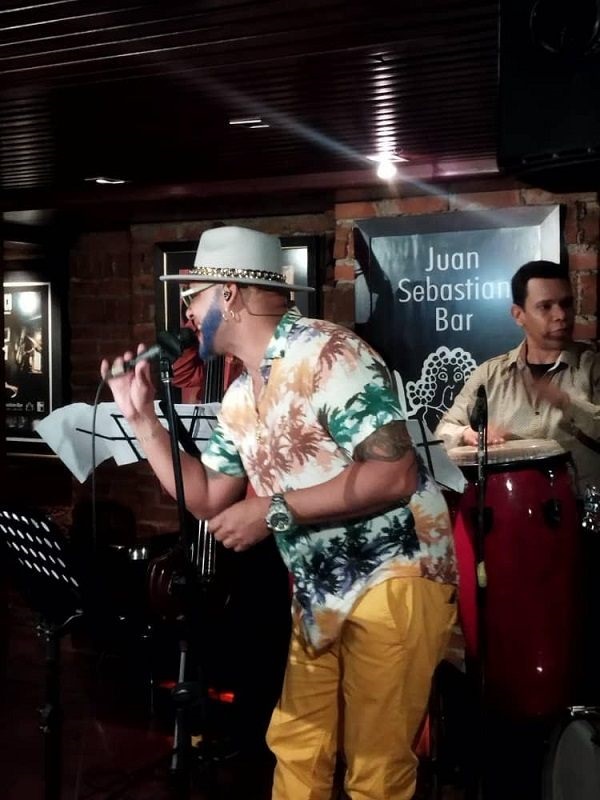
He currently works as a percussionist for Maigualida and his Ensemble. He also rehearses every Wednesday at Juan Sebastián Bar “El Templo del Jazz y La Salsa” with the new Ensamble de la Calle.

He has been in a musical career for 54 years, full of passion, rhythm and flavor.
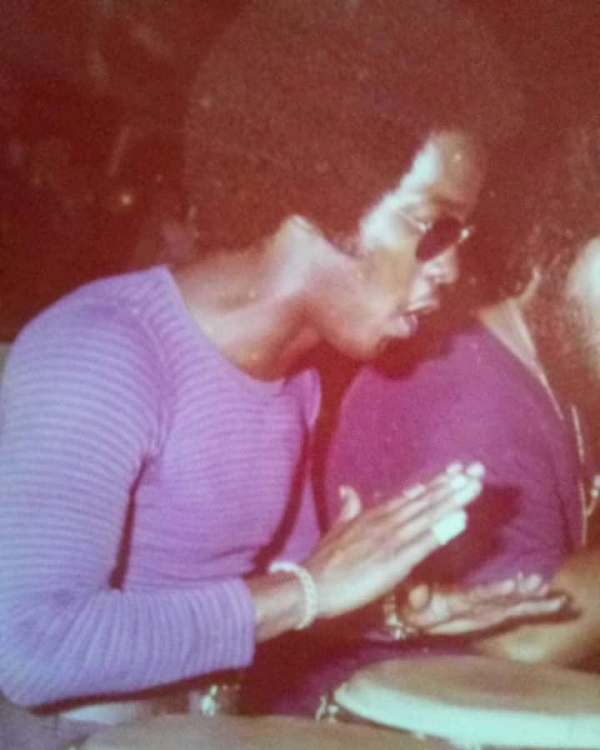
Oscarcito Rojas y su mazacote inconfundible

Research Sources: 

Djane. Shina Rojas

Jaime Rojas

Lutier: Freddy Rojas

Also Read: Djane Shina Rojas a Passion Turned into Reality

Omslig D’ León: “I am the son of the sonero of the world, but I have my own style and I am creating my own musical history

Omslig D’ León enters the world of musical art hand in hand with his father Oscar D’ León, who works functionally as a dancer, choreographer, percussionist, background singer and singer, this young Venezuelan talent has already traveled the world in its breadth and length, through almost all the countries of North America, Europe and Latin America.

Omslig decided to start his career as a soloist and create his own history with new challenges, forming his own orchestra with his own compositions, innovating with his own unique and international style.

Omslig D' León I am the son of the sonero of the world
Omslig D’ León I am the son of the sonero of the world

“He recently toured Europe for more than two months, including performances in Switzerland, Germany, Italy and Istanbul”.

“And with you, the sonero of the world, Oscar D’ León. Any Venezuelan or fan of the emblematic salsero from Caracas would be thrilled to hear such a presentation, but when you carry his blood, the adrenaline is even greater. His son, Omslig, explained it this way.

It was inevitable that I would become a musician. It’s not just my father, Oscar, it’s my mother, it’s my whole family that has music in their blood,” said the son of one of the most important salsa musicians in history.

Omslig, who began his musical career at the age of 16 as a lectern player in his father’s orchestra, with which he toured the world for 23 years, was in Panama to promote his solo career, which recently took him on a European tour that included Italy, Switzerland, Germany and Istanbul, among other countries.

He will stay a while longer in the isthmus, a country that he says has treated him wonderfully, and then he will travel to Peru and Colombia. “People will think that I am 100% influenced by my father.

Although I learned a lot from him, especially responsibility, I have my own style,” said the director of the orchestra La Melena, referring to his musical project in which he covers songs by various artists, including Panamanian Omar Alfano and Venezuelan Frank Quintero.

Omslig D' León I am the son of the sonero of the world, but I have my own style.
Omslig D’ León I am the son of the sonero of the world, but I have my own style.

Not everything is rosy.

Being the son of Oscar D’ León can be very good, but it can also be difficult. He recalled that in the past there were people who “wanted to throw his last name in his face.

“Don’t think that because you’re Oscar’s son it’s going to be easy. I don’t think you sing the same as your father. Things like that have been said to me, but I have moved forward and thank God with his support and a unique style,” he explained.

For those who think that everything has been handed to him on a silver platter, he wanted to leave this anecdote from when he was in Oscar D’ León’s band. “We were in the Canary Islands, we had already finished the show and the next day, very early, we had to take the ferry to another island.

I fell asleep and my dad dropped me off. In the lobby he left me a note saying ‘you have to learn to be responsible’ and that marked me. Then I was able to make it, but I had to pay for everything.

¿Reencuentro de Leones?

Omslig admitted that he would like to reunite with his “soul mate”, his brother Yorman, to start a musical project and, if the opportunity arises, with Iroska, better known as “La Mazucamba”, Oscar’s daughter, who currently lives in the United States.

“A few days ago my dad called me to tell me that why don’t we do something together and the truth is that it would be great. We’ll see, but it was there and something important is going to happen,” he explained.

For now, Omslig is concentrating on his work as a soloist, with several confirmed performances, and continuing his work as a father, already with three children and happily married.

“I will continue to sing my father’s songs, I will continue to keep his name high, but with the tasty and fusion style of Omslig D’ León,” concluded the 42-year-old native of Caracas.

Omslig León enters the musical artistic world hand in hand with his father Oscar D' León.
Omslig León enters the musical artistic world hand in hand with his father Oscar D’ León.

In a few words

One place: Milan, Italy.

One food: lasagna.

Artist: Luis Enrique.

A person you admire: Will Smith.

A musician: Robert Vilera.

Hobby: Painting.

Why Omslig: Oscar, Moises (paternal grandfather) and Ligia (mother).

Also Read: Freddy de Jesús Ortega Ruiz “Coco & su Sabor Matancero”

Sources:

Peggy Blanco (Manager)

Panama El Venezolano

The Latin Ensemble enchants the United States and Spain with its talents

Luis Manuel Rondón is a bandleader and composer with whom we have been able to talk about the most important details of his career in a conversation of a little more than half an hour. Rondón currently leads the group The Latin Ensemble, of which he spoke along with other important issues.

Lead singer Luis Manuel
Director and lead singer of The Latin Ensemble Luis Manuel Rondón

How Luis Manuel got into Music

Luis Manuel began in music as young as 12 years old, which means that he has more than 50 years of artistic career. His first job in the arts was as a percussionist for a Venezuelan gaita group known as Los Monumentales, when he served as a bongo player and bucket drummer. His role as a singer came about by accident, as it was not something he was looking for.

It turns out that the group had a singer nicknamed “El Cabeza” who had an amazing voice, but he had a big and unforgivable flaw. He was a drunk with misconduct who used to disappear and skip rehearsals and the most important performances. Luis Manuel recalls that they had a very important rehearsal in the days prior to a major event that weekend, so the band members tried to contact “El Cabeza” by all possible means, but they could not talk to him.

After several days of no news from him, they decided to test the vocal skills of the members to see who could “save the day” and fill the place of singer. That was when Luis Manuel started singing the famous song “La Grey Zuliana” and convinced his bandmates to make him the replacement. From there, he sang for various groups until, upon coming of age, he managed to join a fully professional group and began to be contacted to perform at dances.

He also played with Expresión Gaitera and Grupo Sancoson, from which Grupo Jarana originated. Many of the members of the latter ended being part of Guaco. The members of Sancoson attended the Liceo Aplicación, where Luis Manuel went to high school alongside the famous bassist Carlos Puche.

Some time later, he joined Grupo Cóctel Y Canela and became the owner of Grupo Cactus, which was very famous at the time. He was also a member of Dalila Show La Orquesta, La Orquesta Sibari, and La Billo Caracas Boys. 

Luis Manuel and Ray
Luis Manuel Rondón and Ray Barretto

Move to the United States

In 1999, Luis Manuel moved to the United States and settled in New Jersey, where he recorded an album which had some success in the New York music scene and won the Association of Latin Entertainment Critics in 2007, also known as the ACE Award. After that, many important things happened in his career, such as signing with Sony Music, which released and distributed his work.

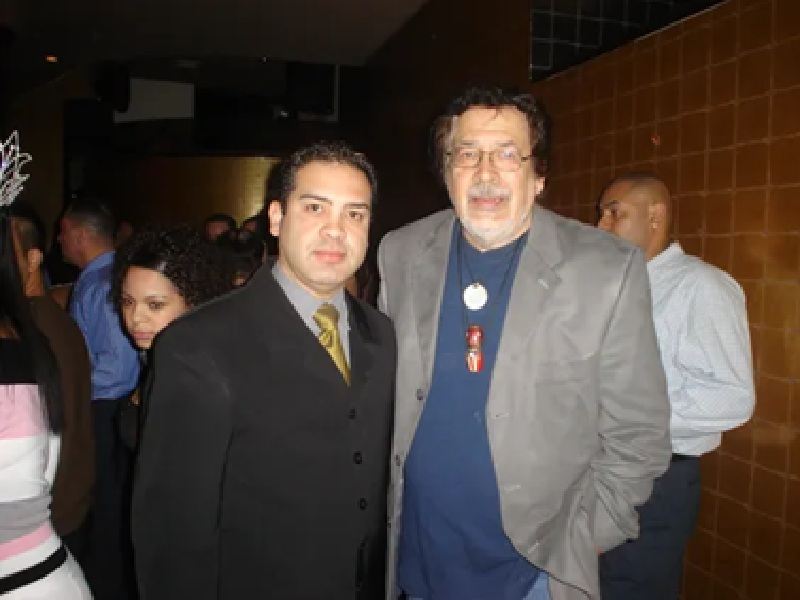
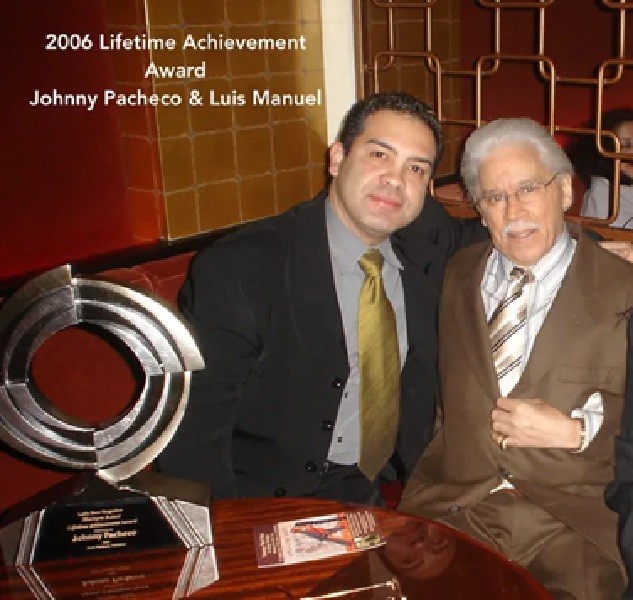
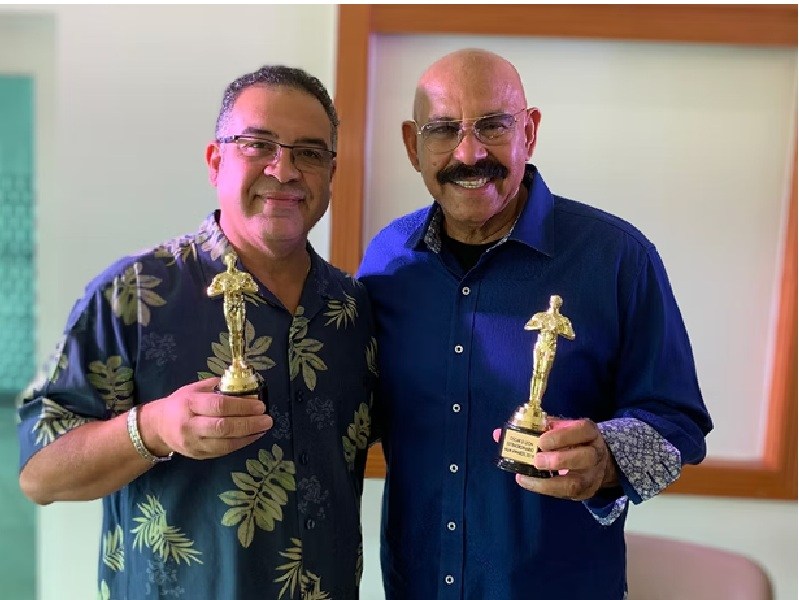
He lived a very good time until the famous economic crisis of 2008, which led many orchestras to lay off some of their staff and hurt him to some extent. However, that did not stop him from continuing to open up new paths to the music, and his persistence led him to collaborate with Oscar D’León, Gilberto Santa Rosa, Tito Nieves, José Alberto “El Canario,” Johnny Pacheco, Ray Barretto, and many others. 

Listening to those artists as a child made him feel completely out of their league, so having collaborated with them was a dream come true for him. 

How He came to start his own project

Until that point in his career, Luis Manuel got great professional and personal satisfaction, but there was something very important missing in his list of successes: having his own project. He gave shape to this idea when he began his relationship with the woman who is his wife today, Gabriela Caraballo, an economist by profession with an entrepreneurial mindset. Some day talking about it, she proposed him to create an organization, which they later named The Latin Ensemble.

Luis and Johnny
Luis Manuel Rondón and Johnny Pacheco

From that moment on, they began to be hired for private parties and corporate events of all kinds, to the point that they even performed at a Dolce & Gabbana event for the grand opening of one of their stores. They also performed for Donald Trump at Mar-a-Lago and put on big shows at important people and places.

He has also received important awards, such as the Estrella Music Award at the James L. Knight Center in Miami, alongside the likes of José José and Grupo Niche. He also received the Ángeles de Amor Award, which honors individuals who contribute to supporting Latinos in the United States.

We must also mention the Latino Magazine Award, which he won in 2019 and 2022.

Time in Spain

For about six years now, Luis Manuel and the group have also been based in Spain. It all began when they were hired to perform at the Carnival of Tenerife in October 2019, so he, his wife, and their young daughter traveled first and rented an Airbnb. They had a contract to perform at the party of the Candlemas’s Virgin, but the point is that the event was scheduled for March 2020, when the COVID-19 pandemic had already started.

Luis and Oscar
Luis Manuel Rondón and Oscar D’ León

Because they could not leave, Luis Manuel and his family rented an apartment where they had to stay until early 2021, which is when restrictive sanitary measures were finally relaxed and they could leave Tenerife. Fortunately, this was not a waste of time for them, as they saw the potential of what they could accomplish in Spain, so they moved to Madrid and tried their luck there. 

Throughout this time in Europe, Luis Manuel and his group have performed throughout Spain, Portugal, France, and most recently in Belgium. In Belgium, The Latin Ensemble was hired to perform at a royalty party, and the group has done such a fantastic job that they will perform at another event for the same family, making it clear how talented the members are and how hard they have worked to make a name for themselves in the industry.

Unfortunately, because it is a royal family, they were not allowed to take pictures or record videos, but it is still a great event in the career of Luis Manuel and his bandmates.

Read also: John and Liz reveal details of the 16th annual SF Salsa Festival

Actress, comedian, and singer Carmen Nydia Velázquez tells us about the best of her career

Through a very kind friend of our editor Eduardo Guilarte, María del Carmen, we have been fortunate to make contact with the extremely talented Puerto Rican actress, comedian, and singer Carmen Nydia Velázquez, with whom we had the opportunity to talk with for our report on Bad Bunny’s Super Bowl halftime show.

It turns out that her career is so fascinating that we obviously had to talk to her and know much more about her artistic journey, both in her native Puerto Rico and abroad. Without further ado, these are the highlights of our conversation.

Carmen Nydia cantando
Carmen Nydia Velázquez singing live

Carmen’s education and start in acting

When it came to her academic background, theater always caught her attention, but she also loved to sing. These tastes led her to study drama at the University of Puerto Rico, where she brought out her histrionic talent and showed just how good she would be at doing comedy in the future.

Even before graduating, she already worked in theater and appeared in Francisco Arrivi’s play *Vejigantes*. At that time, she was in her last academic year, and the play was a tribute to the great Puerto Rican actress Lucy Boscana, who had died back then. For many years, Boscana played the character of Toña, and Carmen did the same when it was her turn in this new version, which had so much impact that it led to a film based about the same story.

Then, in the 1970s, she joined the musical group Moliendo Vidrio, led by Gary Núñez, and was there for about 11 years, while doing theater and television. The group took up a lot of Carmen’s time and was part of the New Song movement in those days.

Kiosko Budweiser and Susa Cruz

In 1983, Carmen first portrayed who is still considered one of her most iconic characters to this day, Susa Cruz. Channel 7, known at the time as Teleluz, first aired the comedy segment Kiosko Budweiser, featuring the beloved Susa alongside other iconic characters such as Epifanio, Johnny El Men, Humberto, and El Negrito.

Carmen Nydia and Victor
Carmen Nydia Velázquez (Susa) and Víctor Alicea (Epifanio)

When Teleluz ceased to exist, Carmen took a break from the character to continue her theatrical activities and start singing professionally. However, later, Channel 4, Guapa Televisión, called the actors back to do the segment again, which is when it became a media phenomenon and gave immense fame to the characters, especially Susa and Epifanio.

The high popularity of the show and its stars made them appear on TeleOnce, which continues to air today, and Telemundo, where they are recurrent figures during the regular programming.

People enjoyed Susa and Epifanio so much that they have even hosted a radio show, and both Carmen and Víctor Alicea (Epifanio) will soon celebrate their 38th anniversary as an artistic couple, though they have not yet decided what to do for that day. 

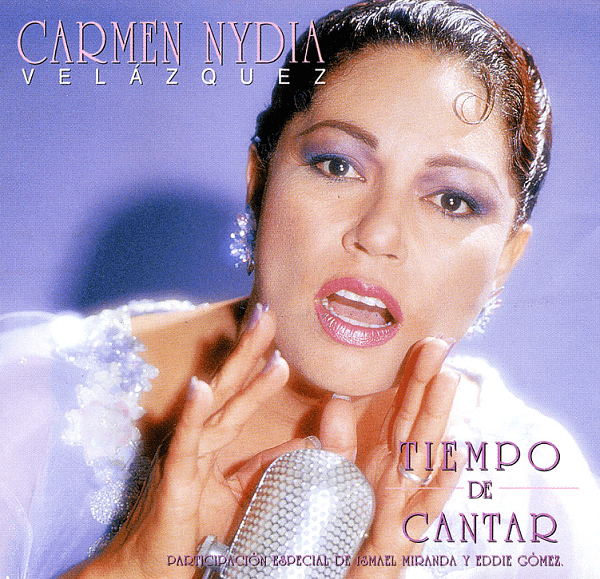
Tiempo de Cantar

By the late 1990s, she released an album of boleros titled “Tiempo de Cantar,” which was her first solo production. It all started with a show by Susa and Epifanio in the south of Puerto Rico, where they met a musician friend of hers named Cacho Montalvo. 

He has spent many years urging her to go back to singing, but she ws not entirely sure due to all the professional commitments she already had, added to the fact that she did not have very fond memories from the time in which she had to promote her own music of the New Song movement which, being so traditional, did not receive the media coverage it deserved. This killed Carmen’s enthusiasm, as she took for granted that she would never sing professionally again.

However, Montalvo and Carmen’s husband “conspired” to some extent to convince her, and they succeeded. On the album, the artist pays tribute to the songs she grew up with and used to hear on the radio as a child, achieving a result she loved. 

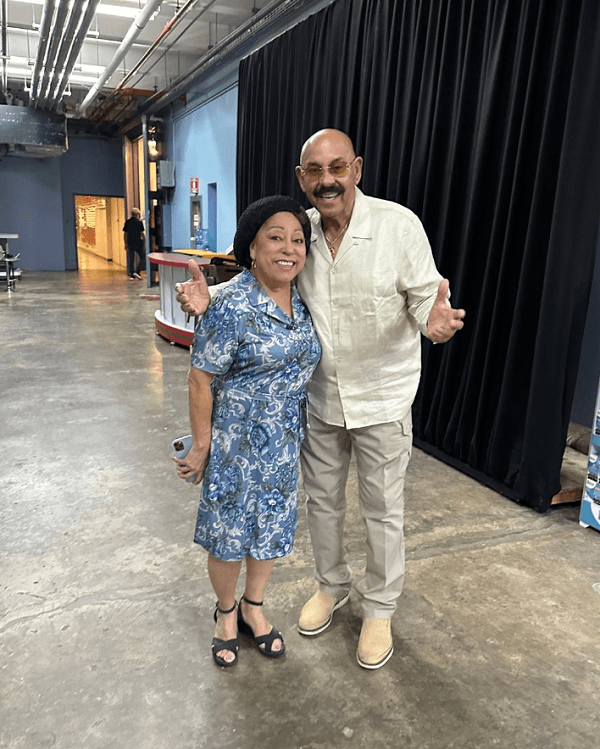
Carmen Nydia and Oscar
Carmen Nydia Velázquez y Oscar D’ León

Her solid background in theater gave her the ability to convey her feelings through her voice and expressions, which made her have a wide acceptance. In fact, she is now a member of the Music Hall of Fame in Puerto Rico, a venue dedicated to romantic and bohemian music that hosts live events featuring artists associated with those genres. 

Hacienda Susa

Among the many projects she was involved in, Carmen also ran a restaurant and activity center called “Hacienda Susa.” She describes this stage of her life as interesting, yet exhausting and demanding at the same time.

Due to the success she had on television, the project did very well, so she and her team were there doing shows for visitors from all over the island practically every day. The problem was that it was too much work for her at the time, and she told us that sometimes, she had to leave the hacienda to perform a show outside, return to meet her commitments there and then close the venue. 

The above, added to the fact that everyday fewer people were coming to the venue and the extremely high rent Carmen had to pay, made her ask herself if it was really worth continuing with the project in exchange for those dividends. That was when she finally got tired of it and decided to close the venue indefinitely to focus on what she was truly passionate about: acting.

Album by Carmen Nydia
Cover of the album ”Tiempo de Cantar” by Carmen Nydia Velázquez

Read also: Background and reactions to Bad Bunny’s halftime show in The Super Bowl

Latin America – March 2017

Oscar D' León confessions of Oswaldo Ponte by William Briceño thubnaiils - Latin America - March 2017

  • « Go to Previous Page
  • Page 1
  • Page 2
  • Page 3
  • Page 4
  • Page 5
  • Interim pages omitted …
  • Page 33
  • Go to Next Page »

International Salsa Magazine (ISM) is a monthly publication about Salsa activities around the world, that has been publishing since 2007. It is a world network of volunteers coordinated by ISM Magazine. We are working to strengthen all the events by working together.