• Skip to primary navigation
  • Skip to main content

International Salsa Magazine

  • HOME
  • Previous editions
    • 2026
      • ISM / April 2026
      • ISM / March 2026
      • ISM / February 2026
      • ISM / January 2026
    • 2025
      • ISM / December 2025
      • ISM / November 2025
      • ISM / October 2025
      • ISM / September 2025
      • ISM / August 2025
      • ISM / July 2025
      • ISM / June 2025
      • ISM / May2025
      • ISM / April 2025
      • ISM / March 2025
      • ISM / February 2025
      • ISM / January 2025
    • 2024
      • ISM / December 2024
      • ISM / November 2024
      • ISM / October 2024
      • ISM / September 2024
      • ISM / August 2024
      • ISM / July 2024
      • ISM / June 2024
      • ISM / May 2024
      • ISM / April 2024
      • ISM / March 2024
      • ISM / February 2024
      • ISM / January 2024
    • 2023
      • ISM / December 2023
      • ISM / November 2023
      • ISM / October 2023
      • ISM – September 2023
      • ISM – August 2023
      • ISM July 2023
      • ISM Edition June 2023
      • ISM – May 2023
      • ISM April 2023
      • ISM March 2023
      • ISM February 2023
      • ISM January 2023
    • 2022
      • ISM December 2022
      • ISM November 2022
      • ISM October 2022
      • ISM September 2022
      • ISM August 2022
      • ISM July 2022
      • ISM June 2022
      • ISM May 2022
      • ISM February 2022
      • ISM January 2022
    • 2021
      • ISM December 2021
      • ISM November 2021
      • ISM October – 2021
      • ISM September 2021
      • ISM August 2021
      • ISM July 2021
      • ISM May 2021
      • ISM April 2021
      • ISM June 2021
      • ISM March 2021
      • ISM February 2021
      • ISM January 2021
    • 2020
      • ISM December 2020
      • ISM November 2020
      • ISM October 2020
      • ISM September 2020
      • ISM August 2020
      • ISM July 2020
      • ISM June 2020
      • ISM May 2020
      • ISM April 2020
      • ISM March 2020
      • ISM February 2020
      • ISM January 2020
    • 2019
      • ISM December 2019
      • ISM November 2019
      • ISM October 2019
      • ISM Septembre 2019
      • ISM August 2019
      • ISM July 2019
      • ISM June 2019
  • Spanish
  • Download Salsa App
    • Android
    • Apple

Search Results for: Panama Jazz Festival

Ottawa Salsa Convention Join Ottawa’s 2nd Annual Salsa Convention 2017

North America /  Canada / Ottawa
Ottawa's 2nd Annual Salsa Convention 2017
Ottawa’s 2nd Annual Salsa Convention 2017

What does a 3-day Salsa Convention entail? It means bringing together 50 of the most nationally & internationally renowned Latin dance stars from all of over Canada, USA & Mexico to perform right here in the Nation’s Capital. With over 30 Latin dance workshops taught by award-winning performers, there will be something for all levels of dancers.

Each day of the convention is then followed by social dancing to the sounds of some of the world’s best Salsa DJs across Canada and the United States. This 3-day convention is like no other, showcasing the best of Latin dance, right in the heart of the Nation’s Capital at Aberdeen Pavilion in Lansdowne Park. Let’s celebrate Canada’s 150th together through the best of Latin dance.

Ottawa Salsa Convention - Schedule part 1
Ottawa Salsa Convention – Schedule part 1
Ottawa Salsa Convention - Schedule part 2
Ottawa Salsa Convention – Schedule part 2
Ottawa Salsa Convention - Schedule part 3
Ottawa Salsa Convention – Schedule part 3

Some of the performers are…

Mario Acosta Cevallos (Edmonton):

Mario Acosta - Ottawa Salsa Convention
Mario Acosta – Ottawa Salsa Convention

Mario Acosta-Cevallos is a four time World Salsa Champion, a Canadian LatinAmerican Ballroom Finalist, and Director of the Edmonton area based SalsaVitus Dance Company. He is known for his hypnotic performances marked by high levels of grace, speed, and technical difficulty. Mario’s current projects include travelling to teach and perform, developing his dance teams and pro-ams, and creating new and exciting routines for the upcoming next year.

Ana López (Winnipeg):

For many years, Ana Karen has excelled in dance in Manitoba, nationally and internationally. She is a three-time Manitoba Dance Festival Ballet scholarship recipient, and was the featured ballet soloist at a M.D.F.

Gala showcase. She most recently placed in the “top twelve” out of 145 dancers at the international ballet competition, the Youth American Grand Prix (Y.A.G.P.), at the semi- finals in Chicago, U.S.A. for both her Contemporary solo and her Pointe solo.

Ana also won the highest overall score for all senior solos at the Canadian National Dance Championships (C.N.D.C.), for another Pointe solo, which was to be the first time the highest overall score was awarded to a ballet number in Winnipeg. Most of Ana Karen’s dance training has been done at Marquis Dance Academy after having trained for two years in the R.W.B.’s professional division.

Ana Lopez - Ottawa Salsa Convention
Ana Lopez – Ottawa Salsa Convention

During her training at Marquis, Ana Karen has won multiple Elite Gold and Gold with Honours awards for her solos, trios and group numbers for Ballet, Pointe, Modern Ballet, Contemporary, Jazz and Lyrical.

She has also captured both gold and silver medals at several Dance World Cups in Montreal, Vancouver and Niagara Falls. She has continued her professional development as a teacher of ballet by studying at the worldfamous American Ballet Theatre (A.B.T.) in New York, N.Y., Ana Karen most recently won the Pro-Am World Salsa Championships in Miami, Florida and placed 2nd for Bachata Cabaret at the World Latin Dance Cup in Miami, Florida.

Harold Rancano and Regan Hirose (Winnipeg):

Harold Rancano and Regan Hirose, are a Latin dance couple best known for their energetic, and acrobatic flair on stage. Based out of Winnipeg, Manitoba, the flavorful couple has achieved plenty of success on a national and international level. Most notably they are the current World Champions for Bachata Cabaret having won gold at the World Latin Dance Cup in Miami, Florida; and are also the current Canadian Bachata Champions having won gold at the Canada Salsa Congress in Toronto, Ontario.

Harol y Regan - Ottawa Salsa Convention
Harol y Regan – Ottawa Salsa Convention

The couple has also competed and won various competitions in Salsa and Bachata in San Francisco, Los Angeles, Calgary, and Saskatoon. Aside from competition, the duo also directs Cubanisimo Dance Company in their hometown, where they train and coach their teams and students, 3 of which won gold at the 2015 World Latin Dance cup. They also coach and mentor various teams outside of the city by both teaching and creating choreography.

Also known for their connection and unique choreography, the couple has travelled to several festivals and congresses to share their vast knowledge of styles and various latin rhythms such as; Salsa on 1, Salsa on 2, Bachata, Pachanga, Cuban Salsa, Cha cha cha and Lifts & Tricks. Whether it’s privates, group classes or to coach teams, the couple has the experience to adapt to any teaching environment.

Lenin A Guerrero Maldonado & Roselyne Gonzalez (Cleveland , Ohio):

Lenin is proficient in rhythms such as: Salsa, Cuban Rumba, Pachanga, Bachata, Chacha, Boogaloo and Mambo. He is the director of Salcity of Angels Dance Company, one of the best and strongest dance companies in Mexico. His unique style is loved and enjoyed by audiences everywhere. It is full of energy flavor and charisma. It is not only elegant and technical but also dynamic and passionate. Lenin has been trained by several instructors including: Abel Peña (L.A.), Machito Ruiz (L.A.), Jose Aguilar (N.Y.), Jorge Martinez (Oaxaca, Mexico), Jose Chavarria (L.A.), Ernesto and Maritza (Chiapas, Mexico).

Awards:

  1. Second place in the Euroson Latino Competition 2010 Professional Couples Category. (Mexico),
  2. National Champion 2010 – National Competition Salsa Con Clave Professional Couples Category. (Mexico)
  3. Second Place 2010 National Competition Salsa Con Clave Groups Category. (Mexico)
  4. International Champion 2011 in Costa Rica Salsa Fest Professional Couples Category. (Costa Rica)
  5. Third place in the National SalsaBachata Competition 2011(Mexico)
Lenin y Roselyne - Ottawa Salsa Convention
Lenin y Roselyne – Ottawa Salsa Convention

Experiences: Lenin has had many opportunities to travel to different countries through dancing. He is recognized internationally. He has performed at the most recognized congresses in all of Mexico and the USA. In March and April of 2014, he went on a dancing tour of 27 cities in France and 5 cities in Germany.

Most recently he traveled to Panama in 2014 and the United States in 2013 and 2014 in various cities. He now resides in the United States (Cleveland, Ohio) and travels to the principal salsa congresses in the country as well as those in Mexico. Current Projects: Team and individual training, Traveling to the major congresses in the U.S., Canada and Mexico, Continue traveling all over the world through dancing.

Roberto Quaresma & Daria Novoselova (Toronto):

Dedicated and passionate duo from Toronto, Canada, Daria Novoselova and Roberto Quaresma, started dancing together about 3 years ago.

Only 3 months into their partnership, they entered their first competition at the World Latin Dance Cup in Miami in December/14 and became amateur Salsa On1 world champions. Shortly after, Daria suffered a devastating neck injury during a dance practice and had to undergo surgery not knowing if she would ever be able to dance again.

After months of recovery and wearing a neck brace, she gradually returned to the dancefloor just in time to go back to Miami to defend the couple’s championship title. Despite a very challenging year for both dancers, in December/15 Roberto and Daria became 2x amateur world salsa champions.

Dancer of Ottawa Salsa Convention

The comeback story inspired many and was covered by numerous newspapers, such as the Toronto Star, as well as the CBC News. Since then the couple have traveled and performed in many congresses around the world such as Los Angeles Salsa Fest, Dubai Latin Festival and Japan Salsa Congress.

They have recently returned from the World Salsa Summit competition held in Miami in January/17 with 1st, 2nd and 3rd place medals in various salsa and bachata divisions. Known for their flare, playfulness and charisma on stage, Roberto and Daria are part of the Latin Energy Dance Company led by Vanesa Stay.

Angelo De Torres & Kathy Dondish (Toronto):

Angelo and Kathy began dancing together since 2009. Their passion for Latin dancing has led them to start competing and performing together. They are the 2011 Chim Pum Callao Congress and the Canada Salsa Congress Bachata Champions and were finalist at the Toronto Bachata Festival.

They enjoy travelling and sharing their passion for dance and have performed at international events such as the All Star Salsa European Cruise and the Israel Salsa Congress. Together they have developed a unique style of bachata, have taught hundreds of classes and workshops, and have choreographed numerous routines for both professionals and amateurs alike. Angelo De Torres is a professional dancer and choreographer and has had a love and appreciation for music since a very young age.

The diverse forms of expression inherent in Salsa, Bachata, Pachanga and Latin Hustle are what captivated him to learn and share his passion.

Angelo y Kathy - Ottawa Salsa Convention
Angelo y Kathy – Ottawa Salsa Convention

He has extensive training with respected international instructors such as Billy Fajardo, Katie Marlow, Nelson Flores, Tito Ortoz, Tamara Livolsi, Francesco Scalvenzi and Milko Succi.

Angelo has been teaching and dancing since 2008 for Steps dance studio under the direction of Jennifer Aucoin and is now a co-owner/director of Steps Dance Studio Inc.

Kathy Dondish has had the passion for dance at an early age, when she took her first ballet class at the age of 6 and trained in gymnastics at age 11. Her love for Latin dancing only grew stronger as of 2007 and hasn’t stopped since. Today, she is a performer, teacher and competitor. Having trained with top Toronto dancers as well as internationally has increased her drive to share her love on stage and in the studio.

Hiram and Briia (Toronto):

Hiram and Briia have been dancing together for about a year in a half! In 2012 they joined Cadence Dance Academy and they been traveling and performing with them all across North America ever since. They have been traveling together in North America for showcases and teaching workshops.

Briia comilang started dancing at the age of 4 since then she had traveled for showcases around the world. Train in ballroom, ballet, hip hop, contemporary! She strives to become an all-around dancer.

Hiram y Briia - Ottawa Salsa Convention
Hiram y Briia – Ottawa Salsa Convention

Now Briia is a professional salsa dancer and a Canadian representative amateur ballroom dancer who’s traveled to China, Spain, and Italy for many competitions! Now she continues to strive to the top by teaching, choreographing and sharing her passion with others! Hiram’s love of dance has been evident in Mexico since he was a young child.

He began training Modern Jazz and Contemporary before he decided to migrate to Canada where he trained in Jazz, Ballet, Acrobatics and Hip Hop. He later partnered and competed with, 4x Salsa World Champion, Paulina Posadas. The dynamic duo went on to win 1st Place in different national competitions

Adriano Ieropoli and Samantha Scali (Montreal):

Adriano Ieropoli and Samantha Scali are professional dancers based out of Montreal, Canada.

In 2009, at age fourteen they began their partnership by teaching locally and performing for various stage productions, concerts, festivals and salsa congresses. In 2015, they started competing internationally and founded Novaera Productions their very own dance studio in Montreal. That year, Adriano won his first world title in the same gender division and he is now the current world champion in the men solo division.

Adriano y Samantha - Ottawa Salsa Convention
Adriano y Samantha – Ottawa Salsa Convention

Adriano and Samantha are the first Canadian couple to have won a world title in the Professional Salsa On2 division, having placed first at the 2017 World Salsa Summit.

Team Same Gender México

You can see know all of the performers in their official website http://www.ottawasalsaconvention.ca and all the information you need to know.

Team Same Gender México

Goodbye to José Antonio Abreu, the most beloved Master – Part 1

Latin America / Venezuela / Caracas

José Antonio Abreu

This extraordinary human being died on Saturday March 24 at the age of 78. Given the shock and infinite sadness of musicians, family, friends, music teachers, his thousands of disciples and all his followers, his wake took place on Sunday, March 25, in the Simón Bolívar Hall of the National Center for Social Action for Music, and was buried in the Cementerio del Este, in Caracas, Venezuela.

José Antonio Abreu
José Antonio Abreu

The manifestations of pain, and at the same time of gratitude, that the death of the Master has produced have sounded in all corners of the world, where his person and his work have been both a source of inspiration and an object of admiration and recognition.

The teaching of ART AND MUSIC in the whole world changed radically after the creation of EL SISTEMA. We invite everyone to read here the complete report on its activity published in our magazine, in June 2015, on the occasion of its 40th Anniversary.

The Venezuelan Musical Miracle

José Antonio Abreu economist, manager, entrepreneur, visionary, composer, conductor, distinguished teacher and tutor of several generations of Venezuelans is the founder of what is recognized as the Venezuelan musical miracle: The National System of Youth and Children’s Orchestras and Choirs from Venezuela. “This Venezuelan musician, sower of illusions and builder of dreams, has carried out a task that goes beyond the musical and cultural horizon, and is inserted in the rescue and formation of Venezuelan and Latin American youth.”

José Antonio Abreu teaching

http://fundamusical.org.ve/category/el-sistema/jose-antonio-abreu/

“The life of José Antonio Abreu is the stellar journey to the land of a privileged human being, with a perfectly planned itinerary, always fulfilled and ascending. Thanks to its visionary mission, Venezuela has managed to crystallize one of the cultural, artistic and social programs of greater importance for America, the Caribbean and the world”.

Venezuela Seeded with Chefi Borzacchini Orchestras.

Caribbean Bank. Caracas, 2004.

“THERE ARE BEINGS THAT SEEM MARKED by God’s chalk. They are beings destined to leave a mark of their passage on earth. There are artists who make works of art with the purpose of conquering beauty, achieving fame or defeating death. There are others, however, rarer and more special, who prefer to dedicate themselves to making the other human being a work of art. That is the case of José Antonio Abreu: without a doubt, one of the most definitive and transcendent Venezuelans of contemporary Venezuela”.

The Impossible 3. Conversations on the edge of a microphone. Leonardo Padron.

Aguilar, Editorial Santillana. Caracas, 2008.

Photo of José Antonio Abreu

José Antonio Abreu was born in Valera, Trujillo state, Venezuela, on May 7, 1939, and from an early age he demonstrated his musical and artistic sensitivity. He began his music studies at the age of nine with the pianist and beloved teacher Doralisa de Medina, in the city of Barquisimeto, Lara state, once considered the musical capital of Venezuela, and then moved to Caracas in 1957.

He entered the José Ángel Lamas Superior School of Music, where he became a disciple of important Venezuelan masters such as Vicente Emilio Sojo, with whom he studied composition; Moisés Moleiro, his piano teacher, and Evencio Castellanos, who gives him organ and harpsichord classes.

In 1964 he obtained the titles of Performing Professor and Master Composer. Later he studied Orchestral Conducting with maestro Gonzalo Castellanos Yumar and became a guest conductor of the main Venezuelan orchestras.

In order to materialize his life project, the founding of El Sistema, Abreu first forged an important career as a planner and economist. I have obtained a degree in Economist from the Universidad Católica Andrés Bello, in Caracas, and a Ph.D in Petroleum Economics, from the University of Pennsylvania, USA.

During orchestra practices

His academic achievements allowed him to distinguish himself as a university professor, planner and economic advisor, serving as Director of Planning for Cordiplán, Advisor to the National Economy Council, President of the National Council of Culture, Minister of State for Culture and Deputy to the National Congress of the Republic.

In 1975 he founded the Juan José Landaeta National Youth Orchestra of Venezuela, which would later be called the Simón Bolívar Youth Symphony Orchestra of Venezuela, now the Simón Bolívar Symphony Orchestra of Venezuela, the “top” orchestra of the National System of Orchestras and Choirs . Juveniles e Infantiles de Venezuela, an enormous network planted throughout the Venezuelan territory, within which several generations of Venezuelan musicians have been formed.

Between 1960 and 1980, Abreu managed time between management, teaching and organization of the nascent cultural company that is El Sistema de Orquestas y Coros, for musical creation and a large artistic agenda that allowed him to raise his baton in front of the Orchestra Venezuela Symphony as guest conductor and, later, in front of the Youth Symphony of Venezuela and the Simón Bolívar Youth Symphony of Venezuela.

new music students
new music students

Abreu wrote some musical works, including La symphonic cantata Veni Mulier de Samaria (National Composition Prize, 1966); Oratorio on texts of the Apocalypse, Triptych for eleven instruments and Wind Quintet. He took on the challenge of conducting with his rigorous, demanding style and, above all, always searching for the depths, subtleties and meaning of the works he conducted. In this facet he has also been a teacher and has left his mark on the musical stamp and the unique sound that the Simón Bolívar Symphony of Venezuela possesses, as well as on other orchestras of the System that have been directed by him, such as the Teresa Carreño Youth Symphony. or the Caracas Youth Symphony.

Abreu has been the tutor and the most influential teacher in the style and apprenticeship of Gustavo Dudamel, Diego Matheuz, Christian Vásquez, Dietrich Paredes, as well as other young conductors who are currently taking their first steps in conducting.


Awards and honours

“This beautiful distinction allows me to redouble my efforts to build an increasingly better world through the sowing of music in the souls of children and young people.” With these words, maestro José Antonio Abreu received on October 10, 2013, in the city of Tokyo, Japan, the Special Culture of Peace Prize awarded by the Goi Foundation for Peace, an institution that praised the creator of the National System of Orchestras and Youth and Children’s Choirs of Venezuela “for having dedicated his life to social work to promote the culture of peace through music.”

José Antonio Abreu on stage

“With four decades of experience, Abreu’s work is the most important social responsibility program in Venezuela and is inspiring many nations around the world. For his invaluable musical contribution, and for having filled thousands of Venezuelan and Latin American children and young people with hope, nationalist consciousness and tools for work, this exemplary Venezuelan has received multiple national and international awards, granted by numerous governments, countries, foundations and non-governmental organizations”, among which the following stand out:

2014:

  • Notre Dame Public Service Award in Latin America. Indiana, United States.
  • Abu Dhabi Festival Award. Abu Dhabi Festival, United Arab Emirates.

2013:

  • Special Culture of Peace Award from the Goi Foundation for Peace, Tokyo, Japan.
  • Charles Ansbacher Music for All Award. Second edition. Organization “Free for All Concert Fund”.
  • Grand Cross of the Cruzeiro del Sur National Order. Brazil.
  • Trebbia European Award. Prague, Czech Republic.
  • Ibero-American Prize for Music Cortes de Cádiz. Municipal Foundation of Culture of the City Council of Cádiz, Spain.
  • Educator of the year. Musical America Worldwide, USA.

2012:

  • Hanz Lenz Medal of the Confederation of German Orchestra Federations.
  • City of Ravello Award. Italy.
  • City of Valencia Order in its first class The Mayor’s Office of Valencia, Carabobo state, Venezuela.

2011:

  • Special Echo Klassik Award from the German Academy of Phonography, the Cultural Institution of the German Music Industry Association.
  • Austrian Cross of Honor for Sciences and Arts from the government of Austria.

2010:

  • Erasmus Award 2010 from the Praemium Erasmianum Foundation

2009:

  • Chevalier de la Légion d’Honneur (Knight of the Legion of Honor). France.
  • Polar Music Prize.
  • Frederick Stock Award. Institute for Learning, Access and Training of the Chicago Symphony Orchestra.
  • Bridge Builders Award.
  • Frankfurt Music Prize.
  • TED Prize. Technology, Entertainment and Design (TED) Award.

2008:

  • Yehudi Menuhin Award for the Integration of Arts and Education. Albeniz Foundation. Spain.
  • Prince of Asturias Award for the Arts of the Prince of Asturias Foundation.
  • Grand Cordon of the Order of the Rising Sun. Japan.
  • Glenn Gould Award. Glenn Gould Foundation. Canada.
  • International Puccini Award. Pucciniano Festival Foundation.

Among other awards received by Maestro Abreu and El Sistema are:

– WQXR Gramophone Award. England, 2007; Don Juan de Borbón Award for Music, 2007; GlobArt Award, 2006; International Peace Prize for Arts and Culture, 2004; UNICEF Award. Italian Committee for UNICEF, 2006. Praemium Imperiale. Japan Arts Association, 2006. International Peace Prize for Art and Culture. World Culture Open, 2004; The Right Livelihood Award. Sweden, 2001, among others. As well as countless Honorary Doctorates from Venezuelan Universities and from around the world, Orders of Merit, Gold Medals.

Photo of José Antonio Abreu y Gustavo Dudamel

We invite you to review the complete list of awards received by Maestro Abreu and El Sistema on the FundaMusical website:

http://fundamusical.org.ve/category/el-sistema/recognitions/


THE SYSTEM —The National System of Youth and Children’s Orchestras and Choirs of Venezuela—

Youth and Children’s Orchestras of José Antonio Abreu

“The Orchestra System is the ideal dimension of Venezuela. From the beginning I saw in the orchestras the most beautiful expression of national unity. I saw a thriving Venezuela, full of wills and efforts to get what is wanted.”

“The irradiation of the Orchestras in the community, in each town, in each state, in the family, is undoubtedly transforming Venezuelan society. And the important thing about this is that if the other arts did the same, undoubtedly, art constitutes a fundamental, strategic, unique and revolutionary instrument for the transformation of the country”.

Jose Antonio Abreu Venezuela Seeded with Orchestras. Chef Borzacchini. Caribbean Bank, 2004.

“Thanks to El Sistema, young people from all over the world can benefit from the power of music to bring about a change in their lives. But At its deepest, El Sistema is a social program that It has saved lives and will continue to save many more.”

Sir Simon Rattle. Music Director of the Berlin Philharmonic

During the practices of the young members of the orchestra

“The fundamental mission of El Sistema is not only to help children, but often – and literally – to rescue them and, in the process, also to produce real and lasting changes in the lives of their families and communities.

“The orchestra and the choir are much more than spaces for artistic development,” says Abreu. They are examples and schools of social life. From the very minute a child is trained to play an instrument, that child stop being poor. Becomes an agent of progress who will become a citizen” »

Changing Lives: Gustavo Dudamel, The System and the transformative power of music.

Tricia Tunstall. Editorial Alfa, Caracas 2014.

The National System of Youth and Children’s Orchestras and Choirs of Venezuela, also known as El Sistema, was conceived and founded in 1975 by maestro José Antonio Abreu to systematize the instruction and collective and individual practice of music through symphony orchestras and choirs. , as instruments of social organization and humanistic development.

Youth and Children’s Orchestras practice

This pedagogical, artistic and social model, which has reached relevance throughout the world, constitutes the social responsibility program with the greatest impact in the history of Venezuela. Its governing body is the Simón Bolívar Musical Foundation, attached to the Ministry of People’s Power of the Office of the Presidency and Monitoring of Government Management of the Bolivarian Republic of Venezuela.

The System is based on the formation, at an early age, of integral individuals for society through the individual and collective practice of music. It incorporates boys, girls and young people from all social classes:

66% come from homes with limited economic resources, or who live in adverse conditions and in vulnerable areas; while the other 34% attended belong to urban areas with better access possibilities, thus achieving an example of inclusion of all sectors and strata of the Venezuelan population, without distinctions of any kind. In this way, the orchestras and choirs radiate their healing and uplifting effects on each student, their family and their community.

Orchestral and Choral Training Program

The focus of this artistic-social project stands out for the collective musical practice from an early age where the premise is to make quality music through orchestral, choral, chamber, folk, alternative and diverse genre groups that constitute and are part of a community and the Nuclei, educational, artistic and administrative backbone of El Sistema throughout the national territory.

In front of the lectern and under the leadership of the director, music becomes a powerful agent of positive change; Students learn to work as a team and to achieve goals by overcoming program levels, performing a sequential symphonic and choral repertoire, and performing on national and international stages.

Photo of the integrants Simón Bolívar Symphony Orchestra of Venezuela

The methodology also includes individual classes of symphonic instruments up to general rehearsals, with a sequential repertoire gradually structured for each level that includes works of all genres -national and universal-. In this way, the development of an artistic career is promoted individually and in groups, with the support of teachers prepared to facilitate meaningful learning.

The teaching-learning process is complemented through the daily and continuous practice of the members of El Sistema, combining their activities in the nuclei with frequent presentations to the public to make their work and achievements a constant and significant learning.

The nucleus

The functional, educational, artistic, and administrative structure that shapes El Sistema is at its core. All the orchestral and choral programs of the Simón Bolívar Musical Foundation are held there, which makes them teaching centers that, in many cases, function as centers for promoting the educational, artistic and cultural activities of the communities. The nuclei vary in size and complexity and are located in every state in the country.

The new generations
The new generations

The nuclei offer musical development programs for children between 2 and 6 years of age, ranging from musical stimulation and initiation to the formation of a group that includes content and musical activities appropriate to their ages. From the age of 6, students have the opportunity to develop in pre-infant, children’s and youth orchestras, the latter for young people between 12 and 18 years of age.

The module

It is a structure that joins this network to reach the most remote towns in the country, border areas, communities, urbanizations and schools, with the purpose that no Venezuelan girl, boy or young person is excluded from the experience and enjoyment that music provides.

The environment

In addition to developing in the musical field, the teaching-learning process facilitates the comprehensive development of the beneficiary from birth to adulthood, promoting responsibility, discipline, commitment, teamwork, respect, coexistence, collaboration and a sense of belonging, thus forming multiplier citizens of all these values ​​in their family environments and communities.

Work with parents, representatives and communities

In the teaching-learning process of El Sistema, a constant link is maintained with the community and the family environment of children and young people, in order to provide a motivating environment for the beneficiaries that allows them to continue in their educational artistic process. Parents, representatives and community thus become indirect beneficiaries.

Currently, El Sistema has 423 nuclei and 1,340 modules serving 700,000 girls, boys, adolescents and young people. The academic staff is made up of 9,010 teachers, distributed in the 24 states of Venezuela, forming a complex and systematic national network of youth and children’s orchestras and choirs: 1,305 youth, children’s and pre-children’s orchestras; 1,121 children’s and youth choirs.

The National System of Choirs

It stimulates the training of children and young people in choral education, fostering the creation of networks that generate training systems for choral directors, lyrical singing students and vocal groups. Those who stand out at all levels of training make up the Youth Symphonic Choir, while the National Youth Symphony Choir of Venezuela is made up of regional teams.

Other programs:

Program for new members of “El Sistema”

It stimulates the growth of babies from the prenatal period up to 3 years of age.

The Paper Orchestra Program fosters unity between the family, the child and the teacher, designed so that the process of orchestral and choral initiation for students between the ages of 3 and 6 is pleasant and satisfying.

Alma Llanera Program, which trains children and young people through the collective practice of music with traditional Venezuelan instruments, in order to rescue and preserve popular Venezuelan folk music.

concert

New Orchestras and Musical Genres Program that offers academic training to musicians of the popular genre and promotes the emergence of groups of all styles. Venezuelan music in all its genres and aspects (popular, folk, llanera, Afro-Venezuelan, oriental, Zulian and Caribbean music); Urban music; Jazz; Latin and Caribbean music, including the salsa genre.

Two programs stand out for their capacity for integration and social reintegration: the Special Education Program; that integrates people with disabilities through music, and the Penitentiary Symphony Orchestra Program, which seeks to minimize the levels of violence within prisons and facilitate the process of social reintegration through learning, practicing and enjoying music. music.

Hospital Care Program that provides assistance to children and adolescents who suffer from illnesses and remain in health centers.

Luteria program that trains young people in the manufacture and repair of musical instruments.

Photo imón Bolívar Symphony Orchestra of Venezuela

More information at:

http://fundamusical.org.ve/category/el-sistema/que-es-el-sistema/

http://fundamusical.org.ve/category/el-sistema/impacto-social/

http://fundamusical.org.ve/category/educacion/metodologia/

http://fundamusical.org.ve/nucleos/

http://fundamusical.org.ve/educacion/

Progress in practice

Simultaneously with the pedagogical plan, which is applied throughout the national network of El Sistema, that is, in all the nuclei of the Venezuelan territory, a process of promotion is developed in practice: the student-performers enlist in the Pre-Children’s Orchestras , in the Children’s Orchestras, and, later, they moved on to the Youth Orchestras. Finally, the most talented performers, through rigorous audition processes, are selected to occupy a lectern in the Simón Bolívar Youth Symphony Orchestra of Venezuela, in its “A” or “B” section, where they achieve the greatest experience and the most high professional level.

In each of the orchestras, in their different categories, the personal and group effort of the students is promoted. For example, children and adolescents who work hard and progress have the opportunity to “win” prizes such as participating in advanced courses, workshops, seminars, rehearsals and concerts with national and international teachers.

http://www.musicabancaribe.com/Publicaciones/Libro_digital/VenezuelaEnElCielo/info/capitulo6/i/index.php#prev

Pedagogical structures on the rise

The pedagogical plan of El Sistema contemplated, since 1980, approximately, the foundation of exemplary pedagogical structures and models as scenarios for the training and improvement of musicians.

As the demand for children entering El Sistema and its nuclei has grown, projects for the construction of new educational centers are on the rise. Among them, the Simón Bolívar Conservatory, the Montalbán Children’s Academic Center, the Center for Social Action for Music, the Academic Center for Lutherie and the twelve Latin American Academies for the instruments of: Violin, Viola, Cello, Flute, Horn, Contrabass, Clarinet, Classical Harp, Trumpet, Oboe, Bassoon and Trombone.

http://www.musicabancaribe.com/Publicaciones/Libro_digital/VenezuelaEnElCielo/info/capitulo6/i/index.php#prev

The Simon Bolivar Conservatory

The Simón Bolívar Conservatory offers training of the highest pedagogical and artistic rank to the ever-increasing number of students, with a very complete curriculum of studies in which orchestral practice accounts for approximately 70%. The title of Performing Musician is granted, an important endorsement that allows graduates to continue higher studies at universities.

Photo of the Simón Bolívar Symphony Orchestra of Venezuela

“…the Simón Bolívar Conservatory has emerged as the head and model of a network of conservatories already established in Yaracuy, Carabobo, Aragua, Guárico and Ciudad Bolívar. However, I am excited and pleased with the new challenge we are facing: broadening the musical and artistic horizon of that large contingent of students that El Sistema has and of those who will join in the future.

These are the new contents: the Venezuelan Popular Music Teaching Program, in all its aspects, including that of Afro-Venezuelan roots; the Urban Music Program; the Jazz Program, which is already in progress with our Simón Bolívar Big Band Jazz Symphony and the Latin and Caribbean Music Program, which especially includes the salsa genre.

This is already underway with the creation of more than 15 pilot nuclei and the formation of a body of teachers specialized in these genres. The idea is that these programs capture and channel the talent of many musicians and students who have greater virtues for these musical currents, always pursuing and achieving the same level of excellence as those who perform symphonic music in our orchestras”.

Valdemar Rodriguez. Taken from the interview with Valdemar Rodríguez, clarinetist, Director of the CSB, creator of the Latin American Clarinet Academy, among other titles and positions, by Chefi Borzhacchini in the digital book Venezuela en el Cielo de Los Escenarios. Caribbean Bank, 2010

http://www.musicabancaribe.com/Publicaciones/Libro_digital/VenezuelaEnElCielo/info/capitulo6/ii/

Diversification of teaching, orchestras and festivals

In the same way that teaching has been diversified, including different musical genres –popular, urban, jazz, Latin Caribbean, salsa– other orchestras have emerged dedicated to developing each of these genres, as well as festivals to promote them at the regional level. These events, organized by El Sistema, revolve around an artist, musician, composer, instrument, or arise for the meeting between musical talents from various regions, local or international.

Among them are the FIP-Llanos International Percussion Festivals, the Spain-Venezuela Festival, the Festival of New Venezuelan Clarinetists, the Chamber Music Festival (in Mérida and Caracas), the International Flute Festival, the International Bassoon Festival, the International Festival of Clarinet, International Oboe Festival, Young Virtuosos Festival, Youth Festival, Young Directors Festival and Latin American Music Festival, among others.

Simón Bolívar Symphony Orchestra of Venezuela

Simón Bolívar Symphony Orchestra of Venezuela

The Simón Bolívar Symphony Orchestra of Venezuela (OSSBV) was founded by maestro José Antonio Abreu and is currently the apex ensemble of the National System of Youth and Children’s Orchestras and Choirs of Venezuela.

Under the musical direction of maestro Gustavo Dudamel, its 180 young musicians, whose ages range between 18 and 28 years old, named Ambassadors of Peace by UNESCO, have been trained in the Orchestral Academic Program of the Simón Bolívar Musical Foundation, through the which have received master classes with outstanding world-class teachers and soloists, including teachers from the Berlin Philharmonic, the Sibelius Academy in Finland, the Bach Academy in Stuttgart and the New England Conservatory in Boston.

His performances with internationally renowned conductors include Simon Rattle, Claudio Abbado, Daniel Baremboim, Krzysztof Penderecki, Essa Pekka-Salonen, and Lorin Maazel, among many others.

Other orchestras

  1. Simón Bolívar Afro-Venezuelan Orchestra
  2. Simón Bolívar Youth Baroque Orchestra
  3. Caracas Youth Orchestra
  4. Alma Llanera Youth and Children’s Orchestra of Guárico State
  5. Simón Bolívar Latin Caribbean Orchestra
  6. National Flute Orchestra of Venezuela
  7. National Children’s Orchestra of Venezuela
  8. Simón Bolívar Symphonic Rock Orchestra
  9. Francisco de Miranda Youth Symphony Orchestra
  10. Carabobo Youth Symphony Orchestra
  11. Prison Symphony Orchestras
  12. Teresa Carreño Youth Symphony of Venezuela

Bands

  1. Simón Bolívar Youth Symphonic Band
  2. Simon Bolivar Big-Band Jazz

Assemblies

  1. Assemble 7/4
  2. Carabobo Metal Assembly
  3. Metal Ensemble of Venezuela

Chamber Groups

  1. Simón Bolívar String Quartet
  2. Liberators Quartet
  3. Teresa Carreno Quartet
  4. Yaracuy Quartet

Choirs

  1. White Hands Choir
  2. Simón Bolívar National Youth Choir of Venezuela
  3. Network of Prison Orchestras and Choirs

More information at:

http://fundamusical.org.ve/agrupaciones/

The system in the world

The philosophy and methodology of El Sistema has had an almost magical ability to inspire artists, educators, and social activists across the globe, as Tricia Tunstall puts it in her book Changing Lives…“its guiding principles—the orchestra as school of civility and the passage from a vision centered on music to a humanistic vision of social change through music–” have been taken as a model to follow and El Sistema has been implemented or adapted in more than 66 countries in which five continents.

Programs inspired by El Sistema have emerged in:

  • AMERICA: Argentina, Barbados, Bolivia, Brazil, Canada, Chile, Colombia, Costa Rica, Dominican Republic, Ecuador, El Salvador, Guadeloupe, Guatemala, Haiti, Honduras, Jamaica, Mexico, Panama, Paraguay, Peru, Puerto Rico, United States , Saint Lucia, Trinidad and Tobago, Uruguay.
  • AFRICA: Angola, Kenya, South Africa, Uganda.
  • EUROPE: Germany, Armenia, Austria, Bosnia, Croatia, Denmark, Scotland, Slovakia, Spain, Finland, France, Wales, Greenland, England, Ireland, Iceland, Italy, Luzembourg, Norway, Netherlands, Portugal, Czech Republic, Romania, Serbia, Sweden, Switzerland, Turkey.
  • ASIA: Afghanistan, Japan, South Korea, Philippines, India, Taiwan, Vietnam, Singapore.
  • OCEANIA: Australia, New Zealand.
Photo Venezuelan musicians

You can find more information at:

http://www.elsistemausa.org/el-sistema-around-the-world.htm

http://sistemaglobal.org/

http://www.sistemaeurope.org/

http://fundamusical.org.ve/category/el-sistema/el-sistema-en-el-mundo/


Goodbye to José Antonio Abreu, the most beloved Master – Part 2

Latin America / Venezuela / Caracas

José Antonio Abreu. The Venezuelan musical miracle

BY ANA ROSA MASSIEU

The pedagogical plan of El Sistema contemplated, since 1980, approximately, the foundation of exemplary pedagogical structures and models as scenarios for the training and improvement of musicians. As the demand for children entering El Sistema and its nuclei has grown, projects for the construction of new educational centers are on the rise.

José Antonio Abreu - On the European stage
José Antonio Abreu – On the European stage

Among them, the Simón Bolívar Conservatory, the Montalbán Children’s Academic Center, the Center for Social Action for Music, the Academic Center for Luteria and the twelve Latin American Academies for the instruments of Violin, Viola, Cello, Flute, Horn, Contrabass, Clarinet , Classical Harp, Trumpet, Oboe, Bassoon and Trombone.

http://www.musicabancaribe.com/Publicaciones /Libro_digital/VenezuelaEnElCielo/info/capitulo6 /i/index.php#prev

The Simon Bolivar Conservatory

The Simón Bolívar Conservatory offers training of the highest pedagogical and artistic rank to the ever-increasing number of students, with a very complete curriculum of studies in which orchestral practice accounts for approximately 70%. The title of Performing Musician is awarded, an important endorsement that allows graduates to continue higher studies at universities.

“…the Simón Bolívar Conservatory has emerged as the head and model of a network of conservatories already established in Yaracuy, Carabobo, Aragua, Guárico and Ciudad Bolívar. However, I am excited and pleased with the new challenge we are facing: broadening the musical and artistic horizon of that large contingent of students that El Sistema has and of those who will join in the future.

These are the new contents: the Venezuelan Popular Music Teaching Program, in all its aspects, including that of Afro-Venezuelan roots; the Urban Music Program; the Jazz Program, which is already in progress with our Simón Bolívar Big Band Jazz Symphony and the Latin and Caribbean Music Program, which especially includes the salsa genre.

Cambiando Vidas - flyers
Cambiando Vidas – flyers

This is already underway with the creation of more than 15 pilot nuclei and the formation of a body of teachers specialized in these genres. The idea is that these programs capture and channel the talent of many musicians and students who have greater virtues for these musical currents, always pursuing and achieving the same level of excellence as those who perform symphonic music in our orchestras”.

Valdemar Rodriguez. Taken from the interview with Valdemar Rodríguez, clarinetist, Director of the CSB, creator of the Latin American Clarinet Academy, among other titles and positions, by Chefi Borzhacchini in the digital book Venezuela en el Cielo de Los Escenarios. Caribbean Bank, 2010

Latinocaribe2014-02-03

http://www.musicabancaribe.com/Publicacio nes/Libro_digital/VenezuelaEnElCielo/info/c apitulo6/ii/

Diversification of teaching, orchestras and festivals

In the same way that teaching has been diversified, including different musical genres –popular, urban, jazz, Latin Caribbean, salsa– other orchestras have emerged dedicated to developing each of these genres, as well as festivals to promote them at the regional level.

These events, organized by El Sistema, revolve around an artist, musician, composer, instrument, or arise for the meeting between musical talents from various regions, local or international.

Among them are the FIP-Llanos International Percussion Festivals, the Spain Venezuela Festival, the Festival of New Venezuelan Clarinetists, the Chamber Music Festival (in Mérida and Caracas), the International Flute Festival, the International Bassoon Festival, and the International Clarinet Festival. , International Oboe Festival, Young Virtuosos Festival, Youth Festival, Young Directors Festival and Latin American Music Festival, among others.

Simón Bolívar Symphony Orchestra of Venezuela

The Simón Bolívar Symphony Orchestra of Venezuela (OSSBV) was founded by maestro José Antonio Abreu and is currently the apex ensemble of the National System of Youth and Children’s Orchestras and Choirs of Venezuela.

Concert directed by Dudamel 40th anniversary Feb 2015

Under the musical direction of maestro Gustavo Dudamel, its 180 young musicians, whose ages range between 18 and 28 years old, named Ambassadors of Peace by UNESCO, have been trained in the Orchestral Academic Program of the Simón Bolívar Musical Foundation, through the which have received master classes with outstanding world-class teachers and soloists, including teachers from the Berlin Philharmonic, the Sibelius Academy in Finland, the Bach Academy in Stuttgart and the New England Conservatory in Boston.

His performances with internationally renowned directors include Simon Rattle, Claudio Abbado, Daniel Baremboim, Krzysztof Penderecki, Essa Pekka-Salonen, and Lorin Maazel, among many others.

Other Orchestras

  • Simón Bolívar Afro-Venezuelan Orchestra
  • Simón Bolívar Youth Baroque Orchestra
  • Youth Orchestra of Caracas
  • Youth and Children’s Orchestra Alma Llanera of Guárico State
  • Simón Bolívar Latin Caribbean Orchestra
  • National Flute Orchestra of Venezuela
  • National Children’s Orchestra of Venezuela
  • Simón Bolívar Symphonic Rock Orchestra
  • Francisco de Miranda Youth Symphony Orchestra
  • Carabobo Youth Symphony Orchestra
  • Prison Symphony Orchestras
  • Teresa Carreño Youth Symphony of Venezuela

Bands

  • Youth Symphonic Band
  • Simon Bolivar Simon Bolivar Big-Band Jazz

Assemblies

  • Assembly 7/4
  • Carabobo Metal Assembly
  • Metal Ensemble of Venezuela

Chamber Groups

  • Simón Bolívar String Quartet
  • Liberators Quartet
  • Teresa Carreño Quartet
  • Yaracuy Quartet

Choirs

Choir of White Hands Simón Bolívar National Youth Choir of Venezuela Network of Prison Orchestras and Choirs

More information at: http://fundamusical.org.ve/agrupaciones/

The system in the world

The philosophy and methodology of El Sistema has had an almost magical ability to inspire artists, educators, and social activists across the globe, as Tricia Tunstall puts it in her book Changing Lives…

Play, sing and fight

“its guiding principles—the orchestra as school of civility and the passage from a vision centered on music to a humanistic vision of social change through music” have been taken as a model to follow and El Sistema has been implemented or adapted in more than 66 countries in which five continents Programs inspired by El Sistema have emerged in:

  • AMERICA: Argentina, Barbados, Bolivia, Brazil, Canada, Chile, Colombia, Costa Rica, Ecuador, El Salvador, United States, Guadeloupe, Guatemala, Haiti, Honduras, Jamaica, Mexico, Panama, Paraguay, Peru, Puerto Rico, Republic Dominican Republic, Saint Lucia, Trinidad and Tobago, Uruguay.
  • AFRICA: Angola, Kenya, South Africa, Uganda.
  • EUROPE: Germany, Armenia, Austria, Bosnia, Croatia, Denmark, Scotland, Slovakia, Spain, Finland, France, Wales, Greenland, England, Ireland, Iceland, Italy, Luzembourg, Norway, Netherlands, Portugal, Czech Republic, Romania , Serbia, Sweden, Switzerland, Turkey.
  • ASIA: Afghanistan, Japan, South Korea, Philippines, India, Taiwan, Vietnam, Singapore.
  • OCEANIA: Australia, New Zealand. More than 66 countries on five continents.
Venezuela Sembrada de orquestas Coros Cortesía FundaMusical

More information can be found at:

http://www.elsistemausa.org/el-sistemaaround-the-world.htm http://sistemaglobal.org/ http://www.sistemaeurope.org/ http://fundamusical.org.ve/category/elsistema/el-sistema-en-el-mundo

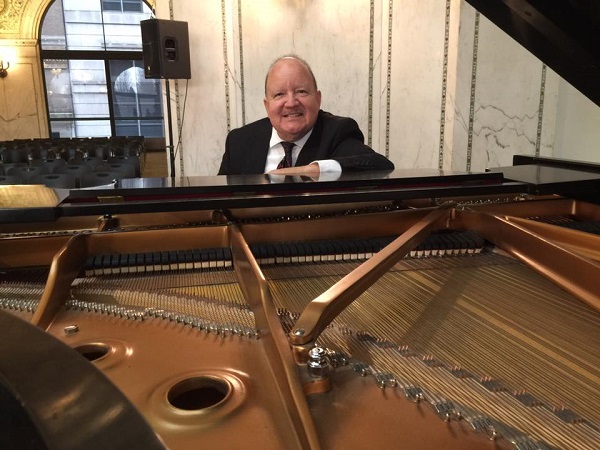
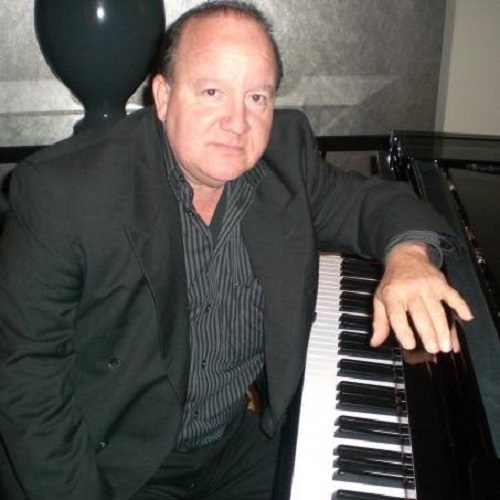
Samuel del Real was an excellent pianist, orchestra conductor, arranger and educator

Born on August 22, 1953 in Barranquilla, Colombia, he was a well-known pianist, orchestra conductor, arranger and educator.

Samuel del Real was an excellent pianist, conductor, arranger and educator.Samuel del Real was an excellent pianist, conductor, arranger and educator.
Samuel del Real was an excellent pianist, conductor, arranger and educator.

He was part of renowned orchestras such as Pacho Galán, La Dimensión Latina and El Trabuco Venezolano and participated in a series of record productions in Caracas, Venezuela.

In 1983 he recorded his first album with his own band. His first hit “Ella No Baila Sola” became the theme song in every night club in Colombia, Venezuela, Peru, Panama, USA among other countries.

In 1985, Samuel moved to Chicago, USA, where he quickly formed his orchestra with members of different nationalities resulting in a mixed sound for his music.

Since then Samuel del Real and his orchestra participated in many festivals, concerts, private events in cities such as Chicago, London, New York, Minneapolis, St. Paul, Detroit, Indianapolis, Miami and more. “Piano Caliente”, ‘Piano Jamboree’ and ‘Piano Navideño’ are the most recent albums that include selections from his extensive Latin jazz repertoire, as well as new interpretations of Afro-Cuban classics from his album entitled Piano Caliente.

Samuel In 1985, Samuel moved to Chicago, U.S.A.

Samuel has ventured not only into the salsa genre, but also into Latin jazz that surprises even those who don’t know him.

It doesn’t take much to realize that Samuel was “El Maestro del Buen Ritmo” and that his music is here to stay.

Samuel del Real: the artist from Barranquilla who triumphed in the United States.

He trained musically and academically, open to the idea of expanding his artistic horizons.

“I began my musical studies in Fine Arts, among my teachers I remember Günther Renz.

In Venezuela I attended the Juan José Landaeta Conservatory and the Caracas Philharmonic Conservatory with the pianist Paul Rosenbloo.

I studied harmony and counterpoint. With maestro Antonio Lauro, composer and guitarist, I completed my academic training”.

At the age of 15 he began his professional career as a pianist in the Pacho Galán Orchestra. There he learned the tricks of popular dance music of the Colombian Caribbean, and the possibilities of sharing with national musicians opened up for him.

DiegoDel Real, my first piano teacher, my advisor, my partner in producing, arranging and recording music.

With him I learned the routine of Caribbean music, he had a very positive attitude towards me. He would summon me before rehearsals to teach me how to play, he would take the score and sit with me at the piano: ‘Play like this’, he would tell me, and ‘play the acor-des this way, this is the tumbao, this is the phrasing’, all with a lot of patience”, he recounted.

“There was Pi¬chirilo on bass, Jorge Pérez on timbales and drums; and Joaquín Pérez on congas. Chicho Sarmiento, Clí¬maco Sarmiento’s son, played the alto saxophone; Pacho Aragón played the tenor saxophone. On trumpets Armando Galán, Raúl Lastra and Chino Acosta.

Rosendo on trombone. Maestro Pacho Galán would arrive to conduct the first set and then he would leave, Armando would be in charge of the orchestra. That’s when my interest in Caribbean folklore began.

I did not record with Pacho’s orchestra because he did not record in that period, but I played a lot of his music and I still play it in Latin jazz.

“For me it was a great school,” he said.

Although he has lived outside the country for many years, when he returns to Barranquilla it is as if he had never left.

It shows in his confidence to walk the streets, to visit places, to call friends, to exchange anecdotes with people he barely knows.

He is a man who lives for music, to which he has dedicated a contagious enthusiasm. That is why when he comes, it is a pleasure to review his career.

“I come to take a little hot temperature and to bring my latest albums for the local public to get to know them,” he said.

In 1975 he formed an orchestra in Venezuela with which he worked at the Hotel Tamana¬co Internacional, while at the same time he was a pianist, administrator and producer of various musical projects in the recording industry of that country.

In 1979 he joined Dimensión Latina, an aggregation with which he recorded Di¬mensión desconocida (1979), el número uno con la núme¬ro uno (1980), Para siempre (1980), Combinación latina Nº 4 (1980), and Cuerda para rato (1981).

“In Dimensión Latina I spent three years with Andy Montañez, Argenis Carruyo and Gustavo Carmona, then I started the orchestra project with my name.

I also recorded with Andy Montañez as a soloist, and made arrangements in recordings for Velvet de Venezuela”.

Samuel also participated in the extraordinary Trabuco Venezolano, led by drummer Alberto Naranjo.

“With Trabuco Venezolano I participated in many concerts in Venezuela.

With them I recorded Irakere and Trabuco, in a live performance at the Poliedro de Caracas. I also recorded Imágenes Latinas.

The Flor y Nata, themes: No me engañes, Rosa de la Noche, Brujería, Almas Blues, Desilusión, (there I do a piano solo that has been highly praised), a pesar de Usted, Orquesta de moda, No quiero Confusión. Retrospectiva del Trabuco Venezolano Vol. 2 (1977- 1984)”.

El Trabuco Venezolano – La Flor y Nata 1984

In 1983 he recorded his first album with his orchestra, the hit was the song Ella no baila sola, which became his letter of introduction.

In 1984 he recorded his second album, repeating his success with the song Cara de Domingo, by the niuyorrican flautist Lou Perez.

The third album with his orchestra was produced in 1987, when he was already living in Chicago.

“When I left Dimensión Latina, Gustavo Cardona, Oscar D’León’s bass player, encouraged me to start my own orchestra.

One of the numbers was Ella no baila so¬la, and when it was played, people stopped to dance. That is why we decided to record that song.

I brought Frankie Paz, a boy from Maracaibo who had auditioned with Dimensión Latina as a replacement for Argenis Carruyo, but César Monje didn’t like it.

I told the boy, I’m going to have my orchestra soon and I’m going to bring you with me”.

Referring to his piano influences, Samuel recalls Noro Morales, Eddie and Charlie Palmieri, Richie Ray and Lino Frias.

Others such as Bud Powell, Thelonious Monk and Oscar Peterson, shaped his vision.

“I liked Noro Morales a lot, I had only one record of his, ‘Maria Cervantes’, which caught my attention since I was a child. One day I decided to arrange it a little differently. I still play it in my Latin concerts.

Del Real took up residence in Chicago in 1985. There he has continued his work moving between Latin dance music and Latin jazz.

I’ve been living there for 32 years, I have my orchestra, I give Latin jazz concerts, and I’ve also worked for other organizations in other cities like Minneapolis and Cleveland.

We do salsa and different Latin American rhythms. The music business has changed, it’s a big investment to make a record, and you have to project it to the singer, limiting the possibility of moving.

That’s why I decided to make Caribbean Latin jazz instrumentals; with that I expose my music without the need to write ten arrangements for a singer with whom you run the risk of him leaving”.

His recent recordings include the Pianos del Caribe series, which includes the discs Piano caliente, Piano jamboree and Piano navideño.

“The first disc of the series, Piano Caliente, brings songs from the 50’s such as Mata Siguaraya, El que siembre su maíz, Besitos de coco…. I made the themes a little more progressive with jazz, but preserving their essence.

I subtly changed the harmonic structures, without distorting them. There the singer is the piano.

Then came Pia¬no Jamboree, with some of my own themes. I do more complex things, trying to penetrate Latin jazz, looking for a space for my musical identity.

It is an interesting work that I would like music lovers from Barranquilla to listen to.

The third album also in the same series is entitled Piano Navideño,

“The first album in the series, Piano Caliente, brings songs from the 50’s like Mata Siguaraya, El que siembre su maíz, Besitos de coco…. I made the themes a little more progressive with jazz, but preserving their essence.

I subtly changed the harmonic structures, without distorting them. There the singer is the piano.

Then came Pia¬no Jamboree, with some of my own themes. I do more complex things, trying to penetrate Latin jazz, looking for a space for my musical identity.

It is an interesting work that I would like music lovers from Barranquilla to listen to.

The third album also in the same series is entitled Piano Navideño, I took as a reference the themes of Christmas. Christmas is very important to me. I am a lover of that celebration.

I took several themes from the international Christmas repertoire and put them in Latin jazz”.

No one doubts that Barranqui jazz or the International Carnival of the Arts would be the perfect setting for his work. Plus, it would be a homecoming in style.

“I think it would be a great opportunity to showcase my music in my city. I am glad that in Barranquilla they are creating spaces like the Carnival of the Arts and the Caribbean Cultural Park, so that people have access to that part of the culture that is music”.

He passed away at the age of 67 on December 10, 2020.

Samuel del Real, who suffered from diabetes, died in Chicago, United States, where he had settled 35 years ago.

Also Read: Thank you Rafael for all you have done for Salsa. Without you many of us would not be salseros

Source and Collaboration By: Marino de Jesus (15889 of Historia Salsera
Republica Dominicana

LATIN AMERICA / March 2024

Flora Purim has earned her two Grammy nominations for Best Female Jazz PerformanceEva Cortés at present, her music reflects the influences received from her cultural mestizaje.Lazarito Valdés & BamboleoJerry Ferrao afirma en clave de salsa: “Mi vida es un tambor”Calibrated maracas

DIRECTORY OF NIGHTCLUBS

Argentina flag
ARGENTINA

Aruba circular flag
ARUBA

Belize circular flag
BELIZE

Bolivia circular flag
BOLIVIA

Brazil flag
BRAZIL

Chile circular flag
CHILE

Colombia
COLOMBIA

Costa Rica circular flag
COSTA RICA

Cuba circular flag
CUBA

Dominican Republic
DOMINICAN REPUBLIC

Ecuador circular flag
ECUADOR

Guatenala circular flag
GUATEMALA

Mexico Circular flag
MEXICO

Panama circular flag
PANAMA

Peru circular flag
PERU

Puerto Rico circular flag
PUERTO RICO

Venezuela circular flag
VENEZUELA
MARCH 2024 FESTIVALS

Mexico Circular flag
MEXICO
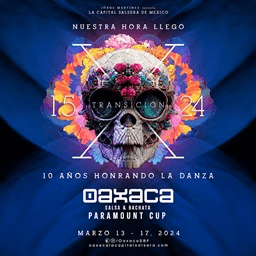
Oaxaca 2024

Oaxaca Salsa & Bachata Festival

Mar 13 / 17 2024

Hotel Misión Oaxaca
Avenida Jalisco 15 Fraccionamiento San Felipe del Agua
Oaxaca City, 68020, Mexico

Puerto Rico circular flag
PUERTO RICO
Zalsa

Día Nacional de la Zalsa 2024

Mar 17 2024

Estadio Hiram Bithorn
Avenida F.D. Roosevelt
San Juan, 00920, Puerto Rico


  • « Go to Previous Page
  • Page 1
  • Page 2
  • Page 3
  • Page 4
  • Page 5
  • Page 6
  • Go to Next Page »

International Salsa Magazine (ISM) is a monthly publication about Salsa activities around the world, that has been publishing since 2007. It is a world network of volunteers coordinated by ISM Magazine. We are working to strengthen all the events by working together.