• Skip to primary navigation
  • Skip to main content

International Salsa Magazine

  • HOME
  • Previous editions
    • 2026
      • ISM / May 2026
      • ISM / April 2026
      • ISM / March 2026
      • ISM / February 2026
      • ISM / January 2026
    • 2025
      • ISM / December 2025
      • ISM / November 2025
      • ISM / October 2025
      • ISM / September 2025
      • ISM / August 2025
      • ISM / July 2025
      • ISM / June 2025
      • ISM / May2025
      • ISM / April 2025
      • ISM / March 2025
      • ISM / February 2025
      • ISM / January 2025
    • 2024
      • ISM / December 2024
      • ISM / November 2024
      • ISM / October 2024
      • ISM / September 2024
      • ISM / August 2024
      • ISM / July 2024
      • ISM / June 2024
      • ISM / May 2024
      • ISM / April 2024
      • ISM / March 2024
      • ISM / February 2024
      • ISM / January 2024
    • 2023
      • ISM / December 2023
      • ISM / November 2023
      • ISM / October 2023
      • ISM – September 2023
      • ISM – August 2023
      • ISM July 2023
      • ISM Edition June 2023
      • ISM – May 2023
      • ISM April 2023
      • ISM March 2023
      • ISM February 2023
      • ISM January 2023
    • 2022
      • ISM December 2022
      • ISM November 2022
      • ISM October 2022
      • ISM September 2022
      • ISM August 2022
      • ISM July 2022
      • ISM June 2022
      • ISM May 2022
      • ISM February 2022
      • ISM January 2022
    • 2021
      • ISM December 2021
      • ISM November 2021
      • ISM October – 2021
      • ISM September 2021
      • ISM August 2021
      • ISM July 2021
      • ISM May 2021
      • ISM April 2021
      • ISM June 2021
      • ISM March 2021
      • ISM February 2021
      • ISM January 2021
    • 2020
      • ISM December 2020
      • ISM November 2020
      • ISM October 2020
      • ISM September 2020
      • ISM August 2020
      • ISM July 2020
      • ISM June 2020
      • ISM May 2020
      • ISM April 2020
      • ISM March 2020
      • ISM February 2020
      • ISM January 2020
    • 2019
      • ISM December 2019
      • ISM November 2019
      • ISM October 2019
      • ISM Septembre 2019
      • ISM August 2019
      • ISM July 2019
      • ISM June 2019
    • 2016
      • ISM December 2016
  • Spanish
  • Download Salsa App
    • Android
    • Apple

Search Results for: Pianist

Alberto Crespo and his magical muse

Latin America / Venezuela / Caracas

Alberto Crespo, a young pianist, arranger, composer and music producer, from an early age began his studies in Piano and Theory and music theory at the “José Ángel Lamas” music conservatory in the city of Caracas, to later continue his studies in harmony, counterpoint , orchestration and improvisation in different music schools

Alberto Crespo
Alberto Crespo

Since the age of seventeen he has accompanied and toured nationally and internationally with orchestras and artists such as Celia Cruz, Bobby Capo, Carmen Delia Depiní, Ray Barreto, Héctor Lavoe, José Alberto El Canario, Henry Fiol , Ismael Miranda, Mulenze Orchestra, Andy Montañés, Adalberto Santiago, Tito Nieves, La India, Herman Olivera, Frankie Vásquez, José Mangual Jr., Richie Ray and Bobby Cruz, Carlos Cano Estremera, Tito Allen, Pete Conde Rodríguez, Junior Gonzáles, Frankie Vazquez Guatacando.

Photo of Alberto Crespo

He has stood out as a producer, arranger and pianist for national and international artists such as Maikel Stuart Ny. Frankie Morales Former singer of Tito Puente Ny, Dancer Orchestra of Cheo Navarro, Grupo Mango.Grupo Bacheo, Naty y Su Orquesta, Rumberos Del Callejon de Carlitos Padron, José Papo Rivera Ny, Renzo Padilla Ny, Soneros De La Calle, Freddery el Frederyck El Coco II, Wilmer Cobos Cuenta Nueva II and his Orchestra, La Kindness Orchestra, Efrén Avellaneda and his Orchestra, Lisandro Torres and his Orchestra, Mariana La Sonera and his Orchestra, Canelita Medina, Andy Duran and His Latin Jazz, Herman Olivera Ny , Angie Rincón in London, among others.

With more than thirty years of experience in salsa and Latin Jazz, he has integrated the best groups in Venezuela, including the Orquesta Bailatino, Naty y Su Orquesta, Grupo Bacheo, Andy Durán and his Latin Jazz, El Pavo Frank and his orchestra, Orquesta La Renovación, Los Rumberos Del Callejón, Orquesta las Vibraciones, Verónica Rey and Her Orchestra, Salsa Silva and Guerra by Mauricio Silva Musician and, Mariana La Sonera and Her Orchestra, Grupo Mango. Between his tours he has visited countries such as the United States, France, Colombia, Peru, Argentina, Australia, Curaçao, Mexico and Aruba.

Photo - Alberto Crespo
Photo – Alberto Crespo

Alberto Crespo and Bacheo Latin Jazz has two record productions, the first el Chuchu del viejo and the second de África Soy, which will be on sale soon, and they feature musicians with a long career and perform salsa and Latin jazz with a varied repertoire in rhythms such as son, danzón, chachachá, guajira, salsa, etc.

He currently serves as director, arranger, composer of the Salsera Resistance of Venezuela Bailatino and at the same time working hand in hand with musicians of international stature.

Alberto Crespo anh his piano

‘‘La Chiqui Some’’ and ‘’El Some’’ in International Salsa Magazine

Much prominence is given to singers, musicians and the visible part of the entertainment in general, but there is not enough talk of those who make it possible for the aforementioned to record what they have created for their audience. That is why we wanted to talk to Jennifer Freedman, better known as ”La Chiqui Some” and Agustin Someillan, who is known as ”El Some”.   

Jennifer and Agustin El Some
Singer Jennifer Freedman and trompeter Agustin Someillan in the studio

Singer Jennifer Freedman and trumpeter Agustin Someillan in the studio 

Jennifer and Agustin ‘’El Some’’’s first contact with music 

Jennifer started in music with percussion in 2005, but moved away from it for a few years to pursue other activities until other artists and groups called her to play with them. She was then invited to attend some rehearsals at Mam-Ax Studios, where by a twist of fate, there was a man named Someillan who already had a studio at that time. They still did not know each other at that time, but soon, one would be very important for the other’s professional life.   

In 2018, she had to go again to the same building, which is when she finally met Agustin, who tells her that she was in the wrong place and had to go to another office. Her visit to Mam-Ax was intended to participate in the recording of a single for singer Freddy Nieves, but that chance encounter would help her to learn that both she and Agustín had a partner in common, who recommended her to work together. 

After that, both accepted and began to know each other better, which led ”El Some” to advise Jennifer on her singing and other details of the business. At the same time, the girl was beginning to see music as something much more serious, since it was only a hobby for her by then. She had certain doubts because she had not jumped right into music professionally, but Agustín convinced her to try to start a career as such, to which she ended up giving in.   

The owner of the studio did not have the support of anyone at that time, so he had the great idea of partnering with Jennifer and bringing together their qualities in the same project.   

In the case of ”El Some”, he comes from a musical family and studied music in Cuba. He became a trumpet player just like his father. Back in his country of origin, he was fortunate to accompany many orchestras such as the Sexteto Nacional de Ignacio Piñeiro, with which he was nominated for Latin Grammy in 2014.    

Having decided his country did not provide him with all the opportunities he needed as an artist at that time, he tried his luck in New Jersey, where he currently resides as does Jennifer, with whom he currently shares the Sonority Record Studios project.    

At this moment, they are creating the album ”Los Some Son” as an idea of Jennifer herself to get people know ”El Some”’s career. Among the guests of the project, we can mention former Los Van Van singer Pedrito Calvo, former Los Van Van singer Melly Cartero, Jennifer herself, singer Frankie Vazquez, pianist Arturo Ortiz, among many others.    

Chocolate and Agustín El Some
Cuban jazz trumpeter Alfredo ”Chocolate” Armenteros and Agustín Someillan

How Jennifer and ”El Some” created Sonority Music Studios   

Agustin has been in the studio for almost 12 years, while Jennifer has only been there for five, but that has not stopped them from getting together perfectly, of course. He has always liked to play the trumpet, but his neighbors started to complain about the constant noise coming from his house, so he decided to look for a place to make music without disturbing anyone.   

However, before that, he was already working on music at home, to the point that he produced an album for José Mangual from his own home, which he describes as ”a huge odyssey”, since he did not have the conditions to complete a job of that magnitude. That is when he decides to look for a space more conditioned to record and produce, so he acquires half of the space he currently uses and elongated it after partnering with Jennifer. 

There were implements they did not possess the knowledge to use, but little by little, they were learning on their to create the brand they have today and the prestige that they acquired in the Latin music community with so much sacrifice. 

”Although this is not a big studio, great things have happened here. There is a great vibe and we make very good music” said ”El Some” about what has been achieved with this space, which has become their musical home.   

The studio has a vacuum-sealing cabin and everything necessary for mixing, mastering, editing, recording and much more.   

Jennifer during a performance
Jennifer Freedman during a live performance with Los Some Son

Relationship between Los Some Son and Sonority Music Studios 

At the moment of expanding the studio, Agustin had already named the place ”Some Son”, but once he and Jennifer became partners, they started to think about how to market it more effectively in the United States. Since everything they did there had to do with sonority, they opted for something with that word, so the studio ended up being called Sonority Music Studios. 

Both are listed as company managers and ”El Some” focuses on the music, creation, engineering and production side. On the other hand, Jennifer is much more focused on the administrative part, contracts, bookings, among other details of this type. 

Seeing what they were achieving with the studio, they felt they could expand a little more to other facets, so both artists also engaged in founding their own band that they called ”Los Some Son” in homage to the ”El Some”’s family of trumpeters and Cuban salsa music in general.   

In conclusion, both the studio and the band are formed by the same team, so both projects go hand in hand.   

Read also: Today we talk with Susana Y Su Orquesta Adelante 

Gabriela Anders studied classical guitar privately, and music and piano at a conservatory in Buenos Aires

Gabriela Anders was born to music amidst the grace, paradox and tradition of  Argentina.

Gabriela studied classical guitar privately, and music and piano at a  Conservatory in Buenos Aires.

Adding to the musical medley was her father’s influence (a noted jazz saxophonist and arranger) which became even stronger than her classical studies. After finishing high school, Gabriela decided to move to New York.

Gabriela’s Los Dukes after a NYC show

There she studied orchestration for brass and strings in a class conducted by Don Sebesky and composition at Hunter College. Gabriela started to write her own material. Her studio and club work took off leading to a record deal with major label Warner Brothers Jazz.

Gabriela Anders’ debut album on Warner Bros. Records, (1999) “Wanting” is brimming  with vocal subtlety; although smooth, it is anything but simple. It features arrangements and production by Paul Brown, George Duke, Allain Mallet and Anders herself.

The album elicited much praise for Anders’ vision and impassioned vocal style.

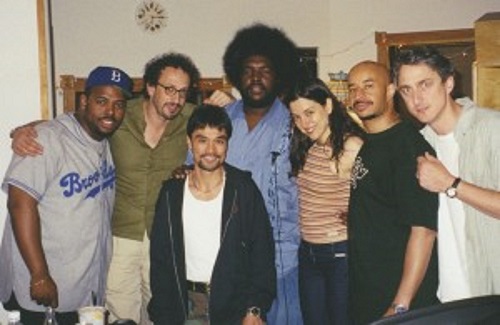
Recording with Questlove and Christian Mc Bride

Her unique marriage of Brazilian, Latin and Jazz led to Vogue and People Magazine describing Anders and her music as “exotic and bold”, “wonderfully soulful”, and “one of the most distinctive new voices to hit the music scene in years”.

Her second record for Warner Bros Records was a European release entitled “Gabriela” which featured an array of world-class sidemen, including Christian McBride, Amir “Questlove” Thompson and Kirk Whalum. Again, she contributed ten of the album’s twelve tracks.

Her next CD “Last Tango in Rio” was released in 2005 by major label EMI. “Last Tango in Rio” is a collection of songs closely associated with Billie holiday that have been uniquely transformed by Gabriela’s interpretation and orchestration.

Hailed by critics (Los Angeles Times, Billboard magazine and People magazine)) as highly -original and creative presentation of standards, “Last Tango in Rio” represents a fresh and effervescent take on a classic song book that has previously defied reinvention.

In October of 2009, JVC Japan released her CD “Bossa Beleza“. “Bossa Beleza” blends her own immediately recognizable sound with that of her first musical love, classic Bossa Nova.

Singing with Rihanna for the NYC Bone Marrow foundation

Gabriela Anders‘ 2015 album, “Cool Again”, beautifully displays the significant gifts as singer, vocal orchestrator, songwriter and bandleader she has steadily developed through her previous releases. The mix of original and cover songs on “Cool Again” finds Gabriela at her best.

The soulful funk of the original title track is a classic example. Its message of empowerment can be considered a core theme in Gabriela’s lyrics and a source of her resonating appeal as a performer, entertainer and artist.

2020 CD ‘The Ring‘: While facing the fear and uncertainty of the virus in New York City, Gabriela recorded a piano/voices collection of songs at her home studio, creating intimate portraits of inner struggle and redemption against the bizarre backdrop of the pandemic.

The project’s three pianists – Jim Ridl, Jean-Michel Pilc and Jon Cowherd – are radically different stylists from different corners of the world, here each offering their unique sensibilities to Gabriela’s voice and music.

2021 CD release Gabriela Anders’ ‘Los Dukes’! Los Dukes is a new 9 piece band arranged and directed by Gabriela Anders, featuring songs from the Duke Ellington’s catalog done in wildly distinctive Latin American styles. A Latina’s tribute to the music of Duke Ellington.

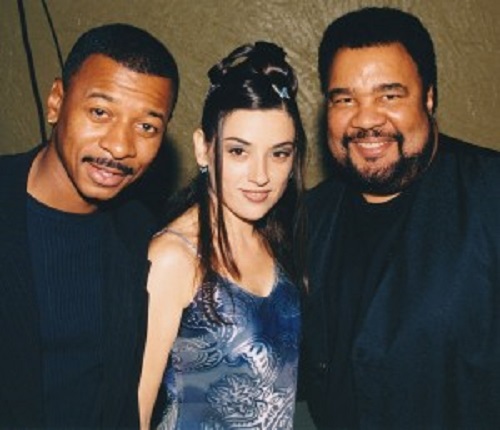
With the great George Duke

Los Dukes, pays loving tribute to the elegant GENIUS of Duke Ellington and includes some of the best Latin Jazz players on the New York scene.

Hailed by critics (Los Angeles Times, Billboard magazine and People magazine) as ‘highly original and creative artist’, a ‘multi-talented artist who is destined to leave her mark on the jazz world’ and the ‘most promising jazz influenced artists today’.

Gabriela Anders – Último Tango En Rio (2004)

Gabriela Anders
Gabriela Anders

Temas:

  1. Te Subes A Mi Cabeza
  2. Abracadabra
  3. El Amor Llegó Para Quedarse
  4. Dios Bendiga Al Niño
  5. Abrázame
  6. Buenos Aires Mix, El
  7. Cuerpo y Soul
  8. All Your Love
  9. Meant To Be
  10. ‘Til The End of Time

Músicos:

Gabriela Anders (Voz, teclados)

Romero Lubambo (Guitarra)

John Benitez (Bajo)

Wayne Krantz (Guitarra)

Portinho (Batería, percusión)

Gabriel Rivano (Bandoneón)

H. Martignon (Teclados)

Tito Castro (Bandoneón)

Donald Edwards (Batería)

Jorge Anders (Saxo)

Jorge Alfano (Flauta, flauta andina, charango)

Información realizada (22 de abril de 2009)

Also Read: Samuel Quinto Feitosa is a Brazilian virtuoso jazz and classical pianist

Mulatu Astatke, the first African to earn a PhD from Berklee College of Music

Mulatu Astatke (or Astatqé) (Jimma, Ethiopia, December 19, 1943) is an Ethiopian musician, composer and arranger. He is considered the father of Ethio-Jazz.

His musical training took place at the Trinity Laban Conservatoire of Music and Dance in London, where he studied clarinet, piano and harmony, New York and Boston, where he was the first African student and also the first African to earn a PhD from Berklee College of Music; there he was trained in vibraphone and percussion.

Mulatu Astatke, the first African to earn a PhD from Berklee College of Music

Later he combined the influence of jazz and Latin music with traditional Ethiopian music.

My desire to start making Ethio-jazz began in London while I was studying there in the 1950s; then I knew I wanted to be different with my music. I looked for musicians from different African backgrounds and saw that they were successful and promoted the culture of their country.

However, there was very little from East Africa and Ethiopia, so I decided at that point that I would create something unique based on the rich heritage of our music and show how much we have contributed to the world of music in general.

That journey began to take shape at Berklee College in Bastan. I was the first African musician to study there and that period was very important for me.

I learned the technical aspects of many different musical forms and my teachers gave me the confidence to move in my own direction, teaching me that it was okay to be different in my music and try something completely new.

Mulatu Astatke.
Mulatu Astatke.

Ethiopian cultural music is based on four modes  tezeta, bati, anchihoy and Ambassel  and within my music, I knew that those modes could not be played.

They had to remain at the center of my music or the whole character of the sound would change and become distorted. I began to add beautiful colors with chords, voicings, bass lines and rhythm sections, writing progressions that fit together well. It’s very difficult to write 12-note music around the Ethiopian modes without destroying them.

In the mid-’60s I returned to Addis, but I kept going back and forth to the United States.

At that time, no one was fusing Ethiopian music with jazz.

In my country there was the First National Theater Orchestra, and both the police and the army had their own orchestras.

There were also bands like the Echoes and the Ras Band.

Musicians at that time based their melodies strictly on the four Ethiopian modes, using techniques like the “canon,” with melodic lines echoing each other.

With Ethiopian jazz, I consciously wanted to expand and explore the modes in different ways.

Mulatu Astatke (or Astatqé) (Jimma, Ethiopia, December 19, 1943) is an Ethiopian musician, composer and arranger. He is considered the father of Ethio-Jazz.

I formed a group called The Ethiopian Quintet in New York, made up of a mix of Ethiopian, Latino, and African-American musicians (there weren’t many Ethiopian musicians in the United States at that time).

The band included trumpeter and pianist Rudy Houston, who later played with Yambu, and Felix Torres, who played with Sonora Ponceña.

I have always felt a deep connection between Latin and African music; I traveled to Cuba to find out where the first American landed, I heard their musicians play and dance and although they sang in Spanish, the tempo, rhythm and feeling were very similar to aspects of African music.

So, with the Ethiopian Quintet, I wanted to show the African contribution to Latin music and it was my first opportunity to experiment and start developing my vision of Ethio-Jazz with this band.

With the American and Puerto Rican musicians in the group we created a different atmosphere and arrangements.

It was a great opportunity for me and they loved what I was writing and the direction I was trying to take.

We did quite a few concerts, some Spanish weddings, events upstate New York and in Manhattan.

We played at the Village Gate with Dave Pike, a great friend of mine at the time, one of the world’s greatest vibraphone players. He played a lot with Herbie Mann and I remember sitting in to watch one of his recording sessions.

I saw a lot of other great musicians in concert, from Coltrane to Bud Powell and Bill Evans. On the New York live circuit I met a producer called Gil Snapper.

His musical training was at the Trinity Laban Conservatoire of Music and Dance in London,

Gil was a very nice and interesting guy and worked with musicians of many different styles.

He picked up on my music very quickly; we got on well and he invited me to record with The Ethiopian Quintet, so our first albums with him were ‘Afro Latin Soul’ Volumes 1 and 2, both recorded during 1966.

On the first volume, I performed an adaptation of an old Ethiopian warrior song, ‘I Faram Gami I Faram’.

I would have liked to have an Ethiopian singer for the song, but it was sung in Latin and the lyrics were translated to the singer so he could sing it in Spanish.

Nevertheless, it turned out to be a nice combination. The album included other compositions that were important steps for me: ‘Mascaram Setaba’ (Summer is Coming), ‘Shagu’ and ‘Almaz’. On the second volume, Rudy Houston suggested a piece of music that we called ‘The Panther’, in reference to the animal, but also in recognition of the Black Panthers, who were very active in the civil rights struggle in the United States at that time.

On this album, one of my favorites is my composition ‘Girl From Addis Ababa’, which worked very well as a fusion of Ethiopian modes and R&R rhythms, an indicator of the more refined Ethiopian jazz sound of my later album for Worthy, ‘Mulatu Of Ethiopia’ (1972). It also included my new arrangement of the 1950s tune ‘Lover’s Mambo’.

Both albums include nice arrangements also by Oscar Garcia, Rudy Houston and Gil Snapper as well.

I feel proud of the recording when I listen to it again. It was an important moment in my career and it was a very interesting and progressive time to be in New York in the mid-60s.

I was there at the same time as Hugh Masekela, Miriam Makeba and Fela Kuti and, each in their own way, we tried to do our part to put Africa on the map of contemporary jazz.

Mulatu Astatke & His Ethiopian Quintet - Afro-Latin Soul (1966, R-2018)
Mulatu Astatke & His Ethiopian Quintet – Afro-Latin Soul (1966, R-2018)

Mulatu Astatke, April 2018

Mulatu Astatke & His Ethiopian Quintet – Afro-Latin Soul (1966, R-2018)

Tracks: Afro Latin Soul: 01. I Faram Gami I Faram (Mulatu Astatke)

02. Mascaram Setaba (Mulatu Astatke)

03. Shagu (Mulatu Astatke)

04. One For Buzayhew (Mulatu Astatke) ke)

05. Alone In The Crowd (Gil Snapper)

06. Almaz (Mulatu Astatke)

07. Mulatu’s Hideaway (Mulatu Astatke)

08. Askum (Rudy Houston)

09. A Kiss Before Dawn (Gil Snapper & Weiss)

10. Playboy Cha Cha (Oscar Garcia) Afro Latin Soul Vol. 2:

11. The Panther (Boogaloo) (Rudy Houston)

Konjit (Pretty) (Oscar Garcia)

Soul Power (Rudy Houston)

Lover’s Mambo (Traditional, Arr. Mulatu Astatke)

Love Mood For Two (Rudy Houston)

Jijiger (Rudy Houston)

Girl From Addis Ababa (Mulatu Astatke)

Karayu (Oscar Garcia)

Raina (Rudy Houston)

Musicians:

Mulatu Astatke (Vibraphone, Piano, Drums)

Rudy Houston (Piano, Trumpet)

Robert Cuadrado (Bass)

Felix Torres / John Perez (Congas / Bongos on Vol. 1)

Pete Iglesias (Congas on Vol. 2)

Tony Pearson (Timbales)

Information provided (October 5, 2024)

Also Read: Flora Purim has earned her two Grammy nominations for Best Female Jazz Performance

Javier Plaza – Biography

Europe / Alemania / Munich

Javier Plaza was born on October 4, 1952 in the Target Shooting sector of the populous neighborhood of Sarría, in Caracas – Venezuela.

In 1957 the urbanization 23 de Enero was inaugurated and the Plaza Castillo family is one of the many founding families of this beautiful project of the government of Marcos Pérez Jiménez. Javier’s Plaza childhood and adolescence take place in this environment.

The parking lot of block 5 of the Monte Piedad area on January 23, was the space where Javier Plaza began to discover his skills as a percussionist, because it was the place chosen by the neighborhood boys to take out the drums, unload and share. Among some of these future stars we can mention Bitervo Plaza, José “Cheo” Navarro and Alfredo “Cutuflá” Franchesqui.

Starting in the mid-70s, he began his professional career in Latin music, forming part of groups such as Rumbón 10, Sexteto Juventud, Enrique “Culebra” Iriarte y su Orquesta, Culebra being the one who gave him the opportunity to be one of the orchestra singers.

This work opens the doors for him in the record market, with the help of producer Víctor Mendoza, he participates in recordings of different groups such as José Rosario y sus Soneros, Federico y Su Combo and El Clan de Victor.

At the beginning of the 80s, the Orquesta Café was formed, Javier is one of its vocalists along with Joe Ruiz and Carlos Espósito, managing to record one of the most important albums of his career and one of the most significant for the inhabitants of January 23, Due to the fact that most of its musicians are parishioners, the rehearsals were held in Monte Piedad and the economic resources for the recording of the album arose in the neighborhood, thanks to a great collaborator and music lover, Mr. Andrés “Culebra” Vasquéz.

In this group musicians participated, who at the time were not as recognized as today, among others Jose “Tucky” Torres, César “Chino” Pérez, Carlos “Kutimba” Espósito, Bitervo Plaza, Gerardo Rosales, Jorge “Venado” Ponce and the late Joe Ruiz.

Javier Plaza
Javier Plaza

By the mid-1980s, Javier began to knock on doors in the old continent and Alfredo Cutuflá, who lives in Paris, invited him to participate in Combo Ventú, a group established in Paris with most of its Venezuelan members.

There he began a successful career in Europe participating in different groups and collaborating in recordings and presentations of other artists. Thanks to the presentations of Combo Ventú, the director of the Conexión Latina Orchestra, based in Munich-Germany, contacted him to be part of their ranks, he has remained with this orchestra for 18 years, currently being the oldest musician of the grouping.

Since he (Javier Plaza) was hired by the Connection, he has lived in the city of Cologne-Germany, a place where a large group of Venezuelans live, many of them dedicated to culture.

He (Javier Plaza) reinforced his musical studies of vocal technique, theory and music theory at the Köln Mülheim and studied the German language at the IBM Institute.

He has participated in groups such as Kimbiza, La Charanga Nueva de Alfredo Cutuflá, the Colombian pianist Francisco Zumaqué, Salsamanía, Cesar “Chino” Pérez and Gerardo Rosales, without abandoning his responsibility within the Latin Connection vocalists.

With La Conexión, he has had the opportunity to accompany international stars of Latin music, such as Perico Ortiz, Ismael Miranda, Adalberto Santiago and Azuquita, among others. Javier comments that Nicky Marrero worked with La Conexión for five years.

Since 1992, Javier Plaza has been managing his personal project, the Son-Risa Orchestra. With her he has made two productions entitled “Libre Soy” and “Mi Música”, with most of the songs of his own authorship.

In 2006 he came to Venezuela with a project under his arm, lyrics, musical arrangements and a proposal, in search of private or government financial support.

The name of the project “El Reencuentro”, with which he planned to bring six talented Venezuelan musicians based in Europe to meet again with musicians who make life in our country and thus make a recording where this experience would be reflected, these musicians were Alfredo ” Cutuflá” Franchesqui, Orlando “Watussi” Castillo, Carlos “Kutimba” Espósito, Orlando Poleo, Yma América and José Ávila…

but the money was not enough to purchase the tickets. Therefore, El Proyecto Reencuentro was recorded with the musicians residing in our country, resulting in a product of excellent quality, among others, Nelson “Melo” Douglas, Alberto Crespo, Leonel Sanchez, Charles Peñalver, Alberto Naranjo, Tucky Torres, Rafael González, Carlos Julio “El Oso” Ramírez, Marcial Istúriz and José Ramoncini.

During the recording of this album, his mother passed away (02-04-2006), Rosario Castillo, popularly known in the neighborhood as Rosarito, to whom he dedicated this album and one of its songs was written especially for her.

The chorus of one of the themes of the new Son-Risa production says: “Let’s get the drums out again, let Caribe not die”.

As the boys did in the parking lot of Block 5 of Monte Piedad, we know that Javier Plaza and his Son-Risa Orchestra will have the support of all Venezuelan music lovers.

  • « Go to Previous Page
  • Page 1
  • Interim pages omitted …
  • Page 16
  • Page 17
  • Page 18
  • Page 19
  • Page 20
  • Interim pages omitted …
  • Page 55
  • Go to Next Page »

International Salsa Magazine (ISM) is a monthly publication about Salsa activities around the world, that has been publishing since 2007. It is a world network of volunteers coordinated by ISM Magazine. We are working to strengthen all the events by working together.