• Skip to primary navigation
  • Skip to main content

International Salsa Magazine

  • HOME
  • Previous editions
    • 2026
      • ISM / May 2026
      • ISM / April 2026
      • ISM / March 2026
      • ISM / February 2026
      • ISM / January 2026
    • 2025
      • ISM / December 2025
      • ISM / November 2025
      • ISM / October 2025
      • ISM / September 2025
      • ISM / August 2025
      • ISM / July 2025
      • ISM / June 2025
      • ISM / May2025
      • ISM / April 2025
      • ISM / March 2025
      • ISM / February 2025
      • ISM / January 2025
    • 2024
      • ISM / December 2024
      • ISM / November 2024
      • ISM / October 2024
      • ISM / September 2024
      • ISM / August 2024
      • ISM / July 2024
      • ISM / June 2024
      • ISM / May 2024
      • ISM / April 2024
      • ISM / March 2024
      • ISM / February 2024
      • ISM / January 2024
    • 2023
      • ISM / December 2023
      • ISM / November 2023
      • ISM / October 2023
      • ISM – September 2023
      • ISM – August 2023
      • ISM July 2023
      • ISM Edition June 2023
      • ISM – May 2023
      • ISM April 2023
      • ISM March 2023
      • ISM February 2023
      • ISM January 2023
    • 2022
      • ISM December 2022
      • ISM November 2022
      • ISM October 2022
      • ISM September 2022
      • ISM August 2022
      • ISM July 2022
      • ISM June 2022
      • ISM May 2022
      • ISM February 2022
      • ISM January 2022
    • 2021
      • ISM December 2021
      • ISM November 2021
      • ISM October – 2021
      • ISM September 2021
      • ISM August 2021
      • ISM July 2021
      • ISM May 2021
      • ISM April 2021
      • ISM June 2021
      • ISM March 2021
      • ISM February 2021
      • ISM January 2021
    • 2020
      • ISM December 2020
      • ISM November 2020
      • ISM October 2020
      • ISM September 2020
      • ISM August 2020
      • ISM July 2020
      • ISM June 2020
      • ISM May 2020
      • ISM April 2020
      • ISM March 2020
      • ISM February 2020
      • ISM January 2020
    • 2019
      • ISM December 2019
      • ISM November 2019
      • ISM October 2019
      • ISM Septembre 2019
      • ISM August 2019
      • ISM July 2019
      • ISM June 2019
    • 2016
      • ISM December 2016
  • Spanish
  • Download Salsa App
    • Android
    • Apple

Search Results for: Pianist

Vicentico Valdés “The elastic voice” of Bolero in Cuba and the Caribbean

“The earrings that the moon lacks I have kept to make you a necklace”.

Vicente Valdés was born in the neighborhood of Cayo Hueso, Havana, on January 10, 1921. He was the younger brother of Alfredito Valdés (1908-1988), a versatile singer who performed with numerous sones groups, ensembles and orchestras in Cuba until, around 1940, he settled outside Cuba, mainly in New York and Mexico, where he continued his artistic career.

Vicente Valdés Una Vez

Two of Vicente’s other brothers, Marcelino and Oscar, stood out as percussionists, and the latter also as a singer in the Irakere group.

Also known as “La voz elástica” Vicentico is one of the most celebrated interpreters of the bolero with a great interpretative strength and dramatization in his performance for the benefit of couples in love who enjoy his songs to this day.

Valdés was part of “El Septeto Nacional”, the orchestra of Cheo Belén Puig, “La Cosmopolita”, the orchestras of Noro Morales, Arturo Núñez and Tito Puente,

In 1937, recommended by Alfredo, Vicentico sang for a short time with the Segundo Septeto Nacional, a group that had been founded to share the multiple artistic commitments that the renowned Septeto Nacional of Ignacio Piñeiro received at that time. He was also a member of the sones sextet Jabón Candado.

Vicentico Valdés La voz elástica del Bolero en Cuba

Later, he replaced Alfredo as a singer in the orchestra of Cheo Belén Puig, one of the most famous Cuban groups of the charanga format. Later, he joined the jazz band Cosmopolita, led by Vicente Viana and later by pianist and composer Humberto Suárez.

Together with Marcelino Guerra Rapindey and Cristóbal Dobal, among others, he was part of the sextet Los Leones.

In the mid-1940s, due to the difficult economic situation in Cuba after World War II, Vicentico, like many other Cuban artists of the time, went to Mexico to explore new horizons for his work in music.

In the Mexican capital he performed with Humberto Cané’s conjunto Tropical, and the orchestras of Arturo Núñez, Rafael de Paz and Chucho Rodríguez, with whom he later recorded with Benny Moré. In those years he received his first ovations on the stage of the Follies.

In Mexico, between 1946 and 1947, he made recordings for the Peerless label, backed by the orchestras of the Mexican Rafael de Paz and the Cuban Absalón Pérez.

The repertoire chosen for these records consisted almost entirely of guarachas, afros and sones montunos, which had been popularized in Cuba by Orlando Guerra Cascarita with the Orquesta Casino de la Playa.

Vicente Valdés
Vicente Valdés

Vicentico was hired as a singer of the musical group of the Puerto Rican pianist Noro Morales in New York at the end of 1947. In that city he had a successful season at the Hispanic Theater which, according to the chronicles of the time, “consecrated him in the taste of the Latin community”. He also performed at the Million Dollars, Park Plaza and Puerto Rico theaters.

In 1948 he joined Tito Puente’s orchestra as a singer, along with his brother Alfredo. With Puente he recorded his first boleros (among them “Quiéreme y verás”, by José Antonio Méndez) for the Seeco label. Until then he had been used mainly as an interpreter of upbeat numbers. With Tito Puente he made numerous recordings throughout his career.

In 1953, the Seeco record company promoted a group of recordings with the Sonora Matancera, which had great repercussion in Cuba, where he was hardly known, and in other Caribbean countries.

Among the pieces recorded in Havana in November of that year were two boleros (“Una aventura”, by Elisa Chiquitica Méndez and “Decídete mi amor”, by José Antonio Méndez), a genre in which he achieved the greatest triumphs of his career.

From then on, in New York, with great studio orchestras conducted by René Hernández, Joe Cain, and later Charlie and Eddie Palmieri, he made new recordings that were quickly distributed throughout Latin America.

Their repertoire during this stage (early 1960s) included boleros and songs by authors of different tendencies and styles; the Cubans René Touzet, Javier Vázquez, José Antonio Méndez, Piloto y Vera, Pepé Delgado, Juan Pablo Miranda, Marta Valdés and the Rigual brothers; the Puerto Ricans Silvia Rexach, Myrta Silva and Rafael Hernández; the Dominicans Rafael Solano and Manuel Troncoso; and the Mexicans Manuel Prado, Luis Demetrio and Armando Manzanero.

Vicente Valdés y La Oquesta de Bobby Valentin

La Sonora Matancera among others no less important. He also excelled in other genres such as Mambo, Guaguancó, Son and Guaracha.

He was an exceptional singer with a particular style that set the standard and also spread the best Latin American bolero composers, particularly those of the Cuban Feeling, of which he was a valuable promoter at an international level. His career as a soloist was impeccable.

He died in a New York hospital on the morning of June 26, 1995, according to a heart attack.

Source: En Caribe

Sonora Matancera

Read also: La Sonora Matancera musical congregation of long trajectory and its sound quality, is one of the most popular in the Caribbean island “Cuba”

Tata Güines known as Manos de Oro, Cuban rumbero and percussionist

Known as Manos de Oro, he modernized the tumbadoras and played with the most important musicians of the island of Cuba.

He was born in Güines, Havana on June 30, 1930, in the bosom of a family of musicians, son of Joseíto “El tresero” and Niñita, who from a very young age used to play a boot-cleaning box in the corner of the Chapel of Santa Bárbara, in the legendary neighborhood of Leguina, where so many congas and bembés have been made and will continue to be enjoyed.

Artistic trajectory

Saying Federico Arístides Soto Alejo may not say anything to some music neophytes, but when you say Tata Güines, things change radically and everyone thinks: That is the tumbadora made soul and flavor.

Tata Güines conocido como Manos de Oro, modernizó las tumbadoras y tocó con los más relevantes músicos de la isla de Cuba

He became attached to percussion instruments, especially the tumbadora, which, as a Cuban, groaned under the effect of his prodigious hands. Under the influence of Chano Pozo, whose touches bewitched him and gave him the key to create his own style.

He was formed as a musician among the drums and the religious festivities of his neighborhood. He adopted his nickname as a child -el Tata-, and as a surname the name of the town where he grew up. Music was in his blood: his father and uncles made music with their hides.

He played double bass in the group Ases del Ritmo. He was part of the Partagás group, led by his uncle Dionisio Martínez, and later founded the Estrellas Nacientes orchestra and performed with the Swing Casino orchestra in Güines.

In 1946 he performed in his hometown with the Conjunto de Arsenio Rodríguez.

Tata Güines, rumbero y percusionista cubano

}In 1948 he moved to Havana, where he was a member of the orchestras La Nueva América, led by Pao Domini; La Habana Sport led by José Antonio Díaz, Unión, led by Orestes López, La Sensación led by Belisario López, and in 1952 he joined Fajardo y sus Estrellas, with which he traveled to New York in 1956.

He joined Los Jóvenes del Cayo, with which he appeared on the radio station La Voz del Aire; later he performed with the ensembles Camacho and Gloria Matancera.

He accompanied the trio Taicuba as a bongo player, and worked with Guillermo Portabales, Celina y Reutilio, and Ramón Veloz. He participated, along with Chano Pozo, in the comparsa Los Dandys de Belén; also, Los Mosqueteros del Rey, Los Mambises and Las Boyeras.

He recorded with Arturo O’Farrill (Chico) and with Cachao y su Ritmo Caliente, Frank Emilio, Guillermo Barreto, Gustavo Tamayo and others. He was part of the Quinteto Instrumental de Música Moderna (later Los Amigos), led by pianist Frank Emilio; Guillermo Barreto, timbal, Gustavo Tamayo, güiro, Israel López (Cachao) and Orlando Hernández (Papito), double bass.

In 1955 he travels to Caracas, Venezuela, to participate in the carnivals of that city. He traveled to New York with the Fajardo y sus Estrellas orchestra, with which he performed at the Palladium, where he coincided with Machito y sus Afro-Cubans and Benny Moré, whom he accompanied on the tumbadora; he also performed at the Waldorf Astoria Hotel, where he worked for the first time as a soloist.

Tata Güines nació en Güines, La Habana

He prepared a show and shared the stage with Josephine Baker, Frank Sinatra, Maynard Ferguson and Los Chavales de España, with whom he recorded the piece “No te puedo querer”.

In 1960 he returned to Cuba. Four years later he founded Los Tatagüinitos. He offered a concert with the National Symphony Orchestra, conducted by Manuel Duchesne Cuzán, with which he performed his work Perico no llores más. He accompanied the guitarist and composer Sergio Vitier in his work Ad Libitum, danced by Alicia Alonso and Antonio Gades.

International tours

He toured California, Chicago, Miami, Puerto Rico, Panama, Venezuela, Colombia, Mexico, Martinique, Monte Carlo, Switzerland, Bulgaria, Hungary, where he participated in the Jazz Festival; Soviet Union, Finland, Spain.

Musical Validity

Tata Güines was a master of masters of Cuban percussion. His death represents a notable loss for Cuban culture. Nobody like him in Cuba to make percussion an art.

In front of Tata Güines, the leather of the drum seemed the most delicate and expensive silk. He would place his agile hand on the tanned skin stretched by the fire, and with his fingernails he would achieve the saddest of laments as well as the most contagious smile.

Few knew him as Federico Arístides Soto Alejo, but everyone knew that he had modernized the tumbadoras, that he was a master at placing the “loose” beats in a song, as if “carelessly”, but that the piece could not survive if it lacked that imprint of someone who let himself be carried away by the rhythm of the claves, by his very fine ear and by the demands of a body accustomed, since he was almost a child, to music.

He died on February 4, 2008 in Güines, Havana.

Federico Arístides Soto Alejo Tata Güines

Awards and recognitions

National Music Award 2006

Félix Varela Order 2004

Alejo Carpentier Medal 2002

Tataguines Soto Martinez

Read also: Carlos “Patato” Valdés one of the best percussionists in the history of Latin Jazz

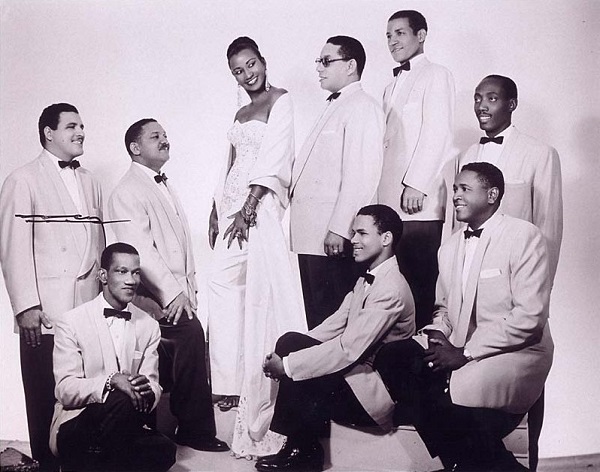
La Sonora Matancera musical congregation of long trajectory and its sound quality, is one of the most popular in the Caribbean island “Cuba”

It was founded in Matanzas in 1924 under the name of La Tuna Liberal.

Its first members were: Valentín Cané, director and tres player, Manuel Valera, guitar and second voice, Manuel Sánchez (Jimagua), timbal, Ismael Governa, cornetín, Pablo Vázquez Govín (Bubú), double bass, Domingo Medina, guitar, Ismael Goberna, cornetín, Julio Govín, guitar, José Manuel Valera, guitar, Juan Bautista Llopis, guitar.

In 1926 Carlos Manuel Díaz Alfonso (Caíto), falsetto voice and maracas, and Rogelio Martínez Díaz (El Gallego), guitar, joined the group and it adopted the name Sexteto Soprano.

On January 12, 1927, under the name of Estudiantina Sonora Matancera, they moved to Havana. In November of that year they recorded their first two recordings for the Victor label: Fuera, fuera, chino, by José Manuel Valera, and El porqué de tus ojos, by Valentín Cané.

With the definitive name of Conjunto Sonora Matancera, it began its transmissions on the radio station El Progreso Cubano (later Radio Progreso). At that time it appeared on Radio Atwater Kent; in 1932, at the suggestion of Rogelio Martínez Díaz, it took the name of Sonora Matancera, and began its performances in the Havana Sport dance academies, and later in Marte and Belona, and later became part of the cast of CMQ Radio. In 1935, trumpeter Calixto Leicea joined the group; in 1939, composer, pianist and orchestrator Severino Ramos, who gave the Sonora its distinctive sound with his orchestrations.

La Sonora Matancera congregación musical de larga trayectoria y su calidad sonora, es una de las más populares en la isla caribeña “Cuba”

In 1944 pianist Lino Frias and trumpeter Pedro Knight Caraballo joined the group, who with Calixto Leicea formed the most interesting trumpet duo in the history of Cuban ensembles; in 1945 singer Bienvenido Granda Aguilera; in 1948, Angel Alfonso Furias (Yiyo), tumbadora. At this time the Sonora Matancera was formed by Rogelio Martínez Díaz, director, guitarist and chorus; Pablo Vázquez Govín (Bubú), double bass; José del Rosario Chávez (Manteca), timbal; Ángel Alfonso Furias (Yiyo), tumbadora, who replaced Valentín Cané; Calixto Leicea, first trumpet; Pedro Knight Caraballo, second trumpet; Lino Frías, pianist; Carlos Manuel Díaz Alfonso (Caíto), falsetto voice and maracas; Bienvenido Granda, singer and claves; and Celia Cruz, who soon became the stellar singer we knew and the mainstay of the Sonora Matancera hits. Thus began a period that critics have called the golden age of the Sonora.

In 1950, with the advent of television, the Sonora Matancera was one of the first musical groups to perform on this medium. It also signed a contract with the Seeco record company, with whose recordings it made a name for itself in the international market. In 1952, Raimundo Elpidio Vázquez replaced his father, Pablo Vázquez, on double bass (when Rogelio Martínez Díaz died in 2001, he took over the leadership of the group).

In 1926, it changed its name to “Septeto Soprano”. That same year, Carlos M. Díaz “Caíto” accompanied Eugenio Pérez in the choir.

Later in 1927, on Caíto’s recommendation, Rogelio Martínez joined the group and the name of the group was changed to Estudiantina Sonora Matancera.

Sonora Matancera
Sonora Matancera

With a great desire to improve the group travels to Havana where they get in touch with the record company “RCA Victor” and make their first recording on January 12, 1928.

At the beginning of the thirties, the group began to adapt to the new rhythms that were appearing at that time as well as adapting new instruments, such as the grand piano, which was played for the first time in the group by Dámaso Pérez Prado, who years later would become the “King of the Mambo”.

But it was in 1935 when the group took the name La Sonora Matancera, and with this change it introduced a new trumpet player: Calixto Leicea, who replaced Ismael Goberna, who died a few months later due to health problems.

The unforgettable José Rosario Chávez “Manteca”, who replaced the resigned “Jimagua”, also joined the band. Humberto Cané joined the group playing the tres and his father Valentín Cané began playing the tumbadora.

In 1938, Dámaso Pérez Prado retired and left the vacant piano position to Severino Ramos, who soon after became the musical arranger of the group.

During the first years of the forties they made presentations in dance academies, cabarets and in Radio Progreso Cubano, they also included in their repertoire: guarachas, montunos.

On January 6, 1944, two musicians from Arsenio Rodriguez’s group joined the group: Lino Frias (author of the popular song Mata Siguaraya) who began to play the piano and Pedro Knight who became the second trumpet player of the Sonora Matancera.

In the month of December, Bienvenido Granda enters the band recommended as vocalist, being his first recording “La Ola Marina” by Virgilio González, and with him they sign a contract with the nascent record label Panart Records. Valentín Cané, Israel del Pino, Caíto and Humberto Cané made recordings with this label.

In the middle of 1946 the founder Valentín Cané suffers asthmatic problems that force him to leave the group, dying two years later. Before the group joined Panart Records, it recorded other songs for the “Varsity” label, without the name of the Sonora Matancera appearing on the labels, here the first version of “Se Formó la Rumbantela” by Pablo Cairo, “Tumba Colorá”, “El Cinto De Mi Sombrero”, Bienvenido Granda and Humberto Cané participated in these numbers.

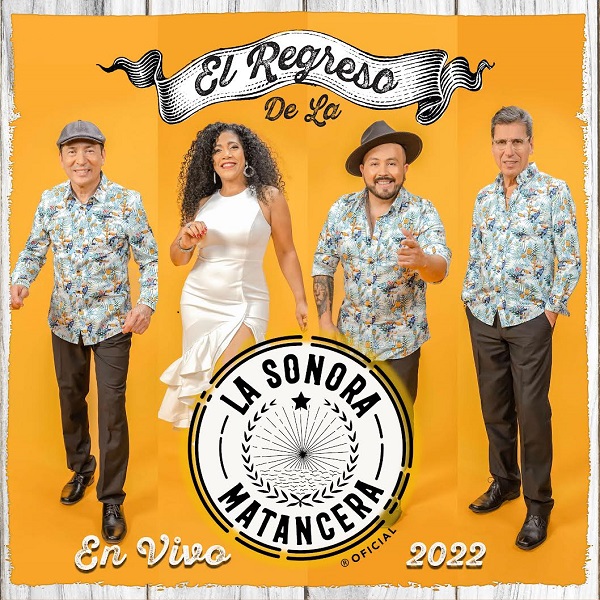
El Regreo de La Sonora Matancera 2022 2023

Members

Trumpets: Calixto Leicea and Pedro Knight

Double Bass: Elpidio Vázquez, replacing his father Pablo Vázquez, “Bubu”.

Piano: Lino Frías

Timbales, Bongó and Campana: José Rosario Chávez “Manteca” Chávez

Tumbadora: Ángel Alfonso Furias “Yiyo”.

Guitar and Choir: Rogelio Martínez

Maracas and Chorus: Carlos Díaz Alonso “Caíto”.

Claves and Choir: Bienvenido Granda.

Last January 13, 2023 they turned 99 years old and are still going strong from generation to generation.

Source:

Enrrique “Culebra” Iriarte, Venezuelan pianist, arranger and orchestra conductor.

Bibliography: Ecured Cuba

La Sonora Matancera 

You can read: Carlos “Patato” Valdés one of the best percussionists in the history of Latin Jazz

Salsa at Hacienda El Paraíso with Los Lebron Brothers Orchestra

The house of Hacienda El Paraíso or Casa de la Sierra, was built between 1816 and 1828, by Don Victor Cabal, a cattle rancher from Bugueño and ex-mayor of Cali. On June 20, 1854 it was sold to Don Jorge Enrique Isaacs, father of the poet, in whose hands it remained until June 15, 1858.

On April 18, 1953 it was acquired by the Department of Valle del Cauca and its first restoration was carried out by the master Luis Alberto Acuña in 1954.

It was declared a National Monument on December 30, 1959. It currently holds the status of Cultural Interest of the Nation.

With Law 397 of 1997 the properties previously declared national monuments were considered as properties of cultural interest and by Law 1185 of 2008 the BIC were defined as such due to the special interest that the property has for the community throughout the national territory…” (Law 1185 of 2008, Article 5, which modifies Article 8 of Law 397 of 1997).

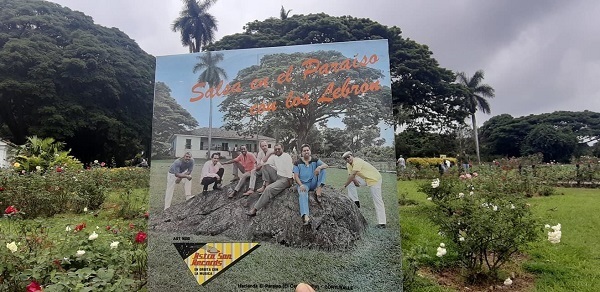
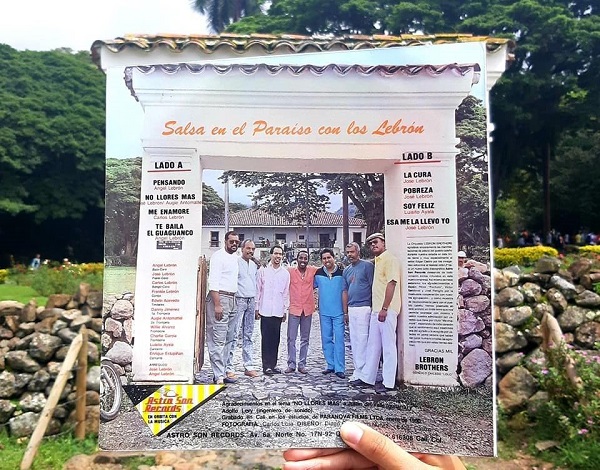
Los Lebron Brothers agradecidos y maravillados con Cali graban en enero de 1990 el elepé “Salsa en el Paraíso”

The Hacienda El Paraíso de Cali, setting of “María” written by Jorge Isaacs, a novel of an impossible romance and such wonderful landscapes that some Japanese decided to live in these lands just by reading the novel, landscapes that the Lebron Brothers also fell in love with.

The Lebron Brothers, grateful and amazed with Cali, recorded in January 1990 the LP “Salsa en el Paraíso” for the short-lived Cali label AstroSon Records, the hit of the album was the song “Thinking” with vocals by Luisito Ayala (RIP).

Los Lebron Brothers“ Salsa en el Paraíso”

The Lebrón Rosa family was born with the union of Francisco Lebrón Feliciano and Julia Rosa Sosa (mother of Pablo López Rosa) in Aguadilla (Puerto Rico), where María Antonia, José, Ángel and Carlos Enrique were born. They moved to New York in 1952, where Frank was born; they were educated in a purely musical environment, the father wrote décimas and in the family most of them were musicians and played cuatro and guitar, besides singing.

Pablo Lopez, since childhood was noted for his voice, was born on June 30, 1937 in Aguadilla, Puerto Rico.

Already settled in New York, he organized a trio “Las Tres Monedas” (1954). In 1962 José and Ángel formed their first group called Los Eltones.

Pablo founded the Orquesta Arecibeña (1965). Pablo managed to get the owner of the La Vega club in Brooklyn to give them an opportunity to audition, at which time José joined the Arecibeña as a pianist. In 1966 Angel Lebron y su Combo was formed, where his brother Carlos is the pianist.

The opportunity to record came from the hand of businessman George Goldner, head of the Cotique label, thanks to the fact that he had agreed to listen to them live.

As this meeting was important, Angel and Jose asked their brother Pablo to accompany them on vocals, to take advantage of his veteran and wonderful style.

The brothers Angel, Jose, Pablo and Carlos performed two boogaloos in their own way and style. It was Goldner who suggested that they call themselves Los Hermanos Lebrón and asked them to prepare a complete album.

Frank Lebron, Dj. Augusto Felibertt y Jose Lebron

The album appeared in 1967 under the title Psychodelic goes latin, which included the hit Summertime blues.

Thanks to the overwhelming success of the first work, in 1968 they presented their second album, The Brooklyn Bums, name of a famous baseball team. They released nine songs with interpretations in English and Spanish.

In 1969 the productions I Believe, (Lo tuyo Llegará) and Brother, (Pancho el Loco y Fe). These hits catapulted them internationally before the Latin American public, tracing a new musical horizon.

The boogaloo began to lose ground and Los Hermanos Lebrón reflected this change by producing an album entirely in Spanish with the title Llegamos, containing the songs Mi fracaso, Tus recuerdos (a song that achieved Pablo’s recognition as a great Bolerista).

BOOM…! SALSA…..!

In the same year with the production of the album Salsa y Control, success was glimpsed giving relevance and turning the term Salsa into a worldwide social phenomenon; where the younger brother (Frank Lebrón) makes his debut.

The innovations of three chorus singers (dubbed) were present, which gave it a true seal of distinction. In the boleros, they searched for the traditional sound of the Puerto Rican trios.

Los Lebron Brothers Orchestra

You can read: Luigi Texidor el Negrito del Sabor

Carlos “Patato” Valdés one of the best percussionists in the history of Latin Jazz.

On November 4, 1926 in the Los Sitios neighborhood of Havana, Cuba, Carlos “Patato” Valdés was born. Known as Patato, he is, quite simply, one of the best percussionists in the history of music.

Patato was born into a very santera and very musical family, his father was a tres player of Los Apaches, the port germ of two illustrious sonera groups: the Sexteto Habanero and the Sexteto Nacional.

He learned to play the tres and the botijuela before turning to percussion, first on the cajones and finally on the congas.

He was an extraordinary percussionist of outstanding participation with the “Conjunto Kubavana”, “La Sonora Matancera”, “Conjunto Casino” and the “Orquesta de Tito Puente”, among other groups, both Son and Latin Jazz.

Formed in rumbero gatherings and carnival groups, Valdés became a professional in the early forties, after trying his luck as a boxer and dancer.

Carlos “Patato” Valdés uno de los mejores percusionistas en la historia del Jazz Latino

He played with Conjunto Kubavana, La Sonora Matancera and El Conjunto Casino. He accumulated nicknames: Zumbito (for his performances at the Zombie Club), Pingüino (for a dance he did on television) and Patato (for his small size), and in those days, dedicating oneself to music in Cuba guaranteed hardship. Besides, Patato wanted to experiment and that was not possible playing for dancers or tourists.

In 1954, he emigrated to New York, like his leather friends: Cándido Camero, Armando Peraza, Mongo Santamaría and the pioneer Chano Pozo (murdered there in 1948).

He immediately began working with Tito Puente. His first recording in the United States was the album Afro-cuban, by trumpeter Kenny Dorham, which opened with the intoxicating Afrodisia. Those were good times for tropical music.

He was the first percussionist to improvise “Solos” with 3 or more Congas at the same time. In addition, he was the creator of the “Congas Afinables”, instruments on which he would ride to dance making them sound rhythmically.

Patato Valdes was an excellent musician, an unforgettable person. Nervous and diminutive, he spoke with an impenetrable Cuban accent; he dressed elegantly, hiding the necklaces and bracelets of Changó and other “orishas”. He looked like a living caricature, but when he hit the percussions he became a divine creature: he had power, spectacularity, sense of melody.

Those skills made him an ambassador of Afro-Cuban rhythms in the jazz world, although he will also go down in history for his extraordinary rumba recordings.

In 1956, Patato appeared in the film Y Dios creó a la mujer, teaching the dances of his homeland to Brigitte Bardot. A great moment, although an implacable Guillermo Cabrera Infante criticized the actress’s movements: “she seems to commit suicide by dancing a cross between mambo and chachachá, a really toxic cross between mambo and chachachá”.

A flexible musician, Valdés sounded as comfortable playing with Machito’s big band as with Herbie Mann’s group. However, he felt indebted to the “rumba de solar” and in 1968 he recorded a revolutionary album with his friend Eugenio Arango, alias Totico.

The exuberant Patato & Totico had genuine Havana flavor, but enriched the basic percussion instrumentation with Cachao’s contrabass and Arsenio Rodriguez’s tres.Patato expanded the creative possibilities for percussionists by playing with three or more congas.

He also made their lives easier by developing a tunable conga: fed up with the traditional method (heating the leather over fire), he installed a metal hoop and keys for tensioning.

Carlos "Patato" Valdés
Carlos “Patato” Valdés

The LP company mass-produced his model, which was to become the standard for conga players. To promote it, he formed the Latin Percussion Jazz Ensemble with Tito Puente, Jorge Dalto and Alfredo de la Fé, among others, an orchestra that would end up becoming Puente’s big band in the early 80s.

It was during this period with Dalto that the album we have chosen for today began to take shape. It was titled “Patato, Master Piece” and it synthesizes all of Patato’s genius.

“Masterpiece” is an album that travels first class through tango, jazz, descarga, guaguancó and bolero, always in a masterful way and with a luxury crew made up of names like Jorge Dalto, Artie Webb, Michel Camilo, Jerry and Andy González, Nicky Marrero, Ignacio Berroa, Joe Santiago, Néstor Sánchez, Vicentino Valdés, and Sabú Martínez, among others.

The Art of Flavor.

Unfortunately Dalto had already passed away when in 1993 the project was released by the venerable German label Messidor, the same label that had already financed some impressive sessions of Patato with Mario Bauzá or Bebo Valdés, with whom he would later record the famous El Arte del Sabor.

Jorge Dalton
Jorge Dalton

In fact, the great Argentine pianist had to be replaced for the last recording sessions that were made 6 years ago since his illness was too advanced, but he left us some incredible arrangements that were kept in the great majority of the themes.

Dalto left us in 1987 when he was only 39 years old. His replacement was nothing more and nothing less than a very young Michel Camilo.formed by 9 cuts among which we especially want to highlight the huge versions of Cute and Nica’s Dream, Masterpiece is an essential album for all lovers of Latin-jazz with capital letters and that is why we wanted to share it on a day as special as today.

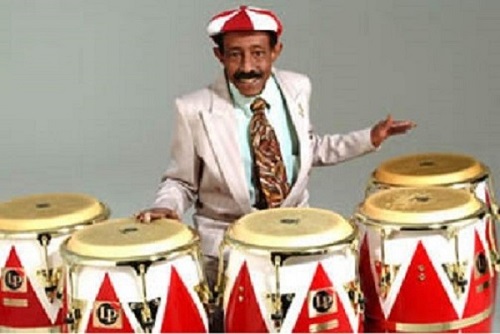
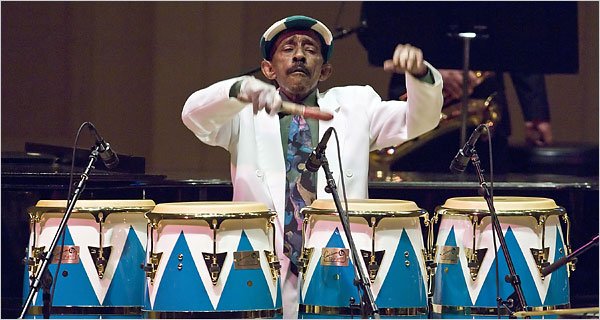
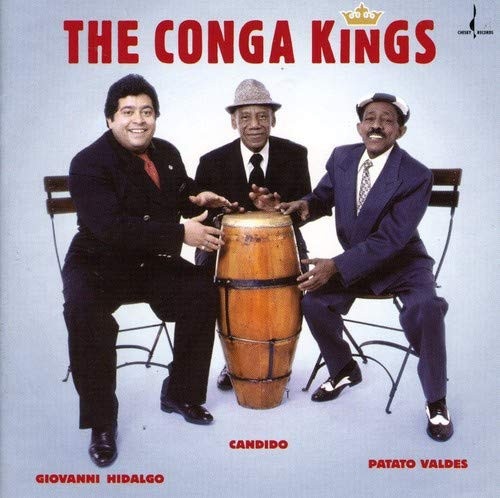
Already recognized as a legend, Patato became more visible in the last 25 years: he had his own band, Afrojazzia, although The Conga Kings, with Cándido and Giovanni Hidalgo, turned out to be more popular.

The Conga Kings Giovanni Hidalgo, Cándido Camero y Patato Valdez

He even made his way onto the modern dance floors, with a remix of San Francisco tiene su propio son. Just as he was returning from playing in California with the Conga Kings, his breathing began to fail.

The plane he was on had to make an emergency landing in Ohio to admit him to a hospital. The 81-year-old percussionist, a heavy smoker, was on his way to his beloved New York, but he would never get there. According to his relatives, he held out until December 4, the day of Santa Barbara, the Afro-Cuban equivalent of Changó, when the cables and tubes that kept him alive were removed.

Valdés died in Cleveland, USA, on December 4, 2007.

Fuentes: http://www.herencialatina.com/Patato/Patato_Valdes.htm

Imágenes: Martin Cohen de Congahead.com

Carlos “Patato” Valdés

You can read: Irakere was a Cuban group that developed an important work in Cuban popular music and Latin Jazz under the direction of Chucho Valdés

  • « Go to Previous Page
  • Page 1
  • Interim pages omitted …
  • Page 33
  • Page 34
  • Page 35
  • Page 36
  • Page 37
  • Interim pages omitted …
  • Page 55
  • Go to Next Page »

International Salsa Magazine (ISM) is a monthly publication about Salsa activities around the world, that has been publishing since 2007. It is a world network of volunteers coordinated by ISM Magazine. We are working to strengthen all the events by working together.