• Skip to primary navigation
  • Skip to main content

International Salsa Magazine

  • HOME
  • Previous editions
    • 2026
      • ISM / May 2026
      • ISM / April 2026
      • ISM / March 2026
      • ISM / February 2026
      • ISM / January 2026
    • 2025
      • ISM / December 2025
      • ISM / November 2025
      • ISM / October 2025
      • ISM / September 2025
      • ISM / August 2025
      • ISM / July 2025
      • ISM / June 2025
      • ISM / May2025
      • ISM / April 2025
      • ISM / March 2025
      • ISM / February 2025
      • ISM / January 2025
    • 2024
      • ISM / December 2024
      • ISM / November 2024
      • ISM / October 2024
      • ISM / September 2024
      • ISM / August 2024
      • ISM / July 2024
      • ISM / June 2024
      • ISM / May 2024
      • ISM / April 2024
      • ISM / March 2024
      • ISM / February 2024
      • ISM / January 2024
    • 2023
      • ISM / December 2023
      • ISM / November 2023
      • ISM / October 2023
      • ISM – September 2023
      • ISM – August 2023
      • ISM July 2023
      • ISM Edition June 2023
      • ISM – May 2023
      • ISM April 2023
      • ISM March 2023
      • ISM February 2023
      • ISM January 2023
    • 2022
      • ISM December 2022
      • ISM November 2022
      • ISM October 2022
      • ISM September 2022
      • ISM August 2022
      • ISM July 2022
      • ISM June 2022
      • ISM May 2022
      • ISM February 2022
      • ISM January 2022
    • 2021
      • ISM December 2021
      • ISM November 2021
      • ISM October – 2021
      • ISM September 2021
      • ISM August 2021
      • ISM July 2021
      • ISM May 2021
      • ISM April 2021
      • ISM June 2021
      • ISM March 2021
      • ISM February 2021
      • ISM January 2021
    • 2020
      • ISM December 2020
      • ISM November 2020
      • ISM October 2020
      • ISM September 2020
      • ISM August 2020
      • ISM July 2020
      • ISM June 2020
      • ISM May 2020
      • ISM April 2020
      • ISM March 2020
      • ISM February 2020
      • ISM January 2020
    • 2019
      • ISM December 2019
      • ISM November 2019
      • ISM October 2019
      • ISM Septembre 2019
      • ISM August 2019
      • ISM July 2019
      • ISM June 2019
    • 2016
      • ISM December 2016
  • Spanish
  • Download Salsa App
    • Android
    • Apple

Search Results for: Pianist

Founder of the Son Latino de Orlando Orchestra Carlos Rodríguez

Who is carlos Rodríguez?

We have been fortunate to talk with founder and bongo player of the Son Latino de Orlando Orchestra, Carlos Rodríguez, who started out with him thanking us for the opportunity to talk a little about the group he leads and how has the process of reaching more and more audiences been.
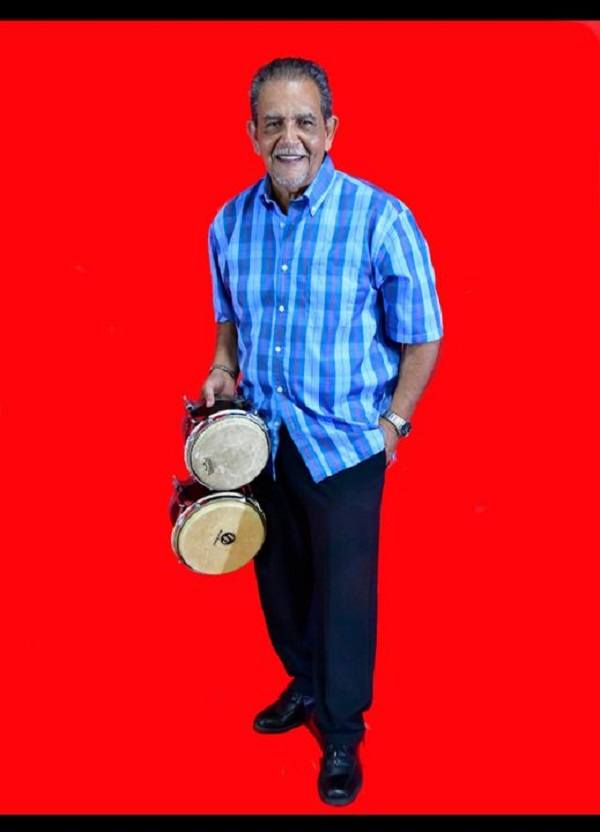
Founder of Son Latino De Orlando and bongo player Carlos Rodríguez

Rodriguez started in the world of music in the 70’s in his native Puerto Rico, where he was part of a few orchestras. His first group was Imperial Orchestra and later he played percussion with Conjunto Secas in the town of Sábana Seca, but it was not long before he created the Sabrosona Orchestra. He started making vocals with Tony Vega and very small performances until he decided to retire for a while and go to Florida.

While in the United States, he realized that his love for music was still intact and decided to form another orchestra in the city of Orlando about eight years ago, which he decided to name ”Son Latino de Orlando ”. It was Carlos himself who decided to name his group that way while he was at home one day, which was when he thought of ”Son Latino” and decided to add ”de Orlando” in honor of the place where they are living and working.

In addition to being the owner and founder, he also plays the bongo, does vocals and plays minor percussion. Another role he plays in the orchestra is to carefully select the members who will become part of his orchestra, but he confesses that he has been lucky enough to have several of the same collaborators for many years, such as Davin Rojas, Rafael Rico, Luis Soriano, Danny Rojas, Chris Torres and Kevin Figueroa (music director of the orchestra and pianist). All of them have been very important in the group’s growth in recent years from their very specific roles. If there are any changes, they are made known to the fans so that they keep it in mind.
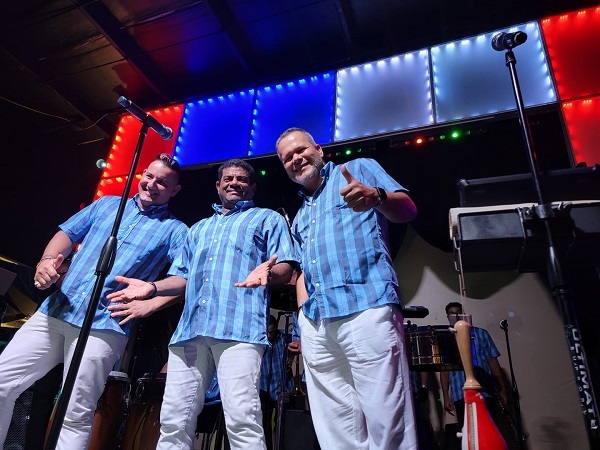
Danny Rojas, Rafael Rico, and Luis Soriano from Son Latino de Orlando

Biggest challenges

Carlos tells us that one of the biggest challenges faced by he and his guys is that those who usually hire their services do not pay what is fair for their work. Club owners are not really interested in paying for a good orchestra that offers a quality show, so they just choose the cheapest.

One of the biggest problems they have had to face is that if contractors consider that those in charge of the orchestra are asking for a very high payment, they will always choose the group that less money demands, no matter its quality is not the best.

Rodríguez makes it clear that at no point does he criticize any colleague for this, since all musicians do what is necessary to survive and excel in the industry through the work they do. However, he thinks that club owners and managers should modify the elements relied upon by them to choose their artists, since the bigger loser is always the audience.

How to balance business affairs with the love for art and music (título 3)

”You have musicians behind you and you have to meet with them. To be able to keep your orchestra, you have to go outside to look for your events and guarantee your work” was the first thing the musician said when we asked him how he balances business with the love for music. It is he himself who is in charge of knocking on the doors of the establishments, making his proposals, waiting for calls, indicating prices, signing contracts and arranging dances. 

He also stated that it is very important to always lay out the terms of each contract so there are no unpleasant surprises such as last minute cancellations or misunderstandings.

Rodríguez performing on stage

How to balance original music with covers

”We always try to have a balance between romantic salsa, melodic salsa and hard salsa,” says Carlos. The orchestra has three singers who take turns on lead vocals depending on the type of salsa to be played, but there are mamy times when they are all combined in one song and adapt to the rhythms.

In all its performances, the orchestra sings both covers with different arrangements and original numbers. Depending on the place and the type of event, they always try to combine the music and build up a whole repertoire based on that specific audience preferences.

Opinion on new talent

On this topic, Rodriguez said that there are very talented new artists, but they must be allowed to grow and be original. ”Just because you have a middleweight name doesn’t mean you have to be arrogant and put aside humility. You have to be willing to listen and learn from the older guys in the business” said the artist.

For the bongo player, the speed of progress in this career makes many talented kids lose the north and get carried away by arrogance and the desire to know everything. He always tries to give advice to the kids who want to devote themselves to music with whom he has the opportunity to talk so that they can do their best.

The whole orchestra performing on stage

Read also: Producer, composer, and singer D’ William tells his story
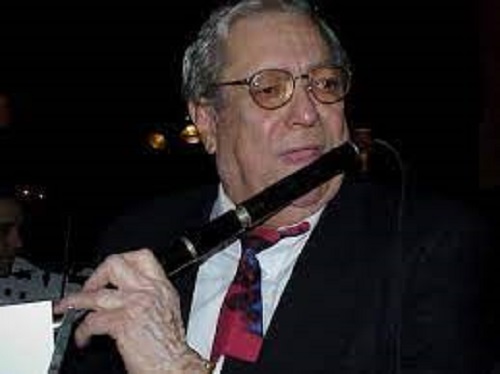
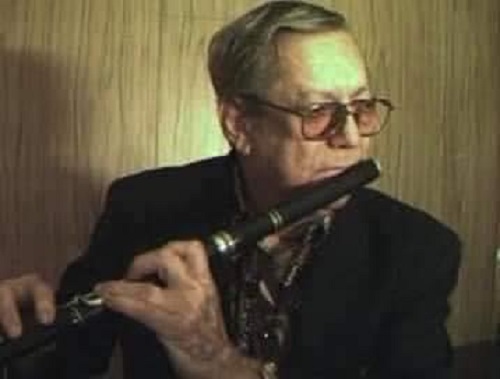
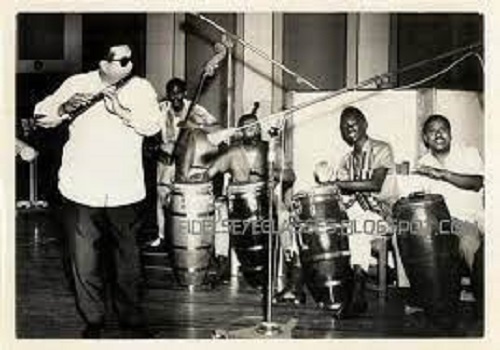
José Fajardo was a virtuoso flutist, composer, orchestra conductor and music producer

José Antonio Fajardo, in the month of November we refer to one of the greatest musicians that the island of Cuba has given in the last century; we are talking about maestro José Antonio Fajardo Ramos: flutist, composer, orchestra conductor and music producer; one of the great promoters of Cuban music represented in the rhythms of bolero, son, guaracha, mambo, chachachá and pachanga.

José Fajardo was born in Guane, province of Pinar del Río in 1919. He began his musical career as a maraquero in his father Alberto Fajardo’s orchestra, later he took up the flute.

From the age of 16 he was part of several groups such as: Joseíto Fernández, Paulina Álvarez, Melodías del 40, La Romance de René Álvarez, the orchestra of maestro Antonio María Romeu, the orchestra of pianist Luis González Valdés: “Neno” González and the orchestra of Antonio Arcaño, known as Arcaño y sus Maravillas.

José Fajardo fue un virtuoso flautista

After his time in these famous groups, in 1949, Fajardo created his own orchestra called Fajardo y sus Estrellas, with musicians such as: Orlando “Cachaito López”, René Fernández on piano, violinists Ignacio Berroa and Félix Reyna, who was also the composer; percussionist Jesús Esquijarrosa on timbales; Carlos Real on tumbadora and Rolando Valdés on güiro; in the vocal part he initially integrated Joseito Valdés.

In the early fifties, with the boom of chachachá in 1951, things improved a lot and the charangas orchestras began to perform in the best cabarets, aristocratic salons and private parties of high society, such as the Montmatre and Tropicana cabarets.

Fajardo became internationally known in the mid 50’s at the head of his orchestra, Fajardo y sus Estrellas, he was the first charanguero to introduce the cymbals to the timbal and the pioneer in the incorporation of the cowbell and the bongo to the charanga, his group was one of the sensations of the golden age of chachacha and pachanga.

After going into exile in the 1960s, he toured Asia, Africa, Europe and Latin America, popularizing an eminently Cuban repertoire.

Maestro José Fajardo has been one of the only musicians who have stood out in different periods of Latin music; initially in Cuba, in the 50’s with the arrival of Chachachá, later in the era of Pachanga and Boogaloo, in the sixties in the United States, and he also came to prominence in the golden era of salsa in the seventies and eighties of the last century.

In the seventies, eighties and later, the flute master recorded with Joe Quijano & His Conjunto Cachana, Tico-Alegre All Stars; Ray Barretto and Adalberto Santiago; Johnny Pacheco, Pupi, Javier Y Su Charanga; Jimmy Sabater, Orlando Contreras, Alfredo Valdés Jr, Fania All Stars, Louie Ramirez, Graciela and Mario Bauza, Israel “Cachao” Lopez, with our great Joe Arroyo in the nineties and with Hector Casanova, Mario Muñoz, Andy Gonzalez, Eddie Montalvo, Manny Oquendo, Alfredo “Chocolate” Armenteros, Carlos “Patato” Valdes, Alfredo Rodriguez and Francisco Aguabella.

After a brilliant musical career spanning more than six decades, Maestro José Antonio Fajardo passed away in New York City on December 11, 2001, leaving an enormous legacy to our culture.

José Fajardo fue un virtuoso flautista, compositor, director de orquesta y productor musical

The great musical contribution of this portentous son of Pinar del Rio, has highlighted him as the highest flute of Cuba and Latin America, a true ambassador of Cuban music and salsa in the world; from our beautiful page ‘Los Mejores Salseros del Mundo’ we want to highlight the enormous artistic career of maestro José Antonio Fajardo Ramos as a tribute to his wonderful musical work.

José Antonio Fajardo,  uno de los más grandes músicos que ha dado la isla de Cuba

José Fajardo Jr.

You can read: Ángel Bonne He was part of Juan Formell’s Los Van Van Orchestra, and collaborated with the impressive Irakere band of maestro Chucho Valdés

EFG London Jazz Festival

Commemorates 30 Years With A Display Of International Latin Jazz Artists

The first seasons of the EFG London Jazz Festival took place in May

EFG London Jazz Festival celebrates its 30th birthday with the innovation and musical freedom that has always characterized the London Jazz scene.

This festival, the largest and in constant transition in North London, opens its space from Friday, November 11th to Sunday, November 20th to present a program of live and digital presentations with world-class artists, emerging talents, collaborations specials, avant-garde sounds, and the latest music for a massive audience that has established the EFG London Jazz Festival https://efglondonjazzfestival.org.uk/ as one of the main international Jazz events in Europe.

This emblematic event in the United Kingdom has three outstanding aspects that have characterized it over the years, they are Character, Impulse, and Wealth. The Character is evidenced in each edition with the contribution of special collaborations, discoveries, and exclusive commissions. The second aspect of this festival is the Impulse, being this event the highlight of the Jazz calendar in the capital. Finally, the third aspect is the Wealth that can be easily found in a club or concert hall packed with spectators to enjoy 300 live shows in more than 70 places attracting around 100,000 people daily.

In this 2022 edition, the star lineup is represented by nine international Latin Jazz artists such as Fiona Ross (Friday, November 11th), Katriona Taylor Quintet presenting “La Reina de la Bossa Nova” (Saturday, November 12th), Yuri Hernández (Sunday, November 13th), Colectiva (Thursday, November 17th), Mexico’s Woman of the Year for Arts and Culture, Migdalia Van Der Hoven (Thursday, November 17th), the Jazz/Latin group led by Steve Rubie from the 606 Club, Samara (Friday, November 18th), Trombonist Laura Impallomeni (Saturday, November 19th), Osvaldo Chacón (Sunday, November 20th) and Chucho Valdés (Sunday, November 20th).

L I V E   B A N D S

Fiona Ross

 “Voices celebrate the power, connection, and expression of song, beauty, and aptitude…”

At fourteen she lied about her age to play weekend Jazz clubs in London. Photo: Alexander Barnes-Ross

Vocalist, pianist, songwriter, and producer, Fiona Ross, has become known for having an authentic contemporary Jazz sound obtained by mixing the fast rhythm of Latin Jazz, a brief flirtation with vintage Jazz, a bit of Neo Soul, and a touch of melancholy ballads.

Multi-award-winning Jazz artist, editor-in-chief, journalist, and founder of the award-winning organization Women in Jazz Media Fiona Ross was Director of the British Academy of New Music in London for nearly a decade, where she was responsible for the formation of Ed Sheeran, Rita Ora, among many others. Fiona’s date will be on November 11th at 8:30 PM at the London Polish Jazz Café Posk (238-246 Kings St. W6 0RF), and the ticket is £15.

Yuri Hernández + DJ Flecha

 “…Celebrating unity with the power of music.”

Many describe her album Loco Soñador as “a wild and sensual masterpiece.”

This multifaceted 10-day event brings to its lineup the established singer within the Latin music industry for the last two decades, Yuri Hernández. The establishment that will host it will be Juju’s Bar & Stage (Ely’s Yard, 15 Hanbury St, London E1 6QR) on Sunday, November 13th from 6 PM, and the cost of the ticket doesn’t exceed £9.

Hernández is one of the most sought-after musicians in northern Spain and is introduced to the UK Latin Jazz scene through Loco Soñador, his second studio album released in 2020. Joining this musical genius will be DJ Flecha (Joel Verdecia) with his supporting act promoting Cuban music. This veteran DJ (25 years of career) has been nominated three times as Best Latin Tropical DJ in a European country for his technique and originality when mixing.

Colectiva & Osvaldo Chacón

“Beyond the margins, some of the most innovative artists at the forefront of Jazz are pushing its limits and expanding the definition of the genre while drawing influences from a wide range of other languages.”

Osvaldo Chacón and his band have played at the Royal Festival Hall, among many others.

This Afro-Latin and Jazz music band, Colectiva, reflects on themes of sisterhood and female empowerment. They are rooted in the sounds of Africa, Latin America, and the diaspora, creating a genre that the group has dubbed Jazz Tropicaliente (Hot/Tropical/Jazz). Their debut single is Under The, written in collaboration with pianist María Grapsa and released in April 2021. This track received great support from global radio stations and famous DJs in the music industry.

Colectiva will be presented on November 17th at 8:30 PM at the London Kings Place-Hall Two-(90 York Way, N1 9AG), and tickets have a permanent price of £15.

On the other hand, Osvaldo Chacón’s band is the leading Timba orchestra in the UK and has been nominated multiple times for the prestigious LUKAS awards. Osvaldo Chacón, composer, producer, and singer-songwriter, has shared the stage with great Salsa figures such as Adalberto Santiago, Azuquita, Tito Allen (Fania All Stars), Salsaceltica, Eddie Palmieri, as well as the greatest world-famous stars such as Celia Cruz, Oscar D’León, Rubén Blades, and Alberto “El Canario”. Supporting Osvaldo Chacón will be DJ Javier La Rosa mixing Salsa, Cuban Timba, Reggaeton, Latin Hip-Hop, and R&B. Sunday, November 20th is the date when you can enjoy these presentations. Time: 8 PM. Venue: Juju’s Bar & Stage. Ticket: £10.

Chucho Valdés

 “The Icons are the living legends of Jazz and the leading heroes of the genre who paved the way and continue to create, inspiring artists, and audiences alike.

Valdés, with his valuable contribution, has given direction to Afro-Cuban Jazz

The EFG London Jazz Festival brings the Cuban pianist, composer, and arranger Chucho Valdés, who celebrates his 80th birthday with his extraordinary work La Creación with the Yoruban Orchestra and Hilario Durán & John Beasley.

The winner of six Grammy Awards and three Latin Grammy Awards is the most influential figure in Afro-Cuban Jazz of the 20th and 21st centuries. In an extensive career spanning six decades, Valdés has pushed the boundaries of new expressions in Afro-Cuban music. His influence and inspiration in the genre are immeasurable to the point that his work sets the standard by which new generations are governed and drives their careers. To see Chucho Valdés head to the London Southbank Center (Royal Festival Hall, Belvedere Road SE1 8XX) at 7:30 PM. and tickets range from £30 – £45.

Along with Chucho will be the cellist, vocalist, composer, and niece Ana Carla Maza. Within her discography is the album La Flor (2020) which incorporates Latin rhythms, Pop melodies and Jazz harmonies along with classical techniques. Bahía (June 26, 2022) is her most recent production inspired by Cuban Son, Samba, Bossa Nova, Tango, Jazz, and Chanson with a rich mix of classical cello and voice.

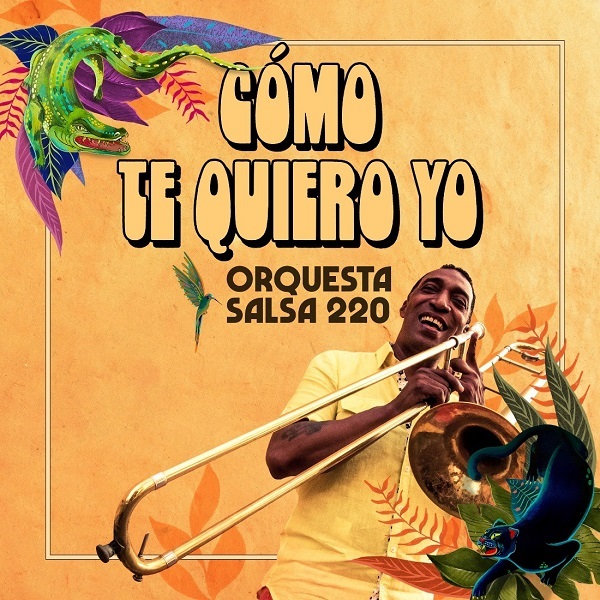
The recently released single “Cómo te quiero yo” is the preview of what will be the album, Sabrosura y Tradición, soon to be released also in acetate.

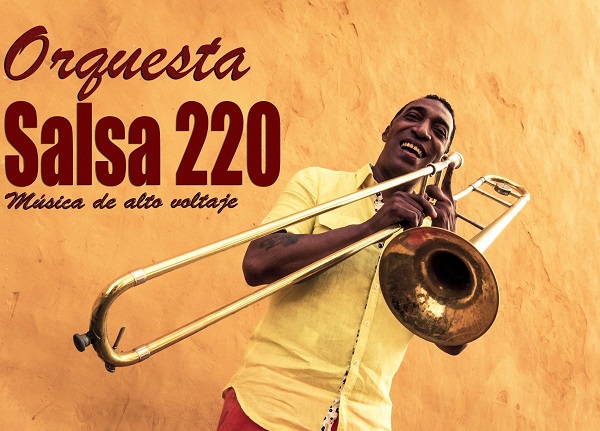
With a fifty-year career in music, the leader of the Salsa 220 Orchestra, Colombian trombonist Oscar “El Gato” Urueta releases the second song of the musical concept he now directs.

“El Gato” delivers his latest single “Cómo te quiero yo”, composition and arrangement by Venezuelan pianist Alberto Crespo; this time with Rodrigo Mendoza, remembered for his time with Dimensión Latina de Venezuela, on vocals. Urueta got in touch with Alberto Crespo after seeing his work in social networks.

This single, in my opinion, deserves international diffusion because of the Afro-Caribbean interpretation in this concept described by Urueta himself as high-voltage salsa.  I listened to the track and I feel obliged to highlight it for bringing us a classic salsa concept, without being more of the same; so let’s go to the mambo, here is what you hear:

During the first 10 seconds, Rodrigo Mendoza leads the vocal part opening the theme as if opening a door; inviting the listener to go on a musical journey that merges various cultural influences.

At the first minute mark it is already known that the trombones of Oscar “El Gato” Urueta and Eliel Rivero are in charge of the musicalization.  At minute 1:45, Alberto Crespo’s piano solo delights us without making it dense.

This piano solo, from which the salsa dancer who dances in tune can benefit, seems to embrace in perfect synchrony the sound of José Soto “Mortadelo”‘s bass.

At minute 2:30 the trombones take over the song, and melodically give way to the tumbadora, in the hands of Carlos Padrón; meeting with the sound of the same in a tasty instrumental correspondence full of cadence and Caribbean flavor.

At minute 2:36, the bass of José Soto embraces again the sound of the tumbadora.

At minute 2:40 the tumbadora turns on the mambo. At minute 2:42 the tumbadora leads the percussion, opening the way for a bell that plays with the coros of Luisito Cabrera, Rodrigo Mendoza and Edgar “Dolor” Quijada, as well as interweaving with the trombones.

The trombones persist and sustain a mambo of those that bring “more salsa than pesca’o”, as we say in Puerto Rico; until around minute 2:55 the conga, the timbal and the bell execute a forceful cut and in unison, to return the arrangement to the trombones.

At minute 4:00, the leader’s trombone seems to be in sync with the percussion and vocalist to close the track; shortly after the trombones enter into a brief correspondence with the tumbadora, just before Padrón’s campaneo concludes the track at minute 4:25.

Urueta has a healthy musical trajectory, surrounded by the greats of the salsa sound.  “El Gato” was part of the Colombian orchestra La Protesta, when Joe Arroyo was the group’s vocalist. Urueta was also part of the now world renowned Grupo Niche, replacing Alexis Lozano on trombone. Urueta traveled to New York City with Grupo Niche as part of the first international tour of the group founded by the late Jairo Varela. He later settled in Miami where he was part of the orchestras that accompanied stars such as Frankie Ruiz, Hansel y Raúl and Santos Colón, to name a few.

Coincidentally, “El Gato” Urueta joined Hansel y Raul’s orchestra when the song ‘Maria Teresa y Danilo’ had become a hit throughout Latin America. Urueta shared the stage with musicians of the stature of Israel López “Cachao”.

In the 1990s, Urueta was a musician with Joe Arroyo’s Orquesta La Verdad, with whom he traveled around the world.

After participating in several concerts accompanying Richie Ray and Bobby Cruz, about five years ago, Urueta took on the task of forming the Orquesta Salsa 220 with which he presented the single “Guaguancó sabroso”, which featured Puerto Rican Rico Walker as guest artist on vocals.

“Cómo te quiero yo” is the preview of what will be the album: Sabrosura y Tradición, soon to be released also on acetate.

Bella Martínez

You can read: Sigo entre amigos de Luis “Perico” Ortiz


By Bella Martinez, ISM Correspondents, San Juan, Puerto Rico

International Salsa Magazine presents Alexander Abreu and his Habana de Primera

International Salsa Magazine presents a Cuban musician today considered by critics as one of the best trumpet players of the moment in Cuba and probably in the whole world.

He is Alexander Abreu Manresa, born on September 6, 1976 in Cienfuegos.

Owner of innate conditions and a unique talent to play the trumpet in a wonderful way.

Alexander Abreu, in spite of his youth, equals greats of the instrument such as El Guajiro Mirabal, Arturo Sandoval or Dizzy Gillespie, without ignoring that as a singer he has a melodious voice and, as if that were not enough, he also works as a composer and musical director.

He began playing trumpet at the age of ten, he studied music at the conservatory of music in his hometown Cienfuegos and at the National School of Art where he graduated in 1994 and in that same institution has served as a teacher, the impeccable way of playing his instrument allowed him to reach the top in Cuban music with only twenty years of age; he was part of the Cuban jazz group Irakere, worked with exponents of Cuban Timba Paulo FG and Issac Delgado and his Orchestra.

On the other hand, he has made recordings in other genres with musicians, composers and singers such as:

Armando Anthony Corea, known as Chick Corea, is an American jazz pianist, keyboardist and composer.

Arnaldo Rodríguez, young talented arranger, composer, singer and director of the Cuban Musical Group Arnaldo y su talismán, born in Ciego de Avila, Cuba.

Baby Lores, musician, singer and arranger from the city of Cienfuegos, the Pearl of the South.

Hugh Ramopolo Masekela, trumpeter, flugelhornist, cornetist, composer and South African jazz singer from South Africa.

James Morrison Catchpole, English soul and pop rock singer, songwriter and guitarist.

Luís Represas, Portuguese singer and composer.

Ron Sexsmith, Canadian singer-songwriter.

Alexander Abreu created, in 2007, his own group, which he called Havana D’ Primera, with several of the most talented Cuban musicians, the first presentation of the band took place on October 4, 2008 at the Cabaret Turquino of the Habana Libre Hotel in Havana.

With Havana D’ Primera, he has made three albums, they are: Haciendo Historia in 2011, Pasaporte in 2013 and La Vuelta al Mundo in 2015.

He has also released the singles: Rosa la Peligrosa, Me Dicen Cuba and Prohibido. Alexander Abreu Manresa is trumpet and lead vocalist of Havana D’ Primera, as well as composer, arranger and musical director of the group.

This work aims to highlight the enormous and excellent musical career of one of the best musicians of the island of Cuba in the new generation, with just thirty-eight years of age, the music of Alexander Abreu has transcended borders, his recordings exceed one hundred albums in different countries and in multiple musical genres.

From our website, we want to highlight the magnificent musical career of Alexander Abreu Manresa.

Despite his youth, Alexander Abreu’s musical gifts and excellence have allowed him to play and record with a great number of musicians and groups, not only in his native Cuba, but also in other countries of the world, to mention a few, we have then, as far as our music is concerned: Adalberto Álvarez, Amaury Pérez, Andy Montañez, Irakere, Juan Manuel Ceruto, Klimax, Mayito Rivera, Orquesta Sinfónica Nacional, Pablo Milanés, Pachito Alonso, Team Cuba, Teresa García Cataurla, Van Van and Yurumí y sus Hermanos.

Havana D’Primera nominated to the Latin Grammy Awards 2022

“We are nominated once again for the Latin Grammy Awards, this time with the album Será que se Acabó. But it’s not just me. Cuban music is nominated, which is reflected in this album with all the energy. I think it’s the most powerful album I’m going to make in the history of my life.” This is how Alexander Abreu announced the magnificent news.

Será que se Acabó, Havana D’Primera’s latest album, was nominated for the 2022 Latin Grammy Awards in the category of Best Salsa Album.

“At The Latin Recording Academy, we continually strive to support and encourage Latin music creators, and these nominees epitomize musical excellence and represent the great moment our music is going through,” said Manuel Abud, CEO of The Latin Recording Academy.

Alexander Abreu & Habana de Primera

You can read: Yissy García Calzadilla, former member of the Anacaona Orchestra, plays drums, timbal and bongo

  • « Go to Previous Page
  • Page 1
  • Interim pages omitted …
  • Page 35
  • Page 36
  • Page 37
  • Page 38
  • Page 39
  • Interim pages omitted …
  • Page 55
  • Go to Next Page »

International Salsa Magazine (ISM) is a monthly publication about Salsa activities around the world, that has been publishing since 2007. It is a world network of volunteers coordinated by ISM Magazine. We are working to strengthen all the events by working together.