• Skip to primary navigation
  • Skip to main content

International Salsa Magazine

  • HOME
  • Previous editions
    • 2026
      • ISM / March 2026
      • ISM / February 2026
      • ISM / January 2026
    • 2025
      • ISM / December 2025
      • ISM / November 2025
      • ISM / October 2025
      • ISM / September 2025
      • ISM / August 2025
      • ISM / July 2025
      • ISM / June 2025
      • ISM / May2025
      • ISM / April 2025
      • ISM / March 2025
      • ISM / February 2025
      • ISM / January 2025
    • 2024
      • ISM / December 2024
      • ISM / November 2024
      • ISM / October 2024
      • ISM / September 2024
      • ISM / August 2024
      • ISM / July 2024
      • ISM / June 2024
      • ISM / May 2024
      • ISM / April 2024
      • ISM / March 2024
      • ISM / February 2024
      • ISM / January 2024
    • 2023
      • ISM / December 2023
      • ISM / November 2023
      • ISM / October 2023
      • ISM – September 2023
      • ISM – August 2023
      • ISM July 2023
      • ISM Edition June 2023
      • ISM – May 2023
      • ISM April 2023
      • ISM March 2023
      • ISM February 2023
      • ISM January 2023
    • 2022
      • ISM December 2022
      • ISM November 2022
      • ISM October 2022
      • ISM September 2022
      • ISM August 2022
      • ISM July 2022
      • ISM June 2022
      • ISM May 2022
      • ISM February 2022
      • ISM January 2022
    • 2021
      • ISM December 2021
      • ISM November 2021
      • ISM October – 2021
      • ISM September 2021
      • ISM August 2021
      • ISM July 2021
      • ISM May 2021
      • ISM April 2021
      • ISM June 2021
      • ISM March 2021
      • ISM February 2021
      • ISM January 2021
    • 2020
      • ISM December 2020
      • ISM November 2020
      • ISM October 2020
      • ISM September 2020
      • ISM August 2020
      • ISM July 2020
      • ISM June 2020
      • ISM May 2020
      • ISM April 2020
      • ISM March 2020
      • ISM February 2020
      • ISM January 2020
    • 2019
      • ISM December 2019
      • ISM November 2019
      • ISM October 2019
      • ISM Septembre 2019
      • ISM August 2019
      • ISM July 2019
      • ISM June 2019
  • Download Salsa App
    • Android
    • Apple
  • Spanish

Search Results for: Roberto Blades

Rubén Blades: What a magnificent way to celebrate 70 years of life and 50 of career!

North America / USA / Miami

Rubén Blades

The author of many of the most popular hits in the history of salsa, reached the seventh decade and music has not stopped playing for him.

The indisputable social sense of his songs made the difference in times when the themes of every other song were about love and unloved.
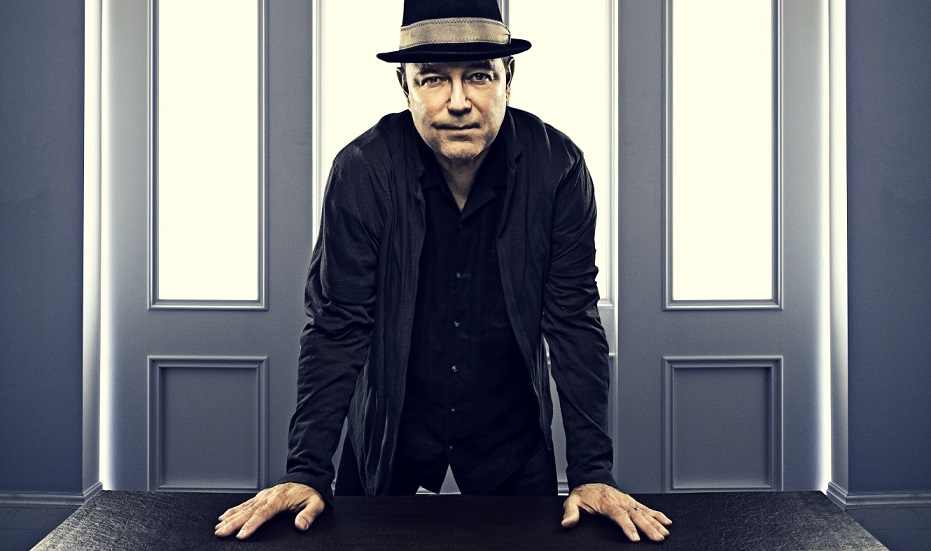
Rubén Blades
Rubén Blades

“The poet of salsa” was born on July 16, 1948 in a humble family, in Panama City, leaded by musicians, because his father was a percussionist and his mother was a pianist.


With an amazing multifaceted nature, Blades was the first in his family to go to college; so music was a hobby, like any other. Shortly after graduating as a lawyer, he arrived to Miami running away from Omar Torrijo’s dictatorship.


Since the time of Fania, he has walked through different currents of the same genre and composed the song Patria, which is still the second national anthem of his native Panama. In his last awarded albums, he returns to the company of great orchestras and to an intentional change in his voice to give nostalgia airs to the songs he sings. He has won 17 Grammy Awards and has been nominated 3 times for the Emmy Awards.


He has ventured into film, television and politics. His deeply critical nature does not allow him to ignore injustice and the abuse of power, and does not skimp on making his point of view known. Recently, he hinted his presidential aspirations in Panama for the 2019 elections, and this would not be his first time at the presidency’s run. In addition, he was Minister of Tourism between 2004 and 2009.
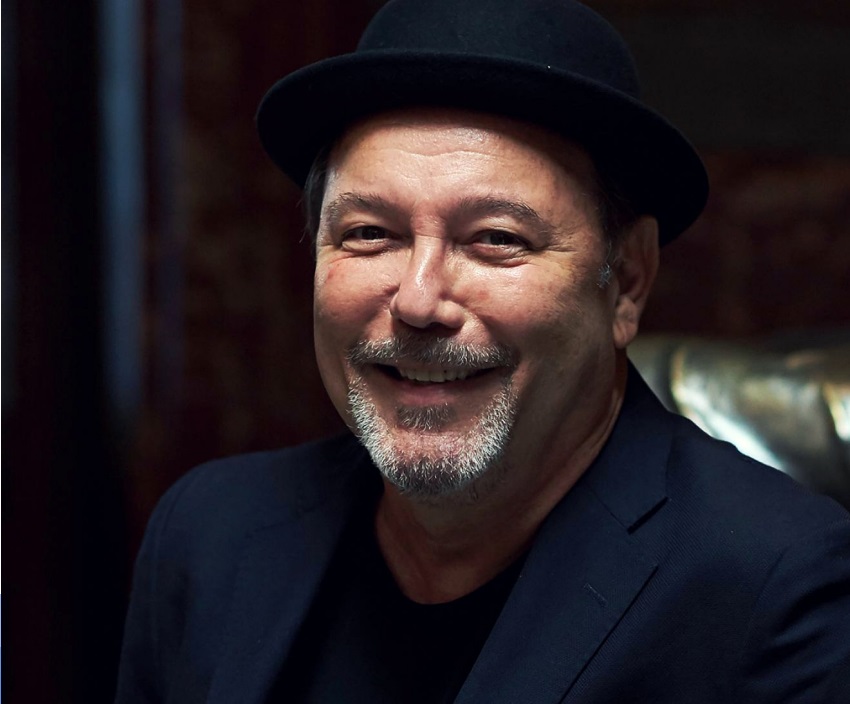
Photo of Rubén Blades

Blades has acted in 35 films and three series, and we must add the recently released documentary, “Yo no me llamo Rubén Blades” directed by Abner Benaim. Apart from his apparition in the popular TV series “Fear The Walking Dead”, he recently participated in the film “Hands of Stone” about the mythical Panamanian boxer Roberto “Manos de Piedra” Durán. There is no artistic space which Blades has not dabbled in.


How does he celebrate 70 years of life and 50 of career?

Singing! Although he has stated on several occasions that he wants to devote himself to other artistic facets and perhaps on purpose, he has allowed himself to think retired and then reappear with excellent albums like “Cantares del subdesarrollo” or, “Medoro Madera” the truth is that everybody is wondering, what will Rubén Blades do now, will he retire?

Rubén Blades
Rubén Blades

Currently, Blades writes opinion articles and publishes them on his website www.rubenblades.com, while on tour with the Panamanian group Roberto Delgado & Orquesta, until September. As if that was not enough, he prepares a book of poems, two scripts for cinema, is considering a couple of offers for the big screen, and will continue promoting the documentary “Yo no me llamo Rubén Blades” that although HBO has not revealed when it will be released on TV, will continues its journey in film festivals, and on cinema until August 30th in Panama, and 31th in Mexico to start the next premieres.


As a cherry pie will keep us in suspense about his possible presidential candidacy, because ” “antes necesito saber lo que el país quiere y si está dispuesto a abandonar el clientelismo a cambio de un plan nacional a largo plazo” Likewise, Blades clarified that ” no es algo que esté ya decidido “, it is a possibility, which requires society’s “apoyo masivo”.


This year near his 70th birthday, he affirmed without doubts:  ” No me despido de los escenarios, sino de las giras de salsa. En este momento tengo muchos otros planes y proyectos y, a mi edad, tengo que priorizarlos”.
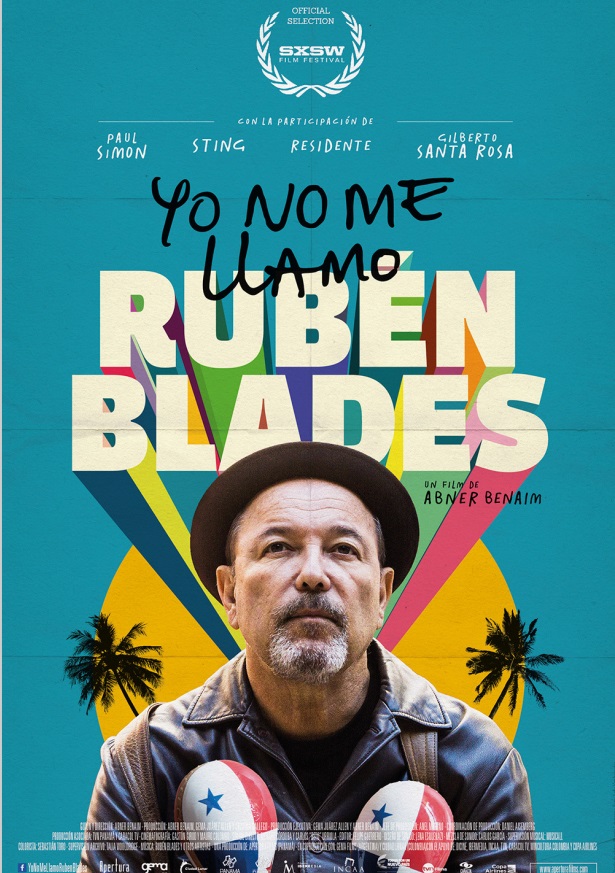
Yo no me llamo Rubén Blades

Anyway, Rubén Blades is that salsero that integrated action and politics into his social struggle. What else can we ask of him?

Rubén Blades’ National Tour

Review of Rubén Blades’ National Tour

The Ruben Blades concert at Oakland’s Paramount Theatre on Saturday, November 20th was sensational!  The anticipation of the packed intergenerational crowd to his first visit In 18 years was at a high peak.

Rubén Blades while singing
Rubén Blades while performing

Blades wowed the audience with a stunning performance backed by bassist Roberto Delgado’s dynamic Big Band.

Rubén Blades and his orchestra
Rubén Blades and Roberto Delgado’s Big Band

Ruben’s powerful voice was as crystal clear as when he started his career with Ray Barretto back in 1974.

Rubén Blades' great voice
Rubén Blades’ voice was incredible

Latin Grammy for Salswing!

His set list was a retrospective into his vast and deep repertoire that included his big hits, crowd favorites, esoteric song choices and selections from his Latin Grammy award winning album Salswing!

Rubén's stage
The lighting environment on stage was amazing and varied

The musicianship that accompanied Blades was top notch as Roberto Delgado’s crack band were tight, explosive and swinging!

Ruben's band
The performance of Roberto Delgado’ band was very appropriate for the show

The visuals projected on the huge screen above Ruben were imaginative displaying photo tributes to Hector Lavoe as well as to recently deceased Latin music giants and clever animation that was the backdrop for songs.

Tribute to Pérez-Bidó
Tribute to Carlos Pérez-Bidó displayed by the screen above Ruben Blades

This was a triumphant return to the SF Bay Area for Blades who last played a concert here in 2003 at Roccapulco.

Blades in front of his orchestra
Triumphant return to the San Francisco Bay Area for Rubén Blades

He performed for 2 hours and 40 minutes to the delight of the massive crowd.  What a show!!

Blades' two-hour show
Rubén Blades’ two-hour show delighted the audience

BY LUIS MEDINA, PRODUCER AND HOST OF CON SABOR ON KPFA 94.1 FM AND SABIDURIA CON TUMBAO ON WORLD SALSA RADIO.COM

Do You Know In Which Country Rubén Blades Start his Tour?

The United States Will Be The First Country Where The Panamanian Artist Will Present Salswing Tour!

Rubén Blades with blue hat on stage
Rubén Blades will be recognized as “Person of the Year” at the Latin Grammys on November 17th in sin city, Las Vegas (Nevada)

The multifaceted artist and political activist, Rubén Blades, announced his return to the American stage with his friend and fellow countryman Roberto Delgado & Big Band, starting next November 20th.

The Salsero icon announced the beginning of his tour through his official Facebook account: “We are very happy to be able to work and get in touch with our audience again, after almost two years without being able to do so. With the Roberto Delgado Big Band, an orchestra of 20 musicians that is sounding better, we are eager and want to share our latest album Salswing!, and the usual songs… Please, don’t stop getting vaccinated”.

There are eight cities that the living Salsa legend will visit in North America, starting on November 20th in Oakland (CA), Los Angeles (CA), Atlanta (GA), Miami (FL), passing through Boston (MA), and New York (NY) on November 28th and December 2nd respectively, and having as a special guest the extraordinary American actress, singer, and wife of Blades, Luba Manson who will be showing the repertoire of her Jazz album Triangle released in October 2020.

Rubén Blades with black hat and Luba Mason with white shirt
Rubén Blades and Luba Manson have been married since 2006

Later, Salswing Tour! & the Roberto Delgado Big Band will present their penultimate concert this year on Friday, December 3rd in Washington (DC), and will close this magnificent tour on Sunday, December 5th on the southwest shore of Lake Michigan at the mighty Arena Arie Crown Theater in Chicago (IL).

Regarding this great 2021 tour, Nelson Albareda, CEO of Loud And Live, the company in charge of carrying out this series of concerts and those of Latin stars such as Carlos Vives, Juanes, Farruko, among many others, commented: “It is an honor for us working with a Latin icon, who has inspired generations through his salsa music and long artistic career. Rubén Blades is not only a great artist but also a great ambassador, and activist for our Latin community”.

The prestigious Panamanian songwriter will show for the first time the eleven songs of his most recent album “Salswing!” title that also gives the name to the tour.

Digital album cover Salswing! in red background and yellow letters
“Music is a universal gift, and from Panama, we renew our contribution with this album, SALSWING!”. Rubén Blades

Salswing! has 11 tracks including, Mambo Gil, Cobarde, Canto Niche, and Ya No Me Duele, the latter written by Jeremy Bosch and Rubén Blades with arrangement by Tom Kubis. Salswing! was recorded in collaboration with the record’s bassist and musical producer, Roberto Delgado, and his band made up of 20 talented Panamanian musicians, and it was released on the digital market on April 15th, 2021.

“Although the connection between Jazz and Salsa has been historically documented, much remains to be described and recognized. The combinations and collaborations between musicians of these genres have been numerous over the years and include figures of the stature of Mario Bauza & Dizzy Gillespie, Machito & Charlie Parker, Luis Russell, and Louis Armstrong. With this record production, I try to continue that relationship, verifying that art does not have a nationality but rather represents a spirit that transcends races, geographies, and languages”. It is extracted from his official page.

Rubén Blades has been performing with Roberto Delgado & Bing Band for ten years in the most prestigious stages around the world. In these eight concerts, there will be a historical tour of recognition of the Latin origins of jazz as well as the influences of the son, Afro-Caribbean music, and swing. In addition to including the hits always chanted by the crowd in any corner of the planet.

  • You Can Keep Reading: Meet The Amazing Fasching Jazz Club In Sweden

Who Is Roberto Delgado?

Roberto Delgado dressed in black holding a Grammy in his hand
Roberto Delgado and his Orchestra along with Rubén Blades won a Grammy for Best Latin Tropical Album in 2018

Roberto Delgado was born in the capital of the Chiriquí province in western Panama on June 27th, 1961. This prodigious artist has developed in the musical environment as a Producer, Singer, Bassist, and Arranger.

His upward career began with his studies at the prestigious Conservatory of Music of Fine Arts in Mexico City (Mexico) and later at the Golden West College of Huntington Beach California (United States).

With more than 40 years of experience, Roberto has been a member of ten Panamanian groups counting the Salsa singer orchestra, Roberto Blades (1992) and he is currently the director of his big band made up of 20 musicians and with whom he has shared the stage since 1996 together with the master Rubén Blades.

In the enormous list of famous artists that Delgado has accompanied in productions and tours in addition to the Blades brothers are Cheo Feliciano, Celia Cruz, Gilberto Santa Rosa, Ismael Miranda, Andy Montañez, Tito Nieves, La India, Víctor Manuelle, José Alberto “El Canario”, Luigie Texidor, Maelo Ruiz, Charlie Aponte, Joan Manuel Serrat, Carlos Vives, and many more.

The conductor together with Rubén Blades has performed on the major international stages, including Madison Square Garden (New York), Hollywood Bowl (Los Angeles), Shepherd’s Bush (London), Poble Espanyol de Barcelona (Spain), numerous Latin American auditoriums, and acclaimed festivals in Europe and the Caribbean.

Also, this duo has three Latin Grammys (2015, 2017) and two Grammys for Best Traditional Tropical Latin Album in 2016 and 2018.

Currently, Roberto Delgado (60 years old) and Rubén Blades (73 years old) continue to transgress the barriers that will be the first Latin artists touring Salswing! in the middle of the pandemic throughout the North American territory.

An important fact to attend the Rubén Blades and Roberto Delgado & Big Band concert series in Los Angeles County is mandatory to wear masks. At the moment, mandatory vaccination in the United States only applies to public employees and workers of large companies.

It is indisputable that the most popular orchestra in Puerto Rico and South America during the 1970s was Roberto Roena’s Apollo Sound.

On July 20, 1969 the orchestra “El Apollo Sound” of the great Puerto Rican musician Roberto Roena was born. Together with trumpeter Elías Lopés he founded “El Apollo Sound”.

This name comes from the first rehearsal of his group, which coincided with the day of the launching of the Apollo rocket to the moon.

Roberto Roena recorded 10 albums in nine years for the Sello Internacional, part of the Fania label, and although he was not a great student of music, he was able to surround himself with very good musicians and use his talent to form his own group, which is now in its fiftieth year.

It is indisputable that the most popular orchestra in Puerto Rico and South America during the 70s was Roberto Roena’s Apollo Sound.

The name comes from the first rehearsal of their group, which coincided with the day of the launch of the Apollo rocket to the moon.
On July 20, 1969 the orchestra “El Apollo Sound” of the great Puerto Rican musician Roberto Roena was born.

“Lucky 7” was his seventh release in front of Apollo with the Fania International label, after his discreet debut as leader with Los Megatones and after a fruitful career as bongocero of Rafael Cortijo’s Combo and Rafael Ithier’s El Gran Combo.

With “Lucky 7” Roena consolidated his popularity on a continental level thanks to the arrangement of an innovative song that challenged the schemes of the overwhelming salsa sound institutionalized in New York during the decade: “Mi desengaño”, by Julio Merced and Pucho Soufront.

With "Lucky 7" Roena consolidated his popularity on a continental level thanks to the arrangement of an innovative song that challenged the schemes of the overwhelming salsa sound institutionalized in New York during the decade: "Mi desengaño", by Julio Merced and Pucho Soufront.
“Lucky 7” was his seventh release in front of the Apollo on the Fania International label.

In 1976 the Apollo and its new singer Papo Sánchez, pride of Hatillo, climbed the charts with a nostalgic lyric inspired by unrequited love. In his arrangement, trombonist Merced himself incorporated the cadence of the samba, linked through its bars with a son covered with the nuances of bossa nova, jazz and bomba.

The hit “Mi desengaño” invited many to reinvent their sound and reformulate their proposals in salsa, with more elaborate arrangements and harmonic sophistication, such as those made in New York by Marty Sheller for Willie Colón.

In addition to the brilliant debut of Papo Sánchez, the excellence of “Lucky 7” rested on the arrangements and orchestrations of such great musicians as trumpeters Luis ‘Perico’ Ortiz and Elías Lopéz, pianists Papo Lucca and Jorgito Millet and the King of the Bass, Bobby Valentín.

The sequence begins with the guaguancó “Que me castigue Dios”, performed by Sammy ‘El Rolo’ González, Apollo’s star singer until “La 8va. Maravilla”, their next album. In “Que me castigue Dios” we hear at the end the then incipient Rubén Blades with the declamation of some verses that today would deserve the repudiation of feminist organizations, but that in 1976, were applauded by the prevailing macho sociology in the industry:

Roberto Roena y su Apollo Sound
“La 8va. Maravilla” Roberto Roena y su Apollo Sound year 1977.

May my mouth dry up/If I ever kiss you again/And if I ever look at you again/May my eyesight blur/I’m tired of your bad breath/I never reproached you/Your feet smell too/And I know that not even the worms/With you they wouldn’t get their hands on that day you die/You a cow and I a horse with class/I wish a truck would run over your head/Pa’ que salga la sucieza con que tú a mi me me trataste.

“Lucky 7” was also an LP that satisfied the expectations of the dancer. Although many may have crossed themselves dancing to the samba of “Mi desengaño” and the fusion of “Que me castigue Dios”, the merengue “La mala maña”, arranged by Conjunto Quisqueya pianist Chokie Acosta, the pachanga with cumbia “Estás equivocada”, the composition “A bailar mi bomba” by Arsenio Rodríguez and the guaguancós “Me le fugué a la candela”, “La hija de la vecina” and “Fea” pleased the couples who in those days overflowed halls such as Rancho Luna, El Moroco and El Carretero.

There is no doubt that the best oiled edition of the orchestral collective Apollo Sound was precisely the one that intervened in “Lucky 7“, led then by flutist Miguel Rodriguez, trumpeter Mario Cora, timbalero Cuqui Santos, conguero Papo Clemente and trombonist Julio Merced, who later defected with singer Papo Sanchez to found the band Salsa Fever. Three decades after its release it is an irrefutable affirmation.

"El Apollo Sound" by the great Puerto Rican musician Roberto Roena

Roberto Roena recorded 10 albums in nine years for Sello Internacional, part of the Fania label.
El Apollo Sound” del gran músico puertorriqueño Roberto Roena


Home

Uruguayan composer and multiinstrumentalist Sebastián Natal and his band Grupo Sensación

After having contact for days and overcoming some pitfalls, we could finally get to talking with producer, composer, and multi-instrumentalist Sebastián Natal, who kindly attended and revealed his views on the path he has followed to become the great artist he is today. 

Sebastián Natal posing
Sebastián Natal posing for the camera with his instruments

Sebastián Natal’s beginnings

First, Sebastián appreciated our interest in learning a little more about him and began to describe his native country’s musical and cultural context at the time. First of all, the artist was born in Montevideo, Uruguay, where a tropical music movement was established by then, considering many genres from the tropics and the Caribbean, such as salsa, bachata, merengue, cumbia, guaguancó, and many more.

Obviously, these genres did not originate in Uruguay, as bomba is Puerto Rican, salsa is Cuban, and bachata is Dominican. However, there were quite a few groups and musicians who used these tropical roots to create their own identity. Outside of Montevideo, other provinces listened much more to cumbia and charanga.

The orchestras that played these rhythms were dedicated to developing covers of salsa songs, but by bringing them into other genres that were emerging at the time, such as plena, plena danza, and bomba, among others. Sebastián grew up with this sonority in his country, so the whole musical environment he was exposed to abroad became very familiar to him and easy to assimilate. From the early ‘nineties, as a young boy, he began to absorb all the influence from the dawn of romantic salsa and iconic songs such as “Aquel Viejo Motel,” “Cinco Rosas,” “Sin Sentimiento,” “Amores Como El Nuestro,” and many others of its kind. 

It is worth adding that Sebastián comes from a family of musicians, starting with his own father, Yeneca Natal, who was the musical director and pianist for Grupo Sensación. Music always surrounded him, so it can be said that he was meant to follow this path. 

Sebastián and Yeneca Natal
Sebastián Natal next to his father Yeneca Natal

When and why Sebastián left Uruguay and moved to New York

In 2005, at just 21 years old, Sebastián joined the Sonora Borinquen, which was the most popular orchestra at the time. Thanks to them, he had the opportunity to tour the United States and Canada, where he could see environments and ways of working that were completely different from what he was used to. Two years later, he toured the United States again, but by then he already saw the country as a new destination to advance his career.

Unfortunately, Uruguay was becoming too small for the plans he had for his development in salsa, which sparked his curiosity about the Big Apple and all it had to offer him musically speaking.  

By 2008, he decided to move to New York for a few months, but so many doors opened for him that he never left and continues to live there to this very day. 

Sebastián, the multi-instrumentalist

The first instrument Sebastián came in contact with was the piano, which he started playing it at age four and from which he graduated at age 11. Since he had not attended high school yet, he could not study a master’s degree to continue his musical education. In addition, he was a child who wanted to play football and do the usual things for his age, so a few years later, his father made him join an Afro-Uruguayan music group. In that orchestra Sebastián played piano and bass, which allowed him to further develop his skills with those instruments. 

Sebastián in Panama
Sebastián Natal in Panama City

After that, he began to create his own tropical music band, inspired by the Venezuelan orchestra Los Adolescentes. All the members were minors, and, as well as in the previous group, Sebastián also played piano and bass.

Sebastián as a producer and composer

Regarding his role as a producer and composer, Sebastián confessed that he has no idea how he came to learn these areas of music. He did emphasize that he always lets his music and his feelings flow to deliver the message he wants to convey in each of his pieces. After that, he defines the ideas and adds the music.

He says he greatly admires professional lyricists and composers. He admits he is neither the best nor the worst composer, but he always tries to reach his own heart to convey what he feels. 

Sebastián Natal Y Grupo Sensación

The idea of Grupo Sensación started with the orchestra of the same name where his father worked in 1982, but unfortunately the group did not have much impact due to how closed that environment was at the time. There were a number of orchestras that got the best contracts, and it was very difficult for the rest to achieve. Over time, Yeneca left Grupo Sensación and managed to join several of these more established orchestras to gain more reputation.

Soon after, when Sebastián moved to the United States, he almost immediately noted that the Uruguayan community needed a tropical orchestra, but he did not know what name give it. With the passing of his father on October 19, 2010, he chose to use the name “Grupo Sensación” as a way to continue the legacy of his father and the tropical movement born in his country so many years ago. 

Sebastián and Pedrito
Pedrito Martínez and Sebastián Natal on stage

Artists he has collaborated with

Sebastián has had the opportunity to collaborate with artists of the stature of Nino Cegarra, Oscar D’León, José Alberto “El Canario,” Domingo Quiñones, Tony Vega, Roberto Blades, Cheo Feliciano, Tito Nieves, Viti Ruiz, and many more. However, few were the ones with whom he has truly been able to have a conversation or a close connection beyond purely profesional relationships.

“You can only say you played with someone if you’ve had a connection with that person. I’ve been able to play with great artists, but many times they don’t even know who I am. That’s why I don’t include them on my resume. Now if they call you back, then you can say you did things very well and that there’s someone really interested in you,” said Sebastián on this interesting subject.

The cases of Bill Murray and Camila Cabello were completely different, as he managed to record songs with them through his friend and fellow musician, Pedrito Martínez, whom he describes as “the best percussionist in the world”. It was also Martínez who connected him with the world-famous composer and guitarist Eric Clapton, with whom he performed at the American Airlines Center in Dallas—one of the most beautiful experiences he has had in his career and his life in general.

Read also: Bandleader and conga player Tony Rosa tells us how he built his career

  • Page 1
  • Page 2
  • Page 3
  • Interim pages omitted …
  • Page 11
  • Go to Next Page »

International Salsa Magazine (ISM) is a monthly publication about Salsa activities around the world, that has been publishing since 2007. It is a world network of volunteers coordinated by ISM Magazine. We are working to strengthen all the events by working together.