• Skip to primary navigation
  • Skip to main content

International Salsa Magazine

  • Home
  • Previous editions
    • 2025
      • ISM / November 2025
      • ISM / October 2025
      • ISM / September 2025
      • ISM / August 2025
      • ISM / July 2025
      • ISM / June 2025
      • ISM / May2025
      • ISM / April 2025
      • ISM / March 2025
      • ISM / February 2025
      • ISM / January 2025
    • 2024
      • ISM / December 2024
      • ISM / November 2024
      • ISM / October 2024
      • ISM / September 2024
      • ISM / August 2024
      • ISM / July 2024
      • ISM / June 2024
      • ISM / May 2024
      • ISM / April 2024
      • ISM / March 2024
      • ISM / February 2024
      • ISM / January 2024
    • 2023
      • ISM / December 2023
      • ISM / November 2023
      • ISM / October 2023
      • ISM – September 2023
      • ISM – August 2023
      • ISM July 2023
      • ISM Edition June 2023
      • ISM – May 2023
      • ISM April 2023
      • ISM March 2023
      • ISM February 2023
      • ISM January 2023
    • 2022
      • ISM December 2022
      • ISM November 2022
      • ISM October 2022
      • ISM September 2022
      • ISM August 2022
      • ISM July 2022
      • ISM June 2022
      • ISM May 2022
      • ISM February 2022
      • ISM January 2022
    • 2021
      • ISM December 2021
      • ISM November 2021
      • ISM October – 2021
      • ISM September 2021
      • ISM August 2021
      • ISM July 2021
      • ISM May 2021
      • ISM April 2021
      • ISM June 2021
      • ISM March 2021
      • ISM February 2021
      • ISM January 2021
    • 2020
      • ISM December 2020
      • ISM November 2020
      • ISM October 2020
      • ISM September 2020
      • ISM August 2020
      • ISM July 2020
      • ISM June 2020
      • ISM May 2020
      • ISM April 2020
      • ISM March 2020
      • ISM February 2020
      • ISM January 2020
    • 2019
      • ISM December 2019
      • ISM November 2019
      • ISM October 2019
      • ISM Septembre 2019
      • ISM August 2019
      • ISM July 2019
      • ISM June 2019
      • ISM May 2019
      • ISM April 2019
      • ISM March 2019
      • ISM February 2019
      • ISM January 2019
    • 2018
      • ISM December 2018
      • ISM November 2018
      • ISM October 2018
      • ISM September 2018
      • ISM August 2018
      • ISM July 2018
      • ISM June 2018
      • ISM May 2018
      • ISM April 2018
      • ISM March 2018
      • ISM February 2018
      • ISM January 2018
    • 2017
      • ISM December 2017
      • ISM November 2017
      • ISM October 2017
      • ISM September 2017
      • ISM August 2017
      • ISM July 2017
      • ISM June 2017
      • ISM May 2017
      • ISM April 2017
  • Download Salsa App
    • Android
    • Apple
  • Spanish

Search Results for: Rubén Blades

Rubén Blades: What a magnificent way to celebrate 70 years of life and 50 of career!

North America / USA / Miami

Rubén Blades

The author of many of the most popular hits in the history of salsa, reached the seventh decade and music has not stopped playing for him.

The indisputable social sense of his songs made the difference in times when the themes of every other song were about love and unloved.

Rubén Blades
Rubén Blades

“The poet of salsa” was born on July 16, 1948 in a humble family, in Panama City, leaded by musicians, because his father was a percussionist and his mother was a pianist.


With an amazing multifaceted nature, Blades was the first in his family to go to college; so music was a hobby, like any other. Shortly after graduating as a lawyer, he arrived to Miami running away from Omar Torrijo’s dictatorship.


Since the time of Fania, he has walked through different currents of the same genre and composed the song Patria, which is still the second national anthem of his native Panama. In his last awarded albums, he returns to the company of great orchestras and to an intentional change in his voice to give nostalgia airs to the songs he sings. He has won 17 Grammy Awards and has been nominated 3 times for the Emmy Awards.


He has ventured into film, television and politics. His deeply critical nature does not allow him to ignore injustice and the abuse of power, and does not skimp on making his point of view known. Recently, he hinted his presidential aspirations in Panama for the 2019 elections, and this would not be his first time at the presidency’s run. In addition, he was Minister of Tourism between 2004 and 2009.
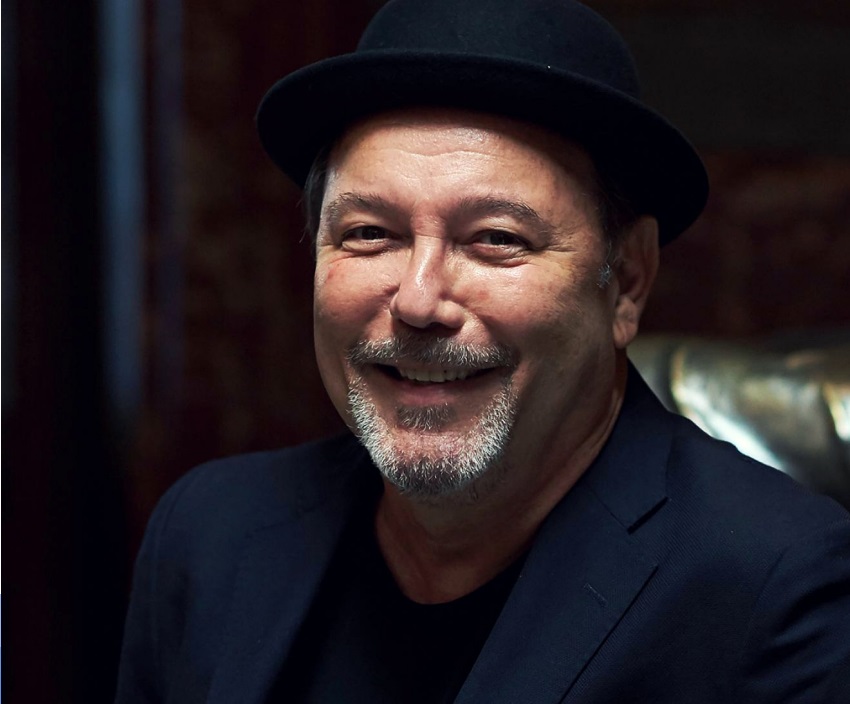
Photo of Rubén Blades

Blades has acted in 35 films and three series, and we must add the recently released documentary, “Yo no me llamo Rubén Blades” directed by Abner Benaim. Apart from his apparition in the popular TV series “Fear The Walking Dead”, he recently participated in the film “Hands of Stone” about the mythical Panamanian boxer Roberto “Manos de Piedra” Durán. There is no artistic space which Blades has not dabbled in.


How does he celebrate 70 years of life and 50 of career?

Singing! Although he has stated on several occasions that he wants to devote himself to other artistic facets and perhaps on purpose, he has allowed himself to think retired and then reappear with excellent albums like “Cantares del subdesarrollo” or, “Medoro Madera” the truth is that everybody is wondering, what will Rubén Blades do now, will he retire?

Rubén Blades
Rubén Blades

Currently, Blades writes opinion articles and publishes them on his website www.rubenblades.com, while on tour with the Panamanian group Roberto Delgado & Orquesta, until September. As if that was not enough, he prepares a book of poems, two scripts for cinema, is considering a couple of offers for the big screen, and will continue promoting the documentary “Yo no me llamo Rubén Blades” that although HBO has not revealed when it will be released on TV, will continues its journey in film festivals, and on cinema until August 30th in Panama, and 31th in Mexico to start the next premieres.


As a cherry pie will keep us in suspense about his possible presidential candidacy, because ” “antes necesito saber lo que el país quiere y si está dispuesto a abandonar el clientelismo a cambio de un plan nacional a largo plazo” Likewise, Blades clarified that ” no es algo que esté ya decidido “, it is a possibility, which requires society’s “apoyo masivo”.


This year near his 70th birthday, he affirmed without doubts:  ” No me despido de los escenarios, sino de las giras de salsa. En este momento tengo muchos otros planes y proyectos y, a mi edad, tengo que priorizarlos”.
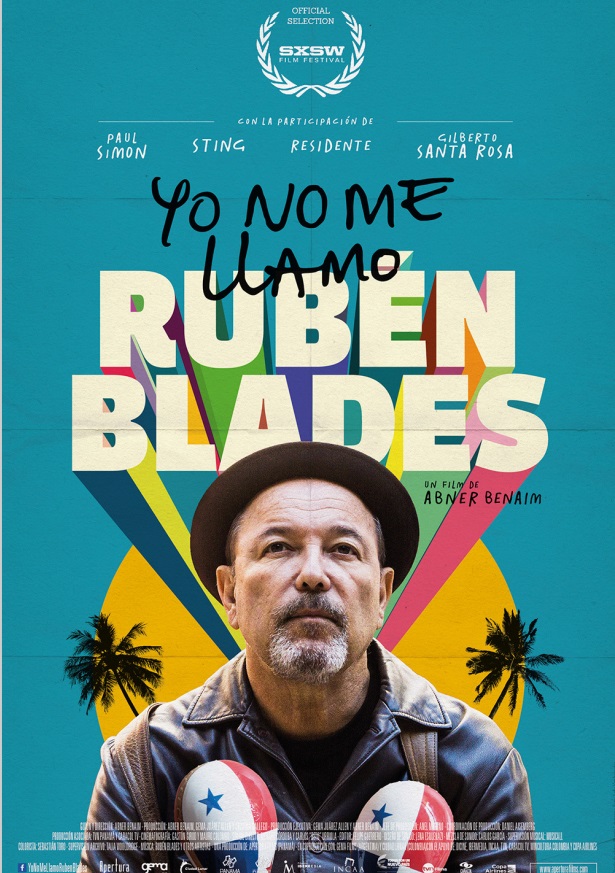
Yo no me llamo Rubén Blades

Anyway, Rubén Blades is that salsero that integrated action and politics into his social struggle. What else can we ask of him?

Rubén Blades’ National Tour

Review of Rubén Blades’ National Tour

The Ruben Blades concert at Oakland’s Paramount Theatre on Saturday, November 20th was sensational!  The anticipation of the packed intergenerational crowd to his first visit In 18 years was at a high peak.

Rubén Blades while singing
Rubén Blades while performing

Blades wowed the audience with a stunning performance backed by bassist Roberto Delgado’s dynamic Big Band.

Rubén Blades and his orchestra
Rubén Blades and Roberto Delgado’s Big Band

Ruben’s powerful voice was as crystal clear as when he started his career with Ray Barretto back in 1974.

Rubén Blades' great voice
Rubén Blades’ voice was incredible

Latin Grammy for Salswing!

His set list was a retrospective into his vast and deep repertoire that included his big hits, crowd favorites, esoteric song choices and selections from his Latin Grammy award winning album Salswing!

Rubén's stage
The lighting environment on stage was amazing and varied

The musicianship that accompanied Blades was top notch as Roberto Delgado’s crack band were tight, explosive and swinging!

Ruben's band
The performance of Roberto Delgado’ band was very appropriate for the show

The visuals projected on the huge screen above Ruben were imaginative displaying photo tributes to Hector Lavoe as well as to recently deceased Latin music giants and clever animation that was the backdrop for songs.

Tribute to Pérez-Bidó
Tribute to Carlos Pérez-Bidó displayed by the screen above Ruben Blades

This was a triumphant return to the SF Bay Area for Blades who last played a concert here in 2003 at Roccapulco.

Blades in front of his orchestra
Triumphant return to the San Francisco Bay Area for Rubén Blades

He performed for 2 hours and 40 minutes to the delight of the massive crowd.  What a show!!

Blades' two-hour show
Rubén Blades’ two-hour show delighted the audience

BY LUIS MEDINA, PRODUCER AND HOST OF CON SABOR ON KPFA 94.1 FM AND SABIDURIA CON TUMBAO ON WORLD SALSA RADIO.COM

Do You Know In Which Country Rubén Blades Start his Tour?

The United States Will Be The First Country Where The Panamanian Artist Will Present Salswing Tour!

Rubén Blades with blue hat on stage
Rubén Blades will be recognized as “Person of the Year” at the Latin Grammys on November 17th in sin city, Las Vegas (Nevada)

The multifaceted artist and political activist, Rubén Blades, announced his return to the American stage with his friend and fellow countryman Roberto Delgado & Big Band, starting next November 20th.

The Salsero icon announced the beginning of his tour through his official Facebook account: “We are very happy to be able to work and get in touch with our audience again, after almost two years without being able to do so. With the Roberto Delgado Big Band, an orchestra of 20 musicians that is sounding better, we are eager and want to share our latest album Salswing!, and the usual songs… Please, don’t stop getting vaccinated”.

There are eight cities that the living Salsa legend will visit in North America, starting on November 20th in Oakland (CA), Los Angeles (CA), Atlanta (GA), Miami (FL), passing through Boston (MA), and New York (NY) on November 28th and December 2nd respectively, and having as a special guest the extraordinary American actress, singer, and wife of Blades, Luba Manson who will be showing the repertoire of her Jazz album Triangle released in October 2020.

Rubén Blades with black hat and Luba Mason with white shirt
Rubén Blades and Luba Manson have been married since 2006

Later, Salswing Tour! & the Roberto Delgado Big Band will present their penultimate concert this year on Friday, December 3rd in Washington (DC), and will close this magnificent tour on Sunday, December 5th on the southwest shore of Lake Michigan at the mighty Arena Arie Crown Theater in Chicago (IL).

Regarding this great 2021 tour, Nelson Albareda, CEO of Loud And Live, the company in charge of carrying out this series of concerts and those of Latin stars such as Carlos Vives, Juanes, Farruko, among many others, commented: “It is an honor for us working with a Latin icon, who has inspired generations through his salsa music and long artistic career. Rubén Blades is not only a great artist but also a great ambassador, and activist for our Latin community”.

The prestigious Panamanian songwriter will show for the first time the eleven songs of his most recent album “Salswing!” title that also gives the name to the tour.

Digital album cover Salswing! in red background and yellow letters
“Music is a universal gift, and from Panama, we renew our contribution with this album, SALSWING!”. Rubén Blades

Salswing! has 11 tracks including, Mambo Gil, Cobarde, Canto Niche, and Ya No Me Duele, the latter written by Jeremy Bosch and Rubén Blades with arrangement by Tom Kubis. Salswing! was recorded in collaboration with the record’s bassist and musical producer, Roberto Delgado, and his band made up of 20 talented Panamanian musicians, and it was released on the digital market on April 15th, 2021.

“Although the connection between Jazz and Salsa has been historically documented, much remains to be described and recognized. The combinations and collaborations between musicians of these genres have been numerous over the years and include figures of the stature of Mario Bauza & Dizzy Gillespie, Machito & Charlie Parker, Luis Russell, and Louis Armstrong. With this record production, I try to continue that relationship, verifying that art does not have a nationality but rather represents a spirit that transcends races, geographies, and languages”. It is extracted from his official page.

Rubén Blades has been performing with Roberto Delgado & Bing Band for ten years in the most prestigious stages around the world. In these eight concerts, there will be a historical tour of recognition of the Latin origins of jazz as well as the influences of the son, Afro-Caribbean music, and swing. In addition to including the hits always chanted by the crowd in any corner of the planet.

  • You Can Keep Reading: Meet The Amazing Fasching Jazz Club In Sweden

Who Is Roberto Delgado?

Roberto Delgado dressed in black holding a Grammy in his hand
Roberto Delgado and his Orchestra along with Rubén Blades won a Grammy for Best Latin Tropical Album in 2018

Roberto Delgado was born in the capital of the Chiriquí province in western Panama on June 27th, 1961. This prodigious artist has developed in the musical environment as a Producer, Singer, Bassist, and Arranger.

His upward career began with his studies at the prestigious Conservatory of Music of Fine Arts in Mexico City (Mexico) and later at the Golden West College of Huntington Beach California (United States).

With more than 40 years of experience, Roberto has been a member of ten Panamanian groups counting the Salsa singer orchestra, Roberto Blades (1992) and he is currently the director of his big band made up of 20 musicians and with whom he has shared the stage since 1996 together with the master Rubén Blades.

In the enormous list of famous artists that Delgado has accompanied in productions and tours in addition to the Blades brothers are Cheo Feliciano, Celia Cruz, Gilberto Santa Rosa, Ismael Miranda, Andy Montañez, Tito Nieves, La India, Víctor Manuelle, José Alberto “El Canario”, Luigie Texidor, Maelo Ruiz, Charlie Aponte, Joan Manuel Serrat, Carlos Vives, and many more.

The conductor together with Rubén Blades has performed on the major international stages, including Madison Square Garden (New York), Hollywood Bowl (Los Angeles), Shepherd’s Bush (London), Poble Espanyol de Barcelona (Spain), numerous Latin American auditoriums, and acclaimed festivals in Europe and the Caribbean.

Also, this duo has three Latin Grammys (2015, 2017) and two Grammys for Best Traditional Tropical Latin Album in 2016 and 2018.

Currently, Roberto Delgado (60 years old) and Rubén Blades (73 years old) continue to transgress the barriers that will be the first Latin artists touring Salswing! in the middle of the pandemic throughout the North American territory.

An important fact to attend the Rubén Blades and Roberto Delgado & Big Band concert series in Los Angeles County is mandatory to wear masks. At the moment, mandatory vaccination in the United States only applies to public employees and workers of large companies.

Synthesis on the song “El Cazanguero” written by Rubén Baldes for the album The Good, the Bad, the Ugly

“It is the lament of the cazanguero in Coiba at dawn, hurry up Chino Juan, they are already calling the line, the guard says not this time, don’t fall so far behind”.

“Whether it is sunny or raining hard, you have to take care of the sowing; don’t let the hunanga come to spoil your effort”.

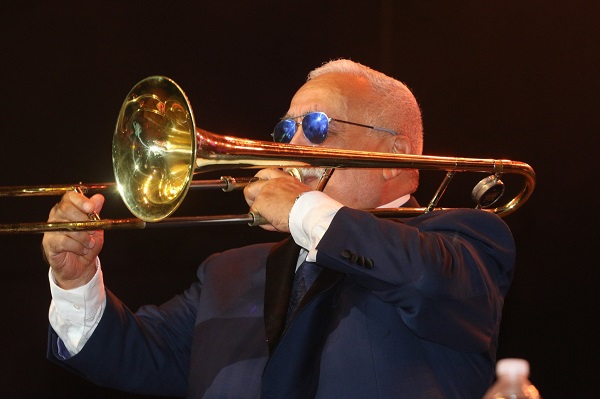
In 1974, El Malo del Bronx, after 8 years of touring with El Jíbaro de Ponce, decided to take some time off, he did not attend the presentation of Fania All Star in Africa and dedicated himself to solving personal problems and producing.

He was working on his next album with Yomo and Hector, he remembered that there was a Panamanian boy he had met in 1969 at a carnival in Panama, whom he had invited to come on stage to sing with Hector in several of the presentations in clubs in the Big Apple.

This guy was already part of Barretto’s band and had given songs to luminaries of the genre that became hits, such as Guaguancó Triste to Richie and Bobby, Las Esquinas to Niño Bonito and Amor Pa’ que to Conjunto Candela.

These songs put him on Willie’s radar who asked him for a song to complete his next album. Ruben, who was that Panamanian boy, happy for El Malo’s request, writes his first song while living in New York.

Ruben arrives at the studio where that song was being recorded and Hector approaches him and tells him that he would not record it because he didn’t understand it, he didn’t feel it and that’s why it wouldn’t sound right.

Ruben is disappointed by what Hector said, but Willie really liked the song and asks Ruben to record it himself.

Ruben reminds Willie that he is part of the band El de Las manos Duras and that it would be a problem, Willie replies that he would fix it, which he did, obtaining don Masucci’s permission.

This marked the end of Ruben with Barreto and the beginning of what would become the duo that would dominate Salsa for the next 6 years.

This song we are talking about is El Cazanguero,

It is the lament of the cazanguero in Coiba de madrugá’. Hurry up Chino Juan, they’re already calling the line, the guard says not this time, don’t fall so far behind”.

“Whether it is sunny or raining hard, you have to take care of the sowing, so that the cazanga does not come to spoil your effort”.

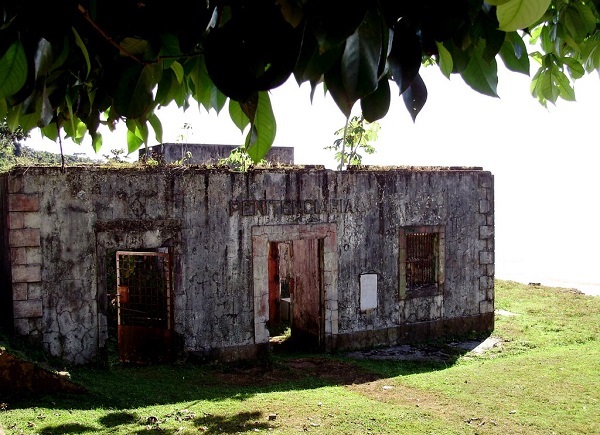
Part of Coiba’s history as a penal colony, for 74 years, is described in El Cazanguero, a song by Rubén Blades that began to be heard in 1975.

The song describes who the cazangueros were, some of the punishments to which inmates who broke the rules were subjected, and the sadness of being far from their families, with the uncertainty and fear of an enemy attack, in an open penal system like Coiba.

Although the main value of the island is in its natural wealth, it is also important its history and the history of the prisoners it housed, the anecdotes of those who paid long sentences for going against the laws and the rights of others.

How many cans of gravel are there from here to Catival?” Blades ask in his song. The rubble, which is everywhere in Coiba, was used to fill the holes in the roads, to fill land or in construction”.

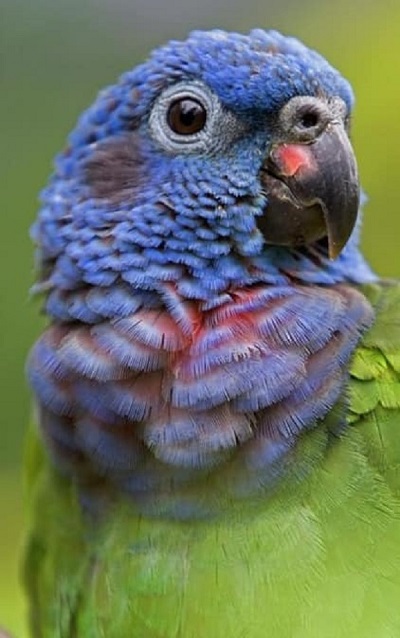
The Cazangueros were the inmates who chased away the cazanga, a climbing bird of the parrot family, green in color, with a blue head and neck, black beak and legs, which killed, like a plague, any planting it found in its path.

“The cazanga would come down from the mountains by the thousands, in the early morning, and the hunters had to scare them away by ringing empty oil cans and shouting. Sometimes they had to make dolls in human shapes to win the battle against the birds”.

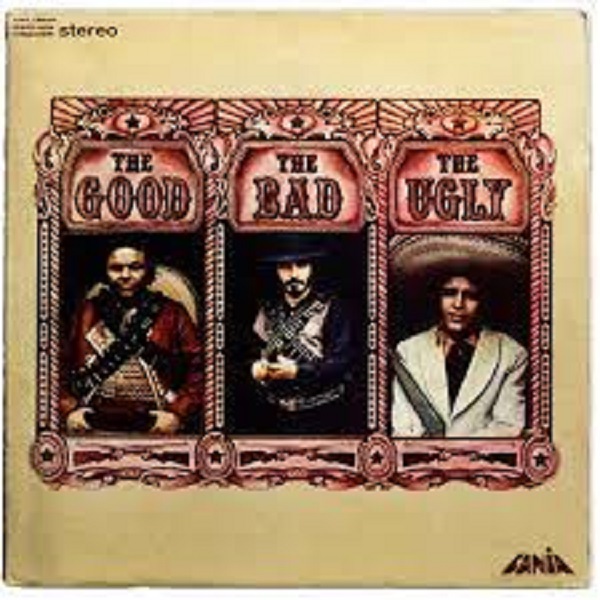
As mentioned above, El Cazanguero was the first song Ruben wrote in the United States. To write it, he was inspired by his trip to the penal island of Coiba where he wrote his law degree thesis. It seems that this song was placed as filler on the 1975 album “The good, the bad, and the ugly” featuring Willie Colon, Hector Lavoe and guitarist Yomo Toro on the cover. However, it was “El Cazanguero” that sold the acetate record.

“El Cazanguero” was cut 6 of the album “The good, the bad & the ugly” which was recorded in 1974, at Good Vibrations studios. It was the last album in which Willie Colón and Héctor Lavoe collaborated.

It contained 3 instrumental tracks, three sung by Colón in his first appearance as a solo singer on record (“Toma”, “Cua cua ra, cua cua” and “Guaracha”, 2 with Lavoe’s solo voice (“Popurri III” and “Que bien te ves”) and “El Cazanguero” written and sung by Blades.

Hablemos de EL CAZANGUERO

You can read: Louie Ramírez «El Quincy Jones de la Salsa» y su talento progresivo un Genio escondido de La Fania All Stars

Sammy Figueroa is an exceptional percussionist known for his versatility and for playing in a multitude of musical styles

Sammy Figueroa, a percussionist with an excellent career.

Sammy Figueroa was born in the Bronx, New York, in 1948. He is the son of bolero singer Charlie Figueroa, whom he never knew, as his father passed away at the age of 32.

Sammy moved to Puerto Rico as a child to live with his grandparents and escape the Bronx’s gang violence.

Sammy Figueroa is an excellent percussionist who has stood out for his versatility, playing in a multitude of musical styles

At 18, he started his professional career with bassist Bobby Valentín’s band. Throughout his career, he has stood out for his versatility, playing in a multitude of musical styles and contributing to nearly 400 albums, ten of which are platinum.

He has collaborated with major pop artists like David Bowie, Chaka Khan, and Mariah Carey, as well as with distinguished jazz musicians such as Miles Davis, Sonny Rollins, Quincy Jones, and George Benson. In 1977, he became a founding member of the Latin rock fusion group Raíces.

In 2001, Sammy Figueroa moved to South Florida and formed his own group, Sammy Figueroa and His Latin Jazz Explosion. His albums And Sammy Walked In and The Magician were nominated for a Grammy for Best Latin Jazz Album.

Sammy Figueroa, a percussionist with an excellent career

Sammy Figueroa, a percussionist with an excellent career

His 2023 album, Searching for a Memory / Busco Tu Recuerdo, is a tribute to his father. The project, produced by his wife, Rachel Faro, with whom he has also co-produced other albums, allowed Sammy to reconcile with his father’s legacy. On this album,

Sammy sings on a record for the first time and transforms his father’s classic boleros into modern Latin jazz arrangements. The album was nominated for a Latin Grammy in the “Best Jazz/Latin Jazz Album” category.

Sammy Figueroa has received numerous awards, including two Percussionist of the Year awards from the National Academy of Recording Arts and Sciences (NARAS), two Drummie Awards for Best Hand Percussion, and a Best Percussionist award from the Jazz Journalists Association.

Discovered by jazz flutist Herbie Mann, Figueroa became a well-known session and studio musician, touring and recording with The Brecker Brothers, Average White Band, Morrissey – Mullen, The Mahavishnu Orchestra John McLaughlin, and Miles Davis.

He has also appeared with Blondie, Sonny Rollins, David Sanborn, Quincy Jones, Dave Grusin, George Benson, Chet Baker, Stanley Clarke, Grover Washington Jr., Al Jarreau, Lena Horne, Joe Williams, Mark Murphy, Mike Mainieri, Néstor Torres, Chico O’Farrill, Mike Stern, Chuck Loeb, Bobby Watson, Dave Valentin, Arturo Sandoval, Paquito D’Rivera, Rubén Blades, Eddie Palmieri, Bobby Valentín, Tania Maria, Mariah Carey, James Taylor, Dr. John, Mick Jagger, David Bowie, Celine Dion, Blues Traveler, Natalie Merchant, David Lee Roth, Hall & Oates, Joe Cocker, Rickie Lee Jones, Annie Lennox, Whitney Houston, Anita Baker, Grace Jones, James Ingram, Diana Ross, Roberta Flack, Aretha Franklin, and many others.

Some of the R&B hits he is featured on include Sister Sledge’s “We Are Family,” Luther Vandross’s “The Night I Fell In Love,” and Ashford & Simpson’s “Solid (as a rock),” as well as most of Nile Rodgers and Bernard Edwards’ hits on the Chic and Sister Sledge record labels.

Michel Camilo wrote the song “And Sammy Walked In” in his honor, and it was also recorded by Giovanni Hidalgo. Two of his CDs, And Sammy Walked In and The Magician, have been nominated for Grammy Awards in the “Best Latin Jazz Album” category. Figueroa hosts a Latin jazz show on WDNA-FM in Miami, Florida.

Sammy Figueroa was born in the Bronx, New York, in 1948

If you’re not very familiar with Sammy Figueroa’s work, you can try an experiment with this album: listen closely to see if you can guess what his instrument is. In a medium-sized combo, what instrument seems to take center stage? The answer: it’s impossible to guess, which says something about Figueroa’s maturity as a leader.

It’s also surprising to see how pared down his forces really are this sextet sounds like a big band. (Spoiler alert: he’s a percussionist.) It also says something about him that the term “Explosion” is a misnomer for his band. There are no pyrotechnics, no crazy tempos, and no wildly layered rhythms here.

But there are some very impressive horn arrangements (check out “Cha Cha Pa’ Ti” and the lovely “Cuco y Olga”), along with some of the sweetest, most tender ballads to appear on a jazz album of any genre in recent years (“Queen from the South” and “Zuliana” are the best examples).

For a percussionist acting as a bandleader, giving this kind of sustained, loving attention to compositions that only make a tenuous use of his talent is further proof of Figueroa’s taste and maturity. Let’s hope Figueroa keeps going in this vein. Rick Anderson.

Sammy Figueroa & His Latin Jazz Explosion – Urban Nature (2011).

Sammy Figueroa & His Latin Jazz Explosion - Urban Nature (2011)
Sammy Figueroa & His Latin Jazz Explosion – Urban Nature (2011)

Tracks:

  1. Gufillo (Silvano Monasterios)
  2. Urban Nature (Gabriel Vivas)
  3. Latin What? (Michael Orta)
  4. Zuliana (Silvano Monasterios)
  5. 7th Door From The Left (Silvano Monasterios)
  6. Cuco y Olga (Nicholas Martines)
  7. Cha Cha Pa’ Ti (Gabriel Vivas)
  8. Queen From The South (Silvano Monasterios)
  9. Funny Talk (Gabriel Vivas)

Musicians:

  • Sammy Figueroa (Percussion)
  • Silvano Monasterios (Piano)
  • Gabriel Vivas (Acoustic bass)
  • John Michalak (Sax)
  • Alexander Pope Norris (Trumpet)
  • Nomar Negroni (Drums)

Guest Musicians:

  • Ed Calle (Sax)
  • Mike Orta (Piano)
  • José Gregorio Hernández (Percussion)

Website: Sammy Figueroa

By:

Dj. Augusto Felibertt

L’Òstia Latin Jazz

Also Read: Carlos “Nene” Quintero comes from a family of musical prodigie

  • Page 1
  • Page 2
  • Page 3
  • Interim pages omitted …
  • Page 23
  • Go to Next Page »

International Salsa Magazine (ISM) is a monthly publication about Salsa activities around the world, that has been publishing since 2007. It is a world network of volunteers coordinated by ISM Magazine. We are working to strengthen all the events by working together.