• Skip to primary navigation
  • Skip to main content

International Salsa Magazine

  • HOME
  • Previous editions
    • 2026
      • ISM / May 2026
      • ISM / April 2026
      • ISM / March 2026
      • ISM / February 2026
      • ISM / January 2026
    • 2025
      • ISM / December 2025
      • ISM / November 2025
      • ISM / October 2025
      • ISM / September 2025
      • ISM / August 2025
      • ISM / July 2025
      • ISM / June 2025
      • ISM / May2025
      • ISM / April 2025
      • ISM / March 2025
      • ISM / February 2025
      • ISM / January 2025
    • 2024
      • ISM / December 2024
      • ISM / November 2024
      • ISM / October 2024
      • ISM / September 2024
      • ISM / August 2024
      • ISM / July 2024
      • ISM / June 2024
      • ISM / May 2024
      • ISM / April 2024
      • ISM / March 2024
      • ISM / February 2024
      • ISM / January 2024
    • 2023
      • ISM / December 2023
      • ISM / November 2023
      • ISM / October 2023
      • ISM – September 2023
      • ISM – August 2023
      • ISM July 2023
      • ISM Edition June 2023
      • ISM – May 2023
      • ISM April 2023
      • ISM March 2023
      • ISM February 2023
      • ISM January 2023
    • 2022
      • ISM December 2022
      • ISM November 2022
      • ISM October 2022
      • ISM September 2022
      • ISM August 2022
      • ISM July 2022
      • ISM June 2022
      • ISM May 2022
      • ISM February 2022
      • ISM January 2022
    • 2021
      • ISM December 2021
      • ISM November 2021
      • ISM October – 2021
      • ISM September 2021
      • ISM August 2021
      • ISM July 2021
      • ISM May 2021
      • ISM April 2021
      • ISM June 2021
      • ISM March 2021
      • ISM February 2021
      • ISM January 2021
    • 2020
      • ISM December 2020
      • ISM November 2020
      • ISM October 2020
      • ISM September 2020
      • ISM August 2020
      • ISM July 2020
      • ISM June 2020
      • ISM May 2020
      • ISM April 2020
      • ISM March 2020
      • ISM February 2020
      • ISM January 2020
    • 2019
      • ISM December 2019
      • ISM November 2019
      • ISM October 2019
      • ISM Septembre 2019
      • ISM August 2019
      • ISM July 2019
      • ISM June 2019
    • 2016
      • ISM December 2016
  • Spanish
  • Download Salsa App
    • Android
    • Apple

Search Results for: Salsa Music

”Salsa Con Sabor’’ and its contribution to salsa music

Platfoms to promote salsa

Just as we always promote the artists and musicians who keep alive salsa and Latin genres, we also think it is important to highlight the work of communicators who have taken the task of continuing to spread the traditional Latin music through the resources that technology has made available to us. Such is the case of Charlie Perez and the web page ”Salsa Con Sabor”, which he has been running for several years.

We talked to this talented young man, who has illustrated very well how his work has been throughout these years with the management of ”Salsa Con Sabor”, interesting anecdotes and what he earned from all this process.

Charlie Pérez, administrator of ''Salsa Con Sabor''
Charlie Pérez, administrator of ”Salsa Con Sabor”

Conversation with Charlie Perez from ”Salsa Con Todo”

Salsa Con Sabor was born in 2010. I was always a salsa enthusiast and it runs in the family because my father has always loved tropical music, salsa, guaguancó, son montuno, bolero, among others. I became curious about these topics while naving in the social networks, so I created a Facebook page whose aim was to be a music space to share with salsa fans around the world. By this means, we began to share music, artist biographies, salsa history, salsa ephemeris and many more” were the words spoken by Charlie when asked how this project came about.

He also told us that the page was gaining a popularity that he and his team decided to shape this idea through the creation of a website, a YouTube channel and accounts in the rest of social media. All this led several independent artists to send their musical works to ”Salsa Con Sabor” to be shared and diffused.

Important to note that all members of this great team are professionals nothing linked to the world of music. They are simply people who enjoy Latin genres and want them to stay alive over time.

Charlie Pérez and his wife Wilendy Rosario

What do you see in an artist before spreading his or her music?

I like to support all artists, but I don’t deny that I focus a lot on the quality of the work presented. I always check certain aspects such as the cover art, the image and how music was worked, showing whether or not an album will be worth it. We always give the opportunity to all artists to send us their work, but they must have a standard quality” said Charlie on the subject related to unknown artists sending him their albums.

Successes to date

Perez has told us that he feels incredibly grateful for all the doors ”Salsa Con Sabor” has opened for him. He has met many important people in the industry and artists with whom he has developed good friendships, something he really values.

This space has also allowed him to expand to other fields. In the case of Charlie, he is a marketer and always had the desire to start his own business, which added to his knowledge of the music industry and marketing, led him to create his own advertising agency called Tumba Media Productions. The company is dedicated to dissemination activities such as press releases, graphic design, among other things.

Another thing that has been very important for the future career of this young man has been song writing. Composing his own material has earned him contact with great artists such as Venezuelan singer Néstor Pacheco, who motivated him to make music and with whom he has a clase friendship. They even wrote some songs together such as ”Sabor y Guaguancó” and ”Mamá Inés”.

Logo of the website
Logo of the website

The best experiences with the website

Regarding this point, Charlie replied that his reviews have received many positive messages from the public and many artists. He and his collaborators are very glad that so many people keep an eye on their content and that their platform let them know abut new music in terms of salsa, guaguancó, bolero, son montuno and other associated genres.

We are great popuizers of new music that nobody knows about due to the amount of content you can find, which makes us very happy and be satisfied with our work” says Charlie.

Activity during the pandemic

From the pandemic, we started working on interviews a lot more than before and had to focus on making video content. Video editing tools were very important for us at this stage, since it wasn’t just about doing interviews, but also about downloading them and doing all the corresponding editing to show them to the public in the most professional way possible” says the administrator of ”Salsa Con Sabor” about his experience with the pandemic.

He also told us that there were many artists he interviewed with whom he thought would never connect, which was made possible thanks to the tools that technology offers us today. In that sense, his wife Wilendy Rosario was very important in this entire process, as she was in charge of making contacts and conducting many of these interviews in that frame of time. She is described by her husband as a fundamental part of this project thanks to her communication style and charisma.

Read also: Broadcaster and host of Con Sabor Y Amor Latino Tatiana Mezarina

Pianist Fadi Gaziri Debuts In Salsa Music With Cuba Classic

A Studio Album That Reflects The Multicultural Sound Of Western Europe And Latin America

Cuba Classic album cover with colored houses and a red car
Cuba Classic was released in August 2021

The son of medical parents and the grandson of a passionate pianist, Fadi Gaziri ventures into the Salsa world with the album Cuba Classic, independent record production in collaboration with his German colleague and great friend Fritz Wengler.

Cuba Classic fuses the incredible universe of emotions that classical music transmits with the passion, conventional melodies of Jazz, and the rhythmic base of the Caribbean that characterizes Latin culture.

“Arranging classical pieces to fit a Salsa vibe was surprisingly easy… The melodies can be rhythmically changed to suit the Latin vibe while keeping authenticity…” Voiced by the talented British pianist.

This masterpiece with hybrid two-language titles strikes a perfect balance between the original title of a classic work and the sensation of the indicated awakening of a Latin melody. “I always liked Salsa for its quality to make people dance, so naturally and with such confidence.

As for the music itself, I love the colorful brass arrangements and Latin percussion. It’s a lot of fun to listen to and to play… ”. Fadi indicated.

The 13 songs on the album are El Capo (Zarathustra, R. Strauss), 5 Sinfonía De Salsa (Beethoven’s 5th Symphony). “I had a lot of fun with this one. …The Reorganization, the phrasing, using repetitions, increases, and the complete brass arrangement to make it sound like a proper Cuban track”. Fadi added recalling his experience with the production of this theme.

The next track on the album is Mambo Loco Nórdico (Grieg’s Piano Concerto in LA minor), resembling Havana at its turbulent peak and with great determination. Continues, the fourth track Mambo Austriaco (Mozart – Symphony No. 40 and Eine Kleine Nachtmusik), and the exquisite mix of Calipso Alemán (Beethoven’s Symphony 9).

In addition, you will also find in Mambo Classic: G-String Bossa (Air on a G string, JS Bach), Salsa Húngara (Brahms Hungarian Rhapsody) thought for the Latin ballroom dance competition tracks, due to the grace of the exuberant exposure of the horns.

Funeral De Che Guevara (Liszt, Hungarian Rhapsody in C sharp minor), Havanera (Carmen Bizet) is another of the themes that stand out on this album. “It was inspired by the character of Che Guevara and his revolutionary spirit. Along, with a trumpet blast from Mariachi… Fernando’s lyrics and voice also add to the overall feeling”. Gaziri commented to us.

Rumba Rusa (Swan Lake, Tchaikovsky), La Toccata Loca (Bach Toccata in D minor), Green Leaves (traditional Greensleeves), and finally the piece Lambada A La Luz De La Luna (Moonlight Sonata by Beethoven) beginning with the funeral march played with a trumpet solo intervened with a joyous lambada, ending in a Latin urban sound.

Fadi’s main idea with Mambo Classic is to simplify the music on this album for use in schools across the country and have children perform it by simply playing percussion with the backing tracks.

Similarly, Gazziri hopes to present this record production live in 2021 on the big stages of Berlin and the rest of Europe.

Why The Fusion Of Latin Rhythm With Classical Music?

Fadi Gaziri in black and white playing the piano
Fadi Gaziri can handle musical instruments alongside cinematographic elements, folk, and ambient electronic sounds

This talented artist since his return to Hamburg in 2017 has been involved in teaching music to children and teenagers in schools in this port city located in northern Germany.

Gaziri showed signs of concern every day as he observed his students’ reluctance to learn classical music, a feeling already developed as a famed behavior among young people today. But why don’t German students like to learn about their cultural heritage? The main reasons that Fadi realized were that his students were not motivated to continue with their studies due to the complexity of the music and the difficult handling of the instruments that did not allow them to master them quickly.

Realizing this, Gaziri began to devise the fusion of the Latin genre with classical music and thus seek to reverse the discouragement of his students. “I wanted children to learn classical music in a fun and interactive way. Something that would not take long to learn and that could involve all participants, regardless of their age, nationality, or musical ability. Most schools have Latin percussion that sits on the shelves and is rarely used.

So, I thought it would be a great idea to put in some classic melodies and accompany them with this Latin percussion. Wouldn’t it be fun and a good learning experience at the same time? Fadi told us.

Currently, this prodigious pianist is evaluating the possibility of continuing to teach in German schools full-time by 2022.

  • You Can Also Read: Mozart & Mambo

The Story Of Fadi Gaziri

Fadi Gaziri in his recording studio with pianos around
Fadi Gaziri played the piano first time at the North Pole in August 2021

Fadi Gaziri is a natural music producer and composer for audiovisual media, film, and theater. He was born in Moscow and began his musical studies of piano and violin at the famous Gnessin Music Academy.

At age 12, he moved to Sweden with his family and later to England (1998) where he continued his musical training.

This extraordinary producer studied Music Composition, Piano, and Languages ​​at Durham University in 2004 graduating with great honors and passing his ABRSM piano exams with distinction. Two years later he entered Bournemouth University to study for a Master’s in Film Composition.

That same year (2006) Fadi moved to Hamburg and started working on music for commercials, films, and sound branding. At the same time, he began touring the Netherlands, Sweden, Norway, and Germany accelerating his musical career.

In 2014 Fadi released his first solo album titled Northern Lights, a mix of cinematic and folk sounds that he combines with electronic texture. He used his technological knowledge to loop while playing piano, violin, and adding subtle voices that he performed himself.

Over the next three years, Gaziri released his second EP “The Jump”, founded a music supervision company, and has been dealing with song placement, and licensing for film and television ever since. He assumed a permanent position as an in-house music producer at TUi Cruises in Berlin and composed, and arranged music for more than ten theatrical productions performed on board the ships.

The Elegant One of Salsa Life and Legacy of Tito Allen, one of the most refined voices in our Latin Music

The world of Afro-Antillean music celebrates the birth of one of the genre’s most distinguished and sophisticated voices Roberto Romero Caballero, universally known in the music scene as Tito Allen.

Born on May 1, 1946, in the iconic neighborhood of Santurce, Puerto Rico, this pillar of salsa has left an indelible mark on the history of Latin music throughout a career spanning over four decades of artistic excellence.

Tito Allen y Adalberto Santiago

The Origin of a Name with Tumbao

The stage name of this renowned sonero holds a curious history split into two parts. The first part, “Tito,” stems from a deeply rooted custom in Puerto Rican slang: the double diminutive. From Roberto, people began calling him “Robertito,” a nickname that over time affectionately evolved into “Tito.”

On the other hand, the surname “Allen” has a much more urban and accidental origin. The singer himself has confessed that during his youth, he saw the word painted as graffiti on a wall. The visual impact and the sound of the name pleased him so much that he decided to adopt it on the spot as his signature trademark for the entertainment world.

The Beginnings of a Multifaceted Star

Tito Allen’s musical journey formally began in 1962, when he was just a 16-year-old teenager. In his early days, the young Roberto showed a strong inclination toward rock and roll, a genre that was causing a frenzy among the youth of the 1960s.

During this formative period, Allen stood out as a bassist and guitarist, forming part of various musical trios that emulated the great bands of the era. These groups even enjoyed successful appearances on Puerto Rico’s Channel 4 television.

Fortunately for lovers of Caribbean rhythms, destiny guided him toward tropical music. His powerful voice, characterized by impeccable tuning and elegant phrasing, quickly made him a highly sought-after singer.

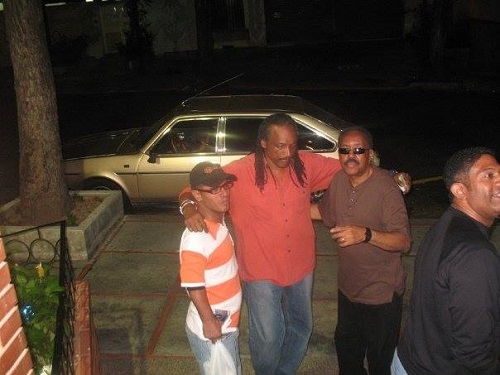
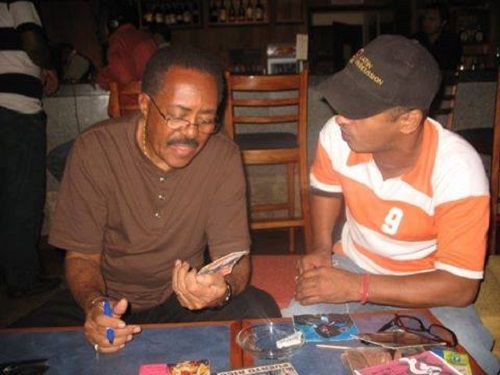
Dj. Augusto Felibertt, Orlando Watussi, Tito Allen y Jesus Torres

Among his major aesthetic influences, Allen has always expressed a deep admiration for Cheo Feliciano, whom he listened to with devotion during Feliciano’s era with the Joe Cuba Sextet. Likewise, he has repeatedly pointed to the Bobby Valentín Orchestra as one of his favorite bands of all time.

Conquering New York and the Big Leagues of Salsa

Determined to take his career international, Tito Allen traveled to New York in 1972. Although he initially tried to join the orchestra of the “King of the Timbal,” Tito Puente, Puente had no vacancies at the time. Far from discouraged, Allen joined forces with the prominent Colombian pianist Eddie Martínez to form a quintet that performed successfully in Big Apple nightclubs.

The true turning point came in May 1973. After a brief return to his native Puerto Rico, Allen went back to New York and, thanks to a recommendation from Eddie Martínez, scored an audition at the famous club El Corso. There, maestro Ray Barretto was looking for a vocalist to replace none other than Adalberto Santiago.

Tito Allen y Billy Crespo

Allen rose to the challenge masterfully, recording the acclaimed album Indestructible (1973), a work that instantly enshrined him in the pantheon of salsa royalty.

A Legendary Journey: Following his successful run with the Ray Barretto Orchestra, Tito Allen fulfilled his dream of working alongside Tito Puente. Later, he joined the ranks of the legendary Típica 73 before launching a solid solo career.

His impeccable reputation also led him to become a fundamental part of the Puerto Rico All Stars, participating in two of their most iconic album productions. Additionally, he collaborated closely with the virtuoso Louie Ramírez, leaving an indelible mark thanks to his versatility.

The Golden Backup Singer of the Latino Neighborhood

Beyond his brilliance as a soloist and bandleader, Tito Allen’s career stands out for his generosity and professionalism in the recording studio.

His trained, melodious voice graced countless productions for artists of the stature of Pupi Legarreta, Ralphy Santi, and Conjunto Clásico, among many other representatives of “the ultimate expression of the Latino neighborhood.” His work as a backup vocalist was essential in defining the sound of New York and Caribbean salsa during the ’70s and ’80s, solidifying his status as a complete artist and a gentleman of music who today, more than ever, deserves the applause of his audience.

Tito Allen y Dj. Augusto Felibert

Also Read: Our friend Tito Allen supports the Salsa Museum

Salsa in Berlin: The Best Clubs for Latin Music

Europe / Germany / Berlin

Salsa hit Europe like a pandemic, spreading from the jazz clubs in the big cities and hitting Germany in the 1980s. No wonder Salsa found so many followers – the Latin beats get directly under the skin and the rhythm moves hips and hearts just by itself. There is a sense of freedom in the music, and the widespread habit of Salseros asking Salseras for a dance makes it a piece of cake to meet new people in a relaxed and unrestrained atmosphere.

Salsa in Berrlin
Salsa in Berrlin

Berlin is famous for its nightlife and the immense diversity of scenes on offer for all kinds of people, tastes, and styles. Hence, it goes without saying that Germany’s capital has a thriving Salsa scene. Every year in October, it finds its peak during the three-day Berlin Salsa congress with famous Salsa stars from all over the world and around 6,000 participants.

But Berlin wouldn’t be the nightlife capital if it didn’t have a Salsa party every night of the week. Here are the best of the best Salsa parties in town to get hips swinging.

Dancing Salsa in Berlin
  1. Havanna

Every Wednesday, Friday, and Saturday, Salsa-obsessed dancers can move their hips in Berlin’s leading Latino and Black music club Havanna. The parties are spiced up by a one-hour dance lesson beforehand and some instructed Merengue in between on up to four dance floors.

  • Table reservation: +49 (0) 176-216 77 012 | [email protected]
  • Schedules: Miércoles 21:00 | Viernes 22:00 | Sábado 22:00
  • Dirección: Hauptstraße 30, 10827 Berlín.
  • Havanna Berlin Photo 1
    Havanna Berlin Photo 1
  1. RED Ballroom

This wonderful location heats up the floor for Salseros every Tuesday and Saturday. There is a compulsory dance instruction session beforehand, and the parties are free and handy for a newcomer to Salsa. The size of the location and the attached restaurant give the parties a more intimate feeling and professional dancer Fernando Zapato is on hand to ensure the right Latin atmosphere for a party night.

  • Genthiner Straße 20 10785 Berlin – Germany
  • Phone: +49 (0) 30 3151 8618
  • Email: [email protected]
Red Ballroom
Red Ballroom
  1. Clärchens Ballhaus

Clärchens’ Ballroom | (c) Clärchens Ballhaus

In an outstanding historical atmosphere, you can shake a leg every Monday. The so-called mirror hall is a secret tip in the Berlin club scene. Built in the late 1800s, the flair of the Wilhelminian era is still present in this location. Furthermore, it has a wonderful wooden dancing floor and is highly frequented by true Salseros in Berlin.

  • Auguststraße 24
  • Berlín
  • +49 30 2829295
  • @claerchens.ballhaus
Clärchens Ballhaus
Clärchens Ballhaus
  1. Soda Club

Known for its immense parties, the Soda Club Berlin plays Latin and Cuban music every Sunday and Thursday. The four dance floors are impressive, and revelers can expect to find Mambo, Kizomba or Bachata DJs serving up an eclectic mix of these styles so dancers can switch things up throughout the night.

  • Address: Knaackstr.9710435 Berlin +49 30 44315155 +49 30 44315199
  • [email protected]
Soda Club
Soda Club
  1. Beachmitte

Salsa parties at this location are organized by the Salsa dance school Cumbancha, which is located in Kreuzberg. They always draw in a huge crowd of Salseros and Salseras, where everyone kind of knows each other and which gives these parties a very familiar atmosphere, although the uninitiated should not be put off, these are friendly folks!

Caroline-Michaelis-Str. 8 10115 Berlin Tel. 030-4679 5997 Fax: 030-4140 8890

Mail: [email protected]

  1. Monbijoupark

Monbijou Park | © Palickap/WikiCommonsThis is definitely the most beautiful location to dance in Berlin, although there is the small drawback that it is closed during the winter. That just heats the anticipation for the next spring, and, frankly, being outside in Berlin’s winter is a zany plan, even if you are dancing. So when winter starts to abate, and this open air location reopens its dance floor directly in front of the Bodemuseum on Museum Island, things start to swing. Even Tango and Swing lovers can enjoy their hobby; just visit their website for more details when they play which style of music.

Monbijoupark
Monbijoupark

Larry Harlow and Ismael Miranda: beginning of the so-called “Salsa Arseniana” in honor of the music of Arsenio Rodriguez, the creator of Son Montuno and “King of Guaguanco”

Extracted from the book called: “El origen y la creación de la Salsa”; creator: Mon Rivera, promoter: Al Santiago.

For sale on Amazon kdp, by clicking on the following link:

With which is attached a complete summary of the musical work of Larry Harlow with Ismael Miranda from its creation in 1966 to 71.

At the end is the original song of Arsenio: “Oiga mi Guaguanco”, with the fabulous musical arrangement of Harlow himself in “Salsa Clasica”, with the exquisite singing of the “Niño Bonito de Puerto Rico” Ismael Miranda.

Larry Harlow and Ismael Miranda: 1966 – 1971 with trombones.

Julio Cesar Galindo Alarcón Diplomático de Peru Ministro (R), Historiador Musical. Autor de Libro sobre Creacion de la Salsa

Lawrence Ira Khan, better known in the music scene as Larry Harlow, affectionately known as “The Wonderful Jew”, was born in Brooklyn, New York, on March 20, 1939 and died in New York on August 20, 2021, American musician, orchestra conductor, pianist, composer, musical arranger, producer, creator of the so-called “Latin Opera”, in 73 he was one of the most important disseminators of Afro-Cuban Jazz, “Arseniana” Salsa and Classical Salsa, confirming at the highest level the use of the trombone and the USA instrumental technique, corroborated as the two most important characteristics that identify the new American Musical Movement.

The beginning of Larry’s musical work must be analyzed from his return from Cuba in 1959, after having traveled to the island in the mid 50’s, to know and study Cuban music in its different rhythms, but because of the Revolution he had to return to New York; finding the boom and enthusiasm produced by the Pachanga spread by Charlie Palmieri, Pacheco, Quijano, Orlando Marin, Mon, Eddie Palmieri, Ray Barretto, Richie, among others.

At the end of 65 he forms his orchestra with trombones and application of the instrumental technique of Jazz; he signs a contract with the “Fania” label and plans to record his first album.

In 1966 he recorded his first album called “Heavy Smokin” with Felo Brito’s vocals; L.P. little known, in which stand out: “Tu Tu Ratan”, “Maria la O”, “Rica Combinación”, “Mi Guaguancó”, “Orchestra Harlow” and “Adios Mamá”.

In the same year he recorded his second album called “Gettin’ Off” or “Bajándote”, sung by Ramón Quian: “Monguito” el Unico, an excellent full-length album that was a great success.

Some of the highlights are “Bajandote”, “Guarachita”, sung by Vickie; “Tu no lo creas”, “Meta y Guaguancó”, “Coco May May” and “Cienfuegos”.

In ’66, a young teenager appears singing in Andy Harlow y su Sexteto’s group.

Andy gave him to his friend Joey Pastrana at the beginning of 67 to record the album “Let’s Ball”, in which the young singer Ismael Miranda had his first hit with the song “Rumbón Melón”.

Larry Harlow who lacked a good singer, offered the job to Ismael, who without hesitation accepted it immediately; and debuted with Larry on his third album in 67 called “El Exigente” and thus began the WONDERFUL DUPLE OF LARRY HARLOW AND ISMAEL MIRANDA, who together formed a sensational duet, amazing and impressive, in the History of Classical Salsa.

In “El Exigente” with the debut of the “Niño Bonito de Puerto Rico”, the songs “El Exigente”, “Las luces”, “Rumba me llaman” and “El Mejor” stand out.  The following year, in 1968, he recorded the album, “Orchestra Harlow presenta a Ismael Miranda”.  With this unsurpassable combination, the Classic, Brava and Hard Niuyorquina Salsa begins in the unique style of the “Judío Maravilloso” with the singing of the fabulous Ismael Miranda, one of the most attractive, fine and sharp voices in the history of Salsa, in which stand out the songs: “La Contra- ria”, “Jaguey”, “Yo me voy”, “Lamento Cubano”, “Bobby’s Boo-galoo, ‘Rumba a la vida’ and ‘Mi Guajira si’.

In 1969 he recorded his fifth album and third with Ismael Miranda, called “Mi Mono y Yo”, in which he continues the teaching of Classical Salsa with Afro-Cuban Jazz fusion, in which almost all the songs stand out: “El Malecón”, “Voy para la luna”, “Amorcito Ven”, “Jovenes del Muelle”, “Ven Rumbero Ven”, “Para donde tu vas”, “Mi Madre” and “Traigo Guajira”.  With these last two albums, Larry with Ismael had achieved the expected success; and they had become the favorite orchestra in all the Salsa Concerts that had already become customary in the weekends of the Big Apple.   In ’69, the author witnessed for a month these Salsa Dance Concerts that were usually given in the halls of the Hotels of the New York districts.

DIPLOMATICO DE PERU, MINISTRO (R); HISTORIADOR MUSICAL; AUTOR DE LIBRO SOBRE CREACION DE LA SALSA.

In 1970, Larry introduces the electric piano in his orchestral format; this motivates him to title his album of the same year: “Electric Harlow”.  With the recording of this album really begins the so-called “Salsa Arseniana” of Larry, coinciding with the last year of life of the great Cuban musician Arsenio Rodriguez, the father of Son Montuno and “King of Guaguancó”, Legend and undisputed genius of the development of Cuban music; but, however, having been the most important Cuban musician of the twentieth century, for his contribution of having created the Son Montuno and the modernization of Guaguancó, has NOTHING TO DO WITH THE CREATION OF SALSA:  BUT YES; FOR HIS VALUABLE CONTRIBUTION, WITH THE DEVELOPMENT OF THE MOVEMENT CREATED BY MON.

In “Electric Harlow” stand out: “La Revolution”, the wonderful Salsa arrangement of “Oiga mi Guaguancó”, by Arsenio Rodríguez, “Guasasa”, “Con Dulzura”, “Donde va Chichi” and “Tu Cosita Mami”. In 71 he recorded his album “Abran Paso”, and here we have to refer to Ismael Miranda as a singer-songwriter; because if from his first album recorded with Larry: “El Exigente”; he had already shown his composer’s fiber, having composed some songs together with Harlow; in this 71 album:  “Abran Paso”, he confirms and ratifies his conditions as a singer-songwriter, composing five themes of his authorship, successfully distinguishing the theme of the same name of the album: ‘Abran Paso’, ‘Donde lle- vas el Son’, ‘Abandonada fue’, ‘Oigan bien mi Guaguancó’ and ‘Dolor y Amor’.  Other highlights include: “Se casa la Rumba” and ‘Vengo Virao’, by Tite Curet Alonso.

Orchestra Harlow Vocal Ismael Miranda – Electric Harlow

Having died the penultimate day of 70 Arsenio Rodriguez, Larry Harlow, a few months later had the idea of offering him a posthumous tribute, which materialized with the recording in 71 of an album “Homenaje Póstumo”, which was called “Tribute to Arsenio Rodriguez”, including four hit songs by Arsenio:  “Tumba y Bongo”, ‘No me llores’, ‘Sueltala’ and ‘El Terror’; ‘Arsenio’, Harlow’s theme with Ismael Miranda and ‘Saludos a todos los Barrios’, by Lázaro Prieto.  The Harlow Orchestra in the last two albums was integrated with:  Conductor and piano: Larry Harlow; Singer: Ismael Miranda; Trumpets: Larry Spencer and Ralph Castrello; Trombones:  Lewis Khan, Leopoldo Pineda and Sam Burtis; Bass: Lydio Fuentes; Congas: Frankie Rodríguez; Bongó: Manny Oquendo; Timbal: Phil Newsum; and Tres y Cuatro: Yomo Toro, in “Abran Paso”.

Finally, Larry Harlow participated as pianist in “Red Garter”; and also as pianist and producer in “Chee-tah”.  Ismael Miranda did it as a singer in the two concerts of the “Fania All Stars” in ’68 and ’71.

Julio Cesar Galindo Alarcón

Diplomat of Peru Minister (R), Musical Historian. Author of a book on the Creation of Salsa.

Also Read: Larry Harlow ”El Judío de la Salsa”: innovative and irreverent

  • Page 1
  • Page 2
  • Page 3
  • Interim pages omitted …
  • Page 300
  • Go to Next Page »

International Salsa Magazine (ISM) is a monthly publication about Salsa activities around the world, that has been publishing since 2007. It is a world network of volunteers coordinated by ISM Magazine. We are working to strengthen all the events by working together.