• Skip to primary navigation
  • Skip to main content

International Salsa Magazine

  • HOME
  • Previous editions
    • 2026
      • ISM / April 2026
      • ISM / March 2026
      • ISM / February 2026
      • ISM / January 2026
    • 2025
      • ISM / December 2025
      • ISM / November 2025
      • ISM / October 2025
      • ISM / September 2025
      • ISM / August 2025
      • ISM / July 2025
      • ISM / June 2025
      • ISM / May2025
      • ISM / April 2025
      • ISM / March 2025
      • ISM / February 2025
      • ISM / January 2025
    • 2024
      • ISM / December 2024
      • ISM / November 2024
      • ISM / October 2024
      • ISM / September 2024
      • ISM / August 2024
      • ISM / July 2024
      • ISM / June 2024
      • ISM / May 2024
      • ISM / April 2024
      • ISM / March 2024
      • ISM / February 2024
      • ISM / January 2024
    • 2023
      • ISM / December 2023
      • ISM / November 2023
      • ISM / October 2023
      • ISM – September 2023
      • ISM – August 2023
      • ISM July 2023
      • ISM Edition June 2023
      • ISM – May 2023
      • ISM April 2023
      • ISM March 2023
      • ISM February 2023
      • ISM January 2023
    • 2022
      • ISM December 2022
      • ISM November 2022
      • ISM October 2022
      • ISM September 2022
      • ISM August 2022
      • ISM July 2022
      • ISM June 2022
      • ISM May 2022
      • ISM February 2022
      • ISM January 2022
    • 2021
      • ISM December 2021
      • ISM November 2021
      • ISM October – 2021
      • ISM September 2021
      • ISM August 2021
      • ISM July 2021
      • ISM May 2021
      • ISM April 2021
      • ISM June 2021
      • ISM March 2021
      • ISM February 2021
      • ISM January 2021
    • 2020
      • ISM December 2020
      • ISM November 2020
      • ISM October 2020
      • ISM September 2020
      • ISM August 2020
      • ISM July 2020
      • ISM June 2020
      • ISM May 2020
      • ISM April 2020
      • ISM March 2020
      • ISM February 2020
      • ISM January 2020
    • 2019
      • ISM December 2019
      • ISM November 2019
      • ISM October 2019
      • ISM Septembre 2019
      • ISM August 2019
      • ISM July 2019
      • ISM June 2019
  • Spanish
  • Download Salsa App
    • Android
    • Apple

Search Results for: Salsa en Venezuela

Fidelis Studio

Latin America / Venezuela / Caracas

The Fidelis studio is located in Caracas Venezuela, Urb. El Cafetal, El Morao street, Qta. Tere, is an excellent recording studio, where national and international artists and groups created their records; An example of this, Maracaibo 15, Billo’s, Los Melodicos, Salserin, Los Adolentes, Oscar D’ León…, the Latin Dimension recorded 8 of its 20 albums.
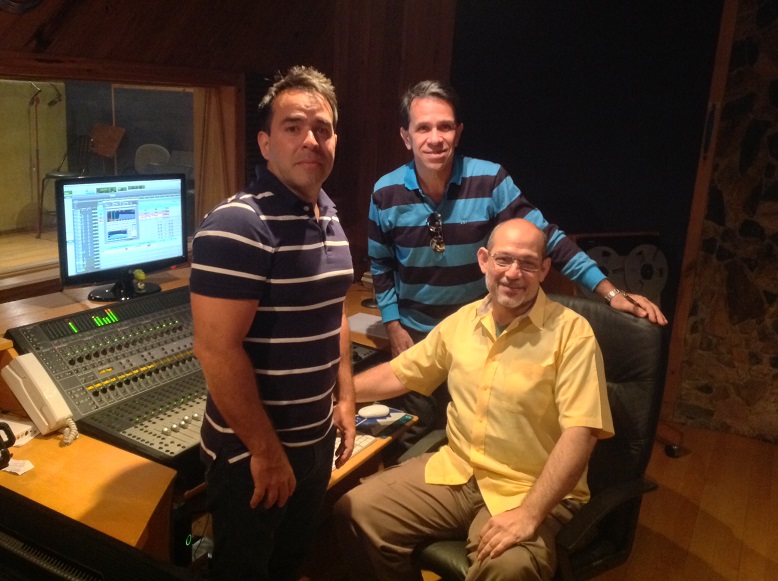
Fidelis Studio - Photo 1
Fidelis Studio – Photo 1

Currently those in charge of the study are Javier and Francisco González, who succeed their father Antonio José González “Gonzalito” founder of the Study in 1952 with great professionalism; who, despite being a professional photographer, had the inspiration and musical taste that led him and his friend “Toro” to go to the United States where he studied audio, upon arriving in Venezuela he was recognized as the pioneer of Recording Engineering since he did not This race exists to date in Venezuela.

Fidelis Studio - Photo 2
Fidelis Studio – Photo 2

Javier and Francisco González narrate how the recording of music was at that time, where it was recorded on a “Reel” tape where the channels were previously mixed in the matrix and then passed to the “Stamper” which is a metal disc where it was kept. the information to the factory and later this information was transferred to the acetate disc through electromagnetism.

Fidelis Studio - Photo 3 of Reel Tape
Fidelis Studio – Photo 3 of Reel Tape

As the years went by, recording equipment was modernized, going from “vinyl” to analog cassettes, and now it is digitized to CD’s, and digital formats such as FLAC, mp3… to send over the internet through a computer and with this new technology the artist has higher quality and content capacity than the 33 ½ rpm LP disc to record their songs.
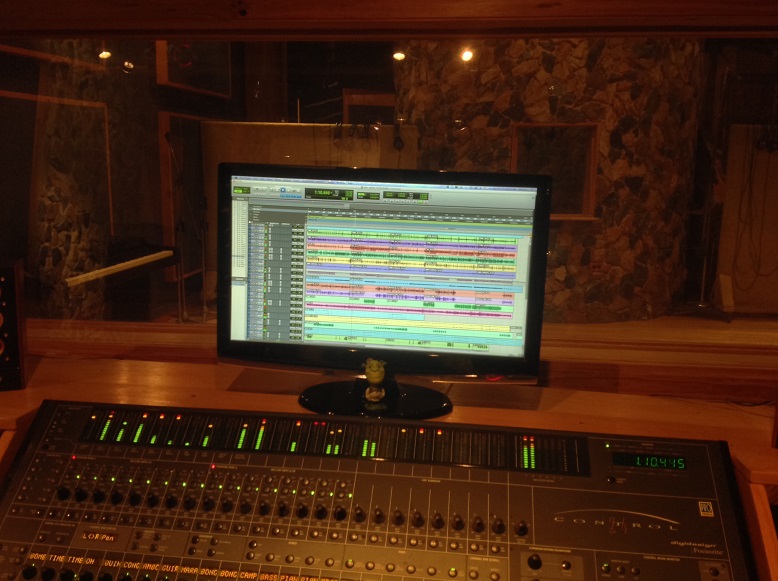
Fidelis Studio - Photo 4 sound program
Fidelis Studio – Photo 4 sound program

Now if the artist wishes to transfer an acetate disc or tape that he had, to a current digital format, the studio is able to make the transition without losing the quality of the music recorded on it.

The current recording equipment has 72 channels, usually 24 are used. With each channel the instrument or voice of the artist(s) is recorded, and with the program they are unified, adjusting the appropriate volume levels where the artist or group listens to it and sees if it is to their liking or not, having the ability to modify it.
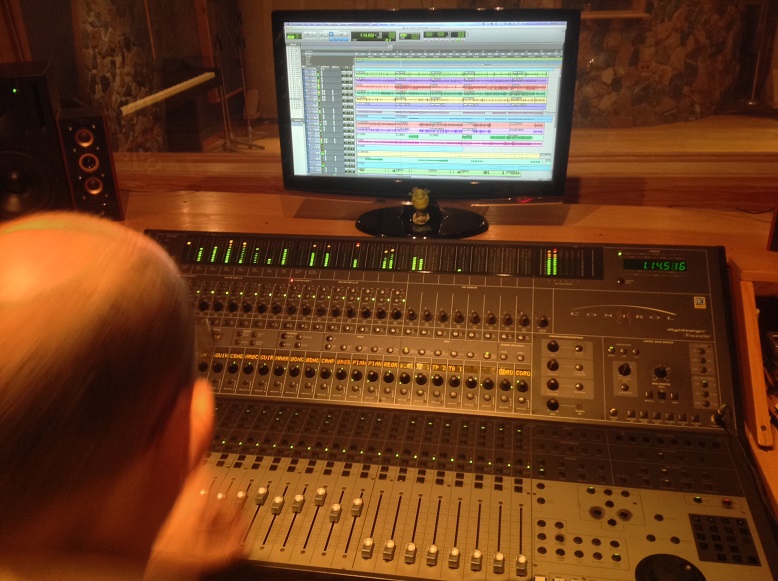
Fidelis Studio - Photo 5 - instruments and sound program
Fidelis Studio – Photo 5 – instruments and sound program

The studio and especially the room where the singers or members of a band or orchestra are placed has been designed in such a way that the sound that is produced has no alterations such as echo, making the sound that is generated the most pure possible.

They also make recordings both inside and outside the studio, since they have the right equipment (portable studio, headphones, microphones, amplifiers, recorder, among others), so that there would be no difference in the recording either inside the Fidelis Studio or in the outside.

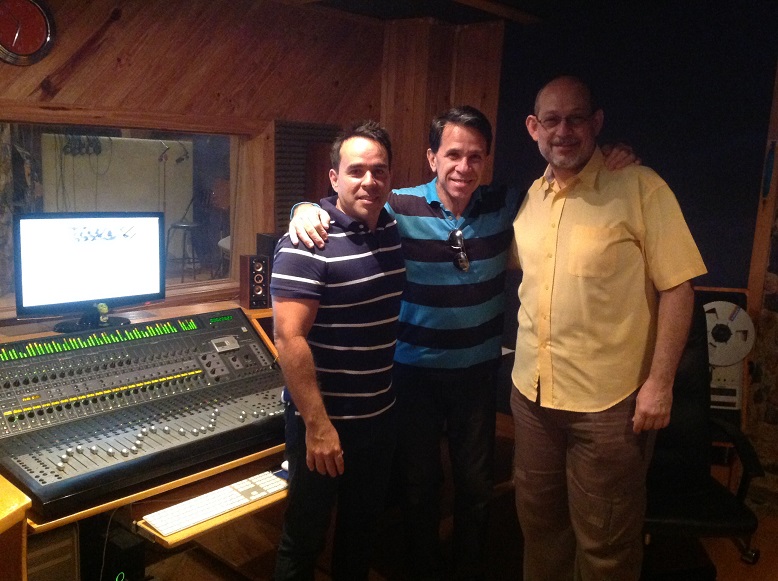
Fidelis Studio - Photo 6
Fidelis Studio – Photo 6
Fidelis Studio - Photo 7
Fidelis Studio – Photo 7

And they tell us that their experiences over the years have been very lively, fun and interesting at the time of making the recordings since each singer or band has their own personality when playing and producing their music, whatever the genre they play, that in the studio all types of music are recorded today.


Fidelis Studio - Photo 8
Fidelis Studio – Photo 8
Fidelis Studio - Photo 9
Fidelis Studio – Photo 9

The most significant artist for the studio and especially for “Gonzalito” according to his children was Alfredo Sadel whose voice ranged from opera to the popular rhythm of Venezuela, later it was Simón Díaz, Mauricio Torrealba… although they are all very important.

Fidelis Studio - Photo 10
Fidelis Studio – Photo 10
Fidelis Studio - Photo 11
Fidelis Studio – Photo 11

The Grammy Awards are a distinction given by the National Academy of Recording Arts and Sciences to recognize an especially outstanding achievement of the music industry to a specific artist, obtaining this award is a great honor since an extensive study is carried out to the CD where sound engineers, producers and other specialists participate to determine the physical and sound quality of the CD created and to participate in this award you must register in the academy to participate.

Fidelis Studio - Photo 12
Fidelis Studio – Photo 12

The Studio currently has 2 Latin Grammy Awards:

1st Recording “Treasures of Venezuelan Music” with Ilan Chester (2010).

2nd Recording “Maria Teresa Chacin Canta Cuentos” with María Teresa Chacín (2012).
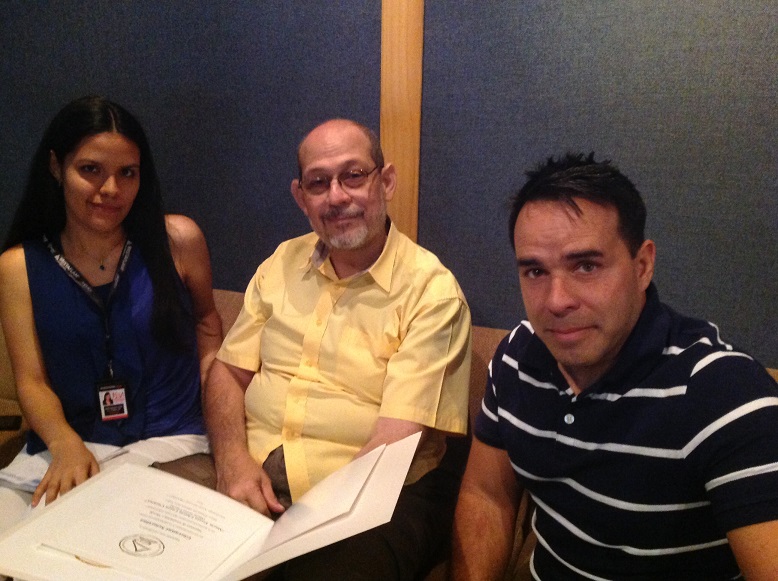
Fidelis Studio - Photo 13
Fidelis Studio – Photo 13
Fidelis Studio - Photo 14
Fidelis Studio – Photo 14

Where the team that makes up this renowned recording studio feels proud and happy for the work they are doing.

It should be noted that despite the situation in the country, they continue to provide the best service to singers and musical groups, whether national or international, being a strong competition for other recording studios in other countries, in relation to cost / quality. .

Fidelis Studio - Photo 15
Fidelis Studio – Photo 15

My person who had the opportunity to visit and interview its members, see, know and appreciate the type of study that is Fidelis I can say that the following:

“There are many recording studios in Caracas, Venezuela, but if you want your songs to be recorded with excellent audio quality in a recognized center, don’t think twice and choose them, they are the best”

Fidelis Studio - Photo 16
Fidelis Studio – Photo 16

For more information:

  • WebSite: http://fidelis.com.ve/
  • Teléfono: +58-212-9860722
Fidelis Studio Flyers

Gira Tango

Latin America / Venezuela / Caracas

For lovers of Tango, what better way to learn or practice it than at the “Gira Tango” Dance Academy that offers tango classes in Caracas, Venezuela. They also organize dinners, shows and tastings, not to mention that they work with the Embassies of Argentina and Uruguay.

The Vision and objective of the Academy is to promote national tango talent, where they seek meeting places to share knowledge, entertain the public in order to connect everyone through this style of dance.

Photo by Siulhy Santander and Leonel Colina - Gira Tango
Photo by Siulhy Santander and Leonel Colina – Gira Tango

Starting in 2015, the “National Tango Encounter” was organized, an artistic production that for a week offered the 5 municipalities of Caracas opportunities to enjoy classes, concerts, live shows and milongas in plazas, shopping centers and restaurants; and from that moment it was held annually, being for this month of November 2017 its 3rd edition in conjunction with the embassies of Uruguay and Argentina.

The workshops will be held on the 4th, 11th, 18th and 25th. If you wish to attend the classes at CELARG, look for information through 0412-9507209 or 0414-3206975 and register through the email [email protected]. Wear comfortable clothes and choose shoes that slide. In the case of women, Gira Tango recommends wearing heels without a platform that support the ankle.

Dancers and Teachers

The dancers and teachers that make up the academy are Siulhy Santander and Leonel Colina, founders of the Academy, who are dedicated to teaching tango and cultural management, not to mention that both were trained by internationally recognized teachers John Erban and Clarissa Sanchez. , Sofiani Figueroa, Daniel Martinez, Mario Morales, Daniel Naccuchio, Cristina Sosa, Fernando Galera and Vilma Vegas, among other exponents of tango with a great career.

Siulhy Santander and Leonel Colina

Siulhy Santander

She began his Tango studies in 2008 at the Centro Uruguayo Venezolano with the Academia Tango Caracas, directed by professors Frank Zambrano and Yore Rivas, without mentioning that he worked as a member of the dance corps of the Tango Caracas group until 2014, where He participated in various stagings and shows such as “Misterio Tango” and “10 Años de Tango Caracas”, where he met Leonel Colina. I also carry out workshops in Buenos Aires, Argentina, with professors Mario Morales, Fernando Galera and Vilma Vega in 2009 and 2012.

Siulhy Santander
Siulhy Santander

Leonel Colina

He was a student of Nationalist Dances from 1994 to 2001 in the Los Cocuyos Dance Group. He learned different types of dance such as Joropo, Calypso, Gaita, Drums, Bagpipes, Drums and Venezuelan Merengue. However, he decided to start studying again in 2007 at Academia Tango Caracas with professors Frank Zambrano, Yore Rivas, Frank Obregon and Sofiani Figueroa.

Leonel Colina
Leonel Colina

Starting in 2008, she worked as a member of the dance corps of the Tango Caracas group, participating in shows such as “Misterio Tango” and “10 years of Tango Caracas”, meeting Siulhy Santander Since 2011, the pair of dancers participated in the staging of the show “Misterio Tango”, which ran for two seasons at the Celarg theater and this couple has participated in cultural festivals such as:

  • IV International Meeting and III National Tango Championship, Caracas 2009.
  • V International Meeting and IV National Tango Championship, Tango 2010.
  • VI International Meeting and V National Tango Championship, Caracas 2011.
  • XVI International Dance Festival – Maracaibo (2011).
  • XVIII International Dance Festival – Maracaibo (2013).
  • Second Edition of the Ucab Dance Festival (2013).
  • Caracas International Theater Festival (2015).
  • World Tango Championship Medellin (2015).
Photo by Siulhy Santander and Leonel Colina

For more information:

  • WebSite: http://giratango.net/
  • Facebook: https://www.facebook.com/giratango/
  • Instagram: https://www.instagram.com/giratango/
  • Twitter: https://twitter.com/giratango
  • Email: [email protected]
  • Phones: +58 4129507209 / +58 4143206975


Latin America / May 2025

Claudia Acuña She is mainly known for singing jazz standards, ballads, and bossa nova

Ismael ‘Pat’ Quintana, born in Ponce Puerto Rico, began his musical career in 1961 alongside Eddie Palmieri and La PerfectaEddie Montalvo Iron Hands: "I'm in love with Venezuela"Calibrated maracas

DIRECTORY OF NIGHTCLUBS

Argentina flag
ARGENTINA

Aruba circular flag
ARUBA

Belize circular flag
BELIZE

Bolivia circular flag
BOLIVIA

Brazil flag
BRAZIL

Chile circular flag
CHILE

Colombia
COLOMBIA

Costa Rica circular flag
COSTA RICA

Cuba circular flag
CUBA

Dominican Republic
DOMINICAN REPUBLIC

Ecuador circular flag
ECUADOR

Guatenala circular flag
GUATEMALA

Mexico Circular flag
MEXICO

Panama circular flag
PANAMA

Peru circular flag
PERU

Puerto Rico circular flag
PUERTO RICO

Venezuela circular flag
VENEZUELA


Dance. The best of America United in a Single Project

Latin America / Cuba / La Habana

Since the 1950s, a very humorous genre called the casino dance was born in Cuba, a style based on dancing the Cuban music of the moment between couples. This lies in history since the fashion of Mambo and Cha Cha Cha in the most aristocratic clubs and in the fraternal halls of poor blacks of the beautiful island, they danced on Saturdays, Sundays or special parties on specific days, for the moment the rhythms sounded de la Aragon, Chapotin, Orquesta Casino, el Benni, among others, without leaving aside rhythms such as rock and roll, sounds of the time that fought for a space in the fans.

Social Photo
Social Photo

From the mixture and the dance relationship of those attending the clubs is born that change of couples in circular formation called the Rueda de Casino, a name that we will be developing in other editions of the magazine.

In America, especially in the south of this continent, Salsa Casino, as it is called in many places, has managed to lay firm foundations, much more than what is known in Europe or North America, in some countries becoming the reference number 1 of the Salsa dance modality. We have the best example in Venezuela, land of casinos par excellence, where we can add a great hundred dance schools nationwide, without leaving behind how strong it is in Colombia and Peru, among some countries that also use this discipline. as a strong influence on young and old.

It is incredible to see the great differences in styles and forms between the casinos in Europe and those in South America, but always the same concept, joining several couples to enjoy a good timba or a good son.

From the foregoing, the Cubashow Project arises, born with the primary objective of generating a training and development channel for the new generations that venture into the beautiful world of dance, mainly those linked to Cuban Salsa and its roots in popular music or traditional Cuban music, folklore and its Afro tendencies, all in relation to the strong wave of this discipline that is developing in the main capitals of many American countries.

they danced cha cha cha

BAILA QUE BAILA AMERICA a concept of union between southern countries to extend the dissemination of Salsa Casino in the continent brings together some of the best instructors from each country with the sole intention of conducting national and international training tours in all trends of the dances of Cuban culture, in this way we obtain from the best exponents classes, seminars, talks, forums, workshops and shows that can be viewed through the social networks of @BailaQueBailaAmerica the different schools, academies or instructors registered to the project.

Professional dance teams are structured based on their local projections, the work they do within each of their countries. An event of great proportions is expected for the month of June where we will be able to have the best instructors from all over South America together in a high caliber event, we just have to be attentive to social networks and future reports of this great magazine to join us. to this casual wave.

“Orquesta Zodiac” Its name came about due to the fact that in the early 70’s the ‘Walter Mercado’ program and the Zodiacal Signs were all the rage

In June 1971 what we know today as the Zodiac Orchestra was organized in the town of Loíza. Its name came about due to the fact that in the early 1970’s the Walter Mercado and the Zodiacal Signs program, which was broadcast on Channel 2 in Puerto Rico, was in vogue.

Tony Escobar’s uncle (the orchestra’s declamationist) suggested the name because it was an eye-catching and “new” name.

The Zodiac Orchestra was organized with members of a group called Loíza Power directed at that time by Paquito Pérez, who was 14 years old. In addition, it was nurtured with the best musicians of Loíza Sound of Javier Calcaño.

“Orquesta Zodíac” Su nombre surgió debido a que para principios de la década del '70 estaba de moda el programa de “Walter Mercado” y los Signos Zodiacales
“Orquesta Zodíac” Su nombre surgió debido a que para principios de la década del ’70 estaba de moda el programa de “Walter Mercado” y los Signos Zodiacales

The idea of recruiting these musicians was Paquito’s, since he grew up with José Luis Vizcarrondo and Tony Escobar.

Through Loiceño composers Carlos José Cirino (Tata) and Floren Ayala, the recording was achieved, as they approached Dario Gonzalez of Borinquen Record who contributed to make possible the release of the first 45 and LP. Tata’s “El Adiós” and José Feliciano’s “Las Costumbres” (1971) were part of this musical proposal that was very well received by the public.

This album became one of the best selling LPs. Other musical proposals of the group that would become hits were: “Panteón de Amor”  by Angel Laureano (1973), “Sinceridad” by Samuel Cirino, “Mi Guitarra” by Angel Laureano, among others. These great hits are frequently requested today on the Salsa Z-93 radio station.

After the initial success, many of the musicians dedicated themselves to work and to finish their studies, since they were married and were looking for security and economic stability for their respective families.

The Zodiac had the opportunity to travel to different cities in the United States such as: Boston, Connecticut, Philadelphia, New York, among others. They also traveled to other countries such as Colombia and others.

Orquesta Zodiac
Orquesta Zodiac

During these years, several orchestras were at their peak, such as: La Fania, La Selecta, Lebron Brother, La Corporación Latina, El Gran Combo, La Lupe, Chivirico Davila, Bobby Valentín, Tomy Olivencia, Ismael Miranda, Ricardo Rey, Roberto Rohena, Roberto Anglero, Justo Betancourt, among others.

In 1997 Paquito decided to retake and regroup the orchestra, and for some years he dedicated himself to reunite with the musicians and organize them again.

In 1999 he managed to restart La Orquesta Zodiac at the Z-95 festival in Mayagüez. Later they performed at the National Salsa Day dedicated to Cheo Feliciano in 1998.

These two presentations were made at the invitation of Pedro Arroyo (director of Z-93) to Paquito, and were a great success. El Gran Combo, Rubén Blades, Jimmy Zabater, La Solución, among others, also played in the tribute to Cheo.

The members of the current orchestra are young, and most of them were music students of Paquito Pérez, who worked as a music teacher for 30 years in the town of Loíza (before retiring).

José Luis Vizcarrondo, Tony Escobar and Paquito Pérez were schoolmates for years. The director of the orchestra in the beginning was José Luis, also collaborating with him were Tony Escobar (saxophonist and declamation player), Freddy Ayala (conguero) and Paquito Pérez (singer). All of them contributed ideas for the arrangements. Currently Víctor Pérez (Paquito’s brother) is the director of the wind section.

Orquesta Zodiac en el pueblo de Loíza

In 2010 the orchestra played in the National Salsa Day and in 2012 the orchestra played again in the same activity, but this time the activity was dedicated to La Orquesta Zodiac and La Corporación Latina. In which Z-93 gave them a well-deserved recognition and Paquito, José L, Tony, Tata, Laureano, and the rest of the new members of the orchestra were present.

Currently the orchestra meets periodically to practice, and are available for all kinds of activities.

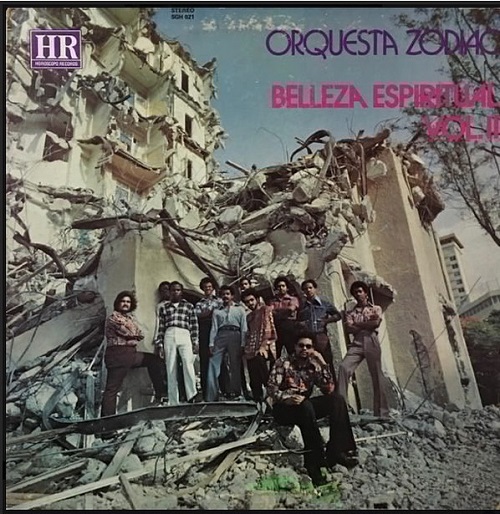
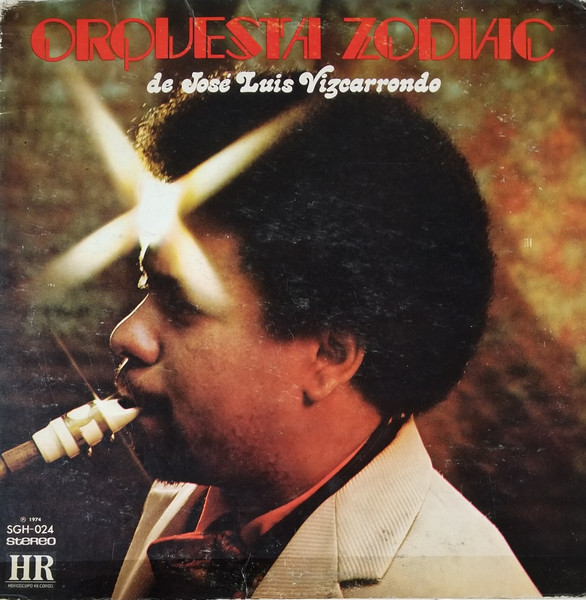
Did you know that…! In June 1971 what we know today as the “Zodiac Orchestra” was organized in the town of Loíza in Puerto Rico. Its name came about due to the fact that in the early 70’s the program “Walter Mercado” and the Zodiacal Signs, which was broadcasted on channel 2 in Puerto Rico, was in fashion. Tony Escobar’s uncle (declamationist of the orchestra) suggested the name because it was a striking and “new” name …Referring to the image of the post belongs to the second production of this Puerto Rican group entitled “Spiritual Beauty Vol. II” published in 1973 under the label “Horóscopo Récord” and directed by the founder, arranger, pianist and saxophonist Mr. José Luis Vizcarrondo. It is worth mentioning that this production includes the classics: Montuno de Oriente, Vicio de Amor and Belleza Espiritual”. Another important fact about the group is that it is still in force with musicians of the new generation, but with the same Swing and musical concept.

Segunda producción de dicha agrupación boricua titulada “Belleza Espiritual Vol. II” publicada para el año 1973

It is worth mentioning that the main responsible for making Orquesta Zodiac publicly known in Venezuela, Latin America and the Caribbean was Mr. Ali Delgado. Mr. Ali Delgado, for the year 1985 under the record label Performance Records, Delgado comments in detail that for the date of publication of this production the only popular sector (neighborhood) of Caracas where the Zodiac Orchestra was known was in Pinto Salinas.

Orquesta Zodiac De José Luis Vizcarrondo

Delgado is a music producer, music lover, collector, director and founder of the projects Salsa de La Mata and Jazz con Clave in Caracas.

Dj. Augusto Felibertt y Ali Delgado

Also Read: Sessions from La Loma brings together salsa fans from all over the world in Puerto Rico

  • « Go to Previous Page
  • Page 1
  • Interim pages omitted …
  • Page 46
  • Page 47
  • Page 48
  • Page 49
  • Page 50
  • Interim pages omitted …
  • Page 95
  • Go to Next Page »

International Salsa Magazine (ISM) is a monthly publication about Salsa activities around the world, that has been publishing since 2007. It is a world network of volunteers coordinated by ISM Magazine. We are working to strengthen all the events by working together.