• Skip to primary navigation
  • Skip to main content

International Salsa Magazine

  • HOME
  • Previous editions
    • 2026
      • ISM / May 2026
      • ISM / April 2026
      • ISM / March 2026
      • ISM / February 2026
      • ISM / January 2026
    • 2025
      • ISM / December 2025
      • ISM / November 2025
      • ISM / October 2025
      • ISM / September 2025
      • ISM / August 2025
      • ISM / July 2025
      • ISM / June 2025
      • ISM / May2025
      • ISM / April 2025
      • ISM / March 2025
      • ISM / February 2025
      • ISM / January 2025
    • 2024
      • ISM / December 2024
      • ISM / November 2024
      • ISM / October 2024
      • ISM / September 2024
      • ISM / August 2024
      • ISM / July 2024
      • ISM / June 2024
      • ISM / May 2024
      • ISM / April 2024
      • ISM / March 2024
      • ISM / February 2024
      • ISM / January 2024
    • 2023
      • ISM / December 2023
      • ISM / November 2023
      • ISM / October 2023
      • ISM – September 2023
      • ISM – August 2023
      • ISM July 2023
      • ISM Edition June 2023
      • ISM – May 2023
      • ISM April 2023
      • ISM March 2023
      • ISM February 2023
      • ISM January 2023
    • 2022
      • ISM December 2022
      • ISM November 2022
      • ISM October 2022
      • ISM September 2022
      • ISM August 2022
      • ISM July 2022
      • ISM June 2022
      • ISM May 2022
      • ISM February 2022
      • ISM January 2022
    • 2021
      • ISM December 2021
      • ISM November 2021
      • ISM October – 2021
      • ISM September 2021
      • ISM August 2021
      • ISM July 2021
      • ISM May 2021
      • ISM April 2021
      • ISM June 2021
      • ISM March 2021
      • ISM February 2021
      • ISM January 2021
    • 2020
      • ISM December 2020
      • ISM November 2020
      • ISM October 2020
      • ISM September 2020
      • ISM August 2020
      • ISM July 2020
      • ISM June 2020
      • ISM May 2020
      • ISM April 2020
      • ISM March 2020
      • ISM February 2020
      • ISM January 2020
    • 2019
      • ISM December 2019
      • ISM November 2019
      • ISM October 2019
      • ISM Septembre 2019
      • ISM August 2019
      • ISM July 2019
      • ISM June 2019
    • 2016
      • ISM December 2016
      • ISM November 2016
  • Spanish
  • Download Salsa App
    • Android
    • Apple

Search Results for: Son de Bolero

Carlos “Patato” Valdés one of the best percussionists in the history of Latin Jazz.

On November 4, 1926 in the Los Sitios neighborhood of Havana, Cuba, Carlos “Patato” Valdés was born. Known as Patato, he is, quite simply, one of the best percussionists in the history of music.

Patato was born into a very santera and very musical family, his father was a tres player of Los Apaches, the port germ of two illustrious sonera groups: the Sexteto Habanero and the Sexteto Nacional.

He learned to play the tres and the botijuela before turning to percussion, first on the cajones and finally on the congas.

He was an extraordinary percussionist of outstanding participation with the “Conjunto Kubavana”, “La Sonora Matancera”, “Conjunto Casino” and the “Orquesta de Tito Puente”, among other groups, both Son and Latin Jazz.

Formed in rumbero gatherings and carnival groups, Valdés became a professional in the early forties, after trying his luck as a boxer and dancer.
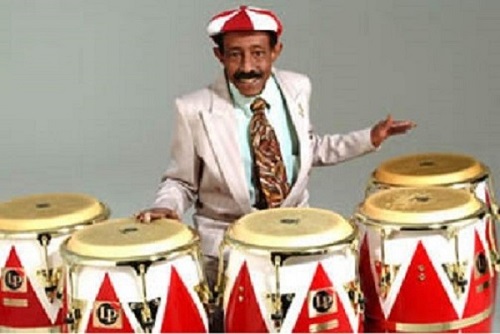
Carlos “Patato” Valdés uno de los mejores percusionistas en la historia del Jazz Latino

He played with Conjunto Kubavana, La Sonora Matancera and El Conjunto Casino. He accumulated nicknames: Zumbito (for his performances at the Zombie Club), Pingüino (for a dance he did on television) and Patato (for his small size), and in those days, dedicating oneself to music in Cuba guaranteed hardship. Besides, Patato wanted to experiment and that was not possible playing for dancers or tourists.

In 1954, he emigrated to New York, like his leather friends: Cándido Camero, Armando Peraza, Mongo Santamaría and the pioneer Chano Pozo (murdered there in 1948).

He immediately began working with Tito Puente. His first recording in the United States was the album Afro-cuban, by trumpeter Kenny Dorham, which opened with the intoxicating Afrodisia. Those were good times for tropical music.

He was the first percussionist to improvise “Solos” with 3 or more Congas at the same time. In addition, he was the creator of the “Congas Afinables”, instruments on which he would ride to dance making them sound rhythmically.

Patato Valdes was an excellent musician, an unforgettable person. Nervous and diminutive, he spoke with an impenetrable Cuban accent; he dressed elegantly, hiding the necklaces and bracelets of Changó and other “orishas”. He looked like a living caricature, but when he hit the percussions he became a divine creature: he had power, spectacularity, sense of melody.

Those skills made him an ambassador of Afro-Cuban rhythms in the jazz world, although he will also go down in history for his extraordinary rumba recordings.

In 1956, Patato appeared in the film Y Dios creó a la mujer, teaching the dances of his homeland to Brigitte Bardot. A great moment, although an implacable Guillermo Cabrera Infante criticized the actress’s movements: “she seems to commit suicide by dancing a cross between mambo and chachachá, a really toxic cross between mambo and chachachá”.

A flexible musician, Valdés sounded as comfortable playing with Machito’s big band as with Herbie Mann’s group. However, he felt indebted to the “rumba de solar” and in 1968 he recorded a revolutionary album with his friend Eugenio Arango, alias Totico.

The exuberant Patato & Totico had genuine Havana flavor, but enriched the basic percussion instrumentation with Cachao’s contrabass and Arsenio Rodriguez’s tres.Patato expanded the creative possibilities for percussionists by playing with three or more congas.

He also made their lives easier by developing a tunable conga: fed up with the traditional method (heating the leather over fire), he installed a metal hoop and keys for tensioning.
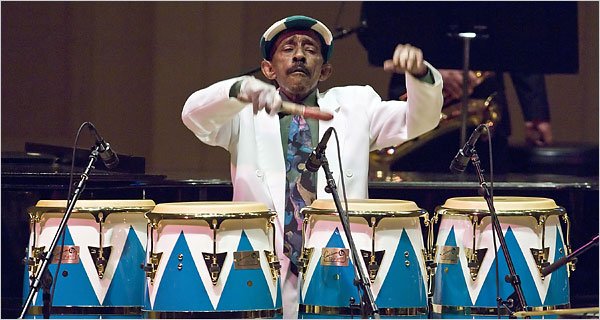
Carlos "Patato" Valdés
Carlos “Patato” Valdés

The LP company mass-produced his model, which was to become the standard for conga players. To promote it, he formed the Latin Percussion Jazz Ensemble with Tito Puente, Jorge Dalto and Alfredo de la Fé, among others, an orchestra that would end up becoming Puente’s big band in the early 80s.

It was during this period with Dalto that the album we have chosen for today began to take shape. It was titled “Patato, Master Piece” and it synthesizes all of Patato’s genius.

“Masterpiece” is an album that travels first class through tango, jazz, descarga, guaguancó and bolero, always in a masterful way and with a luxury crew made up of names like Jorge Dalto, Artie Webb, Michel Camilo, Jerry and Andy González, Nicky Marrero, Ignacio Berroa, Joe Santiago, Néstor Sánchez, Vicentino Valdés, and Sabú Martínez, among others.

The Art of Flavor.

Unfortunately Dalto had already passed away when in 1993 the project was released by the venerable German label Messidor, the same label that had already financed some impressive sessions of Patato with Mario Bauzá or Bebo Valdés, with whom he would later record the famous El Arte del Sabor.
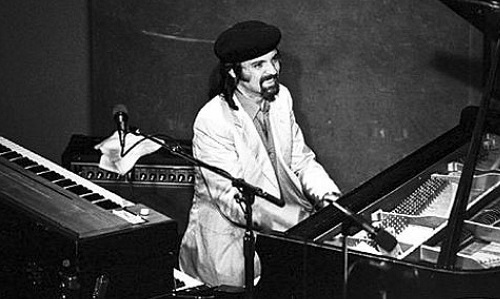
Jorge Dalton
Jorge Dalton

In fact, the great Argentine pianist had to be replaced for the last recording sessions that were made 6 years ago since his illness was too advanced, but he left us some incredible arrangements that were kept in the great majority of the themes.

Dalto left us in 1987 when he was only 39 years old. His replacement was nothing more and nothing less than a very young Michel Camilo.formed by 9 cuts among which we especially want to highlight the huge versions of Cute and Nica’s Dream, Masterpiece is an essential album for all lovers of Latin-jazz with capital letters and that is why we wanted to share it on a day as special as today.

Already recognized as a legend, Patato became more visible in the last 25 years: he had his own band, Afrojazzia, although The Conga Kings, with Cándido and Giovanni Hidalgo, turned out to be more popular.
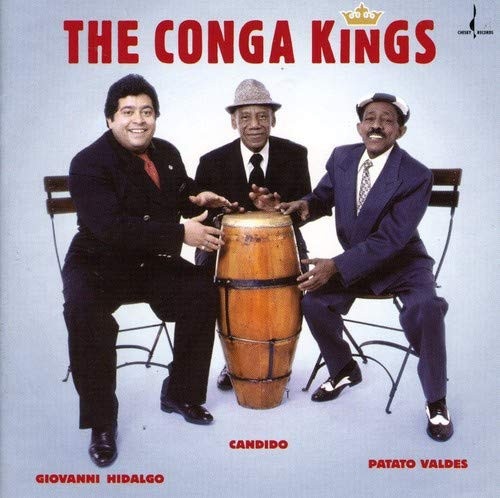
The Conga Kings Giovanni Hidalgo, Cándido Camero y Patato Valdez

He even made his way onto the modern dance floors, with a remix of San Francisco tiene su propio son. Just as he was returning from playing in California with the Conga Kings, his breathing began to fail.

The plane he was on had to make an emergency landing in Ohio to admit him to a hospital. The 81-year-old percussionist, a heavy smoker, was on his way to his beloved New York, but he would never get there. According to his relatives, he held out until December 4, the day of Santa Barbara, the Afro-Cuban equivalent of Changó, when the cables and tubes that kept him alive were removed.

Valdés died in Cleveland, USA, on December 4, 2007.

Fuentes: http://www.herencialatina.com/Patato/Patato_Valdes.htm

Imágenes: Martin Cohen de Congahead.com

Carlos “Patato” Valdés

You can read: Irakere was a Cuban group that developed an important work in Cuban popular music and Latin Jazz under the direction of Chucho Valdés

Chevy El Pitirre De La Salsa and his interesting career

José Flores Pérez

Jose Flores Perez, better known as Chevy El Pitirre De La Salsa, is a salsa singer who was born in the town of Cidra, Puerto Rico, but currently resides in Georgia. We have had a very pleasant conversation with the salsa exponent, in which we have touched on certain various professional and personal tissues never mentioned before. It is a real pleasure for us that he has agreed to talk with us and tell a little more of his personal story on this platform, which is International Salsa Magazine.

Chevy El Pitirre De La Salsa was born in Puerto Rico, but now lives in Georgia, United States

Origin of his artistic name

”Chevy” is a nickname his parents and friends always gave him and ”pitirre” refers to a Puerto Rican bird with very short dize, but a very strong character. Maestro Felix Ortiz name him ”El Pitirre” because of the way he sings and improvise in the stage and the trust between them was such that he even became the music director of his orchestra. This combination of nicknames was what made Flores start to become known by that way during the last four years of his career.

Influences and predilection for salsa music

The reason Chevy opted for salsa was the great influence from his family. His father was a salsa singer for local orchestras in Chicago, which made him listen to various Puerto Rican genres such as salsa, bolero, jibaro music and trova throughout his childhood.

There were years when he really enjoyed listening to hip hop and rap in the late 80’s and early 90’s, but it didn’t take long for him to reconnect with salsa when he started listening to Héctor Lavoe, Ismael Rivera, Sammy Marrero, Bobby Valentín, Cano Estremera, among others. Listening to all these idols and what they achieved led him to take salsa much more seriously.

Chevy El Pitirre De La Salsa performing on stage

His time in the military and formal beginnings in music

During his time in the military, he performed in different orchestras and accompanied various artists throughout Atlanta. Although this was a demanding career, he organized himself to pursue his interest in music. When he leaves the armed forces, he went to Puerto Rico, where he lived for a great deal of time until he moved to Georgia in 2016.

His current residence is still in this state for professional reasons totally unrelated to music, but he had been there around the time he served in the army, so this part of the United States was not unknown to him. It is there that he resumesd his musical career after so many years.

In 2017, he began to compose, but it was not until two years later when he decided to launch as a soloist, make his first single ”Instrumento de amor” and carry out his first independent musical project entitled ”Entre el amor y el vacilón”.

In this same year 2019, he took advantage of the internet and social networks to become known at an international level and released his second record production during the pandemic, but the singer does not think this situation has hurt his carrer. On the contrary, he believes that social media and digital platforms gave him the push he needed to promote his artistic proposal.

Chevy El Pitirre De La Salsa recording in the studio

Recent projects

One of his most recent projects was carried out in 2019, is titled ”Atacando en Navidad” and was born from the songs ”Arbolito de Navidad” and ”Compay no se me raje”. The first is written by Chevy, but the latter was composed by the legend Johnny Vega. At some point, the artist decided that these two singles were not enough, so he created a full album based on the Puerto Rican parranda he always enjoyed as a child. The result is a mix of nostalgia, sadness, love and joy. He tells how Christmas was celebrated at home, his childhood dreams, what this time meant to his family and the sadness when a loved one dies that year.

One of the most significant songs is ”Navidad Sin Parranda”, which was written a year before Chevy’s mother died. She was so ill at the time that the whole family thought she suddenly would lose her life, but fortunately she did not. Back then, the salsero was beginning to imagine a life and a Christmas without his mother, as she kept the family together and her house was the meeting place for all the important dates.

It just so happens that Venezuelan musical arranger Willy Melo lost his father within a few days of receiving the song, so he was very connected to that same pain around the same time.

Read also: Isaac and Esteban Hernández, two brothers making history

Joseíto Mateo “They call me the Negrito del Batey, because work for me is an enemy”

Joseito was a consecrated Dominican merenguero who began his career in the 1930’s, better known as “El rey del merengue, El diablo Mateo”.

As a child he learned to sing and dance. He sang at the “Fiestas de la cruz” and at wakes, since at that time the deceased were prayed to with songs.

Mateo began his career as a singer during the 30’s, a period in which he was gaining the public’s favor.

Some time later he was requested by the record label “SEECO” to join the cast that in Havana would record with the Sonora Matancera.

Those were the years of the Trujillo Era in which Dominicans required an exit permit to travel abroad.

At first, this document was denied to Joseito.

As a consequence, in Havana, once the record was contracted and the pieces that would be part of it had been selected, including “El negrito del batey”, Joseito’s place was taken by the Dominican singer Alberto Beltrán, who was known since then by the Cuban public as “El negrito del batey”, instead of his true inspirer.

He was born on April 6, 1920 in Santo Domingo (Dominican Republic).

In one of his later trips, he decided to stay in Cuba to sing in CMQ, together with Celia Cruz and La Sonora Matancera, a very popular group at that time.

After the assassination of Rafael Trujillo on May 30, 1961 and the end of his dictatorship, Joseito decided to try his luck in Puerto Rico.

In 1962, Joseíto participated as vocalist in the first tour of the “Gran Combo” to Panama, to promote the album ‘El Gran Combo con Joseíto Mateo’.

There he met the young singers Pellín Rodríguez and Andy Montañez, who ended up replacing him in the Puerto Rican group.

“El Gran Combo was very good to me, I adapted to sing plena, bomba, guaracha, boleros, but then I had to return to Santo Domingo to clear my name.

They were falling behind all those who were with Trujillo, and in the Republic they said I was a spy and was on the run”.


Mateo’s professional work has spanned more than 70 years and constitutes an important reference of the Dominican musical culture.

He was nourished by the roots of merengue and became a singular exponent of it. His innovative style was characterized by a stage participation enriched by his particular way of dancing and singing.

Some of his best known songs are Madame Chuchí, Dame la visa, La cotorra de Rosa and La patrulla, among others. Joseito is known as “El Rey del Merengue” (The King of Merengue).

On November 11, 2010, Mateo was recognized at the 11th Latin Grammy Awards with the Latin Recording Academy’s Musical Excellence Award for his contributions to Latin music.

He retired in 2001, close to his 82nd birthday and after recording 50 “elepes”.

Joseíto Mateo passed away on June 1, 2018 at the age of 98, due to leukemia. He spent his last days in the Hospital de las Fuerzas Armadas.

Source:

https://www.buscabiografias.com/biografia/verDetalle/8662/Joseito%20Mateo

“Tabaco y sus Metales” the legend of Salsa made in Venezuela

On May 30, 1995, Carlos “Tabaco” Quintana died in Caracas, Venezuela, the city where he was born on September 15, 1943.

Charismatic Timbalero, Sonero and Director of “Sexteto Juventud” and “Tabaco y sus Metales” the legend of Salsa made in Venezuela”

Former member of  “Sexteto Juventud”, founder of the orchestra  “Tabaco y sus Metales”. He was born on September 15, 1943 and began his musical training in the corners of San José.

Youth took him hand in hand with the street salsa brava, the rebellion of Palmieri and Mon Rivera’s trombones and the castinglés sound of Joe Cuba’s sextet.

And it was so long that they began to call him “tabaquito”, a tabaquito who waited for the day to be over to find the musical flavor far from the chore of shoeshine boy and town crier.

He never forgot that he used to go out to 23 de Enero to listen to the rehearsals of a group that was being formed there.

Years went by and rehearsals went by while Tabaquito got to know one by one the members of that group until 1963, when he was twenty years old, his friend Elio Pacheco recommended him to Olinto Medina, the leader of that band.

Olinto was about to rehearse “Guasancó” and the singer was not in tune with him.

Elio’s recommendation took effect and “Tabaco” did its thing, very well. Thus the Sexteto Juventud had a new voice and something more, because Carlos Quintana was able to walk through all the instruments of the group.

He had an almost magical vocal timbre. His voice was astonishingly similar to Ismael Rivera’s and we already know what that meant at a time when Maelo was the obligatory reference from the ranks of Rafael Cortijo’s Combo.

With Quintana the Sexteto Juventud had moments of true glory because although it reflected the influence of Joe Cuba they created a style that continues without copy.

In addition to his vocal art, Tabaco was a good composer, with a good vibe and reciprocity in the town. Every September he would go to play for the prisoners, on the day of Las Mercedes. He felt what a captive felt and that is why he composed “La Cárcel” (Qué malo es estar/ estar entre rejas/ y qué soledad/ qué soledad se siente).

Along with this song he released “Mi Calvario”, a piece that became a classic.

(Quisiera saber/ cuál fue la causa/ de nuestro olvido.And so, between recordings and toques, Tabaco, in the Sexteto Juventud, saw the arrival of José Natividad Martínez, Naty, the flutist and friend. Naty sold the idea of the brass to Quintana and Quintana, buying, suddenly came up with “Tabaco y sus metales” and recorded Pablo Alvarez’s “Una sola bandera” which was a smash hit, “Agua de mayo” and his tribute to the rumberos, “Tuntuneco”.

In May 1984 we published a very rich interview with Tabaco in El Nacional’s Feriado. Almost immediately they called to locate him. He was invited to the Managua 84 festival. It was the first time he left the country by air.

He performed for 30,000 people with Son 14, Amaury Pérez, Pupi Legarreta and Tania Libertad, among others. On his return he told me that the Cubans were astonished because they thought that in Venezuela there was only Oscar D’ León, and that he almost fainted when Daniel Ortega approached him to ask for an autograph, and that he touched the sky when Adalberto Álvarez and Son 14 went up on stage with him to sing “Una sola bandera”.

His dreams: He had two: To record an album as a tribute to Ismael Rivera, and to make another one with boleros. Once in Macuto he sang with Ismael Rivera and for both of them it was a tremendous experience. In Guarenas, the musical and brave, specifically in “Menca de Leoni” was cooking the dream.

With Naty’s help, he began to record Maelo’s on an album that the Sonográfica label did not take care of releasing afterwards. He could not finish it because cancer took him to the hospital where Joe Ruiz was also hospitalized.

That album was vocally completed by Ángel Flores. He, who admired Cheo Feliciano and Tito Rodríguez so much, could not make the bolero album either.

Naty says that in more than one night he managed to get Tabaco out of the hospital to advance the tribute album to Maelo. She knew that Tabaco wanted to do it, and pleased the friend, who also, looking for spiritual relief to his physical pain, went to Los Teques, where he was surprised by death on May 30, 1995.

“Tabaco” Chronology of his musical life 1.943 Carlos Quintana was born on September 15 in the San José neighborhood of Caracas, Venezuela.

1.955 as a child he worked as a shoeshine boy and began to be interested in music.

1.959 in his adolescence he attended the rehearsals of a musical group in the 23 de enero neighborhood of Caracas, because of his skinny body and stature they began to call him Tabaco.

1.962 on May 13 was founded the group called Conjunto Rítmico Juventud, which eventually gave rise to the Sexteto Juventud, composed of Olinto Medina as director and bassist, Elio Pacheco on the Tumbadora, Carlos Croquer on drums, Arturo Lopez singer, Juan Medina on guitar and Isaias on bongo.

1.963 musician Elio Pacheco introduces Olinto Medina leader of the group to his friend Carlos Quintana.

1.967 “Tabaco” joins the group and in a short time he becomes the vocalist of the group in his first recording titled “Guasanco”, a 45 rpm single whose reverse side was titled “Cautivo”, this happened on February 22nd of that year.

SB1 Publications

Besides having a voice similar to that of Ismael Rivera, Carlos Quintana performed well on the bongo and other instruments.

On June 11, 1967, the first album of Sexteto Juventud was released, entitled “Guasanco”, it was recorded for the Velvet label and the name of the album was due to the success of its first single “Guasanco”, other songs on the album were “La Jibarita”, “Bógalo” and “Consejos de mamá”.

The same year 1967, this time on September 24th, their second album is announced: “Mas Guasanco”.

A new production of the sextet is called “A bailar juventud”, which contains the songs “Guasanco número 3”, “Hermanos con salsa”, “Soy el Bravo” and “Guajira Sentimental”.

The Sexteto releases the album “Mala” for the same Velvet label, where the numbers “Capricho antillano”, “La calle 10”, and “El Nuevo Guasanco” were recorded.

Two new records that were pressed for Velvet are: “Sabroso tumbao” and a work with the voices of Carlos Quintana and Oscar Mijares who was nicknamed “El chino” titled “La juventud se impone” for the Velvet label, in which they developed rites such as: Guaguancó, Jala jala, Guajira, Guaracha and Mozambique with hits such as “La cárcel” and “Jala jala Navideño” in the voices of Carlos Quintana and Oscar Mijares.

1.971 a new Sexteto album was released, entitled “La magia del sexteto”, which included songs such as: “Con todas las banderas”, “Sandra Mora” which would later be recorded by Naty y su Orquesta, “Caramelo y Chocolate” and “Virgen de los cuatro vientos”.

Also in this year they recorded an album called “A todo ritmo” in which they included “Caramelo Tumbao”, “De nuevo Borinquen” and “Comand Bógalo”, they were awarded a gold record by the Velvet music label.

1.974 On April 22nd without “Tabaco” in their ranks, Sexteto Juventud recorded an LP that we have to mention for its success at the Salsa level, the album was called “Lo espiritual del Sexteto Juventud” with rhythms like “Guaguanco”, “Guaracha”, “Bolero”, “Danzon” and “Guajira” and we highlight the numbers “Espiritualmente”, “Vestida de Blanco” and the homage to the Boricua land with the theme “A Puerto Rico”.

1.975 following the suggestion of his friend and musician the Venezuelan flutist Natividad Martinez, Carlos Quintana creates his own group “Tabaco” and his Sextet. Their first song was called “Una sola bandera” and was very well received by the public.

Also in 1969 he recorded the spectacular album titled “Agúzate”, for Tico Records, with classic songs such as: “Aguzate”, Amparo Arrebato”, in homage to a dancer from Cali, Colombia, “Vive feliz”, “Guaguancó Raro”; “Traigo de Todo” and the bolero “A mi manera”.

Carlos Quintana recorded the album titled “El Sabor de Tabaco” in the Colors studios in Caracas, the album contains songs such as “Maria lienza”, “Pegao”, “Ofrenda” and Yabirongo”.

1.975 records the albums “Tronco e’ baile Tabaco y su Sexteto” for TH records in which appear the themes “Pobre”, “Mata Ciguaraya” by Benny More and the hit “La Libertad”, in which he makes mention of the greats like Benny More, Celia Cruz and Ismael Rivera, half of the themes of the album are authored by Gabriel Carrasco and the other record production of 1. 975 was called “Tabaco y su Sexteto: Mi pueblo – Mi burrita – Nostalgia”, for the Top Hits label, with the production of Tony Montserrat and which has the themes “El Vals de Papa”, the Tango “Nostalgia” and a very salsa number titled “Ponte en Ritmo”.

1.976 his musical work is titled “Tabaco y su Sexteto” with the arrangements, production and direction of Victor Gutierrez, the record was made in Venezuela by La Discoteca CA. And contains a number of authorship of “Tabaco” entitled “Mi Celda”, and other songs like “Amor amor” and “Prefiero mí son montuno”.

1.978 Carlos Quintana changes the name of his group to “Tabaco y sus Metales” and with that title they record for the Top Hits label in the Intersonido CA studios, the album includes songs like “Tristeza y pena”; “Celda de castigo” and “Sinceridad”; both by Carlos Quintana. The orchestra was formed by Pedro Landaeta on Piano, Hector Pacheco on Bass, Pablo Álvarez on Conga, Carlos Quintana Bongo and Percussion, Gabriel Carrasco on Tres, Trumpets by “Pollo” Fuentes and Luís Arias, Natividad Martínez on Flute, Carlos Quintana Singer and the choirs of Gabriel Carrasco, Dimas Pedroza, Álvaro Serrano, Carlos Quintana and Víctor Gutiérrez.

1.979 Tabaco y sus metales publishes a new album under the title “Ni poco ni demasiado” also for the TH label with a number of the same name and other songs such as the big hit “Arrollando”, a version of the song “Todo de los metales”, a version of the song “Todo de los metales”, and a version of the song “Todo de los metales”. a version of the song “Todo el mundo escucha” by Bienvenido Granda and also a number by Markolino Dimond titled “Maraquero”.

With the production, arrangements and direction of  Victor Gutierrez, the recording was made at Intersonido CA in Caracas.

1.980 the musical work of this year was titled “Advertencia”, this work was made in Puerto Rico under TH license, it is a sample of what at that time “Tabaco” meant in Salsa, in this recording participated musicians like Luís Quevedo in the Piano, Polo Huertas in the Bass, Papo Pepín in the Conga and Yayo el Indio and Carlos Santos in the choirs.

The musical direction and arrangements were in charge of Ray Santos. Among the songs on the album are “Agua de mayo” by Pablo Álvarez, “Que ironía” by Carlos Quintana and “Alegría” by Naty Martínez. Regarding this work, Rafael Rivas, Disc Jockey of Radio Aeropuerto, wrote: “Latin music in Venezuela has had several variants, some aimed at fulfilling a certain time, others evidencing the spirit and reality, the daily life with success; precisely to this current or trend belongs Tabaco.

The commitment to sing what he carries inside, to expose with his natural style the things he feels, even his motivations, leads us to reflect on the figure of Tabaco.

It is he, and no other, in our country, who has dedicated himself to present with passion what he suffers, what he sees, what he truly feels.

Tabaco says, his naturalness allows that balance between what he sings and lives, he seems to conjugate, and perhaps that is the truth, to take for himself, what we have logically lived.

Tabaco’s life is here, and we respect his criteria: without a tenacious diffusion Tabaco has managed to sell, to surpass the best; and there is a reason for it: Tabaco has the strength.

He is interested in singing, in carrying a message, and in his own way he has exposed it with sense, with full authenticity.

Tabaco commented to me one afternoon at the Airport: “Tigre, I believe that the important thing is to define ourselves, to express our reality and denounce at the same time: that is why Rafael believes in you, because you are the message, the truth of our movement”.

Tabaco was referring to the content of the songs; he believes in the possibilities of music, in its magic to undertake behaviors and to present the rage, love and passion of our spirit.

Later Tabaco pointed out to me: “What is indispensable is to sing, the way things are felt, the way the people communicate, that is why I make Salsa”.

And that is why Tabaco has a name, a special public, that has known how to understand him, because he has reached us, with sense and commitment. He is the voice of the people aimed at interpreting their process, their experiences, their daily work. Therein lies the reason for his inspiration, the context of his themes.

When he inspires, he shows his capacity to value, his speech evidences his thoughts, his aspirations, and also his repudiation. He hides nothing and what emotion we feel, when he unloads on the timbales, when his voice rises and blends with the rhythm, telling truths, encouraging the spirit, if I understand the dancer, generating relief to the heart, living the cadences, demonstrating his skills as a sonero. He created his own style, and this has consecrated him.

Now we have the new Tabaco, with more maturity, and the experience of the arranger who at this time has a special prestige: Ray Santos.

Ray’s commitment went beyond what we originally thought; Tabaco was a challenge for Ray; he had Santos in front of a marvel, as he described him, the people turned to the figure of Tabaco, who felt he had the best time to undertake the melody.

Ray prepared the arrangements with a concentration that he had never achieved before, he understood the commitment, and Tabaco knew how to respond to the requirements.

Ray confessed that Tabaco is gifted with possibilities, so his work demanded the maximum. For the first time, Tabaco appears with a superband, with a different orchestration, and it was necessary to do it, the time demanded it, his voice has the right to sound to the four winds, it is time that our best (Tabaco) interprets reaches the Caribbean, with height.

Tigres y tigressa, with this LP we will have special music; its quality, its conception, will lead us to take it into account, not only for our rumbas but to enjoy it all our lives.

The producers knew perfectly well the intention of recording with Ray Santos, they knew that Tabaco would keep to his style, without any change or twist that could deviate his personality as an interpreter; what they were basically looking for was perfection in the orchestration, that magic touch that would allow him greater expressive freedom; that is the reason for recording in Puerto Rico.

The best thing that could have happened to Tabaco this year was to meet Ray Santos, and for us, that unity represents the most audacious and wonderful thing that has been done so far. I believe, despite the express prohibition to advertise cigarettes, that this Tabaco is the purest, most inimitable in its Venezuelan flavor, and most authentic of the Caribbean. What are you waiting for? Light it up now! Tabaco y sus metales 1.981 was his next production for Top Hits records, with arrangements by Jorge Millet and Natividad Martínez, in which the songs “Si la envidia fuera Tiña” by Jorge Millet and Carlos Quintana: “Mi Celda” and “A Millet” were recorded.

In 1982 he recorded an album called “Cosa Linda”. The themes of the album are: “Cosa linda”, “Tremendo guaguancó”, “Fiebre de ti”, “El callo”, “De mi rancho a tu casa”, “El cafetero”, “Camarera de amor”, “Consejo a las mujeres”.

(H3) 1.983 Produces the album “Homenaje a los bravos”, also for TH records, which includes “Baranda” by Justi Barreto, “El Timbalito” by Tito Puente and “La Culebra” by Obdulio Morales.

1.984 in this opportunity the album was called “El Timbalero, Tabaco y sus Metales”, which includes two numbers by Justi Barreto: “Timbalero” and “Barito”, the song “Casamiento” by Rafael “Chivirico” Dávila and a song written by Carlos Quintana: “Contestación a mi calvario”, production, direction and arrangements by Andy Duran.

  1. 988 Tabaco y su grupo futuro, recorded for the Velvet label in which they recorded songs like “El taxista” and “El Temporal”, with arrangements by Félix Suárez and Víctor Santana, the members of the group are Carlos Quintana singer, Fidel Antillano pianist, Jesús Torres on bass, Cruz Armando Quintana on bongo, Alirio Castillo on Timbal, Alberto Vergara on Vibraphone, Victor Santana on tres and guitar, Jorge Ruiz on conga, Tambora and guiro in charge of Jorge Orta and the choirs of Carlos Quintana, Felix Suarez, Victor Santana, and Pablo Alvarez.

On May 30, 1995, the Venezuelan musician, composer and singer Carlos Quintana, known in the salsa world as “Tabaco”, died in the city of Caracas, victim of cancer. His voice died, but his legacy of thirty-two years of artistic life remains for all the followers of his musical work in Venezuela, Colombia, Latin America and the world.

La Muñeca de La Salsa is here with us again

La Muñeca de La Salsa or La Chica del Bling

For the second time, we have here Puerto Rican artist Almodovar. She is a salsa singer and other genres, composer and dancer. Pleasure to meet you, Melina, how are you doing? Glad to have you here.

Thank you, Karina. Thank you for the time and I’m super pumped to be here with you for international salsa magazine (laughs).

Melina Almodóvar is a salsa singer, composer, and dancer

Why do they call you La Muñeca de la Salsa or La Chica del Bling?

La Chica del Bling comes from maestro Bobby Cruz, who did a song with me in 2016. We made a recording that was called Salsa Factory Bunch. He wrote that song specifically for me, which was called El Bling. That’s how he starts calling me La Chica del Bling and, as there are so many people who know the trajectory of Mr. Bobby Cruz, those who know that he wrote the song for me identify me as La Chica del Bling. That is something very special for me, since he is one of my salsa icons from day one.

In the case of La Muñeca de La Salsa, when I moved here to Miami, I was looking for a nickname similar to El Caballero de La Salsa or El Niño Bonito de La Salsa. Seeing how my name is like that of another renowned singer in Puerto Rico Melina Leon, I wanted to find another name that would identify me and noticed that many Latino men called me muñeca (doll in English). That’s how I came up with the name La Muñeca de La Salsa.

Your family has always been closely related to arts. Your father was a singer, your mother was a dancer and your grandmother was an artisan. What did you get from each of them?

That’s an excellent question. I’m often asked that, but not that way. My dad was a bolero singer and like ballads and old music like Camilo Sesto, and it was thanks to one of his songs that I was named Melina. He also liked Marco Antonio Muñiz and all the singers from that era. He would go to bars to sing until five in the morning and he used to take me to these gatherings in Puerto Rico. He always had his guitar in his car and was invited to parties to sing because he did it for free.

My mom was a flamenco dancer, she studied dance all her life and wanted me to dance too. So, she put me in jazz ballet classes since I was little. I studied with a lady whose name was Sophy Sanfiorenzo, who was also Chayanne, Ricky Martin, and Los Menudo’s teacher of that time. She was very well known in the city of Bayamón, Puerto Rico. Dancing was something secondary for me, but my mom wanted me to take it more seriously. At the end, we made a deal and agreed that I would study salsa and Caribbean dancing.

My grandmother always wanted me to be an artist and pushed me to be what I am today. She does a lot of crafts such as sculptures and paintings. I didn’t inherit those skills (laughs). My aunt is an architect and also paints very well, while another aunt is also very good with crafts. My family is very artistic and I followed that road.

Melina Almodóvar is very proud to be boricua

Her referents

I understand that your grandmother gave you some cassettes with songs by Celia Cruz and Rubén Blades, did these artists influence you or were there others?

My grandmother gave me a Rubén Blades CD and my aunt was the one who introduced me to salsa music thanks to her taste for this genre. Most of the family liked bohemian songs made by Pedro Flores, Rafael Hernández, Bobby Capó, Sylvia Rexach, among others. My grandmother and the rest of my relatives liked bolero a lot. In my case, I like bolero very much and I have done concerts dedicated to this genre, but what moves and motivates me is salsa.

You always listened to tropical music as a kid in Puerto Rico, but I understood that I was cut out to sing salsa when started studying it and understand it deeply. In high school, I came to sing pop, jazz, country, merengue, bachata and many other genres. However, salsa is what I like the most.

You described your move from Puerto Rico to Memphis as a culture shock. What was the most shocking thing about that time?

It’s one thing to move from Puerto Rico to Los Angeles or New York or Florida where there are a lot of Latinos. When I moved, I was very young and went to live in the southern United States, where they listen to country and blues. For me, the most shocking thing was the culture. In Puerto Rico, everyone talks on the front doors and there was a lot of closeness. When we moved to Tennessee, we didn’t know anyone, so we had to start creating a new life and finding our way in this new city.

Melina Almodóvar performing at North Beach Bandshell

You were part of Orquesta Caliente. According to many, that was the first successful Latin salsa orchestra in Memphis. What do you think was the formula for success of this orchestra?

It was a combination of many things because I have been part of many groups and tried to organize orchestras in different places. After that experience, I tried to start an orchestra in Nashville, Tennessee, for a while and tried to start another one in Atlanta, Georgia.

When I was 17 years old, I was called and asked if I knew how to sing salsa, to which I replied yes. That’s when i was given a cassette tape with several songs made by Tito Puente, Ruben Blades, Celia Cruz, among others. I went home and started writing the songs down letter by letter to learn them by heart and audition for the orchestra. That day, I realized that all the musicians were American and extremely talented. I was 17 years old at the time and had no idea who I was playing with, which led me to look up their histories and they were really well trained and talented. Almost all of them were professors at the University of Memphis at the time, but they wanted to form a salsa orchestra.

So, we started playing in different places. Given that there was no internet and no social media, we had to create our own flyers by hand, make copies, go to the houses and put up them there. The first day we played, not a lot of people showed up, but it was a good start for us. After three months, not one more body fitted there.

For me, it was a beautiful experience because we started playing everywhere and were at plenty of festivals in South Florida. We were so into what we were doing and all the members wanted the music to work out spectacularly, so we were united in a common objective. I think that was the key to our success.

Tell me about the Hollywood Salsa Fest

We have been doing this festival for about seven years now and it was a dream come true because I never thought there would be more than 10,000 people there for throughout the day. It is a culmination of all the work we have done since I came to Miami. It was a great achievement.

This Hollywood Salsa Fest of this year included Maestro Charlie Aponte, Timba Live, Salsa Ballet de Cali, Maestro Bobby Cruz, Tito Puente Junior and many others.

Melina Almodóvar next to Oscar D’ León

  • « Go to Previous Page
  • Page 1
  • Interim pages omitted …
  • Page 8
  • Page 9
  • Page 10
  • Page 11
  • Page 12
  • Interim pages omitted …
  • Page 32
  • Go to Next Page »

International Salsa Magazine (ISM) is a monthly publication about Salsa activities around the world, that has been publishing since 2007. It is a world network of volunteers coordinated by ISM Magazine. We are working to strengthen all the events by working together.